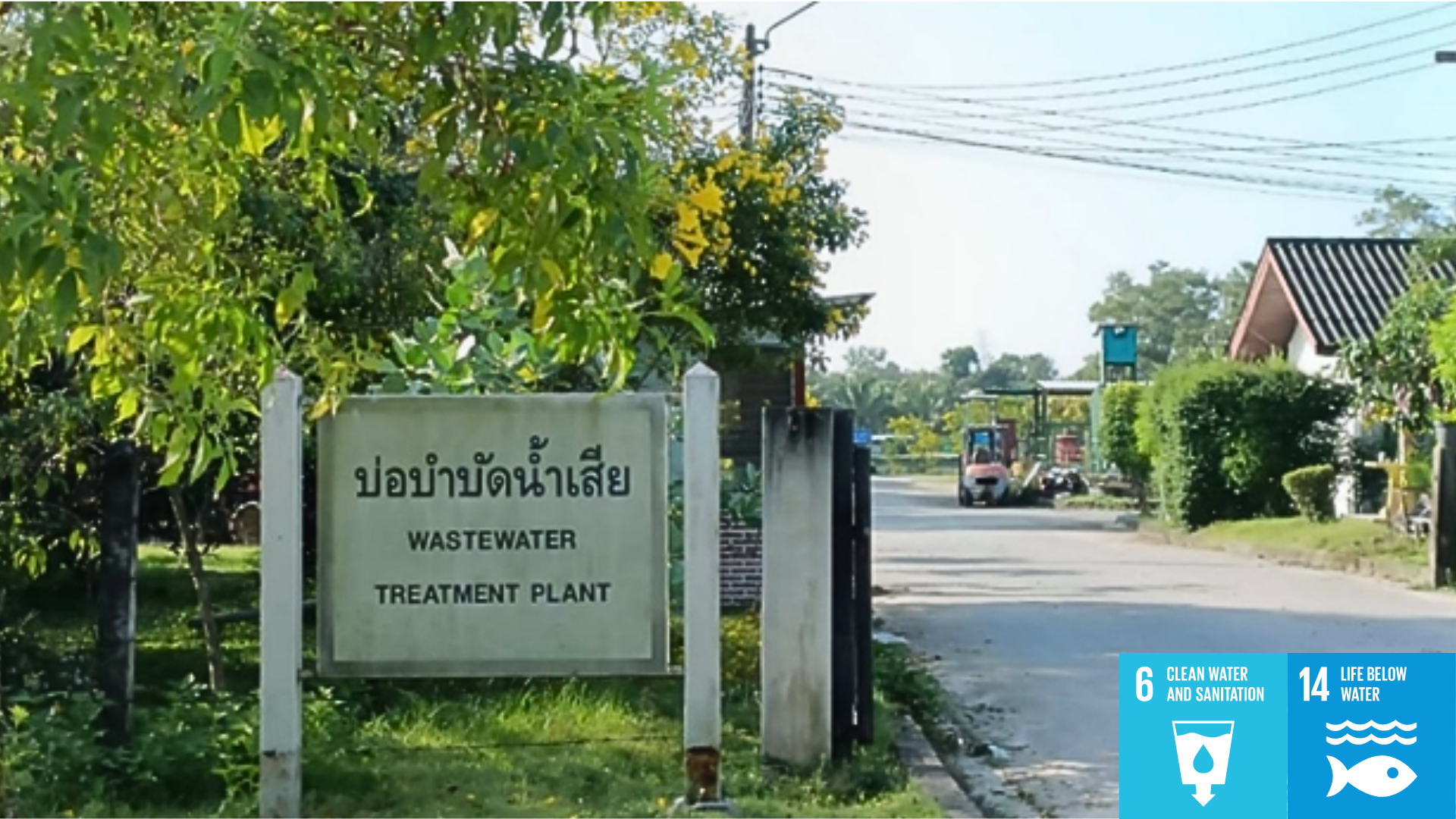
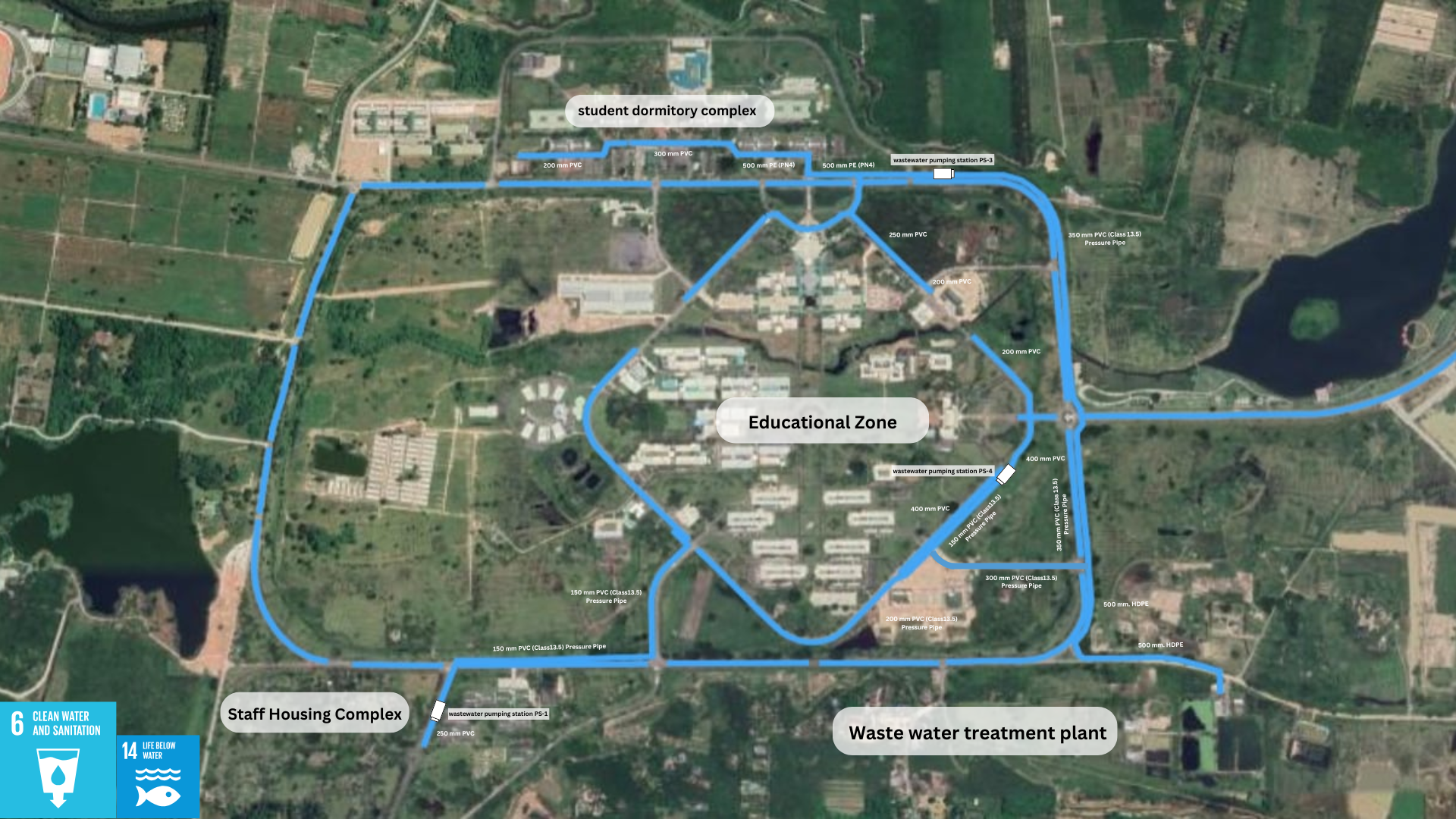

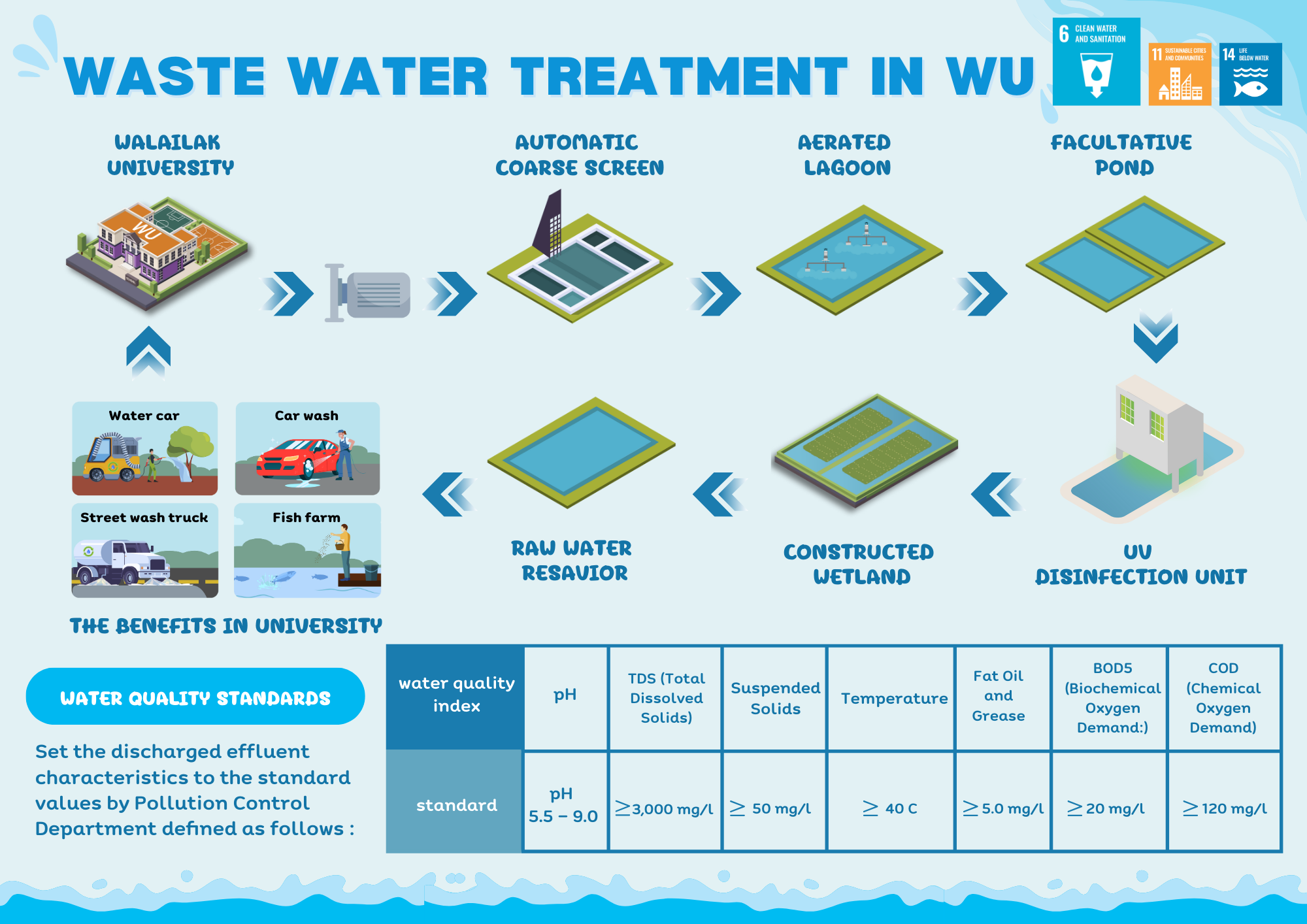
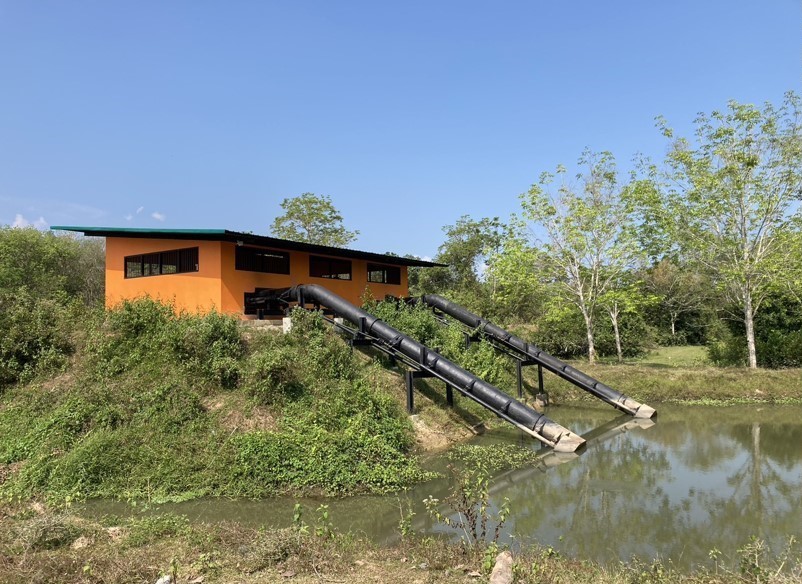
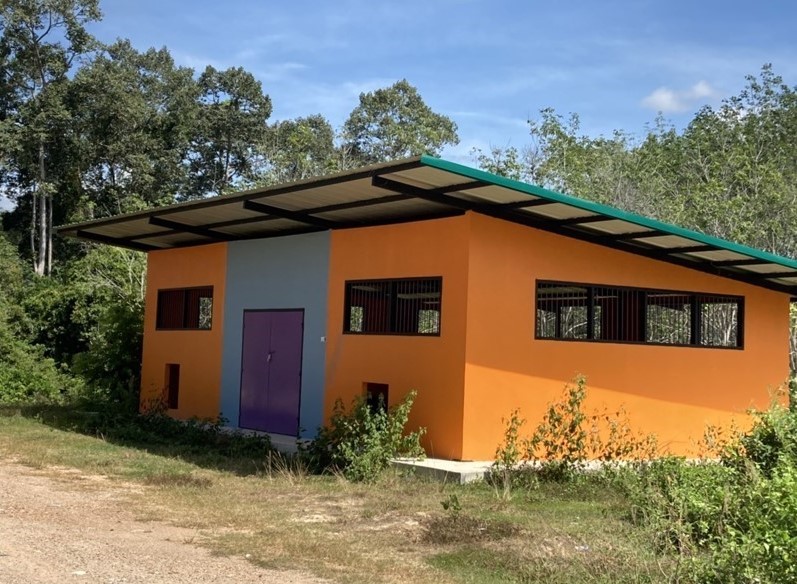
The “Water Treatment System” refers to the water treatment ponds serving all buildings at Walailak University. The water treatment system includes ponds for gathering wastewater, grease traps, pump stations, aerated lagoons, and related facilities.
1. All staff who are responsible for wastewater treatment shall perform physical wastewater treatment before release, following the standards. All buildings must be equipped with wide drainage grates for garbage and grease traps for intercepting most greases and solids before they enter a wastewater disposal system.
2. The building staff shall record the performance of the wastewater treatment system to be consistent with the standards and ask for information on sanitation from the Division of Landscape and Building.
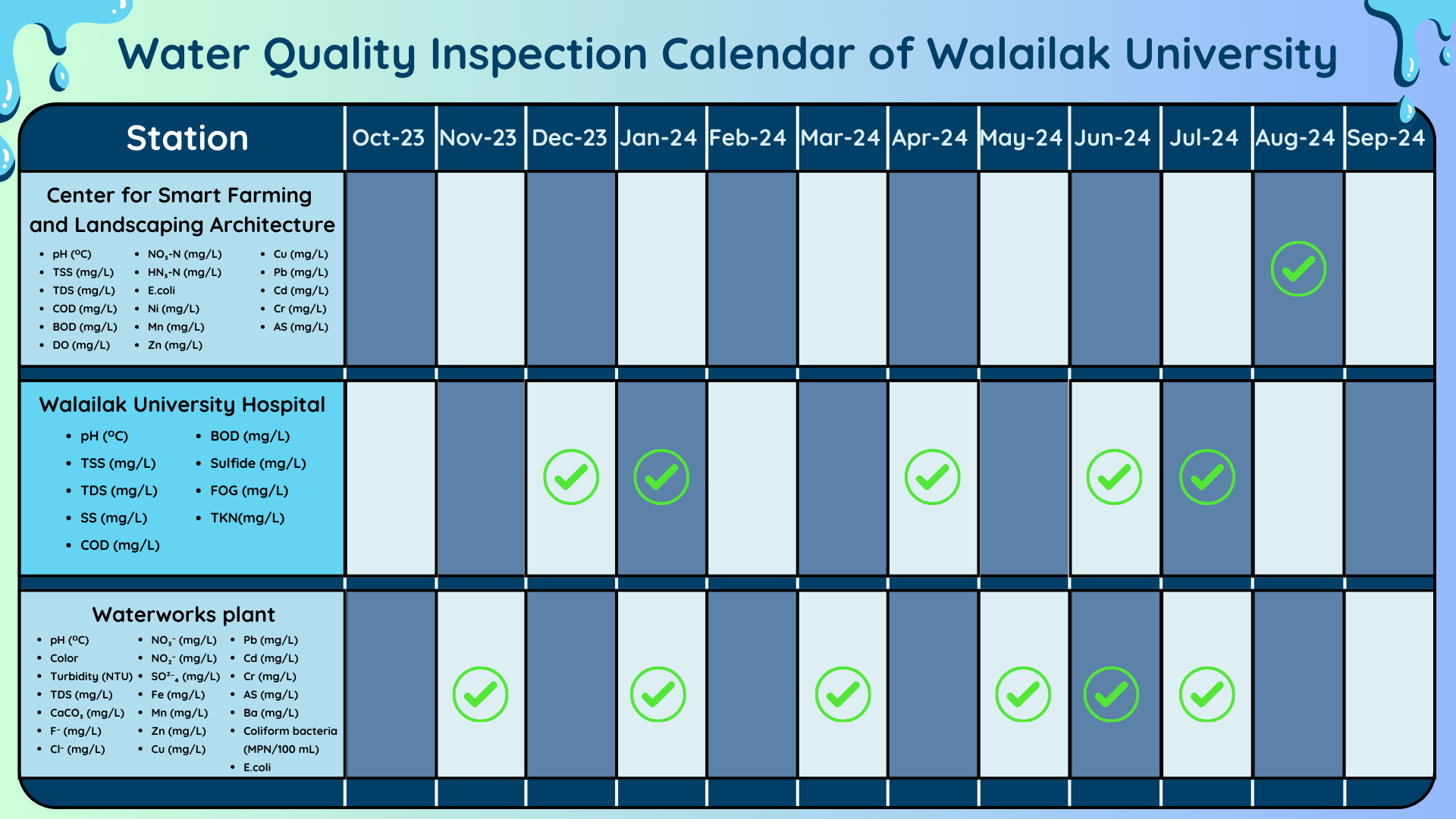
3. The Division of Landscape Architecture and Environment shall be responsible for waste and hazardous waste management and wastewater treatment. The wastewater is collected from all buildings and passed through the process of aerated lagoons, ensuring that the wastewater will not enter the water systems around the campus. The division shall also be responsible for readings for PH level, dissolved oxygen (DO), total suspended solids, total dissolved solids, biochemical oxygen demand, and nitrate-nitrogen. The readings must be taken and recorded regularly.
5. The wastewater treatment at all buildings must be equipped with grease traps to prevent grease from mixing with greywater, which keeps the water’s quality in the initial stage before passing to the next process. The wastewater must run through the grease traps, in which the grease and oils float at the top of the water level. All building staff must be responsible for disposing of the grease and oils monthly.
6. The building staff of each building and all relevant organizations must strictly monitor the performance of equipment for wastewater treatment and others related to the system, including covers, wastewater pumps, aerators, sewage submersible pumps, and others. If any equipment is broken or damaged, there must be a repair as soon as possible.
The wastewater produced by WU from all sources, including showering, cleaning equipment, washing, toilets, or others, will be sent to the wastewater treatment plant with consideration of environmental impacts and the livelihood of local residents around the campus. WU has a specific organization that is responsible for treating wastewater. The organization is the Division of Landscape Architecture and Environment, which was established in 2001 and has been active to the present.
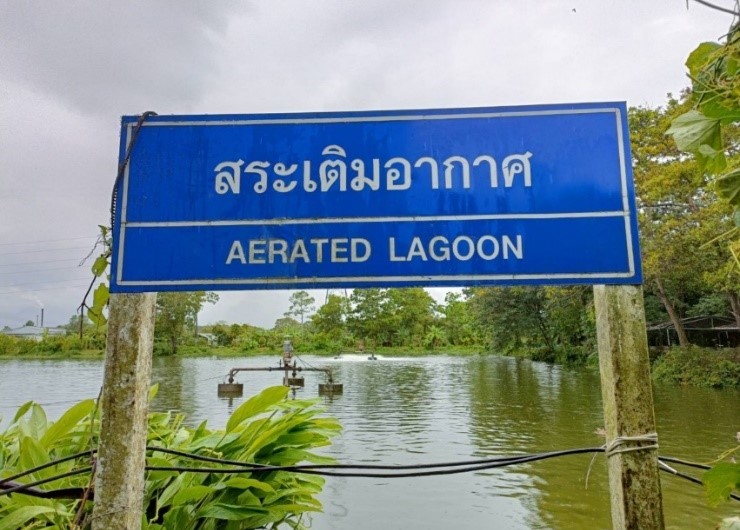
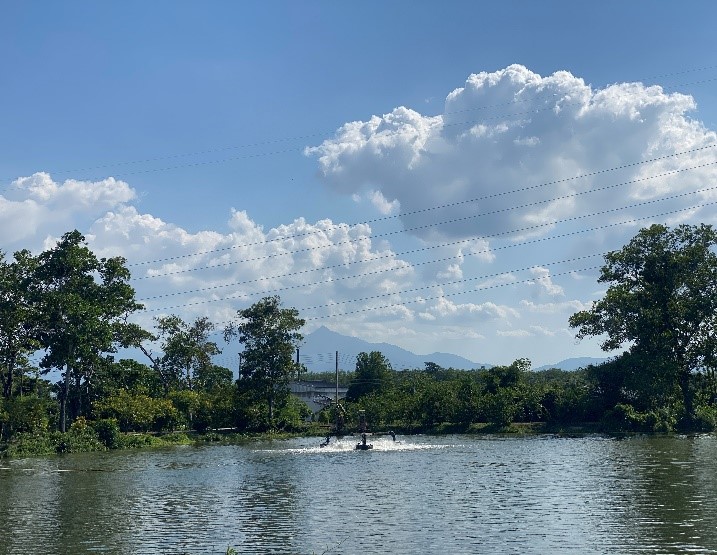
Currently, WU has aerated lagoons with a capacity of 4,000 cubic meters per day. The lagoons are wastewater treatment processes using aerators to add oxygen to the water. Microorganisms can decompose organic matter in wastewater, which is faster than natural decomposition. This allows the aerated wastewater treatment system to effectively treat the wastewater.
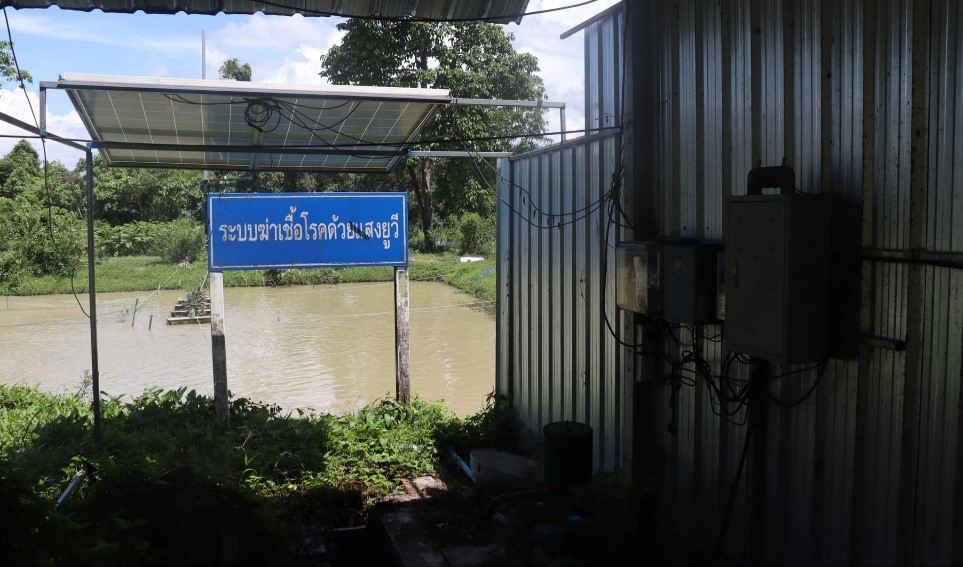
The microorganisms also remove dirt in the process of biochemical oxygen demand (BOD) by 80–95%. The treatment uses the microorganisms in oxygen-rich conditions, with the lagoons aerating the wastewater. The process of decomposing organic substances is implemented efficiently. The lagoons for the wastewater treatment system at WU are designed to be biological treatment lagoons consisting of an aerated lagoon, two facultative ponds, and a wetland lagoon. WU also uses the ultraviolet sterilization system for the treatment.
The treated wastewater will undergo a water quality assessment by using the treated wastewater for rearing Nile tilapia before releasing the water to natural water sources. The water quality of the wastewater at WU must be in line with the effluent standards of the Pollution Control Department of Thailand.
The wastewater treatment at WU has been active to the present. In 2024, WU improved the quality of treatment to be standardized and efficient. The university’s wastewater treatment can be divided based on the mechanism for removing impurities from wastewater as follows :
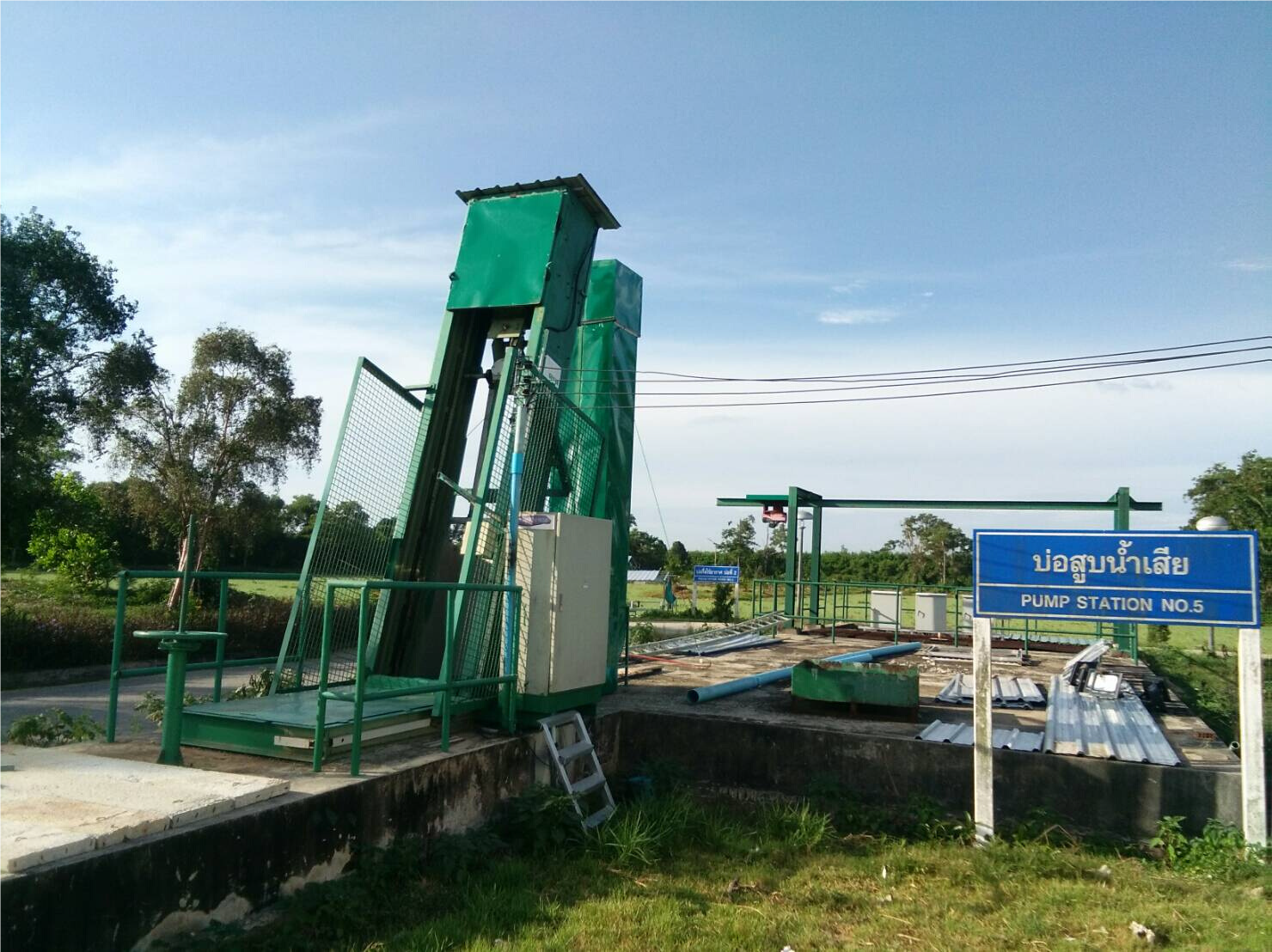
1. Using garbage traps powered by electric motors. The waste in wastewater from all sources will be removed and then released to the pumping station equipped with submersible pumps.
2. The wastewater released from the garbage traps will be released to the pumping station to be pumped to aerated lagoons. The pumping station is equipped with wastewater pumps with a capacity of 340 cubic meters. The pumps will automatically take turns in each round with four float switches.
3. The wastewater pumped from the pumping station will be released into the aerated lagoons, which are 68 meters wide, 73 meters long, and 3.2 meters deep, with a capacity of 18,903 cubic meters. The aerated lagoons are equipped with 15kW low-speed floating and fixed-type surface aerators that decompose organic matter using aerobic bacteria. The aerated lagoons can reduce the biological oxygen demand values by 70%.
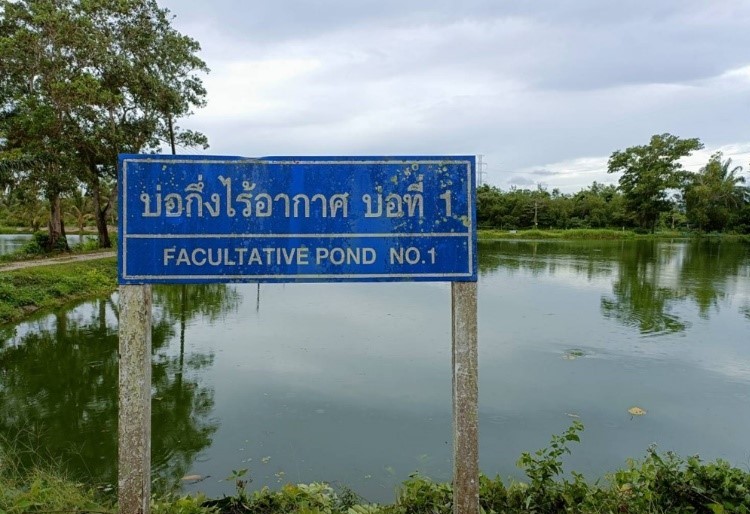
4. The Facultative Pond 1, with a capacity of 18,217 cubic meters, can store water for 4 days using the microorganisms in oxygen conditions, reducing the biological oxygen demand values by 60%.
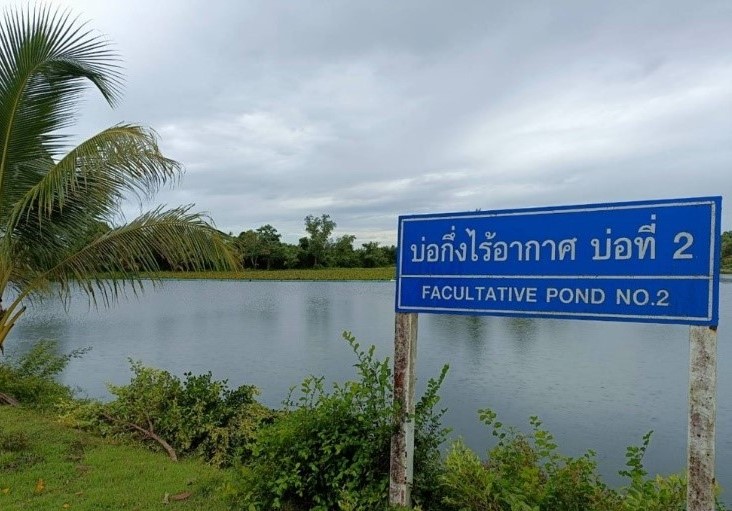
5. The Facultative Pond 2, with a capacity of 37,752 cubic meters, can store water for 7 days using the microorganisms in oxygen conditions, reducing the biological oxygen demand values by 50%.
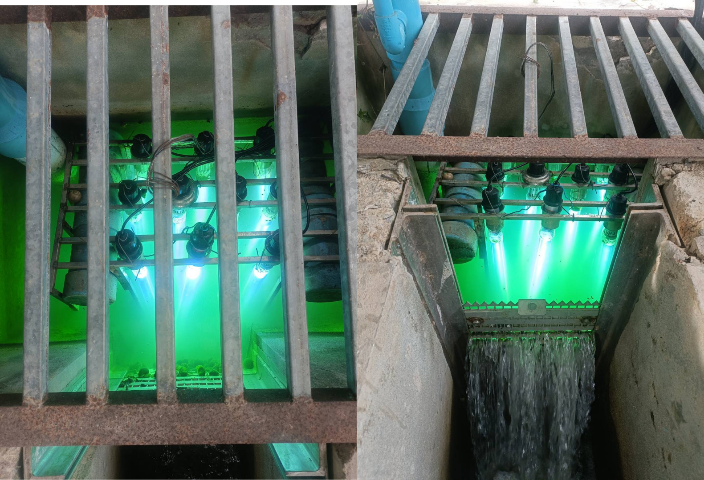
6. The treated wastewater from the Facultative Pond 2 will be contaminated with some bacteria. Thus, the wastewater must be sterilized by the UV Disinfection System, which can reduce the number of coliform bacteria and fecal coliform bacteria to less than 1,000 MPN/100 mL and 200 MPN/100 mL, respectively.
Tertiary wastewater treatment by application of UV light for disinfection
7. The wetland pond, with a capacity of 4,900 cubic meters, can store the wastewater for one and a half days. The pond is used for collecting the wastewater before releasing it to the next pond.
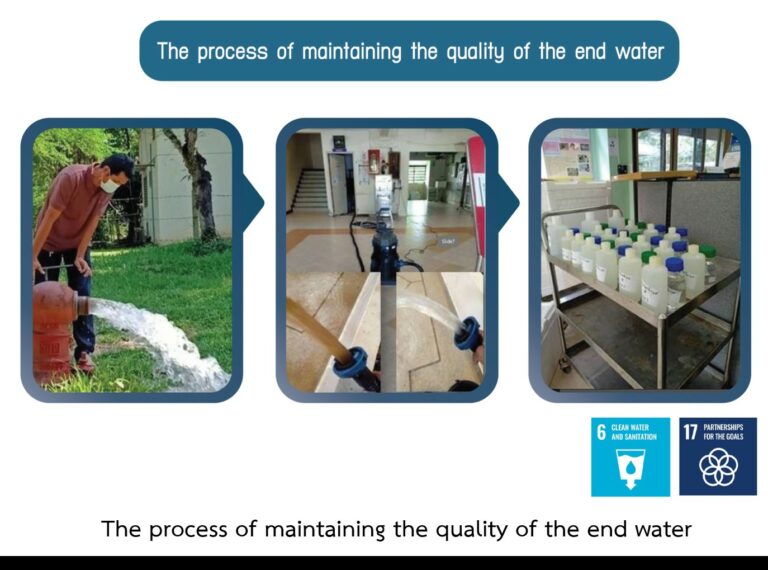
8. Treated wastewater must undergo a water quality inspection before being utilized within the university for various purposes, such as Nile tilapia farming, watering plants, cleaning roads, and washing vehicles.
Wastewater collection and analysis at university central laboratory
Walailak University has been adopting technologies and new practices to prevent polluted water on campus from entering the water system and environment surrounding the campus. Here are the WU’s processes for efficiently prevention polluted water from entering the water system and the environment :
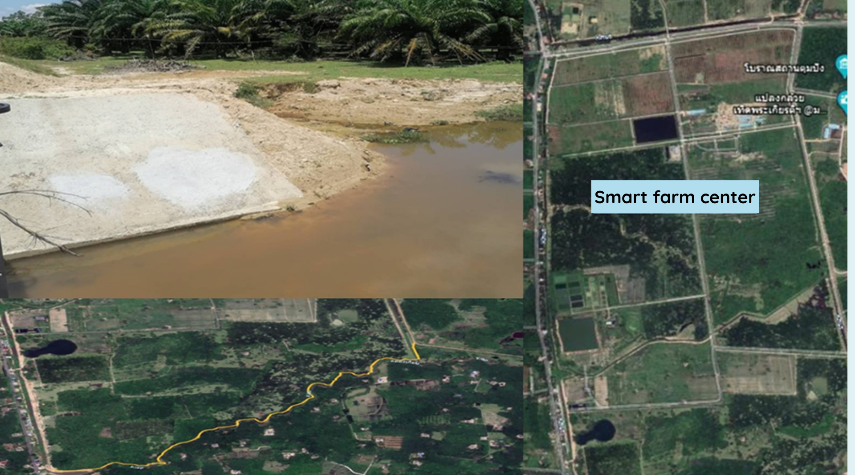
The project is a flood control measure based on the vision of King Bhumibol Adulyadej of Thailand. It also conserves water resources during droughts. In 2024, WU expanded the area of the project by constructing a new reservoir called “Chala Nusorn”. The reservoir aims to be the new water resource for tap water production. The water quality in the reservoir has not been contaminated with any chemical substances and has been evaluated monthly. However, WU always realizes the significance of preventing the water inside the reservoir from entering the water system around campus.
The dams at WU are constructed for the purpose of water storage and flood control to prevent the water inside the dams from entering the outside water system surrounding the campus. Every month, WU checks all floodgates to ensure they work properly with the best efficiency.
The Pumps are constructed for flood control and to transfer water to other empty ponds as temporary storage to prevent water from the university from entering the outside water system. A pump station was established, equipped with two engine water pumps with a capacity of 1.0 cubic meters per second. Additionally, two electric water pumps and engine water pumps have been installed in the educational zone and surrounding areas of the reservoirs.
A drainage pump station on campus.
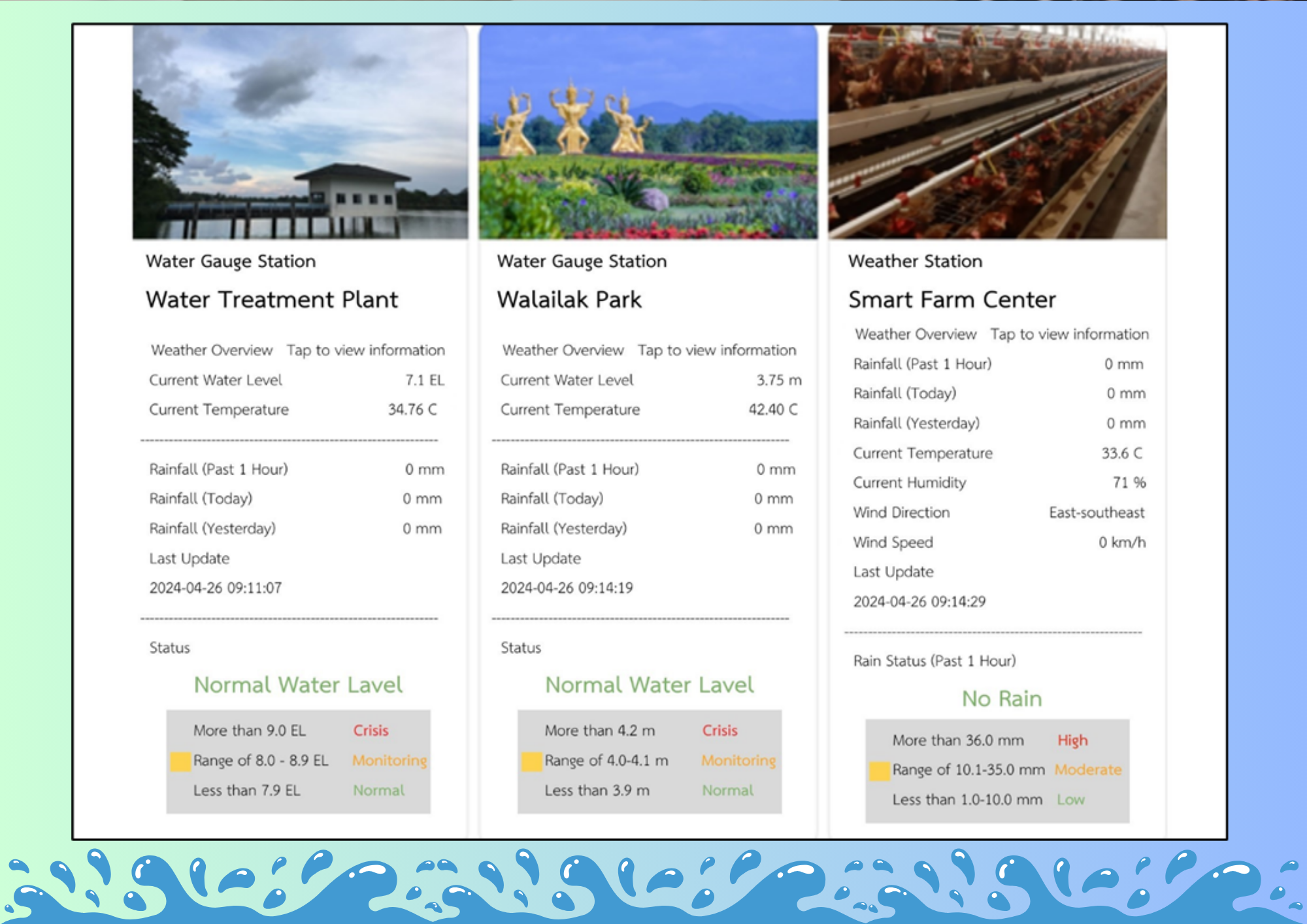
One of the predominant facilities of WU for preventing polluted water from entering the water system is the mobile application titled “Bot CDT”. The application serves as a tool for water management in various aspects, including reporting water levels, monitoring situations, reporting current data, warning flooding, early warning accidents, and others, which can reduce damage caused by flooding and accidents.
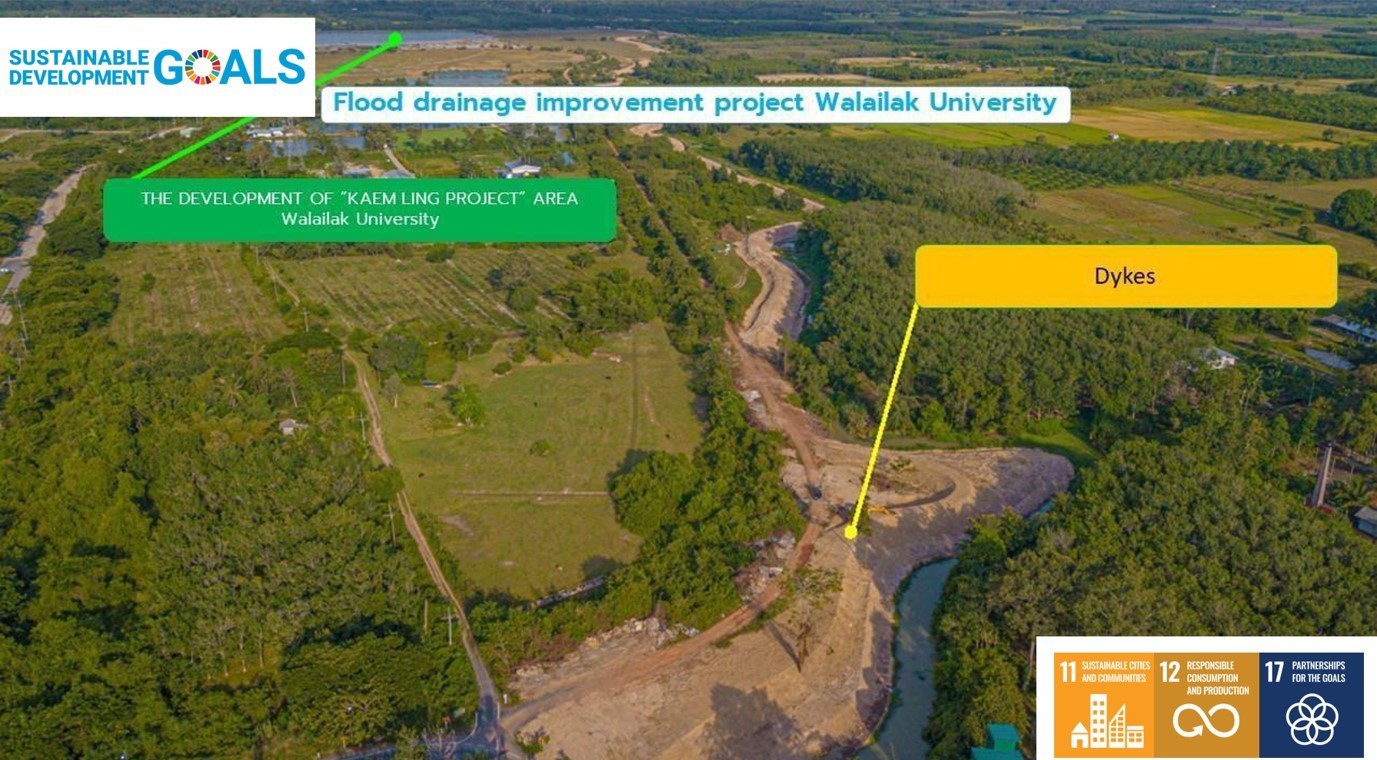
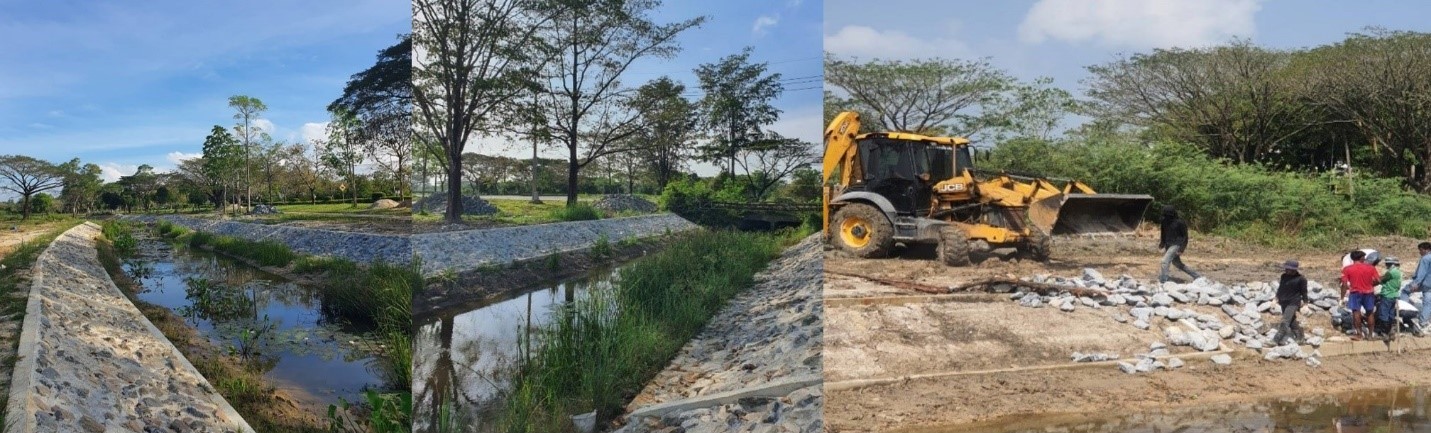
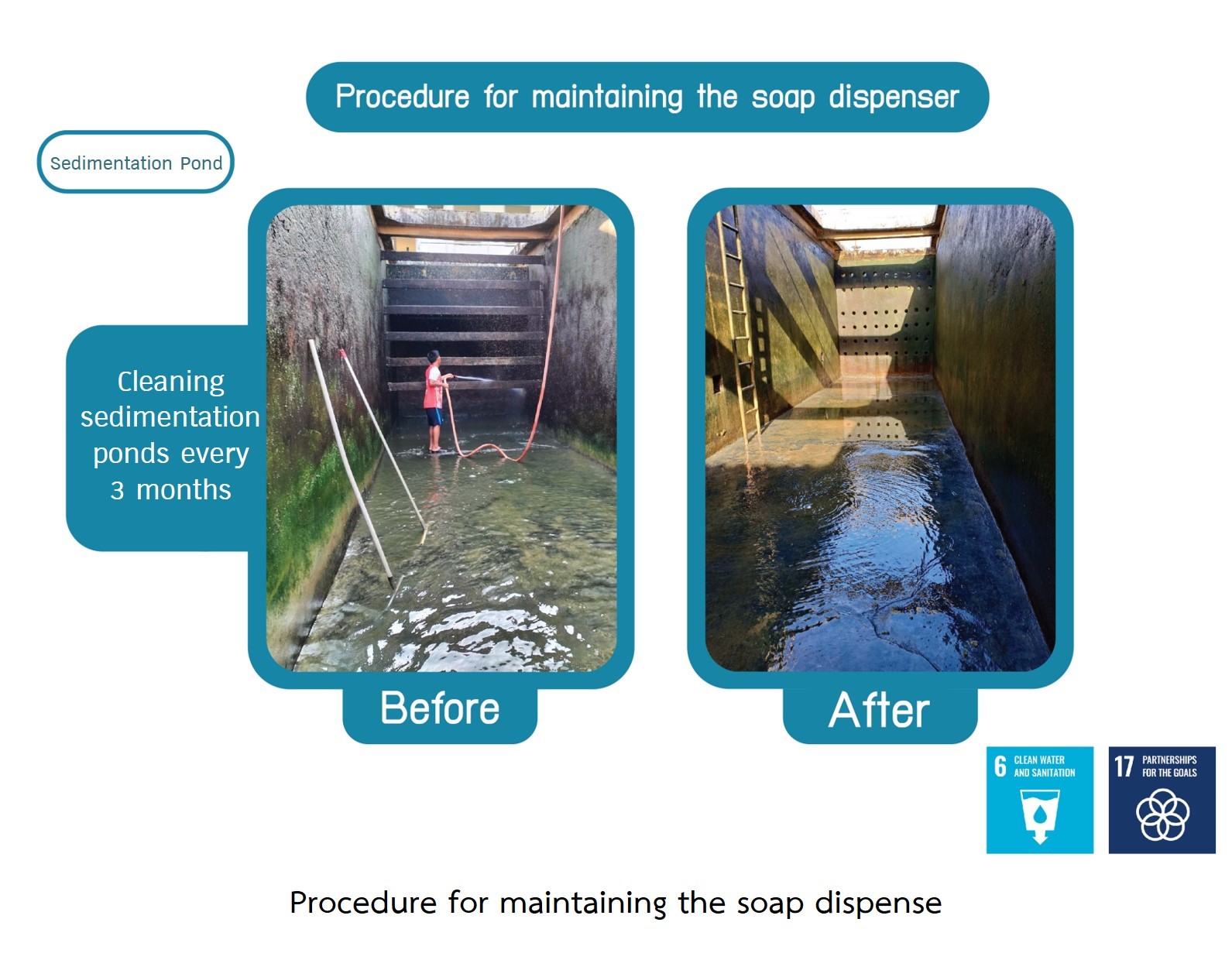
Walailak University has practices and projects for improving the drainage system on campus, including weed dredging and using rocks for drainage ditches to prevent landslides and erosion. The drainage system has been checked monthly for water transit to prevent polluted water from entering the water system outside the campus.
Flood drainage improvement project
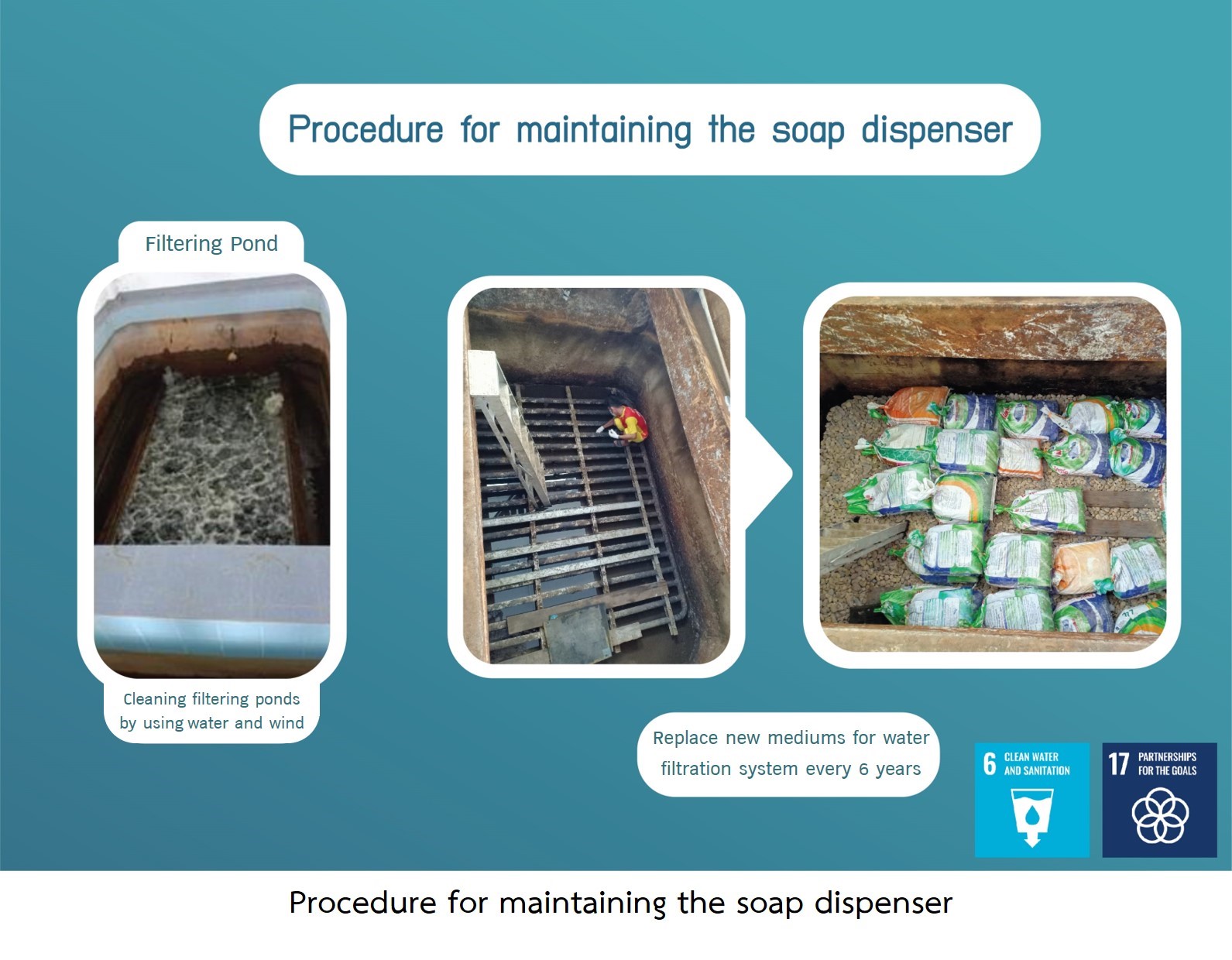
The maintenance ensures that the quality of tap water at WU is standardized with procedures, including improving raw water pipelines and filter systems, monitoring the water level of the sand filter system, and maintaining other equipment. Every piece of equipment will be checked once per month.
The water on the WU campus is always assessed to ensure that it is not contaminated by bacteria and chemical substances. The assessment is concerned with the prevention of polluted water from entering the water system. This suggests that if the water inside the campus is accidentally released into the water system, it can be ensured that at least WU has already purified the water.
In order to frankly demonstrate that the treated wastewater at WU is purified, WU uses the treated water for various purposes, including watering plants, cleaning roads and vehicles on campus, farming Nile tilapia, and reducing the temperature of the waste incinerators. At present, the plants that have been watered by the treated wastewater at WU are still alive suggesting that the treated wastewater is practical and purified. This ensures that the treated wastewater will not harm the outside water system. Additionally, utilizing the treated wastewater helps reduce greenhouse gas emissions by 0.0133 tons of CO₂ equivalent.
In addition, the tap water at WU is of high quality, and the WU uses chlorine disinfection. It is distributed across the university for consumption. The tap water production has been improved and checked monthly. The implementation for checking and improving, such as quality assessment of filtering tanks, evaluation of pH values, checking water pumps, water pumping systems, uninterruptible power supply (UPS), and others. This also ensures that the water on campus is purified if it is accidentally released into the water system.