
Living Wage Employment Practices: Adequate Compensation for Staff
Walailak University recognizes the importance of staff living wages, which are defined as the local living wage and the local financial poverty indicator for a family of four. as determined by the government.
In 2014, the university revised its salary policy to guarantee that all staff, regardless of position, receive a living wage or salary that reflects current economic conditions, enabling them to maintain a stable and smooth quality of life. This policy has been in effect since its implementation and remains active to this day. The policy, implemented in 2014, remains active and can be accessed at
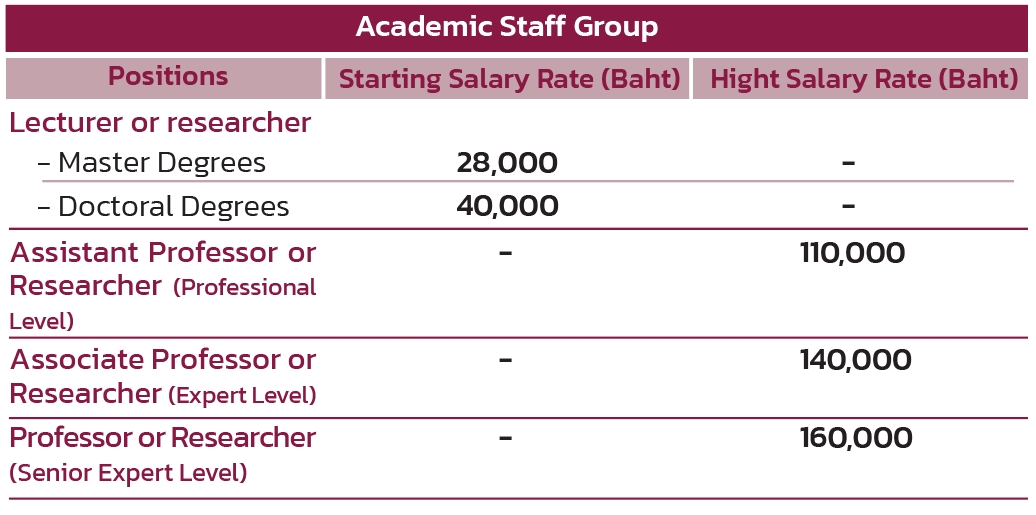
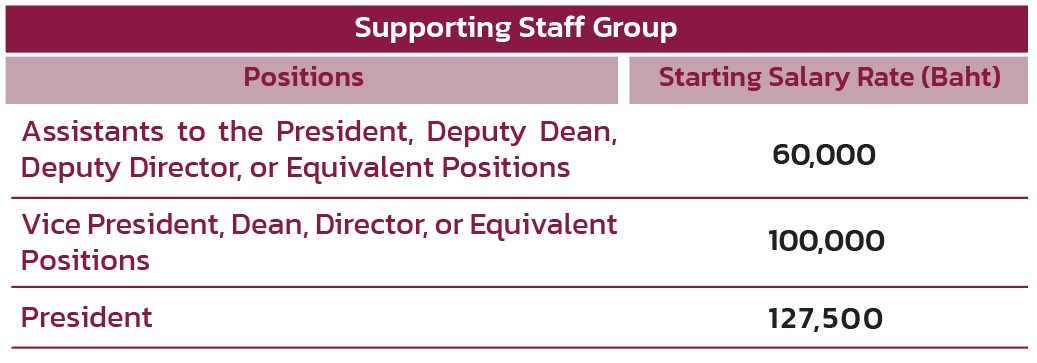
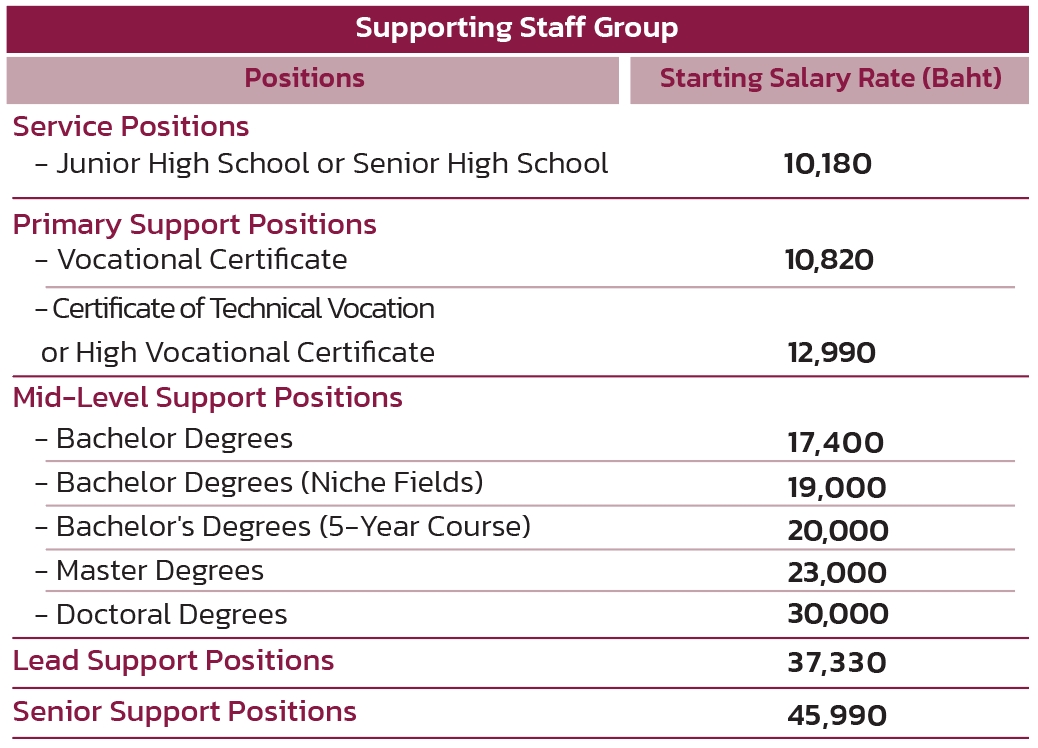
The living wage for all positions is consistent with the wage defined by the government as the local living wage and the financial poverty indicator for a family of four. The government defines the starting salary based on educational qualifications as follows:
- Junior High School or Senior High School: 8,610
- Vocational Certificate: 9,400-10,340
- High Vocational Certificate: 11,500-12,650
- Bachelor’s Degrees: 15,000-16,500
- Master’s Degrees: 17,500-19,250
- Doctoral Degrees: 21,000-23,100









Goal 8: Decent Work and
Economic Growth