
11Feb 2025 by Kittipong Bunlear
Walailak University Organizes Annual Beach Cleanup to Conserve Marine and Coastal Resources for 2024
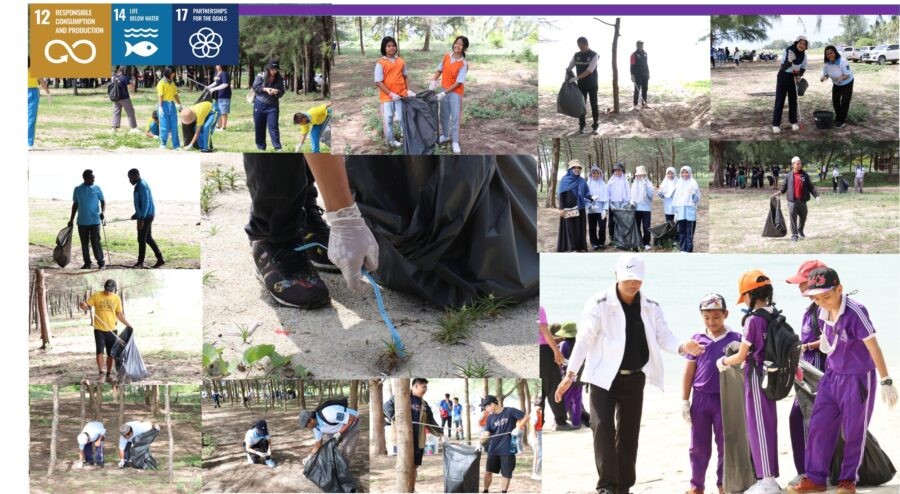
On June 25, 2024, Walailak University organized a beach cleanup activity to conserve marine and coastal resources, aligning with World Oceans Day 2024. This initiative was part of a collaborative project aimed at enhancing waste management efficiency in areas surrounding the university. The event took place at Bo Non Beach in Tha Sala Subdistrict, Tha Sala District, Nakhon Si Thammarat Province. The event aimed to educate students and the general public on proper waste disposal and reduction, particularly in coastal and community areas, to mitigate negative impacts on natural resources. The campaign also emphasized the importance of segregating organic waste before disposal.
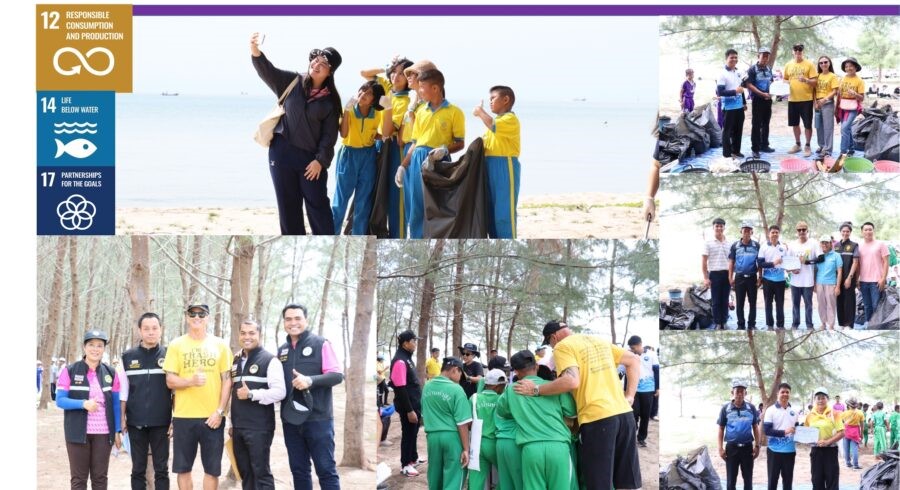
The event was presided over by Mr. Sarayut Lekakarn, Deputy Permanent Secretary of Tha Sala Subdistrict Administrative Organization, with a report delivered by Mr. Phusit Horpet, a lecturer in the Marine Science Program at Walailak University and the project leader. The activity exemplified student involvement in sustainability, with participation from over 250 individuals, including representatives from the Department of Marine and Coastal Resources (DMCR) Region 5, the Provincial Marine Conservation Center of Nakhon Si Thammarat, Tha Sala Subdistrict Administrative Organization, members of the Tha Sala Ban Rao Club (which means Tha Sala, our home), the Trash Hero group, students, faculty, and staff from Walailak University, as well as teachers and students from seven partner schools: Ban Tha Sung School, Ban Nai Thung School, Ban Sra Bua School, Rajaprajanugroh 8 School, Thasala School, Prateepsart Ismail Memorial School, and Panyasartham Foundation School. Additionally, local community leaders and residents from Moo 4 and Moo 10, Tha Sala Subdistrict, also participated.
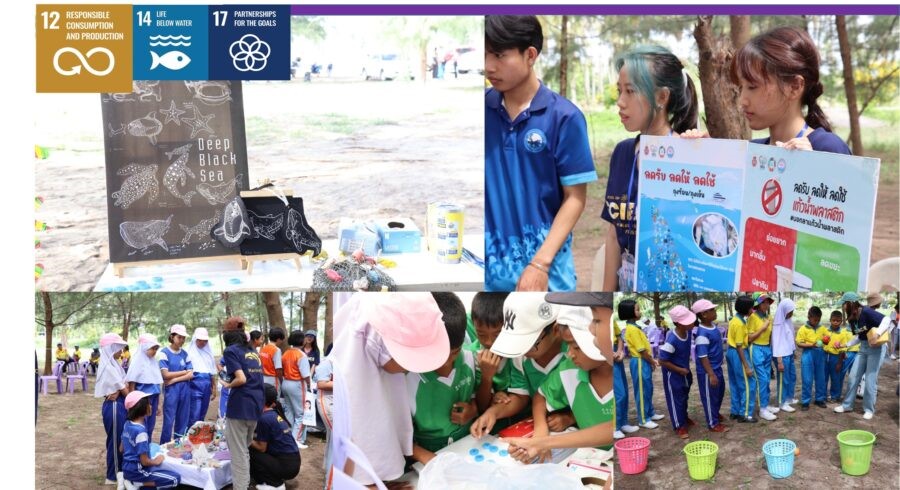
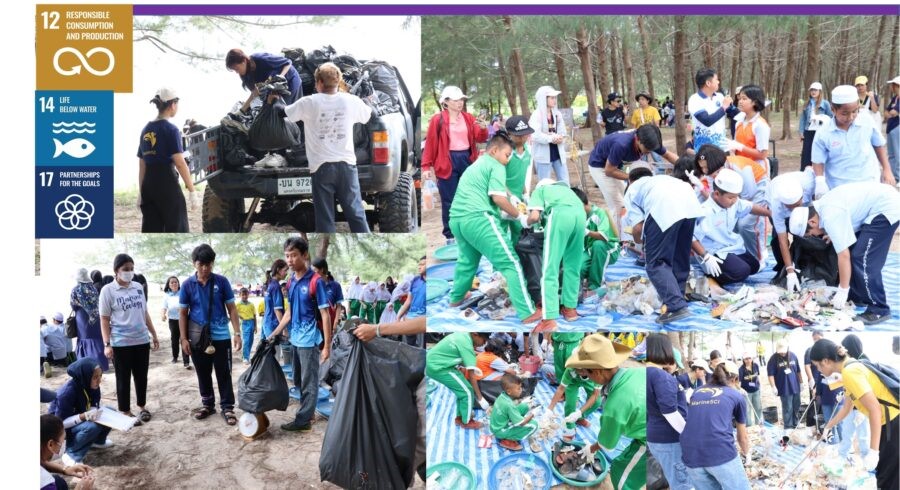
Participants collected and categorized beach waste using the International Coastal Cleanup (ICC) method, amassing a total of 317 kilograms of debris. Most of the waste consisted of foam fragments, single-use plastic containers (plates, spoons, and forks), straws, and plastic bags. Educational booths were also set up to provide information on environmental conservation, teaching attendees proper waste segregation and management techniques. This student-led society engaging with sustainability efforts aims to reduce waste volume, enhance environmental quality, and promote sustainable waste management practices. The initiative aligns with the Sustainable Development Goals (SDGs), particularly Goal 12 (Ensure sustainable consumption and production patterns), Goal 14 (Conserve and sustainably use the oceans, seas, and marine resources for sustainable development), and Goal 17 (Partnerships for the Goals).
Post Views: 6