Smart Building Implementation
Smart Building Implementation
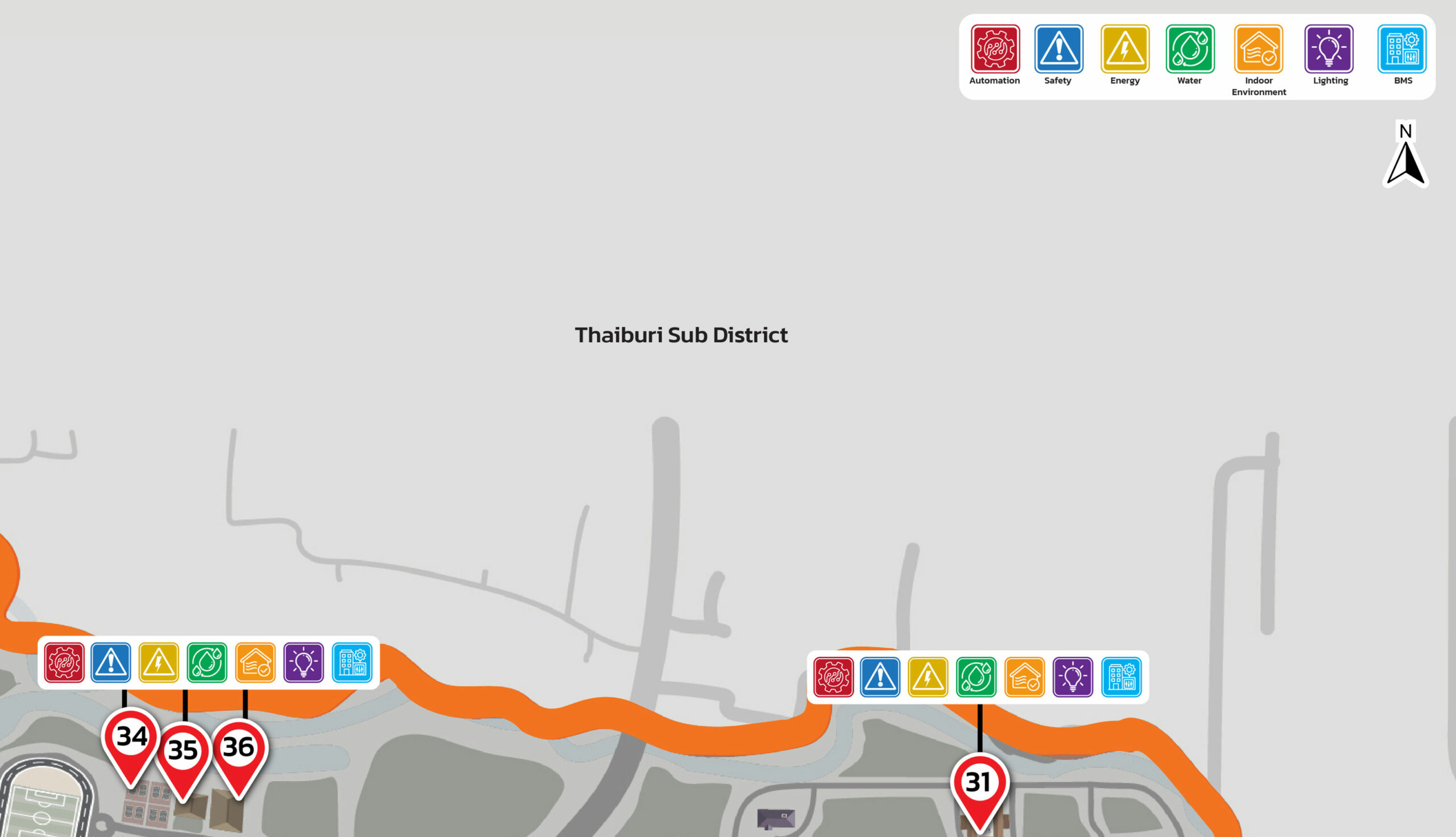
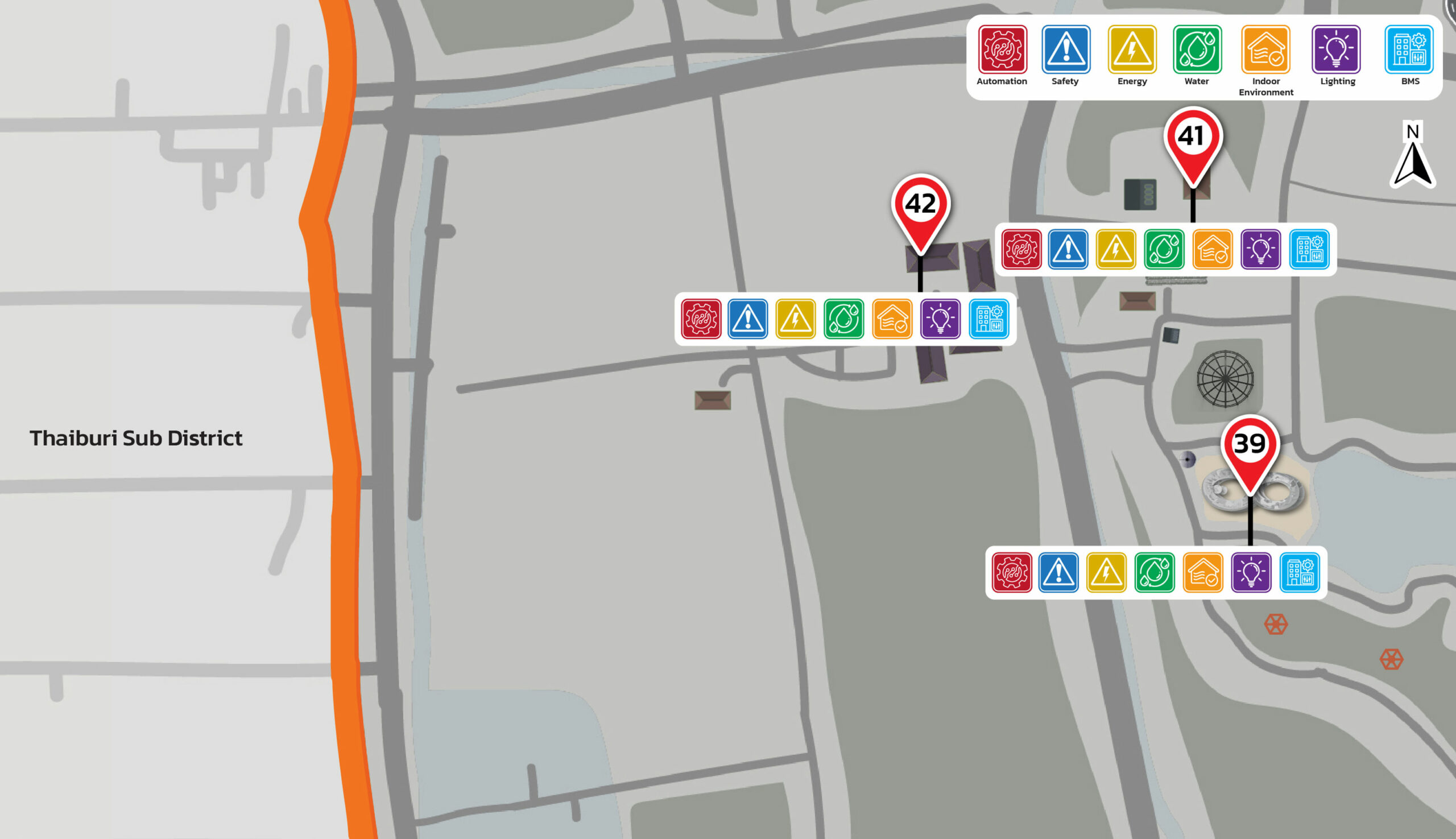
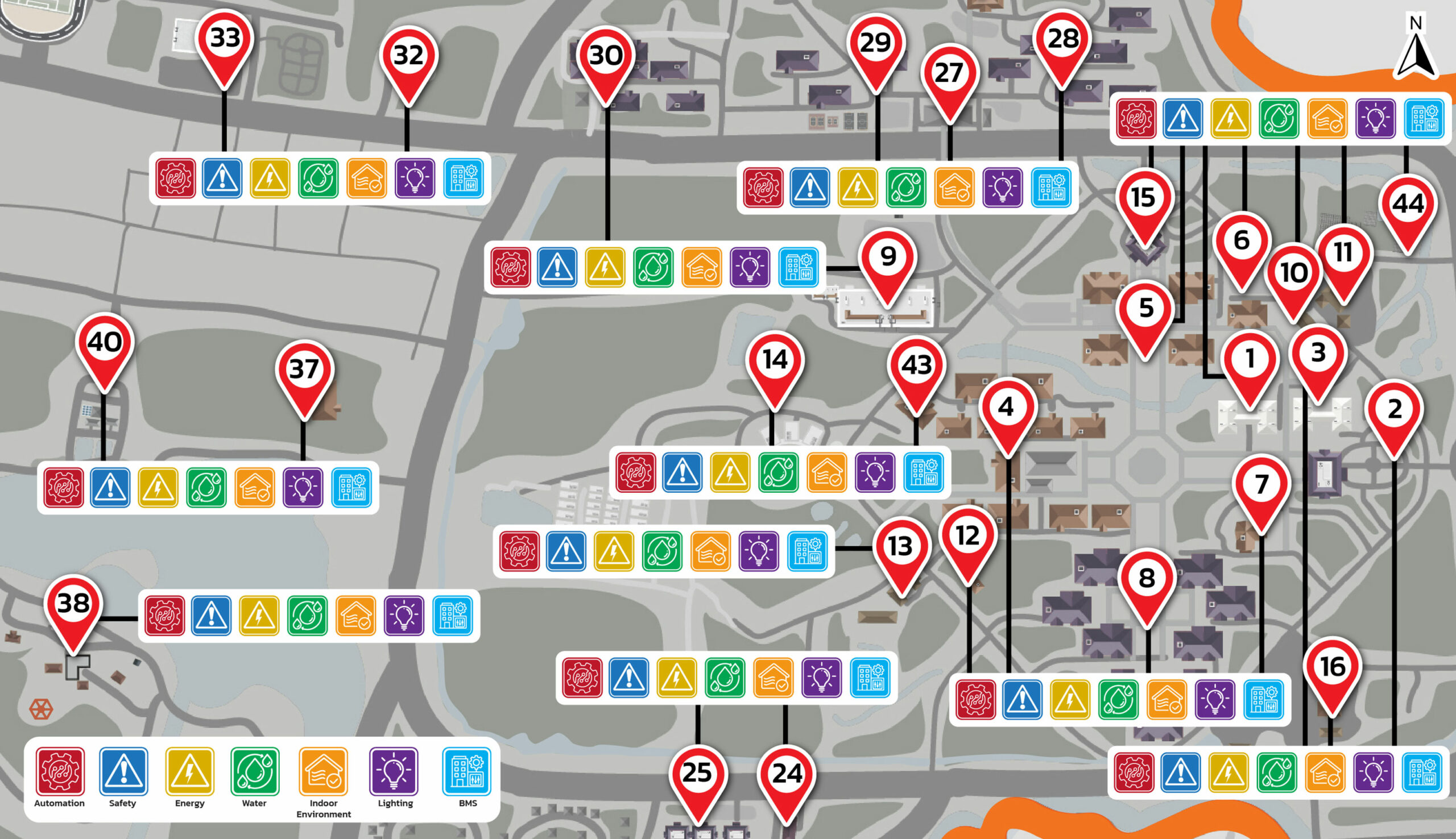
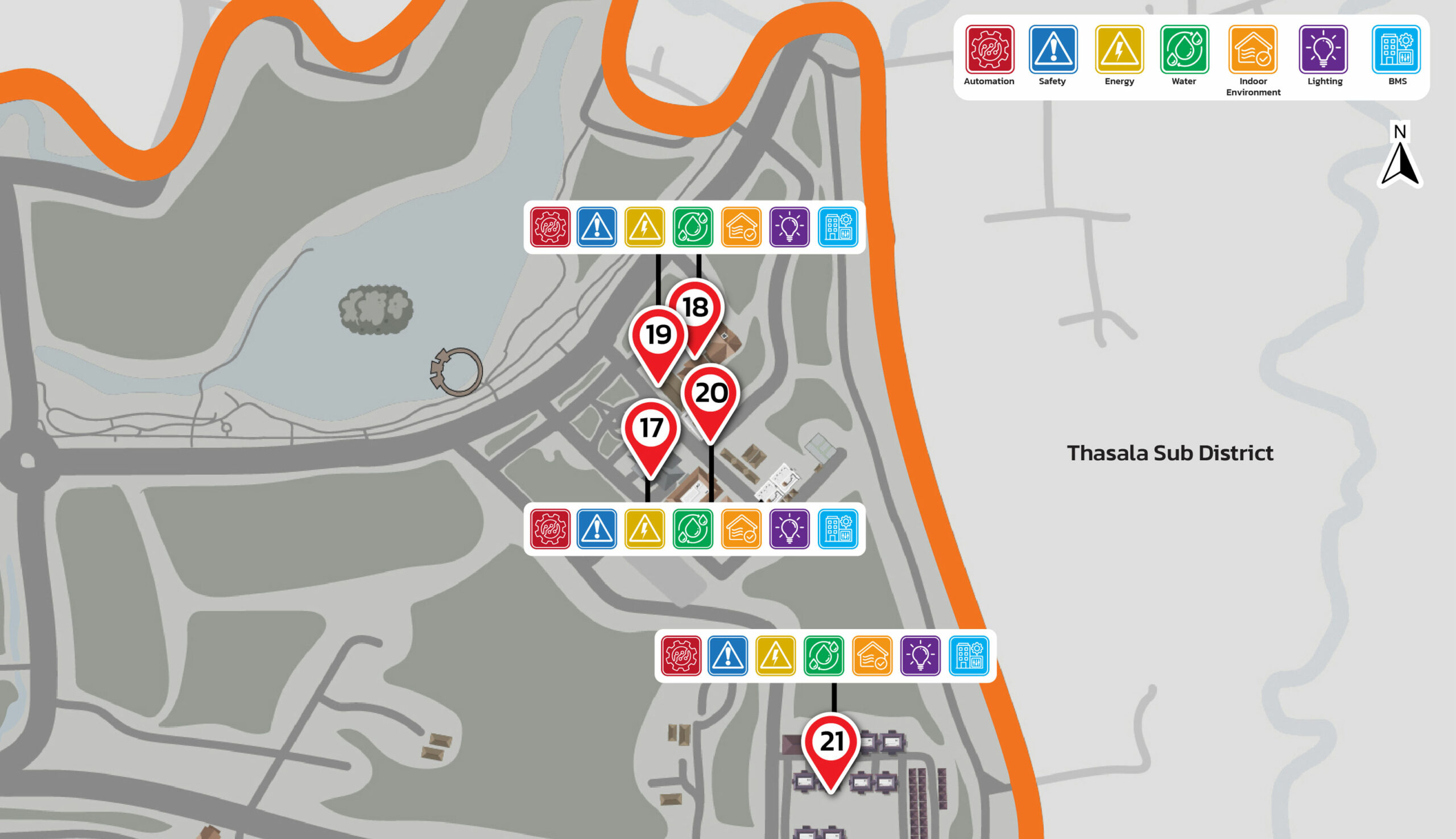
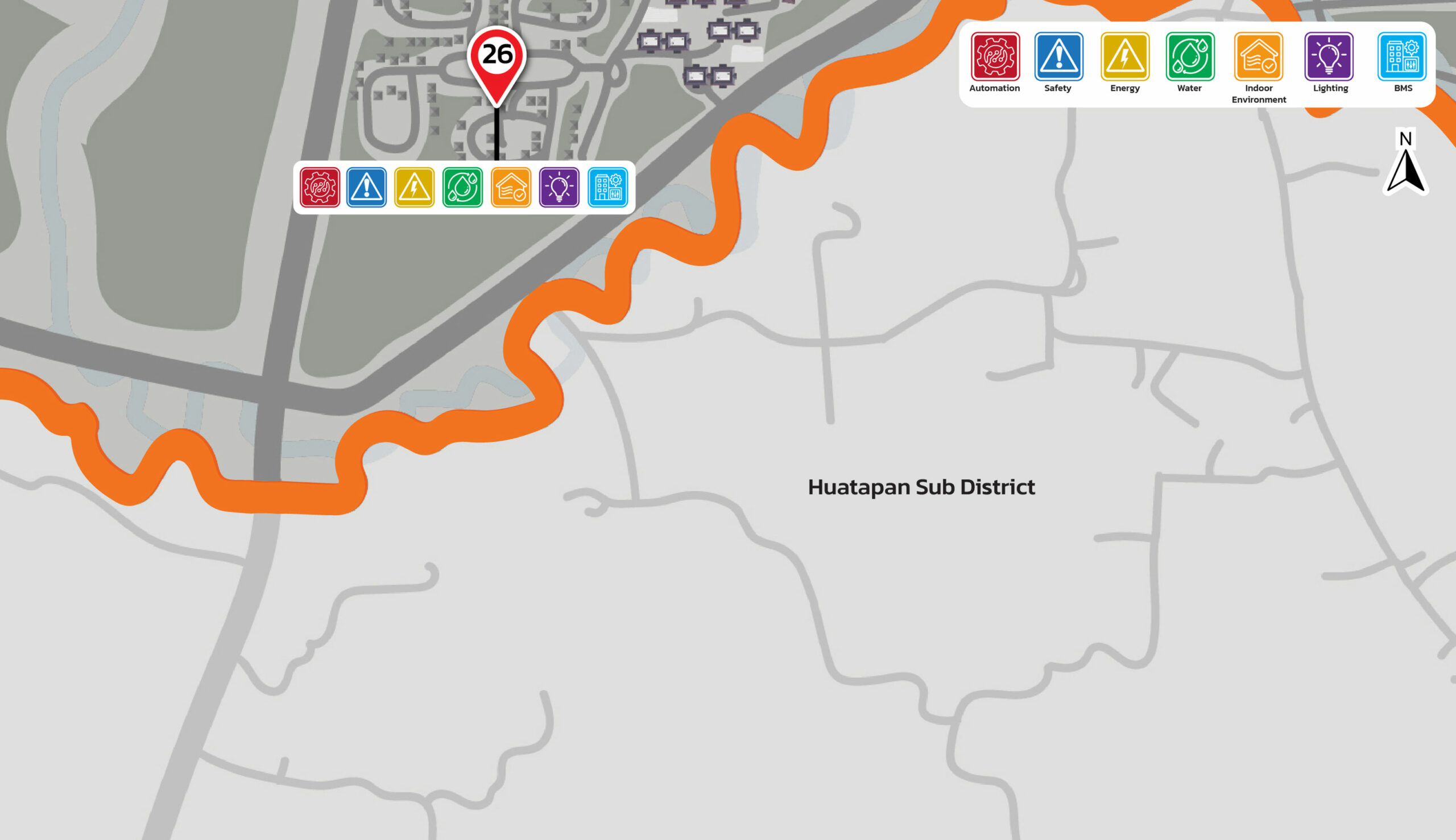
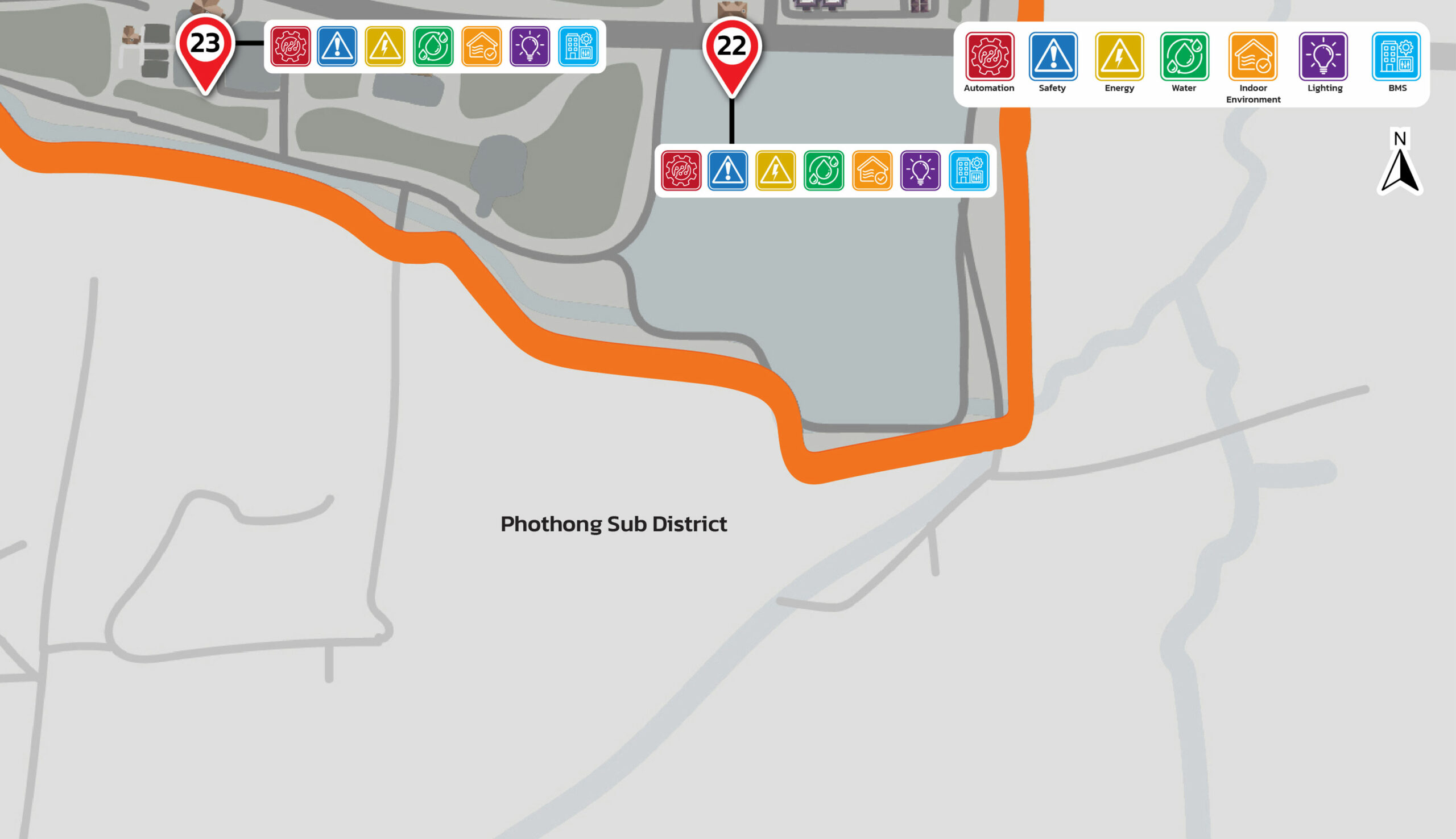
Figures: Distribution Map of Smart Building in Walailak University (507,981.53m2). (Walailak University, Thailand)
1. Smart Building – Automation at Walailak University
Walailak University integrates advanced automation systems to enhance operational efficiency, energy management, and user convenience across campus facilities. The automation framework includes two main categories:
1.1 Building Management System (BMS):
- Automated Air Conditioning Control System: Adjusts classroom air conditioning according to class schedules, optimizing energy use.
- The Air Conditioning Control Panel or Building Automation System (BAS) Touch Panel is implemented for centralized control and monitoring of air conditioning systems within the building. This system enables real–time management of temperature settings, operation schedules, and energy usage, thereby enhancing energy efficiency and ensuring occupant comfort. By integrating automation technology, the university can reduce unnecessary energy consumption, support sustainable building operations, and contribute to the reduction of greenhouse gas emissions.
- Automated Library Systems: Includes automatic book borrowing and return systems at the University Library.
- Automatic Doors: Installed at the Building of the Center for Library Resources and Education Media to improve accessibility and user convenience.
1.2 Mobile Applications (APP):
- Time Attendance System: Check-in and check-out via smartphones through the LINE Thasala application, streamlining attendance tracking.
- WU Smart Life Application: Provides a centralized platform for students and staff to access smart building services, enhancing campus life convenience and engagement.
These automation initiatives collectively contribute to energy efficiency, operational convenience, and a modern, user–friendly campus environment.
2. Smart Building – Safety at Walailak University
Walailak University implements comprehensive safety systems across all campus buildings to ensure the protection of students, staff, and assets. The safety framework includes the following key requirements:
2.1 Intruder Alarm System:
Face Detection and Fingerprint Scanning: Access control through face recognition servers and fingerprint scanning is required before entering university buildings, ensuring secure access for authorized personnel.
2.2 Fire-fighting Systems:
- Fire Alarm System: Installed in all buildings to detect and alert occupants in case of fire.
- Fire Hose Cabinets (FHC) with Fire Extinguishers and Safety Signage: Strategically located across the campus, complying with fire safety regulations.
- Firefighting Systems: Comprehensive firefighting equipment is installed in all university buildings to manage fire emergencies effectively.
2.3 Video Surveillance:
CCTV Control Rooms: All campus buildings are monitored with CCTV systems to enhance security and surveillance.
2.4. Anti-flooding Measures:
- Mobile Application (Bot CDT): Provides real-time flood alerts to the university, enabling timely response and mitigation of flooding risks.
These safety systems collectively enhance campus security, fire protection, surveillance, and emergency preparedness, contributing to a safe and resilient university environment.