Water Conservation Program Implementation
Water Conservation Program Implementation
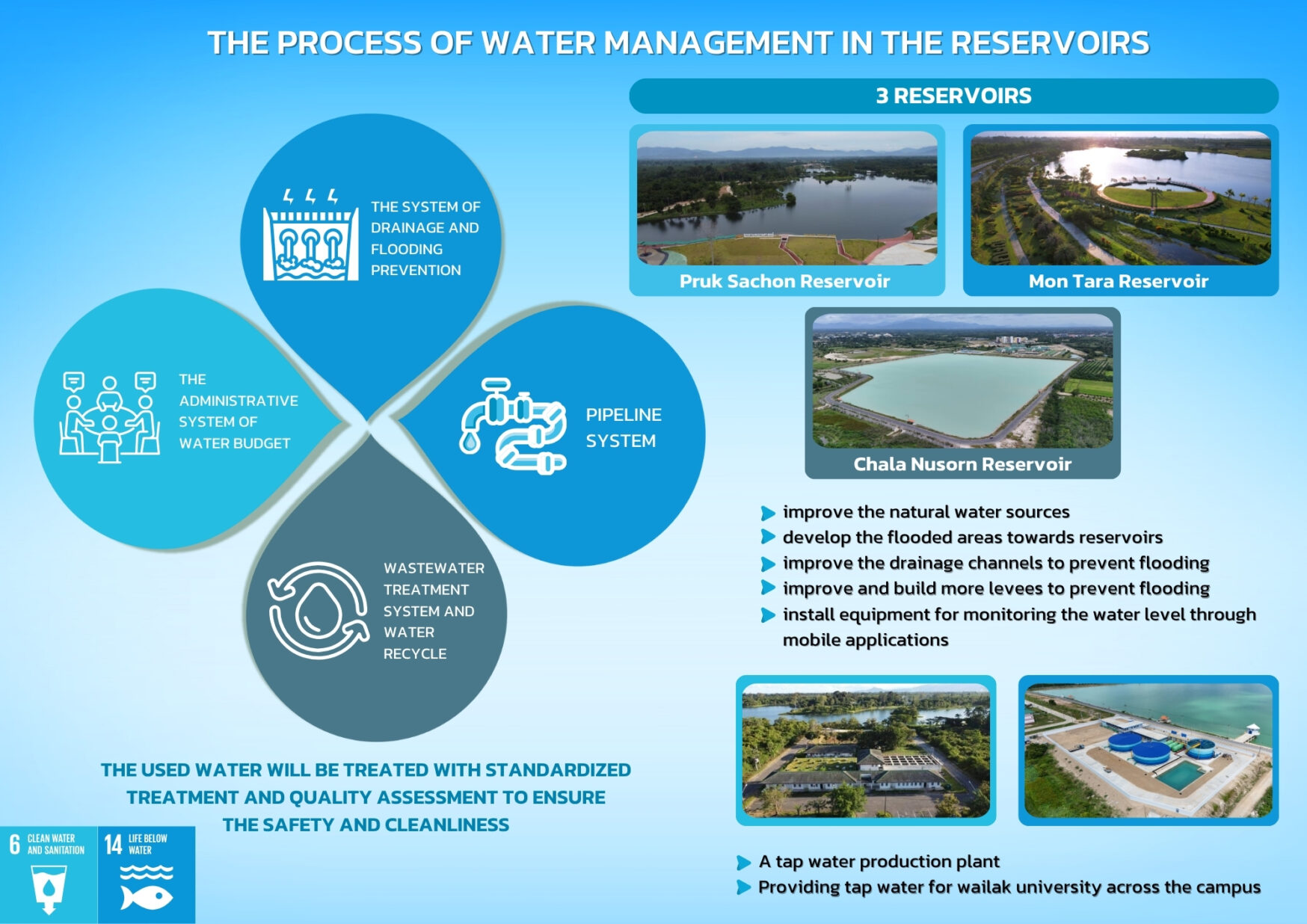
Figures: The Process of Water Management in the Reservoirs. (Walailak University, Thailand)
The Process of Water Management in the Reservoirs
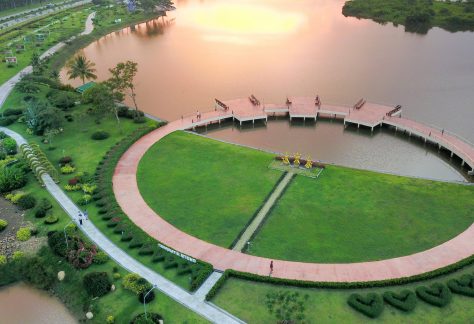
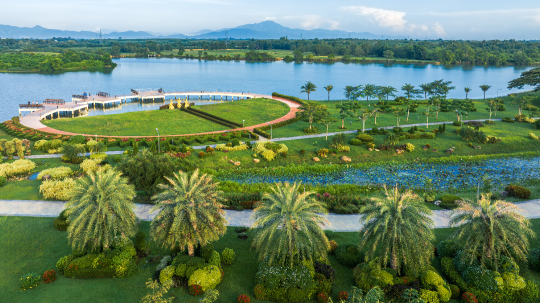
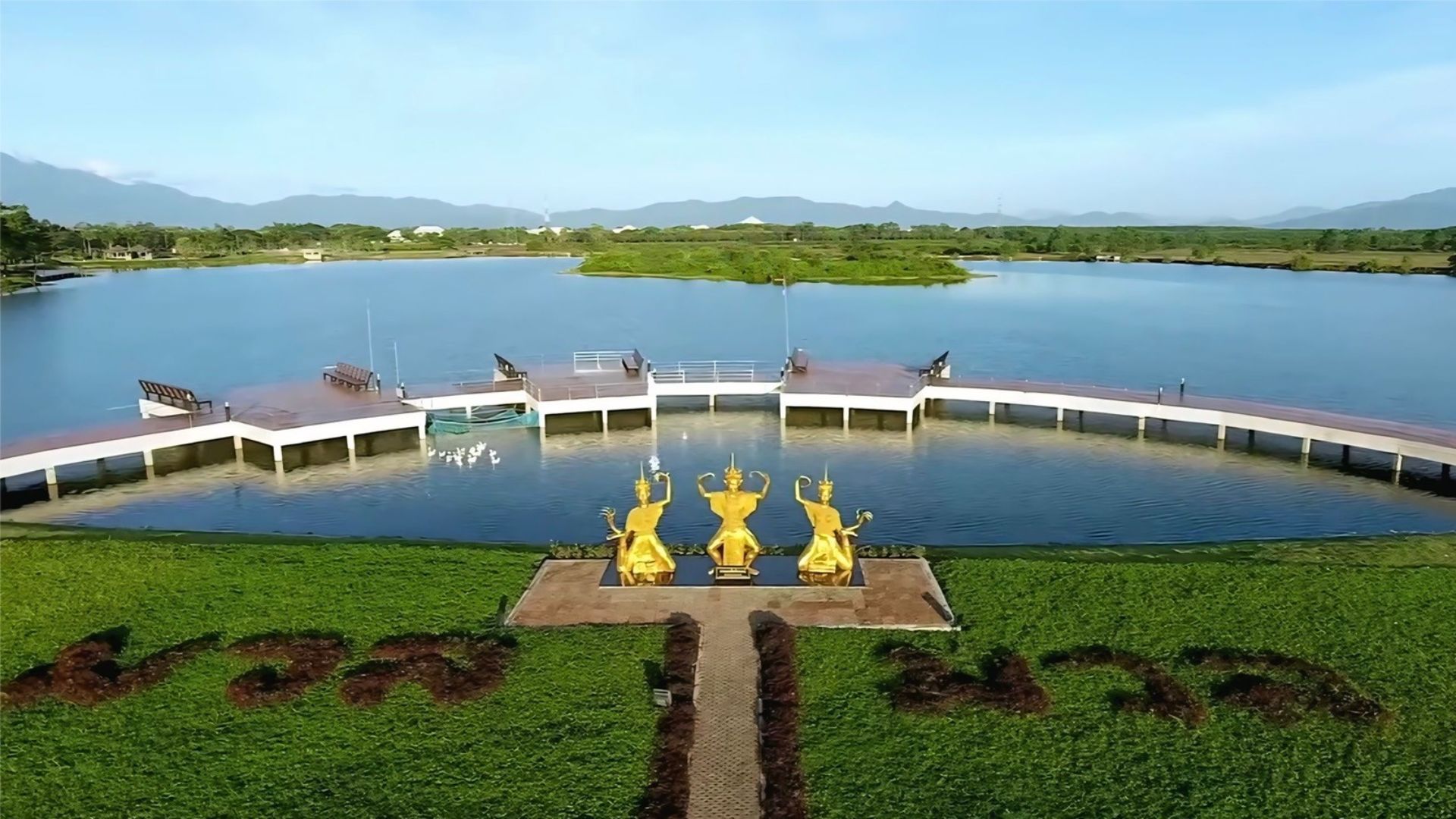
Walailak University has established a comprehensive water management system that integrates natural water resource development, flood prevention, efficient distribution, and wastewater recycling. The university relies on three primary reservoirs: Pruk Sachon Reservoir, Mon Tara Reservoir, and Chala Nusorn Reservoir, which serve as essential infrastructure for sustainable water utilization and climate resilience within the campus.
1. Reservoir and Natural Water Source Management
The university continually improves natural water sources and develops previously flooded areas into reservoirs to increase its water storage capacity. This approach not only enhances water security but also strengthens the university’s resilience against seasonal water shortages and climate–related risks.
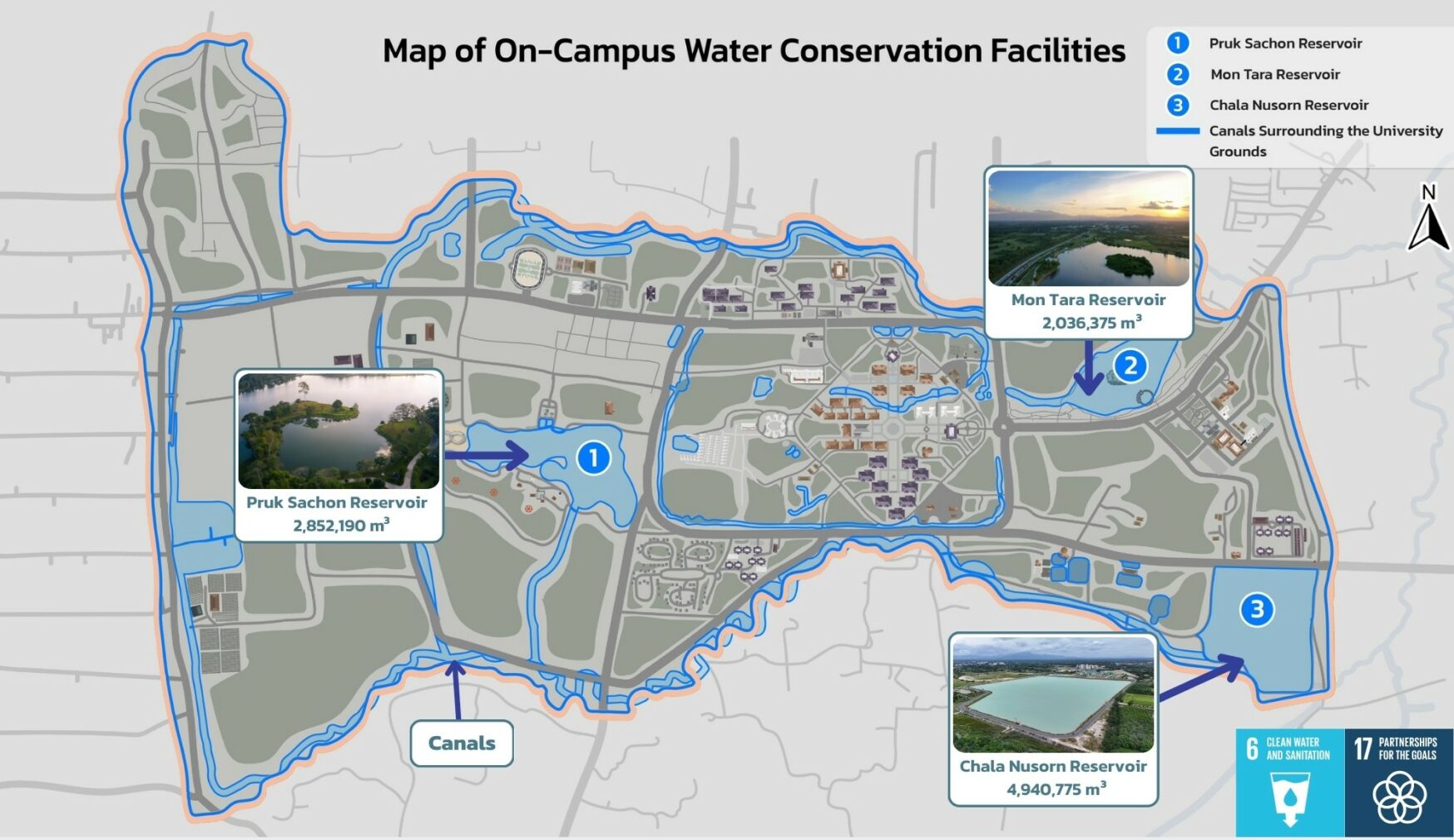
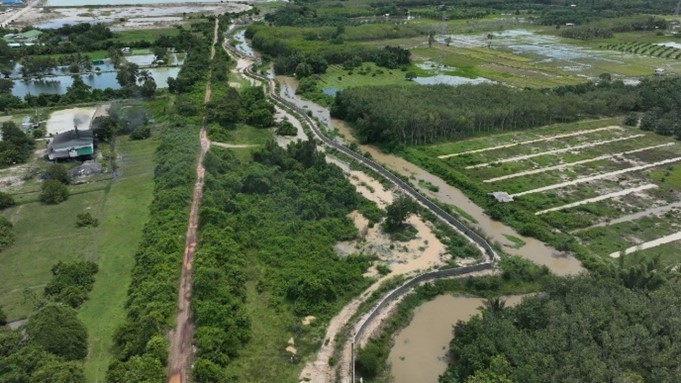
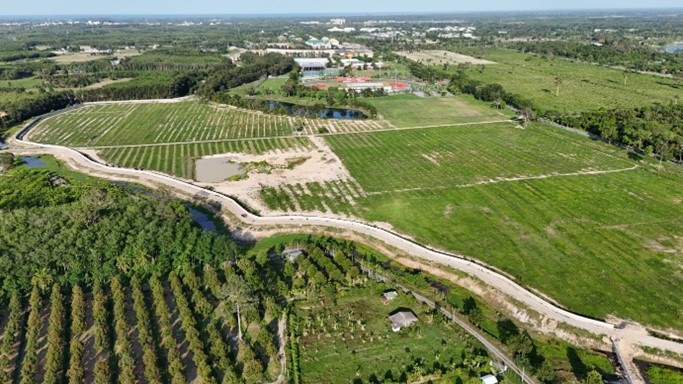
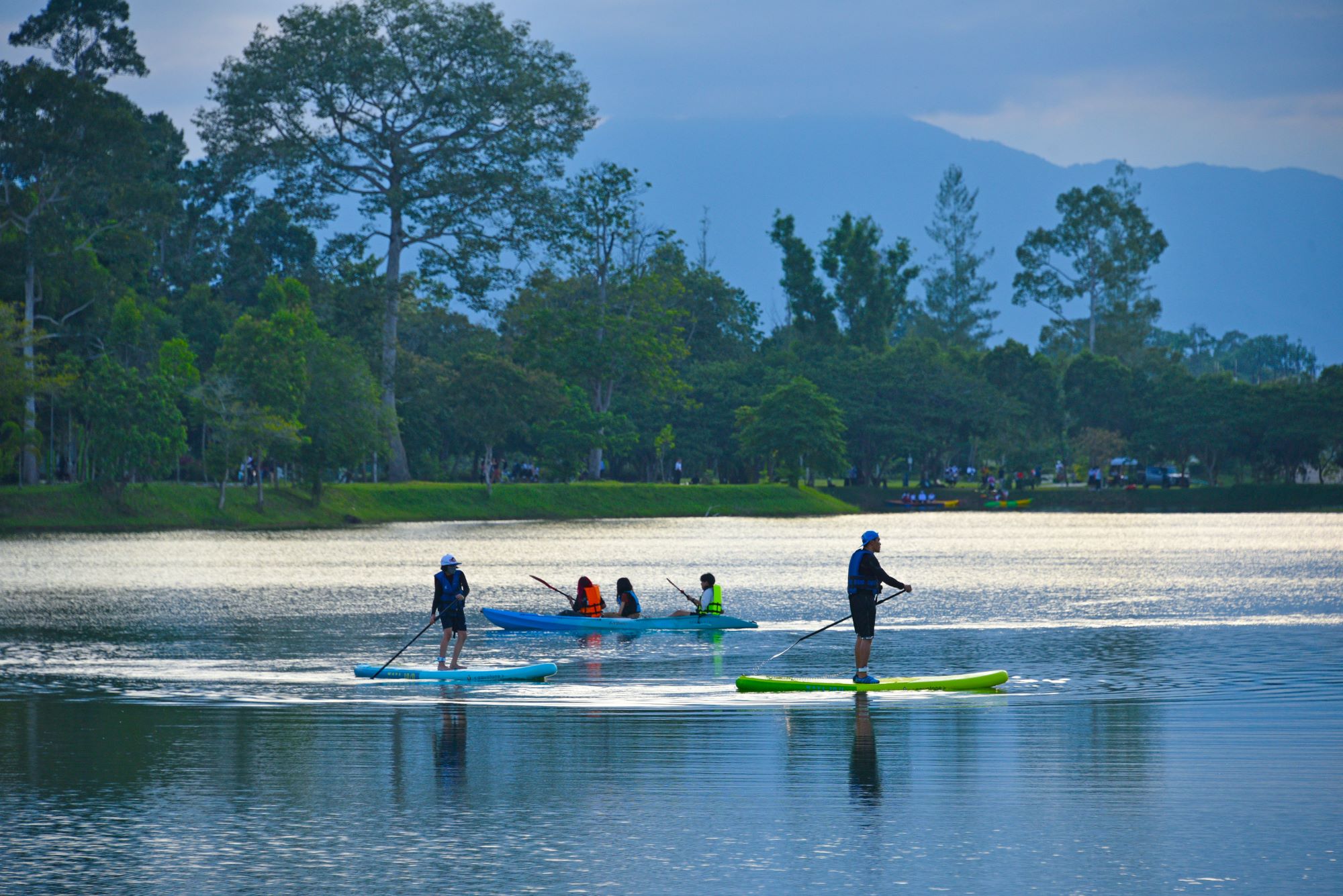
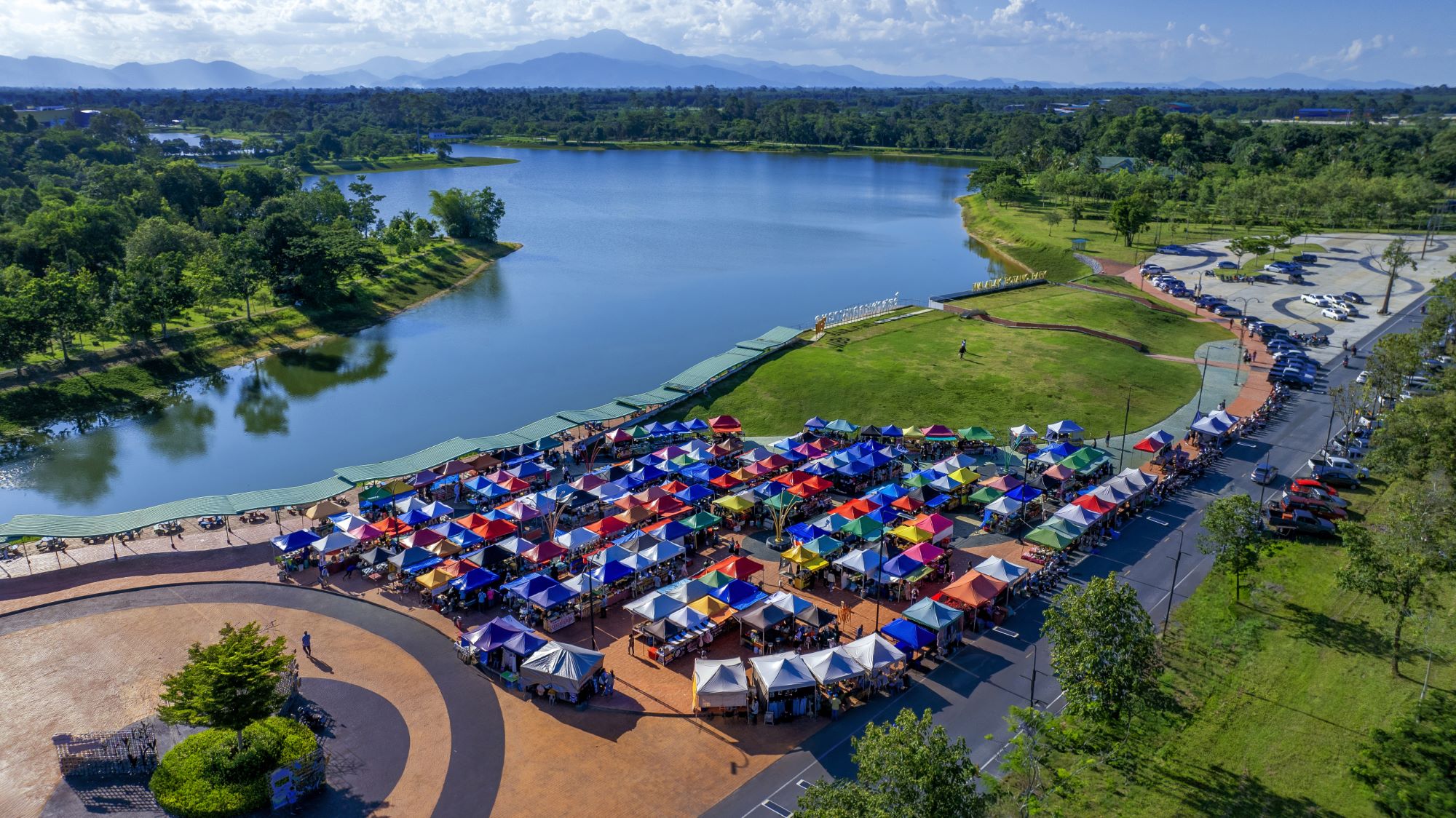
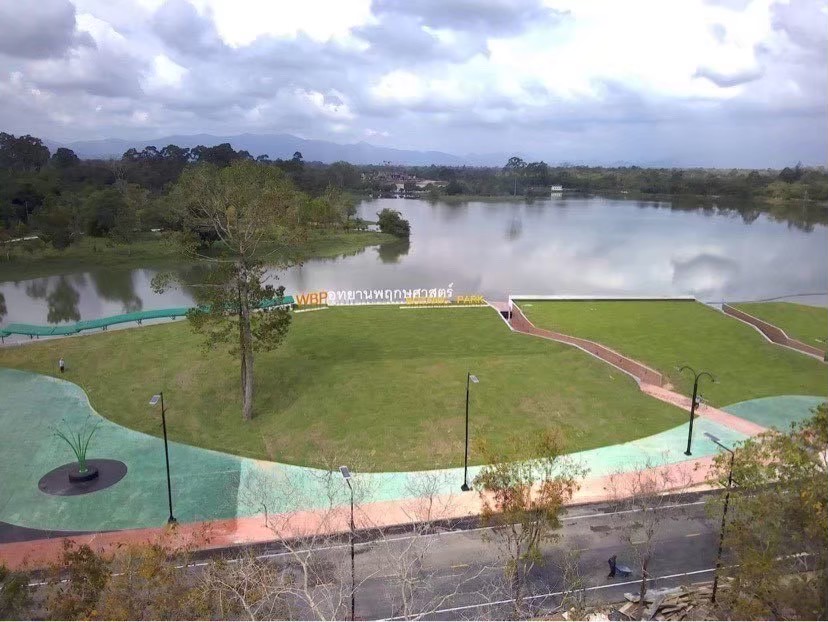
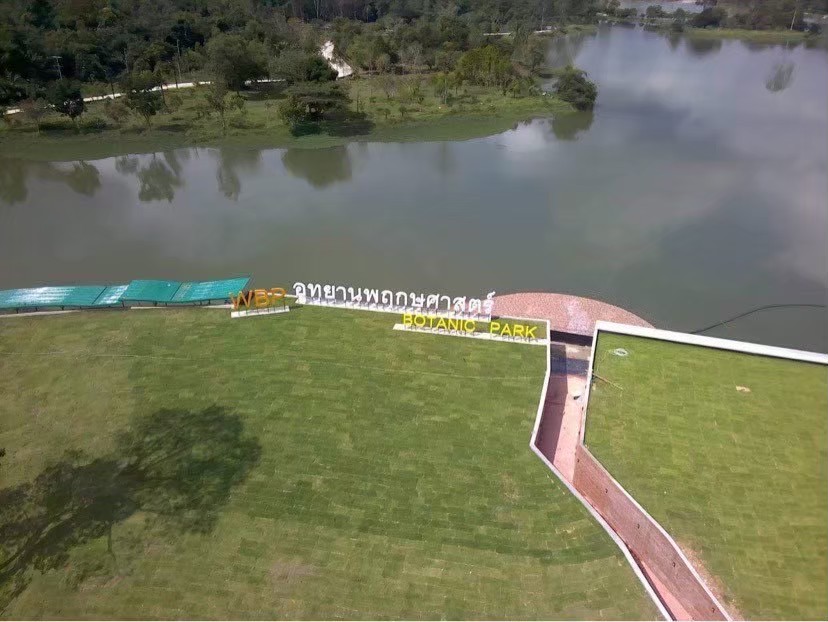
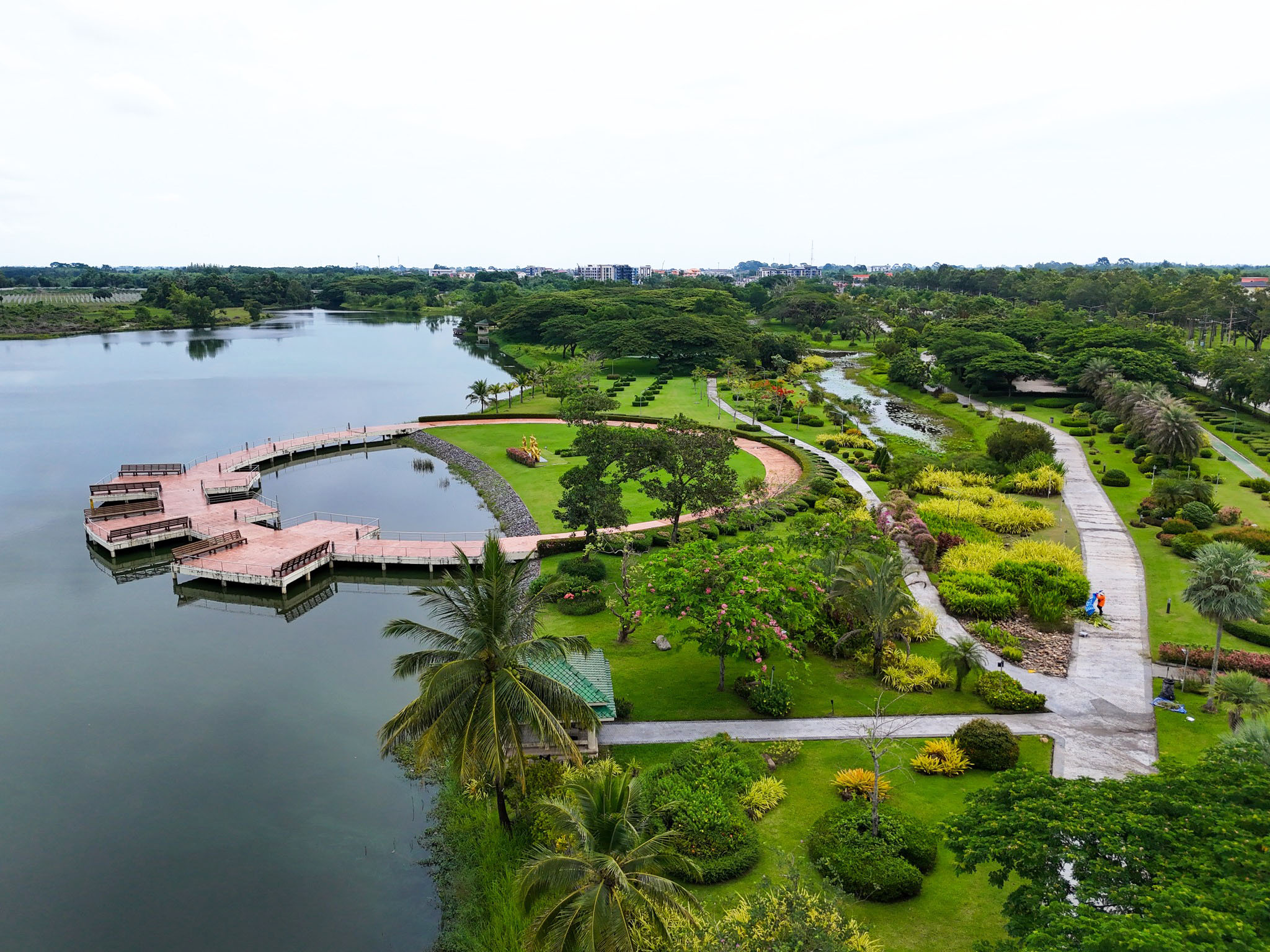
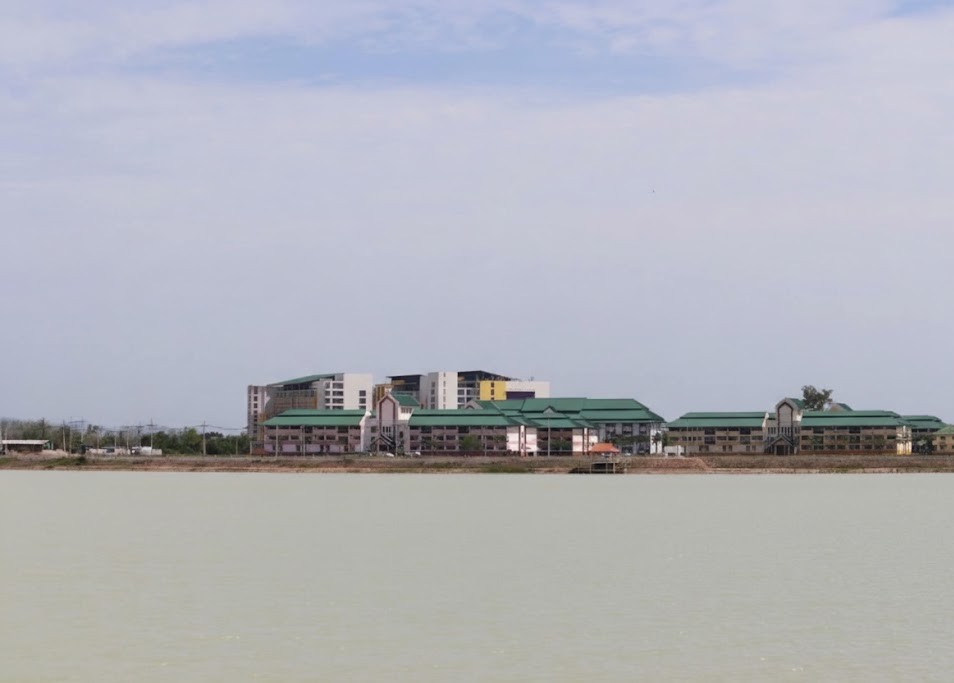
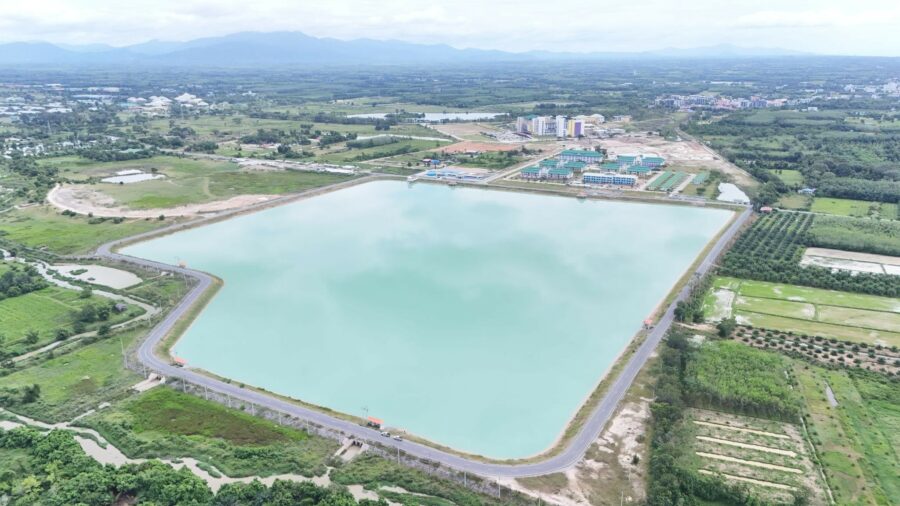
Figures: The reservoirs within Walailak University. (Mon Tara Reservoir, Pruk Sachon Reservoir and
Chala Nusorn Reservoir)
2. Drainage and Flood Prevention System
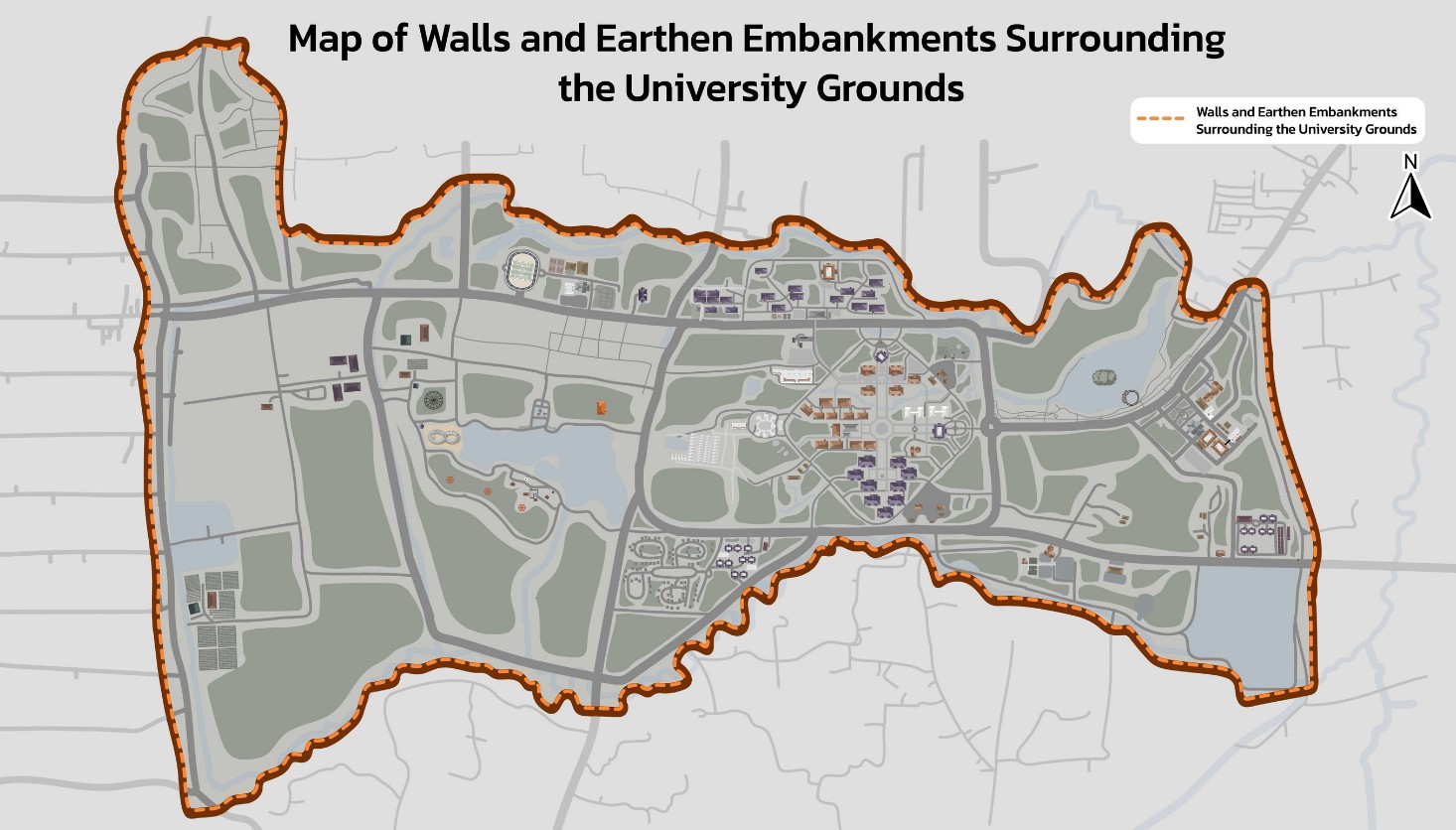
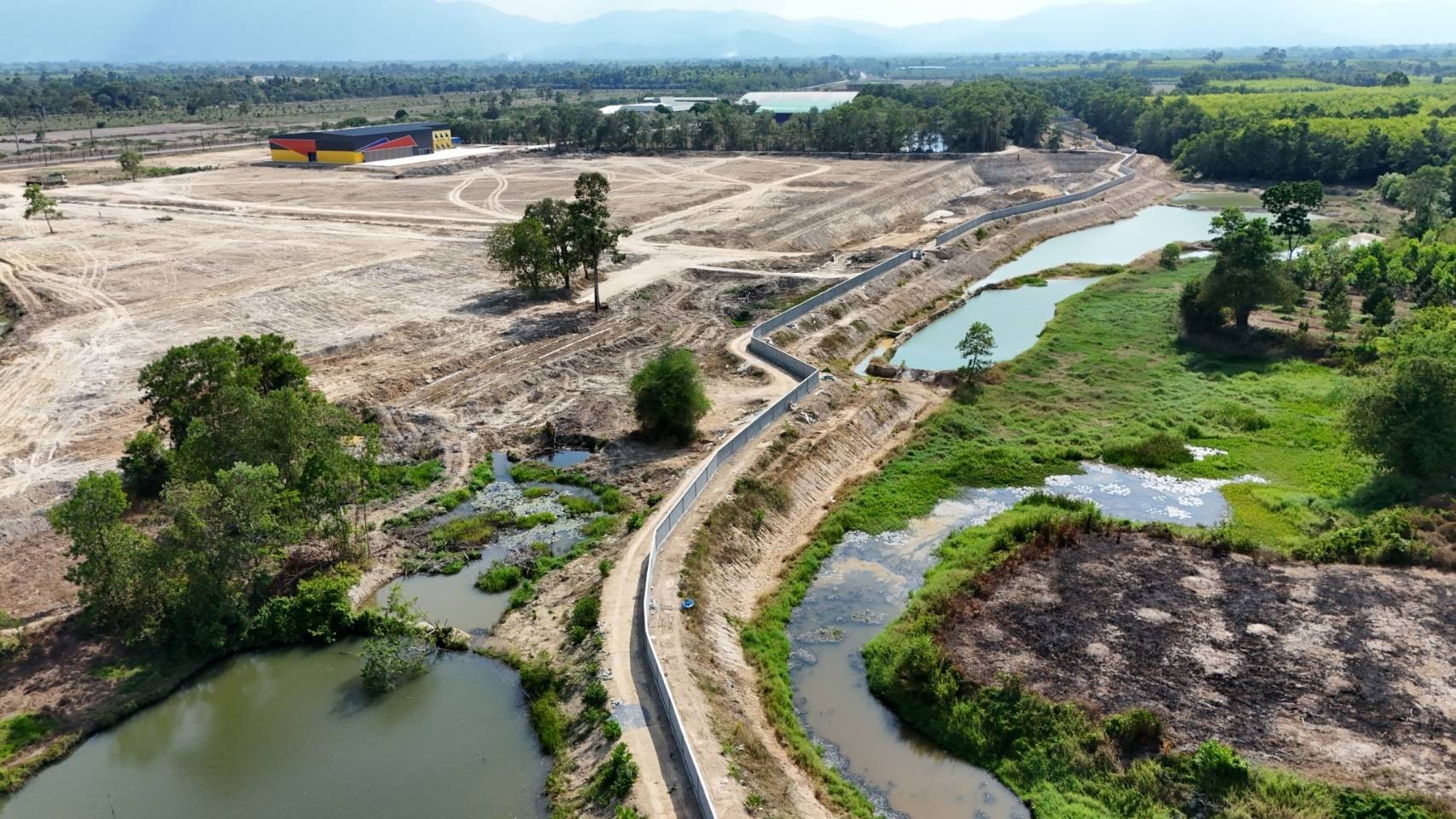
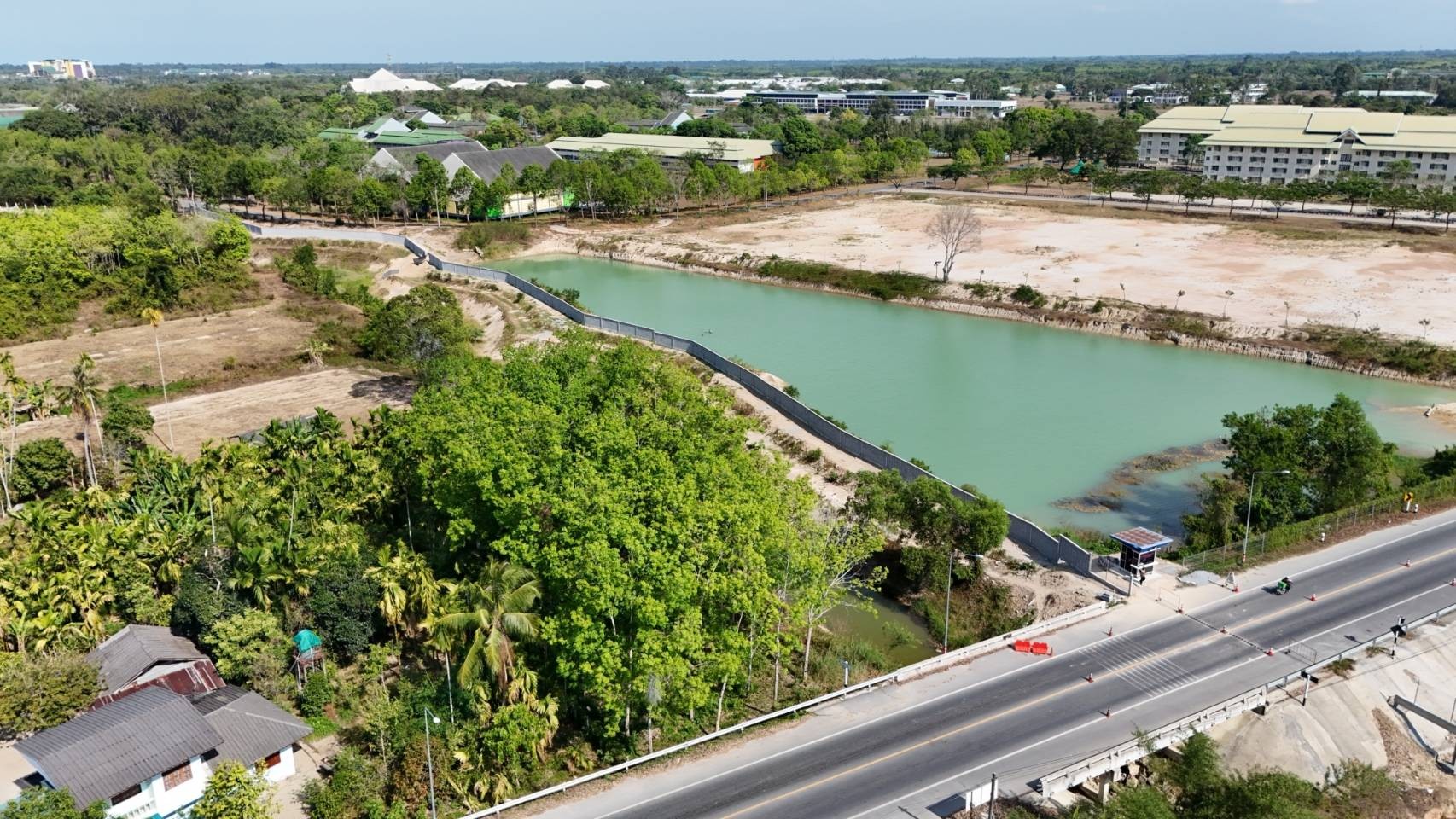
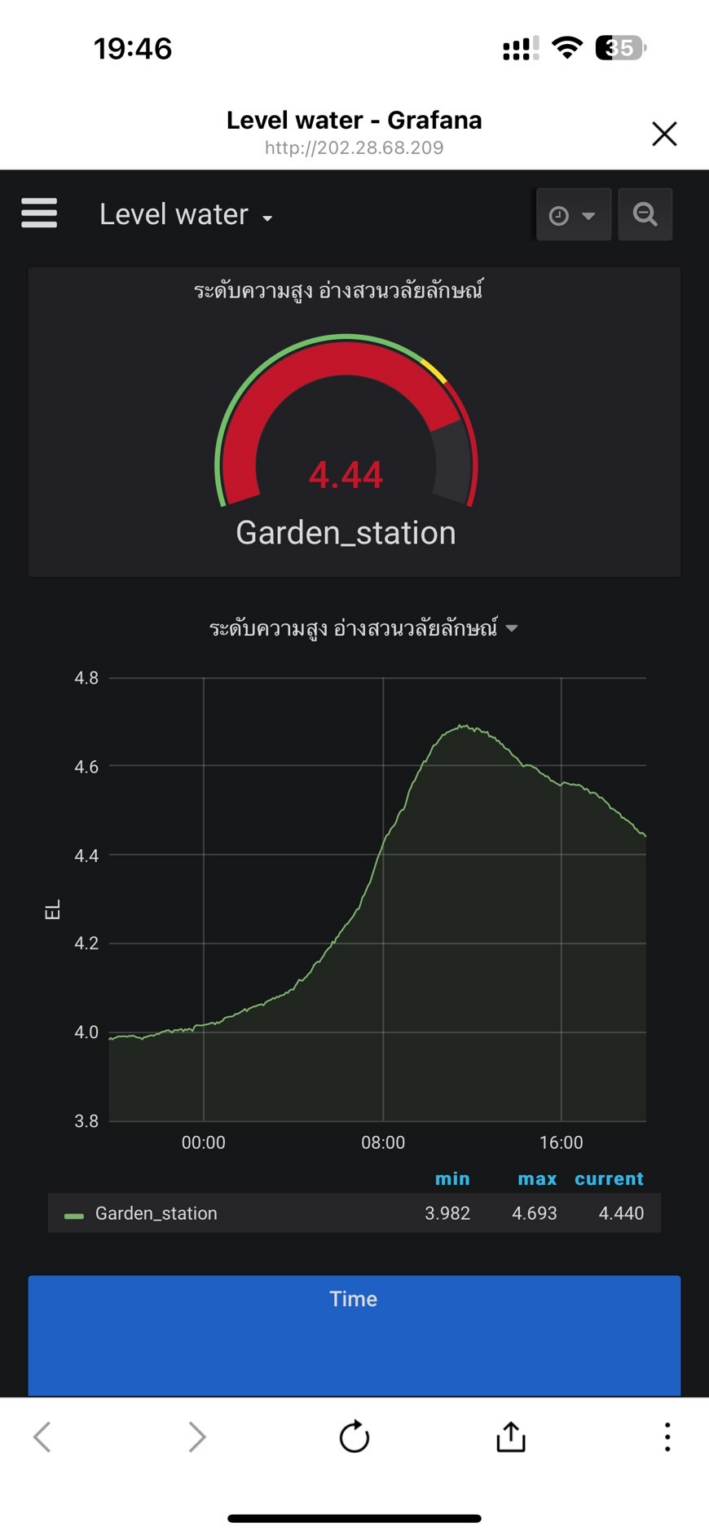
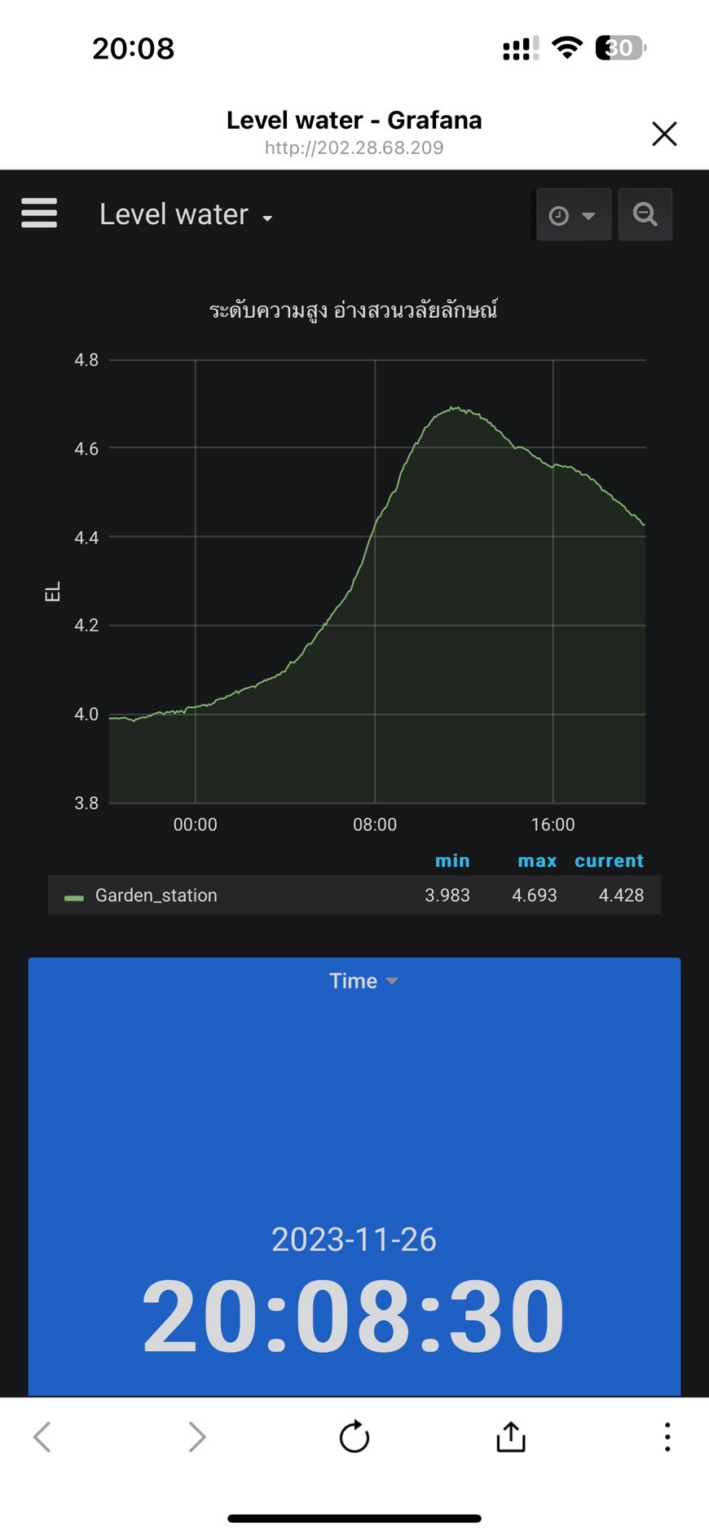
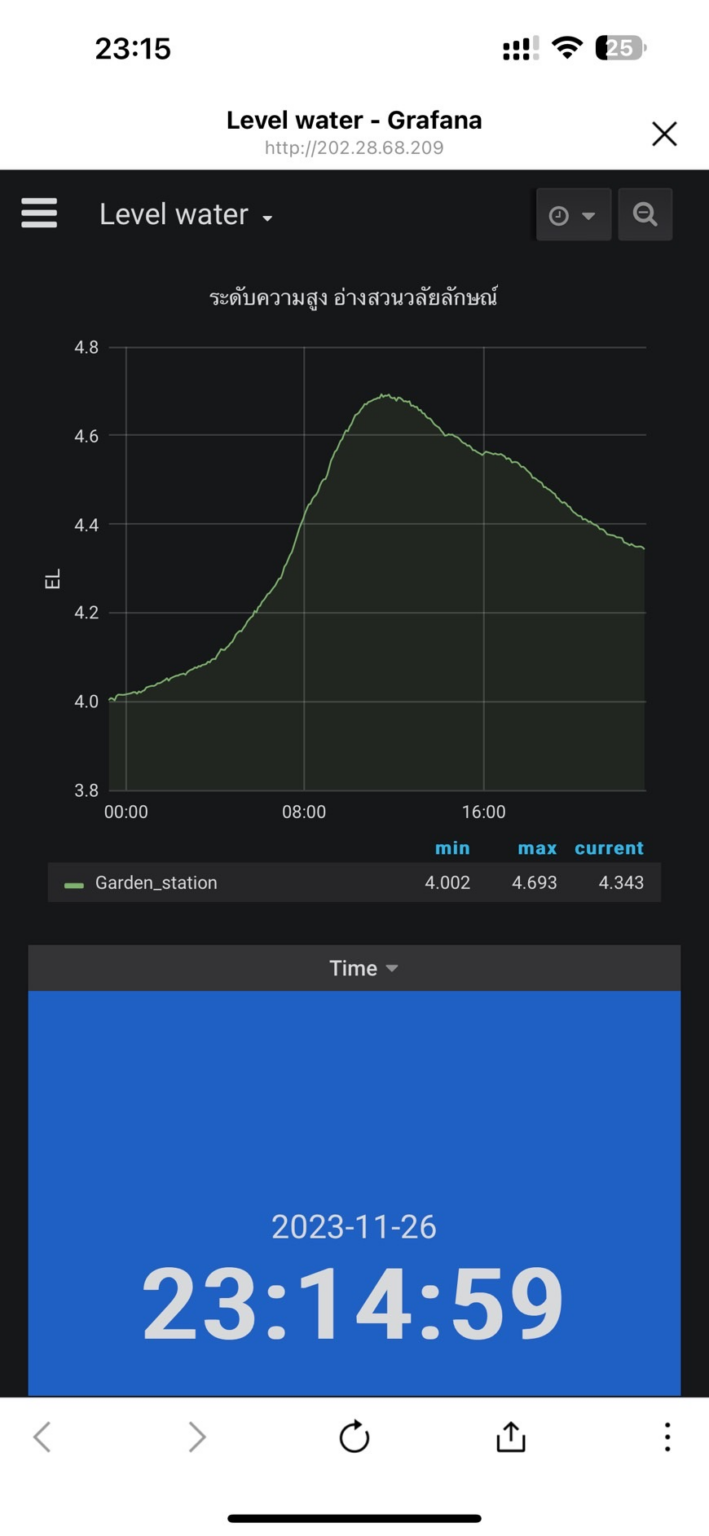
To prevent flooding, Walailak University has developed and upgraded drainage channels, and it has constructed additional levees around sensitive areas. Moreover, advanced monitoring devices are installed to measure real–time water levels, enabling efficient flood risk management through mobile applications.
Figures: Construction Project for Flood Protection Embankments, Water Control Structures in Drainage Canals, and Pumping Stations to Create a Flood and Storm Surge Prevention System at Walailak University
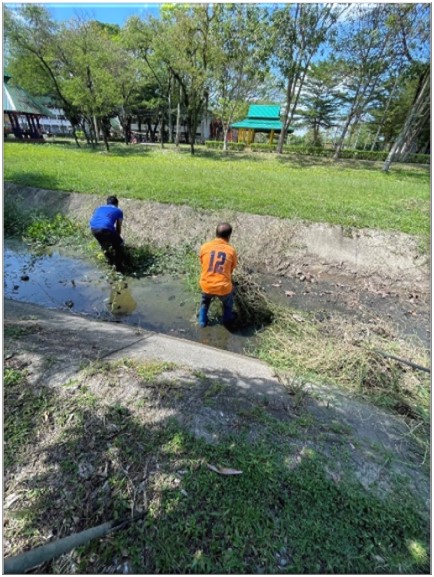
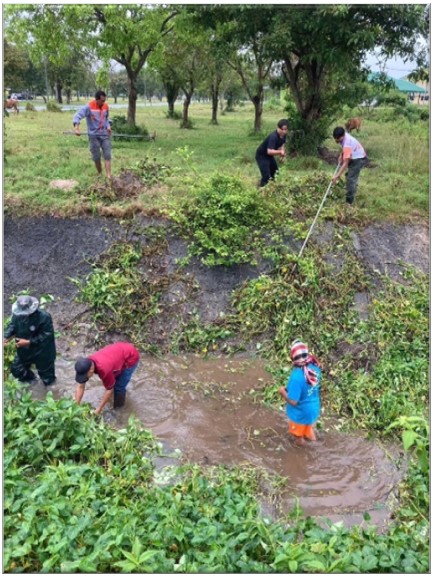
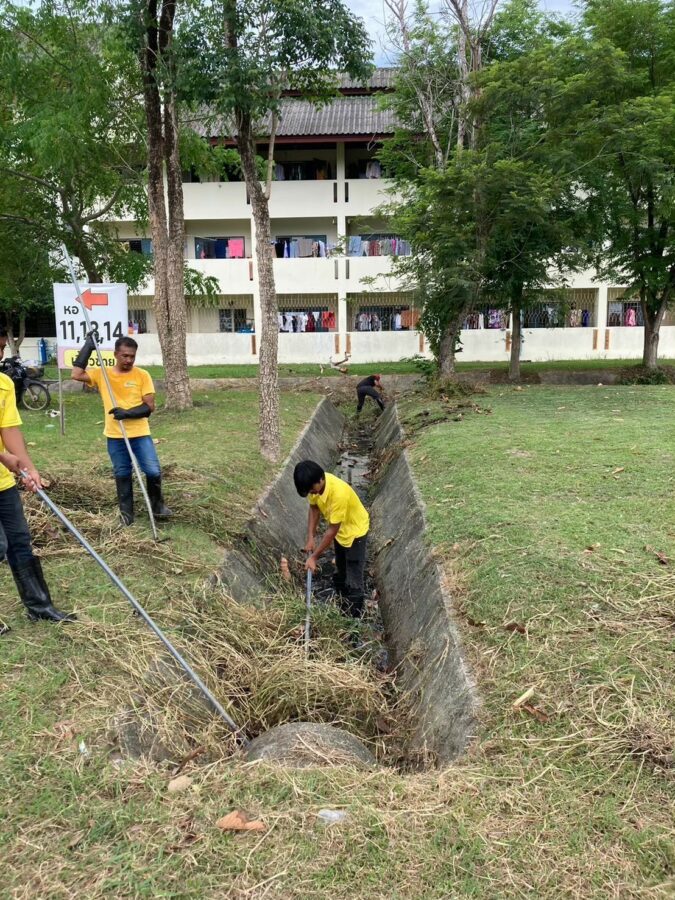
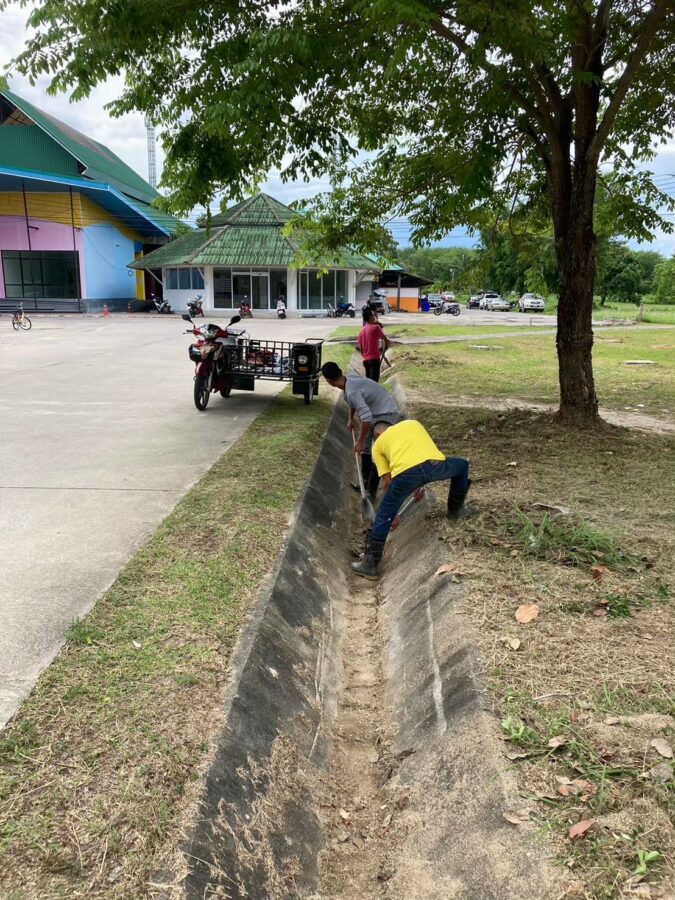
Figures: Dredging of Weeds and Sediment in Drainage Channels
3. Administrative System of Water Budget
A systematic administrative mechanism is in place to allocate and manage the water budget across the university’s various functions. This ensures that water resources are distributed efficiently and sustainably to support academic, residential, and operational activities.
4. Pipeline Distribution System
The pipeline network connects the reservoirs, water treatment plants, and campus facilities to provide a reliable supply of clean tap water. This integrated system ensures that the entire university community has consistent access to safe water for daily consumption and operational needs.
5. Wastewater Treatment and Water Recycling
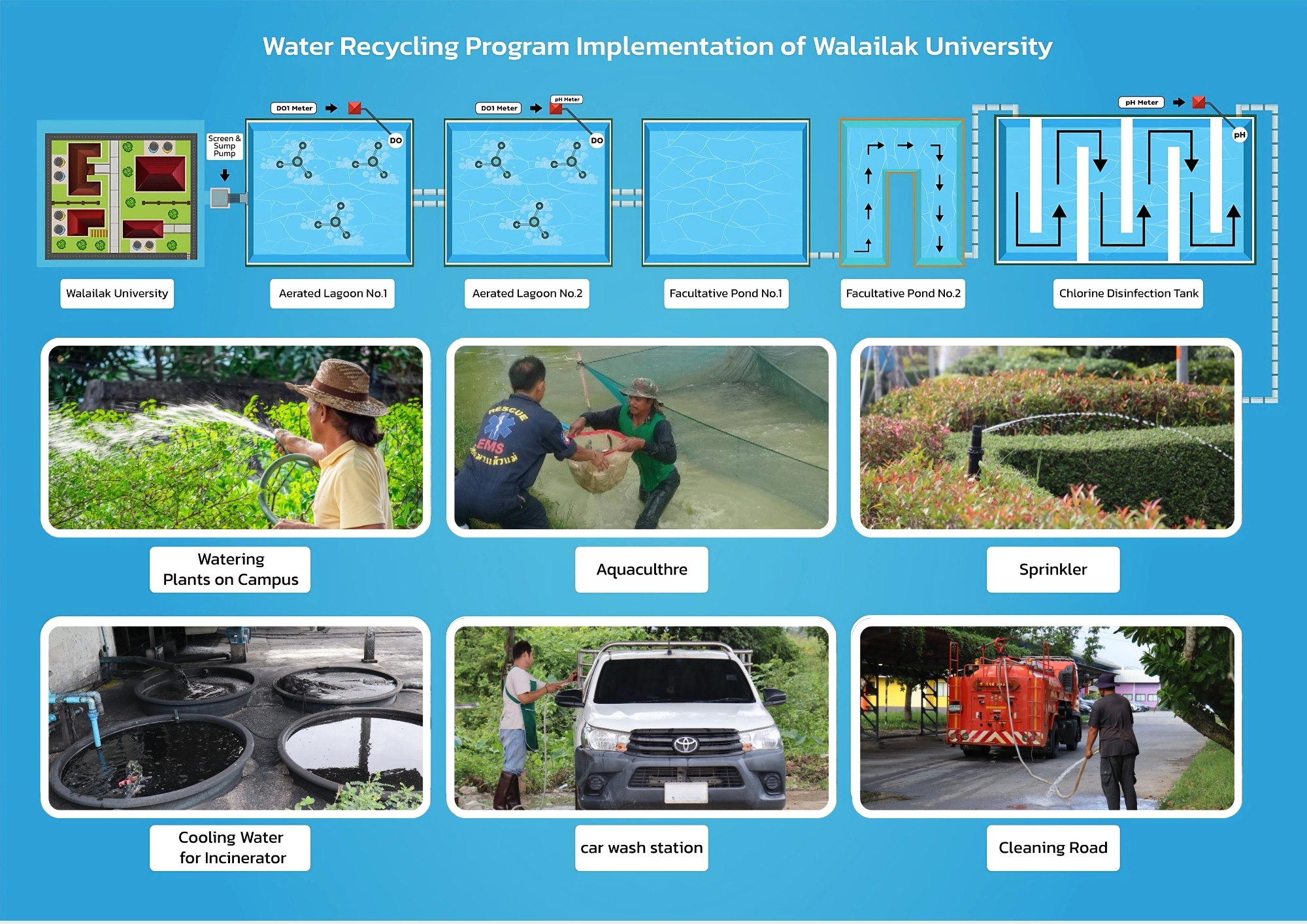
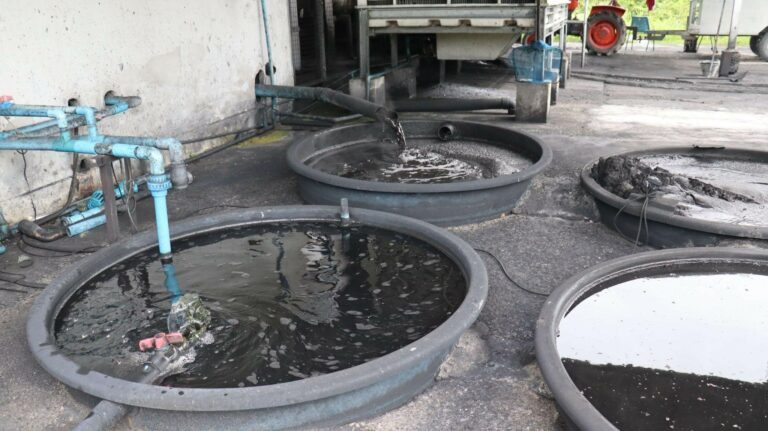
Walailak University operates a standardized wastewater treatment system to ensure the quality of water before reuse. Treated water is recycled and utilized in various applications, such as landscape irrigation and ecosystem support, reducing the overall demand for freshwater extraction. This initiative demonstrates the university’s commitment to sustainable water use and environmental stewardship.
Walailak University, located in Southern Thailand, spans a total area of 15,350,400 square meters, making it the largest university in the country in terms of land area. Due to its geographical location, the university experiences seasonal droughts during the summer and heavy rainfall in the rainy season. To ensure effective and sustainable management of water resources, the university has developed a comprehensive water storage and conservation system, comprising reservoirs, ponds, lakes, and canals, covering a total surface area of 1,712,217 square meters with a combined storage capacity of approximately 14,097,094 cubic meters. This integrated system plays a crucial role in preventing floods during the rainy season and securing an adequate water supply during periods of drought.
Walailak University has established a systematic and formalized water conservation and management program, supported by well-developed infrastructure, including reservoirs, ponds, canals, and basins distributed throughout the campus. These water bodies are carefully designed and managed to ensure sufficient water storage for domestic and agricultural use, flood mitigation, ecological balance, and educational and research purposes. In addition to the large-scale reservoirs and ponds, the university implements complementary measures such as lake and pond management systems, rainwater harvesting systems, water tanks, bio-pore infiltration systems, and recharge wells to enhance water sustainability and promote groundwater replenishment.
The university’s water management system is anchored by three main reservoirs, which serve as key infrastructure for maintaining water security:
Reservoir No. 1: Pruk Sachon Reservoir:
- Area: 259,290 square meters
- Capacity: 2,852,190 cubic meters
Originally the primary source for tap water production within the university, Pruk Sachon Reservoir has now been repurposed as a strategic water reserve to enhance overall water security. It also plays a vital role in flood control during the rainy season and mitigates the effects of drought in the dry season, maintaining its importance in sustainable water management.
Reservoir No. 2: Mon Tara Reservoir
- Area: 185,125 square meters
- Capacity: 2,036,375 cubic meters
Mon Tara Reservoir provides additional water reserves, supporting the university’s water management system by reducing the risk of shortages during the dry season and mitigating flooding or overflow during periods of heavy rainfall.
Reservoir No. 3: Chala Nusorn Reservoir
- Area: 329,385 square meters
- Capacity: 4,940,775 cubic meters
As the largest and most significant reservoir in the university’s system, Chala Nusorn Reservoir is designed for integrated use. It currently serves as the primary reservoir for tap water production within the university. In addition, it ensures water availability for domestic consumption, supports agricultural activities, aids in flood control during the rainy season, and mitigates the impacts of drought.
Together, these three reservoirs enable Walailak University to manage its water resources in a comprehensive and sustainable manner, ensuring water security for domestic use, agriculture, and the surrounding environment. Currently, the university’s water conservation program encompasses 42 water conservation areas, forming an integrated network that exemplifies Walailak University’s strong commitment to sustainable water management.
Walailak University has a potable water production capacity of 4,800 cubic meters per day, equivalent to 1,728,000 cubic meters per year. The production of potable water at the university utilizes raw water collected from rainwater and stormwater stored in Chala Nusorn Reservoir. These sources of raw water are free from chemicals, pathogens, and contamination from industrial or community wastewater, ensuring that the water produced is safe, clean, and of high quality in accordance with consumption standards.
In 2025, Walailak University had a total population of 17,626 individuals, comprising 14,492 students and 3,134 staff members. Monitoring data indicate that the total annual water consumption within the university amounted to 353,743 cubic meters, averaging 969.16 cubic meters per day, with a per capita water consumption of 0.05 cubic meters per person per day. When comparing the university’s water usage to the total water storage capacity, only 2.49% of the stored water is utilized. All water used for domestic purposes is processed through the university’s wastewater treatment system, and the treated water is subsequently repurposed for various applications, including irrigation, street cleaning, cooling in incinerators, and aquaculture. Consequently, Walailak University achieves full conservation of its water resources.
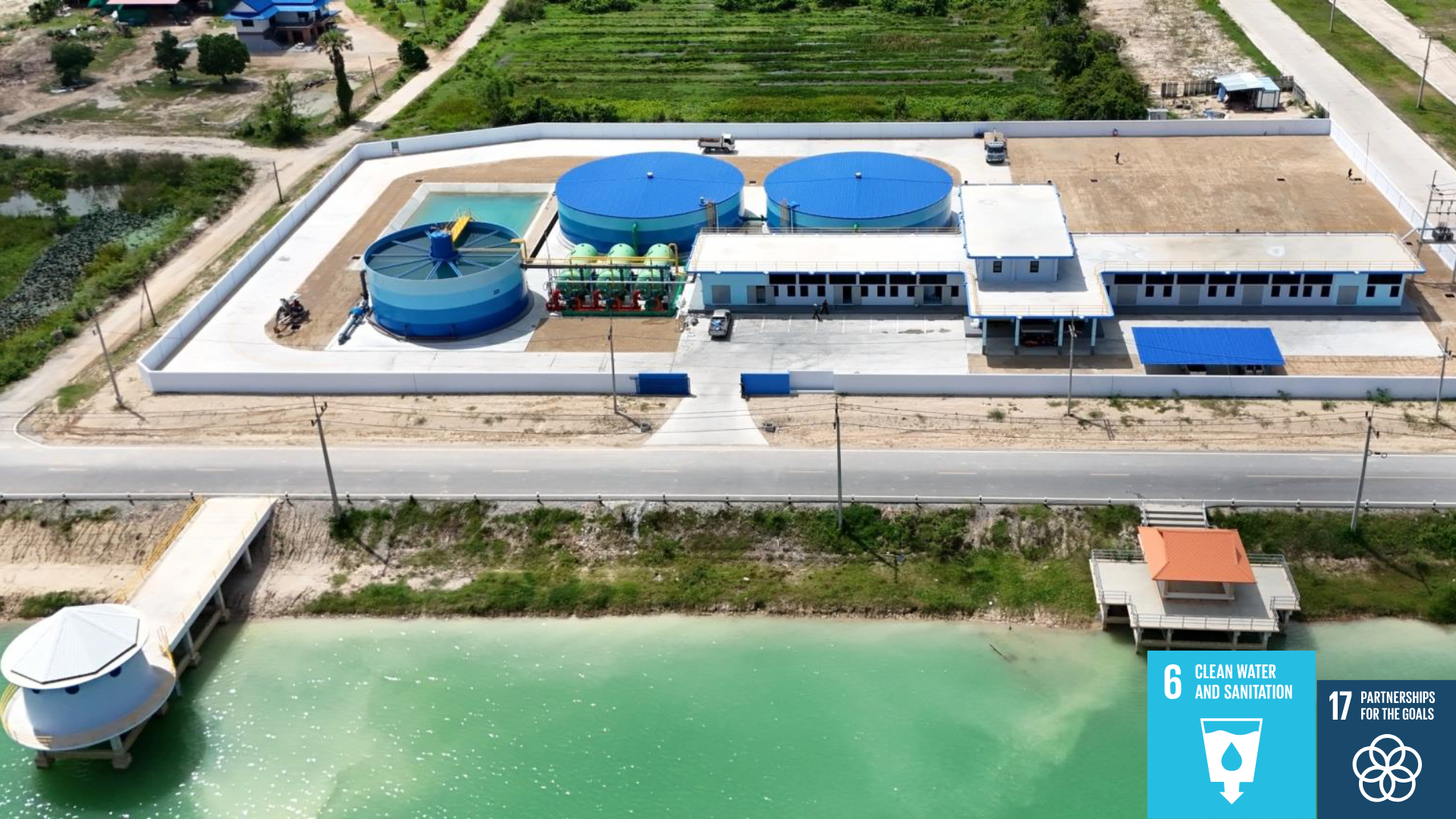
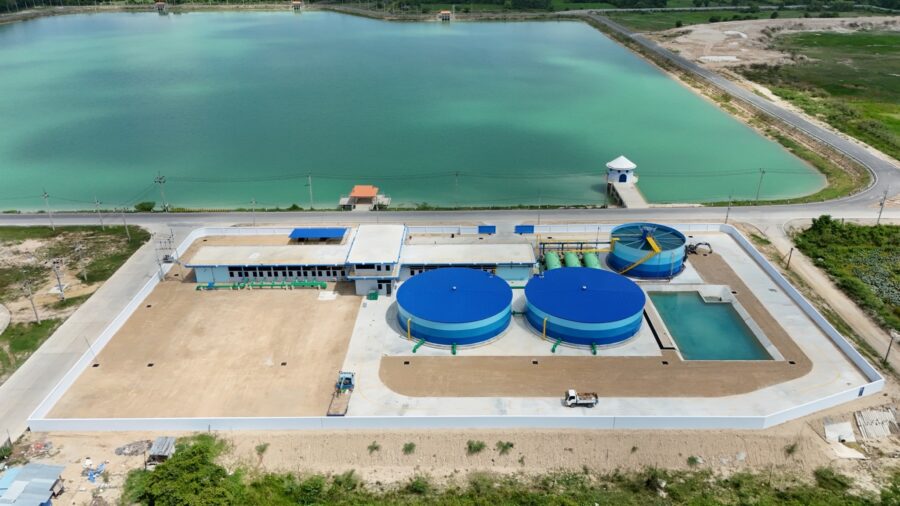
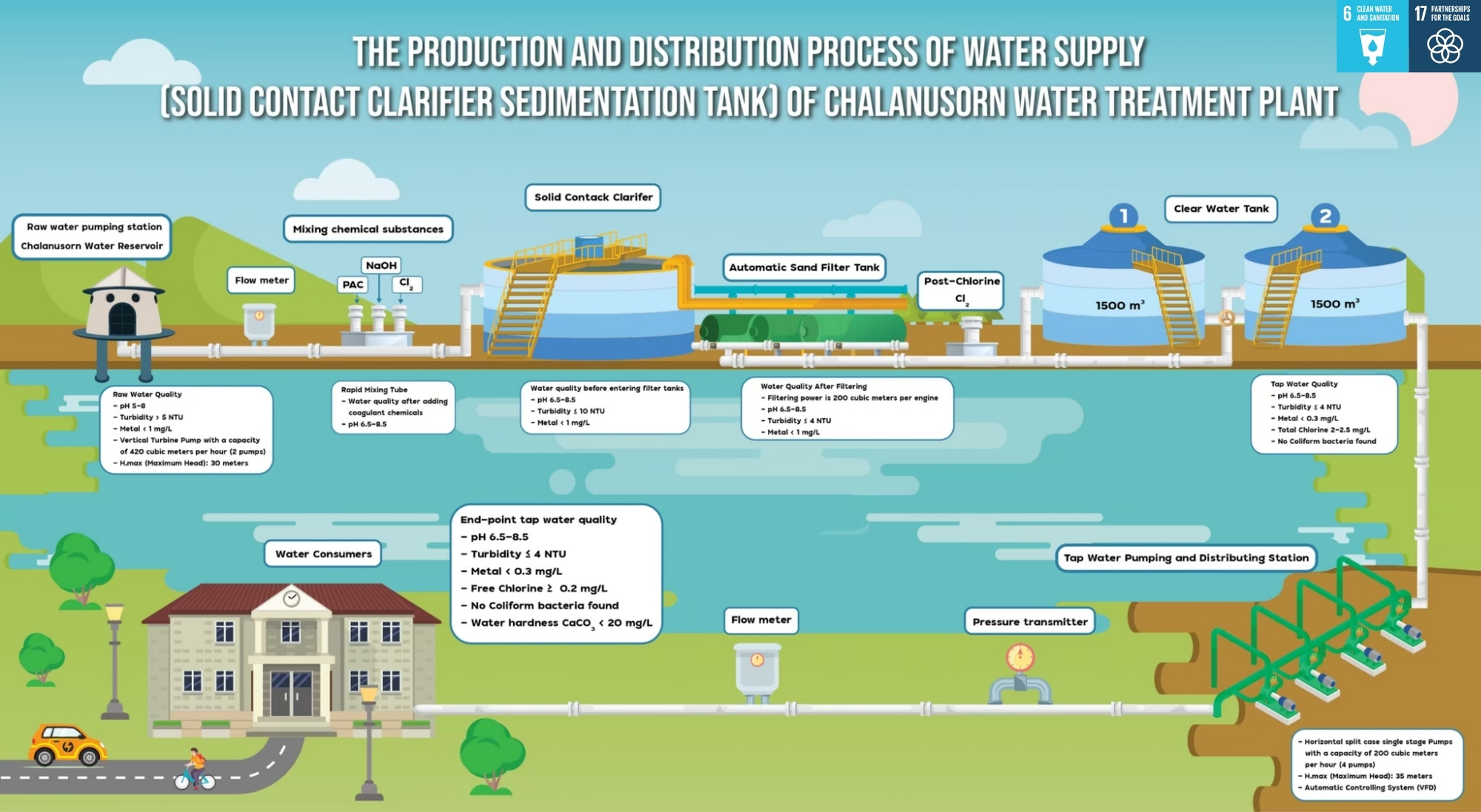
Figures: The water production plant at Reservoir 3 for consumption on campus
In 2025, the university transitioned to using the Chala Nusorn Water Supply Plant, managed and supervised by the Division of Building and Grounds, as the main facility for potable water production. This ensures that the university consistently produces safe, high-quality, and sufficient drinking water to meet campus needs.
The potable water production process employs sustainable pumping technology, designed to protect biodiversity, ecosystems, and local community livelihoods. Raw water is pumped through 400-mm pipelines to a static mixer, where chemicals are added for purification before undergoing sedimentation and subsequent treatment processes to meet consumption standards.
To ensure sustainability, Walailak University has established four guiding principles:
- All pumping technologies must not negatively impact biodiversity, ecosystems, or habitats within and beyond the campus.
- Local communities must not be adversely impacted, especially from flooding that could damage aquaculture and agriculture.
- The livelihoods of staff and students must not be disrupted by water extraction activities.
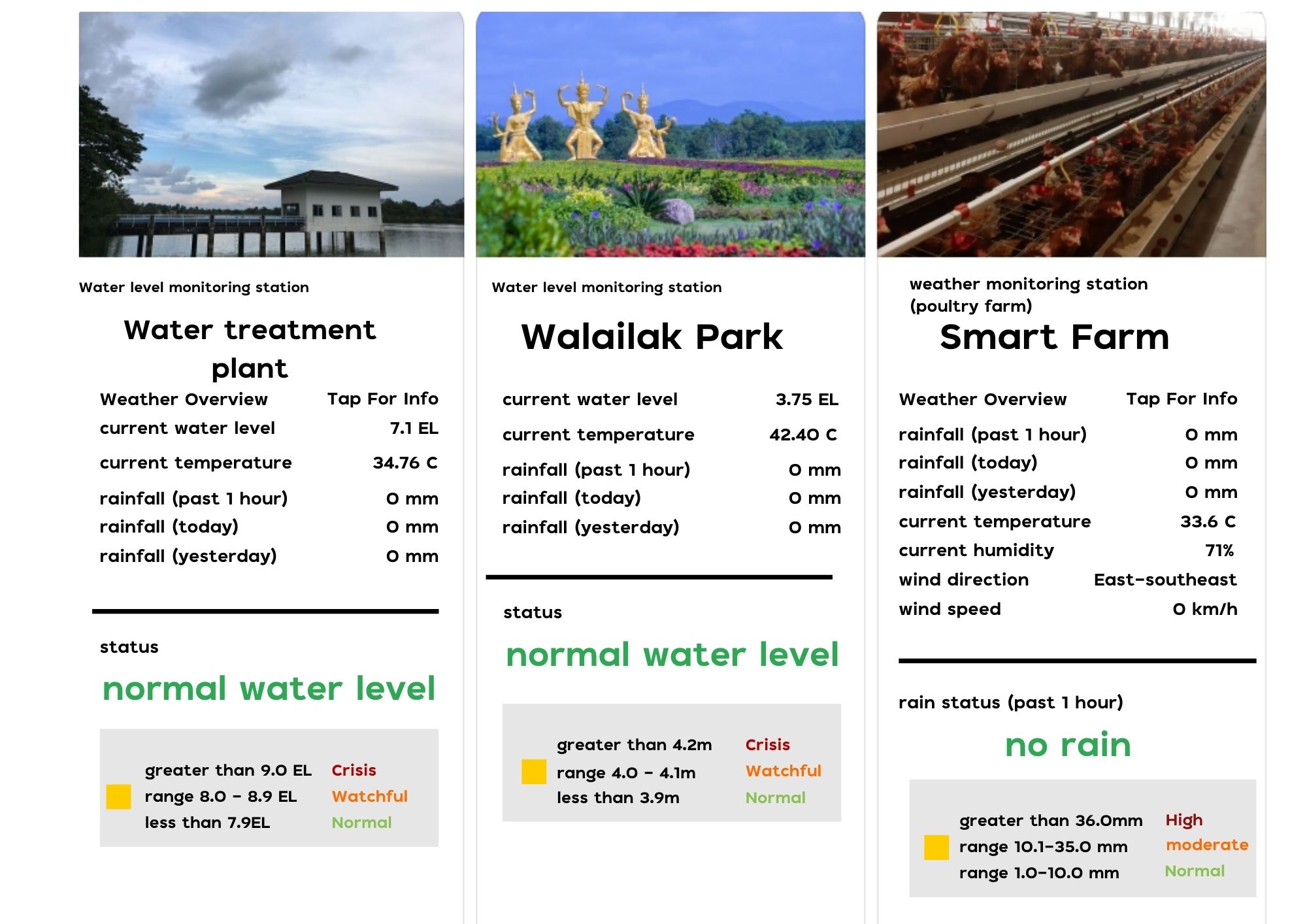
Relevant staff must use the BOT CDT application to monitor real-time water levels in all reservoirs, thereby ensuring the safety of students, staff, and surrounding communities.
Figures: Mobile Application (Bot CDT) for Monitoring and Reporting Water Situations
All water used for domestic purposes is processed through the standardized wastewater treatment system before being fully reused (100% recycling) for multiple applications, including:
Watering plants on campus to maintain green areas.
Aquaculture for sustainable fish farming practices.
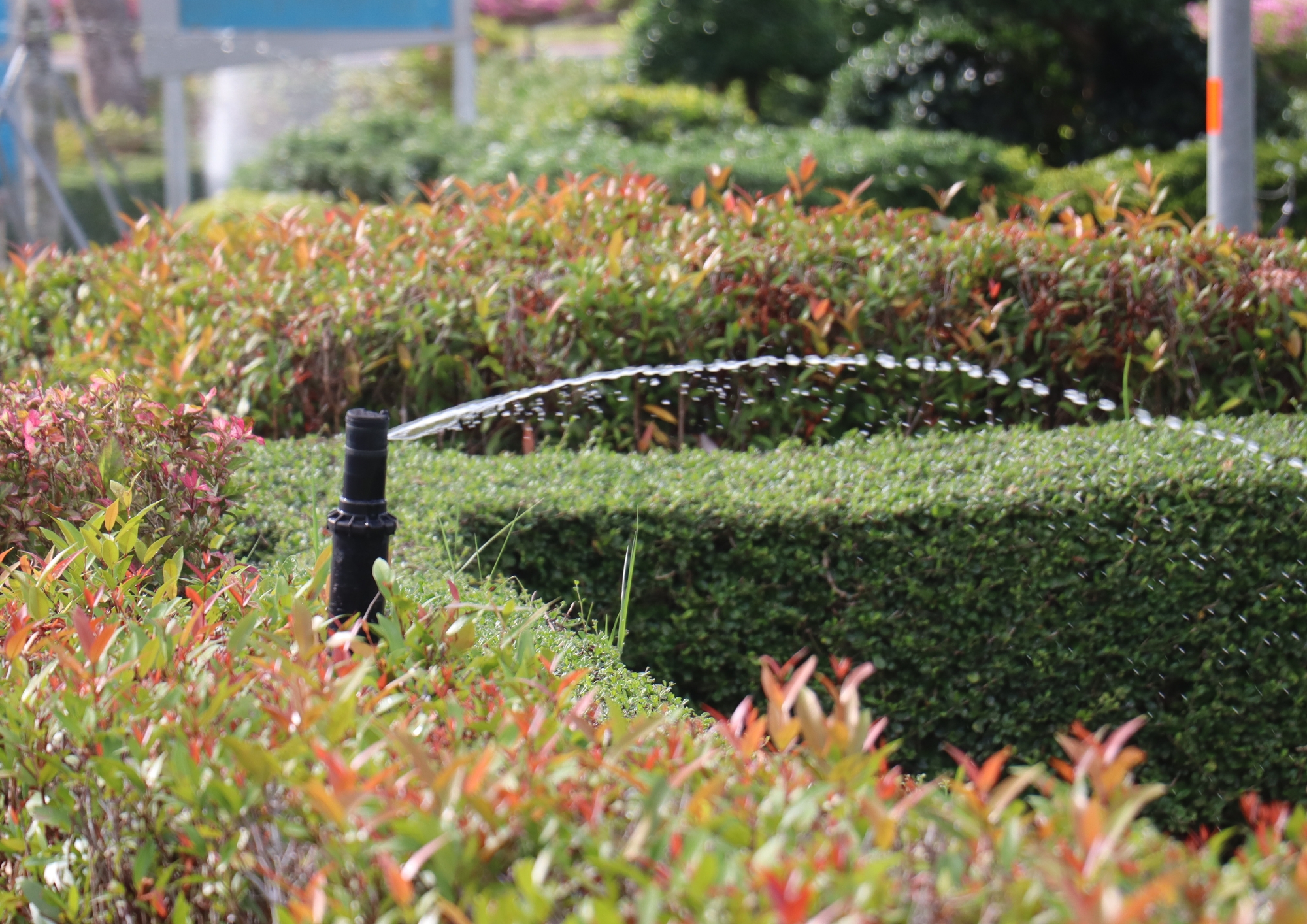
Sprinkler systems for lawn irrigation.
Cooling water for the incinerator to support efficient waste management.
Car wash station for university and staff vehicles.
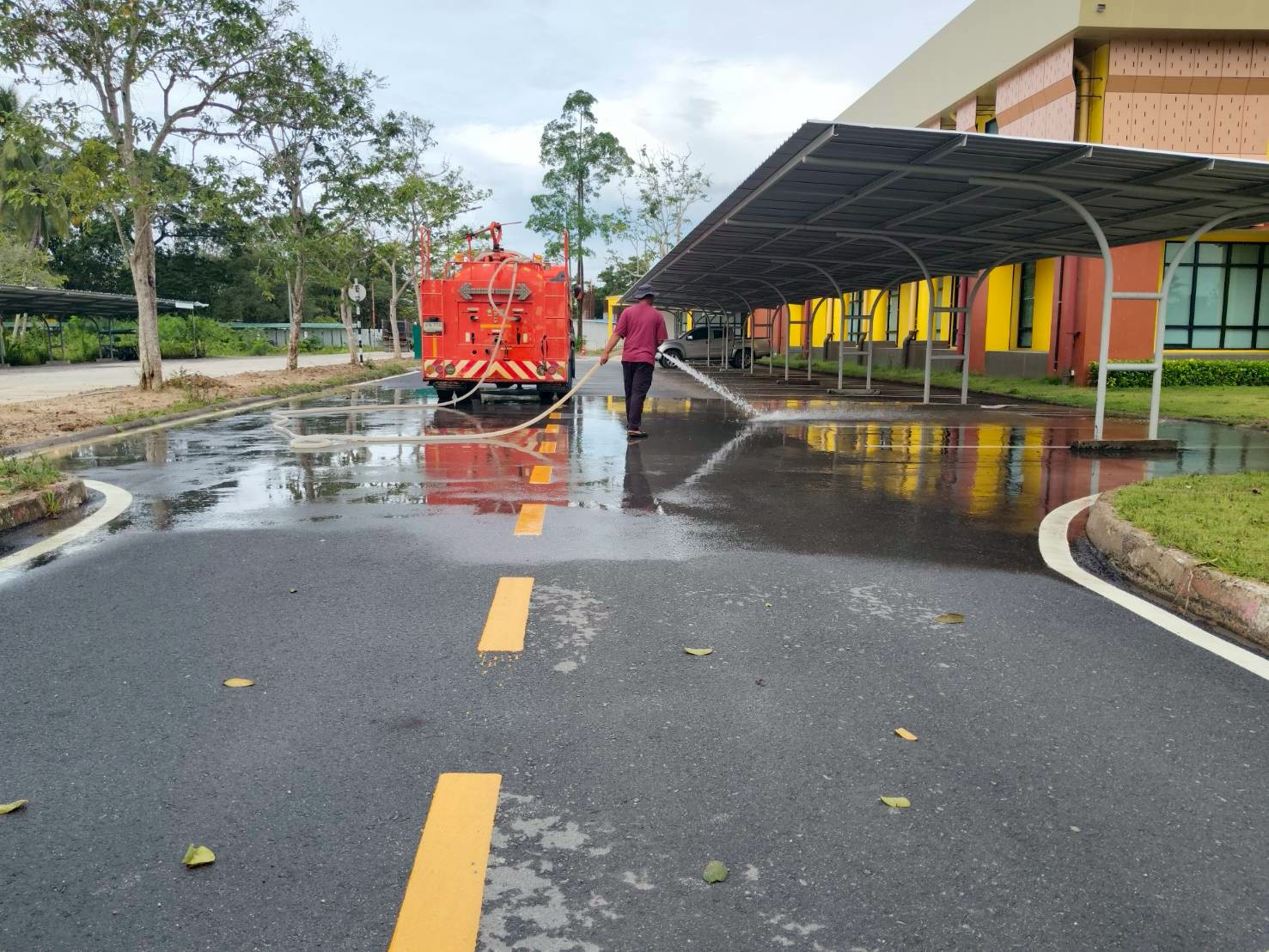
Cleaning roads and other outdoor facilities.
This system reduces reliance on freshwater resources and exemplifies effective circular water management.
To further reduce water consumption, Walailak University has installed modern, water-efficient appliances throughout its campus. These measures have yielded measurable savings:
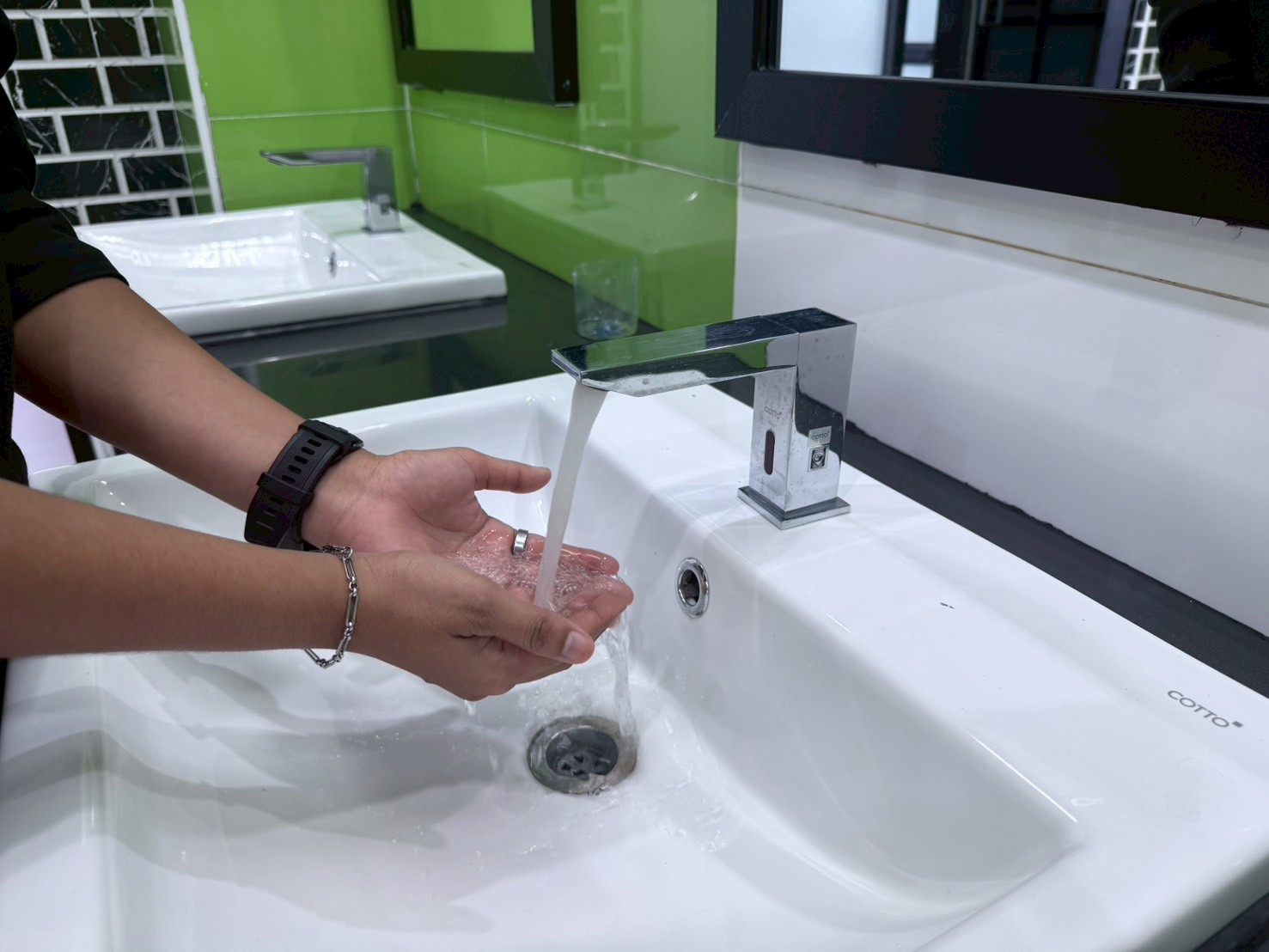
- Sensor faucets: Save up to 31% compared to manual faucets.
- Sensor flush urinals: Save 30–40% by optimizing flush volumes.
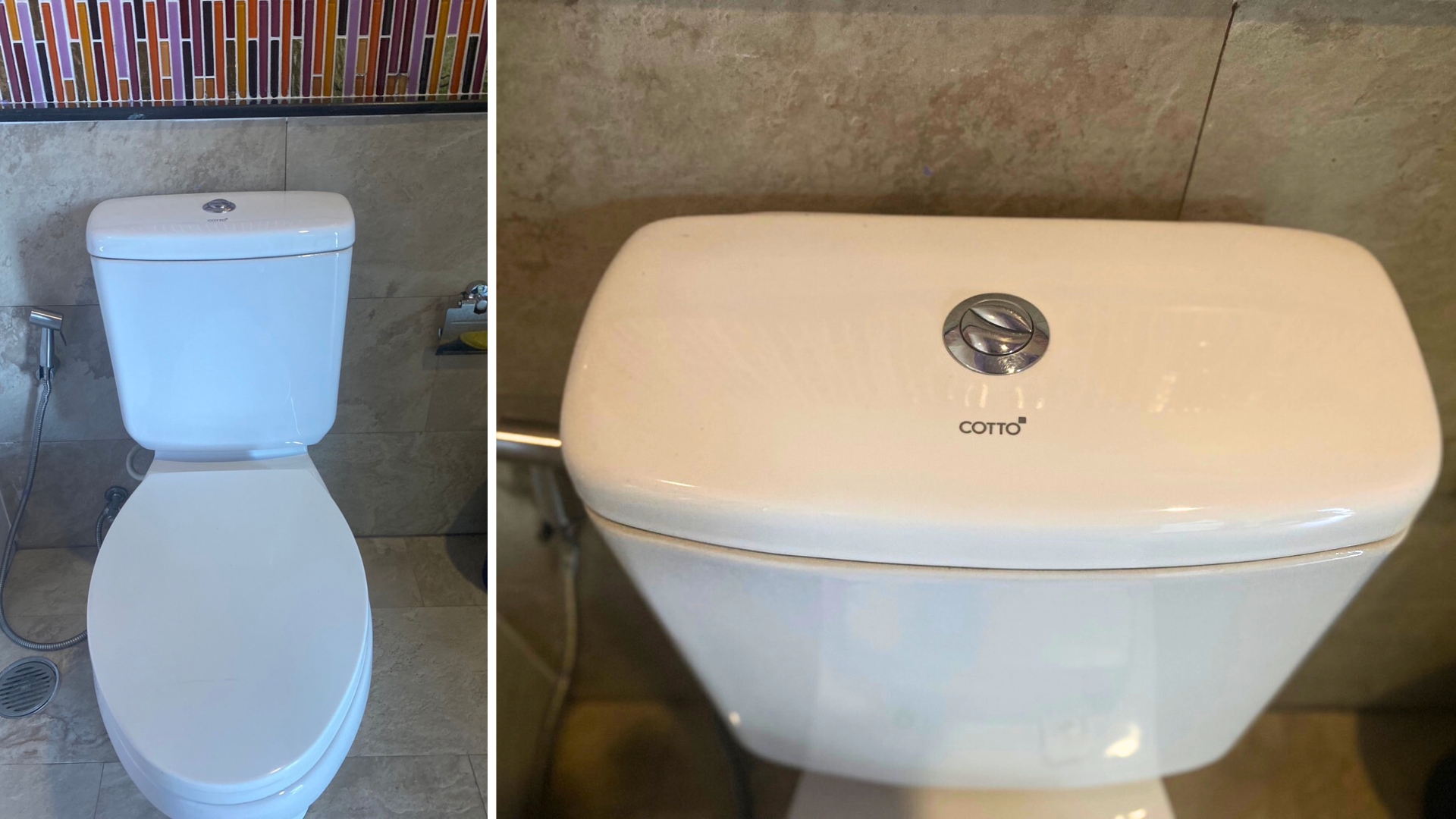
- Dual-flush toilets: Save 30–50% through half-flush and full-flush options.
Such measures not only improve water-use efficiency but also reinforce the university’s commitment to sustainability goals.
Summary
With a total storage capacity of 14,097,094 cubic meters, of which only 2.49% is used annually, coupled with > 50% water conserved through 100% reuse of treated water and the integration of modern water-saving technologies, Walailak University demonstrates a systematic and formalized water conservation program