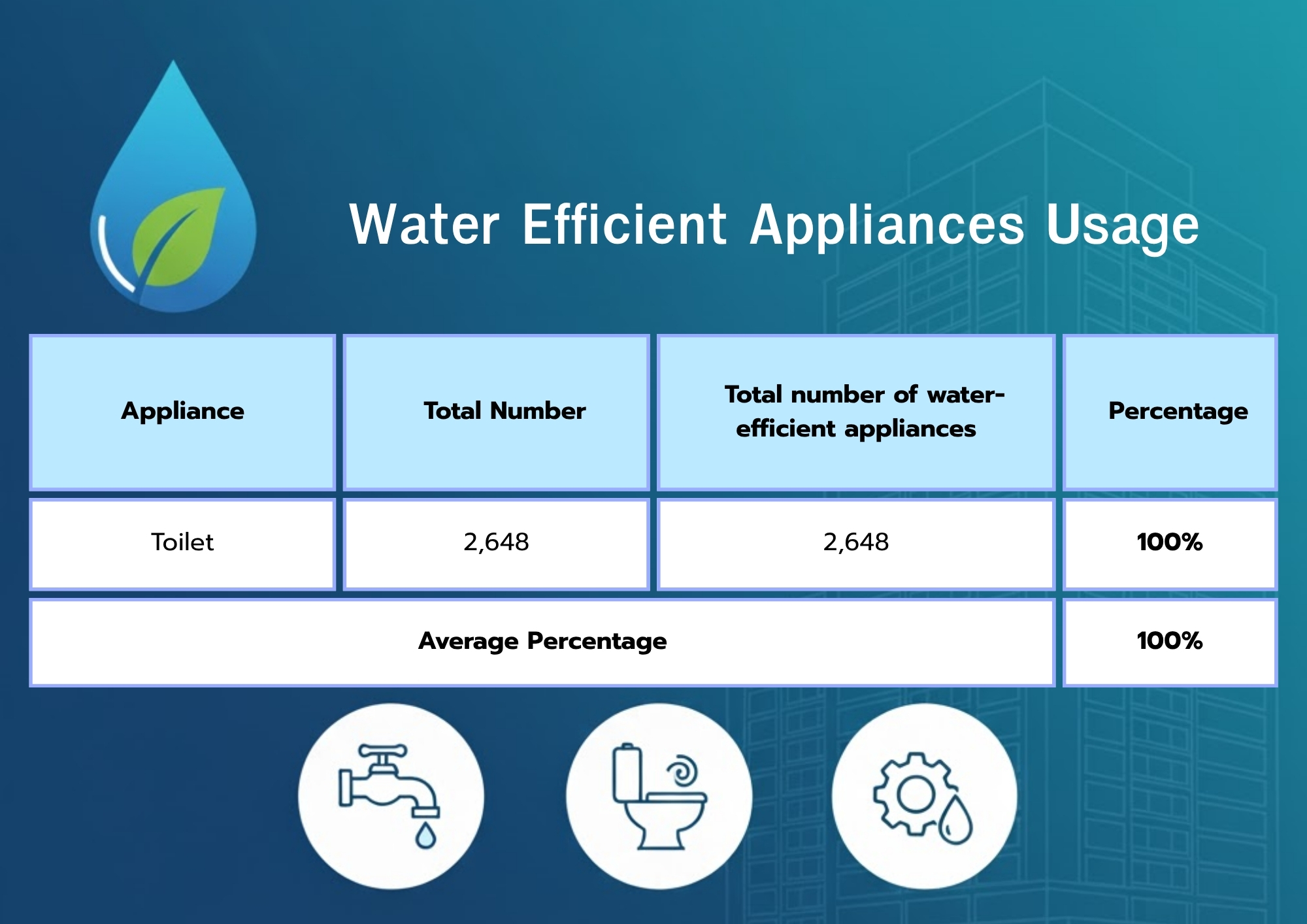
Water-efficient appliances usage
Water-efficient appliances usage
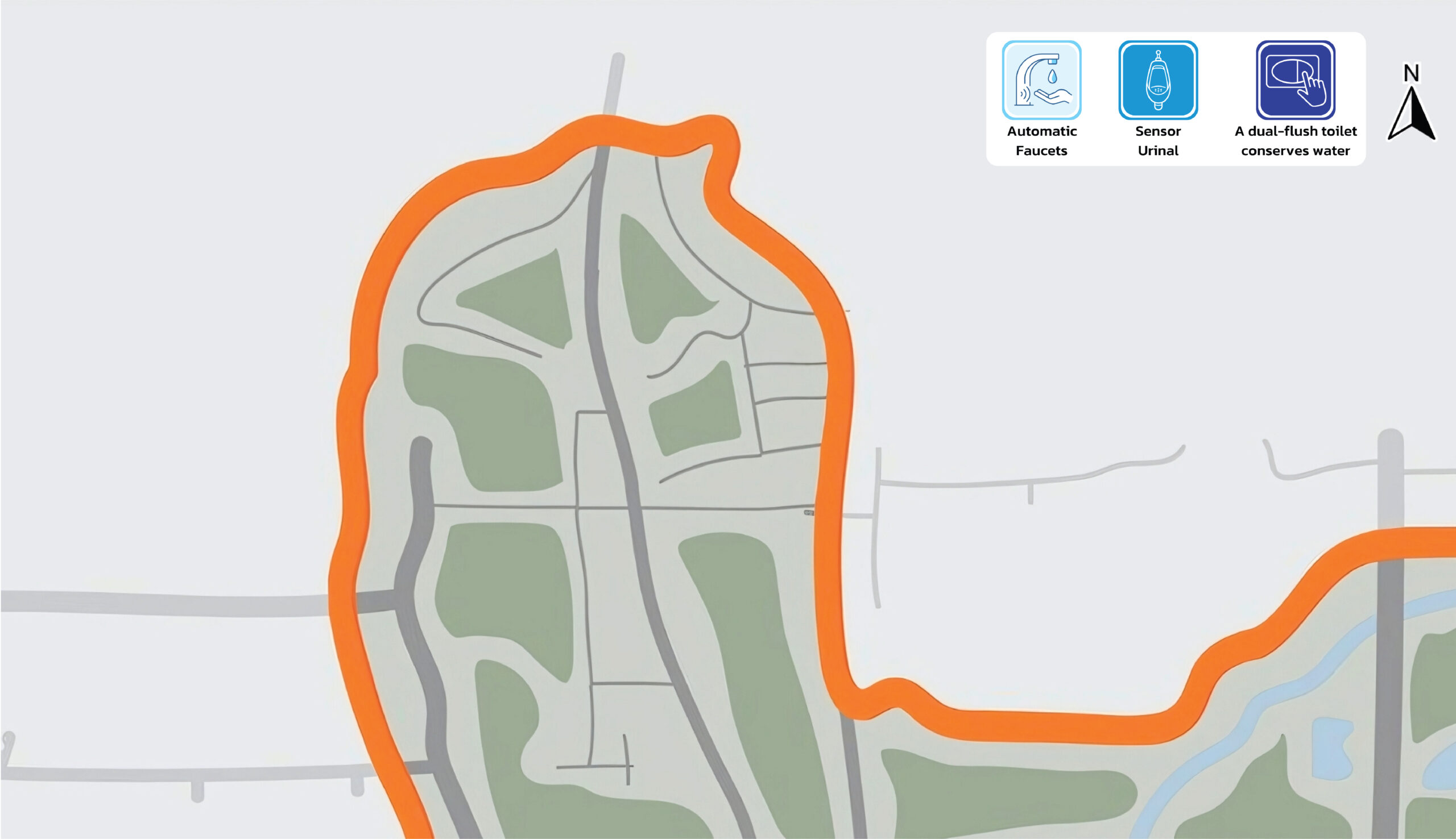
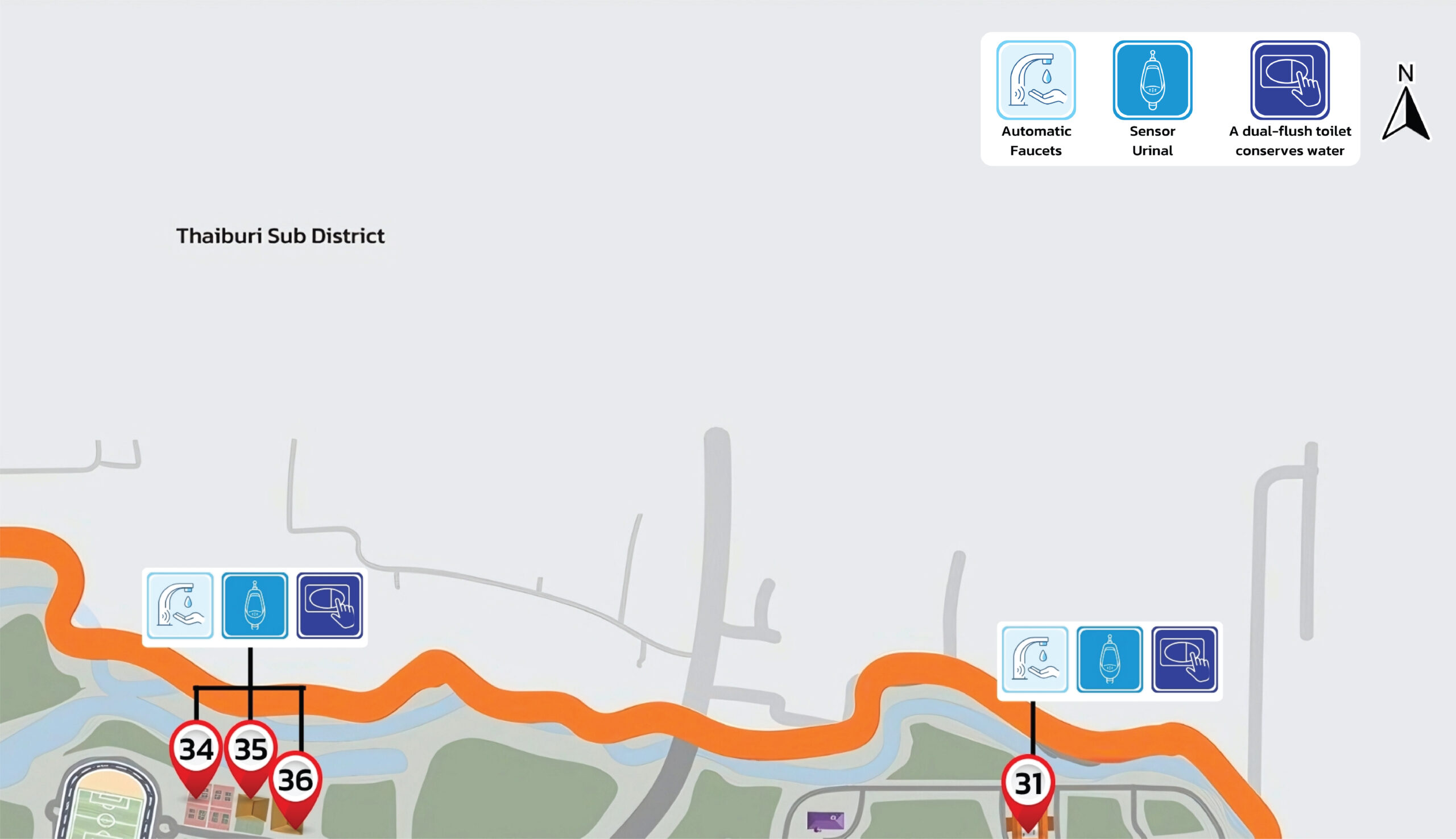
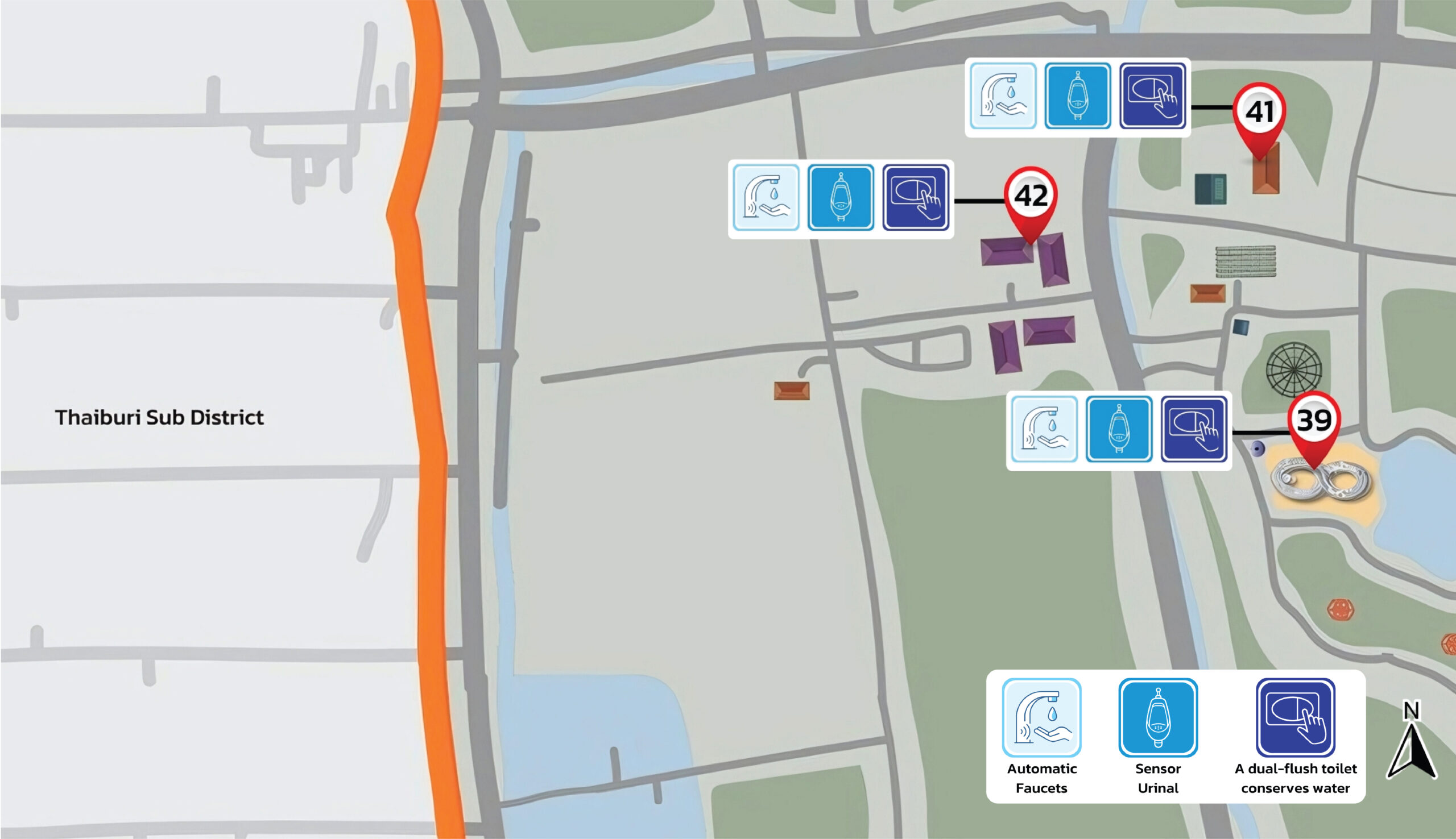
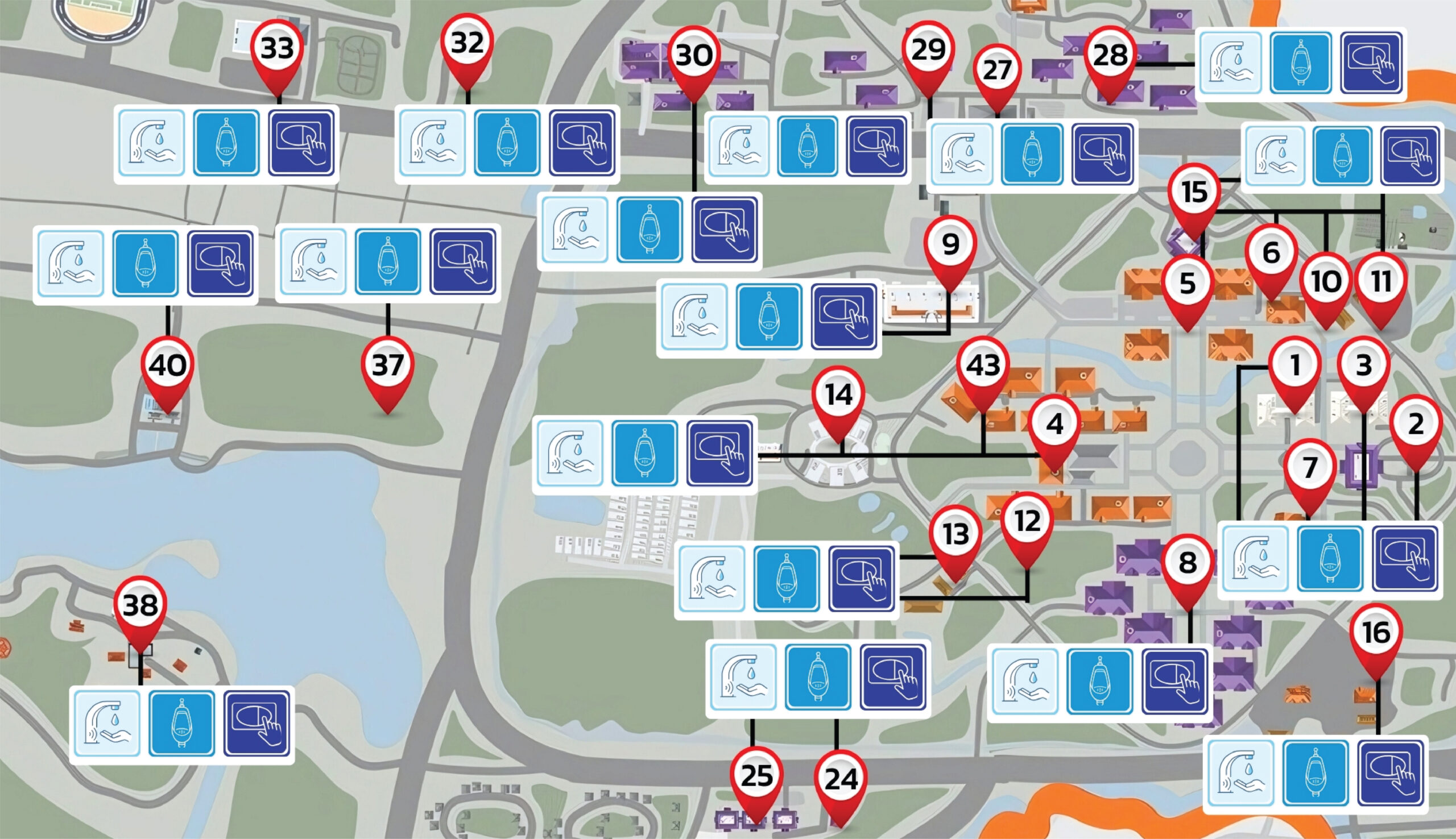
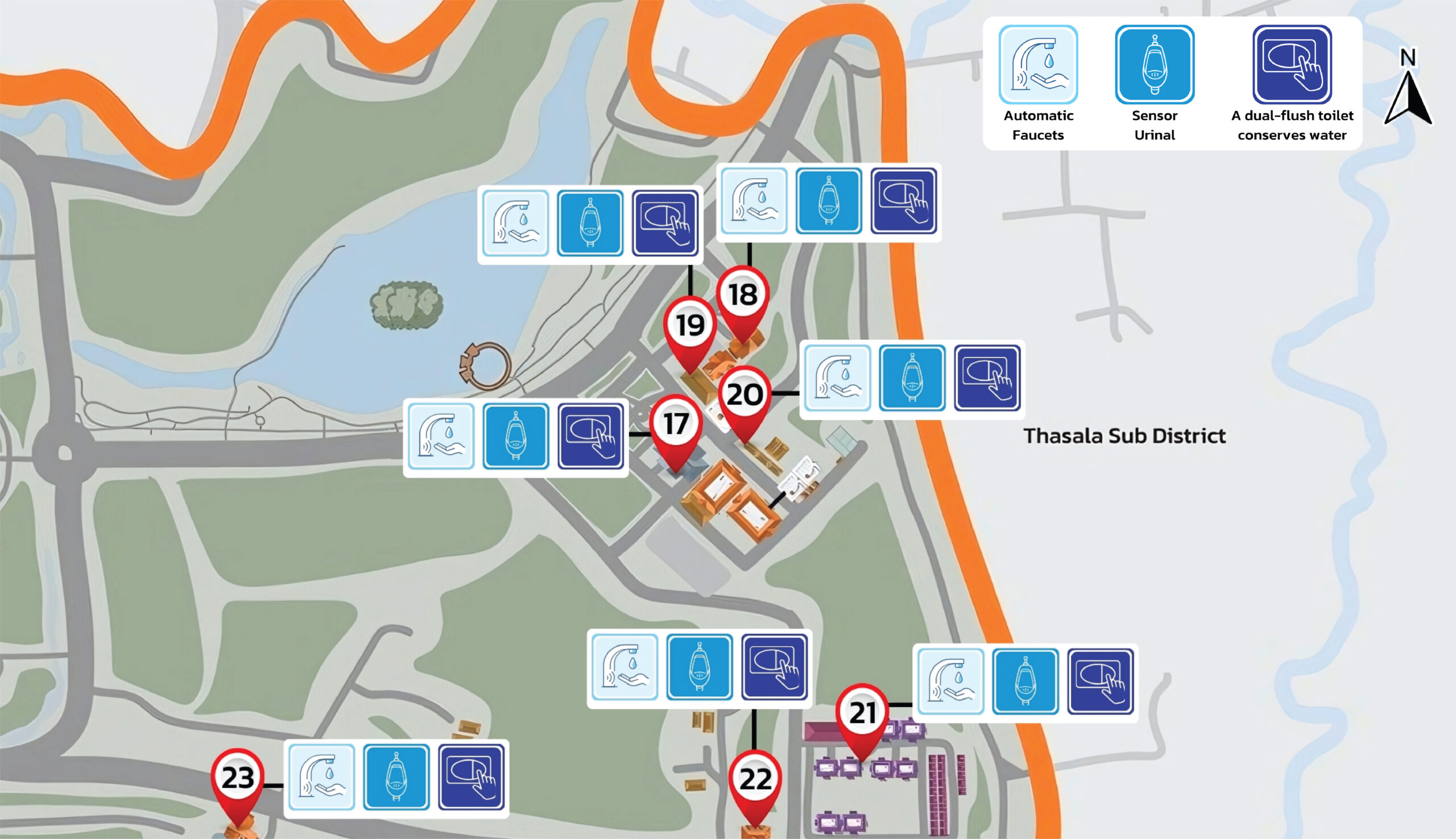
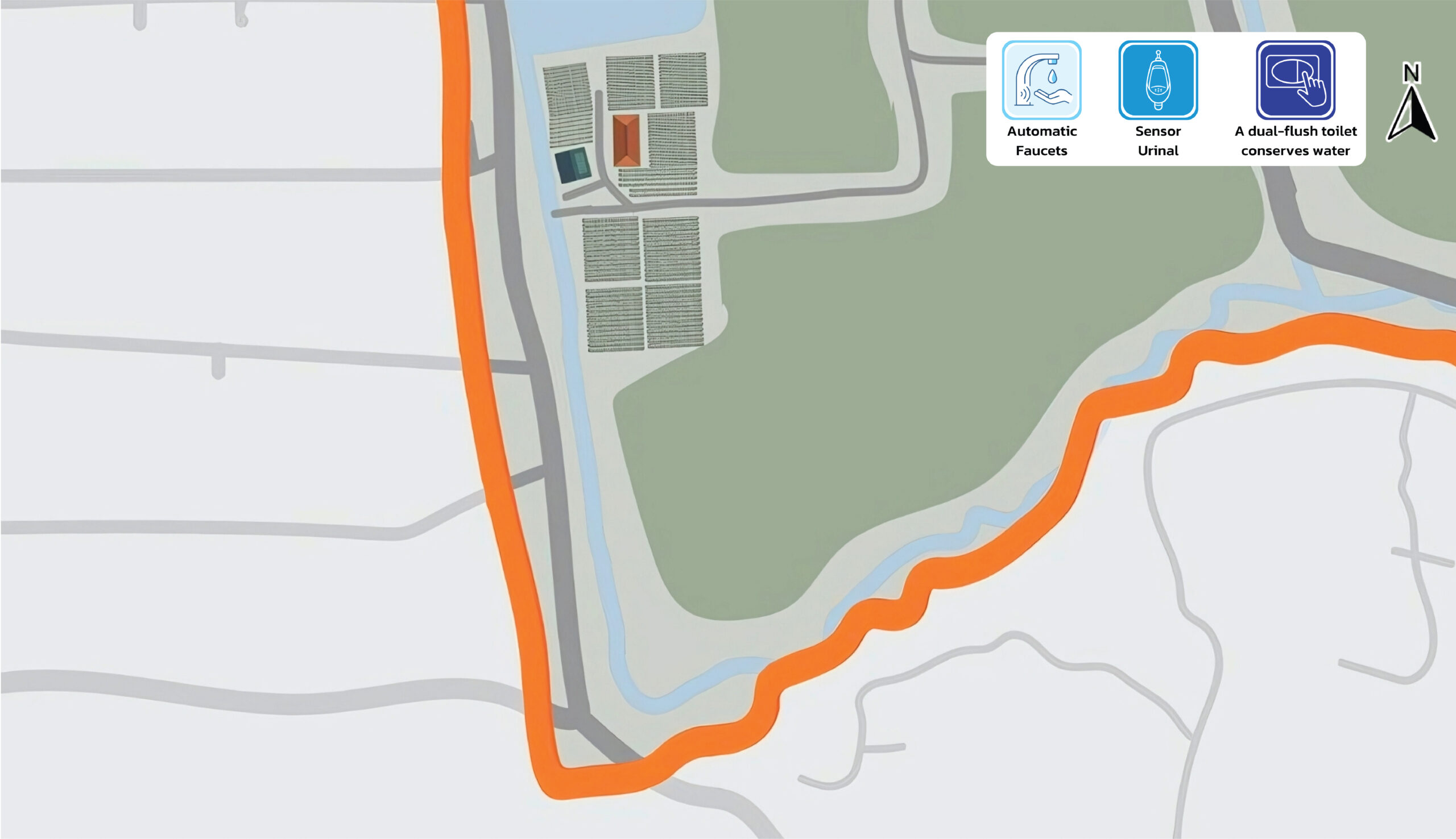
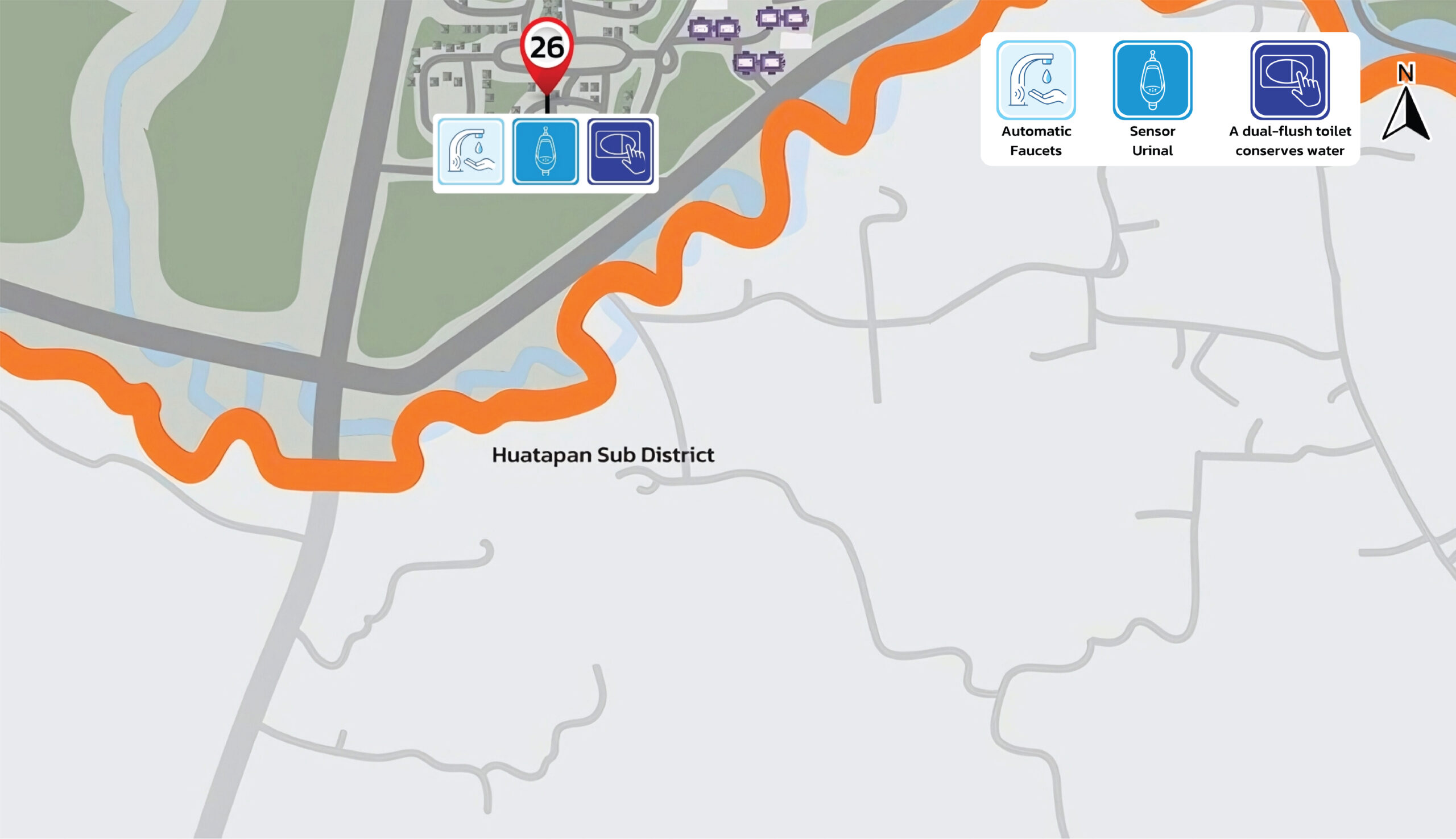
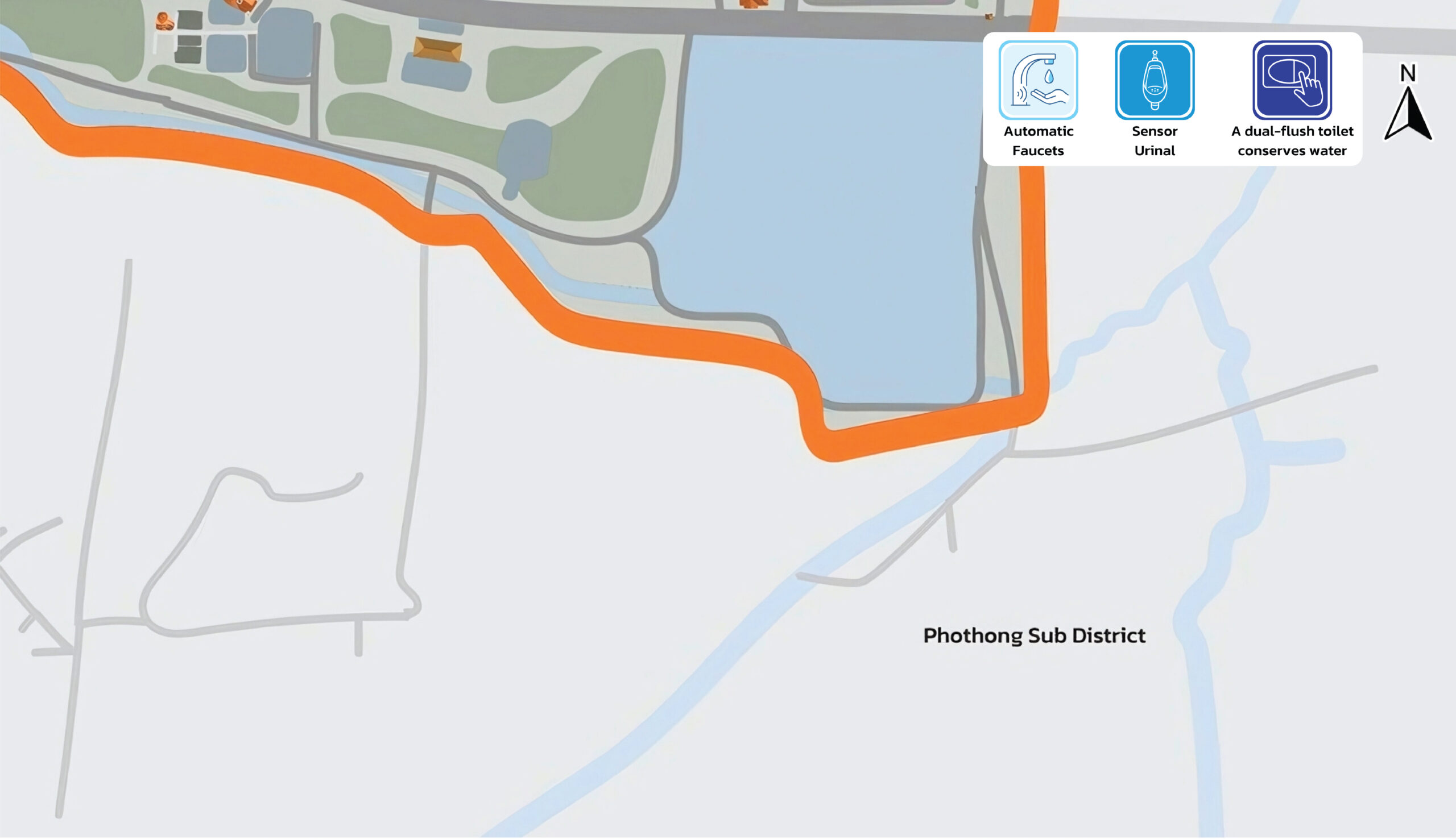
Figures: Campus Map of Water-Efficient Appliance Installations in All University Buildings. (Walailak University, Thailand)
Walailak University has a policy to promote reduced water usage and efficient water management within the university for maximum benefit. The university has applied building standards aimed at minimizing water use.
Thai version see : https://bit.ly/3G0jyQv
Walailak University has a policy to promote reduced water usage and efficient water management within the university for maximum benefit. The university has adopted building standards aimed at minimizing water use, as follows:
• Faucets
Self-closing faucets have been installed instead of swivel faucets, effectively controlling and limiting water usage.
Picture : Automatic faucets
• Urinal flush valves
These have been replaced with water-saving models (6 liters), reducing water consumption by approximately 1–2 liters per flush.
Picture : Sensor urinal
Traditional squat and sitting toilets, which contributed to water wastage, have been replaced with more efficient water-saving appliances. In 2025, Walailak University upgraded to dual-flush toilets, which conserve more water compared to single-flush models that use 6 liters per flush. Dual-flush toilets feature two buttons: a smaller one for liquid waste (4 liters per flush) and a larger one for solid waste (6 liters per flush).