Publications to researchers on campus
Number of scholarly publications on sustainability
Fugure 1 Ratio of scholarly publications on sustainability to lecturers and researchers on campus in one year period
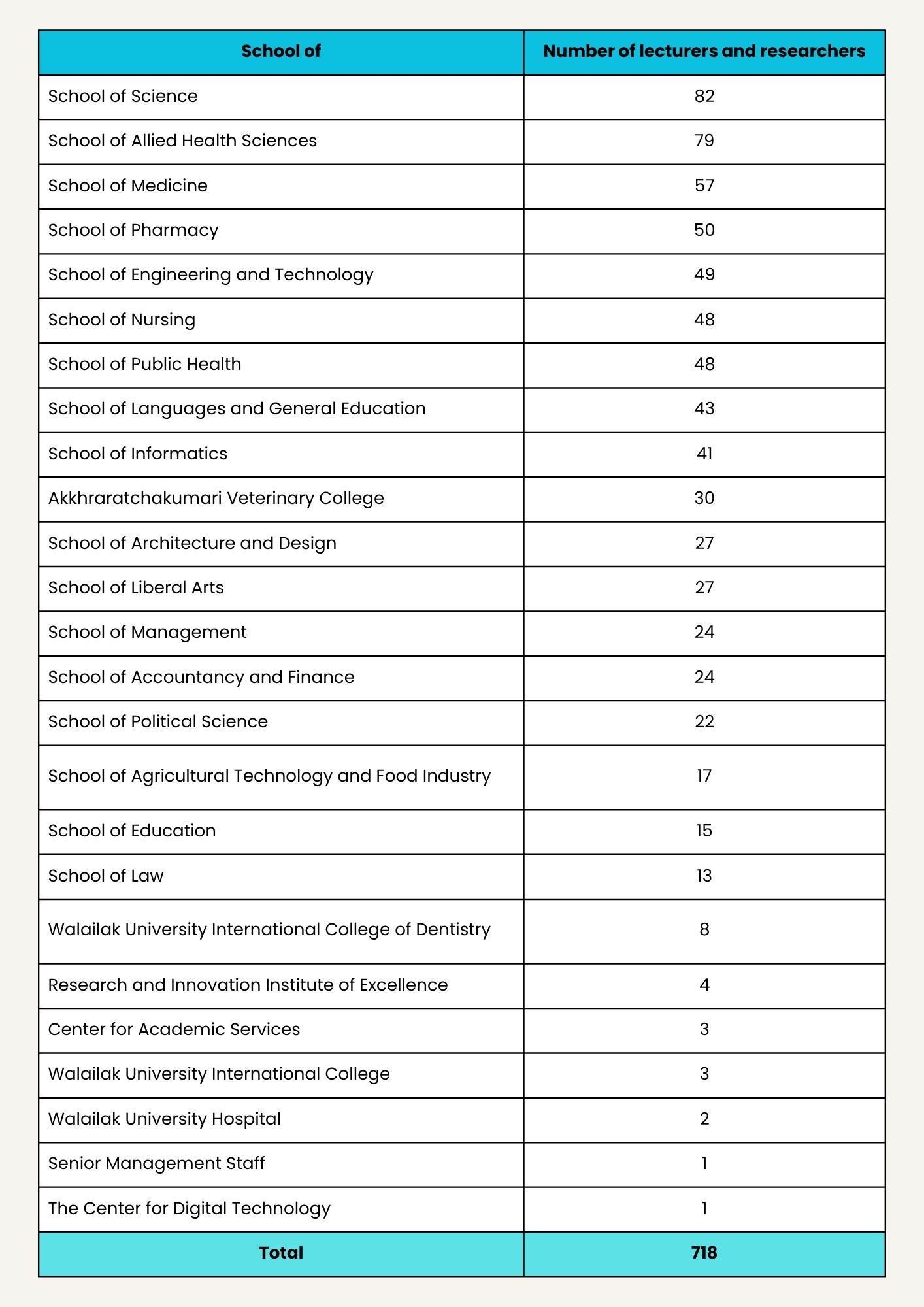
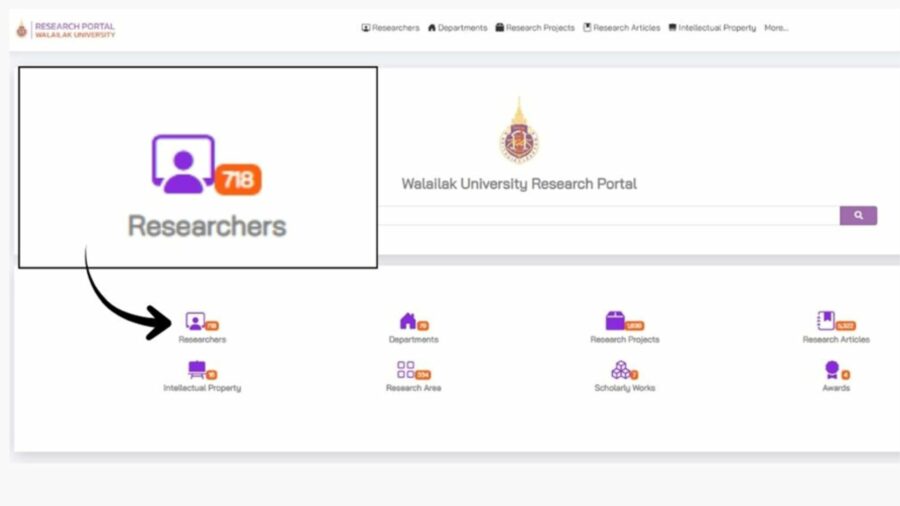
Figure 2 Number of lecturers and researchers on campus in one year period
Ratio of scholarly publications on sustainability to lecturers and researchers on campus in one year period:
During the one-year period, Walailak University produced a total of 1,753 scholarly publications related to environment and sustainability. The total number of lecturers and researchers on campus during the same period was 718. The ratio was calculated as follows:
Total scholarly publication in one year period/ Total lecturers and researchers in one year period
= 1753/718
= 2.44
A ratio of 2.44 publications per lecture demonstrates that each academic staff member contributes actively to advancing knowledge in sustainability. This high level of scholarly output reflects the university’s strong commitment to fostering innovative and interdisciplinary research in environmental science and sustainable development.
Ratio of scholarly publications on sustainability to lecturers and researchers on campus in one year period:
During the one-year period, Walailak University produced a total of 1,753 scholarly publications related to environment and sustainability. The total number of lecturers and researchers on campus during the same period was 718. The ratio was calculated as follows:
Total scholarly publication in one year period/ Total lecturers and researchers in one year period
= 1753/718
= 2.44
A ratio of 2.44 publications per lecture demonstrates that each academic staff member contributes actively to advancing knowledge in sustainability. This high level of scholarly output reflects the university’s strong commitment to fostering innovative and interdisciplinary research in environmental science and sustainable development.
Number of lecturers and researchers on campus in one year period
In the year 2025, Walailak University had a total of 718 lecturers and researchers actively working on campus throughout the year. This number reflects the university’s strong academic capacity and its commitment to promoting education and research for sustainability. These faculty members and researchers play a key role in driving knowledge creation, innovation, and interdisciplinary research integration to support sustainable development goals at both institutional and societal levels.
Walailak University continuously promotes and advances research across all faculties and research units, including specialized centers and institutes such as the School of Science, School of Allied Health Sciences, School of Medicine, School of Nursing, School of Engineering and Technology, School of Agriculture and Food Industry, Humanities and Social Sciences, the Academic Service Center, and the University Hospital. The aim is to generate knowledge and innovations that respond to national and community needs across multiple dimensions, including economic, social, cultural, environmental, and academic aspects.
Total number of scholarly publications
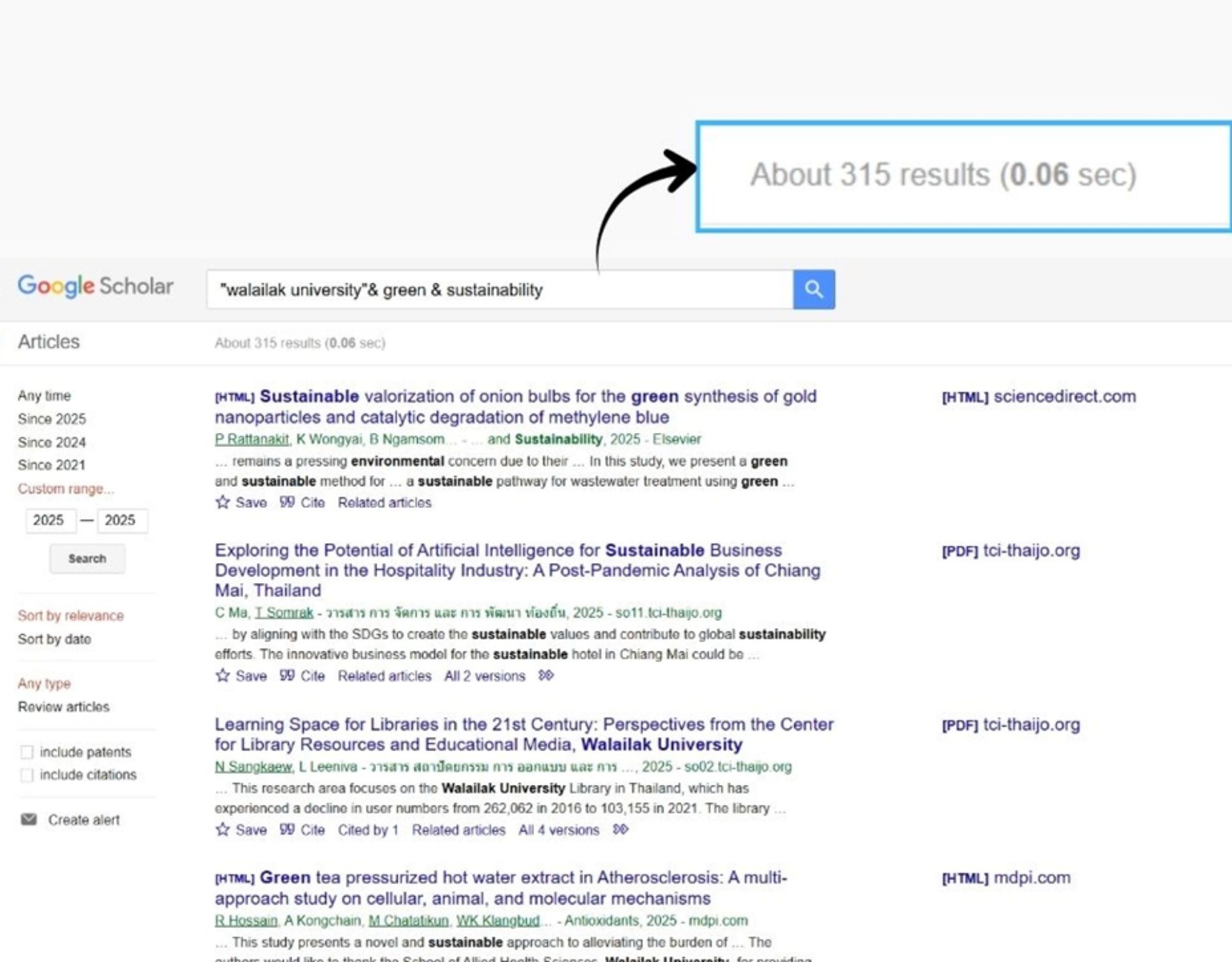
In the year 2025, Walailak University produced a total of 1,910 scholarly publications, of which 1,735publications (90.84%) were related to environment and sustainability. This demonstrates the university’s strong research focus on advancing knowledge in sustainable development, climate action, and environmental stewardship.( Based on data retrieved from Google Scholar’s research publication database.)
- Keyword-Based Distribution of Sustainability Research
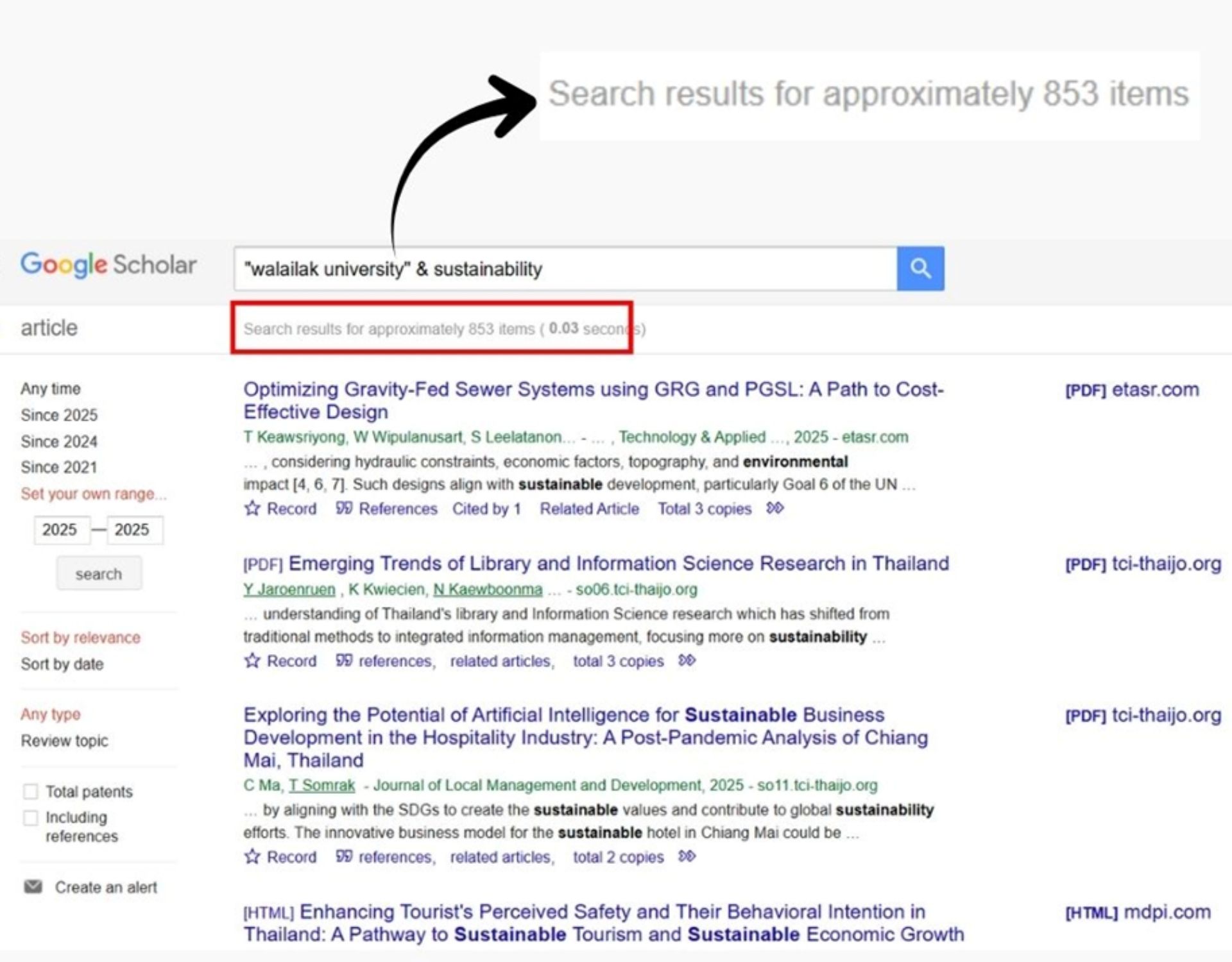
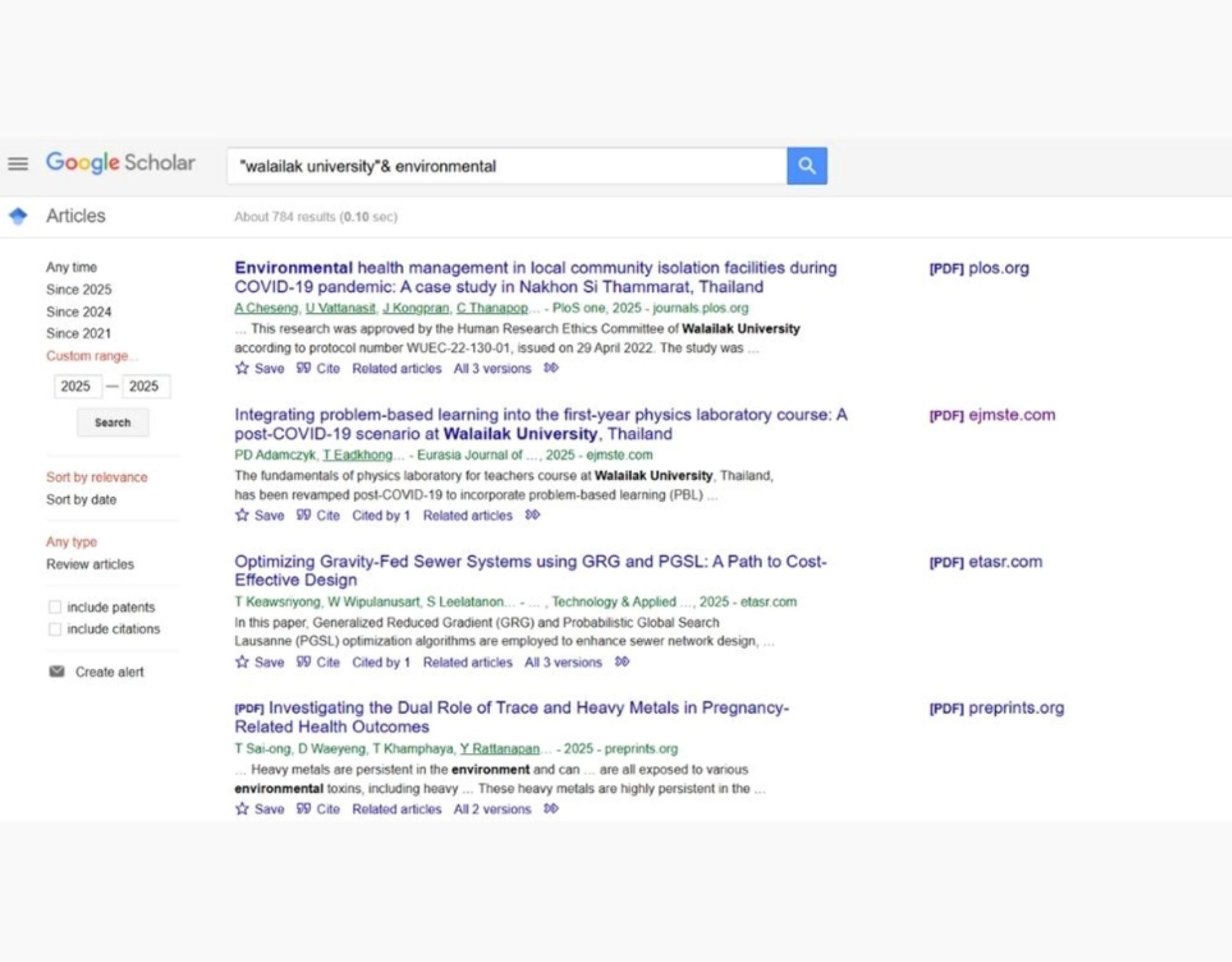
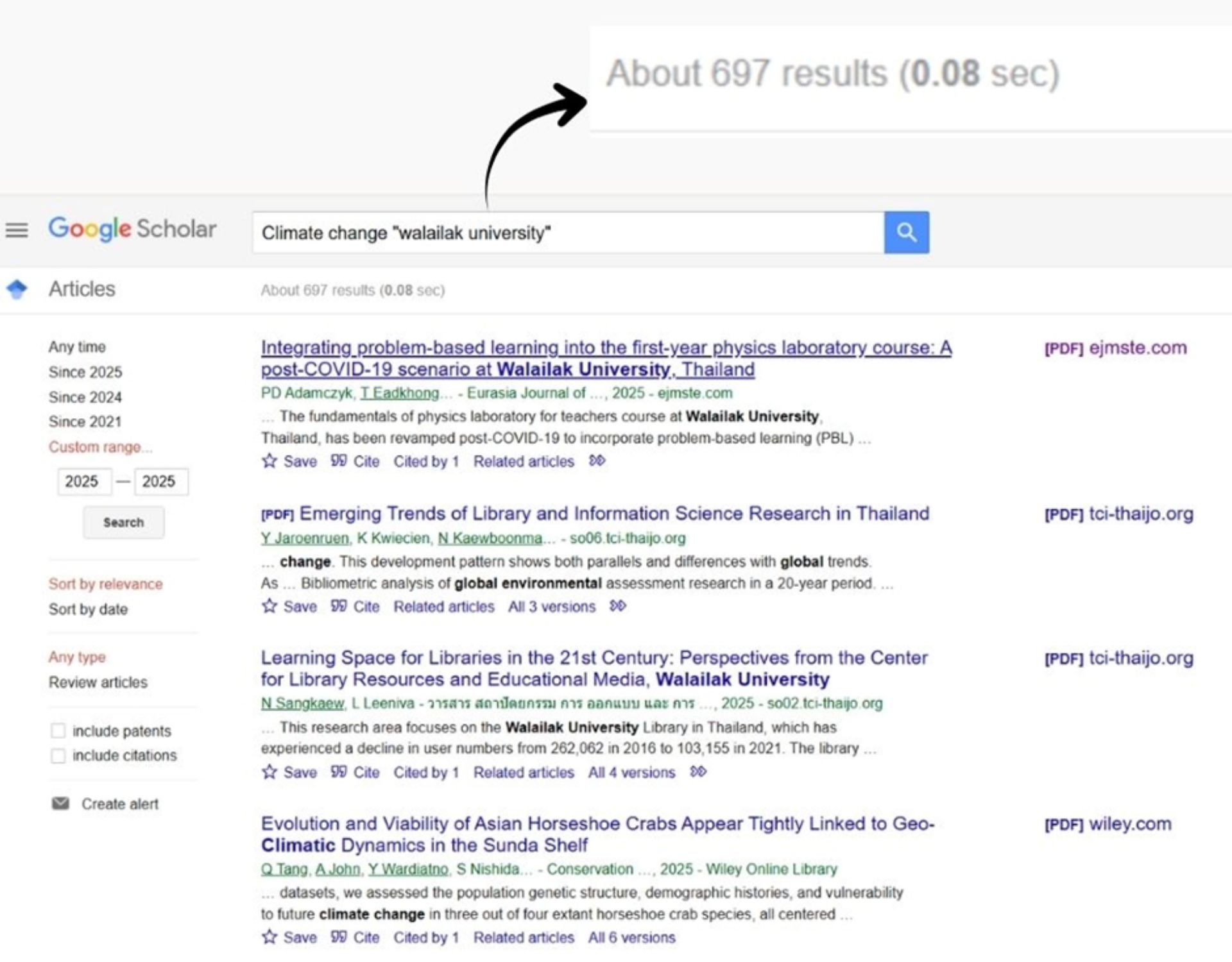
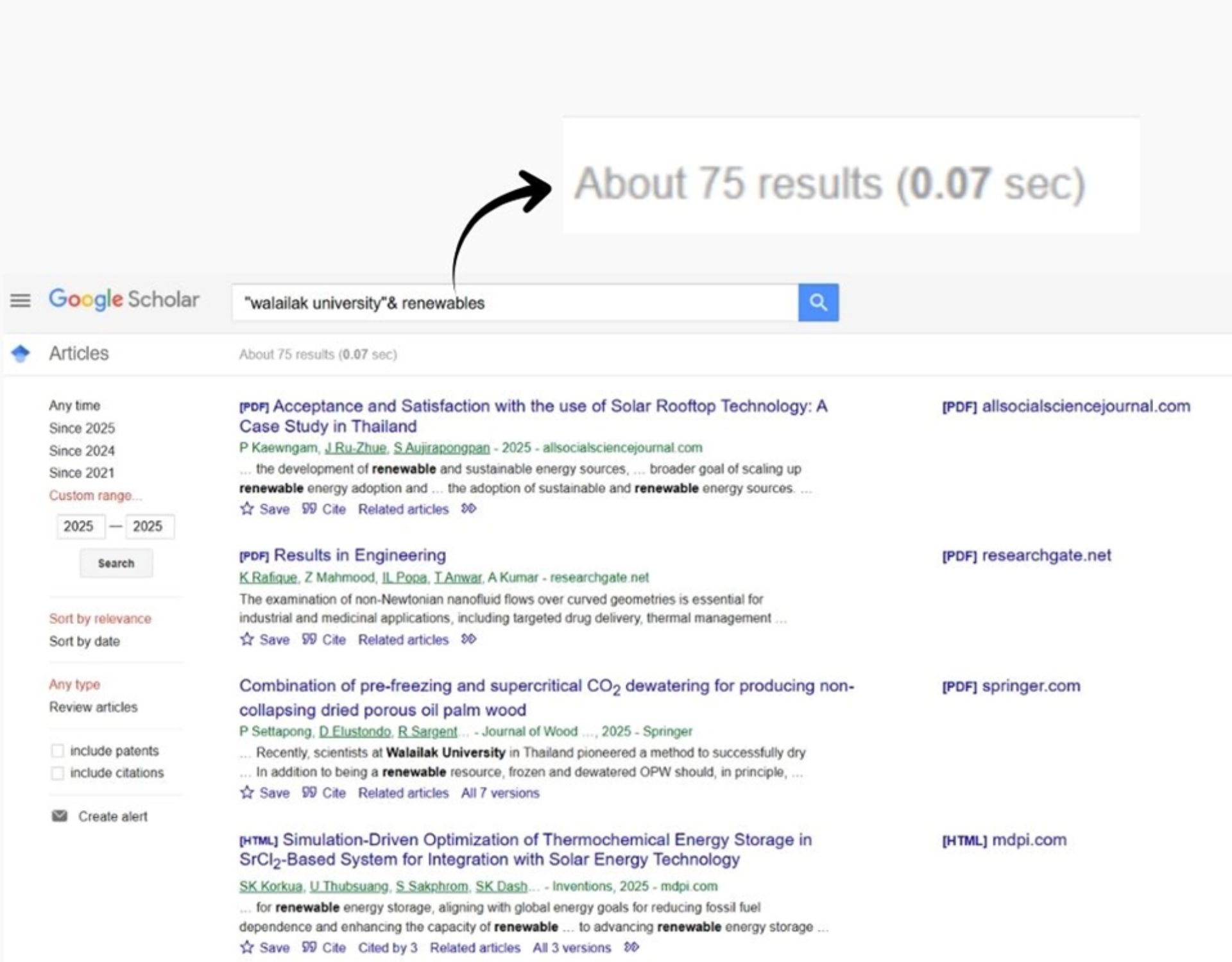
The sustainability-related publications were analyzed according to specific keywords to illustrate the thematic emphasis of the university’s research. The distribution is as follows: Sustainability, Green , Environmental, Renewable, Energy, Circular economy, Climate change, Carbon footprint , Social equity, Health and well-being, Conservation, Life cycle assessment, Economic, Eco-friendly product, Pollution reduction and Culture
- Analysis of Research Focus
The keyword analysis shows that the university’s research priorities are strongly centered on sustainability (538 publications), environmental issues (204 publications), and economic aspects of sustainability (200 publications). High publication counts in areas such as energy (108 publications), climate change (92 publications), and eco-friendly products (80 publications) further highlight the institution’s dedication to tackling critical environmental challenges.
- Ratio of Sustainability Research
Based on the total output of 1,910 publications in 2025, the ratio of sustainability-focused research is:
Ratio= (1,735/1,910)*100 = 90.84%
This ratio underscores the university’s commitment to prioritizing environmental and sustainability research across a diverse array of topics, from renewable energy and carbon footprint assessment to social equity and health-related sustainability.
- Implications for Strategic Research Planning
The comprehensive coverage of sustainability themes indicates that Walailak University is actively contributing to both academic knowledge and practical solutions in the field of sustainable development. The diversity of topics also suggests strong interdisciplinary collaboration, which is essential for addressing complex global challenges related to climate change, resource management, and sustainable economic growth.
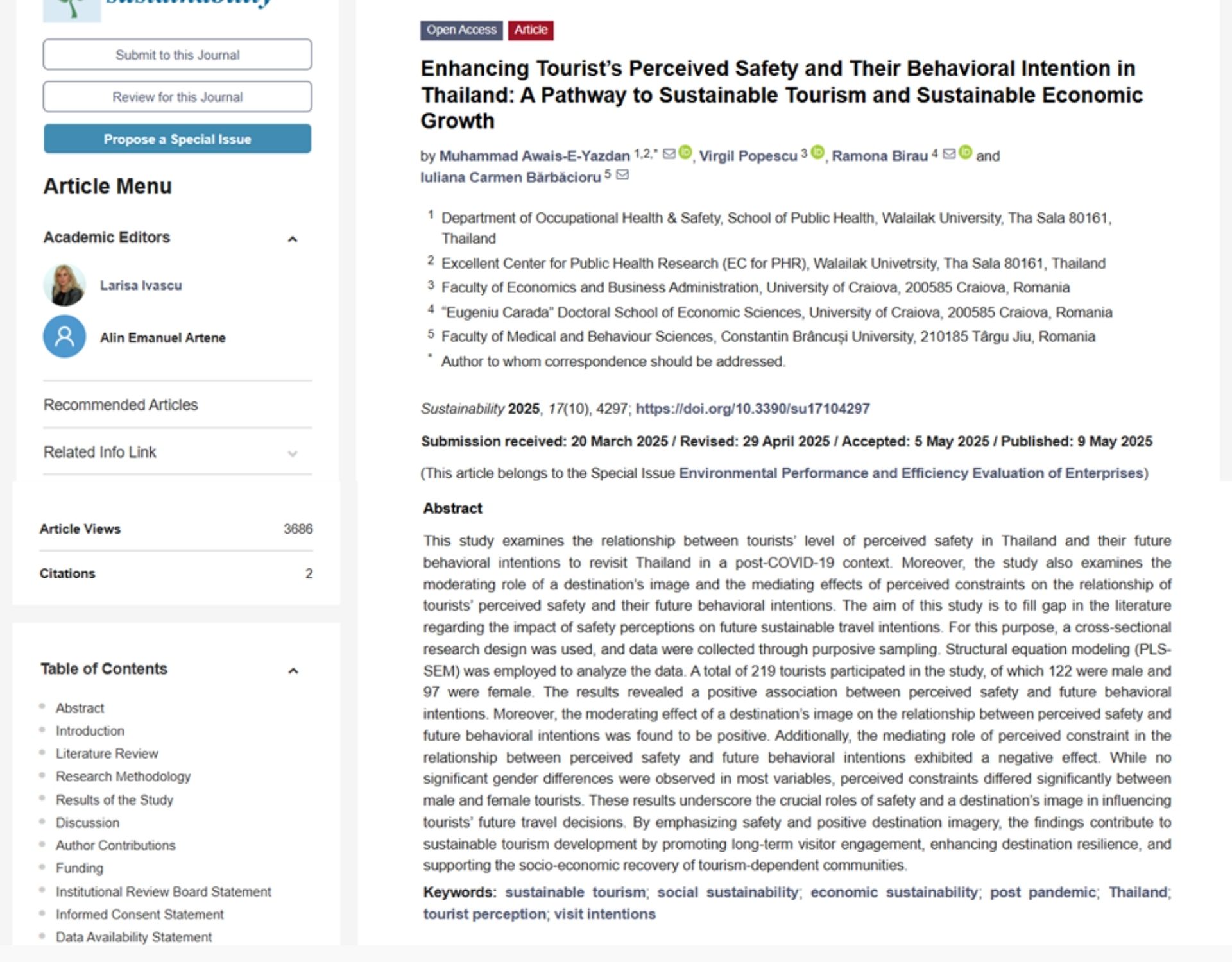
- Example of sustainability-related research: “Enhancing Tourists’ Perceived Safety and Their Behavioral Intention in Thailand: A Pathway to Sustainable Tourism and Sustainable Economic Growth.” (Keyword – Sustainability), This study highlights that tourists’ perceived safety and a positive destination image are key factors in promoting sustainable tourism in the post-COVID-19 era. Findings show that when tourists feel safe, they develop stronger trust and attachment to the destination, while a positive image further motivates repeat visits. These results emphasize that enhancing safety measures and fostering a positive image are essential strategies for achieving sustainable tourism development, supporting economic recovery, and ensuring the long-term sustainability of tourism-dependent communities.
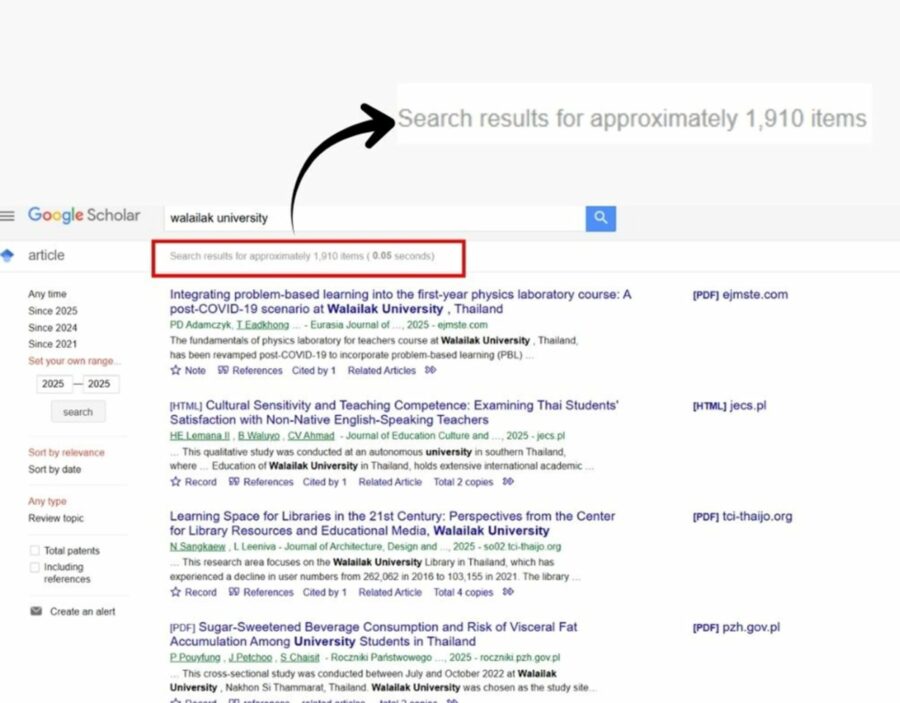
Figure 4 Total number of scholarly publications in one-year period = 1910 publications, Information as of October 29, 2025.
Figure 5 Example: The number of scholarly publications related to sustainability within a one-year period, based on keywords associated with sustainability = 1735 publications , Information as of October 29, 2025.
Reaffirming Its Excellence in Research
Walailak University continues to lead the nation with the highest proportion of research publications in top-tier international journals — Quartile 1 (Q1) and Quartile 2 (Q2) — for three consecutive years.
Once again, Walailak University demonstrates its strong international research potential, with a remarkable and significant increase in the number of research articles published in the Scopus database. The university’s focus on high-quality research published in Q1 and Q2 journals — recognized as the world’s leading academic publications — has solidified its position as one of Thailand’s foremost research universities.
The fact that each researcher produces, on average, more than two sustainability-focused publications per year highlights the university’s capacity to support research excellence through strategic investment in human resources and research infrastructure.
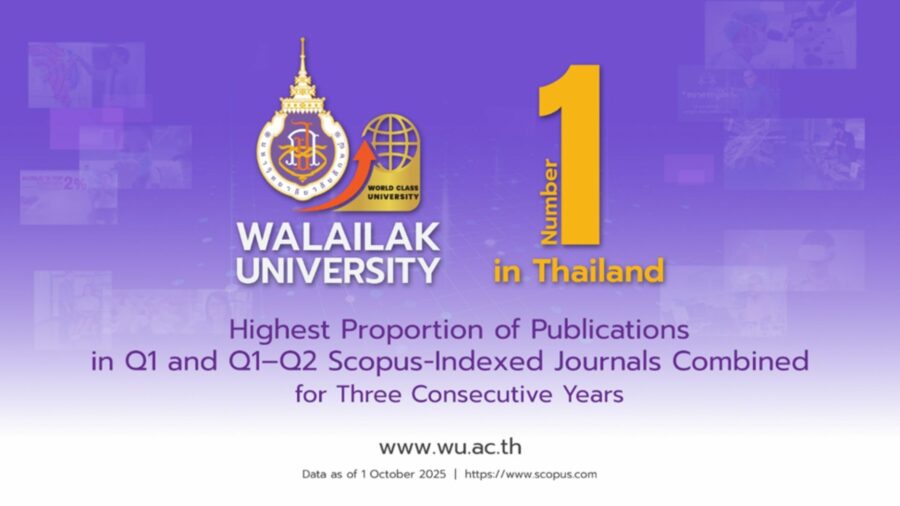
Figure 6 Walailak University Tops the Chart,Achieving the Highest Number of Q1–Q2 Research Publications in Thailand for Three Consecutive Years.
In conclusion, this ratio not only reflects the quantity of research output but also underscores Walailak University’s dedication to sustained and high-impact research in sustainability, confirming its role as a leading institution in addressing environmental challenges and promoting sustainable development at both national and global levels.