Green jobs
Total number of graduates with green jobs
Figure 1 The percentage of graduates who have obtained green jobs over the last three years relative to the total number of graduates = 28.23%
Green Jobs Overview (Graduates, 2022–2024)
Over the past three years, the university has consistently produced graduates who contribute to green jobs, which are defined as decent employment that supports environmental preservation and restoration. These roles span both traditional sectors, such as manufacturing and construction, and emerging sectors, including renewable energy, energy efficiency, and sustainable technologies. Graduates working in green jobs play a vital role in improving energy and resource efficiency, reducing greenhouse gas emissions, minimizing waste and pollution, protecting and restoring ecosystems, and supporting adaptation to climate change.
Specifically, the number of graduates employed in green jobs over the last three years are as follows:
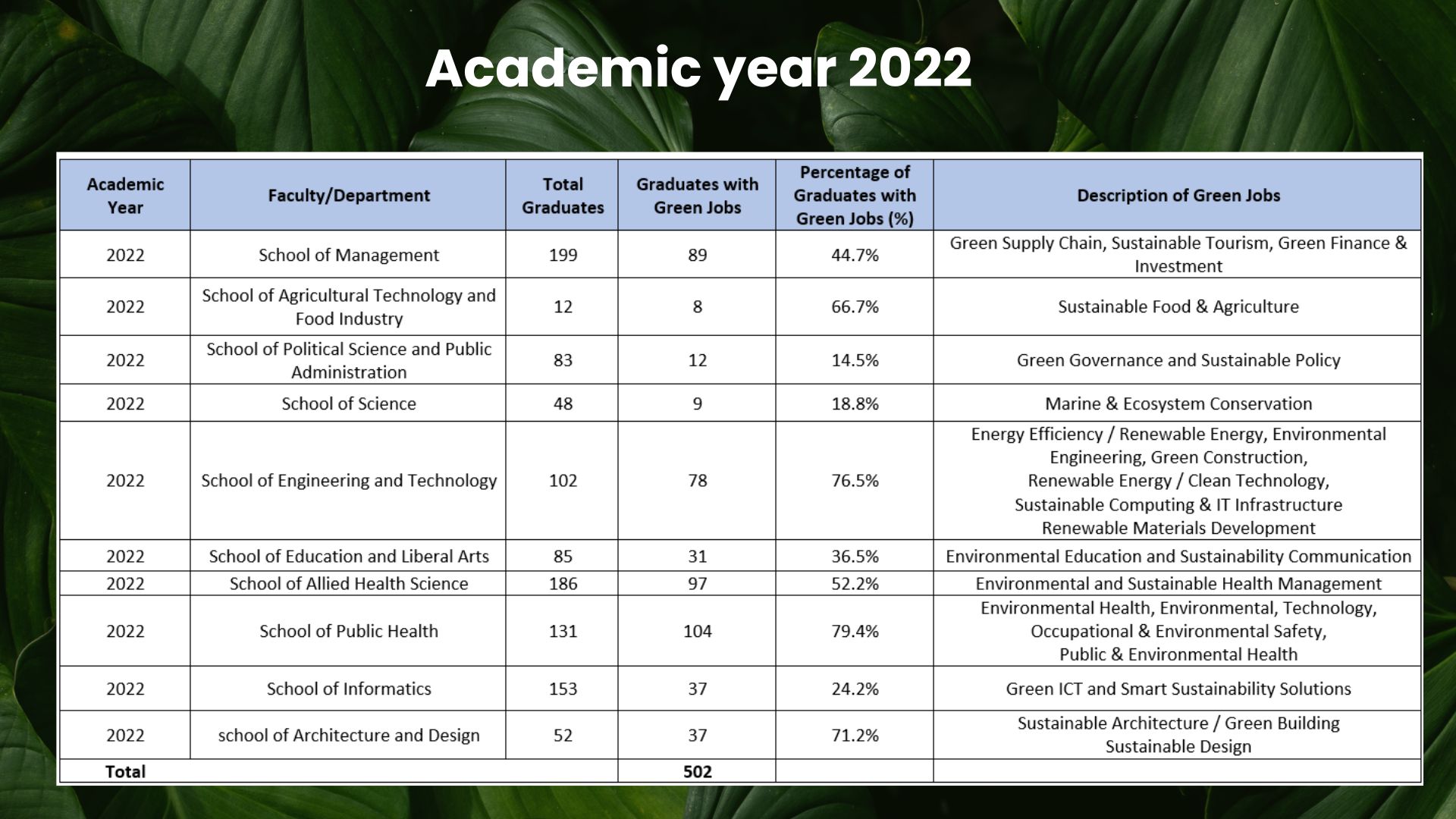
In 2022, a total of 502 graduates were engaged in green-related occupations.
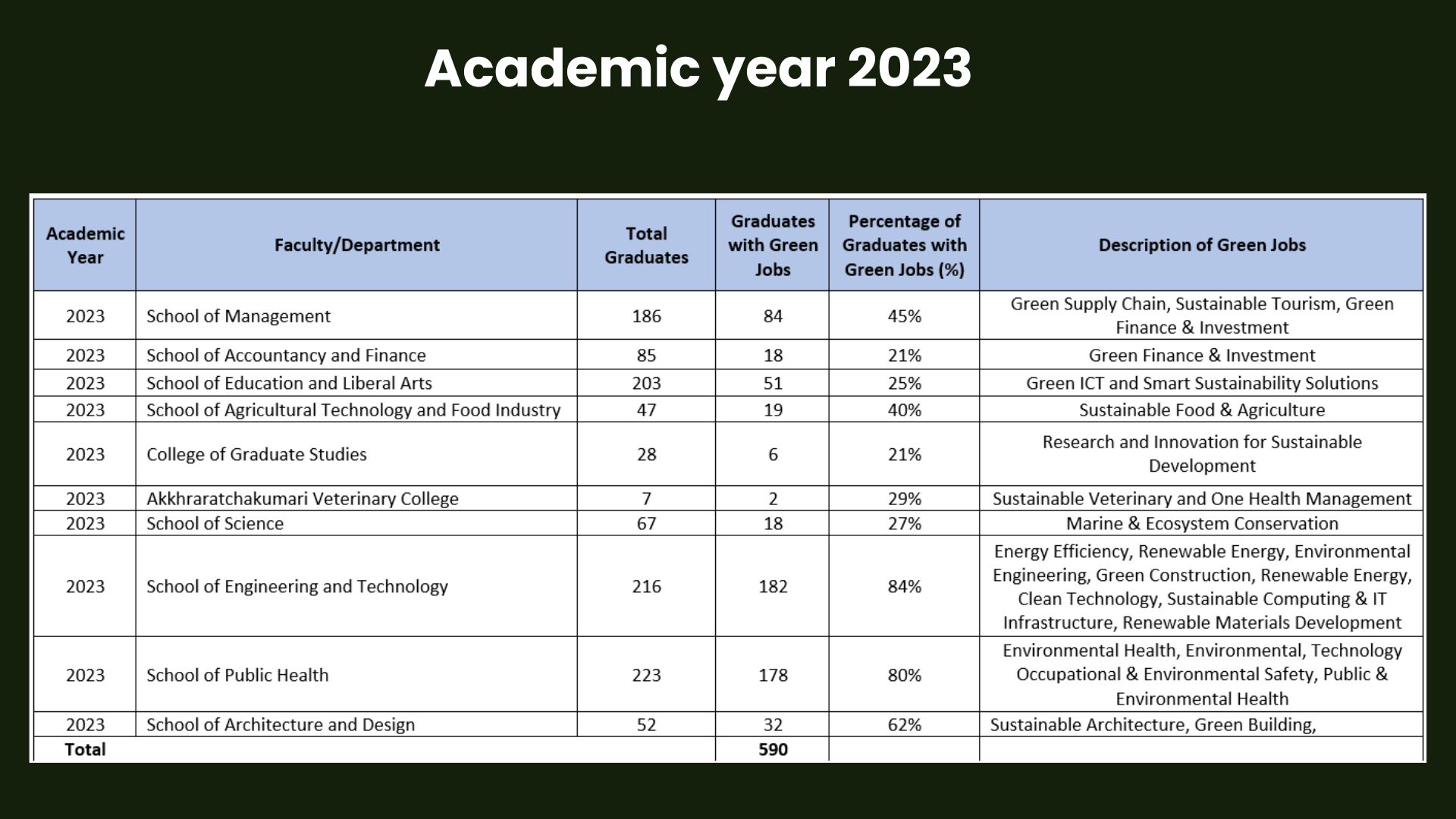
In 2023, a total of 590 graduates were engaged in green-related occupations.
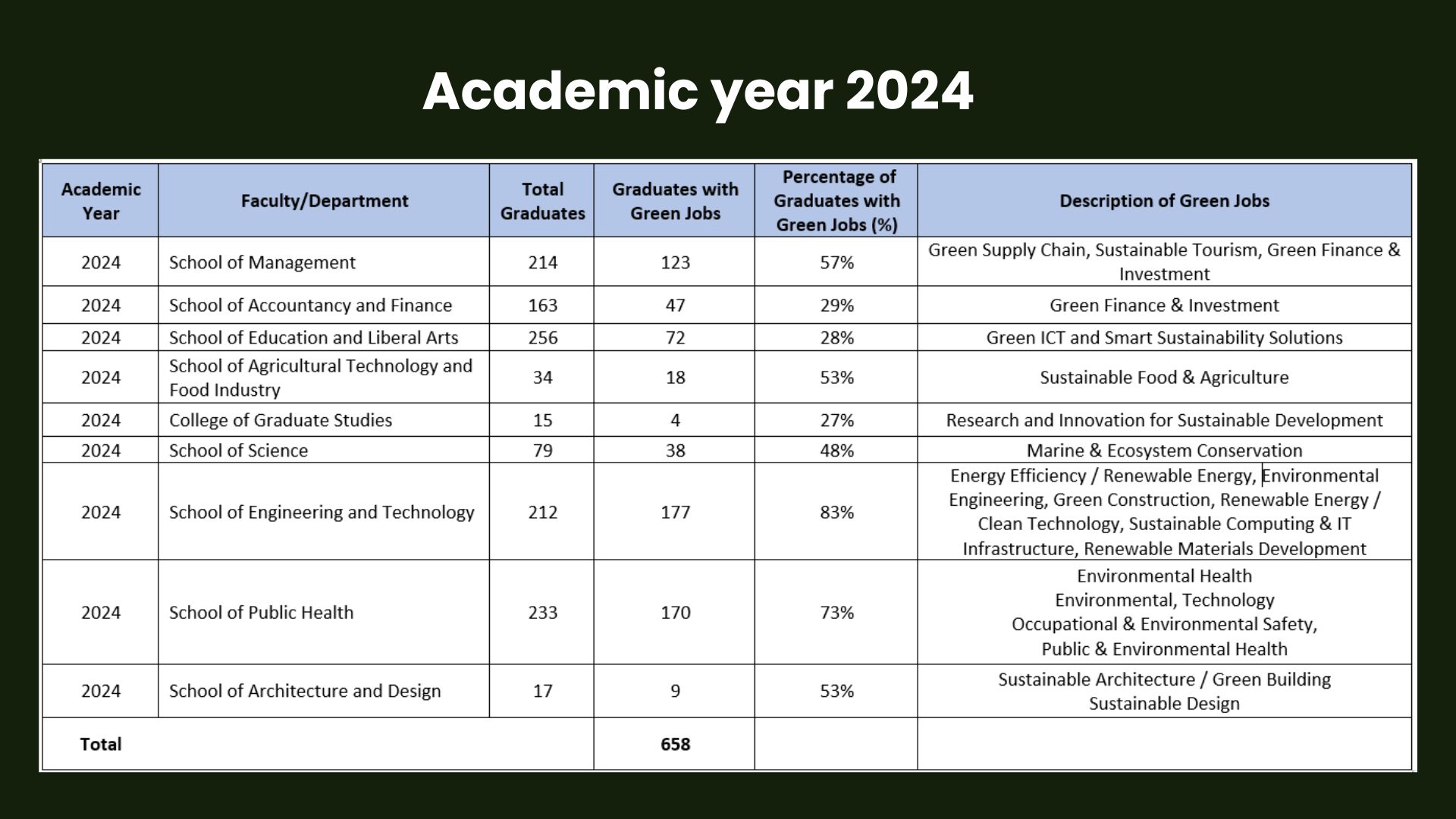
In 2024, a total of 658 graduates were engaged in green-related occupations.
Over the past three academic years, an total of 1,750 graduates have been engaged in green-related occupations. University graduates have engaged in green employment across a wide spectrum of industries, demonstrating the integration of sustainability principles across multiple academic programs offered by the university.
Figure 2 Total number of graduates engaged in green jobs for the academic year 2022 – 2024 (based on a survey conducted on graduation day)
Figure 3 Examples of job positions held by graduates in Green Job
Total number of graduates: 6200
Total number of graduates with green jobs: 1750
(Total number of graduates with green jobs/ Total number of graduates) x 100%
= (1750/6200) x 100%
= 28.23%
Over the past three years, a substantial proportion of university graduates have pursued careers that support environmental sustainability, contributing to the preservation and restoration of natural ecosystems. On average, 28.23% of graduates from the last three years are employed in green jobs, reflecting the increasing importance of environmentally responsible and sustainable careers.
Green jobs are defined as decent employment that promotes environmental protection, resource efficiency, and climate resilience. They encompass both traditional sectors, such as manufacturing and construction, and emerging sectors, including renewable energy, energy efficiency, and clean technologies. These roles enhance energy and raw material efficiency, reduce greenhouse gas emissions, minimize waste and pollution, protect and restore ecosystems, and support adaptation to the effects of climate change.
Graduates have been employed across a wide range of green job sectors, including:
- Energy Efficiency / Renewable Energy
- Environmental Engineering
- Environmental Health
- Environmental Technology
- Green Construction
- Green Supply Chain
- Marine & Ecosystem Conservation
- Occupational & Environmental Safety
- Public & Environmental Health
- Renewable Energy / Clean Technology
- Sustainable Architecture / Green Building
- Sustainable Design
Through their roles, graduates engage in practices that enhance energy efficiency, promote sustainable design and construction, improve environmental health, and conserve natural ecosystems, thereby directly supporting the concept of environmental sustainability.
The employment of graduates in these sectors reflects the university’s commitment to preparing students for careers that not only provide decent work but also actively contribute to sustainable development. This evidence demonstrates the alignment between higher education and global sustainability goals, showing that graduates are not only contributing to economic growth but also to environmental preservation and climate change mitigation.