Water Pollution Control and Monitoring in campus area
Water Pollution Control and Monitoring in campus area
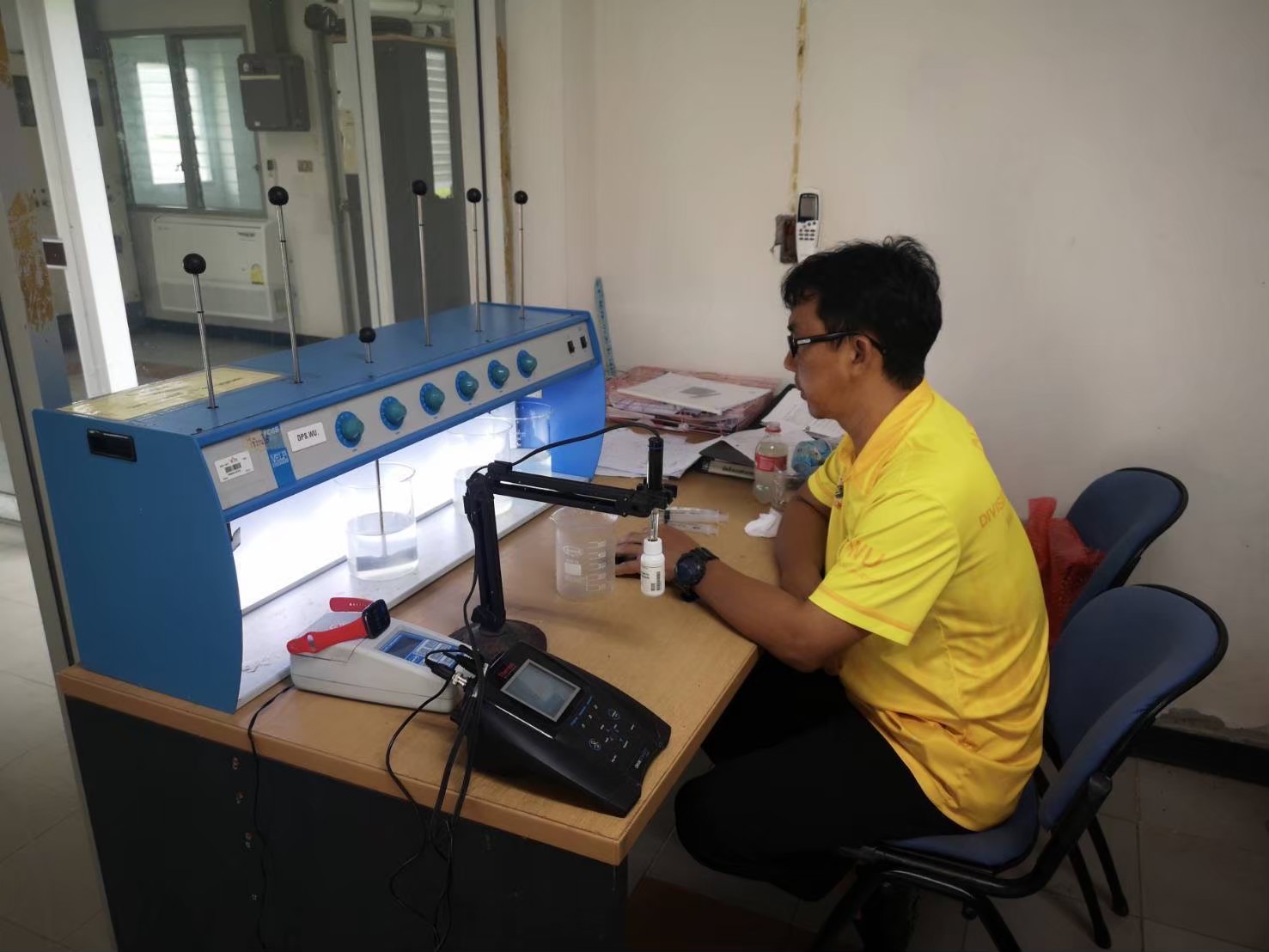
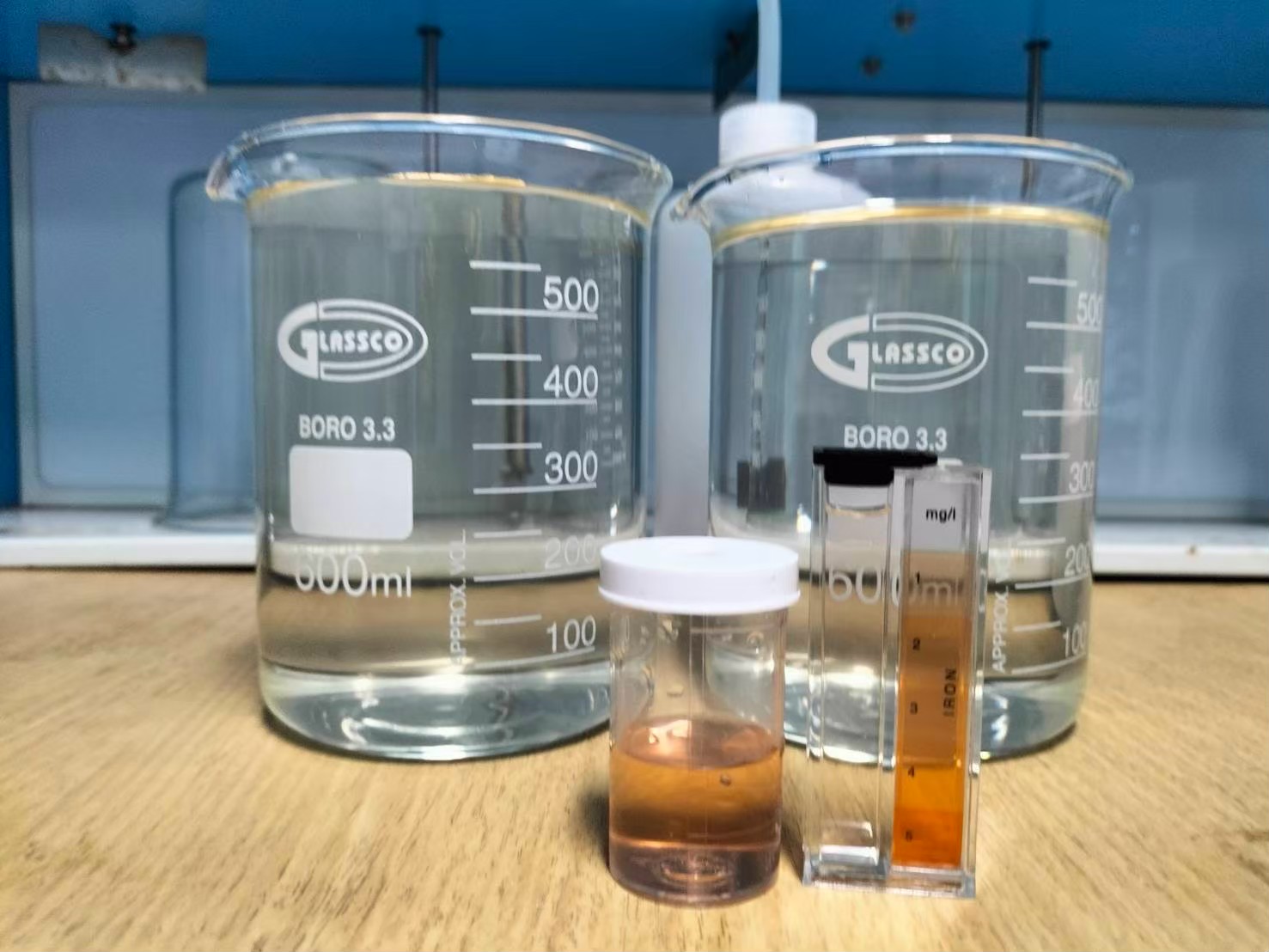
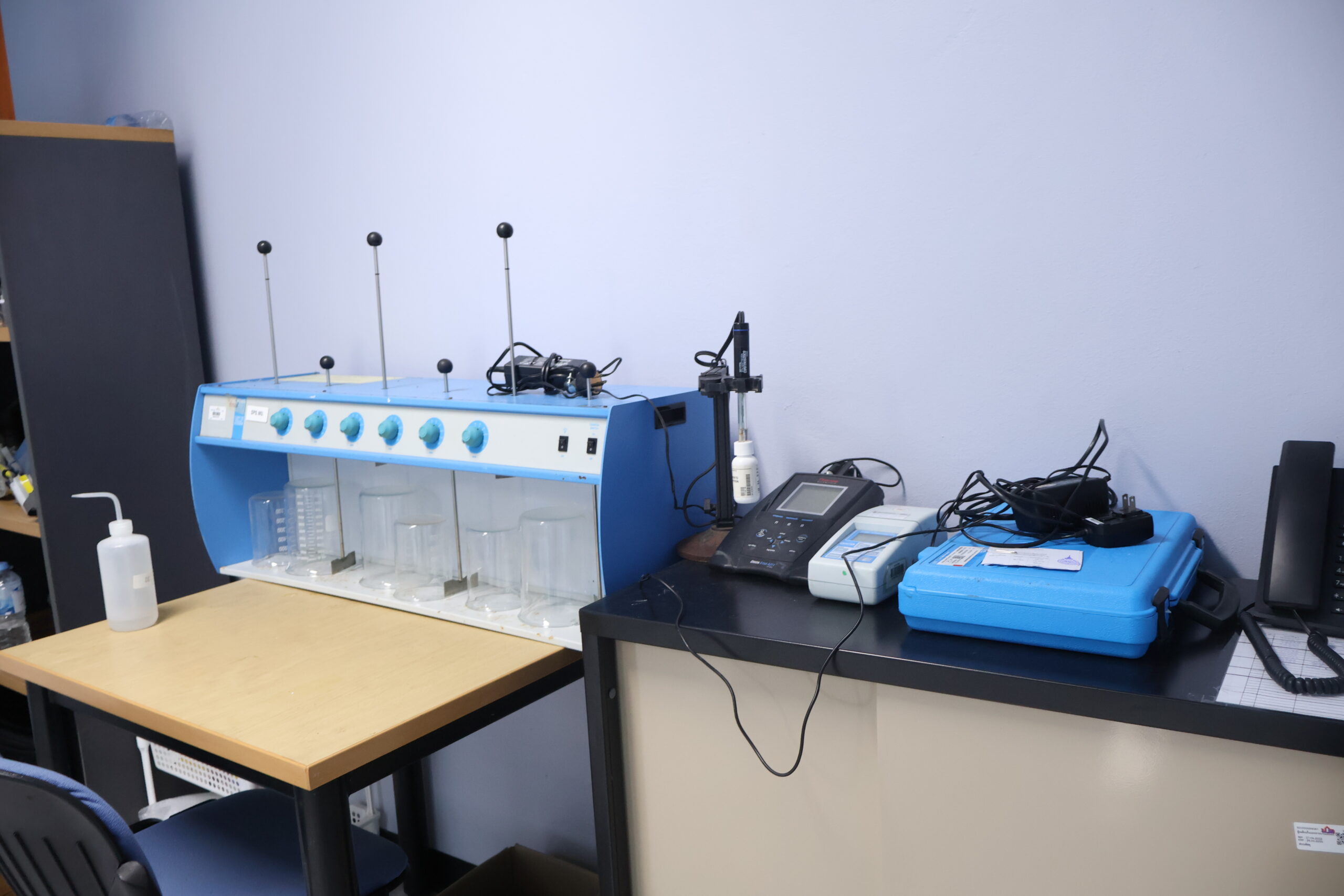
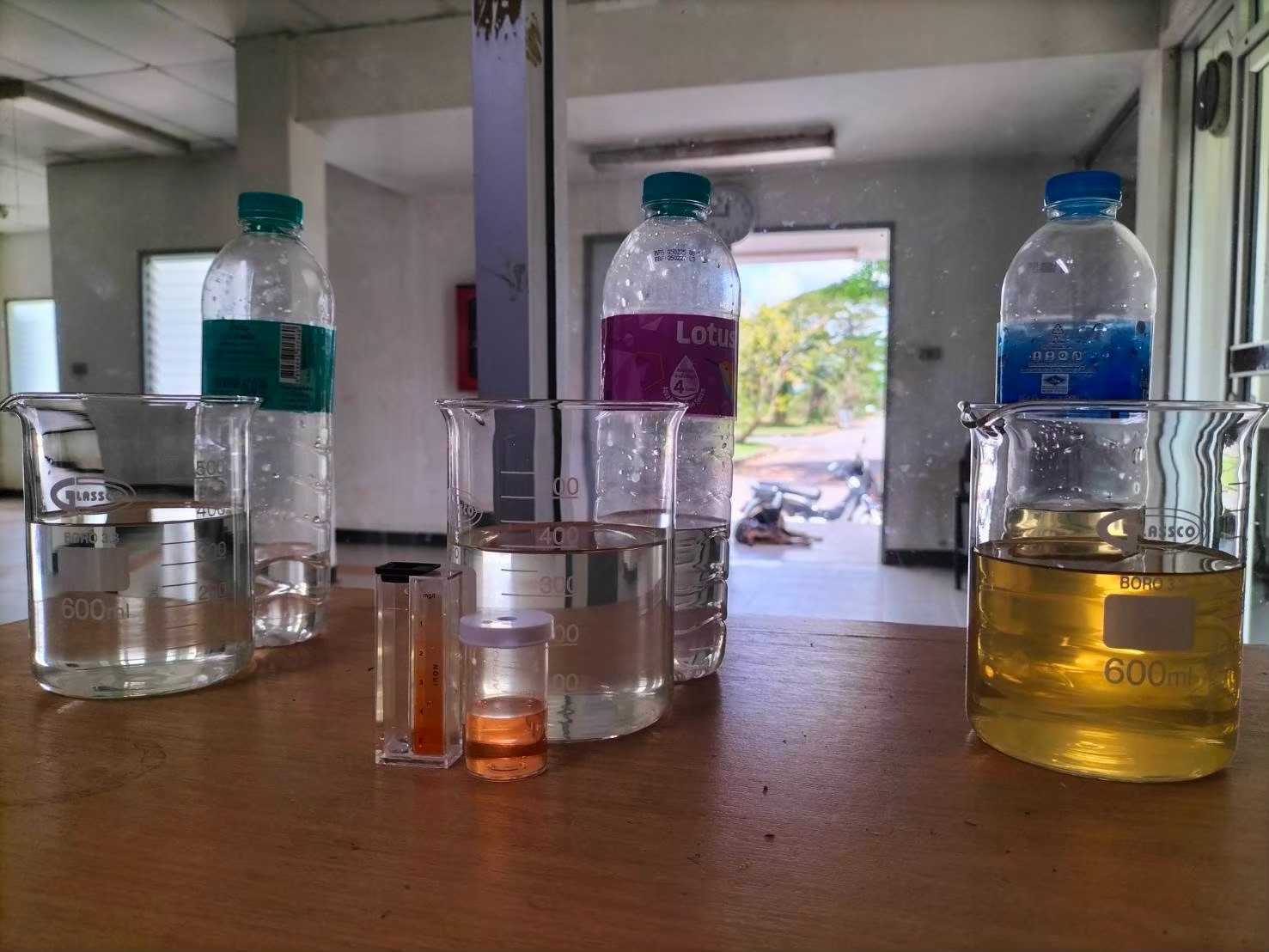
Walailak University applies strict quality control measures from raw water intake to final potable water distribution. Monitoring processes include:
- Raw Water Quality Checks: Initial assessments using field test kits.
Figures: Weekly raw water sampling at the Chalanusorn Reservoir for preliminary water quality testing before the water treatment process. (Walailak University, Thailand)
- Potable Water Monitoring: Monthly laboratory analysis aligned with Provincial Waterworks Authority standards and WHO (2011, Annex 1/2017) guidelines.
- Safe Chemical Use: Chlorination and treatment chemicals are carefully selected to ensure safety for human consumption and minimal ecological impact, with a documented decline in chemical usage compared to past operations.
After switching the water production system from the Pruk Sachon Waterworks plant to the Chala Nusorn Waterworks plant, Walailak University successfully reduced its overall chemical consumption by approximately 40.75%. The reduction was achieved across all major treatment chemicals as follows:
- PAC: decreased by 33.84%
- NaOH: decreased by 73.10%
- Chlorine: decreased by 15.31%
Remote Monitoring Systems: Real-time supervisory control monitors the full water supply process, including water intake, chemical dosing, sedimentation, and storage tank levels.
Through this integrated approach, the university ensures that its water management system remains environmentally sustainable, compliant with legal requirements, and aligned with global best practices.