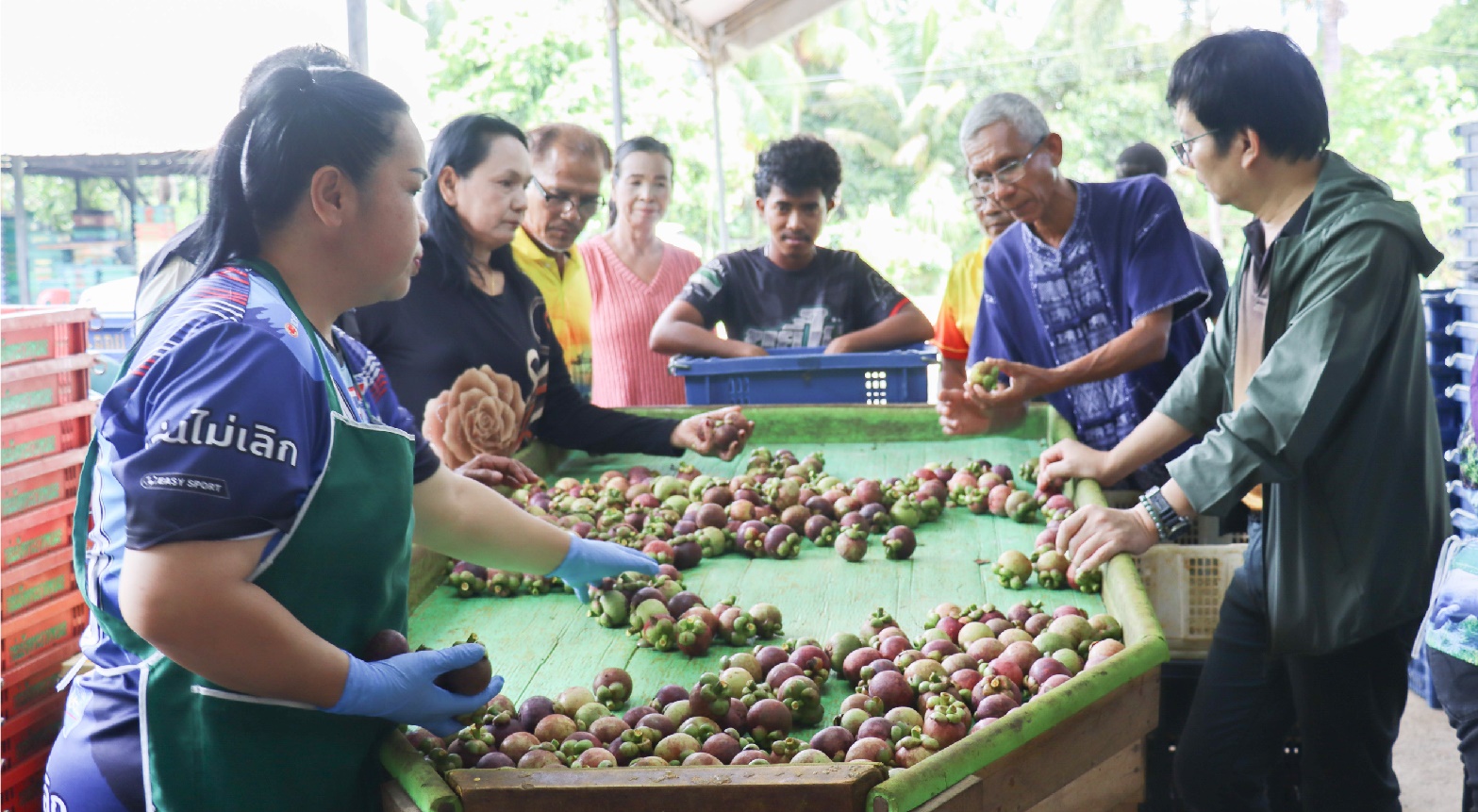
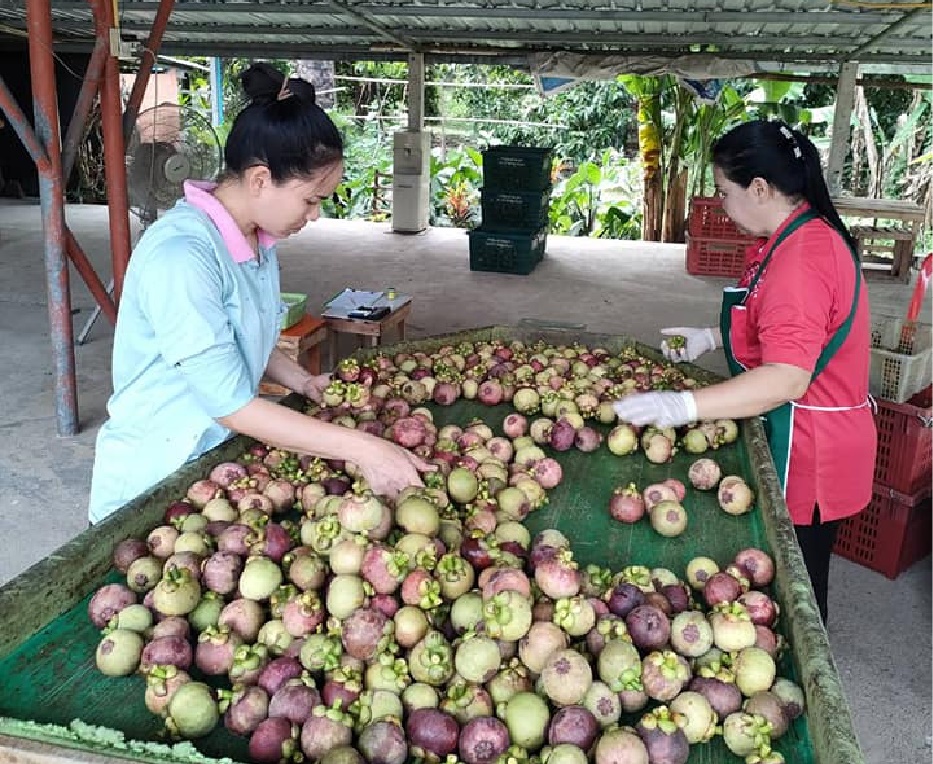
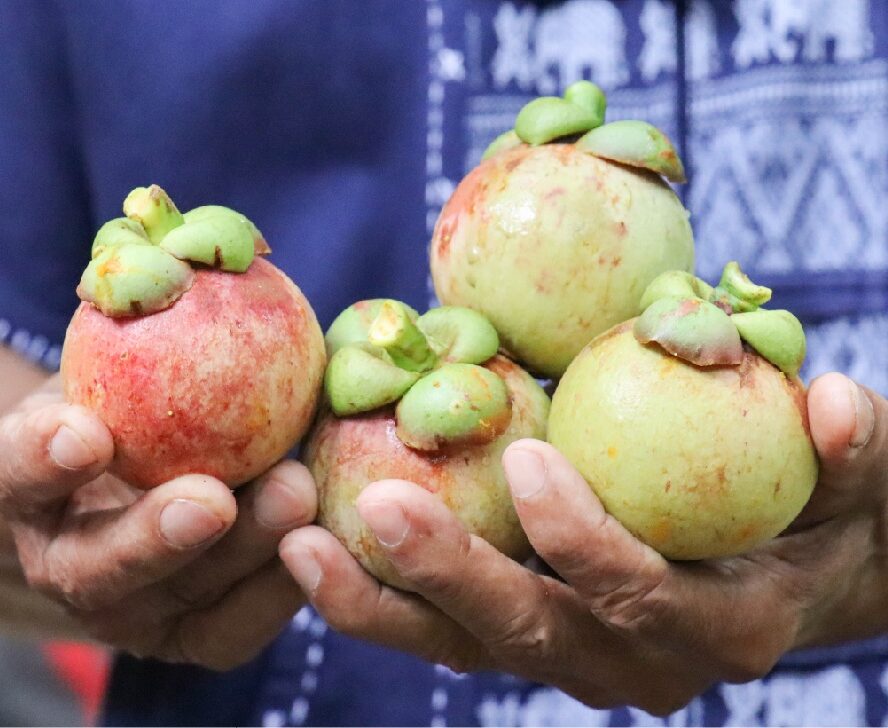
Mangosteen cultivation has long been a cornerstone of the economy in Cha-uat District, Nakhon Si Thammarat. Despite its significance, farmers have faced persistent challenges, notably from diseases like Pestalotiopsis leaf blight, which compromise fruit quality and market value. In response, WU has initiated support programs to assist local community start-ups in implementing sustainable and effective agricultural practices to be financially and socially sustainable businesses.
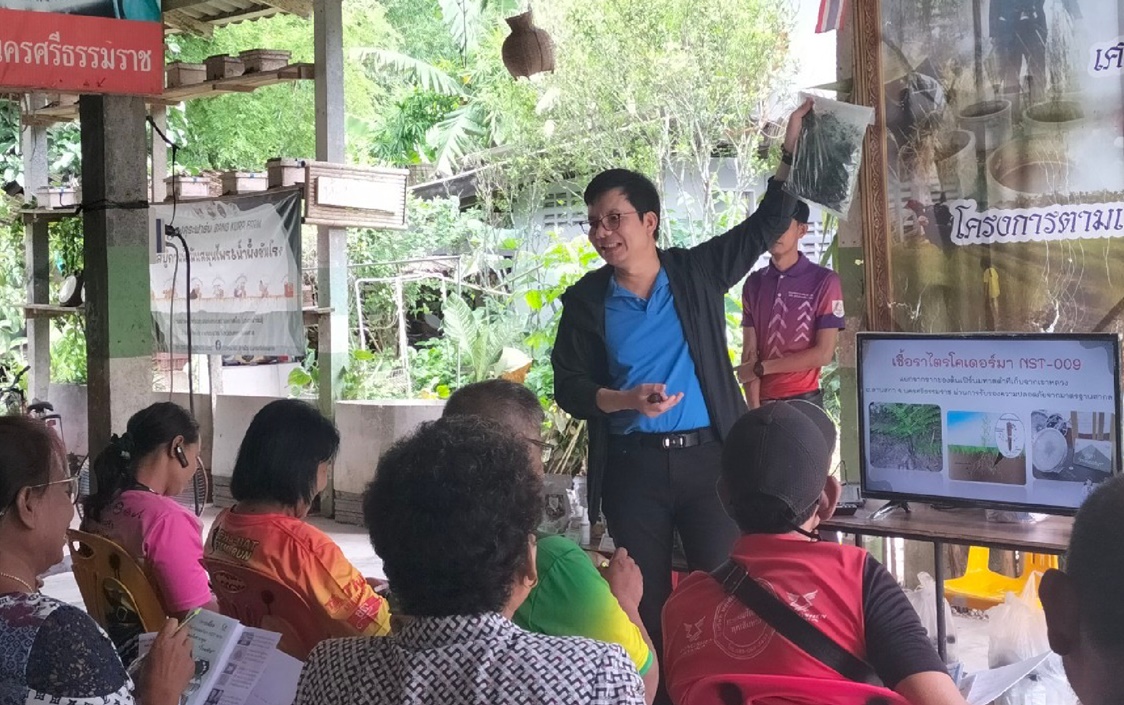
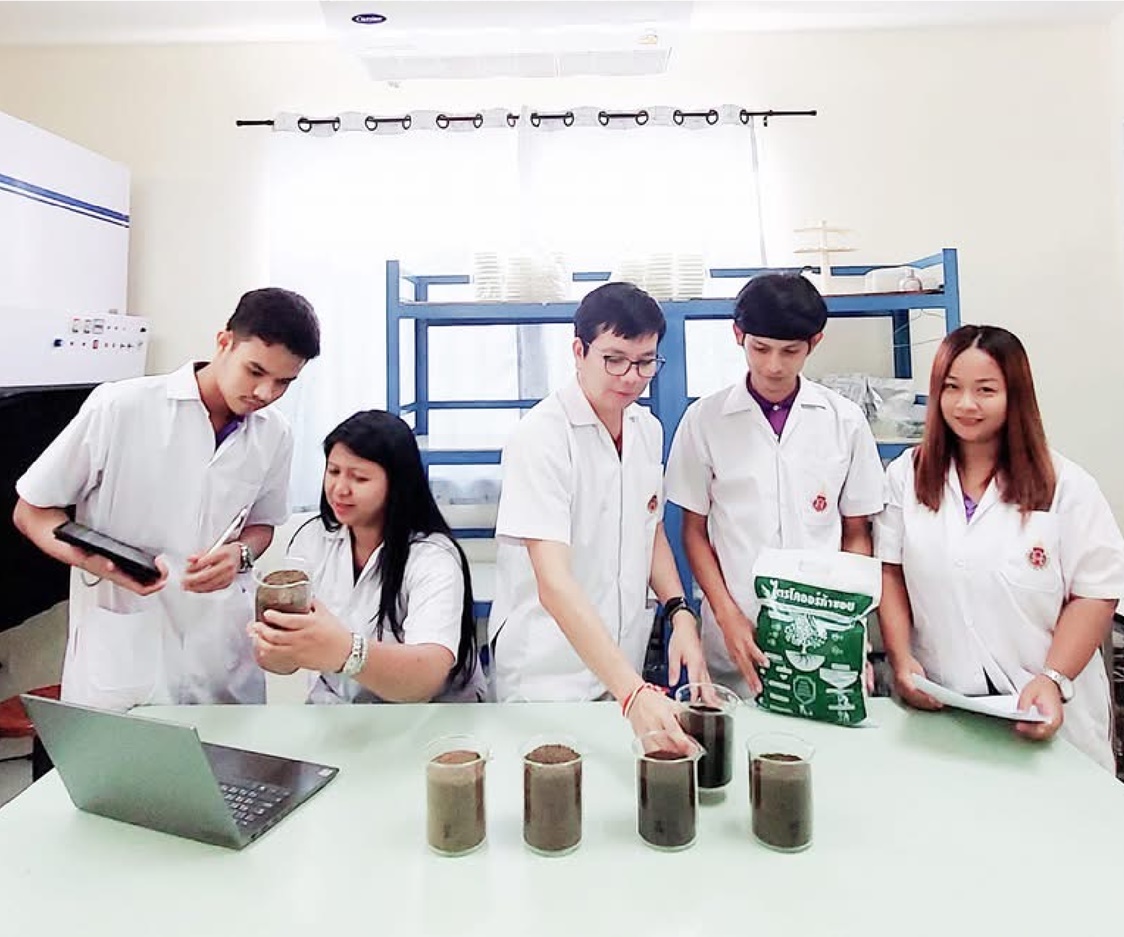
In 2024, WU’s Clinic Technology expanded its outreach to empower mangosteen farmers with modern, eco-friendly farming techniques. Central to this initiative is the promotion of Trichoderma, a biological product renowned for its efficacy against fungal diseases. This spore-based powder is not only user-friendly but also safe for both humans and the environment, presenting a viable alternative to chemical pesticides.
The adoption of Trichoderma has yielded significant benefits. It combats plant diseases through mechanisms such as mycoparasitism and antibiosis, effectively eliminating harmful pathogens. Additionally, its use has led to a reduction in pesticide residues on mangosteens, thereby enhancing fruit quality and marketability both domestically and internationally. Farmers who have consistently applied Trichoderma have observed notable financial gains. Since the project’s inception, incomes have risen from 9 million baht in the initial years to 22 million baht last year, culminating in an impressive 27 million baht in 2024.
Beyond improving crop health, WU is committed to fostering financial and social sustainability within the local community. The university offers start-up assistance to local farmers and emerging agricultural entrepreneurs by providing essential resources such as mentorship programs, training workshops, and access to university facilities. This holistic approach ensures that participants are well-equipped to develop and maintain sustainable businesses. By integrating educational programs with practical applications, the university empowers local farmers to independently manage and expand their agricultural enterprises.