
The Carbon Emission Reduction Process
Excessive carbon emissions present a major challenge for many educational institutions, impeding their progress toward sustainable development and environmental responsibility. To address this issue, WU has an effective carbon management process to reduce carbon dioxide emissions across the three scopes of greenhouse gas emissions. This approach integrates renewable energy adoption, emission control measures, and sustainable practices to align with the university’s long-term environmental goals.
Direct Emissions
To manage direct emissions, WU maintains efficient combustion systems and has transitioned its fleet to electric vehicles, reducing emissions by 47.31 tons of CO2 equivalent in 2024. Regular inspections of refrigerant systems minimized fugitive emissions, achieving a reduction of 855.05 tons of CO2 equivalent.

Indirect Emissions
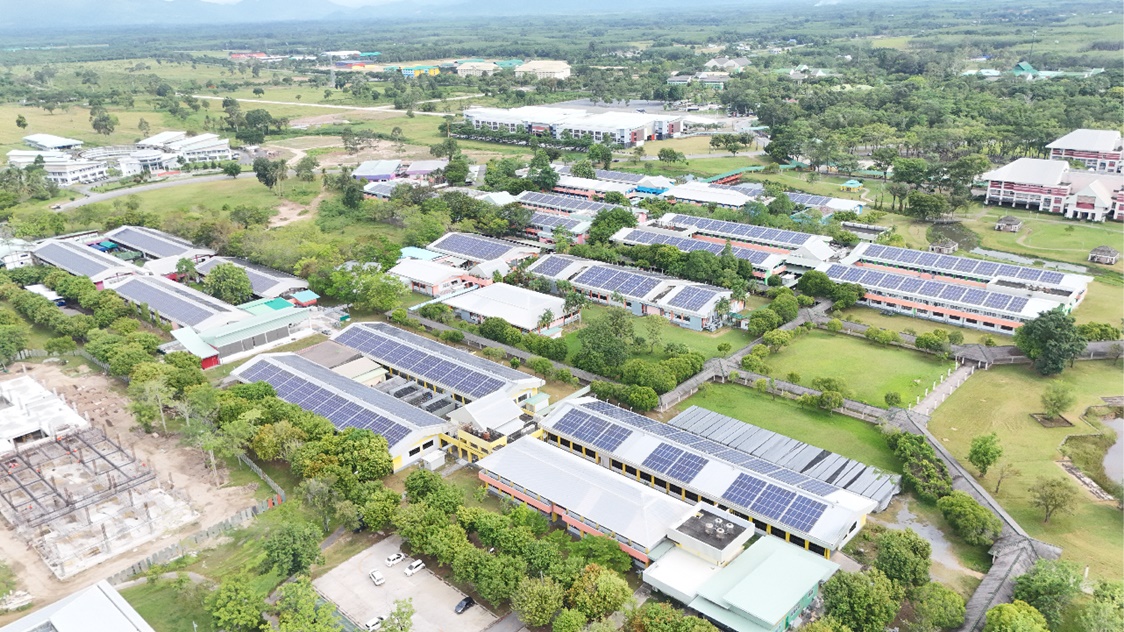
The university has significantly reduced reliance on grid electricity by adopting renewable energy, such as solar power, which cut emissions by 2,027 tons of CO2 equivalent in 2024. Energy-efficient practices, including LED lighting upgrades and appliance optimization, reduced emissions by an additional 347.76 tons of CO2 equivalent.
Other Indirect Emissions
WU addresses other indirect emissions through waste management, digital transformation, and sustainable transport initiatives. Waste reduction and e-services saved 32.05 tons of CO2 equivalent, while online meetings reduced air travel emissions by 42.08 tons of CO2 equivalent. Promoting bicycles, walking, and carpooling, alongside EV infrastructure, contributed to further emission reductions.
WU’s renewable energy mix includes solar power, biomass, and combined heat and power systems, which enhance energy efficiency and reduce reliance on fossil fuels. Plans to incorporate wind energy will further diversify its clean energy sources.
In 2024, WU successfully reduced more than 3,300 tons of CO2 equivalent across all three GHG scopes through renewable energy adoption, emission control, and sustainable practices. These results demonstrate the university’s strong commitment to long-term carbon management and emission reduction through a systematic process.

Goal 1: No Poverty
Goal 4: Quality education
Goal 17: Partnerships for the Goals