
The Green Allies: Just Say No to Plastic Bag– Under WU Policies
Plastic waste and single-use items have become a critical global issue, causing severe environmental degradation and harming ecosystems. These materials, often non-biodegradable, contribute to pollution in land and marine environments, impacting both wildlife and human health. Addressing this problem requires collective efforts to reduce usage, promote sustainable alternatives, and manage waste effectively. Consequently, the university has the policies around use minimization of plastic and disposable items on campus.
According to these policies, the university organized various activities in 2024, promoting and campaigning among students, staff, and employees, as well as food and beverage vendors operating within the university, to reduce waste through various approaches. These include awareness campaigns, workshops, and training sessions, such as the “8R Waste Management Seminar” and workshops on crafting items from everyday recyclable waste. These initiatives, aligned with the university’s policies on proper waste and hazardous waste management, aim to encourage waste segregation and proper waste management among students and staff through hands-on training, demonstrations, and practical implementation.
This stage focuses on educating WU students and staff about the significance of reducing waste and properly sorting it by implementing a system of four color-coded bins to help categorize waste: Green Bins for organic waste; Blue Bins for general waste; Yellow Bins for recyclable materials; Red Bins for hazardous waste.

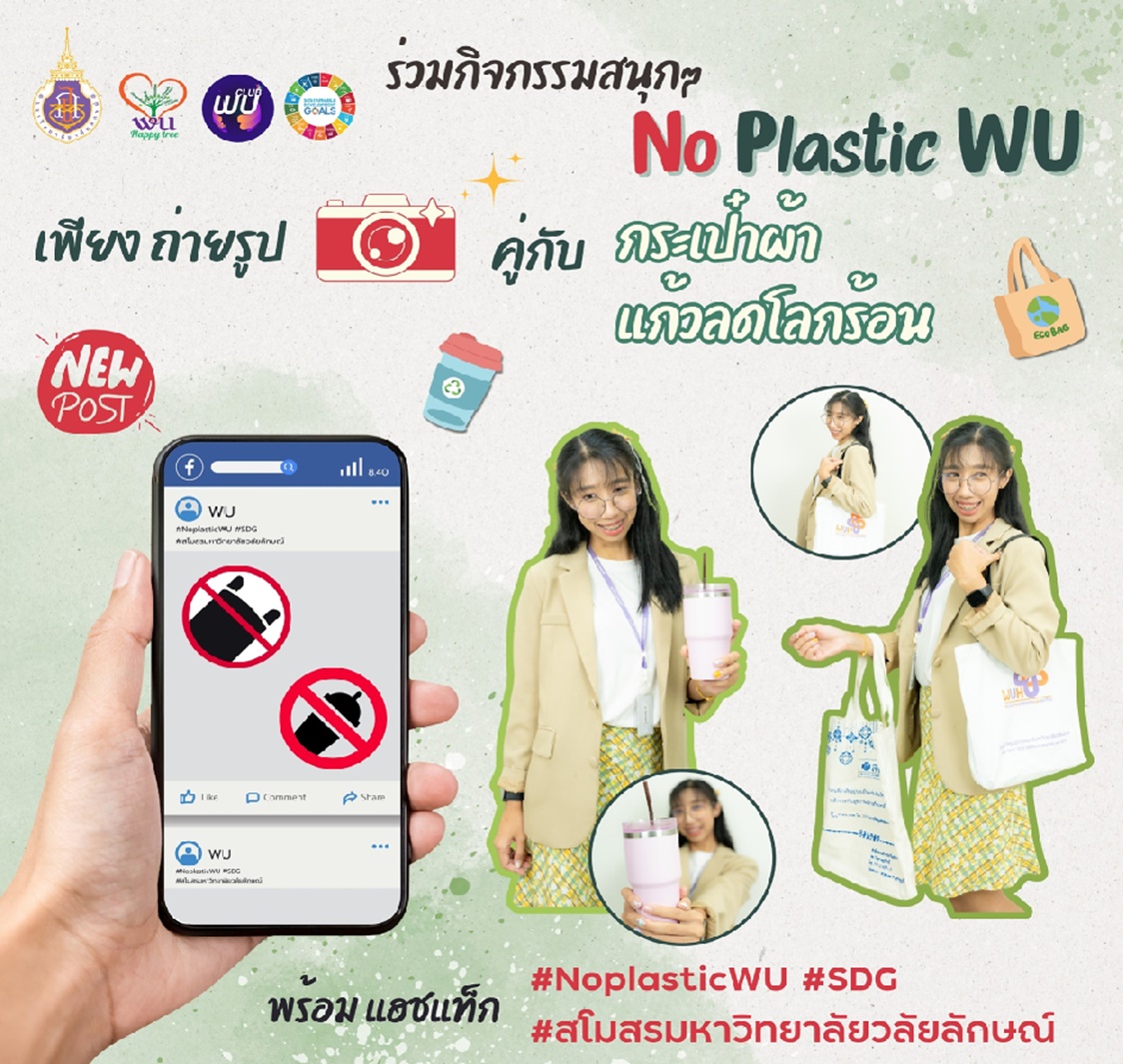
Additionally, the university has launched campaigns encouraging students, staff, and employees to reduce or eliminate the use of plastics. Examples include using cloth bags and baskets instead of plastic bags, avoiding single-use disposable items, and requiring vendors to discontinue providing free plastic bags (except for ready-to-eat cooked food, which must be packed in bags made from recycled materials, biodegradable plastics, or paper). Vendors are also encouraged to eliminate the use of foam containers and degradable plastic bags with handles. Students and staff are urged to use refillable water bottles instead of purchasing single-use plastic bottled water.

These efforts help reduce global warming and address the plastic waste problem. The university aims to instill a Zero Waste mindset by promoting the 8R principles, which include: Reduce, Reuse, Recycle, Refuse, Refill, Repair, Recover, and Return. These principles encourage minimizing waste on campus as much as possible and passing on this knowledge and practices to family members, coworkers, and others to build a waste-free society. By doing so, WU contributes to creating a cleaner, more sustainable world for current and future generations. campus as much as possible and passing on this knowledge and practices to family members, coworkers, and others to build a waste-free society. By doing so, WU contributes to creating a cleaner, more sustainable world for current and future generations.
GOAL 12. Responsible Consumption and Production