Green Building Elements 3: Sustainable Site Planning & Management
Elements 3: Sustainable Site Planning & Management
- Brownfield Redevelopment
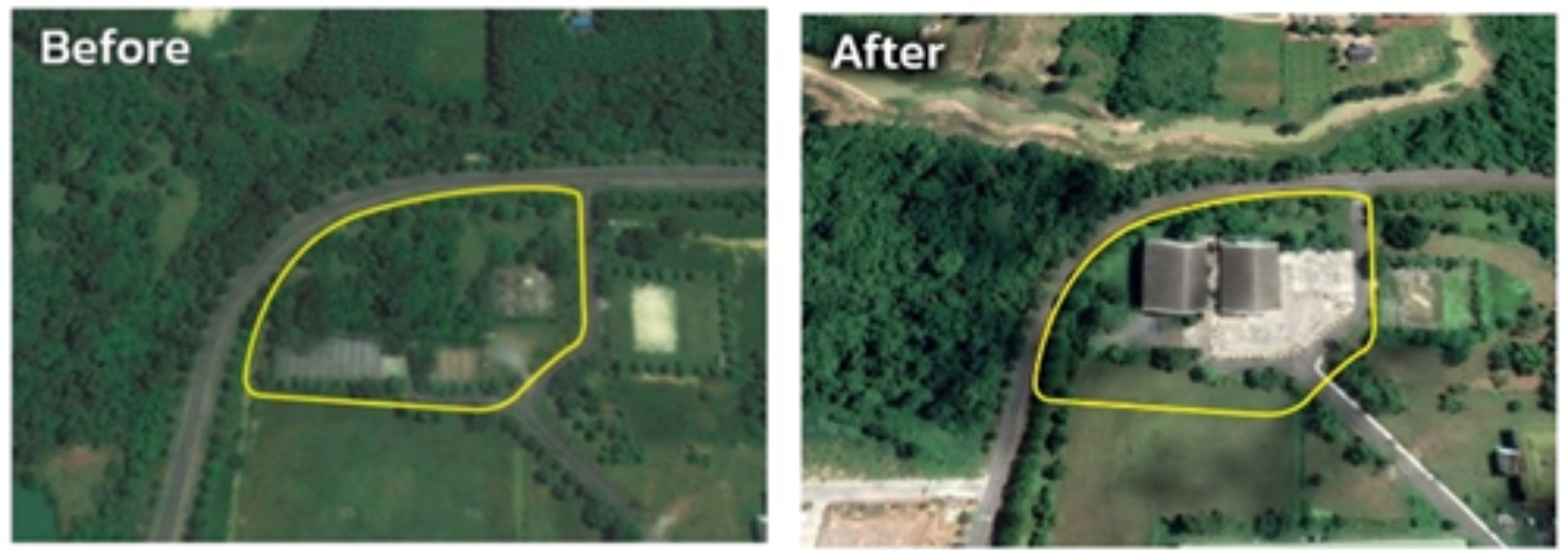
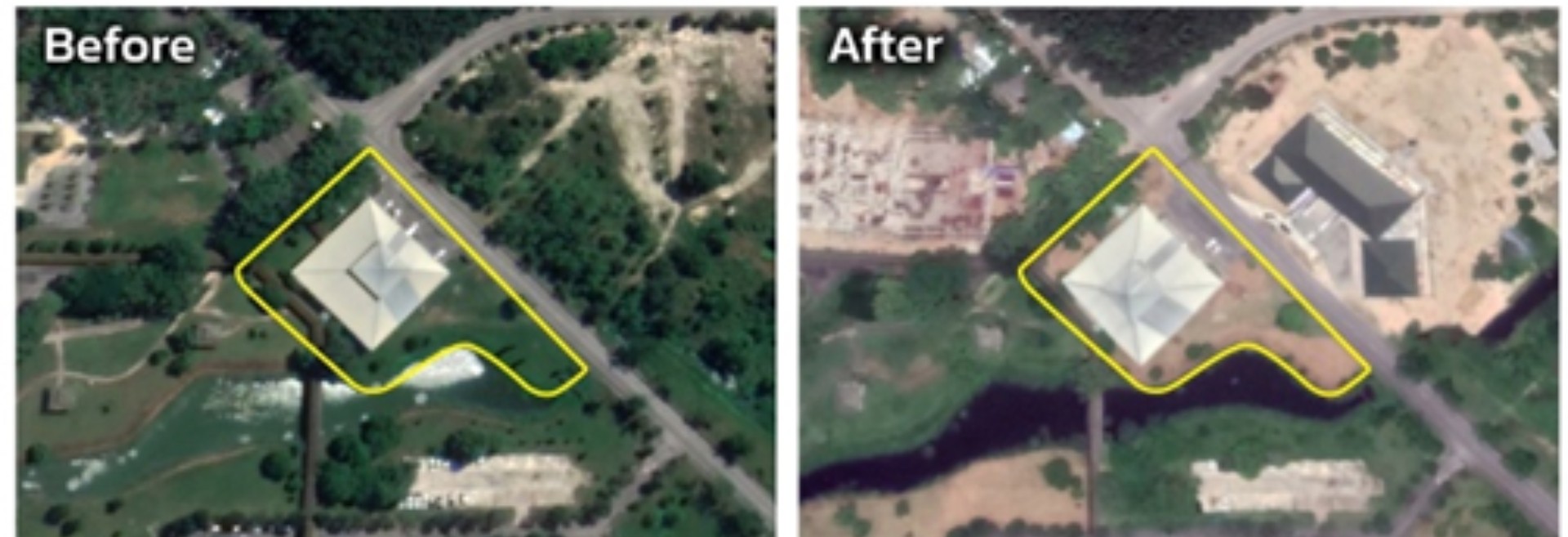
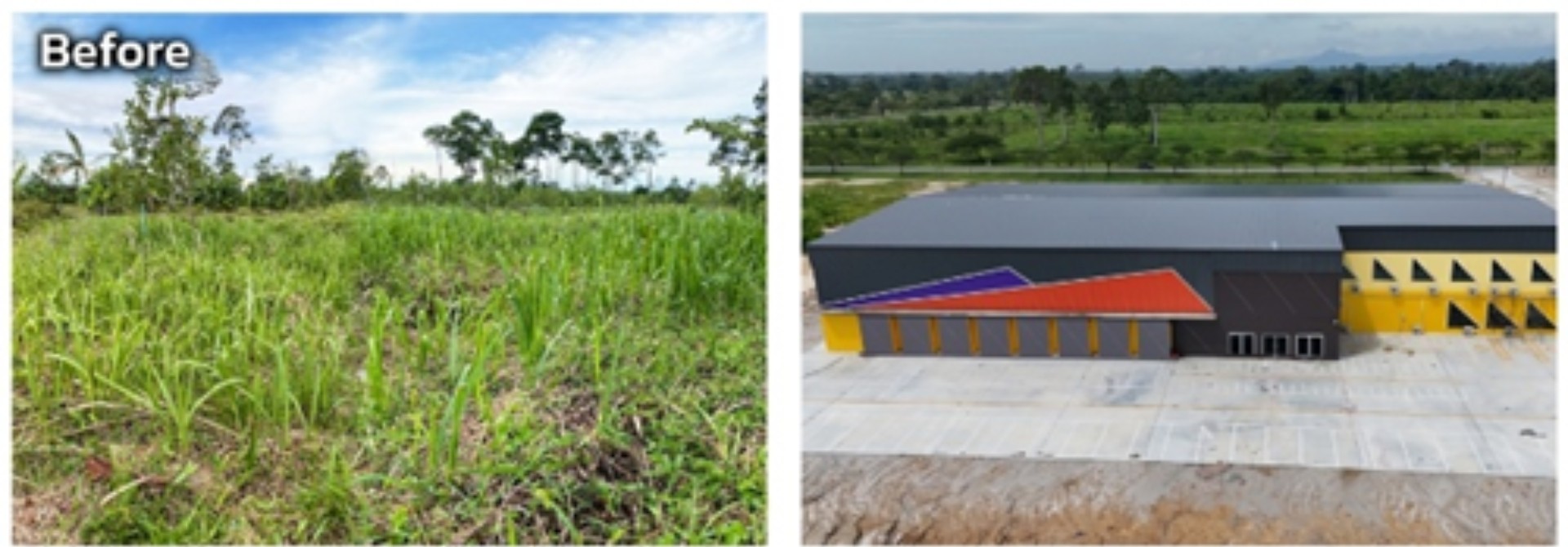
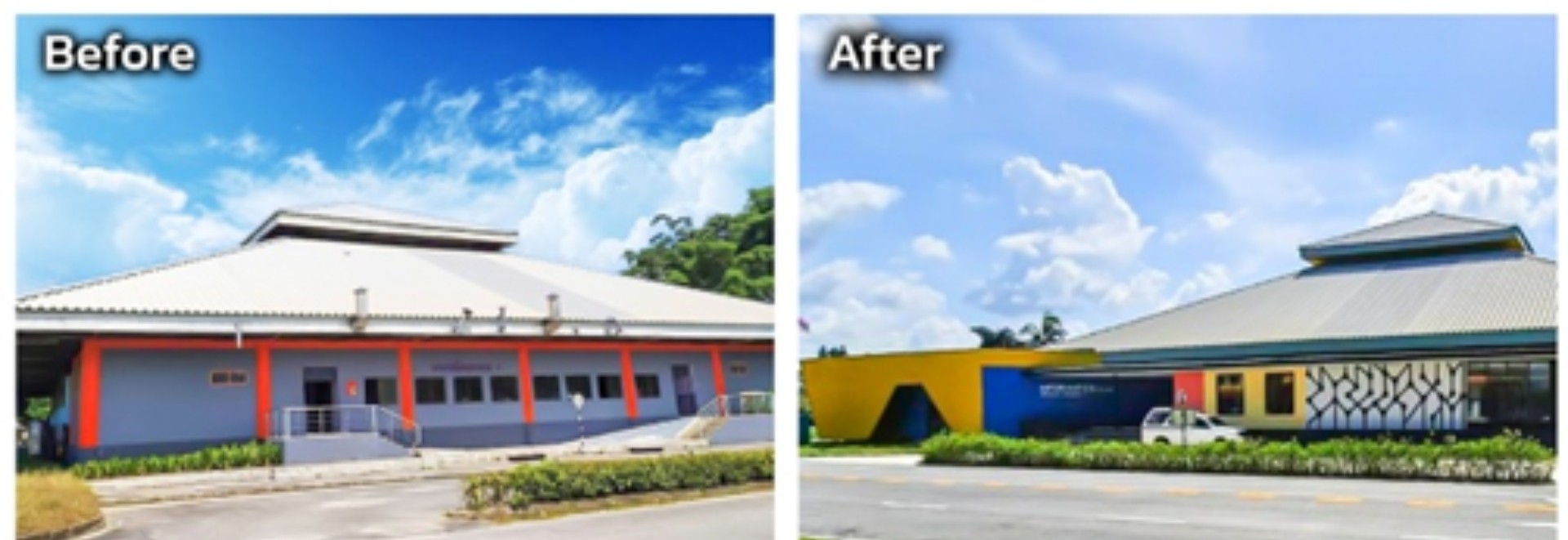
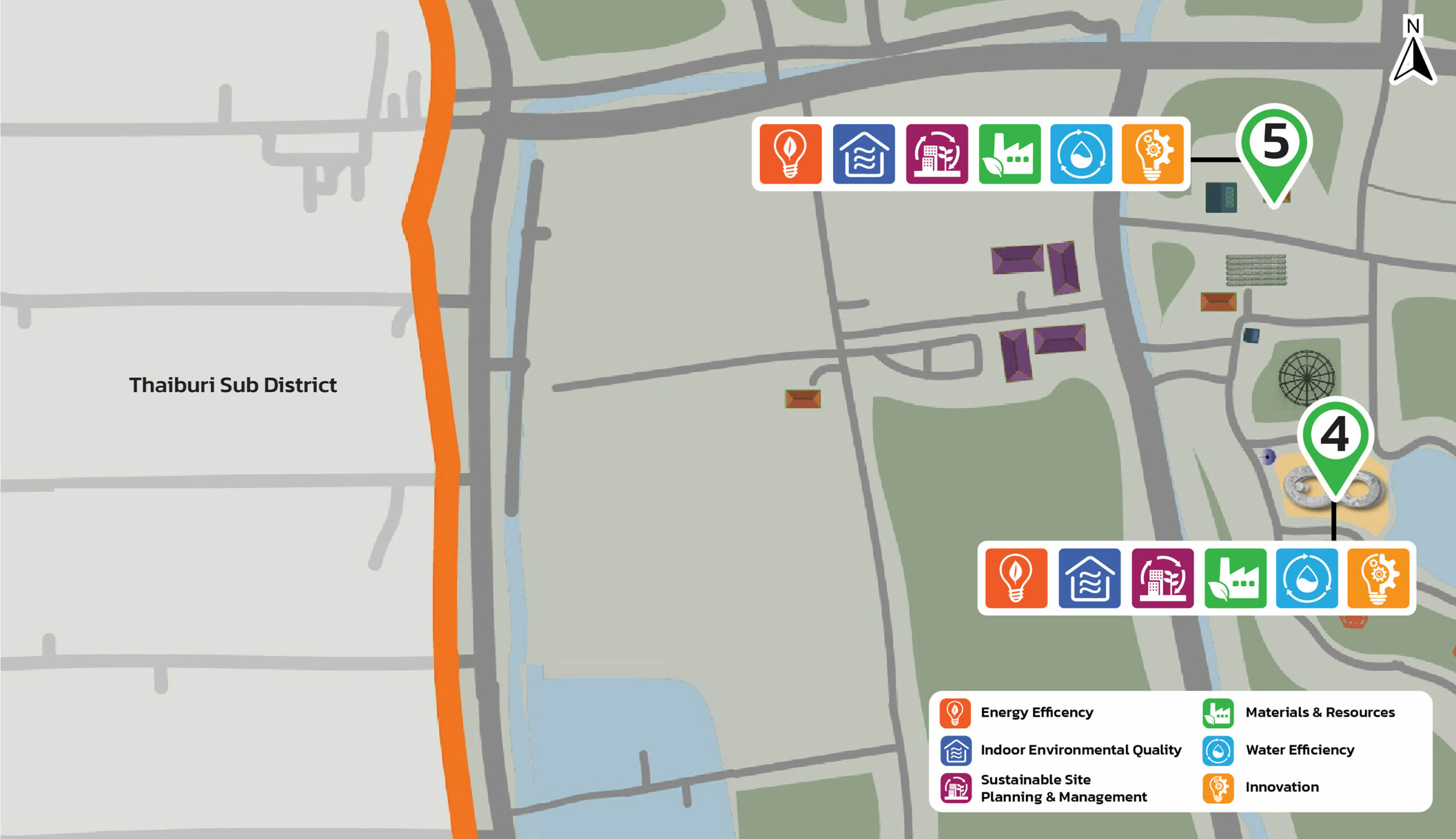
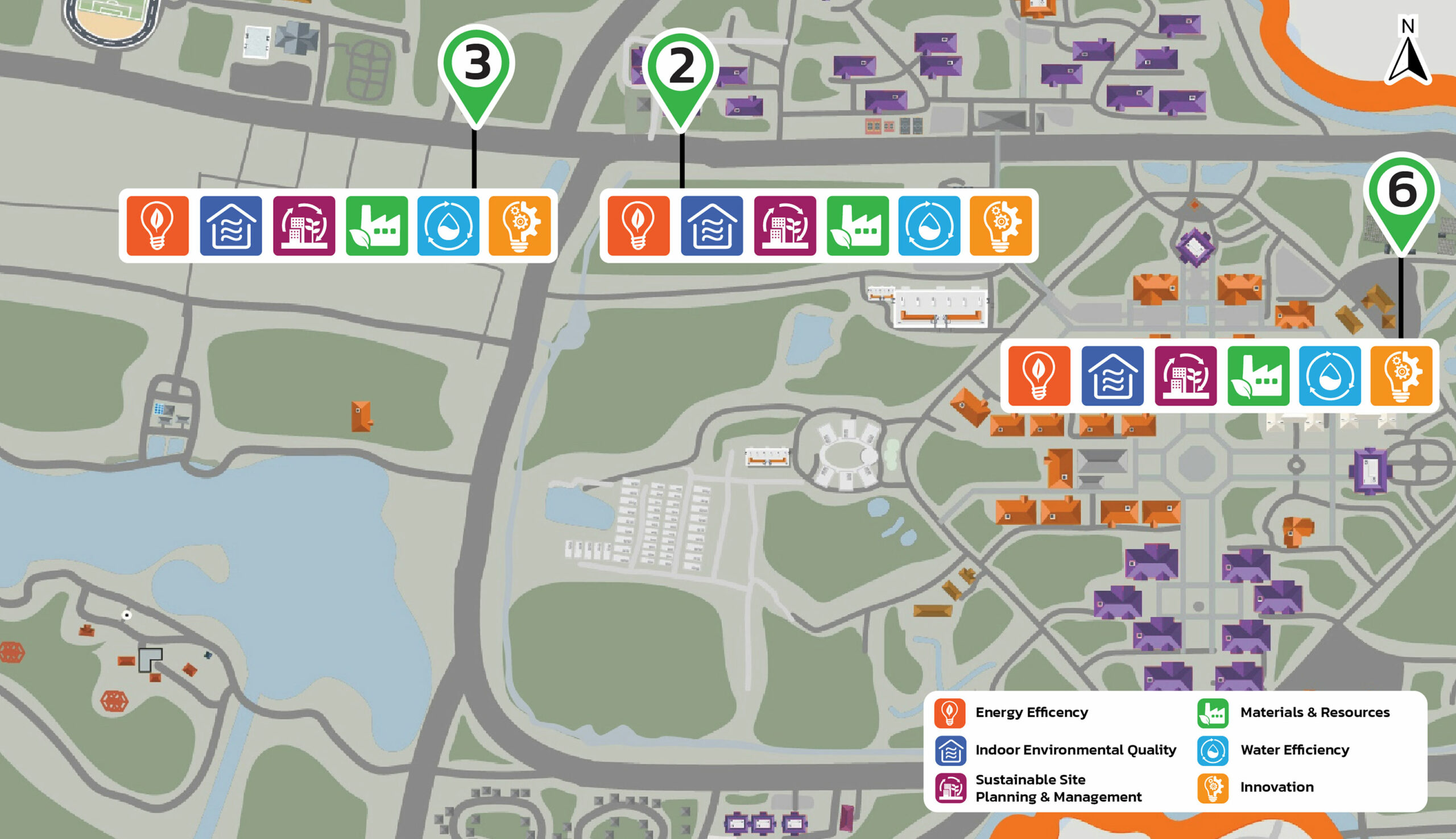
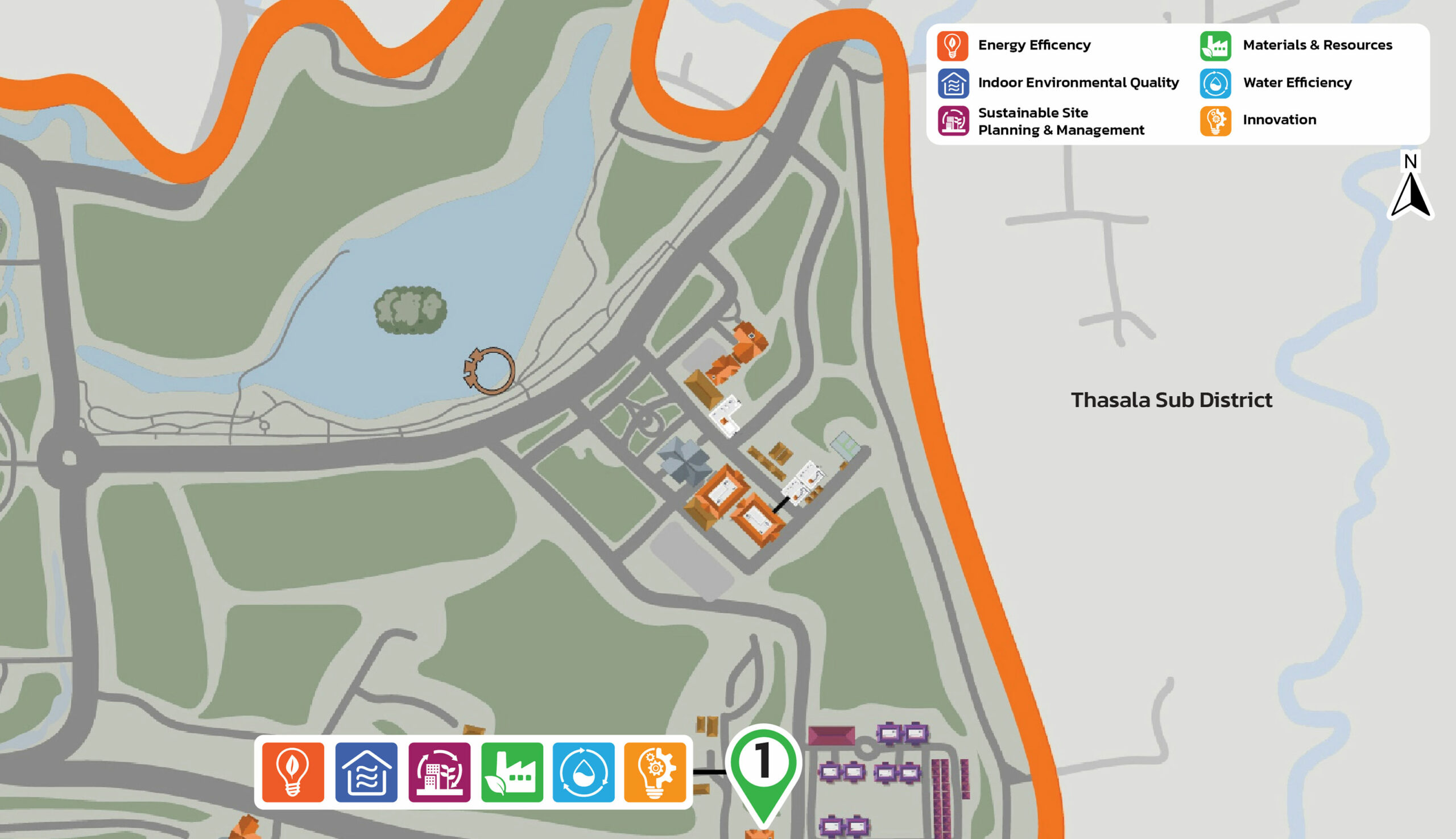
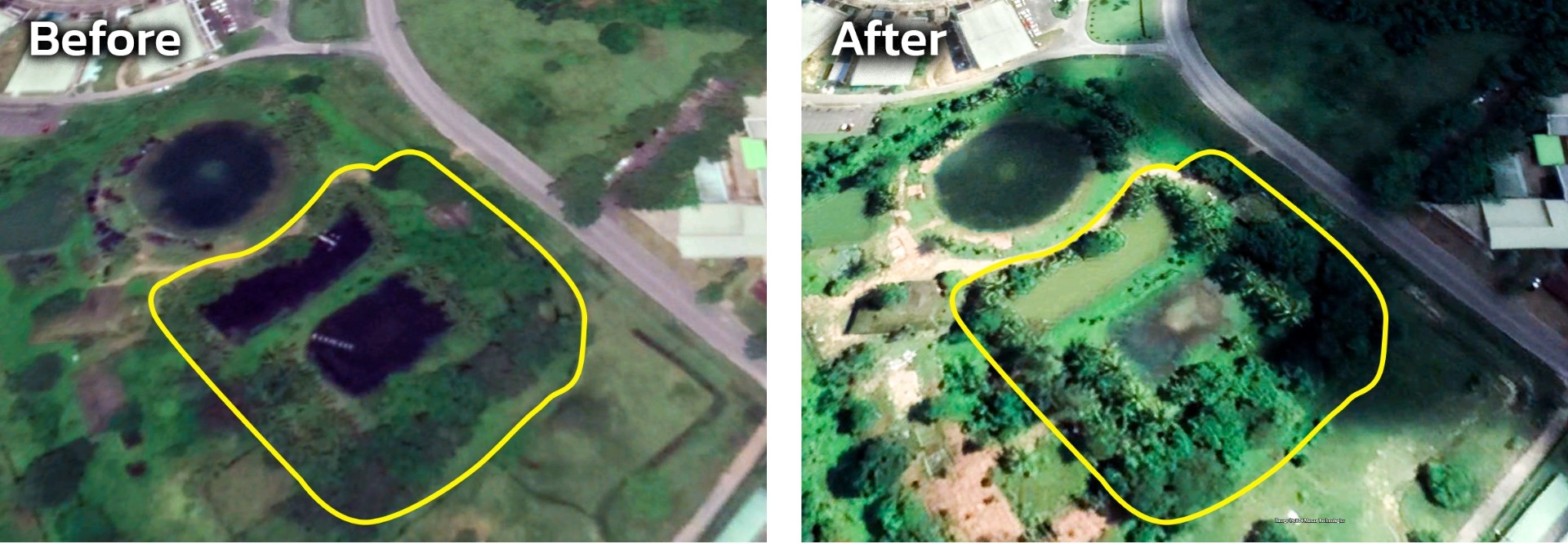
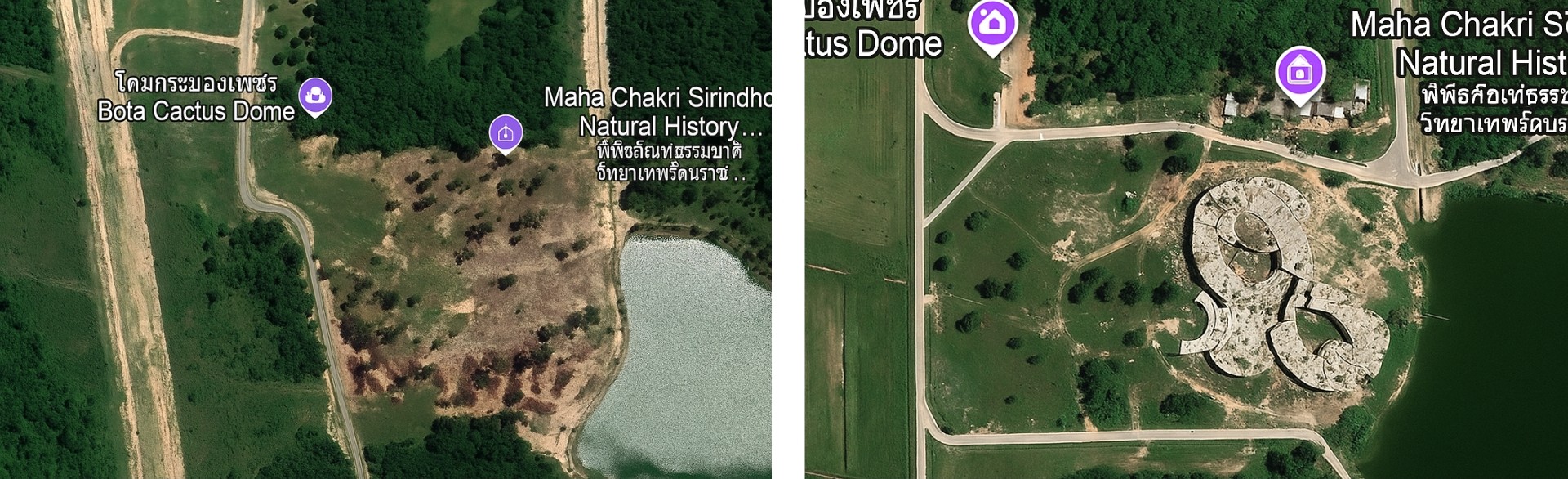
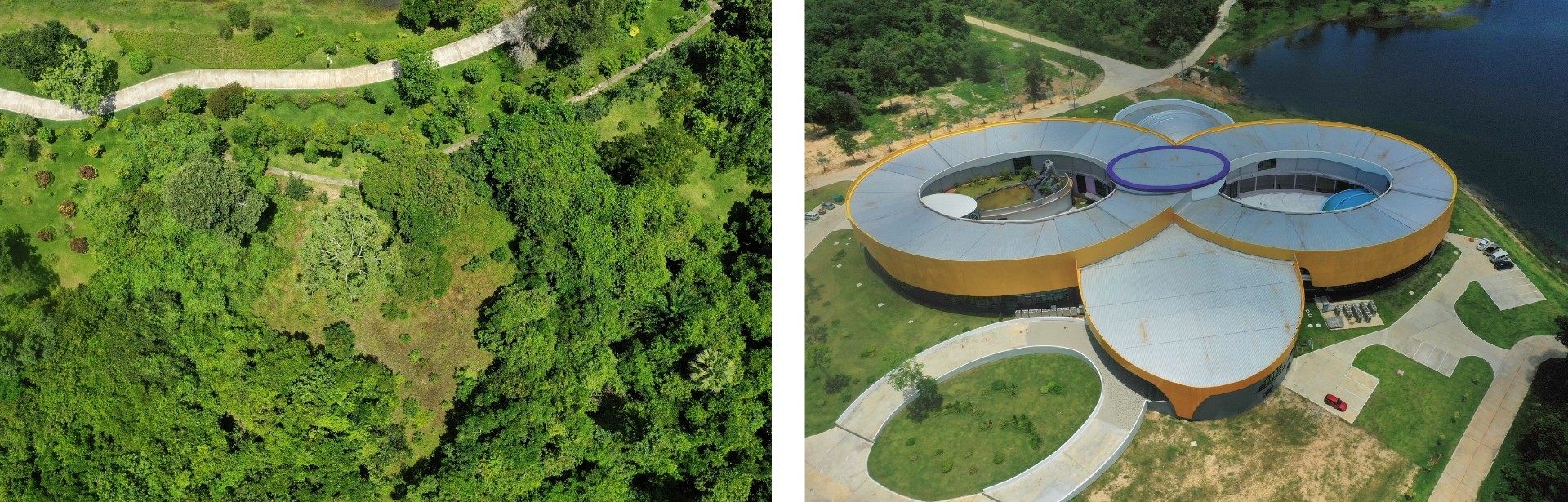
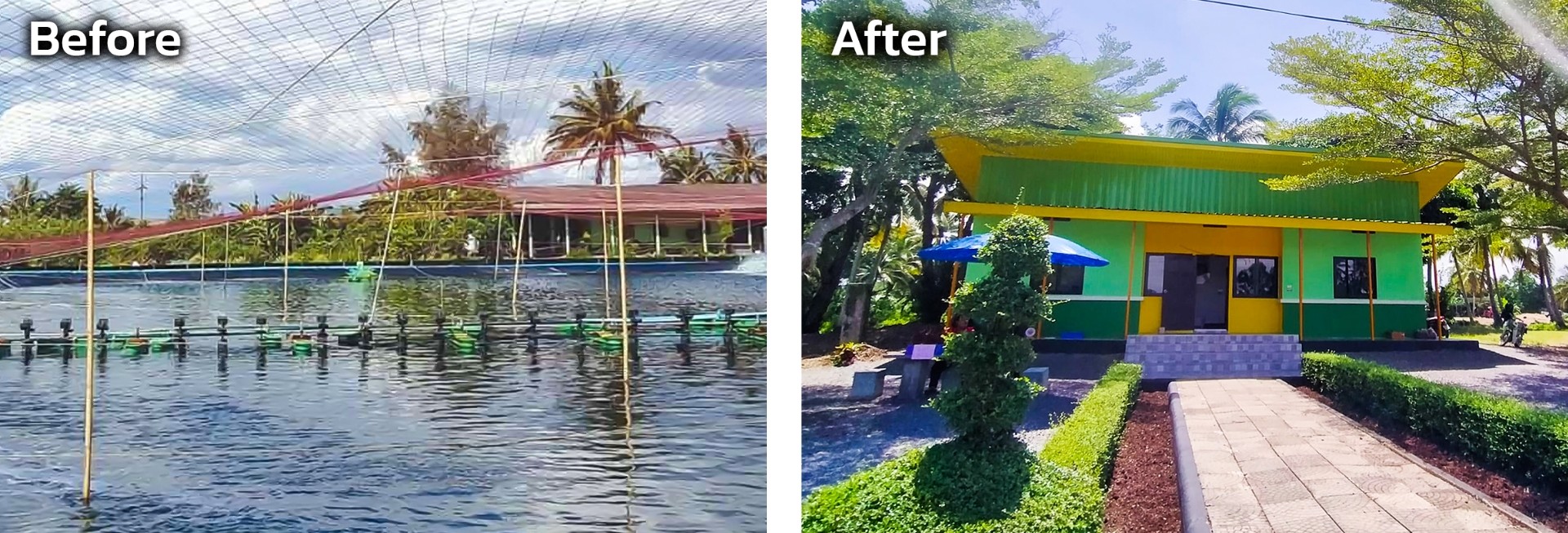
Elements of green building implementation at Walailak University reflect Element 3: Sustainable Site Planning & Management under GBI NRNC, emphasizing Brownfield Redevelopment. The university has transformed previously used or contaminated areas into sustainable learning and working environments — including the conversion of former shrimp ponds into the Landscape Architecture Office, agricultural chemical-contaminated land into the Badminton Building, an old canteen area with grease contamination into the Information Laboratory Building, and an abandoned site into the Princess Maha Chakri Sirindhorn Natural History Museum.
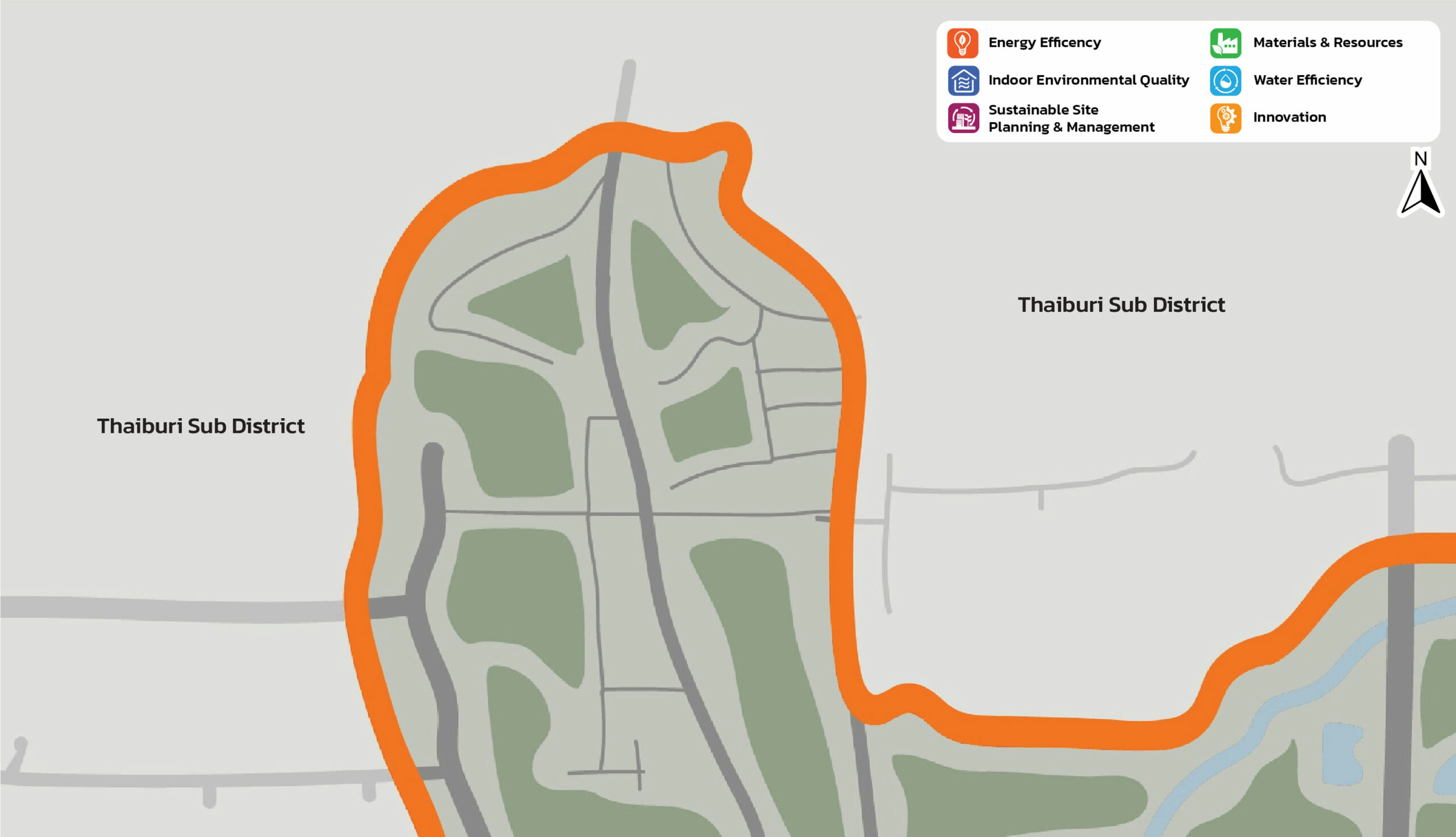
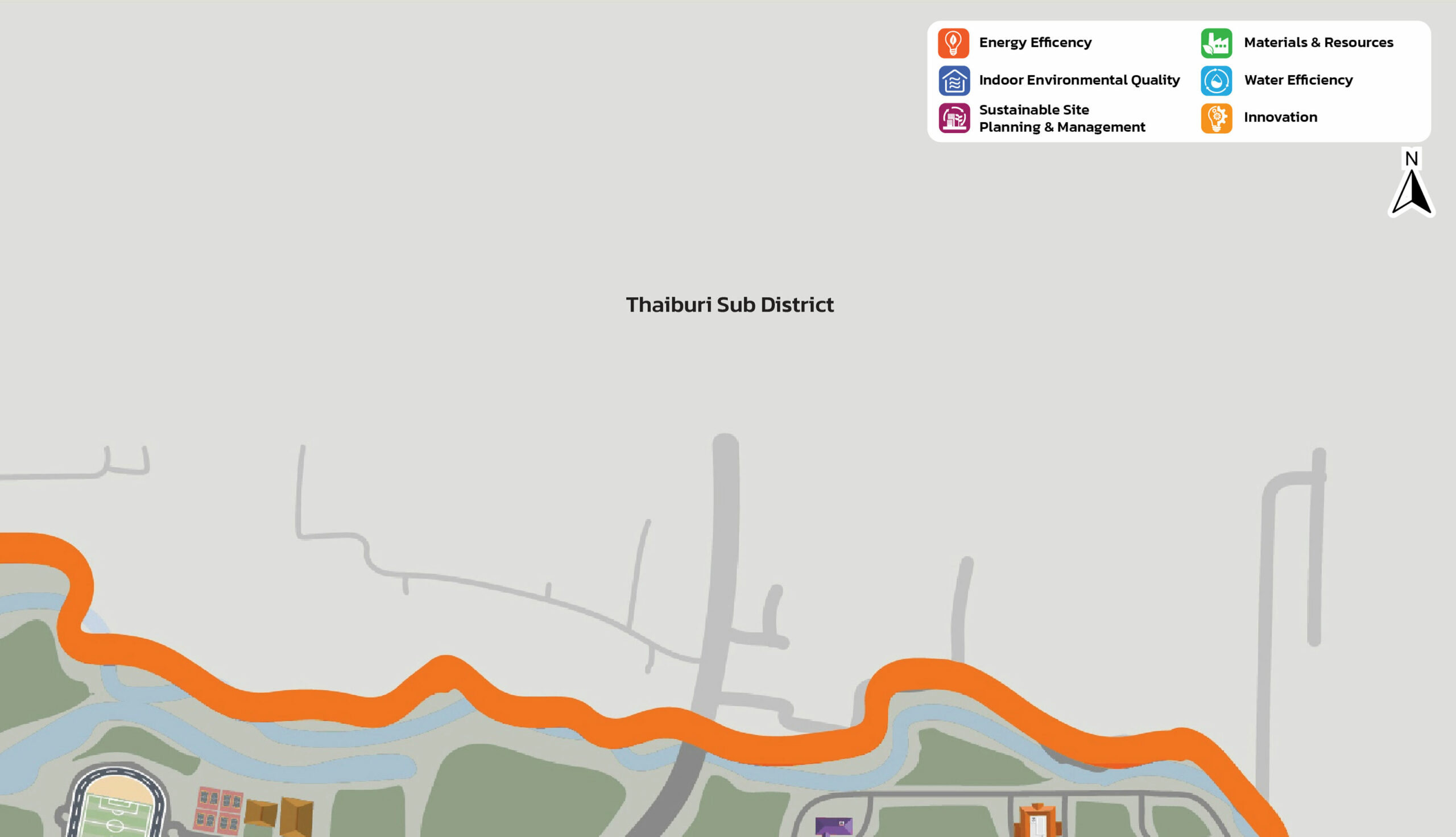
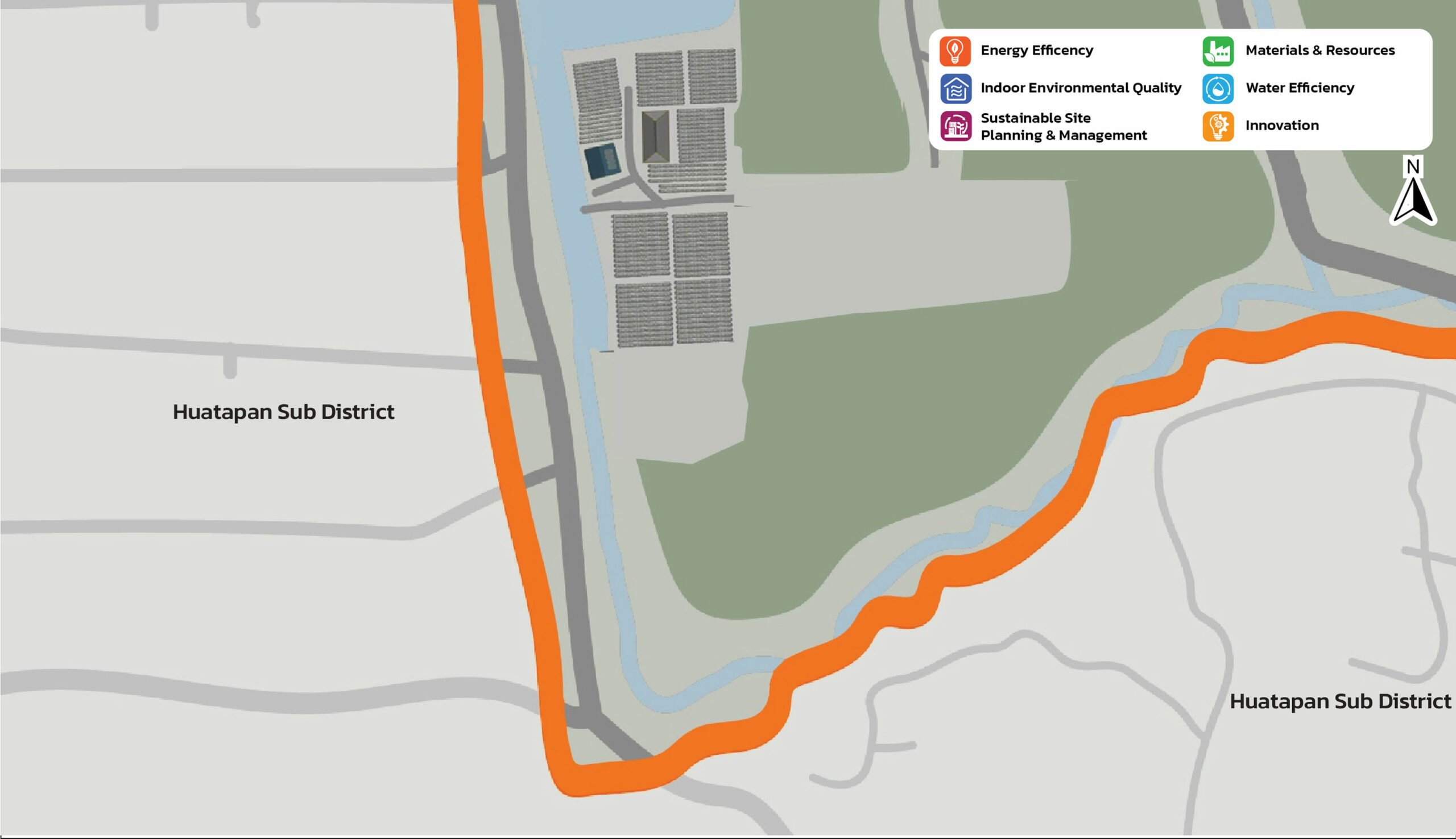
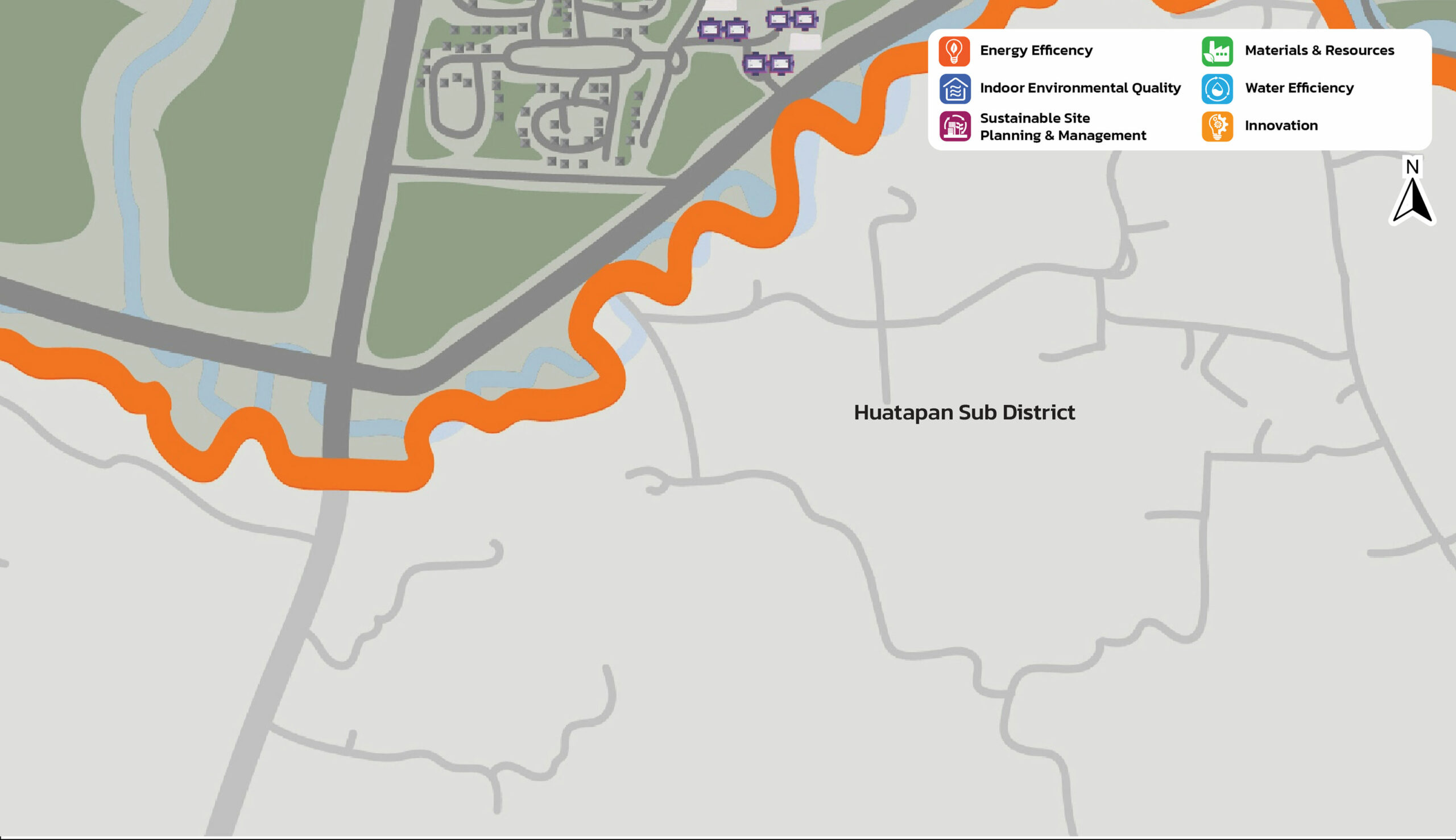
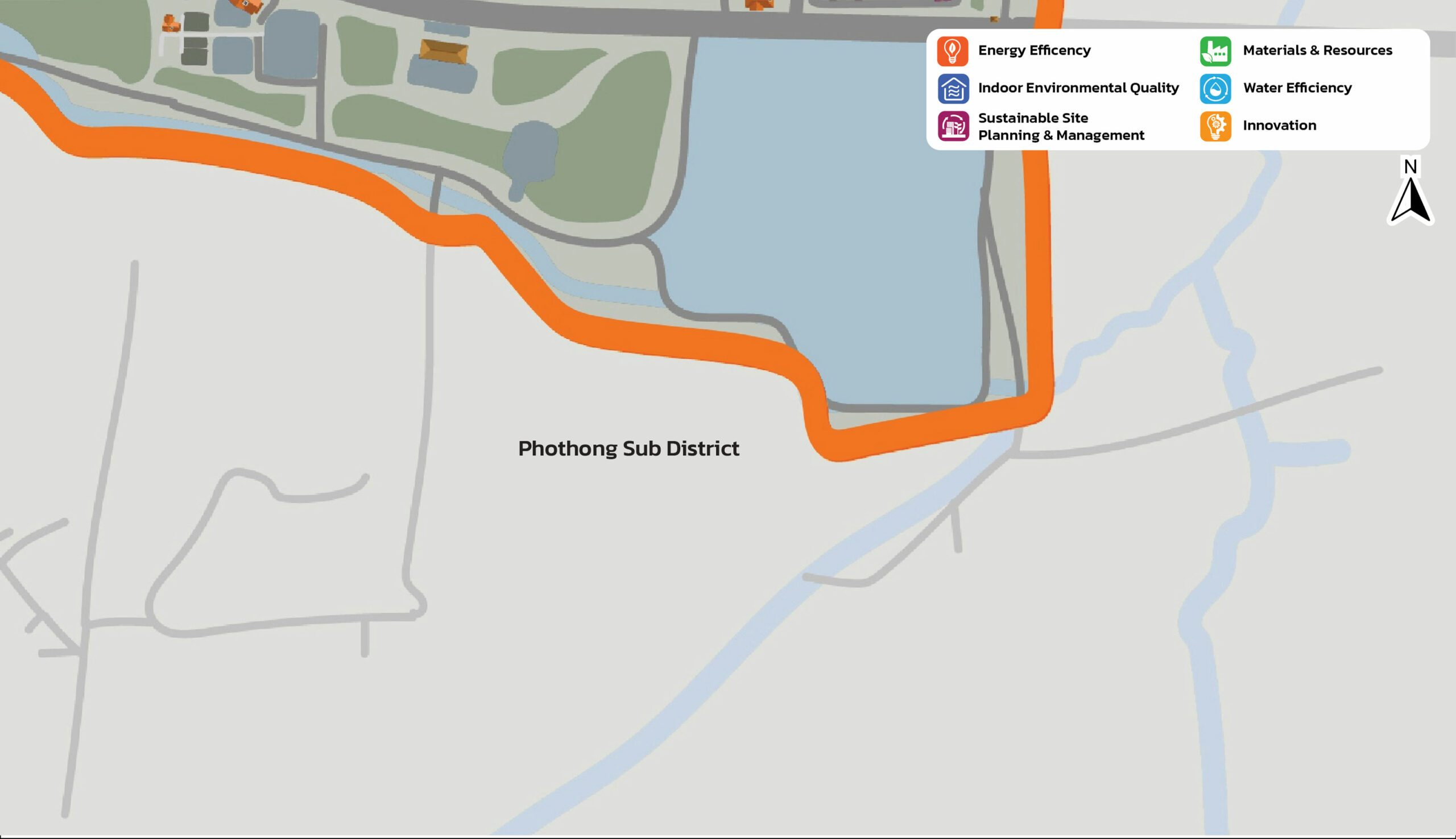
Figure: Map of Walailak University showing the distribution of newly constructed buildings with green building elements. (Walailak University, Thailand)
Figure: Brownfield Redevelopment at Walailak University — transforming previously used lands into sustainable and eco-friendly spaces. (Walailak University, Thailand)
- Transportation
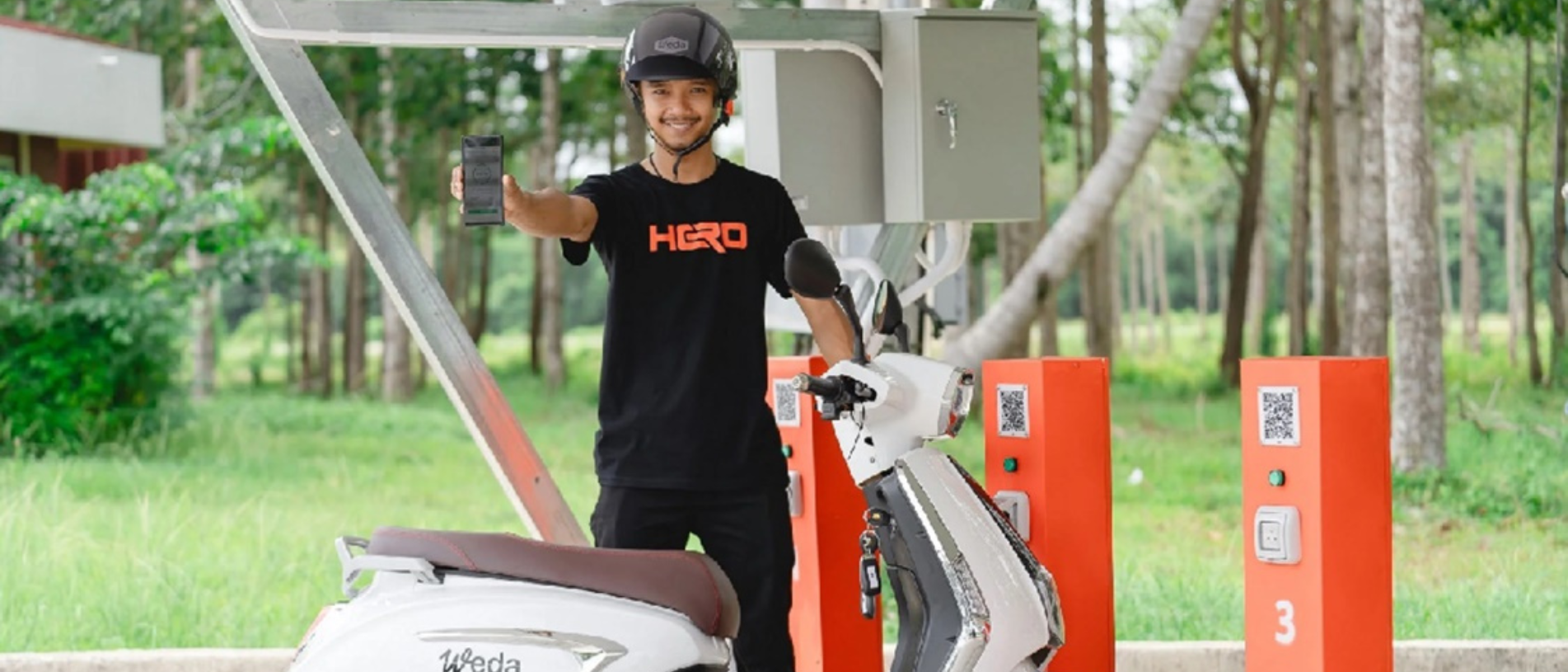
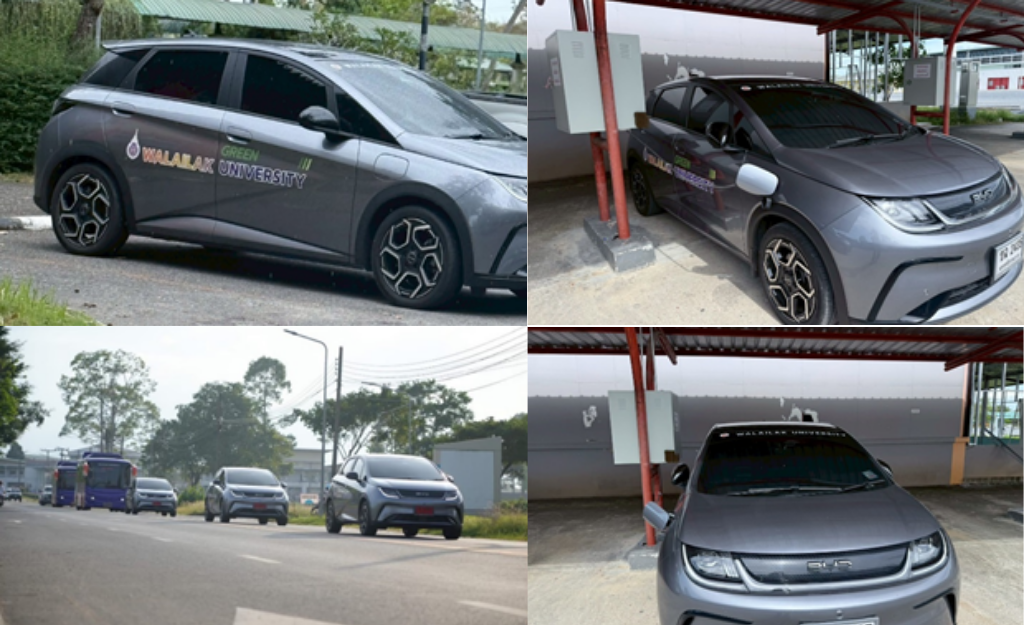
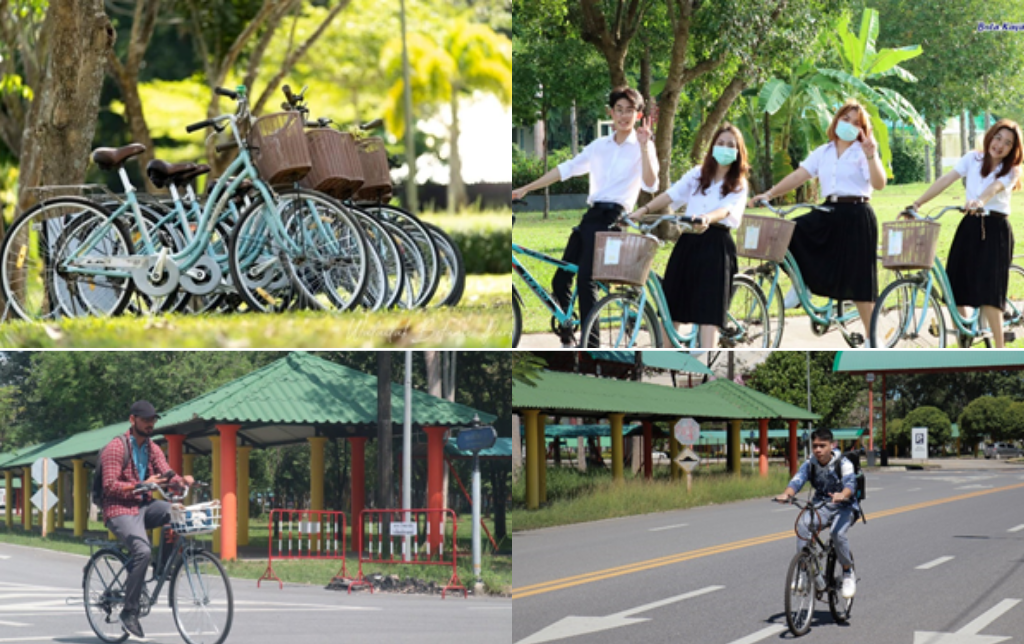
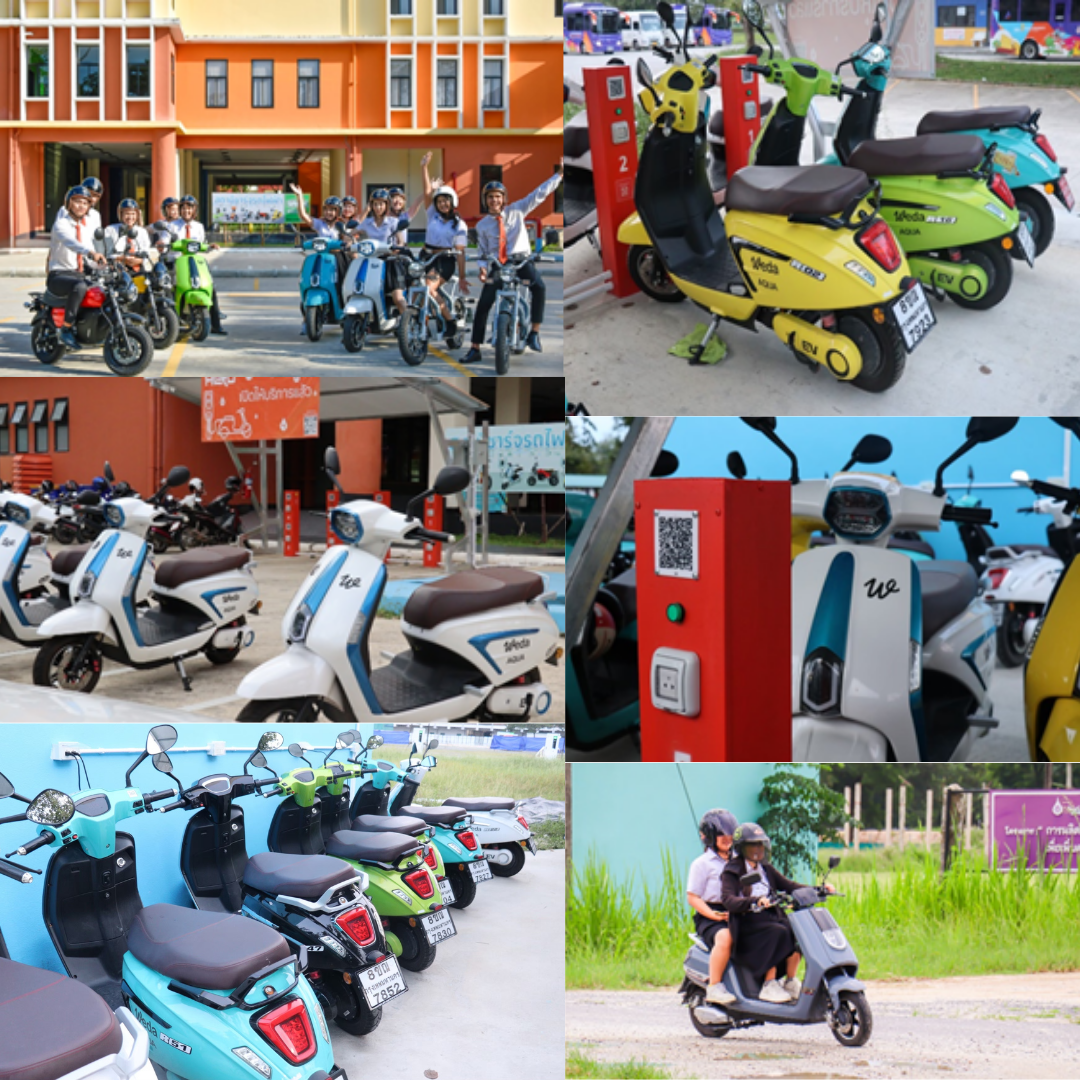
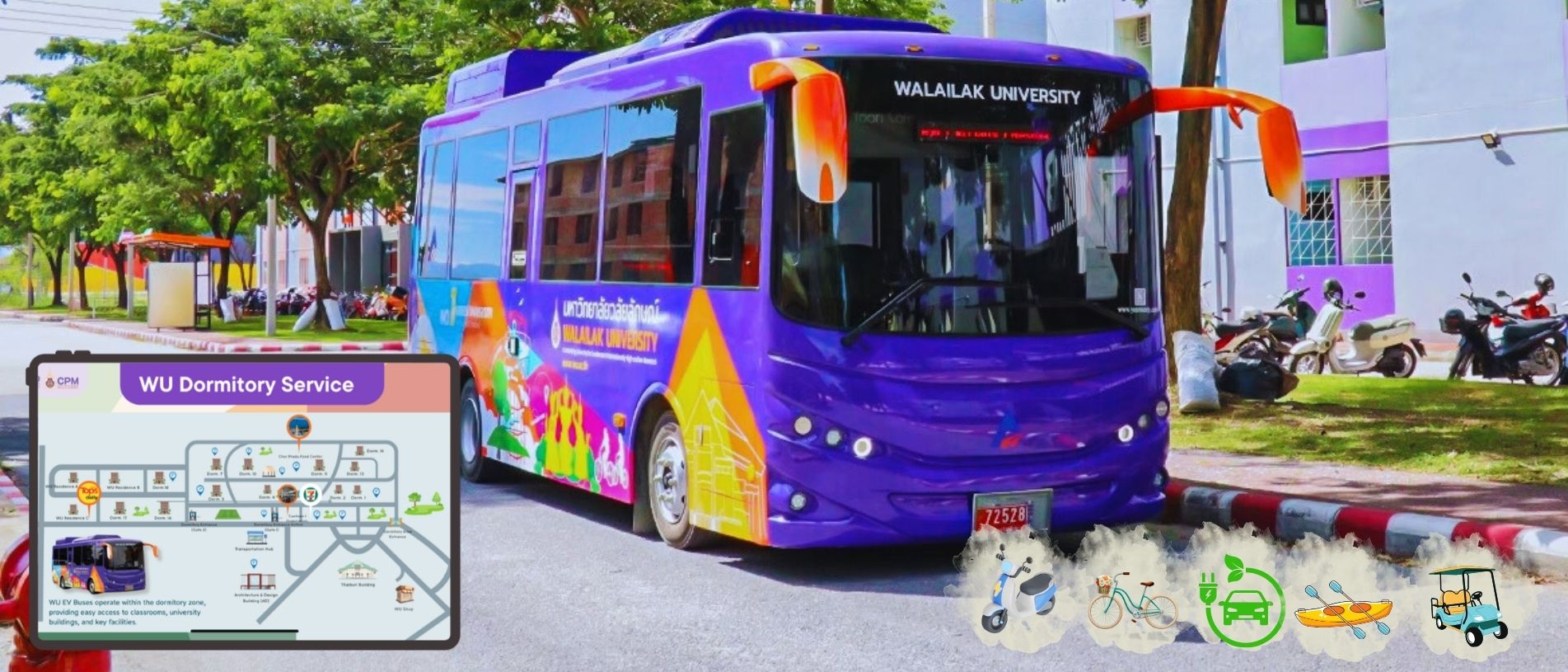
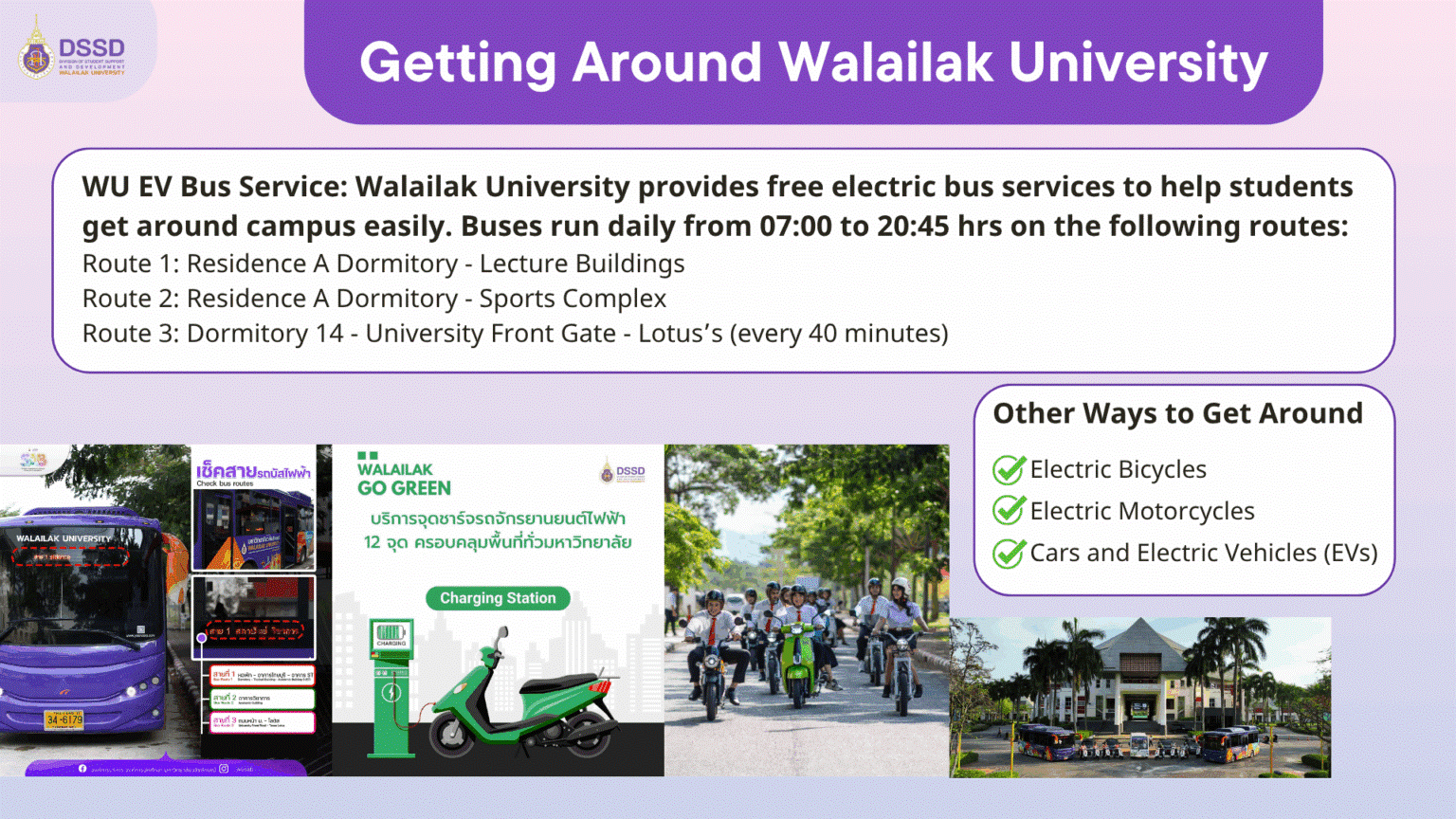
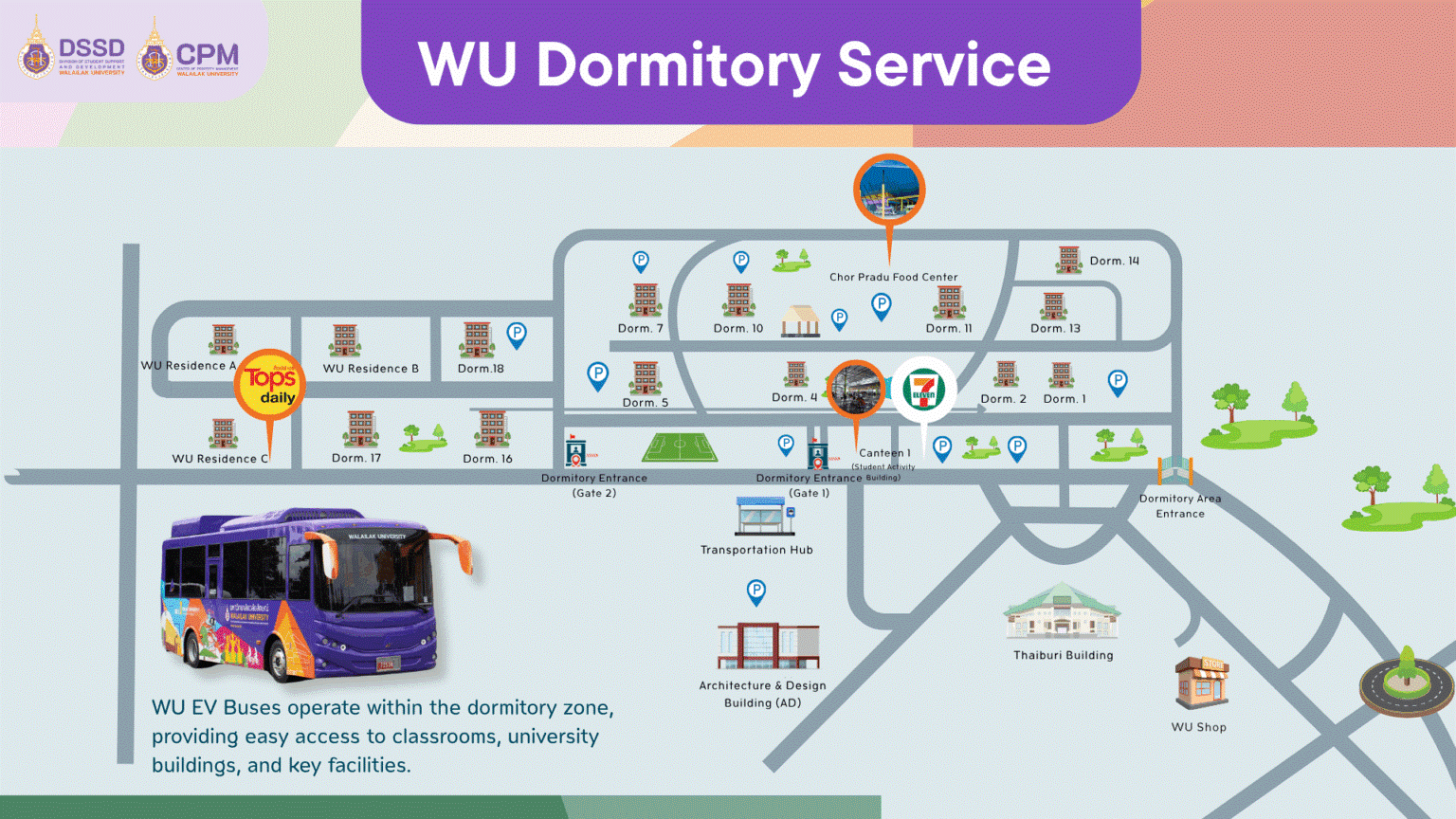
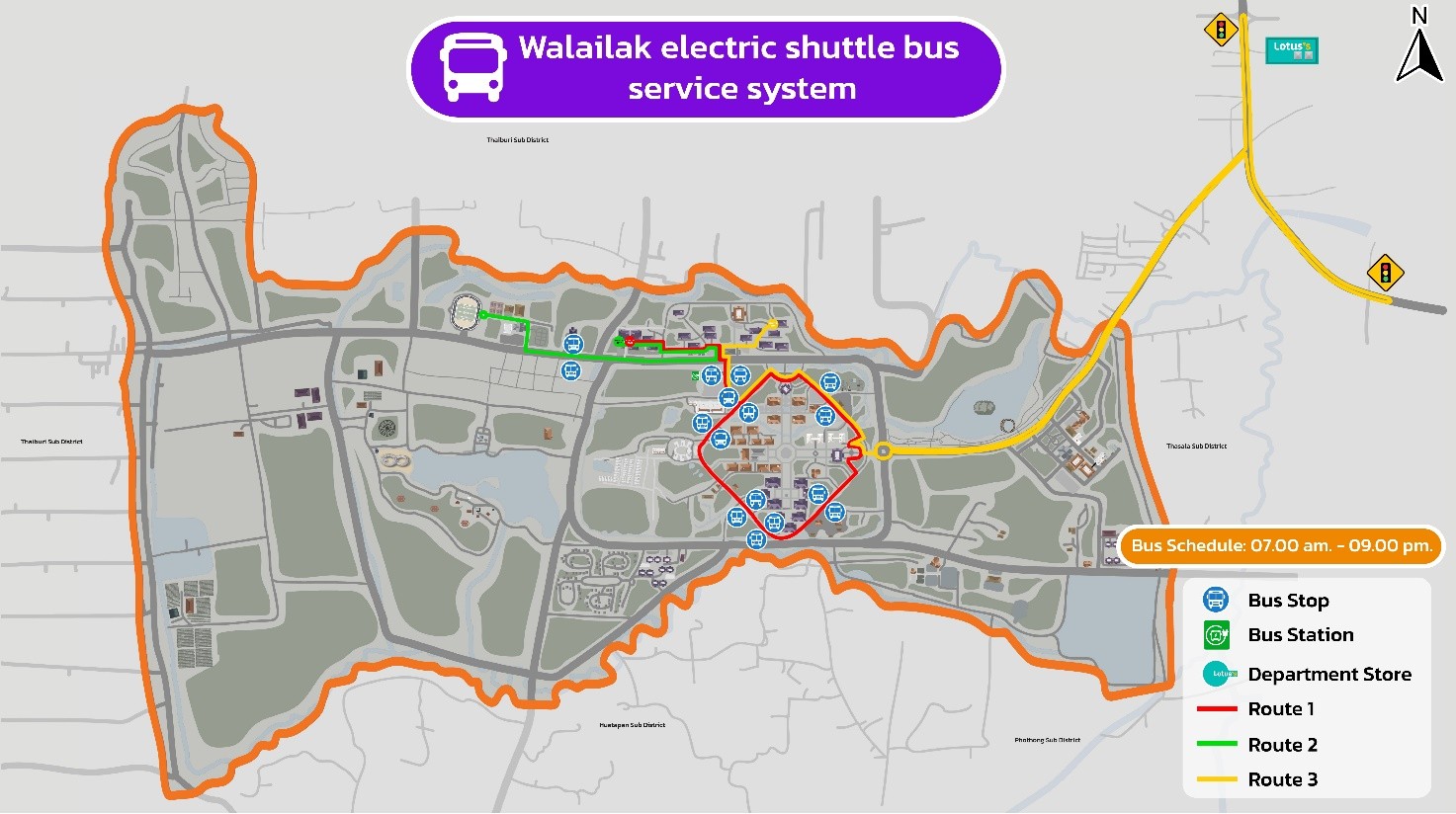
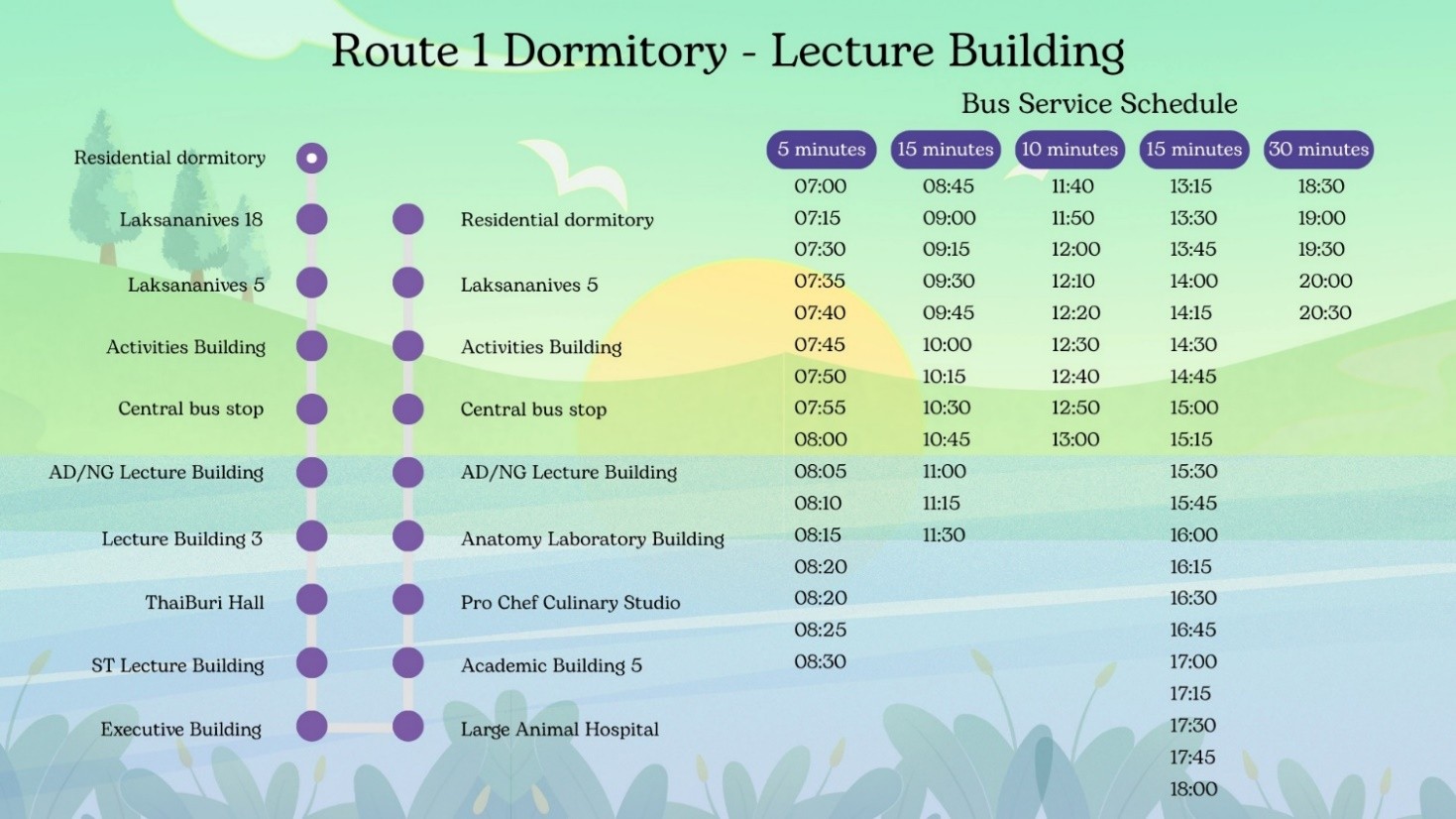
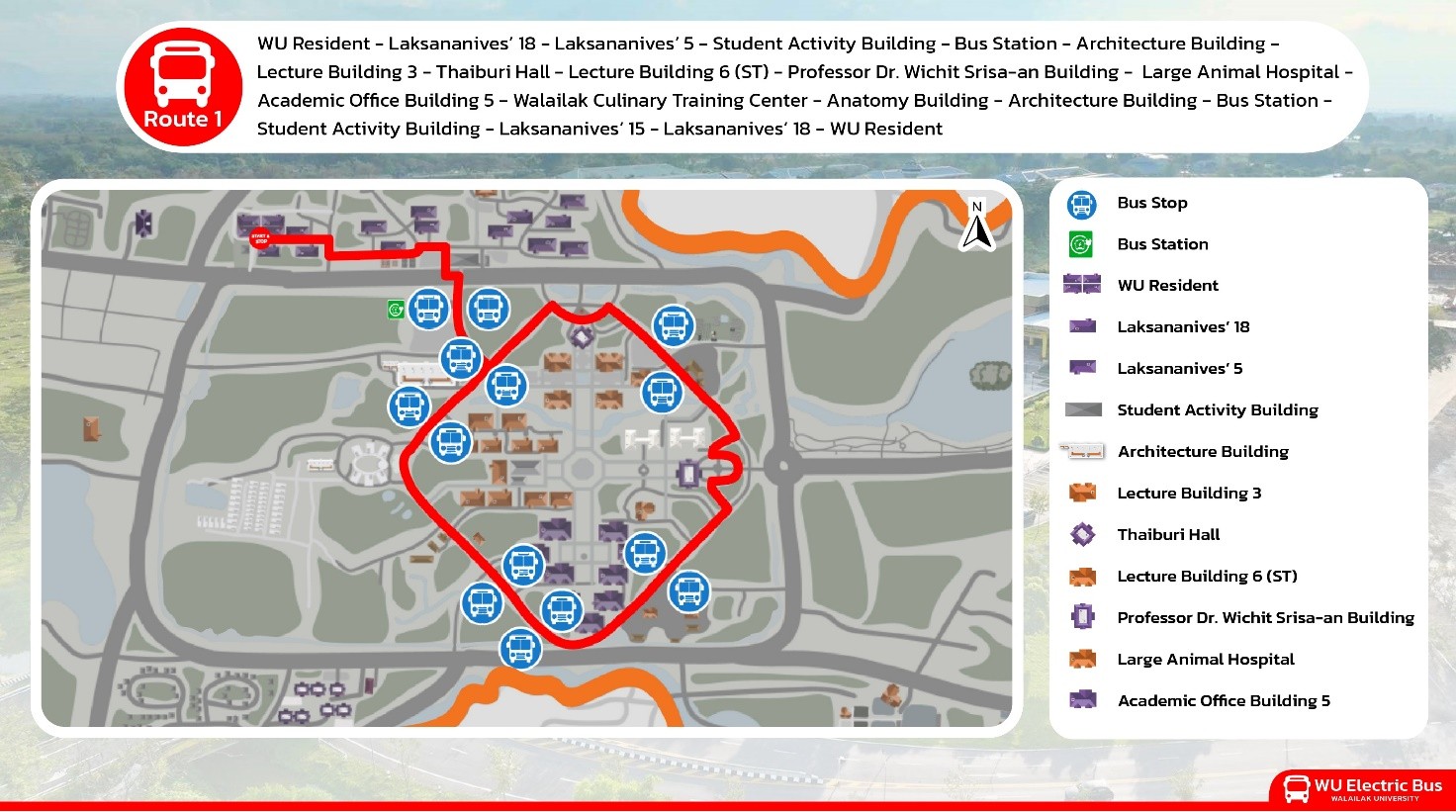
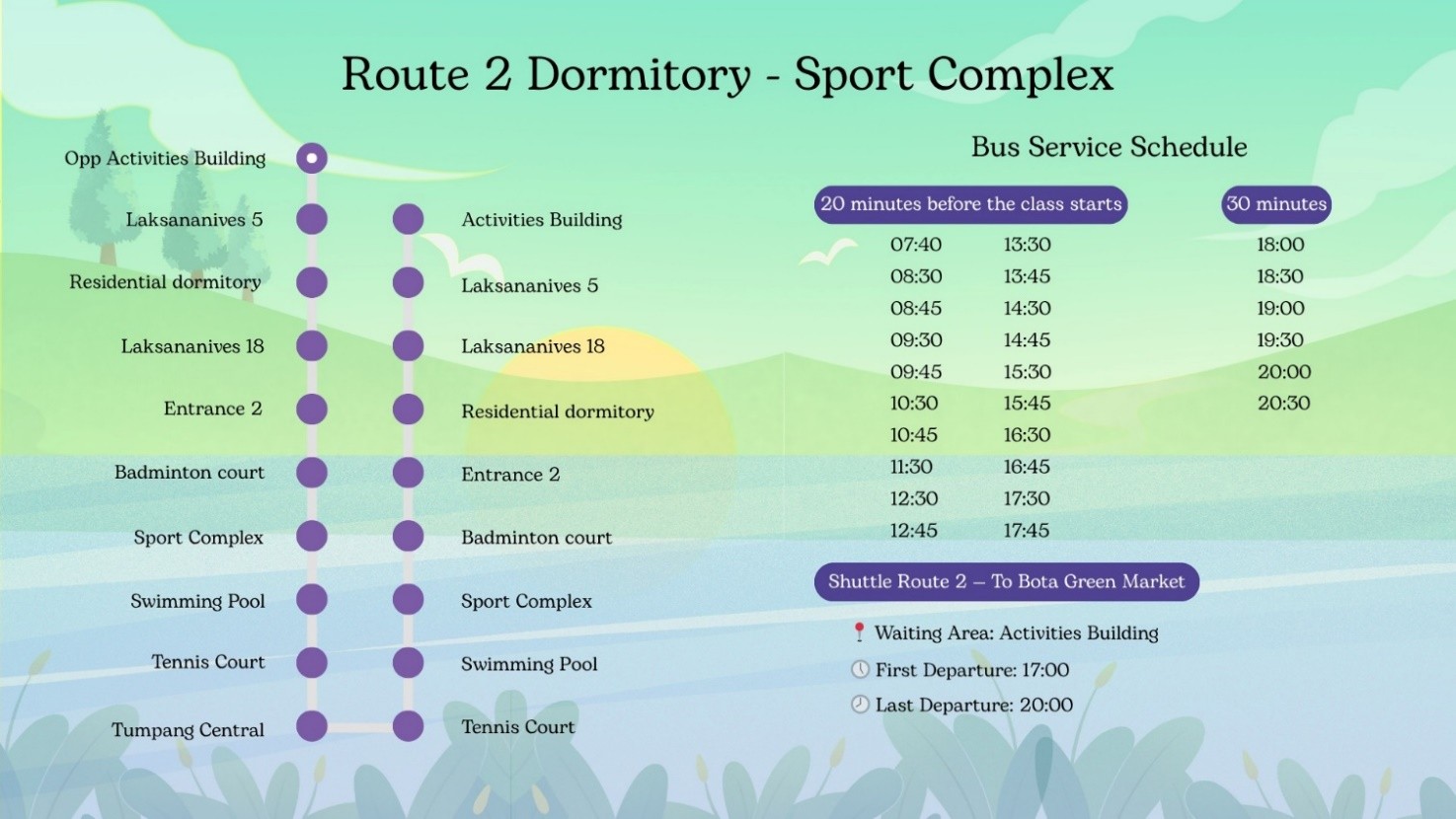
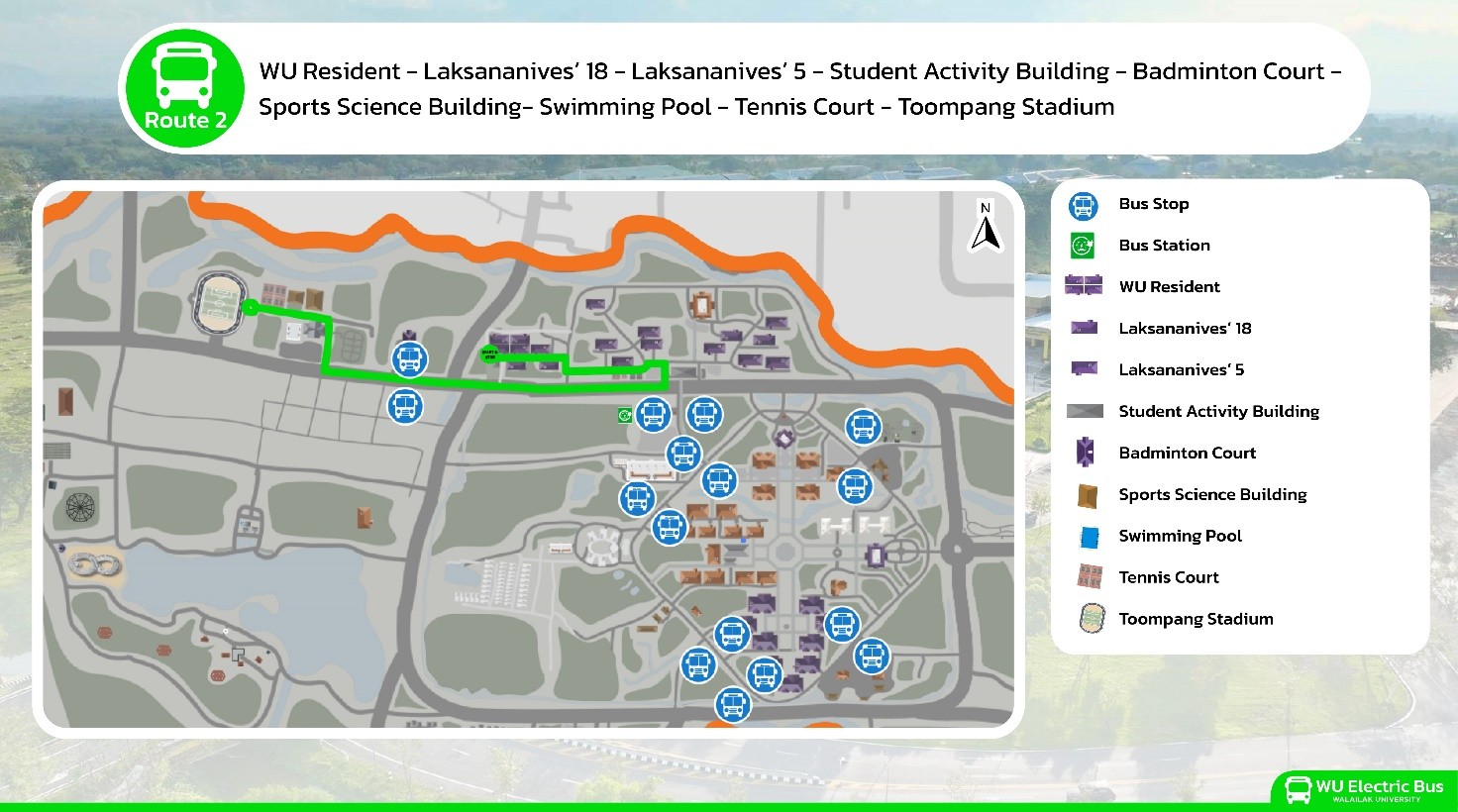
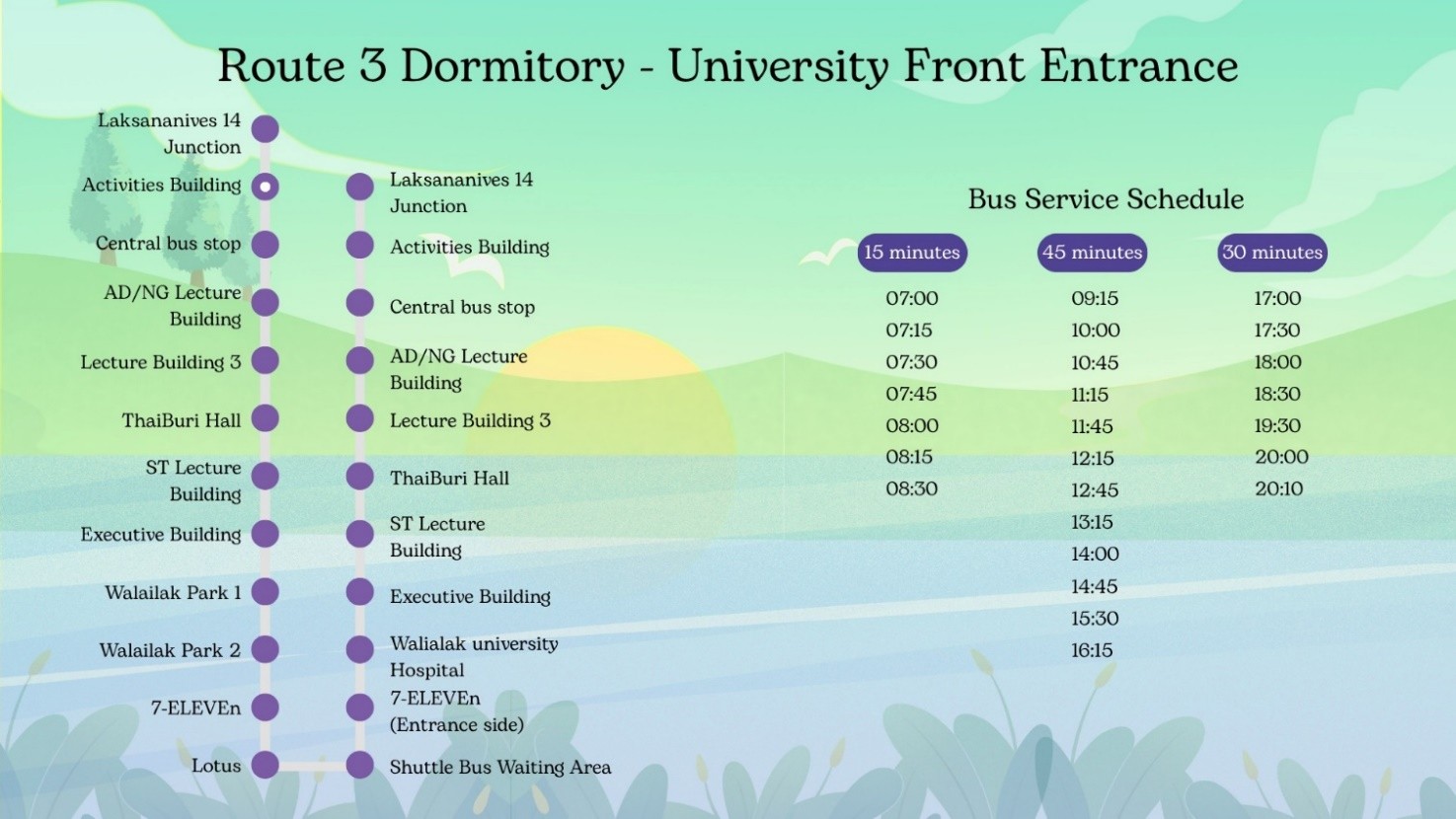
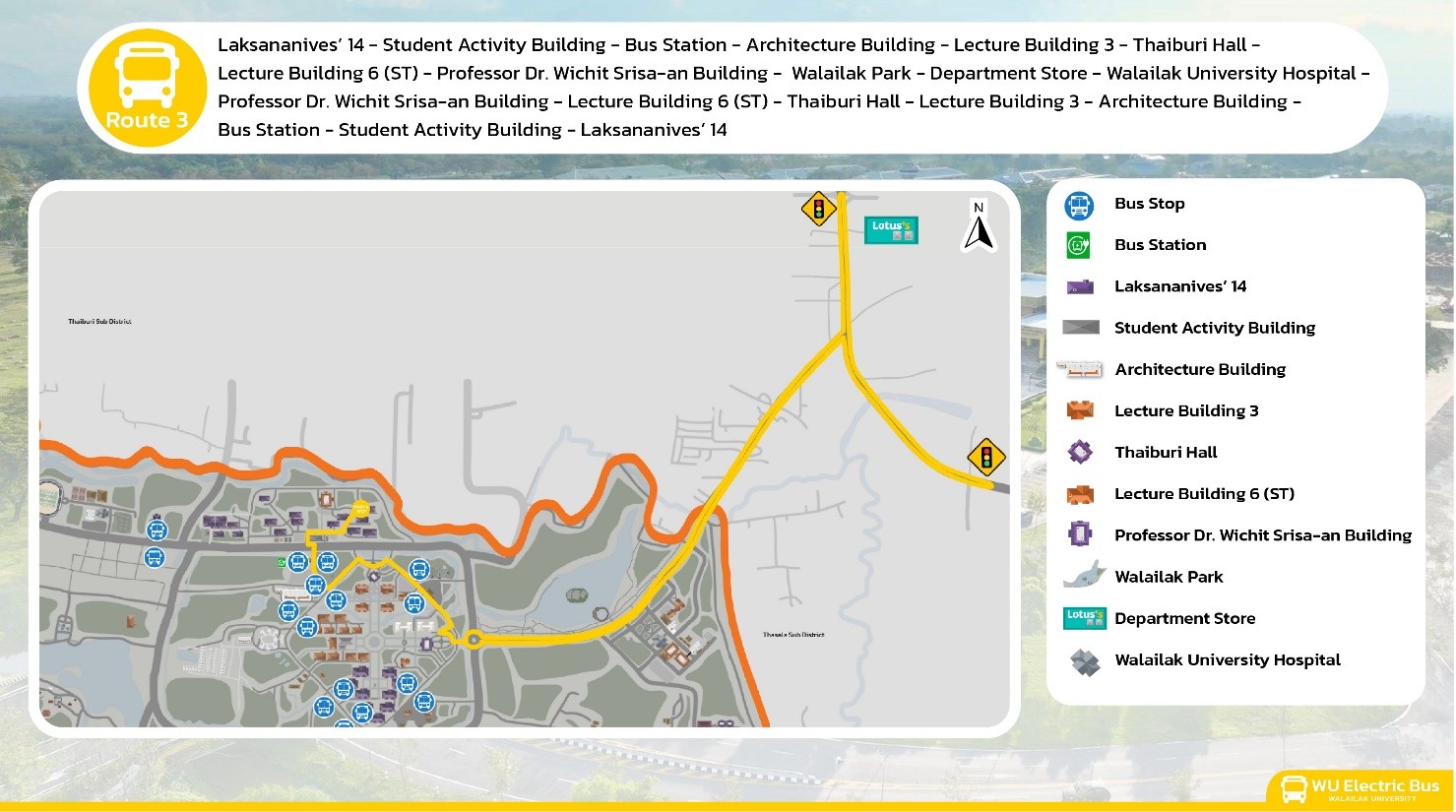
Walailak University promotes sustainable and environmentally responsible mobility while optimizing land use. The university prioritizes Green Vehicles, including low-emitting and fuel-efficient options such as electric vehicles (EVs) and hybrid cars, supported by EV charging stations across campus. To improve Public Transportation Access, the university provides convenient and affordable shuttle bus services connecting academic buildings, dormitories, and nearby communities, reducing reliance on private vehicles and lowering greenhouse gas emissions. These initiatives highlight Walailak University’s commitment to sustainable mobility, energy efficiency, and a low-carbon, eco-friendly campus.
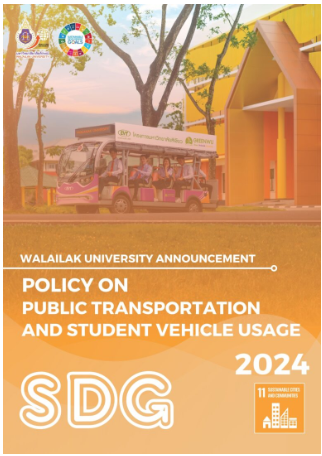
Figure: Low Emitting & Fuel Efficient Vehicles (Walailak University, Thailand)
Figure: Public Transportation Access (Walailak University, Thailand)