Walailak University Drives Health Outreach Programmes for Local Communities and Vulnerable Groups
Walailak University implemented a range of Health Outreach Programmes in 2025 to improve and promote the health and well-being of people in the local community, as well as disadvantaged people, migrant workers, immigrants, and refugees. The University brought medical and health expertise directly into local communities through proactive outreach activities covering disease prevention, health screening, hygiene, nutrition, sports and exercise, family planning, rehabilitation, and other health and well-being-related topics tailored to different age groups.
Local Communities
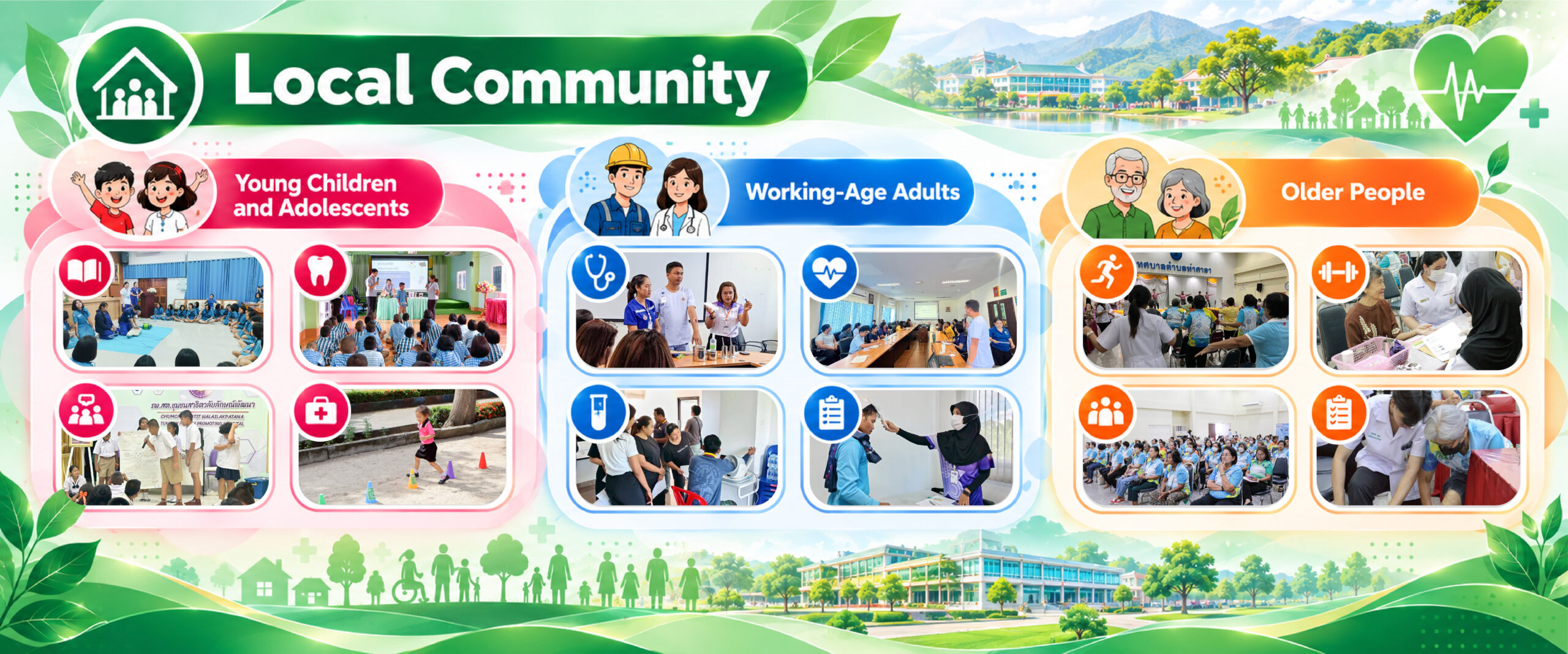
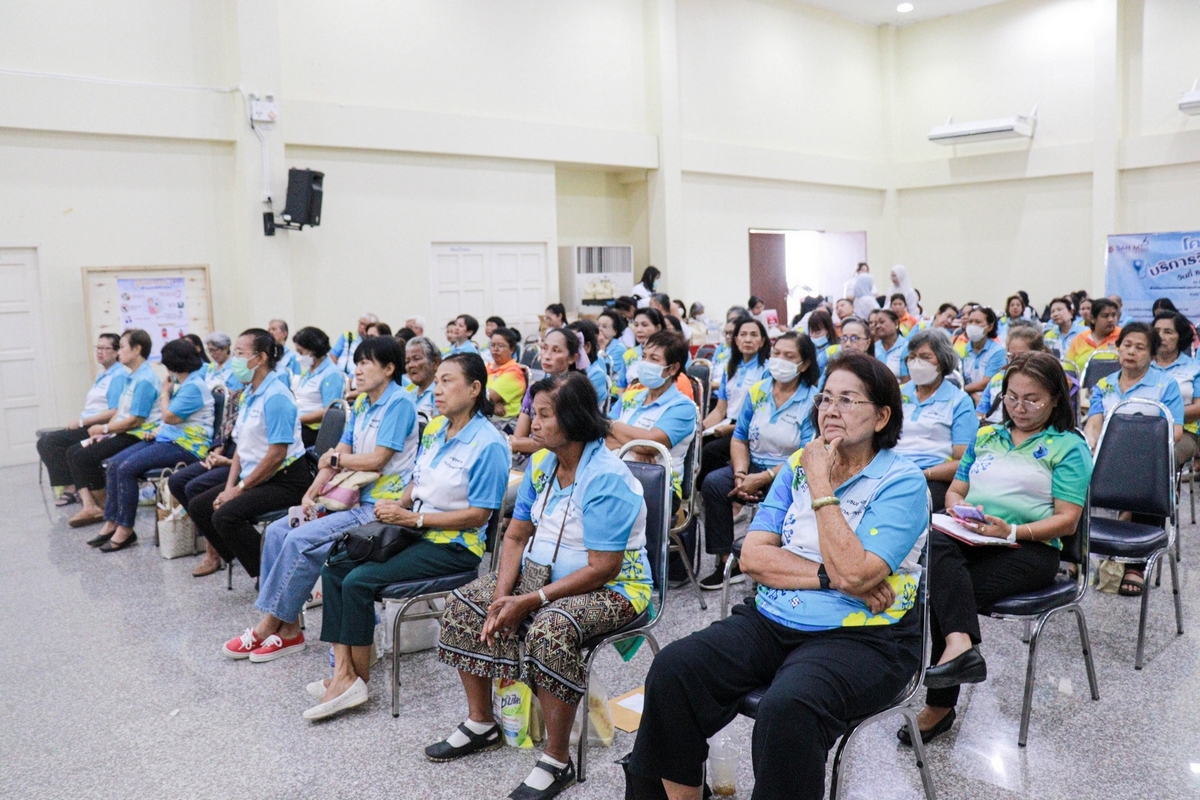
Walailak University has continuously implemented health outreach programmes and projects in the local community, covering people across different age groups, from young children and adolescents to working-age adults and older people. These programmes aim to provide communities with accessible health knowledge and services that respond to the specific health needs of each group.
Young Children and Adolescents
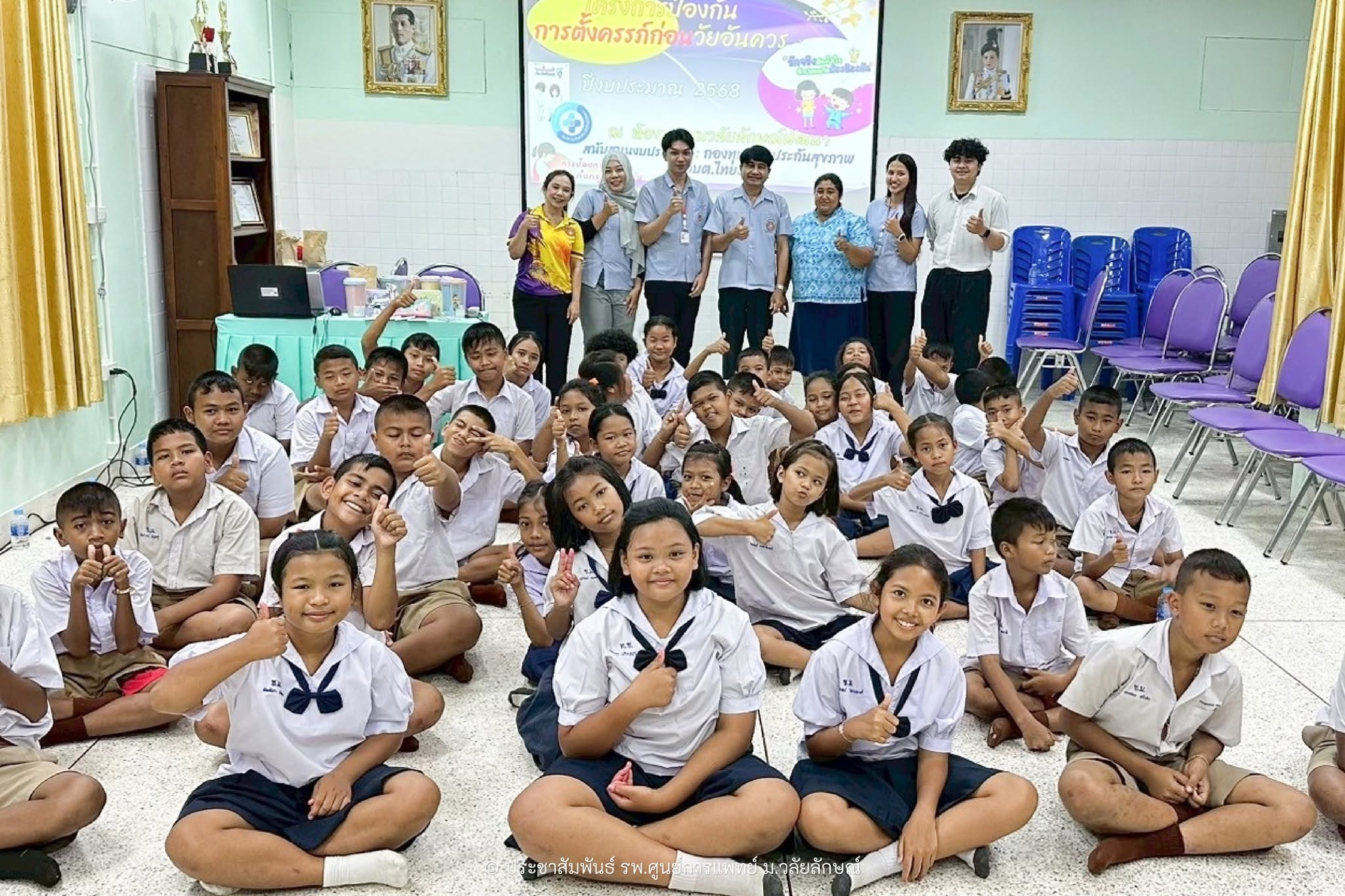
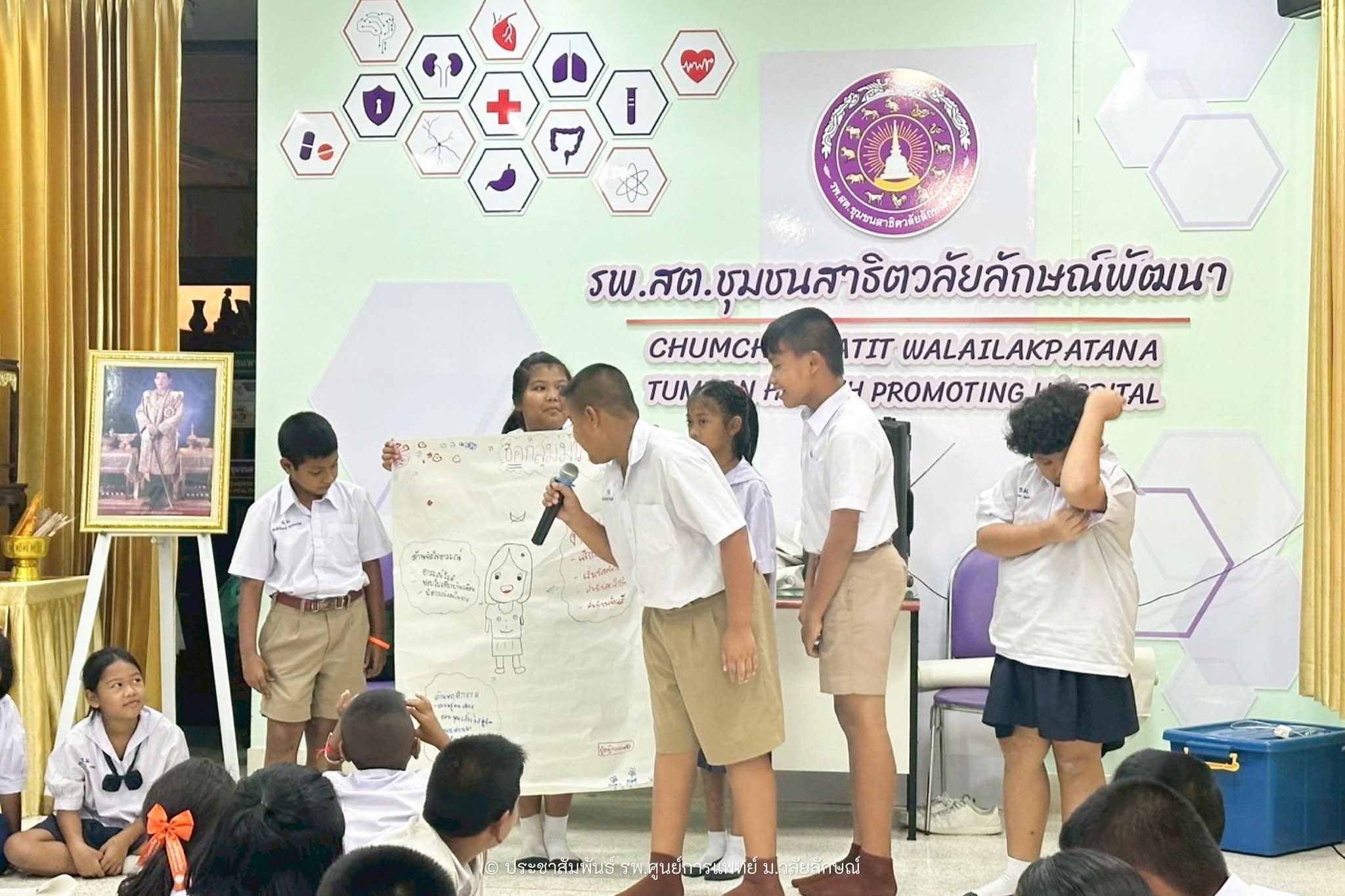
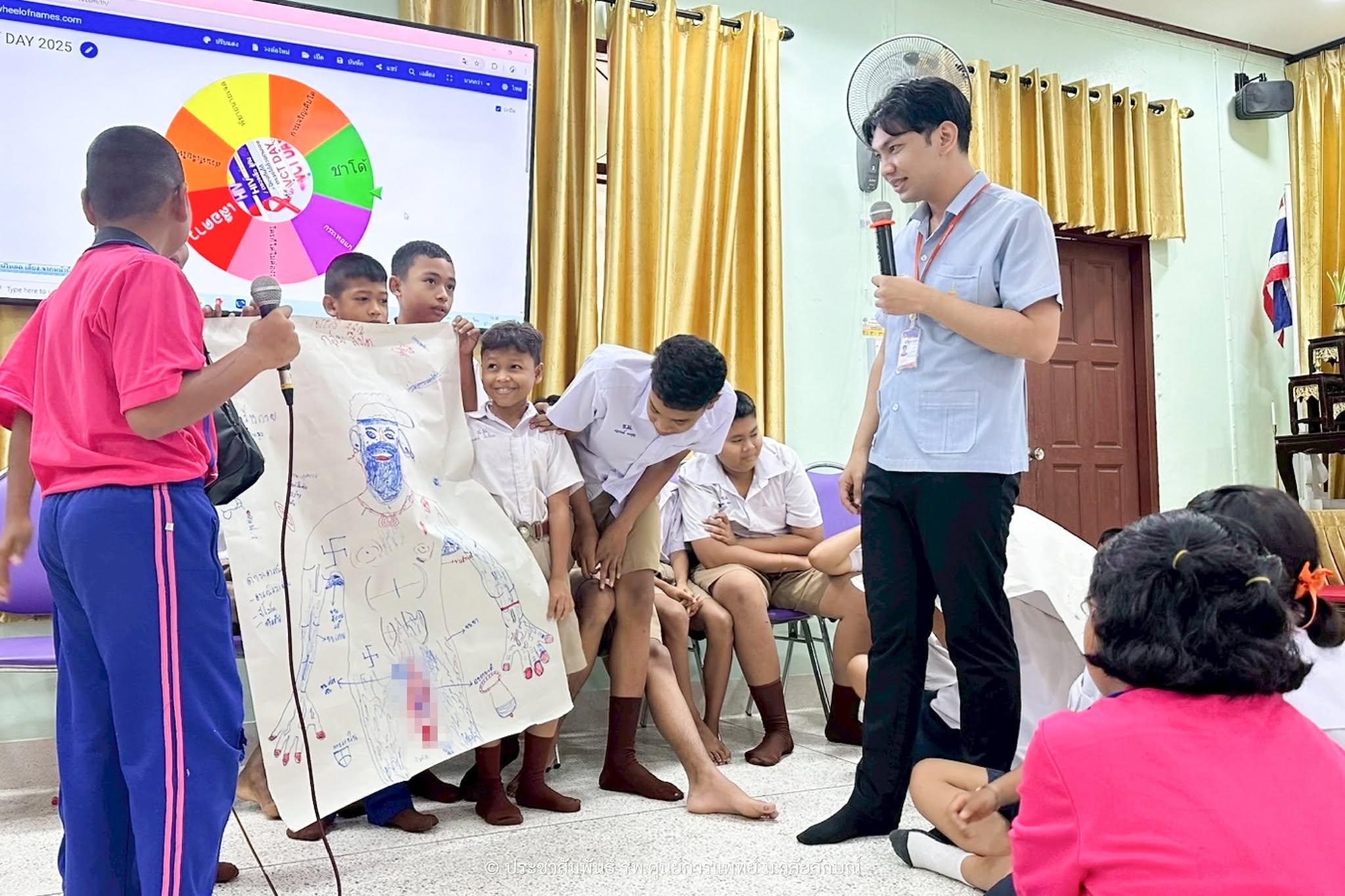
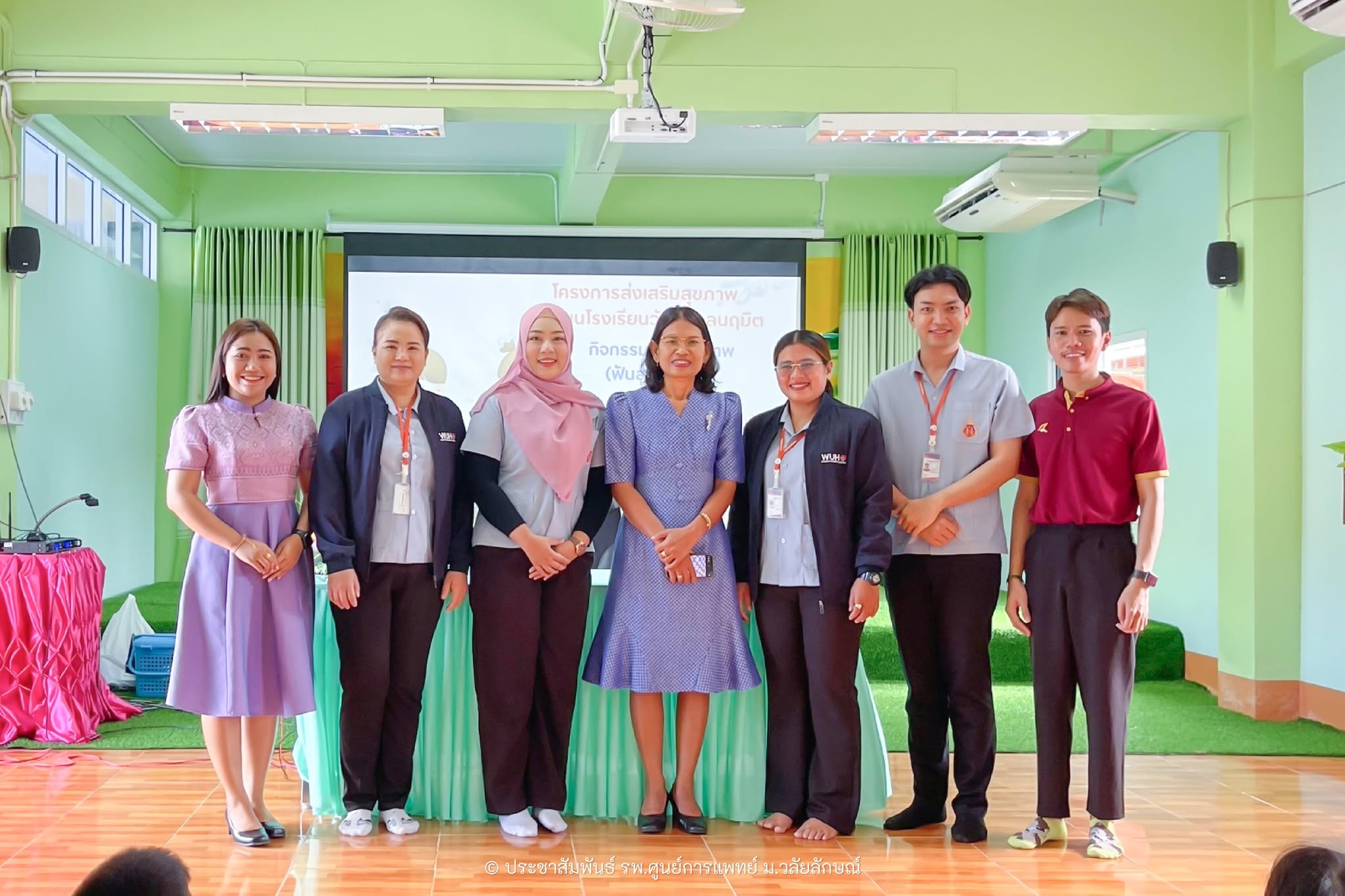
The university implemented the Prevention of Adolescent Pregnancy Programme 2025 at the Community Sathit Walailak Pattana Subdistrict Health Promoting Hospital. A total of 100 students from Chumchon Mai School and Ban Saphan Han School participated. The programme provided knowledge on physical, psychological, emotional, and behavioural changes during adolescence, sexually transmitted infections, contraception, and refusal skills. The programme aimed to strengthen adolescents’ sexual health literacy and knowledge of family planning.
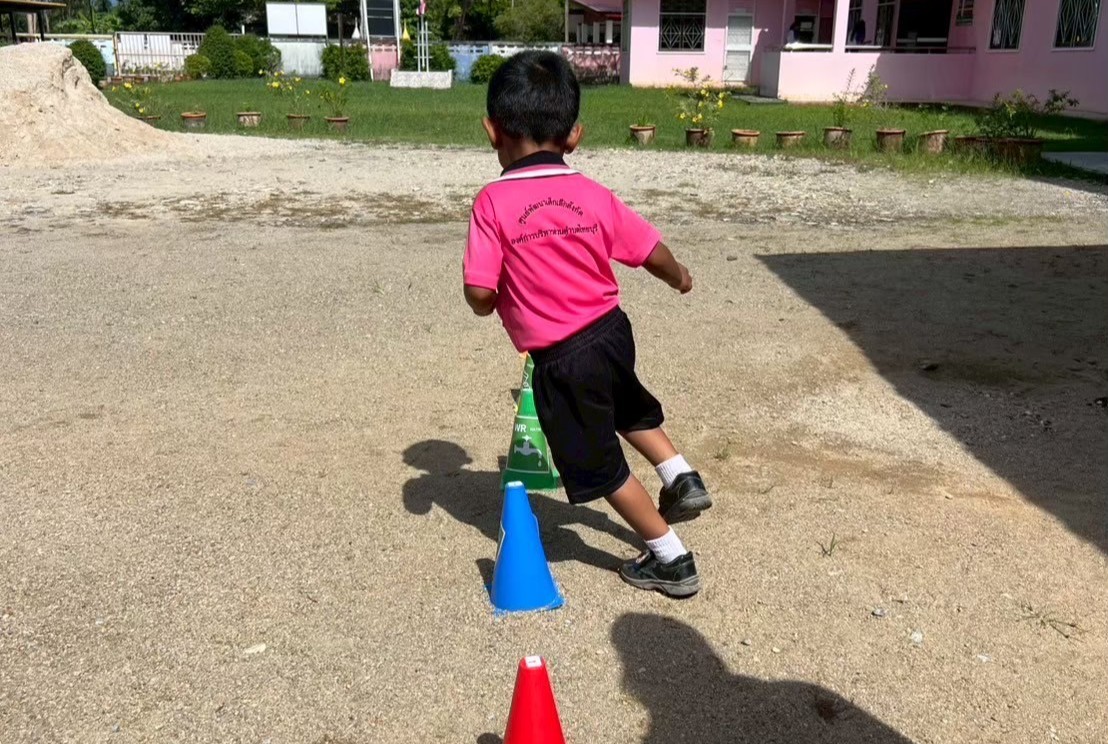
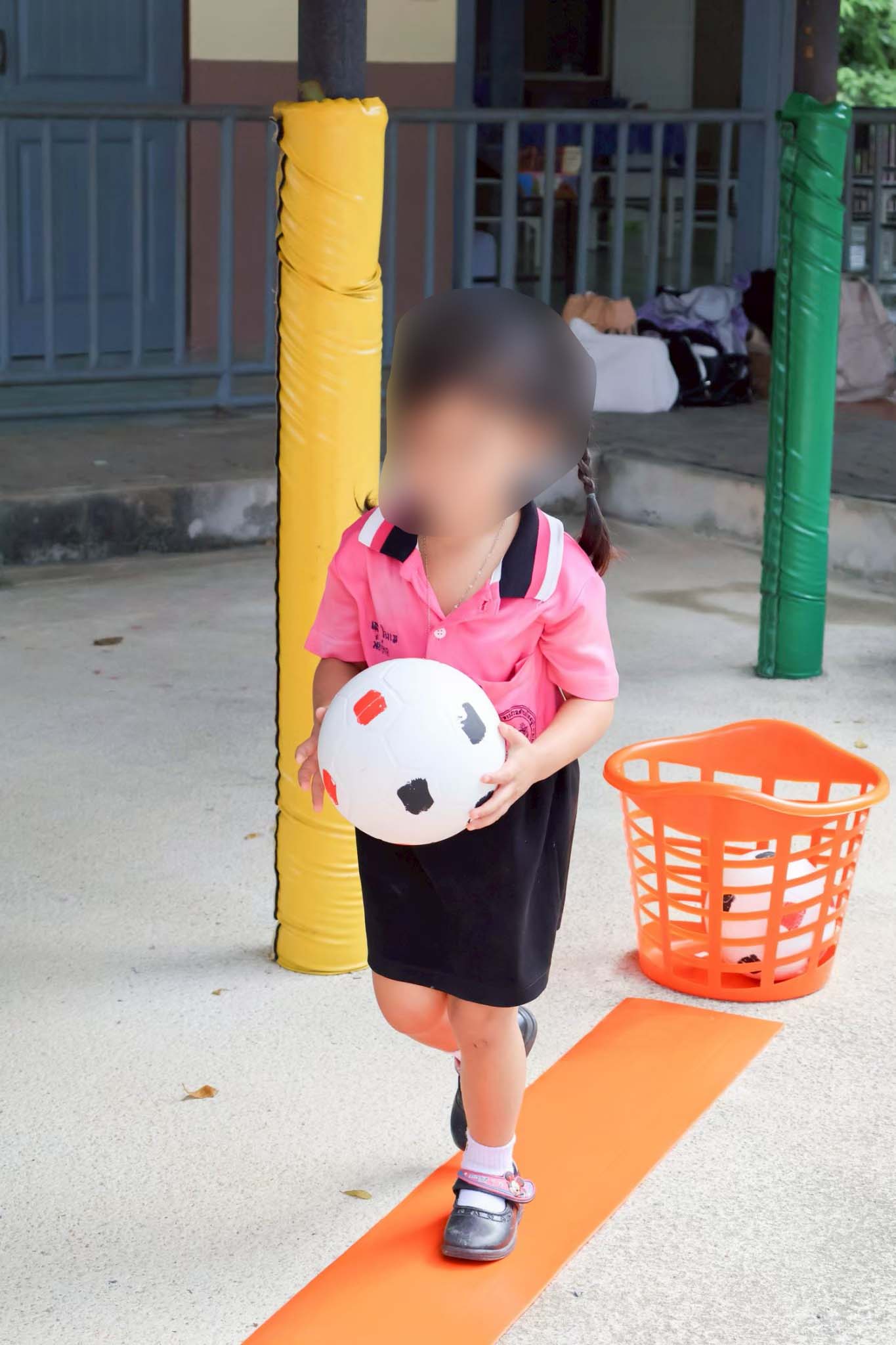
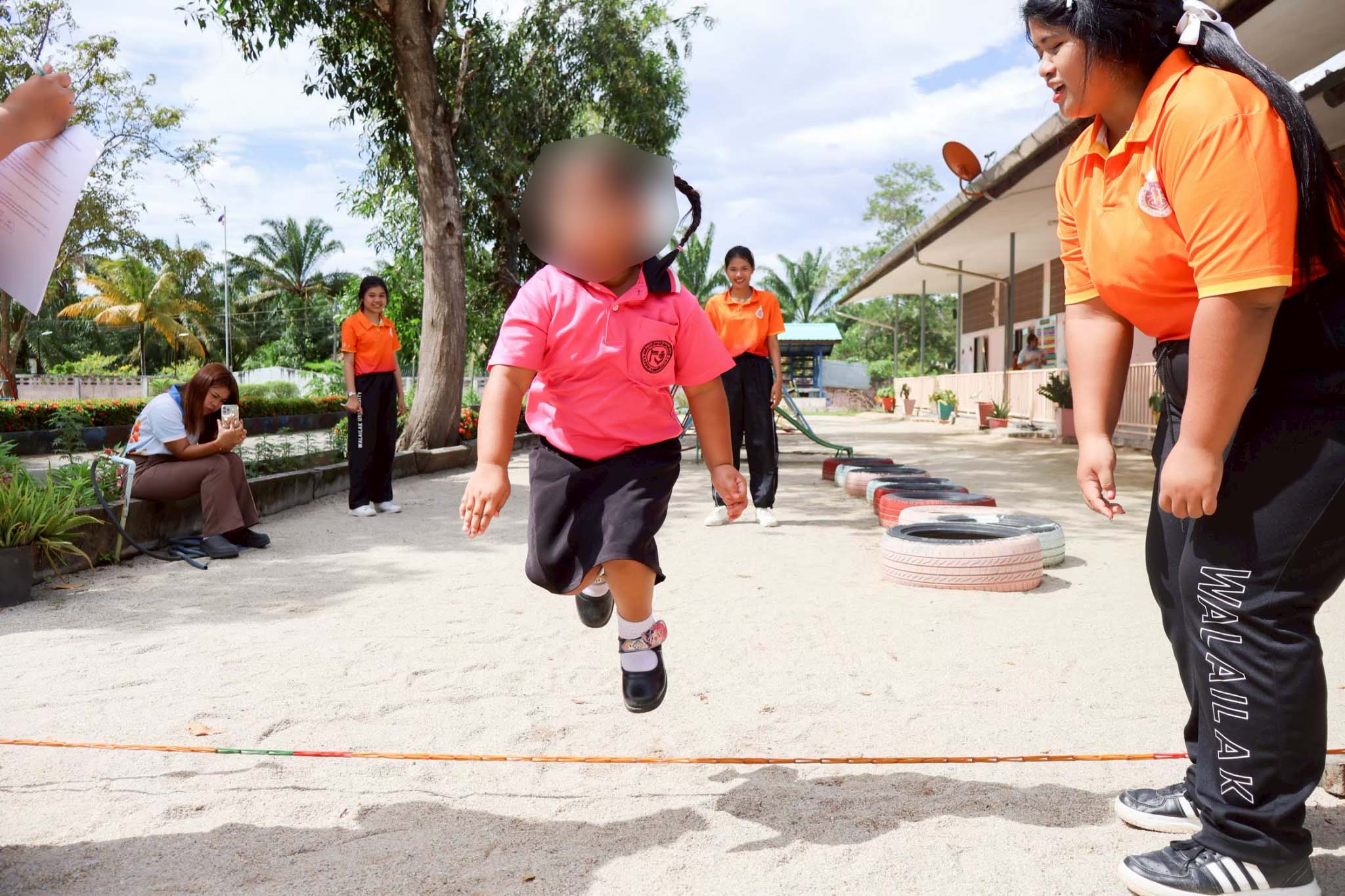
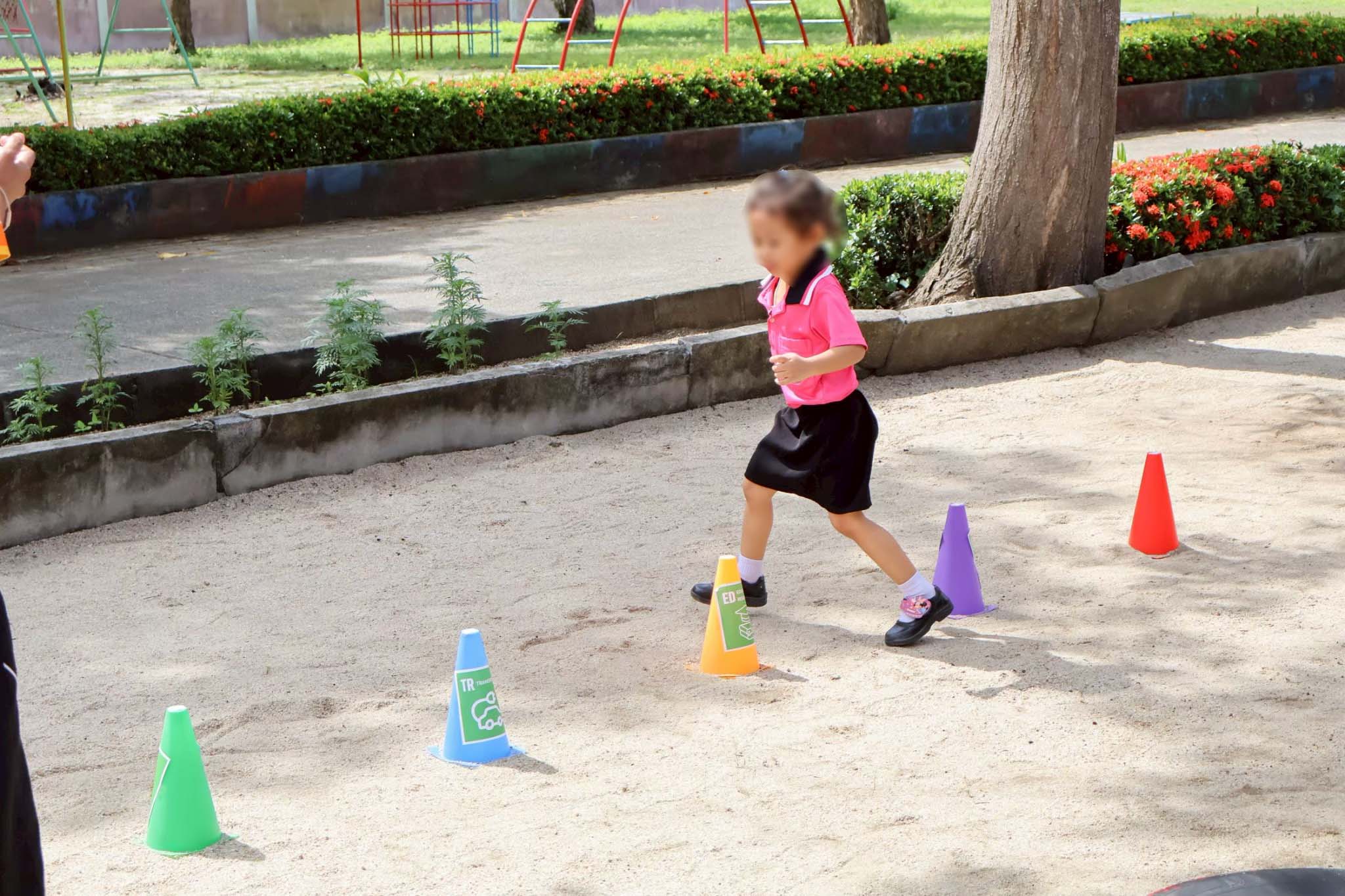
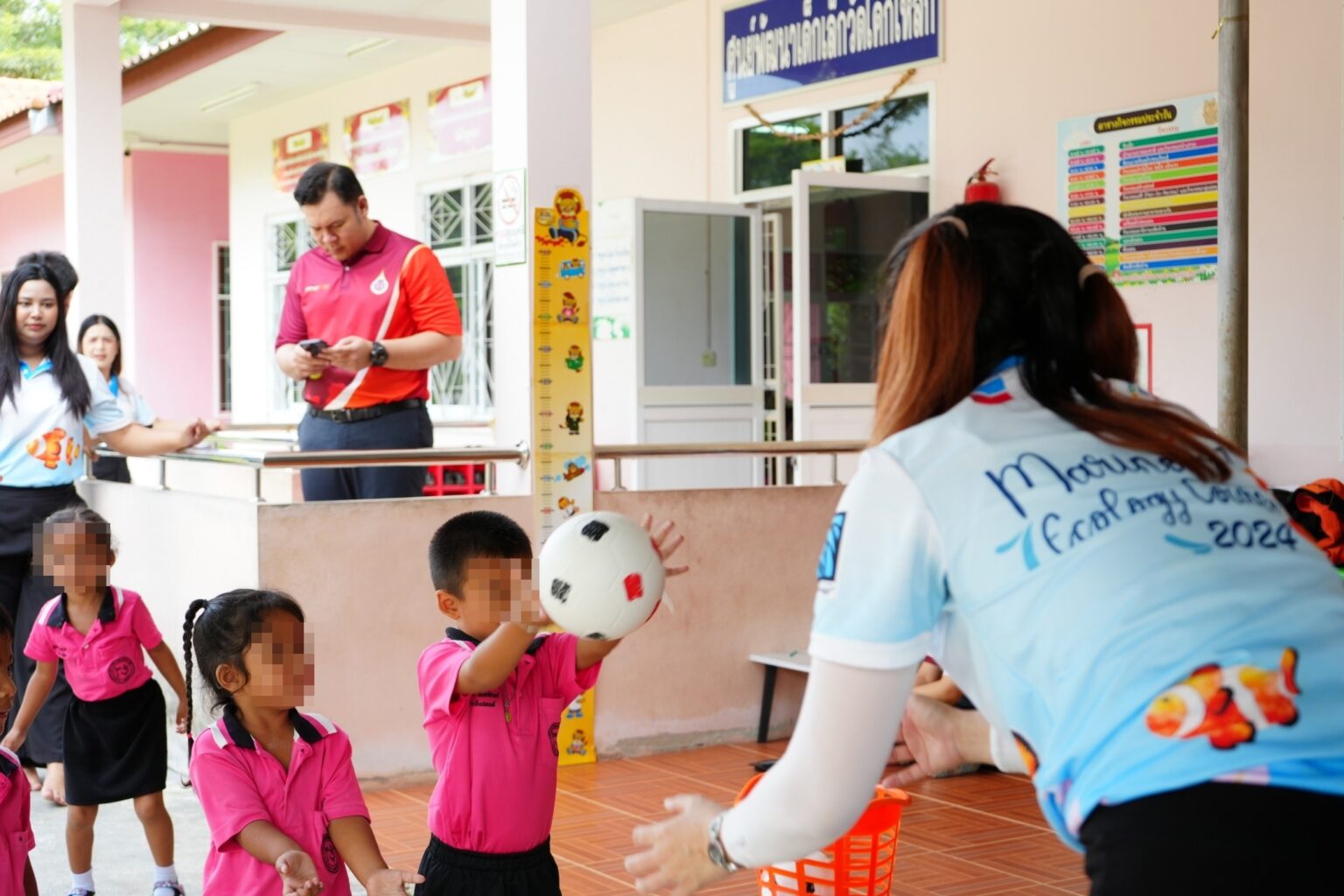
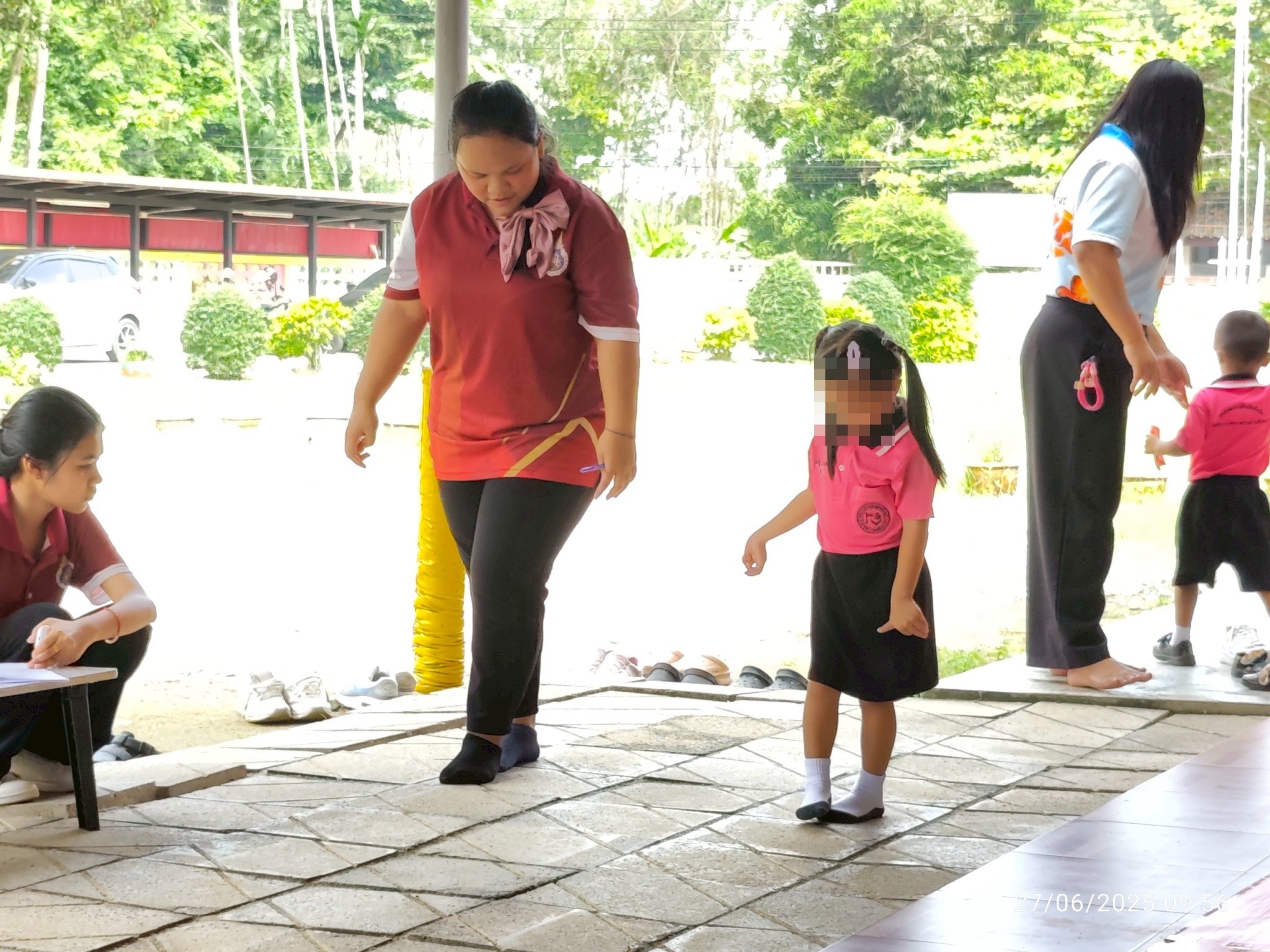
The university also promoted children’s physical development through the project “Walailak Health Model: Restoring Quality of Life and Building Sustainable Well-being” in communities surrounding the university. Developmental movement assessments were conducted for 24 children at Wat Khok Lek Child Development Center and 15 children at Chumchon Sathit Walailak Pattana Child Development Center.
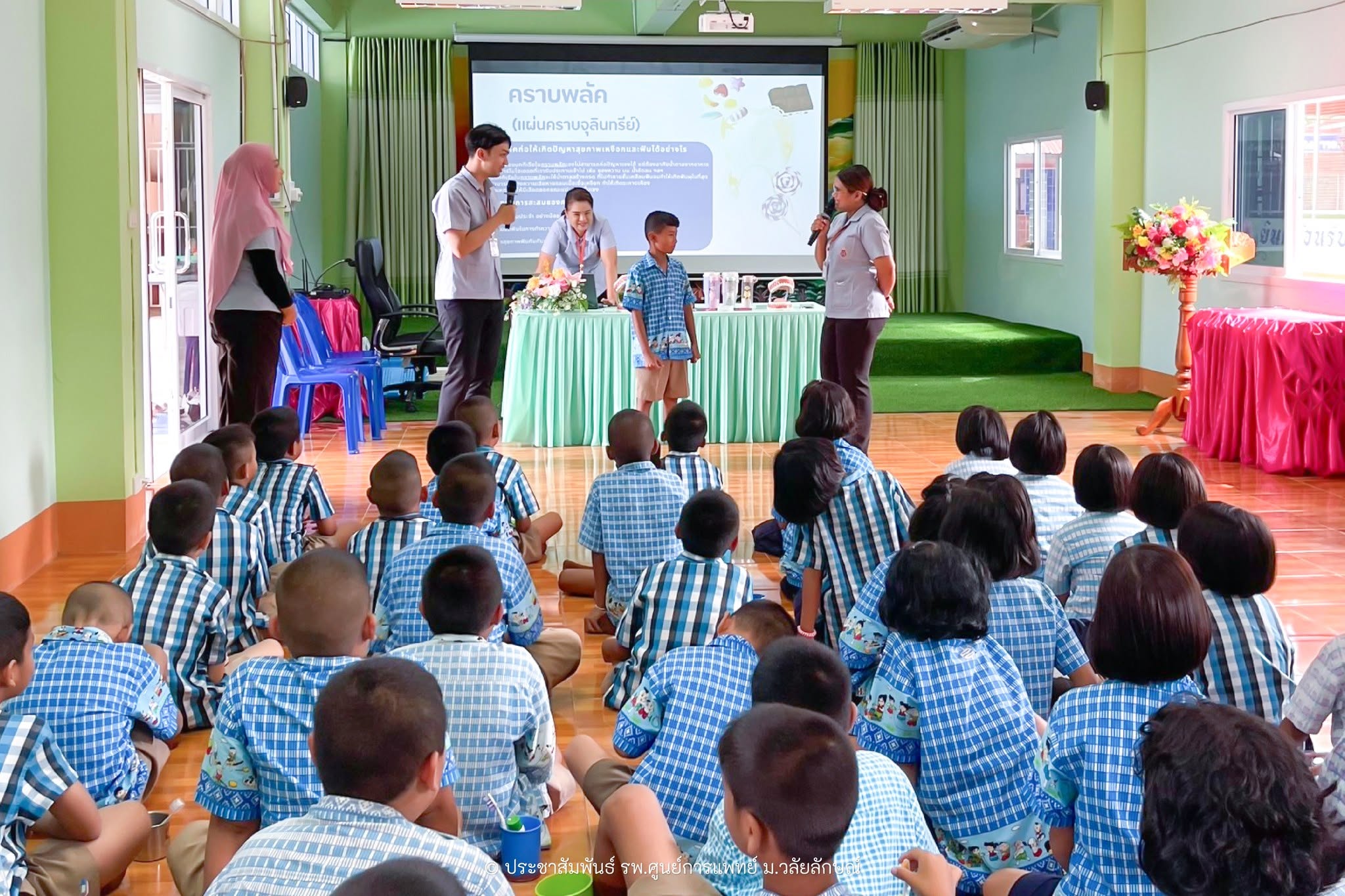
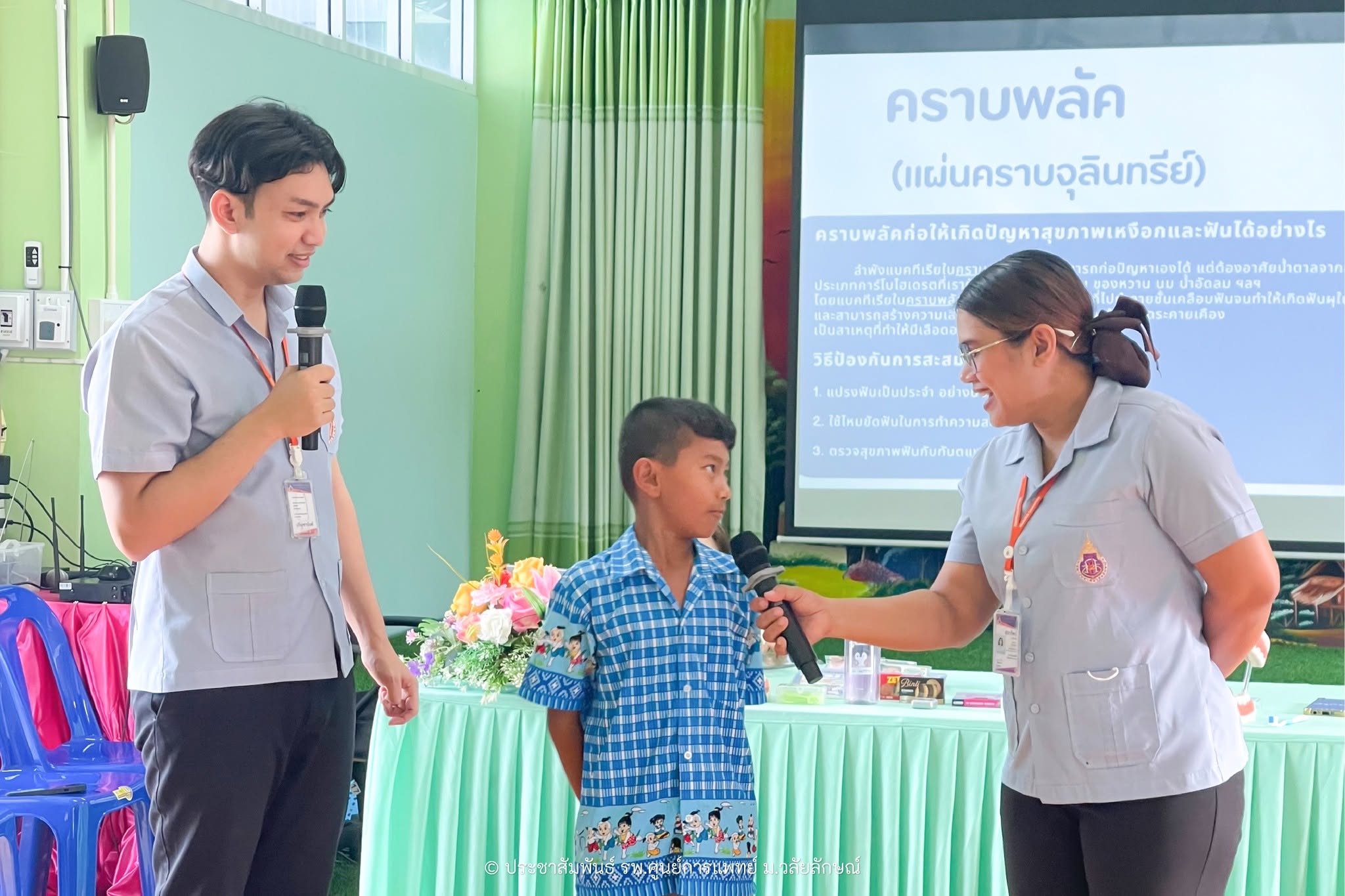
In relation to hygiene, the University conducted the Annual Oral Health Screening Programme 2025 for kindergarten to Grade 6 students at Wat Phra At School and Ban Saphan Han School in Thai Buri Subdistrict, Tha Sala District. A total of 80 students received oral health screening, together with education on proper oral hygiene and oral health care. The programme aimed to establish healthy behaviours from childhood and reduce the risk of oral diseases.
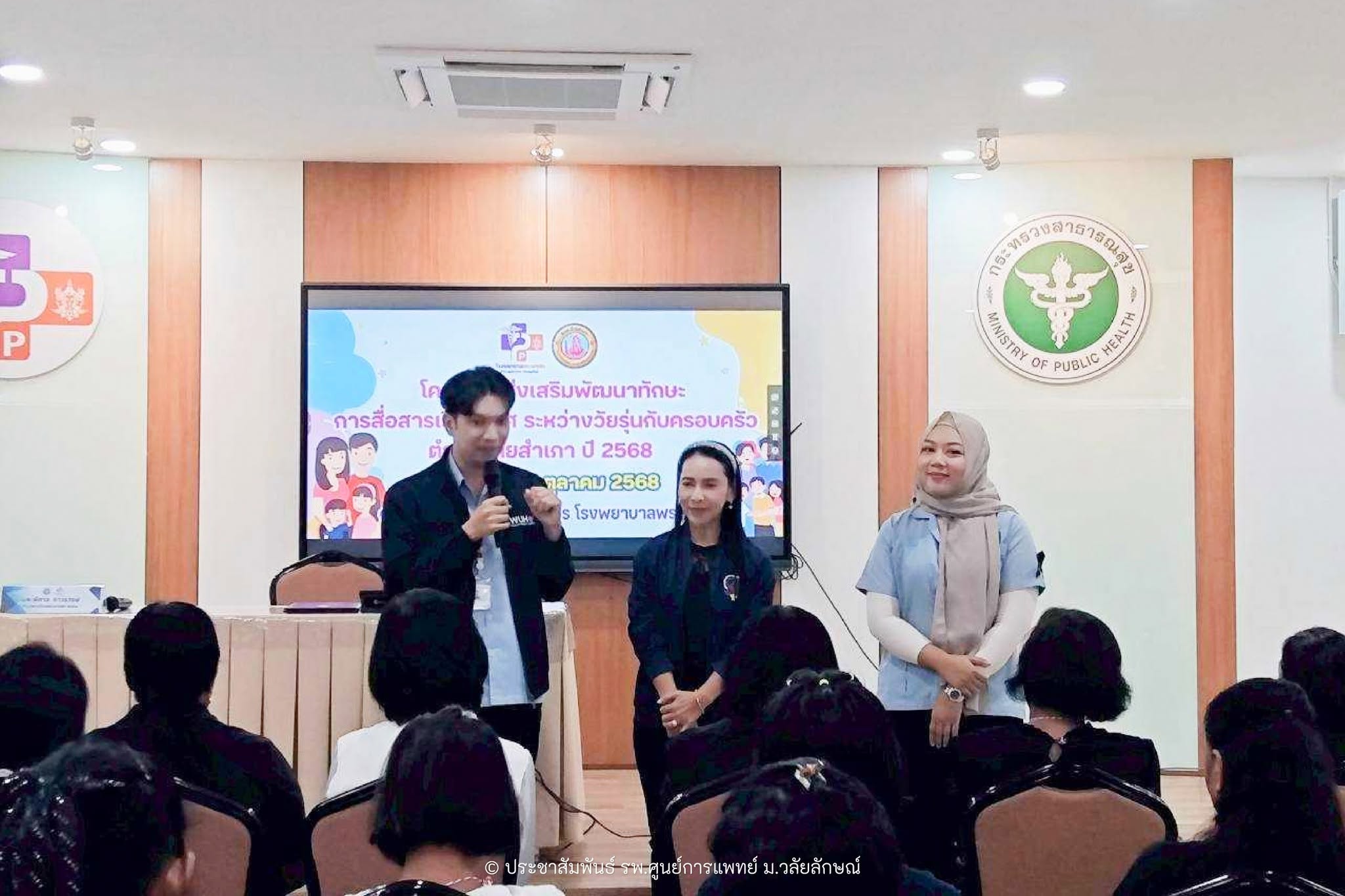
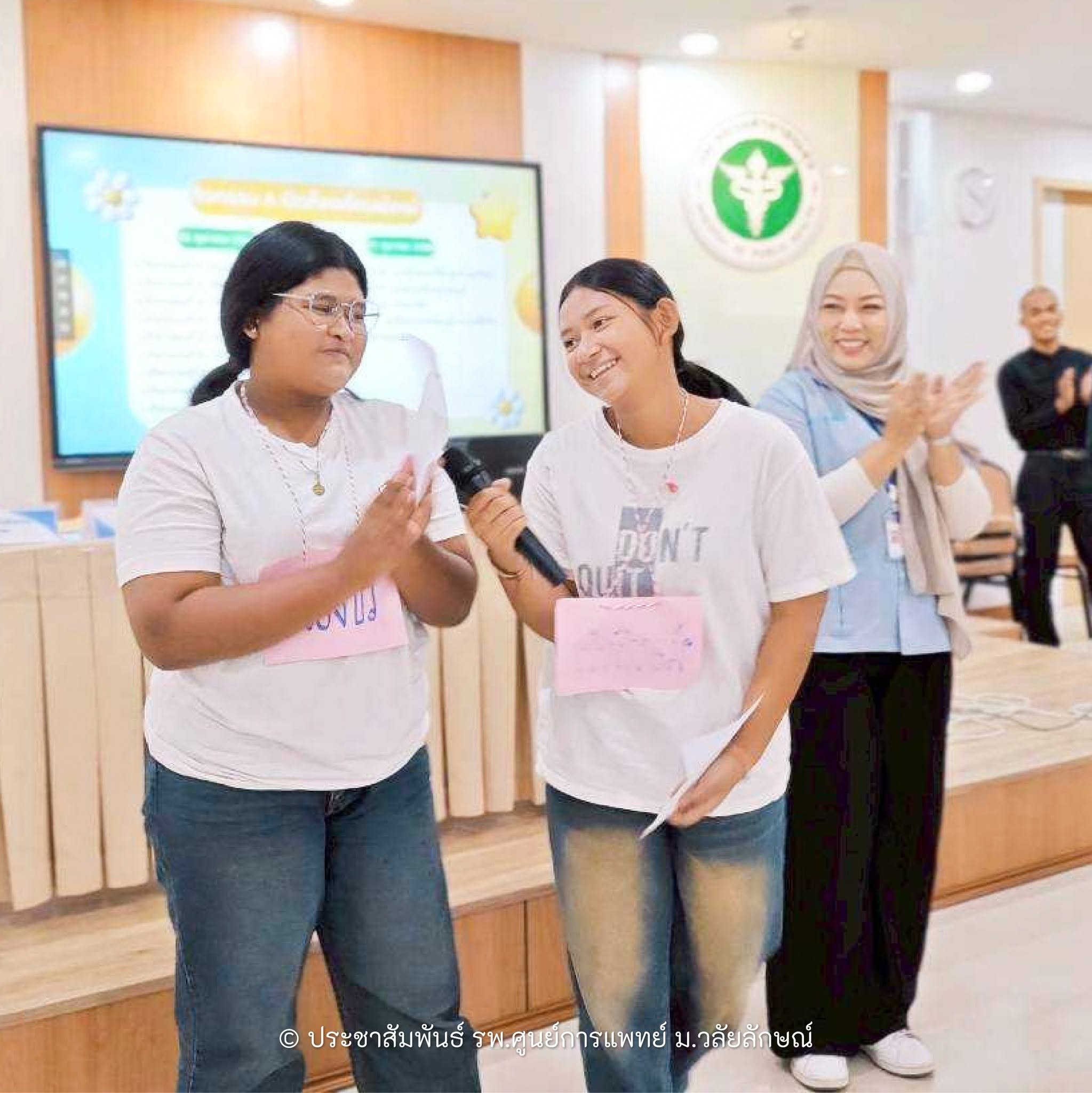
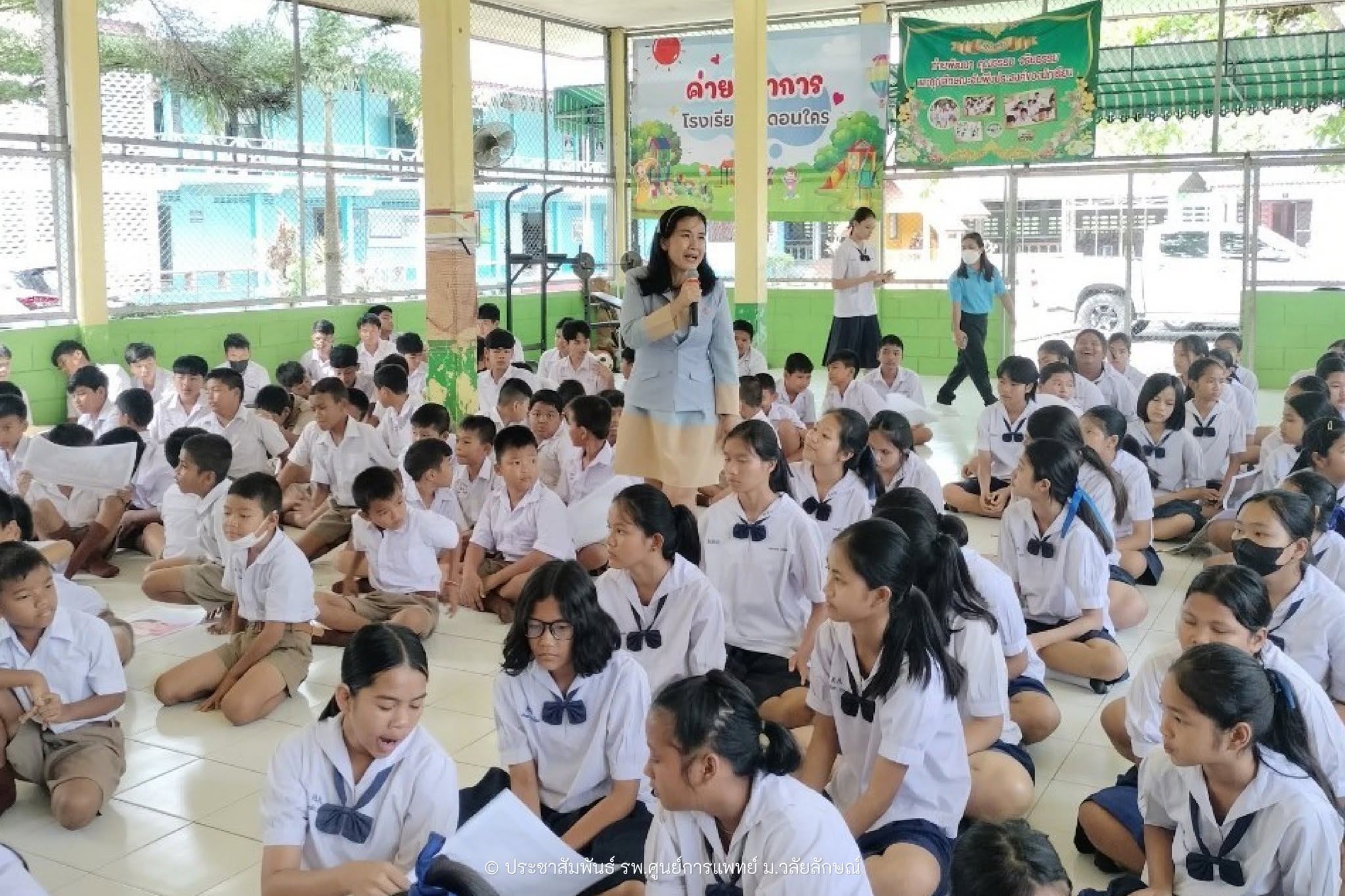
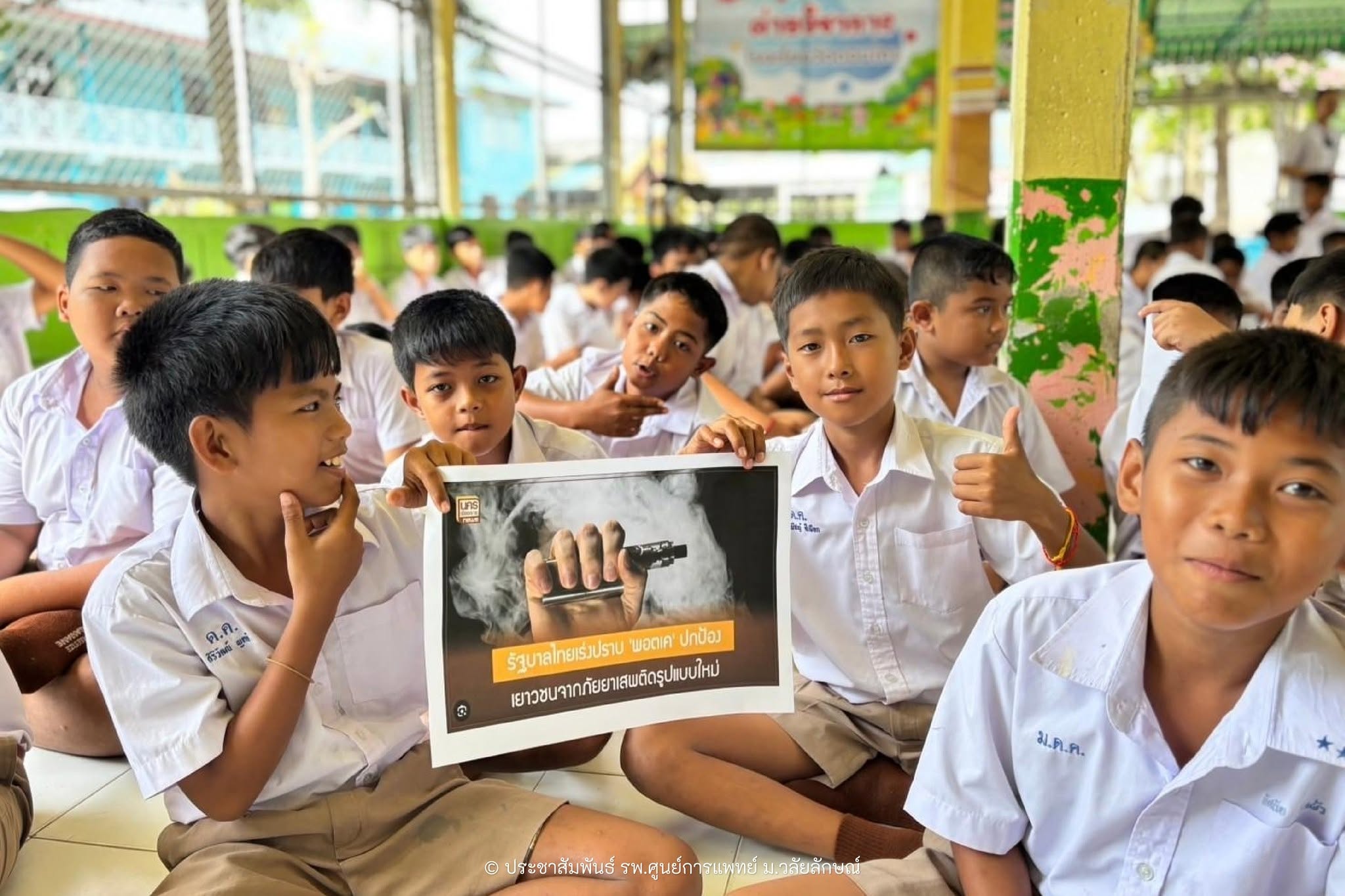
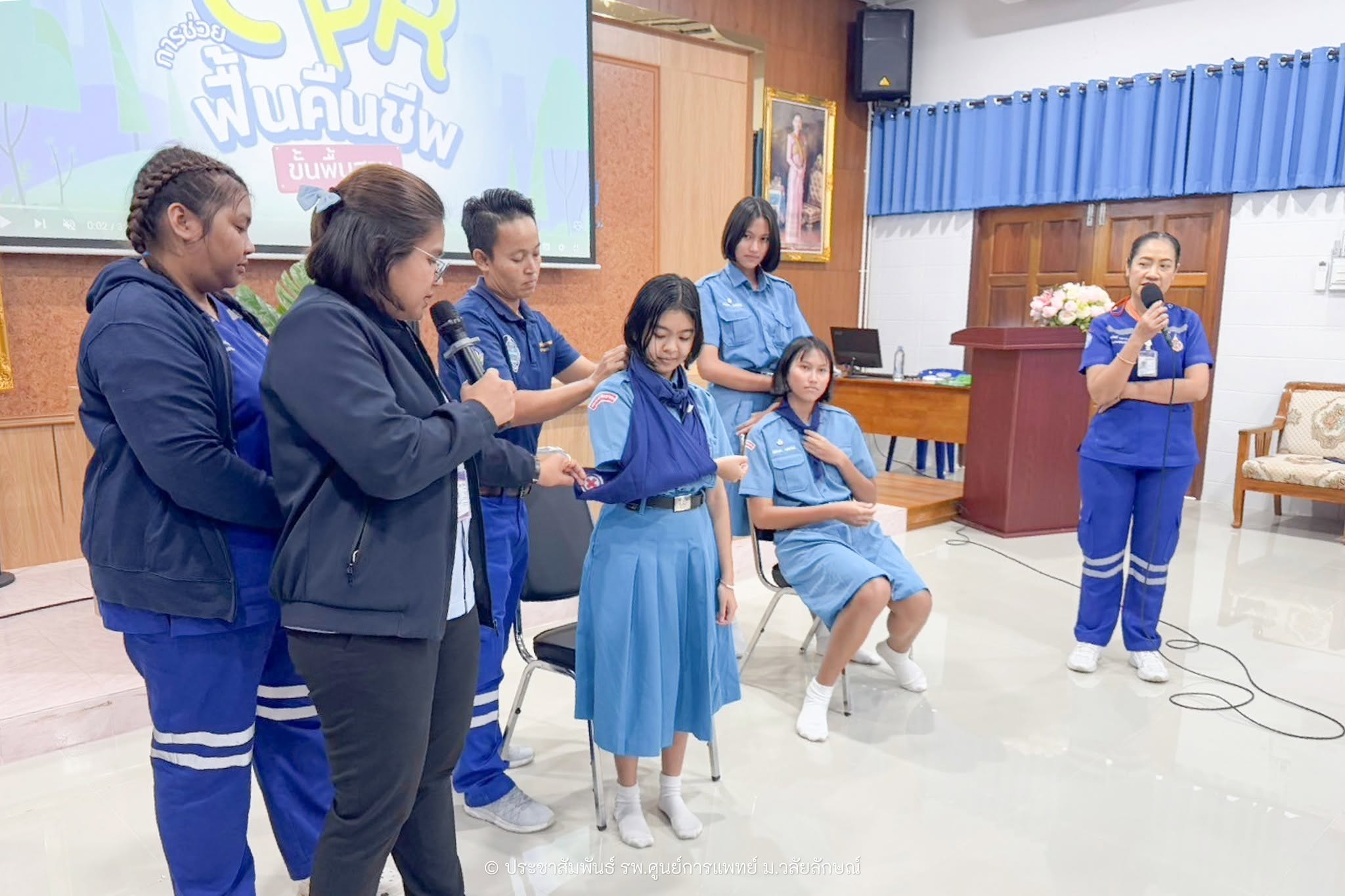
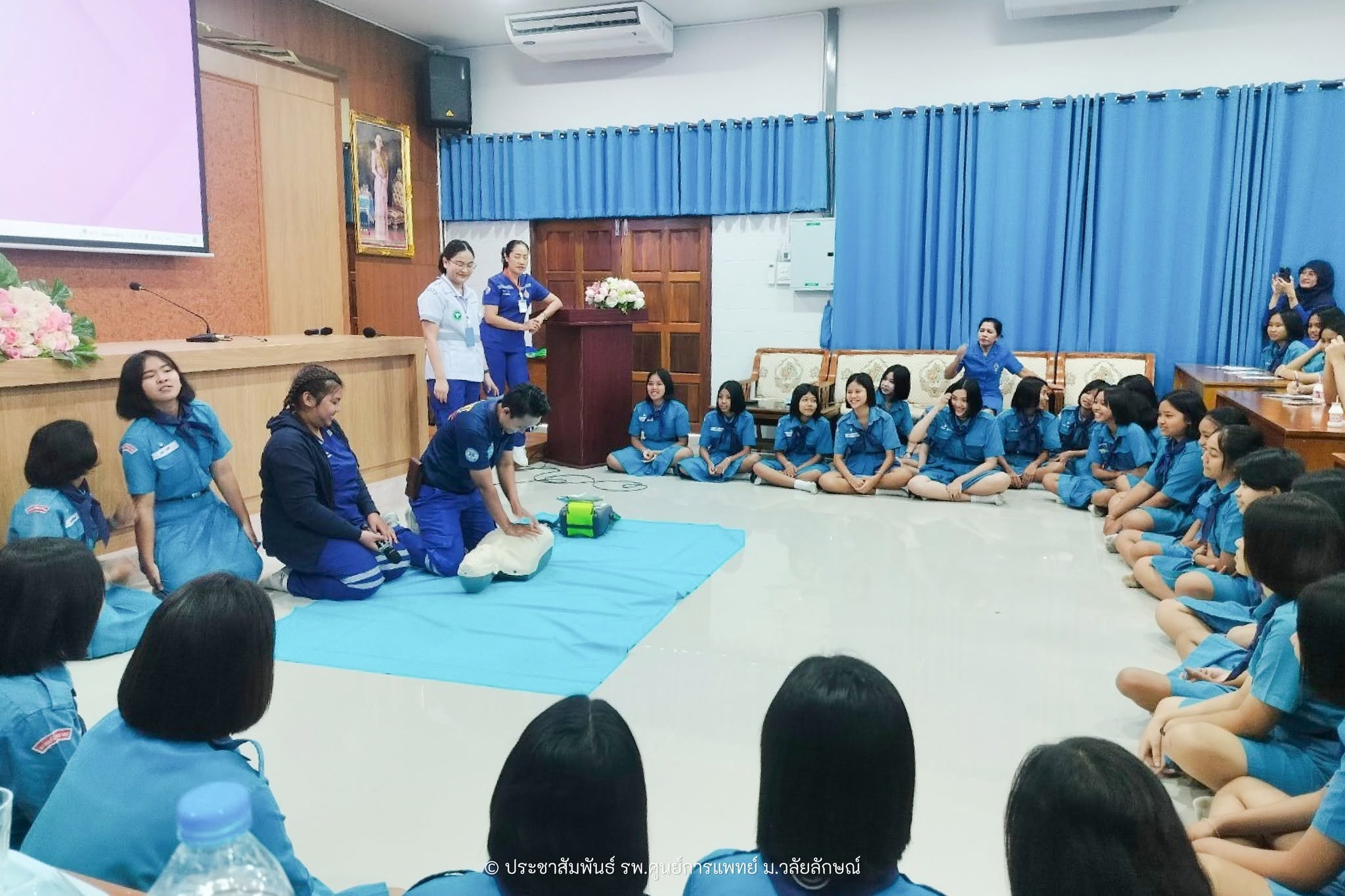
The university also promoted other aspects of adolescent health and well-being through a workshop on communication about sexual health between adolescents and their families, with more than 50 parents and adolescents participating. In addition, more than 240 students received education on preventing e-cigarette use and online risks, while 115 Red Cross youth students received training in basic first aid and basic life support. These activities strengthened participants’ knowledge and skills in self-care, health protection, and everyday safety.
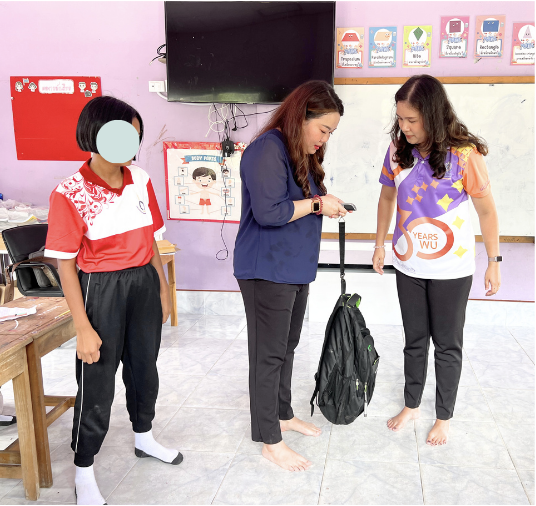
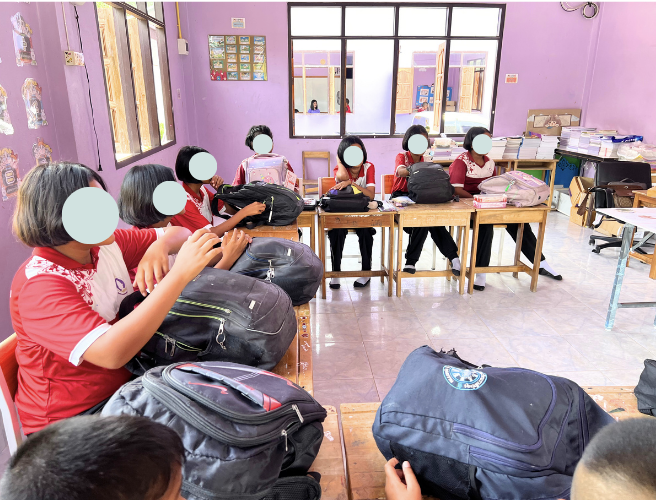
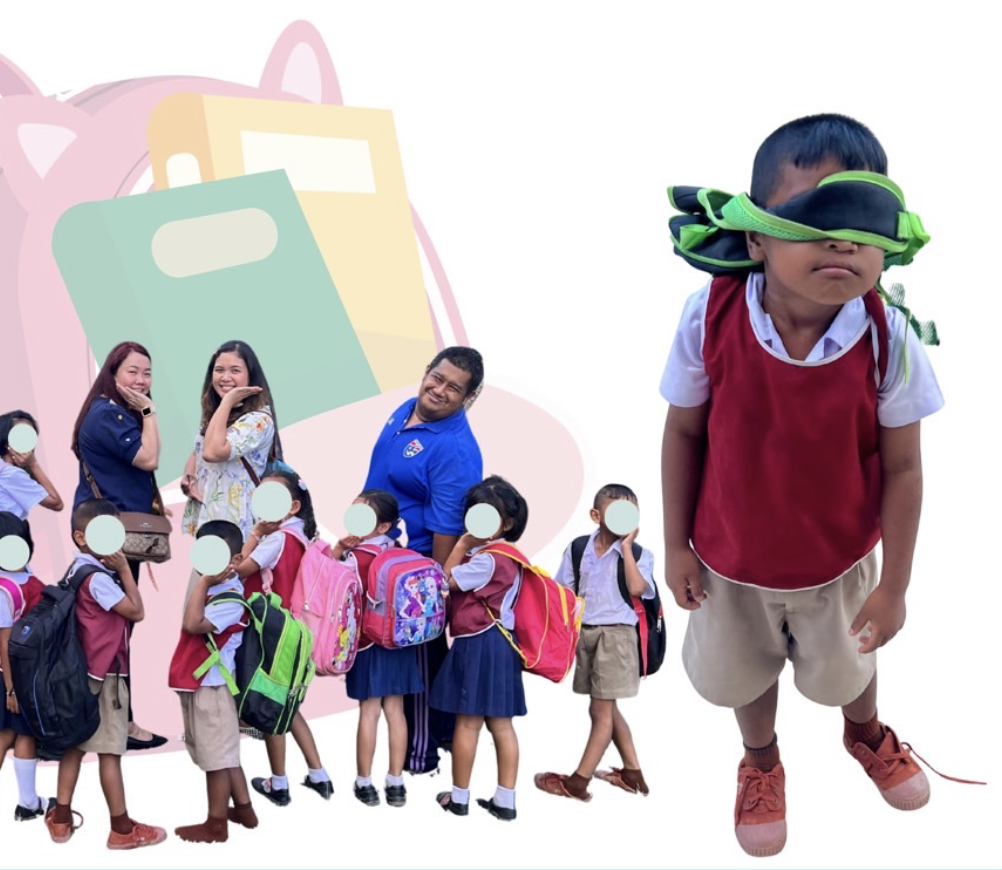
Walailak University delivers community outreach programmes to promote the health and well-being of local children. Asst.Prof.Dr. Phetcharat Boonruamkaew and Asst.Prof.Dr. Nuttikarn Nokkaew from the School of Pharmacy led a project entitled “Schoolbag Weight Assessment and Item Arrangement: Educating Students on Proper Schoolbag Selection and Use” to reduce strain on students’ musculoskeletal systems. The team conducted more than seven field visits to Ban Lang Ai Mi Border Patrol Police School in Cha-uat District, Ban Huai Tong Border Patrol Police School in Nopphitam District, and schools within the Special Education Centre network in Nakhon Si Thammarat Province. Activities included schoolbag weight assessments, health education, practical training, and follow-up, focusing on Grade 6 students and children of migrant workers. Students learned how to select and carry suitable schoolbags and arrange their contents so that the total weight did not exceed 10–15% of their body weight, placing heavier items close to their backs and lighter items in the outer compartments. They also practised stretching exercises to relieve muscular discomfort. In addition, the team provided developmental activities for vulnerable children at the Special Education Centre, using play to strengthen gross and fine motor skills and speech exercises to support communication. This project demonstrates how the university applies its expertise through community outreach to promote health, exercise, and child development while expanding access to well-being activities for vulnerable groups in local communities.
Working-Age Adults
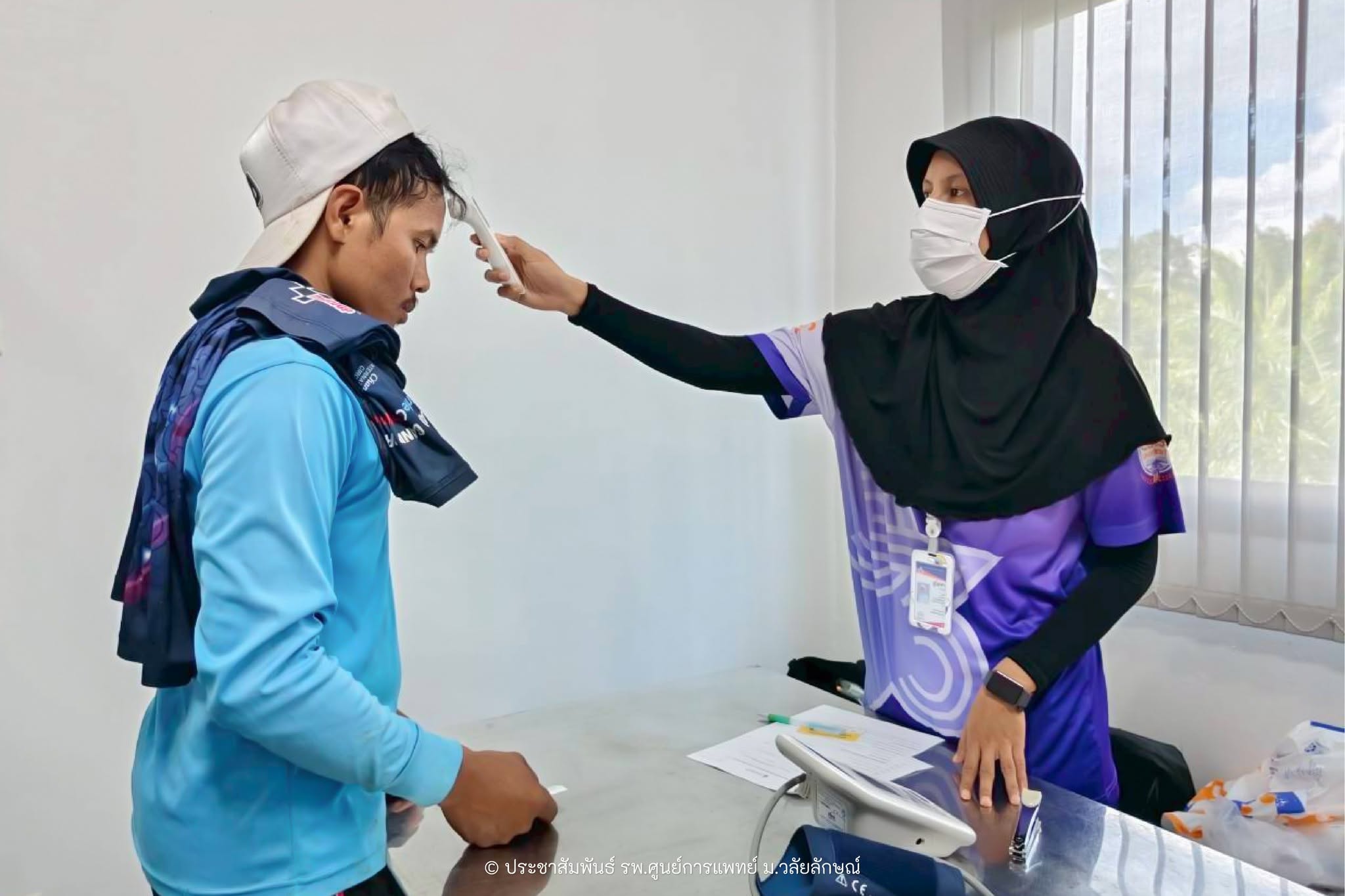
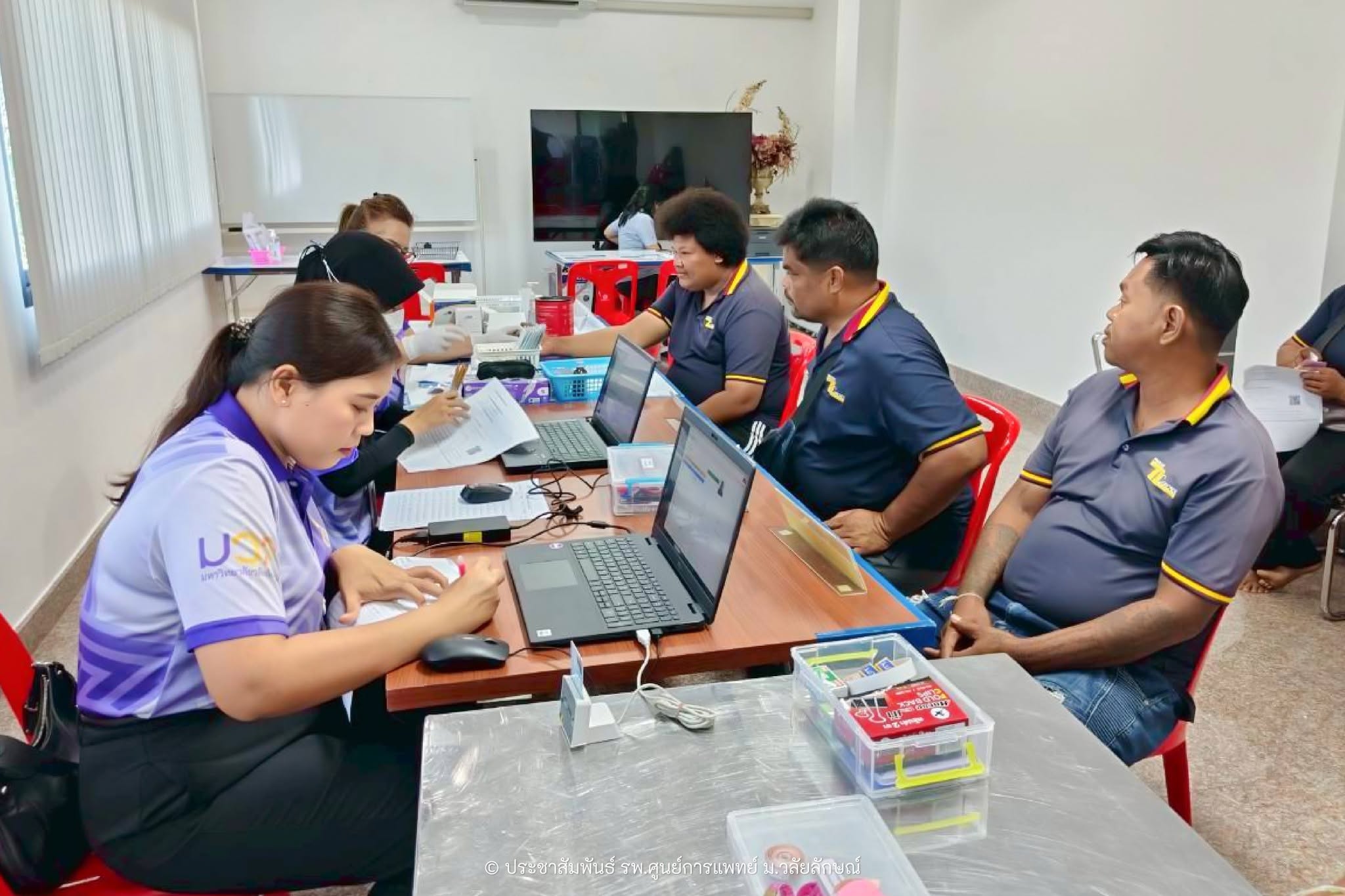
For working-age adults, the University implemented health screening and health promotion programmes in workplaces. Medical Center staff provided health screening services to more than 120 employees and workers of Talay Jai Concrete Co., Ltd. The screening covered risks related to hepatitis B and C, sexually transmitted infections including HIV and syphilis, mental health, cardiovascular and cerebrovascular diseases, diabetes, cervical cancer through HPV DNA testing, and body composition assessment. Individual and group health counselling was also provided to support appropriate health behaviour changes.
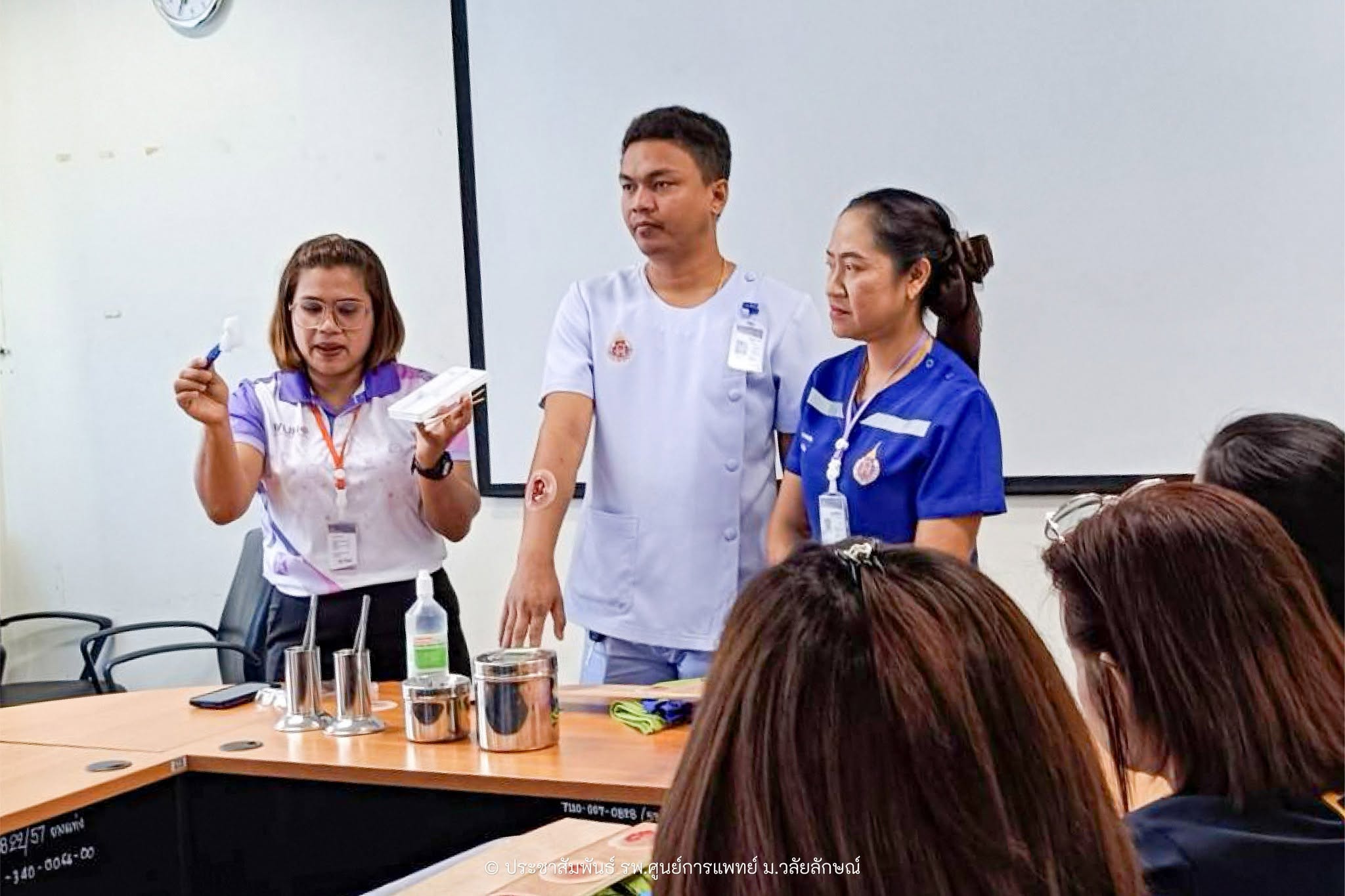
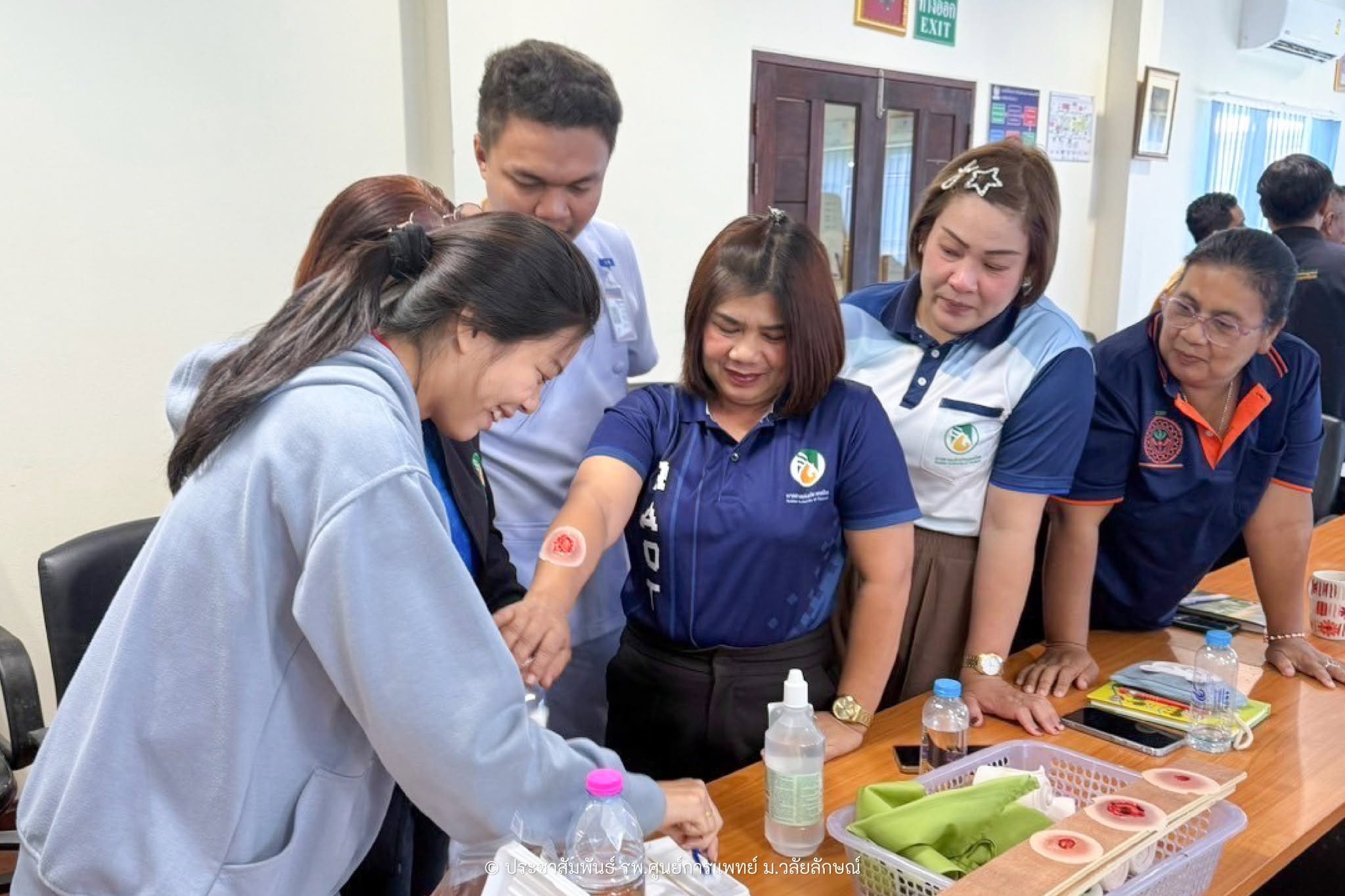
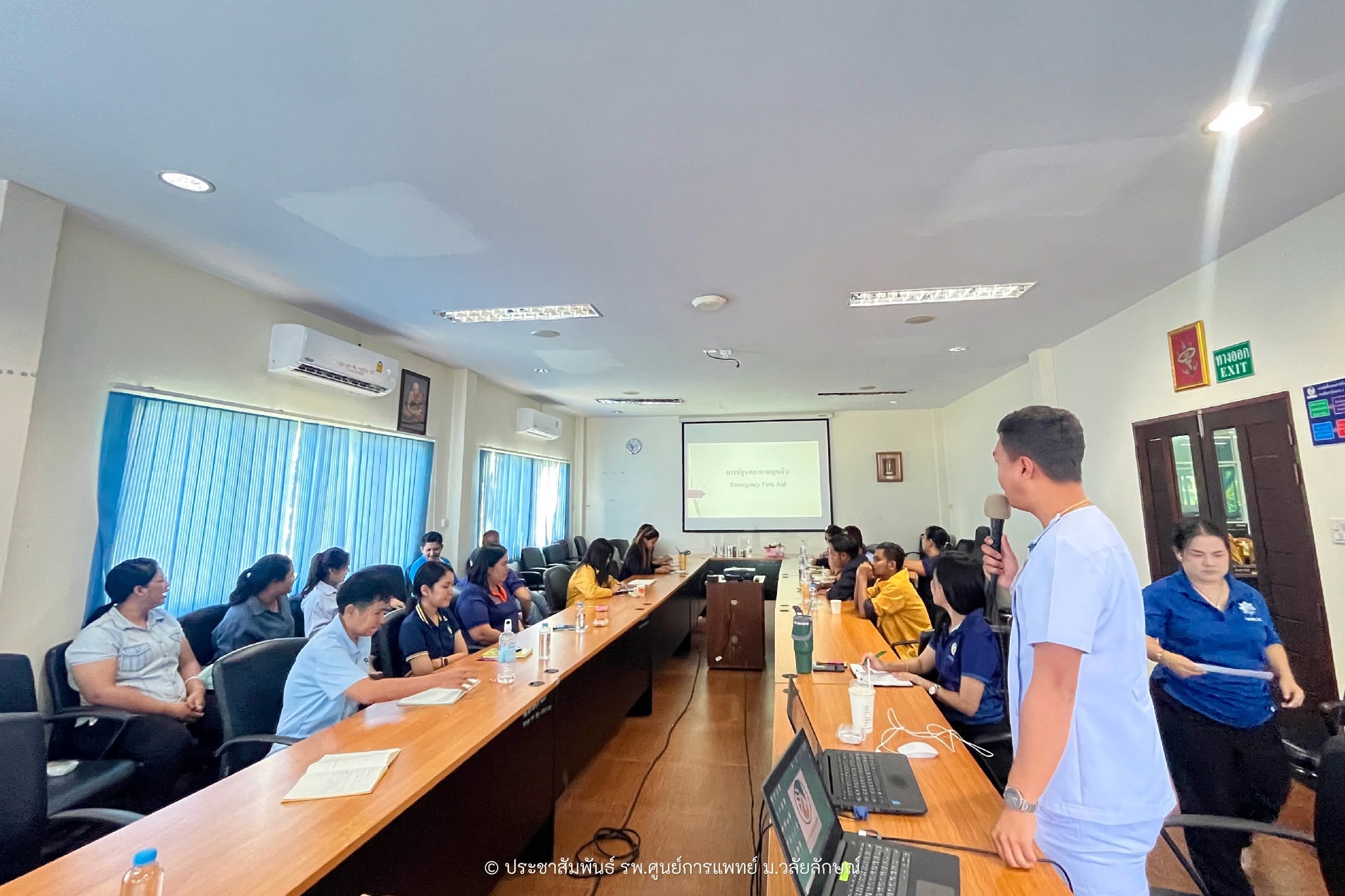
The university also provided education and demonstrations on basic first aid to more than 50 personnel of the Rubber Authority of Thailand in Chang Klang District, Nakhon Si Thammarat. The training covered the use of triangular bandages, splinting, elastic bandaging, and first aid for venomous animal bites and stings. The programme aimed to strengthen participants’ ability to care for themselves and provide assistance to others in emergency situations.
Older People
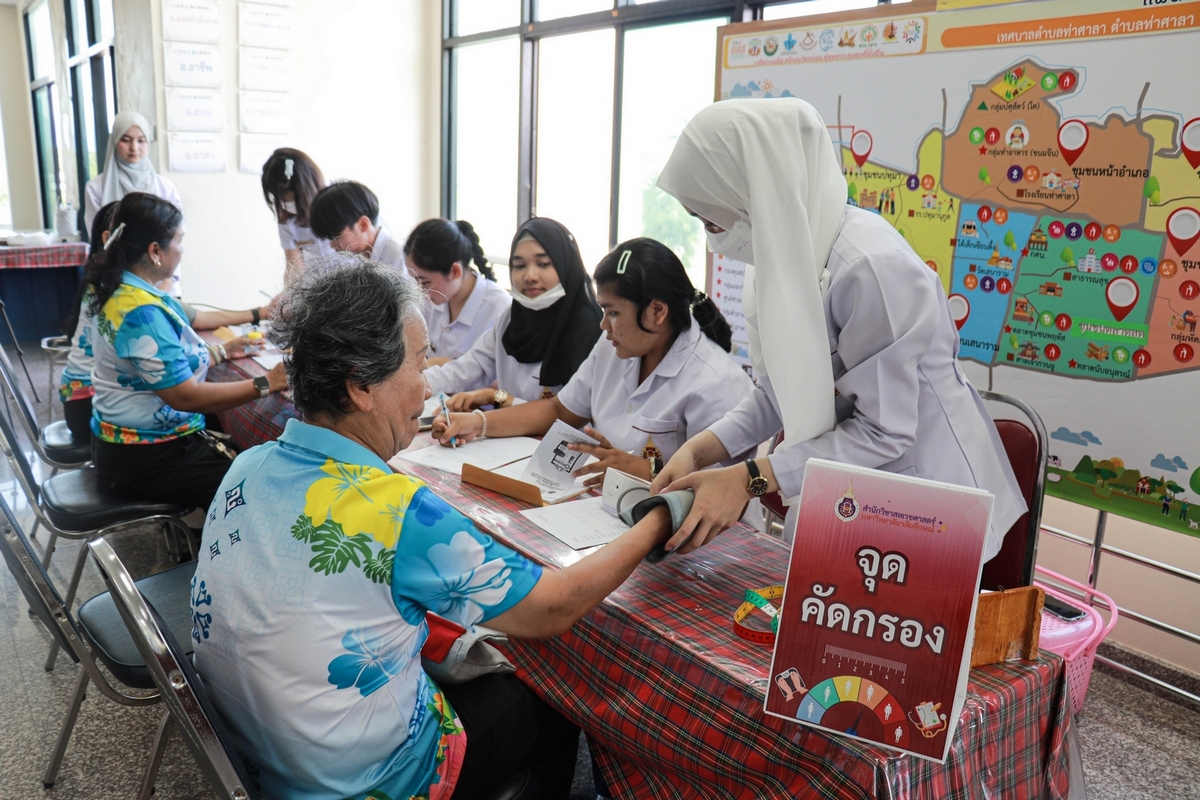
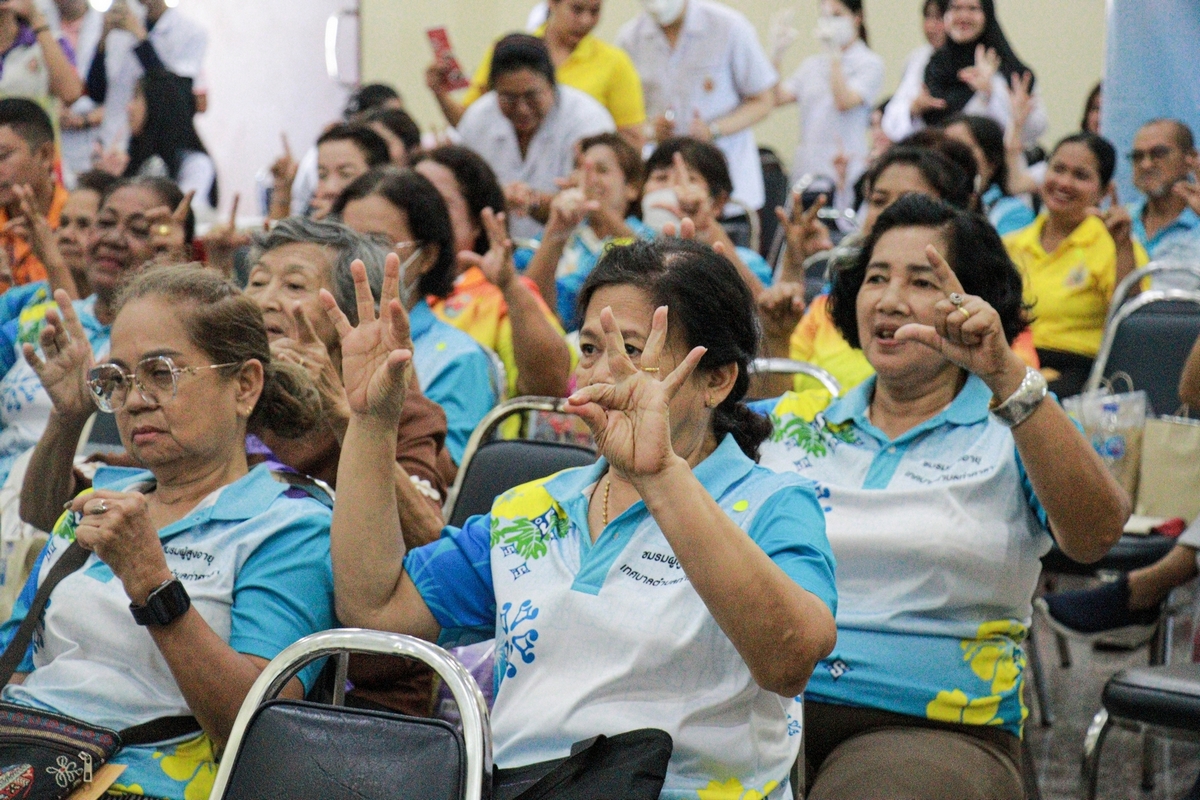
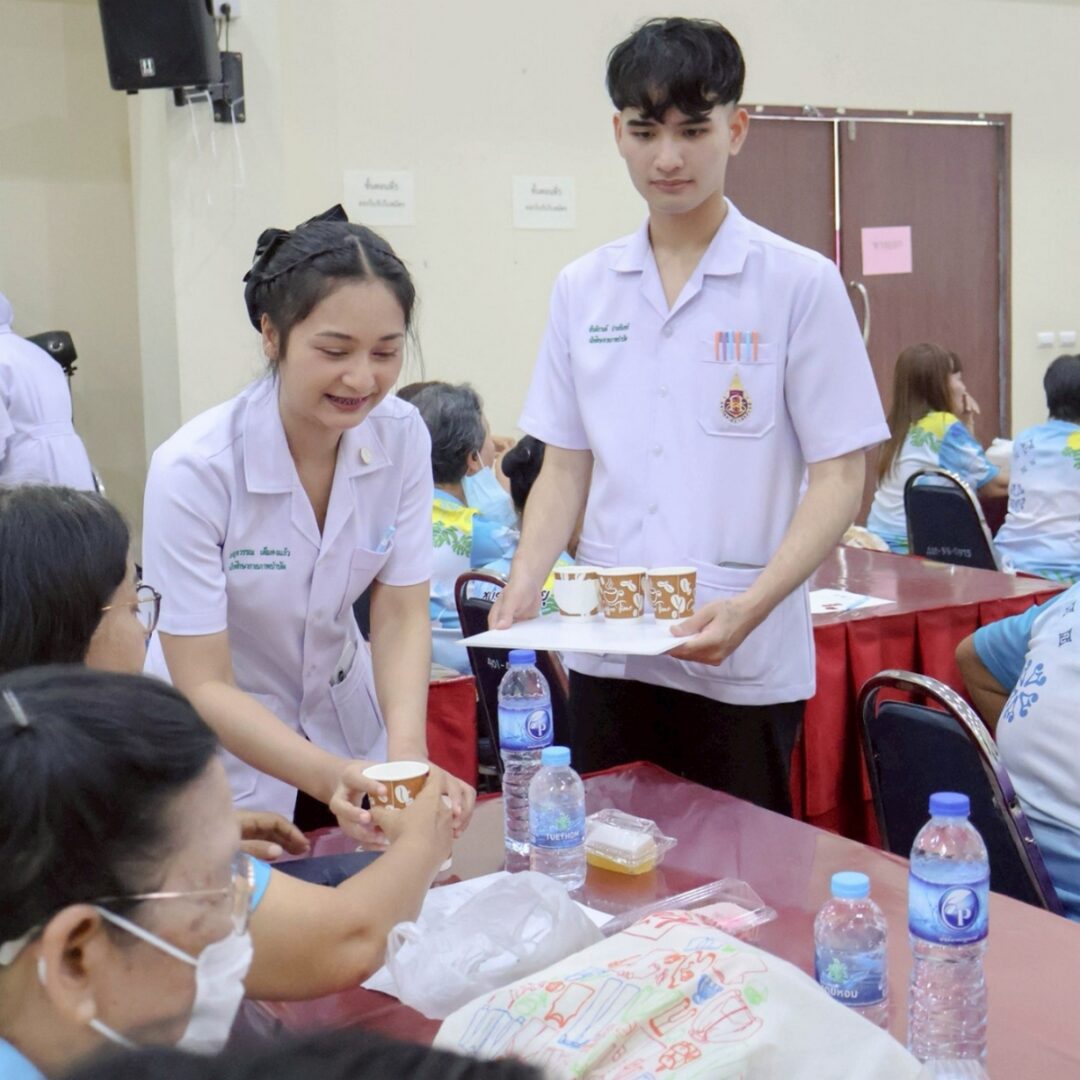
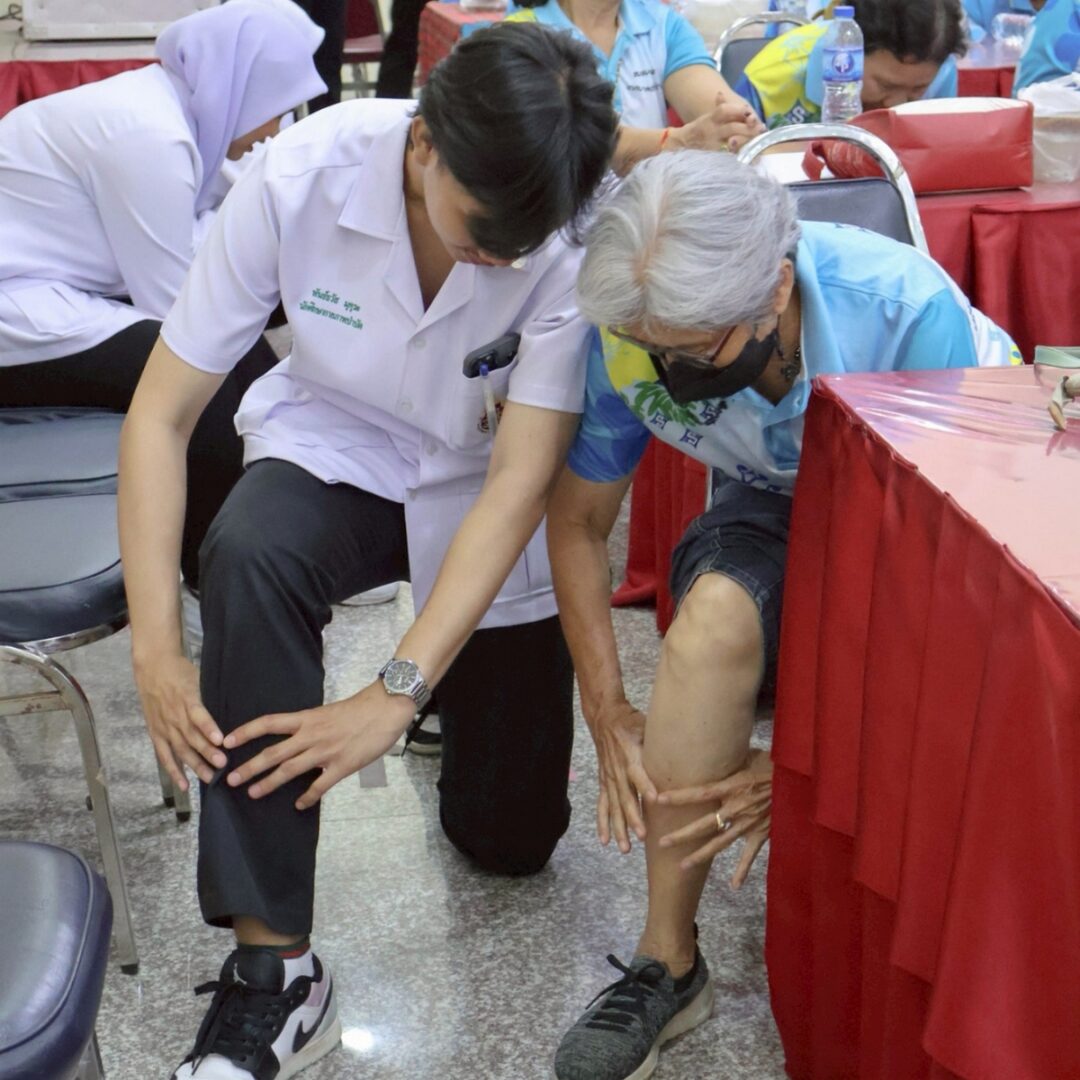
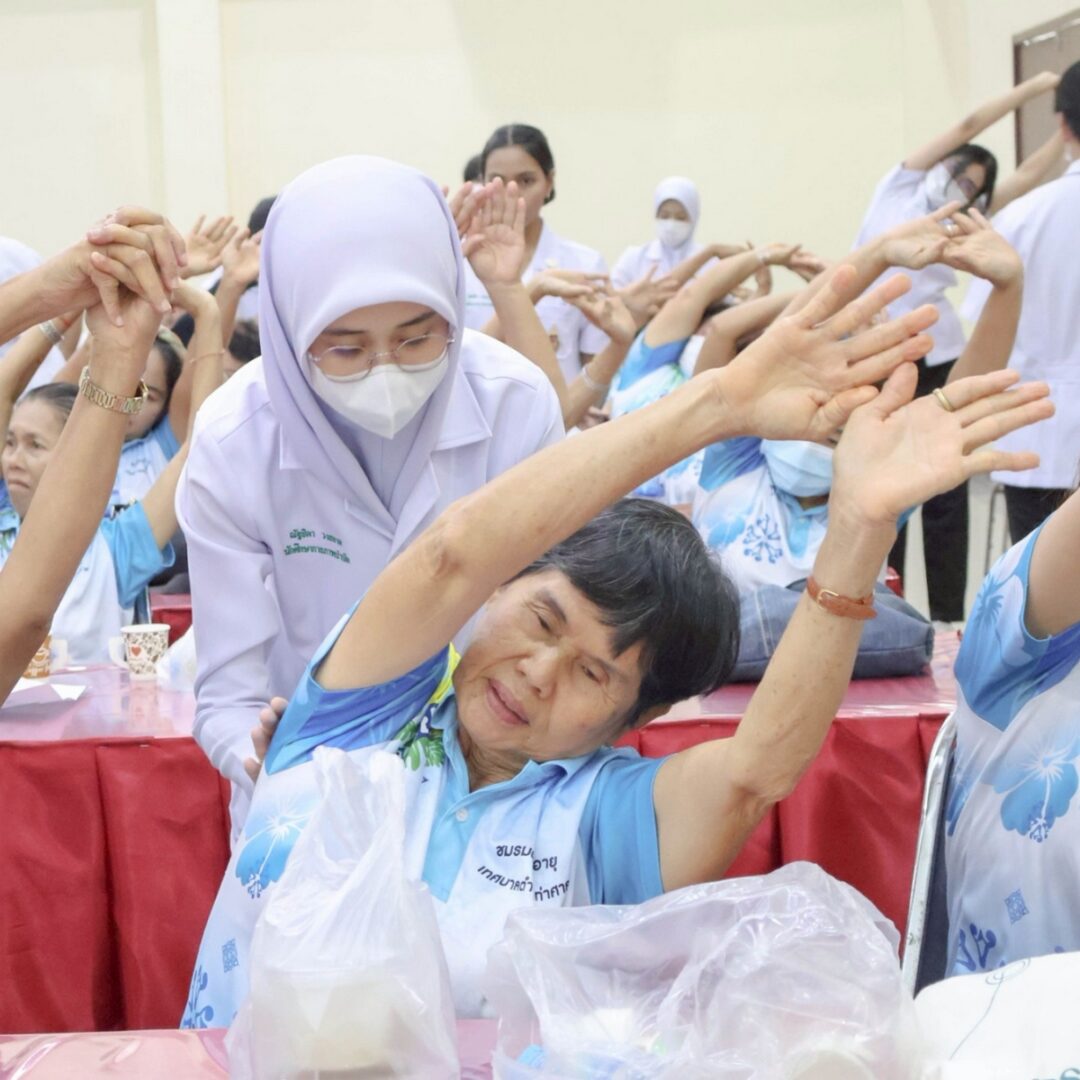
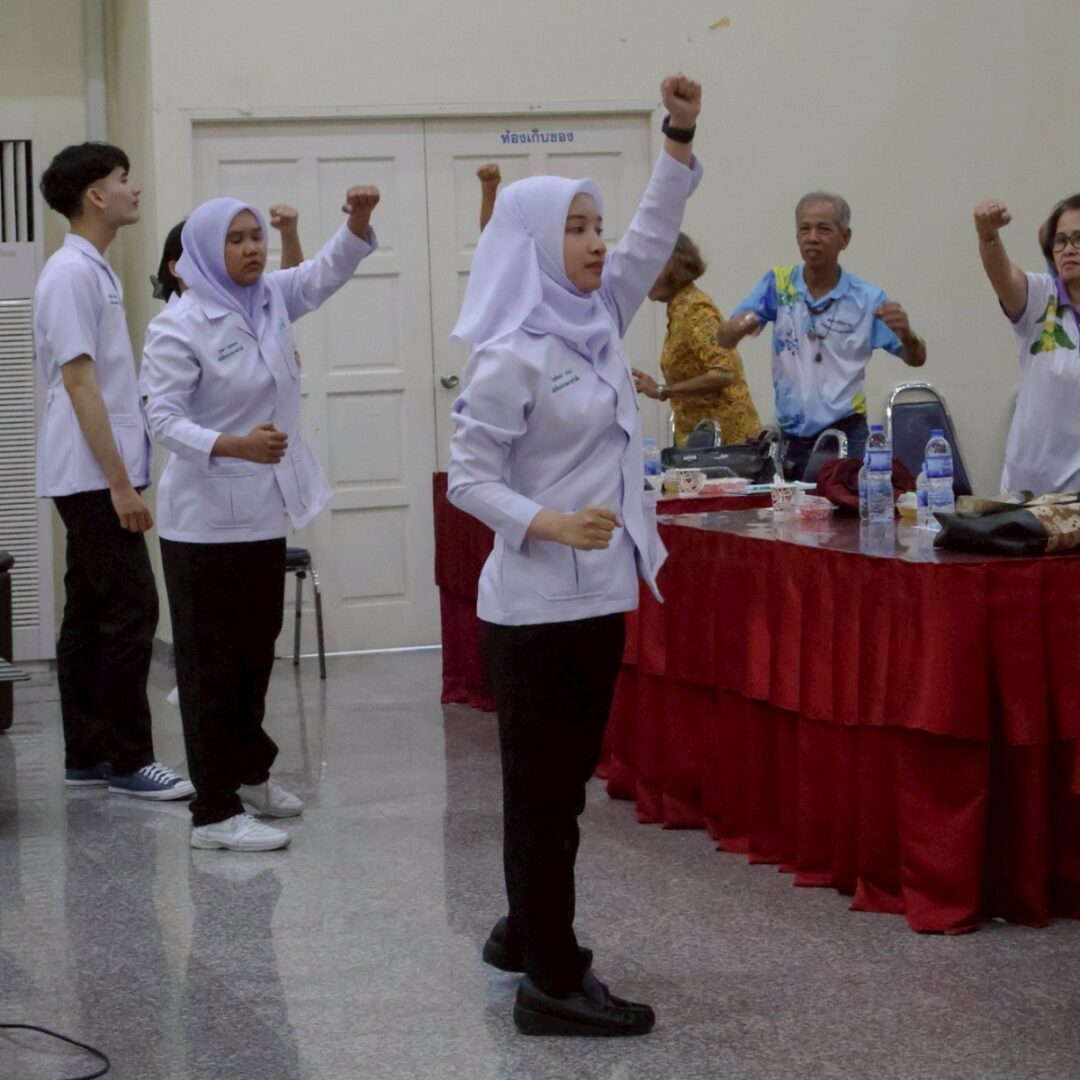
The university implemented health promotion programmes for older people in the local community. Faculty members, staff, and students in Sports and Exercise Science provided education on stretching and demonstrated simple exercises that could be incorporated into daily life. Activities also included resistance-band exercises, physical fitness testing, and fitness planning to improve muscle strength and reduce the risk of injury.
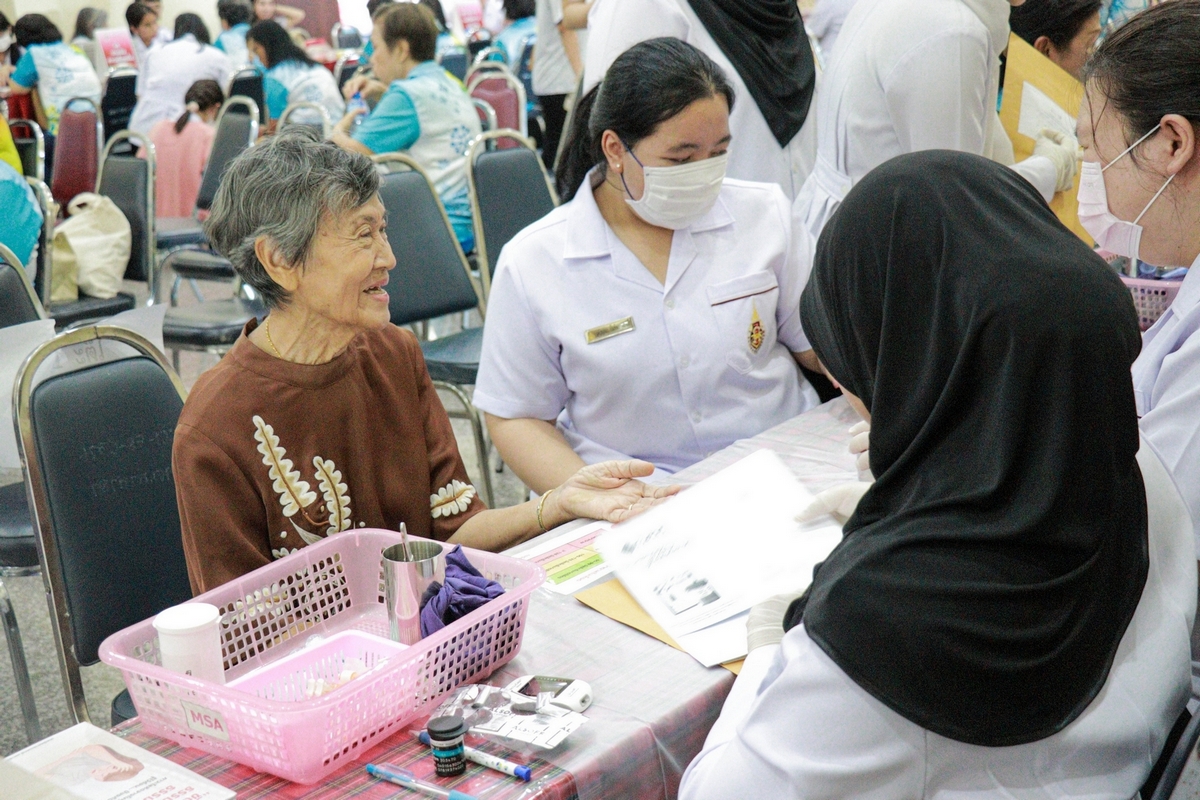
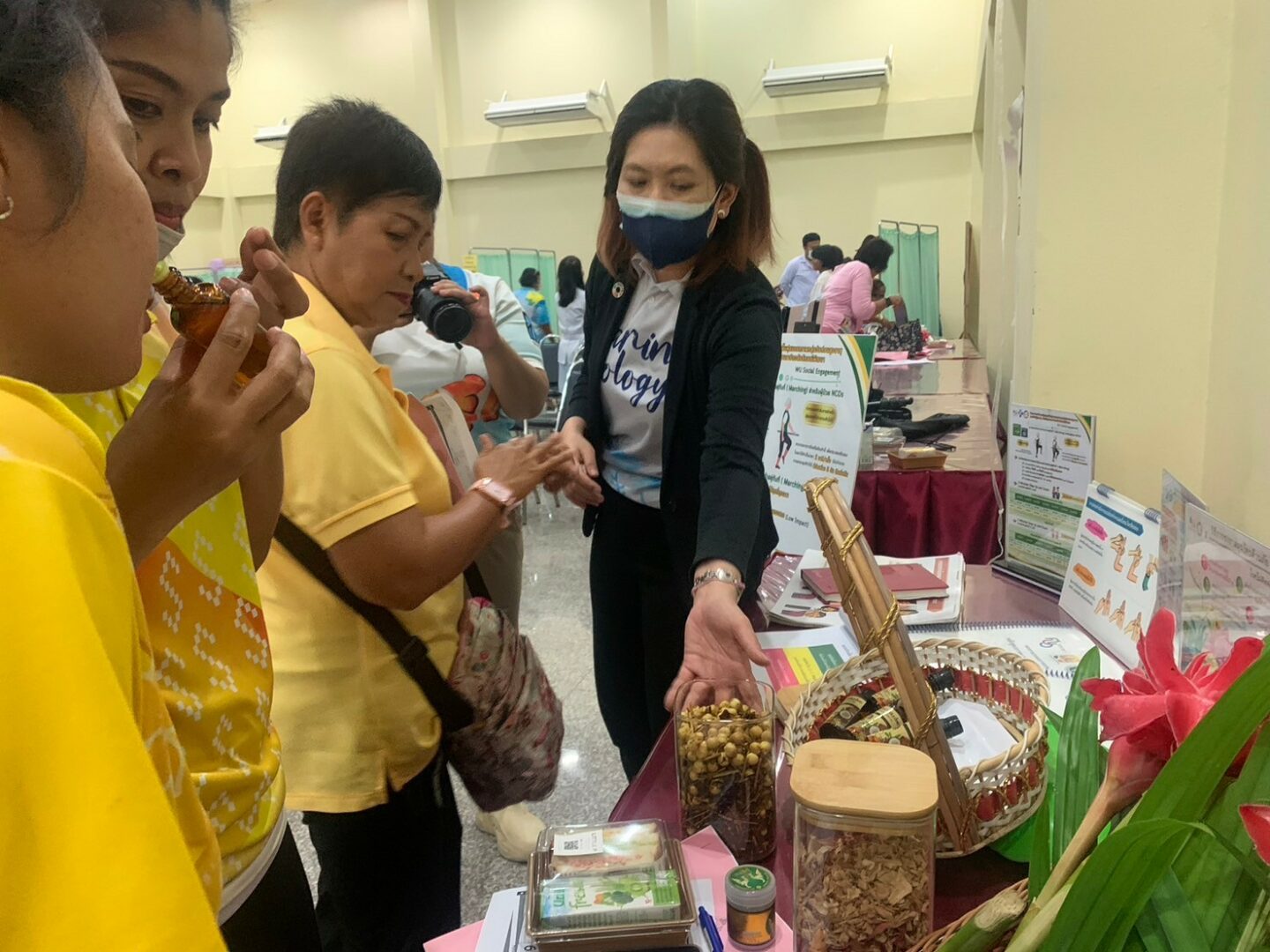
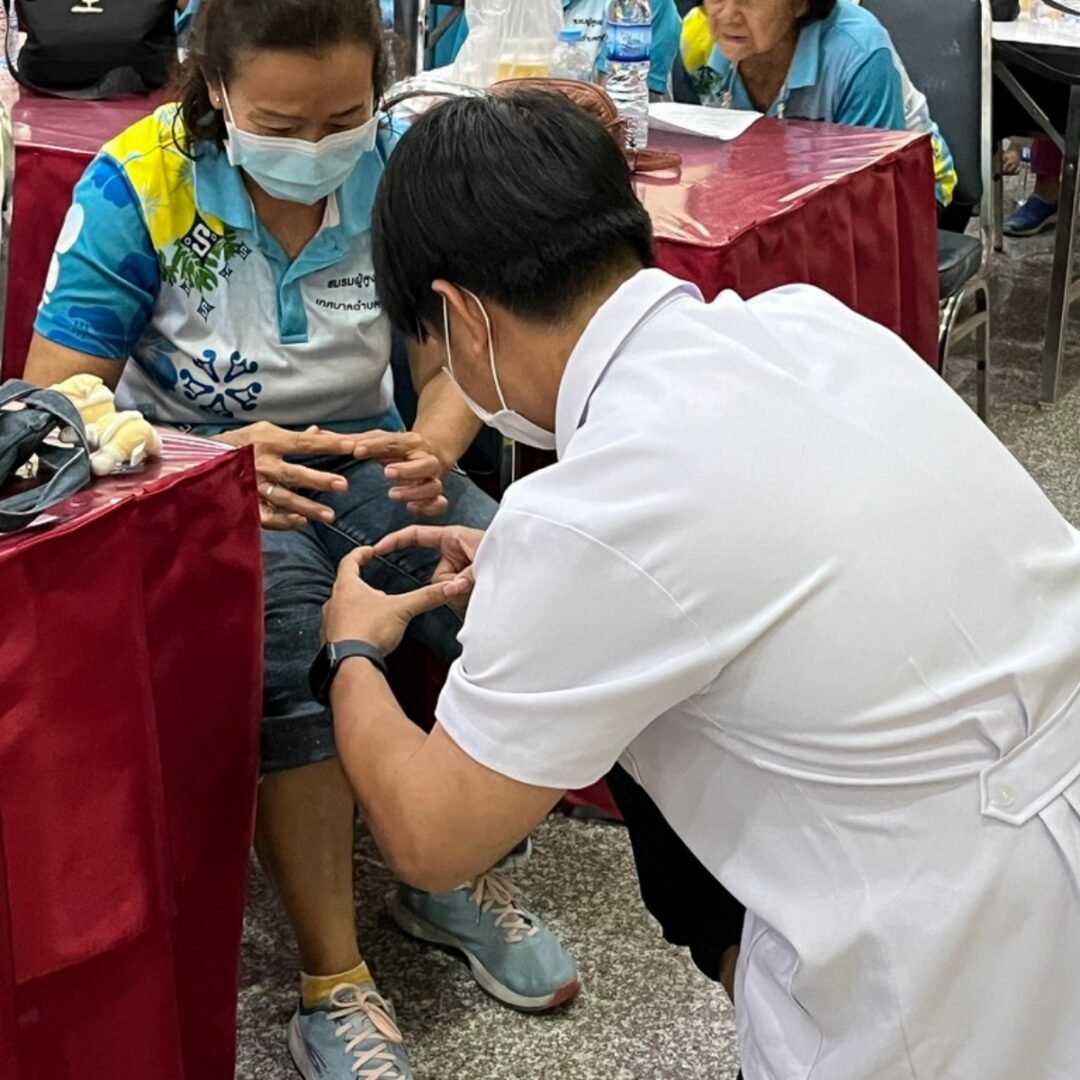
Under the Walailak Health Model, the University also organized activities for older people, including education on low muscle mass, assessment of cardiovascular and physical fitness, disease prevention education, the use of local herbal products, relaxation massage, and muscle-stretching exercises. In addition, health screening services were provided, including blood glucose testing, anaemia screening, urine testing, and dementia assessment, together with health education for participants.
Disadvantaged People
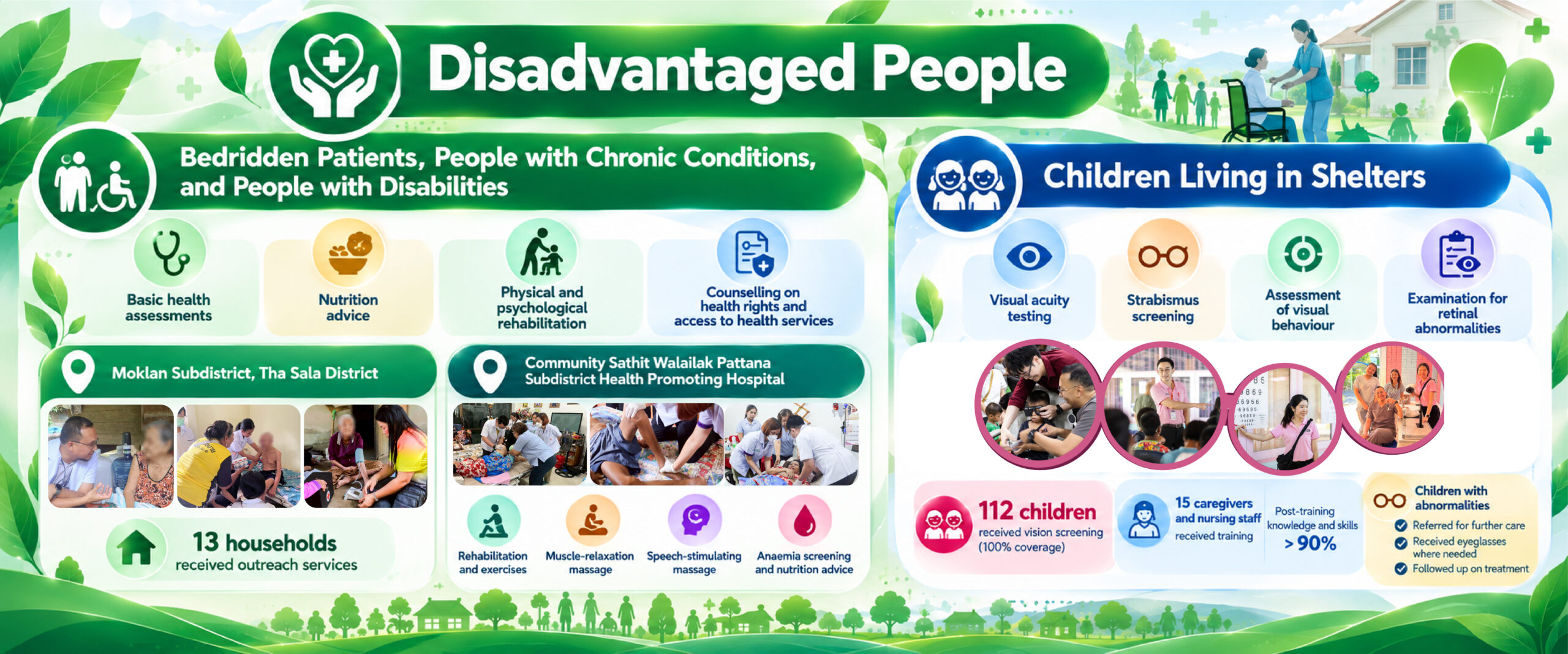
The university extended its health outreach programmes to disadvantaged people and vulnerable groups who may face barriers to accessing health services, particularly bedridden patients, people with chronic conditions, people with disabilities, and children living in shelters.
Bedridden Patients, People with Chronic Conditions, and People with Disabilities
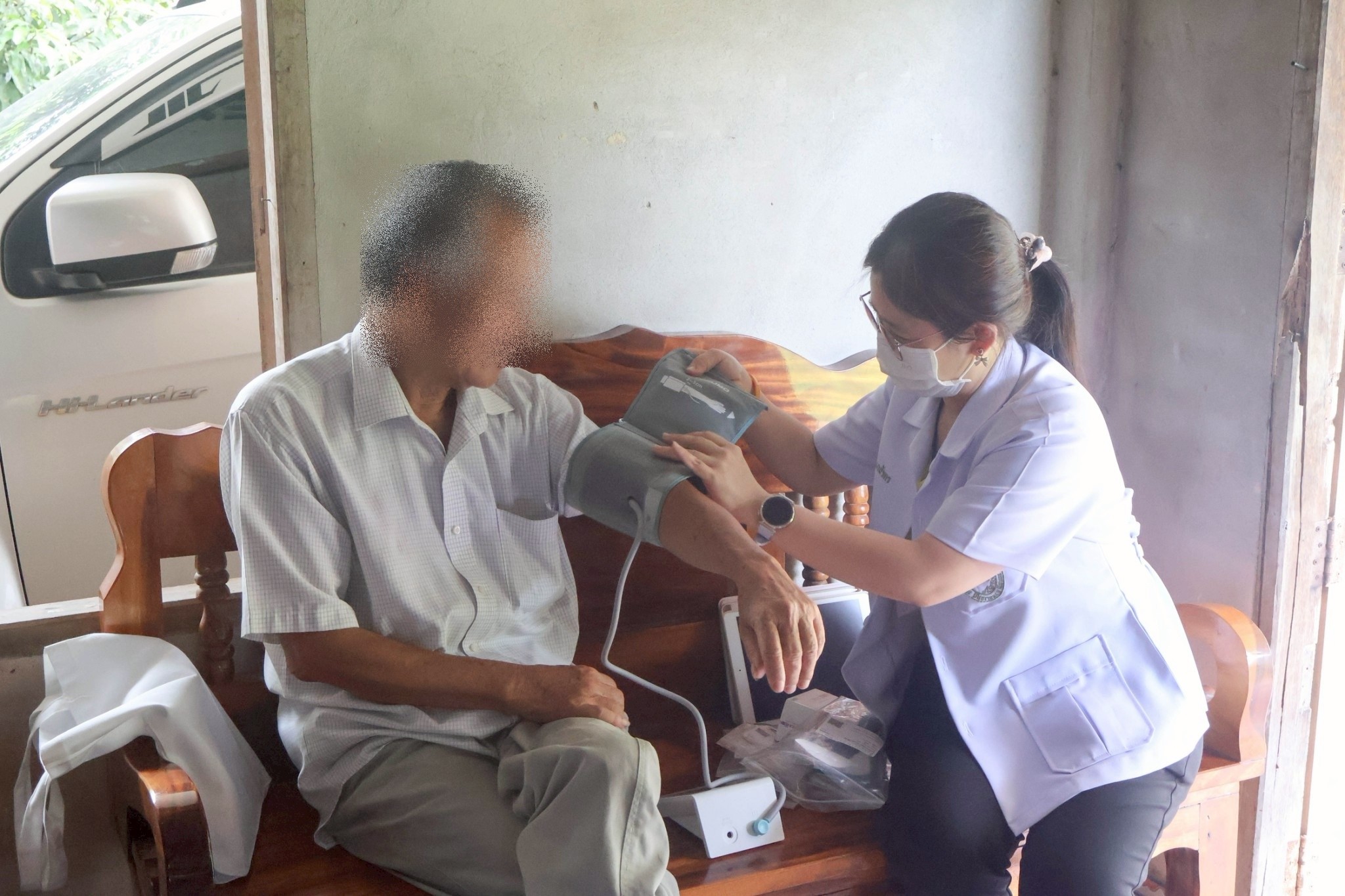
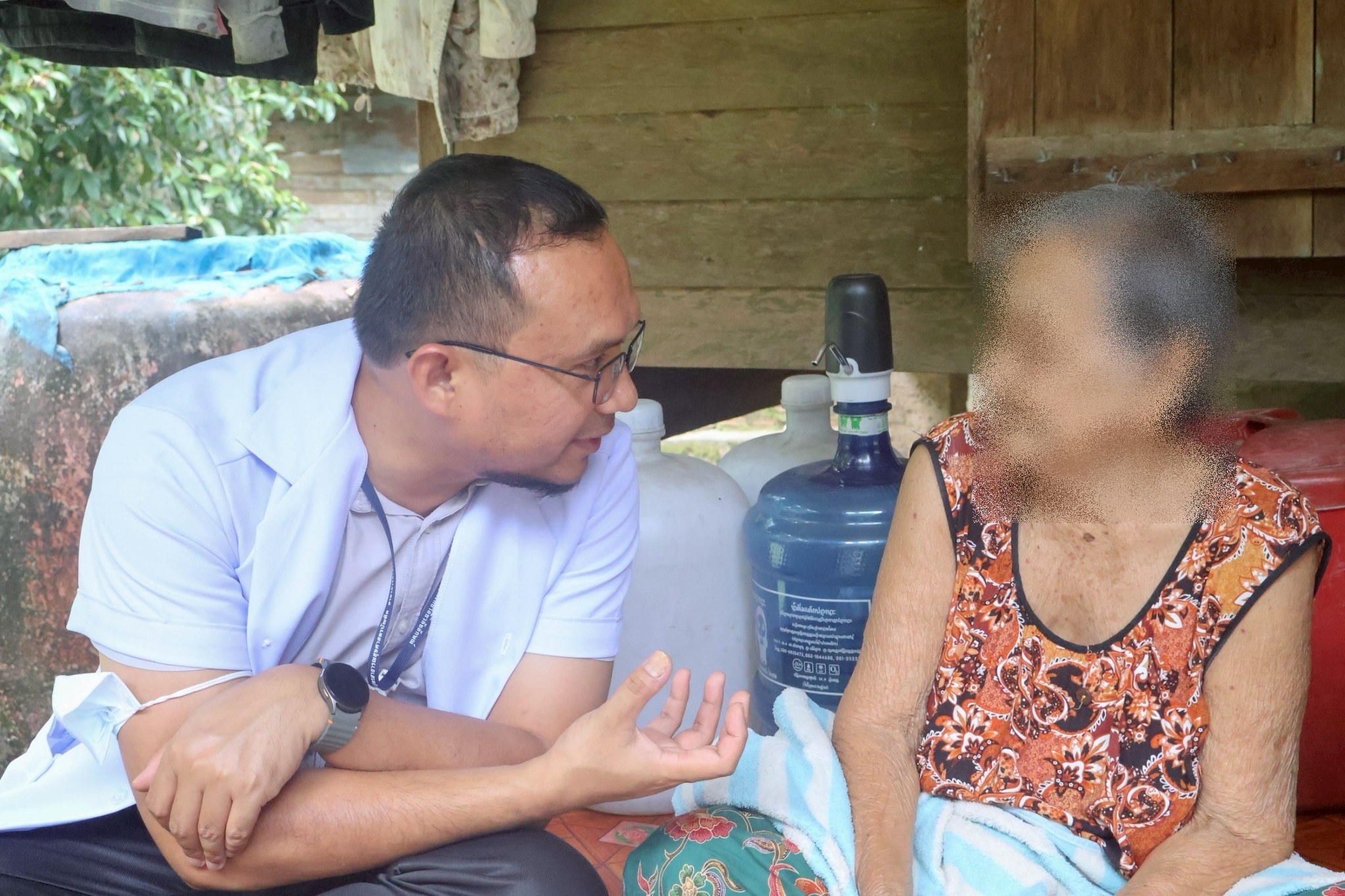
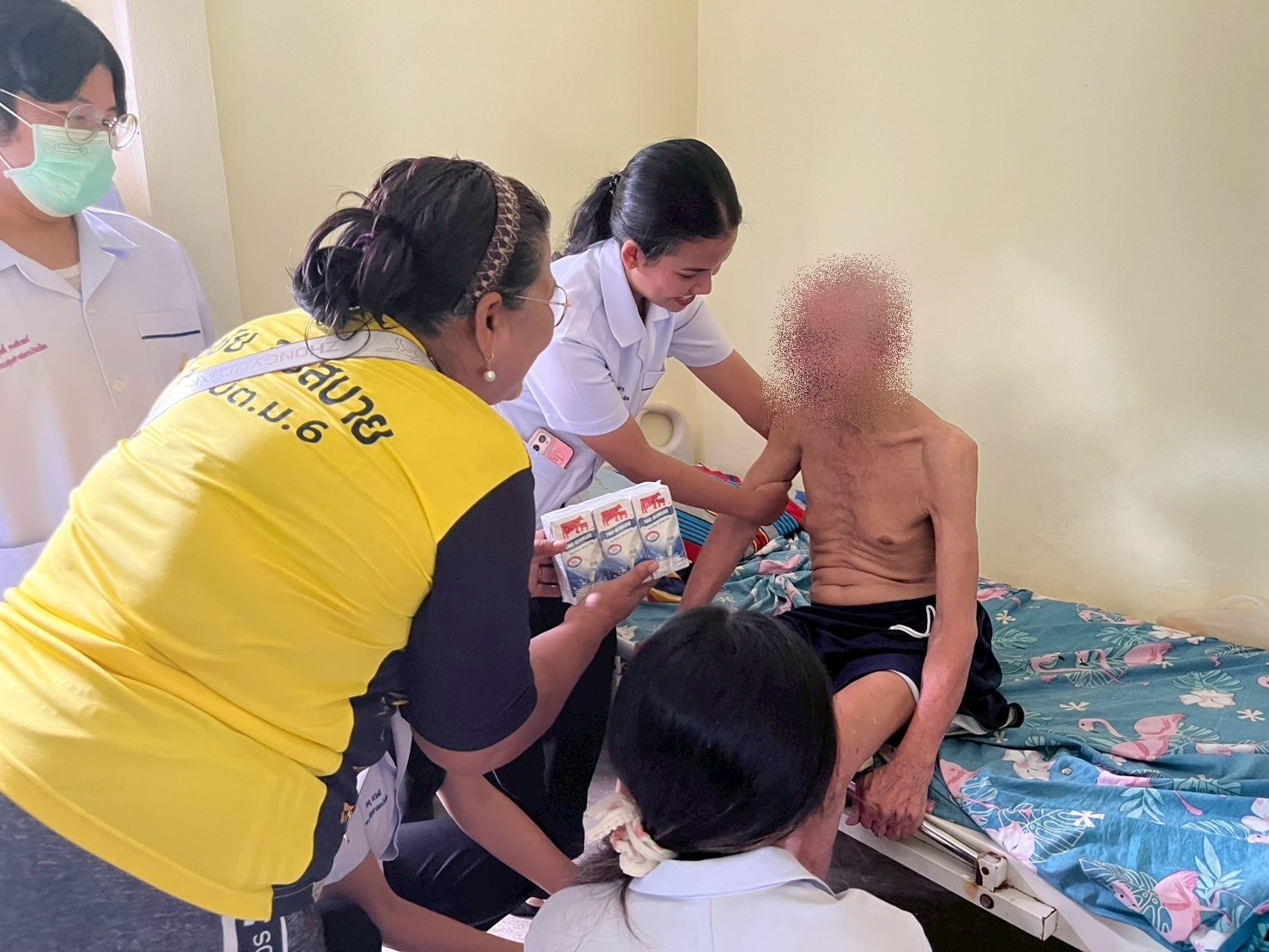
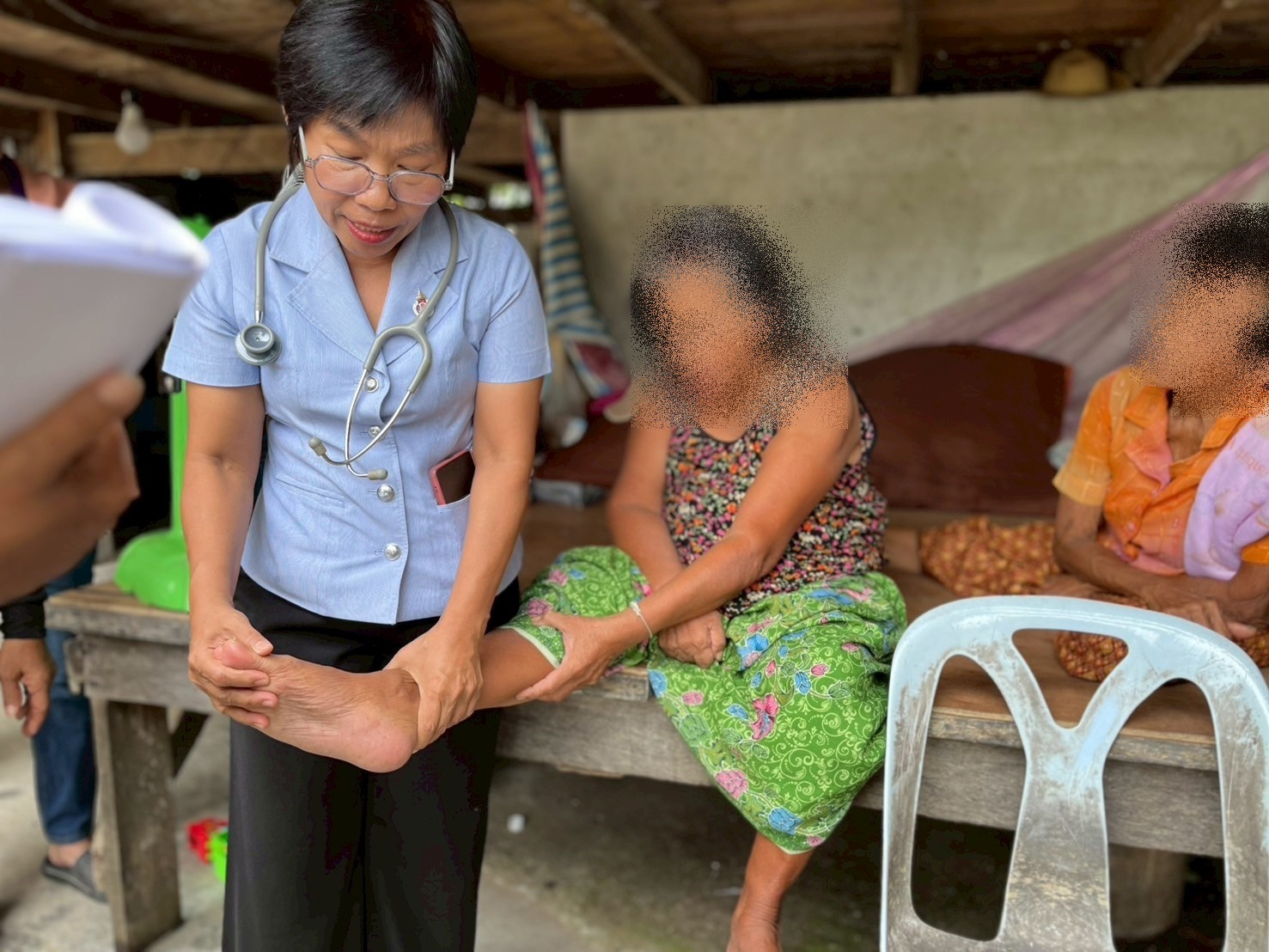
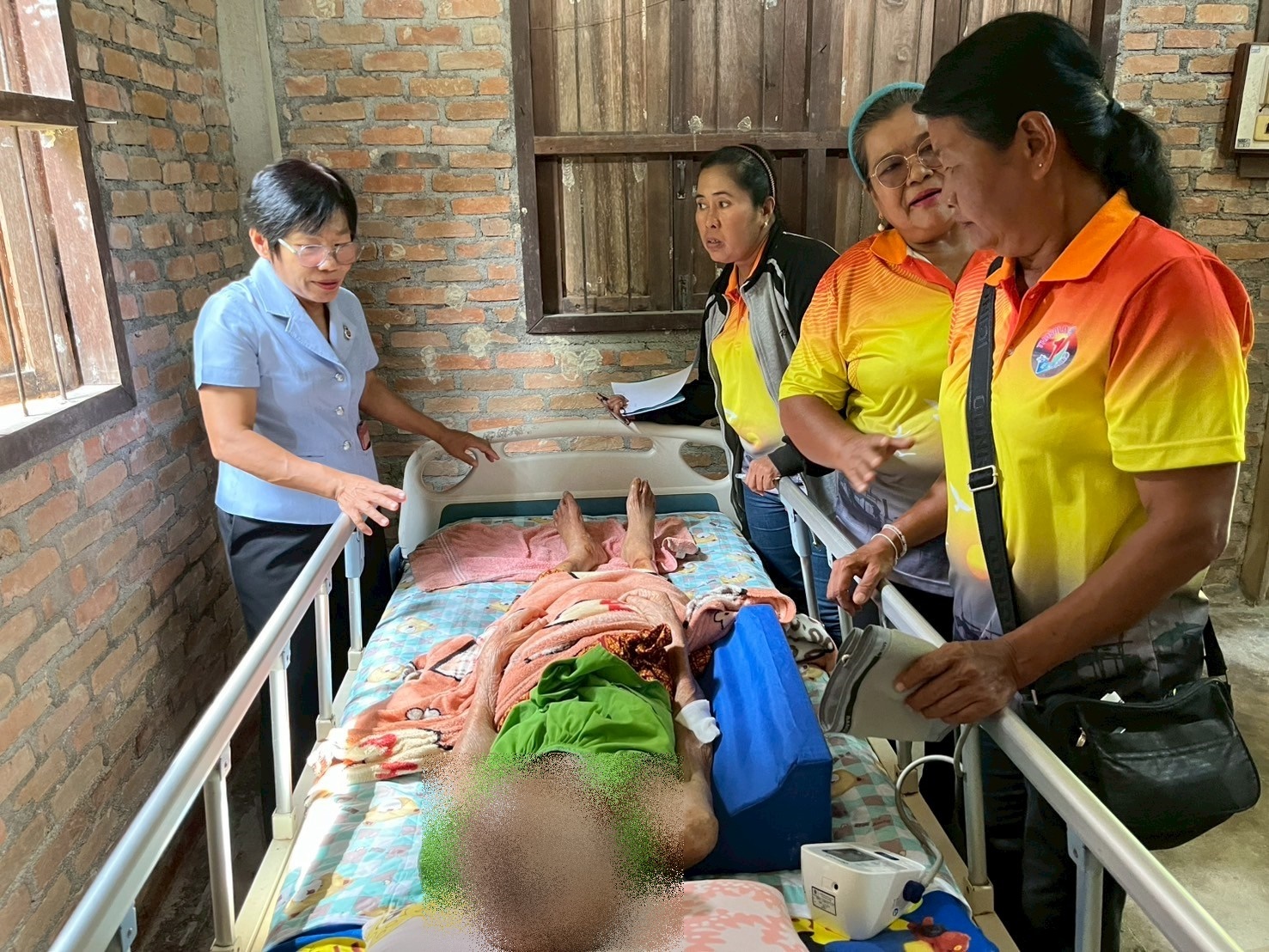
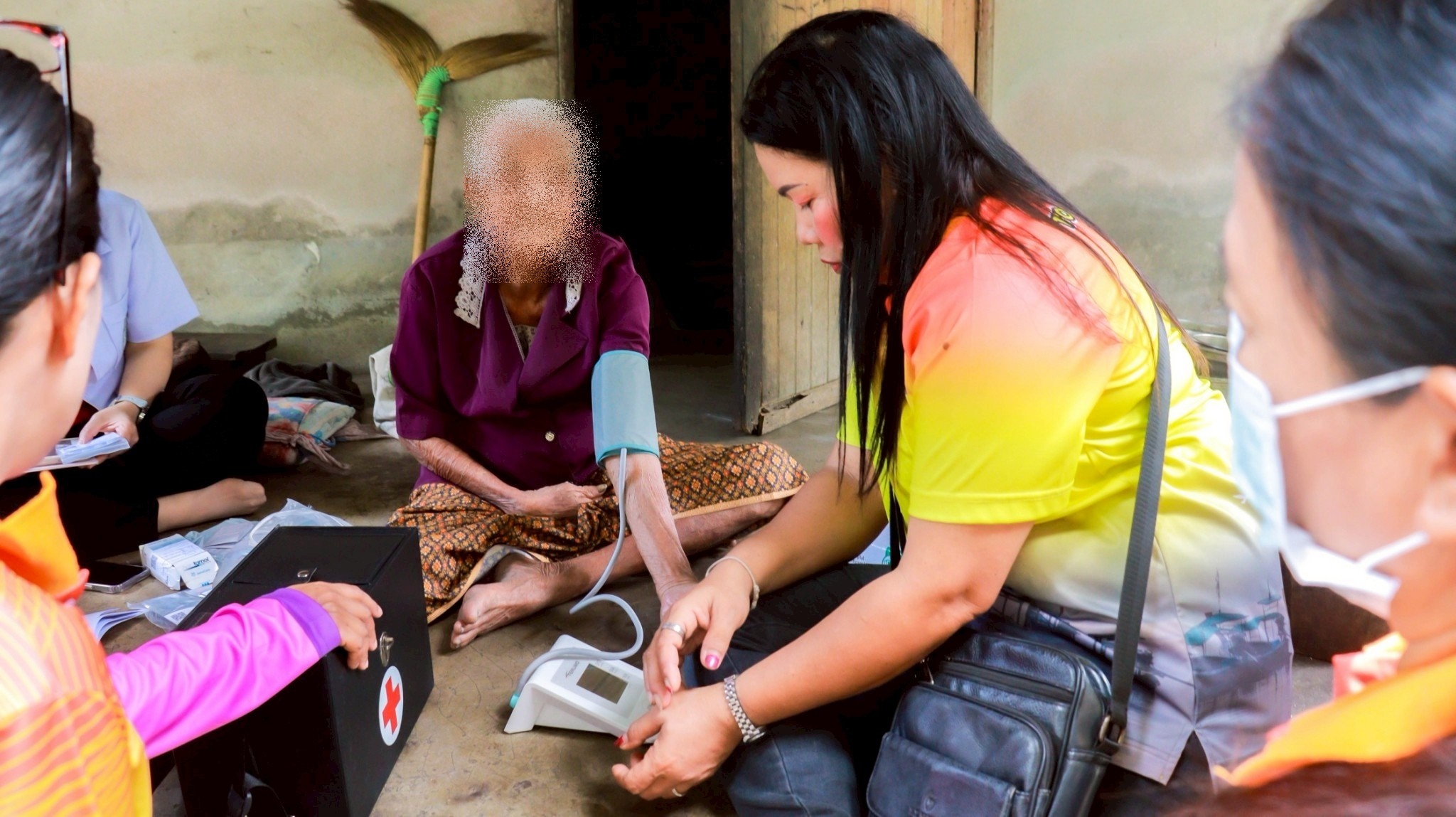
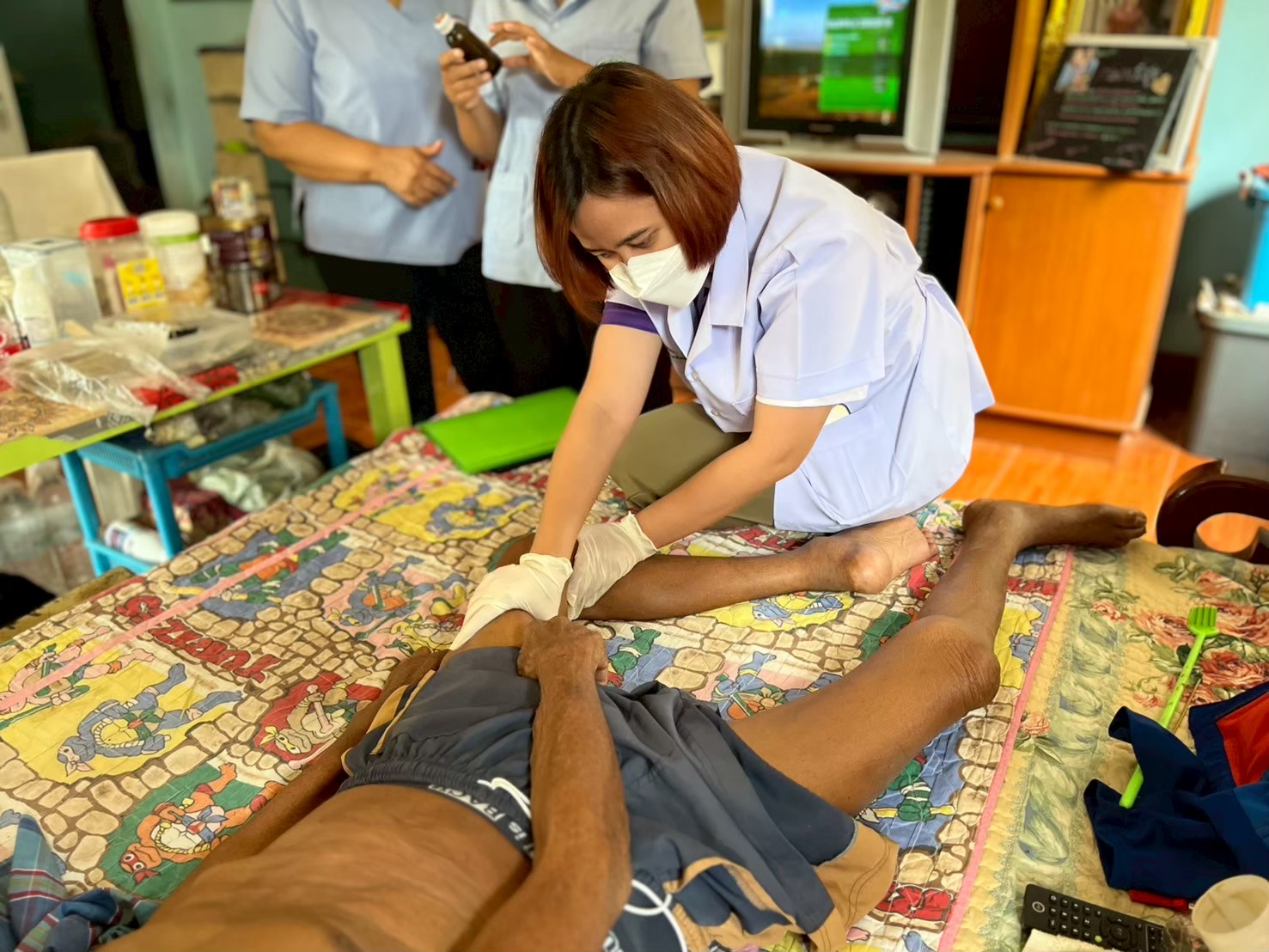
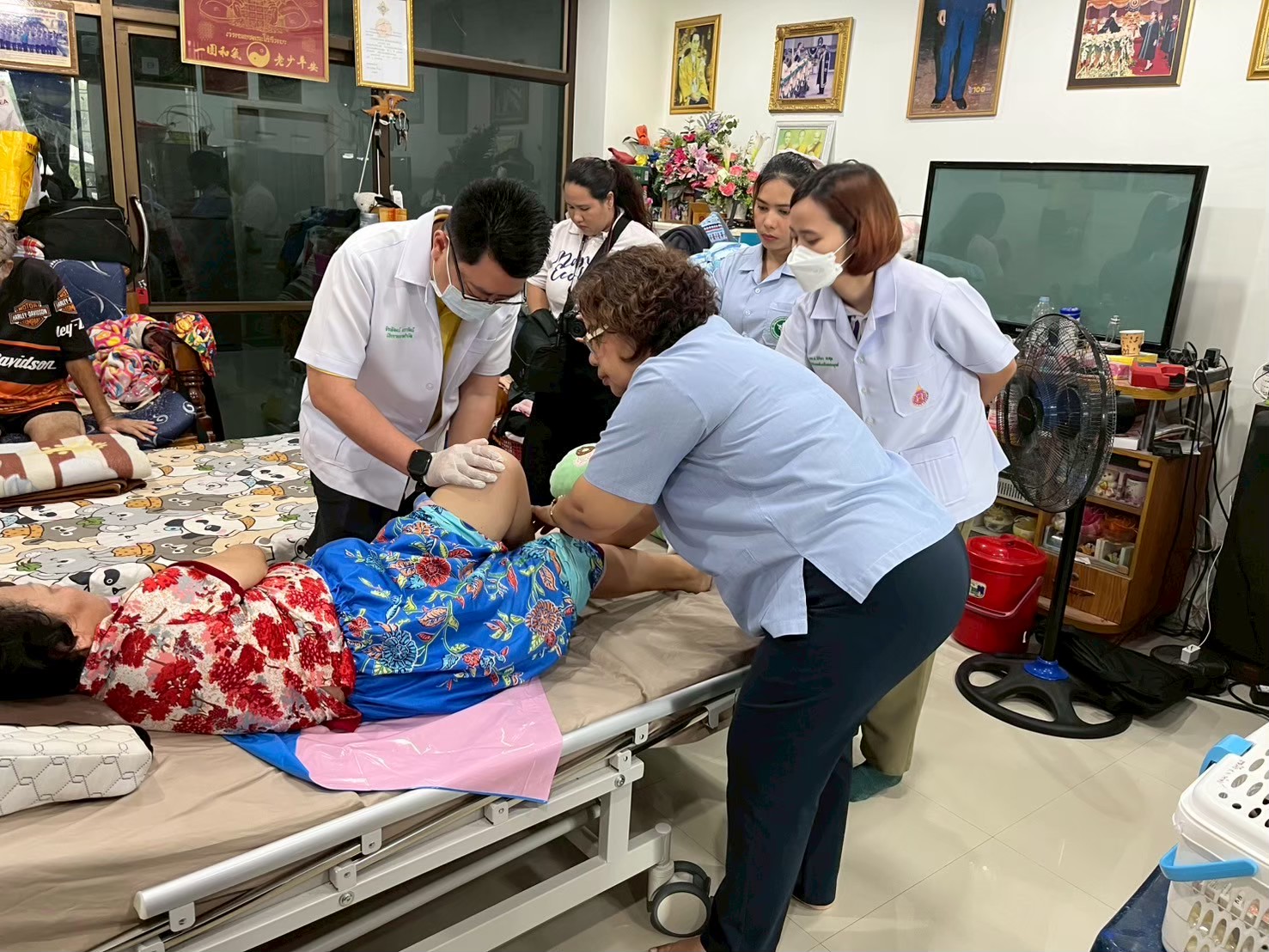
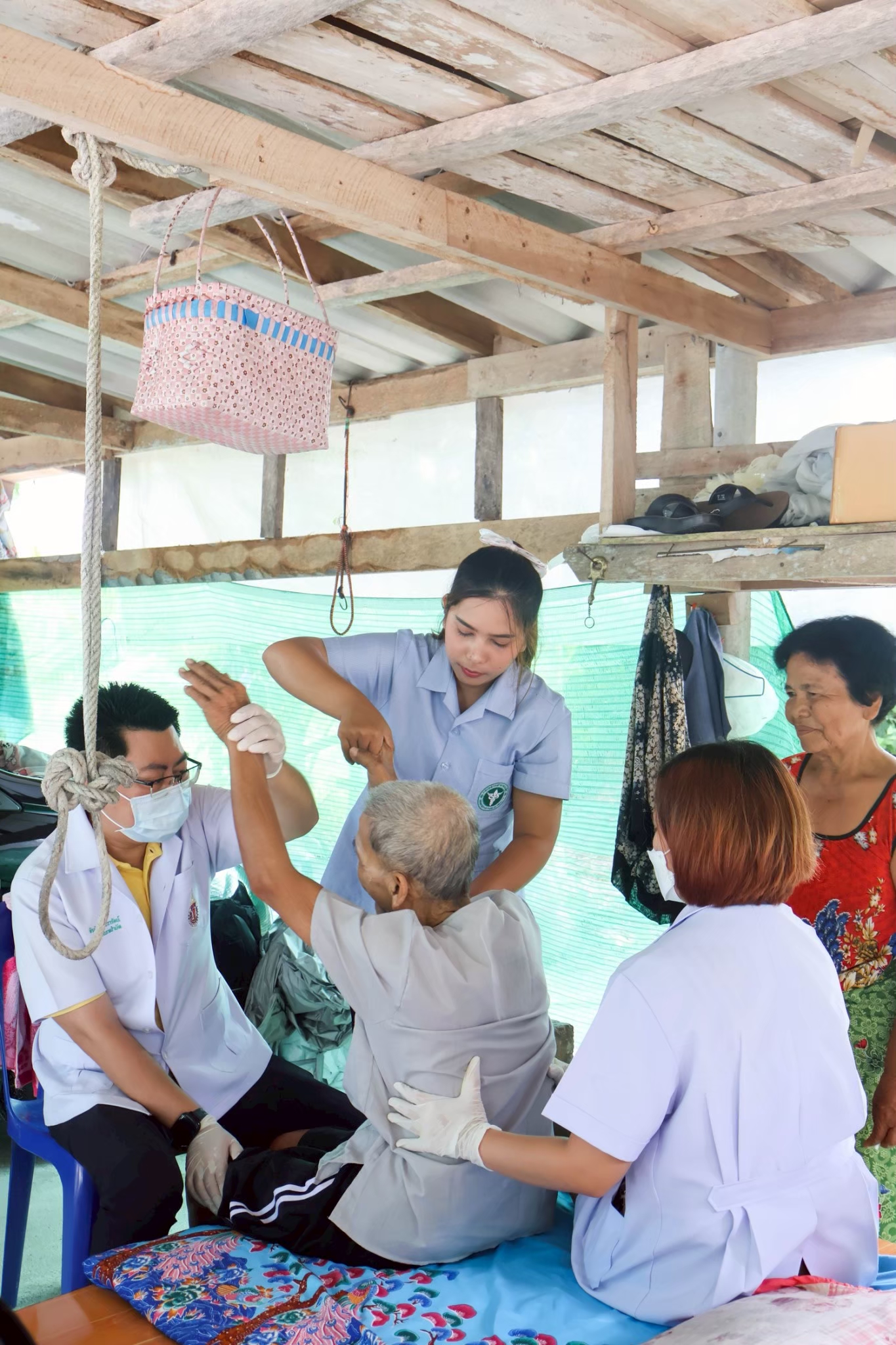
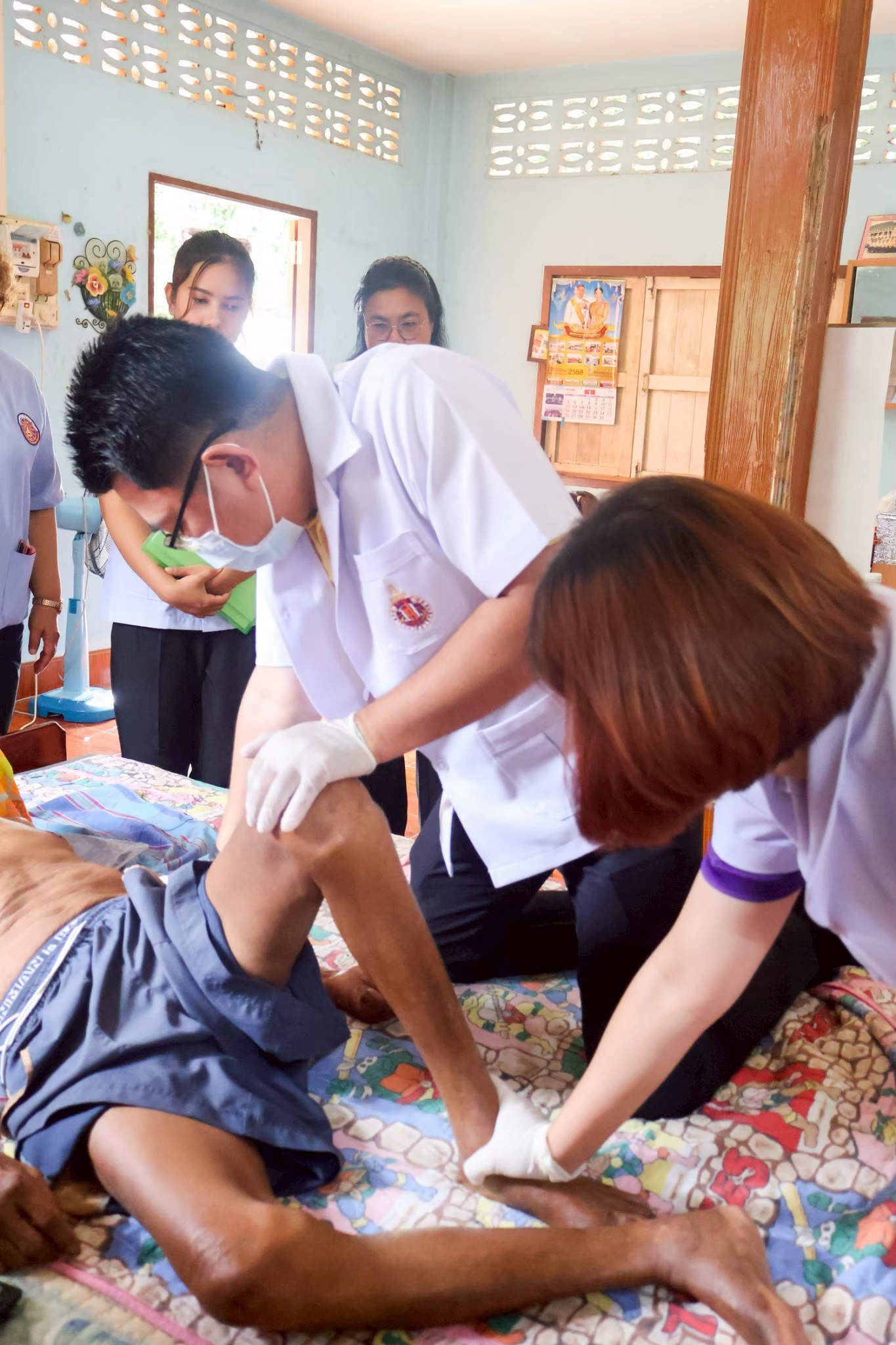
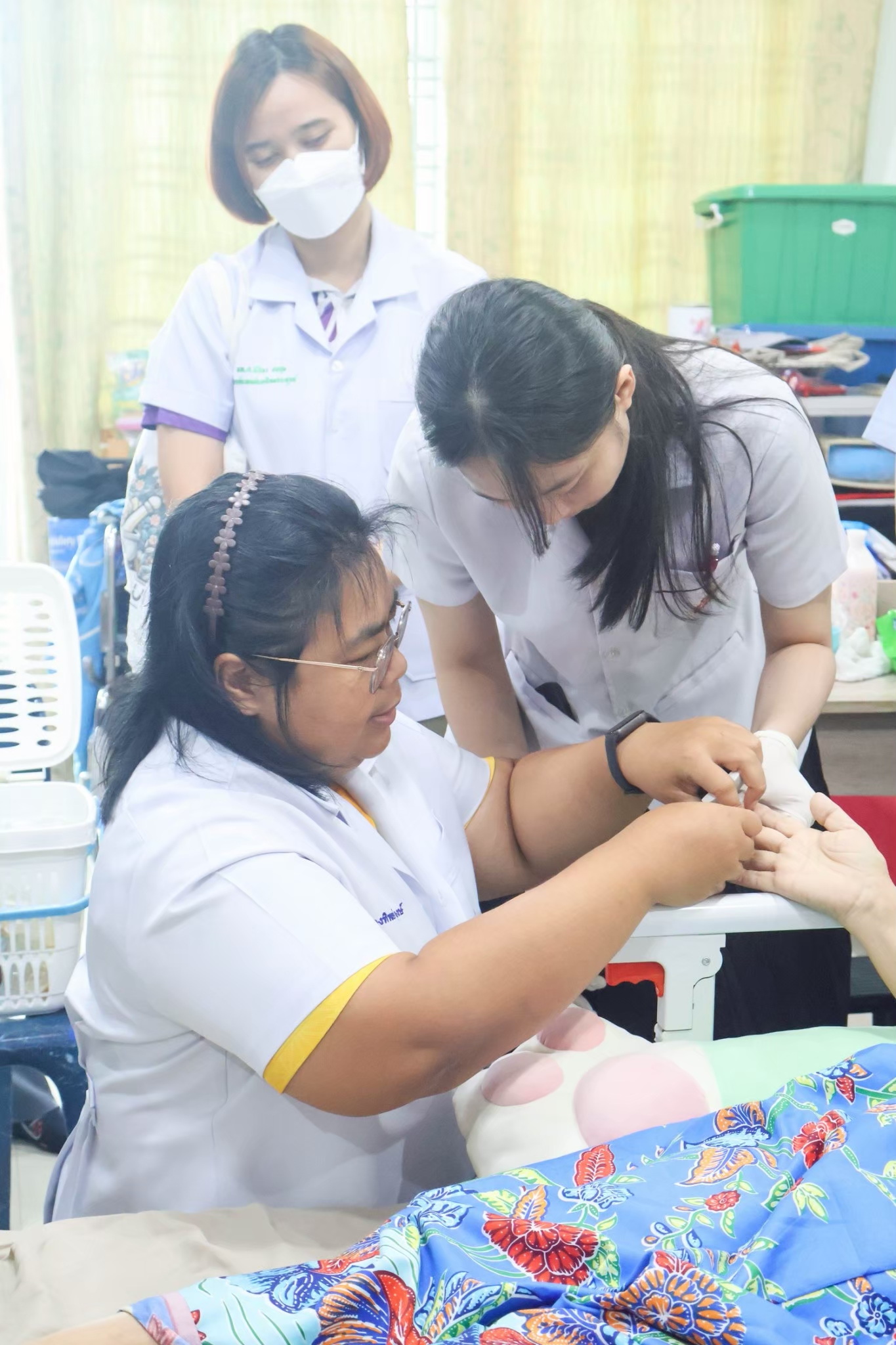
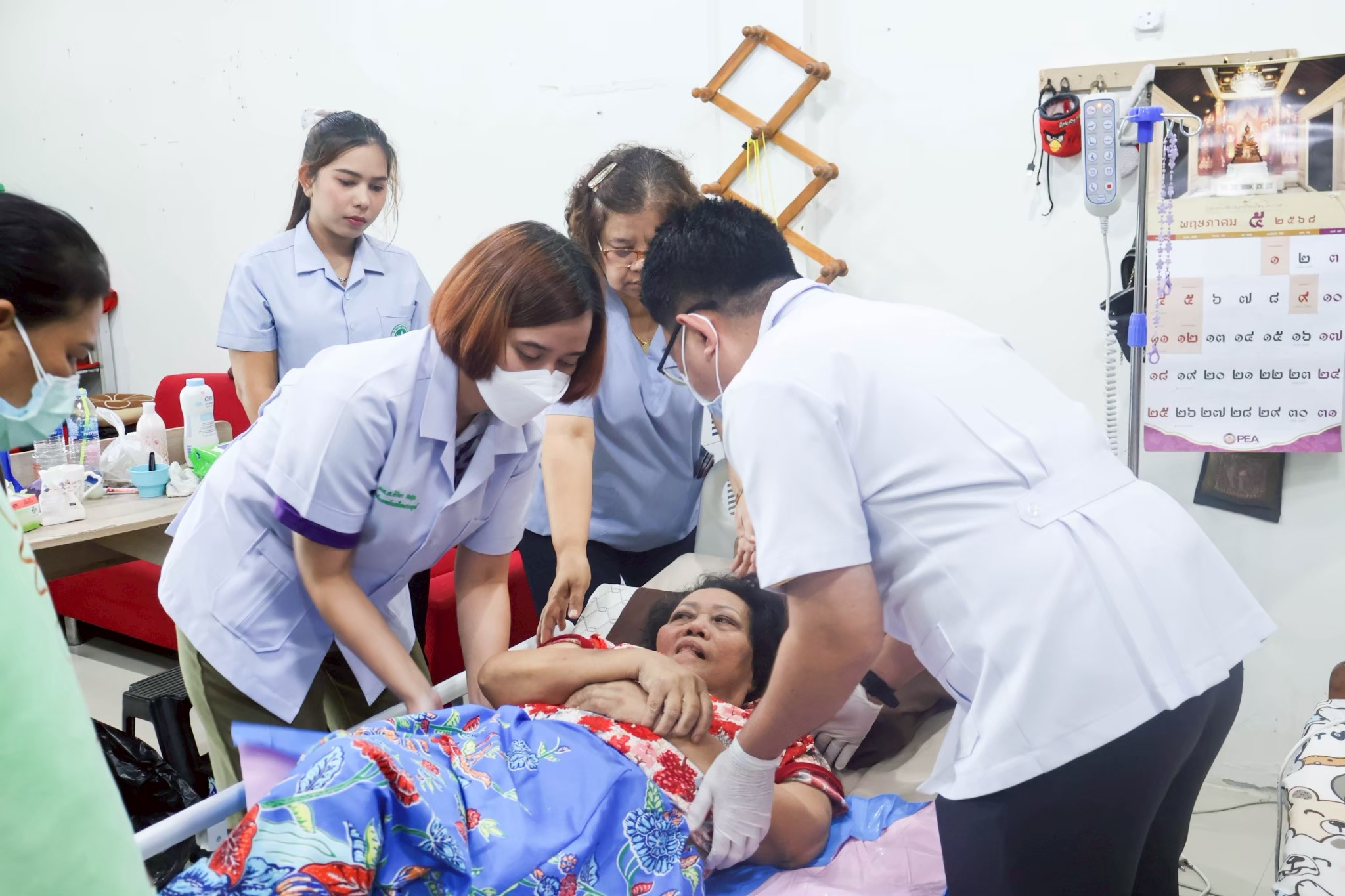
Under the Walailak Health Model, the University conducted outreach activities in Moklan Subdistrict, Tha Sala District, to provide basic health assessments, nutrition advice, physical and psychological rehabilitation, and counselling on health rights and access to health services for bedridden patients in the service area of Ban Thung Chon Subdistrict Health Promoting Hospital. The activities covered 13 households.
The multidisciplinary team also conducted home visits to bedridden patients in the service area of the Community Sathit Walailak Pattana Subdistrict Health Promoting Hospital. Services included rehabilitation, muscle exercises, muscle-relaxation massage, and speech-stimulating massage for people with communication limitations. Anaemia screening and nutrition advice were also provided, with coordination with local health services to support continuing care.
Children Living in Shelters
The University implemented a vision and strabismus screening programme for children living in shelters. Activities included visual acuity testing, strabismus screening, assessment of visual behaviour, and examination for retinal abnormalities. Caregivers and nursing staff were also trained to conduct appropriate vision screening.
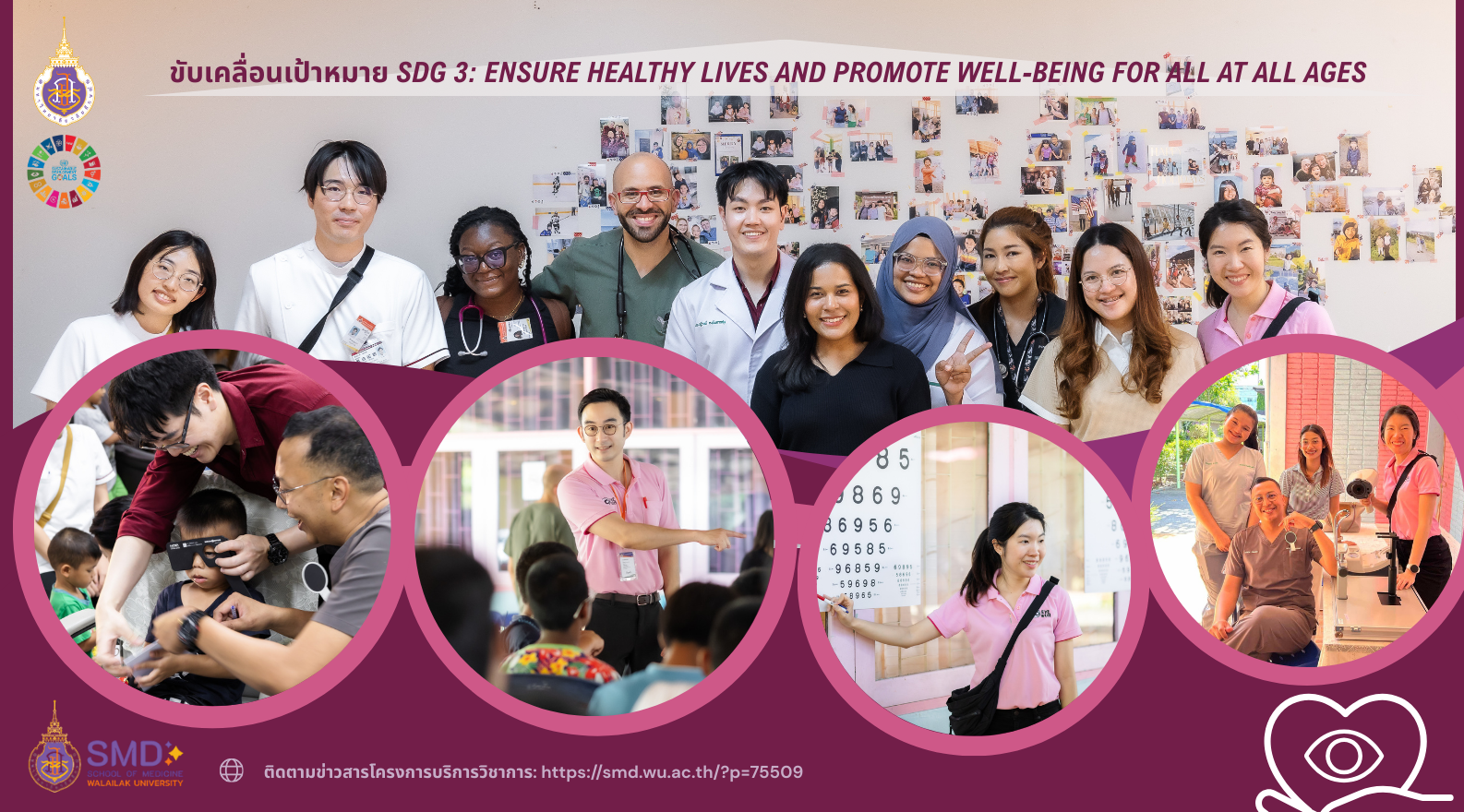
A total of 112 children living in shelters received vision screening, representing 100% coverage. In addition, 15 caregivers and nursing staff participated in training, with post-training knowledge and skills scores increasing to more than 90%. Children identified with abnormalities were referred for further care, received eyeglasses where needed, and were followed up on their treatment.
Refugee/Immigrant Communities
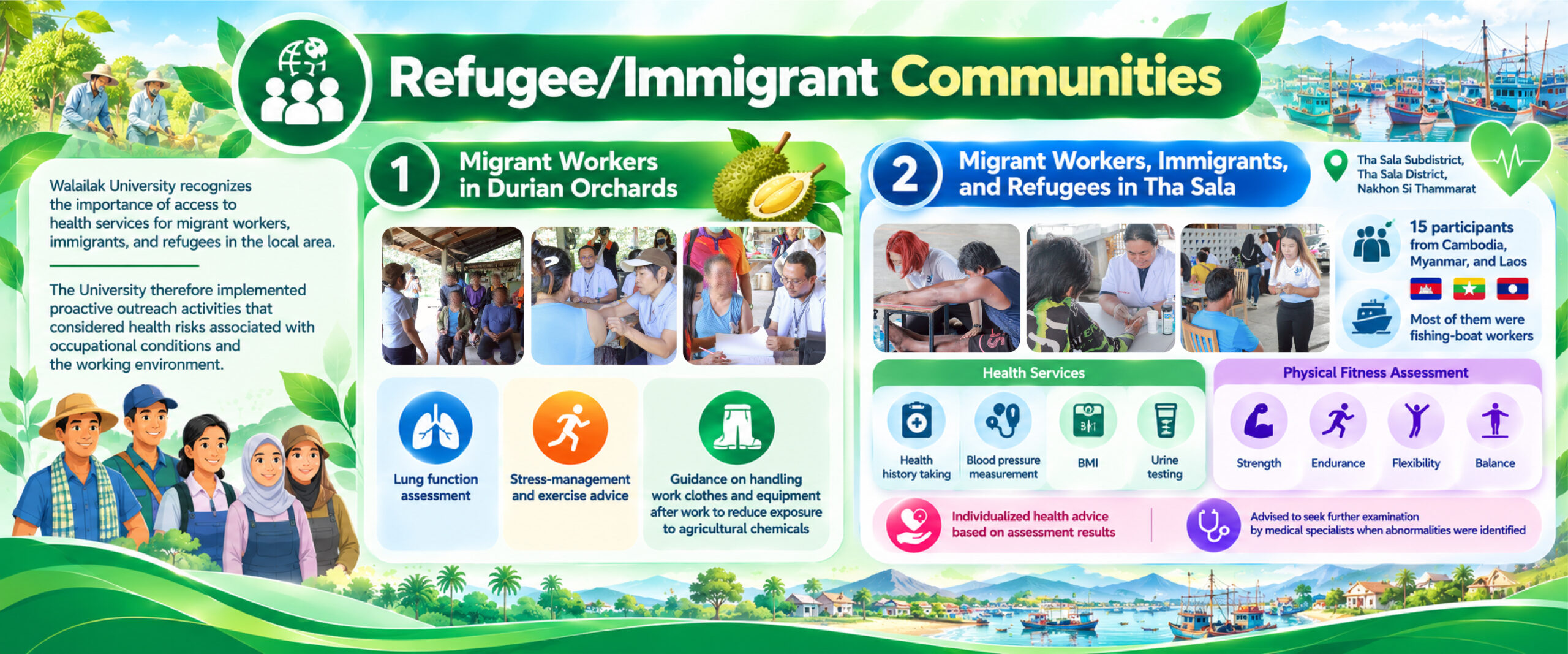
Walailak University recognizes the importance of access to health services for migrant workers, immigrants, and refugees in the local area. The University therefore implemented proactive outreach activities that considered health risks associated with occupational conditions and the working environment.
Migrant Workers in Durian Orchards
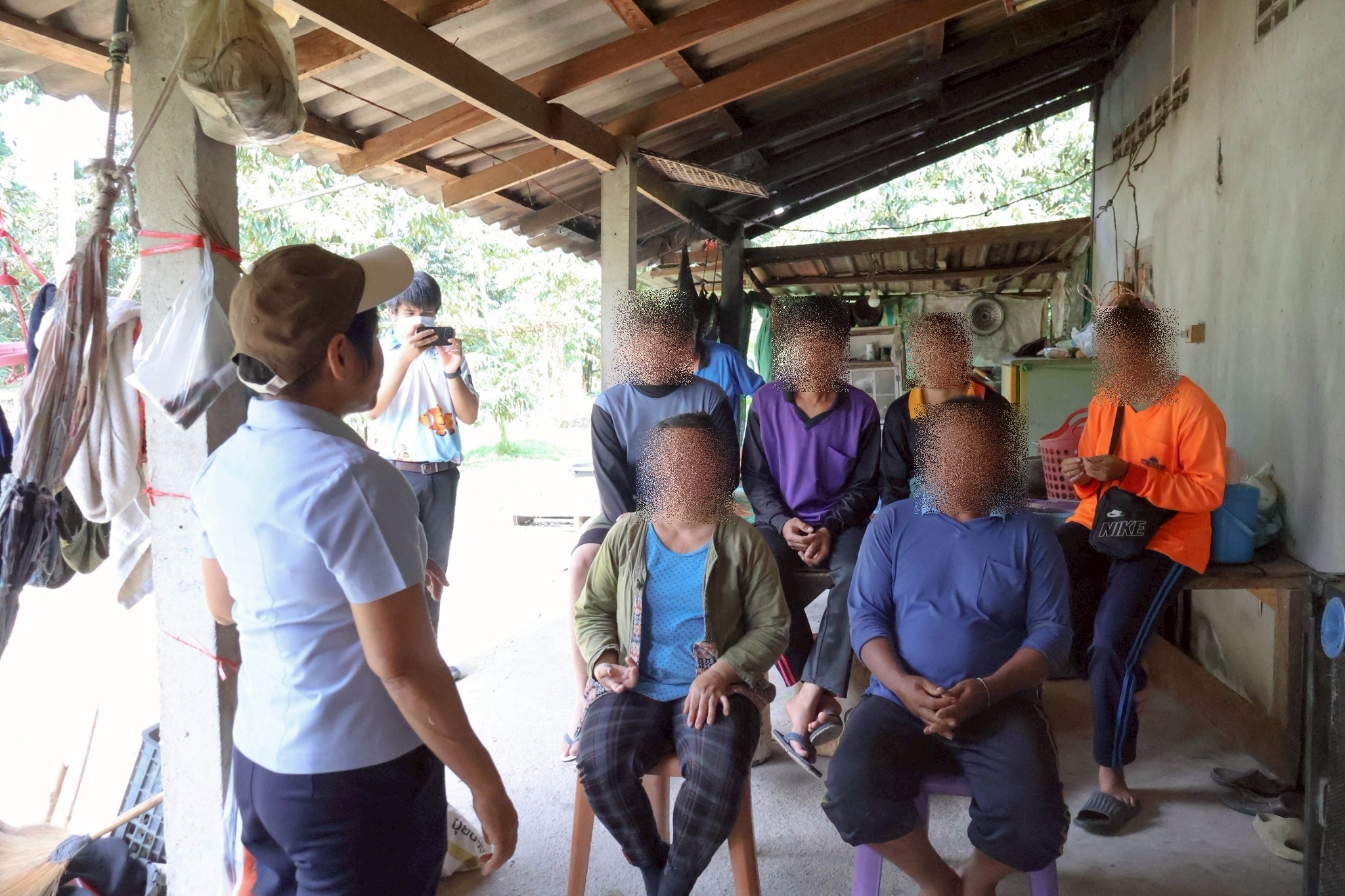
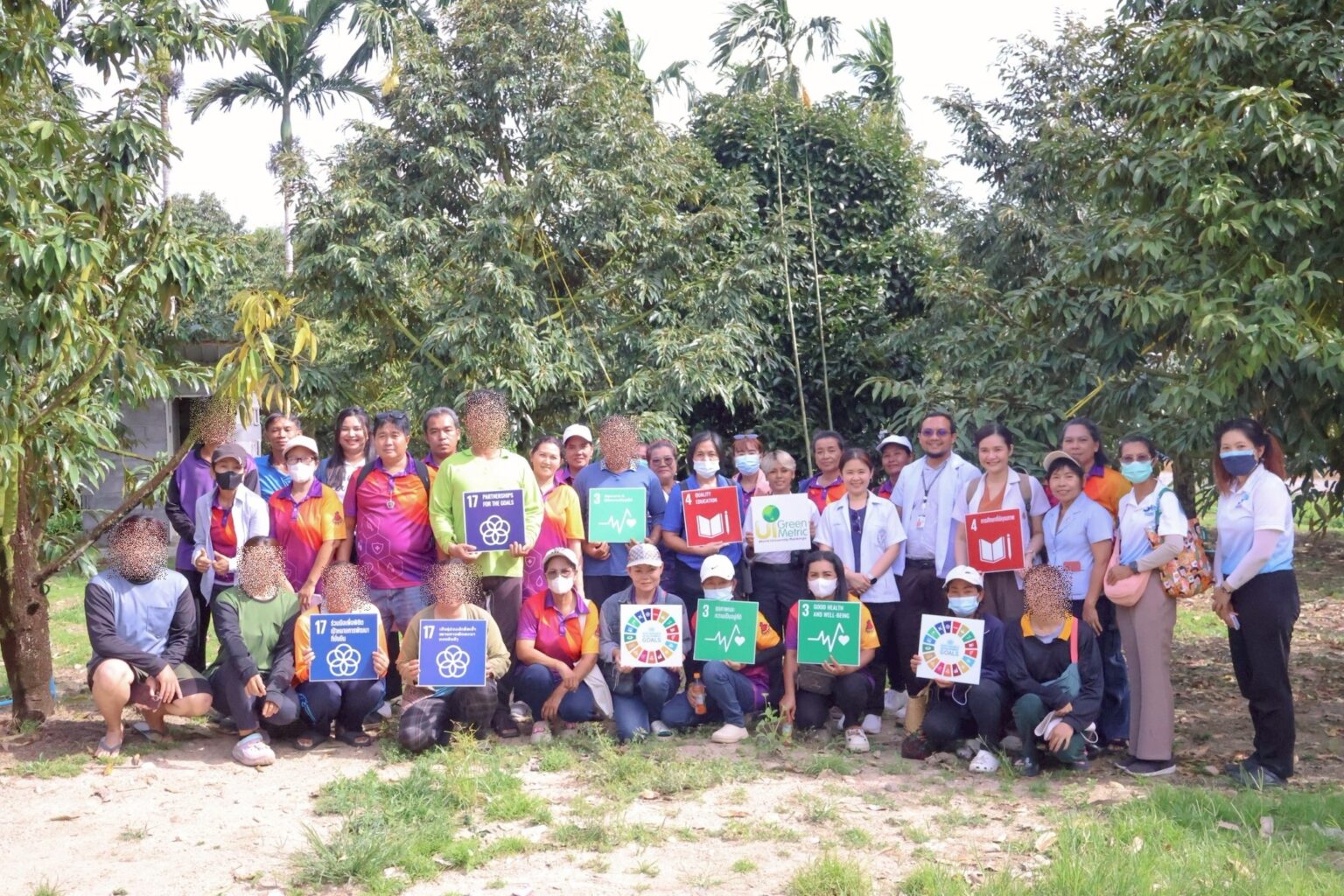
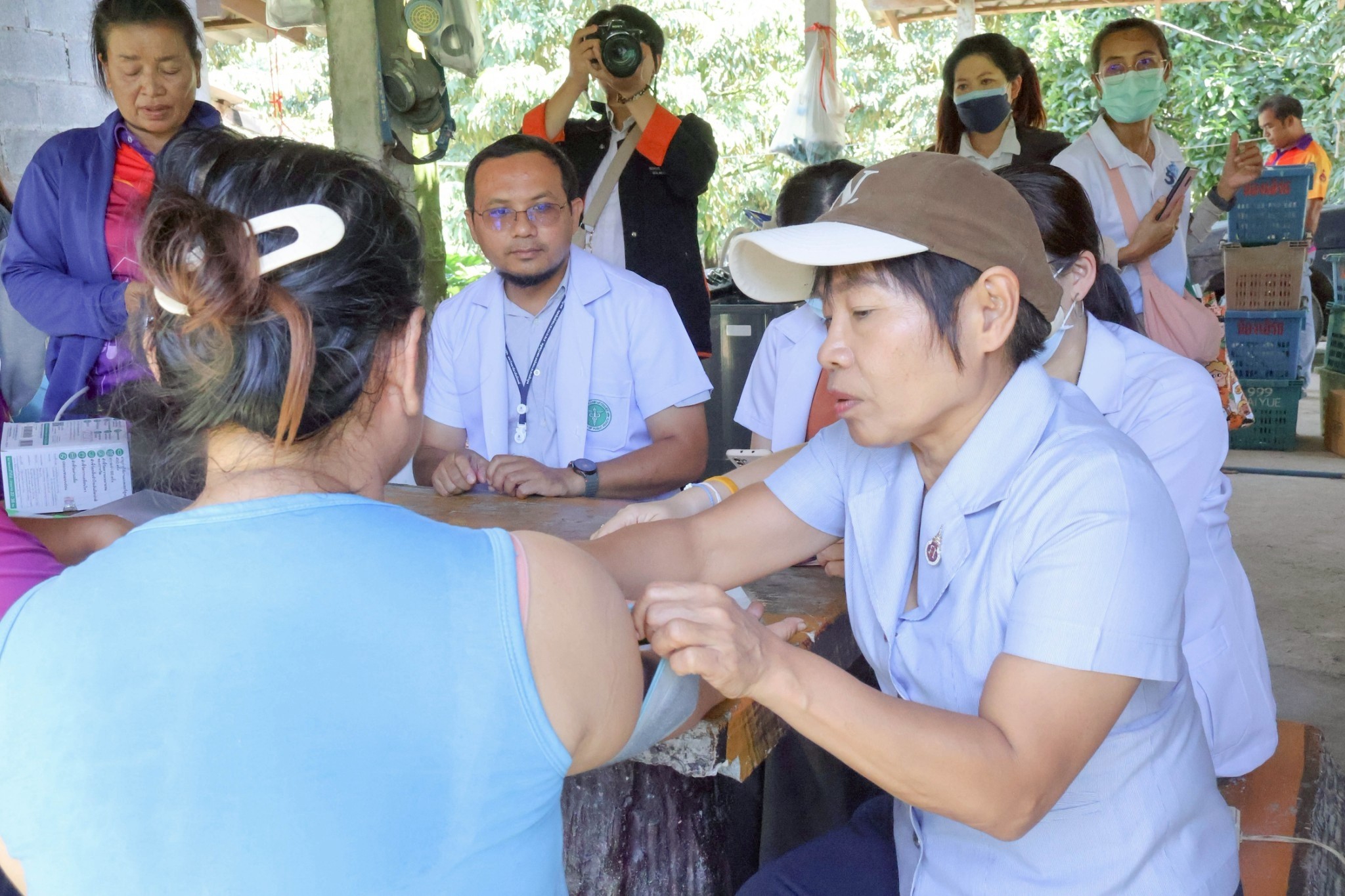
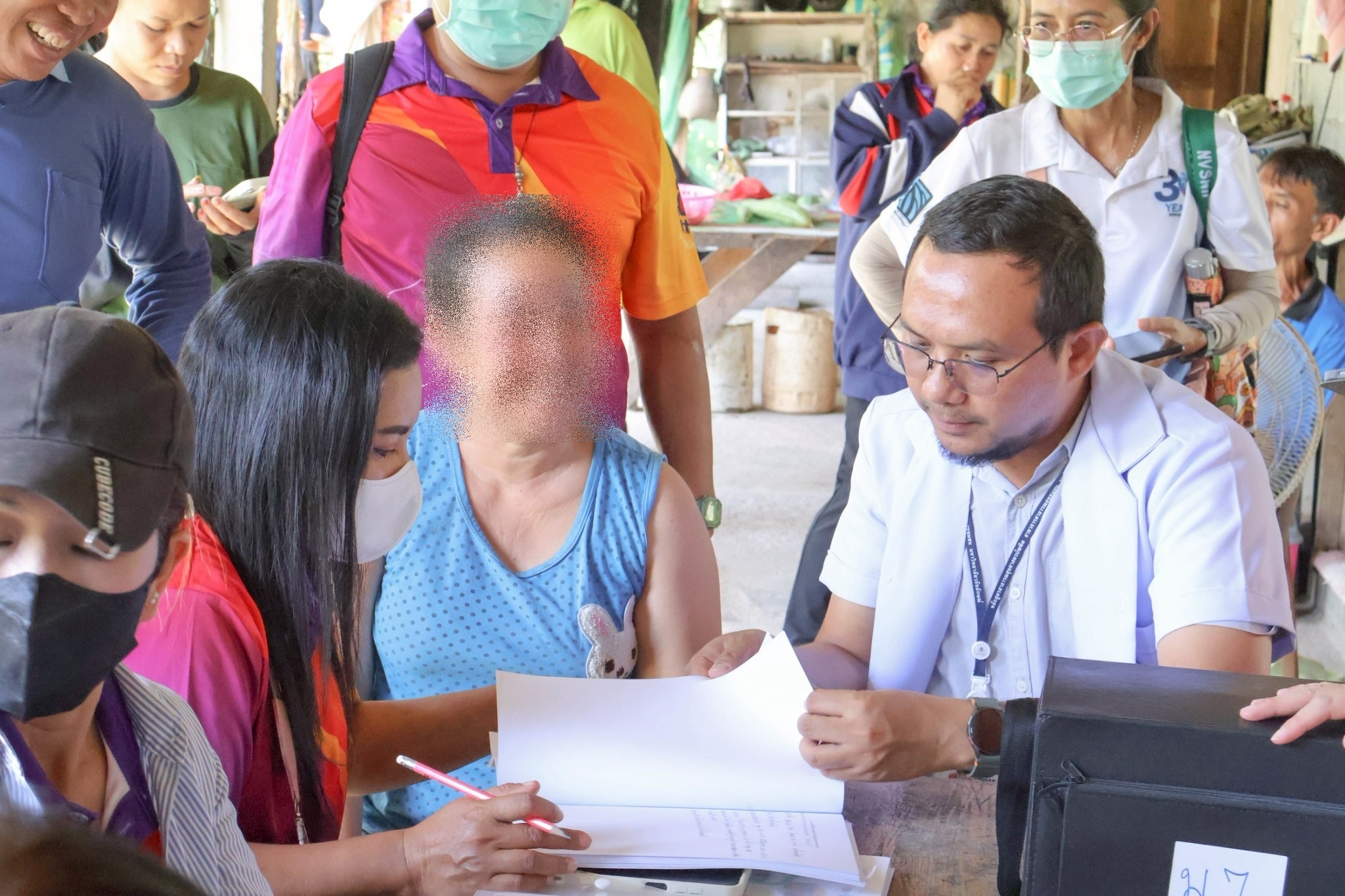
Under the Walailak Health Model: Restoring Quality of Life and Building Sustainable Well-being, the University conducted health outreach activities for migrant workers in durian orchards. The activities included assessment of lung function, stress-management and exercise advice, and guidance on handling work clothes and equipment after work to reduce exposure to chemicals associated with agricultural work.
Migrant Workers, Immigrants, and Refugees in Tha Sala
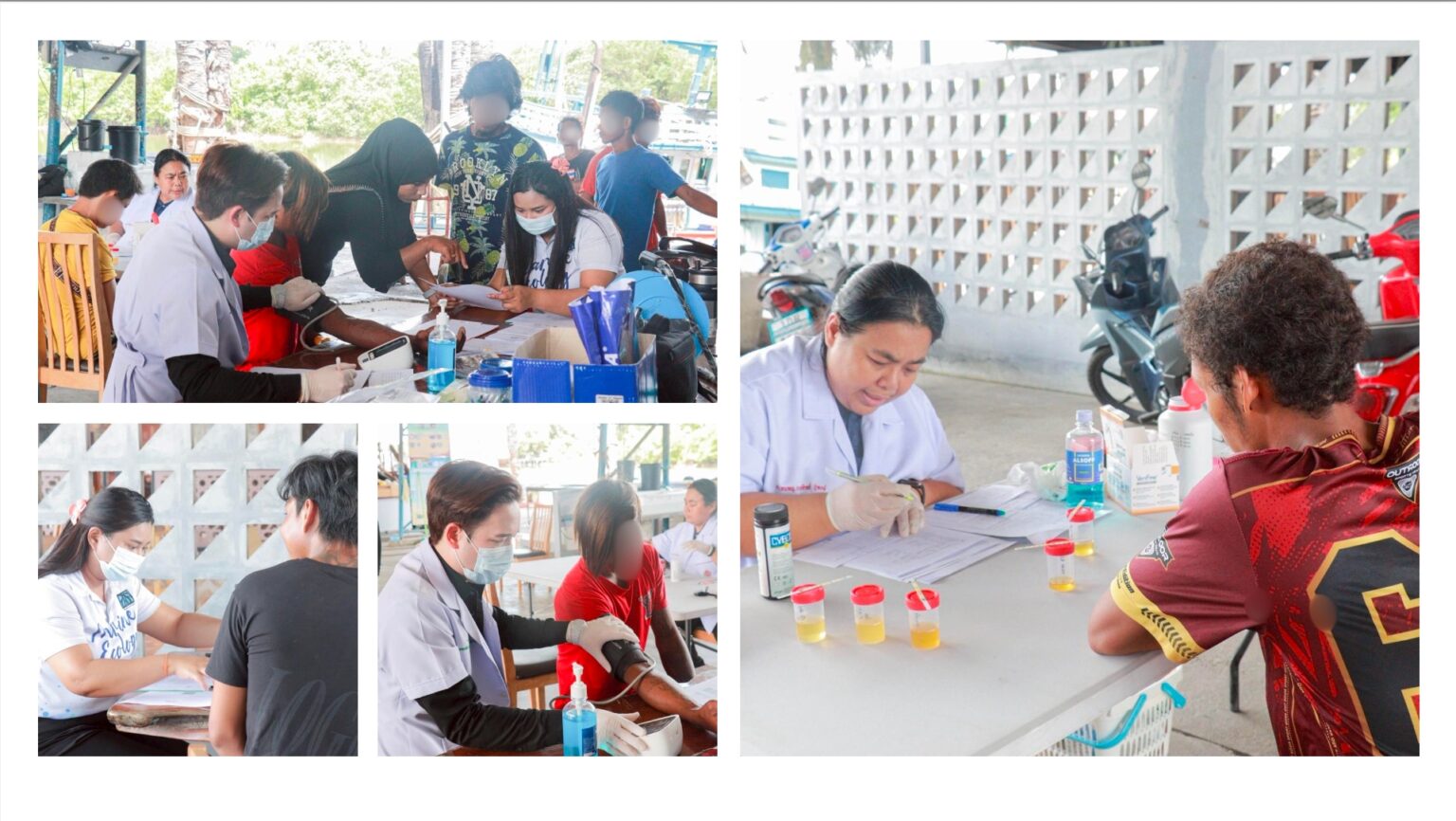
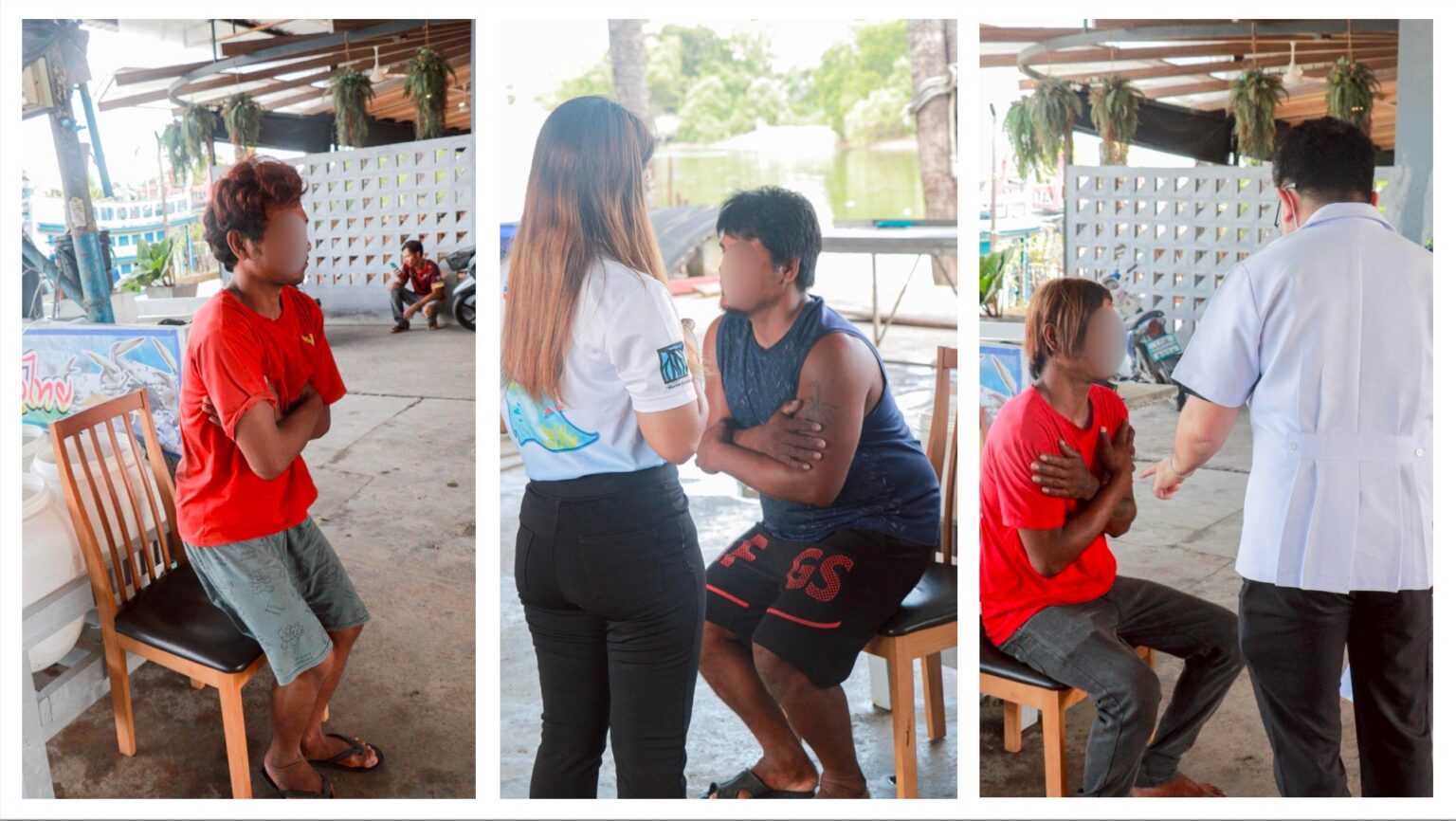
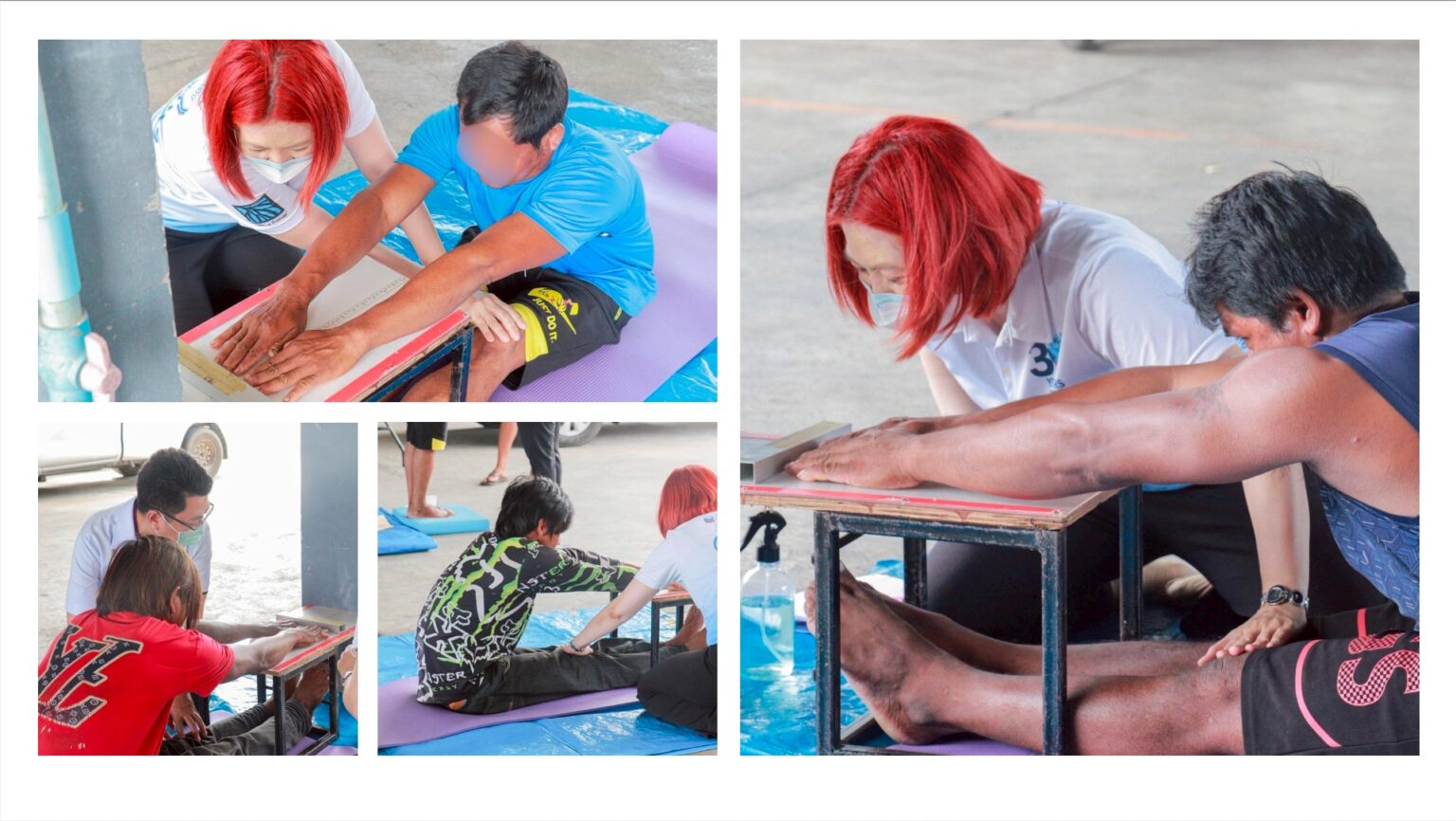
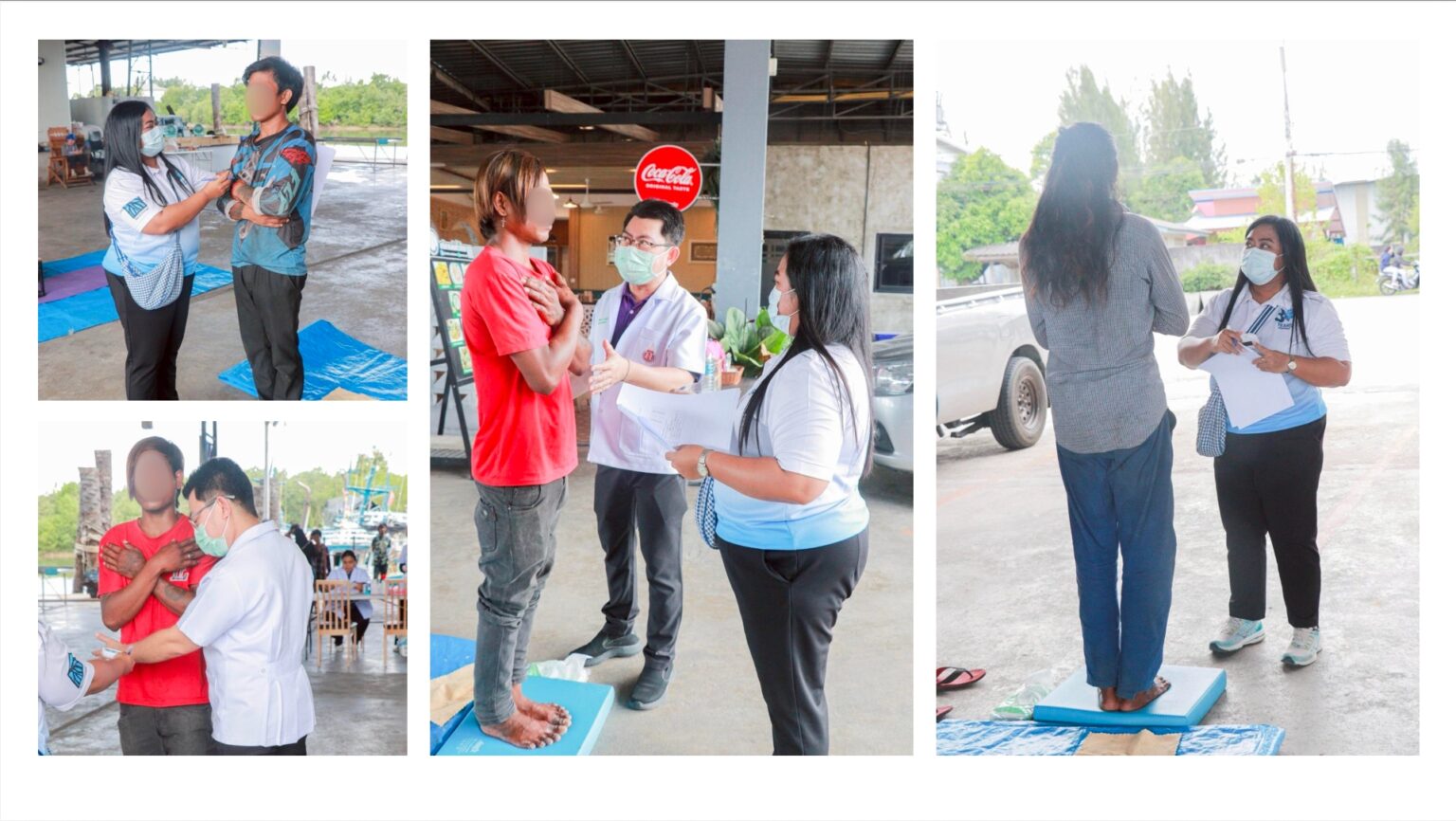
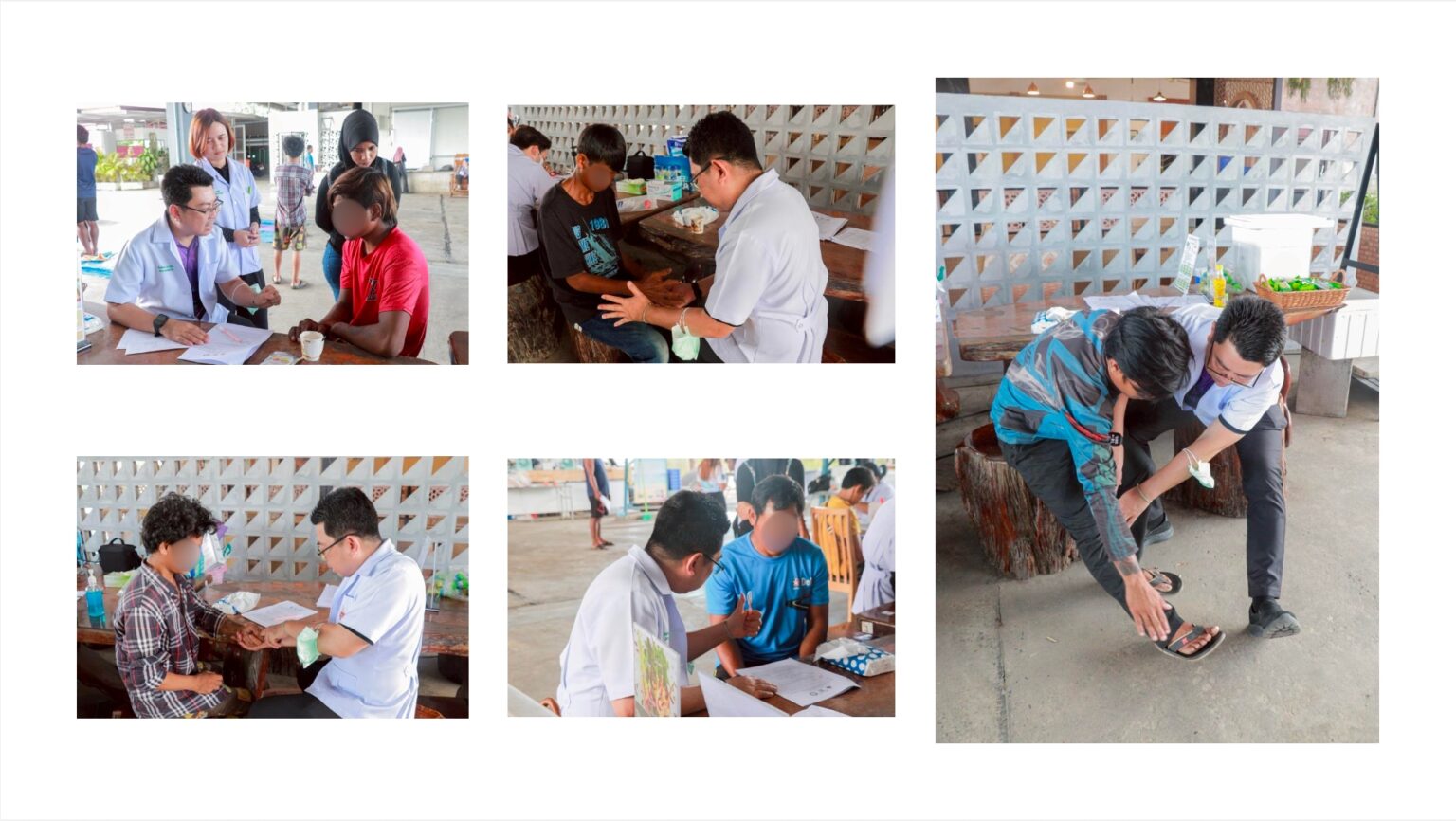
Walailak University provided proactive health services to migrant workers, immigrants, and refugees in Tha Sala Subdistrict, Tha Sala District, Nakhon Si Thammarat, reaching 15 participants from Cambodia, Myanmar, and Laos, most of whom were fishing-boat workers. The activities integrated expertise from Medical Technology, Physical Therapy, and Applied Thai Traditional Medicine.
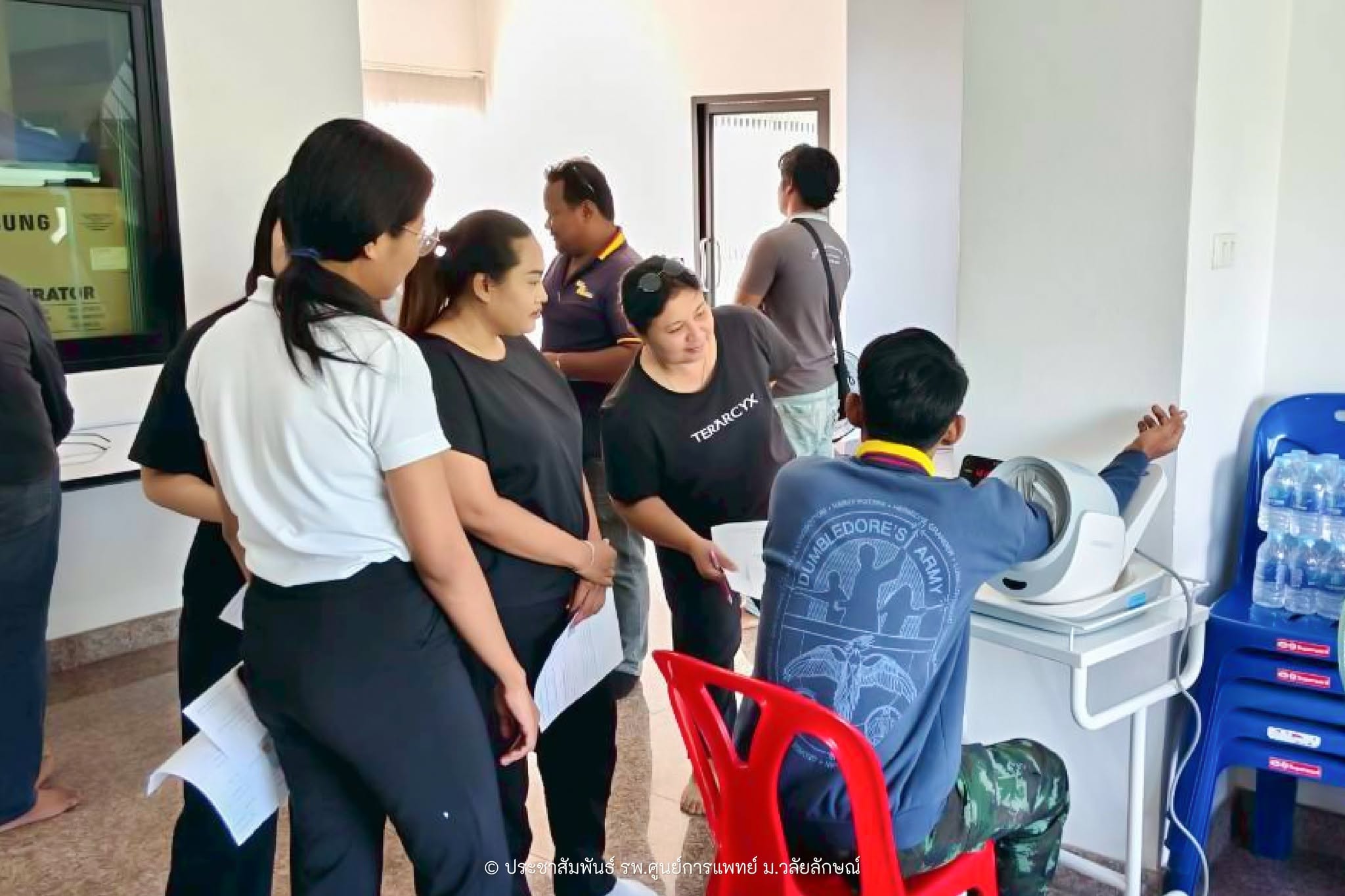
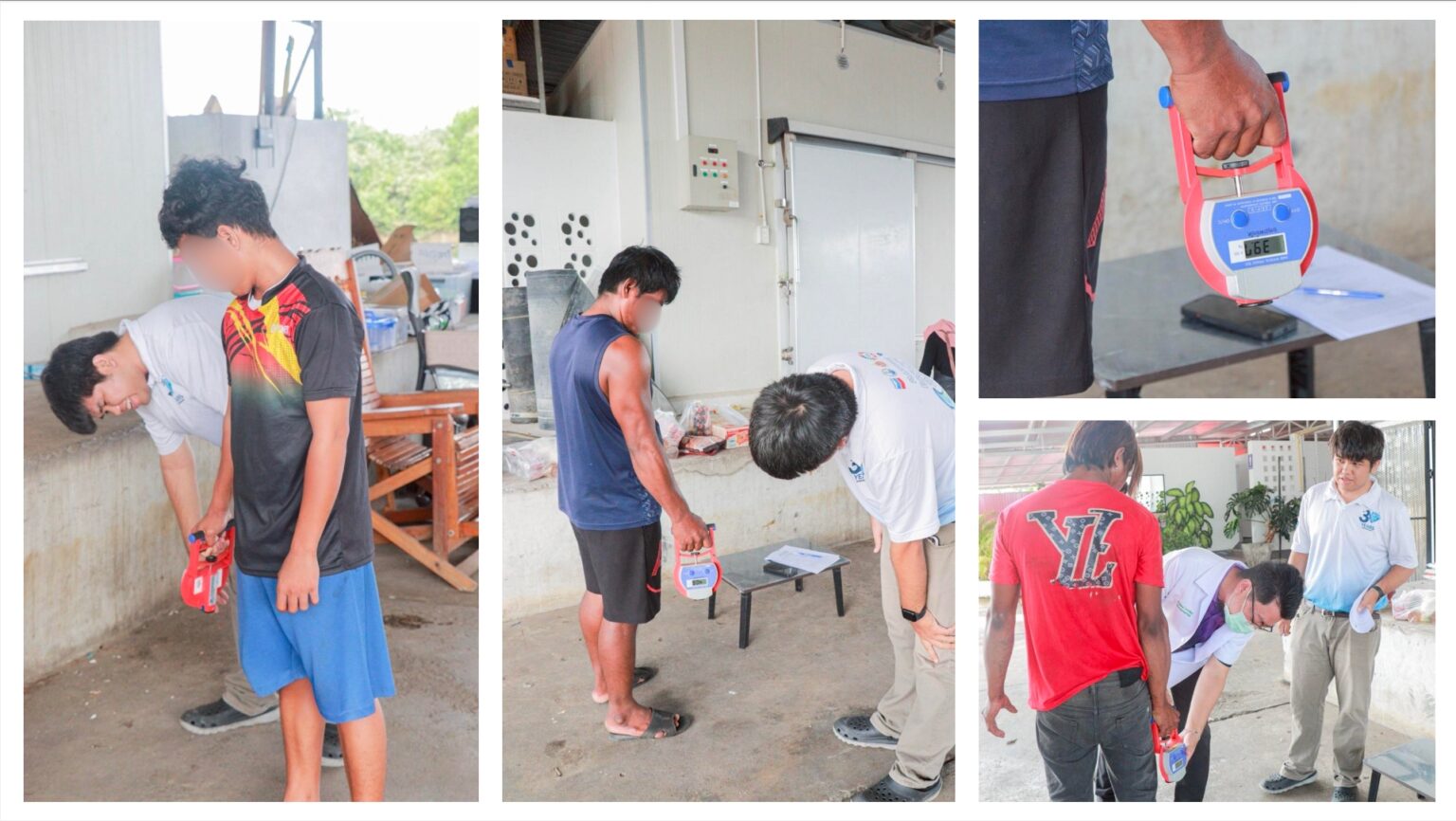
The outreach activities included health history taking, blood pressure and body mass index (BMI) measurements, urine testing, and physical fitness assessments covering strength, endurance, flexibility, and balance. Participants received individualized health advice based on their assessment results and were advised to seek further examination by medical specialists when abnormalities were identified.
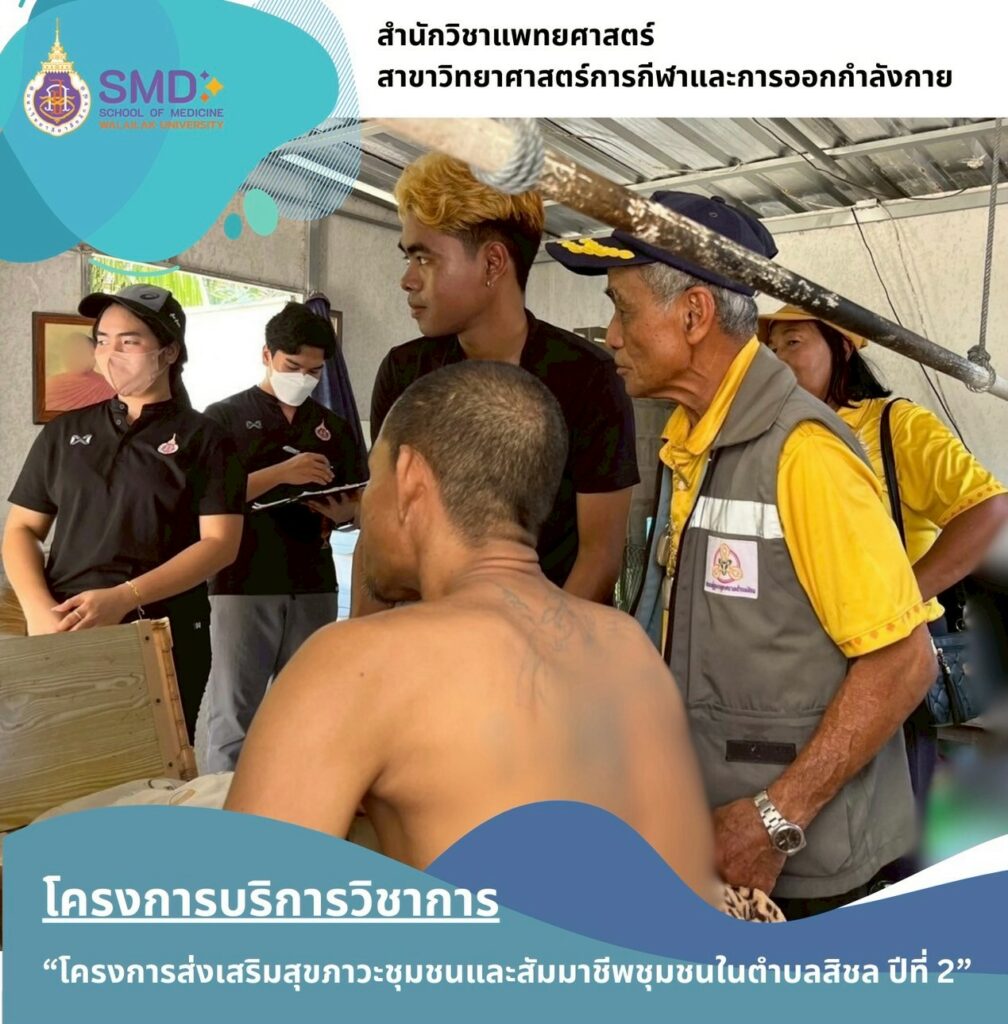
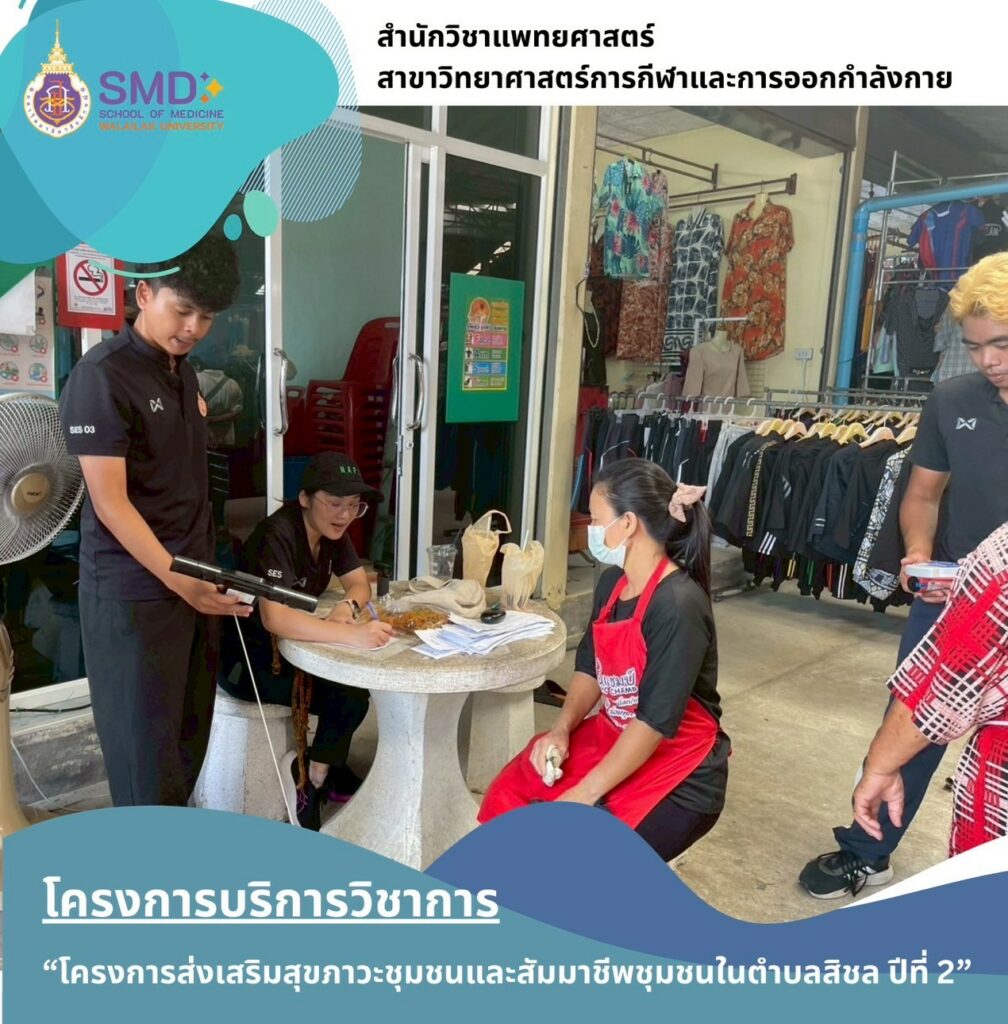
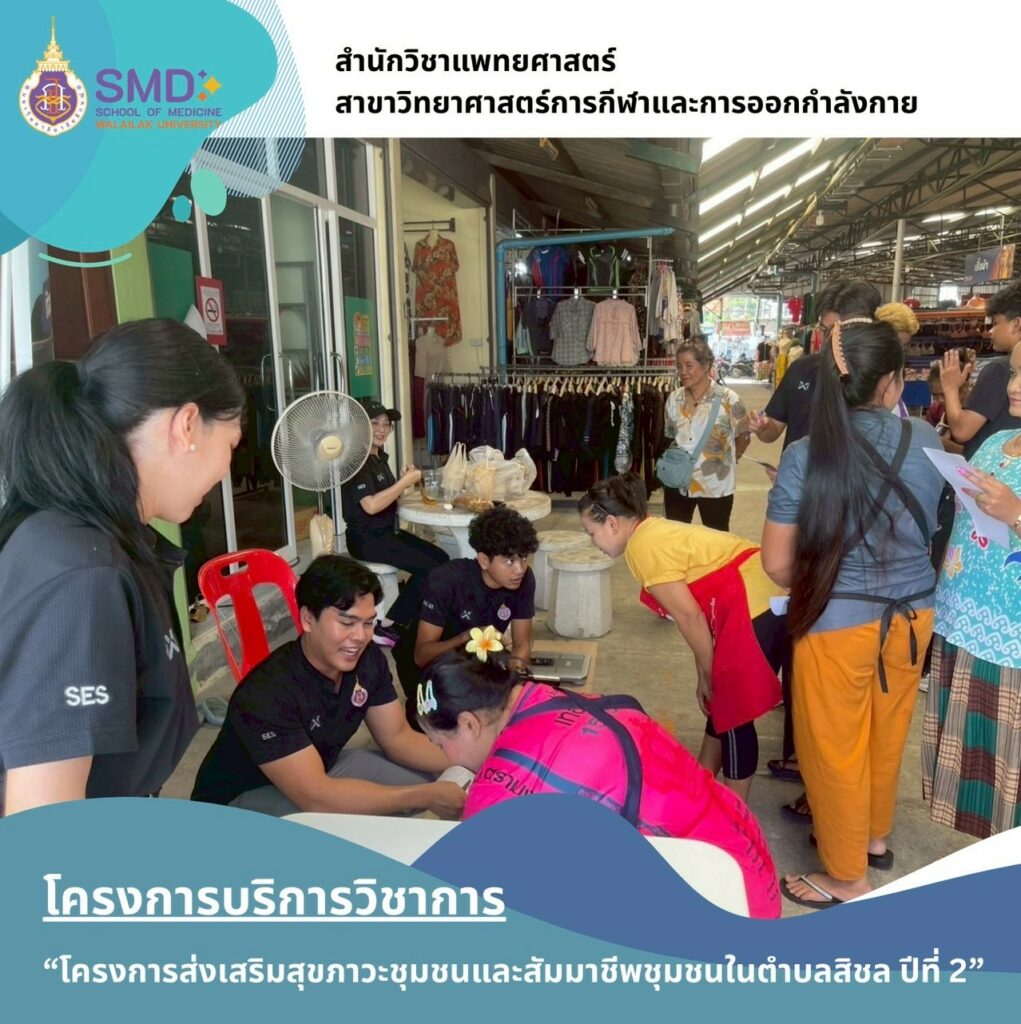
In addition, in Sichon Subdistrict, the University conducted physical fitness testing and provided health-care education for migrant workers living in the area to promote physical well-being and support their ability to work safely and appropriately.
Promoting Health and Well-being for All
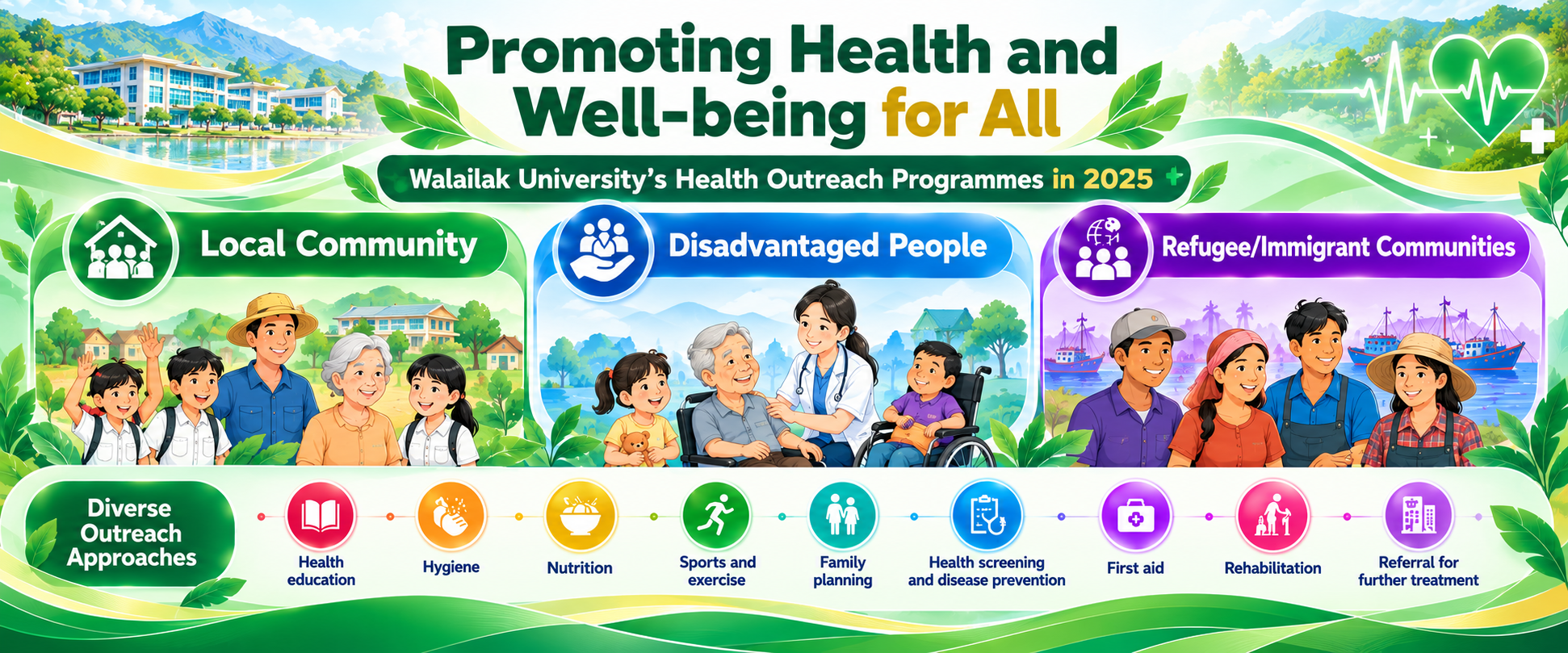
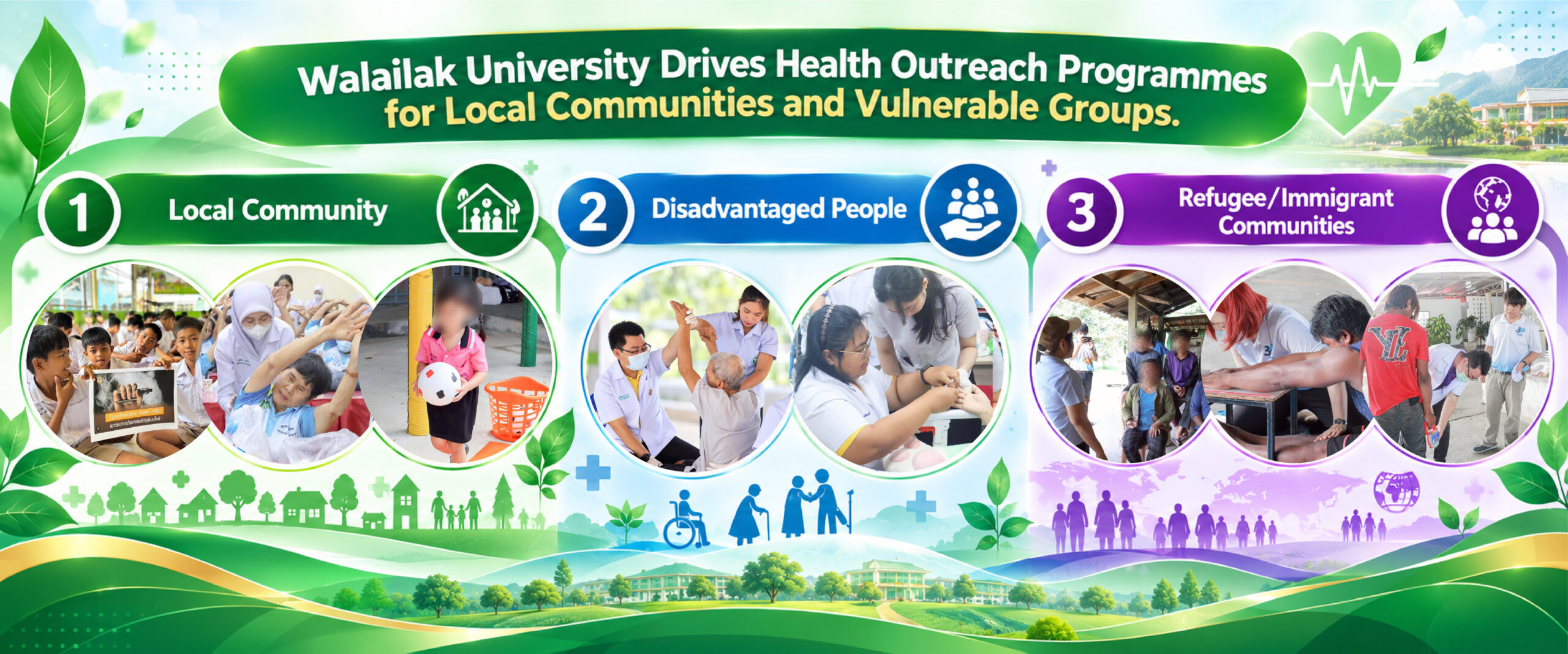
Walailak University’s Health Outreach Programmes in 2025 covered the three key community groups identified in the programme framework: the Local Community, Disadvantaged People, and Refugee/Immigrant Communities. Through diverse outreach approaches—including health education, hygiene, nutrition, sports and exercise, family planning, health screening and disease prevention, first aid, rehabilitation, and referral for further treatment—the University brought the expertise of its faculty members, staff, students, and multidisciplinary teams directly into communities. These outreach programmes and projects expanded opportunities for people to access health knowledge and services and supported improved health and well-being across different age groups and community groups.