Walailak University Implements Interventions to Prevent and Alleviate Hunger and Promote Food Access among Students
Walailak University Implements Interventions to Prevent and Alleviate Hunger and Promote Food Access among Students
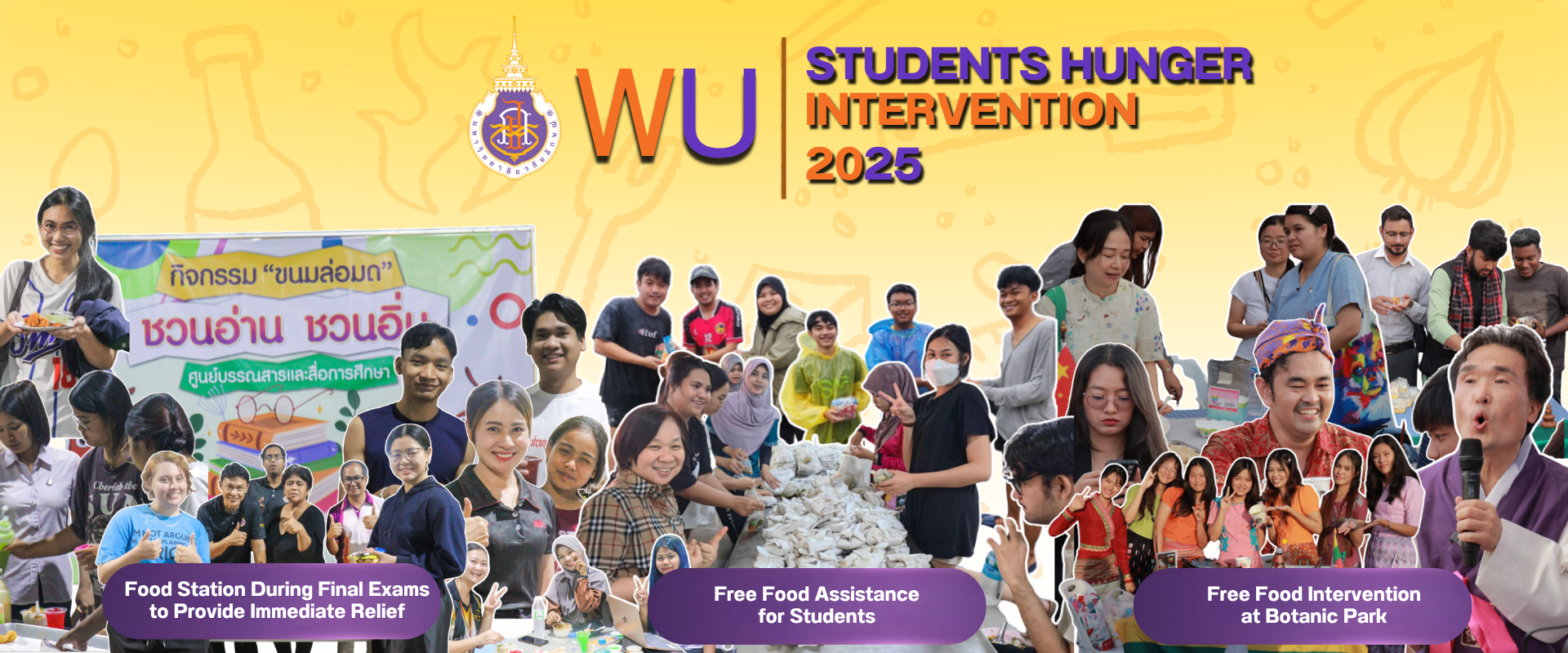
Walailak University implements measures and activities aimed at preventing and alleviating hunger among students (Students hunger interventions) through the provision of food and beverages to students in situations where access to food may be limited. These interventions focus on providing direct and practical assistance that is targeted, accessible, and responsive to students’ needs during periods when they may be at greater risk of food shortages, including examination periods, disasters or emergencies, as well as activities that provide students with access to food at no cost.
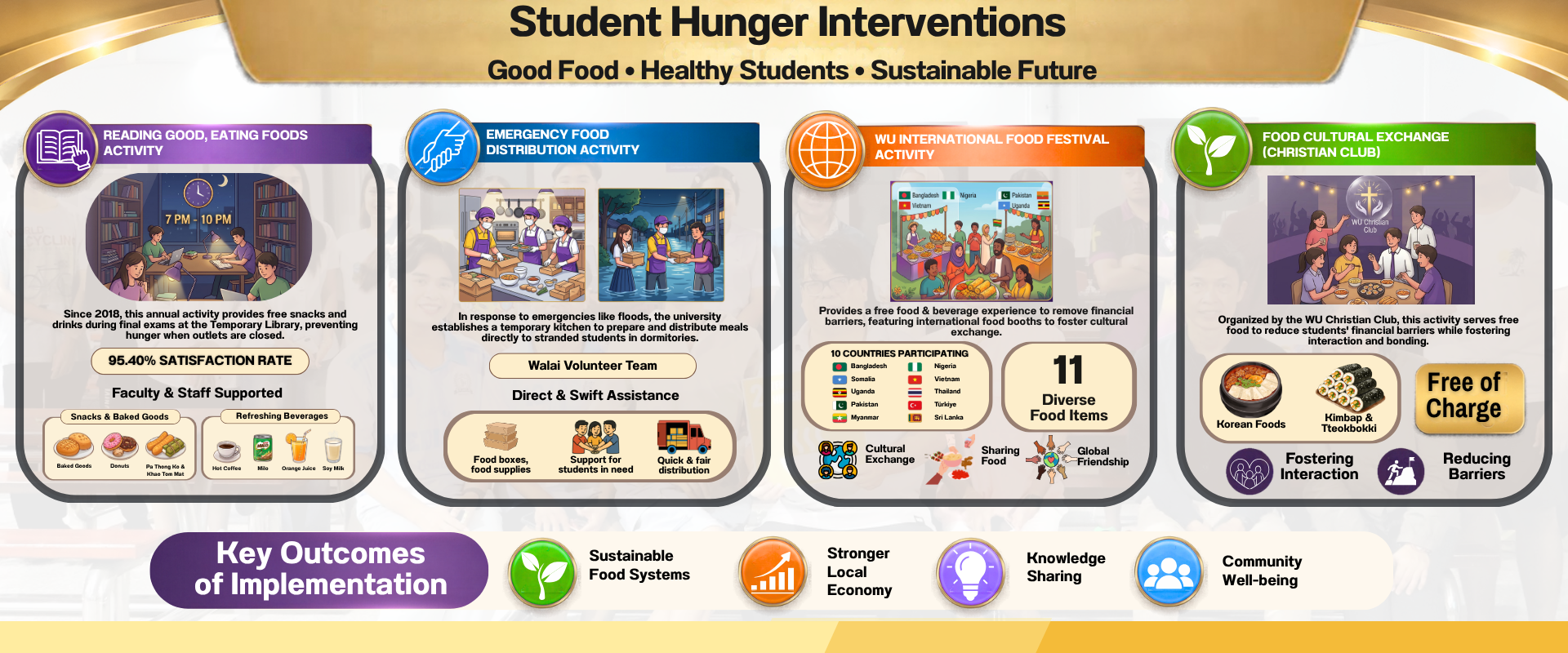
These measures include the direct provision of food and beverages, the distribution of food to areas where students are affected, and activities that enable students to access food without payment. These interventions reflect the direct and practical interventions described in the indicator, supported by evidence of implementation and activity evaluation results.
The Reading Good, Eating Foods Activity
Walailak University recognizes that hunger among students may adversely affect their health and academic performance, particularly during final examination periods when students spend extended periods reviewing their lessons. Many students have limited time to obtain food, and because food outlets may close at night, some students may experience hunger during long hours of examination preparation and study.
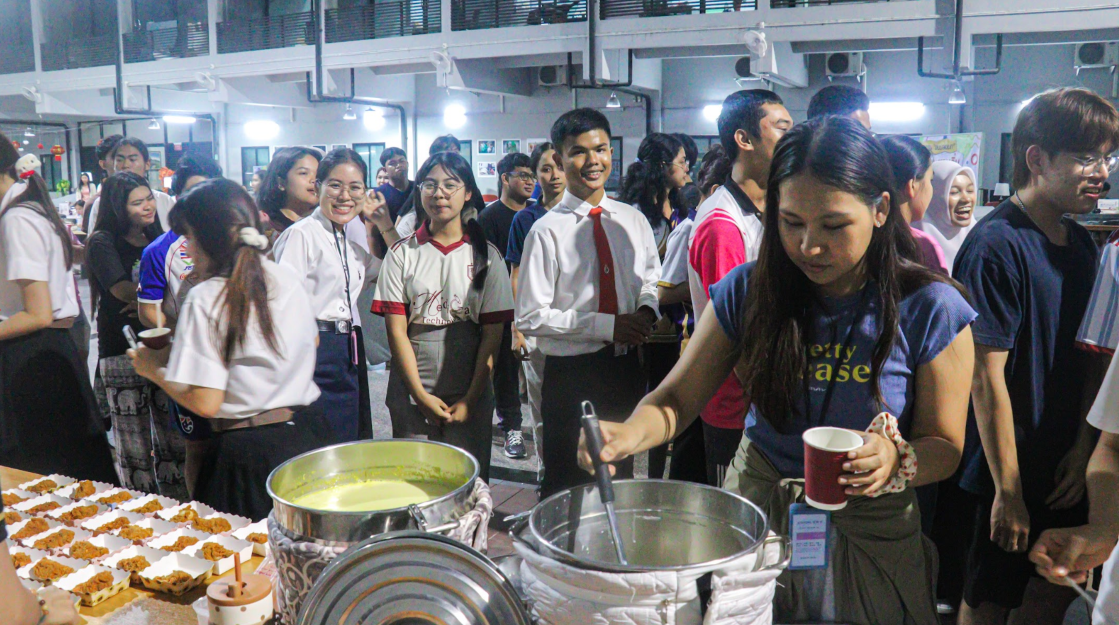
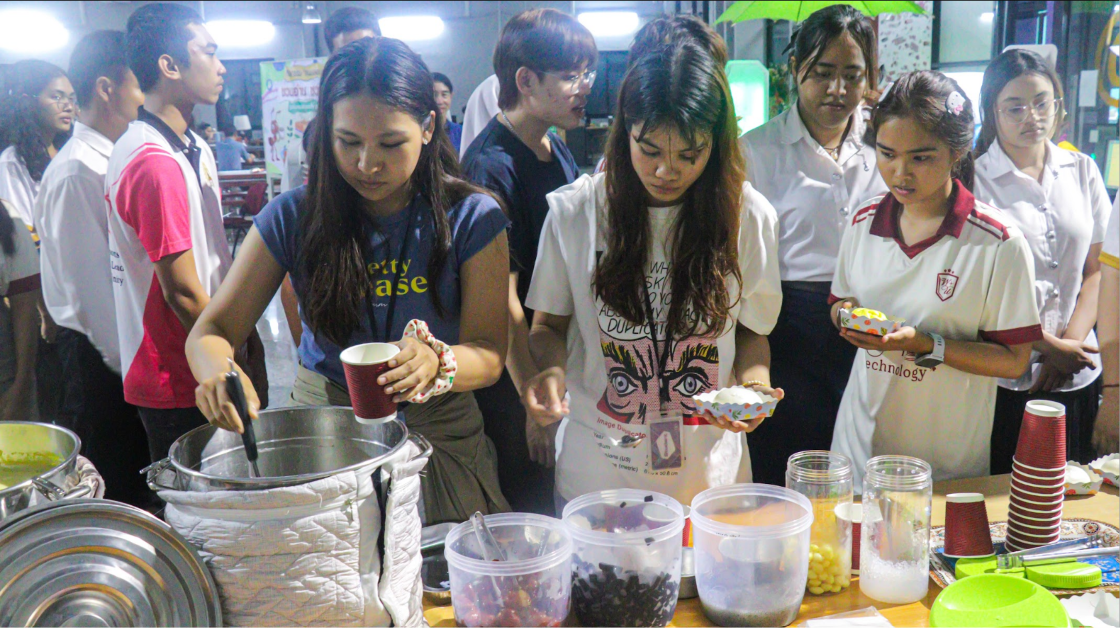
To provide a rapid and targeted response, the University organizes the “Reading Good, Eating Foods” activity, providing snacks and beverages at night during examination periods. The activity has been organized annually since 2018, with financial support from university administrators, faculty members, and staff. The intervention aims to alleviate hunger among students during periods of intensive examination preparation and provide convenient access to food and beverages when food outlets within the university are closed.
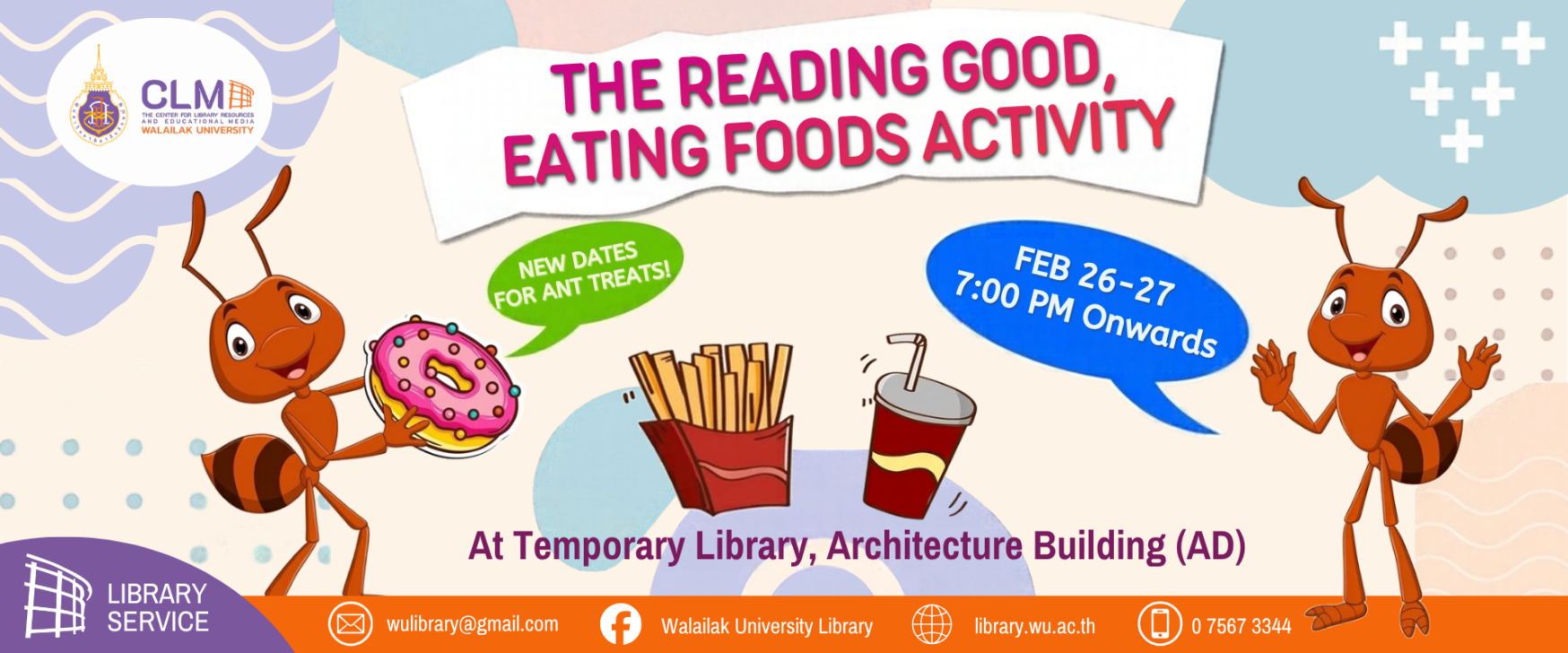
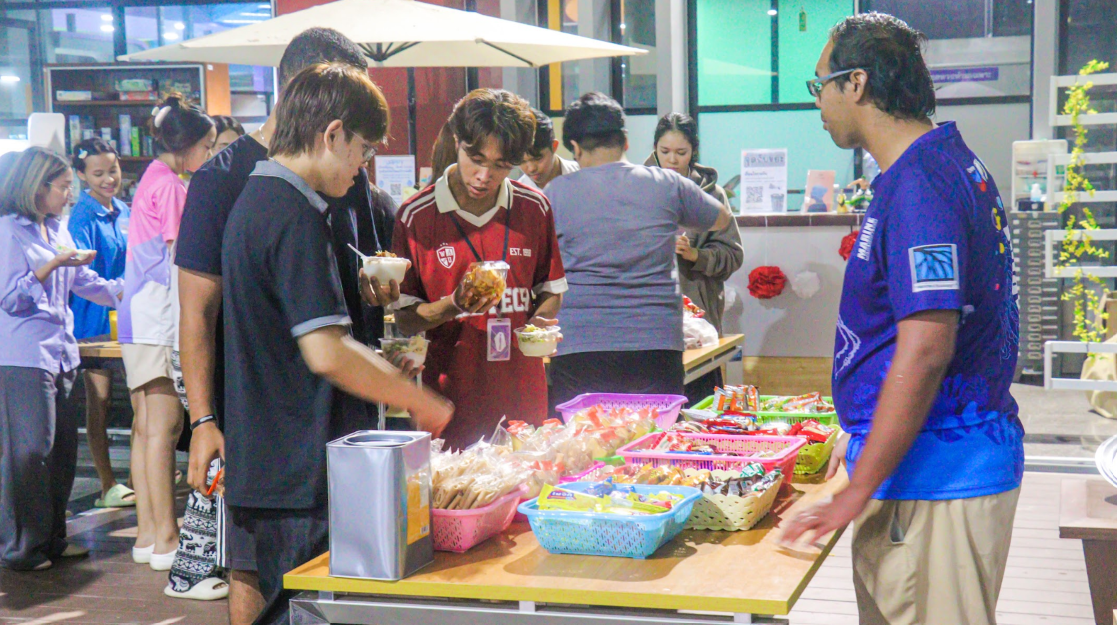
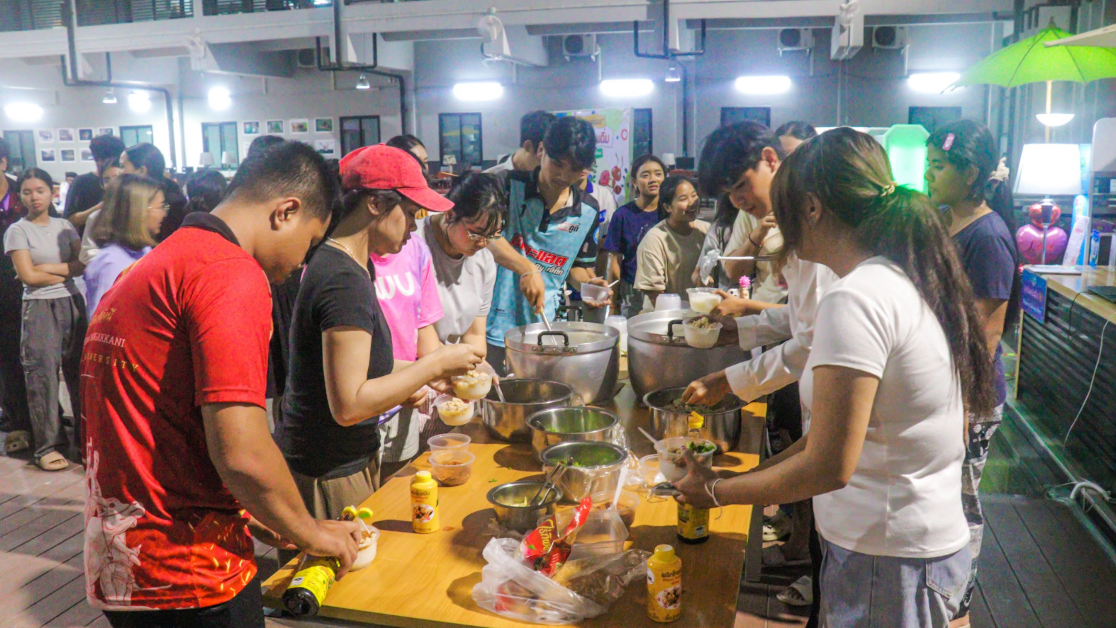
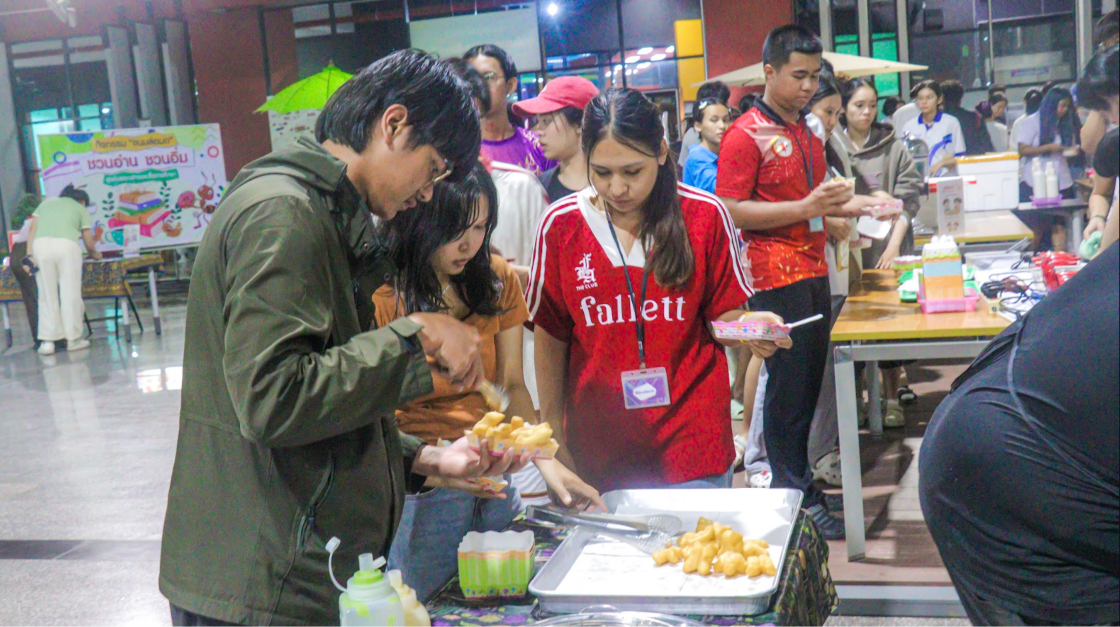
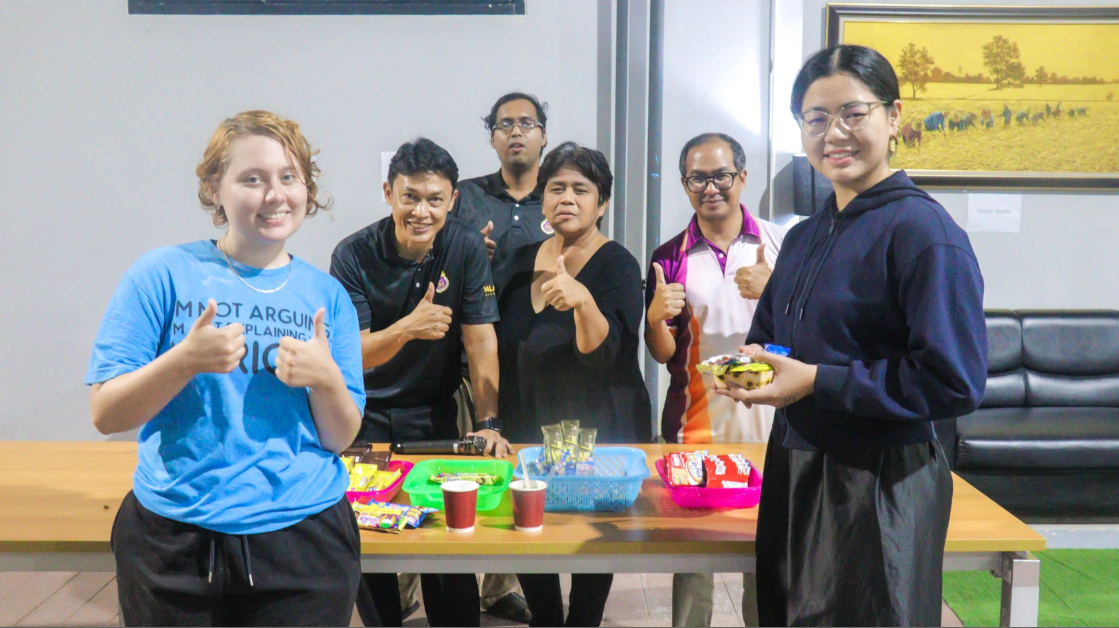
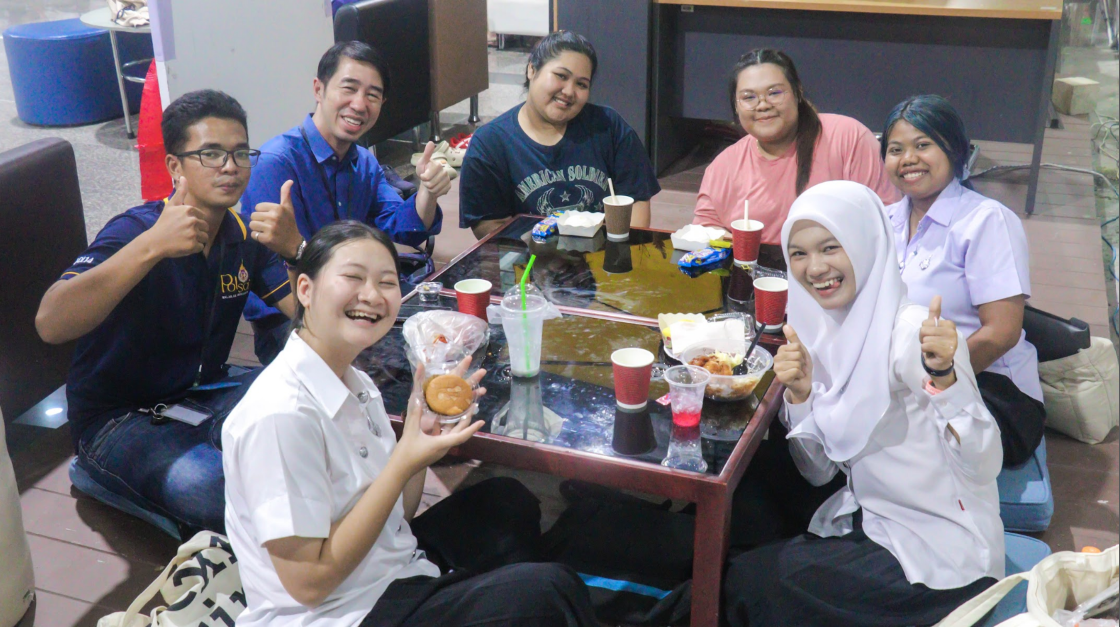
In the 2025 academic year, the activity was held from 7:00 p.m. to 10:00 p.m., or until supplies ran out, at the temporary library of the Center for Library and Educational Media. The University provided food and beverages that were convenient to consume during study breaks, allowing students to access food without having to leave the study area for an extended period.
Food
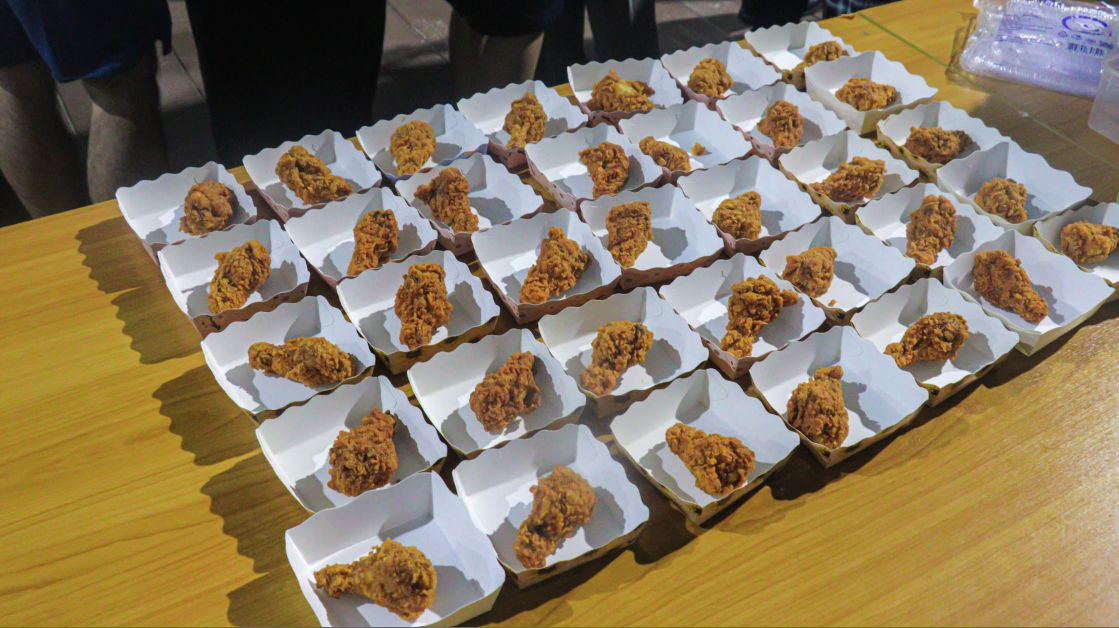
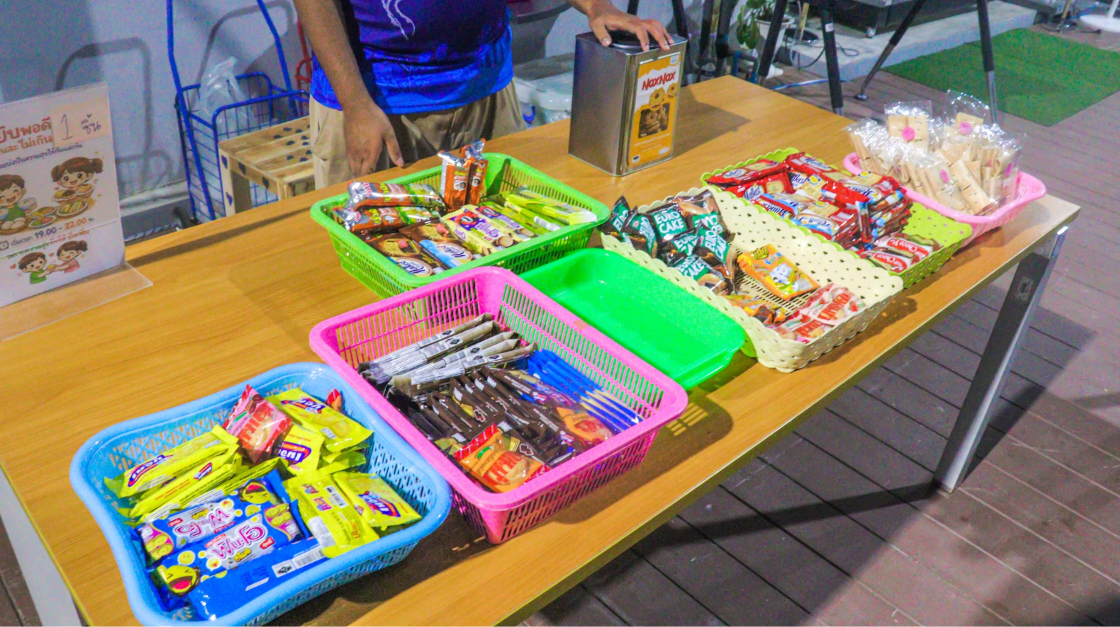
The university provided a variety of snacks, including baked goods, convenient ready-to-eat snacks, and filling foods, allowing students to choose according to their needs. The food included Dunkin’ Donuts, Chinese-style fried dough sticks (Pa Thong Ko), rice crackers, snack sets such as young coconut cake, and steamed sticky rice with banana (Khao Tom Mat).
These foods were convenient to consume during short study breaks and provided students with options for relieving hunger during nighttime study sessions. In addition to providing a variety of food, the provision of food within the study area reduced students’ time and travel constraints, particularly for those studying continuously at night who could not access food outlets during their normal operating hours. The activity therefore served as an intervention that enabled timely food access during a period when students’ need for food was particularly high.
Beverages
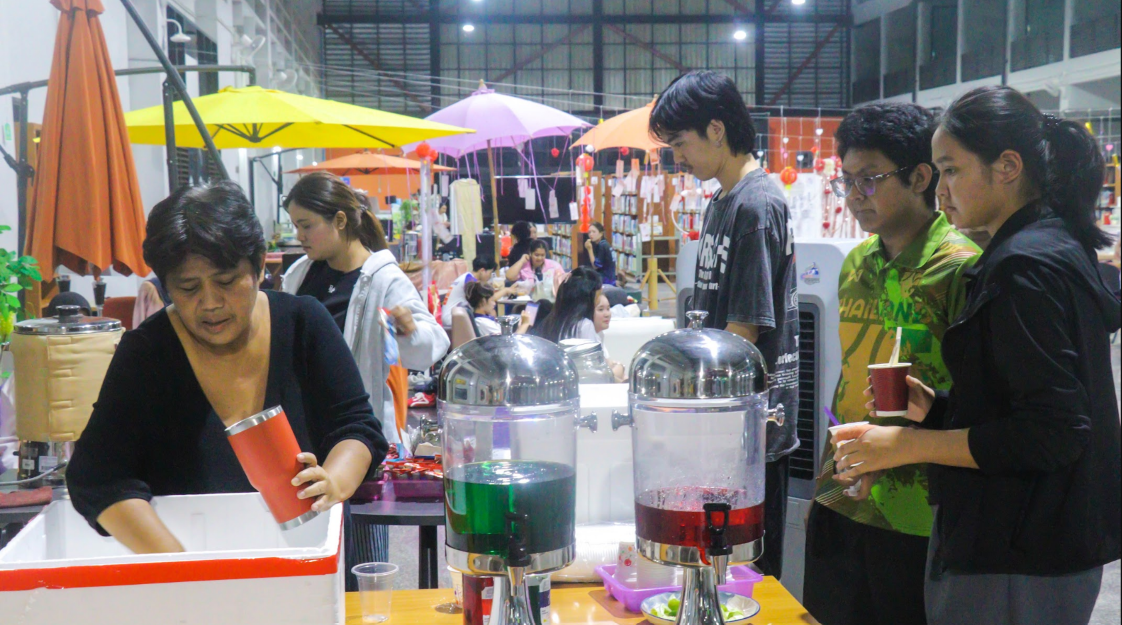
The university provided both refreshing and hot beverages, allowing students to choose according to their preferences while studying. These included coffee, Milo, Ovaltine, ginger drink, freshly squeezed orange juice, and fresh soybean milk. The variety of beverages provided students with additional options, including drinks for refreshment and beverages suitable for consumption alongside snacks.
The provision of food and beverages at night therefore went beyond simply distributing snacks. It provided access to food during a period when food services were limited, helping to alleviate hunger and support students’ well-being during examinations. Students could access the food and beverages within the study area and consume them at their convenience.
Monitoring and Evaluation of Activity Outcome
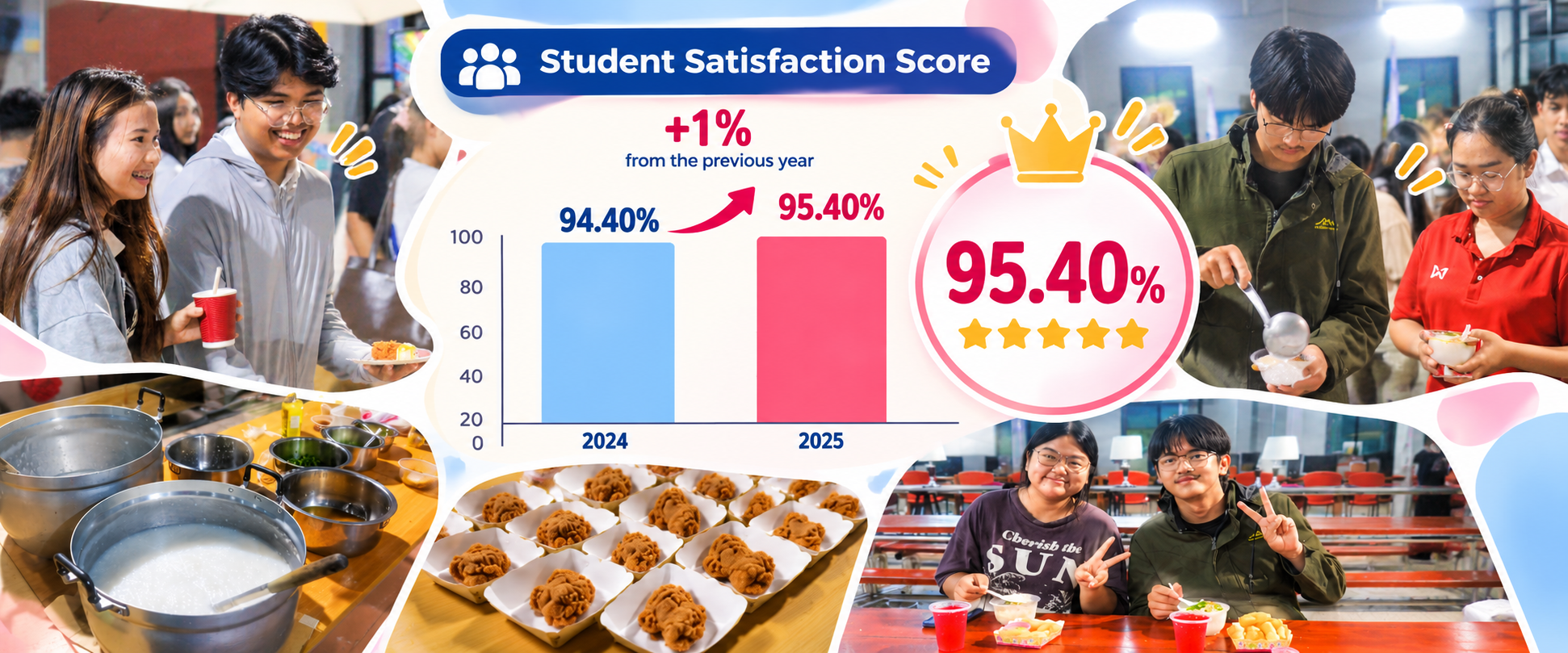
The university monitors and evaluates the activity through a satisfaction survey among participating students. In the 2025 academic year, the “Reading Good, Eating Foods” activity received an average satisfaction score of 95.40%, an increase of 1% from the previous year. In addition to the satisfaction score, students’ feedback provided qualitative information on the outcomes of the activity and their needs. Students reported that the activity provided encouragement and supported their study during examinations. They also suggested that the University continue the activity and, in some cases, organize it regularly every semester.
At the same time, some students suggested adding more substantial meal-type foods, such as fried rice and fried chicken, to increase food variety and better respond to students’ food needs during examination preparation.
The evaluation results, including both the satisfaction score and student feedback, therefore provide important evidence for monitoring and improving the activity in subsequent years. In particular, the University can maintain the provision of food and beverages during periods when students face limited food access and consider students’ feedback on food types when improving future interventions. The “Reading Good, Eating Foods” activity therefore represents a practical measure implemented by the University to alleviate hunger and support students’ well-being during examinations.
Food Distribution During Disasters and Emergencies
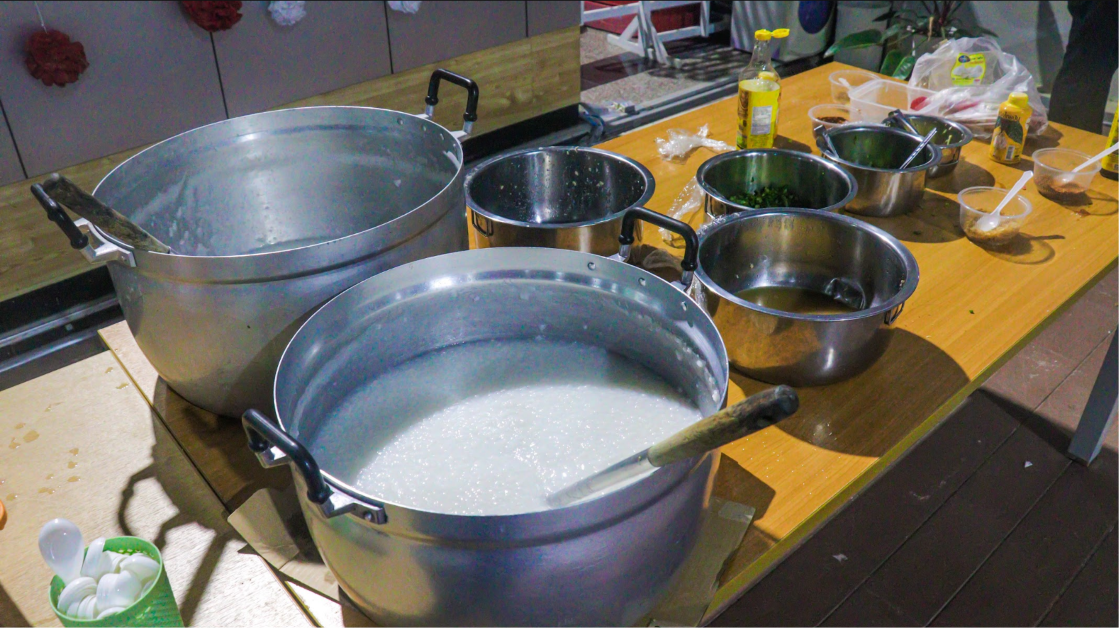
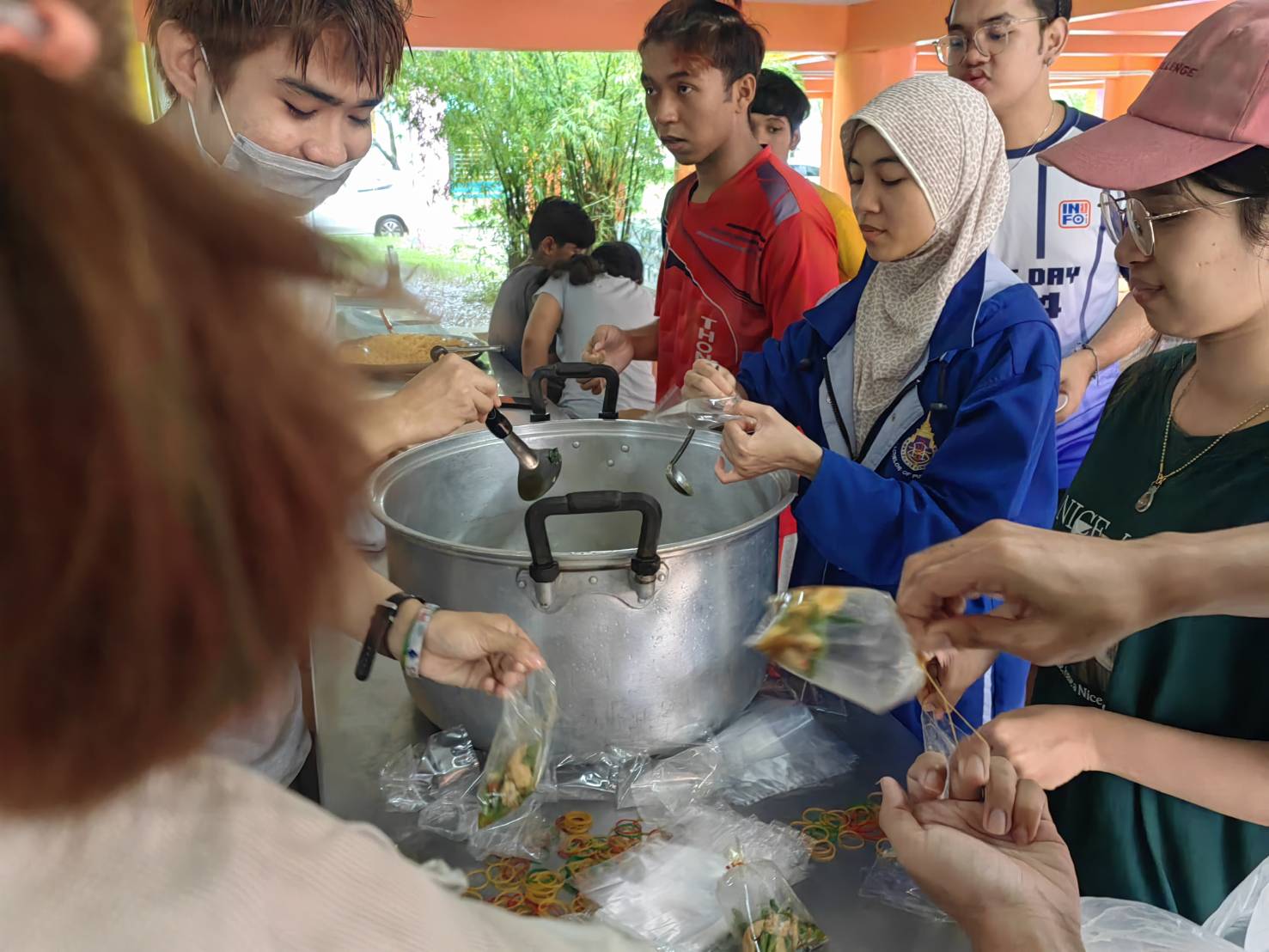
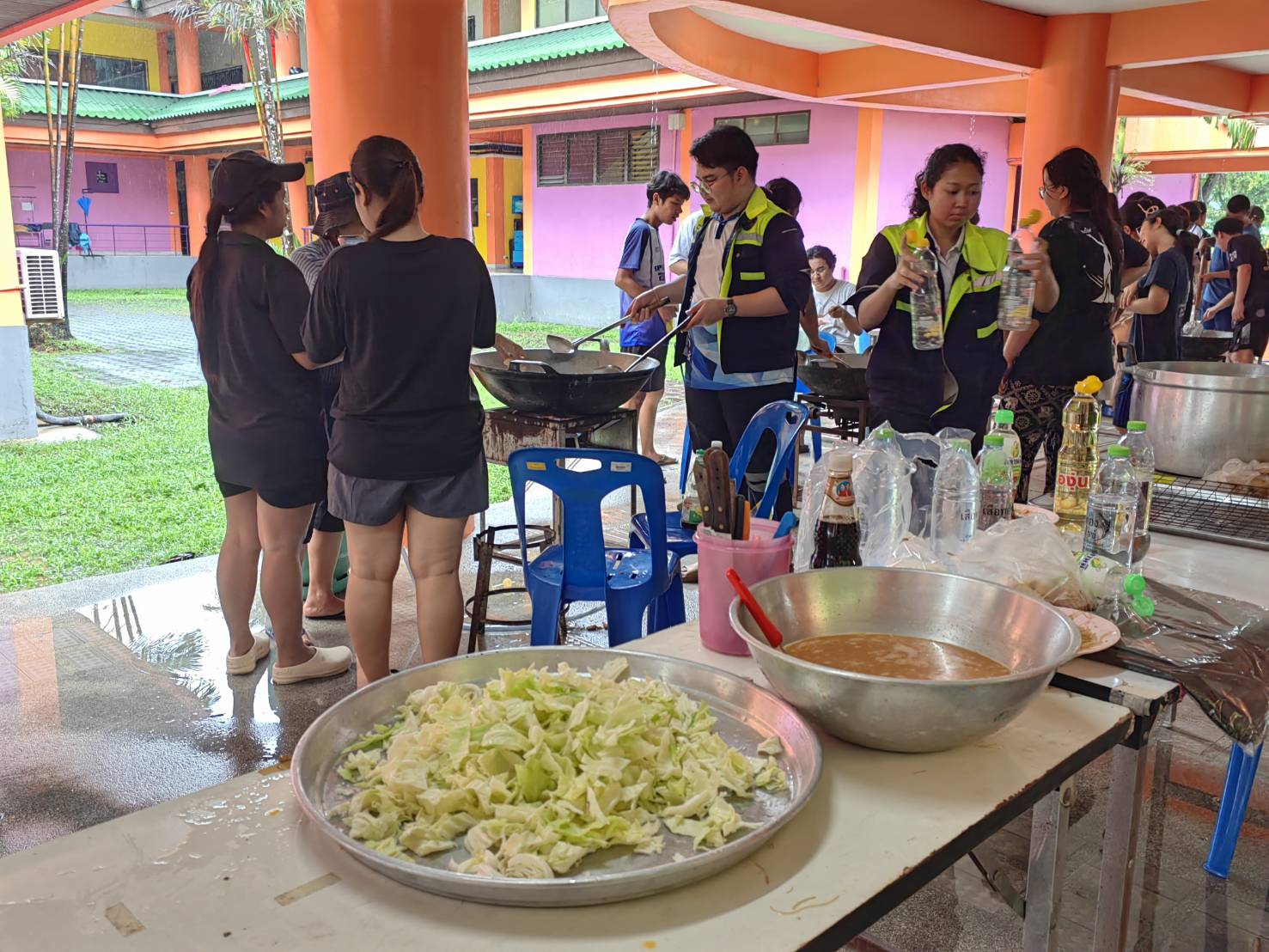
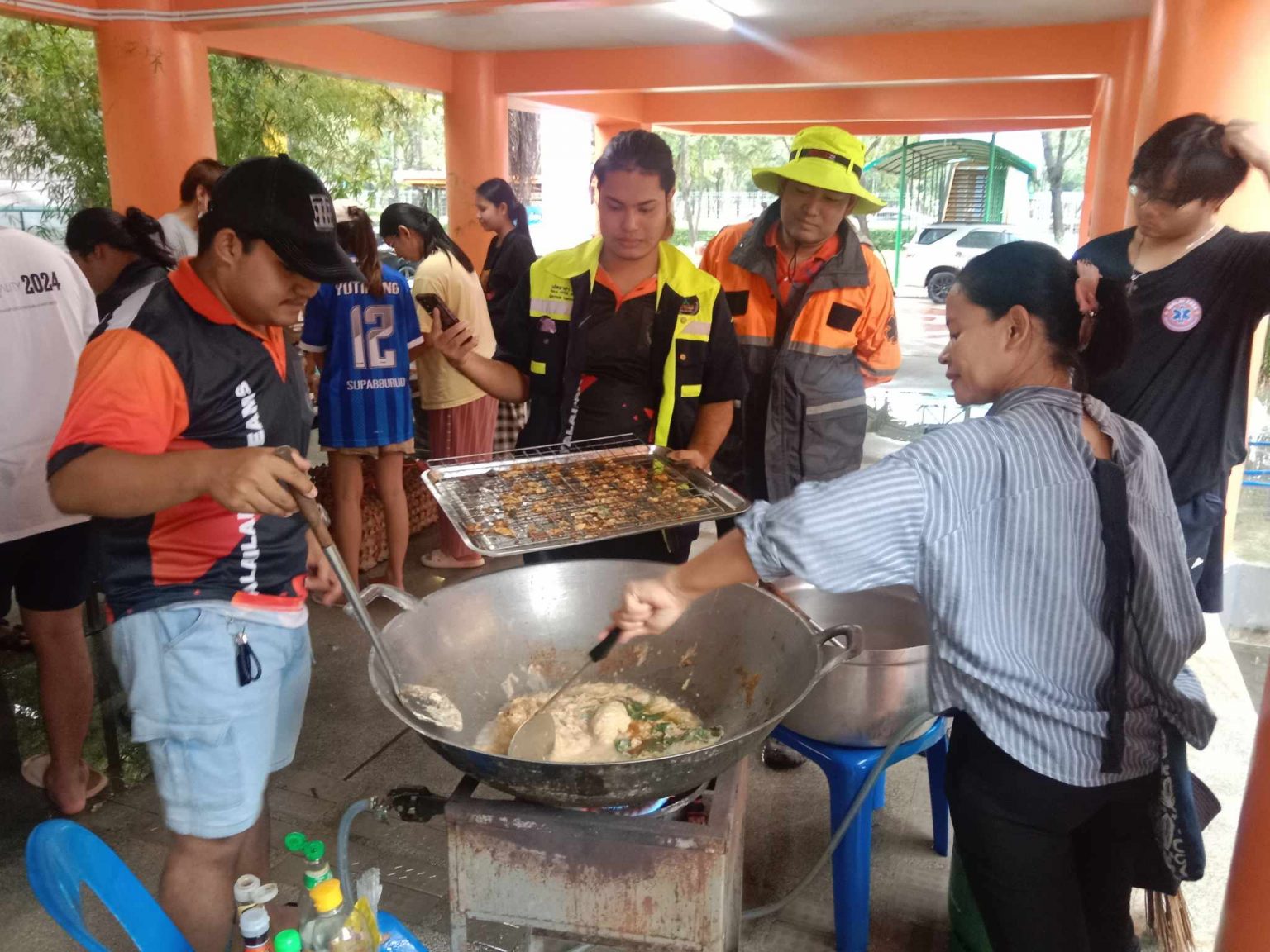
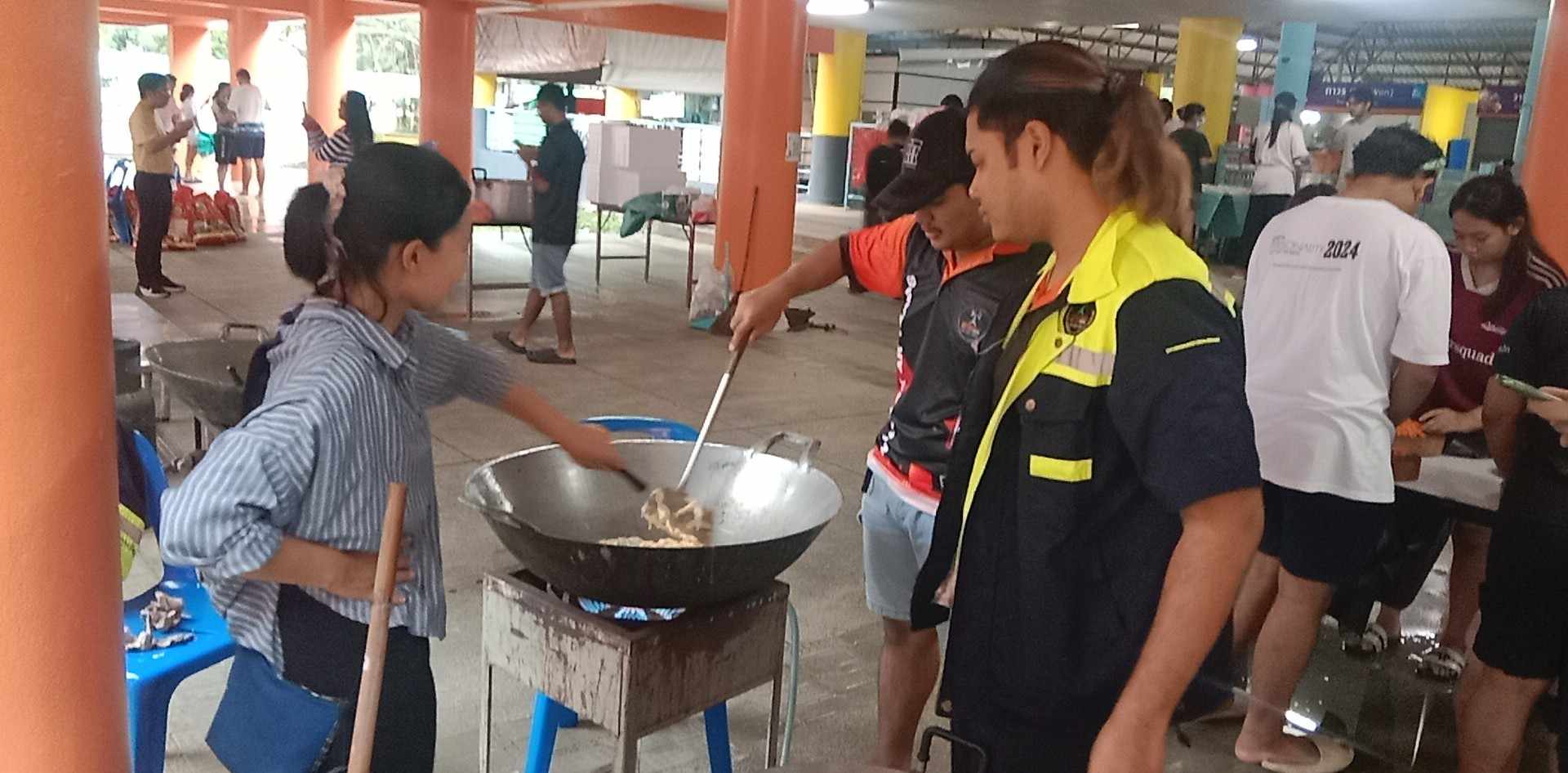
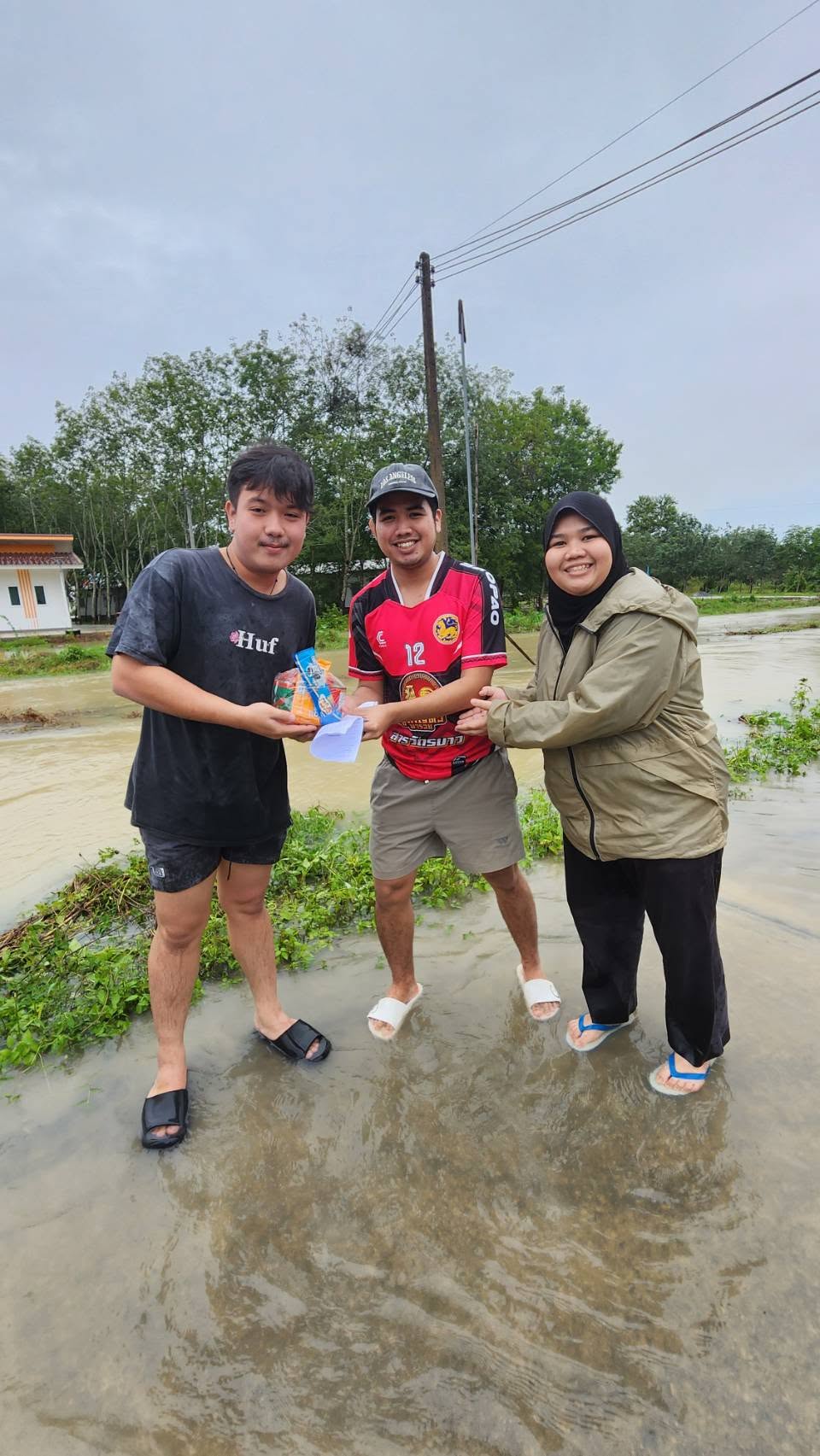
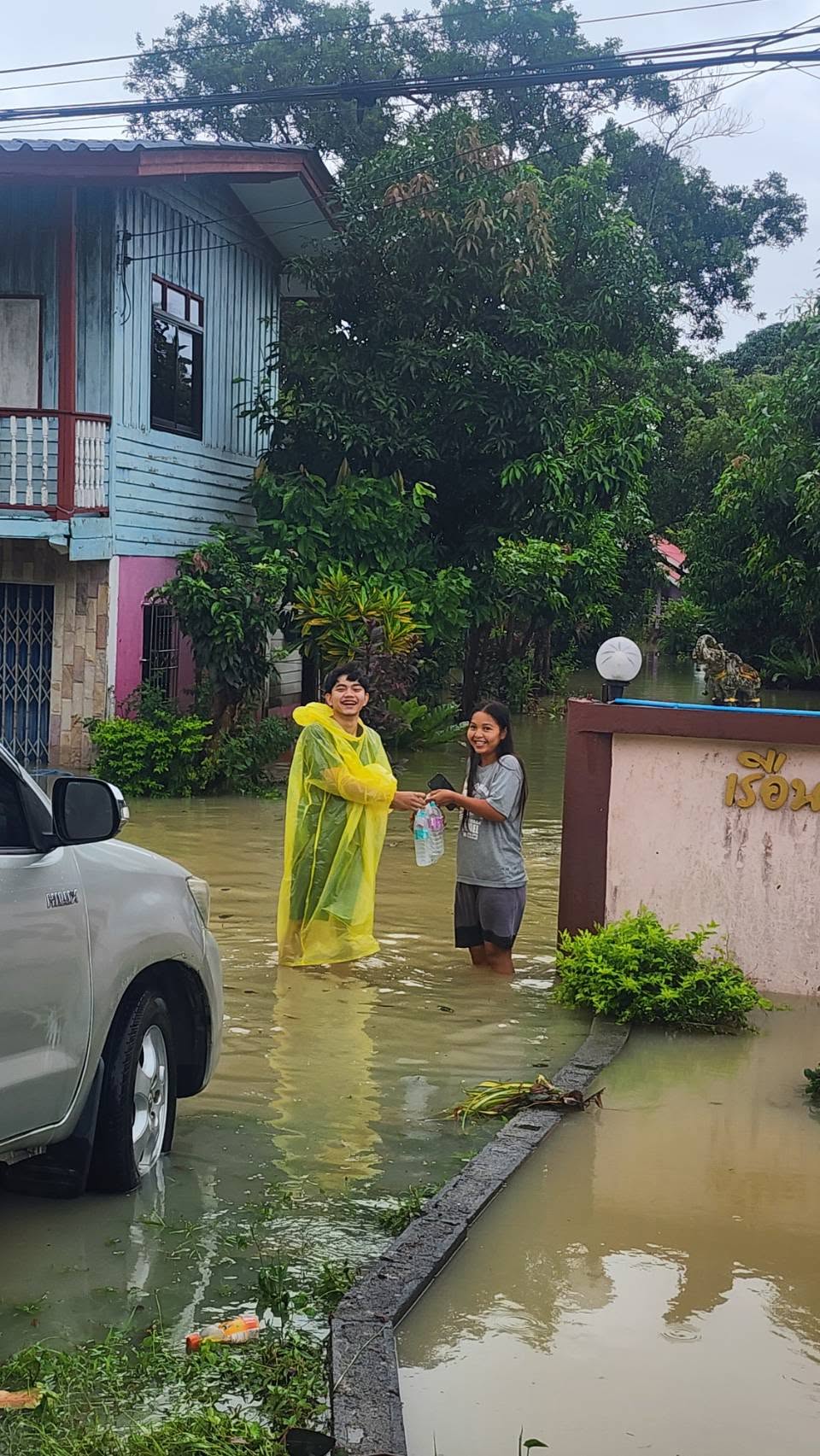
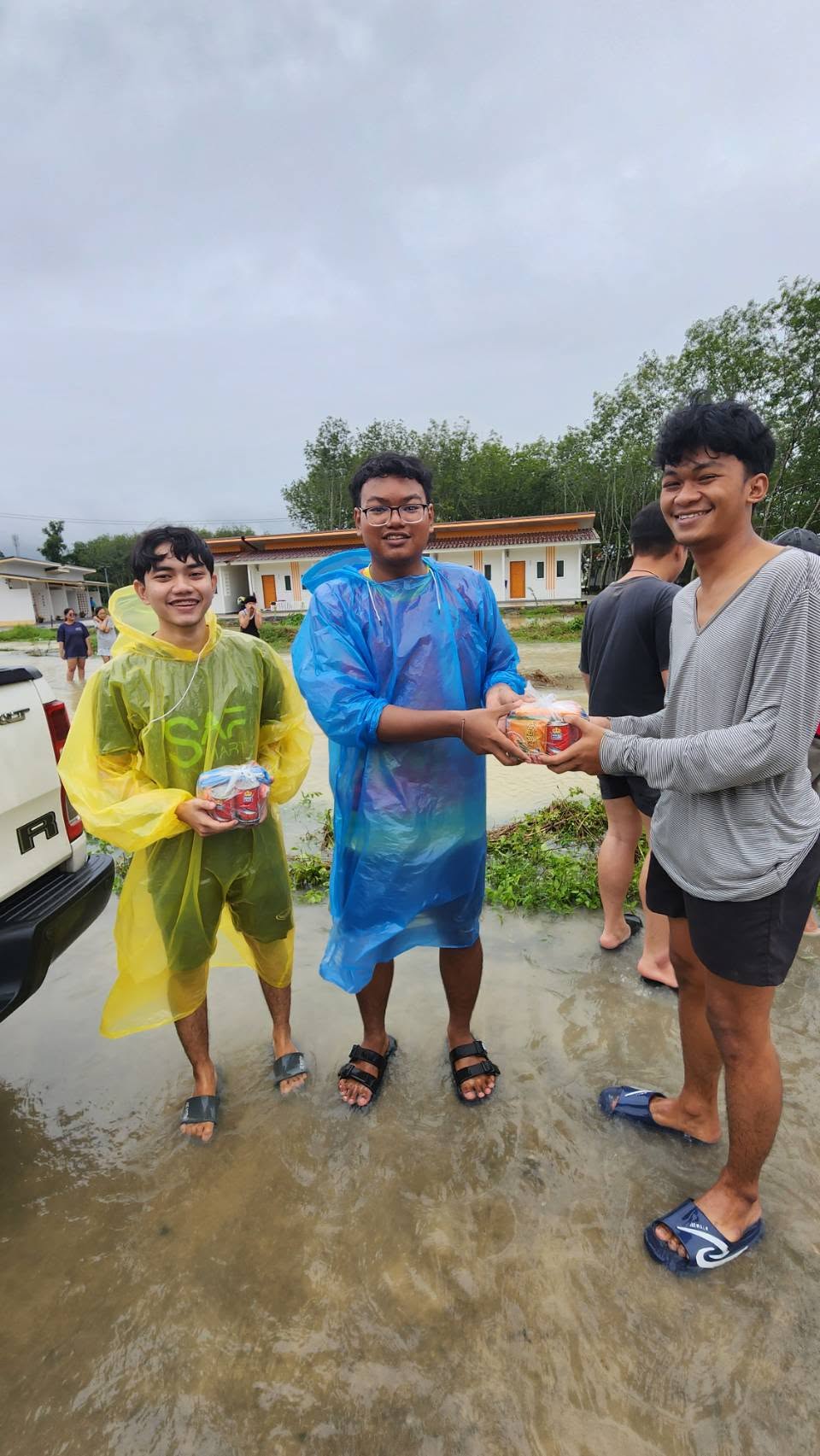
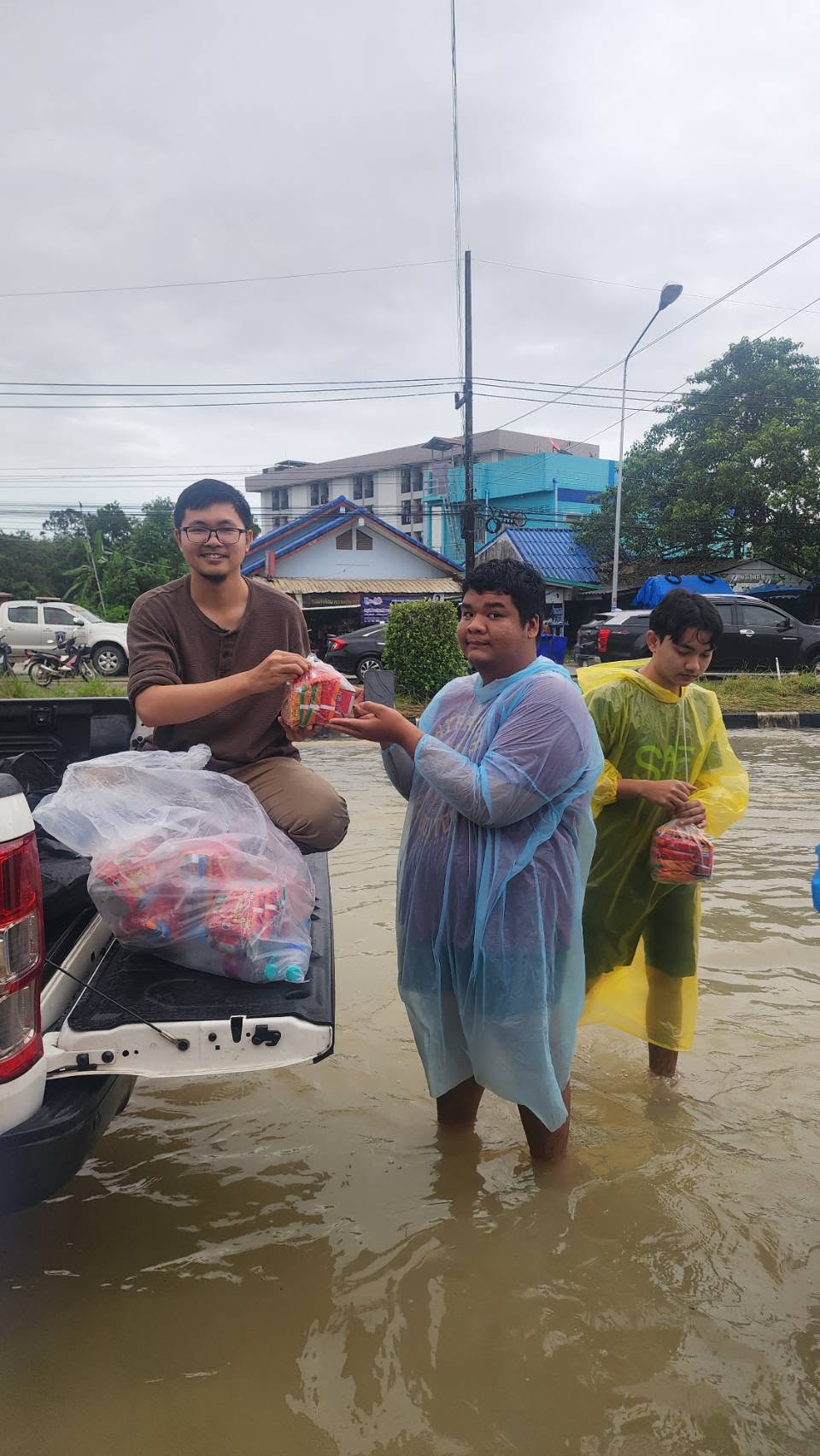
Students may become particularly vulnerable to limited access to food during disasters or emergencies that affect transportation and daily life. During floods, for example, roads may become inaccessible, some food outlets may be forced to close, and students living both on and off campus may be unable to travel to obtain food as usual. This can create significant limitations in food access at a time when immediate assistance is needed. In response to such situations, Walailak University has established a temporary kitchen to prepare and provide food for students affected by flooding. The intervention is designed to ensure that assistance reaches students quickly and directly in emergency situations.
Food prepared by the temporary kitchen is distributed to students staying in university dormitories who are unable to obtain food through normal channels. The response involves cooperation among university administrators, faculty members, and student volunteers, who work together to prepare and cook food for affected students. The Walai Volunteer Team also plays an important role in delivering assistance and coordinating support on the ground, serving as a frontline team in delivering food and other assistance to students who are stranded in dormitories and affected areas
Although this intervention is implemented on an occasional basis in response to disaster situations, it represents a direct and practical intervention because it responds directly to an actual disruption in students’ access to food during an emergency. The university temporarily replaces food-access channels that have been disrupted by the disaster, enabling affected students to receive food during periods when transportation and normal food procurement are restricted.
Food distribution during disasters therefore represents an intervention addressing food insecurity during emergencies. The University mobilizes resources, personnel, and volunteers to provide and deliver food rapidly to affected students, helping reduce the impact of disruption to normal food access and supporting students in maintaining their daily lives during disaster situations.
WU International Food Festival: Access to Food and Participation of International Students
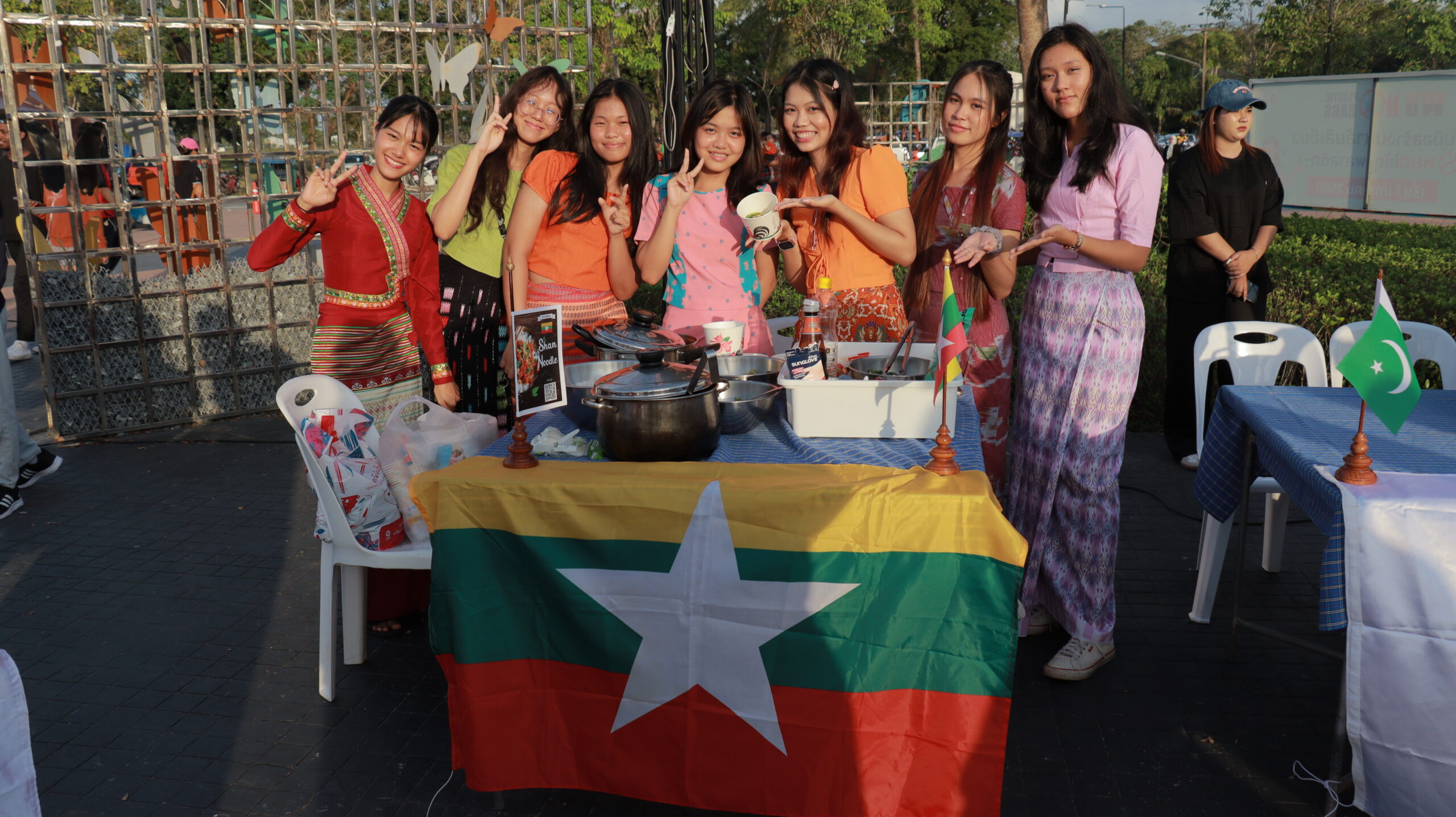
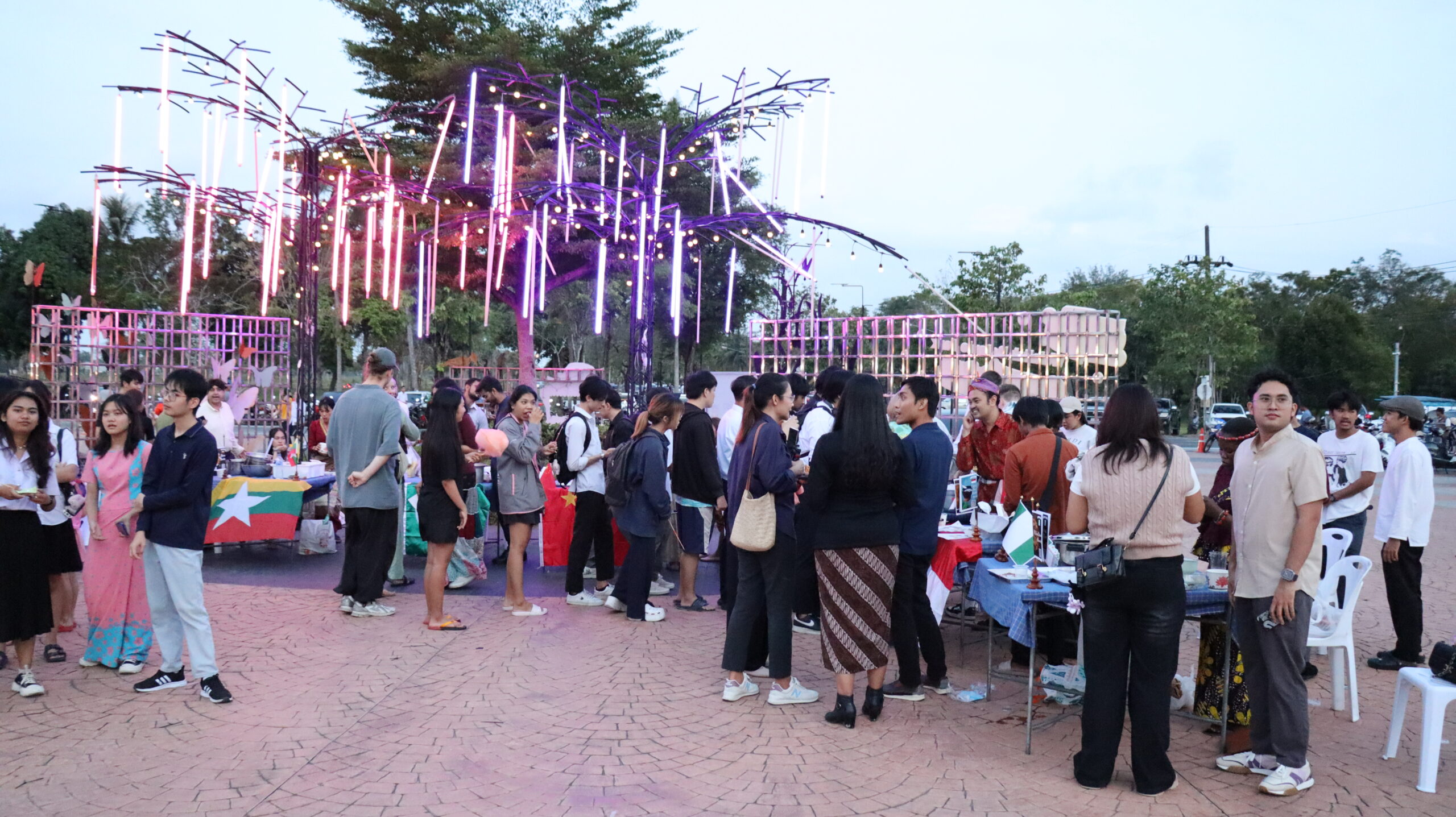
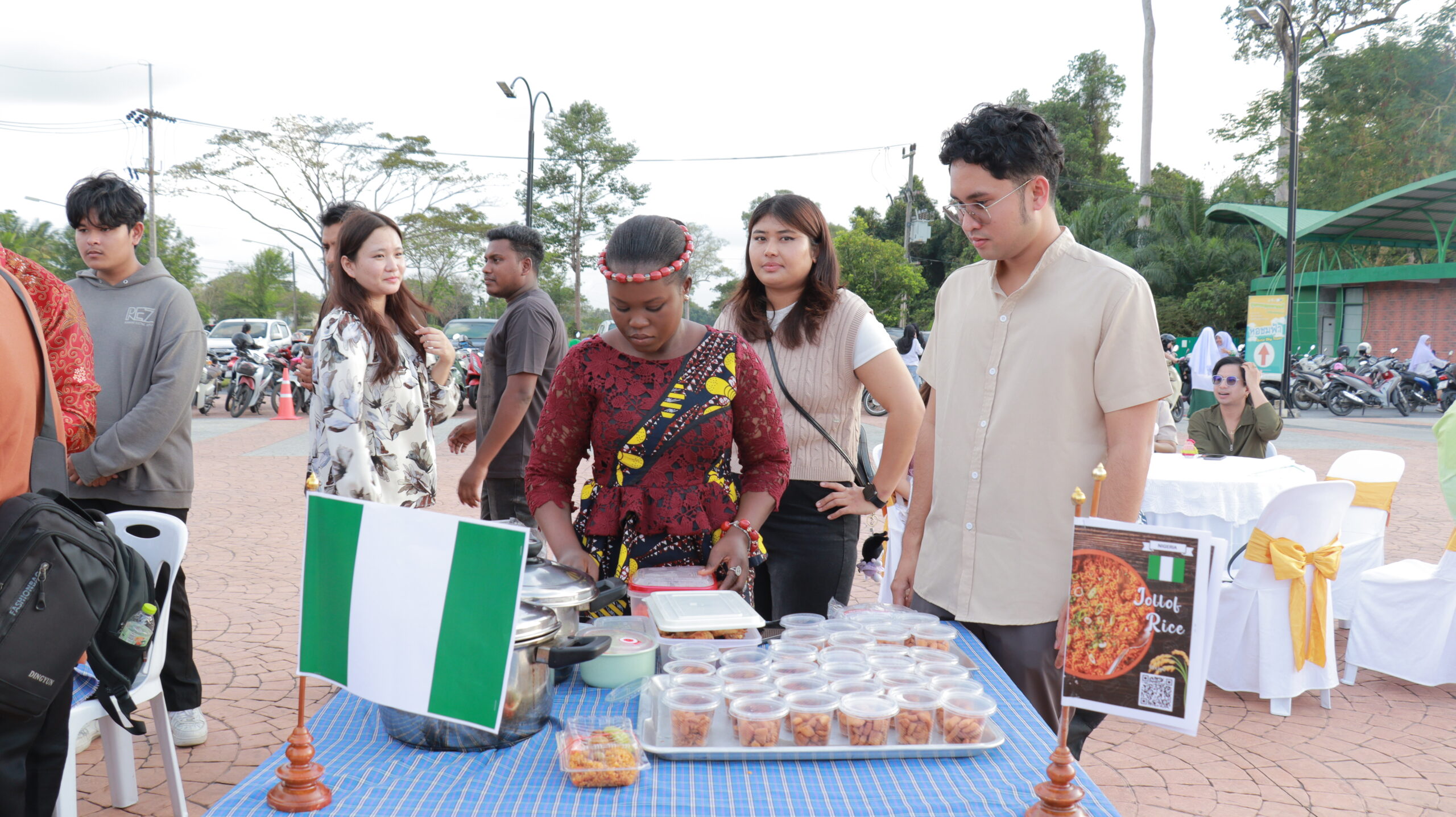
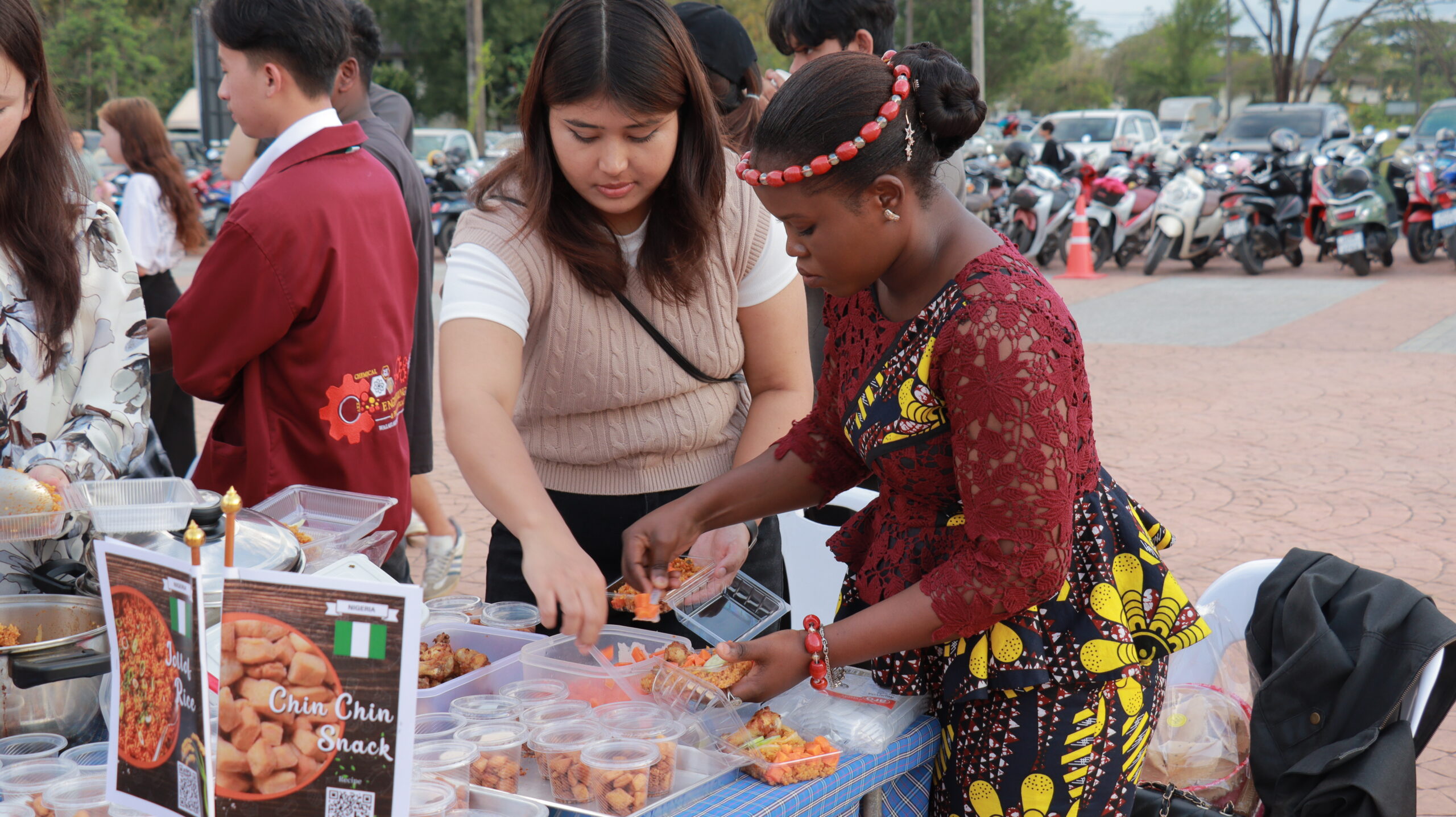
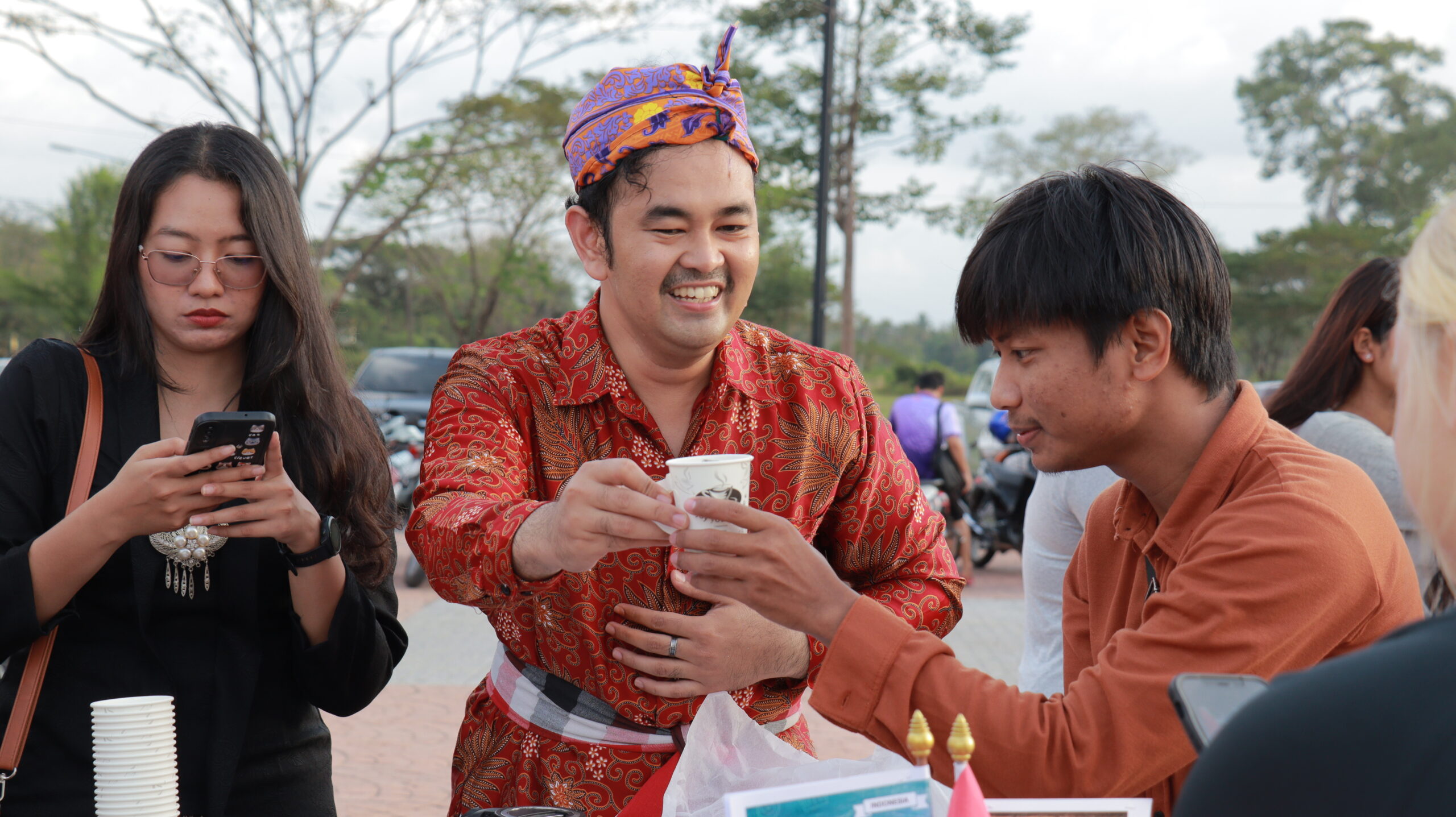
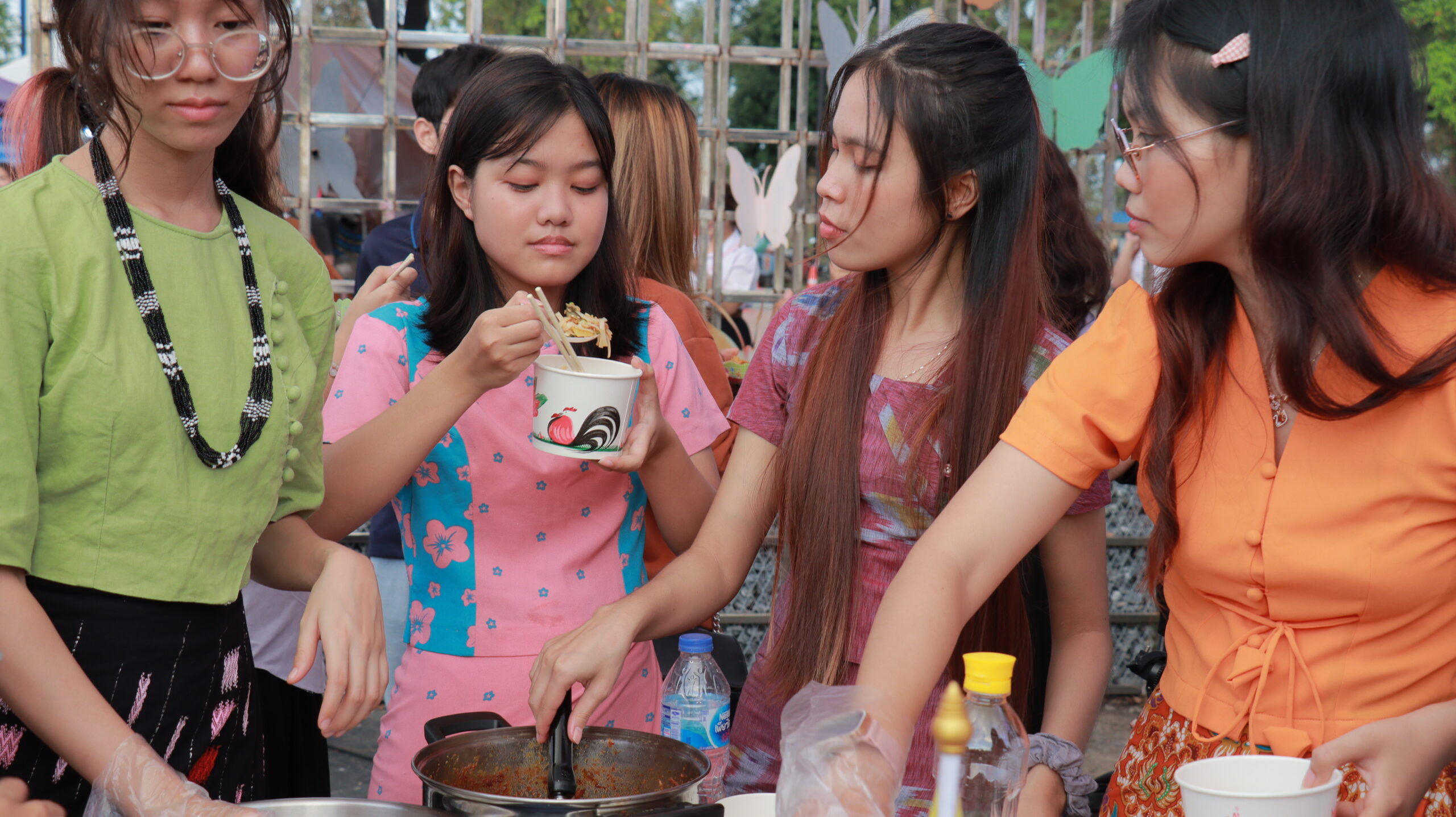
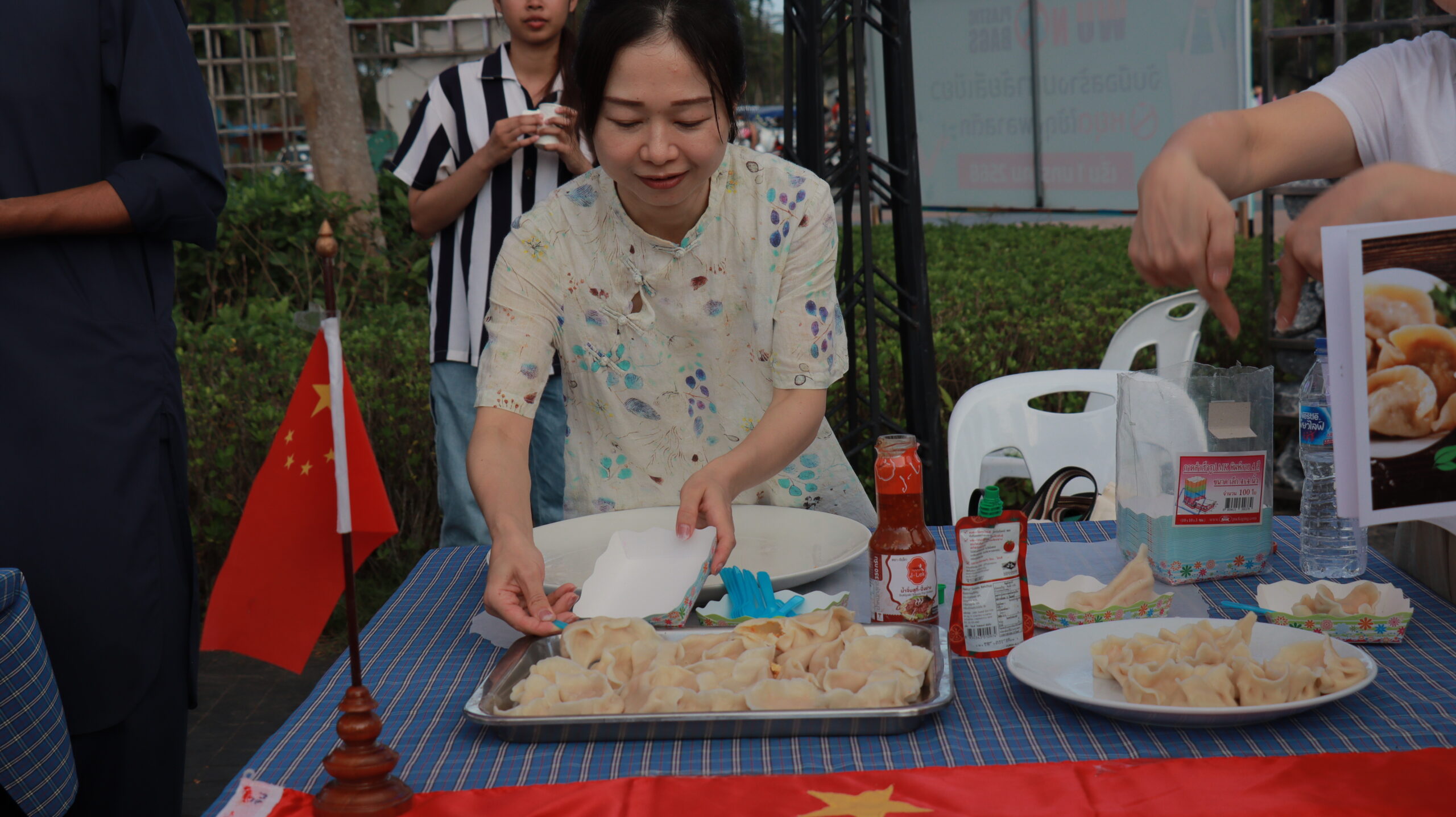
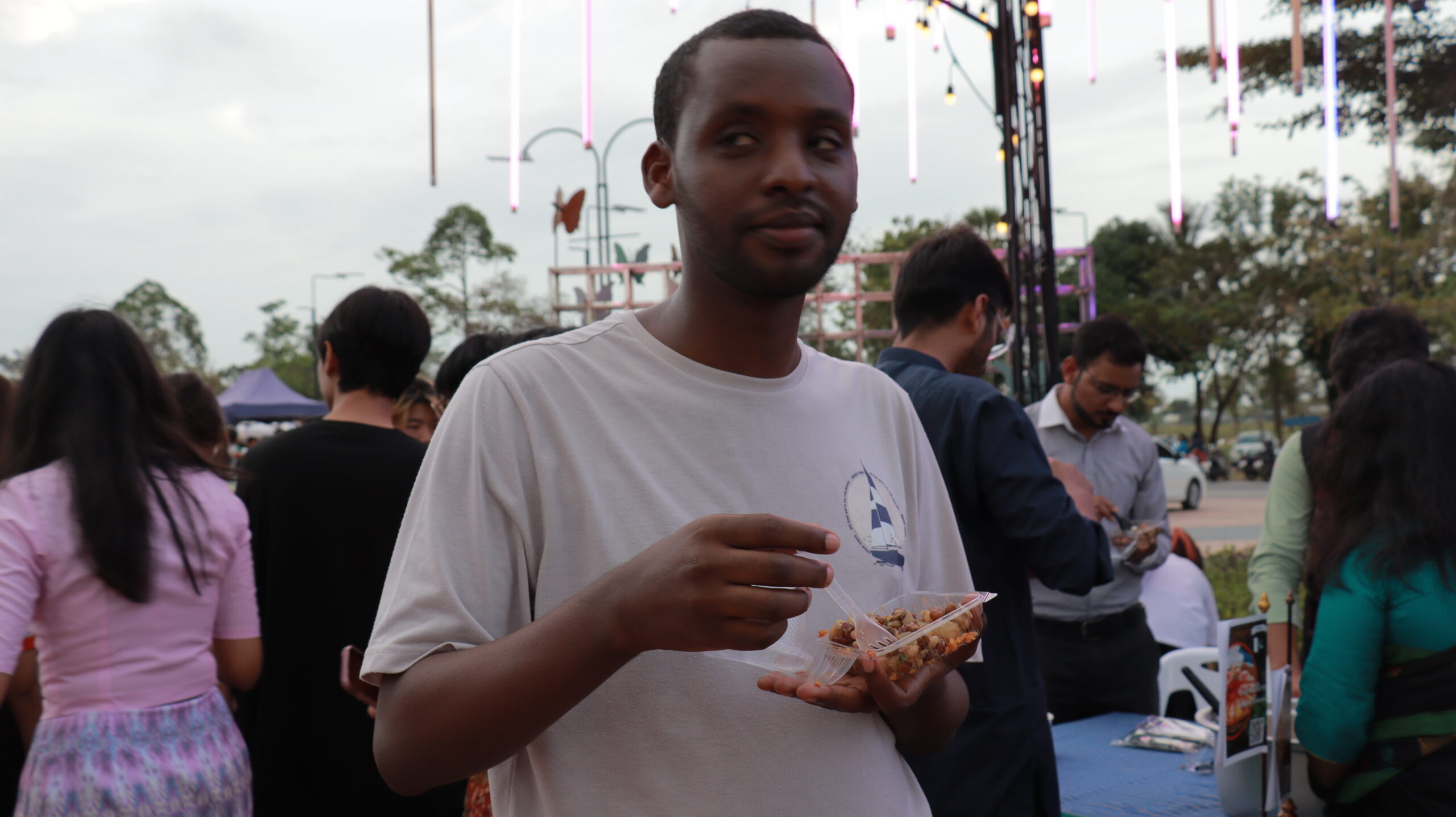
Walailak University organizes the WU International Food Festival to provide a space for international students and faculty members to present food and beverages from diverse countries and cultures. The event features international food booths and provides participants with opportunities to access food representing a variety of cultural traditions. Participants representing 10 countries—Bangladesh, Somalia, Uganda, Pakistan, Myanmar, Nigeria, Vietnam, Thailand, Türkiye, and Sri Lanka— presented a total of 11 food and beverage items.
In addition to its cultural exchange dimension, the provision of food that participants can access during the event provides another opportunity for students to receive food without financial barriers during the activity, particularly students participating in activities on campus. The activity therefore connects food access with student participation and uses food sharing as a means of fostering interaction and cultural exchange within the University community.
Food Cultural Exchange Activity
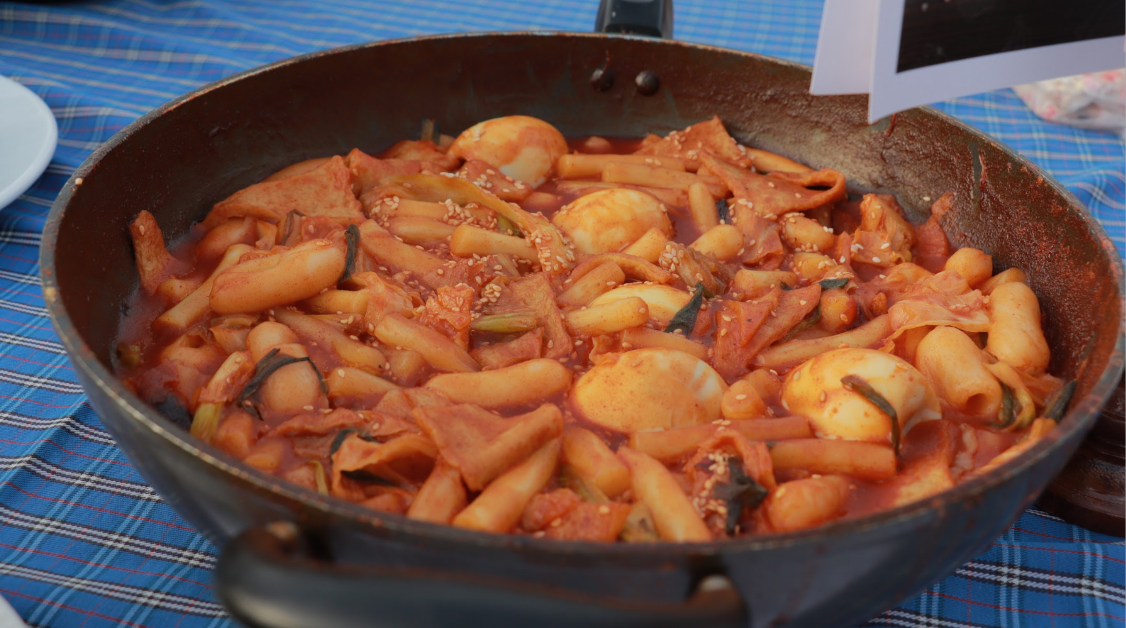
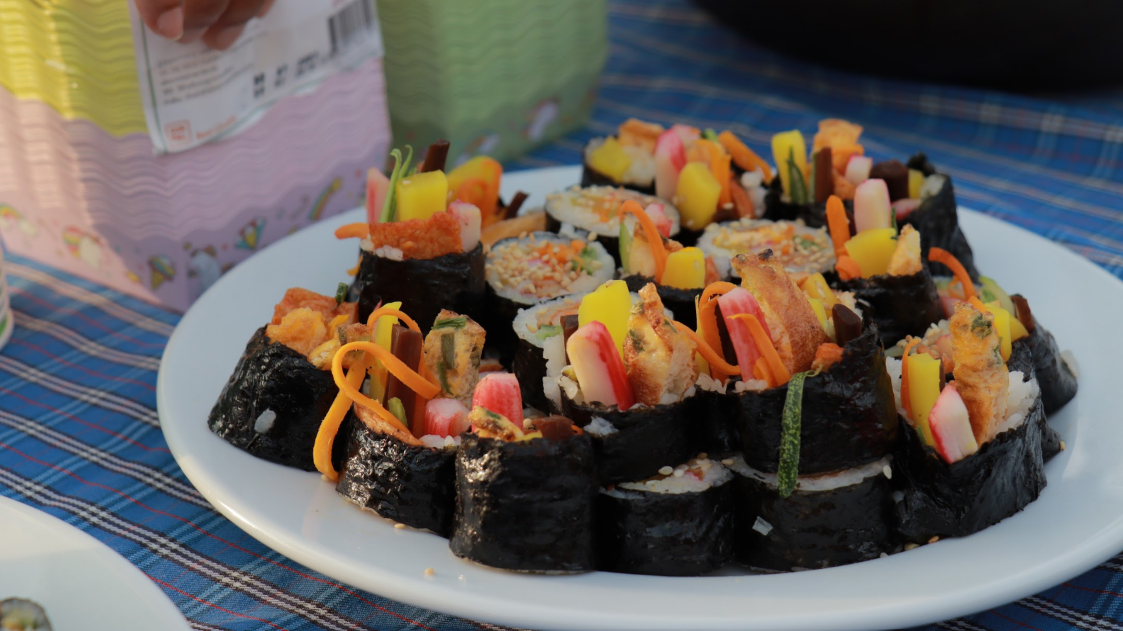
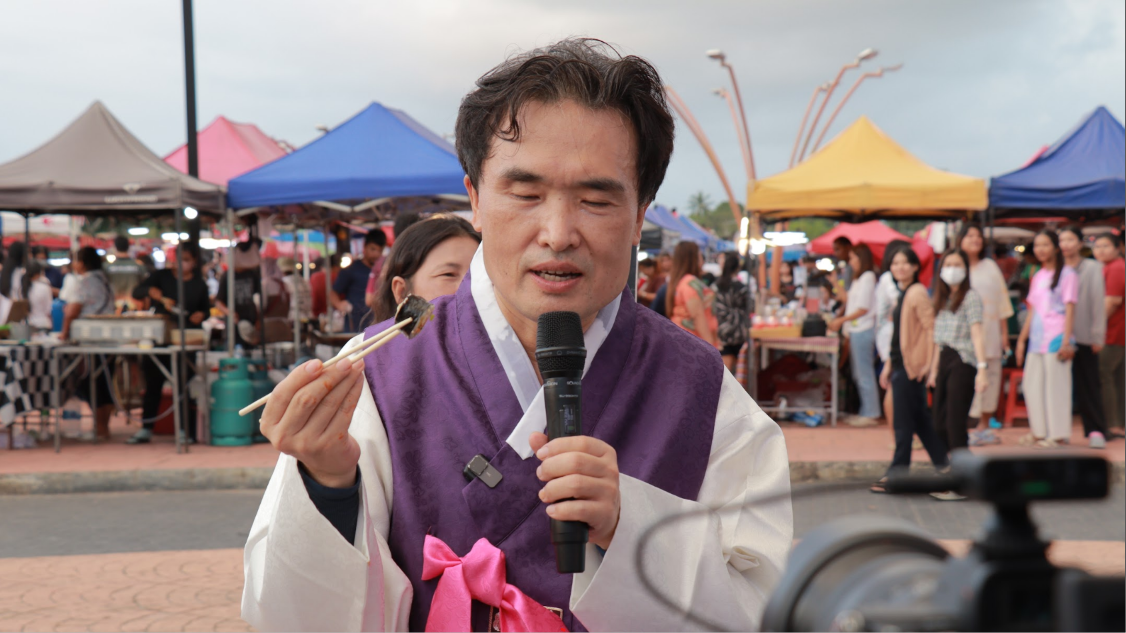
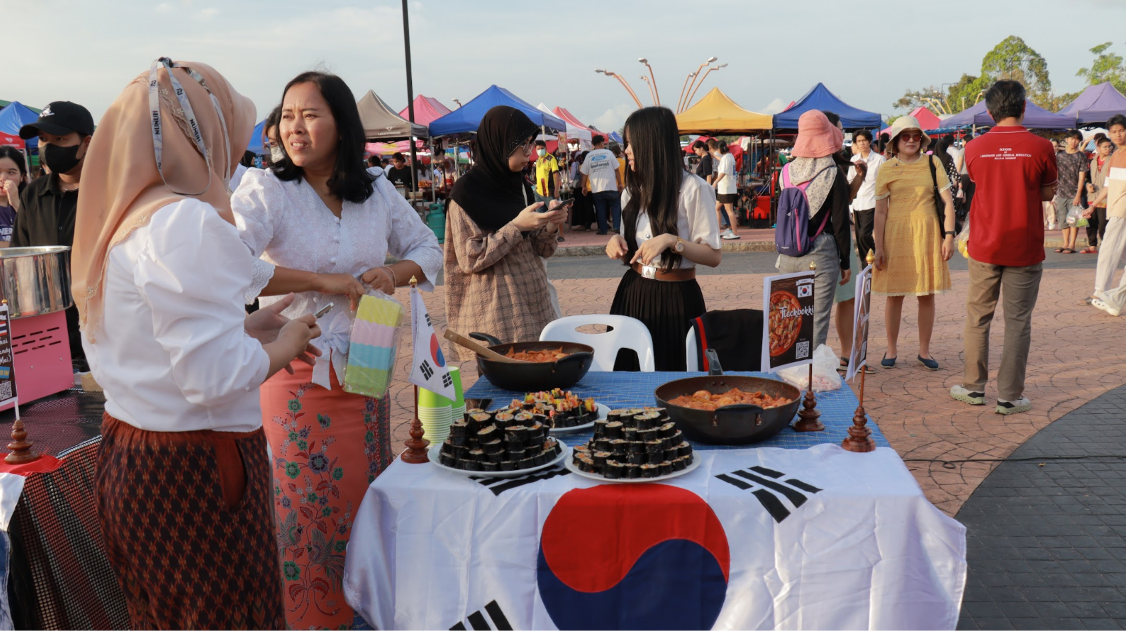
The WU Christian Club organizes a food cultural exchange activity by providing Korean food and snacks to students free of charge, creating a space where students can meet, learn, and exchange experiences through food from diverse cultural backgrounds. The food provided includes Kimbap and Tteokbokki, together with other snacks. Students can access the food without payment, helping reduce financial barriers to food access during the activity.
In addition to the provision of food, the activity uses food sharing as a means of fostering interaction and learning among students from different cultural backgrounds. Food cultural exchange therefore takes place alongside direct access to food.
Interventions Reflecting Practical Action to Alleviate Student Hunger
The university’s activities represent a range of interventions responding to different situations and student needs, from the provision of food during nighttime study sessions and food distribution during disasters to activities providing food free of charge within the university community. In particular, the “Reading Good, Eating Foods” activity and food distribution during disasters are interventions that directly address barriers to food access, while the international food festival and food cultural exchange activities provide additional opportunities for students to access food without payment while also promoting participation within the university community.
These activities are consistent with the students hunger interventions indicator, which recognizes that interventions may take the form of either ongoing activities or occasional/one-off events, provided that they focus on direct and practical action to prevent or alleviate hunger among students. Walailak University therefore implements not only long-term programmes but also practical food interventions that respond directly to students’ circumstances and needs, including during examinations, periods when food outlets are unavailable, and disasters or emergencies. Together with evidence of implementation and activity evaluation, these interventions demonstrate the University’s practical efforts to provide food access and alleviate hunger among students in situations where normal access to food may be restricted.