Walailak University Provides a Platform to Connect and Transfer Knowledge among Academics, Local Farmers, and Food Producers
In 2025, Walailak University provided free events for local farmers and food producers to connect and exchange knowledge, including forums, discussions, and capacity-development activities. These events brought together farmers, food entrepreneurs, academics, experts, government agencies, community enterprises, and producer networks to share experience and transfer practical knowledge, technology, and innovation. Topics included production efficiency, cost reduction, agricultural product and by-product management, food processing, value addition, food safety, Halal standards, digital technology, and market competitiveness. Through two-way knowledge exchange, local producers shared their experience, challenges, and needs, helping connect academic expertise with local knowledge to support practical improvements in production, livelihoods, and local food businesses.
Events for Local Farmers and Food Producers in 2025
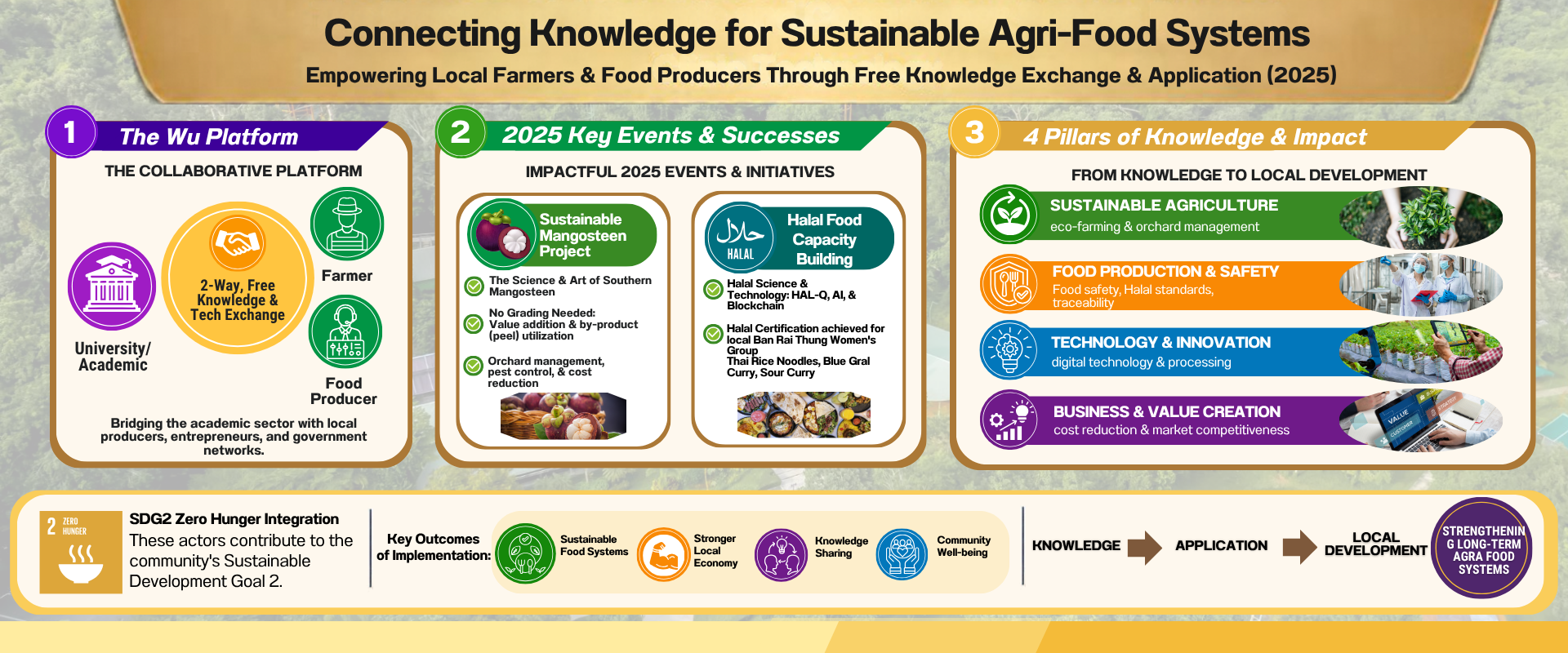
In 2025, Walailak University organized events and knowledge exchange forums free of charge for local farmers and food producers, creating opportunities for local producers to connect with academics, experts, government agencies, community enterprises, and producer networks. The events focused on the exchange of experience and the transfer of knowledge, technology, and innovation that could be applied to production, processing, quality improvement, and product value addition. Key events included the following.
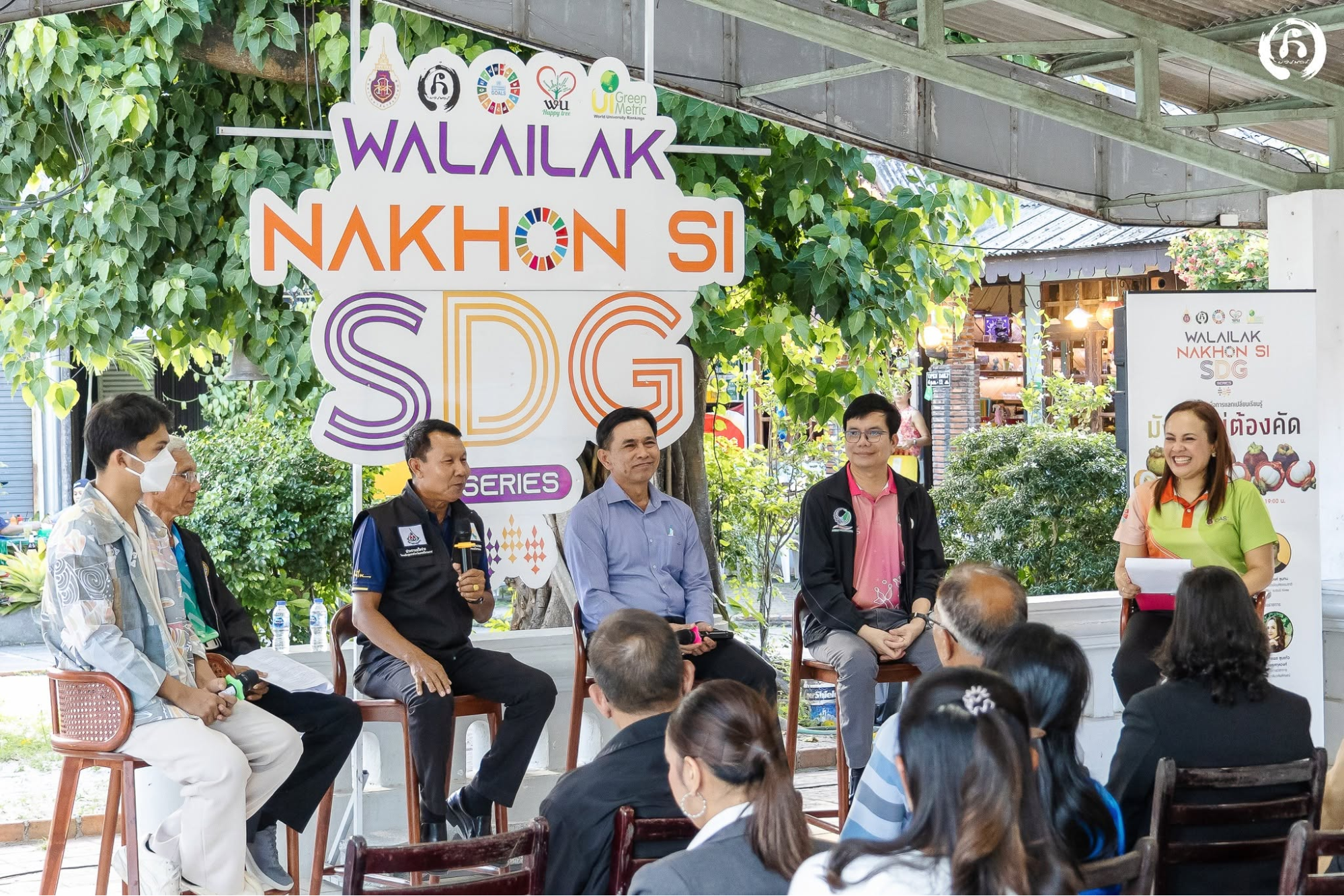
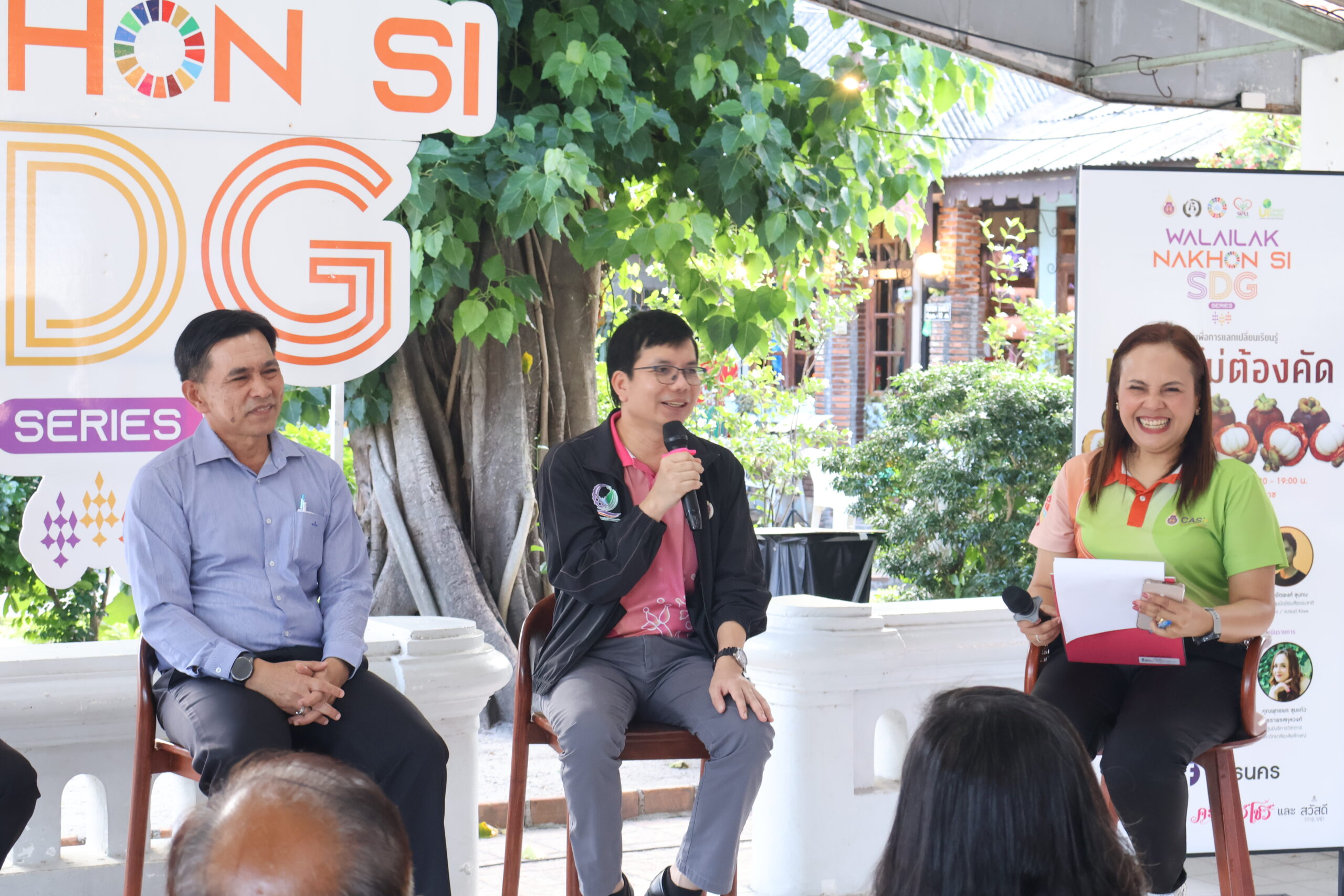
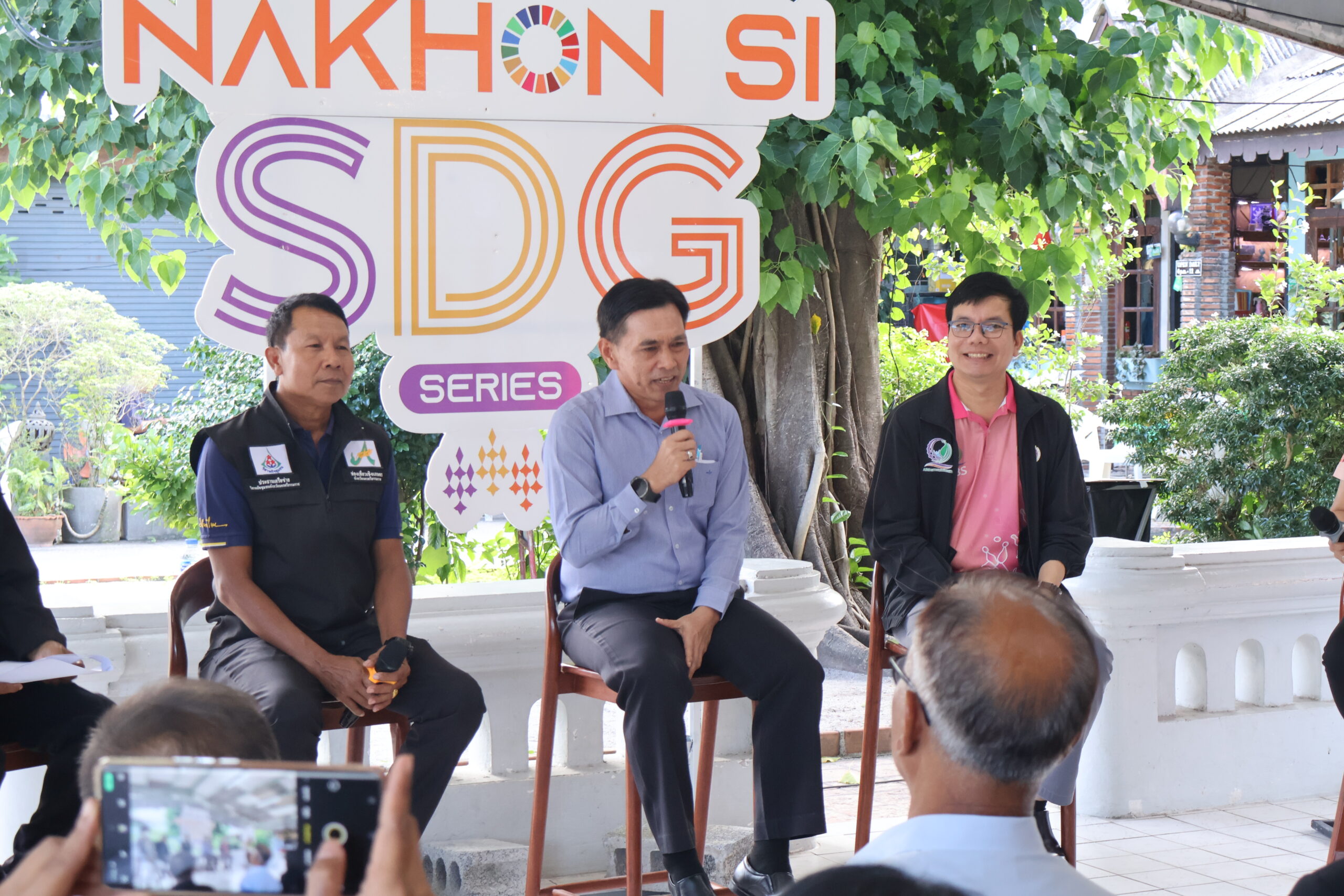
Walailak Nakhon Si SDG Series: “Mangosteen Does Not Need to Be Graded”
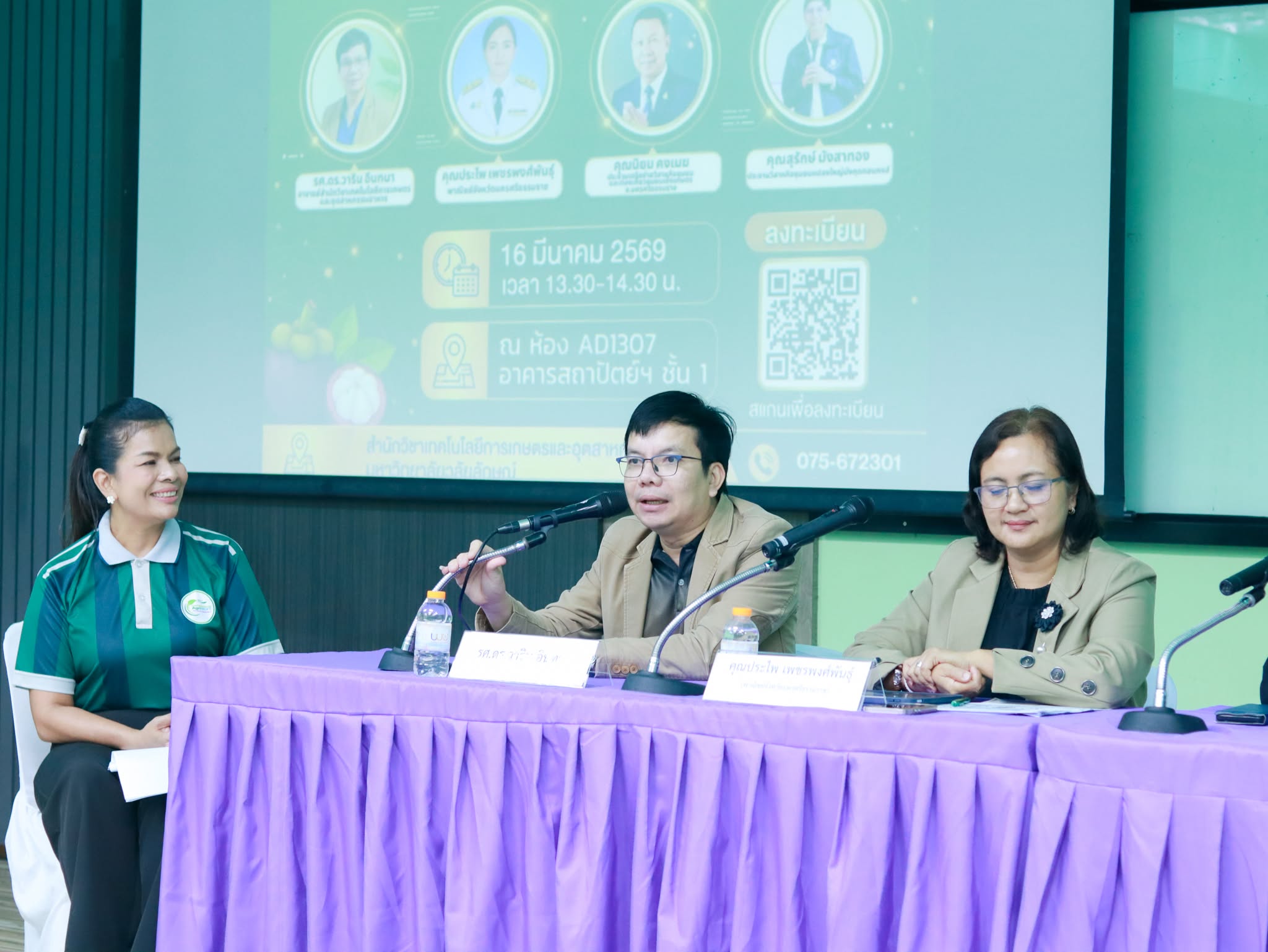
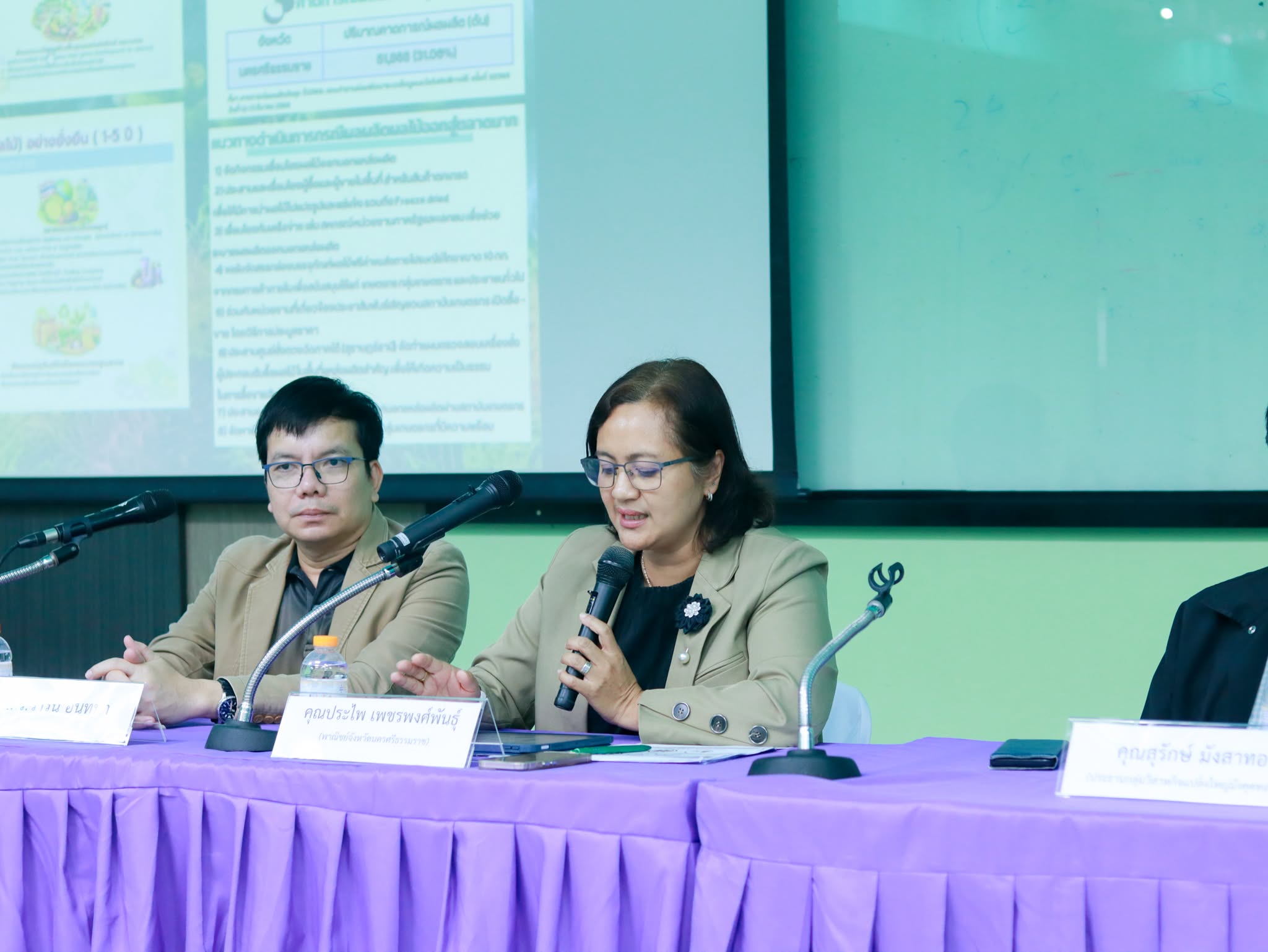
Walailak University, in collaboration with the Nakhon Si Thammarat Provincial Agriculture Office and agricultural and community networks, including the Chairperson of the Community Enterprise and Agro-Tourism Network, the Chairperson of the Cha-uat–Poolpol Large-Scale Mangosteen Farmers’ Group, and the Chairperson of the Kiriwong Natural Dye Group, organized the “WALAILAK Nakhon Si SDG SERIES” under the theme “Mangosteen Does Not Need to Be Graded” on 5 September 2025 at Bawon Nakhon (Tuk Yao Bowon Nakhon Building), Tha Wang, Mueang Nakhon Si Thammarat District, Nakhon Si Thammarat. The event was free of charge for mangosteen local farmers and food producers and provided a platform to connect farmers, academics, government agencies, and community entrepreneurs to exchange experience and transfer knowledge related to mangosteen production and value addition.
The knowledge exchange focused on improving production efficiency and reducing costs, as well as creating value from mangosteens of all grades. The event presented approaches for utilizing produce that may not meet conventional grading requirements, together with the utilization of mangosteen peels and agricultural by-products to develop products and create added value. Participants also exchanged production and post-harvest management experience with the Large-Scale Mangosteen Farmers’ Group in Cha-uat District, enabling learning from both academic knowledge and farmers’ practical experience.
The event therefore went beyond one-way knowledge transfer from the University to the community and functioned as a process of two-way knowledge exchange. Local farmers and food producers shared their practical experience, problems, and locally developed management approaches with academics and relevant agencies. At the same time, academic knowledge and innovation could be applied to improve production efficiency, reduce costs, develop product quality and standards, utilize agricultural products and by-products, and respond to market demand. This process supports the capacity of local farmers and contributes to sustainable local economic development.
Knowledge Transfer Activities for Local Halal Food Producers
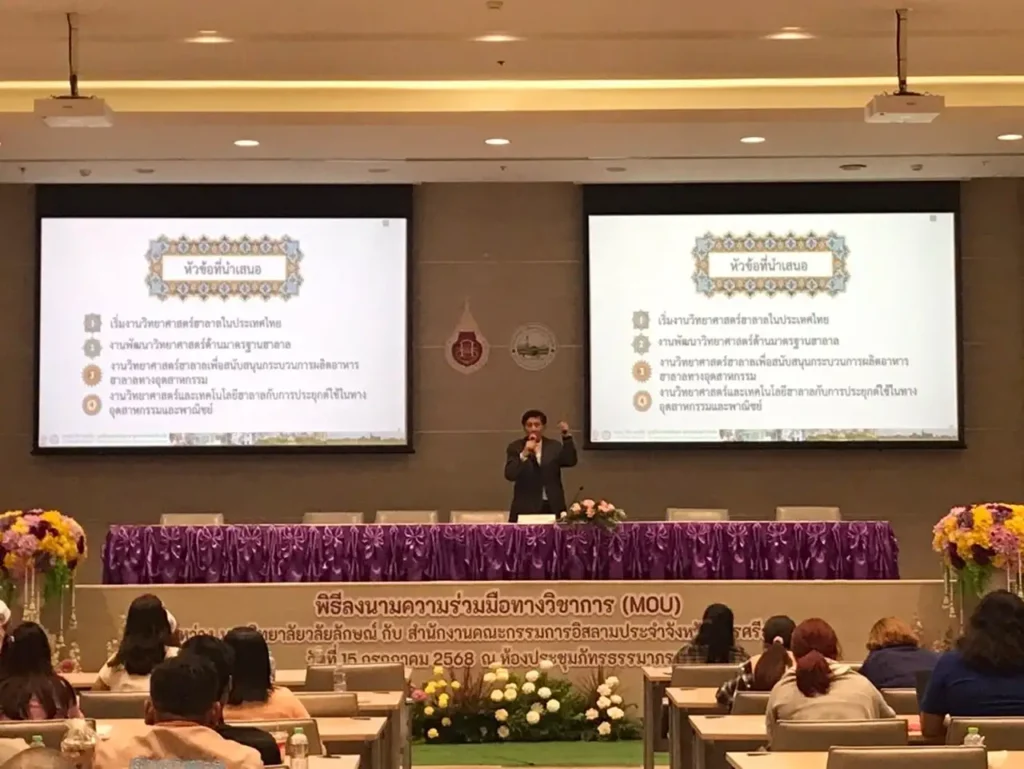
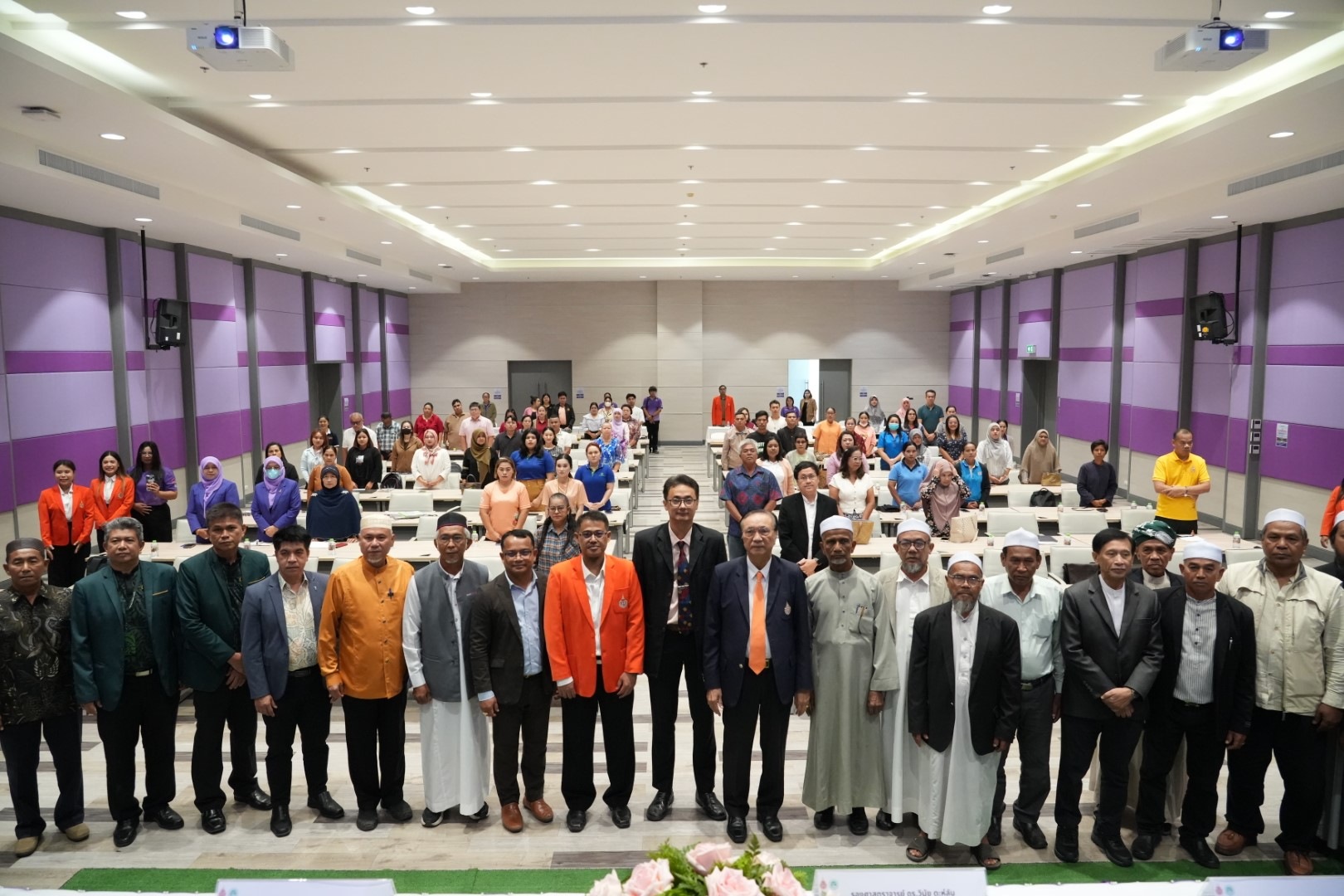
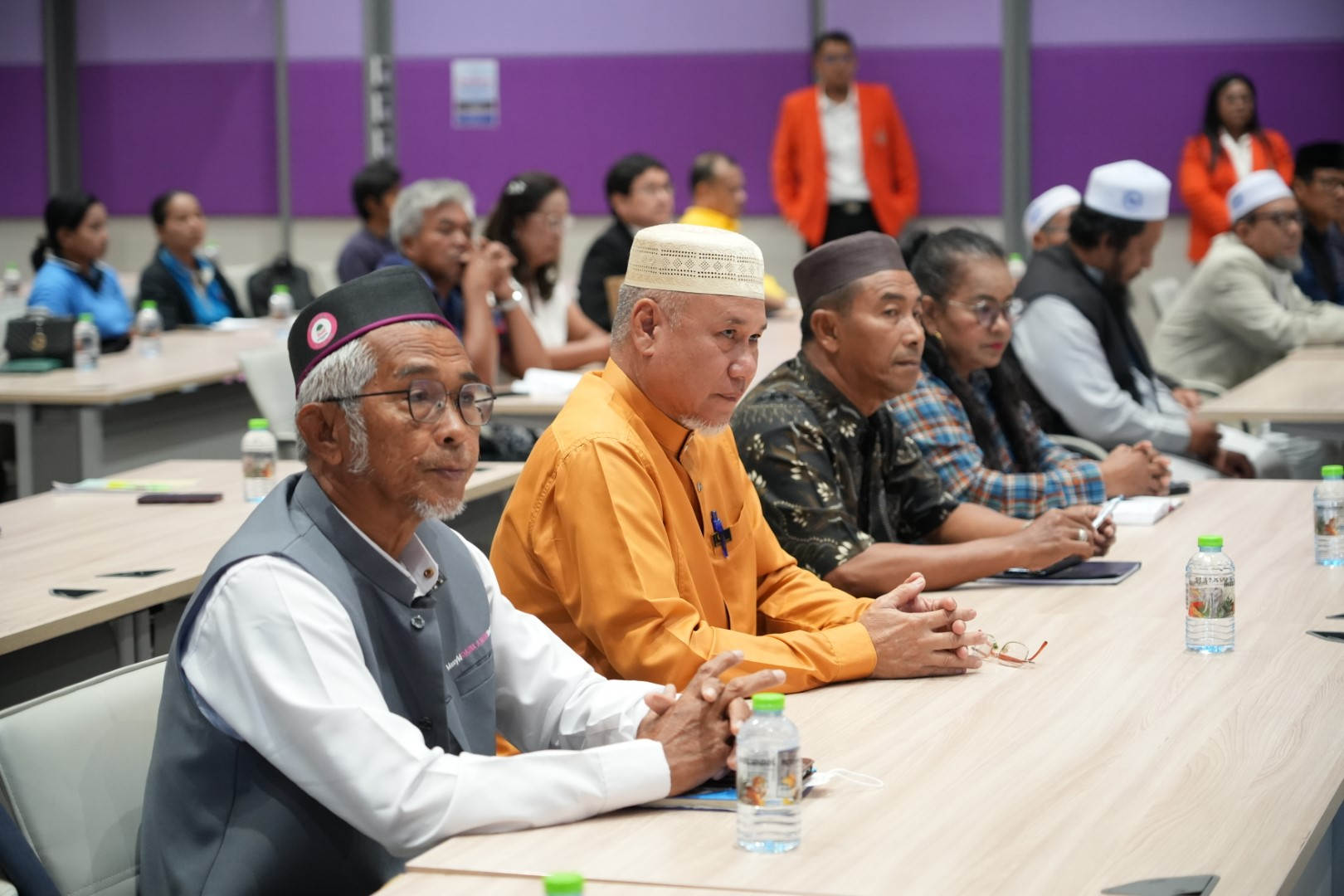
Walailak University, together with academic networks and religious organizations, organized “Capacity Development for Halal Entrepreneurs in Nakhon Si Thammarat” as a platform to connect and transfer knowledge among academic personnel, religious organizations, and local food producers. The event provided food producers with opportunities to learn from experts, exchange production experience, and apply knowledge related to Halal standards and food safety to their operations. Participation was free of charge.
The activity focused on the exchange of knowledge in Halal science, food safety, and innovation for food production. Participants gained knowledge about the application of the HAL-Q management system, the H Numbers database, Halal Blockchain, and Artificial Intelligence (AI) to support production standards, ingredient and raw-material verification, production transparency, traceability, and consumer confidence. This knowledge enabled local food producers to explore ways of applying science, technology, and standards to food production within the local context. In addition to transferring knowledge on Halal food production, the activity also connected knowledge with the development of Halal Routes, integrating safe food sources, places of worship, and local cultural experiences to create opportunities for food entrepreneurs and communities to develop tourism and food businesses connected with local identity. This process demonstrates that knowledge transfer was not limited to improving product standards but also connected food, religion, culture, and entrepreneurship.
The knowledge gained from the activity was integrated into local implementation and applied to support the development of the halal food production facility of the Ban Nai Thung Women’s Group. As a result, three food products—Thai Rice Noodles with Blue Crab Curry, Blue Crab Curry with Wild Betel Leaves, and Southern Thai Sour Curry with Fish—successfully received Halal certification. This outcome demonstrates a clear progression from knowledge exchange and transfer to practical application in production standards, food safety, traceability, and capacity building for local food entrepreneurs.
The activity therefore provided a platform for local food producers to connect with the academic sector and relevant networks. It enabled the exchange of scientific and technological knowledge from the university alongside the practical production experience and local context of entrepreneurs, which could be further applied to improve the standards, quality, safety, and competitiveness of local food products.
Walailak Agriculture Event: The Science and Art of Southern Mangosteen
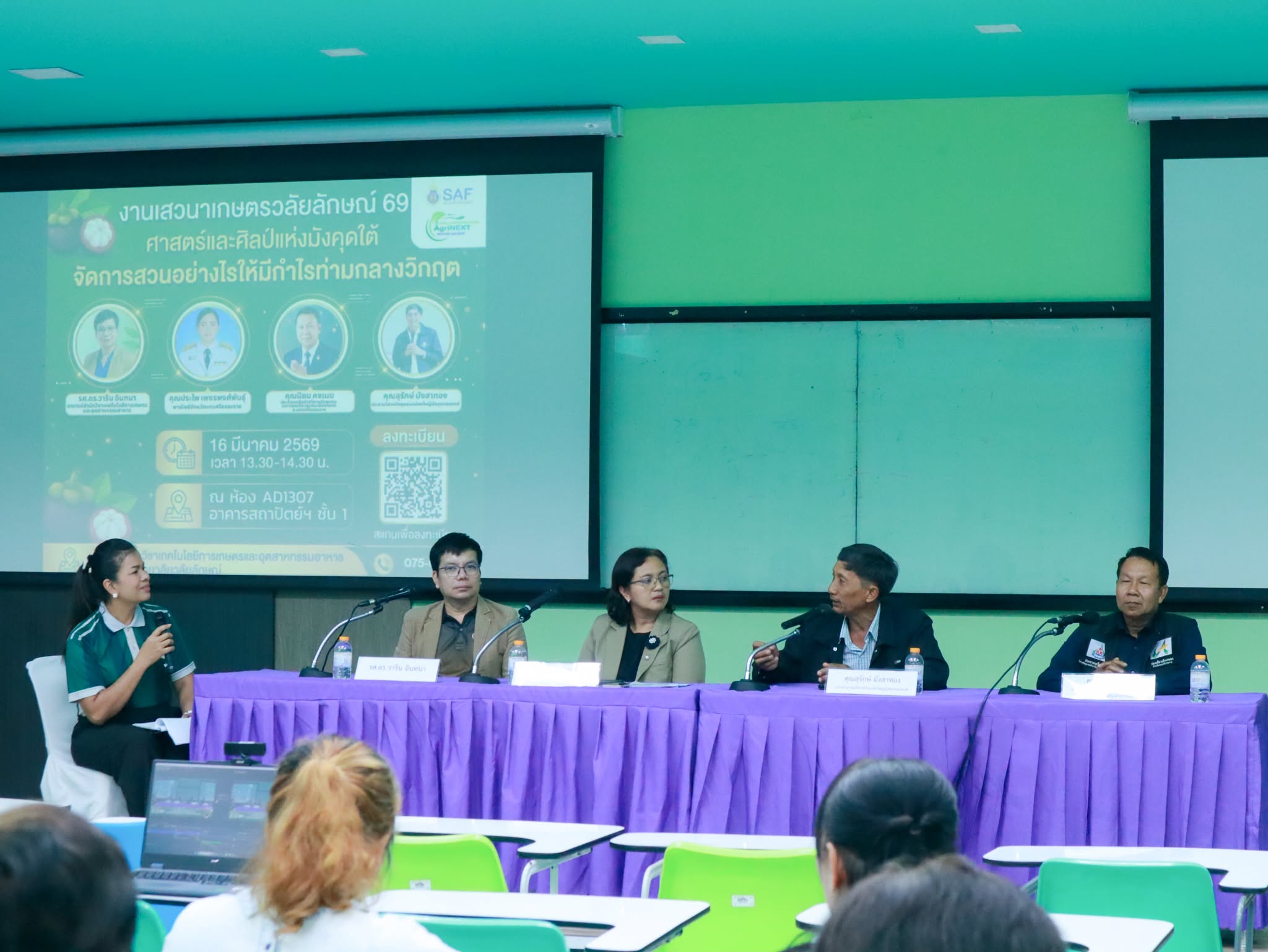
Walailak University organized the Walailak Agriculture Event under the theme “The Science and Art of Southern Mangosteen” as a forum for knowledge exchange and transfer for local farmers and food producers. Participation was free of charge. The event connected academics, experts, government agencies, farmers, and local producers, providing opportunities to exchange knowledge and experience related to mangosteen orchard management and approaches to addressing agricultural challenges in the southern region.
The event focused on knowledge that could be applied at the farm and orchard level, including efficient mangosteen orchard management, production cost reduction, productivity improvement, biological pest management, sustainable orchard management, and approaches to adapting to current agricultural challenges. The knowledge exchange connected scientific and technological knowledge from the academic sector with the practical experience and management approaches of local farmers. The activity emphasized two-way knowledge exchange. Academics and experts transferred knowledge on science, technology, and orchard management, while local farmers and food producers shared practical experience, problems, constraints, and management approaches developed within their own local contexts. This process enabled knowledge from both sides to be exchanged, analyzed, and adapted to the actual production conditions of local farmers.
The knowledge exchanged through the event can be applied to support more efficient orchard management, including reducing production costs, improving productivity, managing pests, using resources appropriately, and responding to agricultural challenges. At the same time, farmers’ experience and knowledge helped communicate the problems and needs of the production sector back to the academic community, providing information that can support further knowledge development and context-specific solutions.
The Walailak Agriculture Event therefore serves as a knowledge exchange and transfer platform connecting the university with local farmers and food producers through joint learning between academic knowledge and practical experience. The forum aims to enable the knowledge exchanged to be applied to agricultural production, cost reduction, productivity improvement, and the sustainability of local farming communities.
Forms of Knowledge Generated through the Events
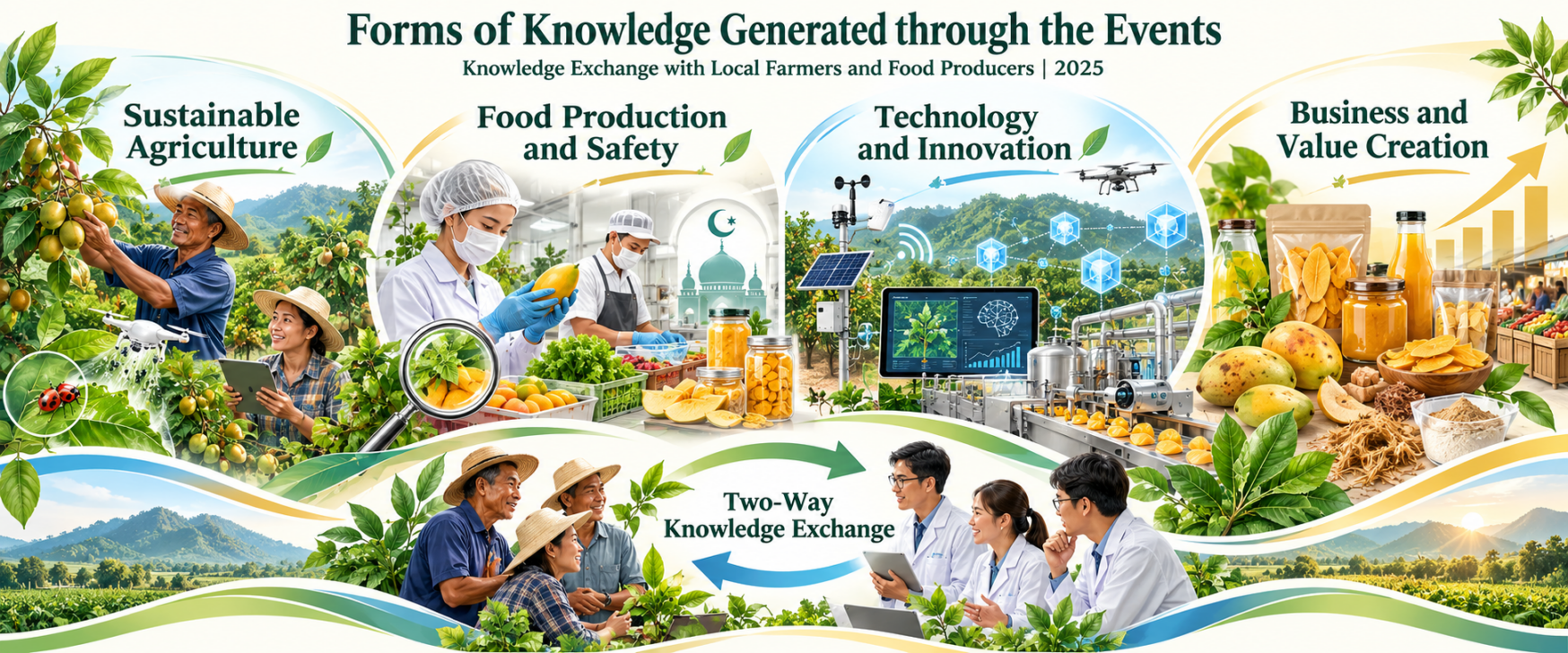
The knowledge exchange and transfer events for local farmers and food producers in 2025 covered knowledge related to food production, agriculture, technology, innovation, and business development. The knowledge from each event was interconnected and could be applied according to the context of farmers and local producers. Four key areas of knowledge were identified.
Sustainable Agriculture
The events transferred knowledge on agricultural practices that support efficient and sustainable production, including orchard management, production efficiency, loss reduction, biological pest control, and sustainable farming practices. This knowledge was connected with farmers’ practical experience, allowing it to be adapted to different environmental conditions and production challenges.
Food Production and Safety
In food production and safety, the events transferred knowledge on food safety, Halal standards, ingredient verification, and traceability to support food producers in improving production processes and product standards. The knowledge also supports greater transparency and consumer confidence and can be applied to food production processes at the community and local-enterprise levels.
Food Technology and Innovation
The events also provided opportunities for local farmers and food producers to learn about and exchange knowledge on the application of technology and innovation in production and product development, including Artificial Intelligence (AI), blockchain, agricultural technology, and processing technology. These technologies can support product quality assessment, traceability, data management, production-process development, and the creation of products that respond to market demand.
Business and Value Creation
The knowledge generated through the events also covered economic and value-creation dimensions, including cost reduction, by-product utilization, product development, value addition, and market competitiveness. In particular, the utilization of produce with grading limitations and agricultural by-products creates opportunities to generate new value and reduce losses within the food production system.
Overall, the three events were not conducted as one-way knowledge transfer from the university to farmers. Instead, they functioned as a process of two-way knowledge exchange, in which academics and experts brought scientific knowledge, technology, and innovation to exchange with farmers and food producers, while participants from the production sector shared practical experience, problems, needs, and knowledge developed within the local context. This process transformed individual and local experience into shared learning that can be adapted to improve agricultural and food production, food safety, quality, value addition, and the competitiveness of local producers.
From Knowledge Exchange to Practical Application
Walailak University’s knowledge exchange events connected academic expertise with local producers’ experience to support practical improvements in agriculture and food production. Mangosteen-related activities explored orchard management, cost reduction, biological pest control, and the use of ungraded fruit and by-products to reduce losses and create added value. For Halal food producers, knowledge of food safety, Halal standards, and digital traceability was applied to developing the Ban Nai Thung Women’s Group’s production facility. These activities supported the progression from knowledge exchange to practical application, strengthening resource efficiency, product quality, value addition, and local producers’ capacity, while their feedback informed continued joint learning with the university.
Related Links
– https://www.wu.ac.th/th/news/25750