Sustainable Land Allocation and Development to Minimise Water Usage at Walailak University in 2025
Sustainable Land Allocation and Development to Minimise Water Usage at Walailak University in 2025
Walailak University (WU) covers more than 21,000,000 square metres and prioritises water-conscious planting and landscape management to minimise water usage across its extensive campus. The university applies sustainable landscape planning and planting practices, including the selection of drought-tolerant plants and species with low water requirements, to reduce water consumption in green space maintenance and agricultural activities. These practices are integrated with land use planning, landscape design, efficient irrigation systems, and agricultural technologies to promote responsible water resource use. Through the establishment and maintenance of water-efficient landscapes, the university aims to minimise water usage while supporting plant genetic resource conservation, biodiversity protection, and the development of learning spaces for sustainable natural resource management.
Cactus Dome
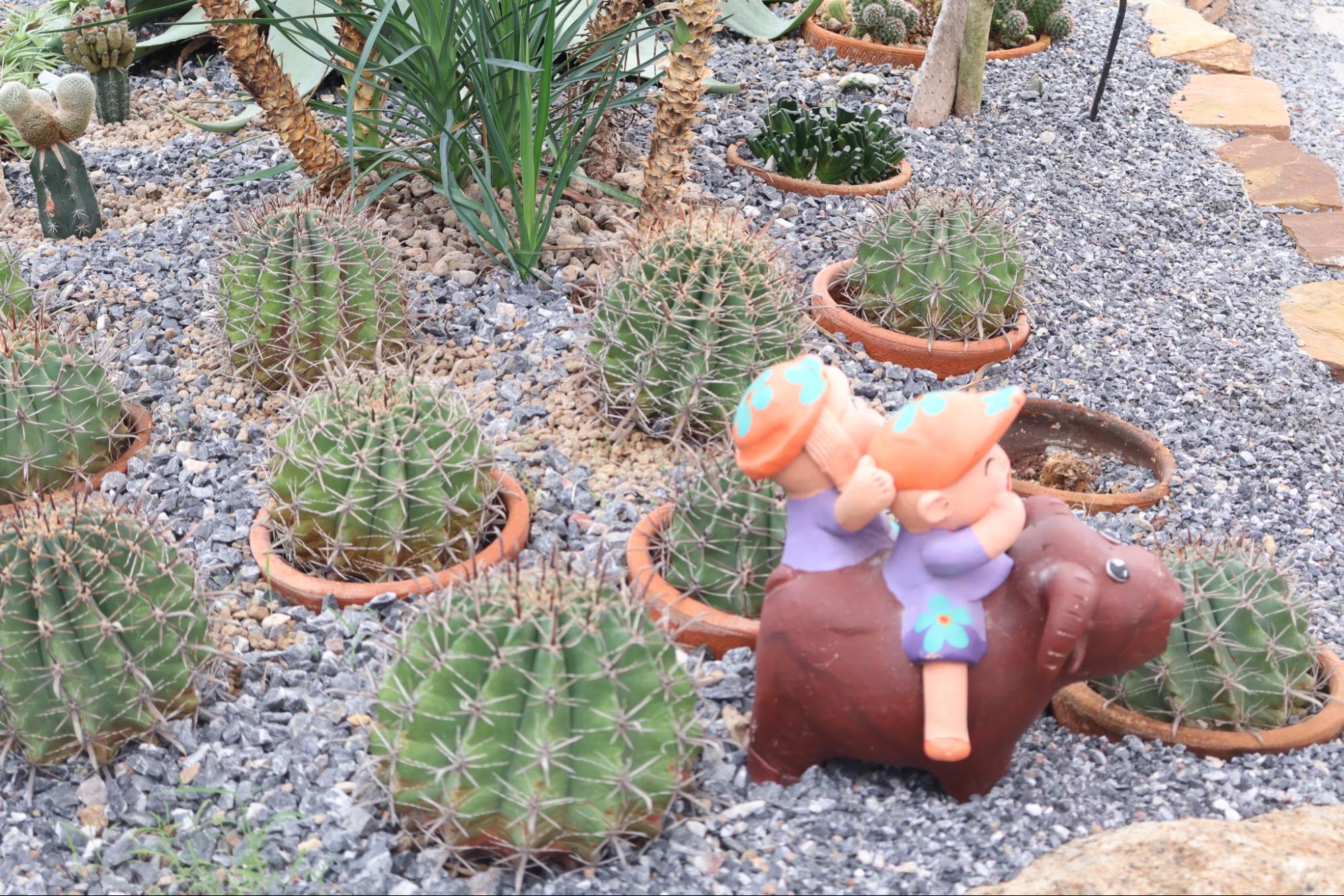
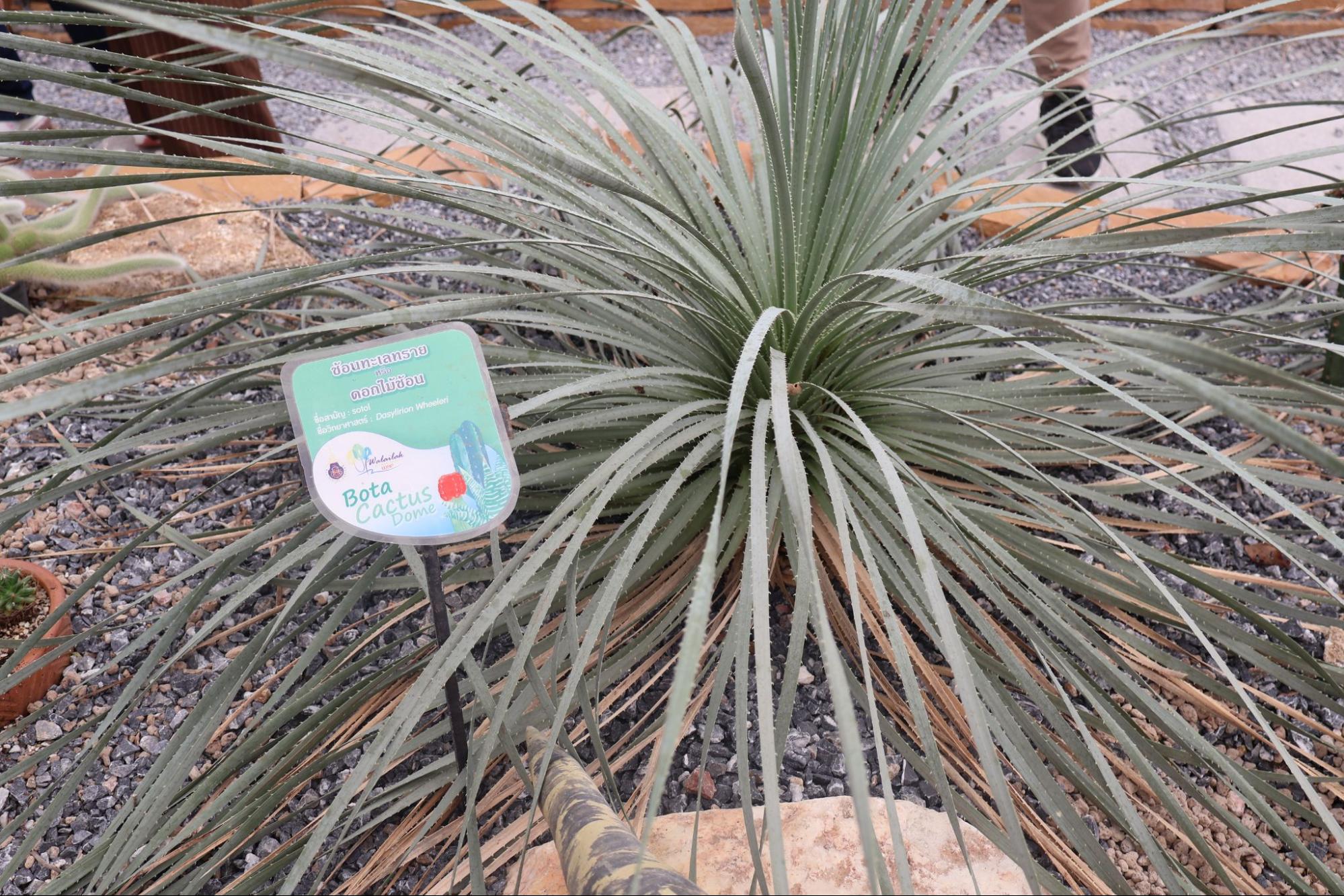
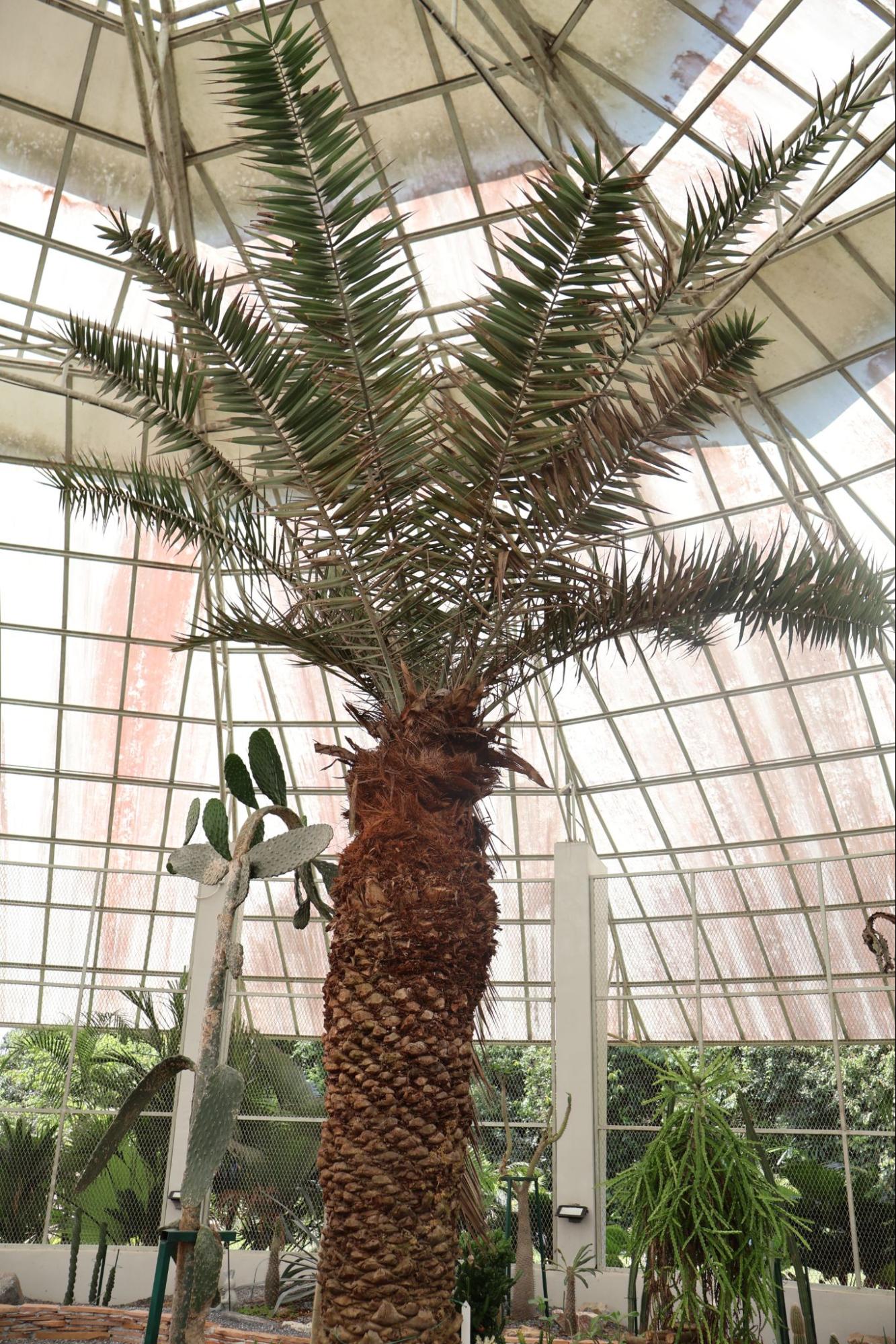
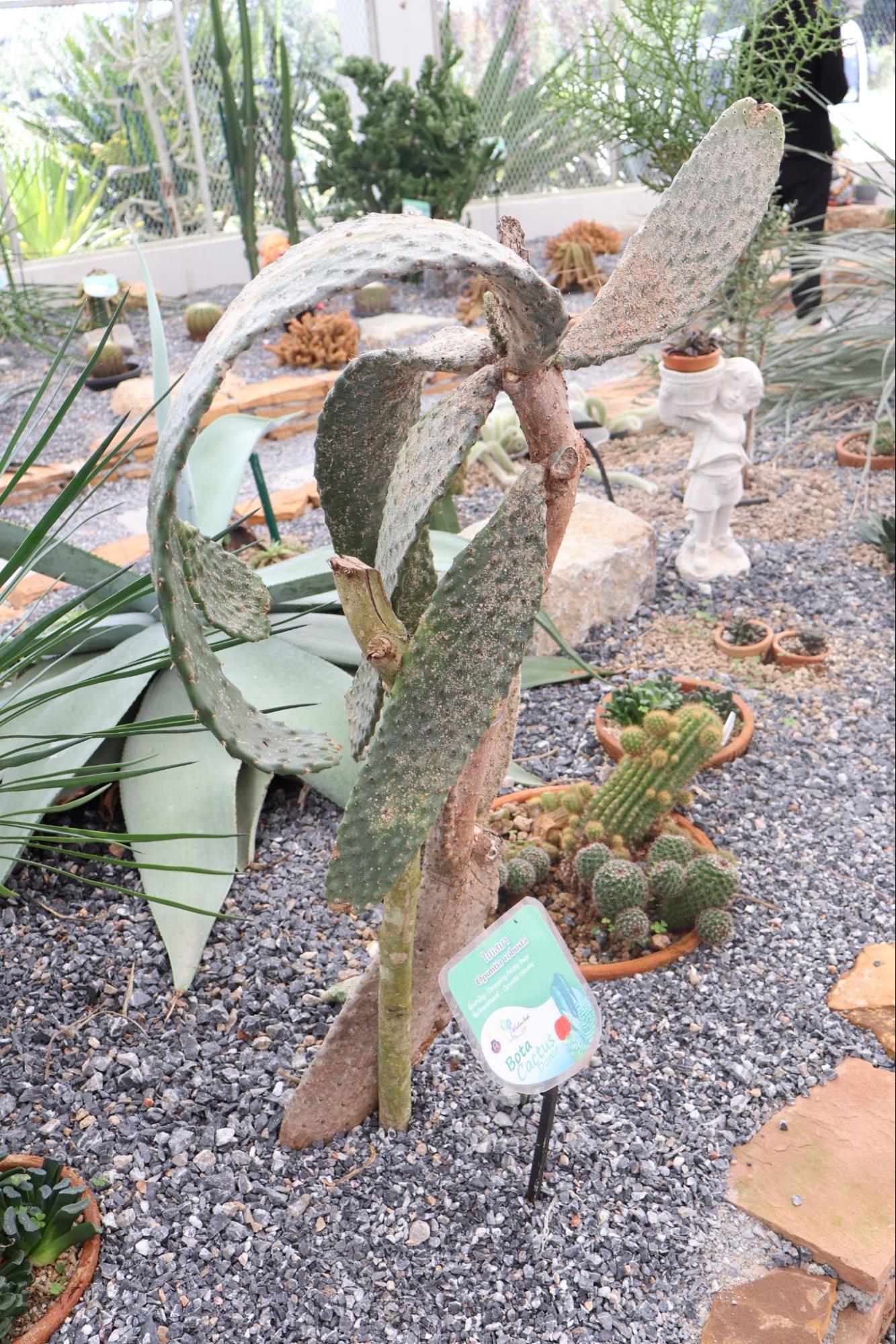
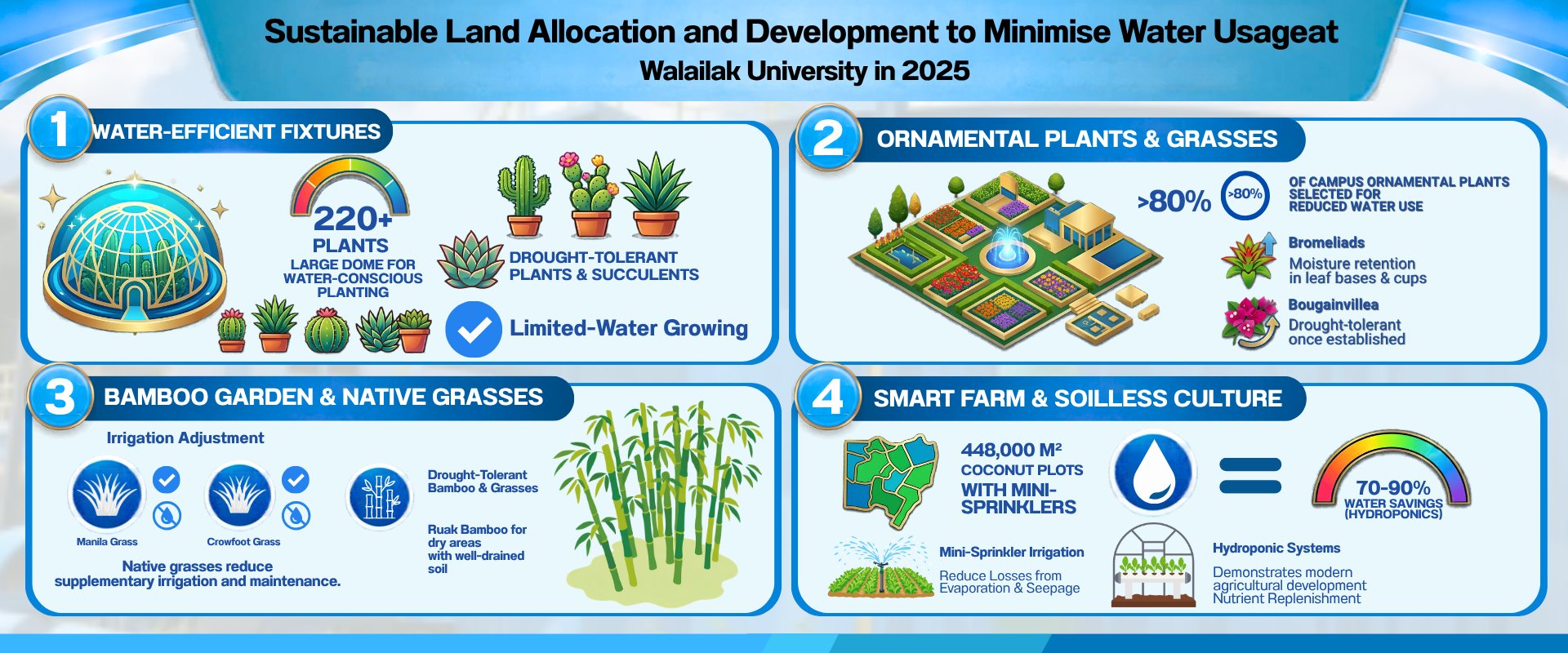
The BOTA CACTUS DOME is one of the large cactus domes in southern Thailand and serves as a learning space for water-conscious planting and landscape design. It houses more than 220 plants, including drought-tolerant plants and succulents, with collections encompassing the cactus family, succulents, the palm family, and other rare plants. Planting within the dome focuses on selecting plants suited to their environment, particularly those capable of growing under limited water conditions, alongside water management tailored to each plant type. The dome therefore demonstrates how to plant landscapes to minimise water usage through landscape design and plant selection. It also serves as a plant genetic resource conservation site and an environmental learning space for students, staff and visitors.
Ornamental Plants and Native Grasses
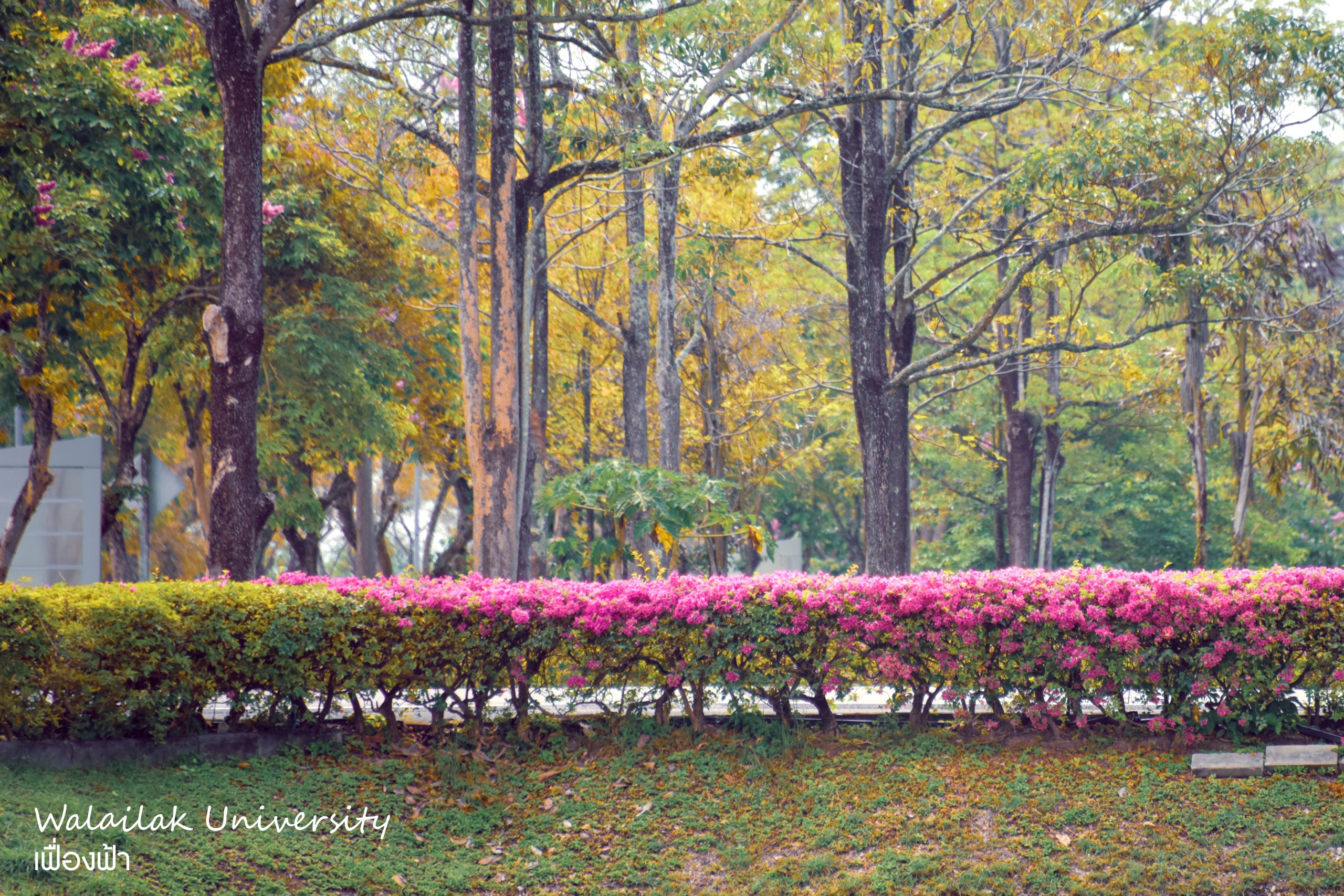
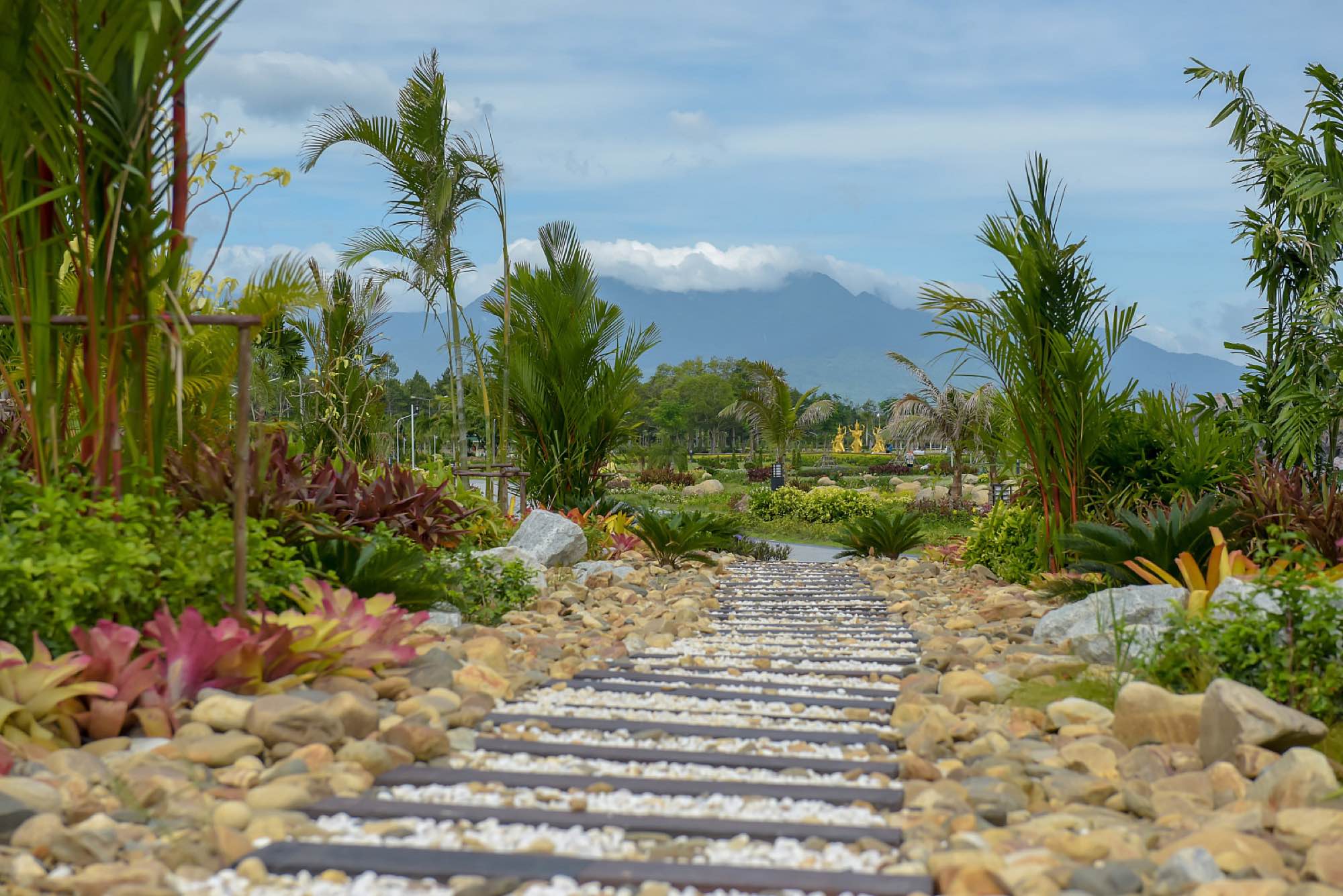
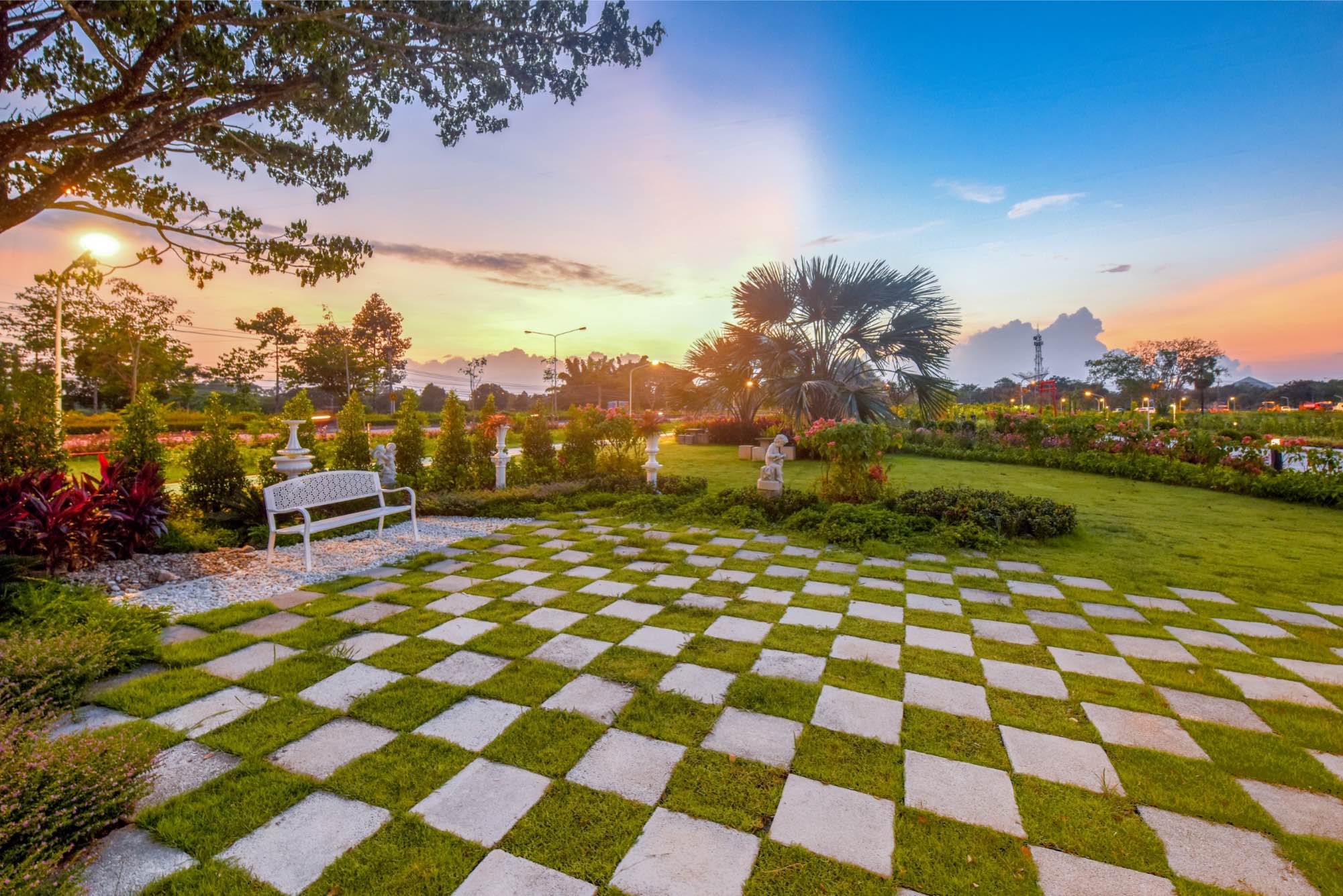
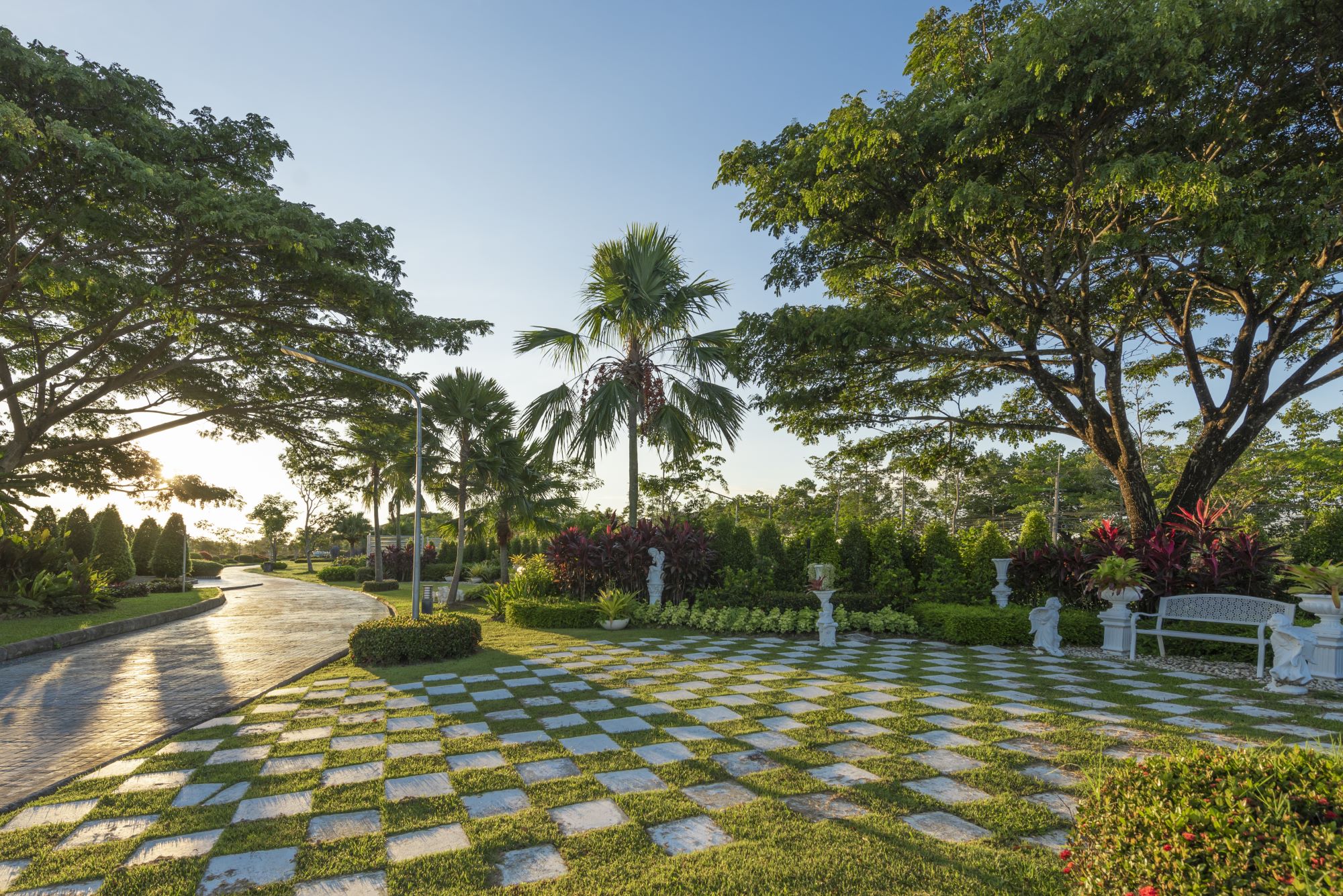
The university allocates ornamental gardens and areas around buildings for plants and grasses suited to Thailand’s climate. Plants selected to support reduced water usage account for more than 80% of all ornamental plants on campus. This plant selection helps reduce outdoor water demand and dependence on tap water while adding beauty and colour to the landscape, supporting the sustainable development of buildings and green spaces.
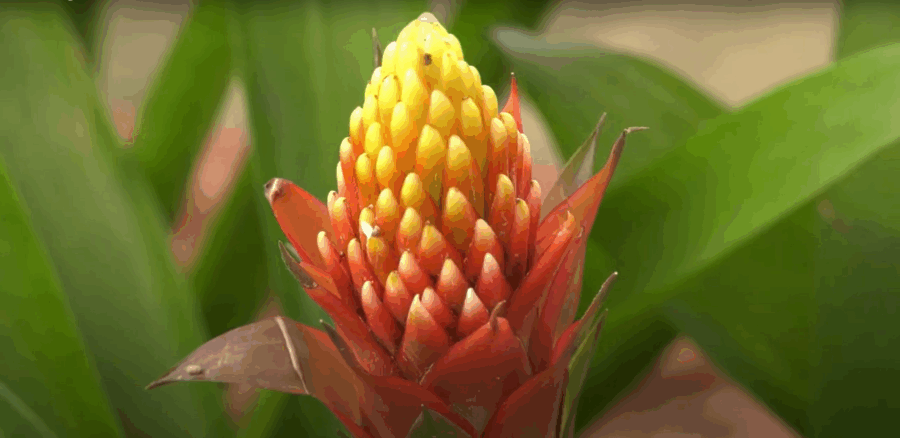
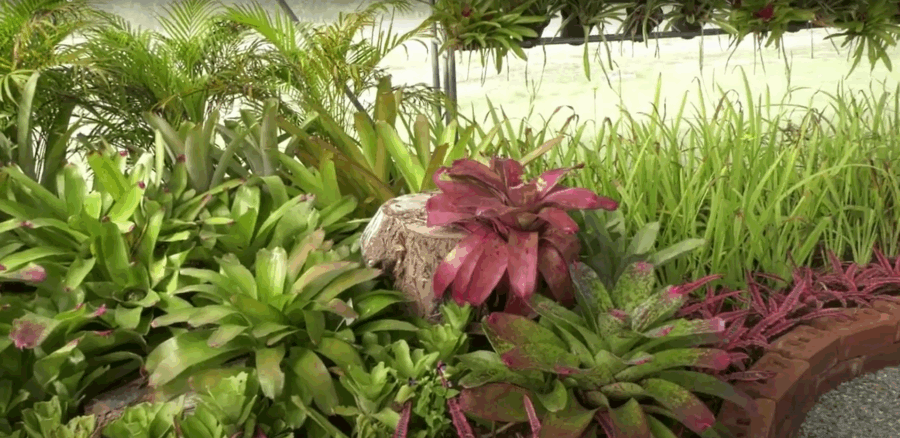
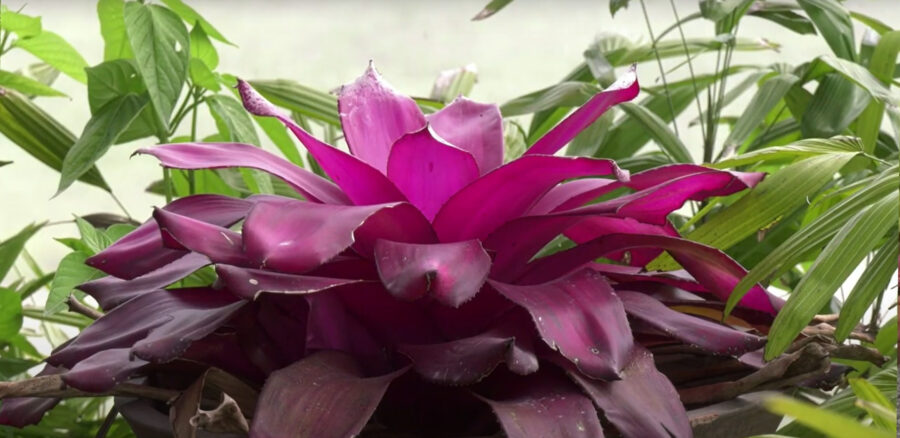
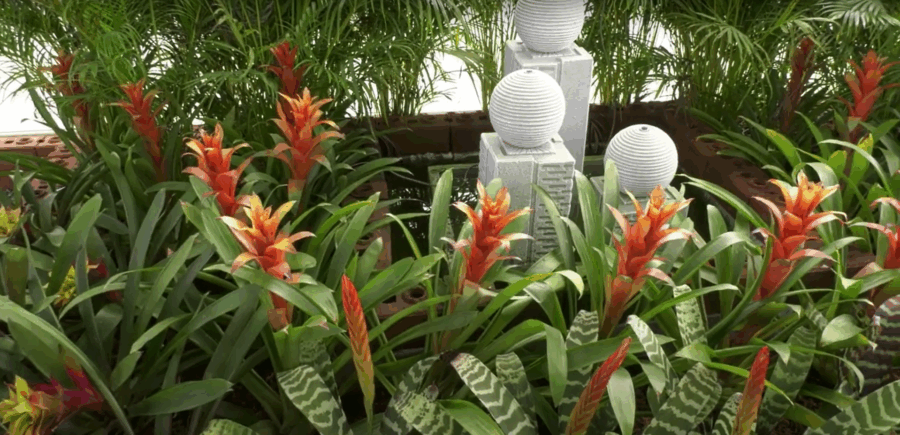
The university designates areas for bromeliads, which are ornamental plants suited to Thailand’s climate. The documentation records 22 varieties and lists the following plants in these areas: Cryptanthus ‘Elaine’ hybrid, Vriesea ‘Christiane Variegated’ hybrid, Neoregelia ‘Fireball’ hybrid, Neoregelia cruenta, Cryptanthus ‘Arlety’ hybrid, Cryptanthus zonatus (Vis.) Beer, Neoregelia ‘Green Ninja’ hybrid, Tillandsia usneoides (L.) L., Dypsis lutescens, Neomarica longifolia (Link & Otto) Sprague, Neoregelia carolinae f. tricolor (M.B.Foster) M.B.Foster ex L.B.Sm., Nidularium ‘Rutilans’ hybrid, Nidularium ‘Leprosa’ hybrid, Ananus lucidus, Neoregelia marmorata hybrid, Neoregelia ‘Orange Glow’ hybrid, Aechmea blanchetiana, Vriesea ‘Fenestralis’ hybrid, Neoregelia ‘Purple Star’ hybrid, Vriesea ‘Tiffany’ hybrid, Neoregelia ‘Grove’s Red Tiger’ hybrid, and Bromelia aechmea. Many bromeliads retain moisture in their leaf bases and central cups, helping reduce watering frequency. Their use in ornamental gardens supports water-conscious planting while increasing the diversity of plant forms and colours on campus.
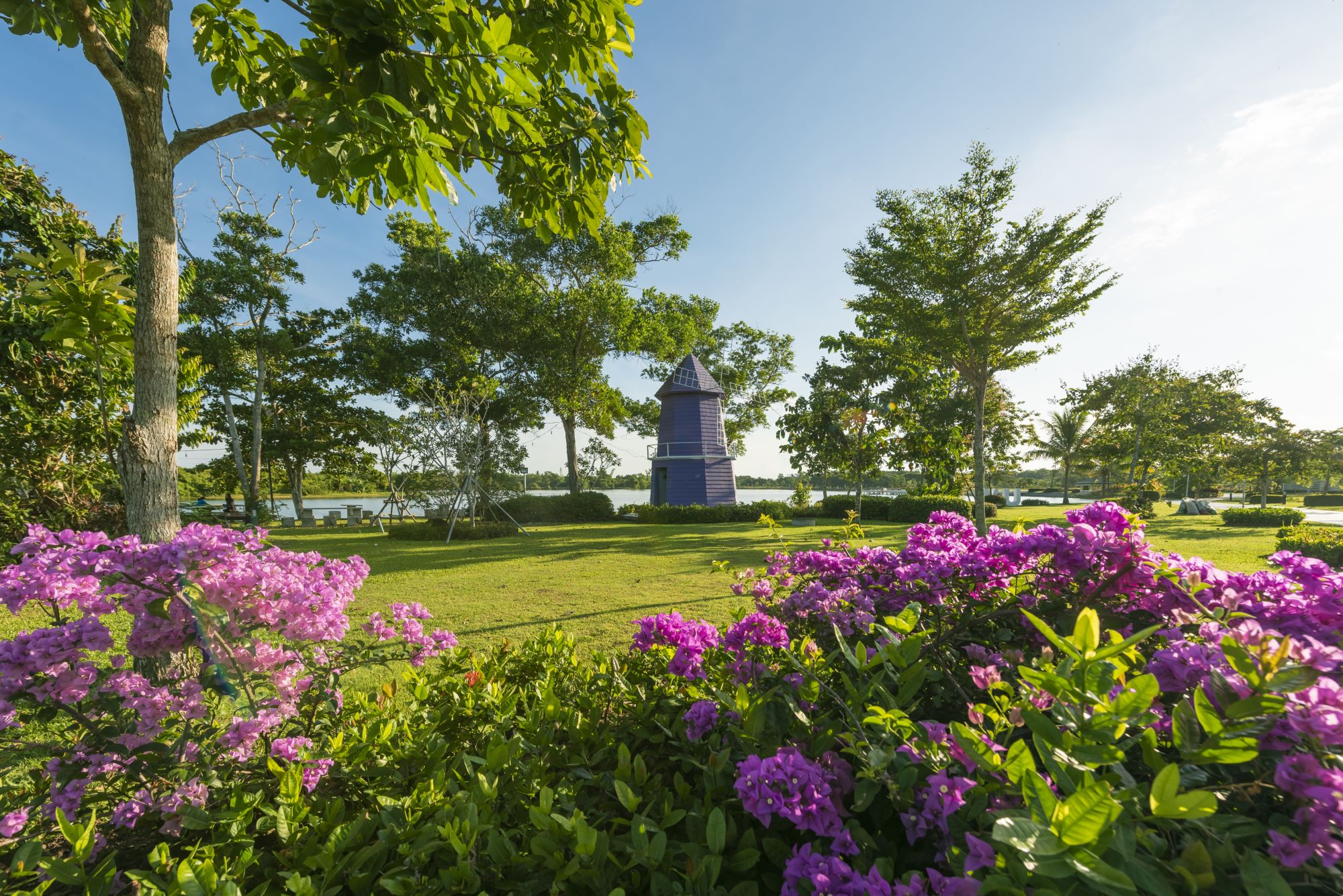
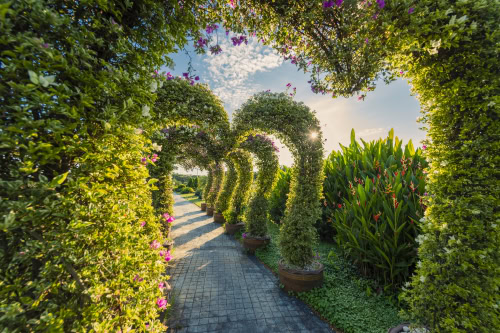
The university plants bougainvillea in ornamental gardens and around buildings as part of its approach to minimising landscape water usage. Bougainvillea adds colour to outdoor areas and is maintained through watering and pruning appropriate to site conditions. Bougainvillea is a drought-tolerant ornamental plant with low water requirements once established. Planting it in suitable locations therefore reduces the need for supplementary irrigation in landscape maintenance.
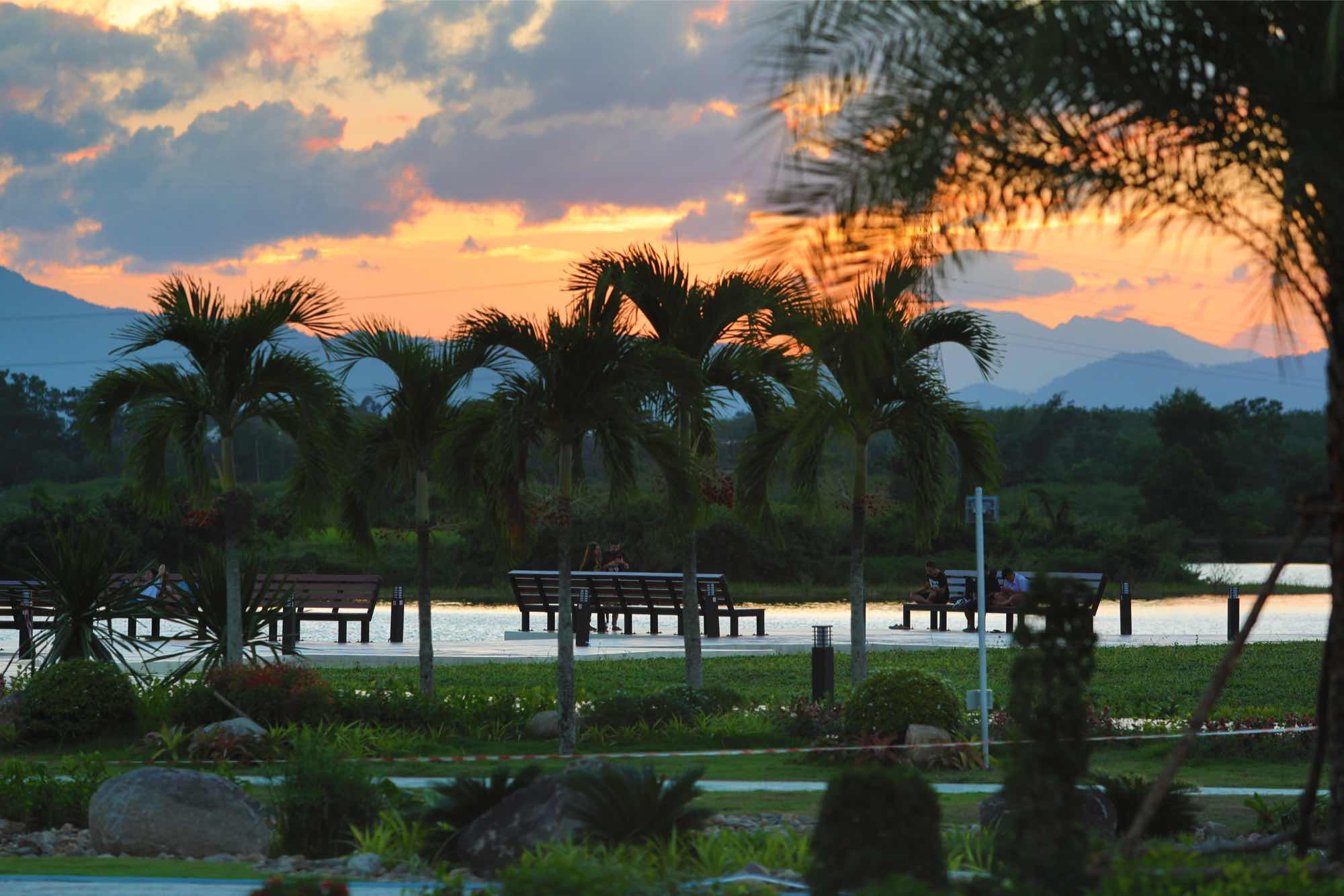
The university uses lady palms in gardens and around buildings to provide greenery and shade. Planting and maintenance appropriate to site conditions form part of landscape management that considers plant water requirements and efficient resource use. Lady palms can tolerate drought once established and are suitable for shaded or partially shaded areas. The university adjusts watering according to soil moisture and weather conditions to avoid unnecessary water usage. Areca palms are among the ornamental plants used in the university’s landscapes. They enhance the appearance and plant diversity of ornamental gardens and form part of green spaces maintained through appropriate care and watering. Areca palms have moderate drought tolerance and can grow in sunny or partially shaded locations. Watering should be adjusted according to soil moisture and weather conditions to meet plant needs while avoiding excessive irrigation.
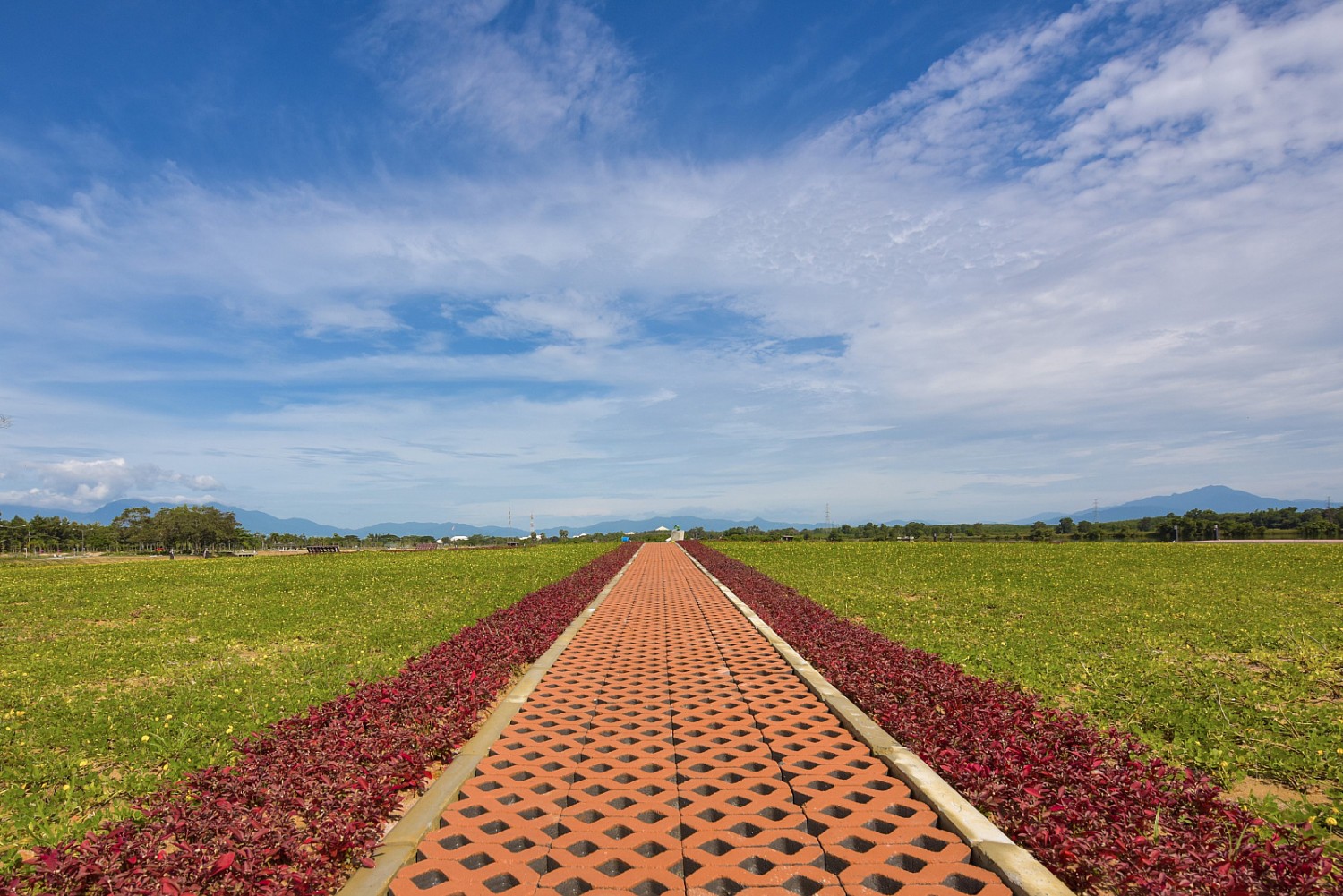
Crowfoot grass is among the ground-cover plants identified in the documentation as being used in the university’s landscapes. Selecting grasses suited to the climate helps maintain green spaces and reduce maintenance requirements, with watering and mowing adjusted to site conditions and seasonal changes. Crowfoot grass can adapt to dry conditions. Retaining grass that grows under existing environmental conditions therefore has the potential to reduce supplementary irrigation needs, with site management and watering adjusted to the season. Additionally, manila grass (Zoysia matrella) is used in the university’s lawns and ornamental gardens. It forms part of the selection of plants suited to the local climate to maintain attractive landscapes while supporting reduced water usage. Manila grass is a drought-tolerant ground-cover grass with moderate water requirements. Adjusting irrigation according to soil moisture, rainfall, and grass condition helps avoid unnecessary watering in green space maintenance.
Bamboo Garden
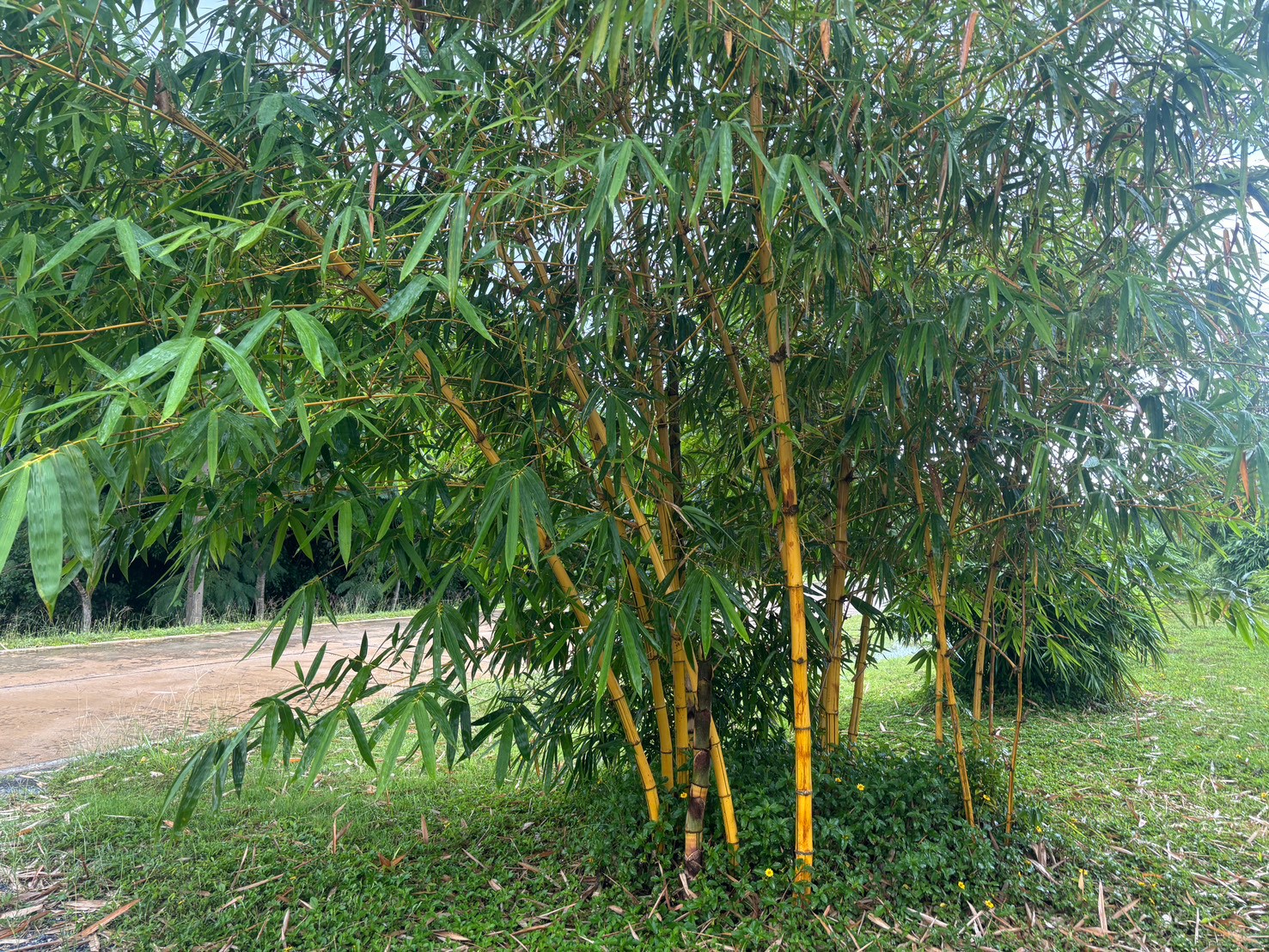
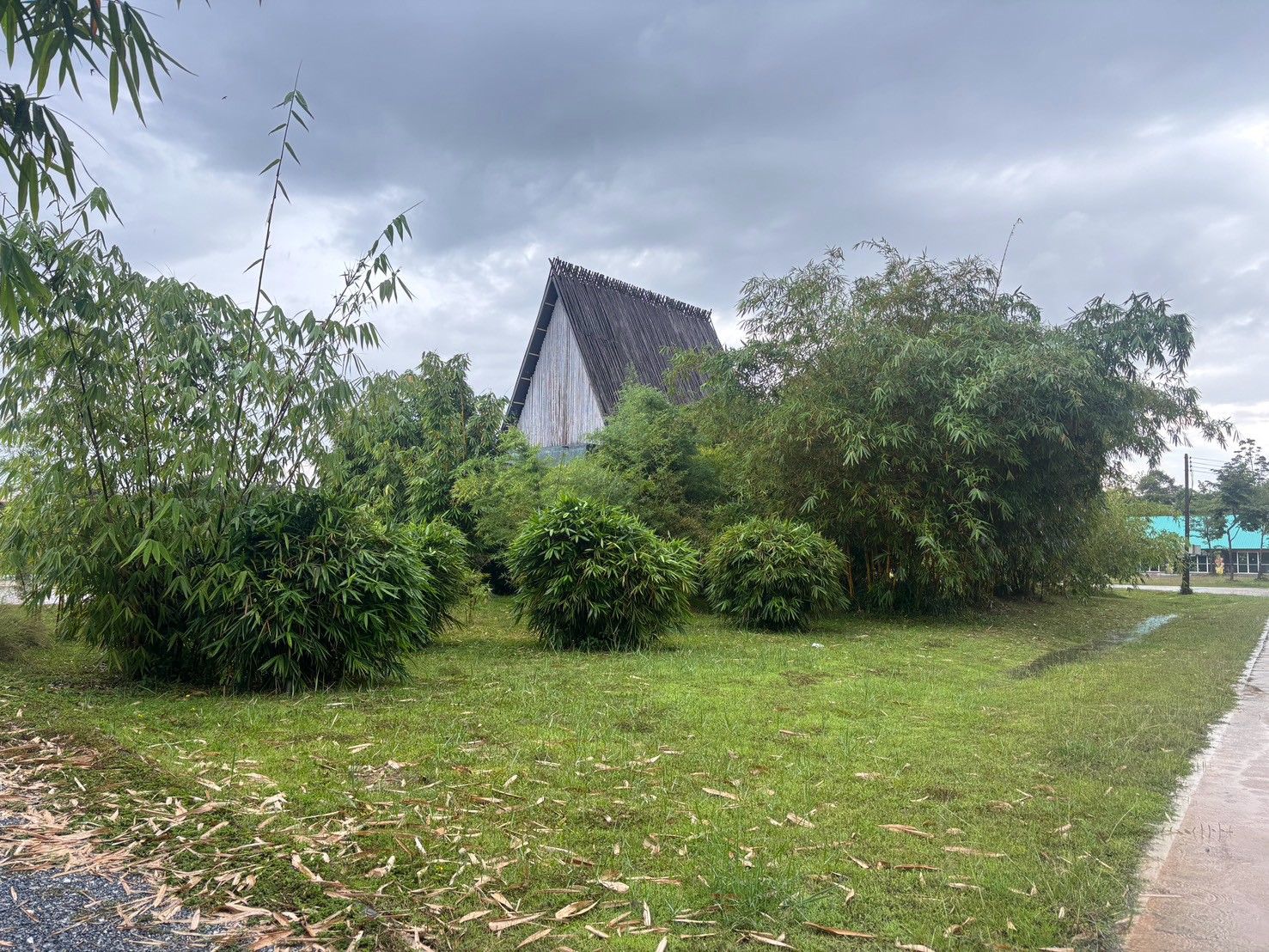
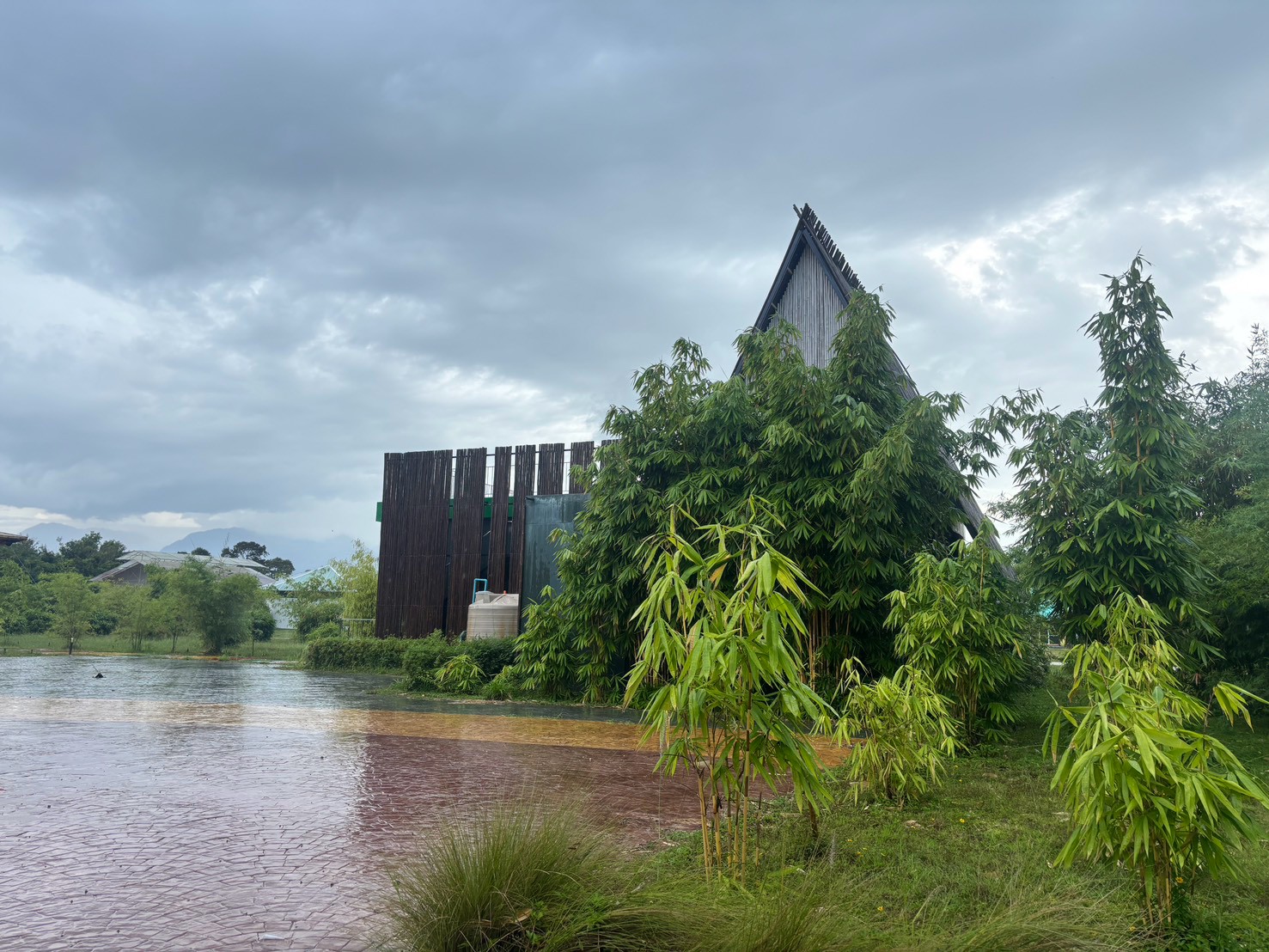
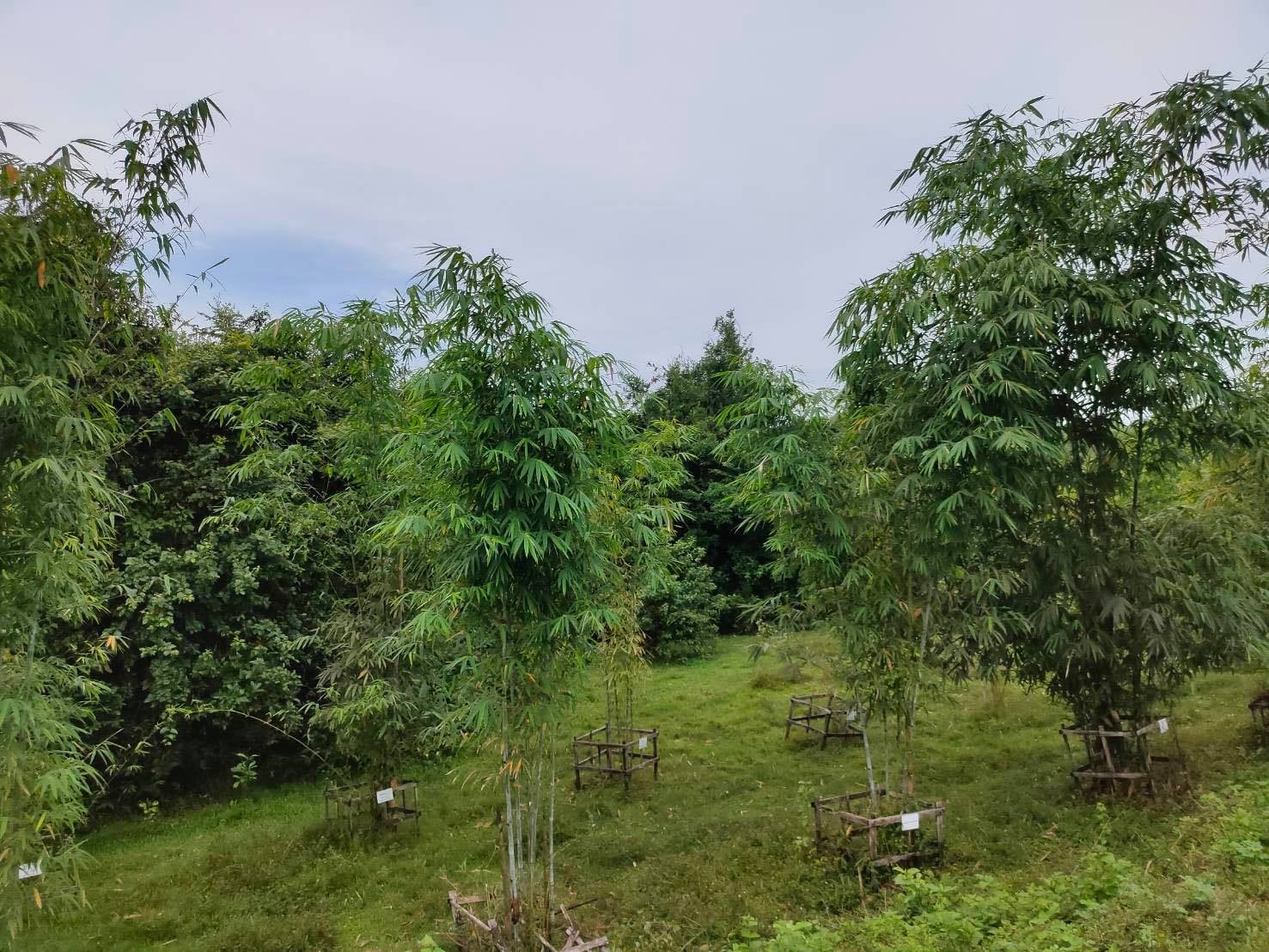
Walailak University maintains a diverse collection of bamboo species in its Bamboo Garden as a learning resource on plant diversity. Some bamboo species are drought-tolerant, including Ruak bamboo, which can grow in dry areas with well-drained soil. These characteristics offer options for landscape planting suited to site conditions, taking into account the water requirements of each bamboo species and its growing environment. The Bamboo Garden therefore serves both as a plant collection and as a learning space for selecting plants that support appropriate water resource use.
Fruit Crop Plots
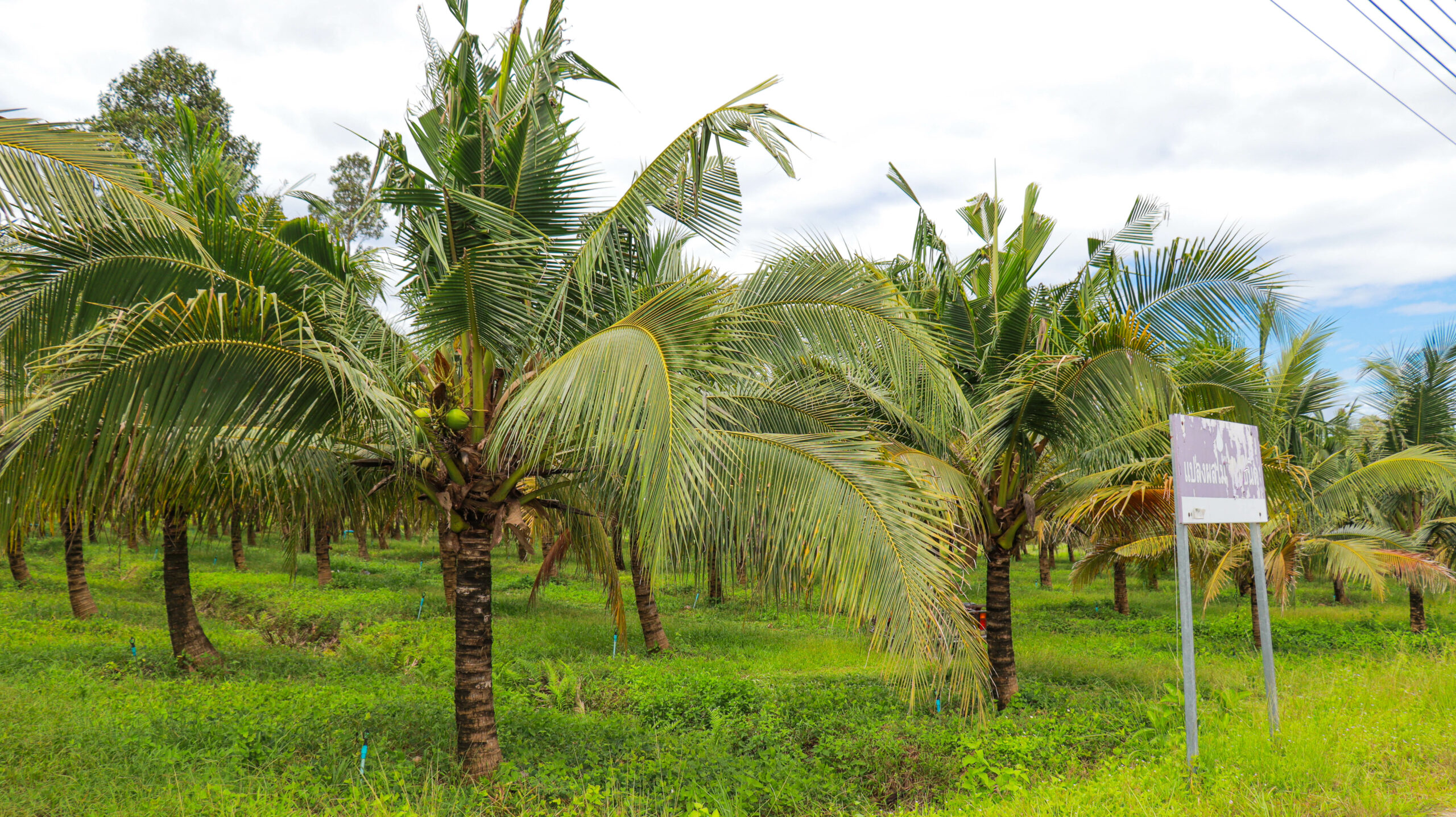
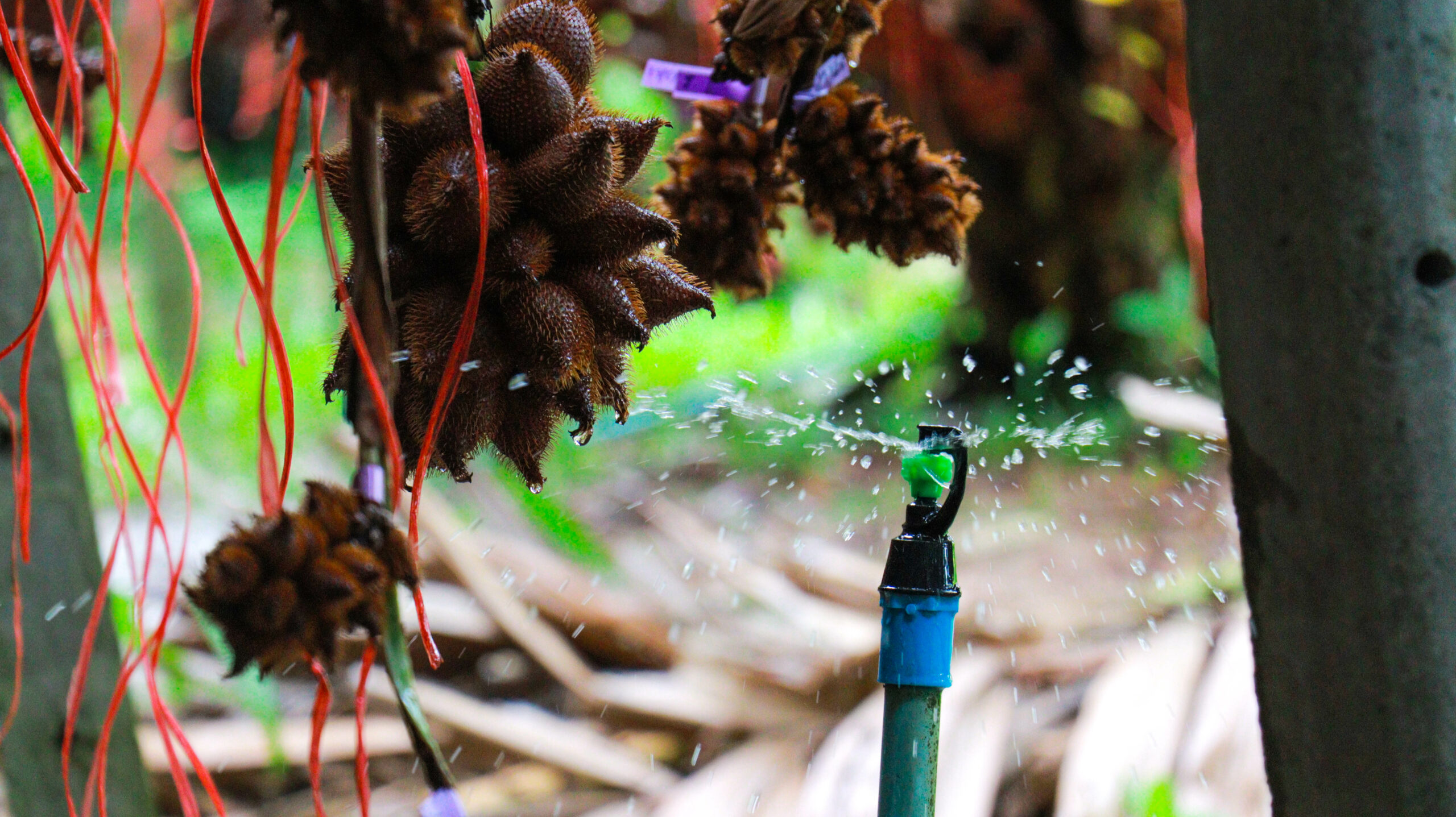
Walailak University allocates and develops agricultural plots under the Smart Farm Centre for growing coconut, salak, and oil palm. The coconut-growing area was expanded, bringing the total to more than 448,000 square metres. Mini-sprinkler irrigation is used to manage water in these plots according to crop growth requirements. Mini-sprinklers distribute water within the planting areas and allow appropriate control of irrigation volumes. They can reduce water losses from evaporation and soil seepage by a factor of up to four compared with conventional sprinkler systems.
Combining agricultural land allocation with efficient irrigation supports reduced water usage without compromising crop quality or biodiversity. These plots also serve as learning spaces for sustainable agricultural water resource management.
Soilless Culture Technology
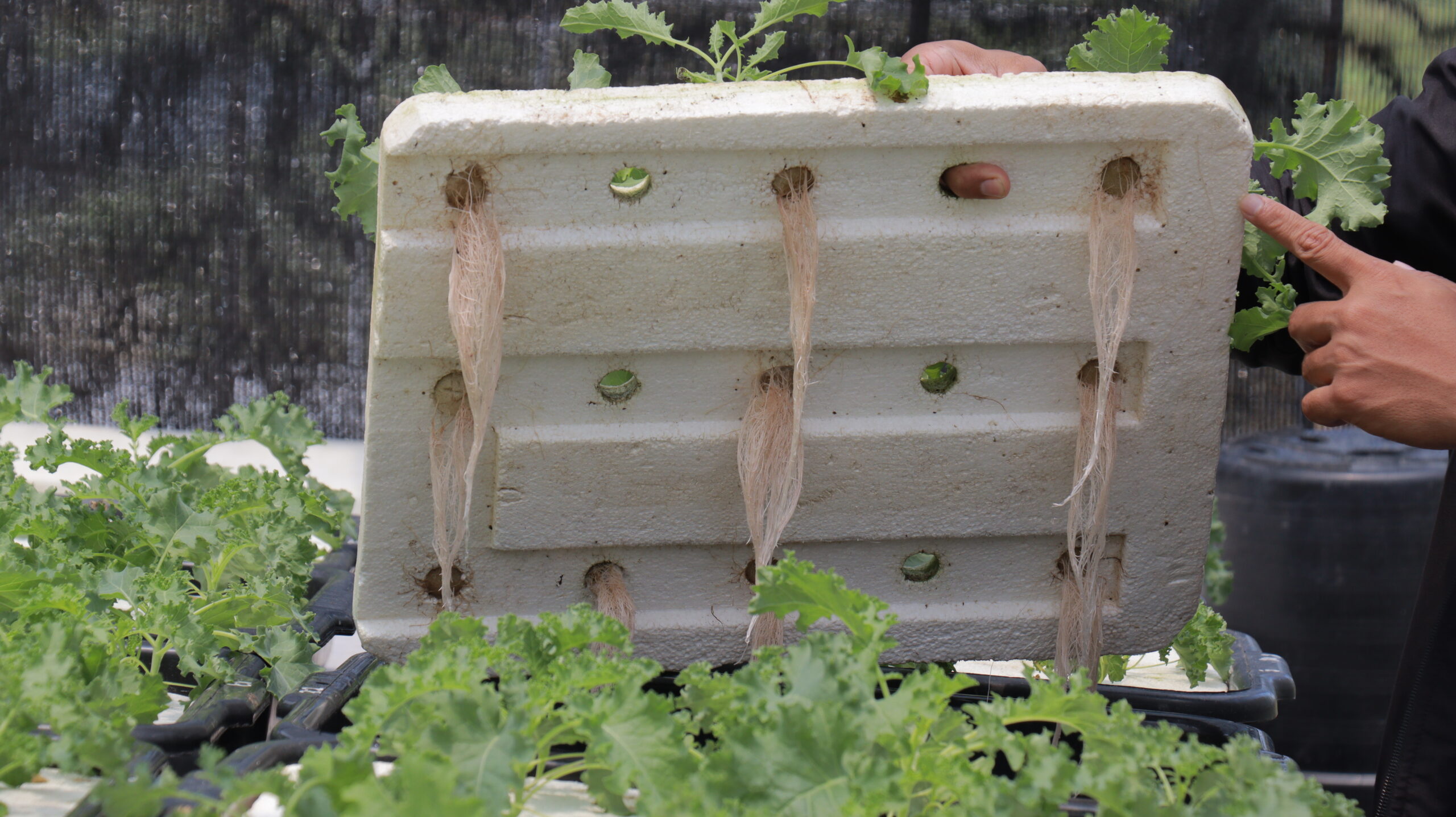
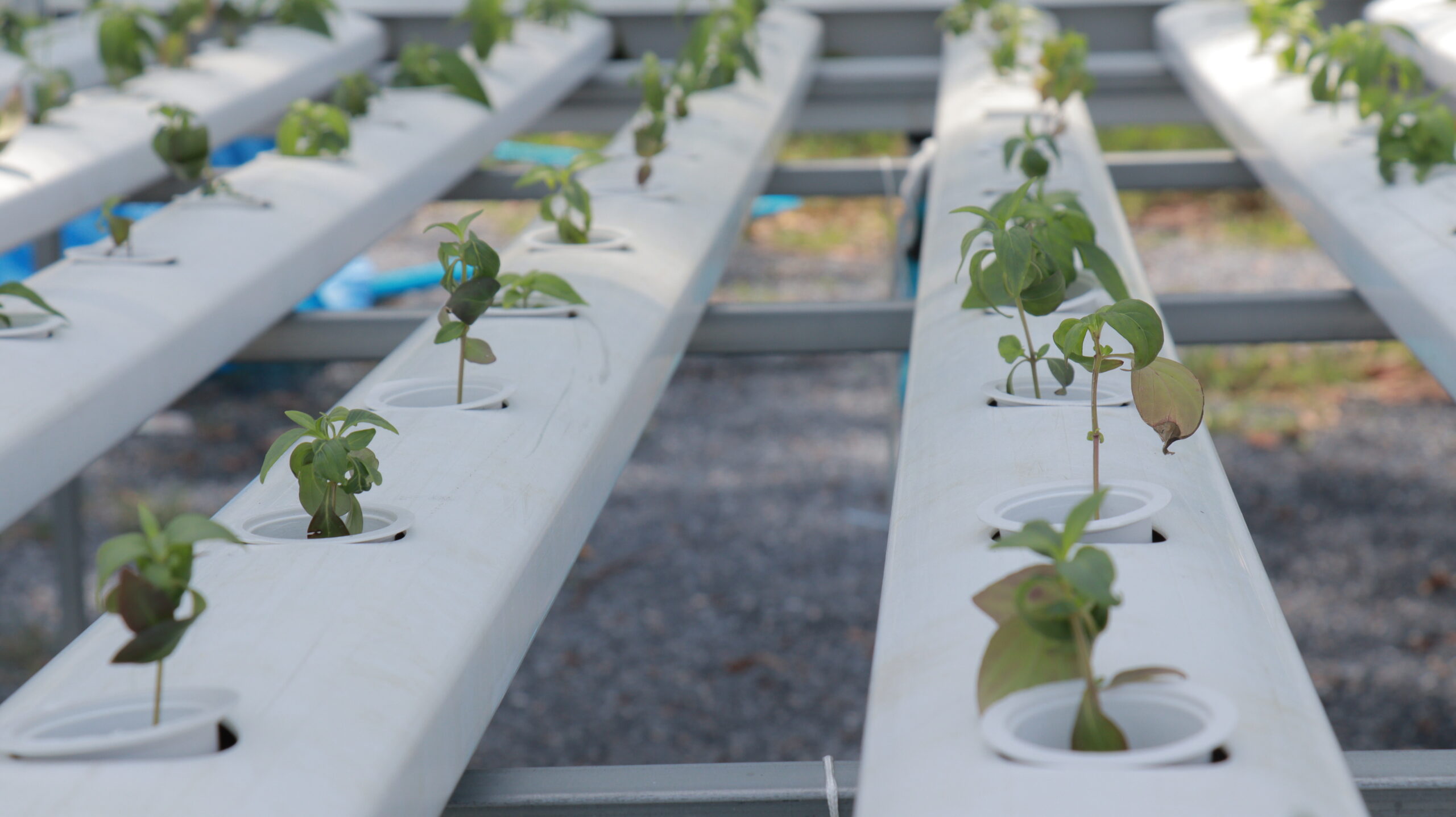
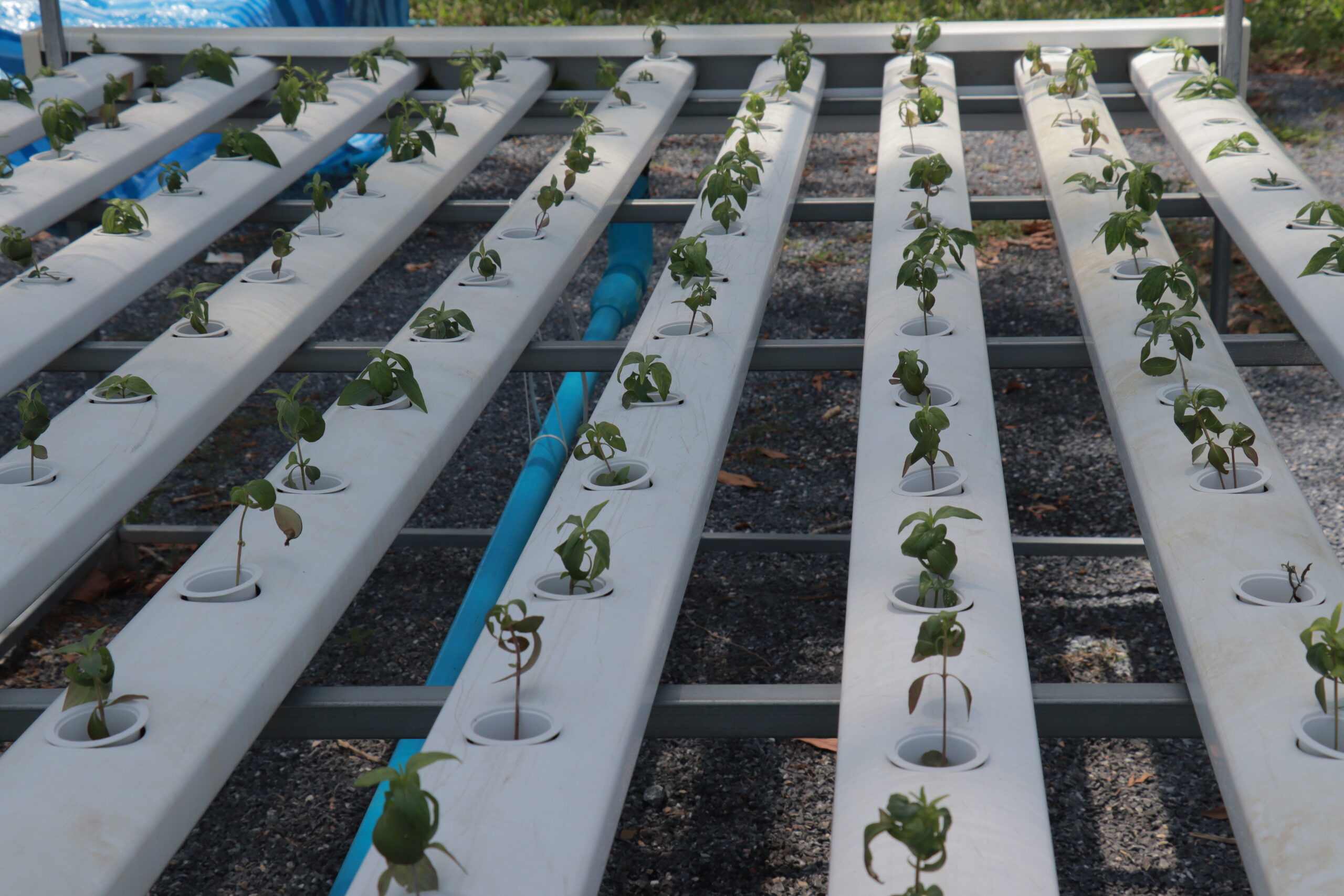
The university applies soilless cultivation technologies, particularly hydroponic systems, as another approach to reducing agricultural water usage. Hydroponics can save approximately 70–90% of water compared with soil-based cultivation, as water can be reused within the system through filtration and appropriate nutrient replenishment. These systems control both the volume of water and the nutrient composition supplied to plant roots, supporting efficient growth while reducing water usage. They demonstrate modern agricultural development focused on efficient resource use and provide learning spaces for crop production technologies that support water conservation.
Walailak University’s land allocation and development connect natural resource management, landscape design, agricultural technology, and conservation learning. The university prioritises site assessment, water use measurement and monitoring, and the continuous development of cultivation systems. It also encourages staff, students and researchers to participate in site design and water management. These approaches support water-conscious planting and the objective to plant landscapes to minimise water usage, helping reduce water consumption and maintenance costs, build environmental awareness, and strengthen the sustainability of campus ecosystems.