Promoting Conscious Water Usage in the Wider Community through Knowledge, Technology, and Participation: Walailak University
Promoting Conscious Water Usage in the Wider Community through Knowledge, Technology, and Participation: Walailak University
In 2025, Walailak University (WU) actively promoted conscious water usage in the wider community through knowledge transfer, practical skills development, and the application of appropriate water management technologies among local residents, community leaders, and local authorities. These community-based water conservation awareness and educational activities aimed to raise awareness of the value of water resources, encourage responsible and efficient water usage based on actual needs, and promote water-saving practices in daily life and agricultural activities. By engaging local communities in water conservation initiatives, the university encouraged active participation in protecting water sources and aquatic ecosystems while strengthening community awareness and responsibility for sustainable water resource management.
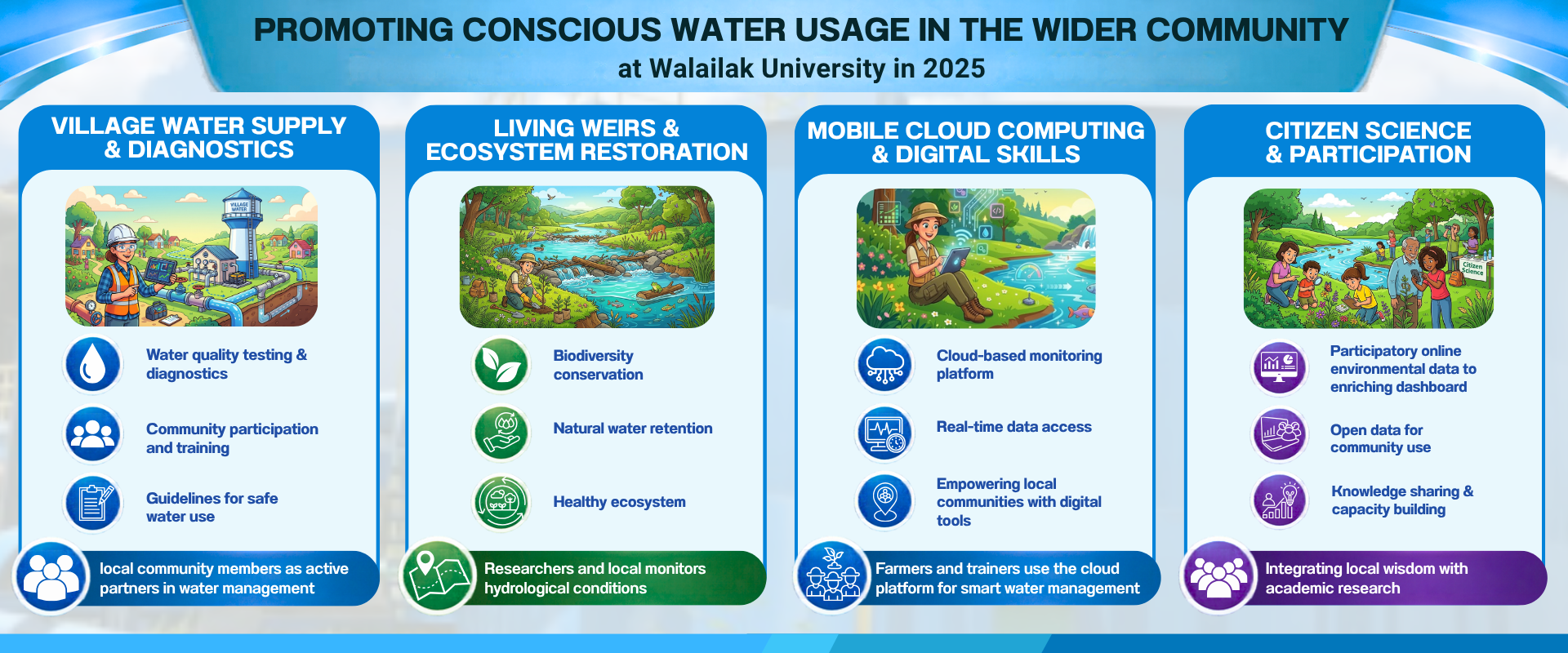
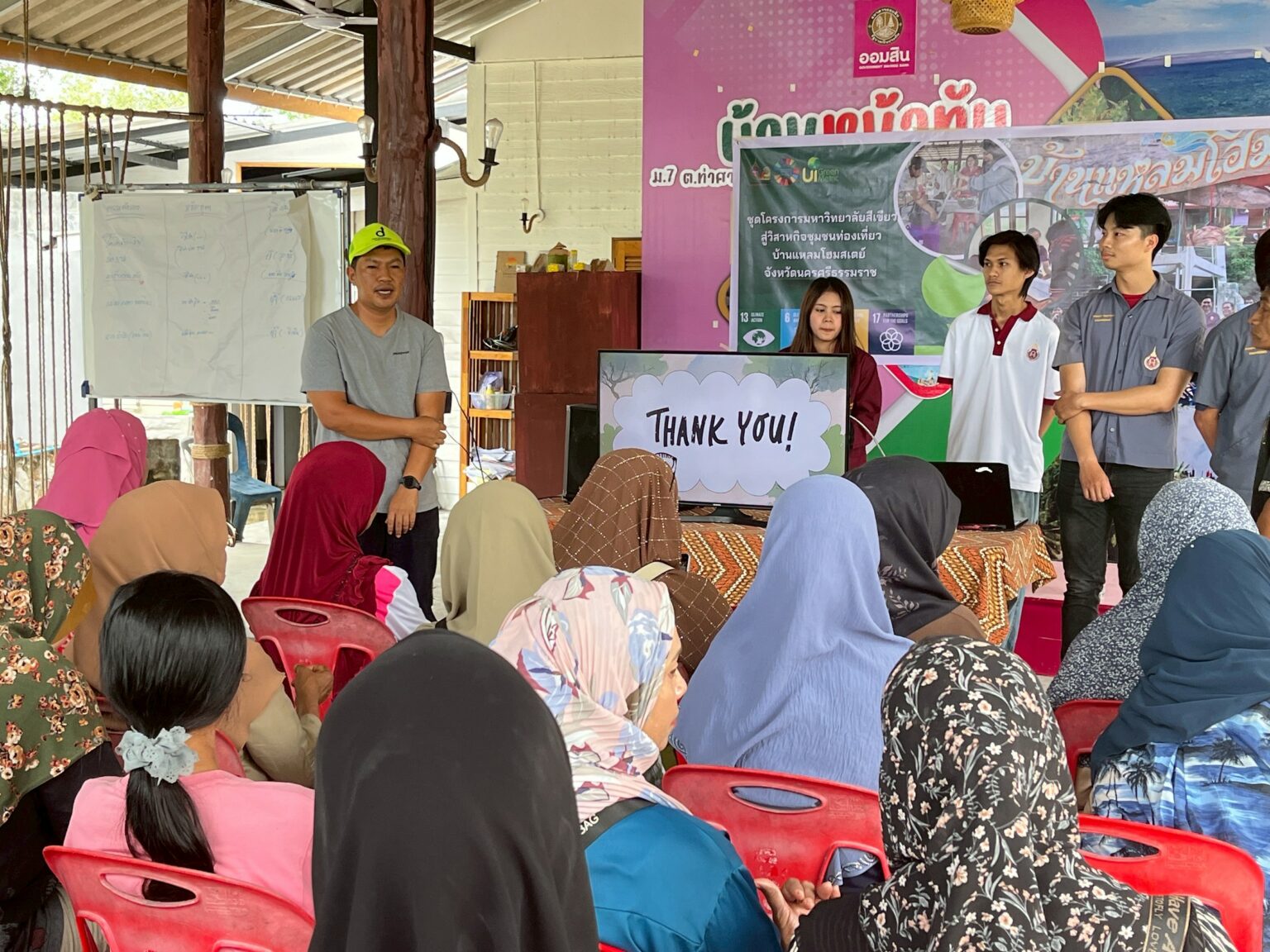
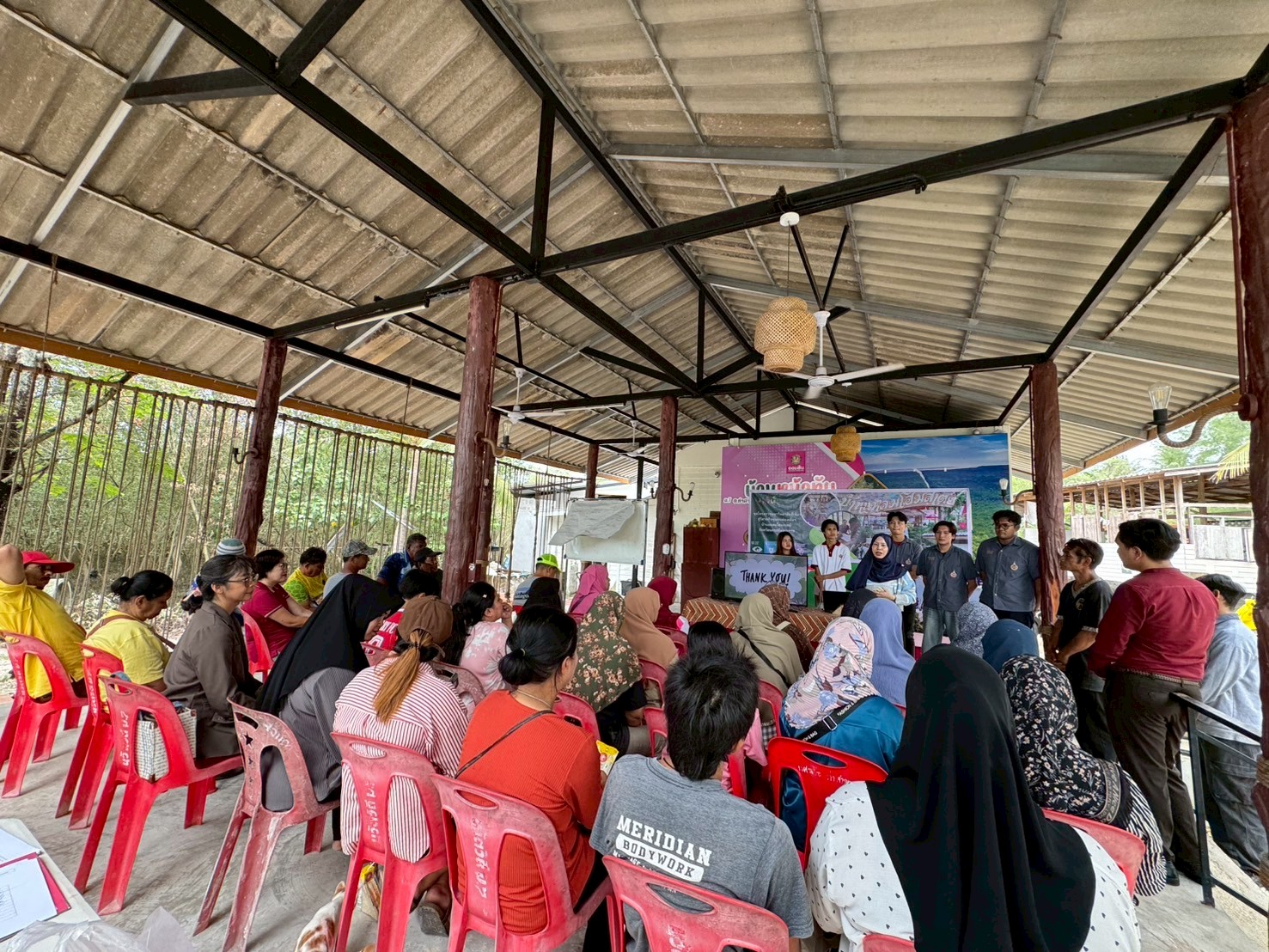
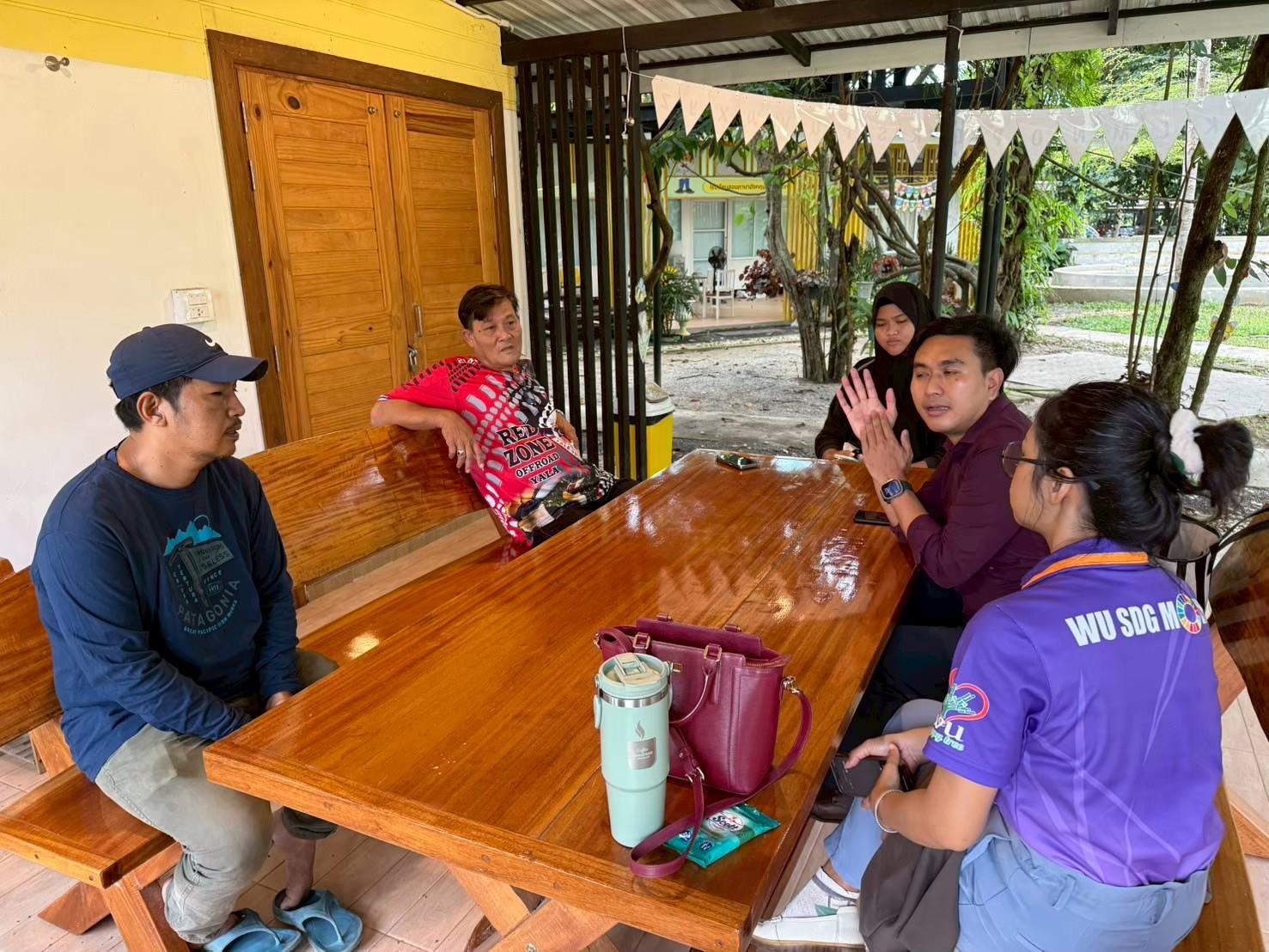
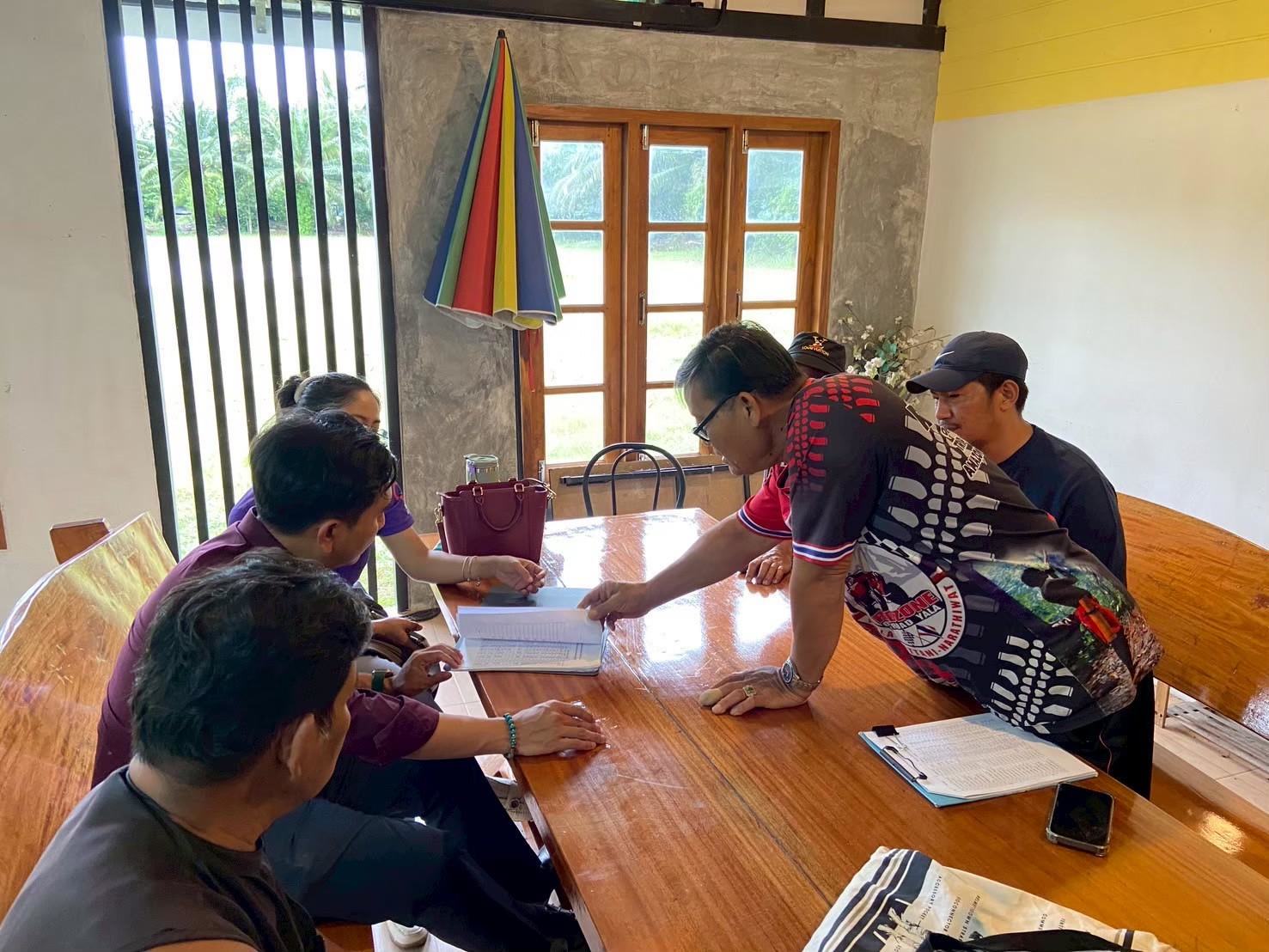
The university implemented the Sustainable Water Infrastructure Development Project to Enhance the Safety and Efficiency of Village Water Supply Systems in the Ban Laem Homestay community, Nakhon Si Thammarat Province. The project began with diagnostics to assess community needs and existing challenges through coordination with community leaders, interviews on water needs, and joint surveys of the village water supply system. Water samples were also collected before filtration, after filtration, and at distribution endpoints for quality analysis. These findings provided a basis for understanding water quality issues, production costs, and maintenance approaches appropriate to local conditions.
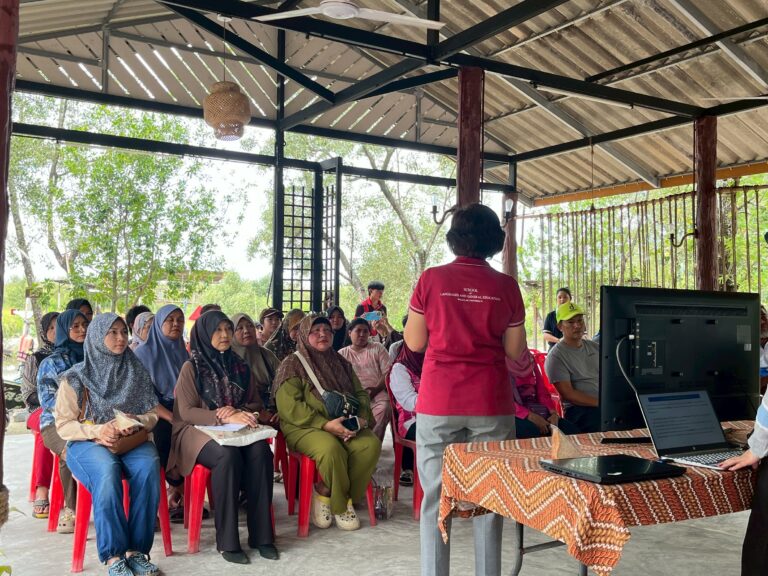
Building on this assessment, the university supported knowledge and water management development by providing education on village water supply systems, efficient water resource management, and water infrastructure maintenance. It also organised training in basic water quality observation and monitoring and prepared a community manual. Learning about water production and quality management helped residents understand that supplying usable water requires resources, energy, and expenditure. This understanding provided a foundation for promoting conscious water usage and maintaining reliable water production systems.
Community engagement was central to the project. Community leaders and the water management committee participated in analysing problems, considering development options, and strengthening their capacity to maintain the water supply system. Also, the university provided guidance on systematic recordkeeping and accounting to support measurement, monitoring, and evaluation of operations. Connecting water supply knowledge with climate change awareness further helped communities recognise the importance of efficient water management and safeguarding water resources for the future.
Another initiative was the Water Conservation for Sustainable Community Development Project, which used living weirs as a learning platform for water conservation and irrigation management. The university collaborated with stakeholders to develop methods for monitoring and evaluating changes associated with living weirs through meetings and seminars. Monitoring covered river restoration, hydrological impacts, ecosystem changes, and effects on community livelihoods. This process supported learning from data and local conditions, helping communities consider both residents’ needs and ecological balance in water management.
The university organised education and awareness activities on water conservation, water management, and irrigation alongside practical workshops to develop innovations for extending the service life of living weirs under the Sufficiency Economy Philosophy. These activities aimed to improve weir durability, support long-term use, and contribute to balanced ecosystem restoration. They also helped communities understand the relationship between water, livelihoods, and the environment while learning to maintain water management structures with attention to suitability and resource efficiency.
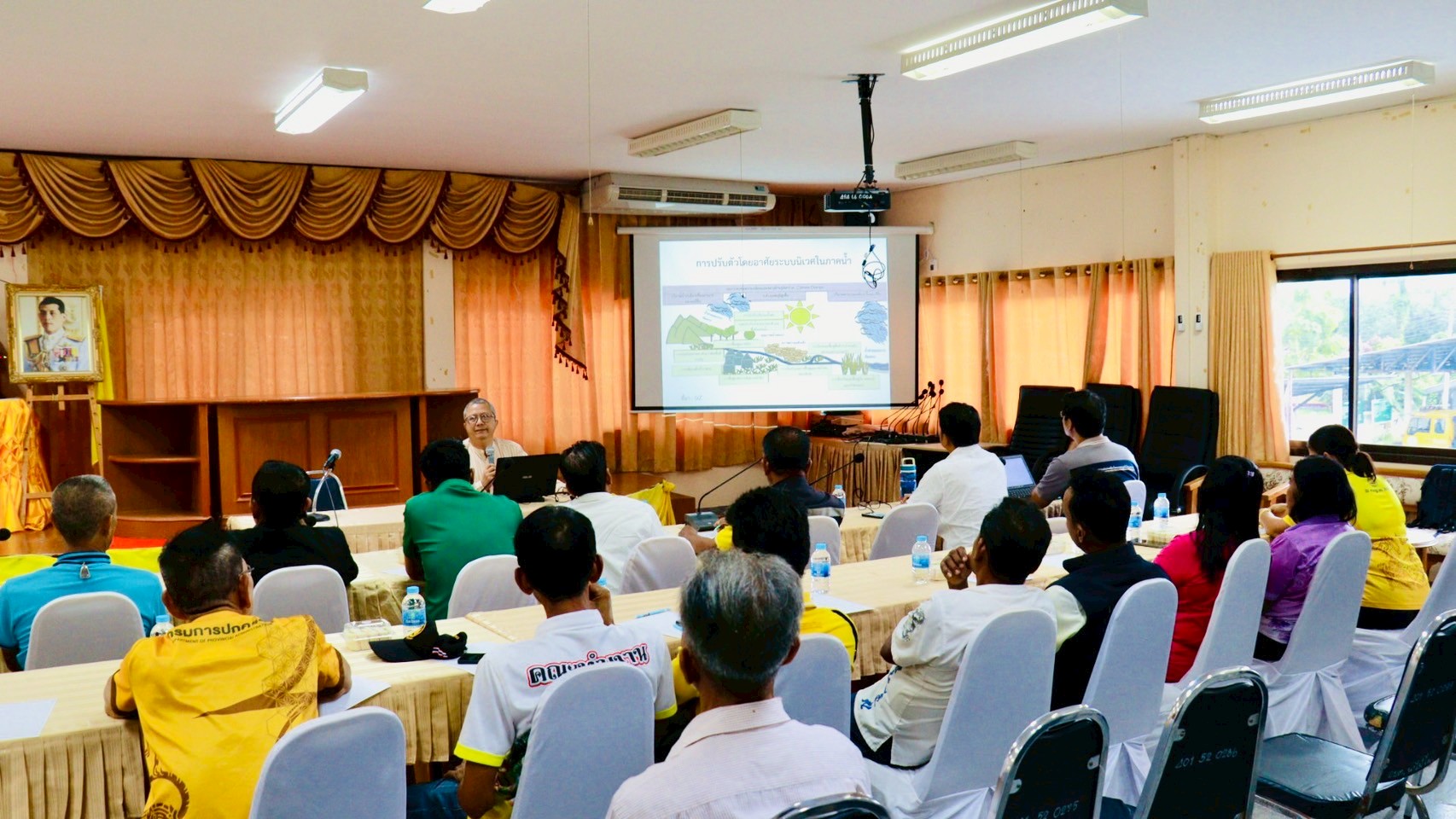
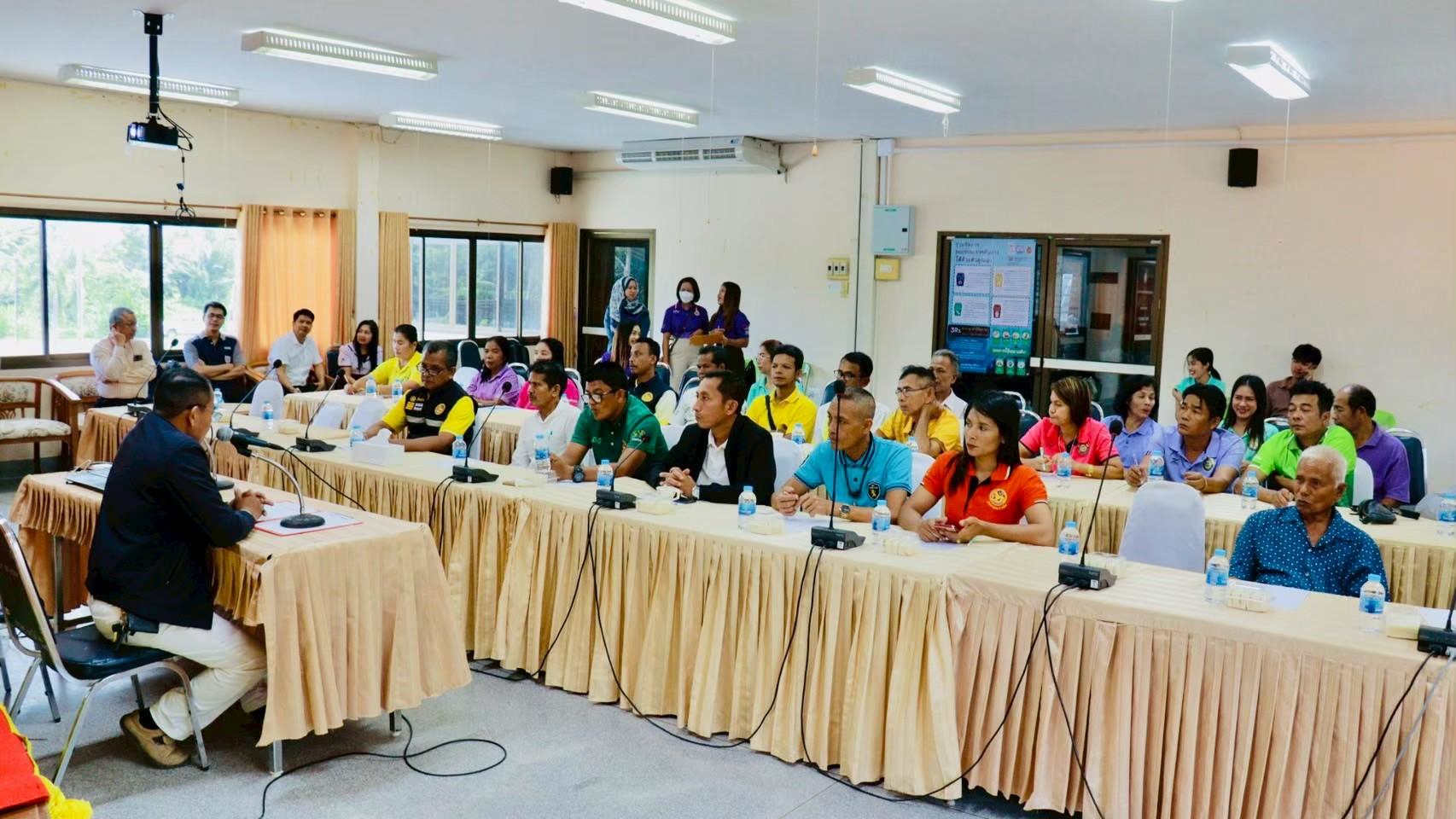
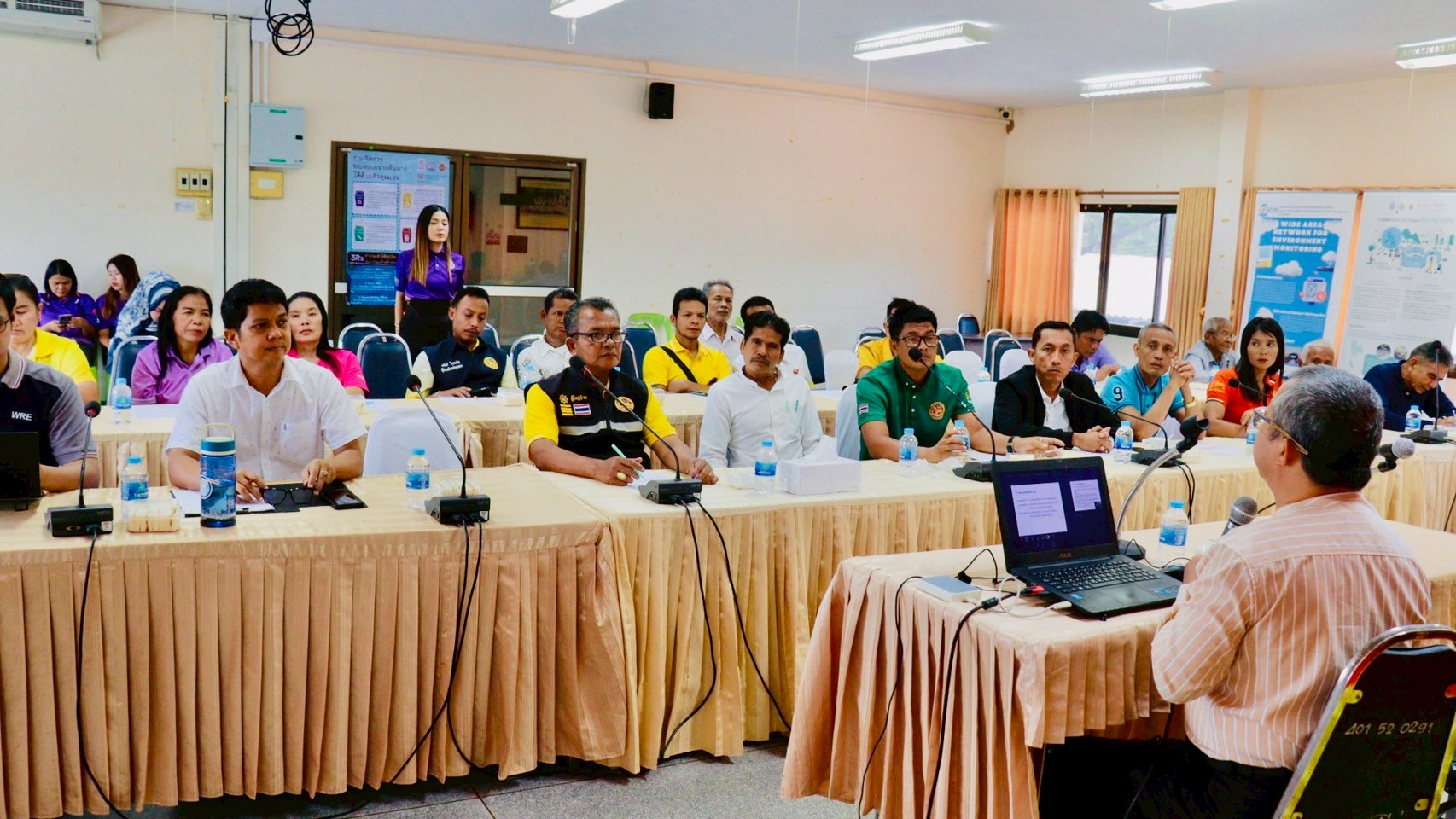
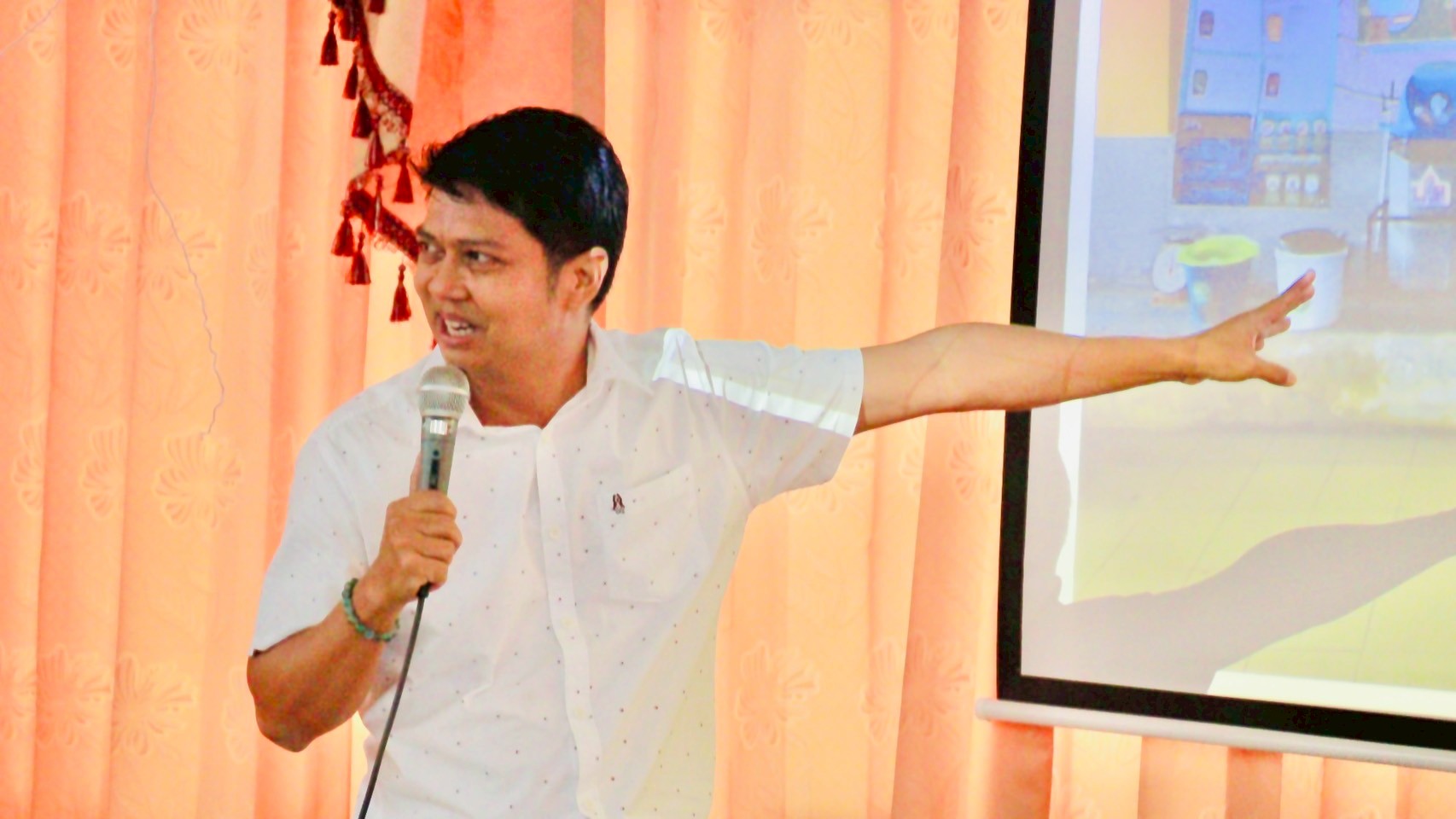
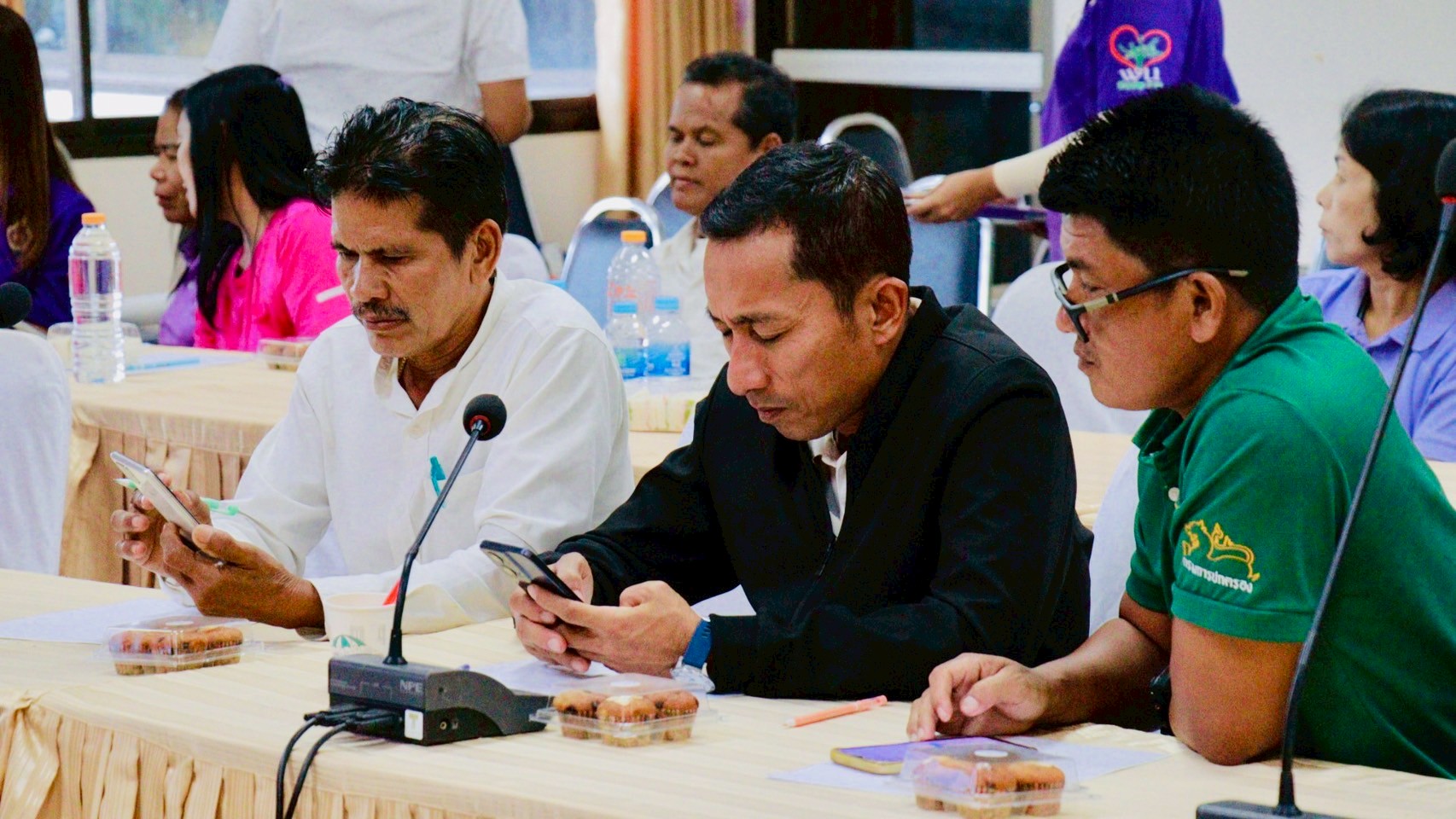
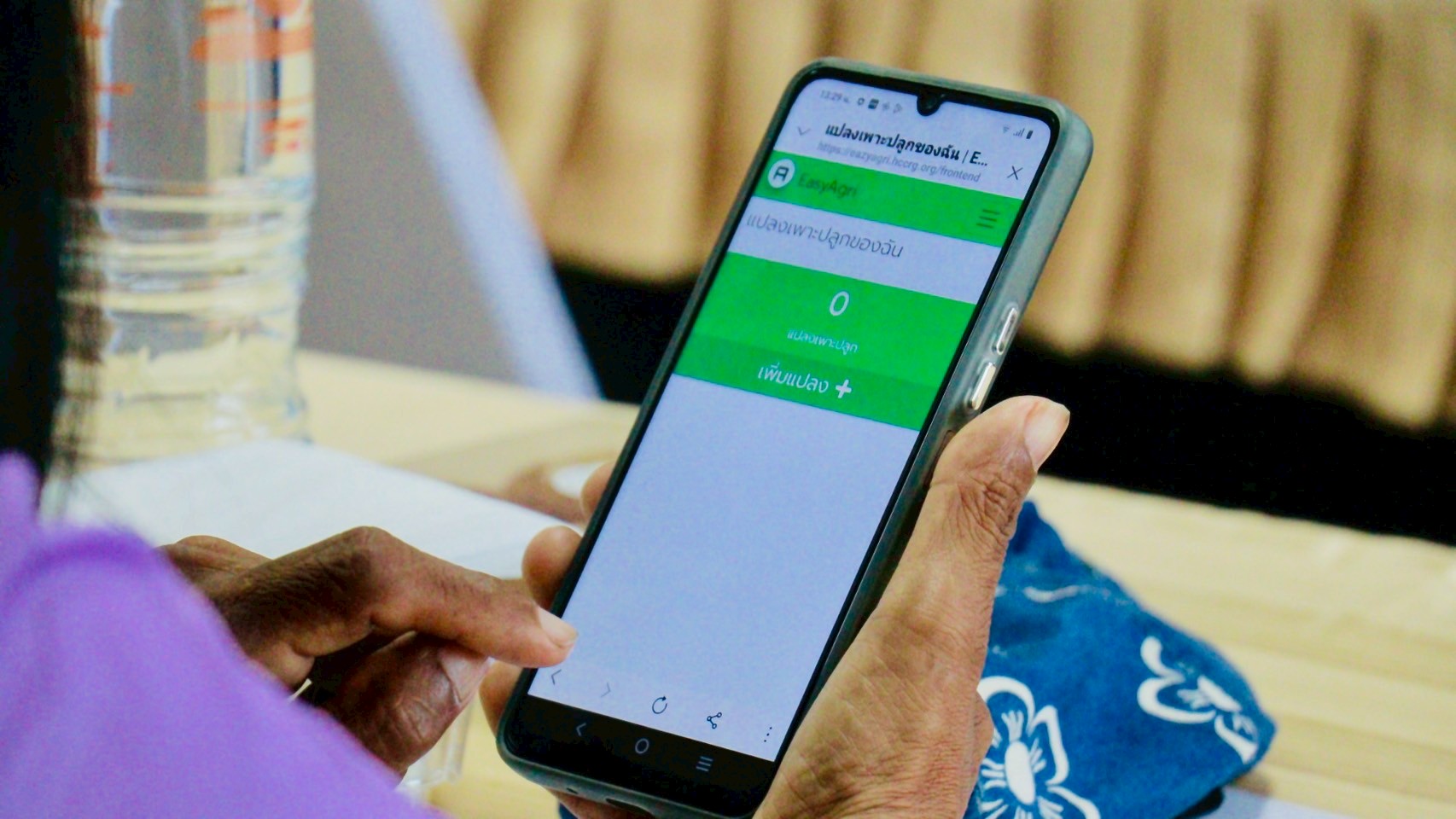
On 4 June 2025, the university organised training in Na Mai Phai, Thung Song District, Nakhon Si Thammarat Province, for community leaders, representatives of the Na Mai Phai Subdistrict Administrative Organisation, and members of the public. Activities included reporting progress on the living weir project, providing education on water conservation and management, addressing waste in waterways, and delivering practical training in a community agricultural water management platform using mobile cloud computing. This training developed digital skills to support local water management and provided a foundation for communities to consider agricultural water usage more consciously within their local context.
The project also encouraged participatory monitoring through citizen science, enabling community members to observe changes, monitor conditions, and share information via the internet while integrating local knowledge with research. The information collected could inform reviews of weir maintenance and water management practices. Continued participation also supported shared responsibility for water sources and greater awareness of the value of water to communities and ecosystems.
Together, these projects demonstrate Walailak University’s role in actively promoting conscious water usage in the wider community through diagnostics, knowledge and skills development, community engagement, and measurement and monitoring. By raising awareness of the value of water and providing practical water management skills, these activities support communities in using water responsibly and according to their needs. They also encourage residents to consider the resources and costs involved in water provision, make informed decisions about agricultural and household water usage, and share responsibility for conserving water resources. These efforts strengthen the foundation for conscious water usage in everyday community practices.
Related Links
– https://cas.wu.ac.th/archives/34099