
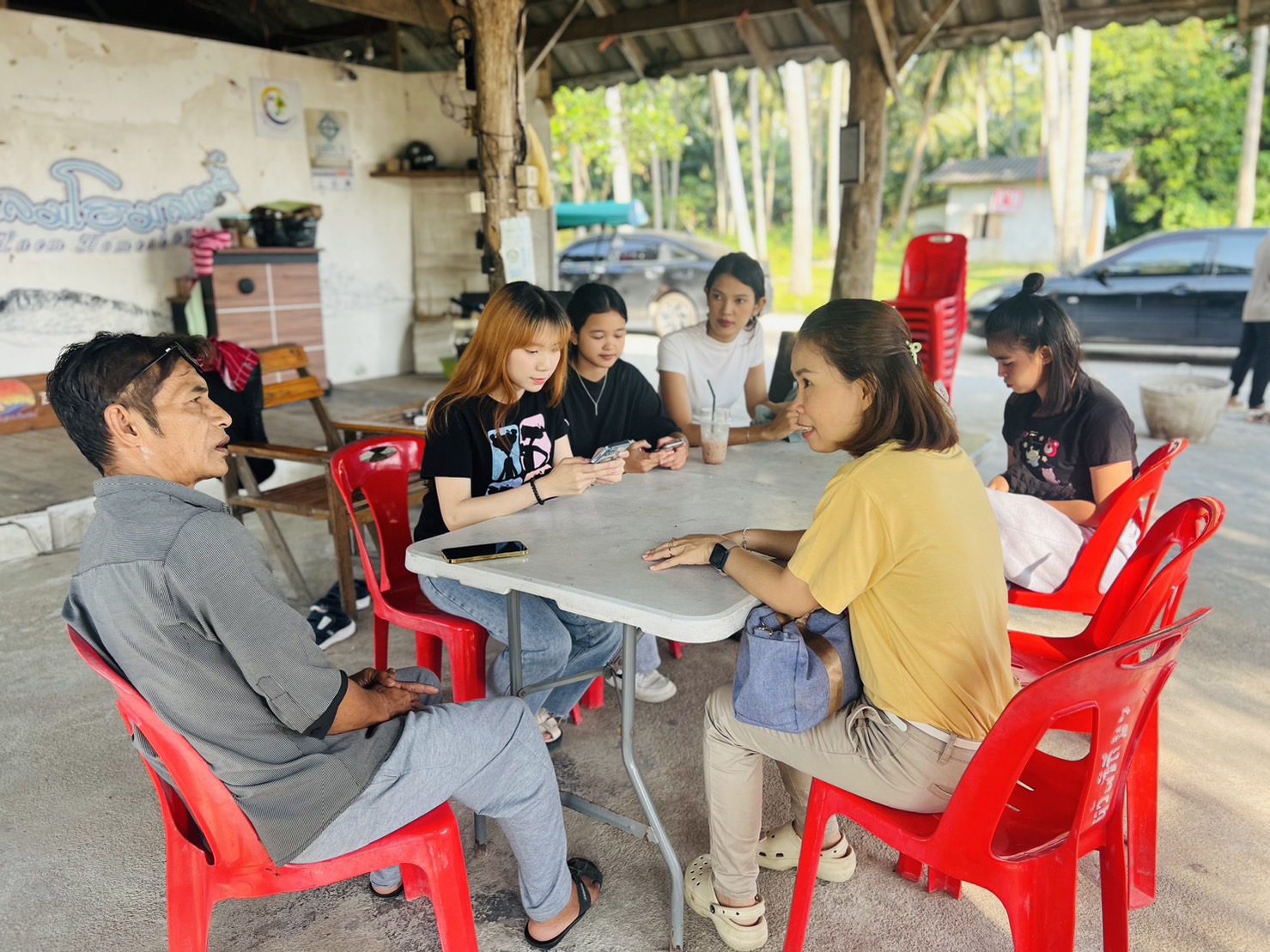
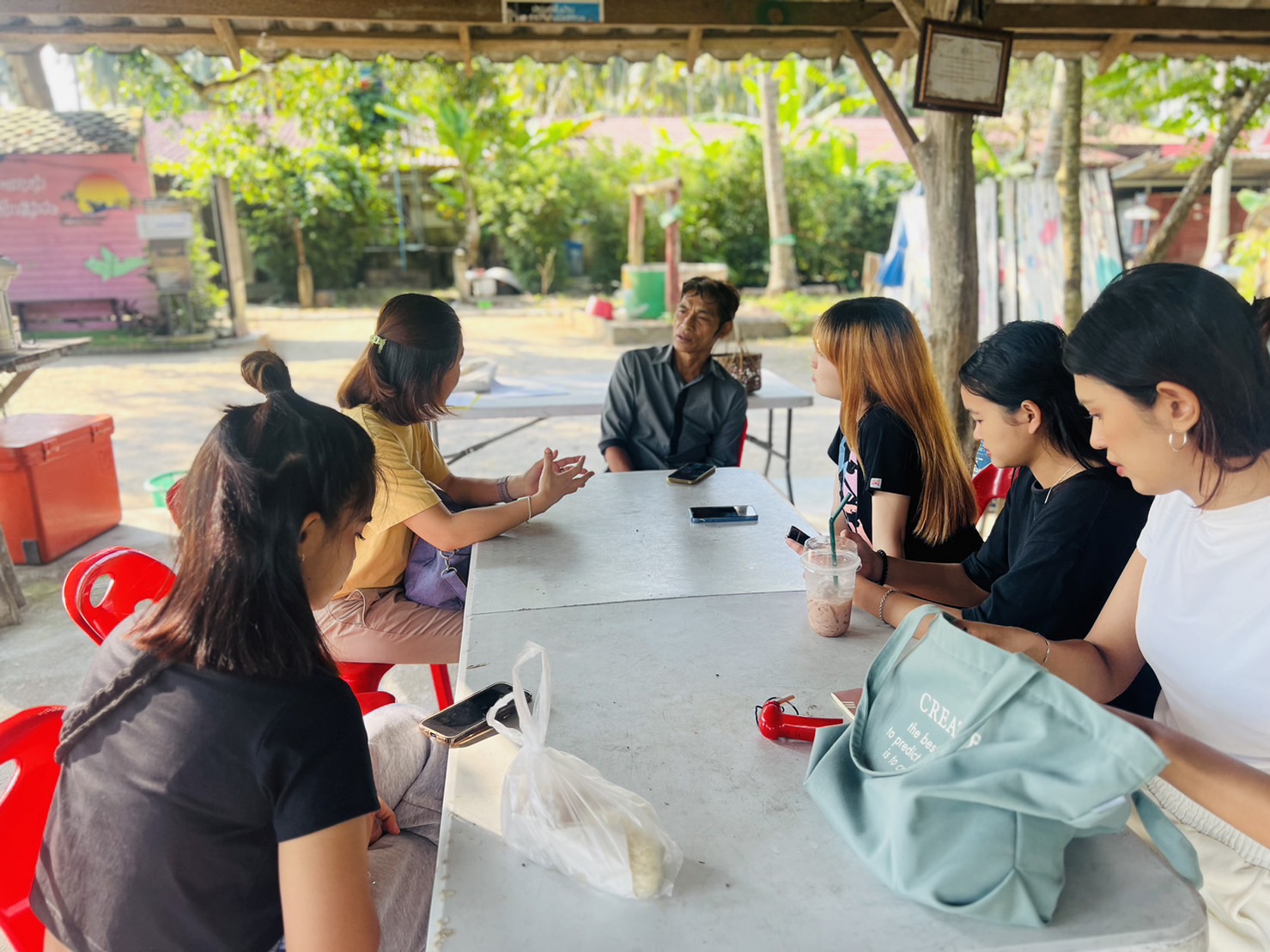
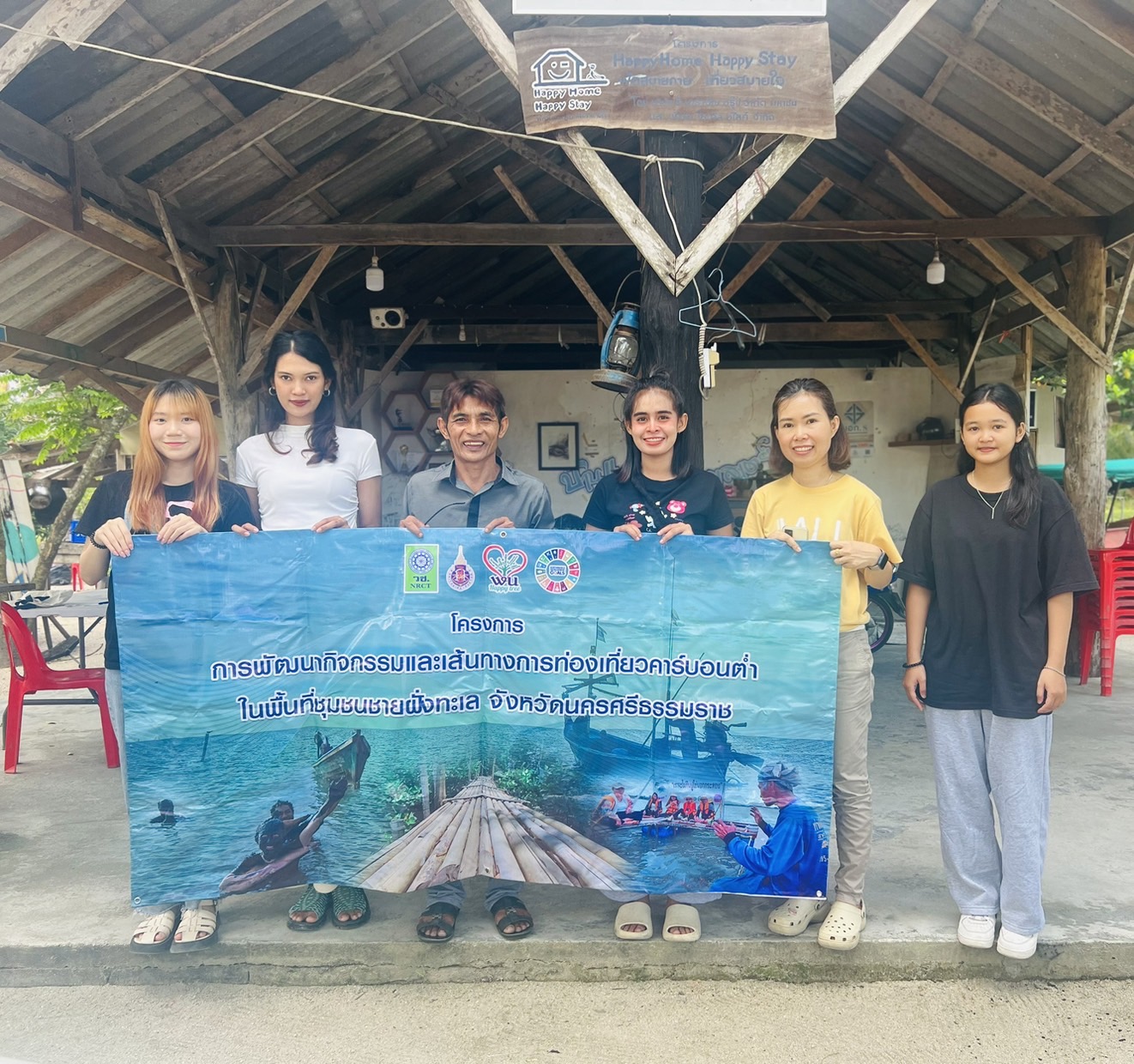
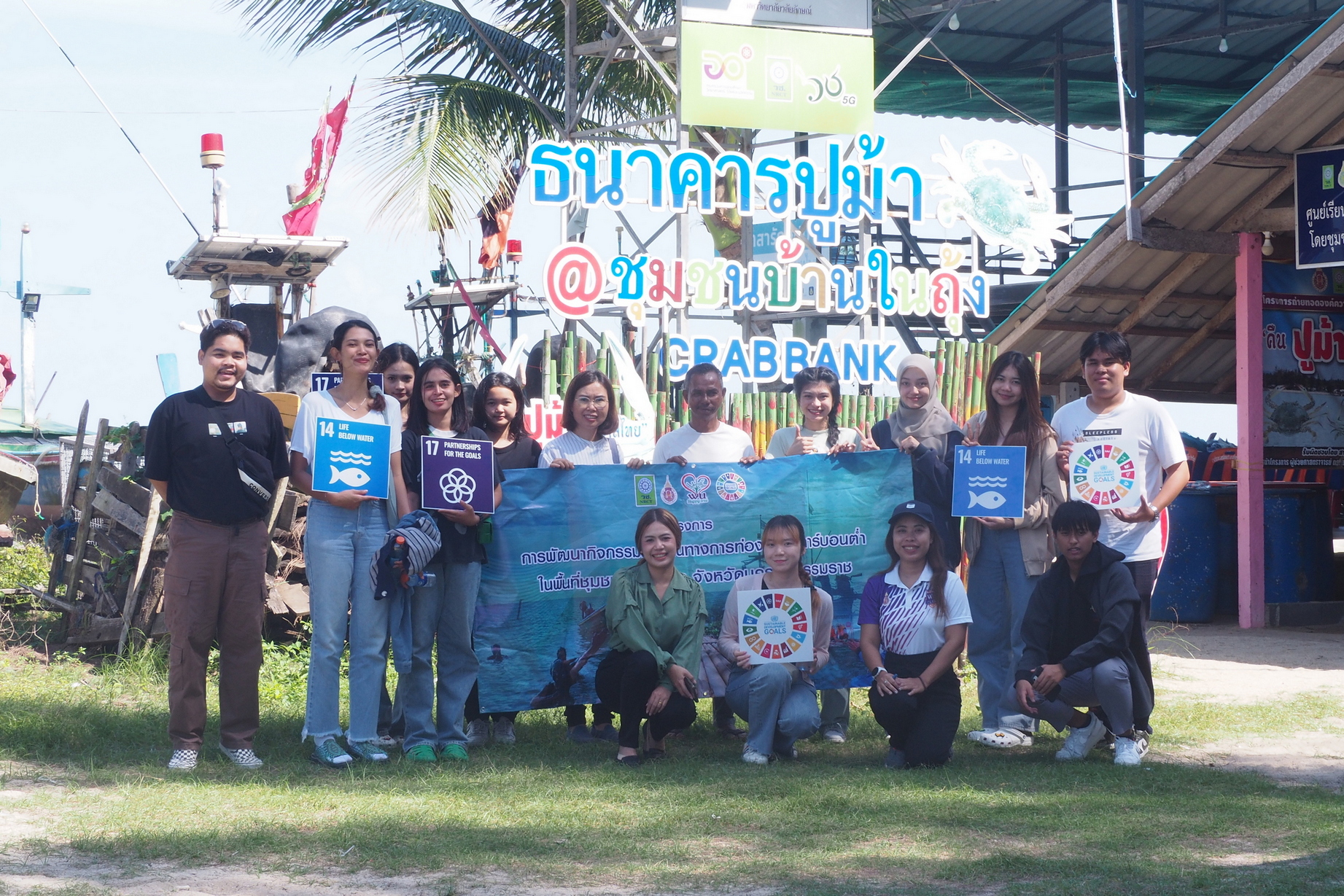
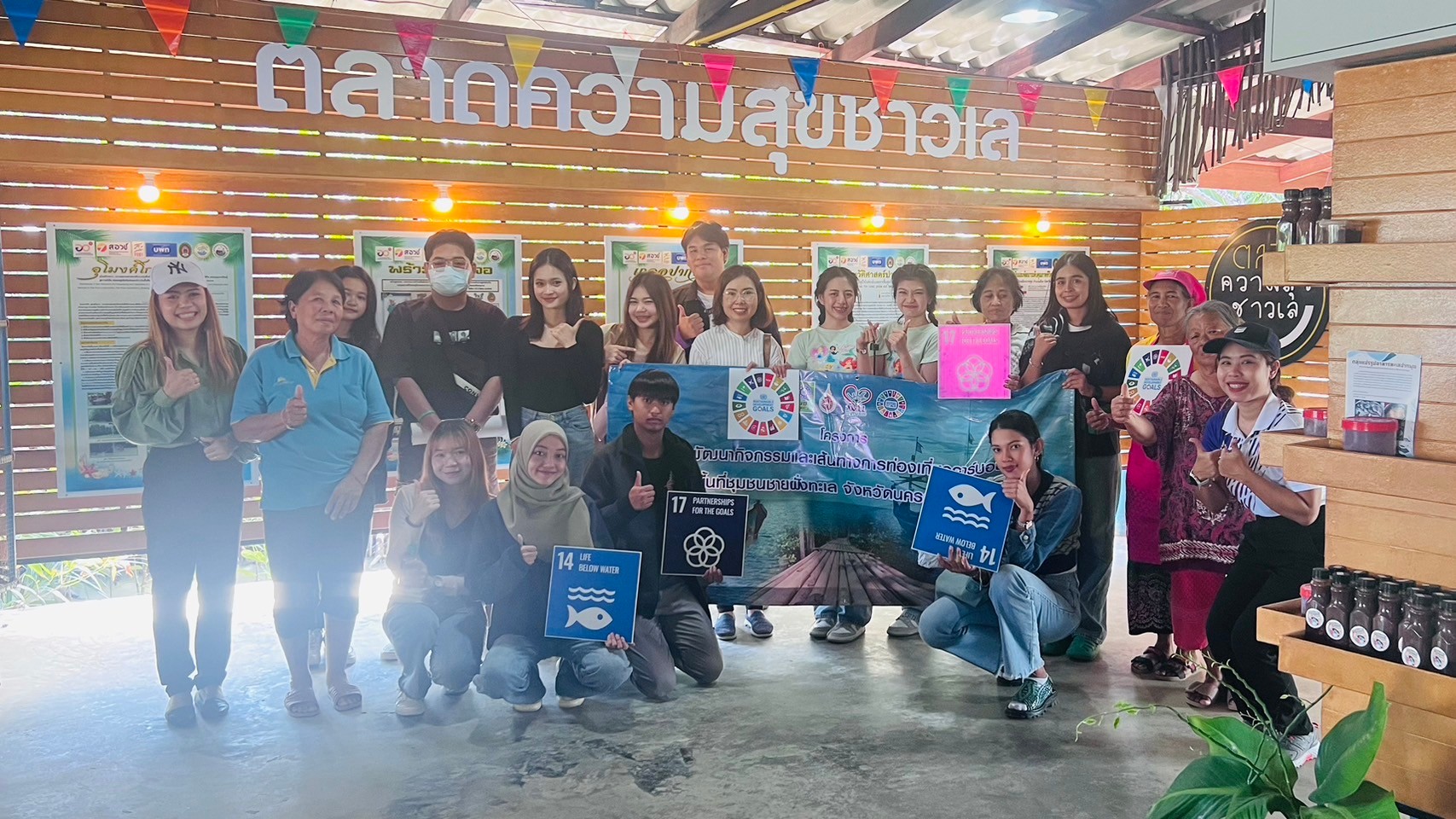
The Center for Academic Services at Walailak University is driving social engagement through the project titled “The Development of Low-Carbon Tourism Program of Nakhon Si Thammarat’s Coastal Communities.” This project is integrated with the teaching of students in the course THB60-312: Tourism Resource Planning and Development. Led by Assoc. Prof. Dr. Onanong Cheablam from the School of Management, the team provided consultation to local entrepreneurs and assessed the potential of selected pilot areas for experiential tourism activities that align with low-carbon social initiatives in four coastal communities in Nakhon Si Thammarat Province. These areas include the Pak Phaya Blue Swimming Crab Bank Group, Pak Phun Blue Swimming Crab Bank Group, Ban Laem Homestay Blue Swimming Crab Bank Group, and the Blue Swimming Crab Bank and Coastal Fisheries Learning Center in Ban Nai Tung.
The goal is to plan and develop coastal community tourism that can reduce carbon use, building on existing local tourism activities and integrating them into low-carbon tourism. This initiative aims to encourage fishers and related stakeholders to understand and prioritize the promotion of a low-carbon society, in line with the government’s goals.
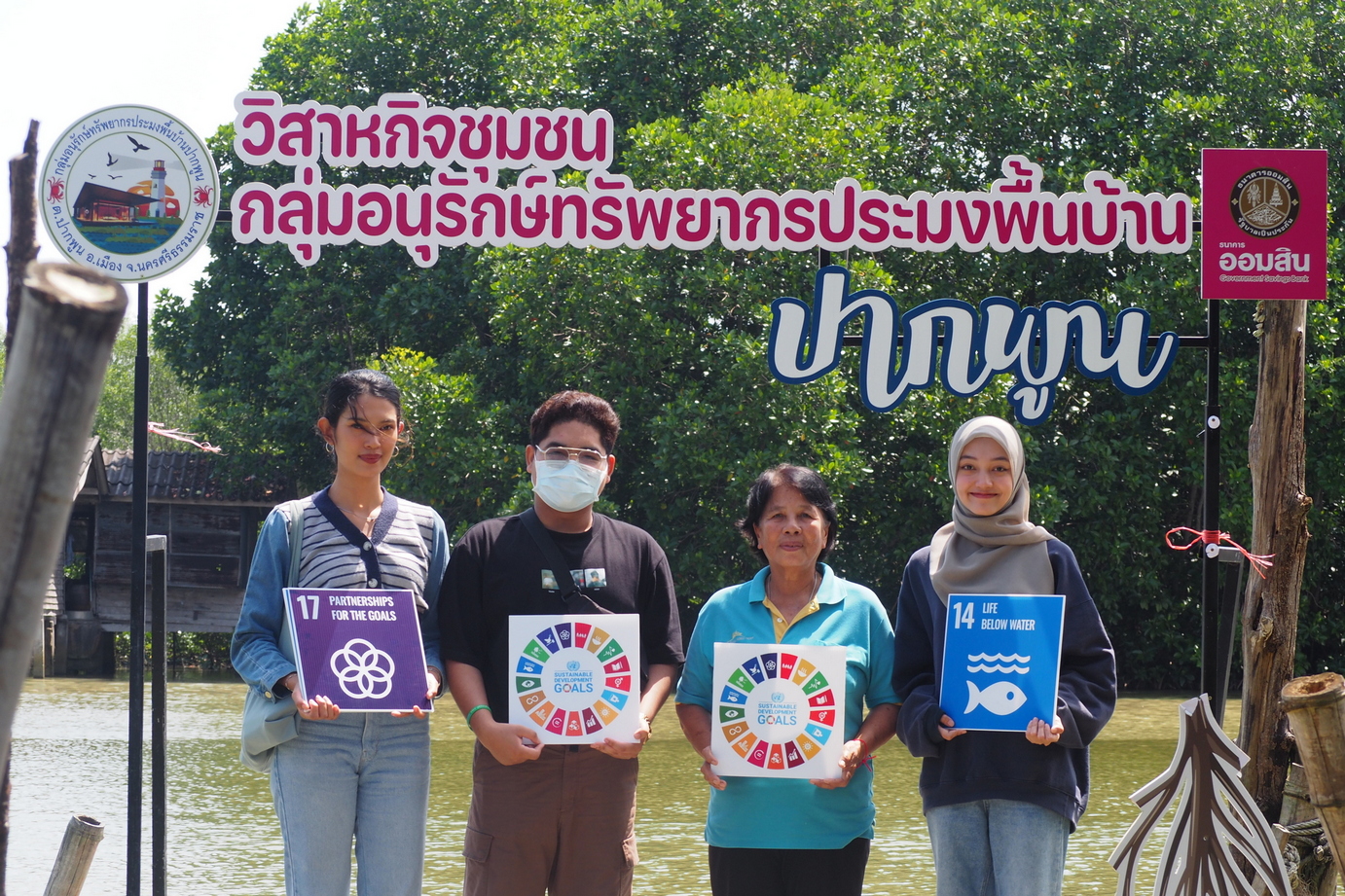
Low-carbon tourism development, or Low Carbon Tourism, aims to minimize carbon emissions and environmental disturbance, serving as an educational program to promote sustainability for local communities. The activities focus on environmentally responsible tourism and reducing carbon emissions through methods such as selecting eco-friendly transportation, engaging in environmental tourism activities like tree planting, waste collection, and nature trails. This form of tourism combines aspects of nature tourism, ecotourism, creative tourism, and responsible tourism. Low-carbon travel can be achieved simply by planning trips with environmental considerations, such as choosing non-energy-dependent transportation like bicycles or solar-powered boats, promoting energy conservation, reducing waste, or staying in eco-friendly accommodations. The initiative also encourages consuming locally sourced foods and engaging in activities like mangrove planting, waste collection, and nature trails to promote conservation of natural and environmental resources. This project aligns with the United Nations Sustainable Development Goals (SDGs), specifically SDG 14: Life Below Water (conserve and sustainably use the oceans, seas, and marine resources for sustainable development), SDG 13: Climate Action (take urgent action to combat climate change and its impacts), and SDG 17: Partnerships for the Goals (strengthen partnerships with networks and related organizations).
Thai Version: https://cas.wu.ac.th/archives/25101