
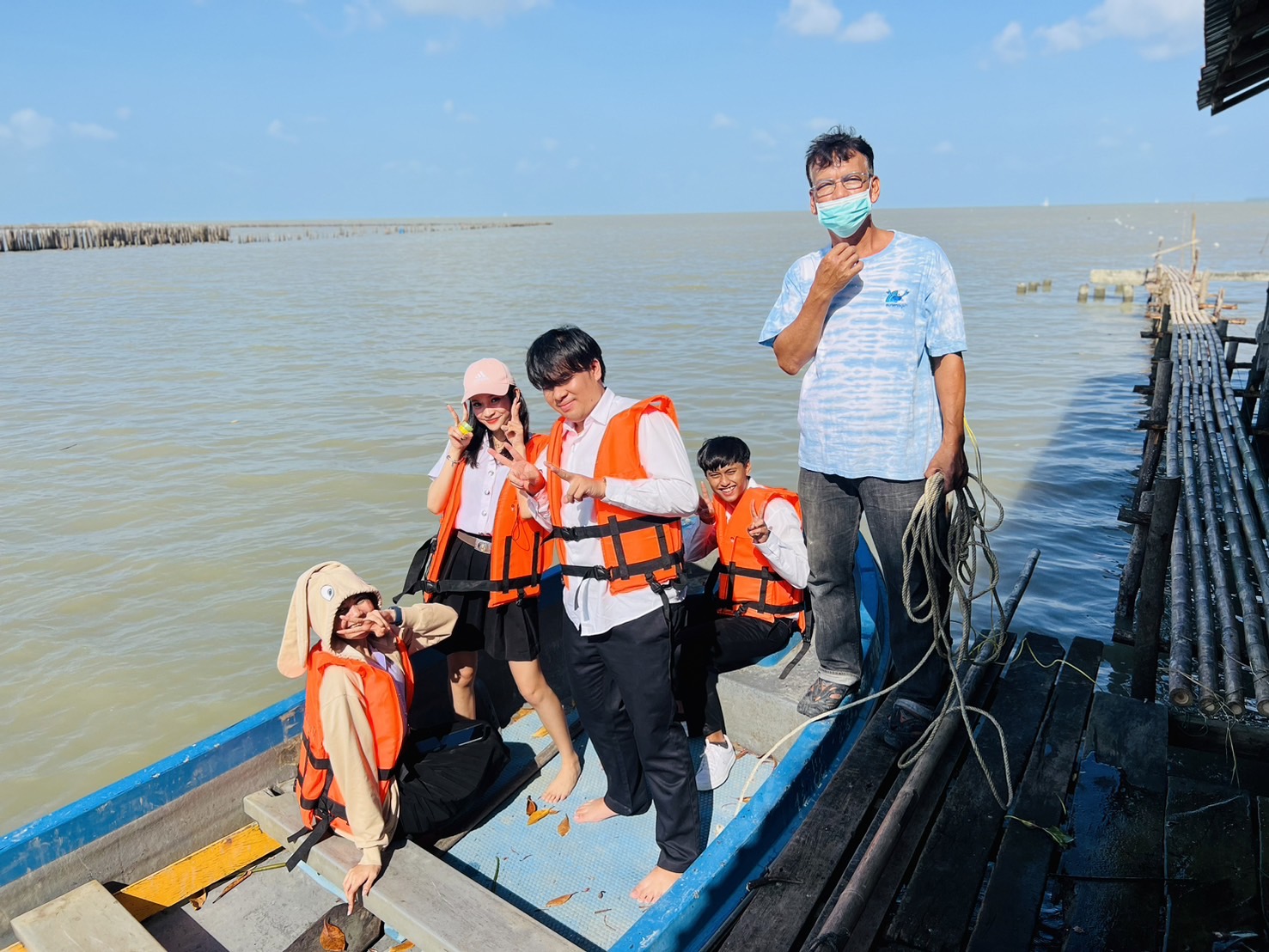
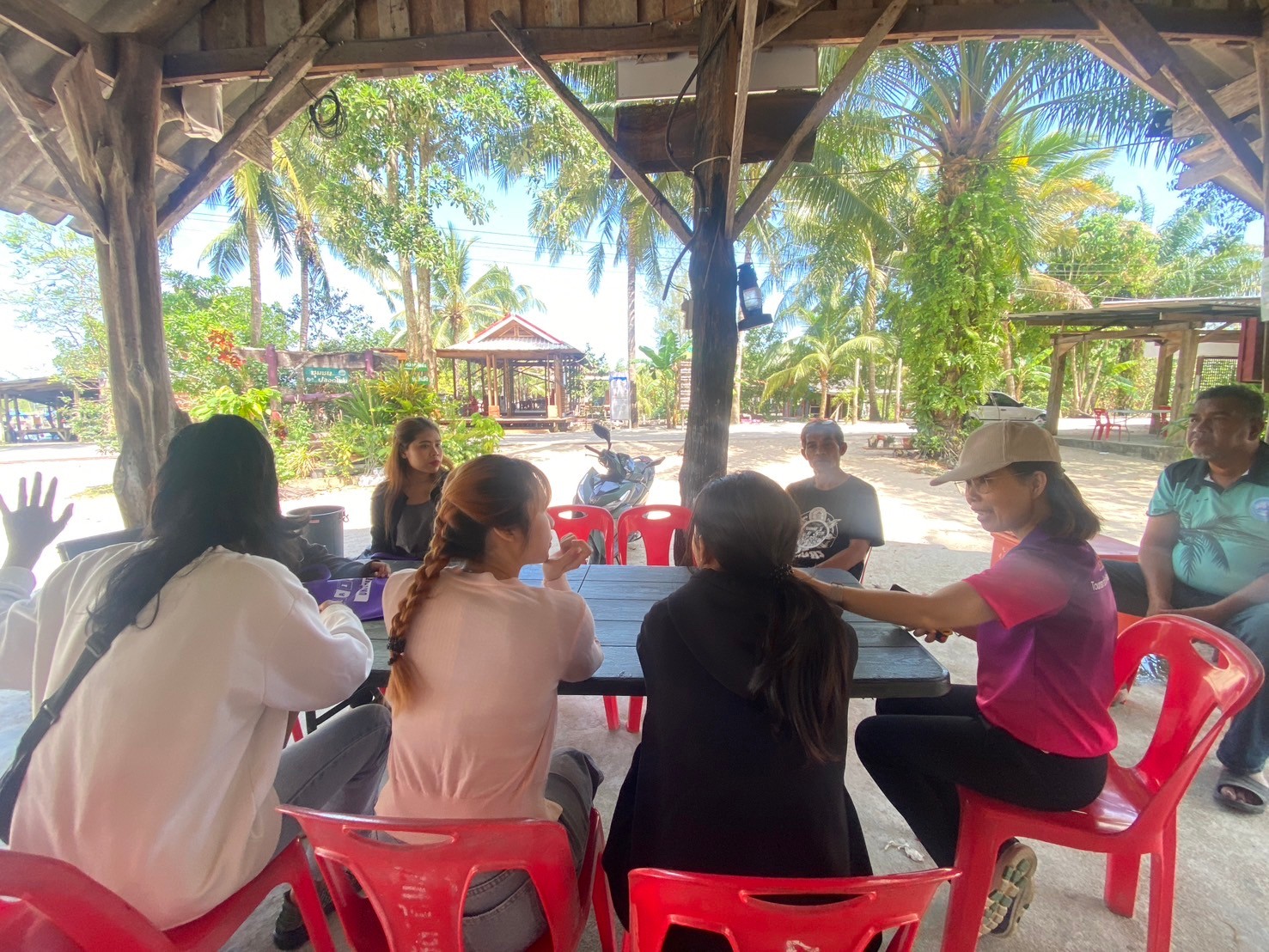
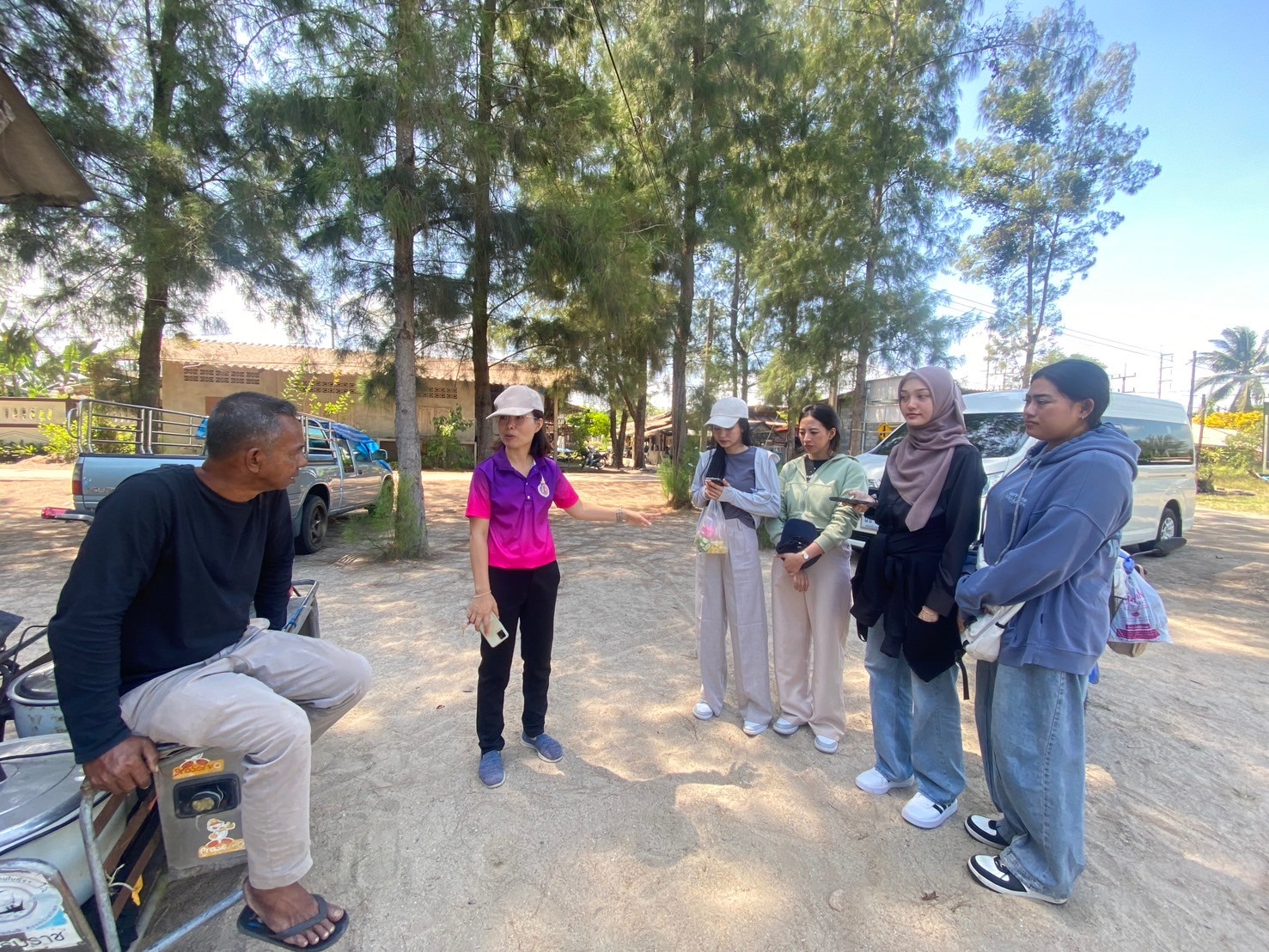
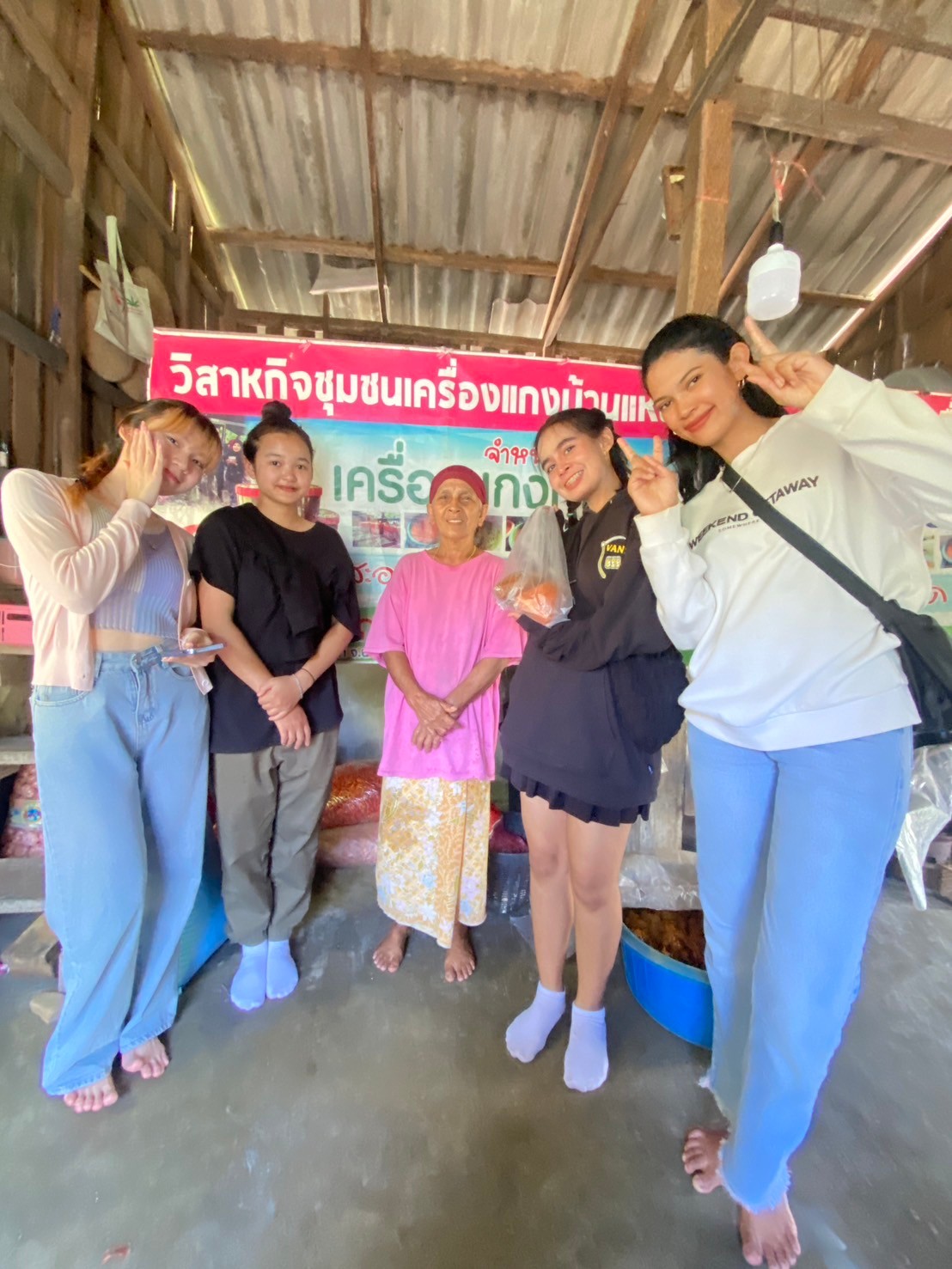
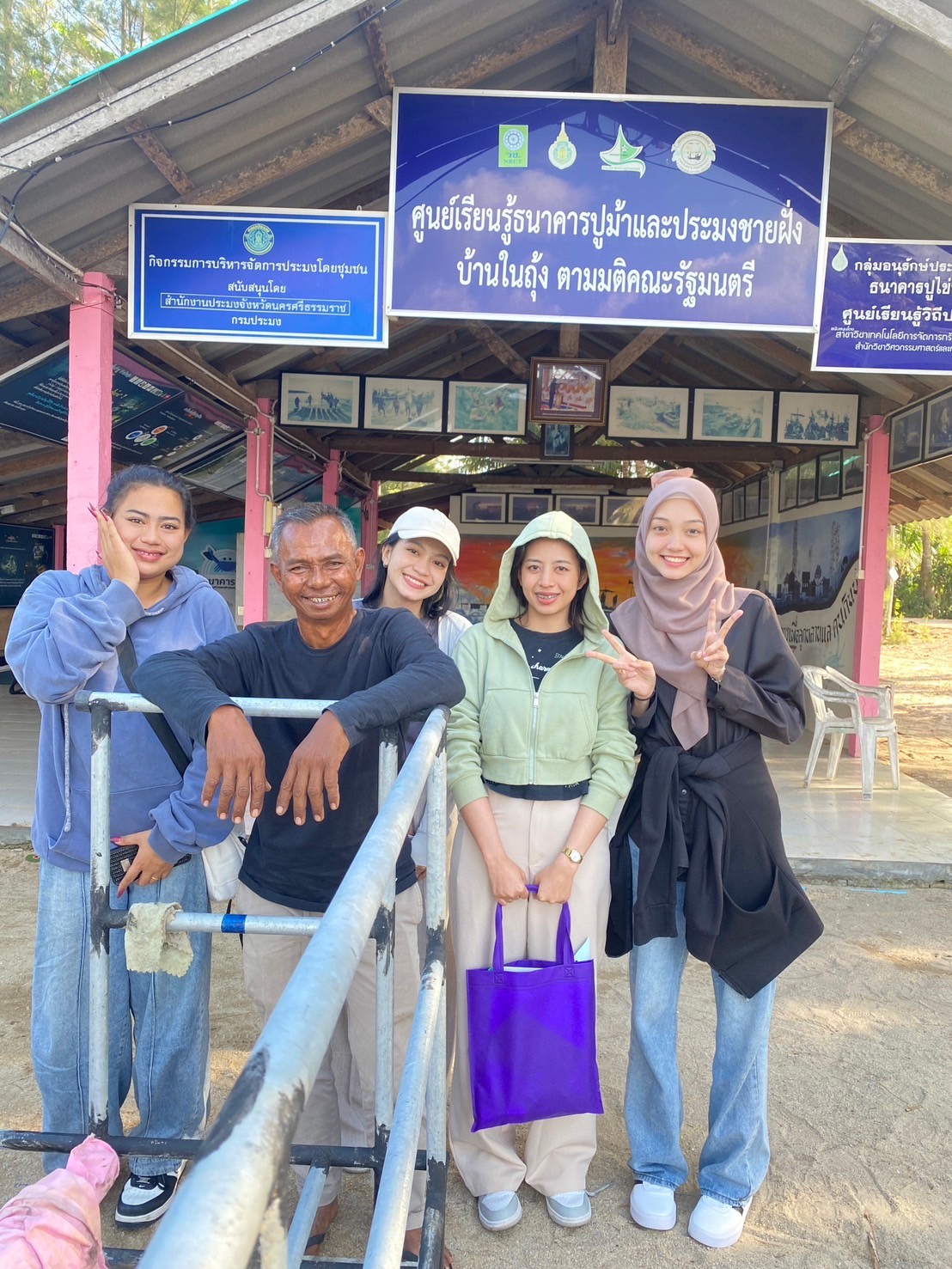
The Center for Academic Services at Walailak University, in its effort to drive social engagement, conducted a field survey under the project titled “The Development of Low-Carbon Tourism Program in Nakhon Si Thammarat’s Coastal Communities.” The project is integrated with the course THB60-312: Tourism Resource Planning and Development, led by Assoc. Prof. Dr. Onanong Cheablam from the School of Management. Students were taken to survey and assess tourism resource potential by gathering data using tourism classification forms based on the Recreation Opportunity Spectrum (ROS) framework. The survey covered four coastal communities in Nakhon Si Thammarat Province: Pak Phaya Blue Swimming Crab Bank Group, Pak Phun Blue Swimming Crab Bank Group, Ban Laem Homestay Blue Swimming Crab Bank Group, and the Blue Swimming Crab Bank and Coastal Fisheries Learning Center in Ban Nai Tung.
The objectives were to classify tourism areas according to the Recreation Opportunity Spectrum and gather information about factors such as accessibility, naturalness and development of the area, self-reliance level, and visitor and activity control levels. This information will be used to analyze the current state of the areas and further develop community-based tourism, linking existing community tourism to low-carbon tourism, with a focus on minimizing environmental impacts.
The project focuses on developing low-carbon tourism activities and routes in the coastal communities of Nakhon Si Thammarat, aiming for tourism that minimizes carbon emissions and environmental disturbances. The activities emphasize environmental responsibility and reducing carbon emissions in the area, with an integrated tourism approach that includes nature tourism, ecotourism, creative tourism, and responsible tourism. Managing low-carbon tourism resources is part of sustainable tourism management, striving to maintain a balance across economic, social, and environmental aspects. The aim is to promote tourism that creates sustainable jobs and income, benefits local communities, and provides quality experiences for tourists while preserving resource richness without causing environmental harm.
This project aligns with the Sustainable Development Goals (SDGs), specifically SDG 14: Life Below Water (conserve and sustainably use oceans, seas, and marine resources for sustainable development), SDG 13: Climate Action (take urgent action to combat climate change and its impacts), and SDG 17: Partnerships for the Goals (strengthen partnerships with networks and related organizations).
Thai Version: https://cas.wu.ac.th/archives/25703