
Walailak University’s Action Plan to Reduce Plastic Waste on Campus
Walailak University’s Action Plan to Reduce Plastic Waste on Campus
Walailak University is committed to reducing plastic waste on campus through sustainable waste management practices and initiatives that encourage responsible consumption. By promoting plastic waste reduction, improving waste separation, and encouraging the reuse of materials, the University aims to minimize the environmental impacts of plastic pollution and reduce the amount of plastic waste generated by its campus community. Diagnostic assessments of campus waste generation and disposal practices can help identify major sources of plastic waste, evaluate existing waste management challenges, and determine opportunities for improvement. These efforts support the transition towards a more sustainable campus environment and contribute to the conservation of aquatic ecosystems by helping prevent plastic waste from entering natural waterways and the marine environment.
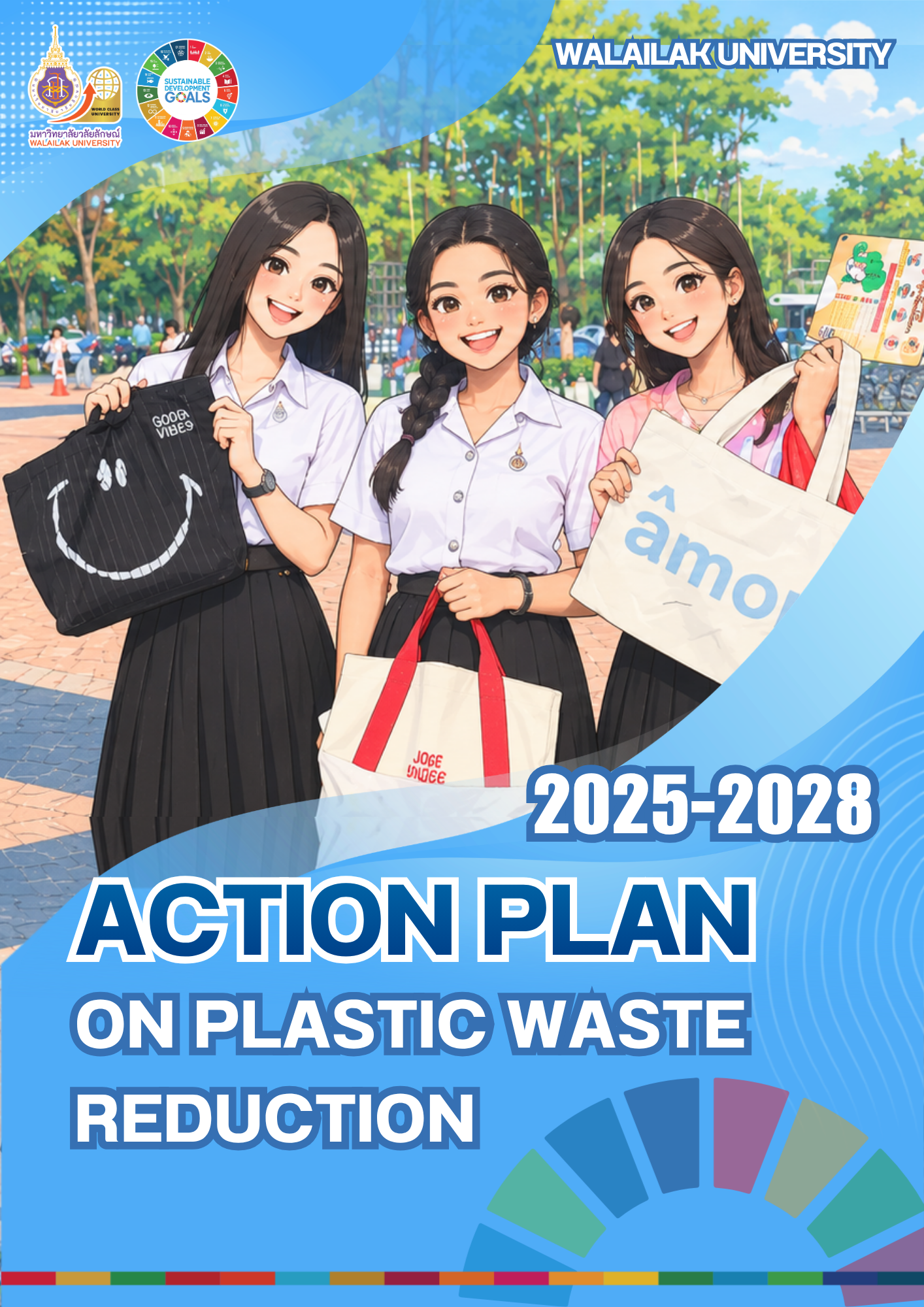
Walailak University’s Action Plan on Plastic Waste Reduction 2025–2028
Walailak University (WU) is committed to reducing plastic waste on campus through practical measures that promote responsible consumption, waste prevention, recycling, and the use of environmentally friendly alternatives. Recognizing the environmental impacts of plastic pollution, the University has established its Action Plan on Plastic Waste Reduction 2025–2028 to guide efforts to minimize single-use plastics and encourage more sustainable practices among students, staff, food vendors, and visitors. The action plan combines existing waste reduction measures with specific targets to strengthen plastic waste management and support the conservation of natural resources and aquatic ecosystems.
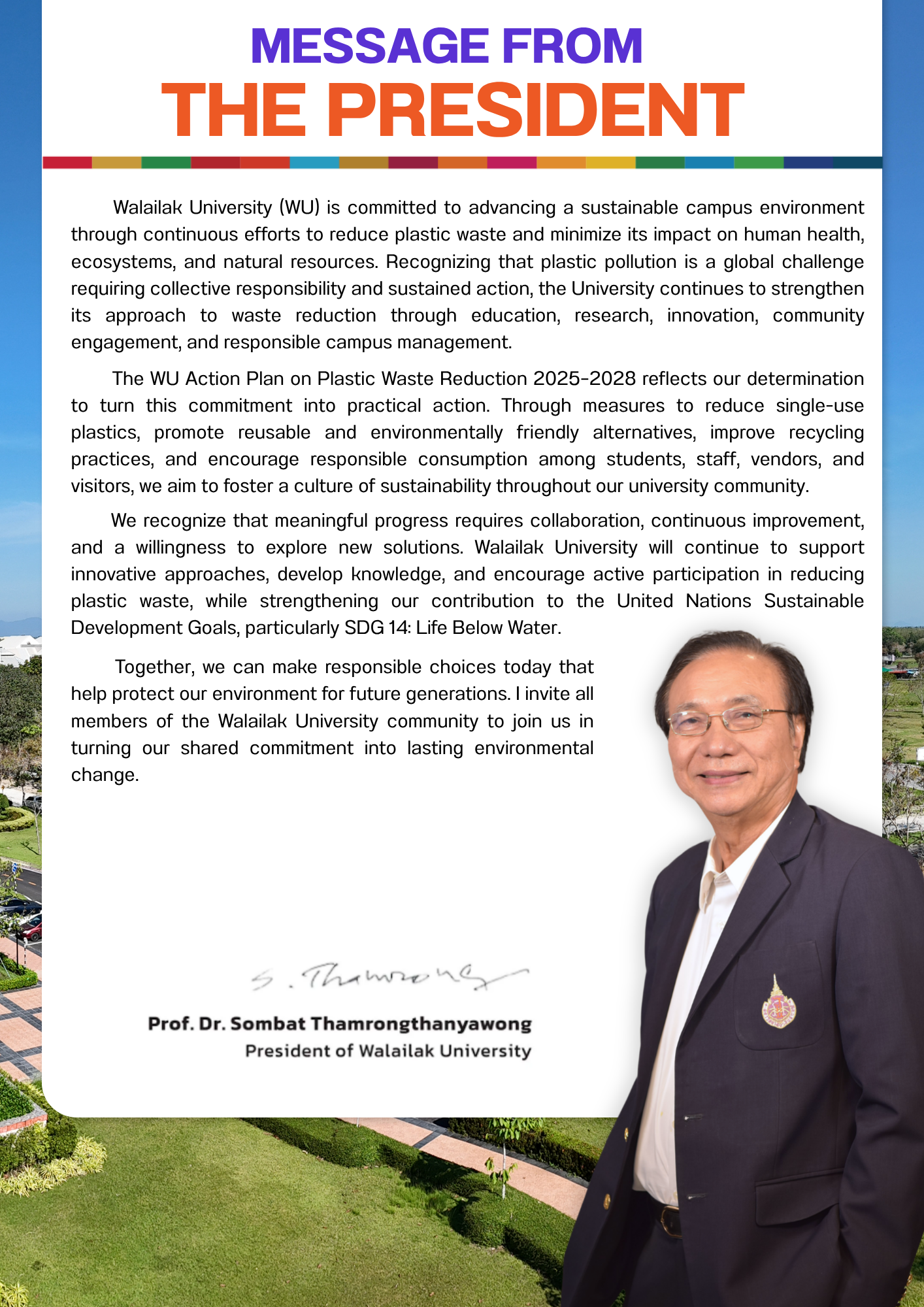
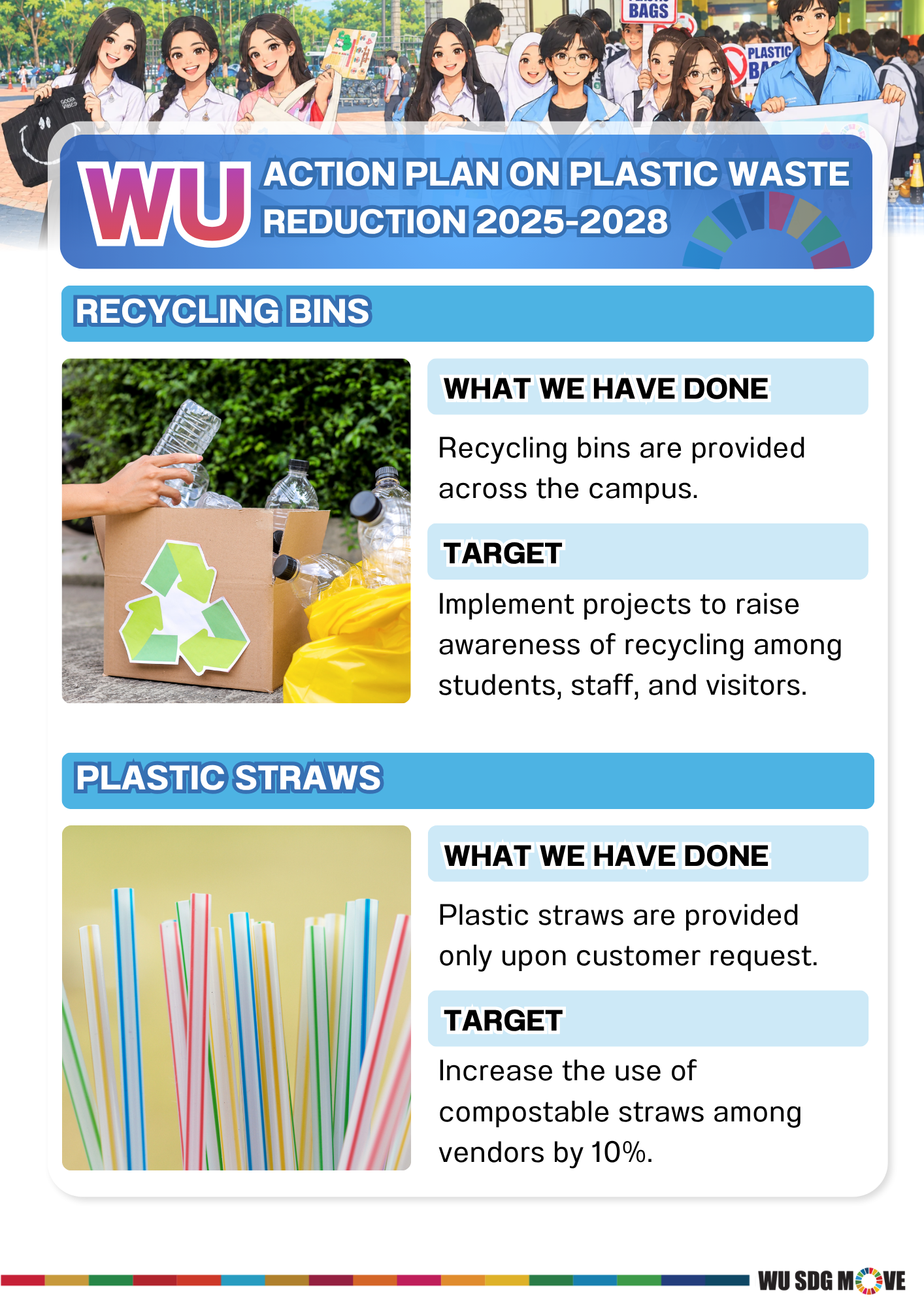
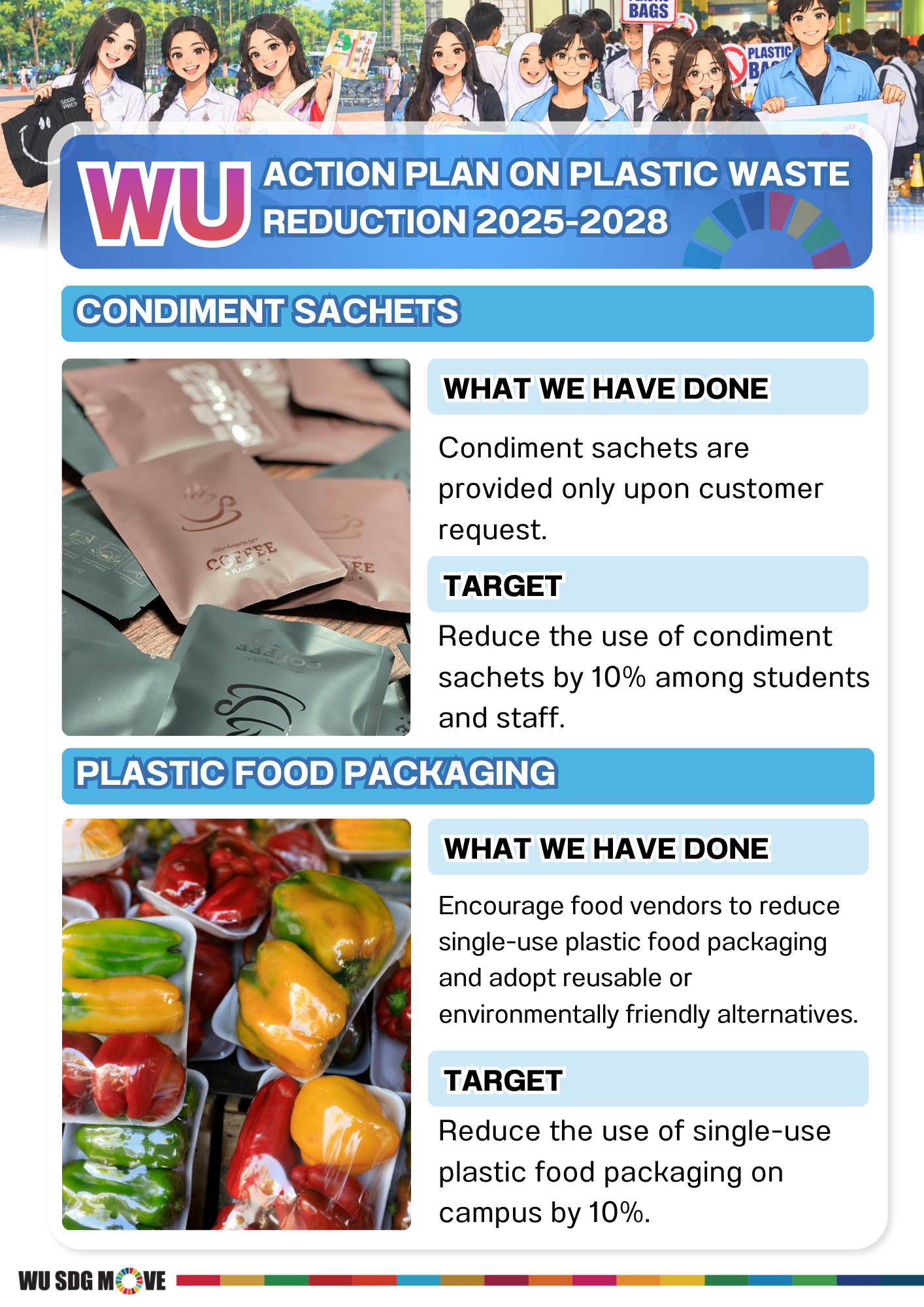
The action plan addresses several common sources of plastic waste generated through daily campus activities. For plastic bags, single-use bags are not provided by all vendors, and the University aims to increase the use of biodegradable plastic bags on campus by 10%. To reduce waste from food packaging, Styrofoam containers are not provided by vendors. Students and staff are also encouraged to dine in canteens and restaurants rather than use takeaway services. In addition, food vendors are encouraged to reduce single-use plastic food packaging and adopt reusable or environmentally friendly alternatives, with a target of reducing single-use plastic food packaging on campus by 10%.
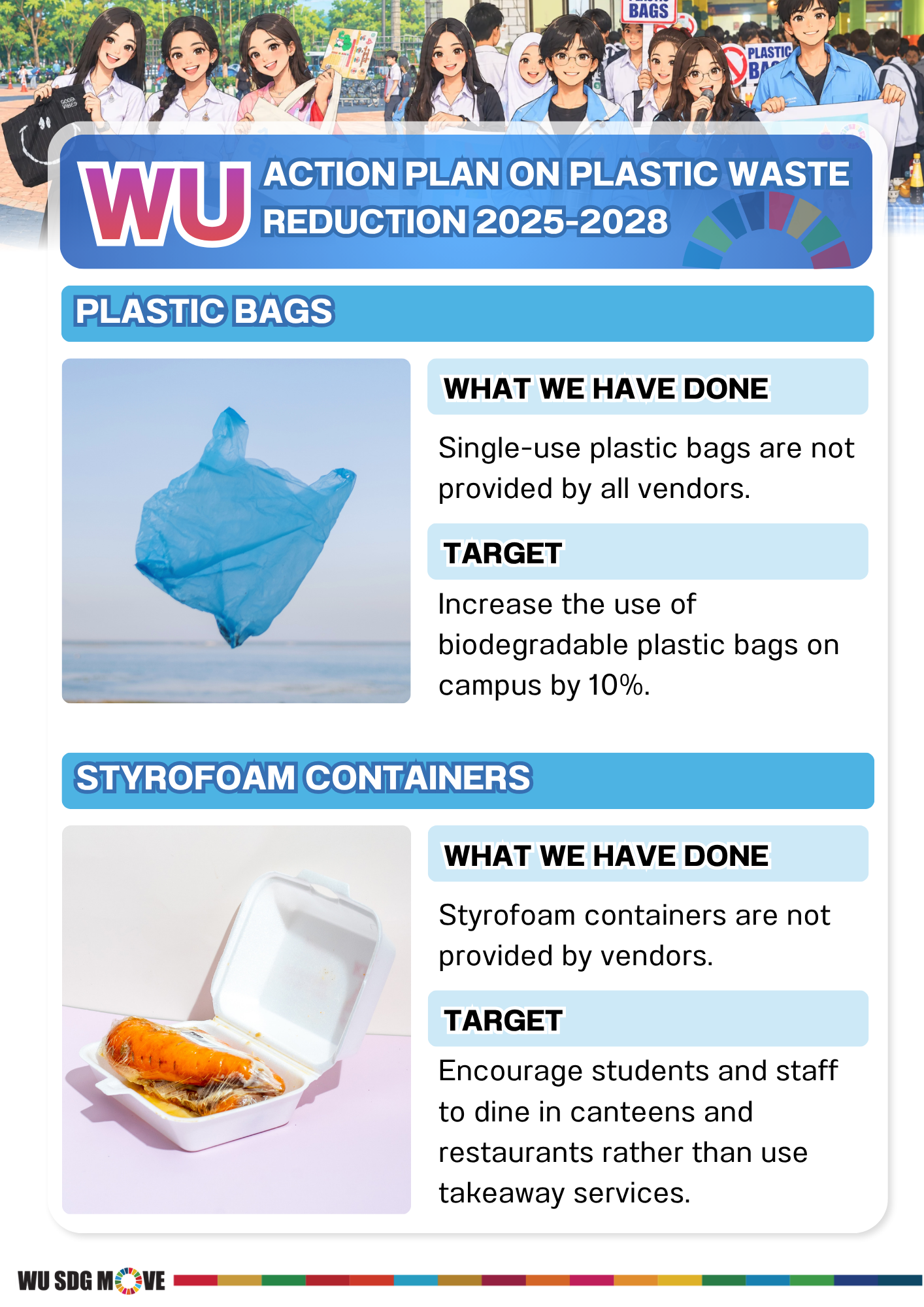
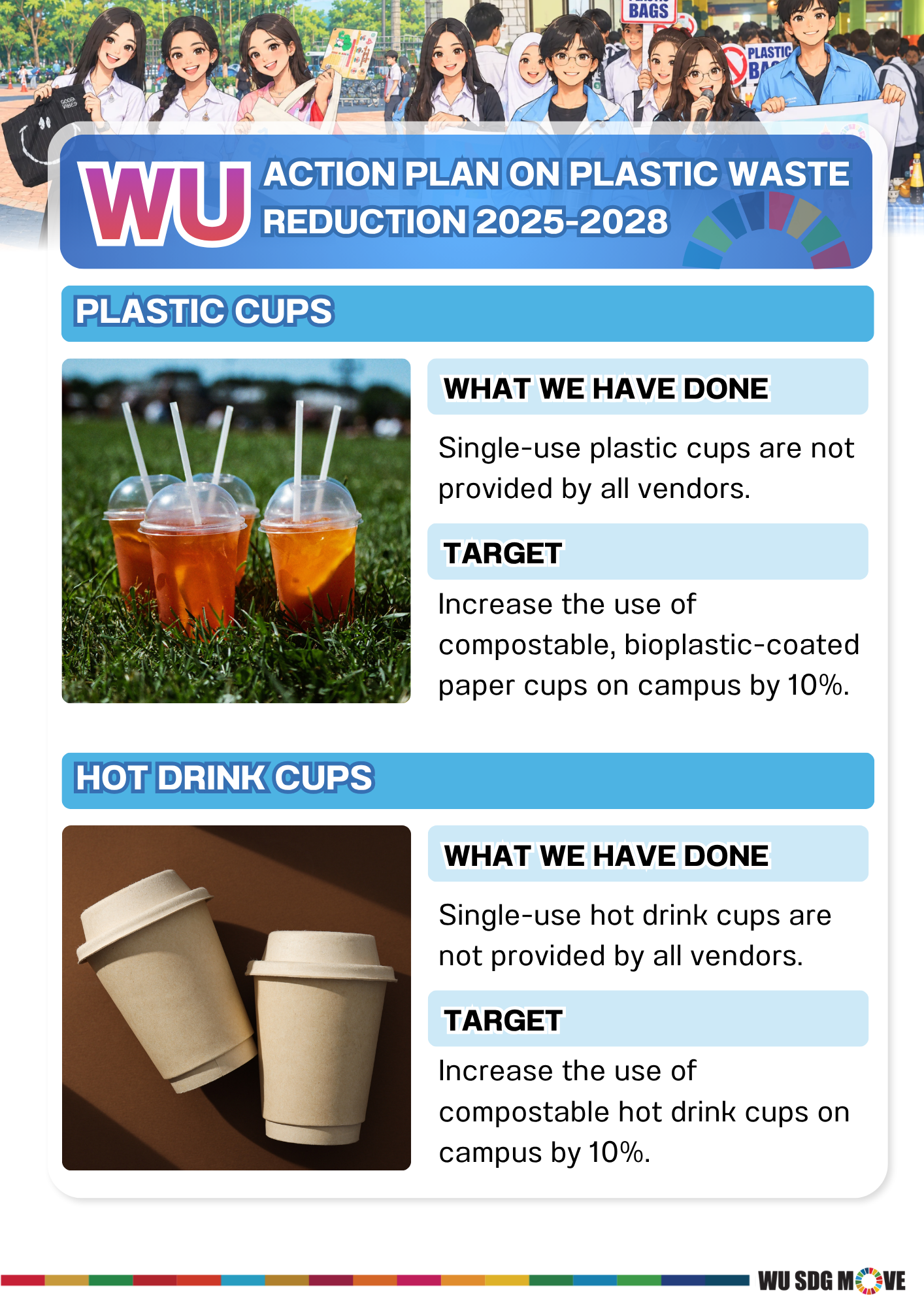
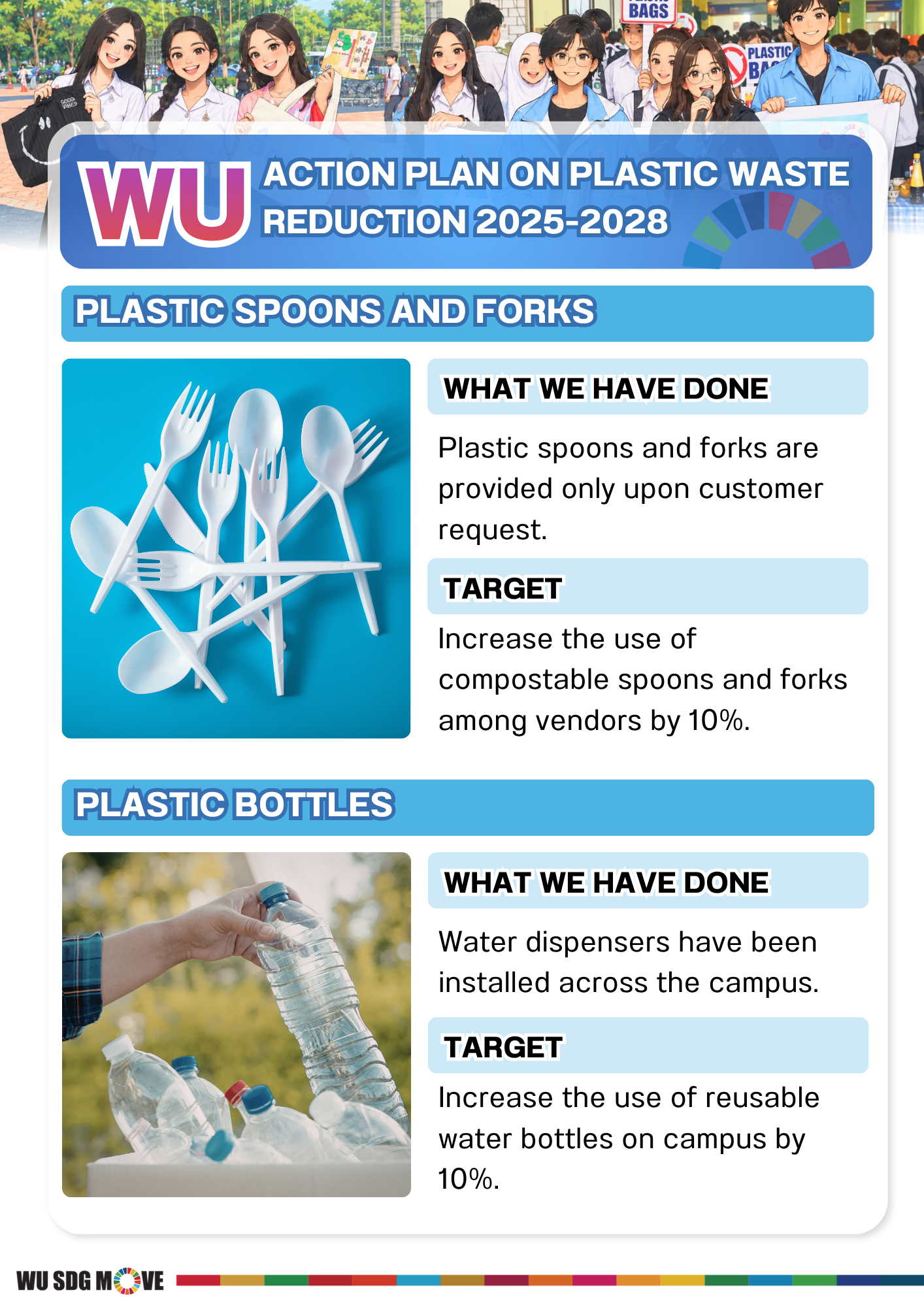
The University also seeks to reduce waste from beverage containers and disposable food-service items. Single-use plastic cups and hot drink cups are not provided by all vendors, while plastic spoons, forks, and straws are provided only upon customer request. The action plan sets a target of increasing the use of compostable, bioplastic-coated paper cups, compostable hot drink cups, and compostable spoons, forks, and straws by 10%. These measures are intended to reduce reliance on conventional single-use plastics and encourage vendors and consumers to adopt more sustainable alternatives.
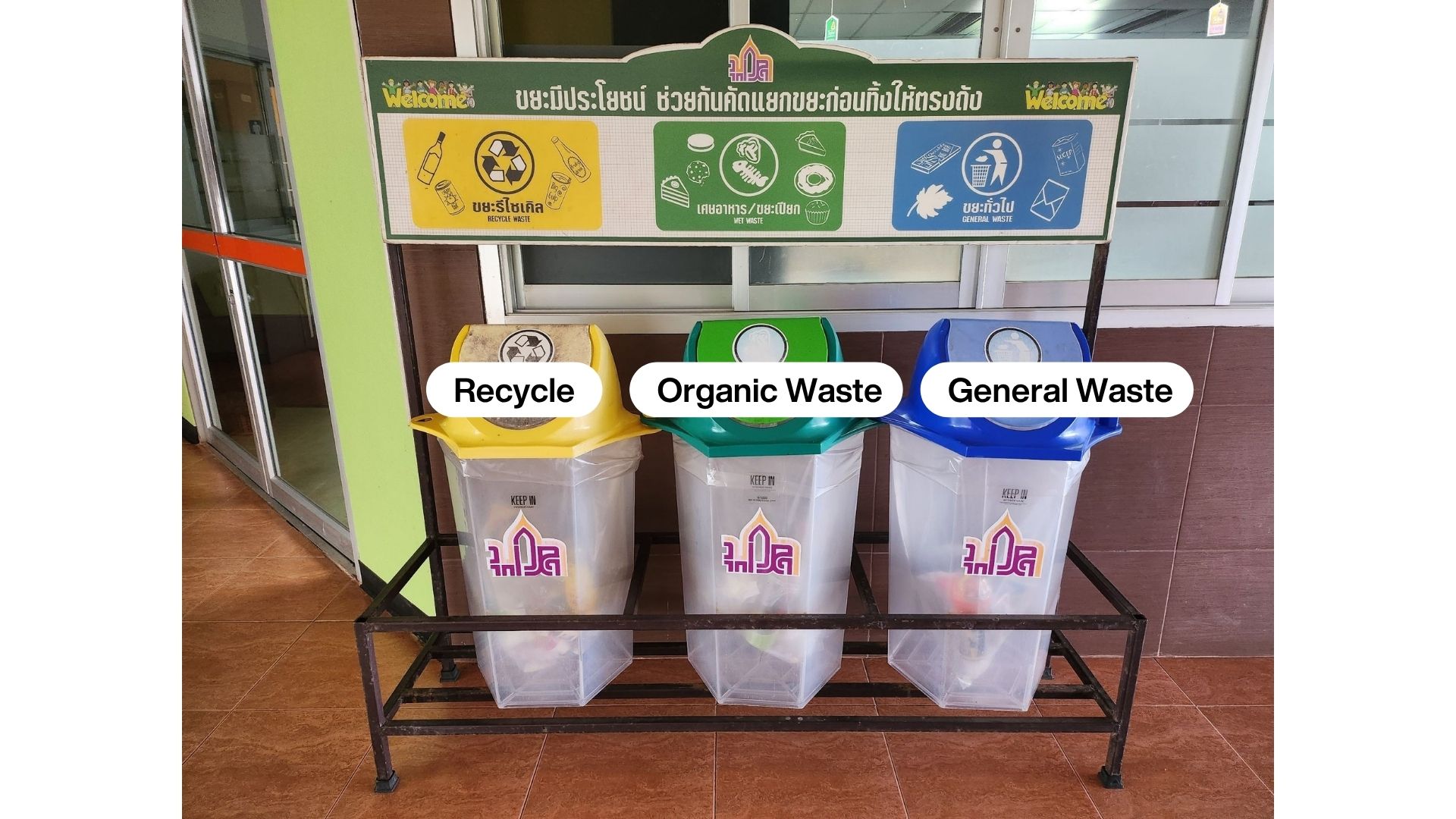
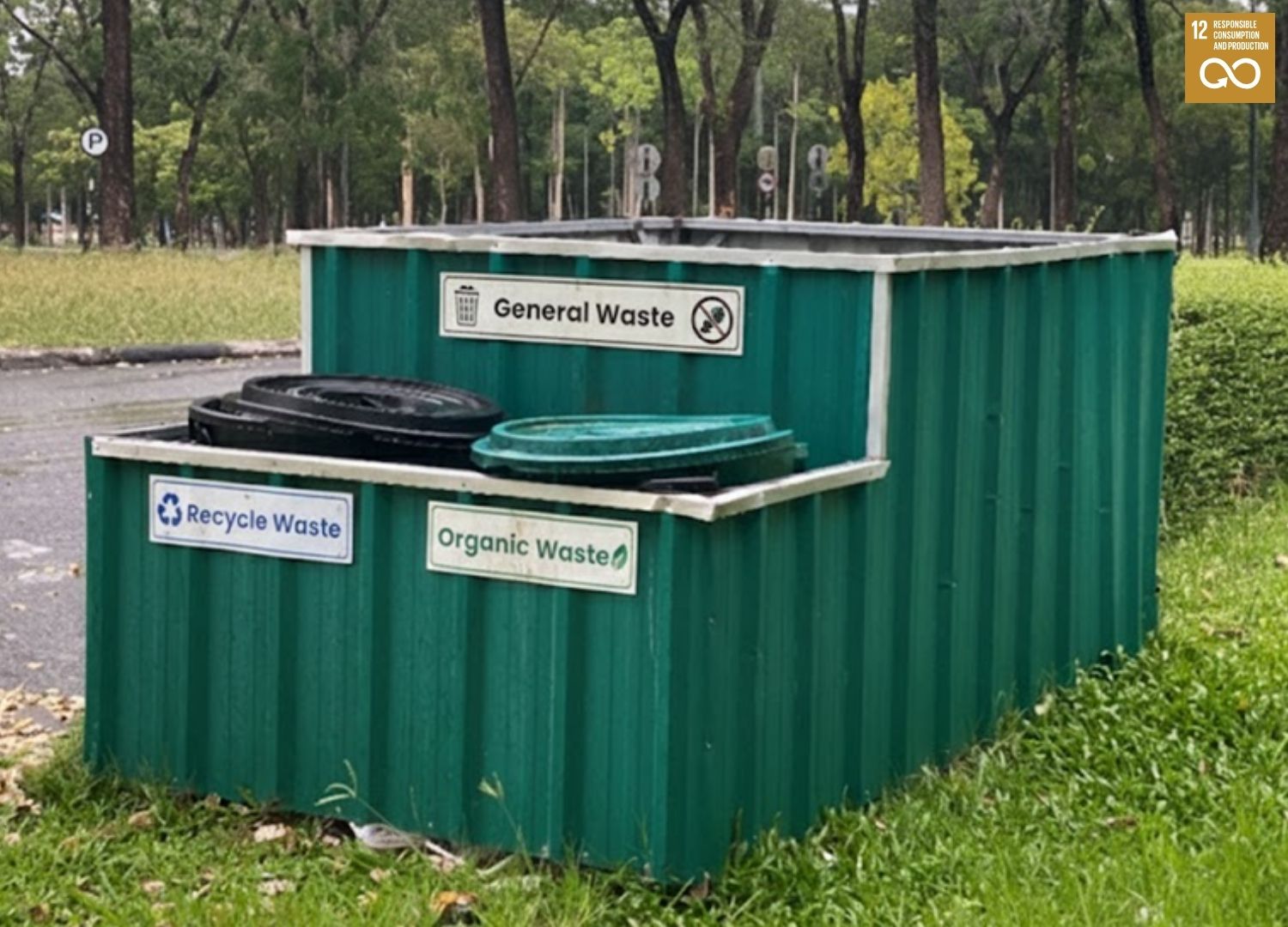
To address plastic bottle waste, WU has installed water dispensers across the campus and aims to increase the use of reusable water bottles by 10%. The University also provides recycling bins across the campus and plans to implement projects that raise awareness of recycling among students, staff, and visitors. These efforts emphasize the importance of combining appropriate waste collection facilities with greater awareness and participation from the campus community.
Through the implementation of the 2025–2028 action plan, Walailak University aims to strengthen its campus-wide approach to plastic waste reduction and foster a culture of environmental responsibility. By encouraging waste prevention, promoting reusable and environmentally friendly alternatives, and improving recycling awareness, the University seeks to reduce the environmental footprint of its daily operations. These efforts also support broader sustainability objectives, particularly SDG 14: Life Below Water, by helping prevent plastic waste from entering waterways and marine environments. Continued collaboration, monitoring, and evaluation will be important to assess progress towards the established targets and identify opportunities for further improvement.
Policy on Single-Use Plastic Waste and Disposable Item Reduction B.E. 2566 (2023)


Walailak University (WU) has officially established the Policy on Single-Use Plastic Waste and Disposable Item Reduction B.E. 2566 (2023) to strengthen its commitment to environmental sustainability and responsible resource management. The policy encourages all members of the university community, including students, staff, vendors, suppliers, and subcontractors, to reduce the consumption of single-use plastics and disposable items throughout the campus. It provides a framework for integrating waste reduction into daily activities, educational and research operations, procurement practices, and campus management.
Under this policy, faculty members and students are encouraged to minimize single-use plastic consumption in their daily routines, while university departments and other organizational units are expected to reduce the use of disposable materials and equipment associated with teaching, learning, and research. These measures promote more responsible consumption, encourage the adoption of reusable alternatives, and help prevent unnecessary waste generation at its source.
To support effective implementation, Walailak University emphasizes compliance with relevant government regulations and environmental guidelines, the improvement of waste management systems, and the prevention of pollution from land-based activities. The policy also recognizes the importance of monitoring marine environmental conditions and assessing potential pollution risks. Measures such as proper waste segregation, recycling, responsible wastewater management, and the control of waste discharges can help prevent pollutants from entering drainage systems, rivers, and coastal waters.
In addition, the University promotes the integration of marine pollution prevention into education, research, and academic services. Awareness-raising campaigns and community engagement activities help encourage environmentally responsible behavior among students, staff, and surrounding communities. Collaboration with government agencies, private-sector organizations, and national and international partners further supports the exchange of knowledge and the development of practical approaches to reducing plastic waste and other forms of pollution.
The policy also provides a foundation for exploring innovative solutions and improving the efficiency of environmental management. Where appropriate, digital technologies and environmental monitoring systems can support data collection, pollution assessment, and the evaluation of waste reduction initiatives. Through these complementary approaches, Walailak University seeks to strengthen institutional responsibility, encourage stakeholder participation, and promote continuous improvement in sustainable waste management.
Campus Campaign to Eliminate Styrofoam Food Containers and Reduce Plastic Waste
Walailak University (WU) has organized awareness-raising and public relations activities to promote the elimination of Styrofoam food containers and the reduction of plastic waste across the campus. The campaign took place at Cho Pradu Food Center and the Chan Pradu Market, where student representatives participated in activities to encourage more environmentally responsible consumption practices.
During the campaign, students helped raise awareness of the importance of reducing single-use plastic bags and encouraged the use of reusable alternatives, such as personal drinking cups and cloth bags. The University also called on vendors operating in food centers, campus markets, and other commercial areas to discontinue or refrain from providing plastic carrier bags, supporting the University’s broader policy to eliminate Styrofoam food containers and reduce plastic consumption.
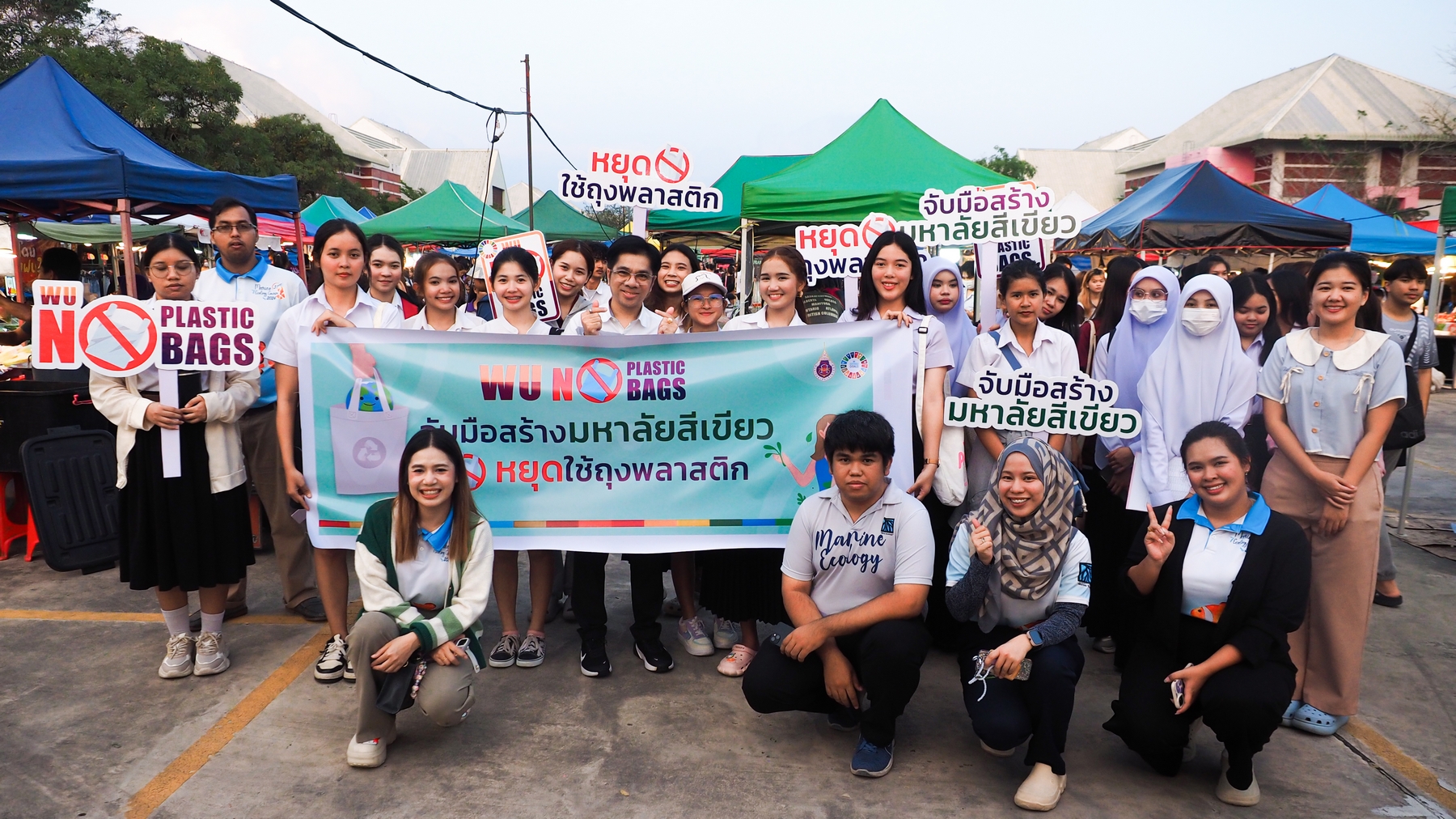
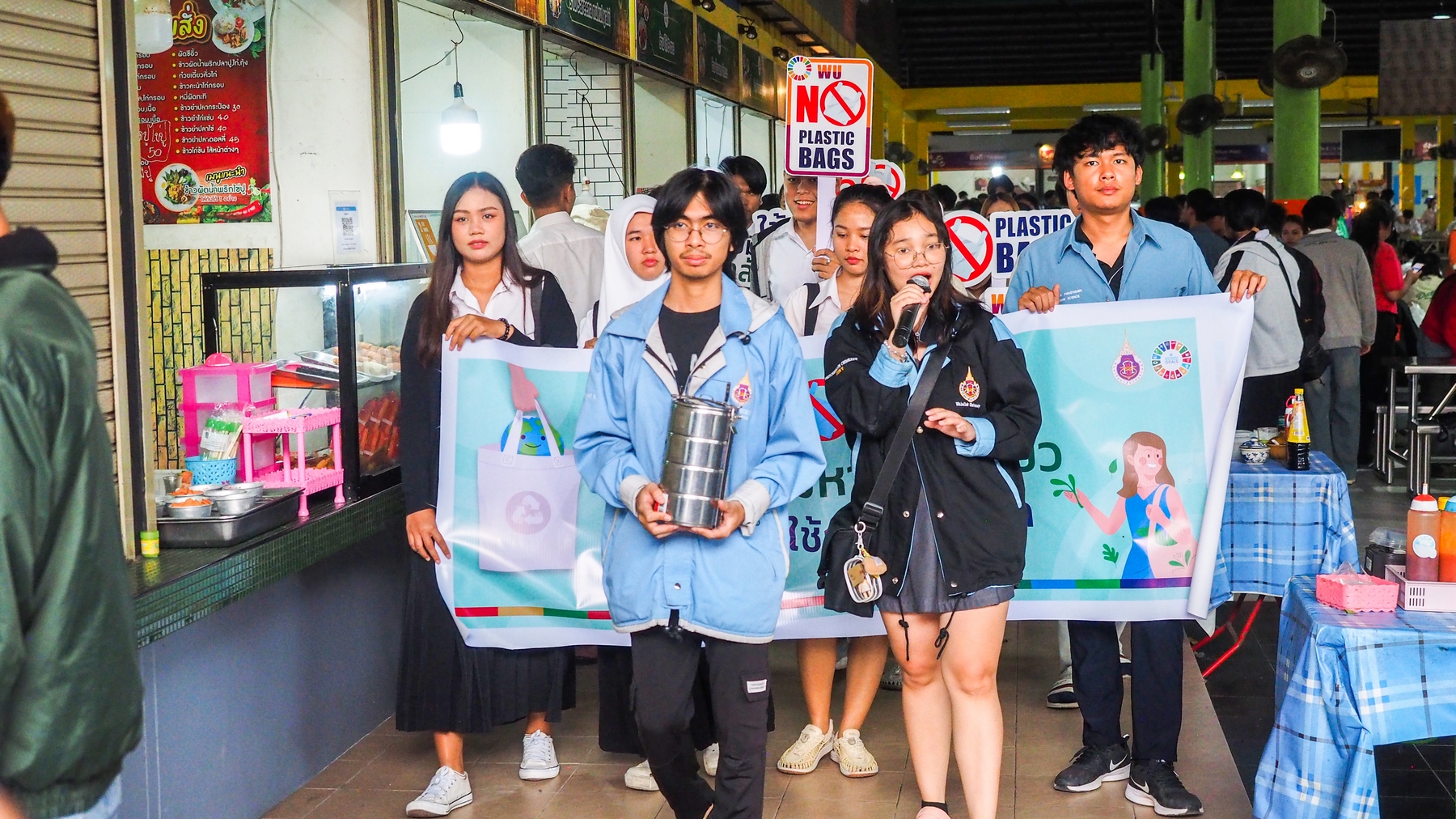
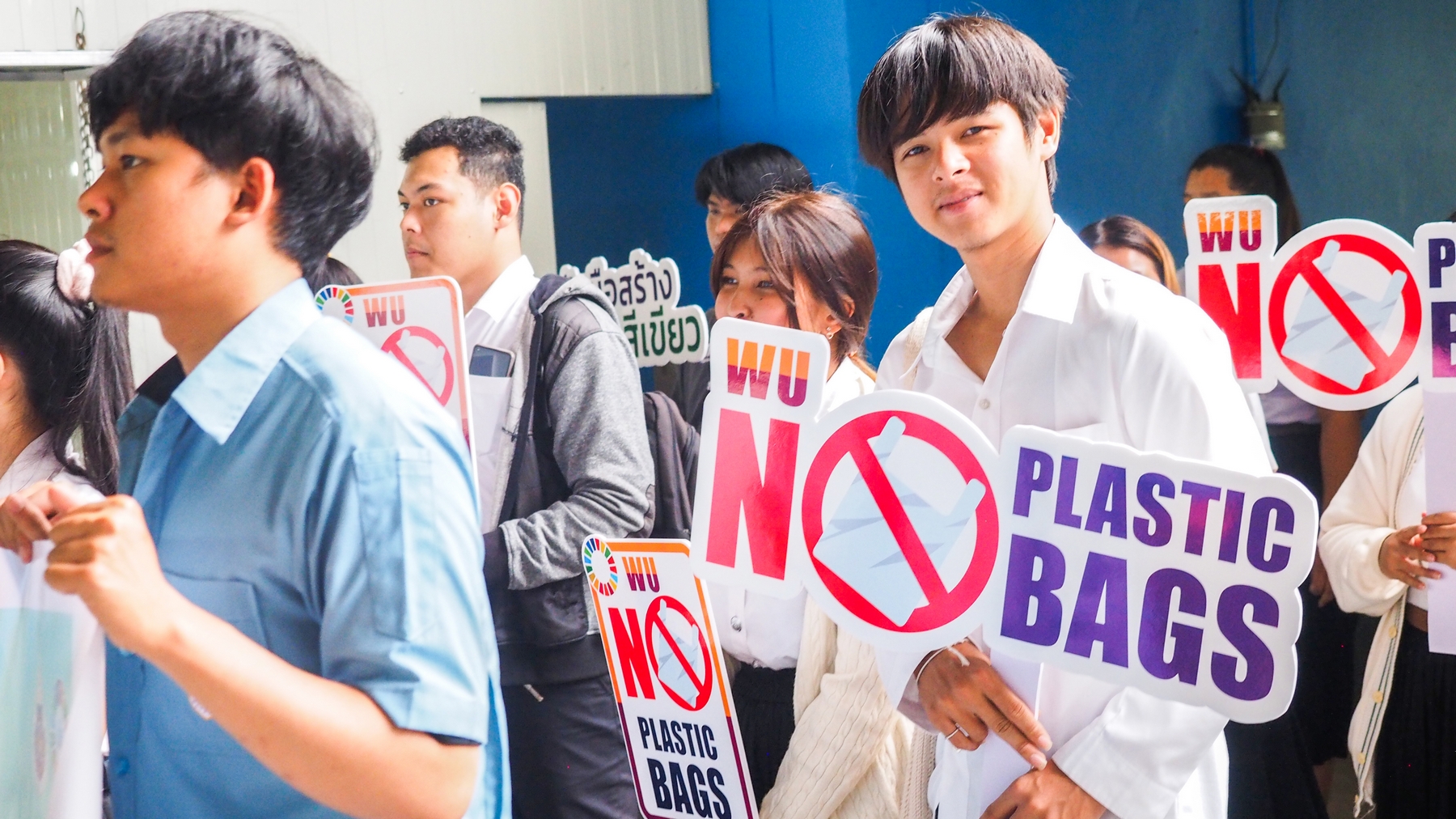
These activities translate the University’s environmental policy into practical action by encouraging cooperation among students, vendors, and other members of the campus community. By promoting reusable alternatives and reducing unnecessary disposable packaging, the campaign helps prevent waste generation at its source and reinforces responsible consumption habits.
The initiative also supports Walailak University’s commitment to sustainable production and consumption, appropriate waste management, and the reduction of pollution that may harm human health and the environment. Through continued awareness-raising and stakeholder participation, the University seeks to strengthen its green campus initiatives

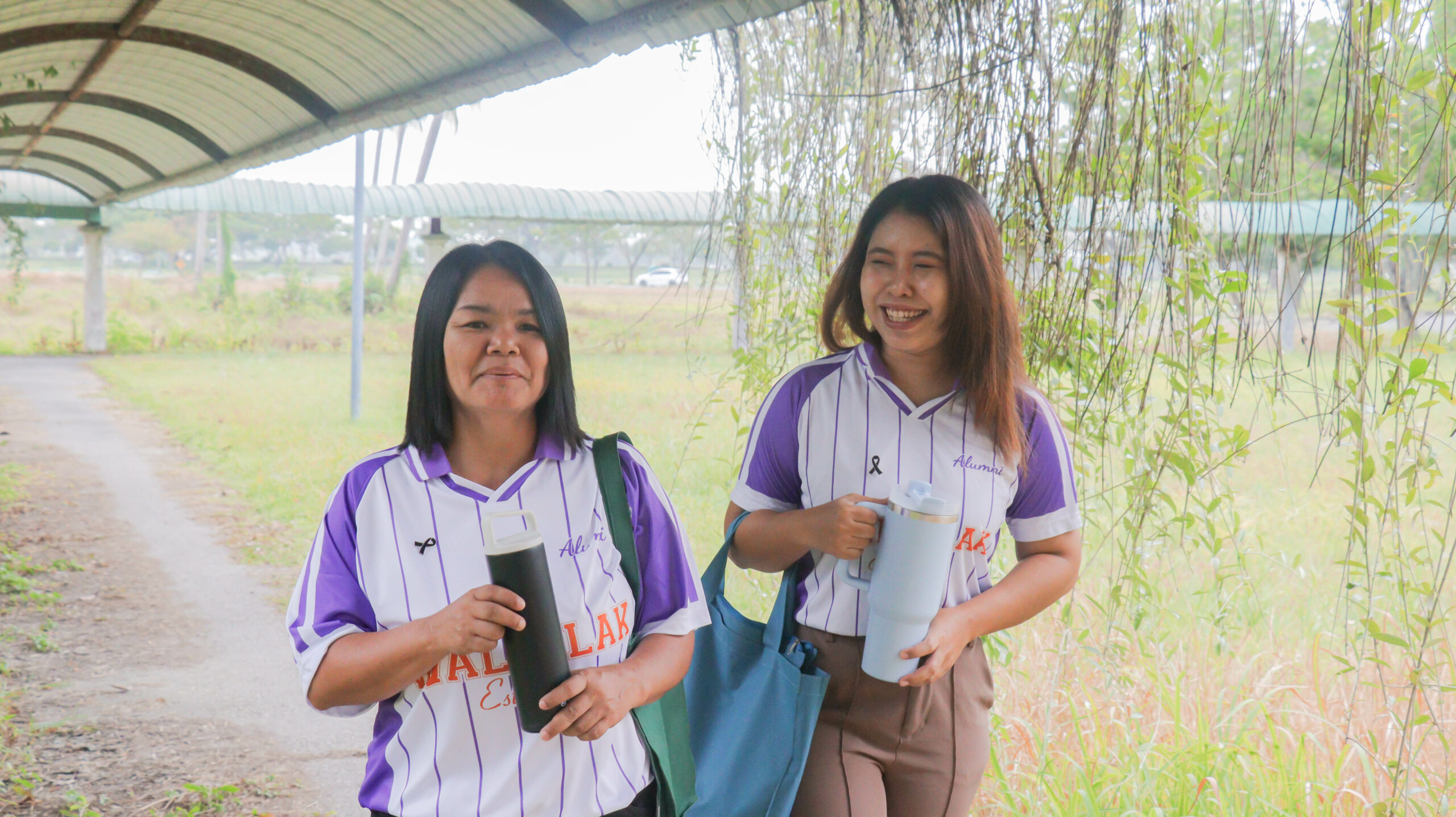

Through its Policy on Single-Use Plastic Waste and Disposable Item Reduction B.E. 2566 (2023), Action Plan on Plastic Waste Reduction 2025–2028, and campus-wide awareness campaigns, Walailak University (WU) demonstrates its commitment to tackling plastic pollution through coordinated policies and practical action. By establishing clear waste reduction targets, discouraging the use of Styrofoam food containers and unnecessary plastic bags, promoting reusable alternatives, and strengthening recycling awareness, the University encourages students, staff, vendors, and visitors to adopt more environmentally responsible practices. These efforts can help reduce unnecessary waste generation, improve resource efficiency, and foster a shared sense of environmental responsibility throughout the campus community. Establishing measurable targets and appropriate performance measures can also help the University track implementation and evaluate progress towards its plastic waste reduction objectives.
The implementation of these initiatives offers several potential environmental and social benefits. Reducing single-use plastics and disposable food packaging can decrease the volume of waste requiring collection and disposal, while promoting reusable products can help conserve materials and reduce demand for disposable alternatives. Improved waste segregation and recycling awareness can also support more effective waste management, reduce litter, and contribute to a cleaner and healthier campus environment. Furthermore, encouraging participation from campus vendors and other stakeholders can strengthen cooperation and help establish sustainable consumption habits that extend beyond university grounds into households and local communities. Measures such as recording plastic waste quantities, monitoring recycling rates, and assessing the adoption of reusable alternatives can help evaluate the effectiveness of these initiatives.
These efforts are particularly relevant to the protection of aquatic ecosystems. Plastic waste that escapes into drainage systems, rivers, and coastal waters can persist in the environment, harm marine wildlife, and contribute to the formation of microplastics. By preventing plastic waste at its source and promoting responsible disposal, Walailak University can help reduce the risk of land-based plastic pollution reaching the marine environment. Over time, sustained implementation, stakeholder participation, and regular monitoring and measurement of waste generation, disposal patterns, and recycling outcomes can help the University assess progress, improve its waste reduction strategies, and identify further opportunities to minimize its environmental footprint.
Walailak University’s integrated approach demonstrates how institutional policies, campus management, education, and public engagement can work together to address plastic pollution. In addition to supporting a cleaner and more sustainable university environment, these initiatives contribute to broader efforts to promote responsible consumption and protect natural resources for future generations. Continued measurement of key indicators, including reductions in single-use plastic consumption, improvements in waste segregation, and increases in material recovery, can strengthen accountability, inform future planning, and support the continuous improvement of the University’s plastic waste reduction measures.