
Policies and Measures Towards a Smoke-Free Campus
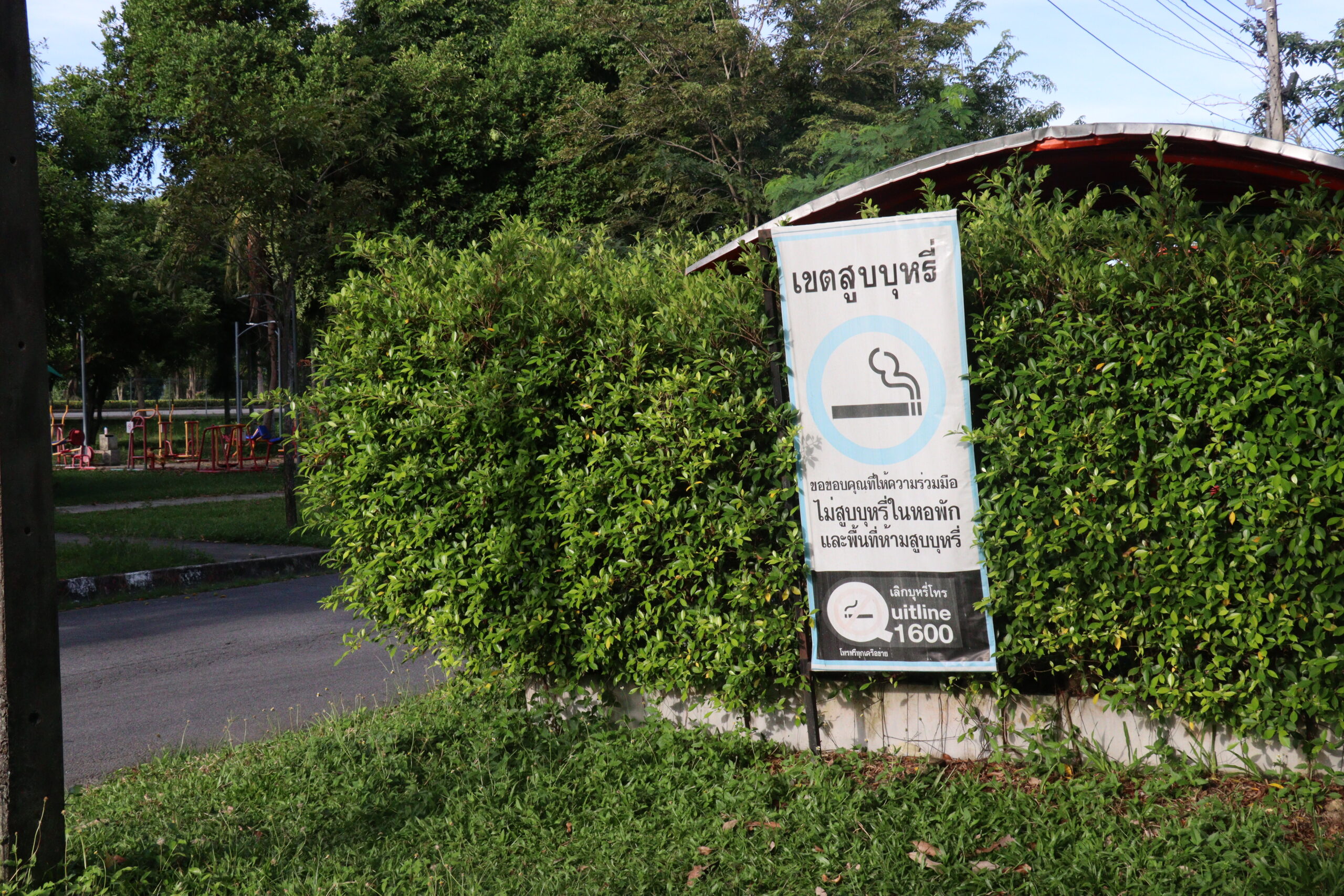
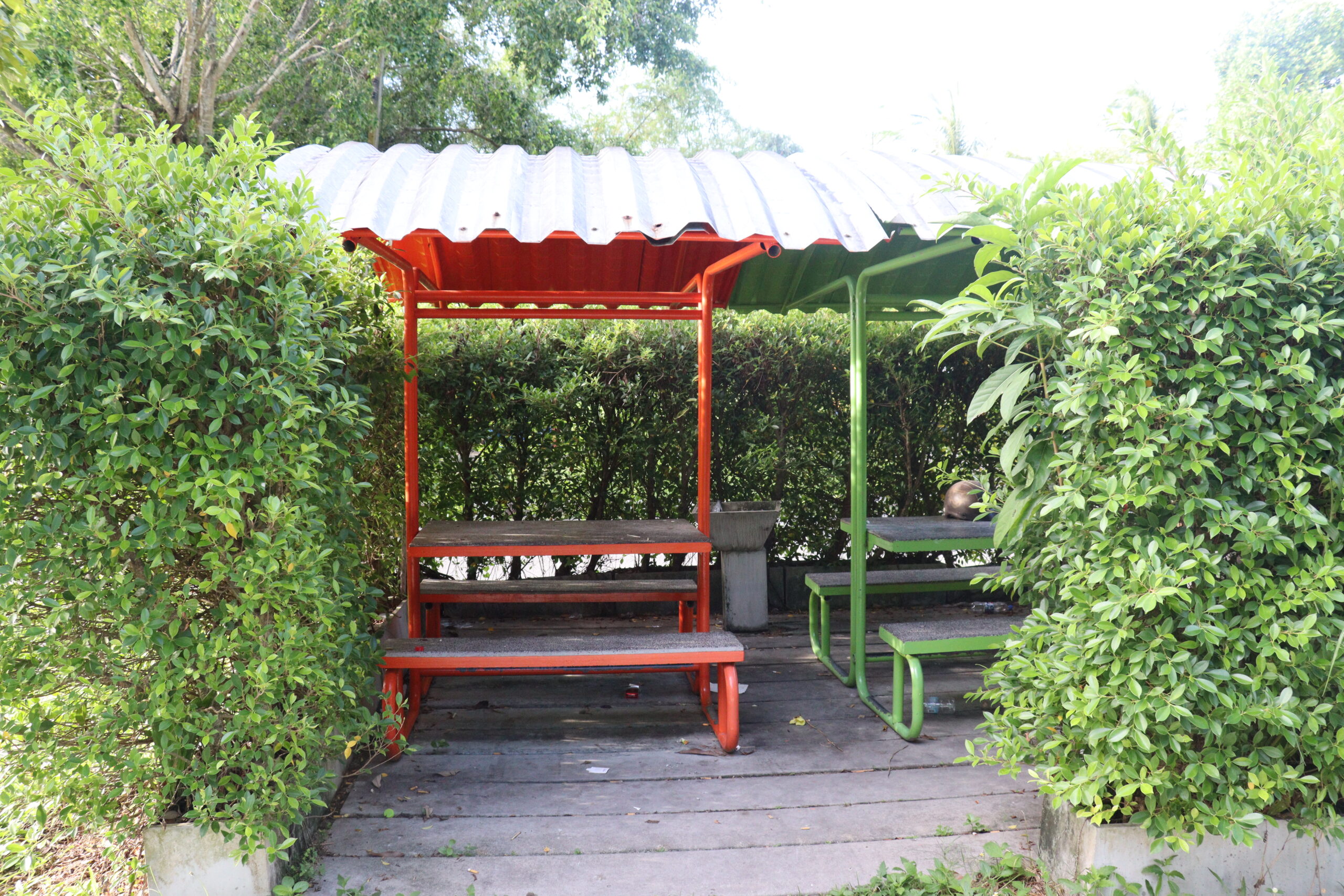
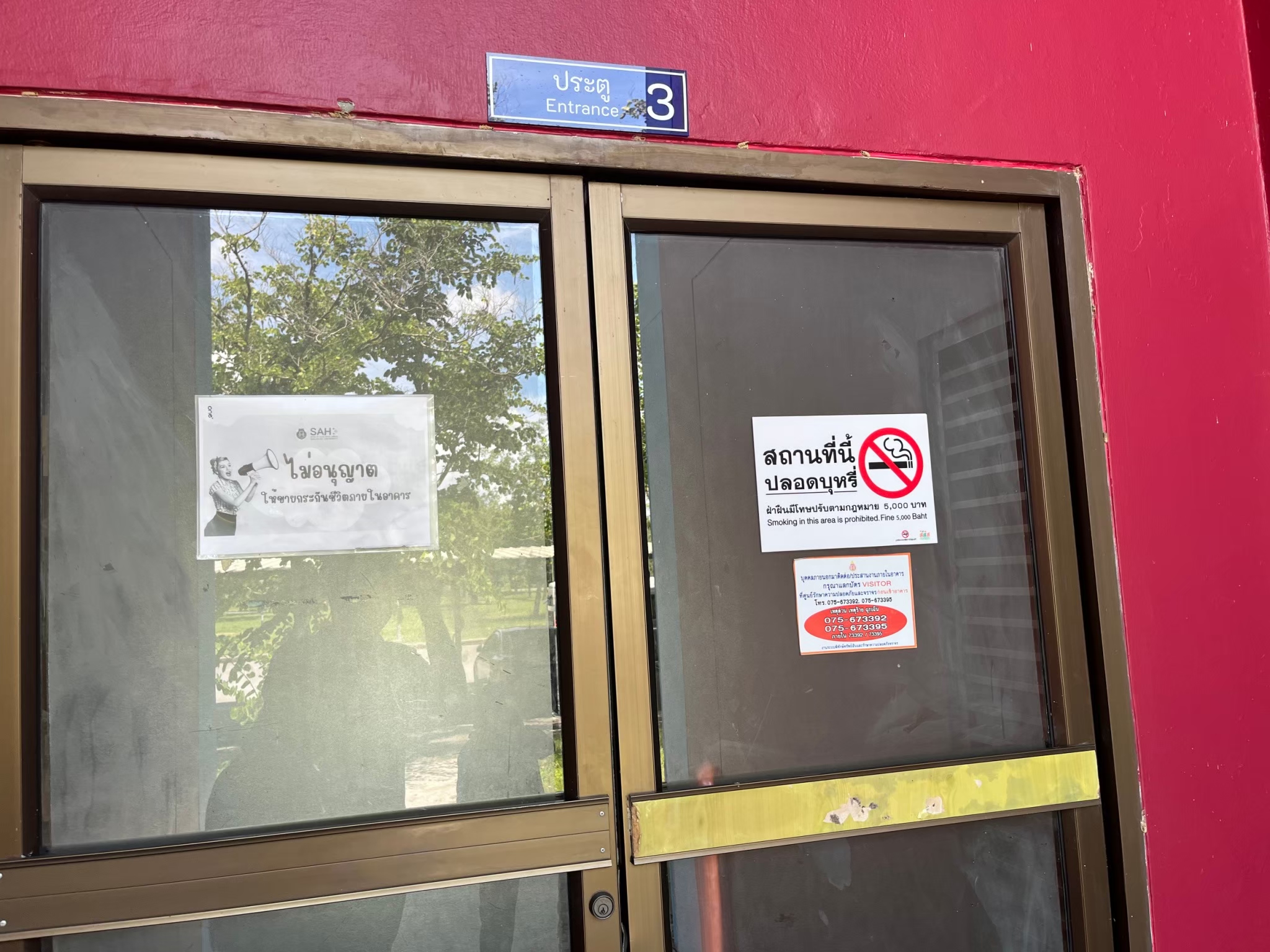
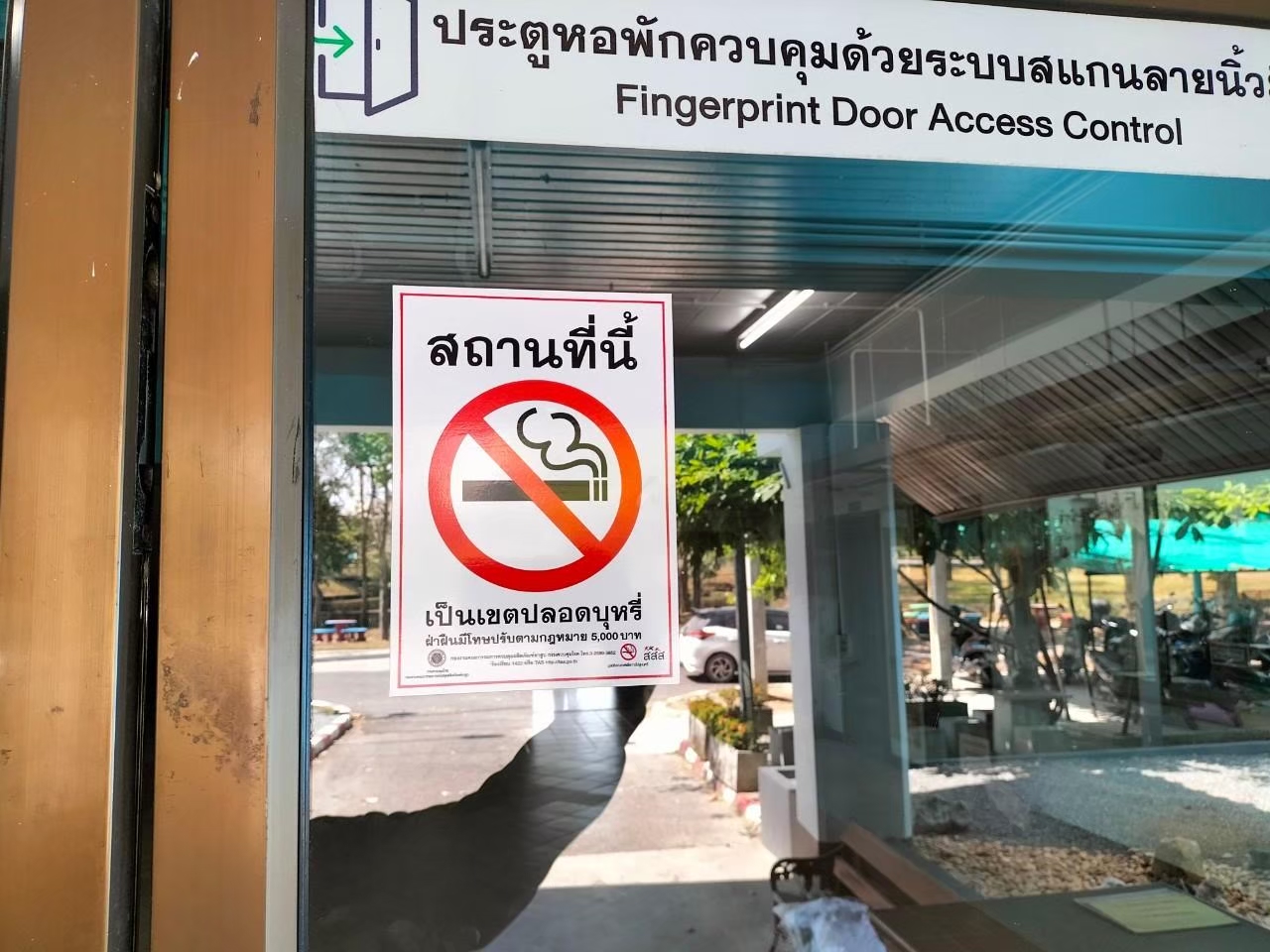
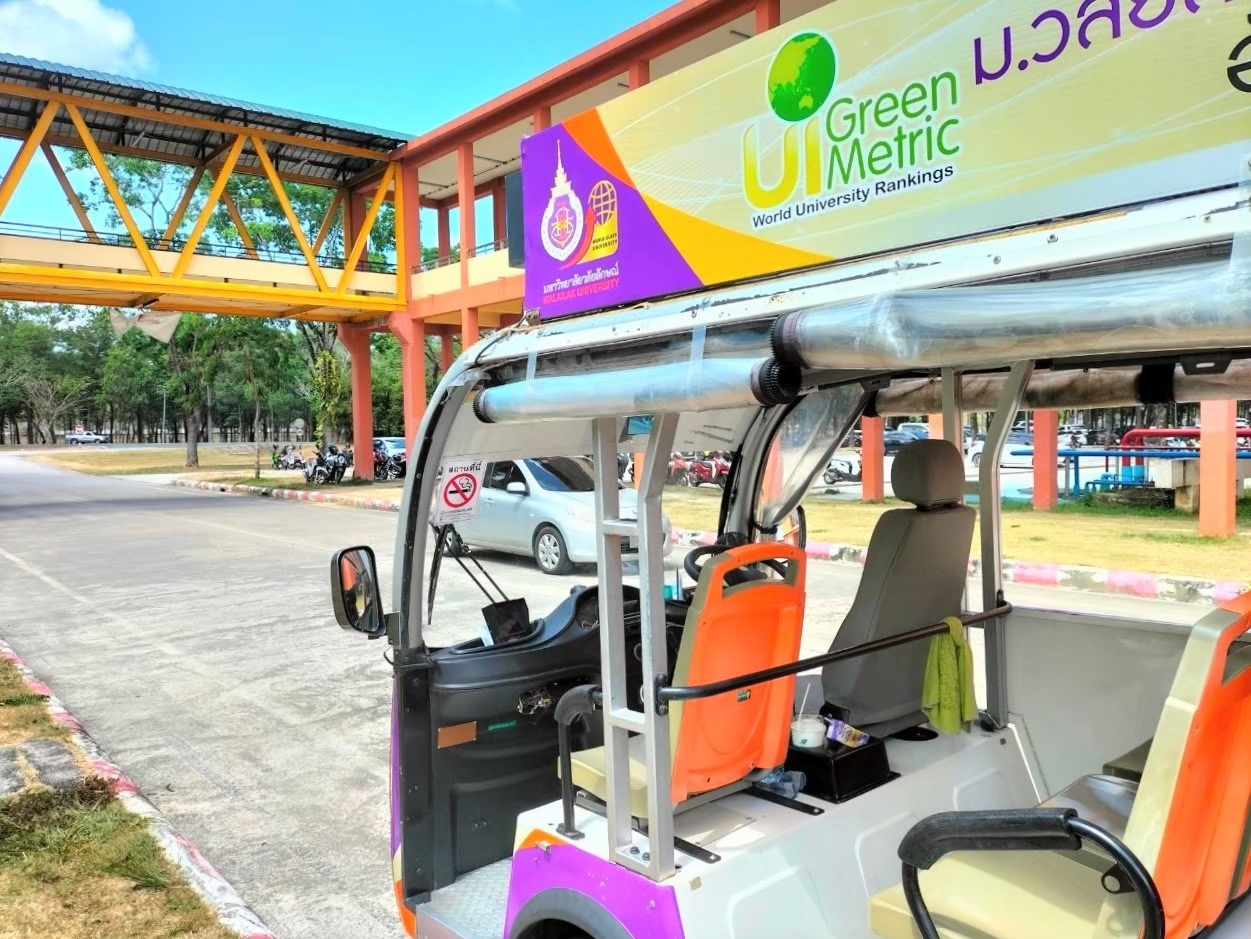
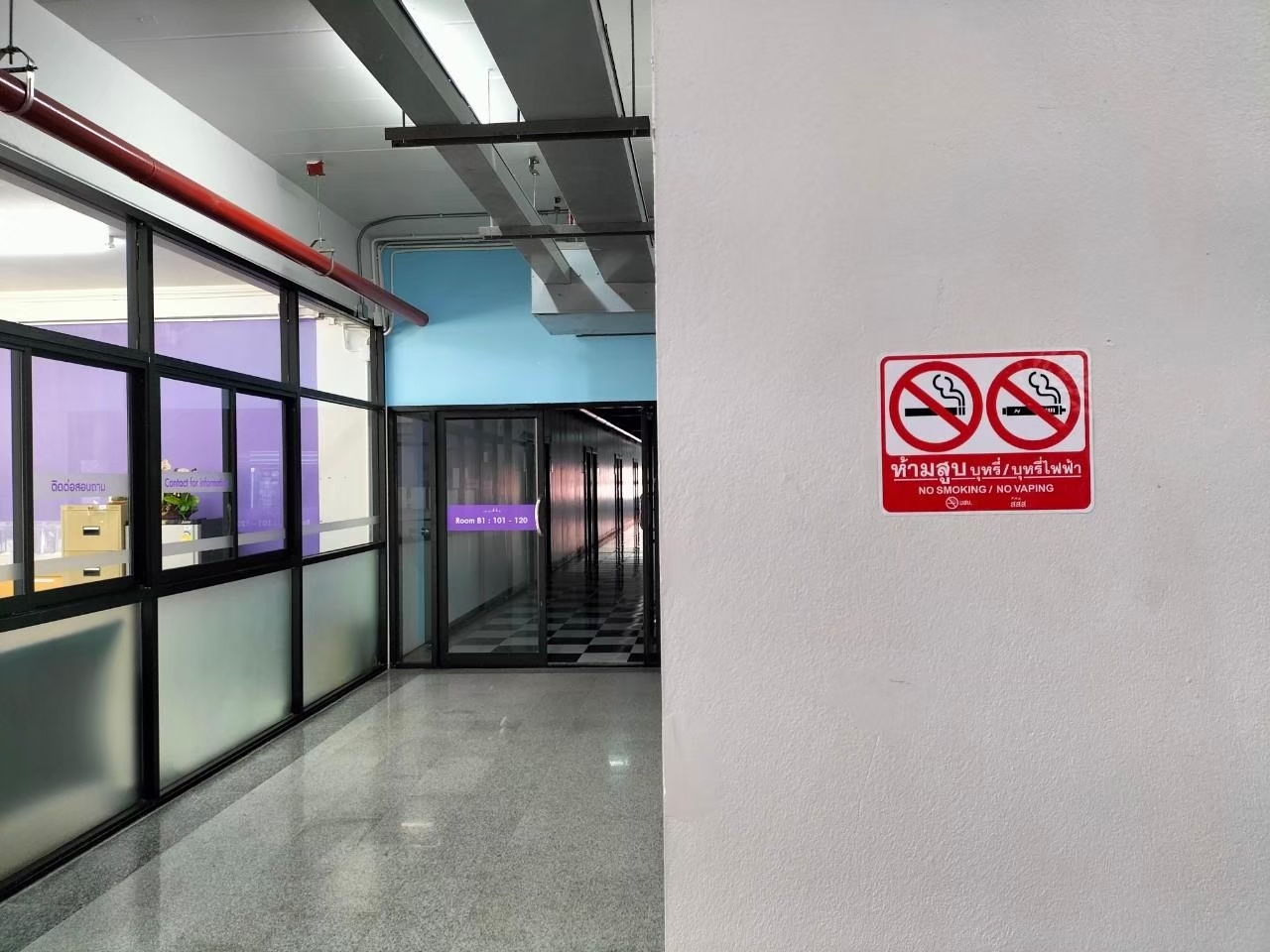
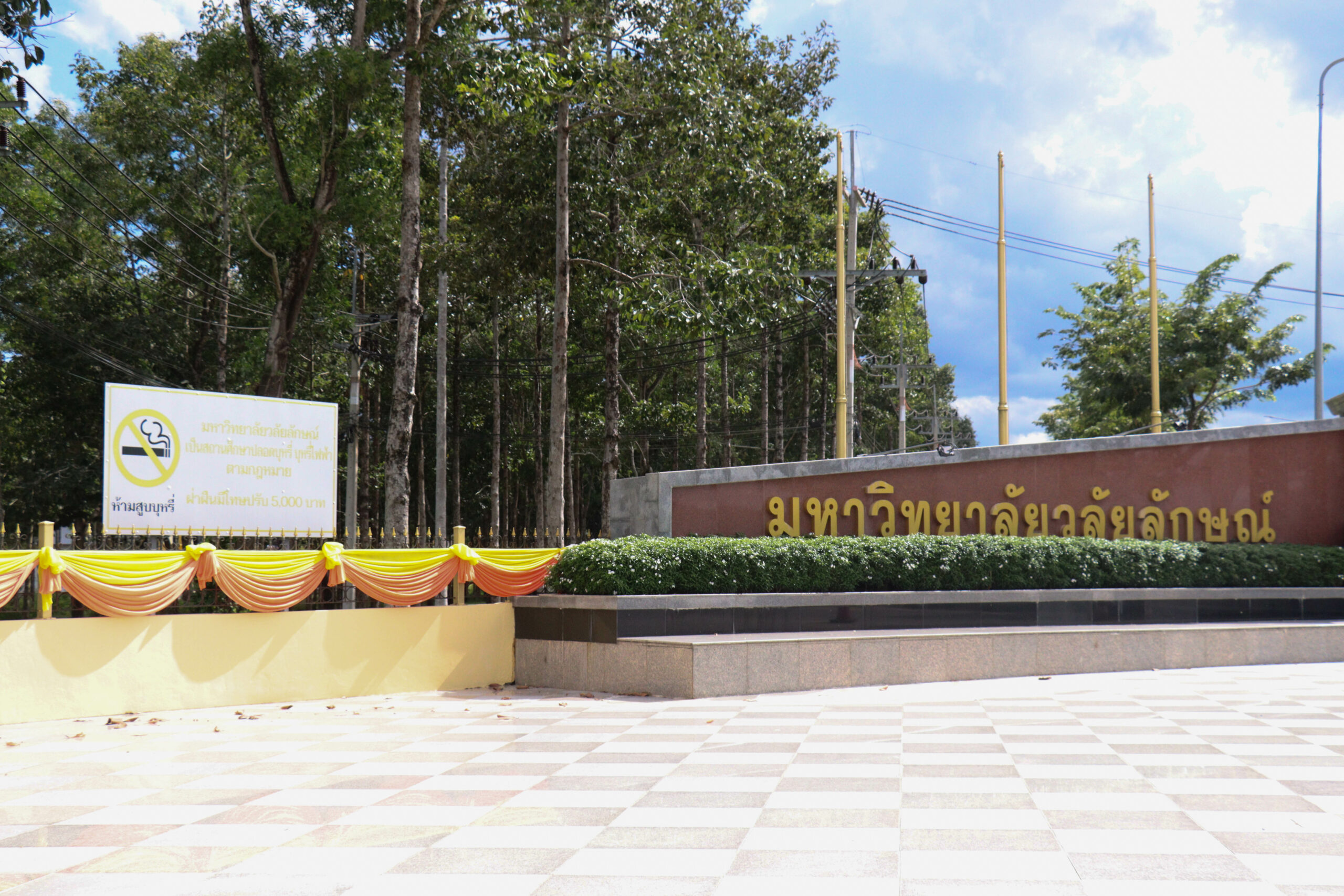
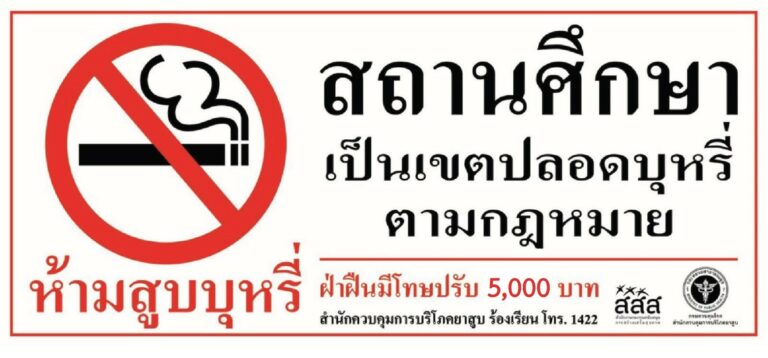
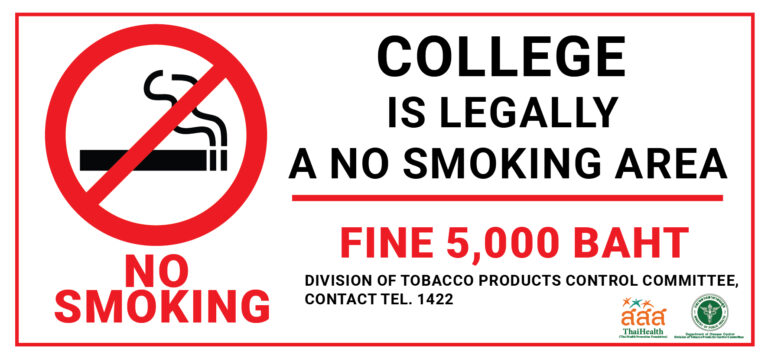
Smoking in educational institutions is linked to risky behaviors that can lead to both short-term and long-term health problems. Additionally, it sets a poor example for new students who might perceive smoking as a normal behavior. In this regard, the Ministry of Public Health issued a decree in 2018 designating public places, workplaces, and vehicles as non-smoking areas. Consequently, Walailak University has adopted this decree as a guideline for its policies and measures to make the university as a smoke-free campus that have implemented policies prohibiting the use of tobacco products at all campus.
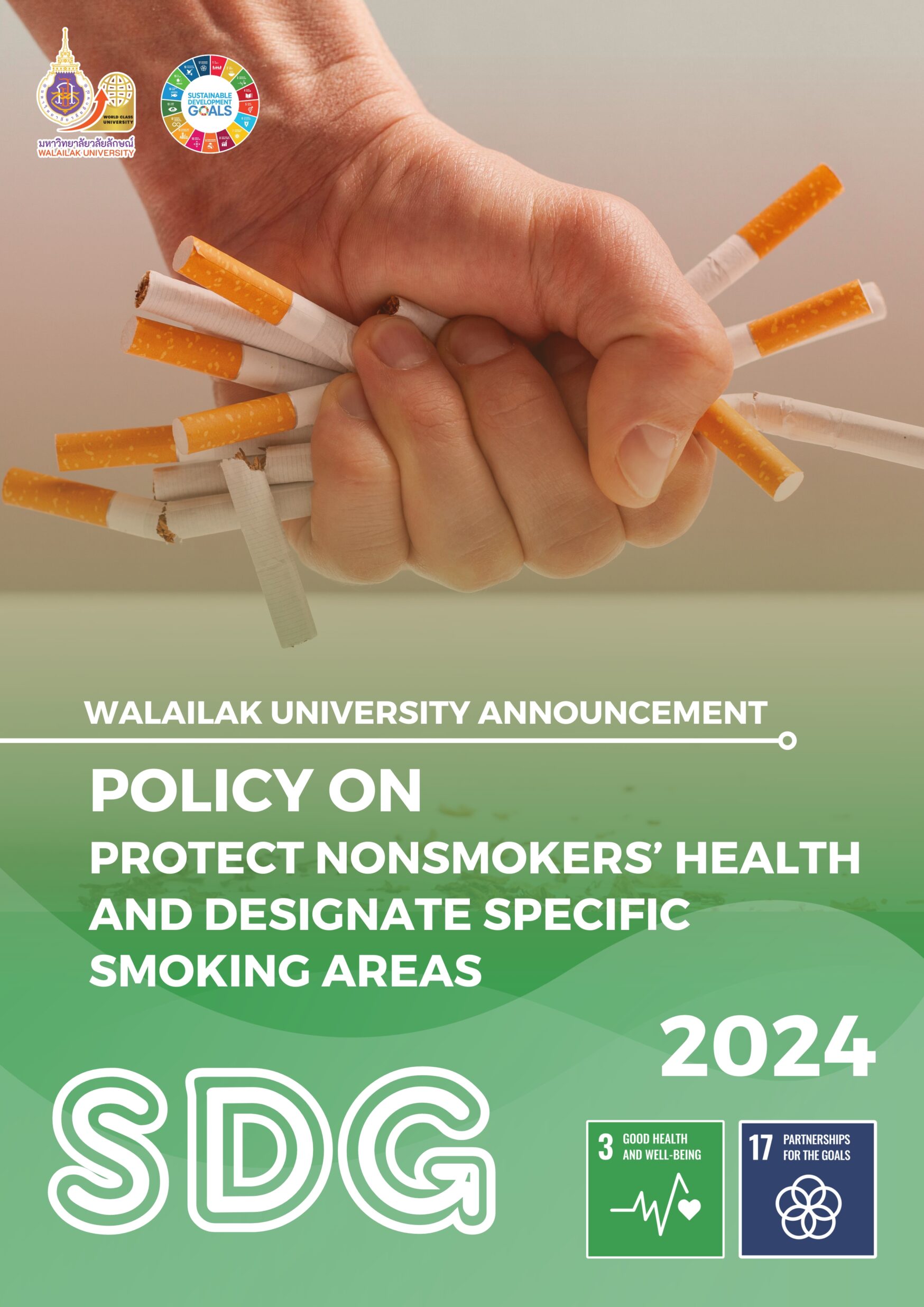
In 2022, Walailak University issued the announcement of Walailak University Subject : Policy to Protect Nonsmokers’ Health and Designate Specific Smoking Areas, B.E. 2565 (2022). Initially, the university adhered to national policies for tobacco control. Then, this active policy was reviewed in 2022 and subsequently updated in 2024 to include topics related to electronic cigarettes and cannabis. The objective of this policy is to raise awareness among students and staff about the impacts of smoking.
Walailak University Announcement
Re: Measures of Punishment and Recording behavior score of students, B.E. 2553
Walailak University has established penalties for students who violate the smoke-free policy. If a student is found smoking in a smoke-free area, their behavior points will be deducted by 1 to 10 points from a total of 100. If a student’s behavior points are reduced by 70 or more, the university will not issue a certificate of conduct. Moreover, if the behavior points are deducted to 100, the student will not be able to graduate.
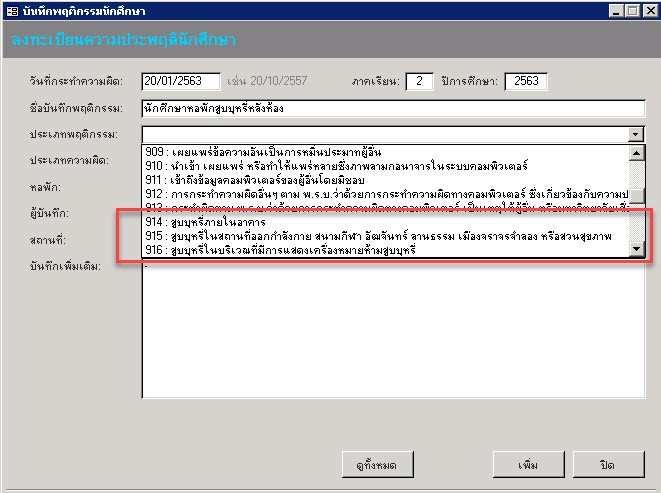
Figure : The Student Behavior Record System
Process for Monitoring and Recording Smoking Behavior
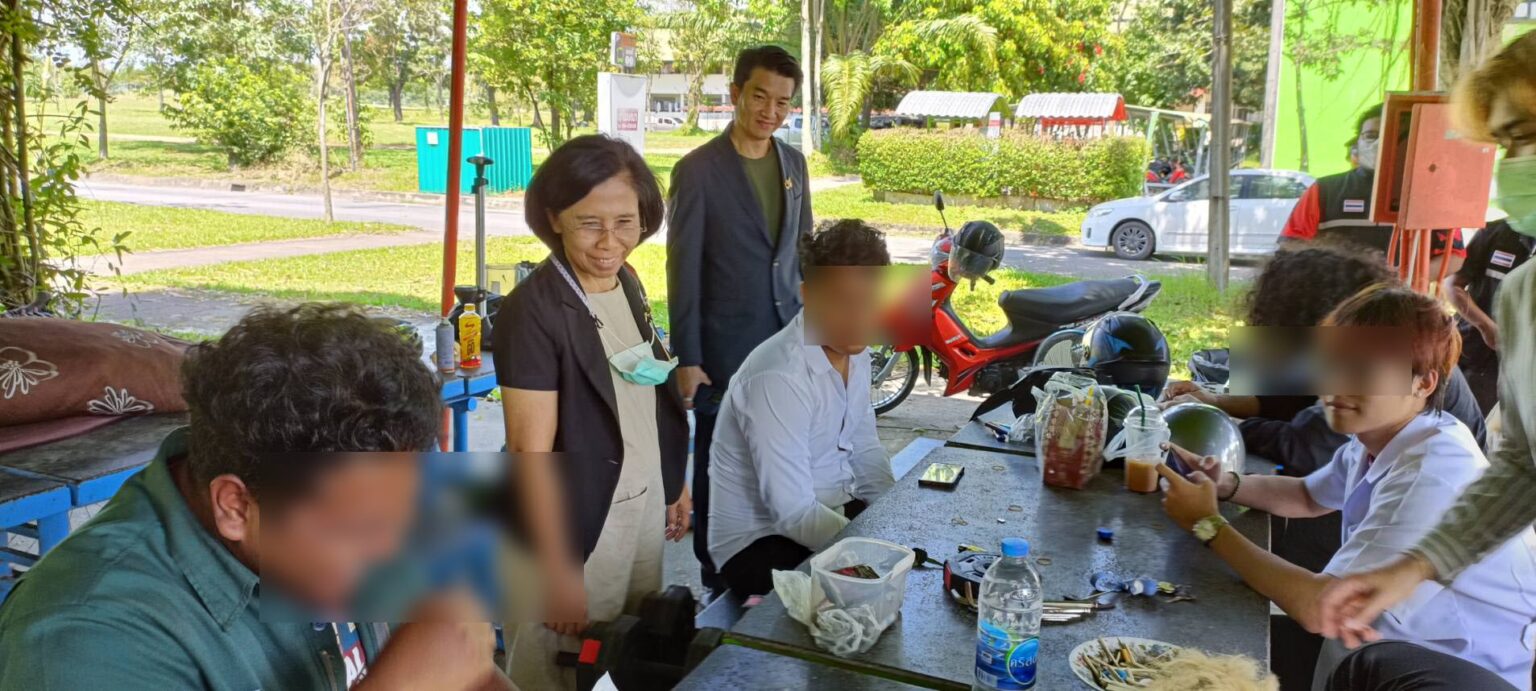
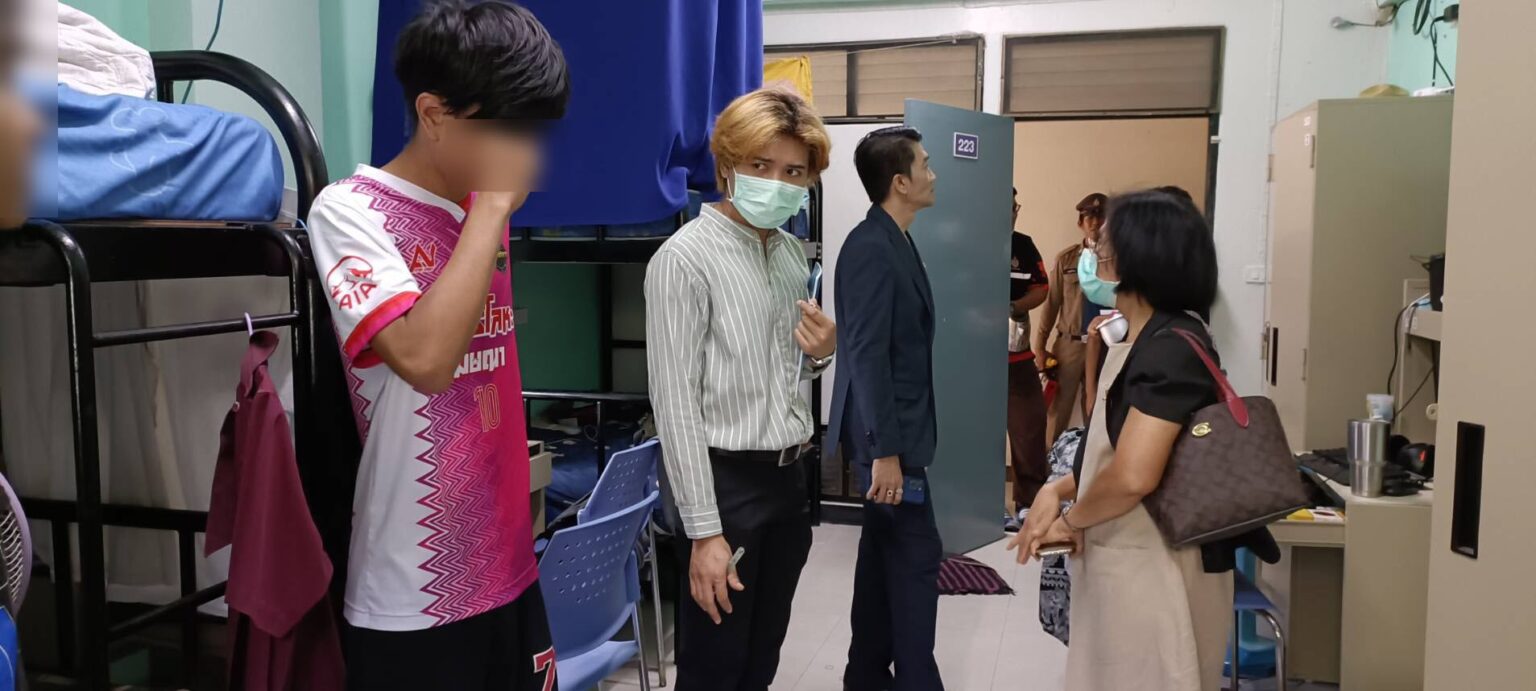
The process of recording students’ smoking behavior begins with notifying the officers to enter the area where the violation was observed. The officers and dormitory advisors will then record the information and send the list of names to the Student Discipline Office for entry into the system. If a student commits repeated offenses or exhibits other inappropriate behavior, they may be summoned for a meeting to review and consider appropriate measures.
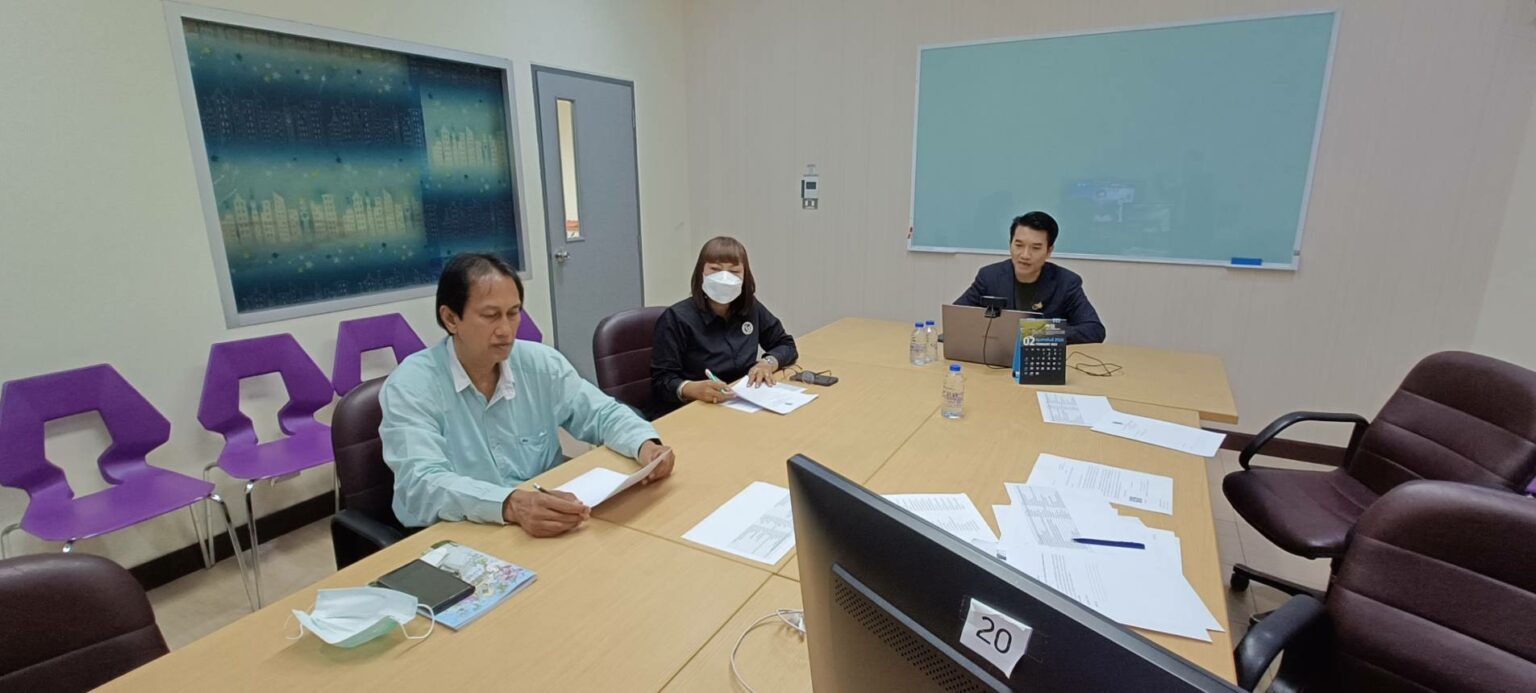
Walailak University has signed a Memorandum of Understanding (MOU) with the Ministry of Higher Education, Science, Research and Innovation, the Ministry of Public Health, and the National Alliance for Tobacco Free Thailand. This MOU aims to promote and support the university in becoming a smoke-free campus. The collaboration involves various initiatives, such as providing support services for those who wish to quit smoking, organizing activities to enhance the capabilities of staff and students, and developing knowledge or conducting research on reducing smoking.
Campaigns and Activities to Promote Smoking Cessation
Walailak University has continuously organized campaigns to raise awareness about the dangers of smoking. These activities include leadership training, leadership development camps, sports day events, and activities on World No Tobacco Day. Additionally, the university collaborates with Walailak University Hospital to educate students and staff about the dangers of smoking to themselves and others.
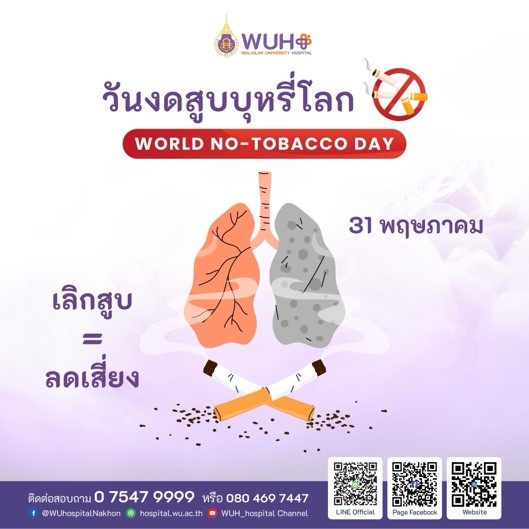
Figure : World No Tobacco Day Poster at WU
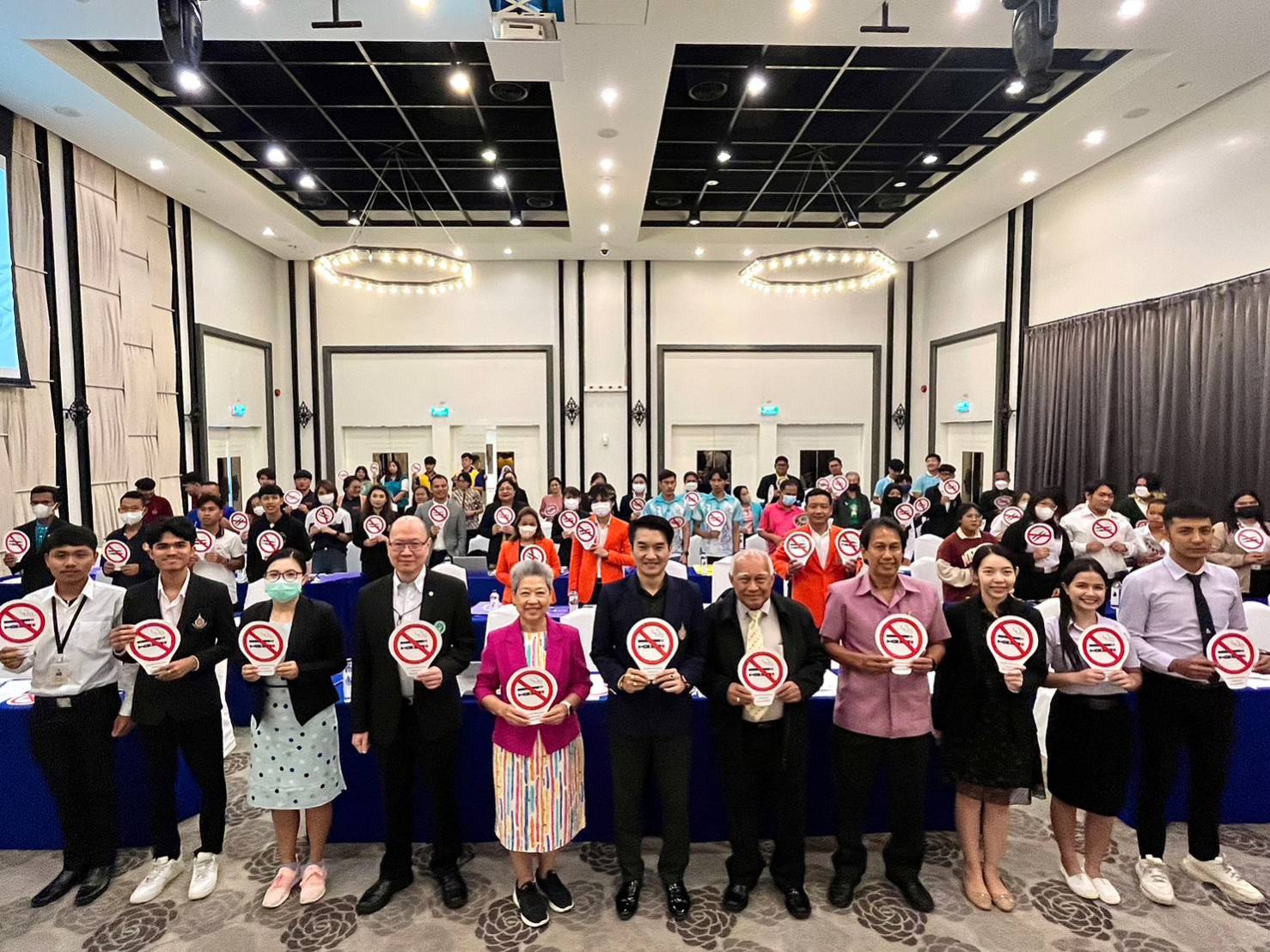
Figures : The Campaigns to Promote Smoking Cessation Releated to Smoke-Free Policy
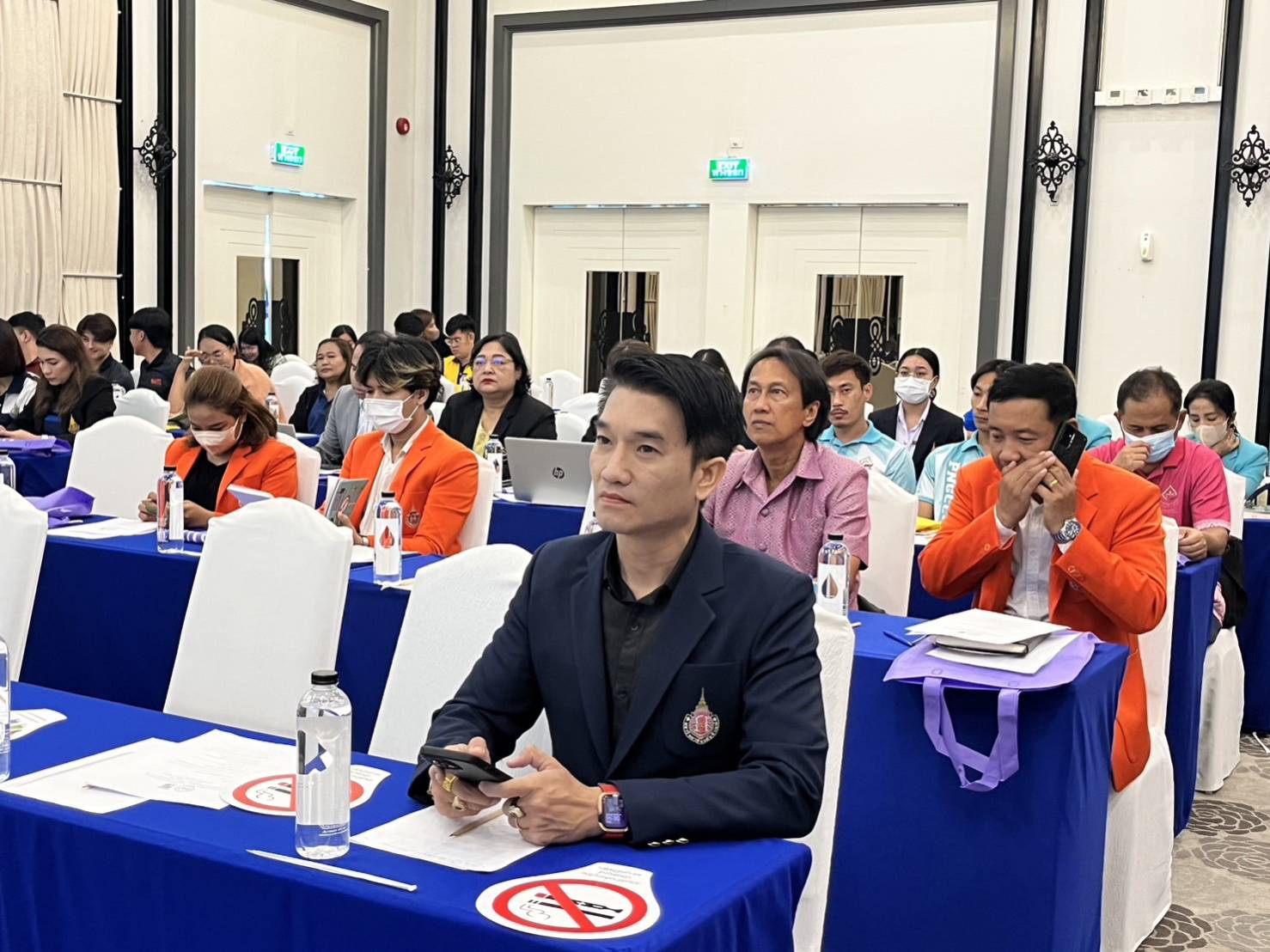
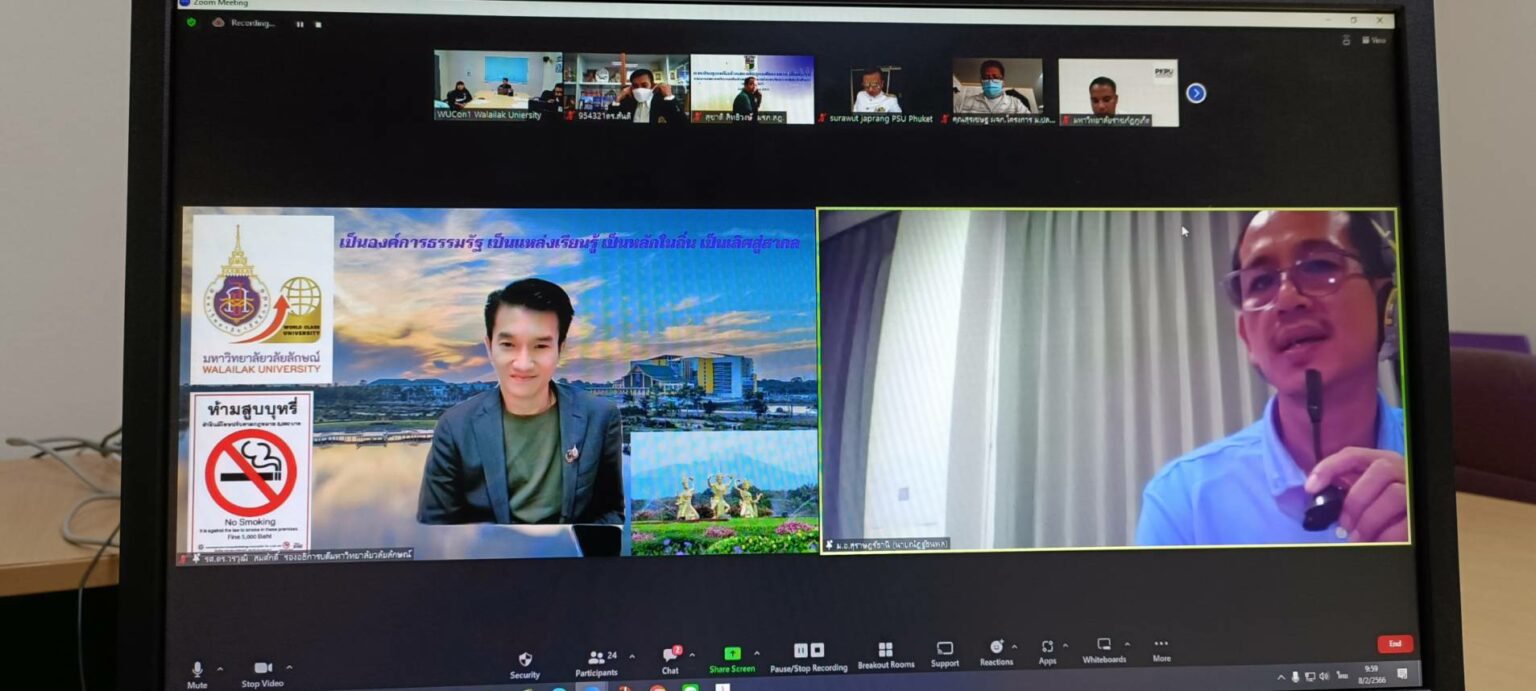
Walailak University participated in a conference to develop a plan for the development project of an educational institution free from tobacco products, creating an environment free from smoking and electronic cigarettes. This was part of the Southern Upper Region Network for the fiscal year 2566 B.E.
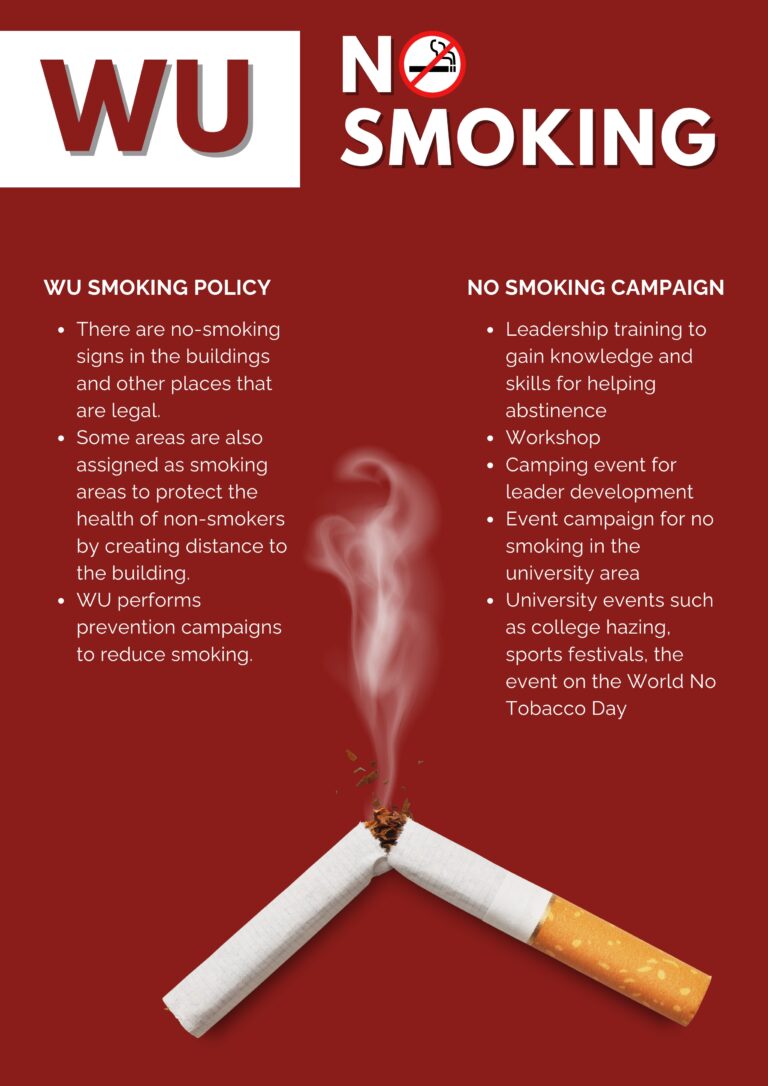
Walailak University has implemented a smoke-free policy to prevent health issues and create a better environment for students and staff. This is managed through preventive measures such as campaigns and educational programs, collaboration with external organizations, and enforcing laws to control inappropriate behavior. Ultimately, these policy implementations have led to a reduction in risky behaviors among students and promoted better health in the community.
Goal 3: Good health and well-being
Goal 4: Quality Education
Goal 17: Partnerships for the Goals