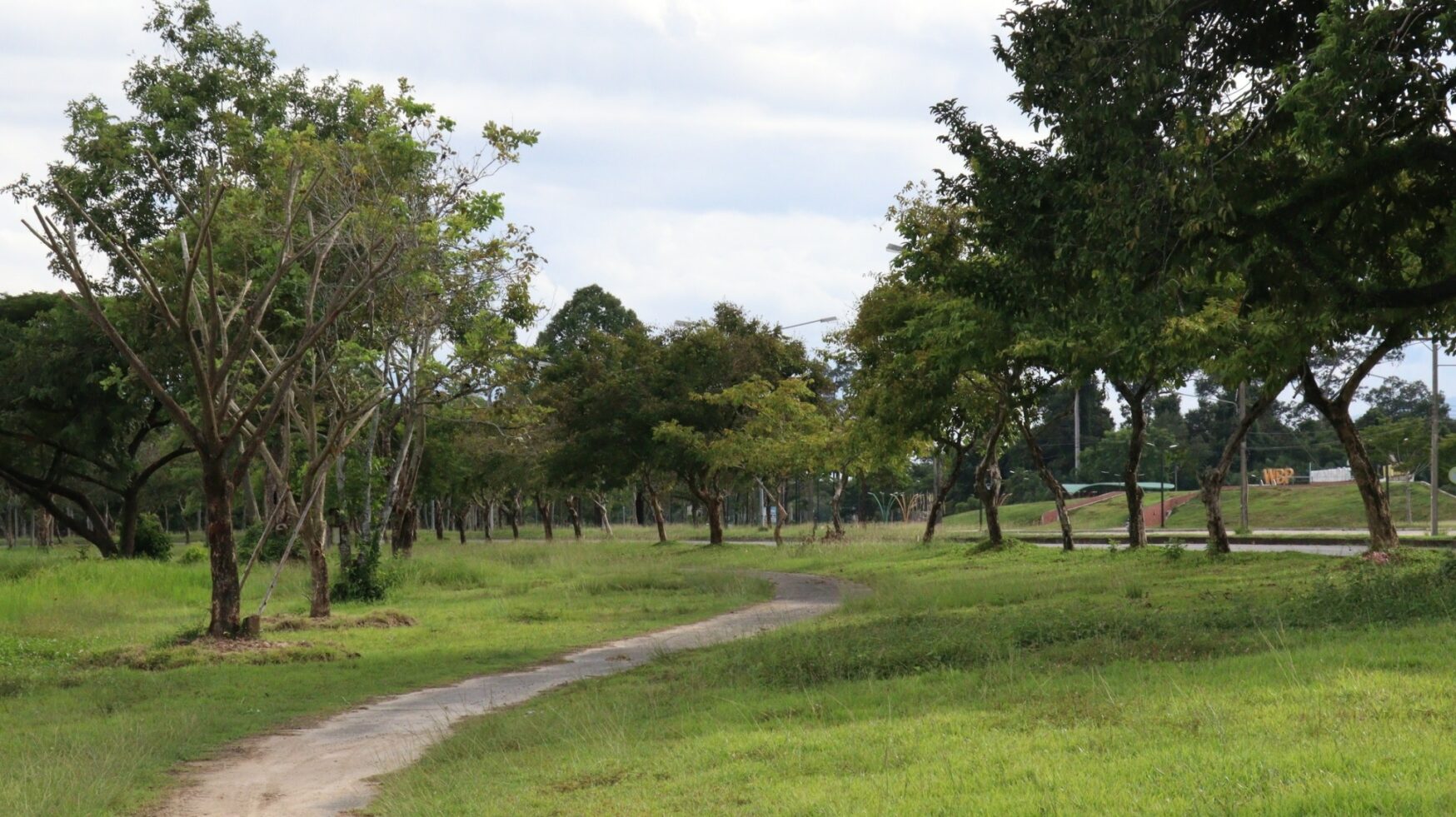
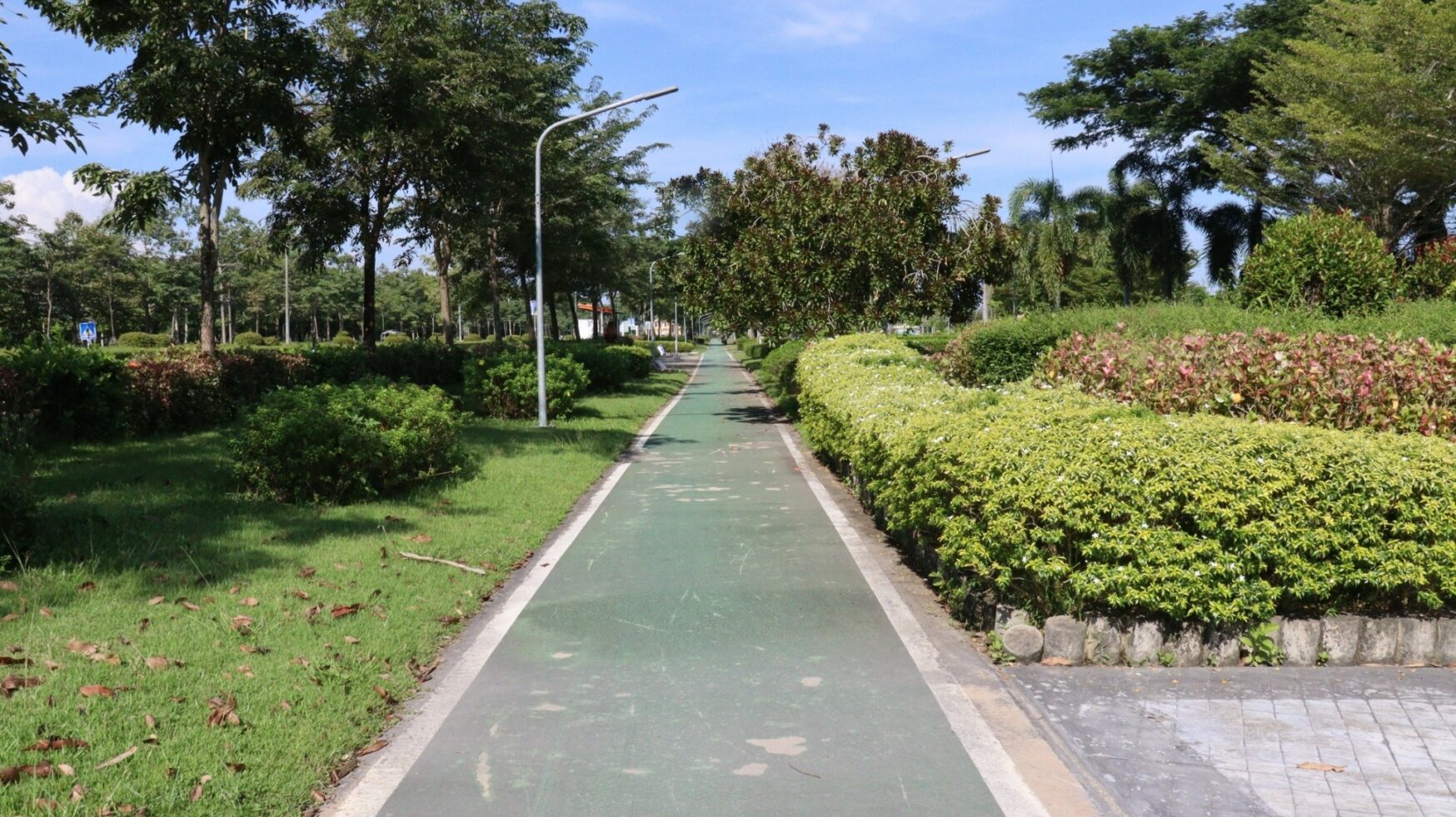
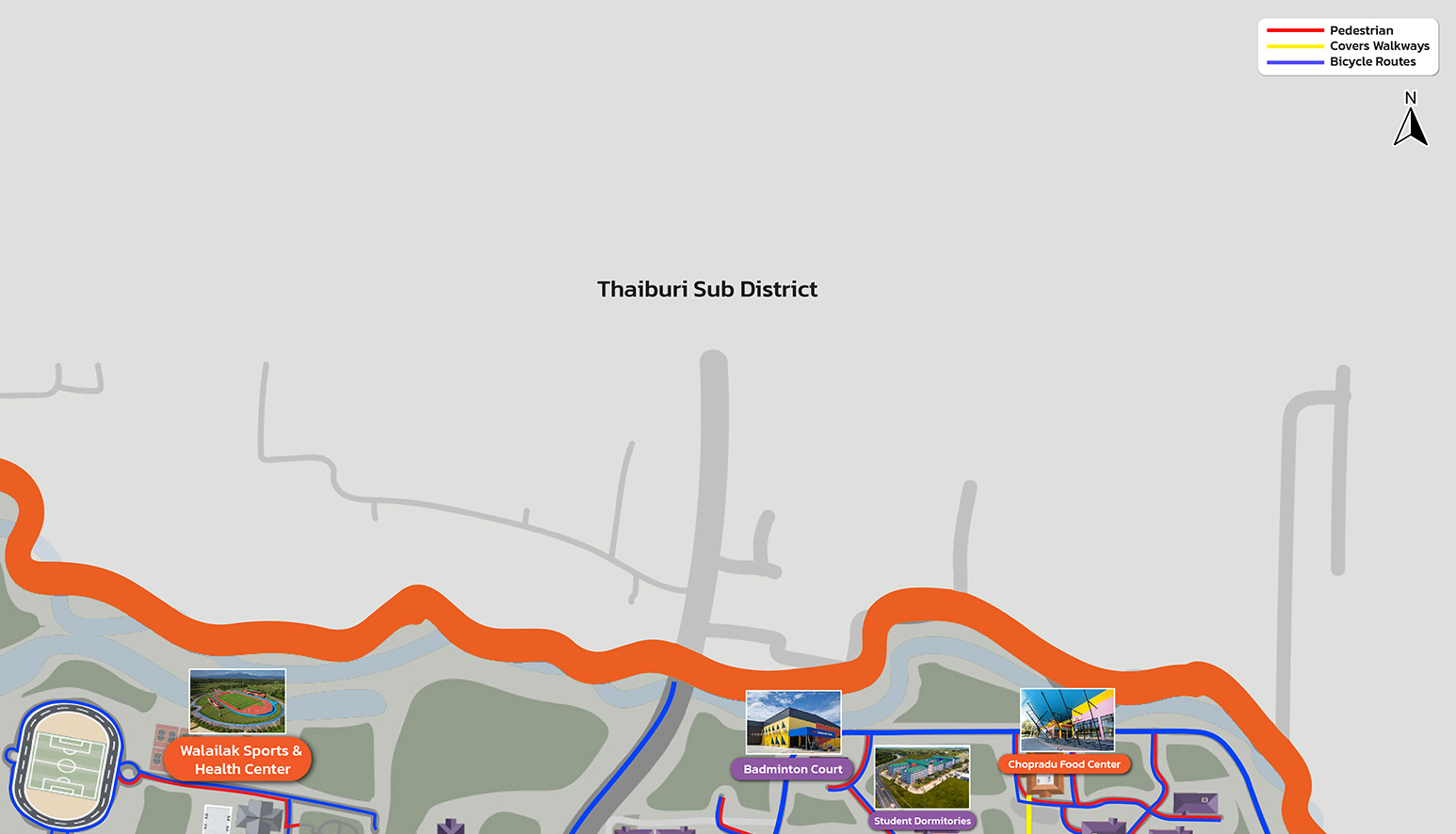
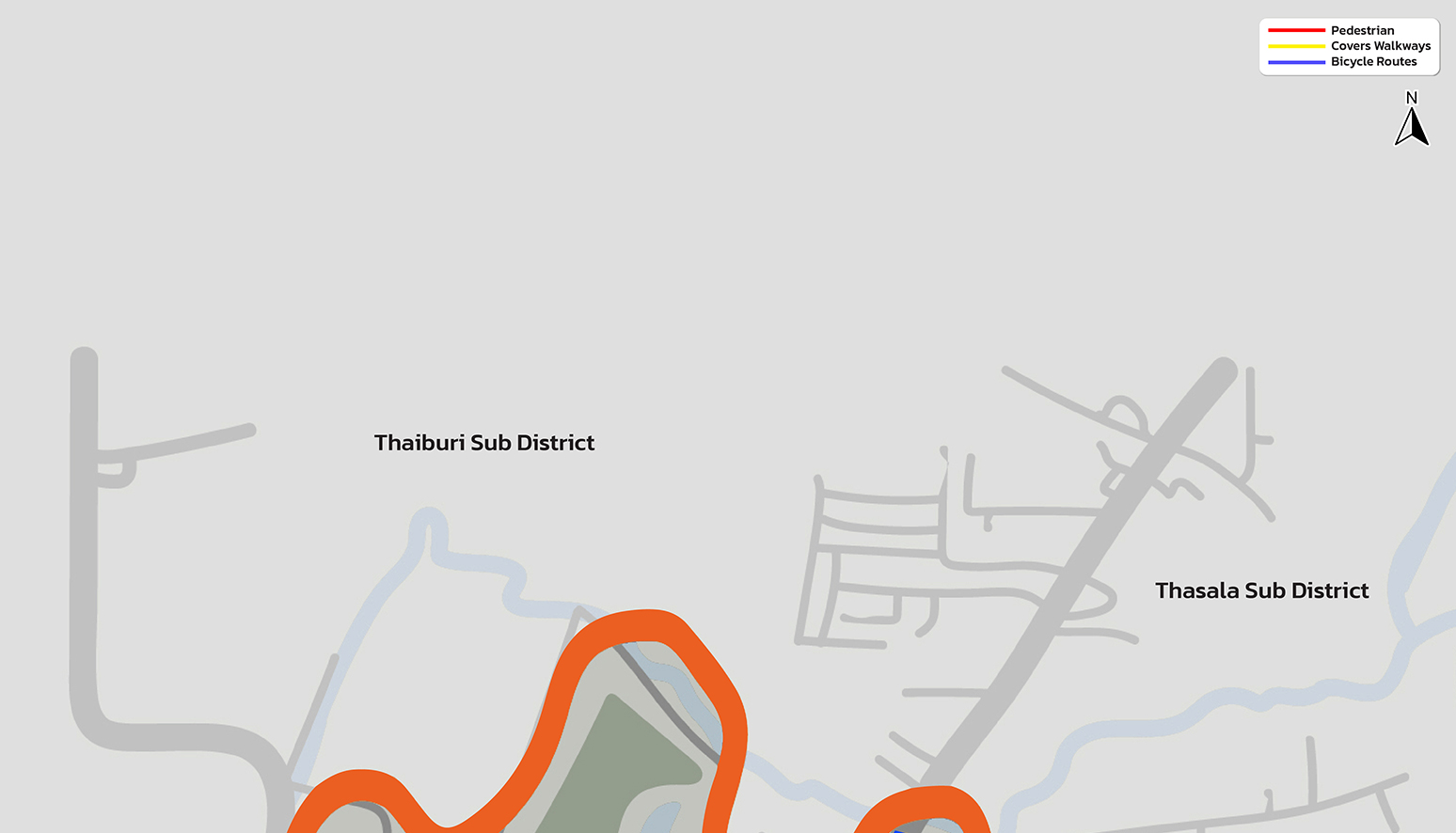
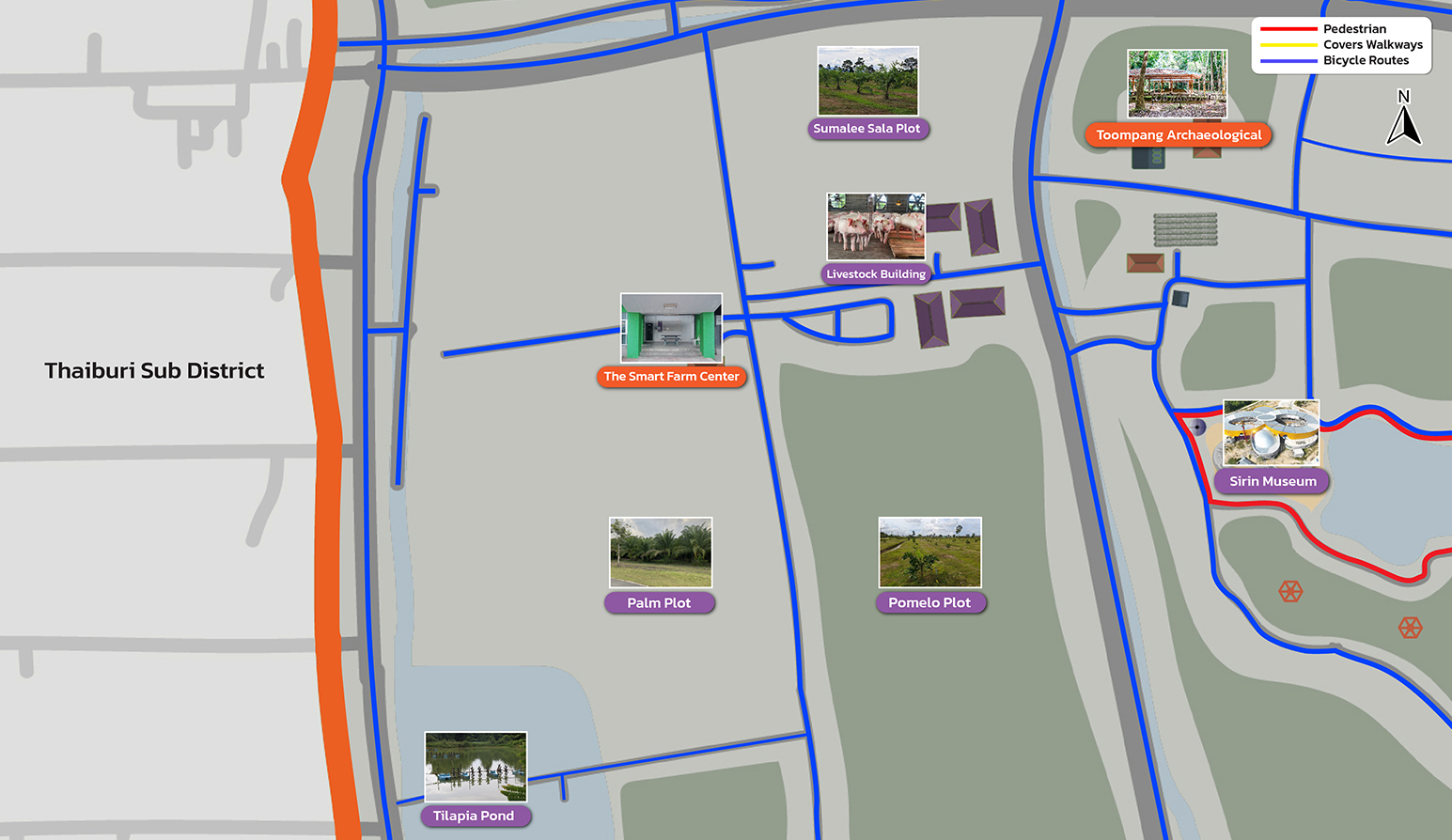
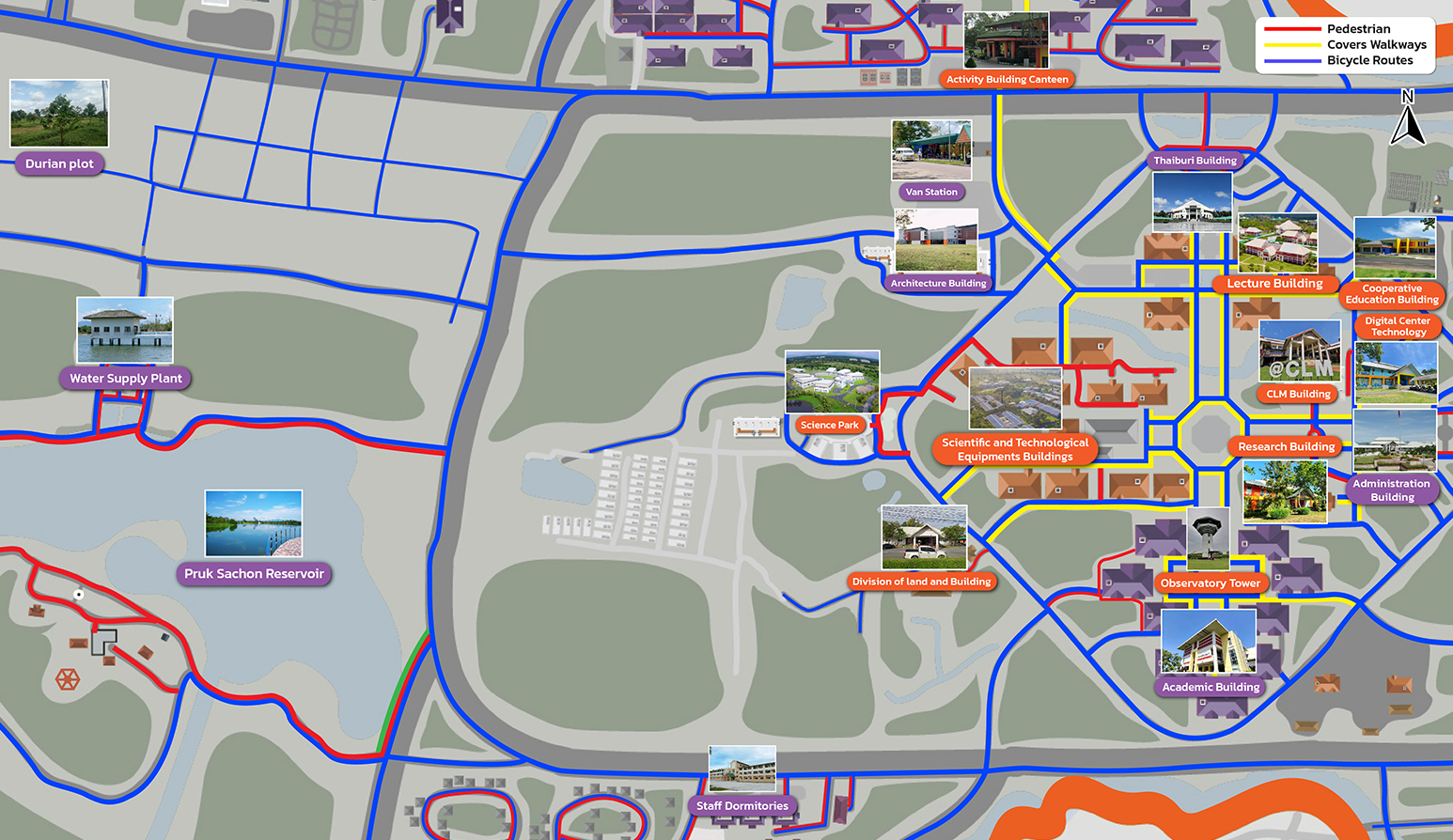
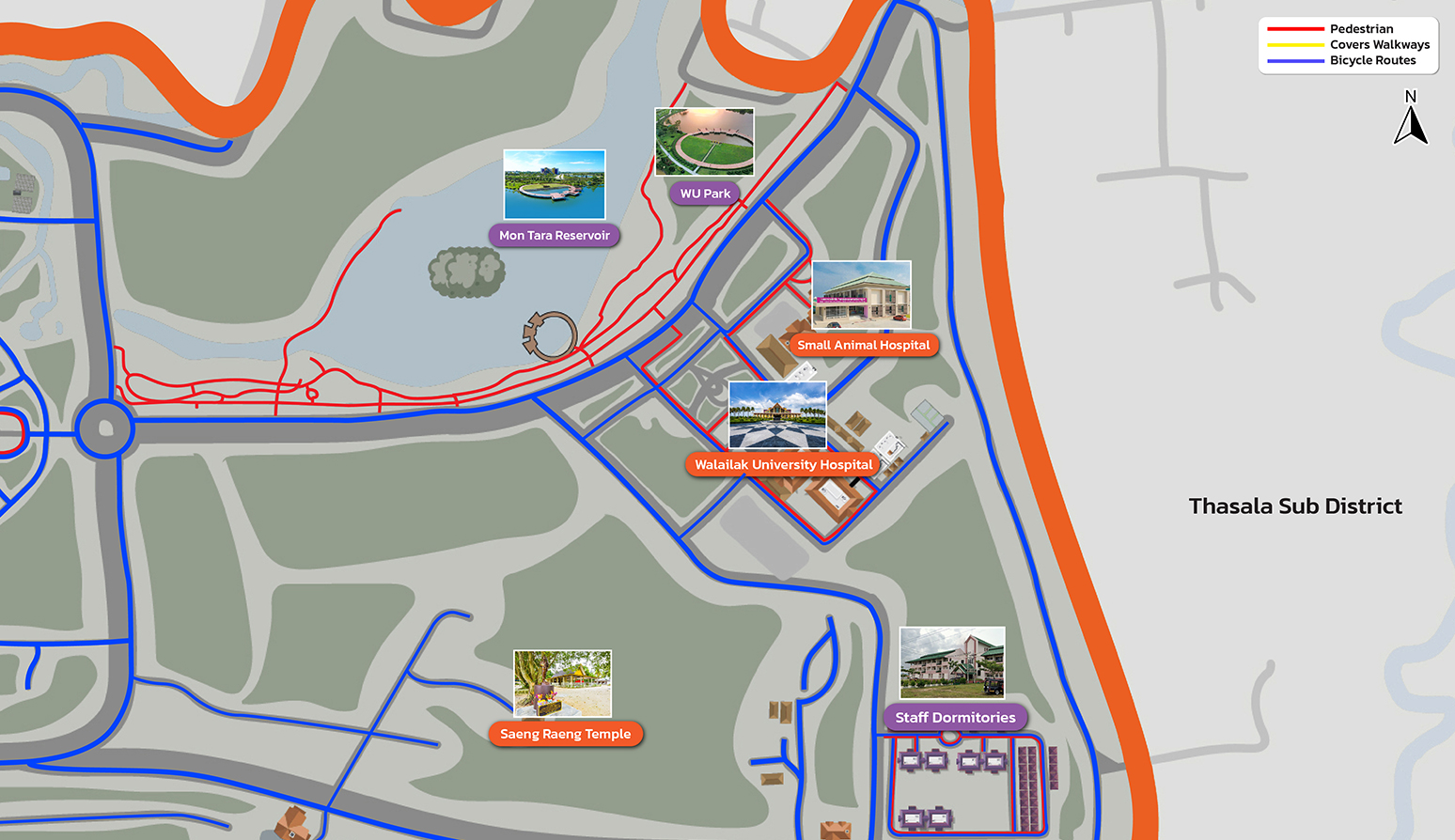
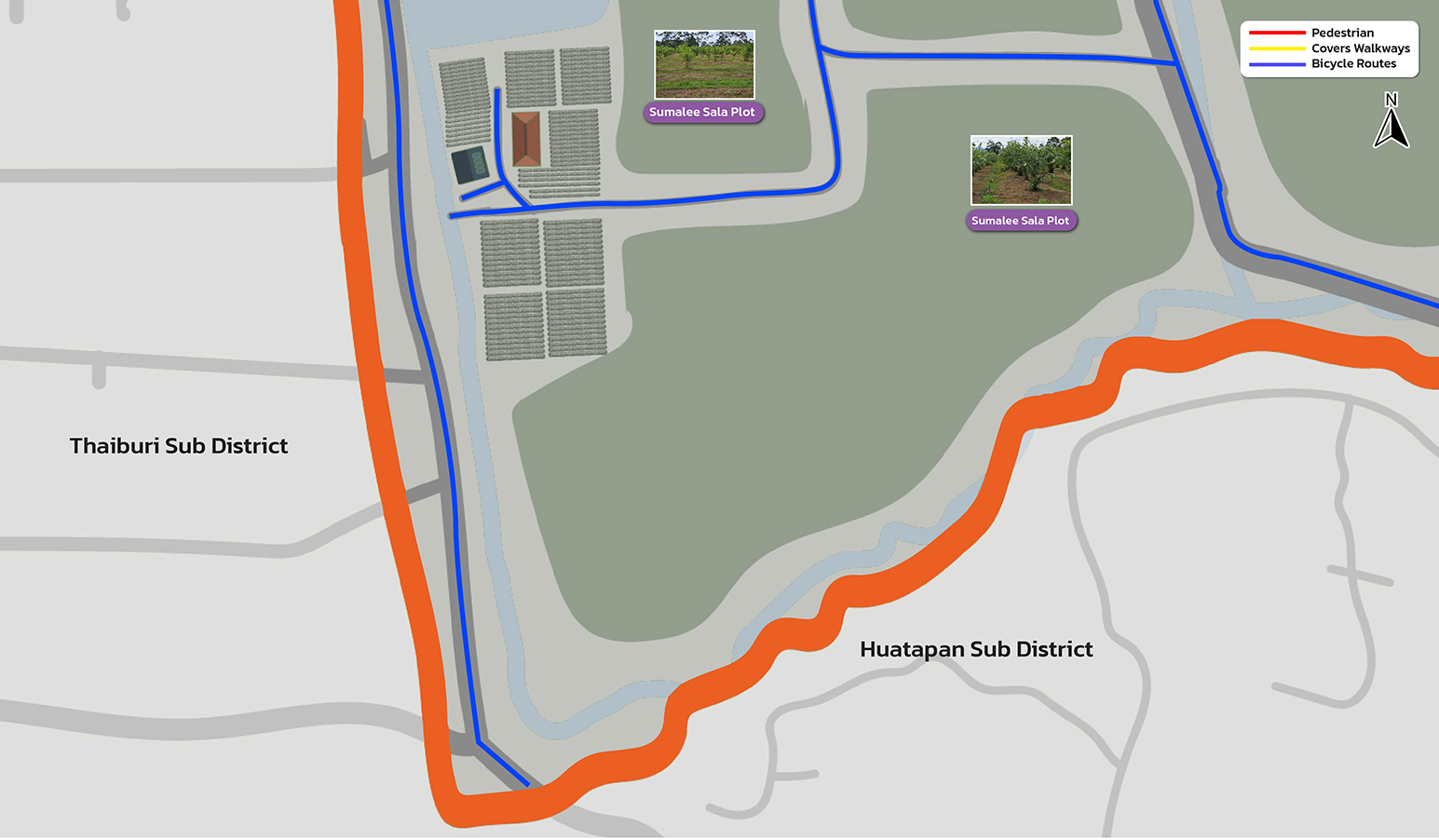
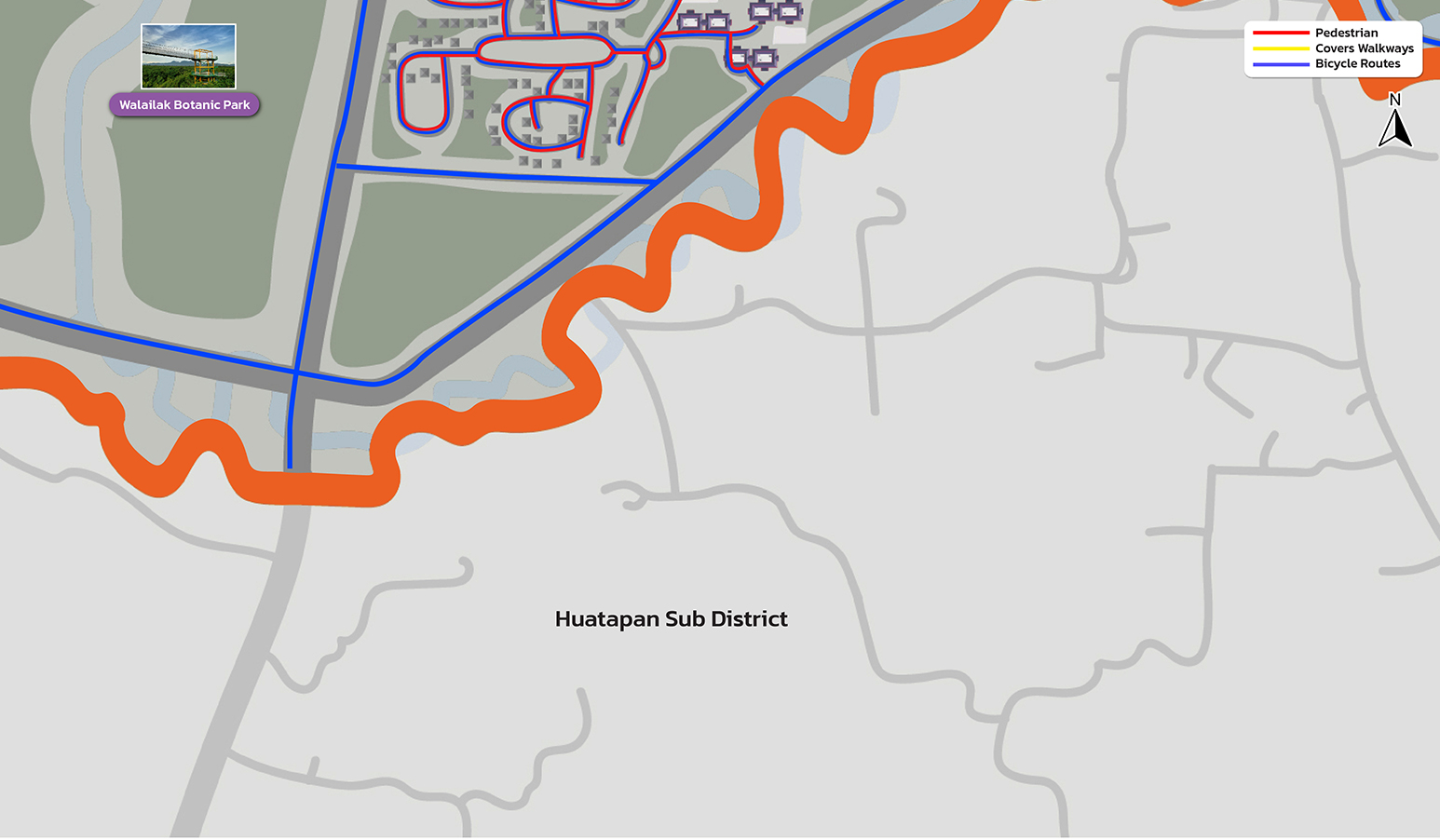
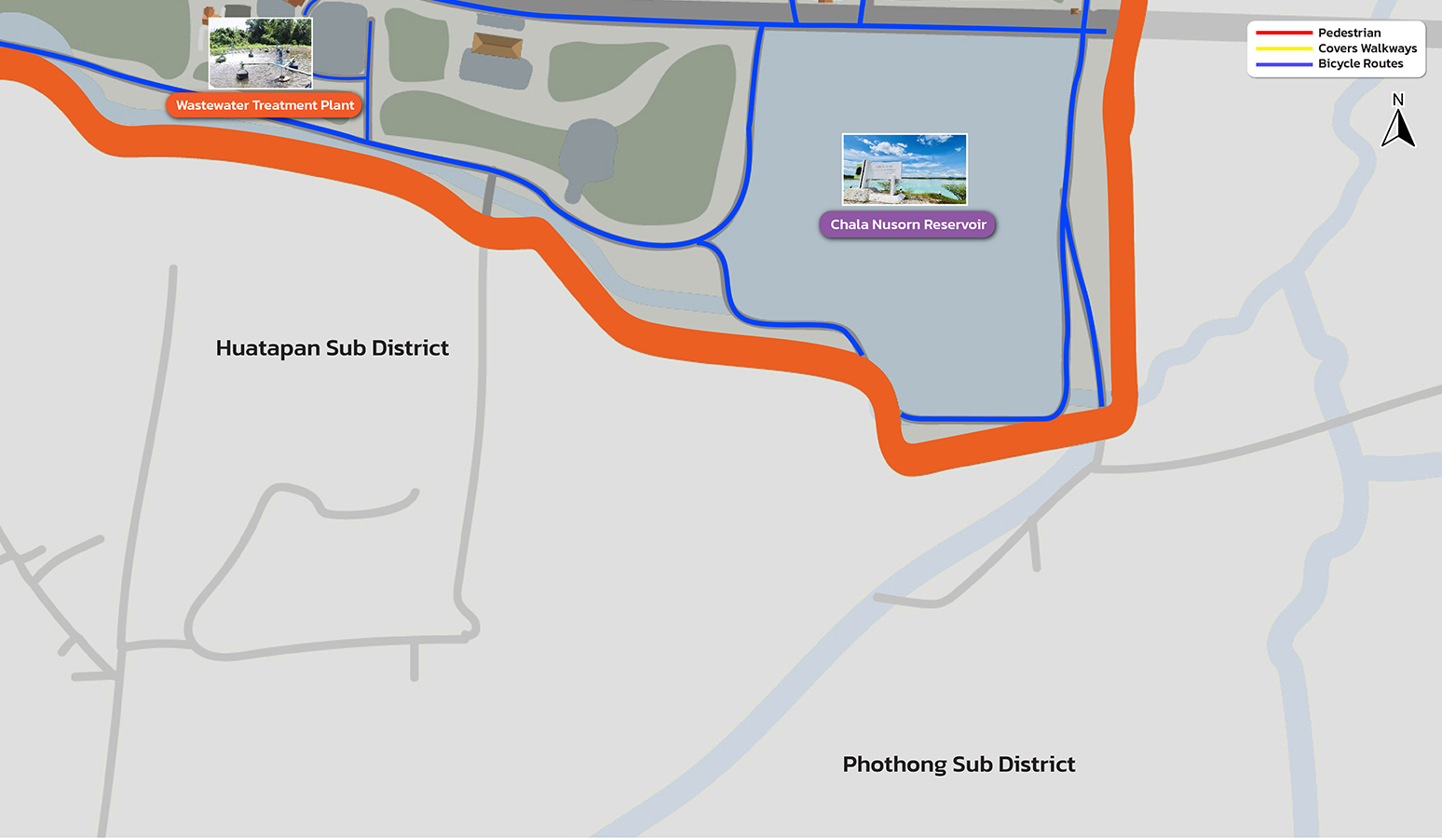
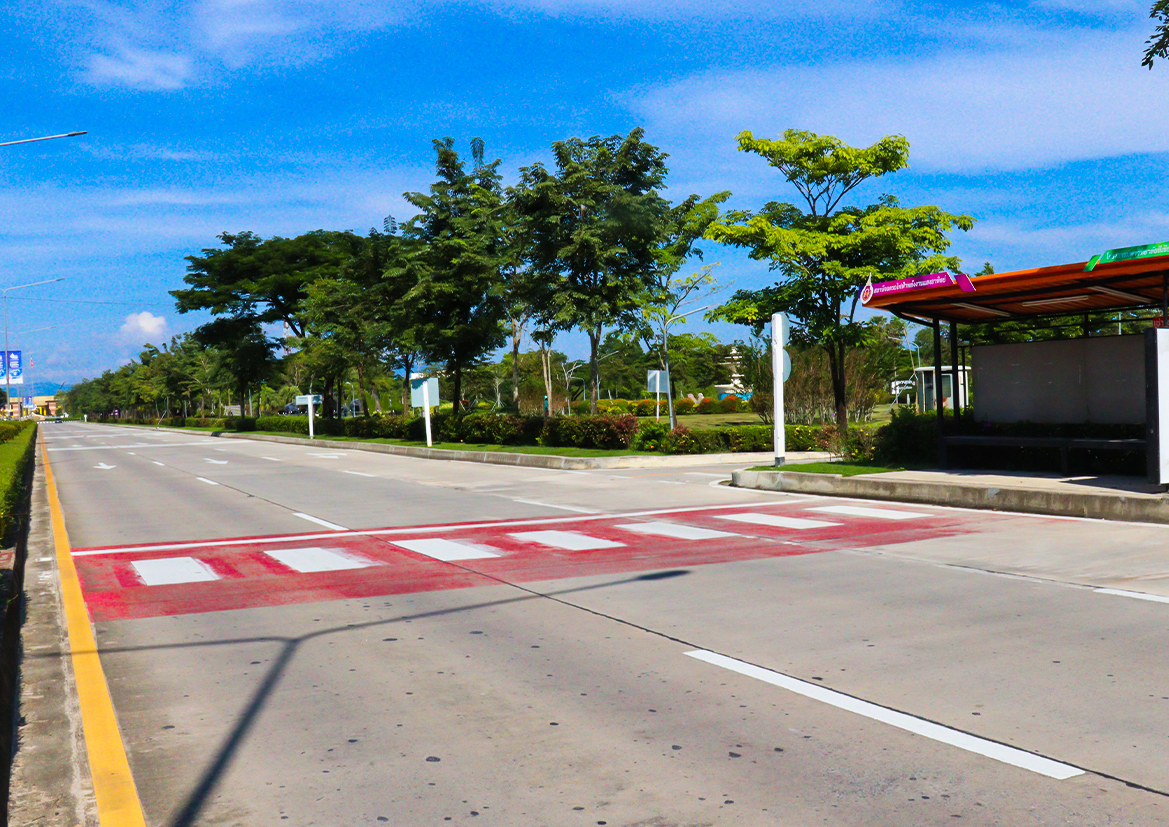
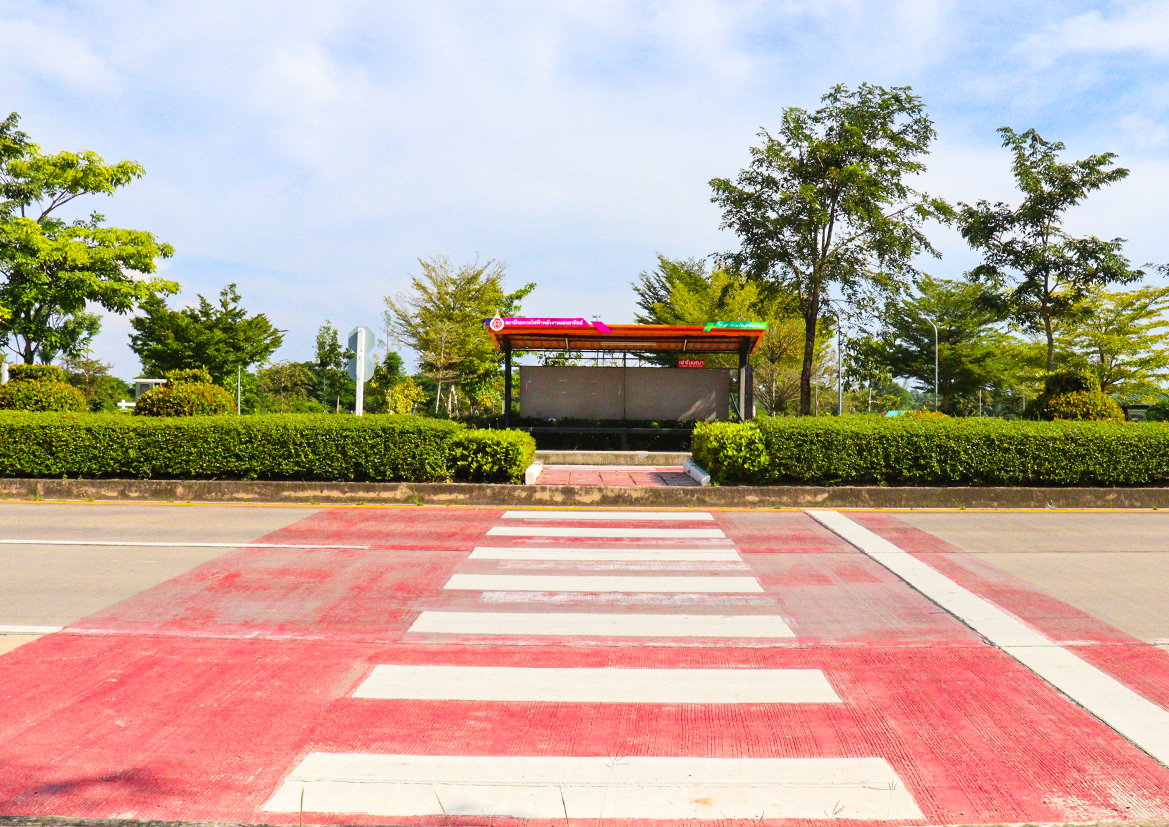
Walailak University (WU) is deeply prioritized to create a campus that supports walking and sustainability, as part of its long-term vision to become a green, sustainable, and happy university. The university focuses on designing pedestrians that are accessible, safe, and convenient for everyone, ensuring that students, staff, and the public can easily navigate the campus.
In 2023, WU added and strengthened its pedestrian infrastructure development with several initiatives to enhance the pedestrian experience. The university carried out significant improvements, including:
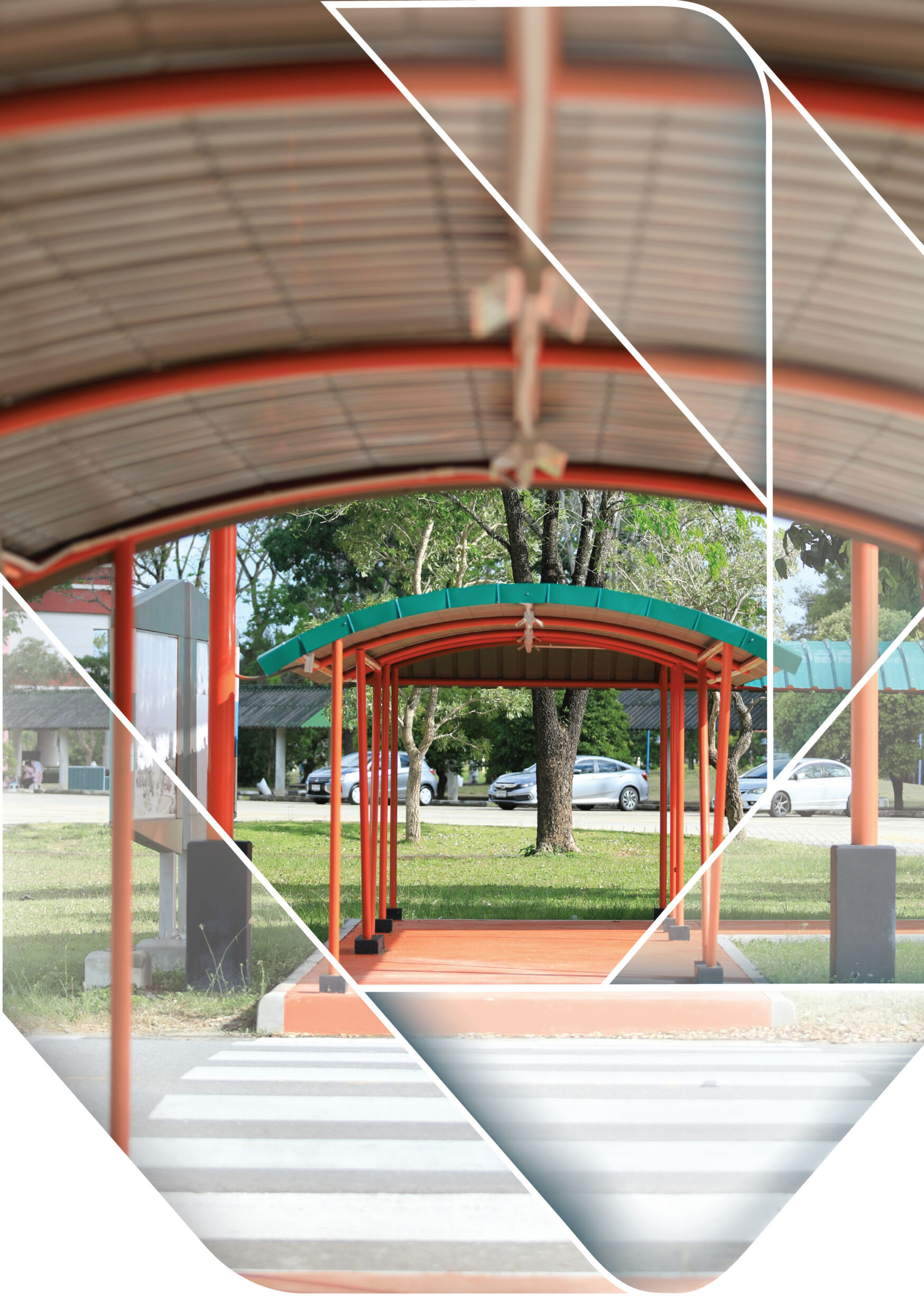
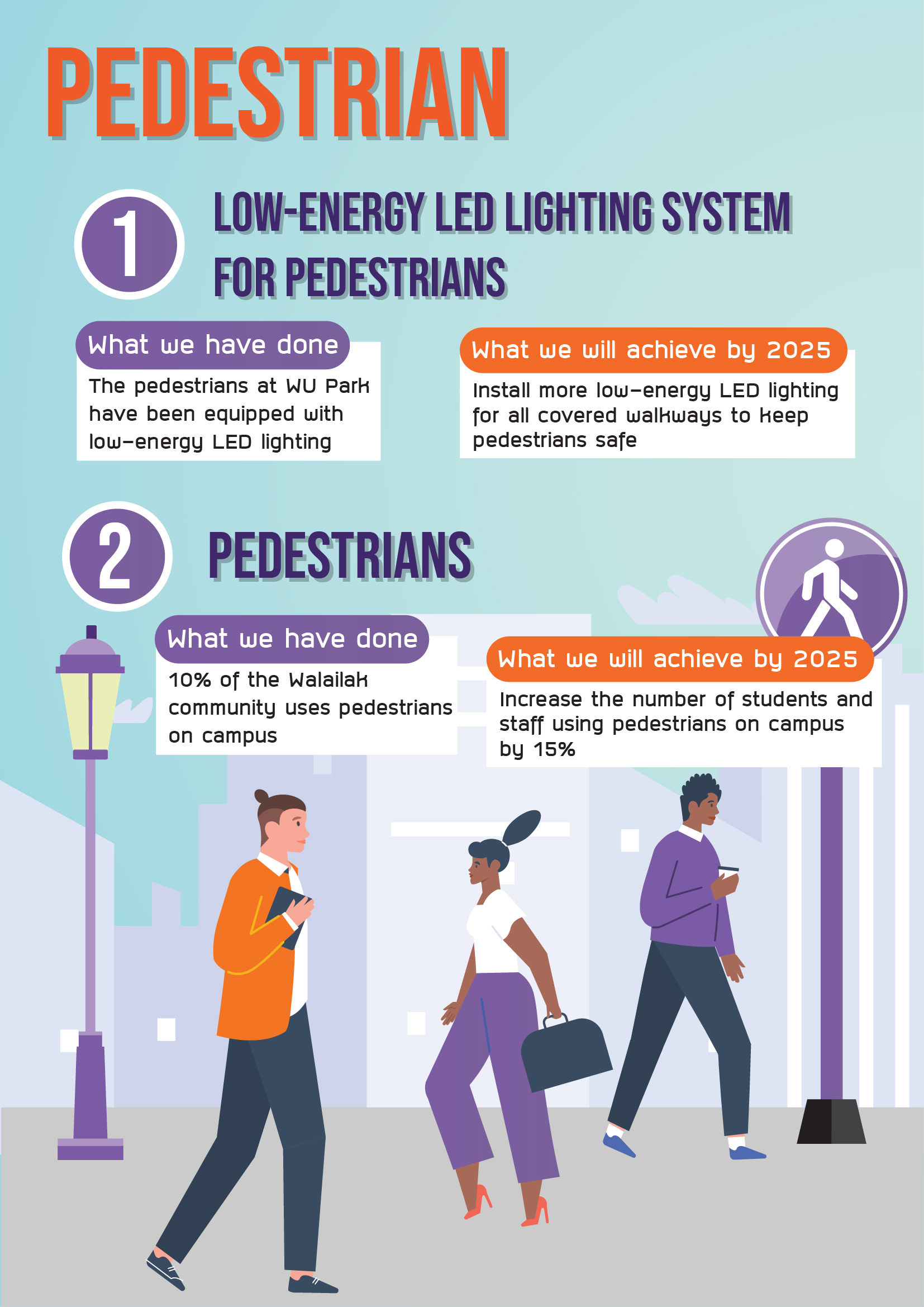
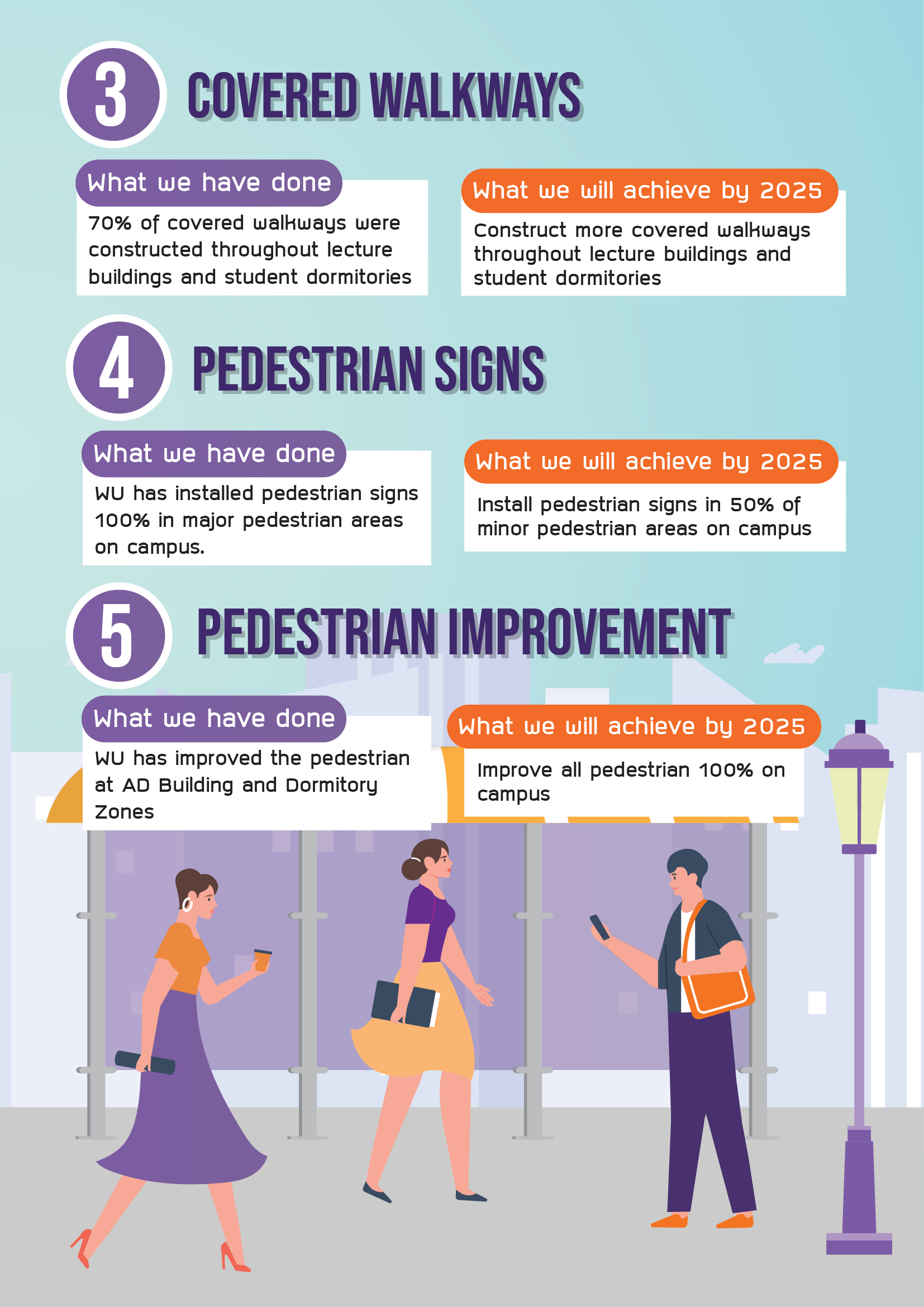
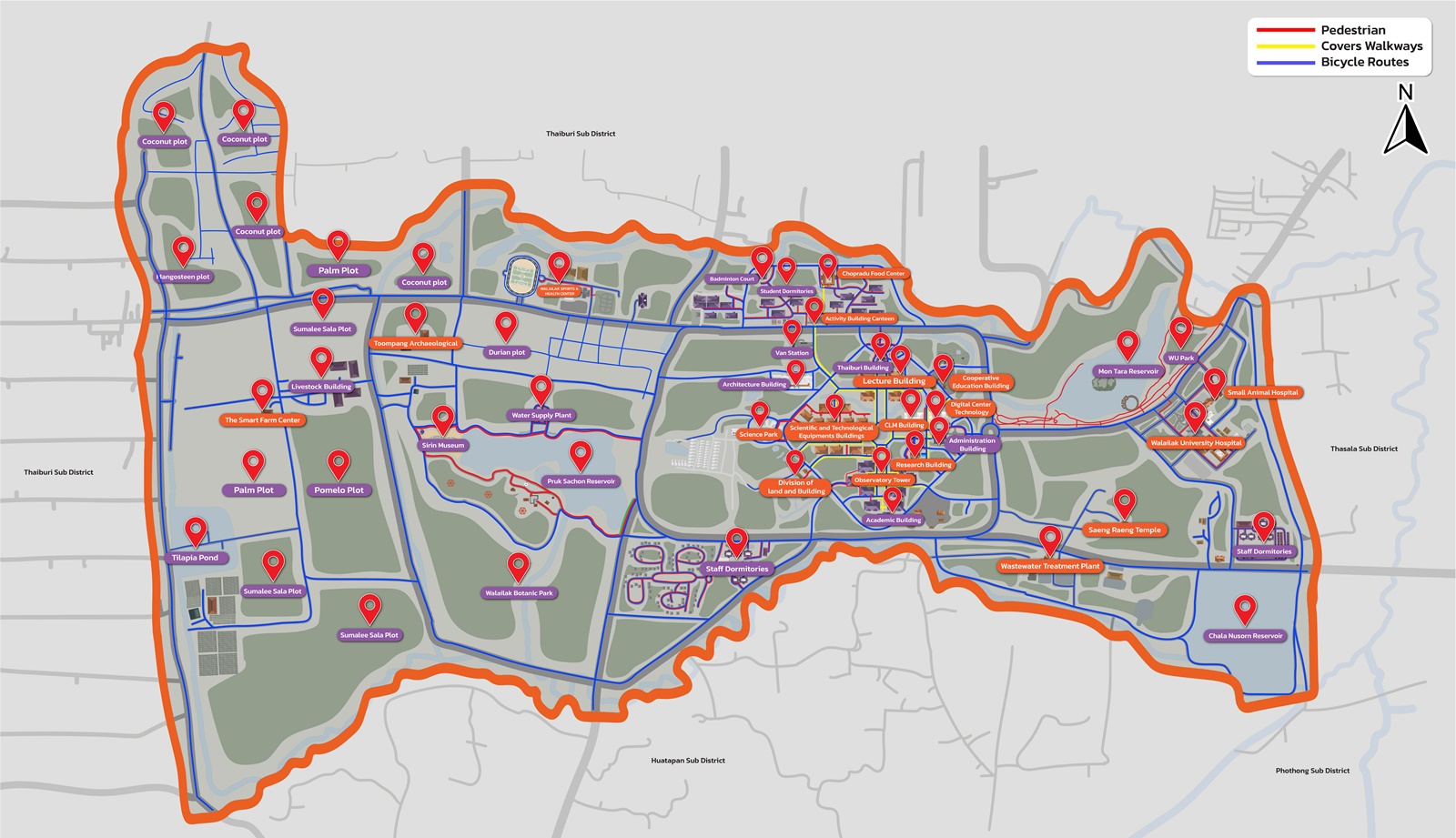
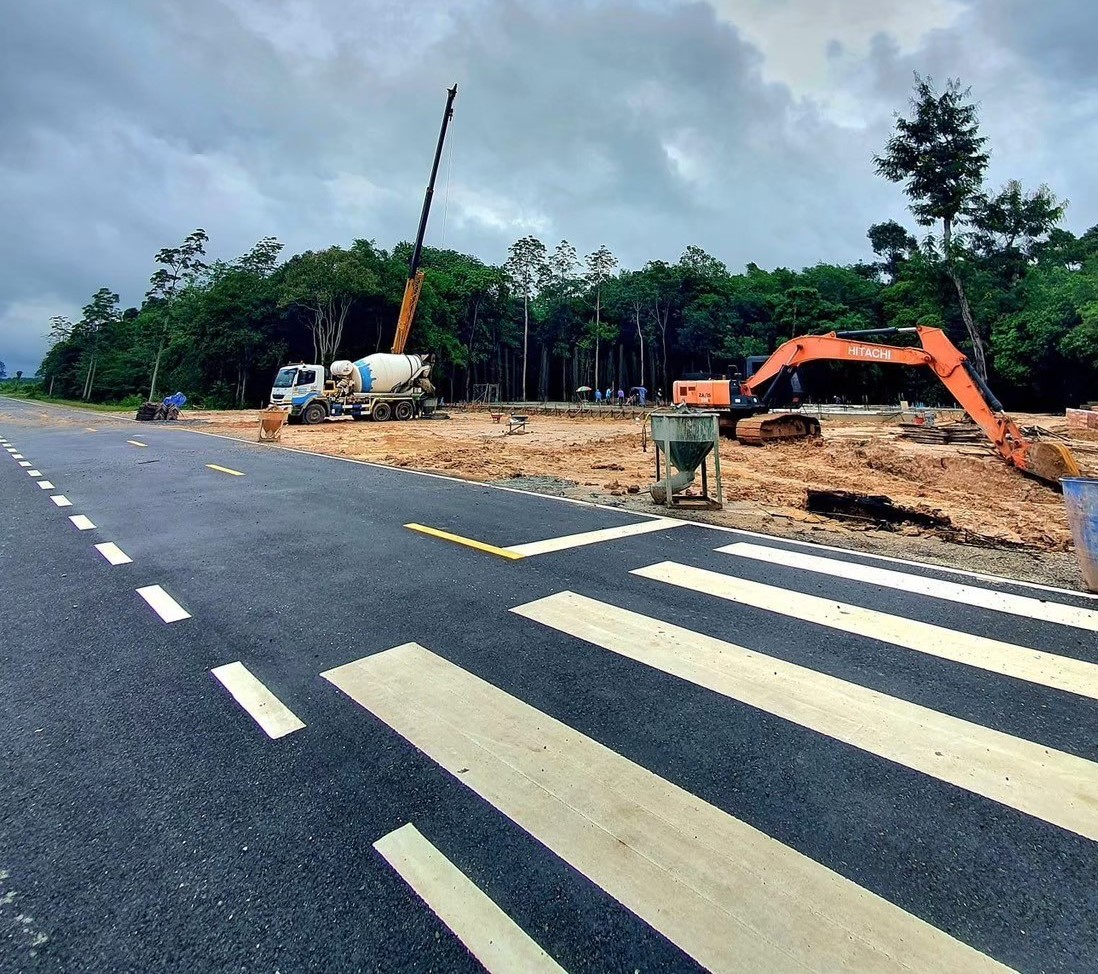
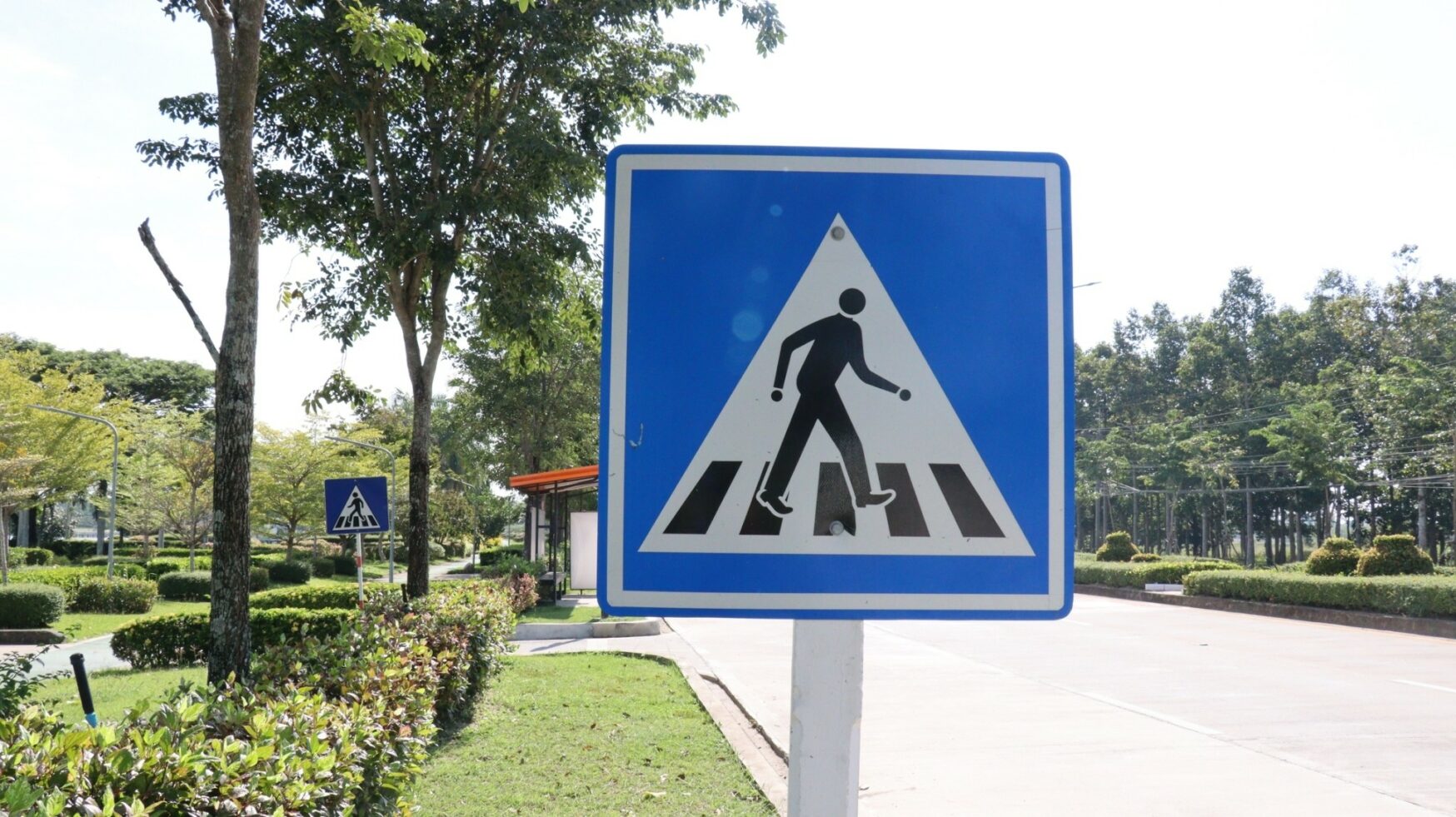
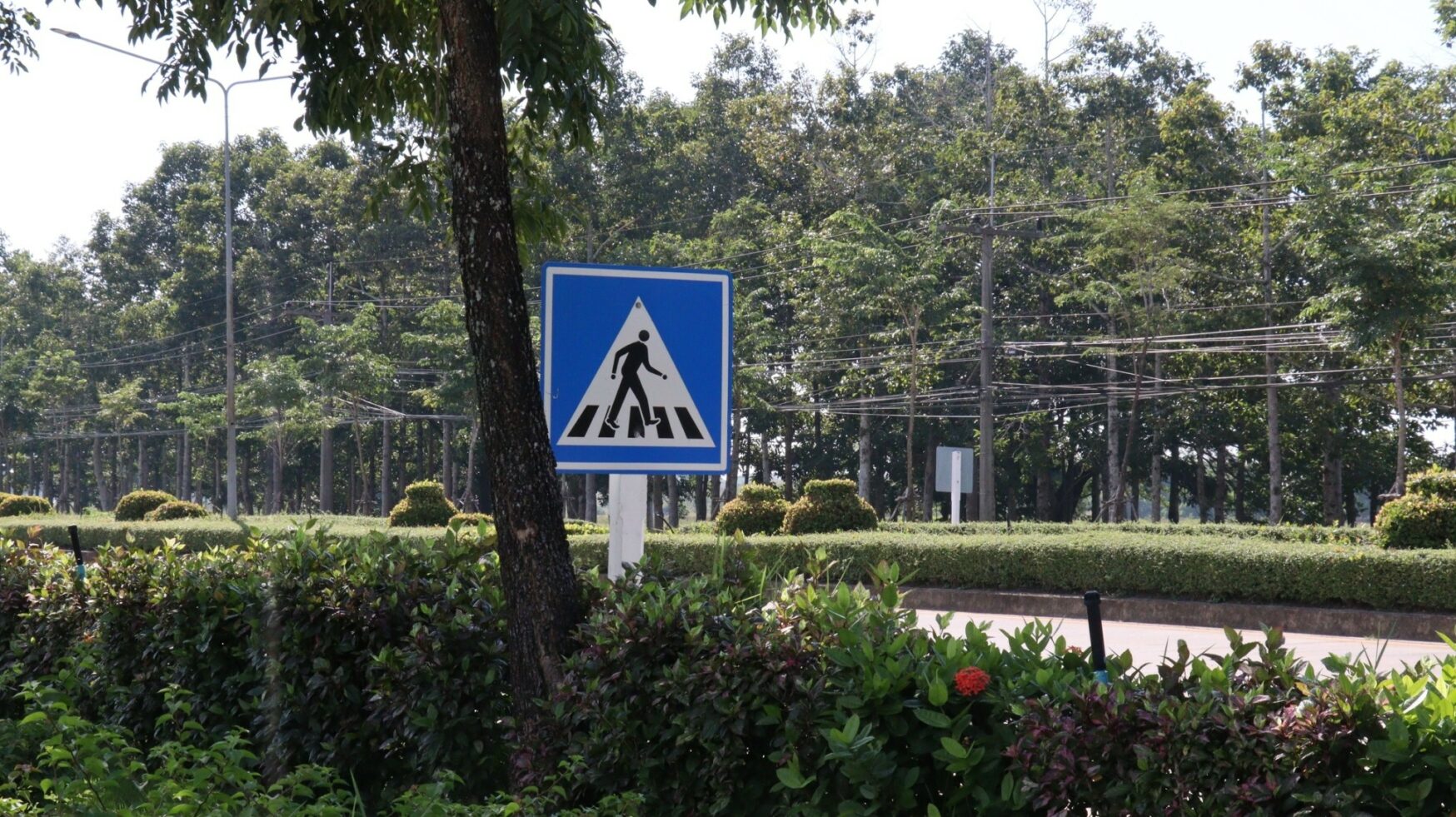
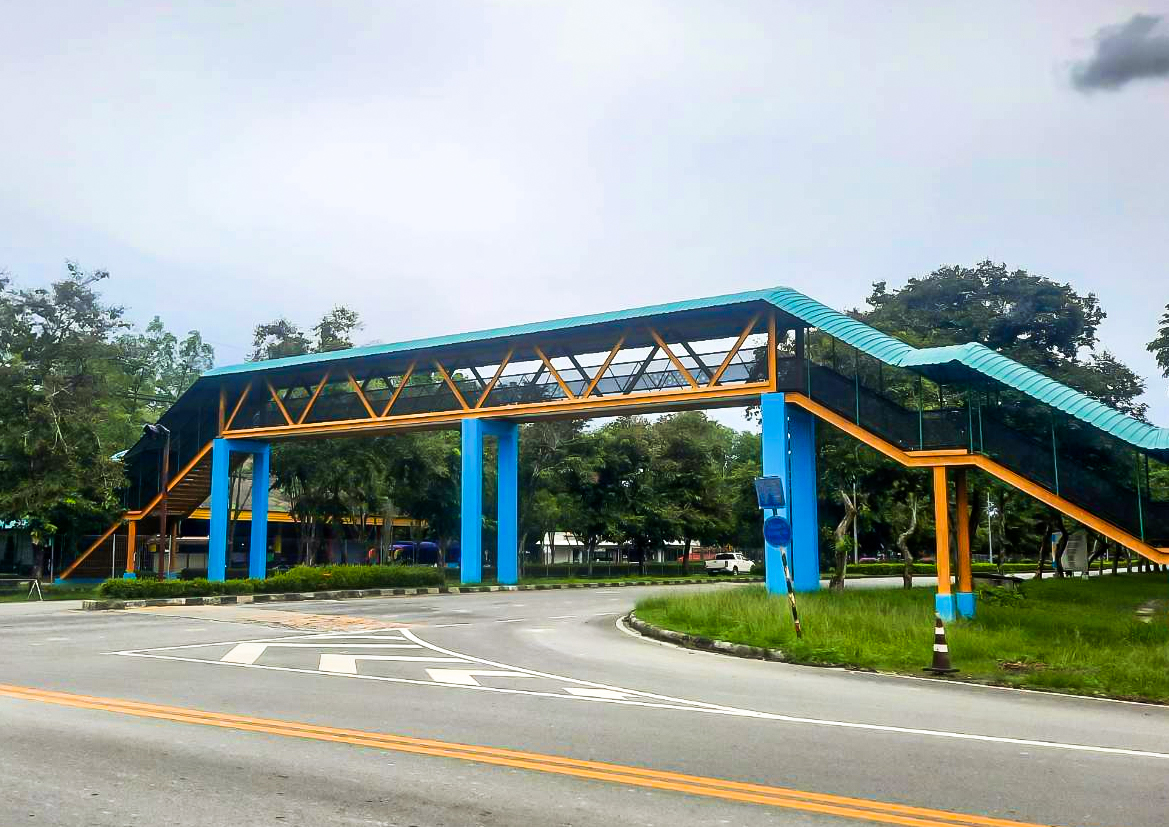
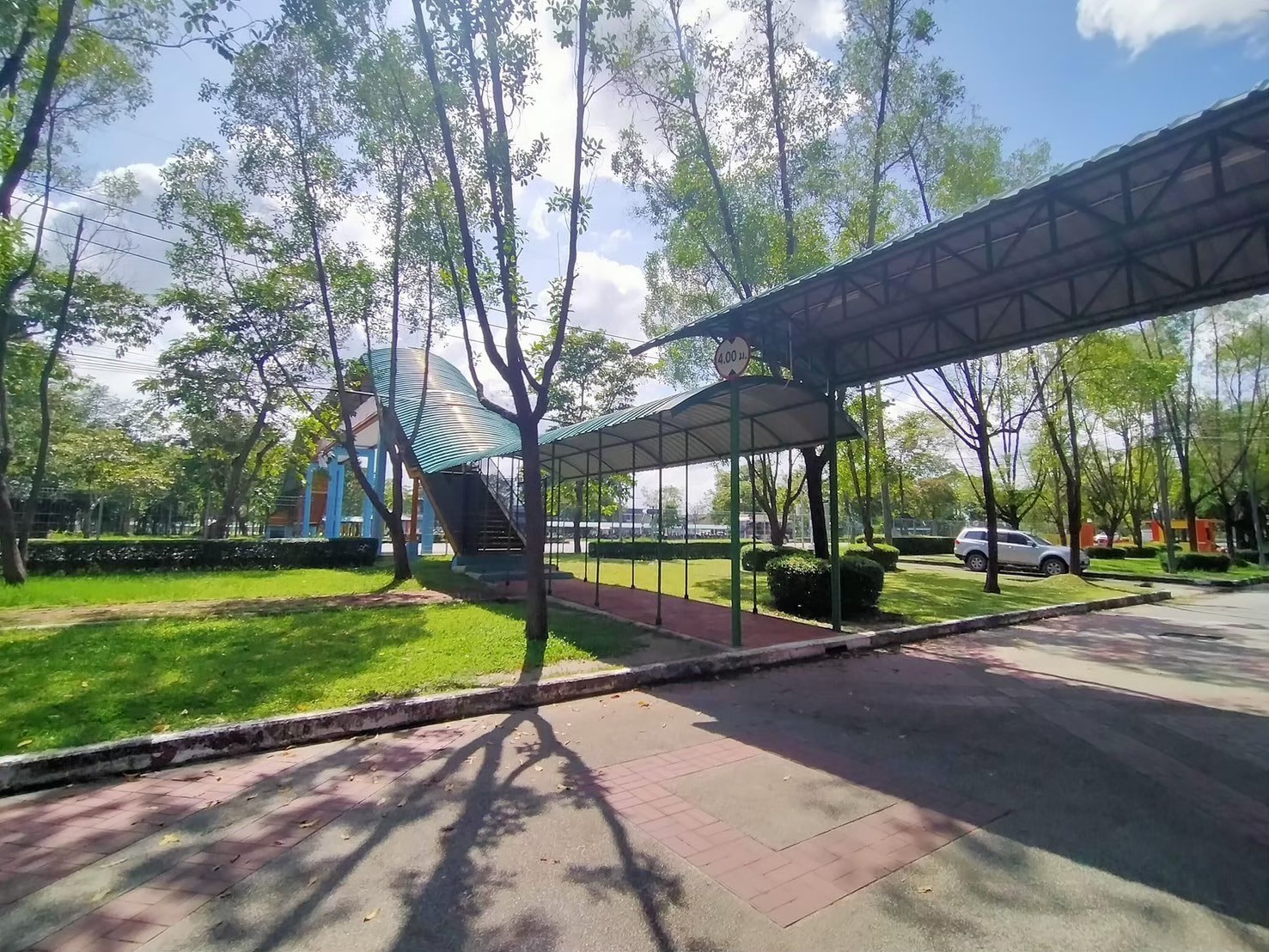
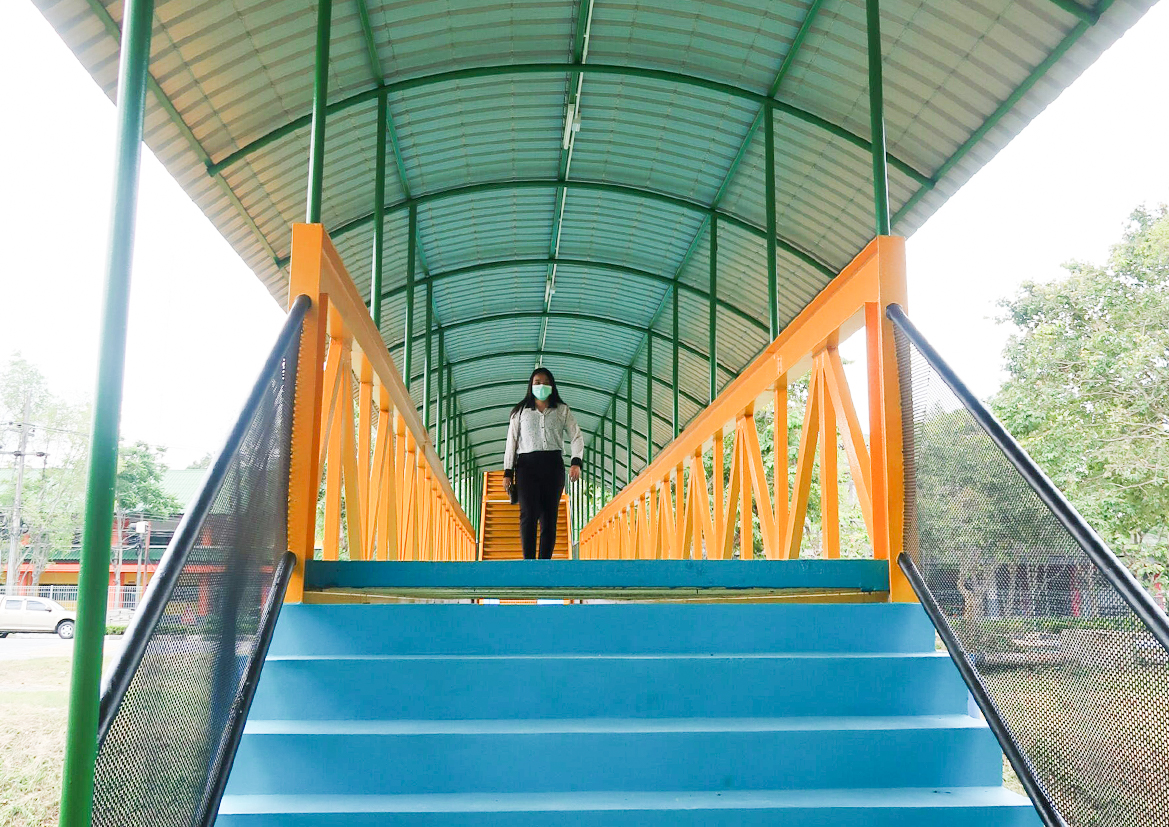
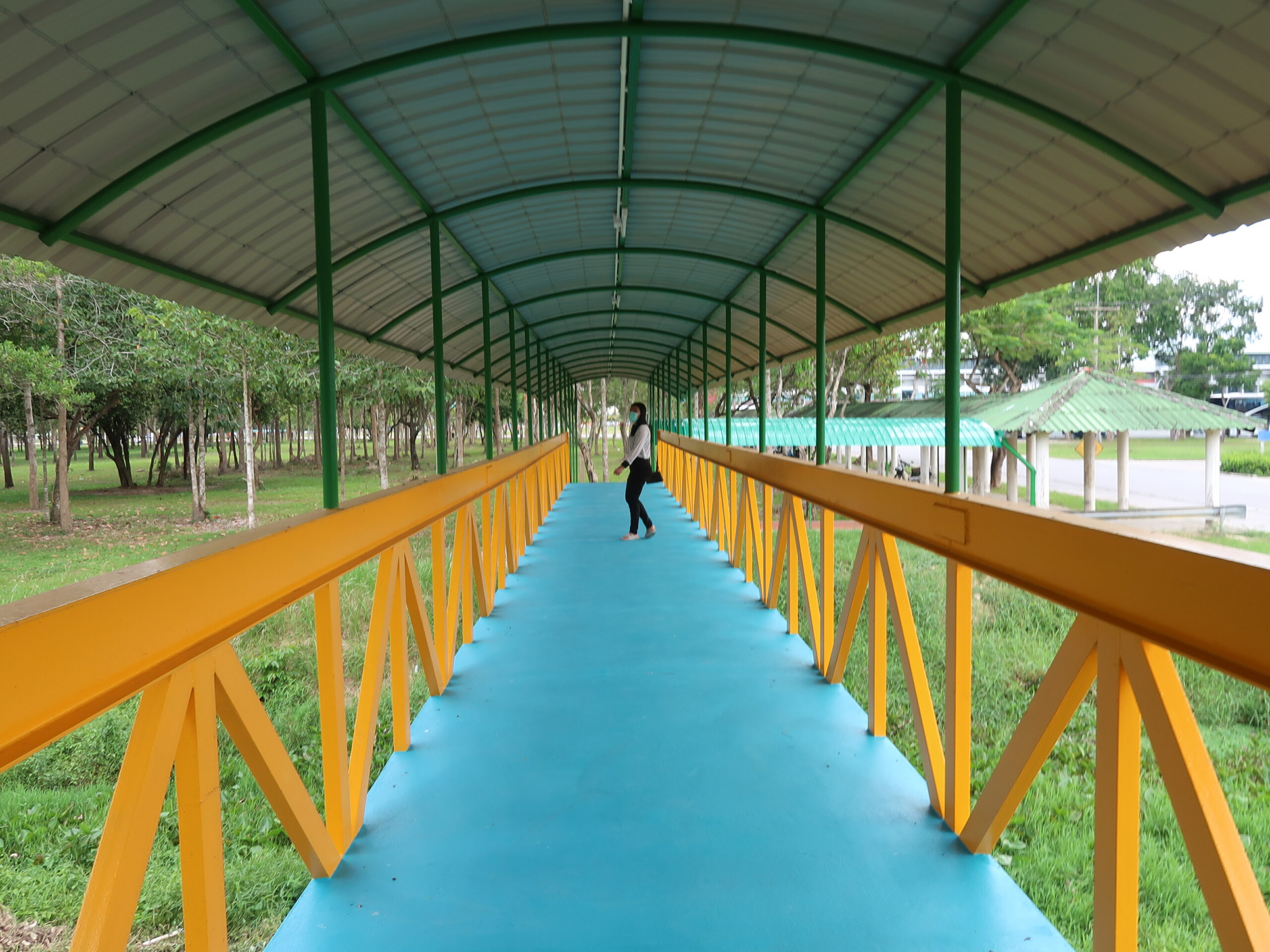
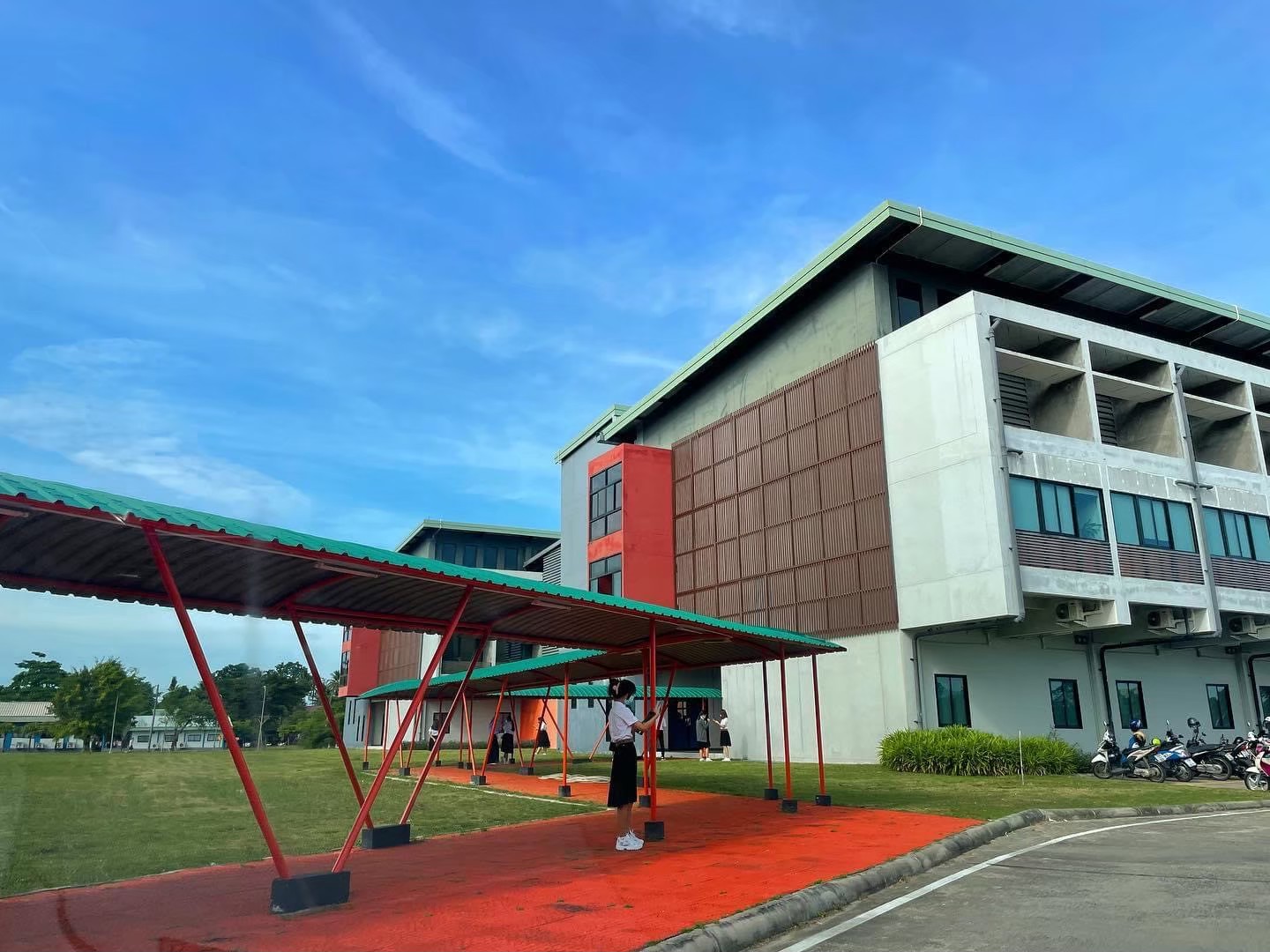
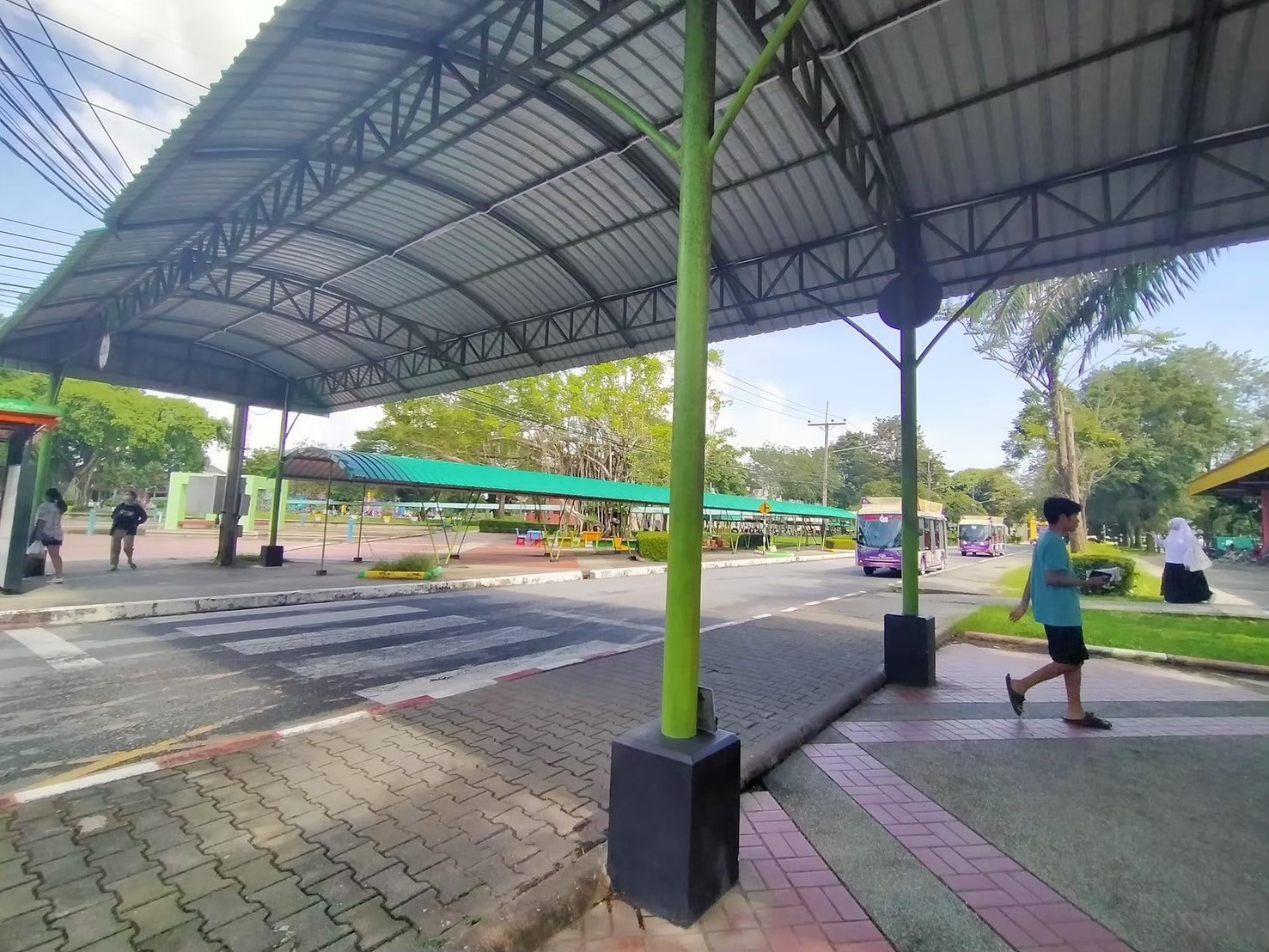
Walailak University emphasizes universal design principles, ensuring that walkways are accessible to everyone, including people with disabilities. The campus features well-planned zebra crossings, footbridges, and ramps to facilitate safe movement. Additionally, the university has developed covered walkways to protect pedestrians from the weather, providing comfort in all conditions.
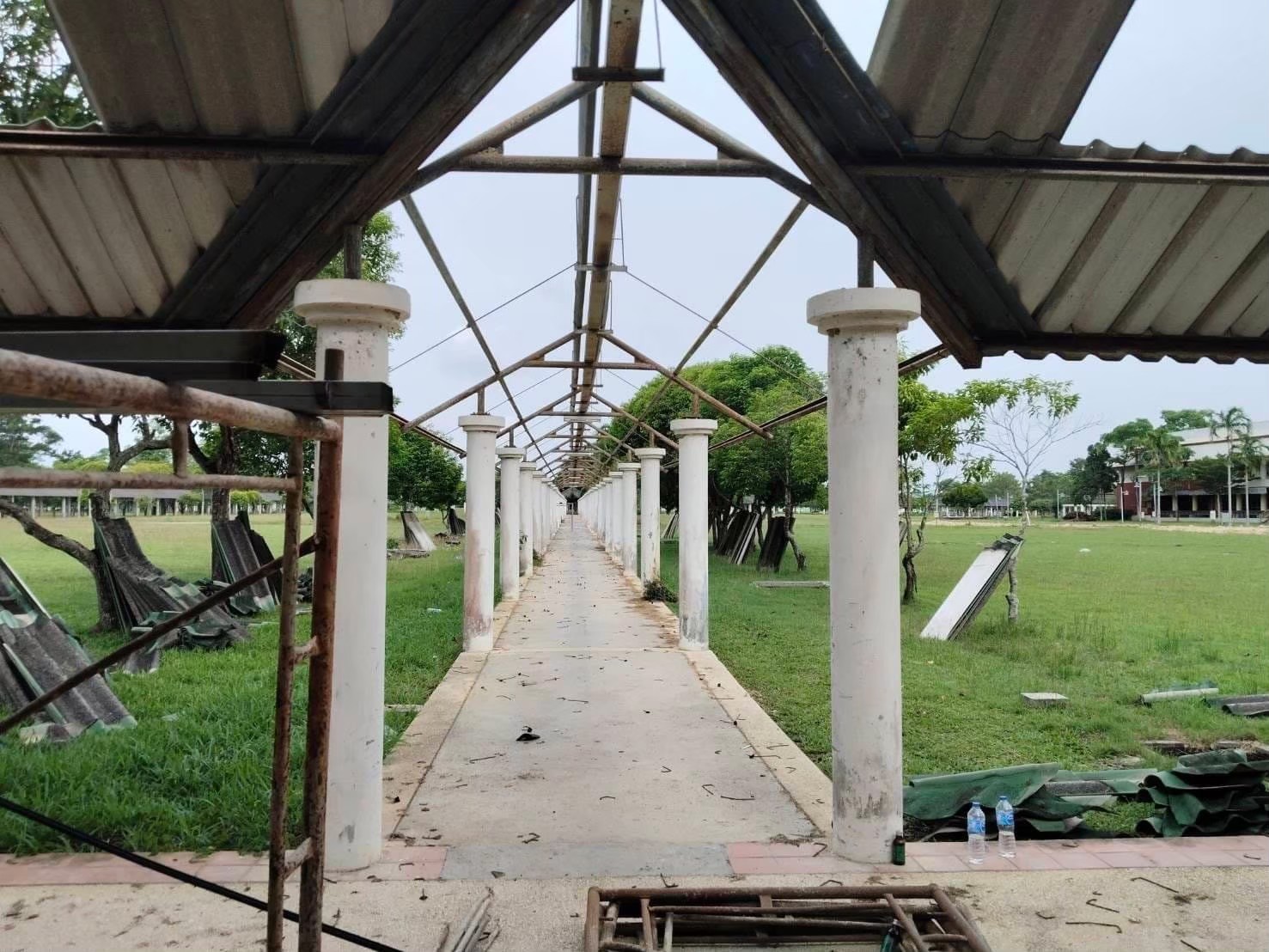
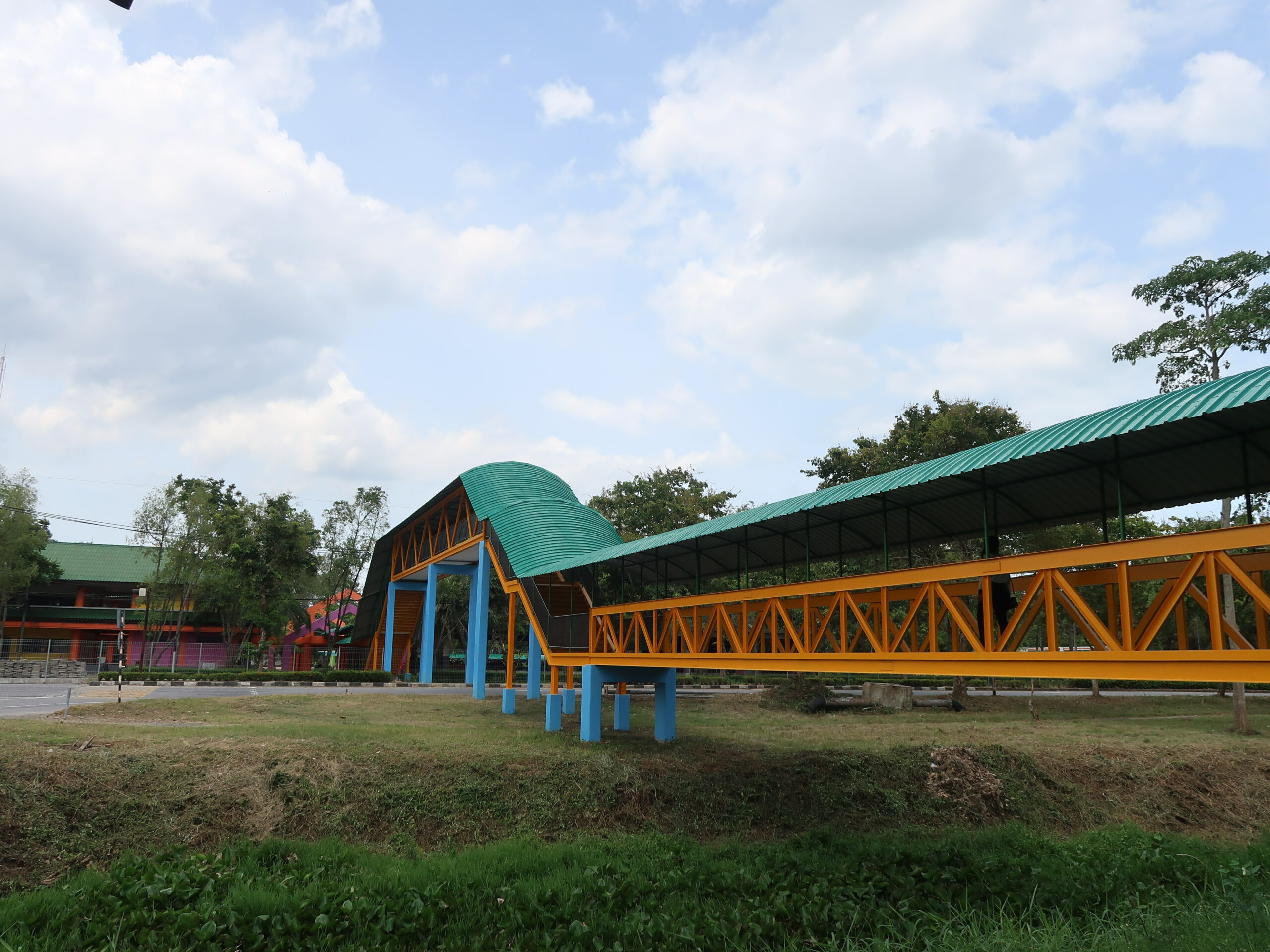
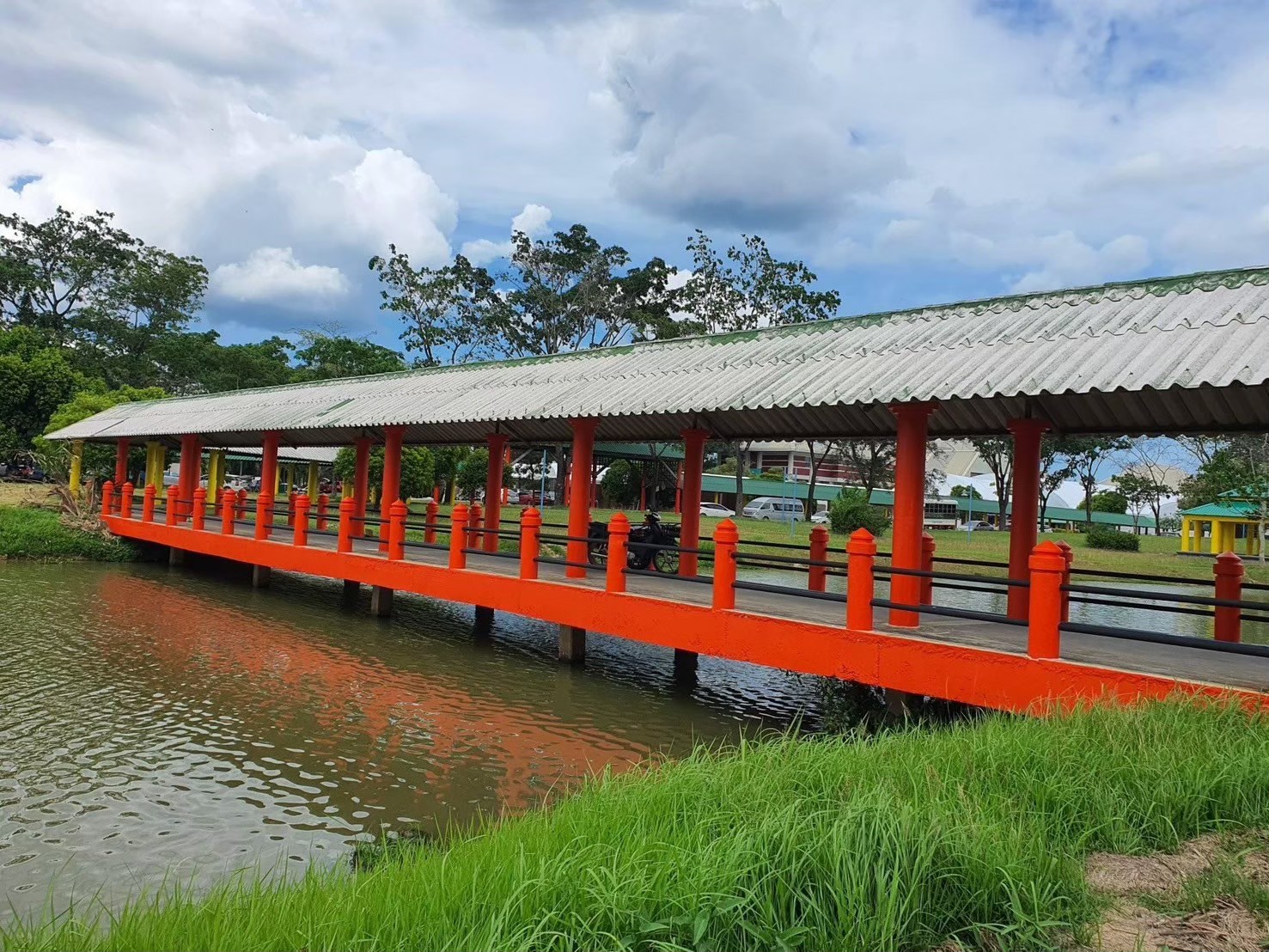
WU initiated a large-scale project to construct overhead footbridges and covered walkways, improving pedestrian safety and convenience. These bridges connect various academic buildings, including the new Lecture Buildings 5 and 6, ensuring students can move between them easily and safely. The project, with a budget of 1,630,000 baht, is part of the university’s ongoing efforts to prioritize pedestrian safety and comfort.
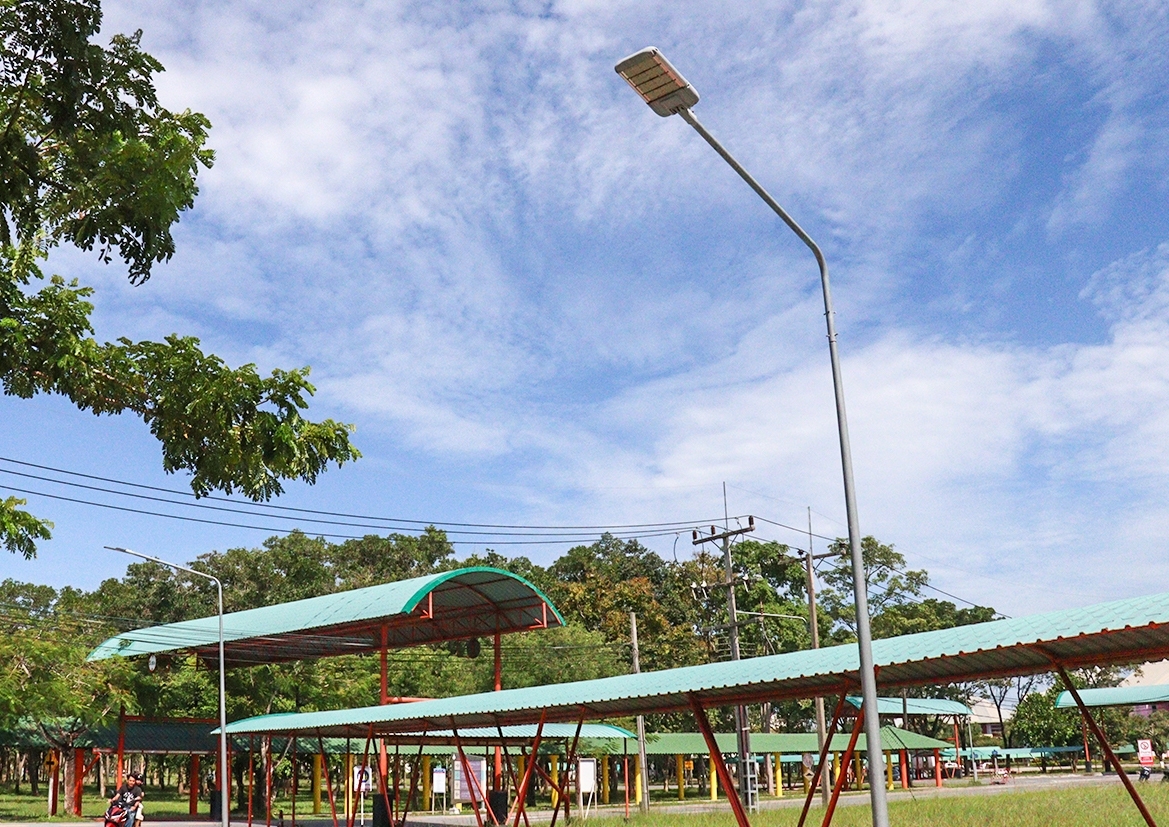
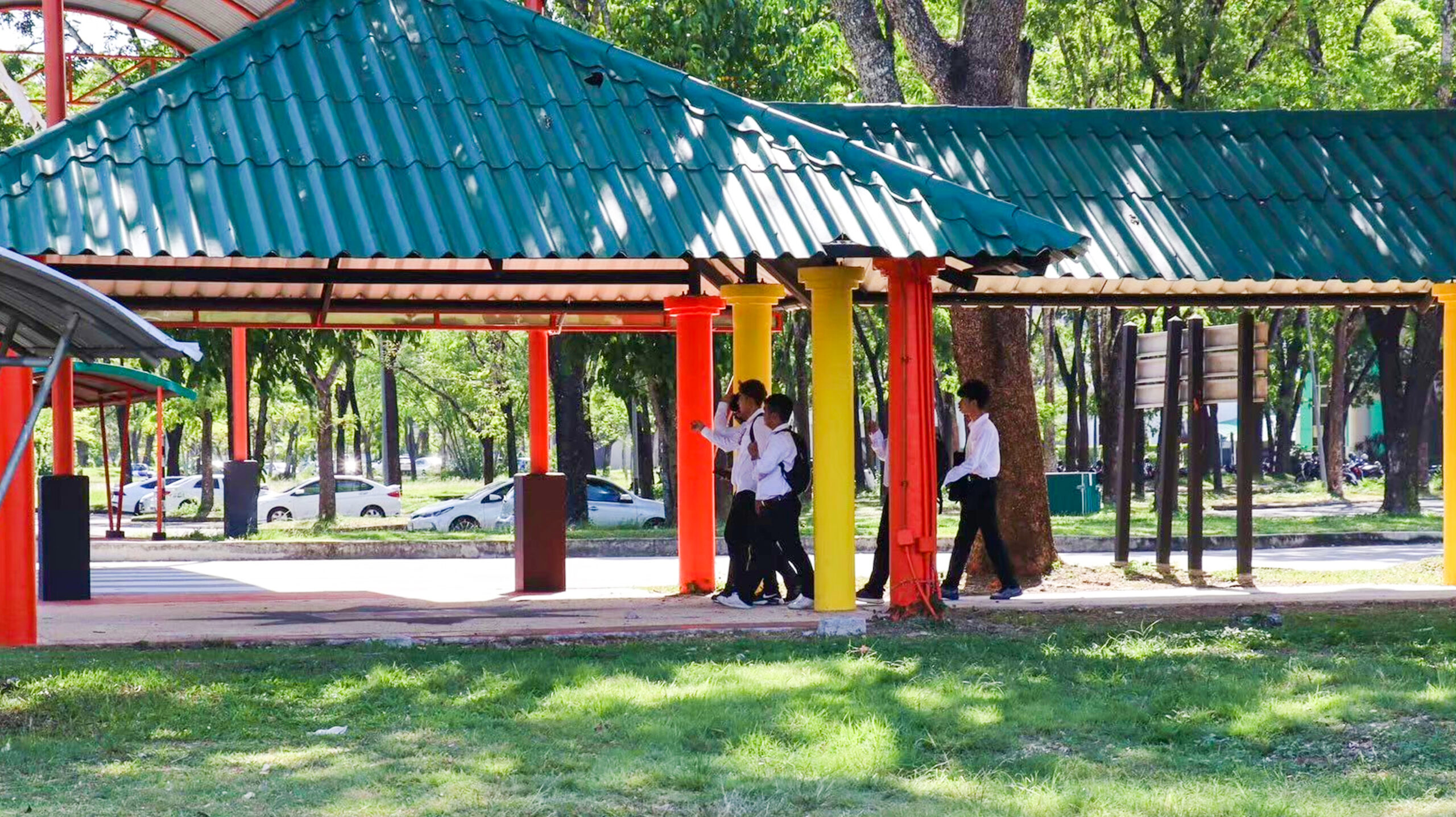
The covered walkways at WU have been designed with both function and form in mind. Drawing inspiration from traditional Thai temple corridors, these walkways provide shelter from the elements while creating a sense of connection between campus buildings. The clear curved roofing and decorative elements, such as pavilions and ornamental plants, add beauty to the walkways, reinforcing the university’s commitment to blending sustainability with cultural heritage.
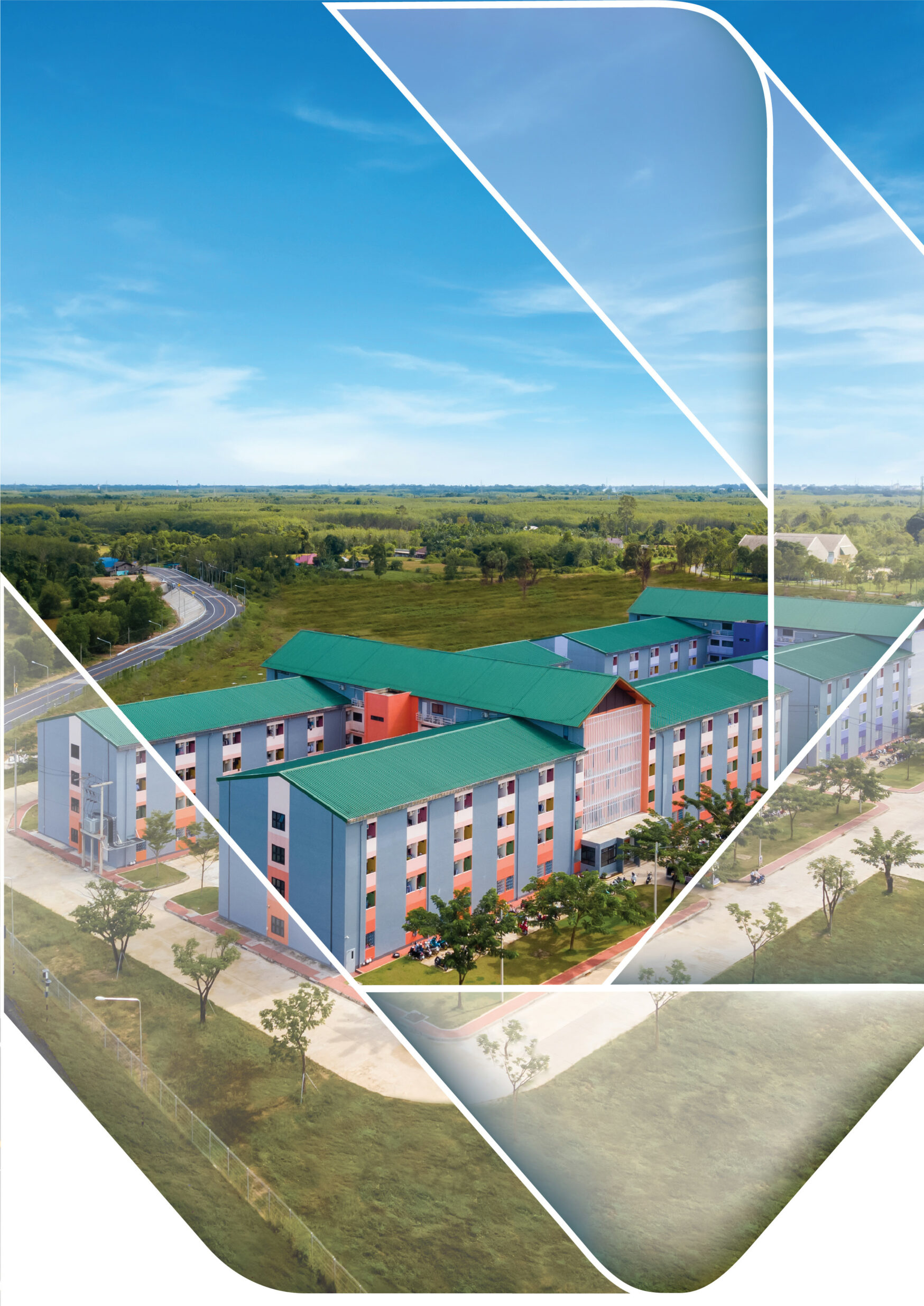
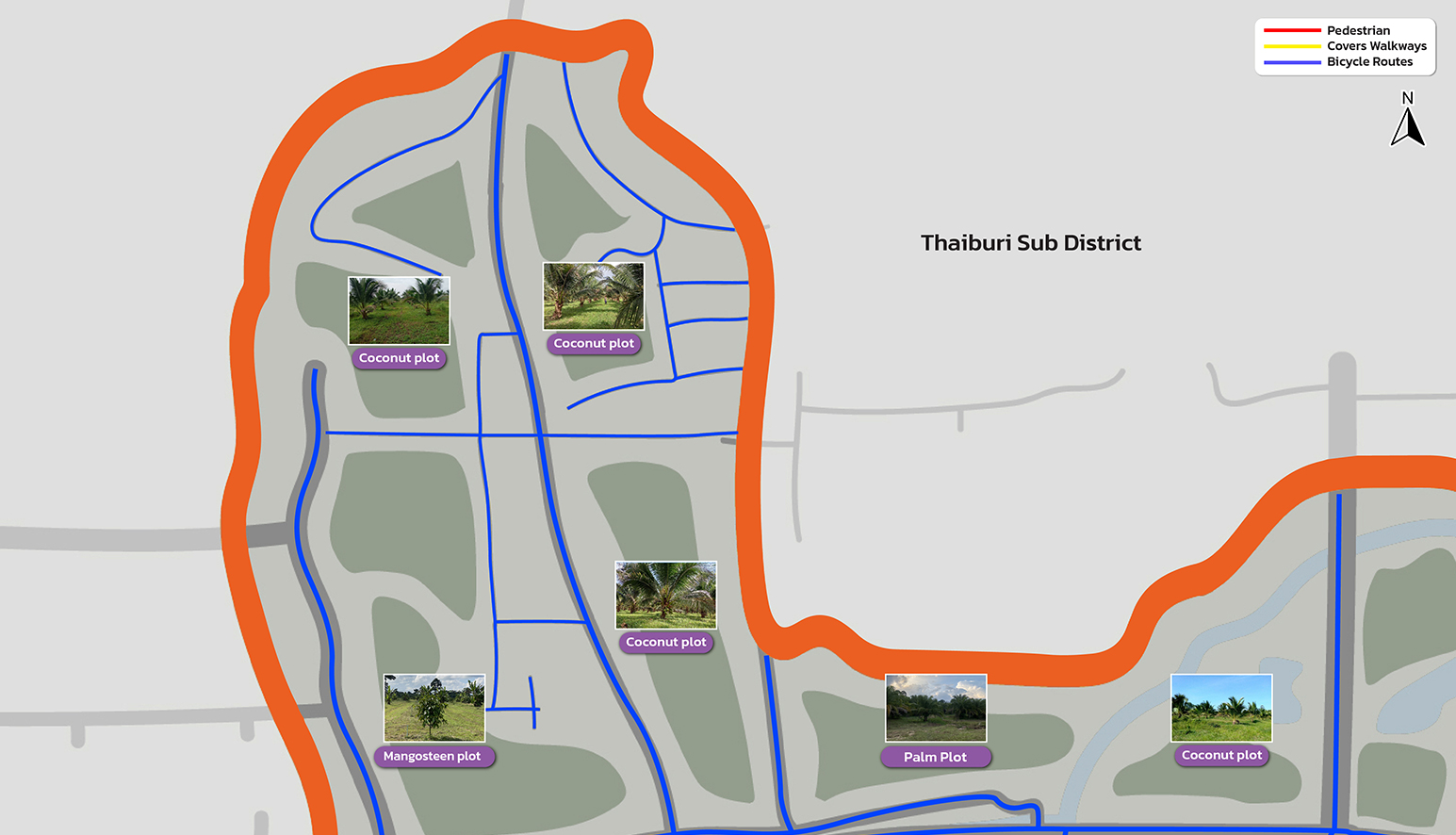
As WU’s population continues to grow, the university has expanded its pedestrian routes, connecting dormitories to academic buildings and public transportation areas. To enhance safety, additional footbridges have been built at high-traffic intersections, ensuring that students can cross streets safely. These developments are part of WU’s three-year operational plan (2020-2025), which supports the university’s broader goal to transform into a Residential University with full-scale infrastructure that meets the needs of its community.
Through its dedication to sustainable infrastructure, Walailak University is enhancing the quality of life for its students and staff. By prioritizing walking as a key mode of transportation, WU is not only promoting a healthier lifestyle but also significantly reducing traffic and environmental impact on campus. This commitment to a pedestrian-friendly, green campus underscores the university’s leadership in sustainability and community well-being.