
WU Waste tracking
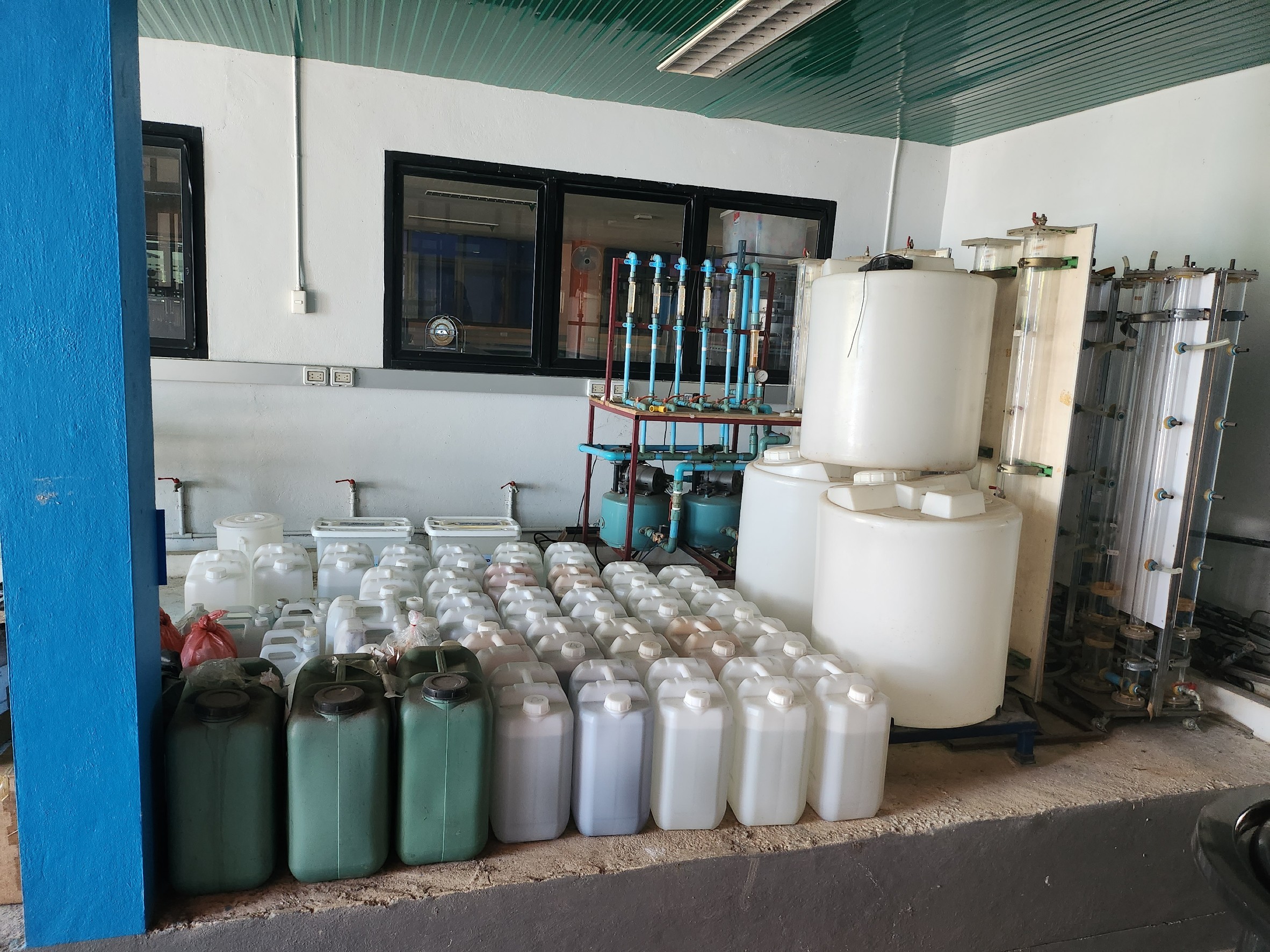
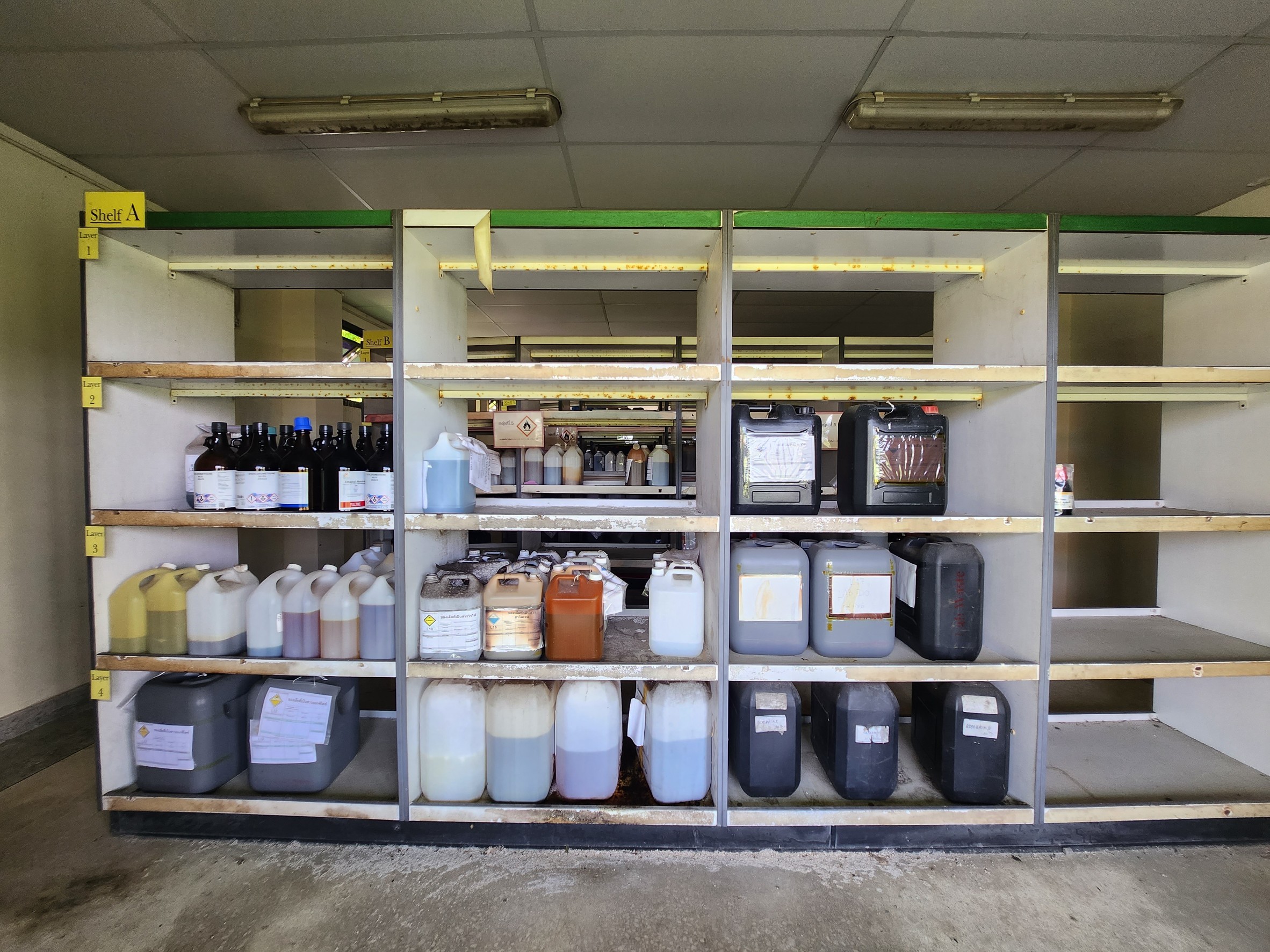
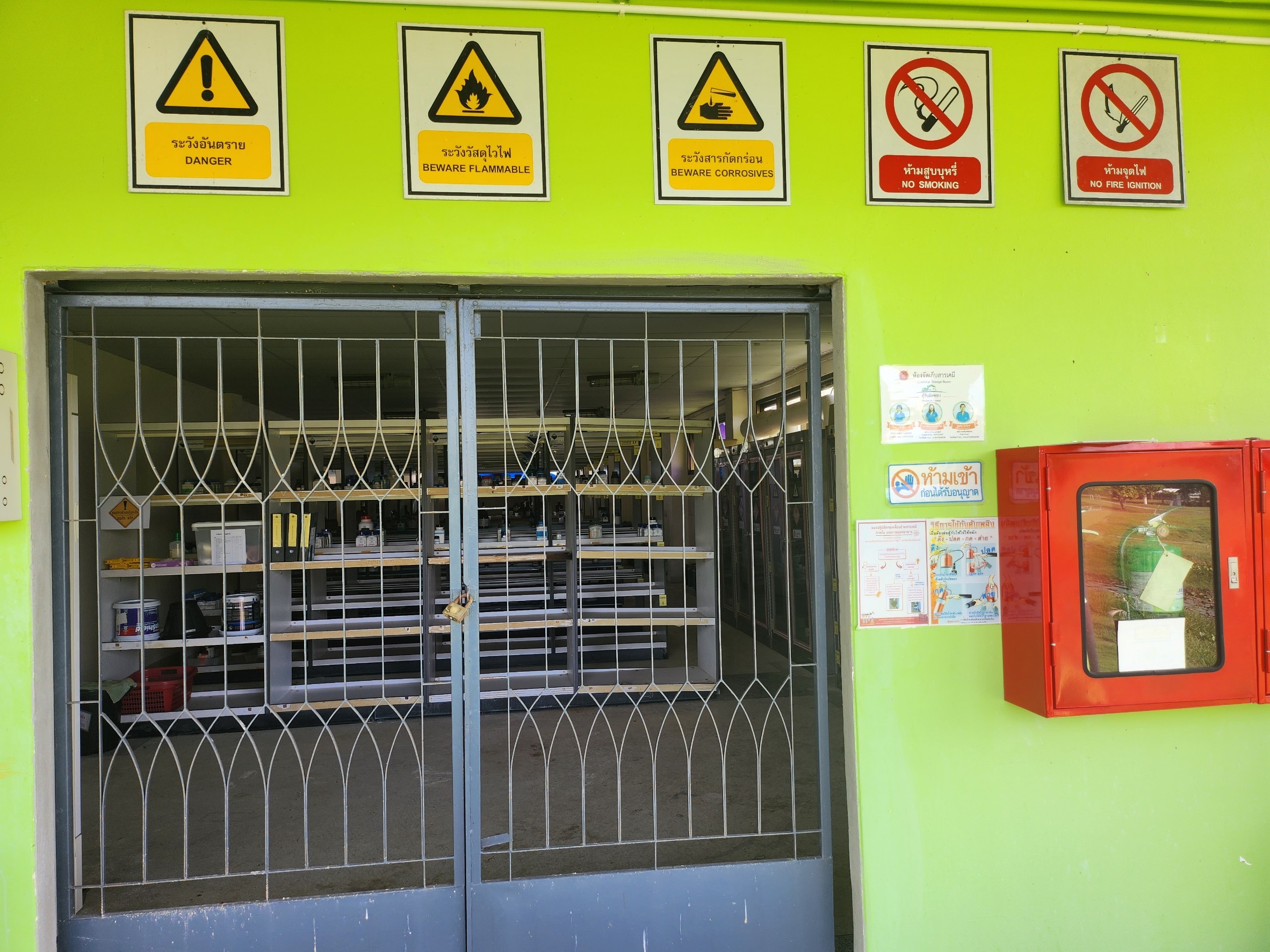
Walailak University implements an integrated waste management system continuously, aiming for zero waste while considering economic, social, and environmental sustainability in alignment with the Sustainable Development Goals (SDGs). The university has established a waste management program responsible for overseeing and measuring the whole campus’ waste, excluding hazardous waste generated by laboratories. This type of waste, often contaminated with toxic chemicals, heavy metals, and infectious materials, is managed by The Center for Scientific and Technological Equipment (CSE) at Walailak University. The CSE ensures proper storage and safe disposal of this waste by partnering with external waste management companies.
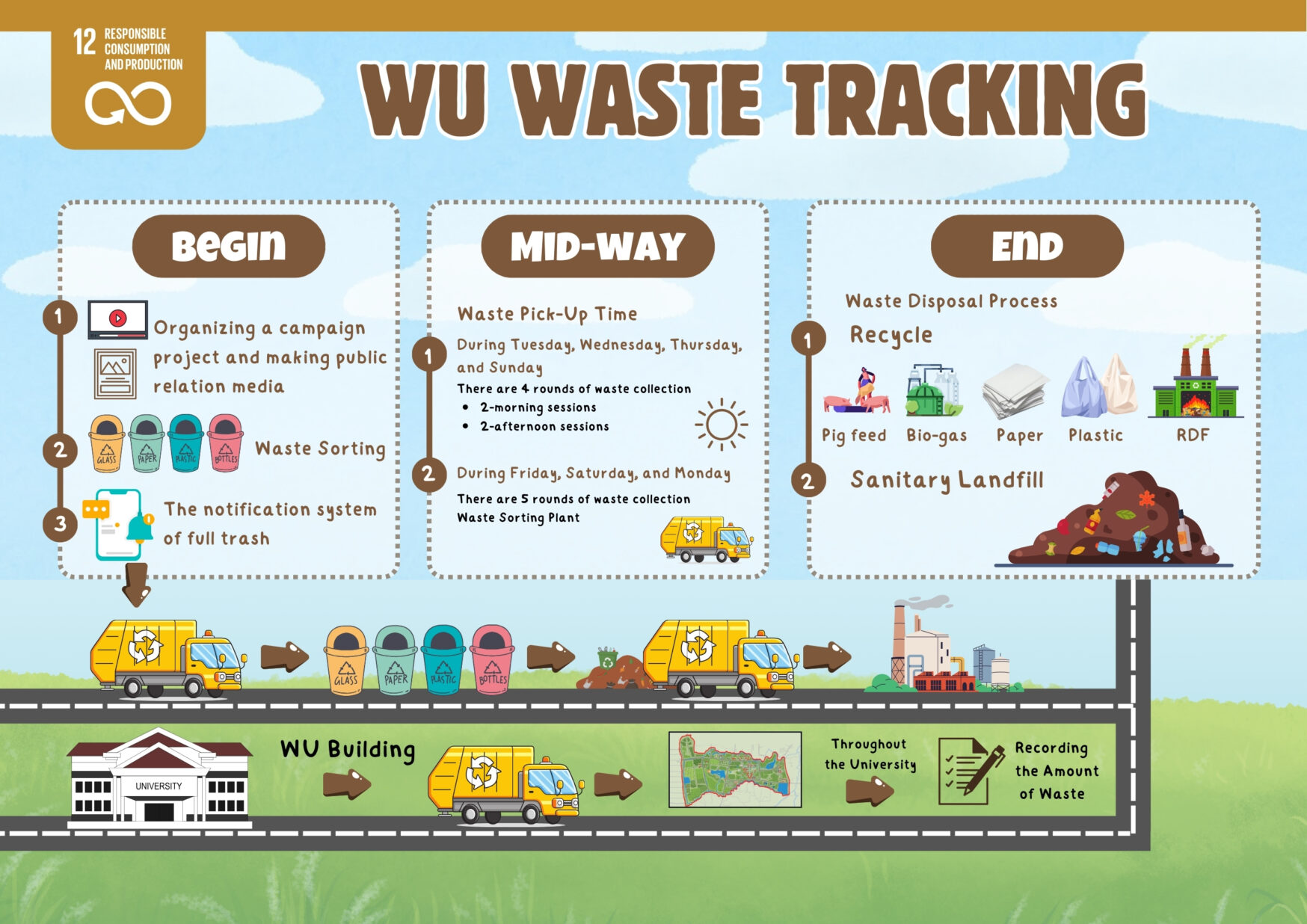
Currently, Walailak University places great emphasis on monitoring and measuring the amount of waste generated and recycled across the entire campus. The university employs waste separation, tracking and measuring waste quantities from the source, utilizing color-coded bins for different types of waste. This system ensures proper waste management according to sanitation principles, helping to prevent environmental issues. The waste management process involves monitoring waste at all stages source, mid-stage, and final stage to ensure effective waste tracking and disposal.
The Process of Monitoring and Measuring Waste at the Source
1. Awareness Campaigns and Educational Materials: The university implements campaigns and creates promotional video materials to raise awareness about waste prevention and the importance of waste separation. These materials educate users on how to properly separate different types of waste and provide instructions on appropriate disposal methods for each type.
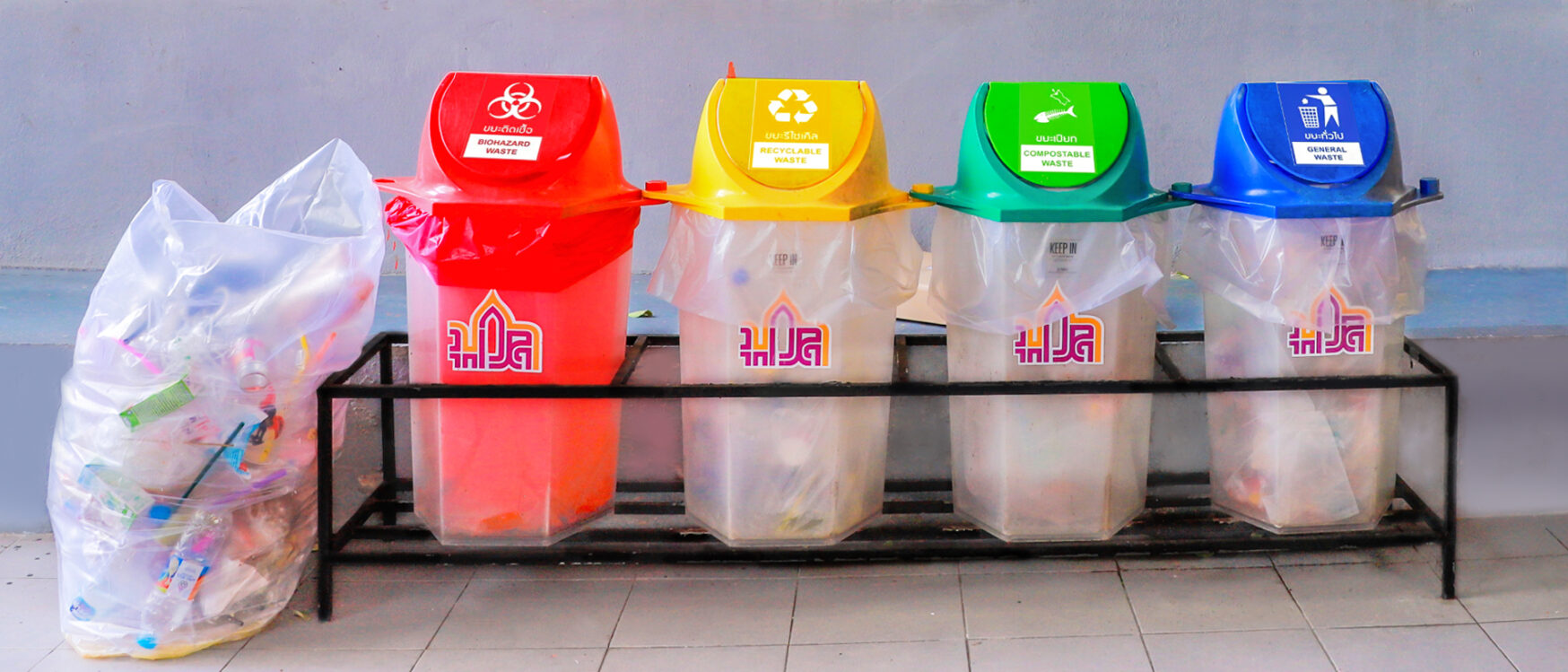
2. Waste Separation by Type: Waste is sorted according to the signs and the color-coded bins, helping the university to track the quantity of waste generated each day. The bins are categorized as follows:
- Green Bins: For organic waste, which decomposes naturally in a short time.
- Blue Bins: For general waste that is difficult to decompose, is not cost-effective to recycle, and is non-hazardous.
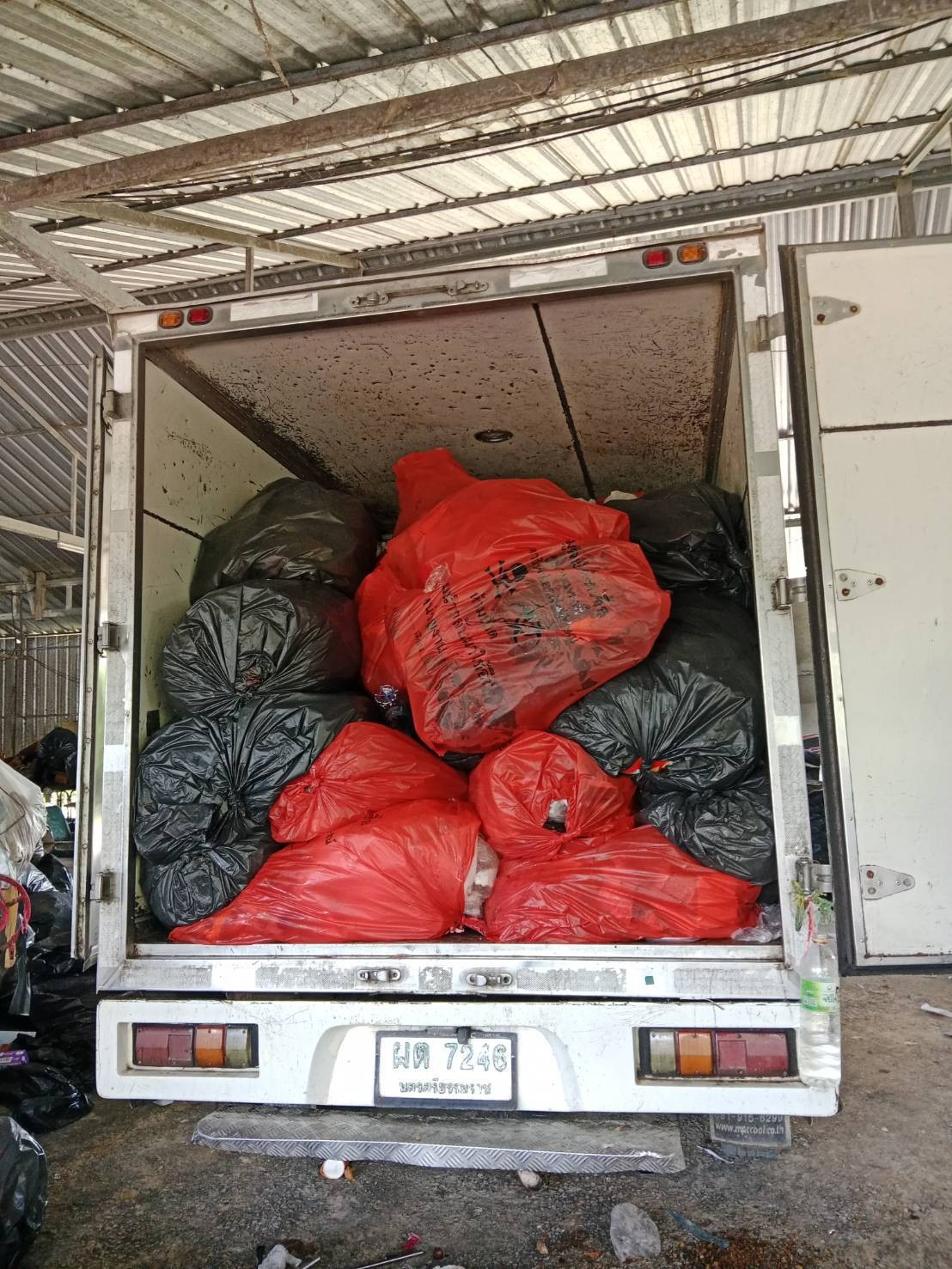
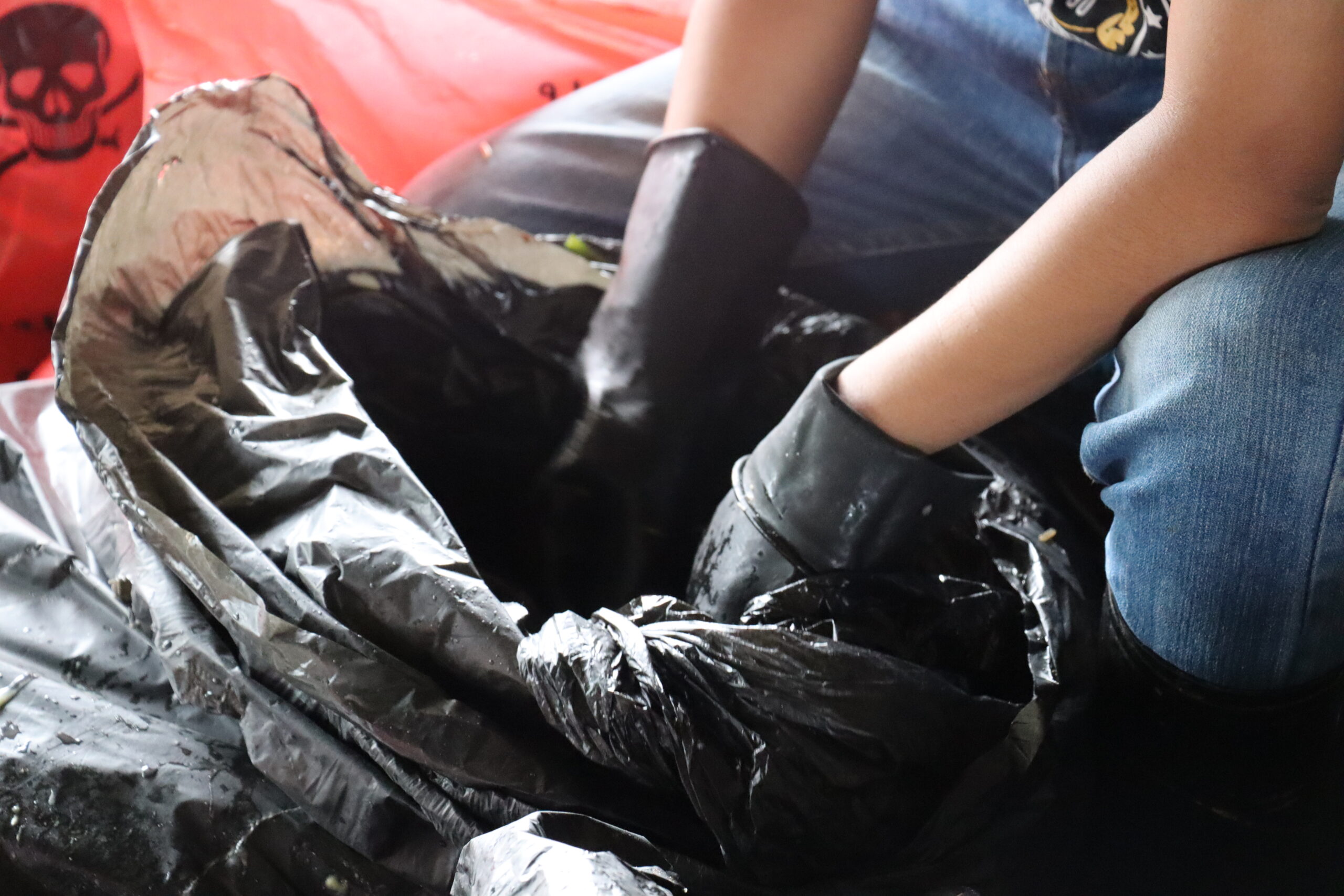
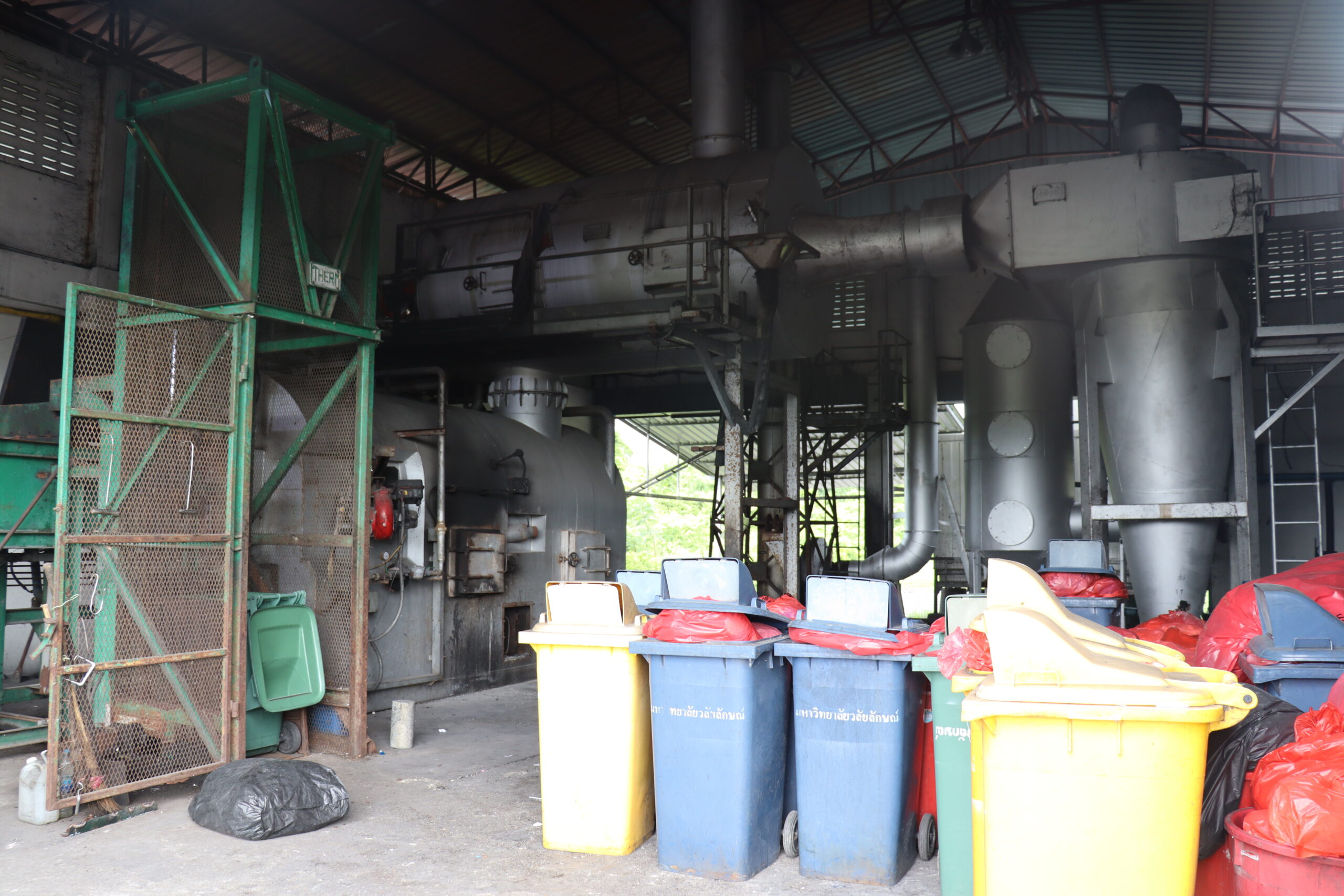
- Red Bins: For hazardous waste, including waste contaminated with chemicals that are harmful to human health and the environment, as well as infectious waste generated from medical treatments and diagnostics.
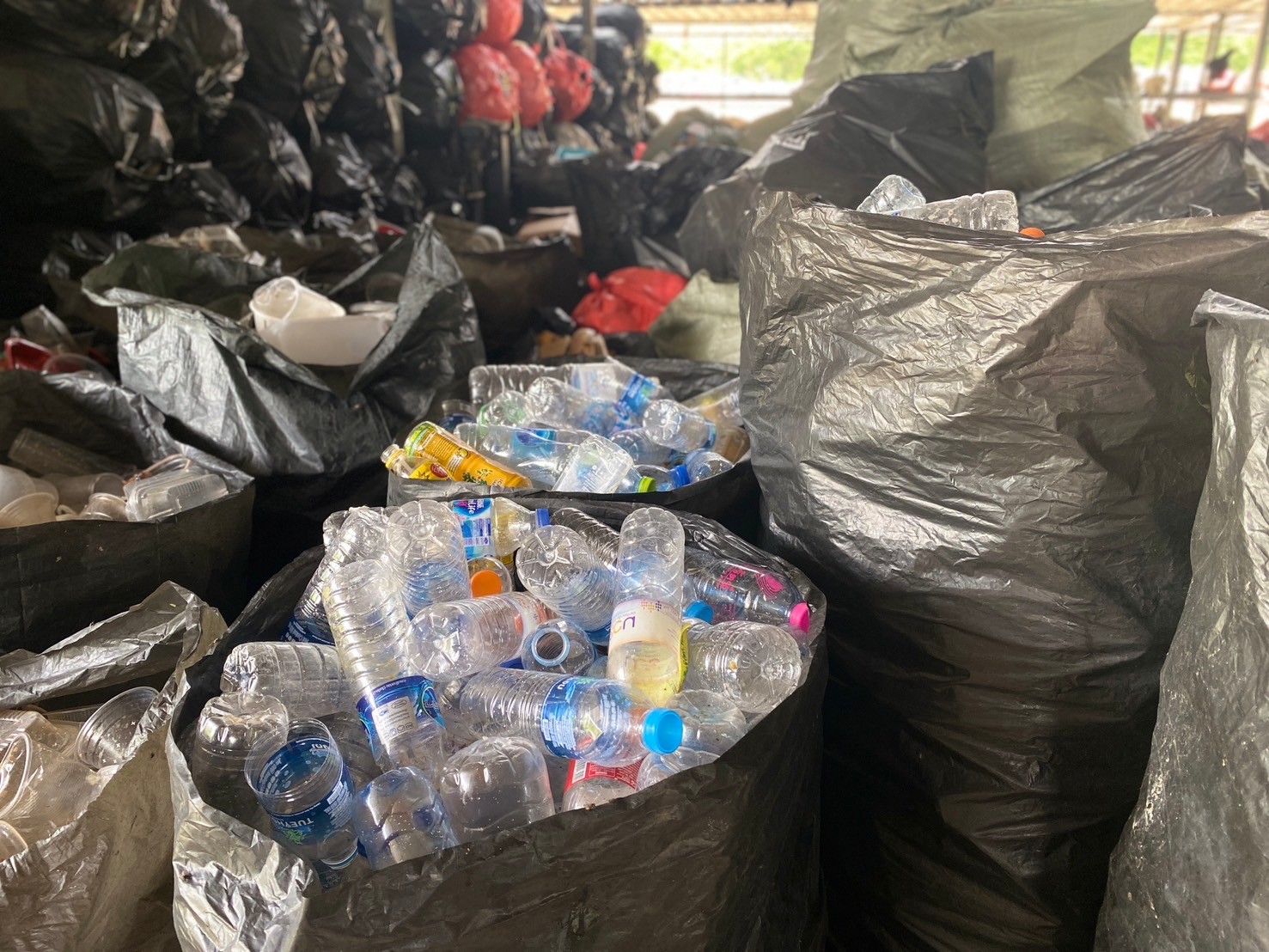
- Yellow Bins: For recyclable waste, which can be reused or recycled, even if it is difficult to decompose.
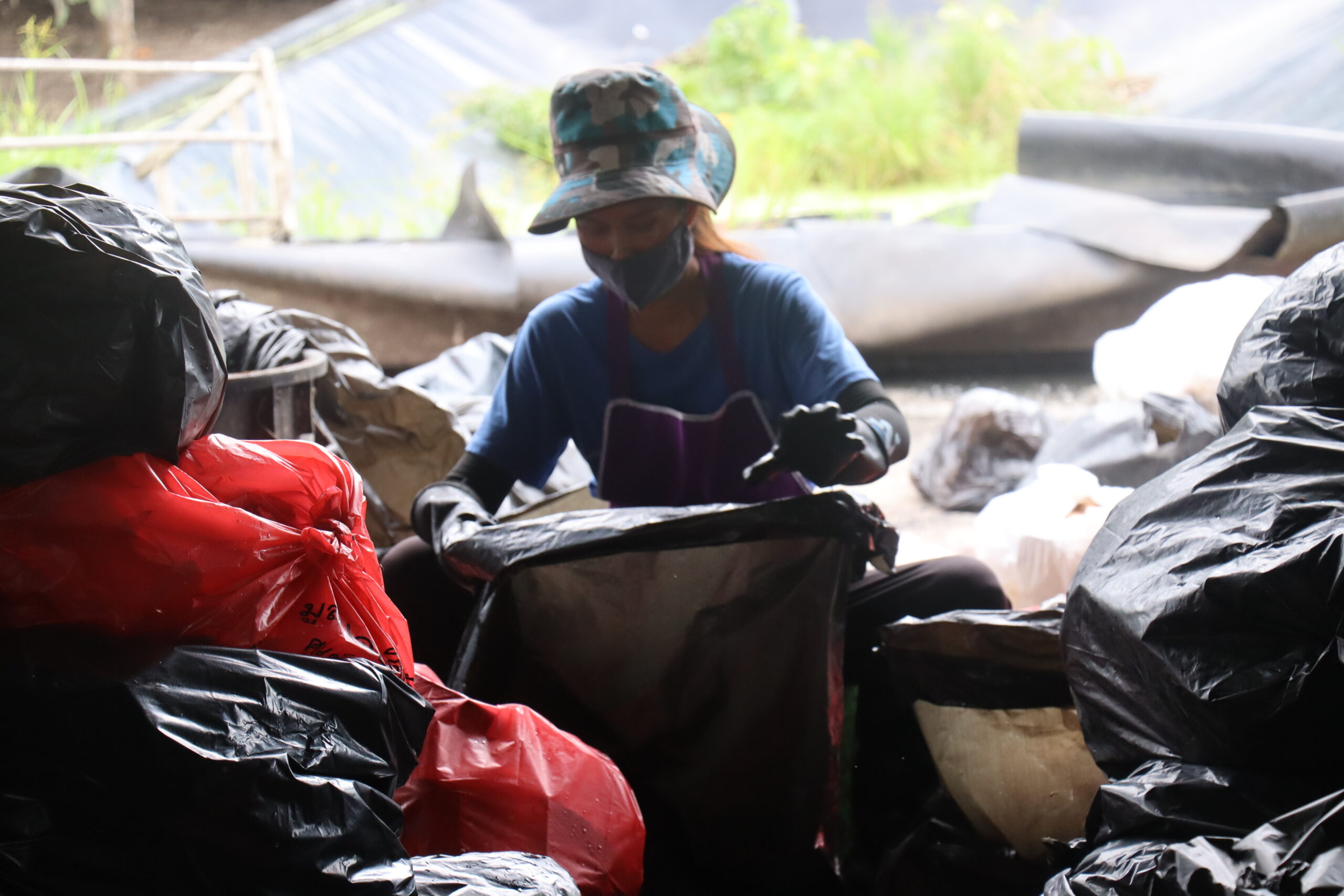
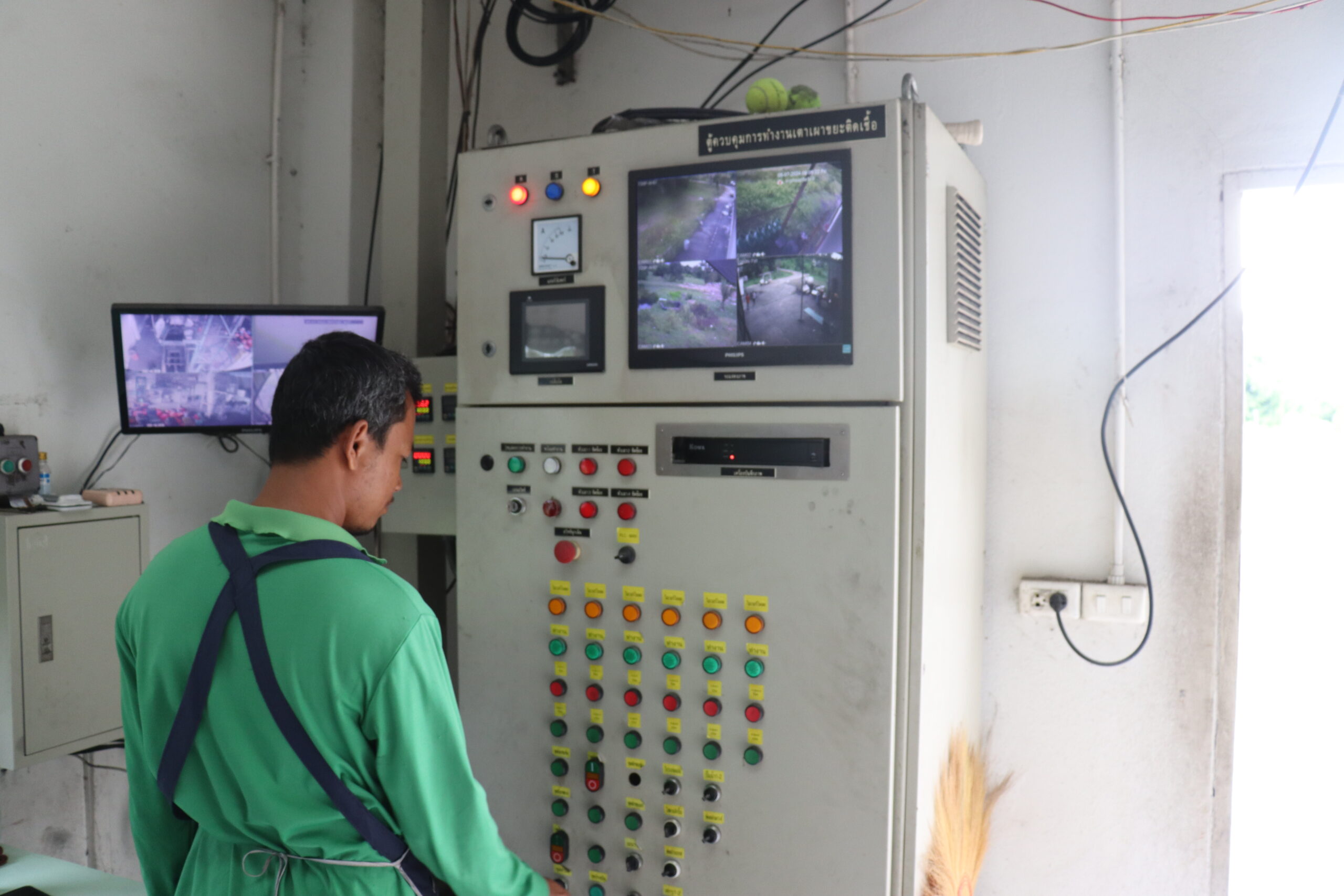
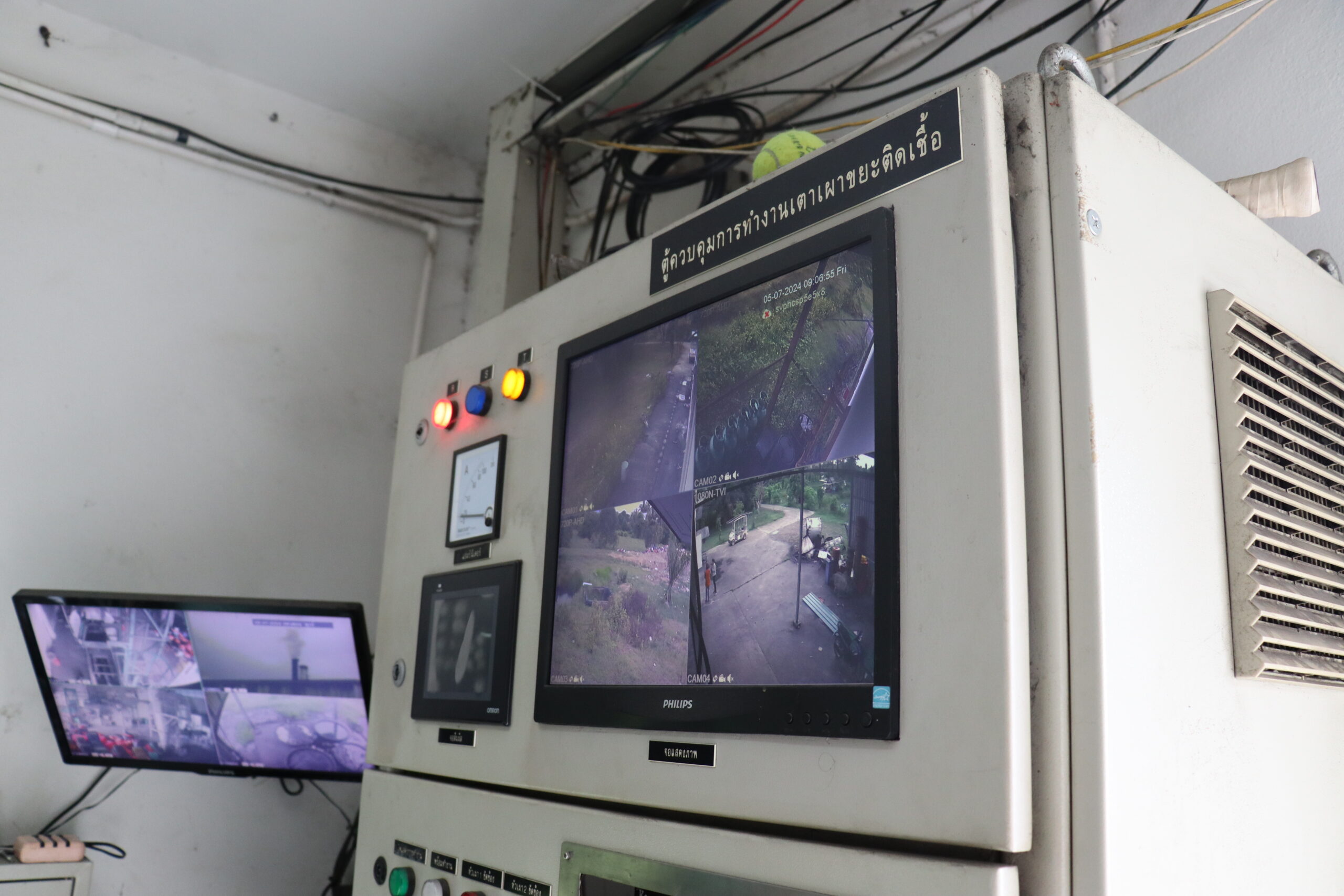
Mid-Stage Waste Management
Final Stage Waste Management
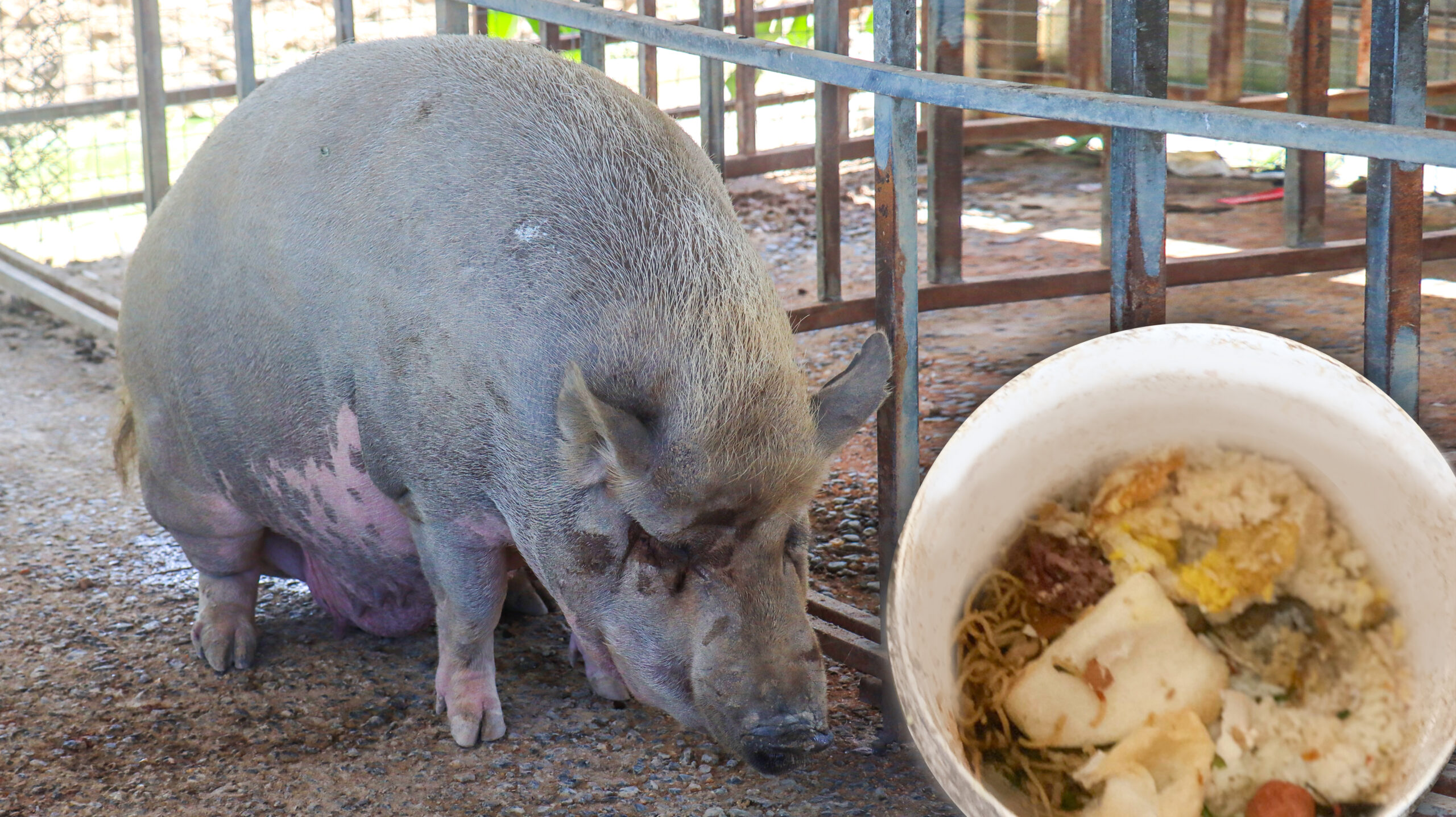
1. Recyclable Waste and Beneficial Use: Materials like paper, glass, and plastic are recycled and sold to the waste bank. Organic waste is repurposed as animal feed within the university. Non-biodegradable general waste that is not cost-effective to recycle and combustible waste is processed into Refuse Derived Fuel (RDF).
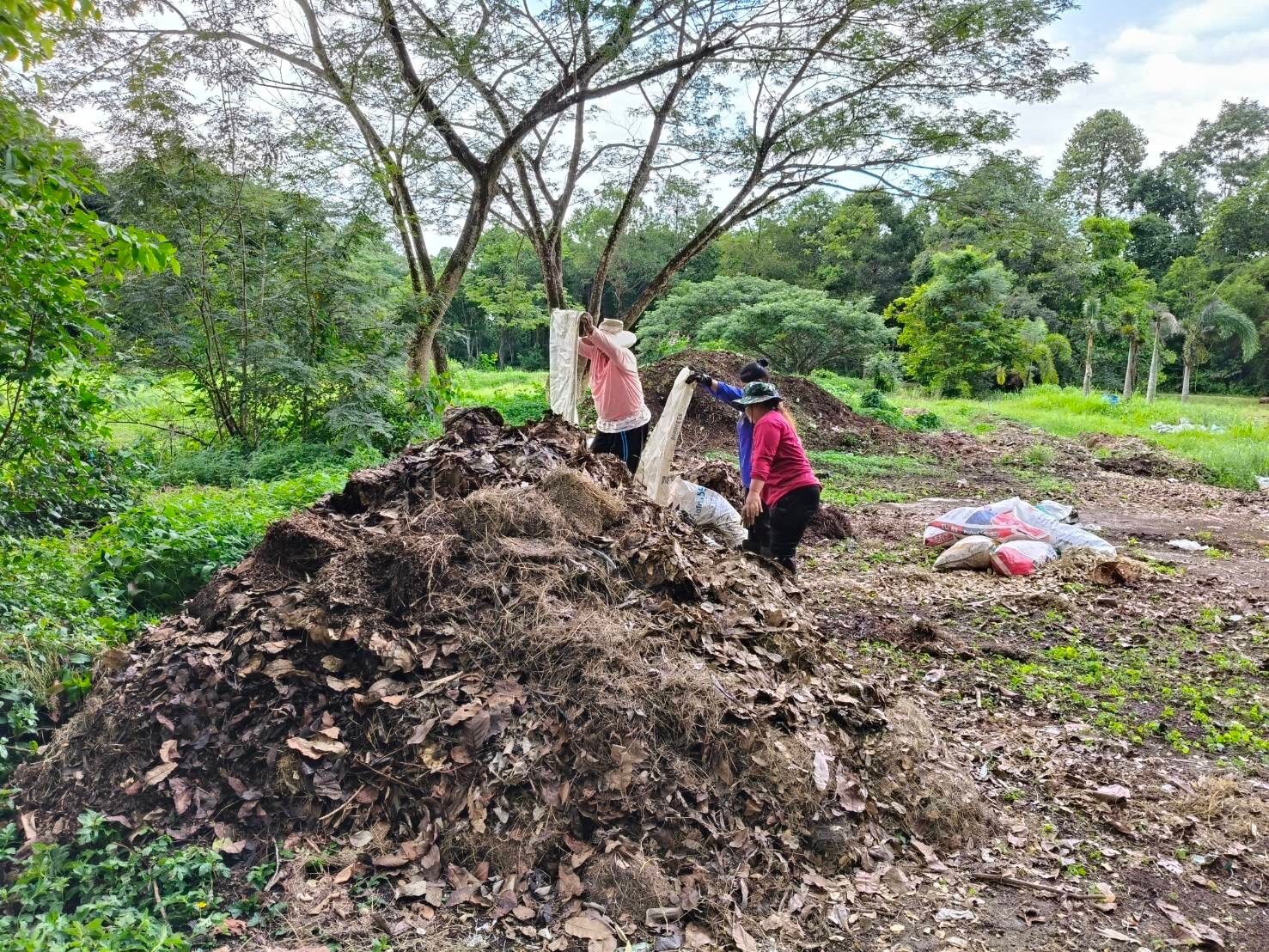
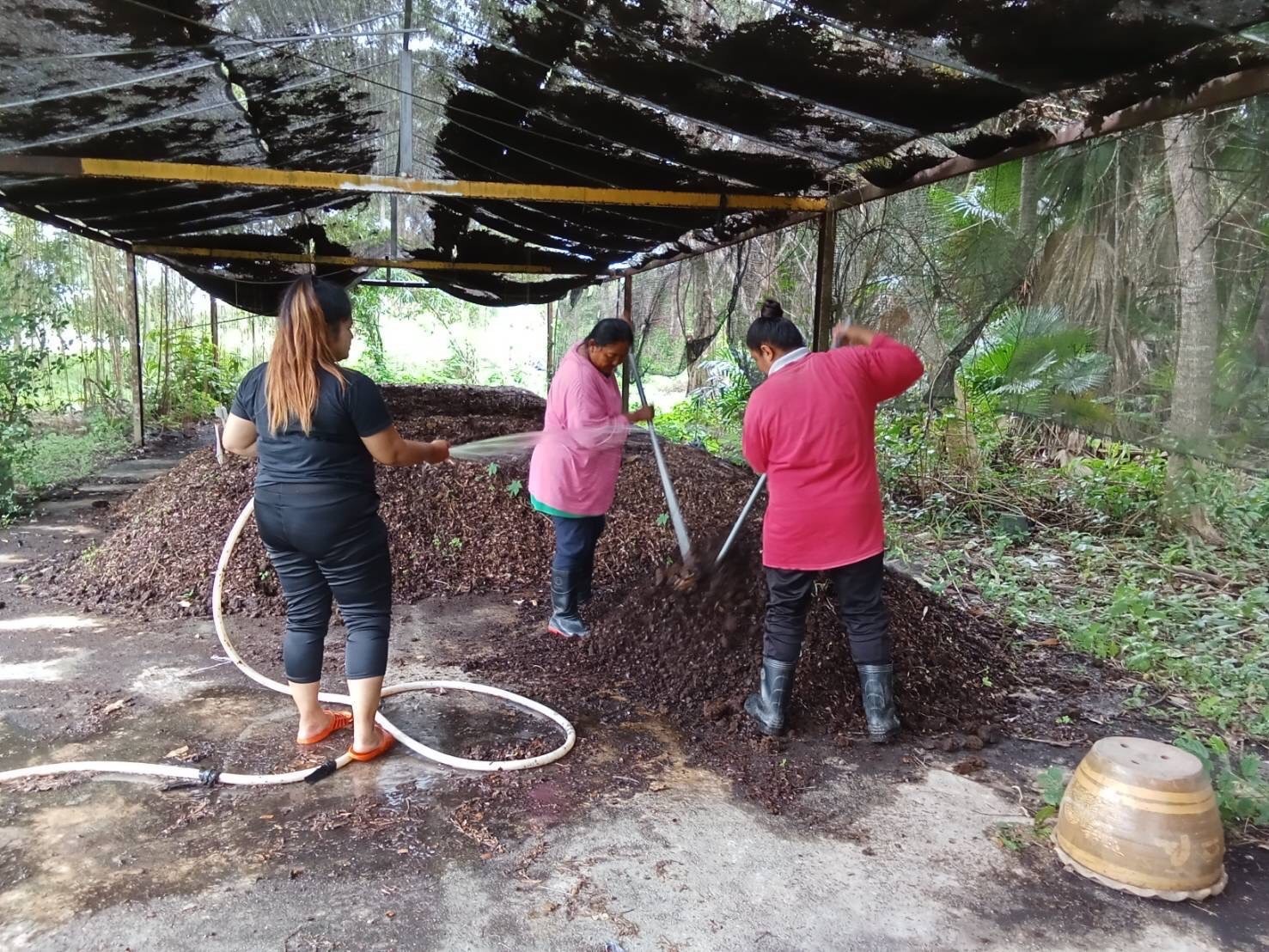
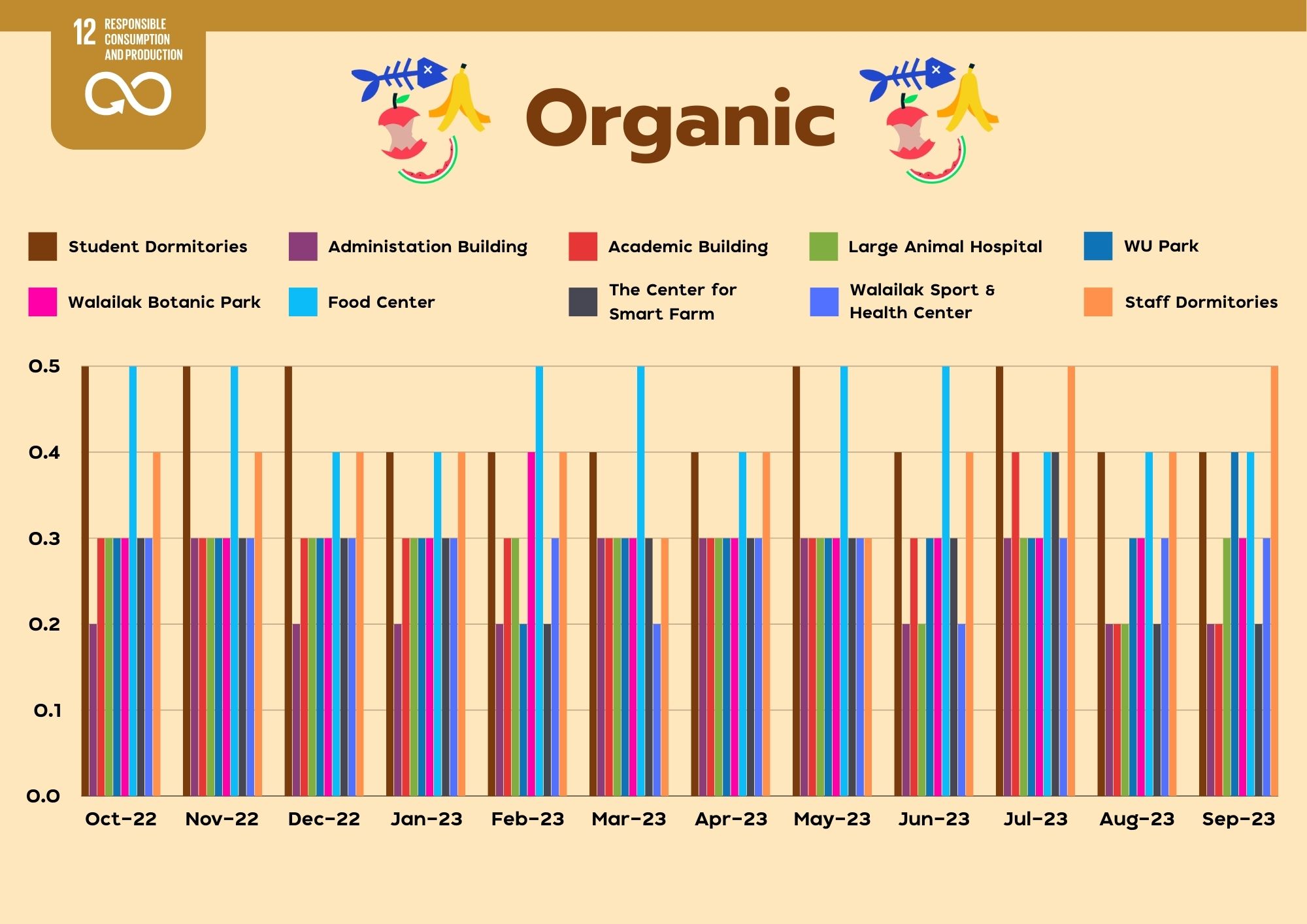
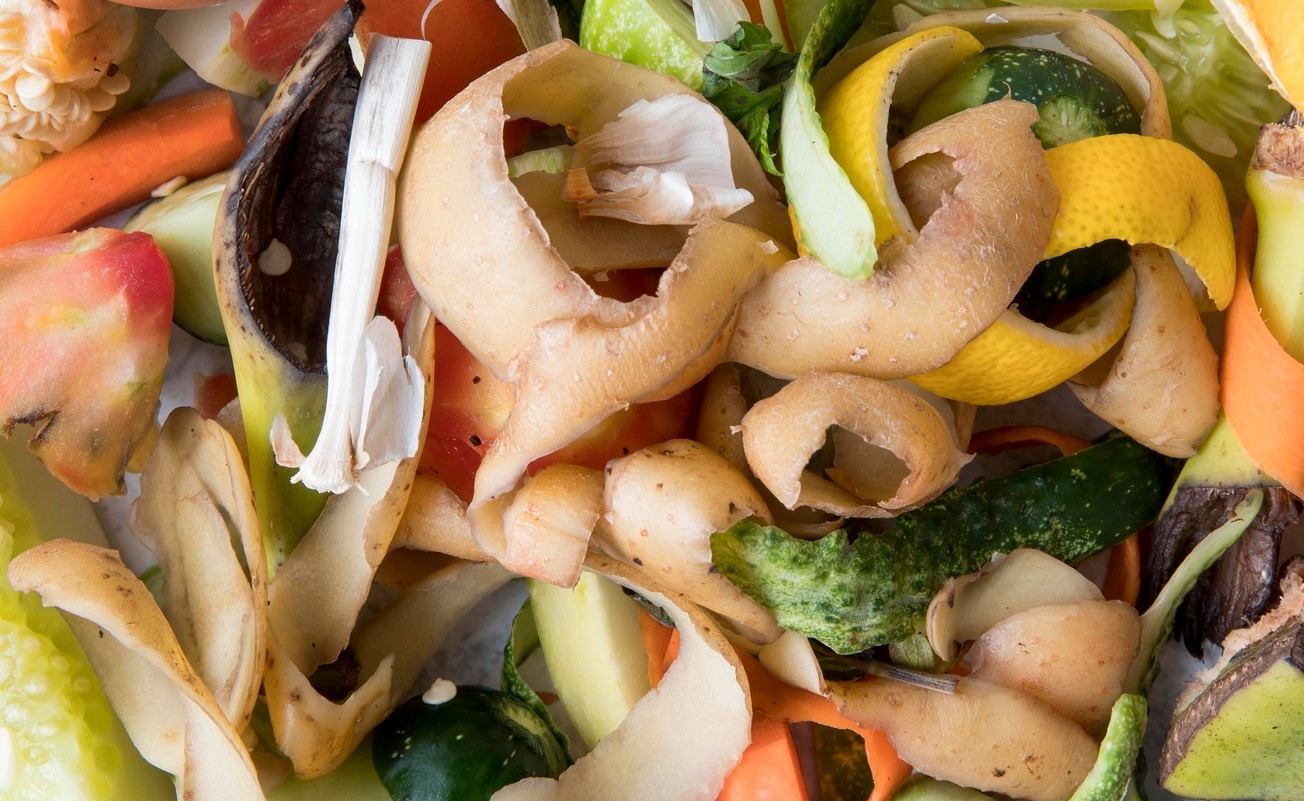
Figures : Organic waste is reused as animal feed and for compost production.
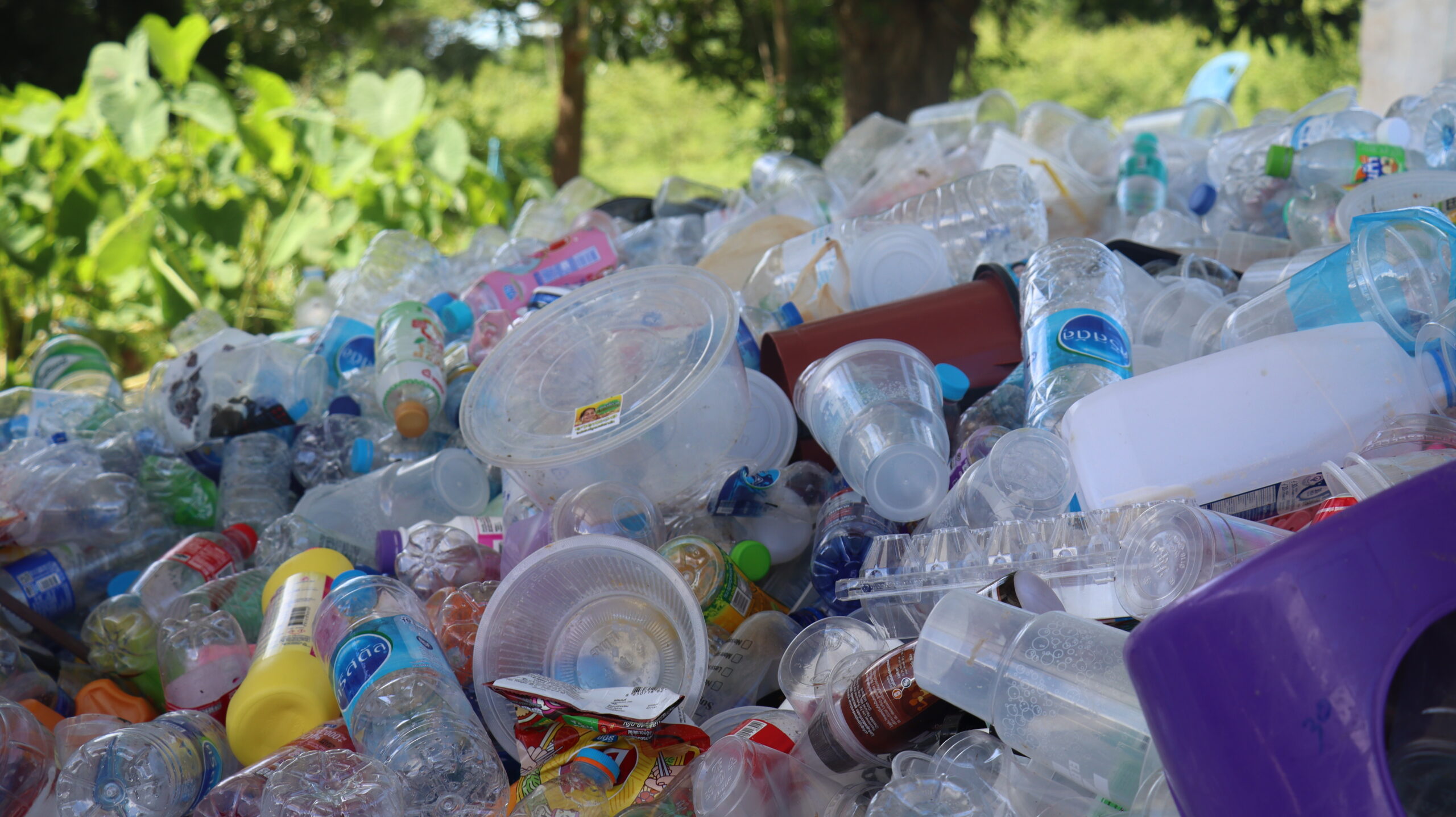
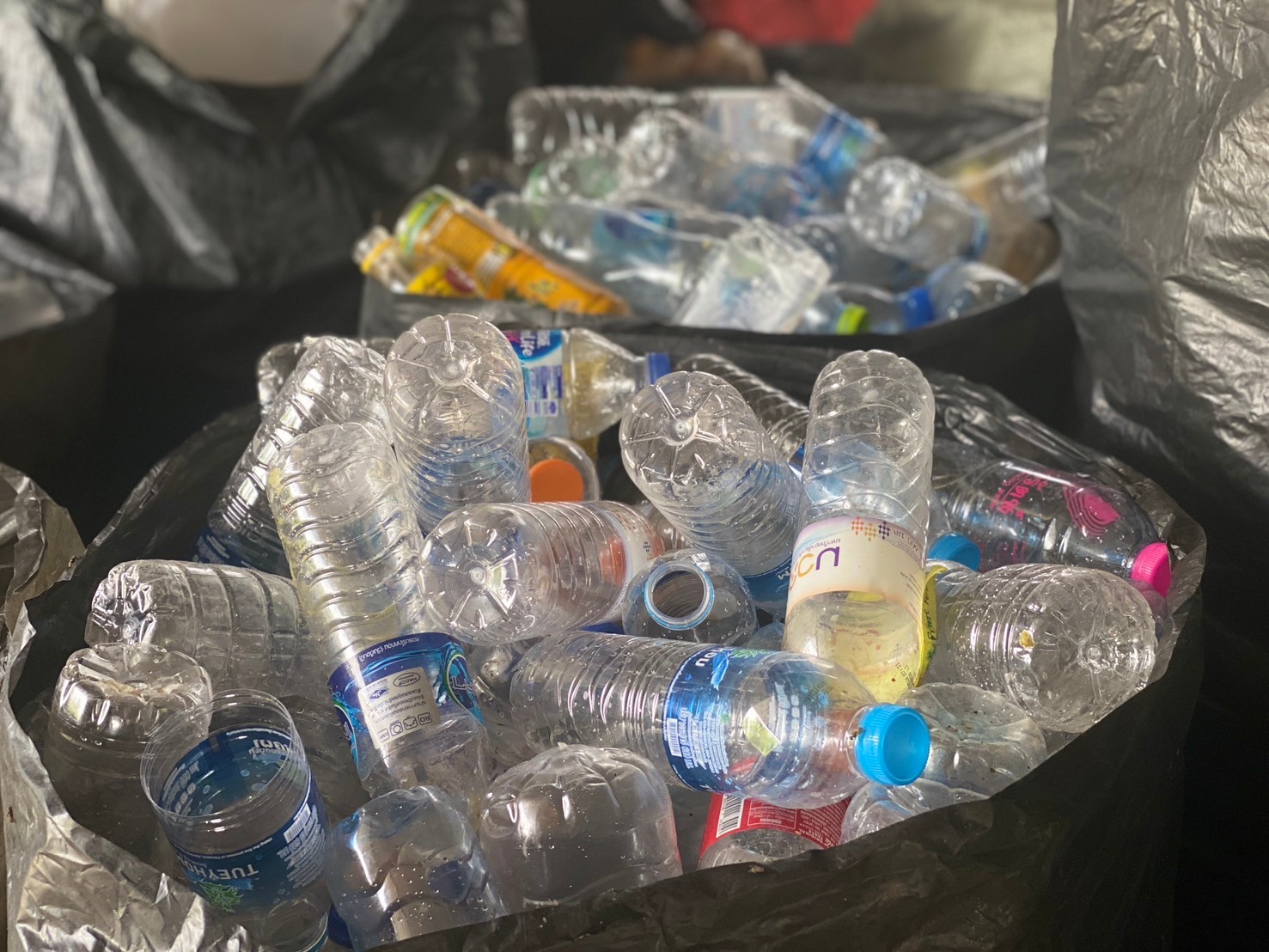
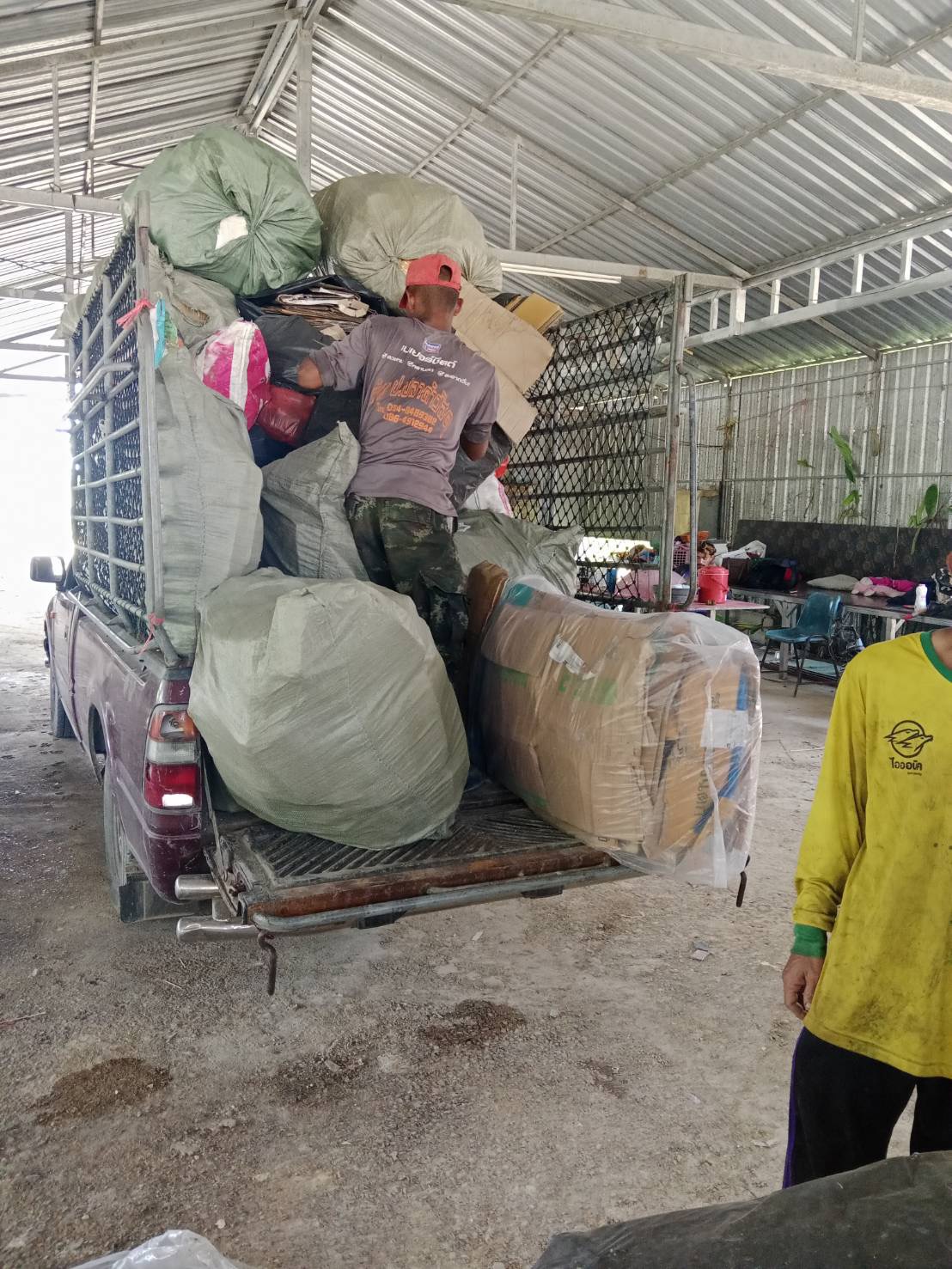
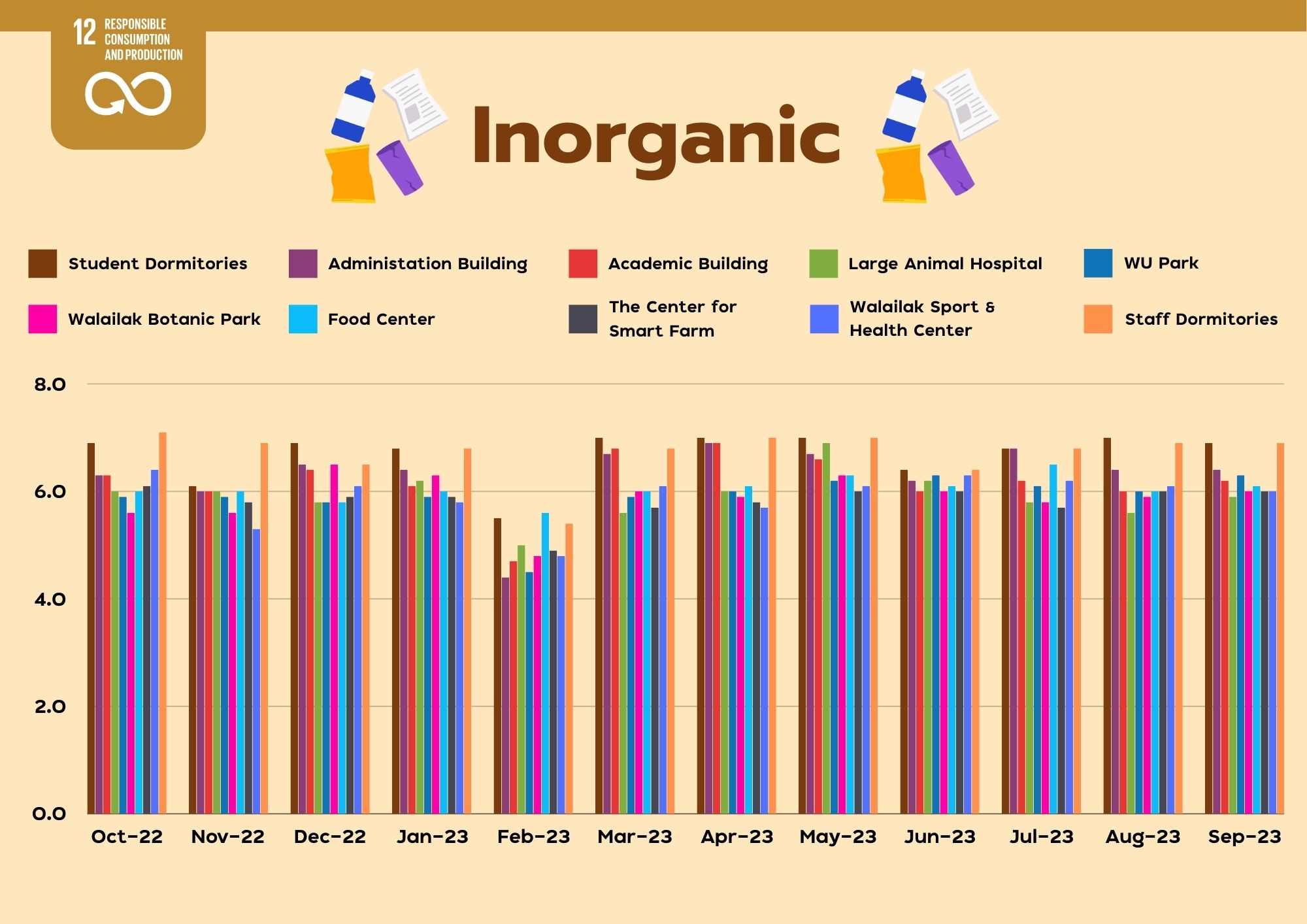
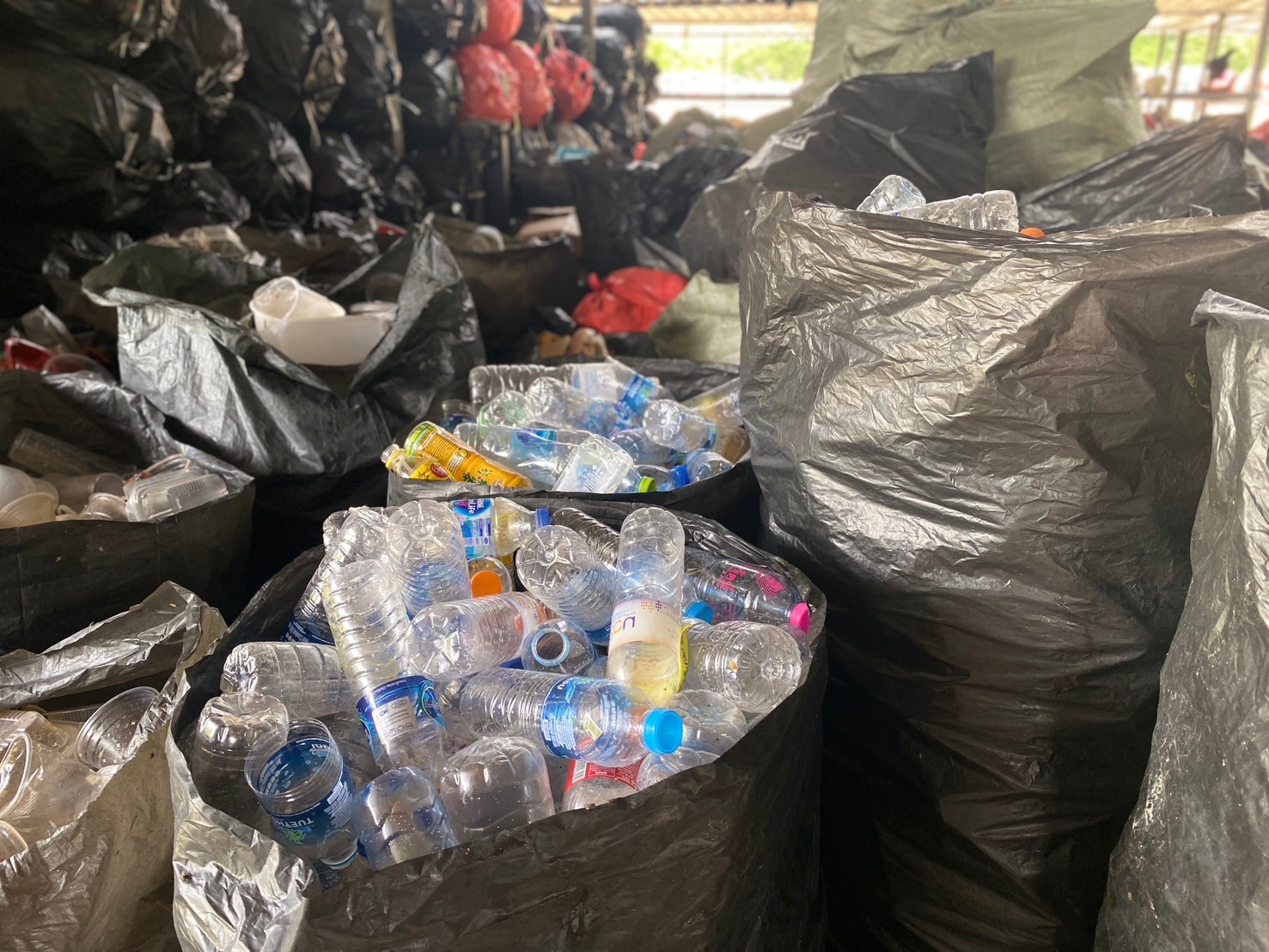
Figures : Recyclable waste, such as plastic bottles or paper, is either reused or sent to the waste bank.
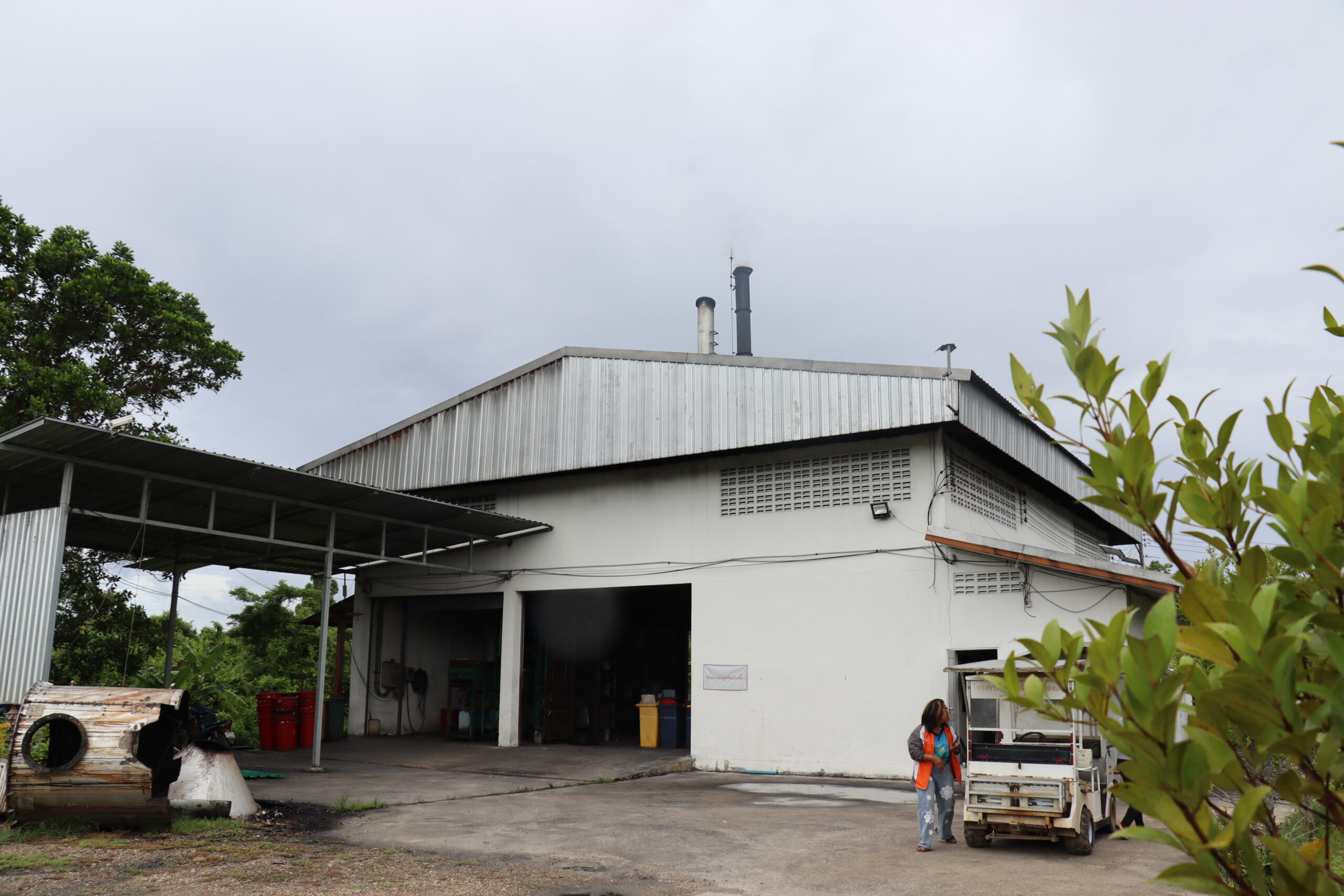
Figures : Inorganic waste is recycled into Refuse-Derived Fuel (RDF).
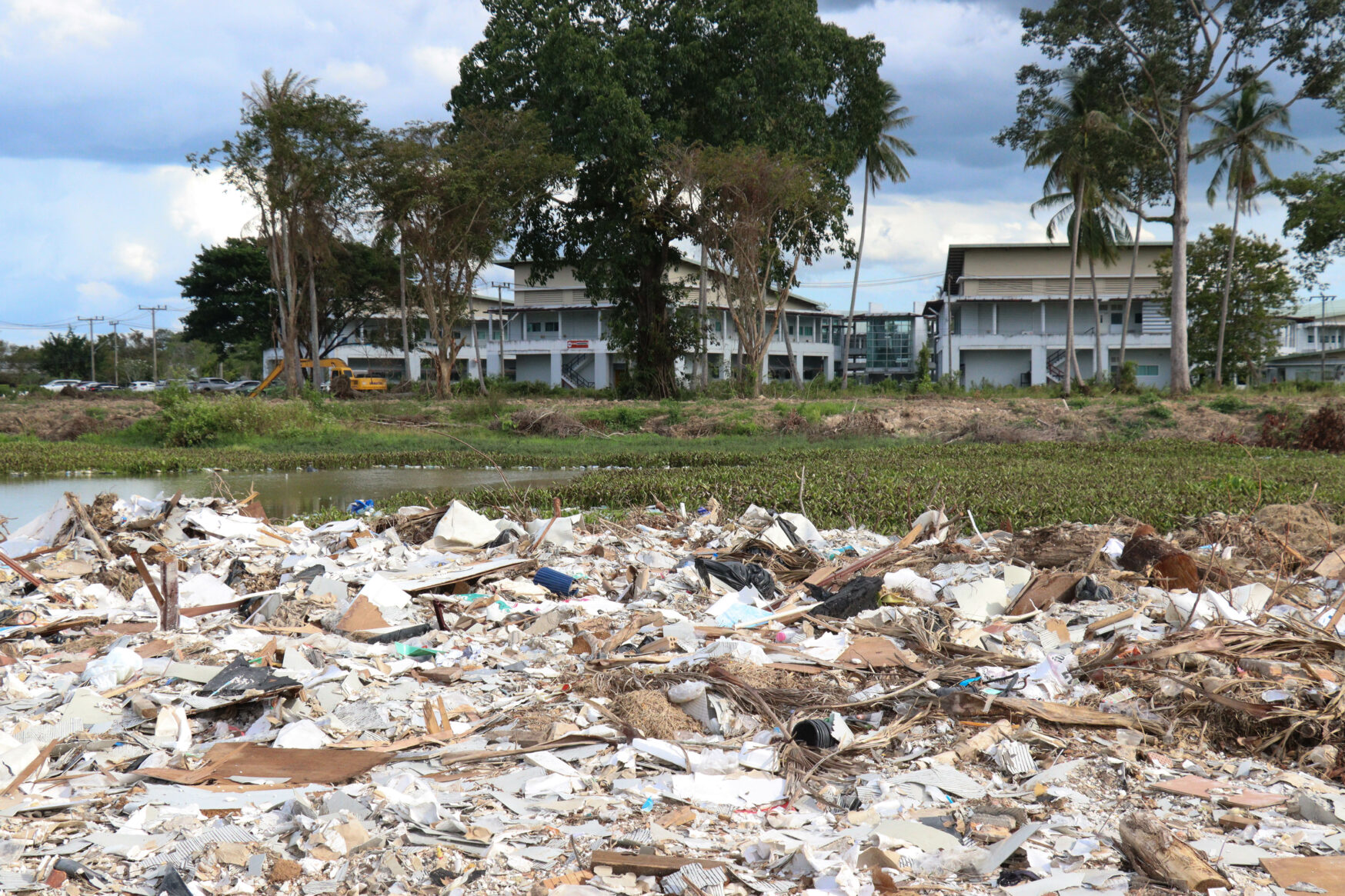
2. Non-Hazardous Waste: Waste that cannot be repurposed is disposed of through sanitary landfill methods.
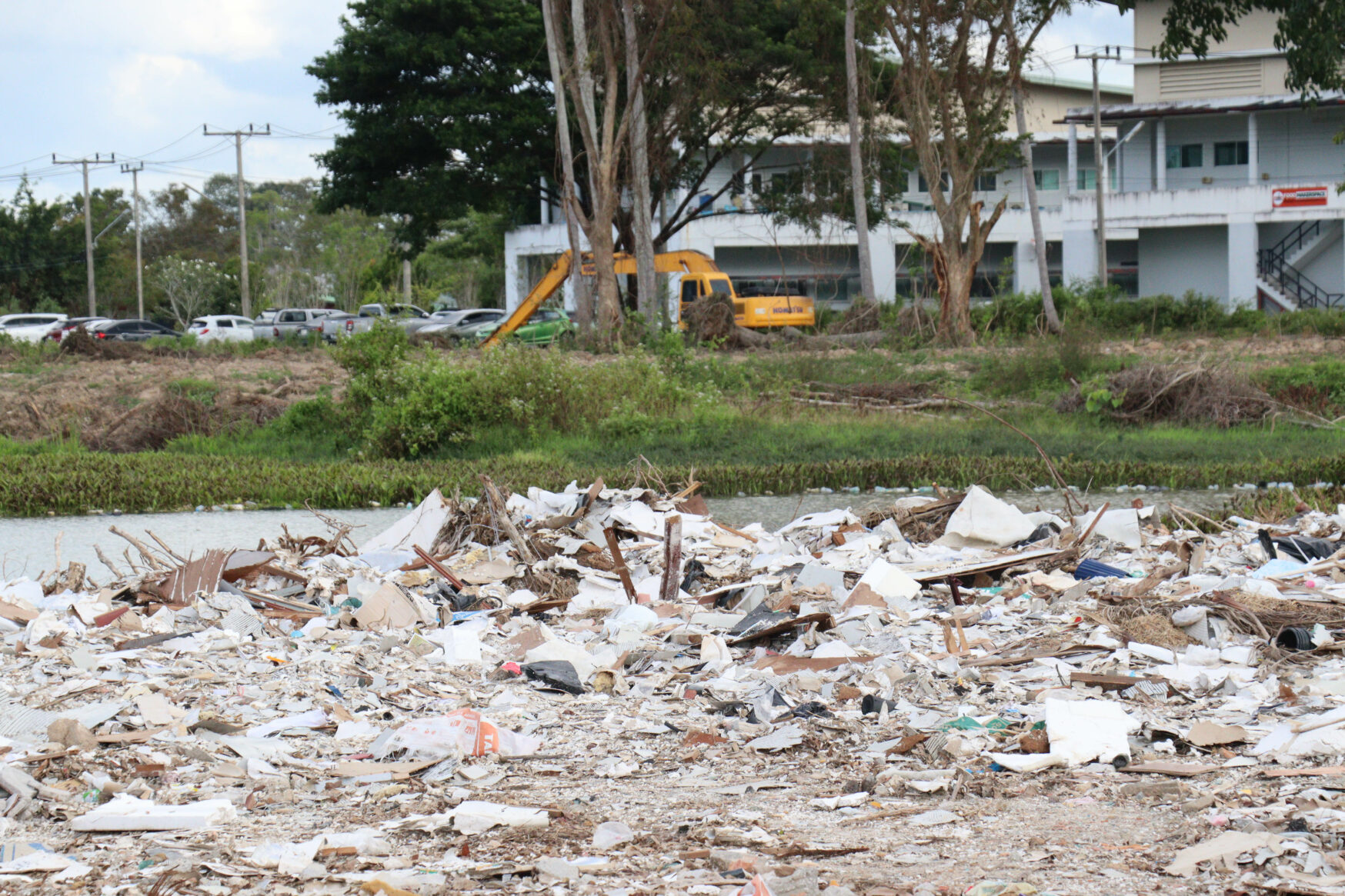
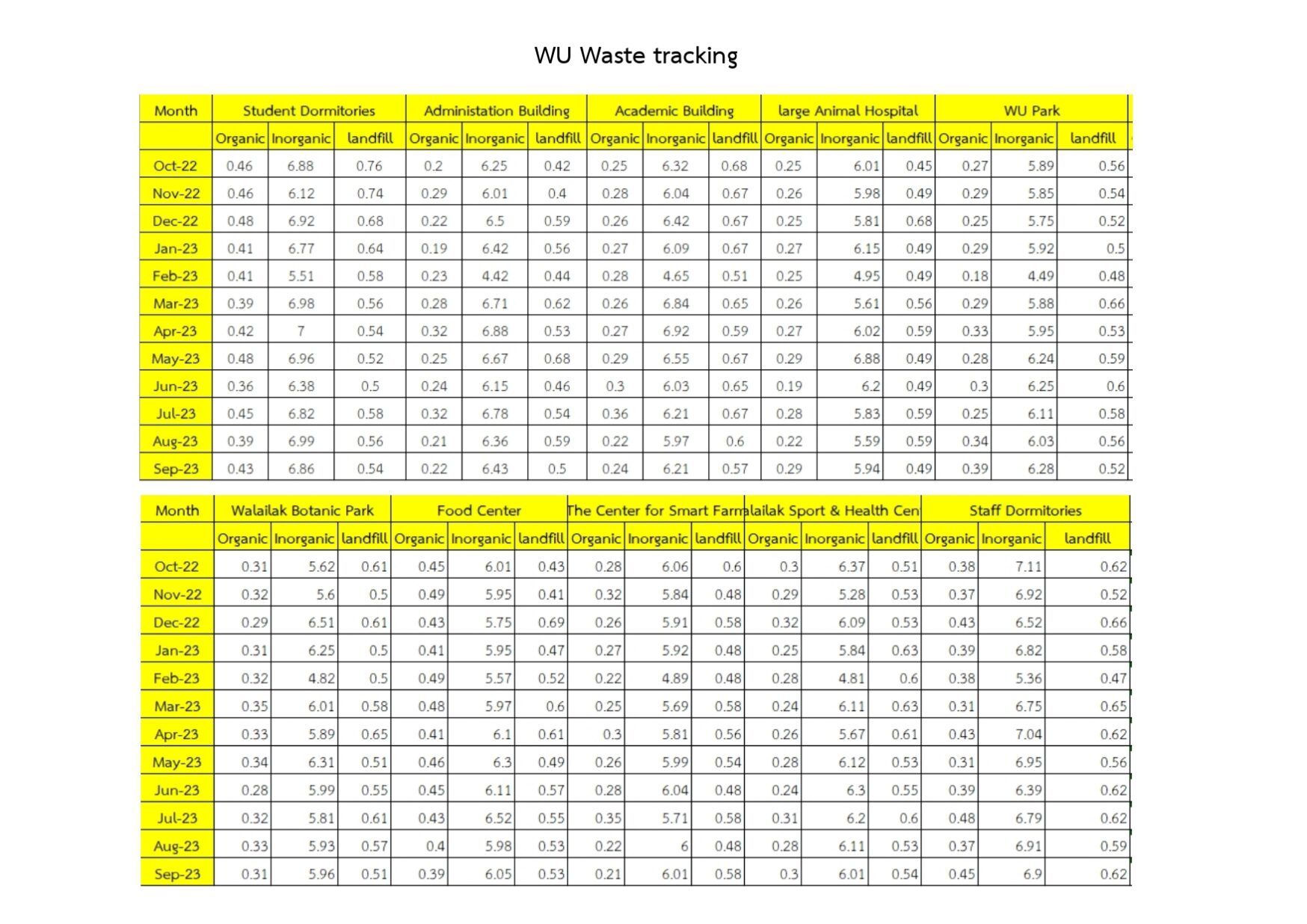
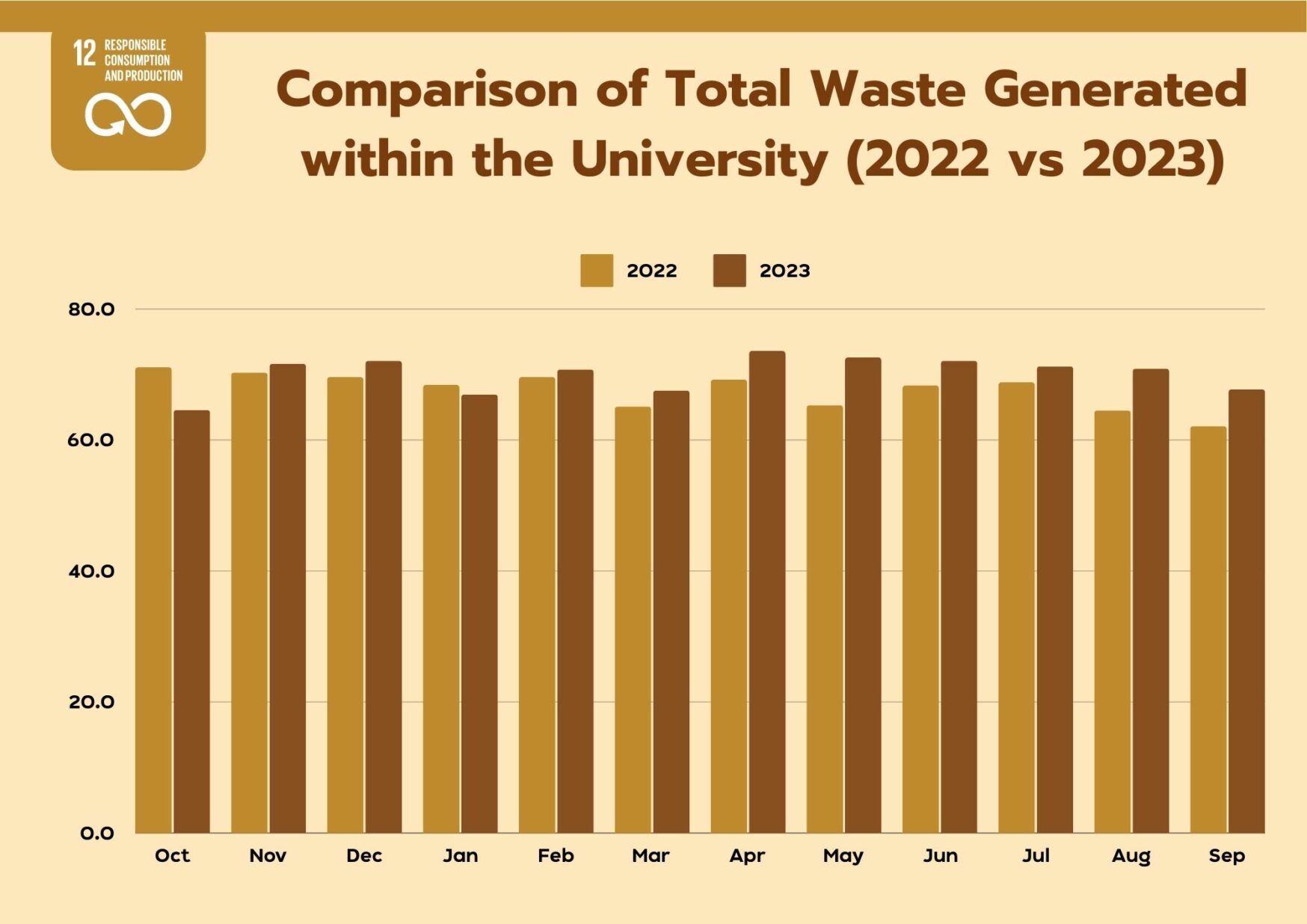
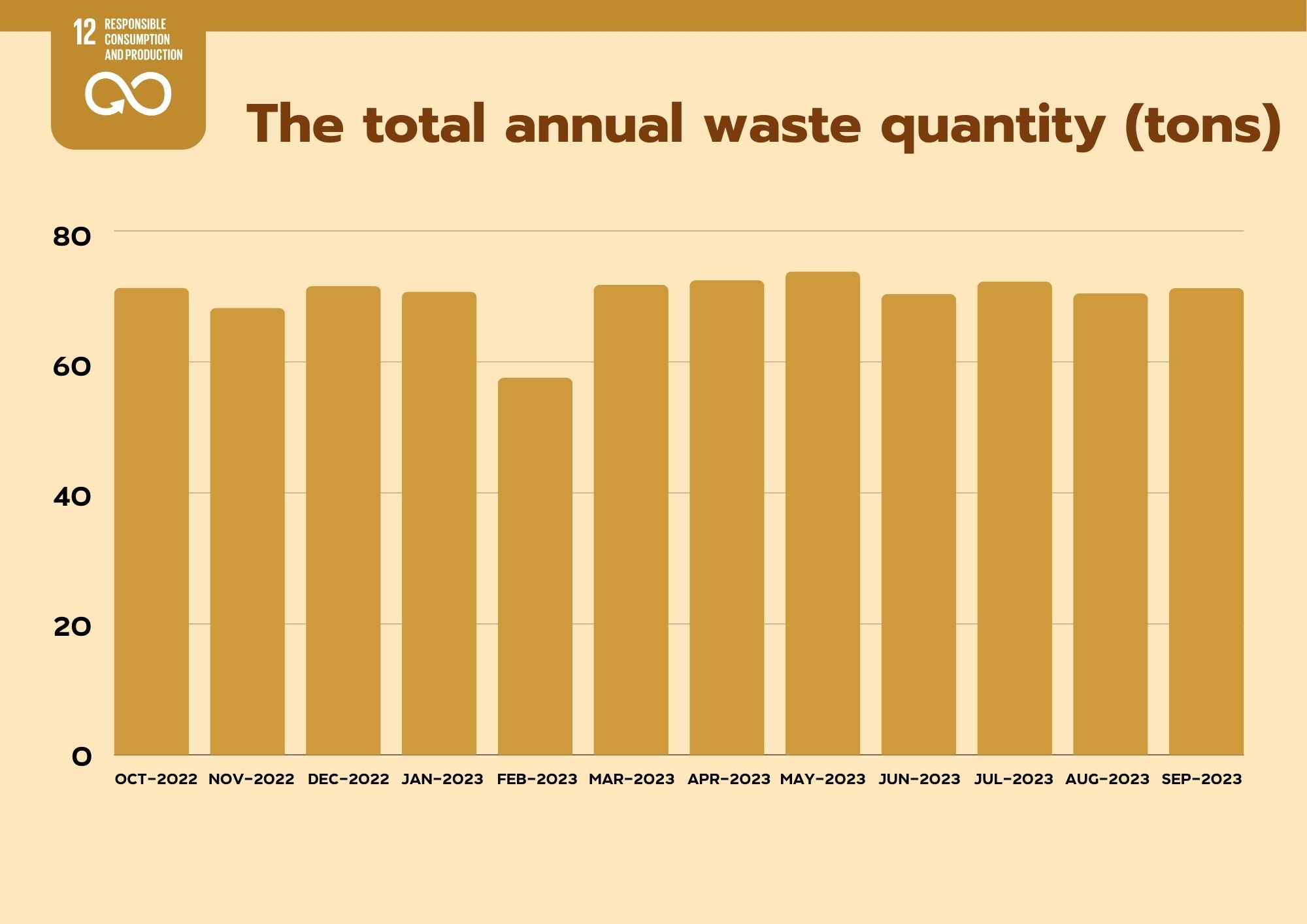
Figures: The Amount of Waste Generated Each Month at Walailak University in 2023
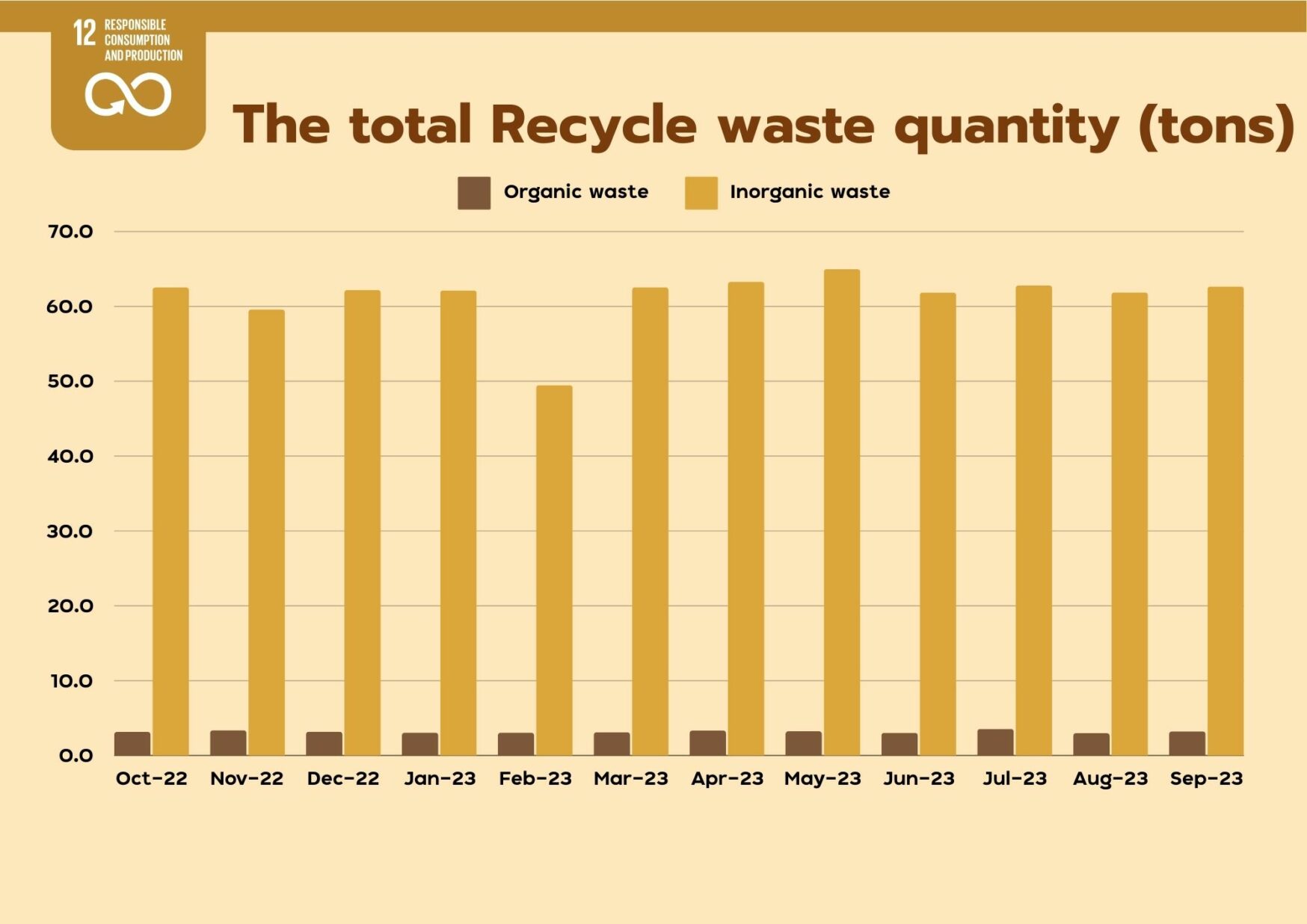
1. Recyclable or Reusable Waste: This type of waste amounted to 774.12 tons annually, representing 91.97% of the total waste. It is subdivided into non-biodegradable waste, such as glass, aluminum cans, dust, and metals, which decompose slowly but can be recycled or processed into RDF. Organic waste, such as vegetable scraps, fruit peels, food leftovers, leaves, and meat scraps, is quickly biodegradable and can be composted or used as animal feed.
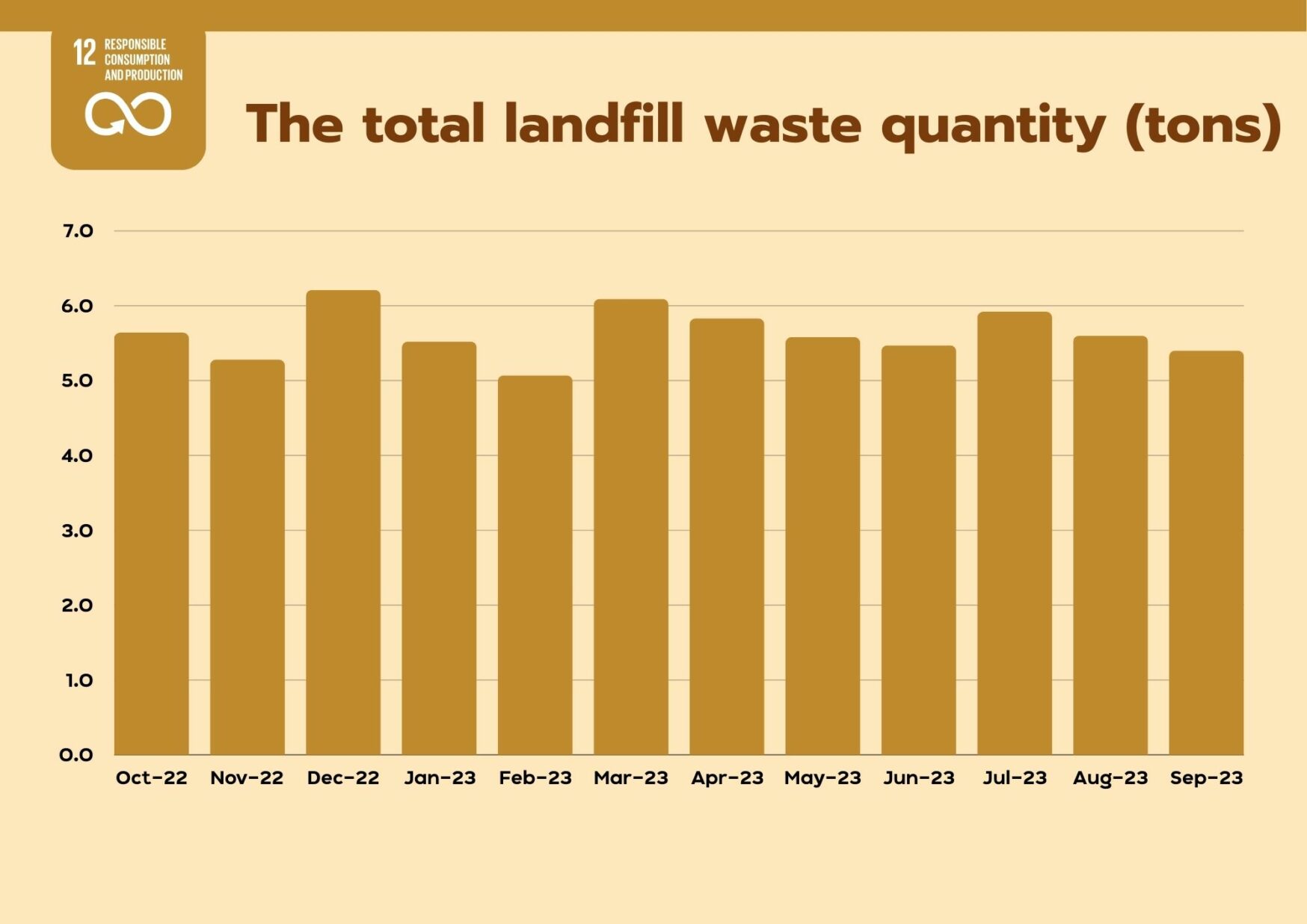
2. Landfill Waste: Non-recyclable waste, such as metal scraps, tiles, and stones, is disposed of via sanitary landfill methods.
In 2023, 67.61 tons of waste (0.19 tons per day) were sent to landfills, accounting for 8.03% of the total waste.



Goal 12: Responsible Consumption and Production