Walailak University’s Food Waste Tracking across the Campus
Measuring and tracking the amount of food waste generated from food served within the university for the whole campus is a mission of Walailak University to promote sustainable resource use and reduce environmental impact. By monitoring waste levels, the university aims to identify opportunities to minimize waste generation, enhance food management practices, and increase awareness among students, staff, and vendors. These efforts support the university’s commitment to sustainability and contribute to broader goals of reducing food waste within the community.
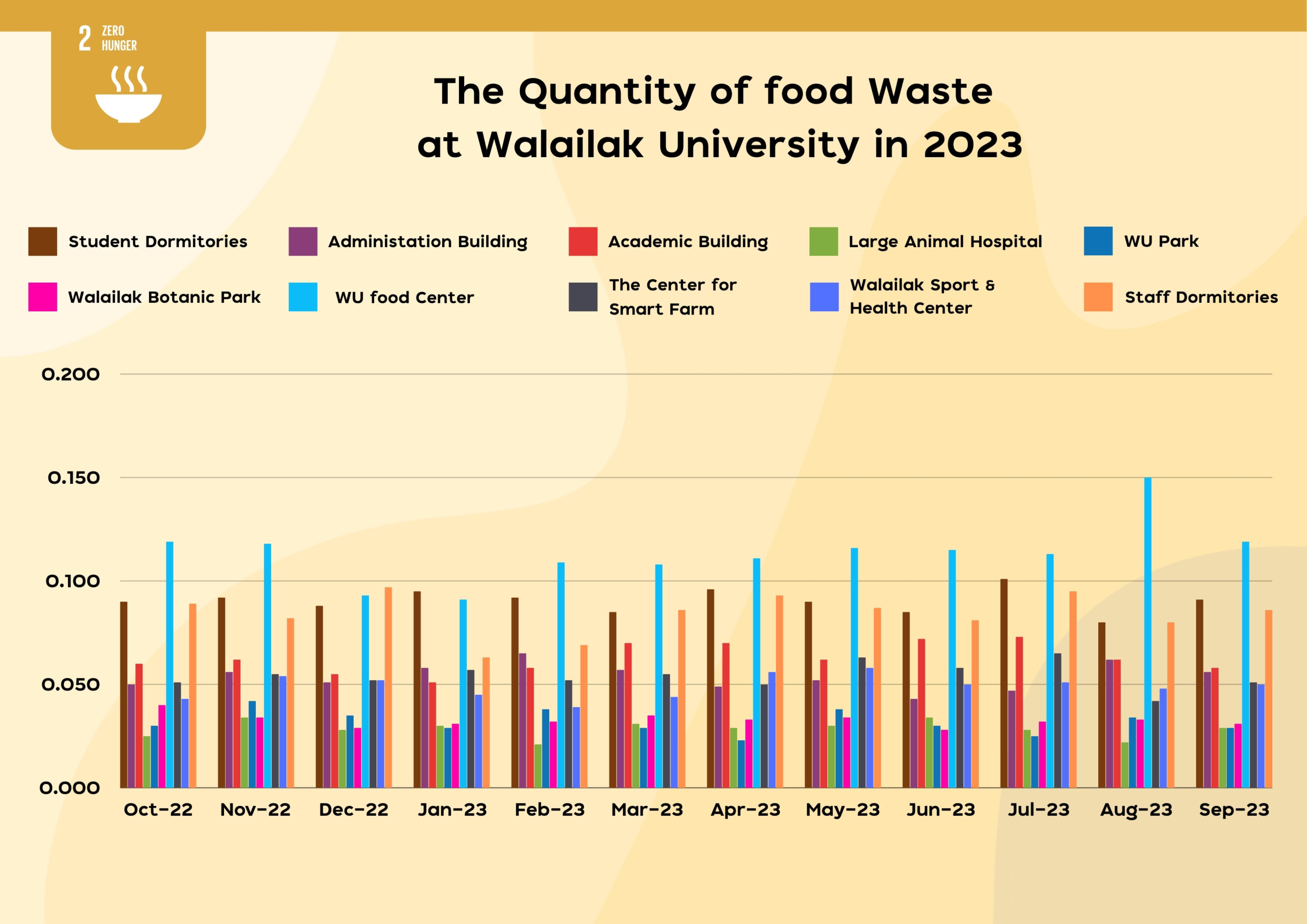
Tracking and Measuring Food Waste across the Campus in 2023
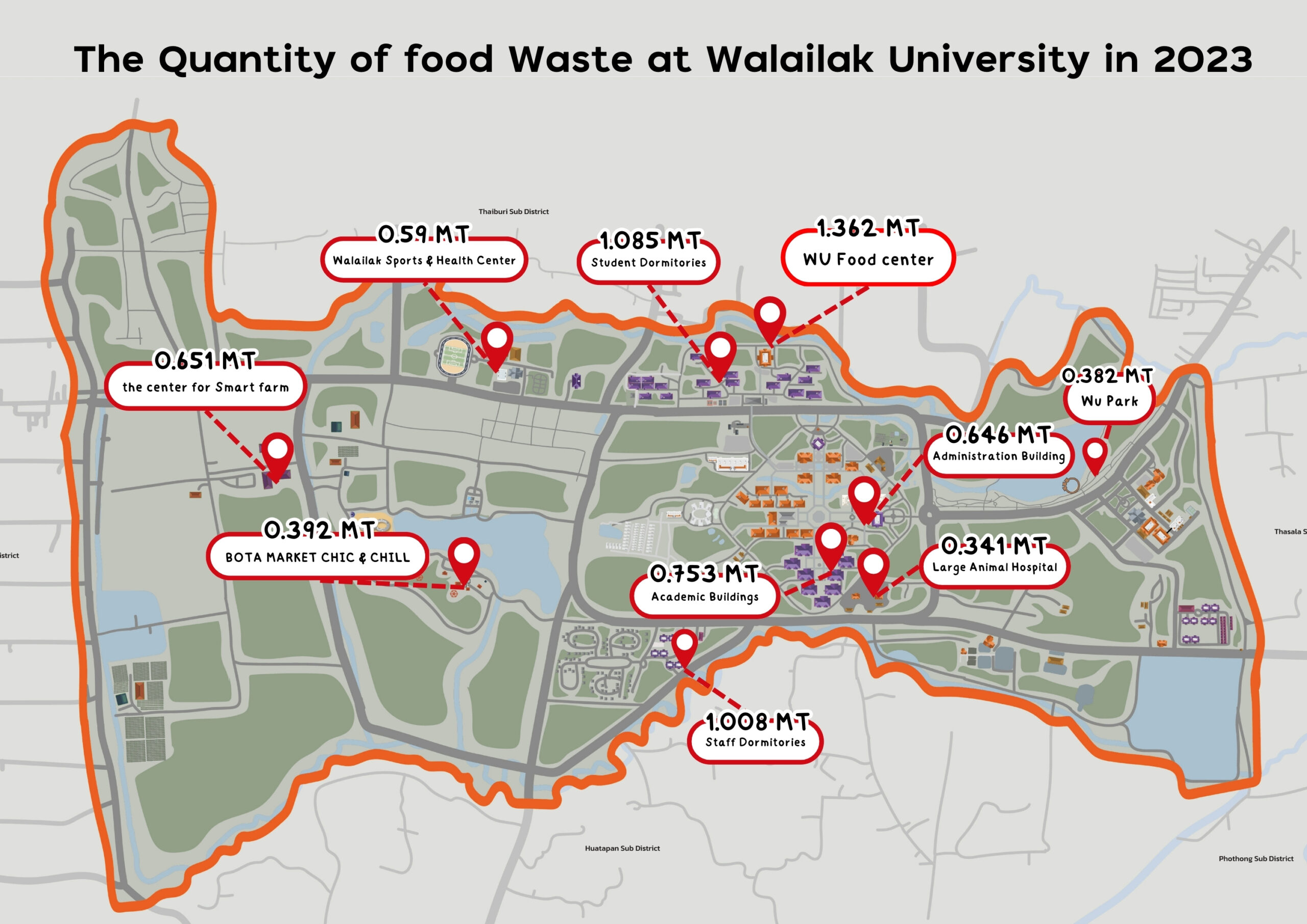
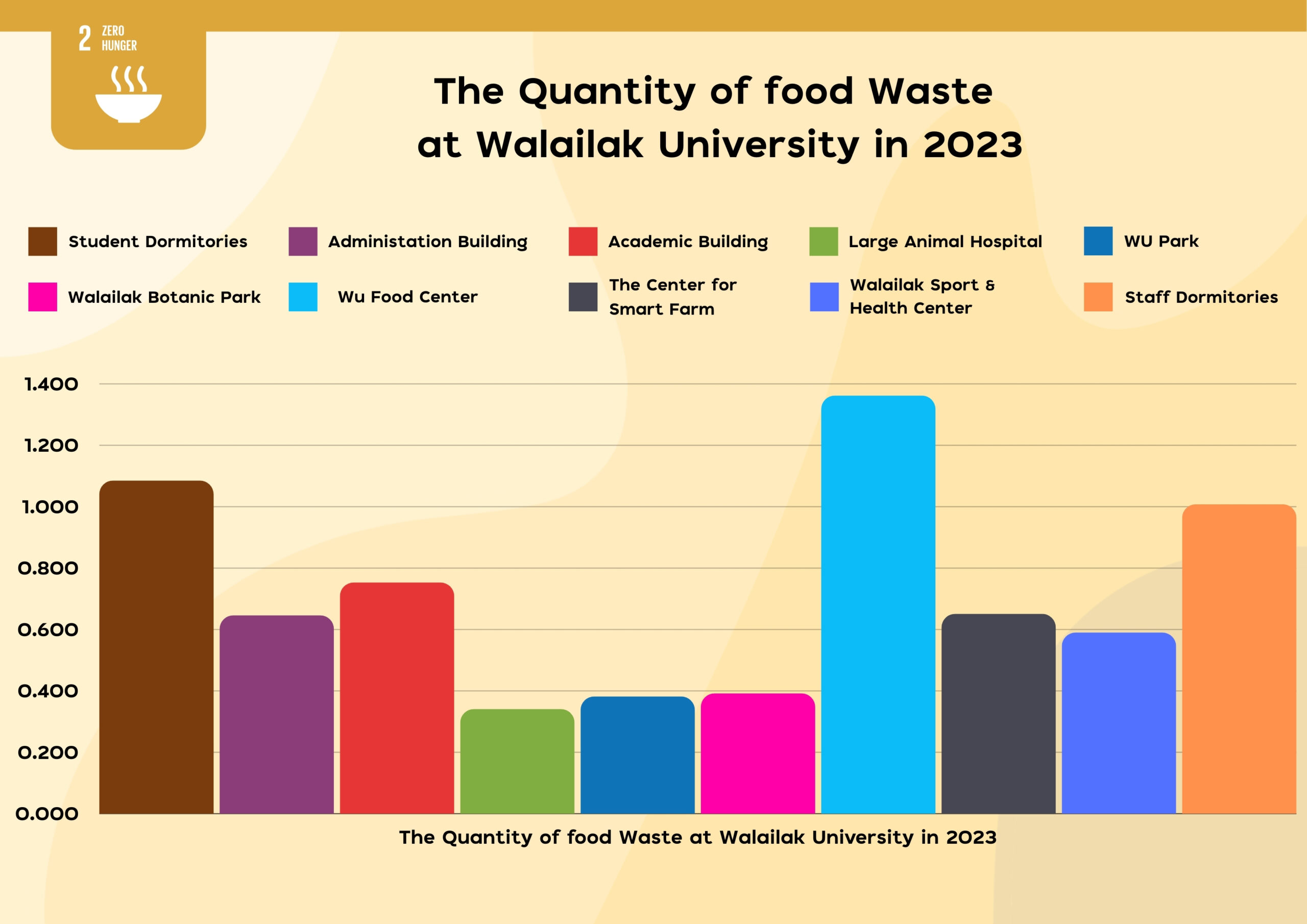
In 2023, the quantity of food waste recorded and tracked at Walailak University by the Center for Smart Farming and Landscape Architecture amounted to 7.21 metric tons. This figure was collected from all food waste-generating locations across the campus. There are 10 food waste-generating locations at Walailak University, including:
- The Walailak Sport and Health Center
- The Center for Smart Farming and Landscape Architecture
- The WU Botanic Park
- The Student Dormitories
- The Academic Buildings
- The Staff Dormitories
- The Food Centers (Cho Pradu Food Center and Activity Building Food Center)
- The Administration Building
- The Large Animal Hospital
- Walailak University Park.
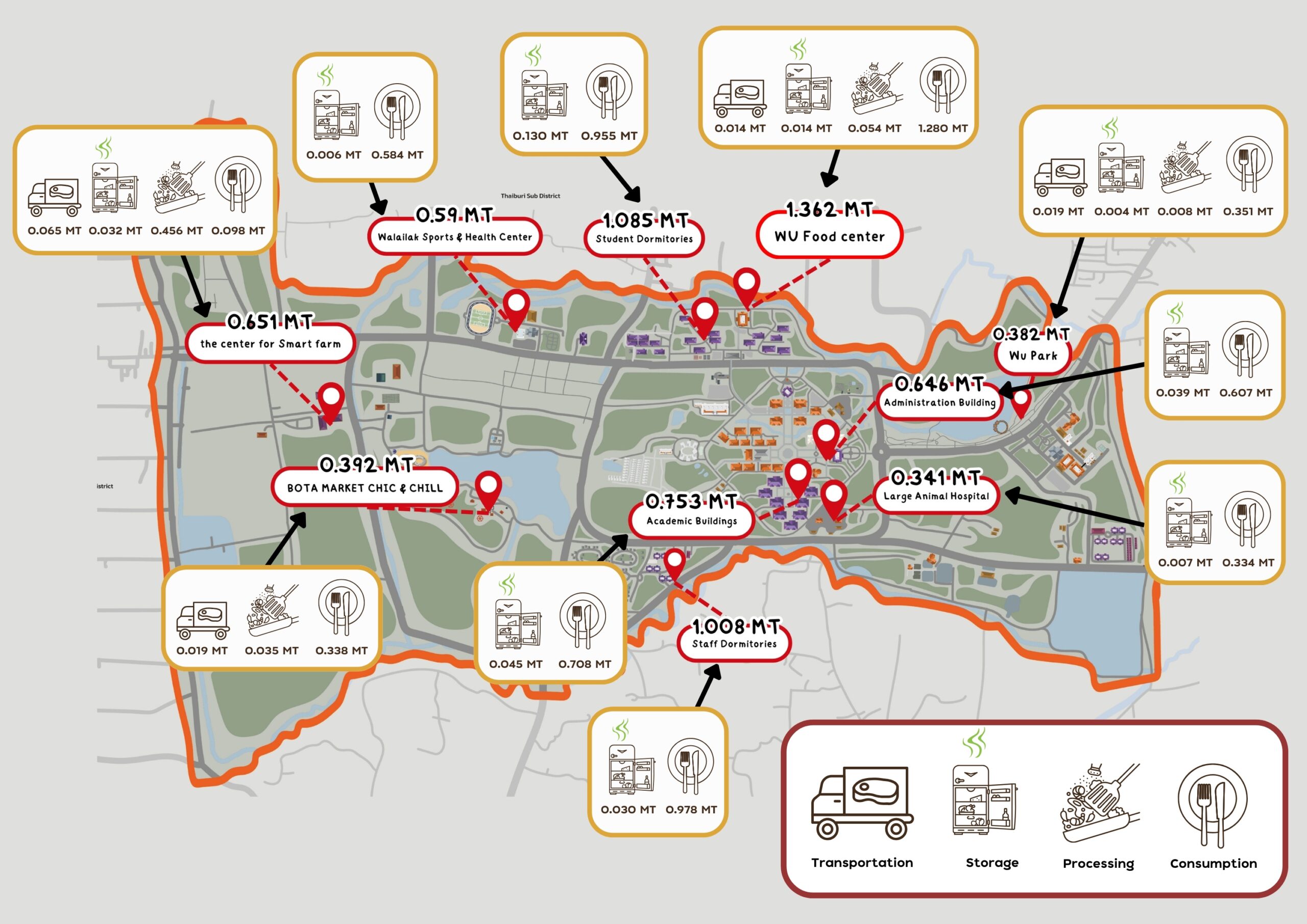
The food waste at Walailak University occurred at each level of the food production process depending on the locations, including consumption, handling, storage, production or processing, and distribution, including transportation. The food waste proportions caused by various factors in all locations across the campus in 2023 are detailed below:
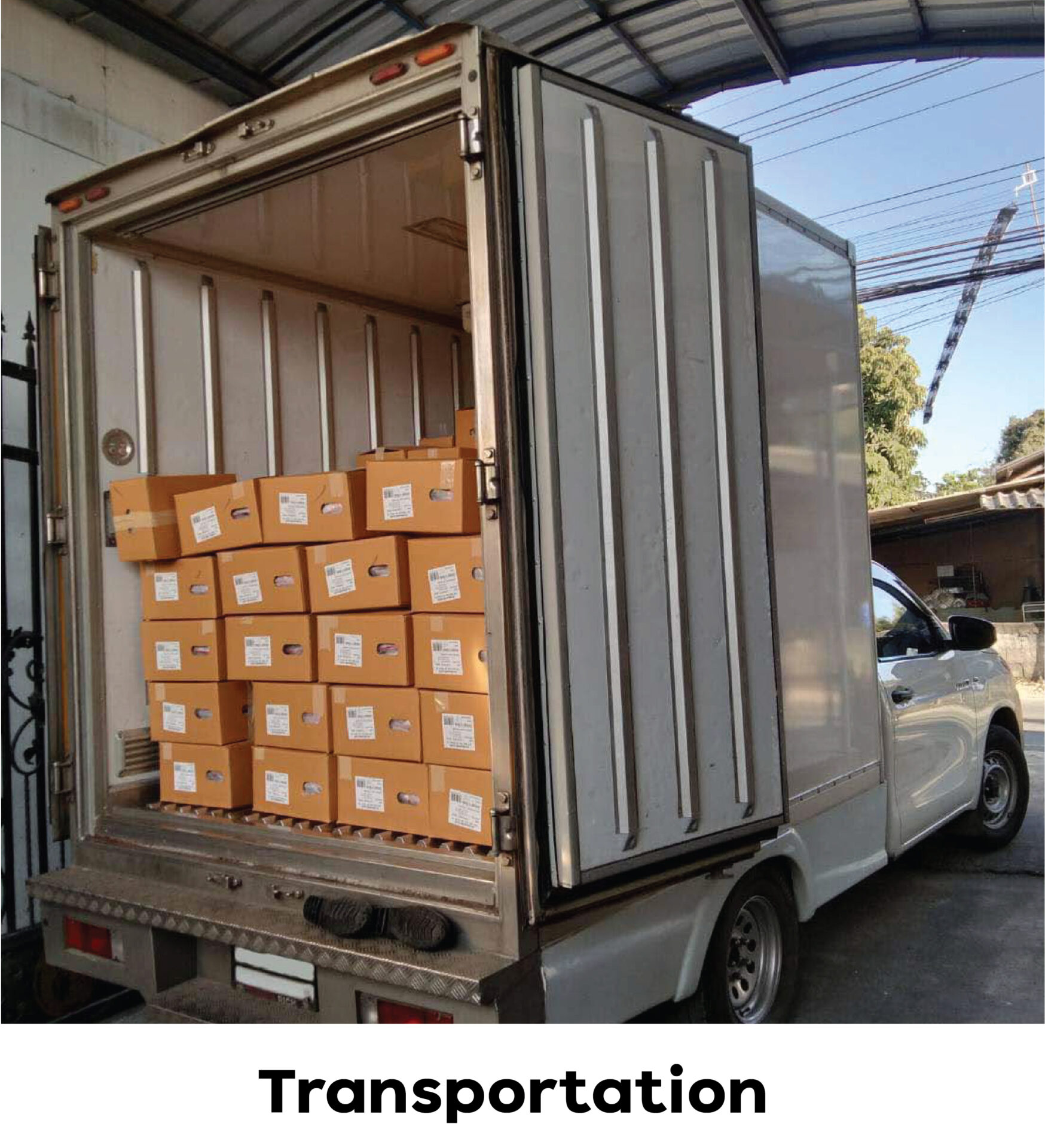
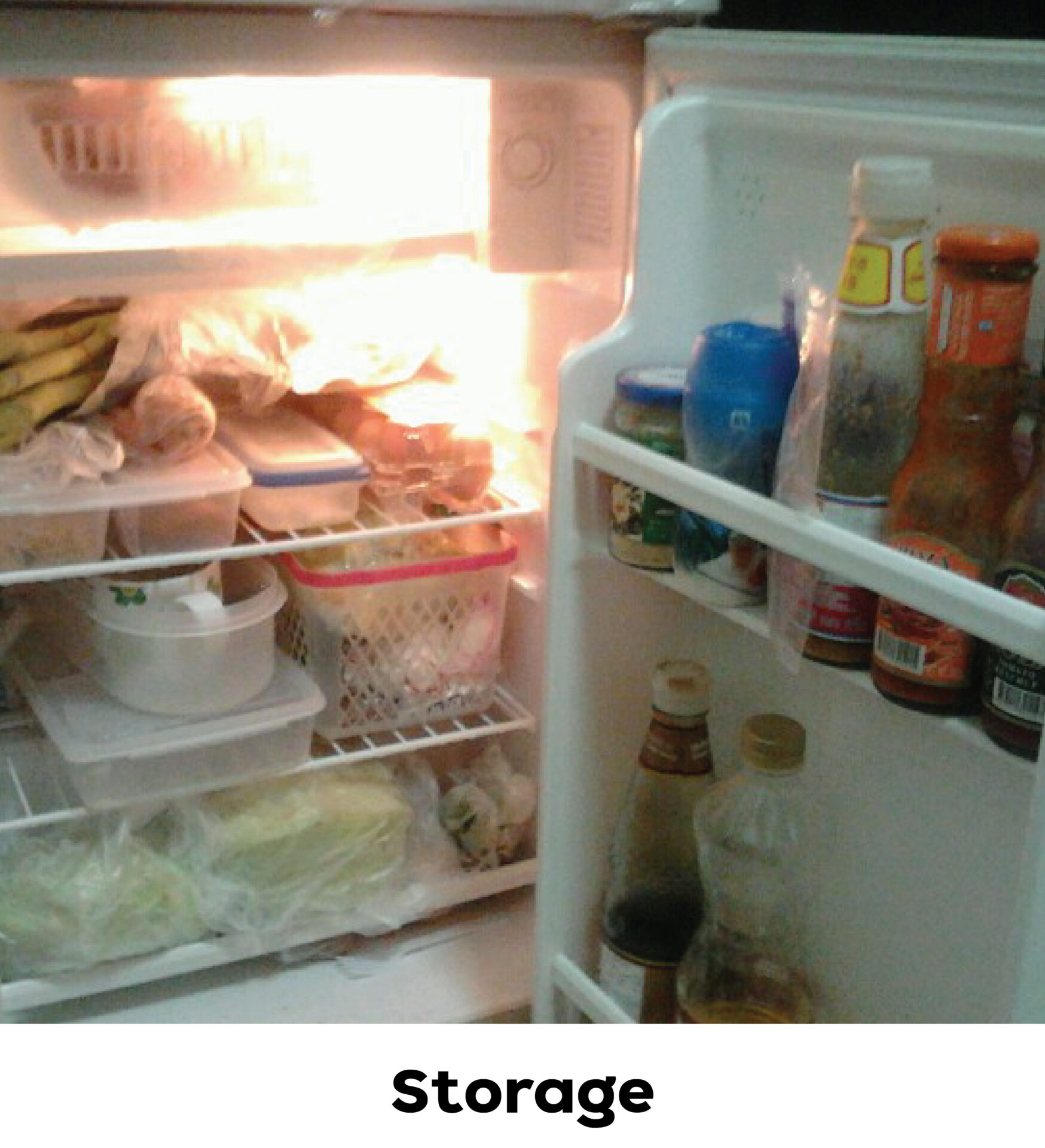
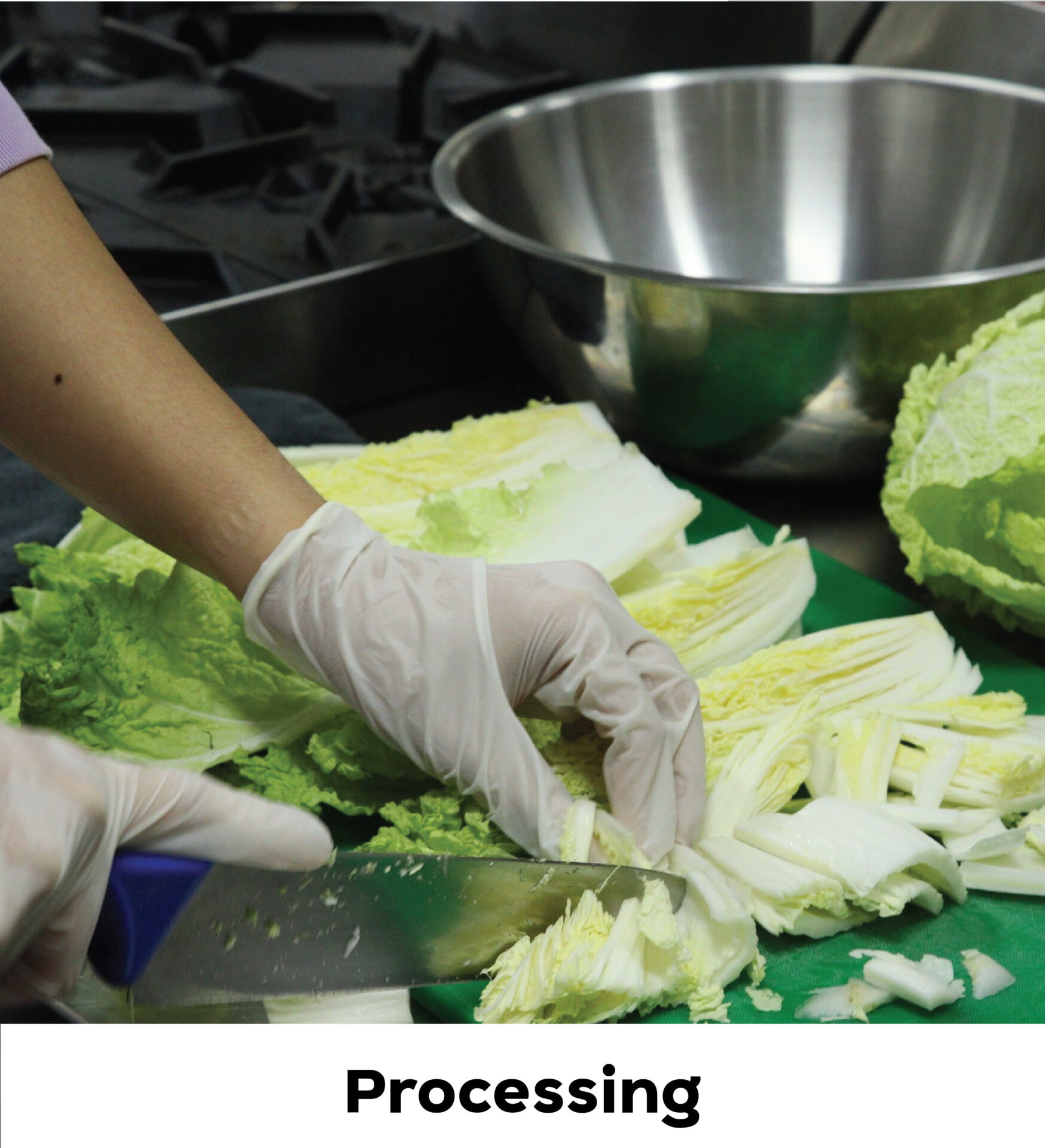
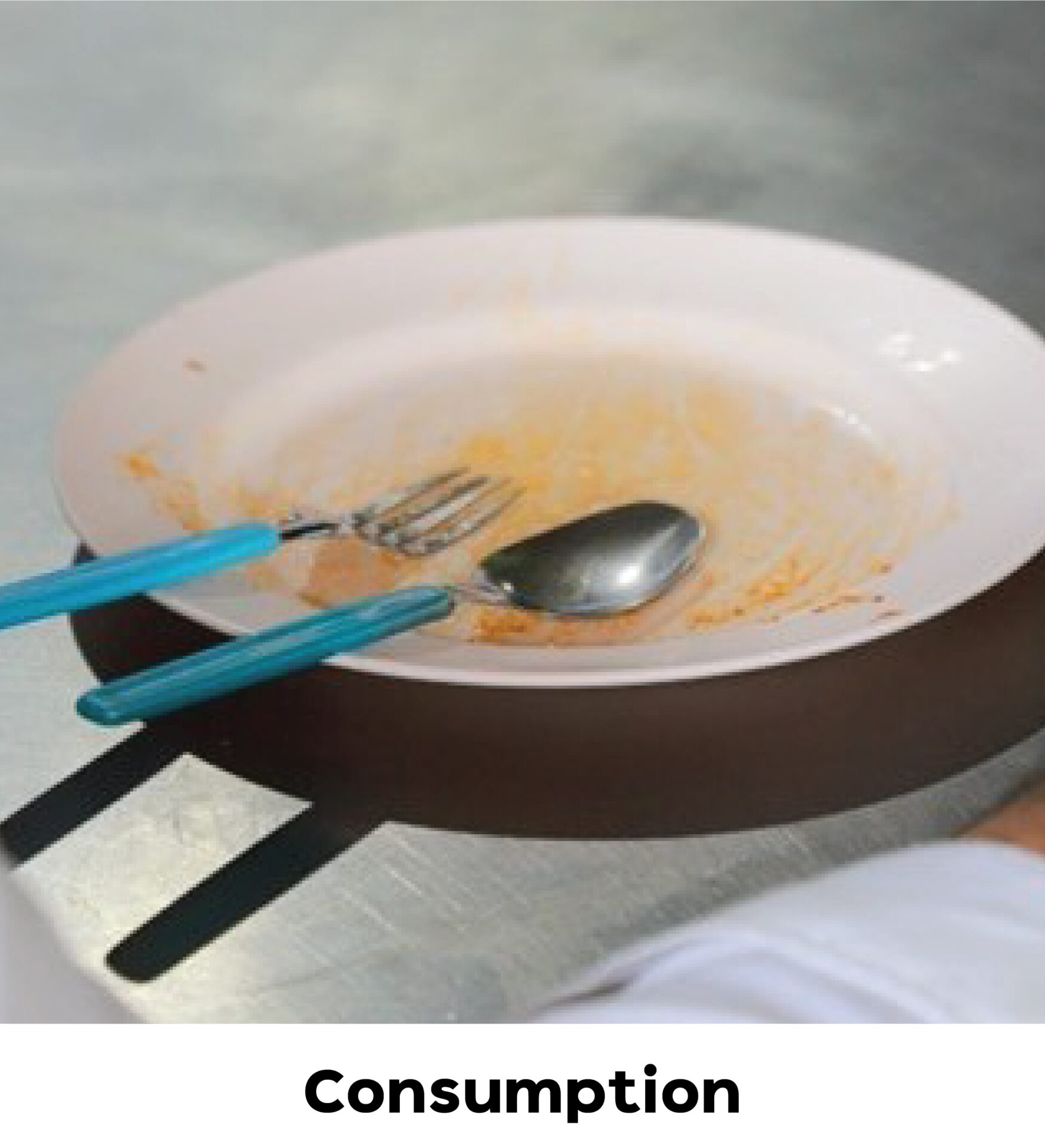
Figures : The Primary Contributors to Food Waste.
Student Dormitories
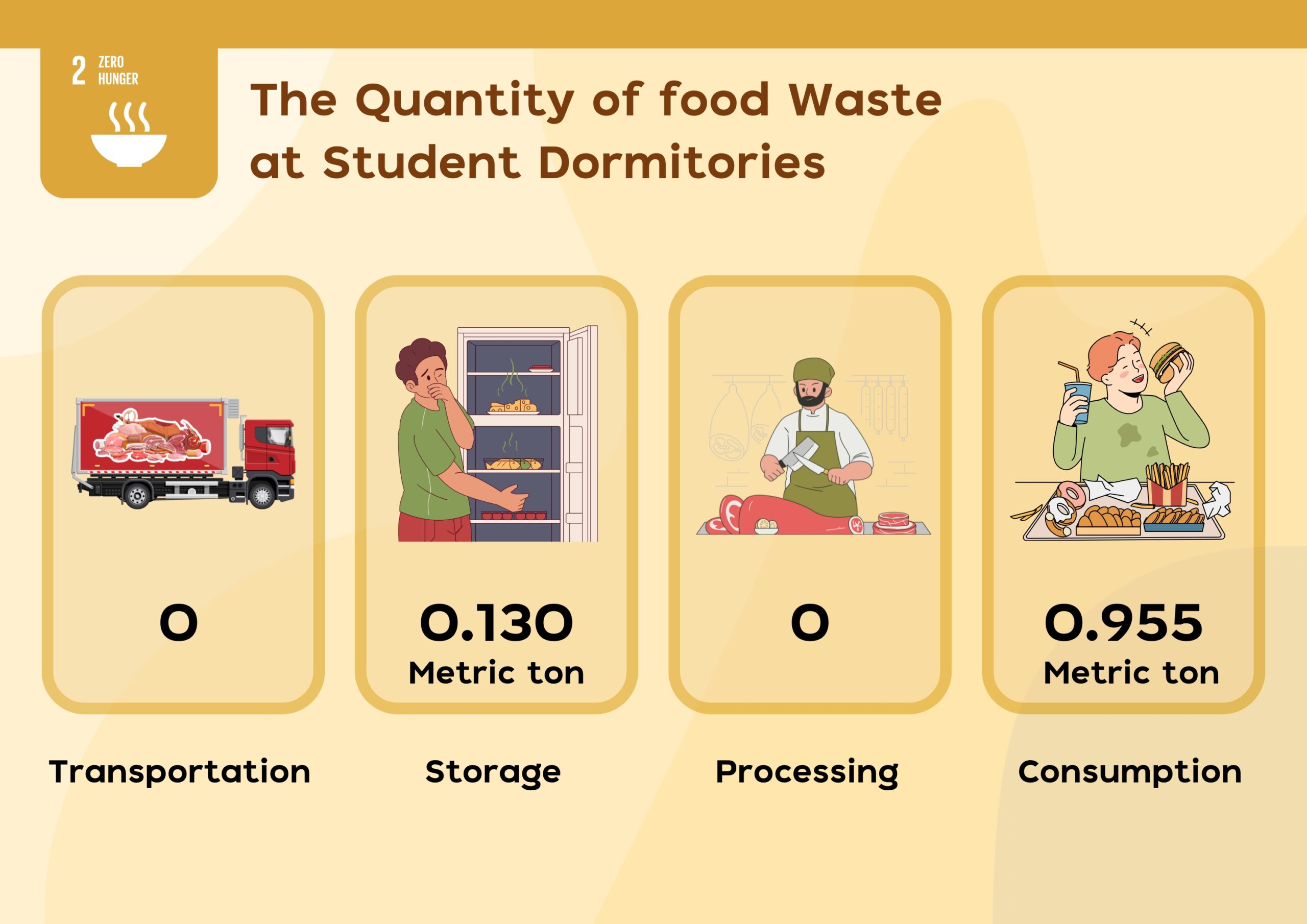
The total quantity of food waste at all student dormitories across the campus was 1.085 metric tons, of which 0.130 metric tons (12%) were due to storage, while 0.955 metric tons (88%) were from consumption. Some students purchased food from the food centers to consume at the dormitories, which contributed to the higher rate of food waste. Additionally, some students stored the food, leading to waste when the food expired.
Administration Buildings
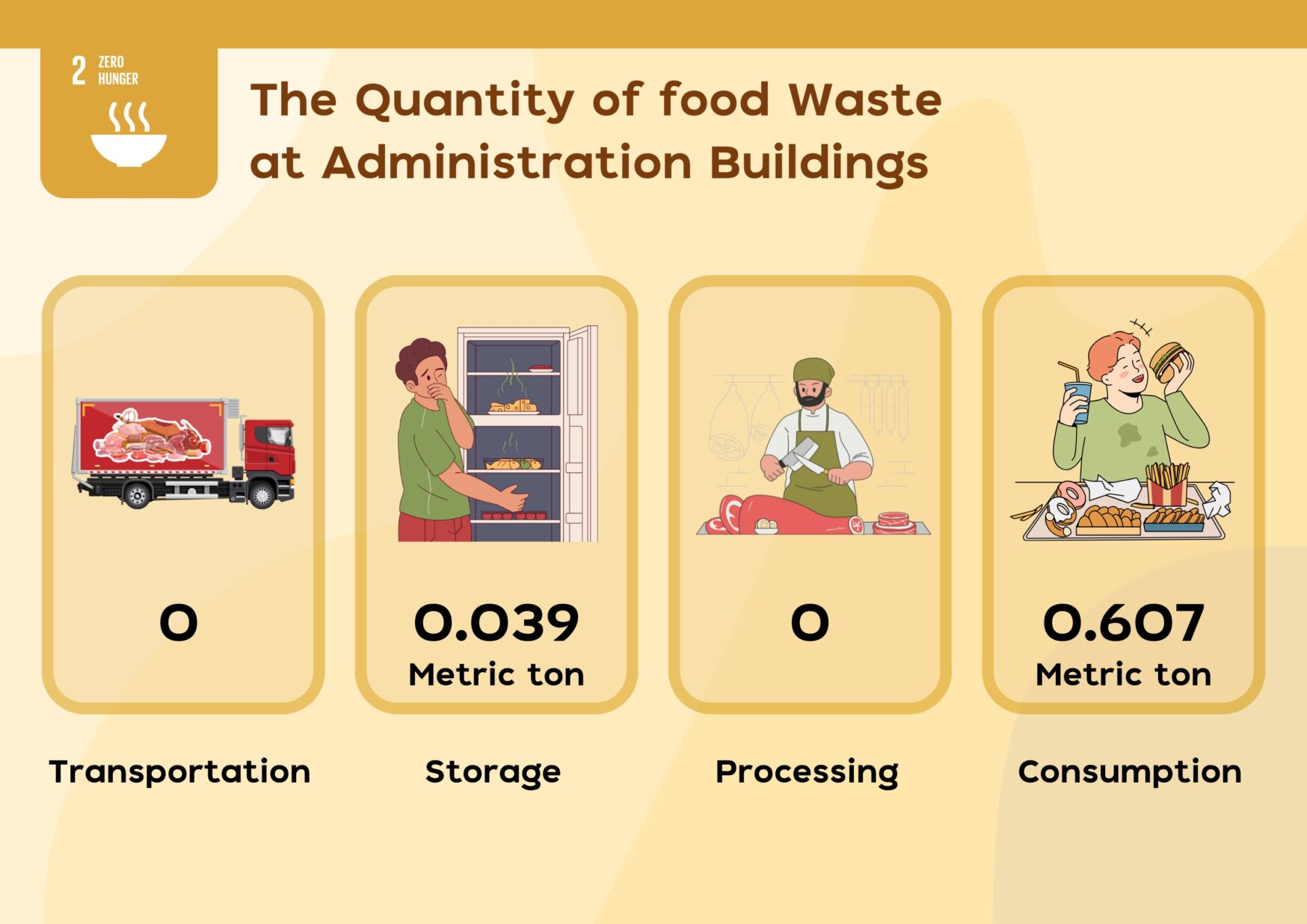
The total quantity of food waste at the Administration Buildings was 0.646 metric tons. Staff working there purchased food from campus outlets, generating 0.607 metric tons (94%) of the total food waste due to consumption. Refrigerators were available for staff to store their food at the buildings, which led to 0.039 metric tons (6%) of food waste from discarded stored items.
Academic Buildings
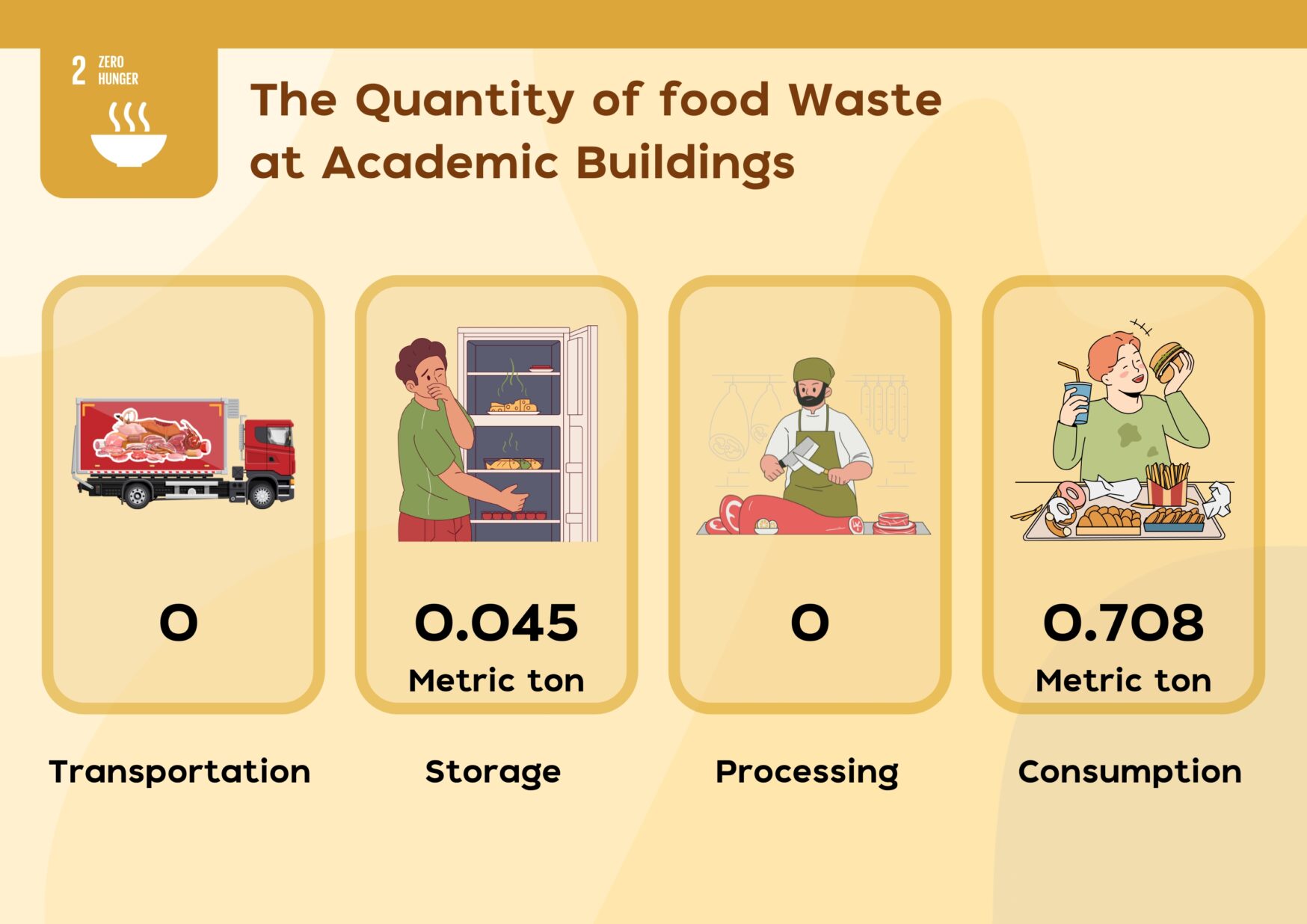
The total quantity of food waste at the Academic Buildings was 0.753 metric tons. Staff working there purchased food from various campus outlets, resulting in 0.708 metric tons (94%) of food waste from consumption. Additionally, 0.045 metric tons (6%) of food waste came from stored food, as refrigerators were also available for staff at the buildings.
Large Animal Hospital
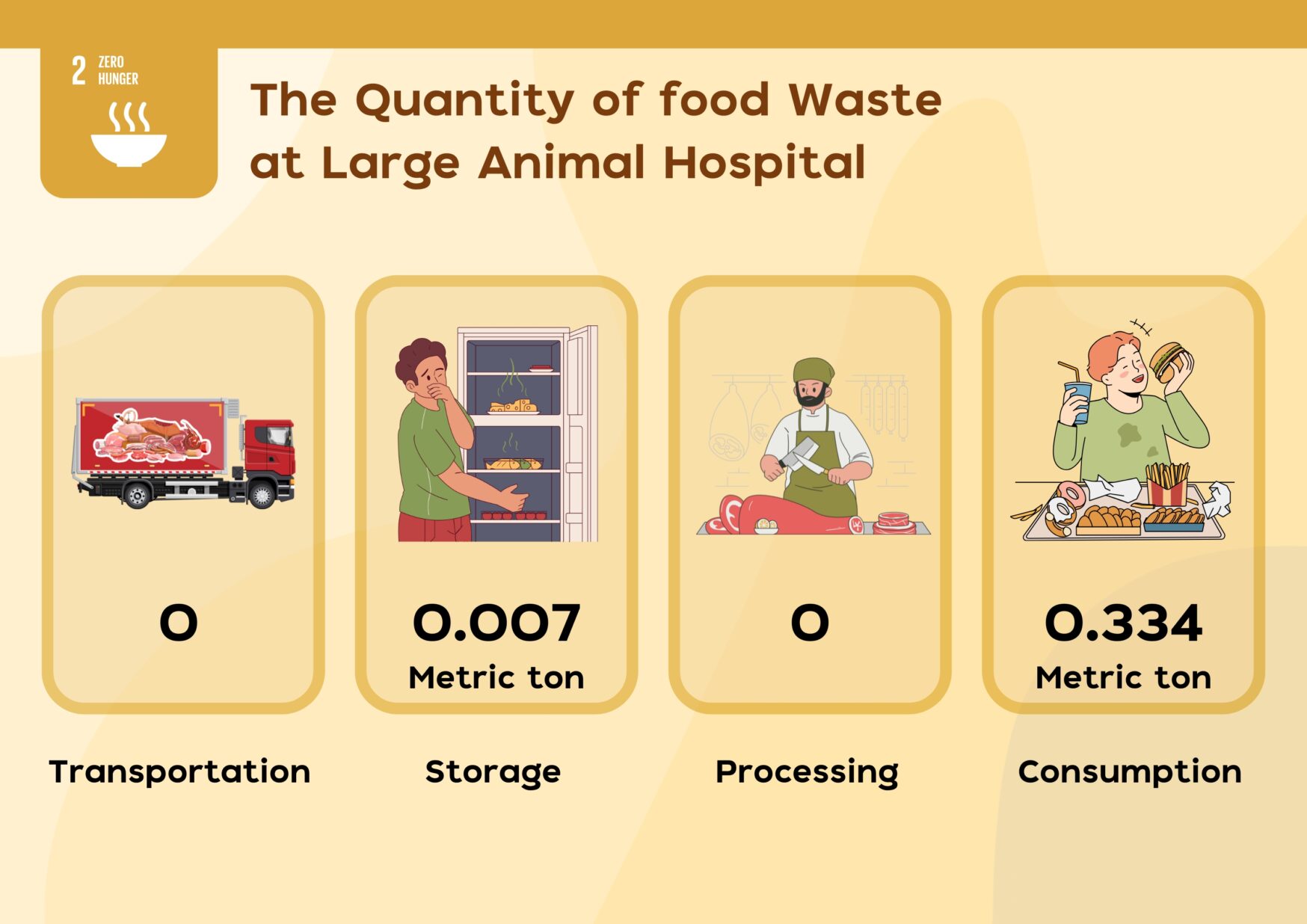
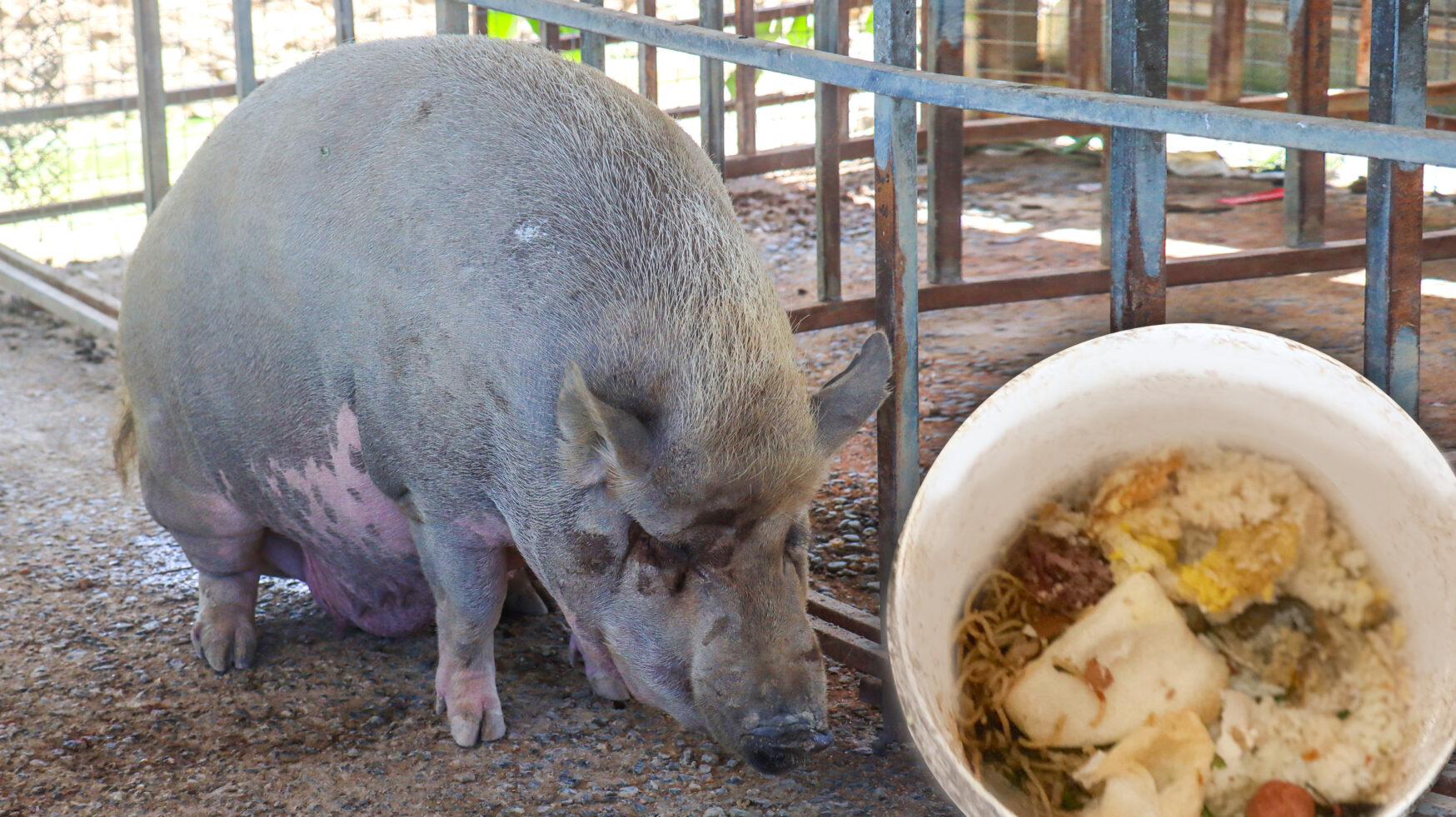
The total food waste at the WU Large Animal Hospital was 0.341 metric tons, primarily resulting from consumption by staff, which accounted for 0.334 metric tons (98%). Storage contributed to 0.007 metric tons (2%) of the waste. However, some of the food waste was repurposed by feeding the hospital’s animals, including horses, pigs, and goats. Only safe food waste, such as fruits and vegetables, was used for animal feeding.
Walailak University Parks
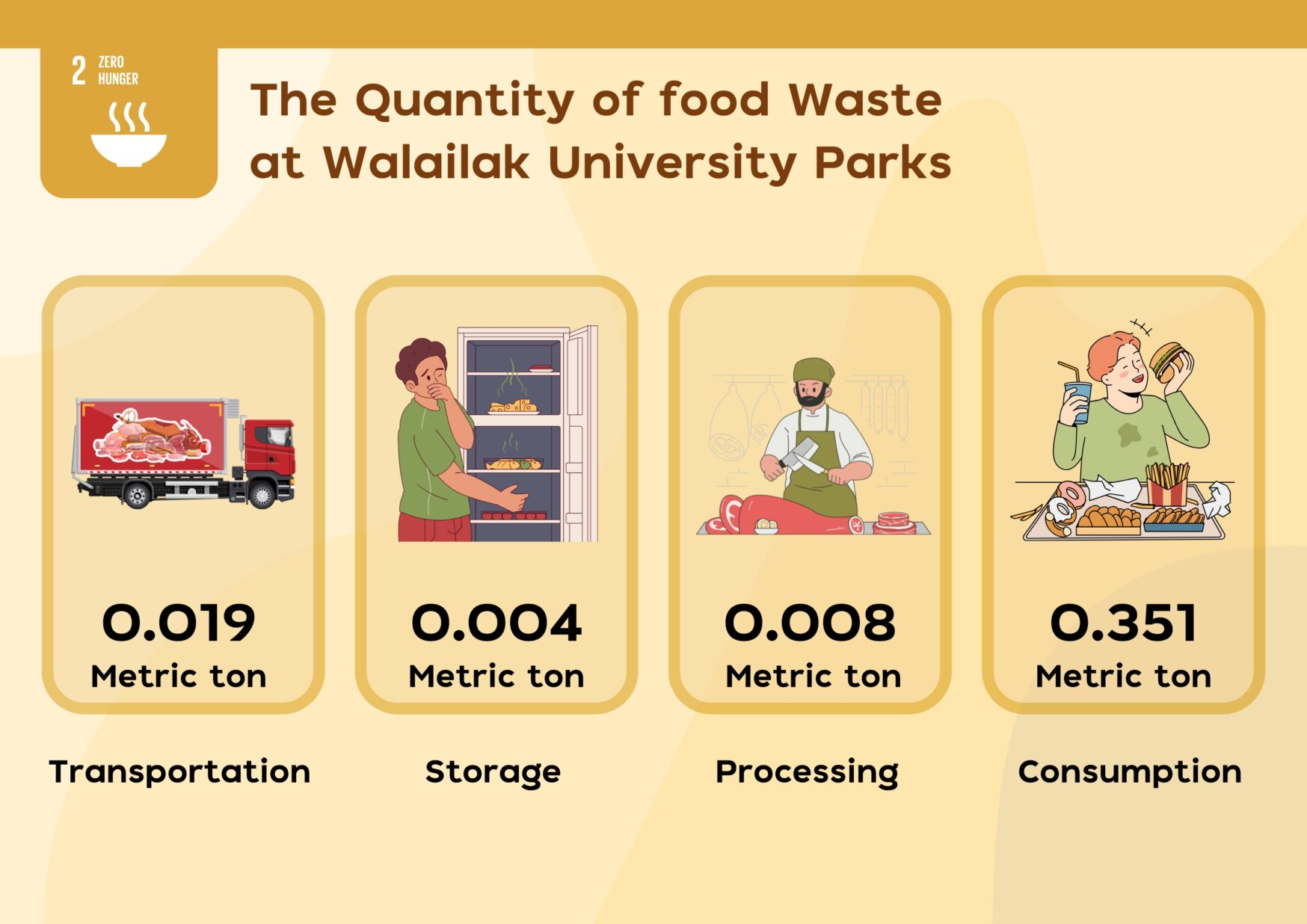
The total quantity of food waste at Walailak University Park was 0.382 metric tons, primarily resulting from the consumption of students and staff visiting the park, which accounted for 0.351 metric tons (92%). Additionally, food kiosks and cafeterias in the park contributed to food waste due to production, transportation, and storage. Production caused 0.019 metric tons (5%) of waste, transportation accounted for 0.008 metric tons (2%), and storage contributed 0.004 metric tons (1%).
Walailak Botanic Park
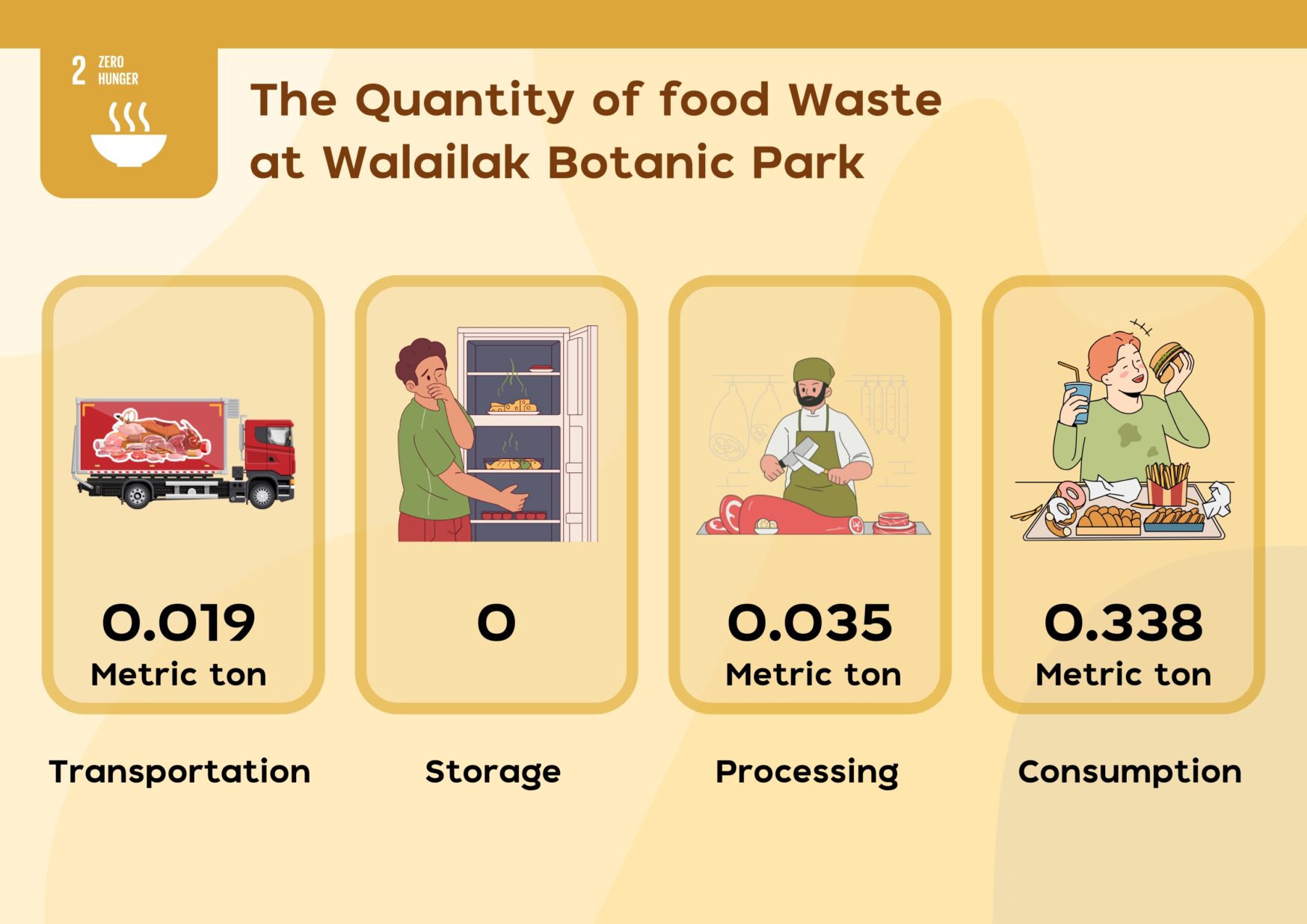
The total quantity of food waste at Walailak Botanic Park was 0.392 metric tons. The primary source of this waste was consumption, accounting for 0.338 metric tons (86%) from students and staff visiting the park and the WU Bota Green Market. The market also contributed to food waste through production and transportation, generating 0.035 metric tons (9%) from production and 0.019 metric tons (5%) from transportation.
Walailak Food Centers
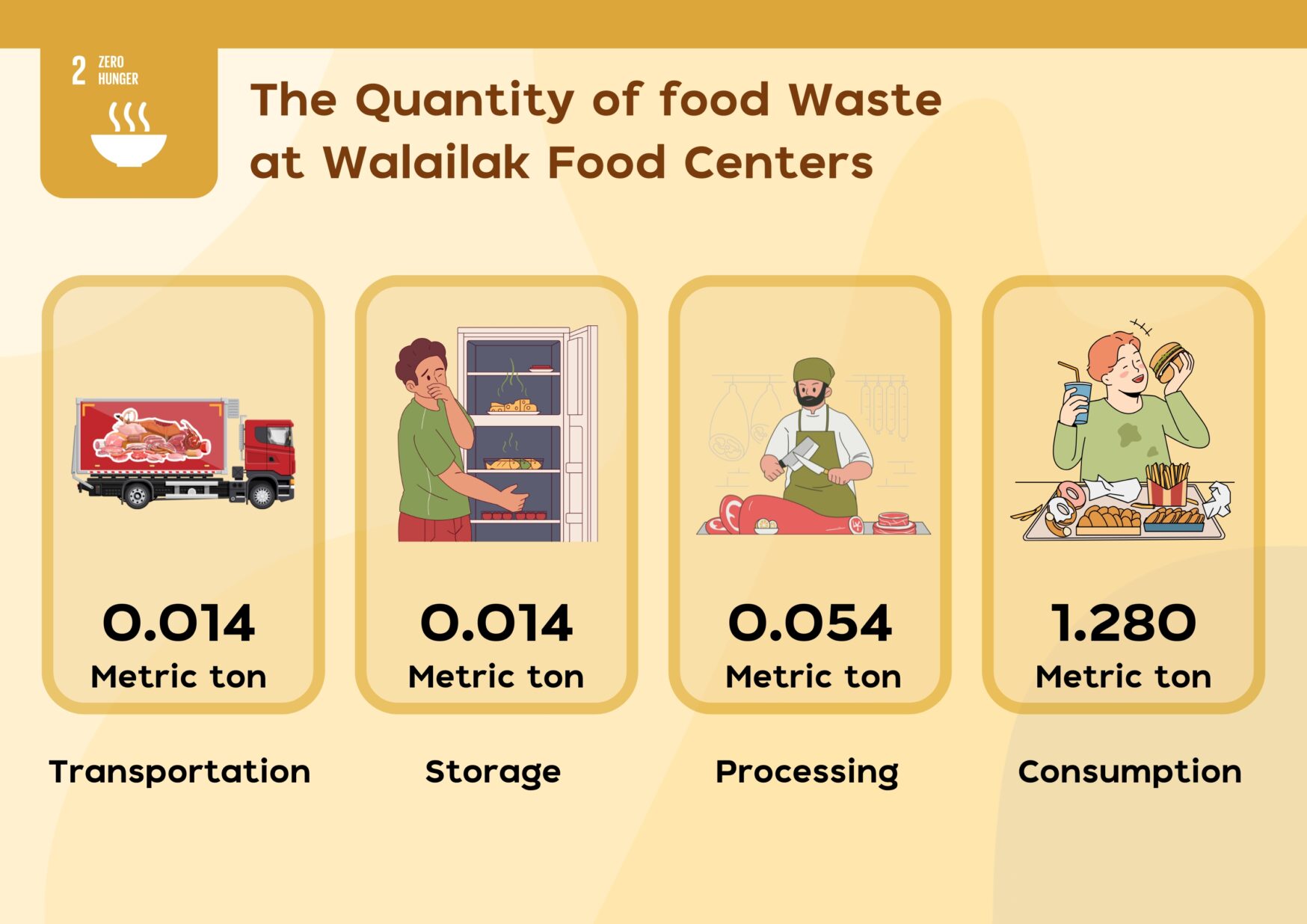
The total quantity of food waste at the Cho Pradu Food Center and the Activity Building Food Center was 1.362 metric tons, making these food centers the highest contributors to food waste on campus due to the presence of numerous food vendors serving students and staff. Consumption was the primary factor, generating 1.280 metric tons (94%) of waste. Additionally, production from all food vendors accounted for 0.054 metric tons (4%) of food waste. Storage and transportation each contributed 0.028 metric tons (2%) of waste.
The Center for Smart Farming and Landscaping Architecture
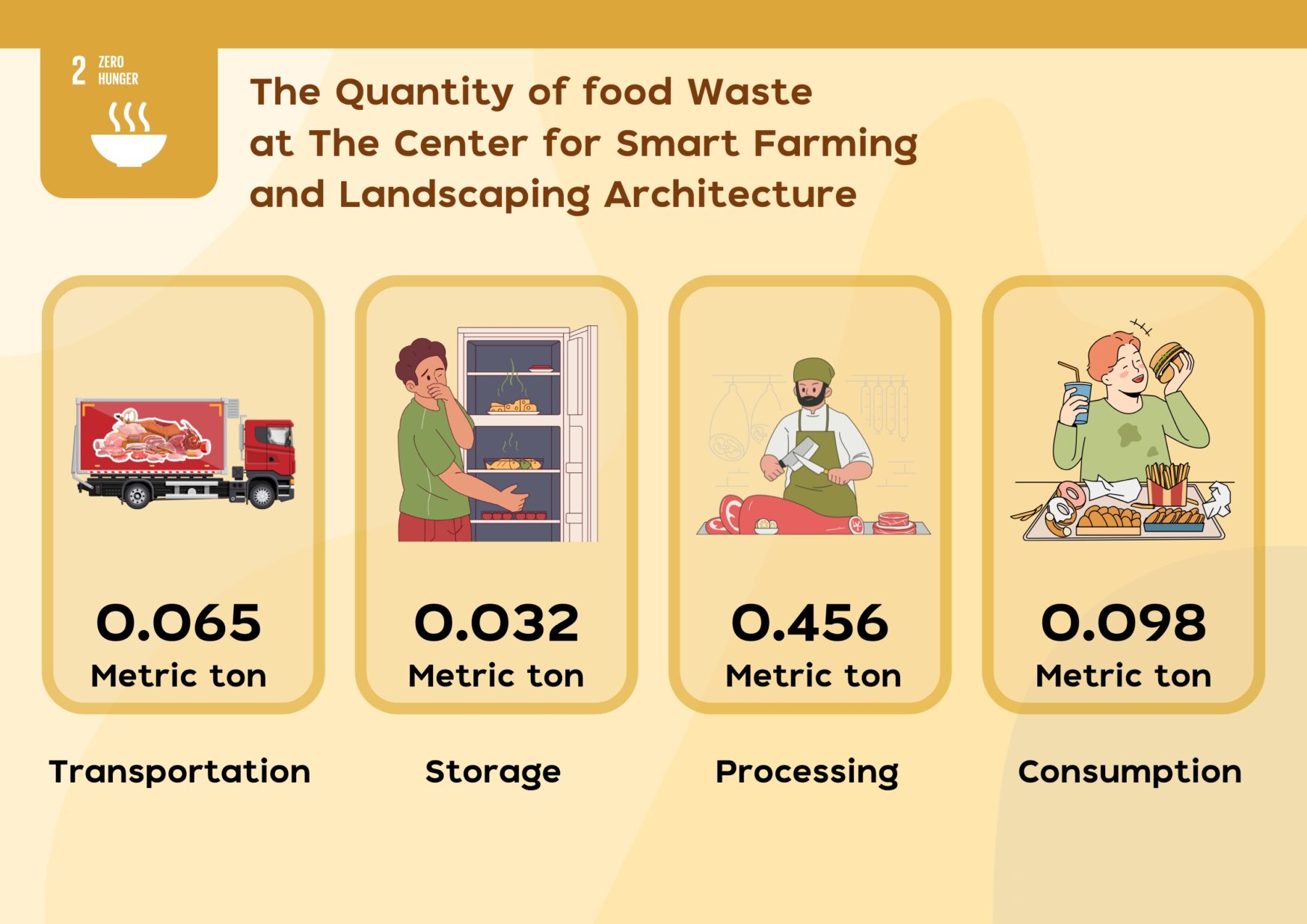
The total quantity of food waste generated by the center was 0.651 metric tons. The center primarily produced agricultural products and processed goods from fruits, vegetables, and eggs, making production the largest contributor to food waste. Production accounted for 0.456 metric tons (70%) of the waste, while consumption by staff at the center resulted in 0.098 metric tons (15%). Additionally, transportation of the products caused 0.065 metric tons (10%) of waste, and storage contributed 0.032 metric tons (5%).
Walailak Sport & Health Center
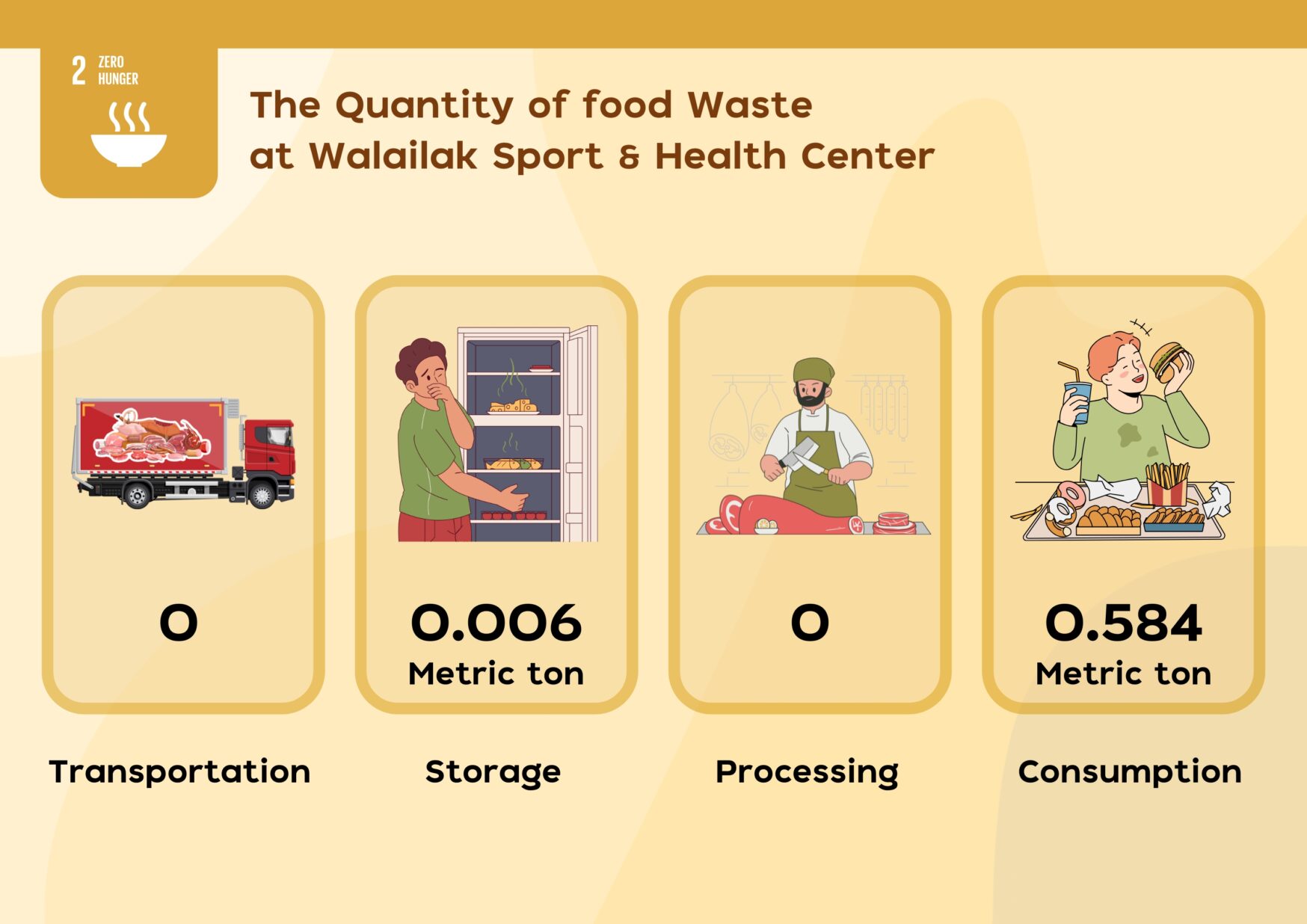
The total quantity of food waste generated by the Walailak Sport & Health Center was 0.590 metric tons. The majority of this waste, 0.584 metric tons (99%), was caused by consumption from staff and visitors, while storage contributed 0.006 metric tons (1%).
Staff Dormitories
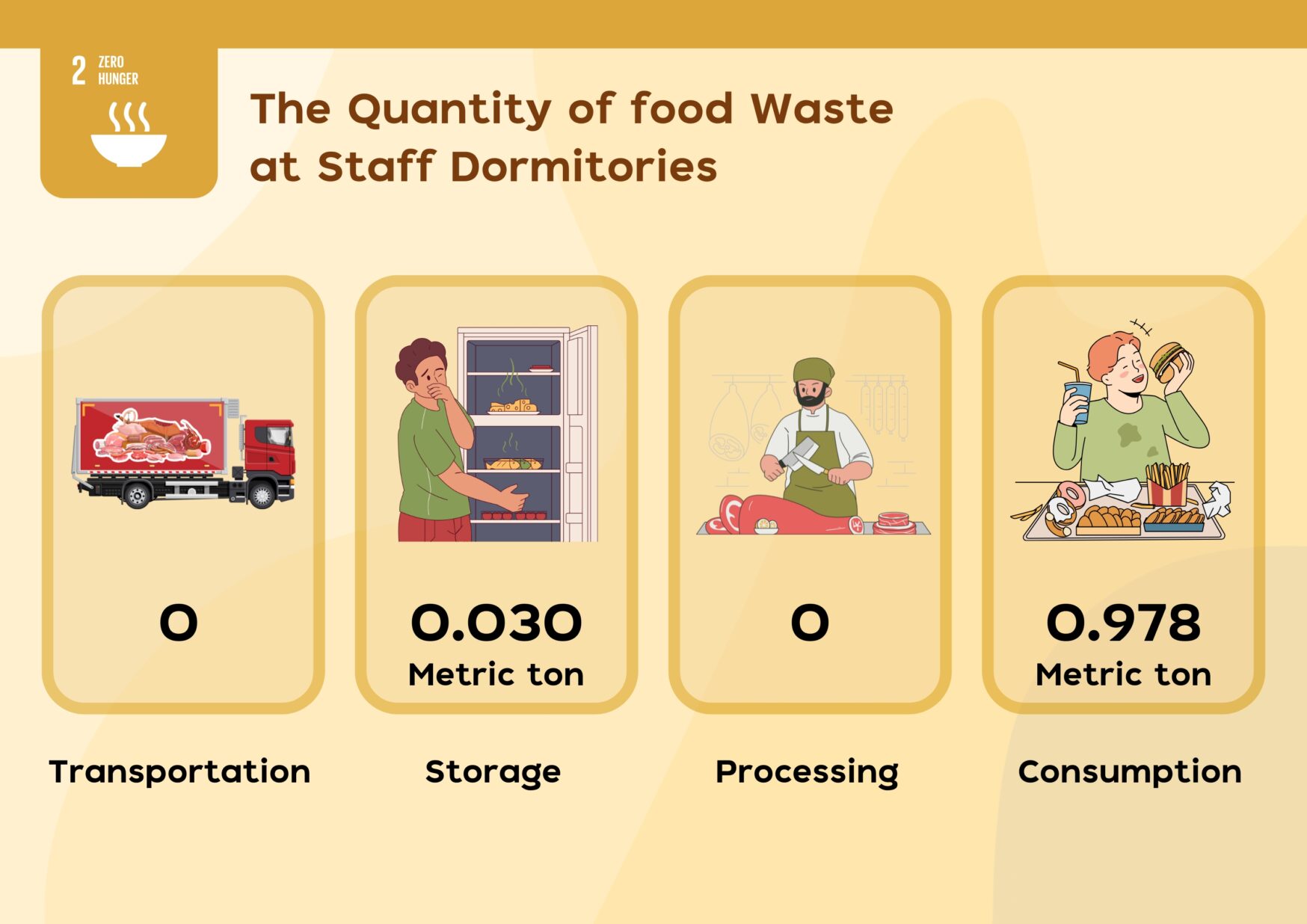
The total quantity of food waste generated by the staff dormitories at Walailak University was 1.008 metric tons. The majority, 0.978 metric tons (97%), resulted from consumption, while storage contributed 0.030 metric tons (3%) of the waste.
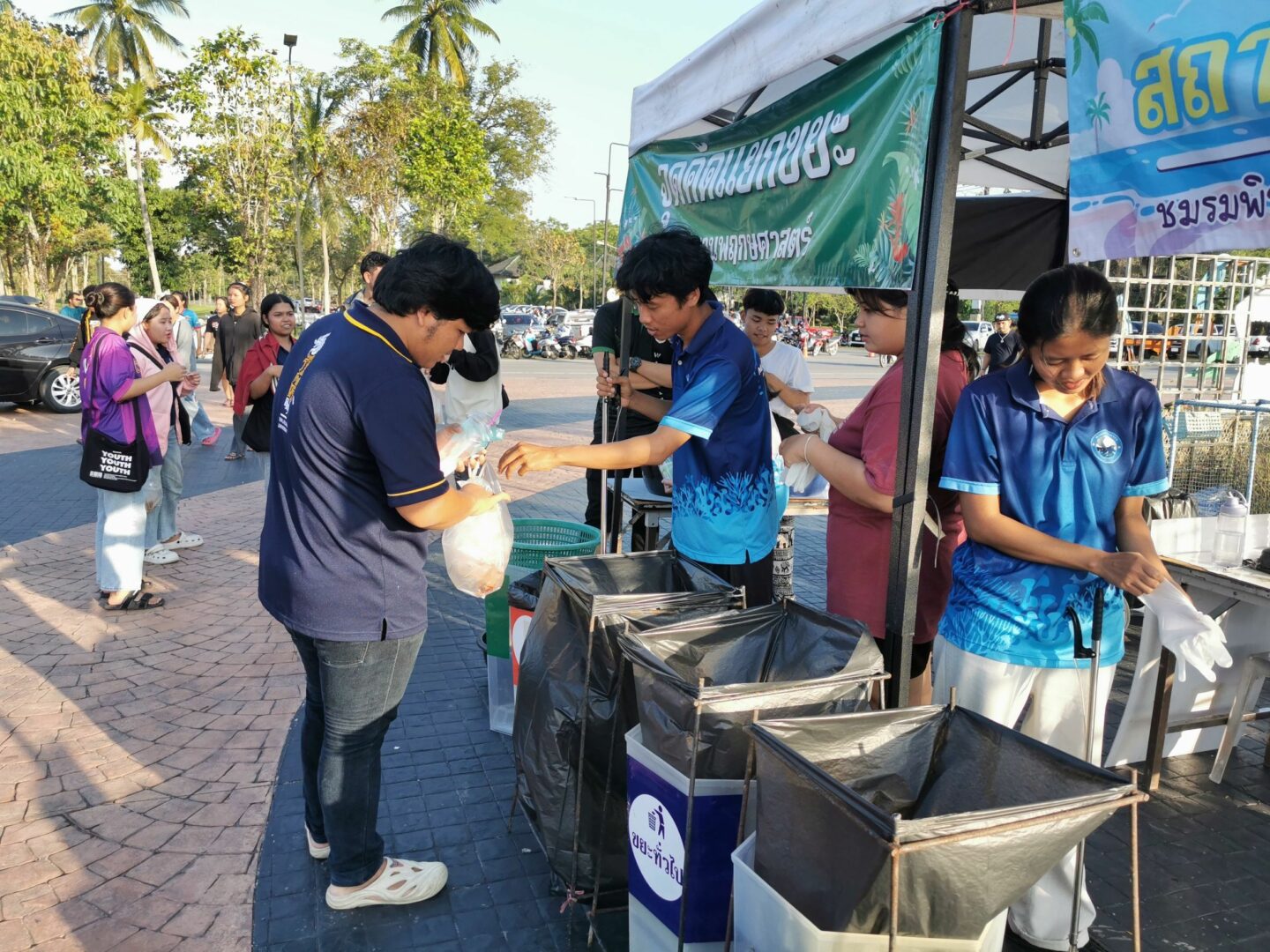
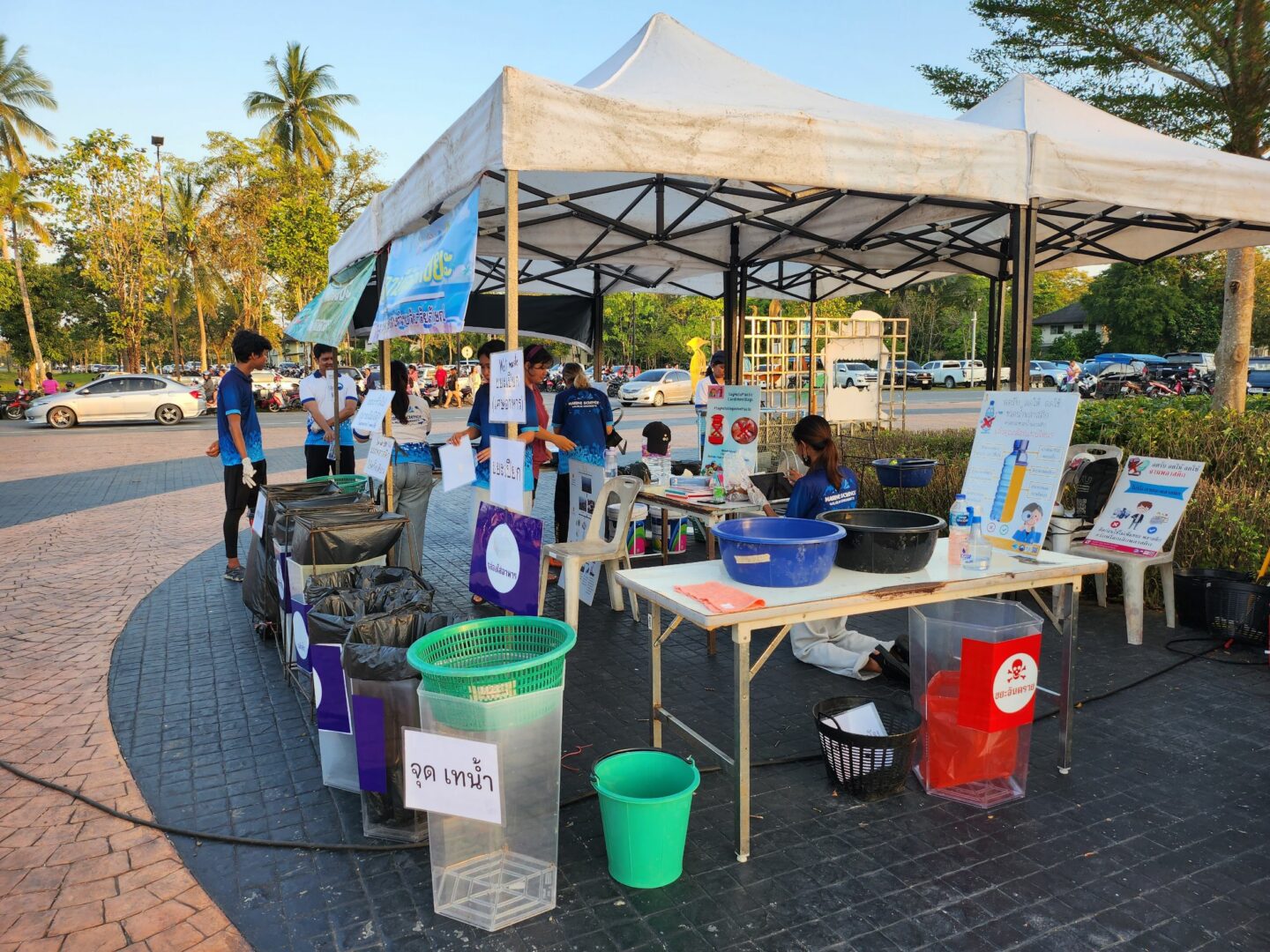
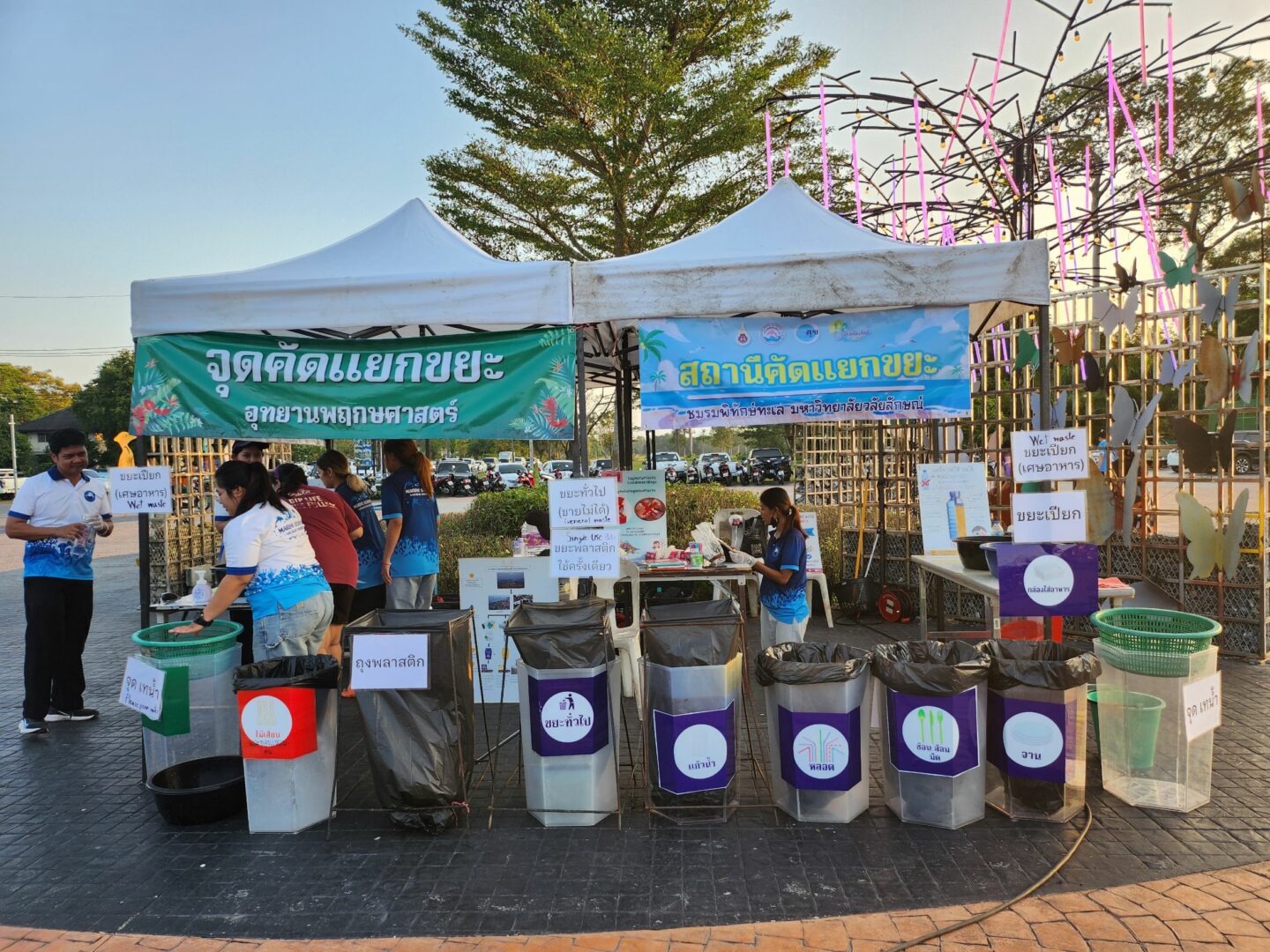
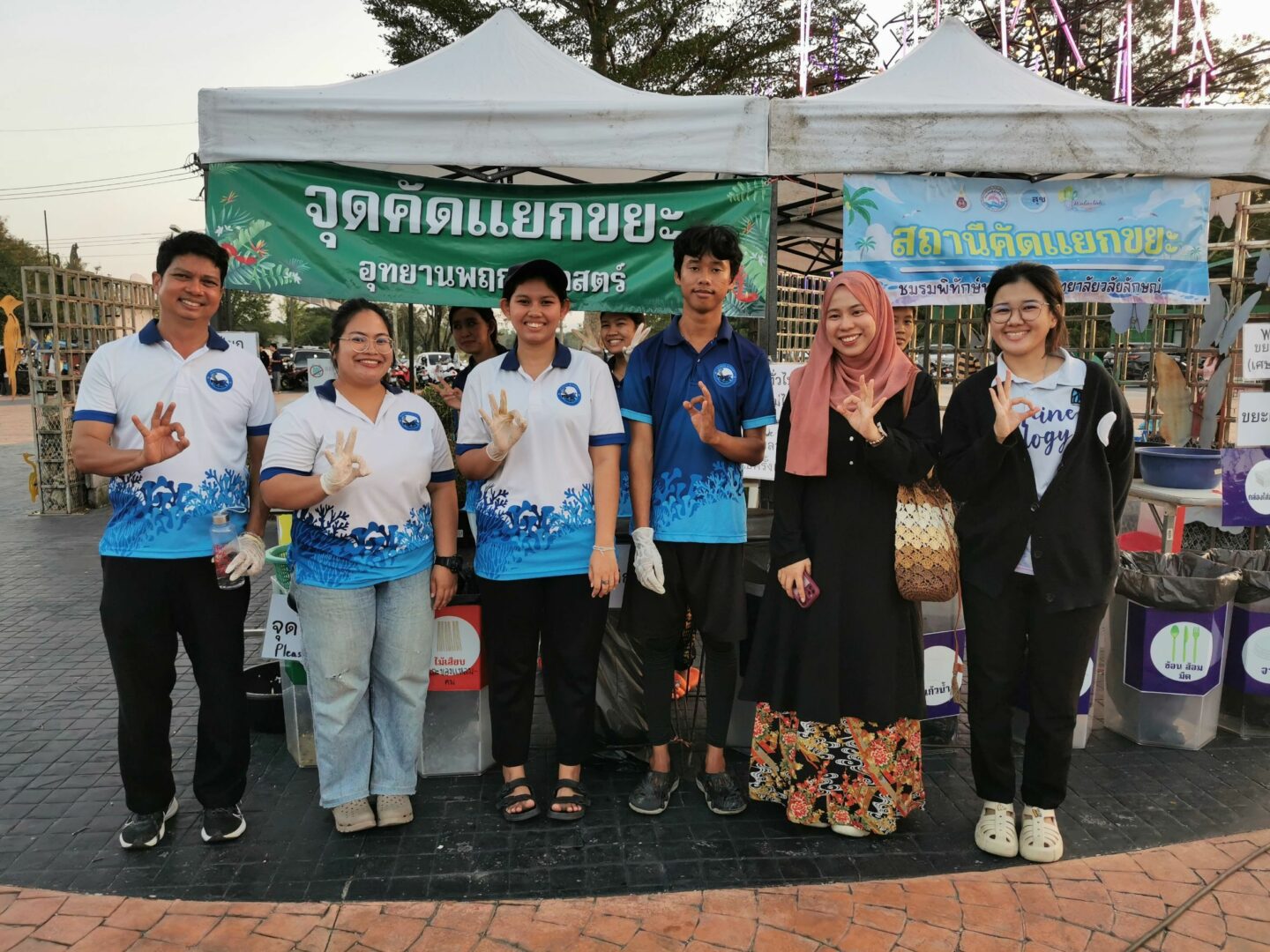
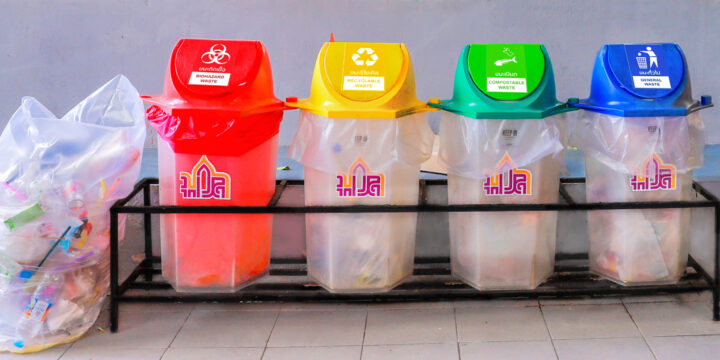
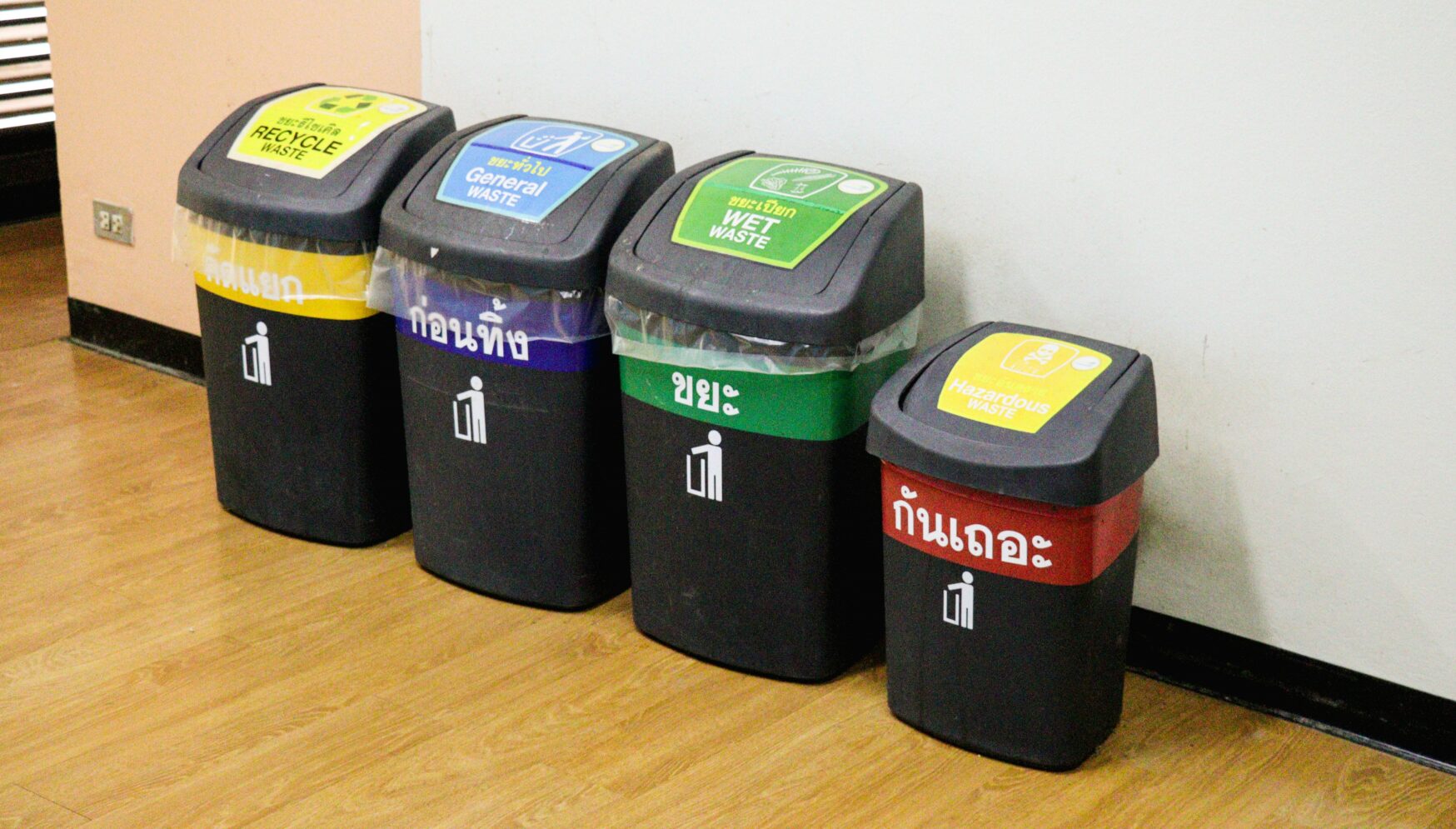
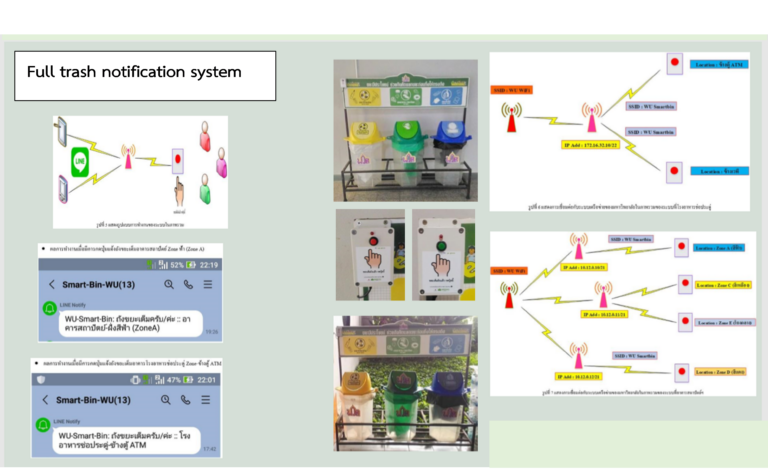
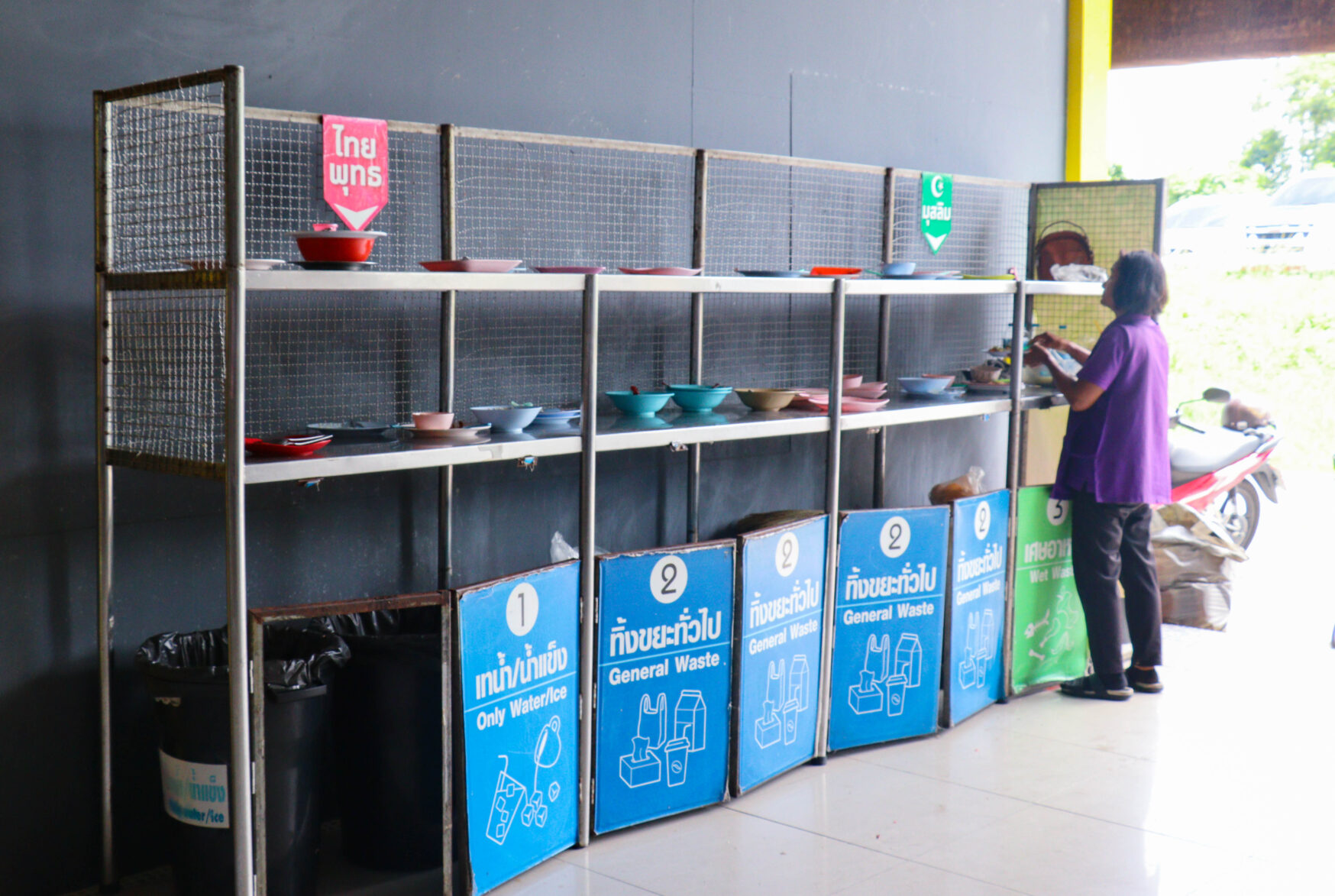
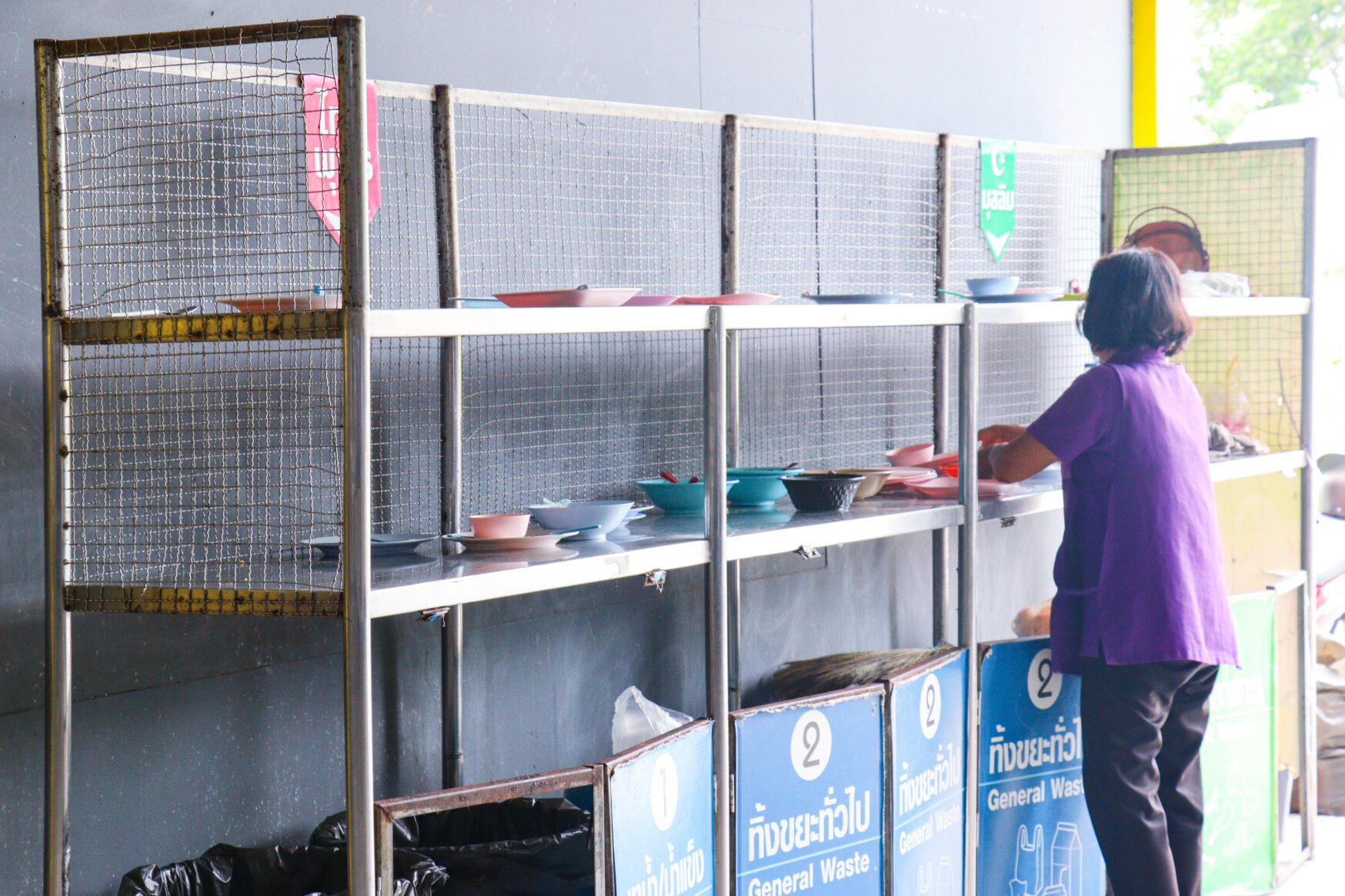
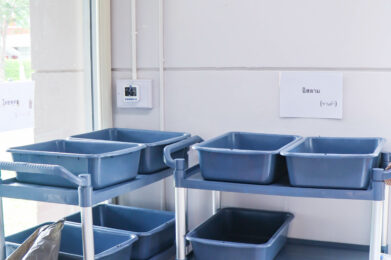
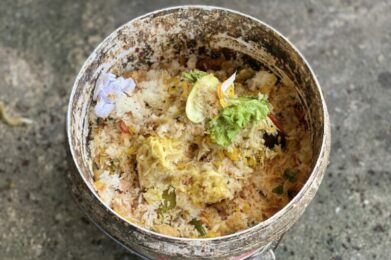
- The Initial Step focuses on raising awareness about food waste and promoting sustainable consumption through campaigns. This includes using color-coded bins for food waste separation and a warning system for full trash bins.
- The Intermediate Step involves scheduling regular food waste collection across campus, managed by the center.
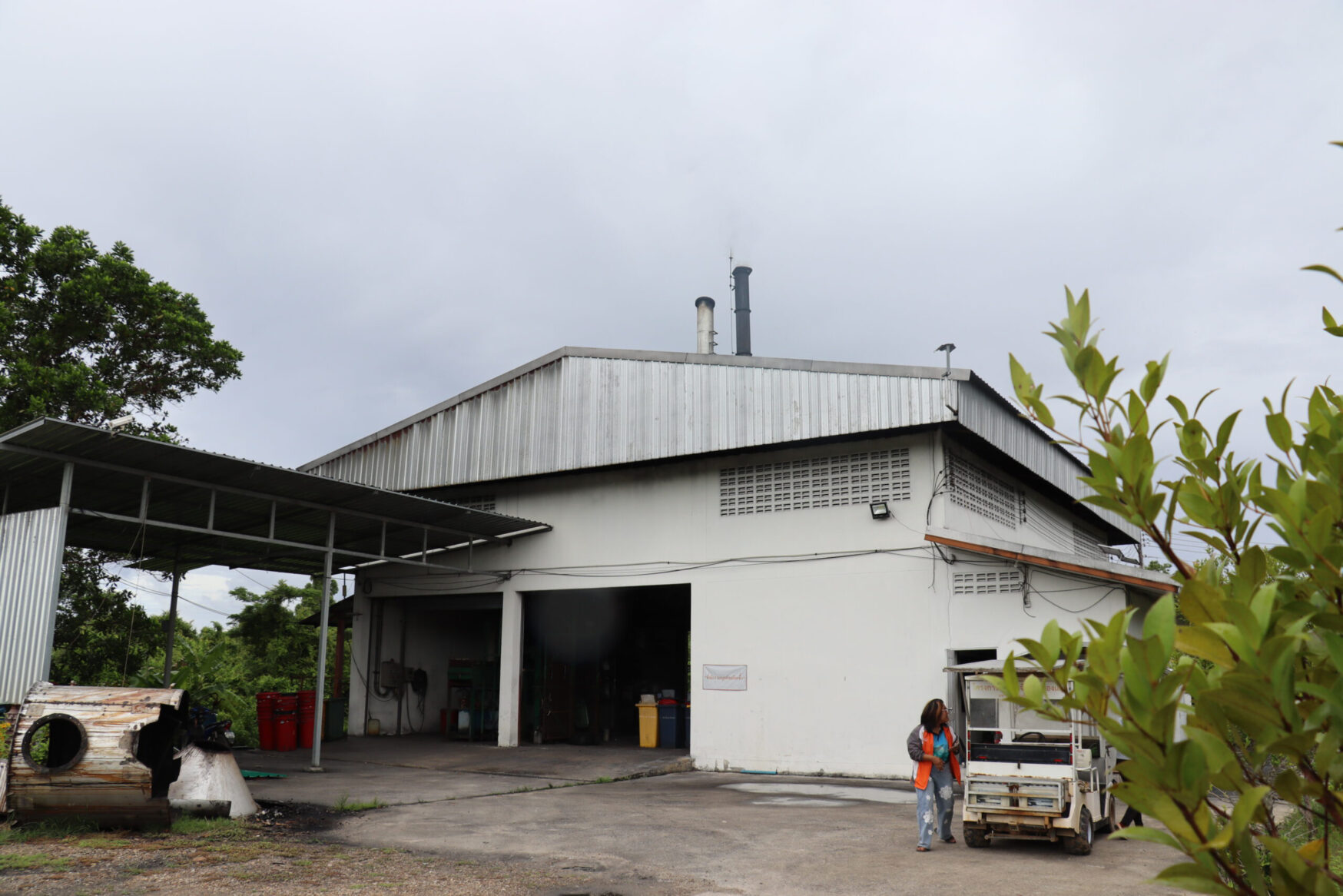
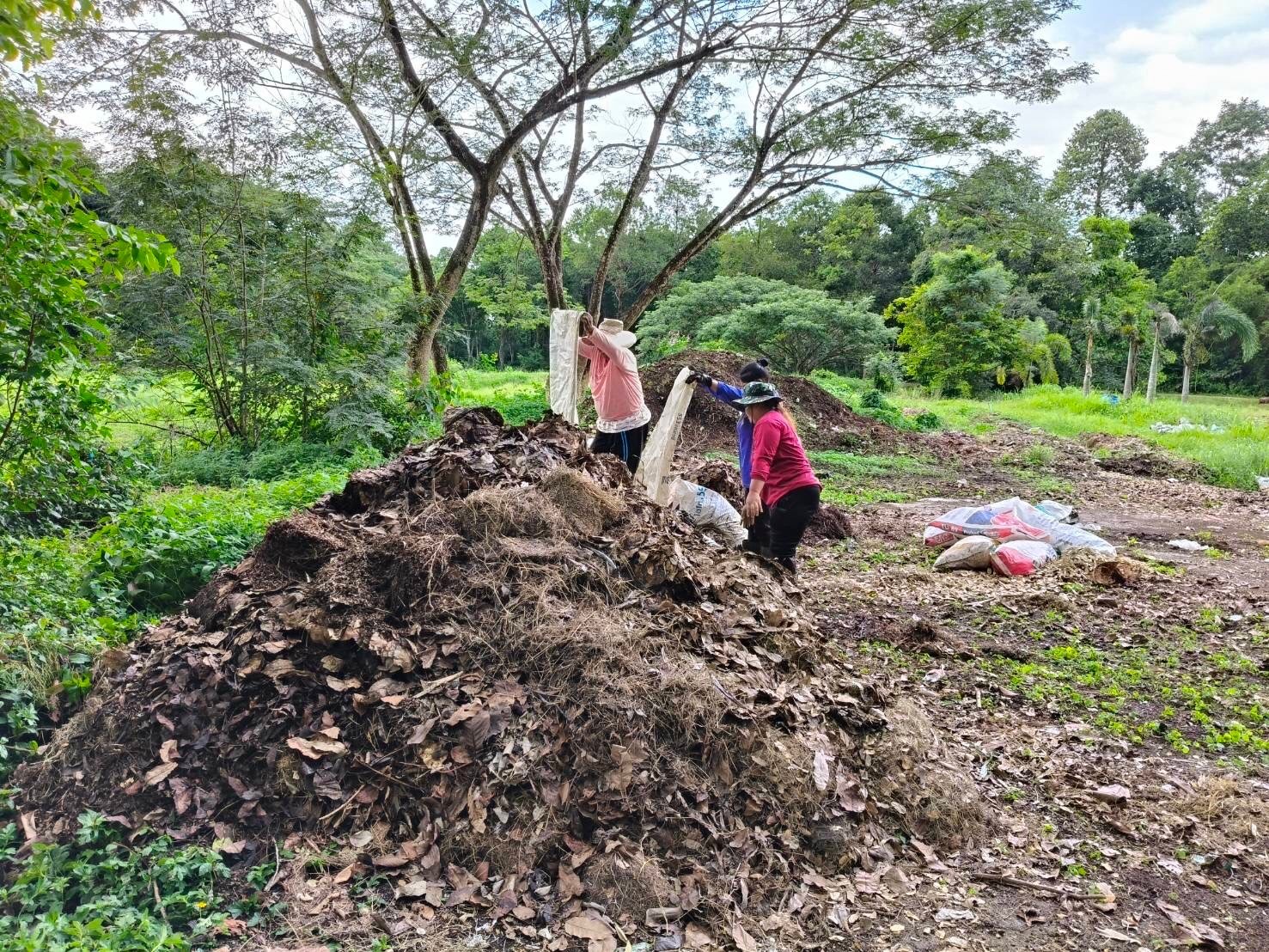
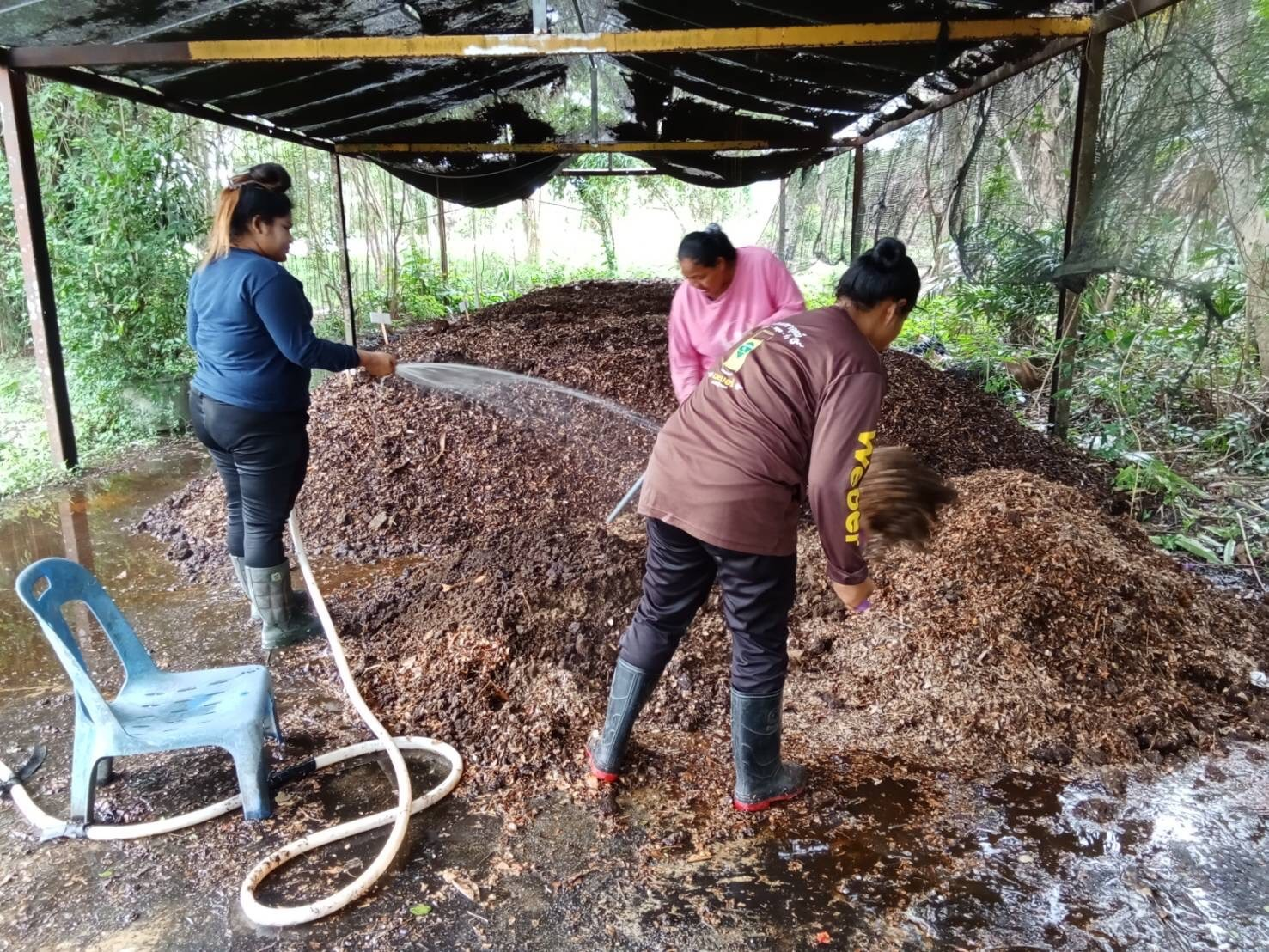
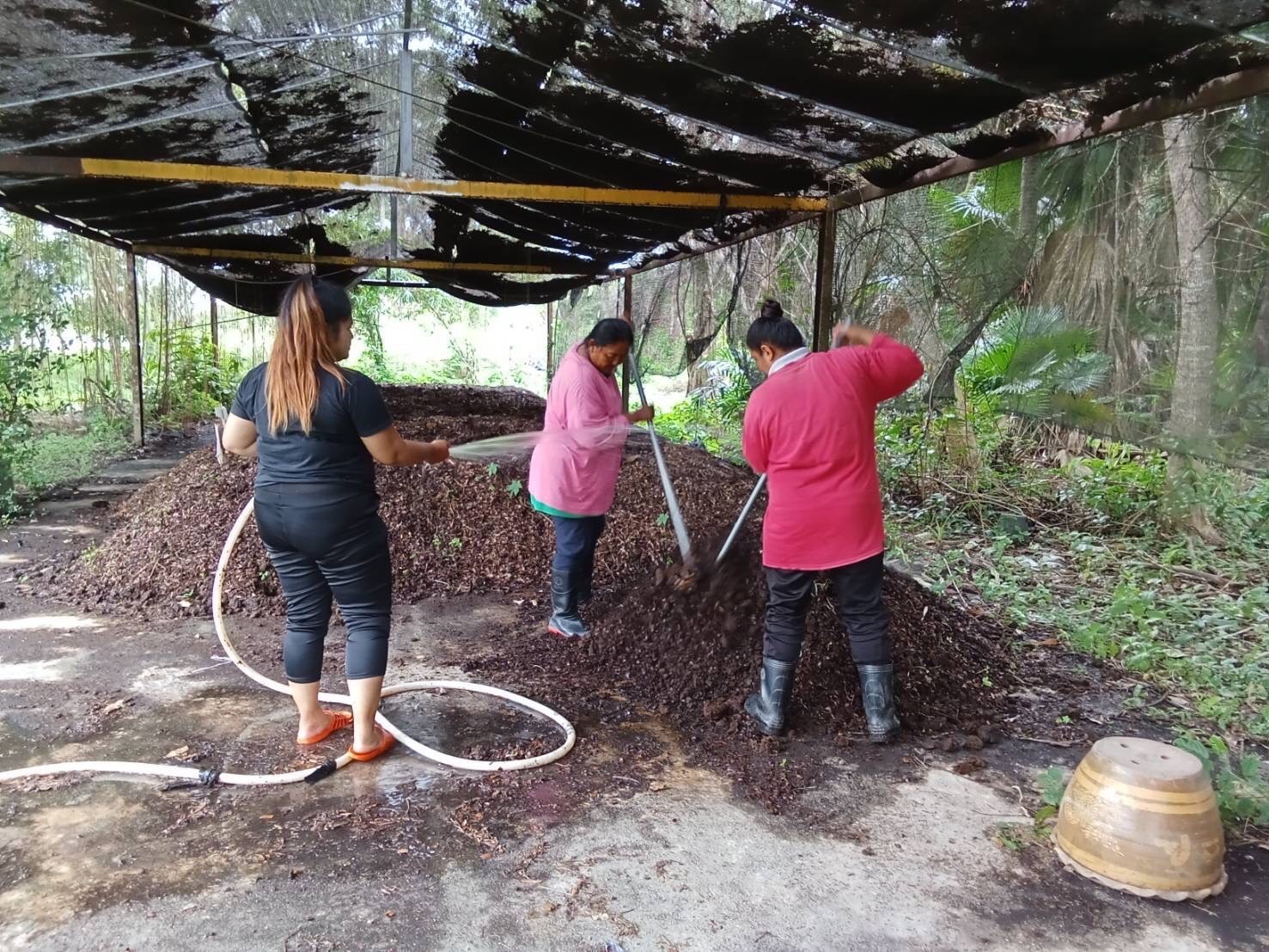
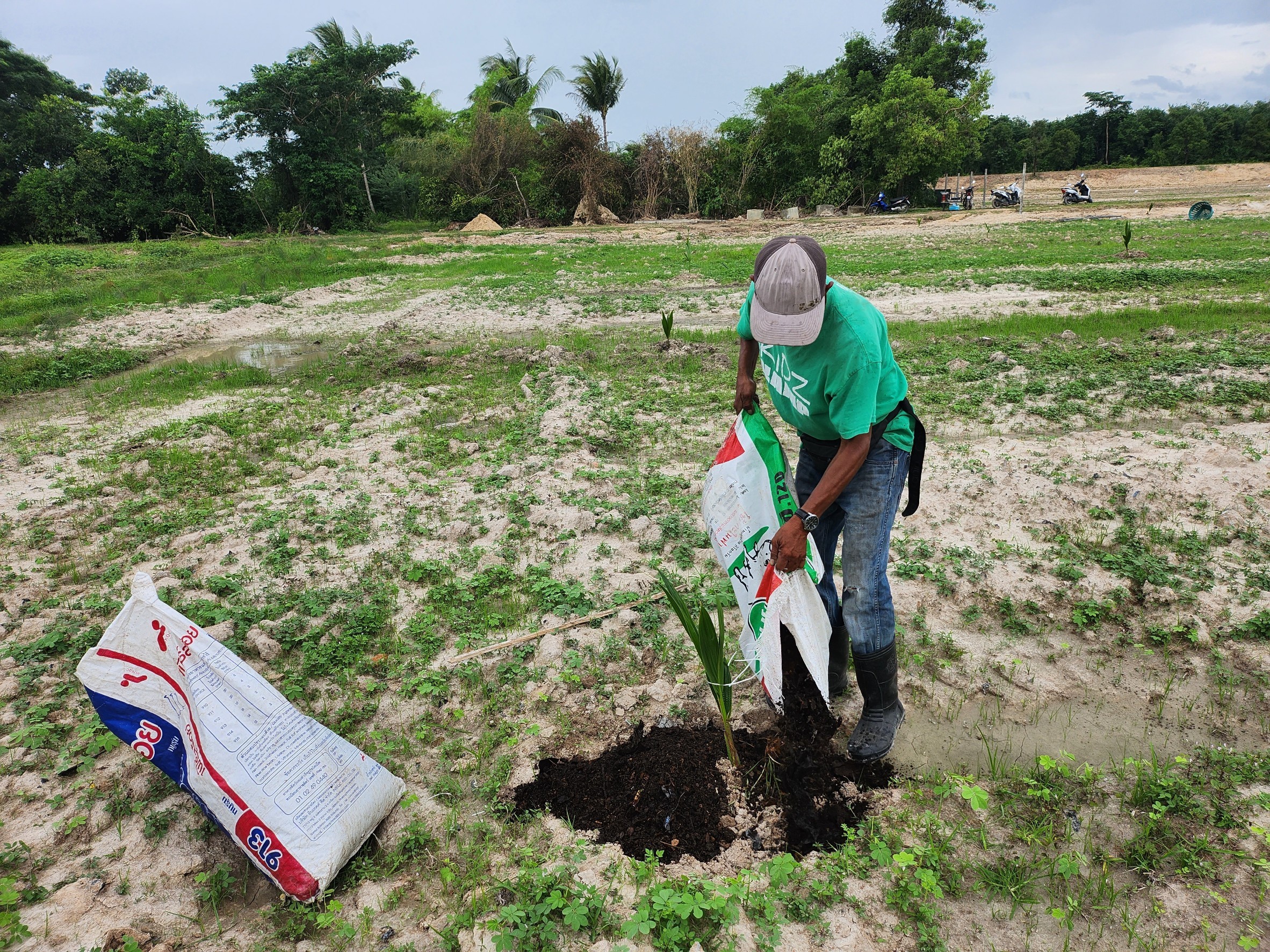
- The Final Step addresses the disposal of food waste and includes measures for recycling and reusing waste materials.
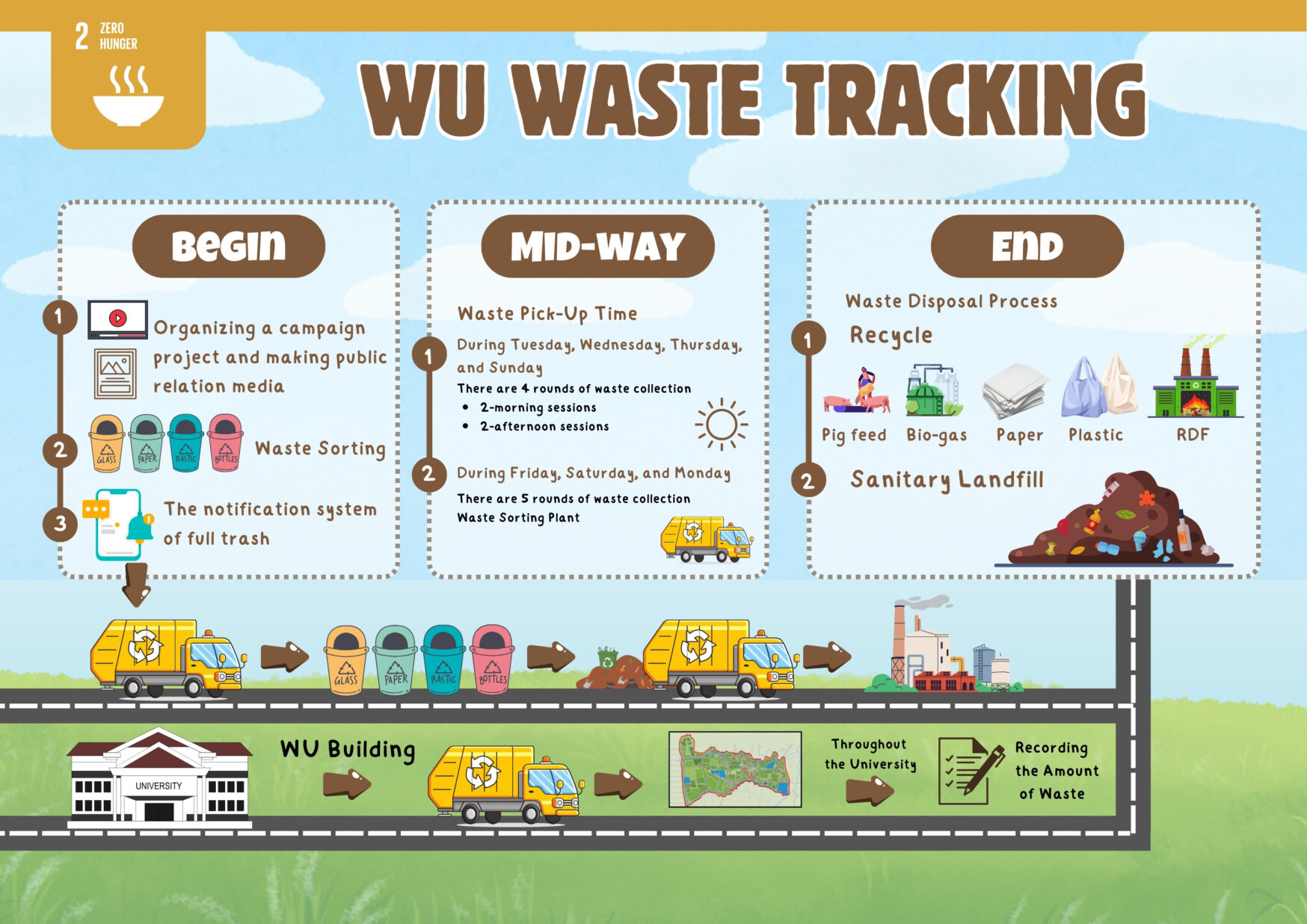
Initial Step
Campaign and Public Awareness
Separating Food Waste
Full Trash Notification System
Intermediate Step
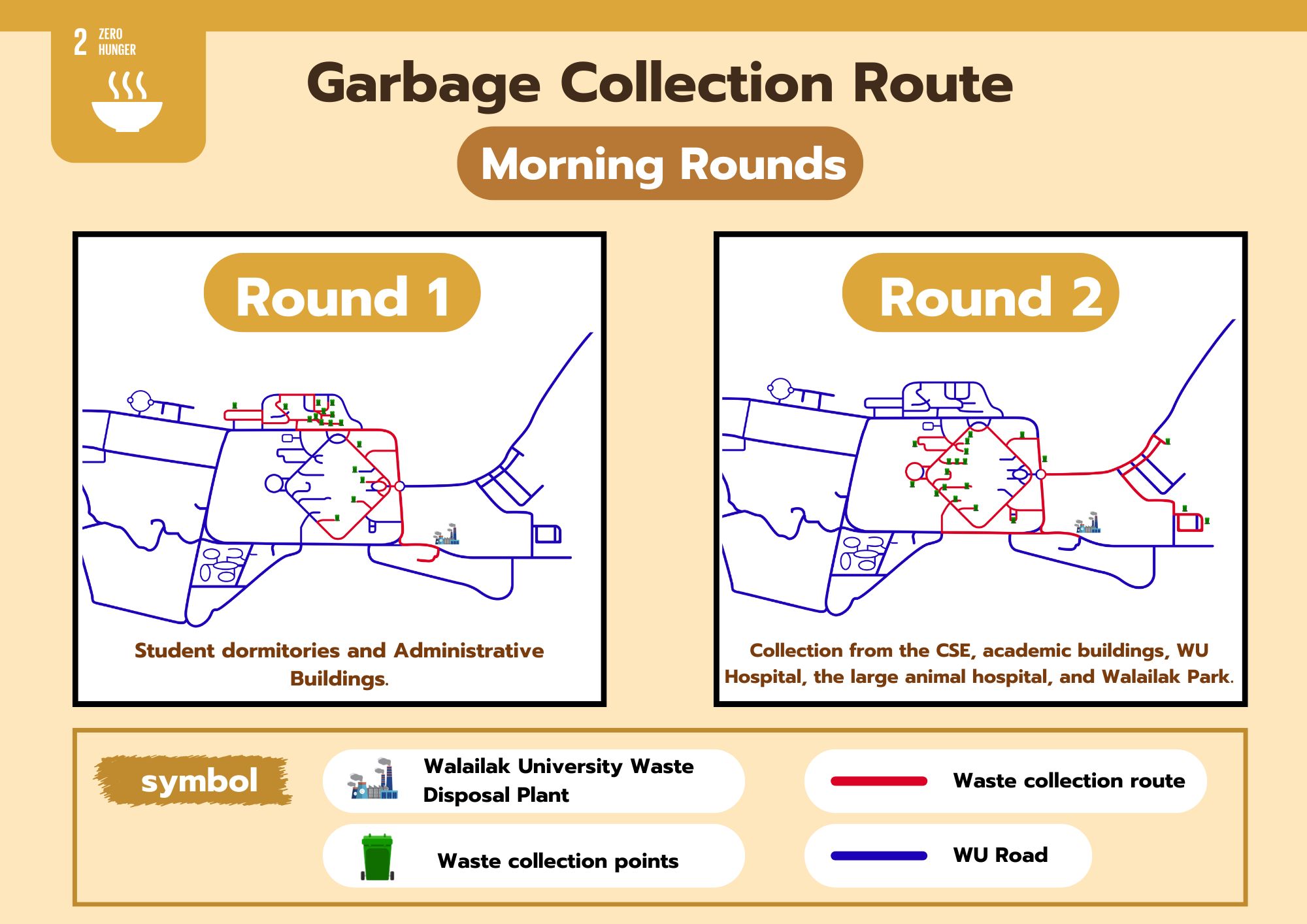
Days: Tuesdays, Wednesdays, and Sundays
- Round 1: Student dormitories and Administrative Buildings.
- Round 2: The Center for Scientific and Technological Equipment, the Academic Buildings, the Architecture & Design Building, the Walailak University Hospital, the Large Animal Hospital, and the Walailak Park (inner routes).
- Round 3: Staff dormitories, the Walailak Sport & Health Center, the Botanic Park, and the Center for Smart Farming and Landscaping Architecture (outer routes).
- Round 4: The Activity Building Food Center, and the Cho Pradu Food Center.
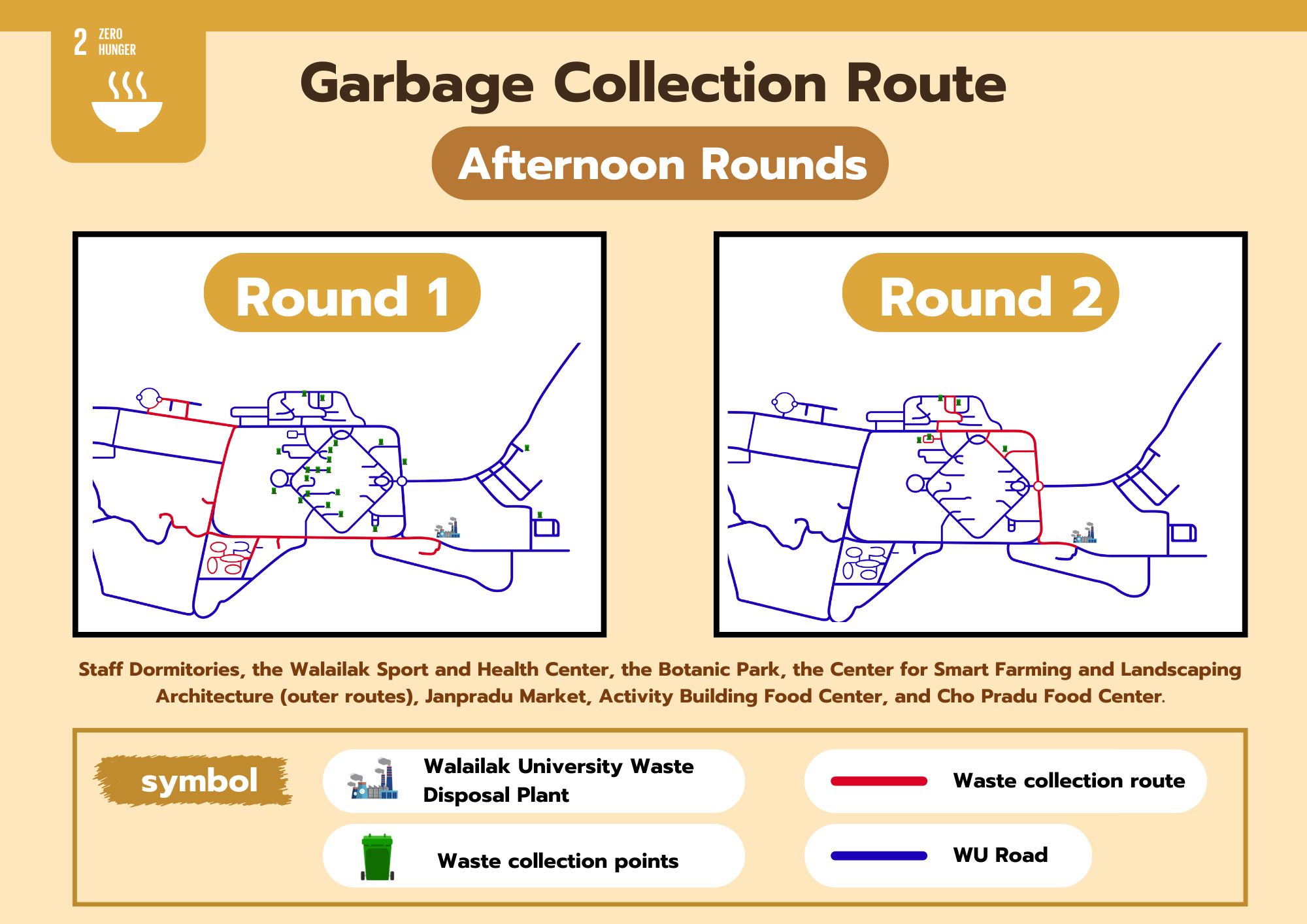
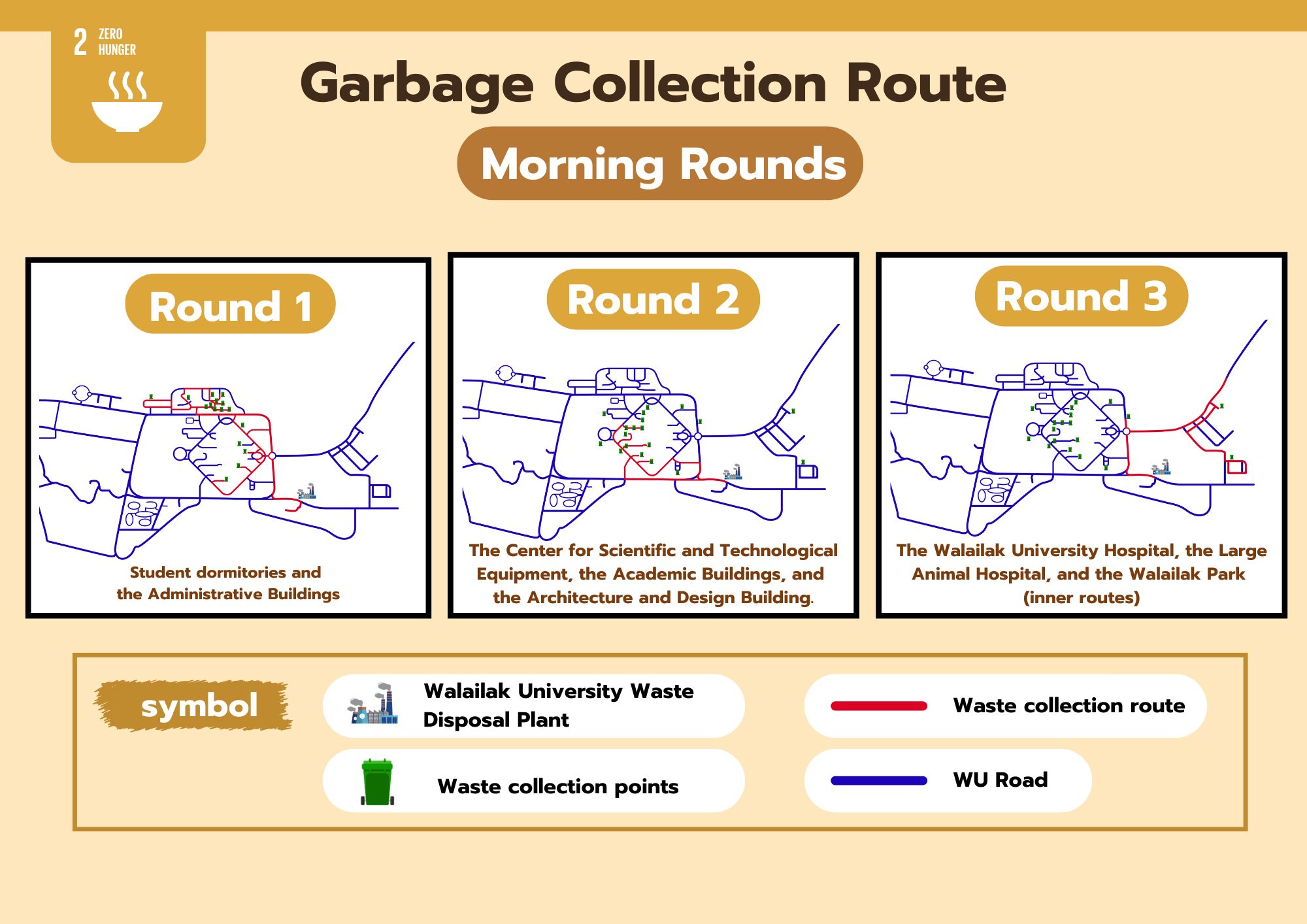
Days: Fridays, Saturdays, and Mondays
- The food waste collection on Fridays, Saturdays, and Mondays is implemented in 5 rounds with two rounds in the morningRound 1: Student dormitories and the Administrative Buildings
- Round 2: The Center for Scientific and Technological Equipment, the Academic Buildings, and the Architecture and Design Building.
- Round 3: The Walailak University Hospital, the Large Animal Hospital, and the Walailak Park (inner routes)
- Rounds 4 and 5: Staff Dormitories, the Walailak Sport and Health Center, the Botanic Park, the Center for Smart Farming and Landscaping Architecture (outer routes), Janpradu Market, and WU Food Centers (Activity Building Food Center and Cho Pradu Food Center). and three in the afternoon. The food waste collection points in each round are detailed as follows:
Final Step
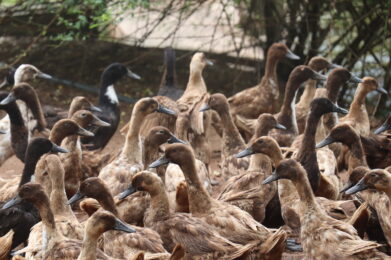
Reusing
Recycling
Disposal