Inorganic Waste Treatment (WS4)
Inorganic Waste Treatment
The total volume of inorganic waste produced at Walailak University = 1,225.55 tons/year.
This waste is categorized into four primary types: paper, plastic, metal, and general waste, which includer non-recyclable plastics. Each category significantly contributes to the total volume, highlighting the diverse sources of inorganic waste produced on campus. Understanding these categories is vital for developing effective waste management strategies that align with sustainability goals.
Inorganic Waste Types
- The paper waste category, totaling 42.31 tons, includes office paper, packaging materials, and various other paper-based products used throughout the university. The relatively lower volume of paper waste suggests that the university may be successfully implementing initiatives aimed at reducing paper consumption, such as transitioning to digital formats. These efforts not only help minimize waste but also contribute positively to the university’s sustainability initiatives.
- Plastic waste accounted for 89.01 tons and comprises a wide array of materials, including bottles, food packaging, and single-use plastics. This type of waste can be effectively recycled.
- Metal waste, totaling 29.89 tons, often arises from maintenance activities, construction projects, or discarded equipment. This type of waste represents a valuable resource that can be effectively recycled.
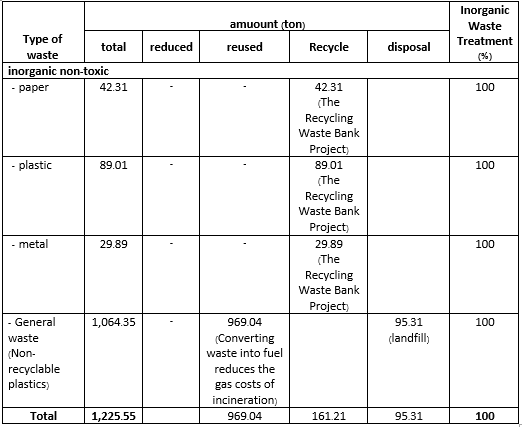
Percent of Inorganic Waste Treatment = 100 %
All the inorganic waste (100%) was treated by Converting waste into fuel reduced the gas costs of incineration in the university incinerator and landfill. The rest was recycled.
Walailak University has effectively managed a total of 1,225.55 tons of inorganic waste, focusing on recycling and converting waste into energy to minimize landfill use. This approach aligns closely with the Sustainable Development Goals (SDGs), particularly Goal 12: Responsible Consumption and Production. This supports SDG 12.5, which aims to reduce waste generation through prevention, reduction, recycling, and reuse:
1. Recycling
A total of 161.19 tons of paper, plastic, and metal waste was recycled through the university’s Recycling Waste Bank Project, reducing the demand for new resources and lowering the amount of waste sent to landfills.
2. Converting waste into fuel reduced the gas costs of incineration in the university incinerator
969.04 tons of non-recyclable waste were converted into fuel, reducing the need for gas in incineration processes, which helps cut energy costs and lessen the environmental footprint.
3. Landfilling
A portion of the waste, 95.31 tons, that could not be processed by other means was directed to landfills, reflecting efforts to minimize the environmental impact of waste disposal.
Walailak University’s approach to inorganic waste management demonstrates a commitment to resource efficiency and long-term sustainability. These efforts help reduce pollution and support the university’s role as a leader in sustainable practices in line with the SDGs
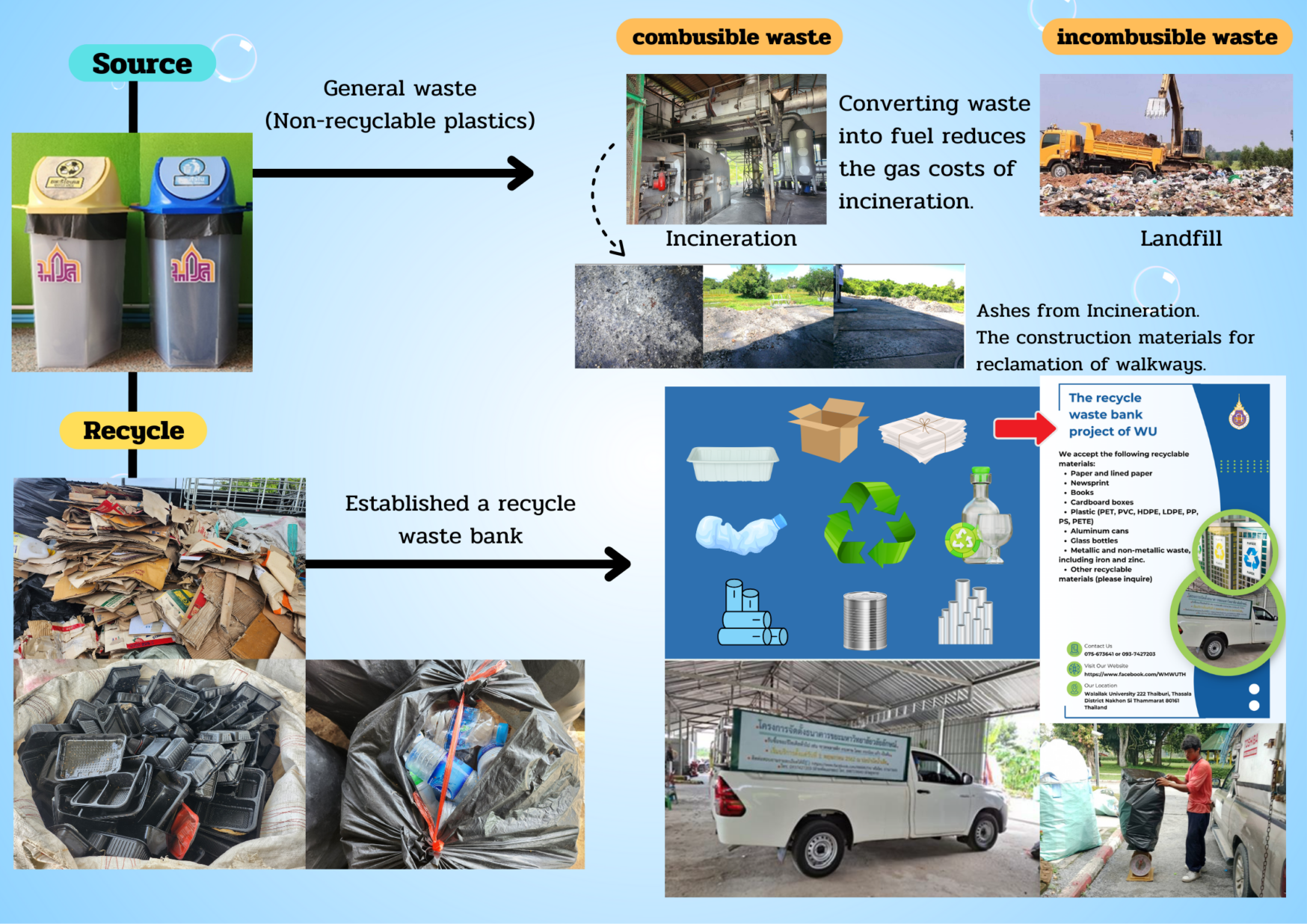
Inorganic Waste Treatment.
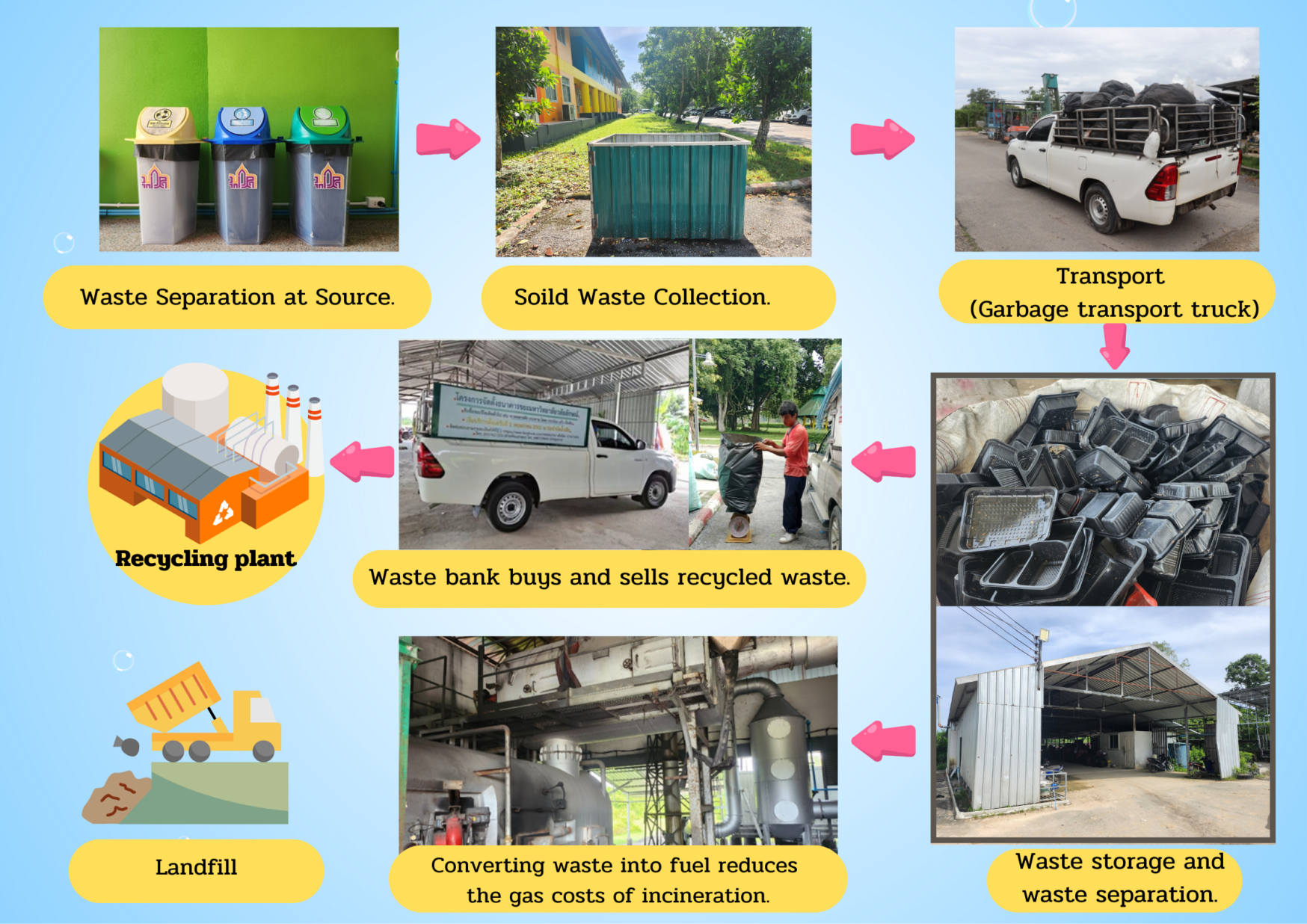
Management of Inorganic Waste (Recycle and Solid Waste) at Walailak University.

In 2024, the separation of recyclable waste such as paper, plastic, and metal through the Waste Bank project not only helped reduce the amount of waste entering the university’s waste management system but also generated income for staff and students involved in the project. Moreover, this recycling activity contributed to a reduction in greenhouse gas emissions equivalent to 463.04 tonCO2eq. (based on US EPA’s Waste Reduction Model Version 15 (May 2019) (paper, plastic, metal))