Number of innovative program(s) in energy and climate change (EC.9)
Number of innovative program(s) in energy and climate change
- Solar Roof Installation at the Center for Scientific and Technological Equipment
This project enhances energy efficiency by harnessing solar power, reducing dependence on conventional energy sources.
Reference of data : Real-time renewable energy monitoring program
- Automatic air conditioning on-off control system based on class schedule
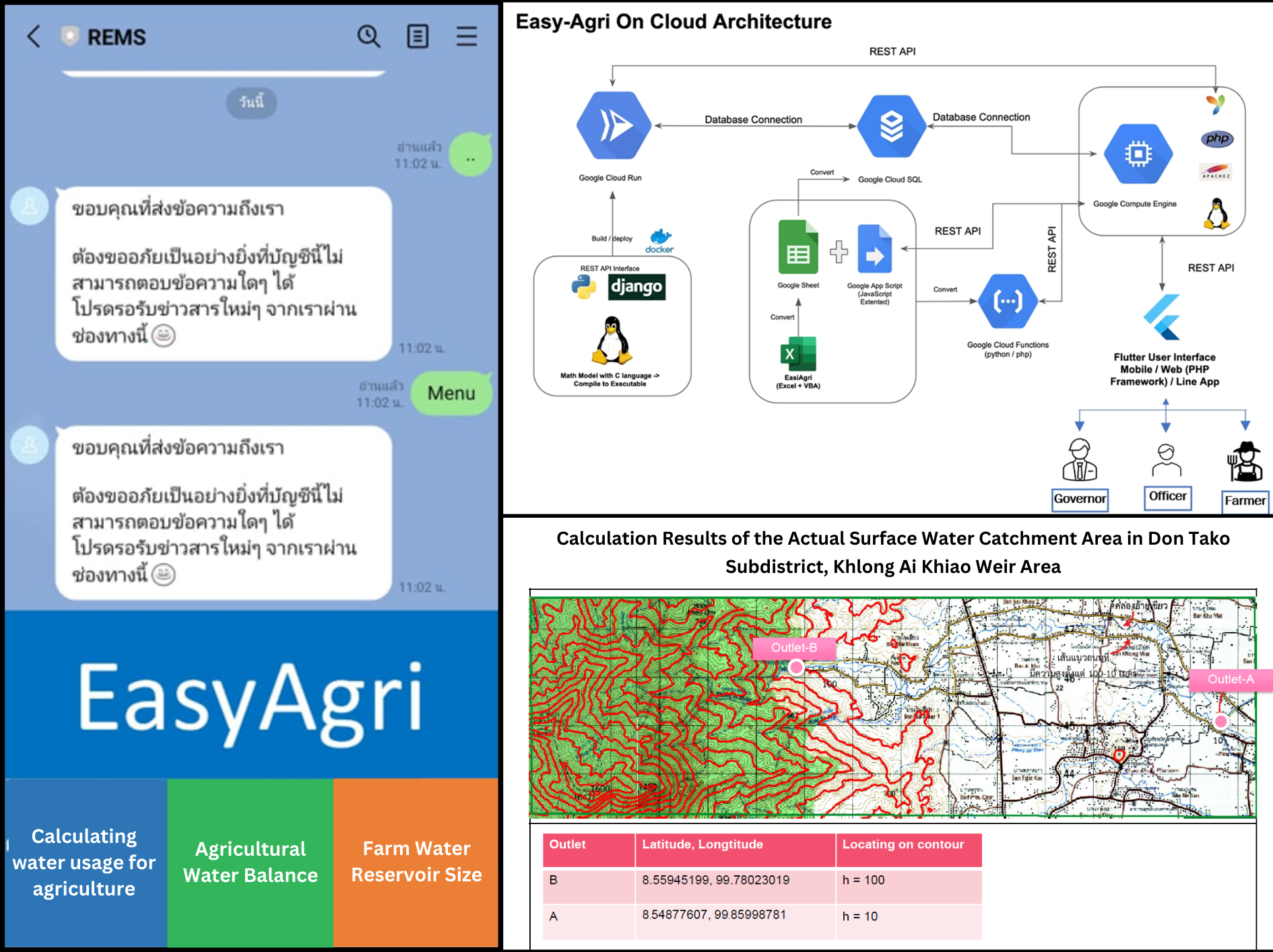
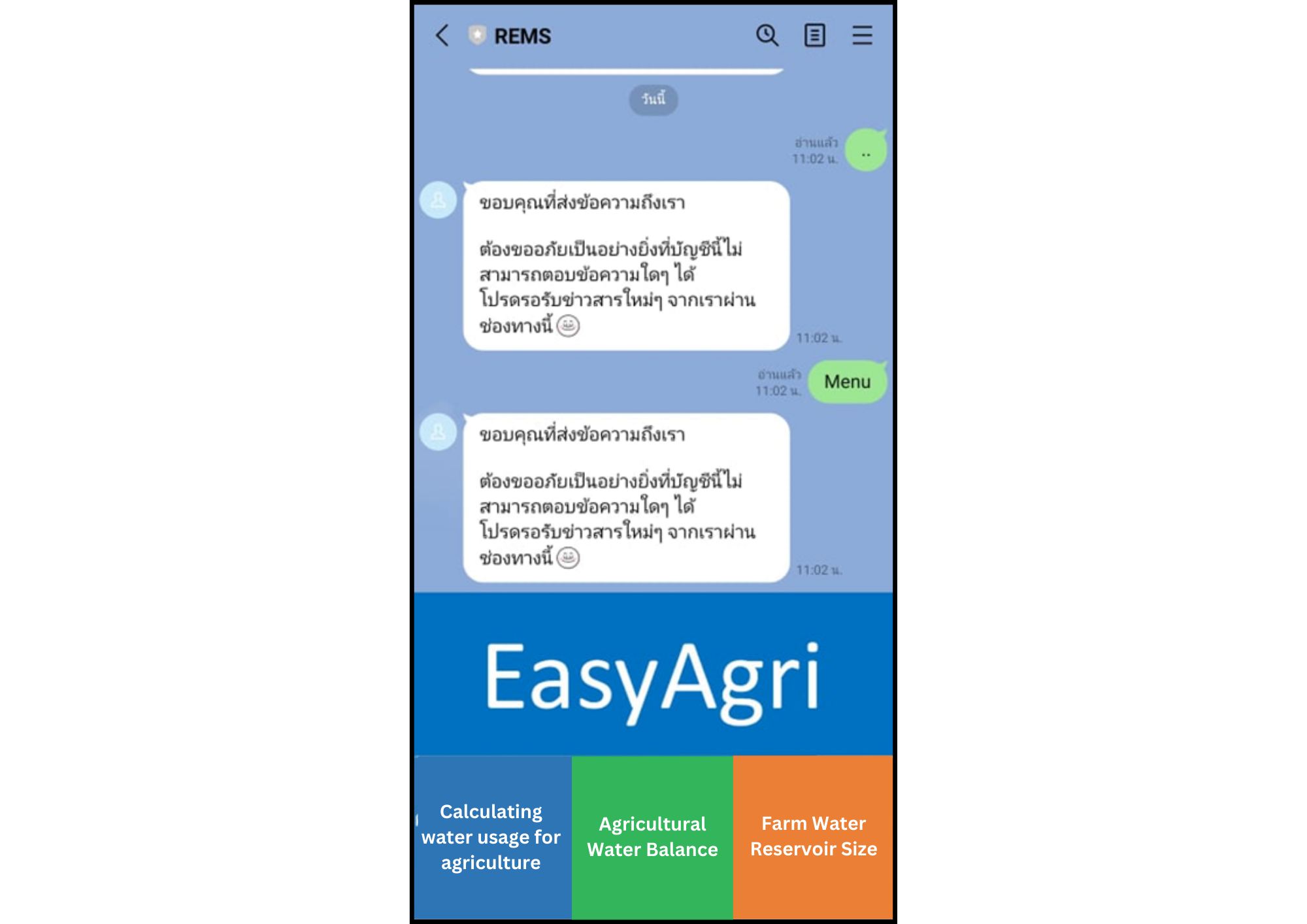
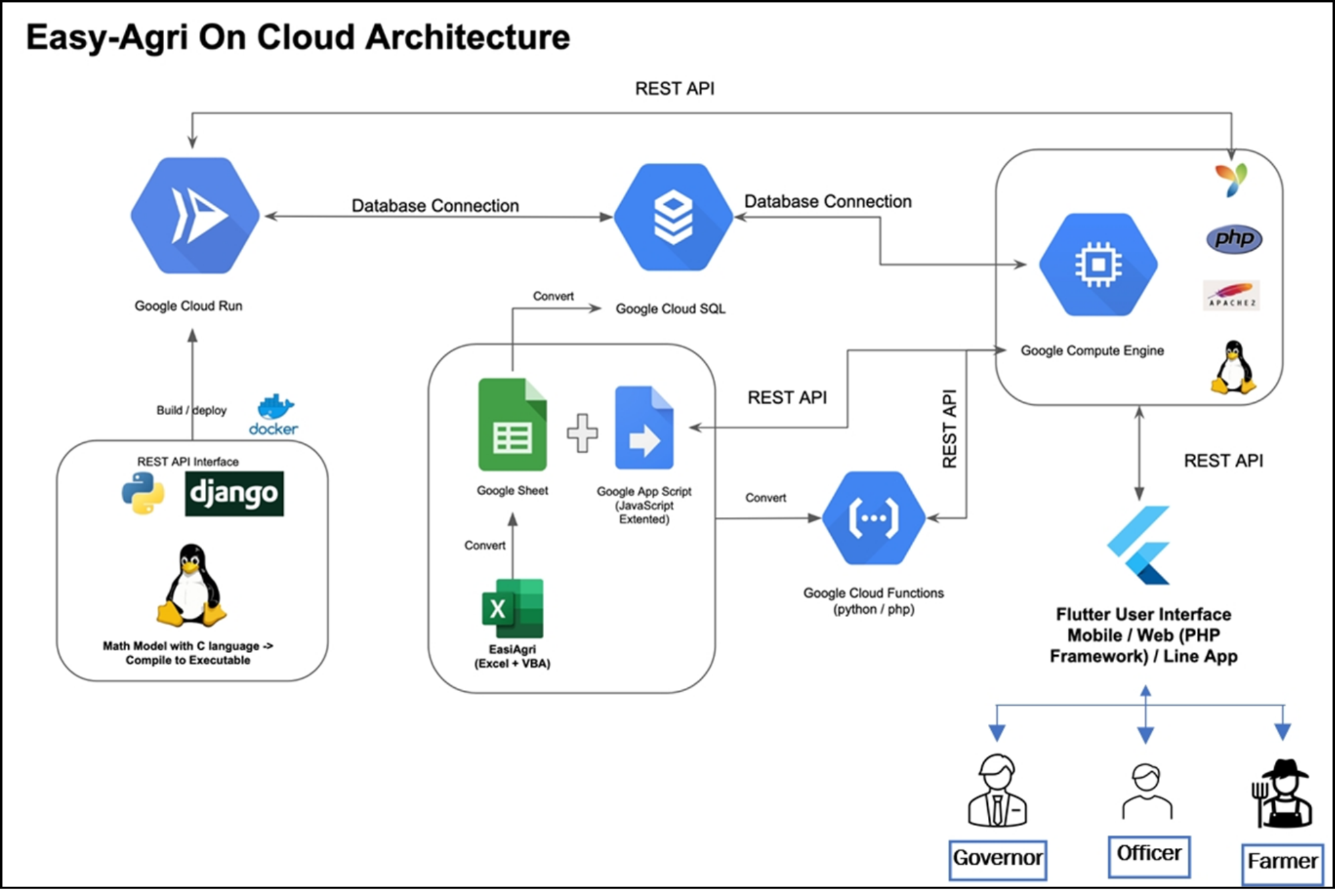
This platform is designed to help communities manage water resources for agricultural purposes by leveraging mobile cloud computing technology. The web application allows real-time monitoring, data collection, and decision-making on water usage, irrigation scheduling, and resource allocation, ensuring more efficient and sustainable water management.
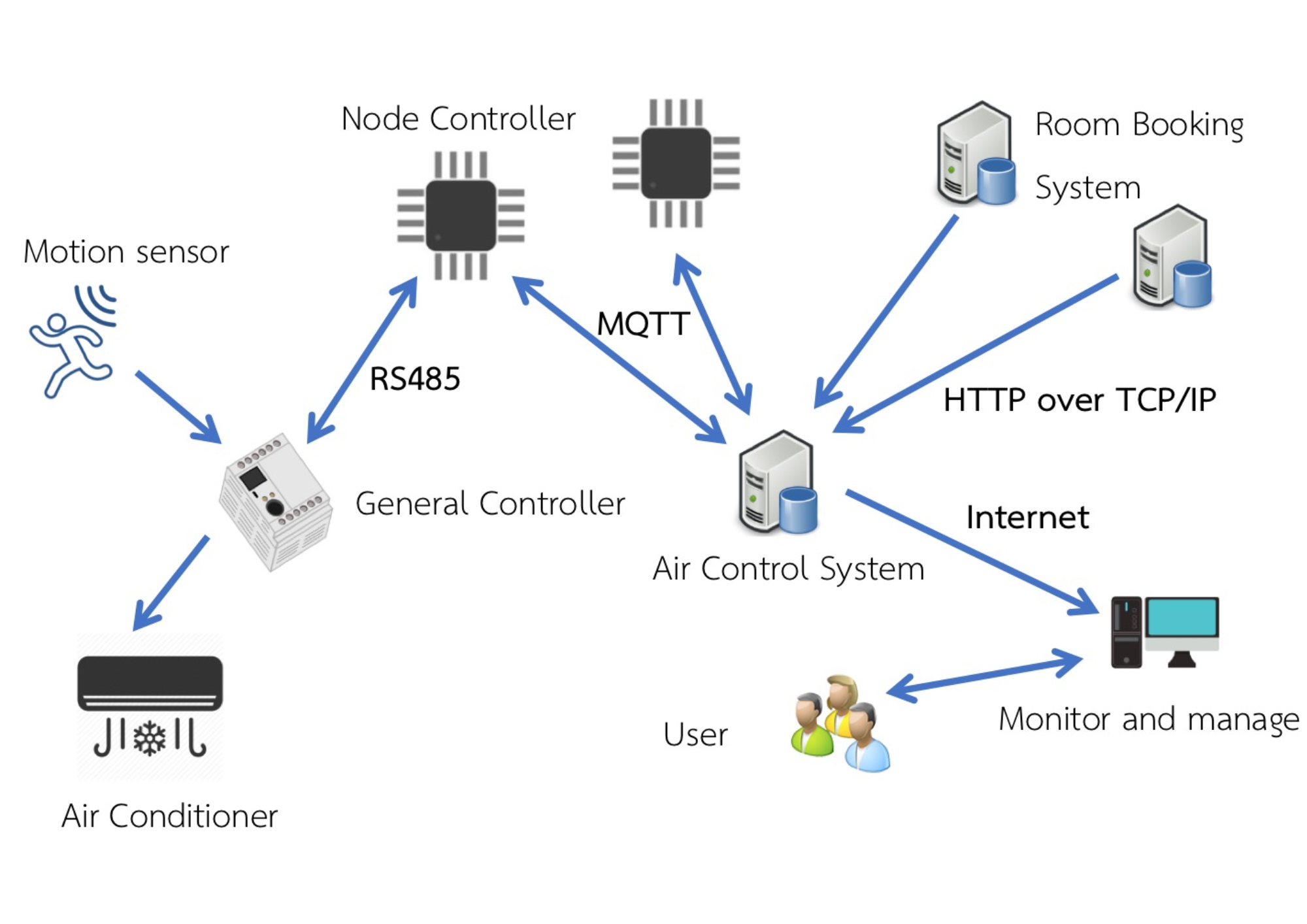
Picture : The architecture of an air conditioning control system that operates according to a scheduled time
The air conditioning control system consists of the following components :
- Main Server Computer (Air Control System): This server contains software that communicates with other servers managing room usage schedules and other command or setting patterns from users. It also connects to microcontroller devices (Node Controllers) responsible for controlling sensors and switches.
- Server Computer for Room Scheduling (Room Booking System): Typically, the institution has a dedicated server that manages the classroom schedules.
- User Application for System Management (Monitor and Manage): This application, installed on a personal computer connected to the internet, allows users to manage the entire system and monitor its operation.
- Microcontroller Devices (Node Controllers): These devices act as intermediaries between the main server and the controllers managing sensors or switches. They are installed in each room to receive commands from the server to control the air conditioning circuitry. These microcontrollers need to be capable of data communication through an appropriate internet channel, such as Wireless, LAN, Low Power Wide Area Network (LPWAN), or another suitable method.
- Microcontroller for Circuit Switching (General Controller): If necessary, a microcontroller may be used to control the air conditioning circuitry as commanded by the Node Controller or to receive data from sensors and send it to the Node Controller. In some cases, the Node Controller may perform the functions of the General Controller directly.
- Sensors (e.g., Motion Detectors): These are suitable sensors that can transmit detection results to the microcontroller.
System Operation Principles :
- Every 5 minutes, the central control system requests room schedule information from the server that manages classroom times. If there are schedule changes in any room, the central control system is immediately updated.
- The central system requests the room usage status as detected by motion sensors installed in the room.
- If a room is currently booked and the presence of users is detected, the system activates the air conditioning.
- If the conditions in step 3 are not met, the system turns off the air conditioning.
- Every 5 minutes, the system records the air conditioning status for future review.
Reference of data : Automatic Air Conditioning On-Off Control System
- Community Water Management Platform for Agriculture Using Mobile Cloud Computing
- Walailak University receives a certificate from Thailand Greenhouse Gas Organization for to certify the results of the assessment of the amount of greenhouse gas reduction. Under the project to support greenhouse gas reduction activities (Low Emission Support Scheme: LESS) in the energy sector.
Walailak University was awarded a certificate for its efforts under the Low Emission Support Scheme (LESS) in the energy sector, acknowledging its significant reduction in greenhouse gas emissions.
- Walailak University actively fosters the adoption of electric vehicles (EVs) on campus and cultivates entrepreneurship within the electric vehicle industry through the organization of the Entrepreneurial Spirit Training Program (NEC DIPROM).
Walailak University is committed to fostering sustainability through the integration of electric vehicles (EVs) within its campus operations. As part of its efforts to reduce carbon emissions and promote environmentally friendly transportation, the university actively encourages the use of EVs by students, faculty, and staff. In addition to this initiative, the university is dedicated to nurturing the growth of the electric vehicle industry. Through its collaboration with the Department of Industrial Promotion, Ministry of Industry, Walailak University organizes the Entrepreneurial Spirit Training Program (NEC DIPROM). This program aims to equip aspiring entrepreneurs with the necessary skills and knowledge to thrive in the evolving EV market, supporting sustainable economic growth and innovation in green technologies.
- Program for Reduction paper use by electronic system.