
25Oct 2024 by Fadia Choenthanomwong
Greenhouse gas emission reduction program (EC.7)
Greenhouse gas emission reduction program
Walailak University has implemented a comprehensive greenhouse gas (GHG) emission reduction program that spans all 3 emissions scopes, underscoring its unwavering commitment to sustainability and environmental stewardship. This program addresses initiatives across direct emissions, indirect emissions from energy use, and other indirect emissions within the University’s operations.
Scope 1 : Direct Emissions
• Stationary Combustion
The University conducts regular maintenance and inspections of its combustion and power generation systems to ensure they operate efficiently and within emissions standards.
• Mobile Combustion
The University has transitioned to electric vehicles for its fleet, including minibuses, delivery vans, and security vehicles, significantly reducing reliance on combustion fuels. In 2024, Walailak University successfully reduced greenhouse gas emissions by 47.31 tons of carbon dioxide equivalent through the use of electric vehicles.
Picture : Reduce fuel consumption for university vehicles by using electric vehicles.
Picture : Reduce fuel consumption for university vehicles by using electric vehicles.
• Fugitive Emissions
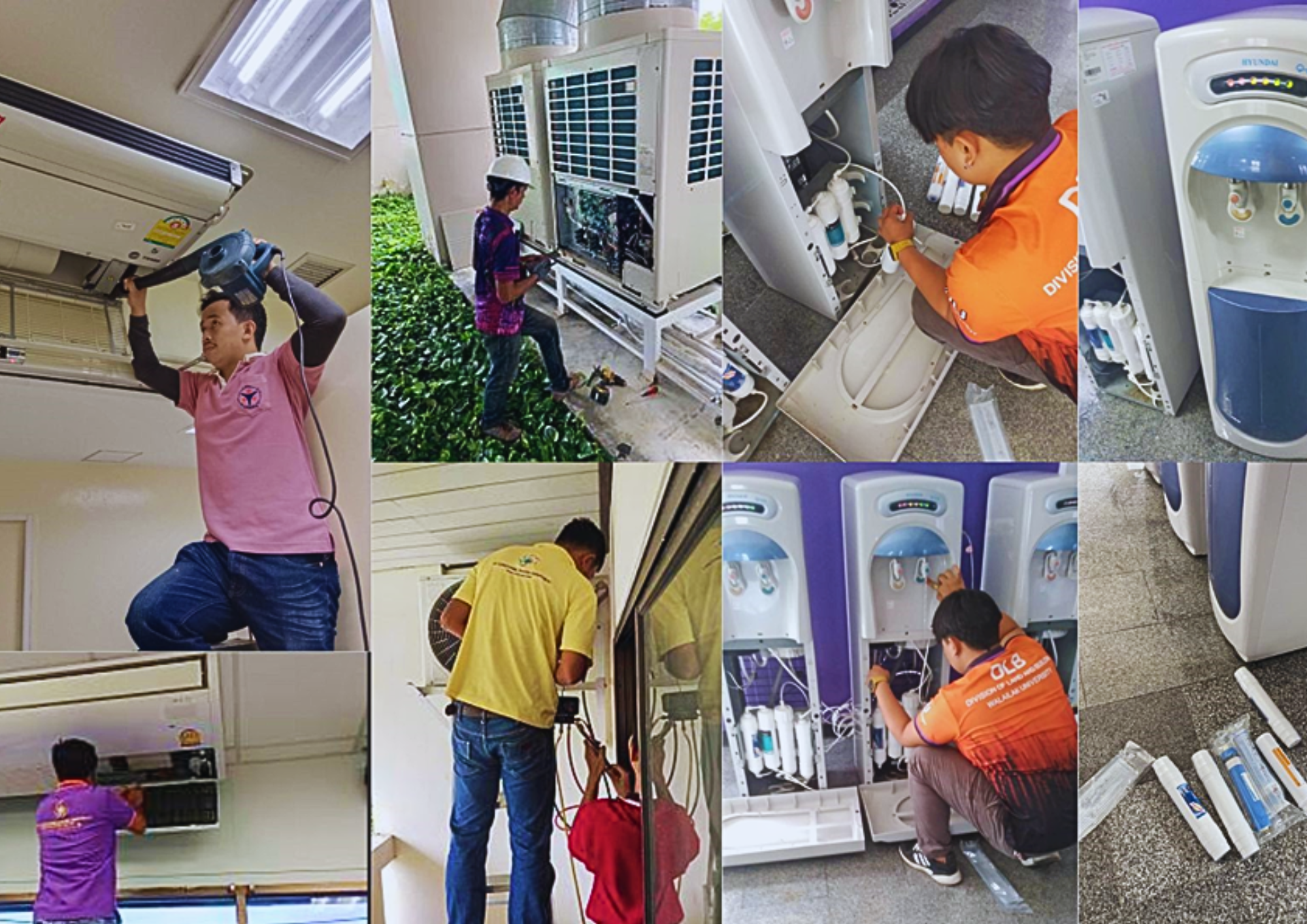
The University routinely inspects air conditioning units and water dispensers to minimize refrigerant leakage, thereby reducing fugitive emissions. In 2024, Walailak University reduced the use of R-32 and R-410 refrigerants, resulting in a reduction of greenhouse gas emissions by 855.05 tons of carbon dioxide equivalent.
Picture : Inspect the condition of air conditioners and drinking water dispensers to reduce refrigerant leaks.
Scope 2 : Indirect Emissions from Energy Use
• Renewable Energy Use
The University has invested in renewable energy sources such as solar power and biomass to decrease dependency on electricity from the grid, which is largely generated from fossil fuels. In 2024, Walailak University successfully reduced greenhouse gas emissions by 2,027 tons of carbon dioxide equivalent annually through the installation of solar rooftops.
Picture : Reduce indirect greenhouse gas emissions resulting from the electricity that the institution purchases and uses.
• Energy Conservation Measures
The University has adopted energy-saving technologies and practices, including LED lighting, energy-efficient appliances, and smart building systems, to lower overall energy consumption. In 2024, Walailak University successfully reduced greenhouse gas emissions by 347.76 tons of carbon dioxide equivalent by replacing fluorescent bulbs with LED lights.
Picture : Reduce indirect greenhouse gas emissions by replacing fluorescent lights with energy-efficient LED lights.
Scope 3 : Other Indirect Emissions
• Waste Management
The University enforces a waste separation policy at the source to ease the burden of waste management. Additionally, campaigns encourage students and staff to use reusable bags and personal water bottles, reducing plastic usage. The University has also implemented an E-Service system, which includes the WU DOMs system for document handling, the E-booking system for meeting room reservations, and the E-learning system, all aimed at reducing paper consumption. In 2024, Walailak University successfully reduced greenhouse gas emissions by 32.05 tons of carbon dioxide equivalent through the use of the E-Service system.
Picture : Sorting waste at the source and reducing plastic use to lessen the burden of waste disposal through landfill and incineration.
Picture : Reduction paper use by electronic system.
• Promotion of Low-Emission Travel
Bicycles and Walking: The University has enhanced infrastructure by creating safe and convenient bicycle lanes and developing shaded, well-connected pedestrian areas to encourage cycling and walking over fossil fuel-based transportation. In 2024, Walailak University had zero greenhouse gas emissions from its campaign activities encouraging staff and students to travel by bicycle and Walking.
Picture : Zero greenhouse gas emissions by Bicycles and Walking.
• Support for Electric Vehicles (EVs)
The University has installed EV charging stations on campus to encourage the use of electric vehicles among staff and students. In 2024, Walailak University reduced greenhouse gas emissions by 0.19 tons of carbon dioxide equivalent through the promotion of electric vehicle usage.
Picture : Encouraging personnel and students to use electric motorcycles by providing electric vehicle charging stations and offering monthly rentals
of electric motorcycles.
• Carpooling and Car Sharing
The University has established a carpooling program to encourage staff and students to share rides, effectively reducing the number of vehicles on the road and lowering greenhouse gas emissions. In 2024, Walailak University emitted 64.22 tons of carbon dioxide equivalent from its Car Pool system activities.
Picture : Reduce fuel consumption from regular commuting from and to institutions by students
and employees (i.e., reducing regular commuting by using shared vehicles, carpooling)
• Reduction of Personal Vehicle Use
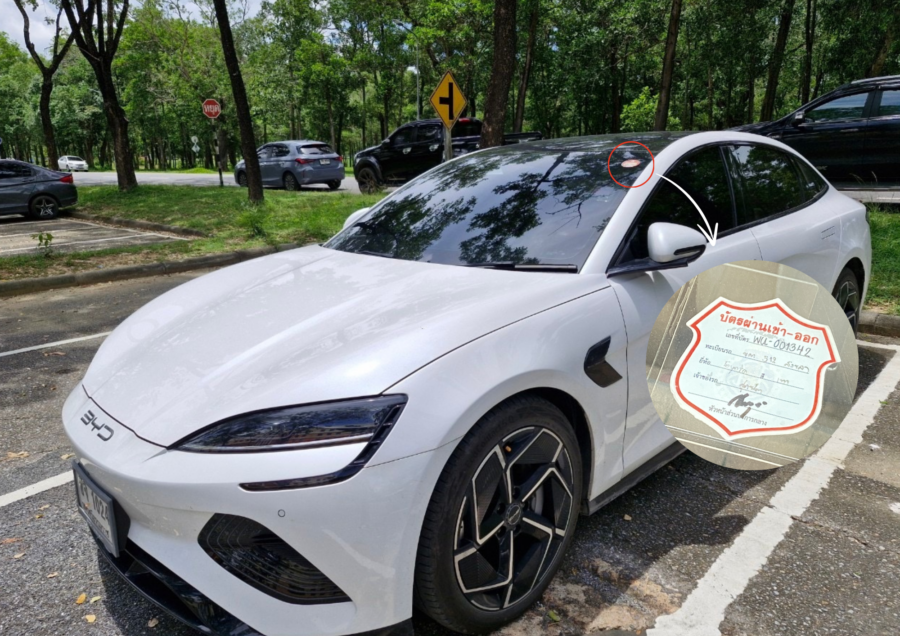
The University enforces a policy restricting vehicle access to campus, permitting only vehicles with University-issued stickers. In 2024, with a total of 15,860 staff and students, Walailak University emitted 223.88 tons of carbon dioxide equivalent as a result of this vehicle access policy.
Picture : Sticker ticker for motorcycles and sticker for cars only vehicles with university stickers are allowed to enter the school district.
• Reducing Greenhouse Gas Emissions from Air Travel
The university encourages staff and students to opt for online communication methods, such as virtual meetings and webinars, to reduce the need for air travel, thereby cutting down on associated greenhouse gas emissions. In 2024, during the University Council meetings, executives and committee members can choose to participate via Zoom Meeting instead of traveling to Bangkok for the meetings. In 2024, a total of 406 committee members attended the meetings via Zoom Meeting, resulting in a reduction of 42.08 tons of carbon dioxide equivalent in greenhouse gas emissions from air travel.
Picture : The reduction of air travel for Walailak University’s council meetings has been implemented
by opting for online meetings via Zoom. This initiative aims to reduce greenhouse gas emissions and support the university’s sustainable practices.

Post Views: 65