Water Conservation Program Implementation (WR.1)

Water Conservation Program Implementation (WR.1)

Water Conservation Program Implementation

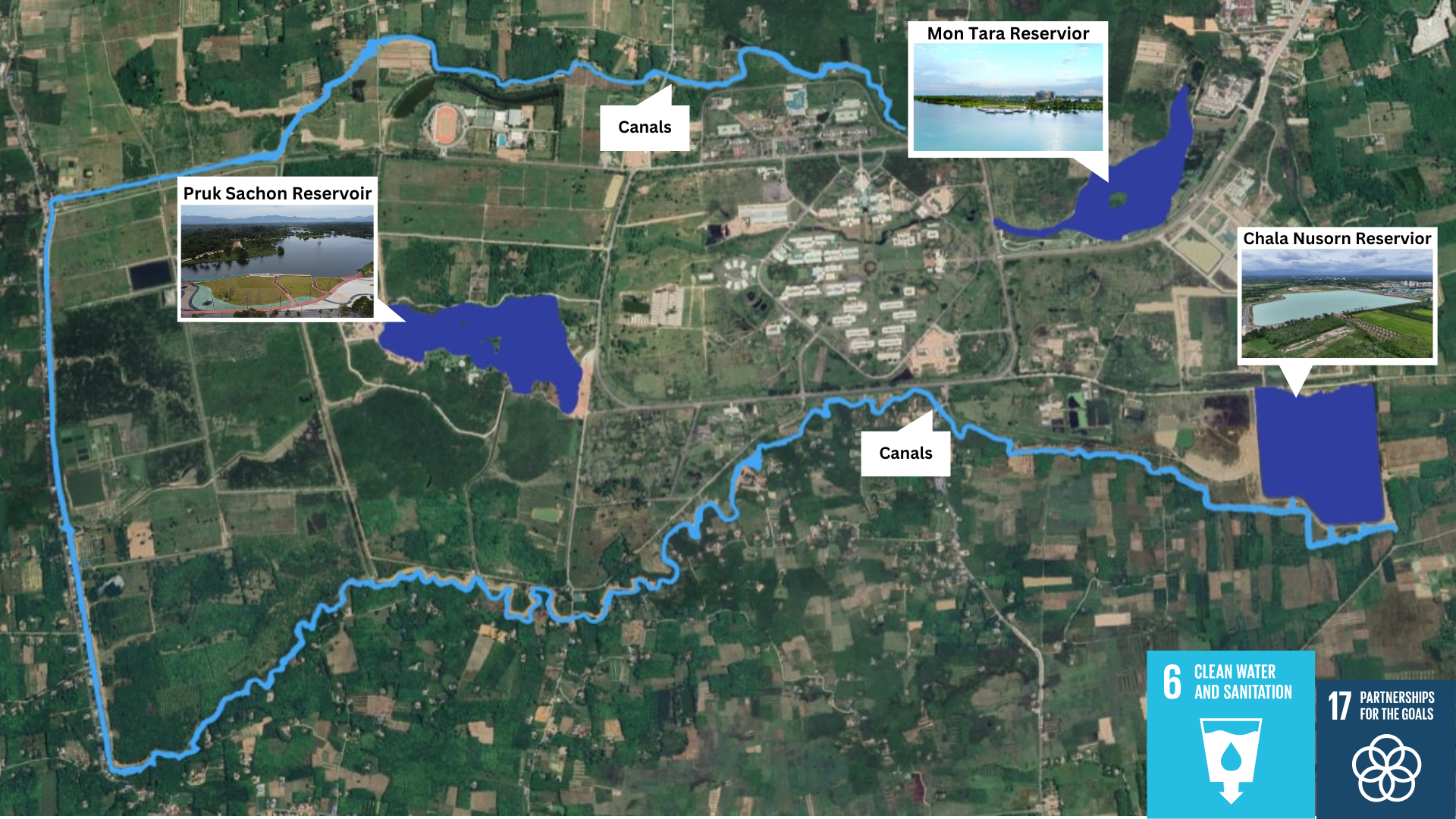
Picture : Measure the total volume of water used in the university that is taken from the mains supply, and extracted from various detention ponds and canals

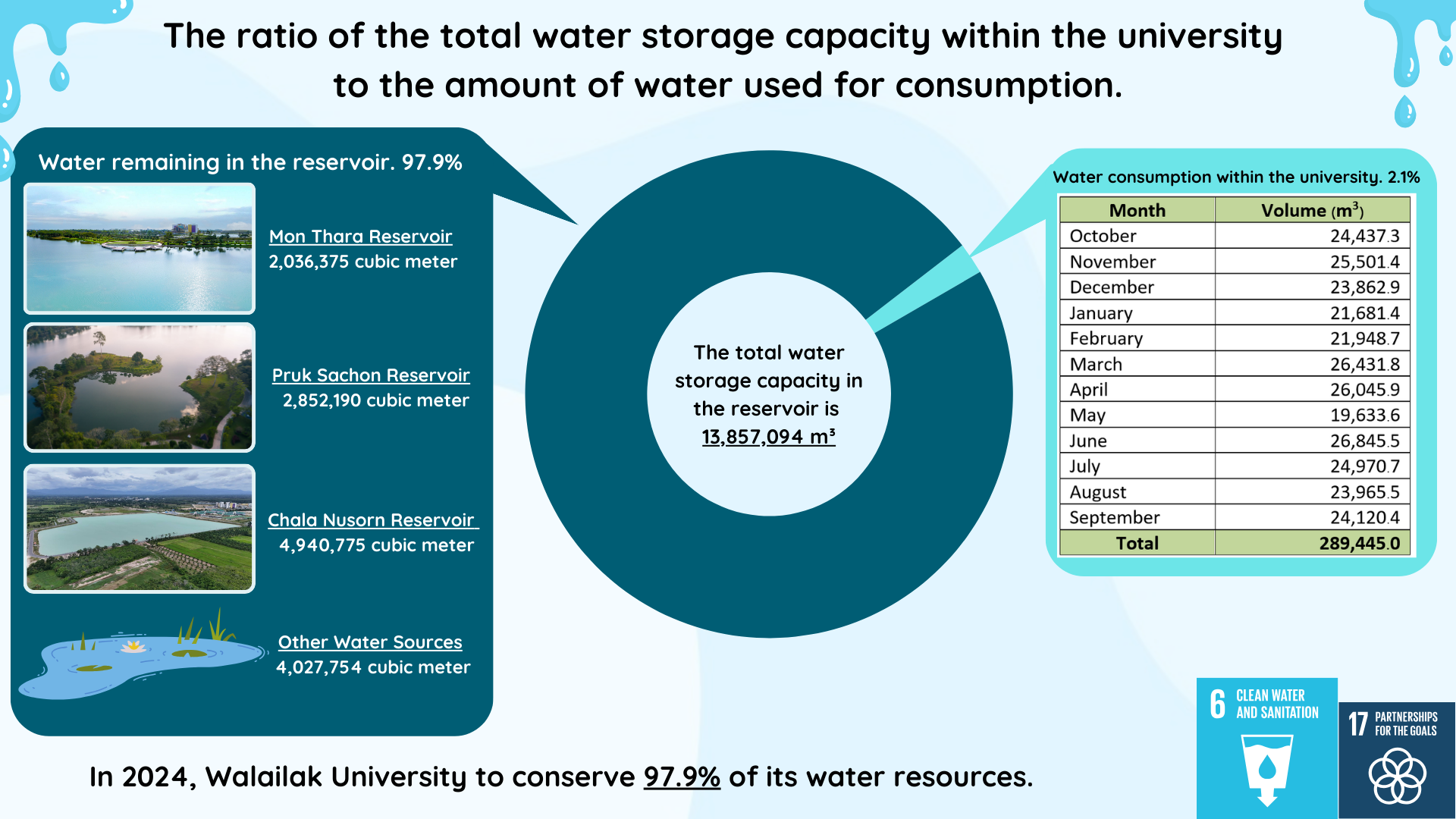
Walailak University is in Southern Thailand, covering a total area of 21,196,440 square meters, making it the largest university in the country by land area. Due to its location, the university experiences drought during the summer and heavy rainfall during the rainy season. To manage water resources effectively, the university stores water in various reservoirs, ponds, and lakes, with a combined area of 1,672,217 square meters and a total storage capacity of 13,857,094 cubic meters. This water management approach plays a crucial role in sustainable water management on campus, preventing flooding during the rainy season and securing water for use during the dry season.

Picture : The reservoirs within Walailak University. (Mon Tara Reservoir, Pruk Sachon Reservoir and Chala Nusorn Reservoir)

Mon Tara Reservoir 2,036,375 cubic meter
Pruk Sachon Reservoir 2,852,190 cubic meter
Chala Nusorn Reservoir 4,940,775 cubic meter
In 2024, Walailak University constructed a new reservoir named “Chala Nusorn Reservoir” or Reservoir No. 3, covering an area of 329,385 square meters with a water storage capacity of 4,940,775 cubic meters. This reservoir serves purposes such as agriculture and flood control, and provides an alternative water source during droughts, as well as water for potable water production. Pruk Sachon Reservoir, or Reservoir No. 1, is the primary water source used for drinking water production within the university. It covers an area of 259,290 square meters with a capacity of 2,852,190 cubic meters. Meanwhile, Mon Tara Reservoir, or Reservoir No. 2, spans an area of 185,125 square meters with a water volume of 2,036,375 cubic meters.
The university’s water production capacity is 4,800 cubic meters per day, equivalent to 1,728,000 cubic meters per year. The production of potable water at Walailak University utilizes raw water sourced from stormwater and rainwater collected in Pruk Sachon Reservoir and Chala Nusorn Reservoir. These raw water sources are free from chemicals, pathogens, or contamination from industrial and community wastewater, ensuring clean and high-quality water.

In 2024, Walailak University has a population of 15,860 people, comprising 13,222 students and 2,638 staff members. Monitoring data shows that the total annual water consumption within the university is 289,445 cubic meters, averaging 793.00 cubic meters per day. The water consumption per capita within the university is 0.05 cubic meters per person per day. When comparing the university’s water usage to the total stored water capacity, it was found that only 2.1% of the total stored water is used, allowing Walailak University to conserve 97.9% of its water resources.

Sustainable water extraction technology, Walailak University uses a pump system in which raw water is pumped through 400-mm pipes, translating to the static mixer. The static mixer will release chemicals into the raw water to purify it before sedimentation and other steps of water supply production. WU guarantees that the system does not harm any environment or ecosystem on or outside the campus.
In order to show that Walailak University is a good steward of sustainable water extraction, here are the requirements and principles of all sustainable water extraction methods:
  • All technologies for water extraction must not affect or harm biodiversity, all types of environments, or the animal habitats of local species on and outside the campus.
  • The livelihood of local communities surrounding the university must not be affected by university actions on water extraction, especially flooding that damages aquaculture and agriculture fields.
  • The livelihood of staff and students at WU must not be affected by the implementation of water extraction.
  • All relevant staff must use the BOT CDT Application to strictly monitor the situations at all reservoirs in order to ensure the safety of students and staff at WU and the local communities.
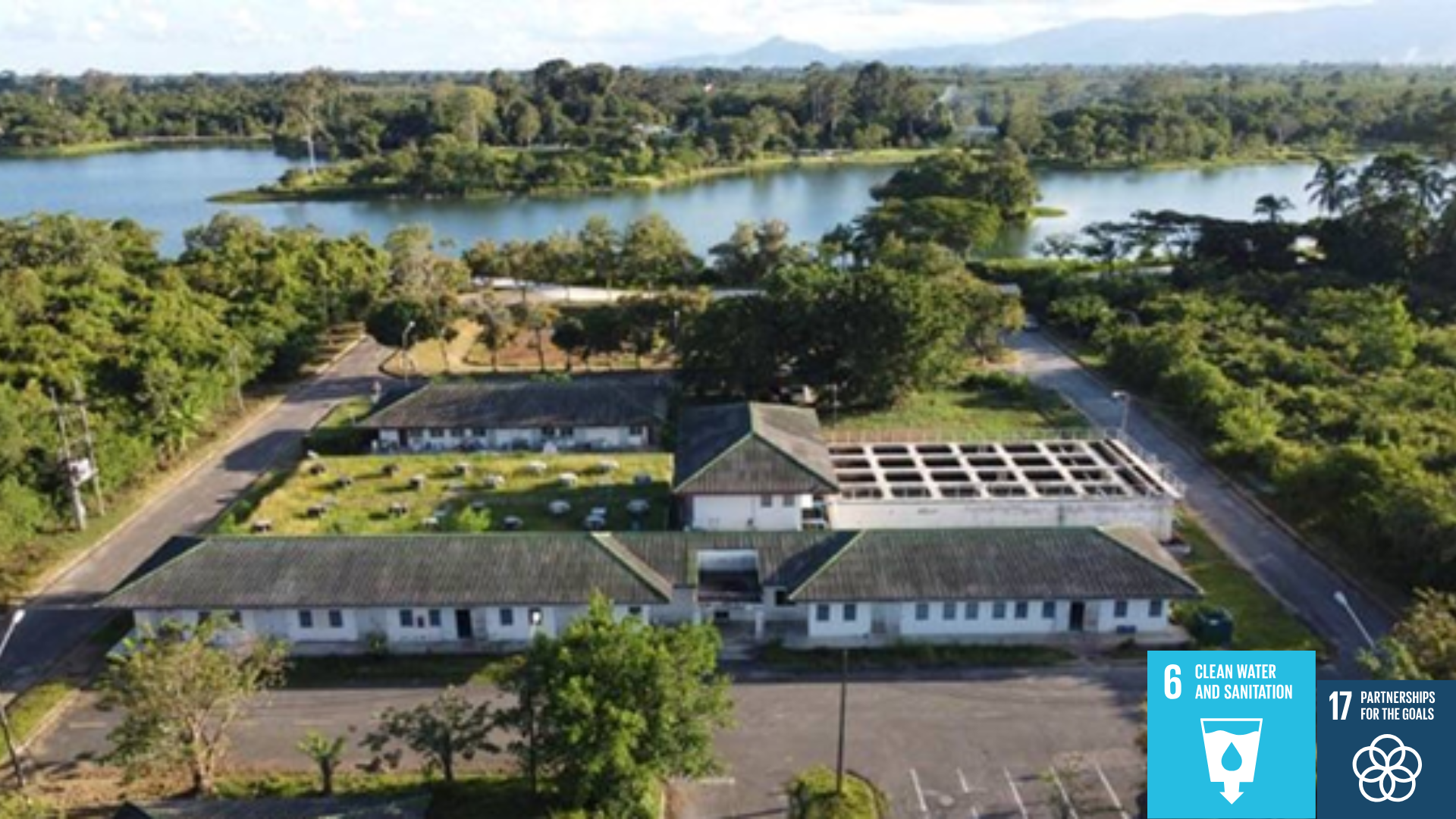
The water production plant at Reservoir 1 for consumption on campus
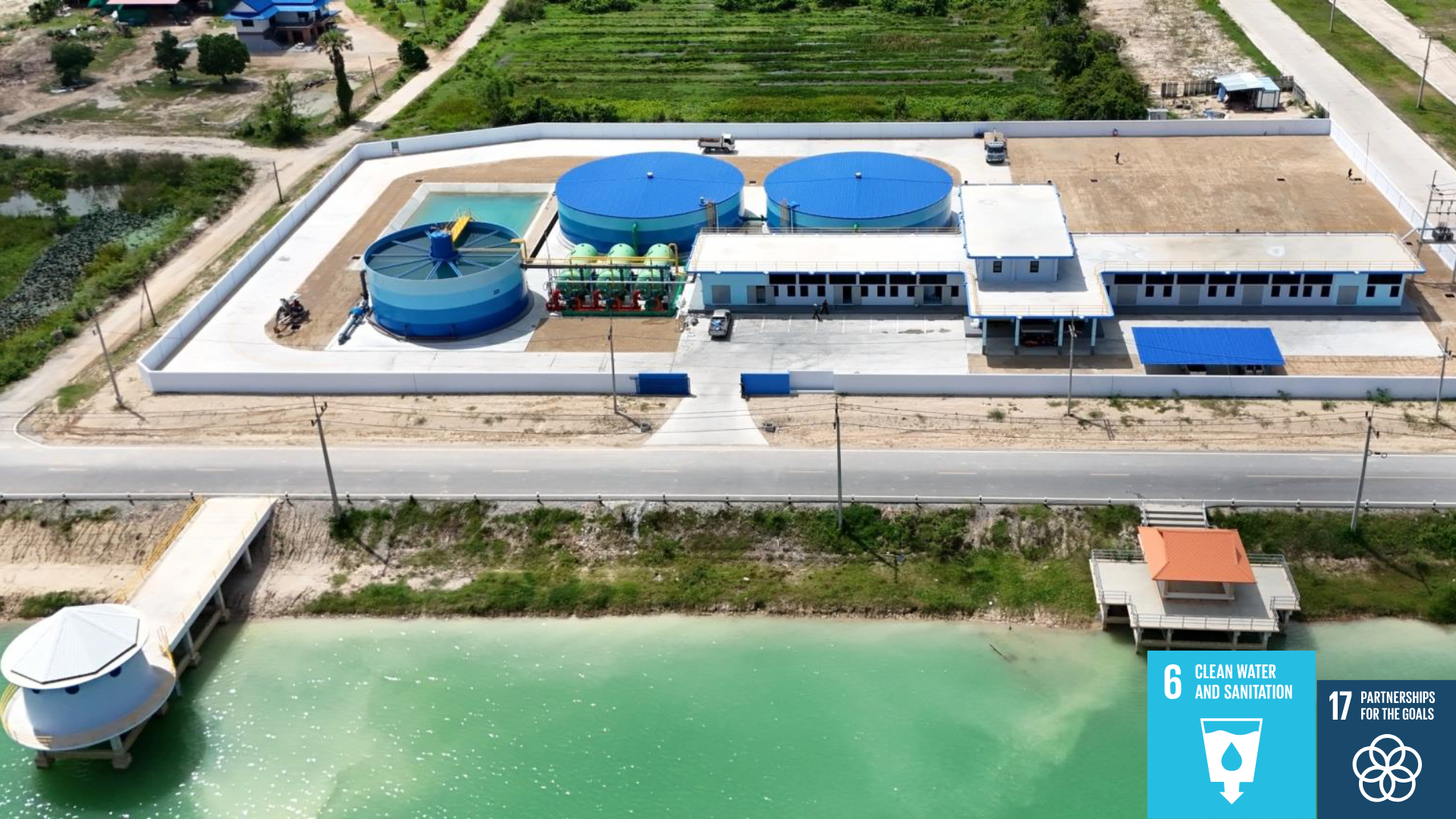
The water production plant at Reservoir 3 for consumption on campus
Goal 6: Clean Water and Sanitation

Goal 13: Climate action