Sewage disposal (WS.6)
Sewage Disposal
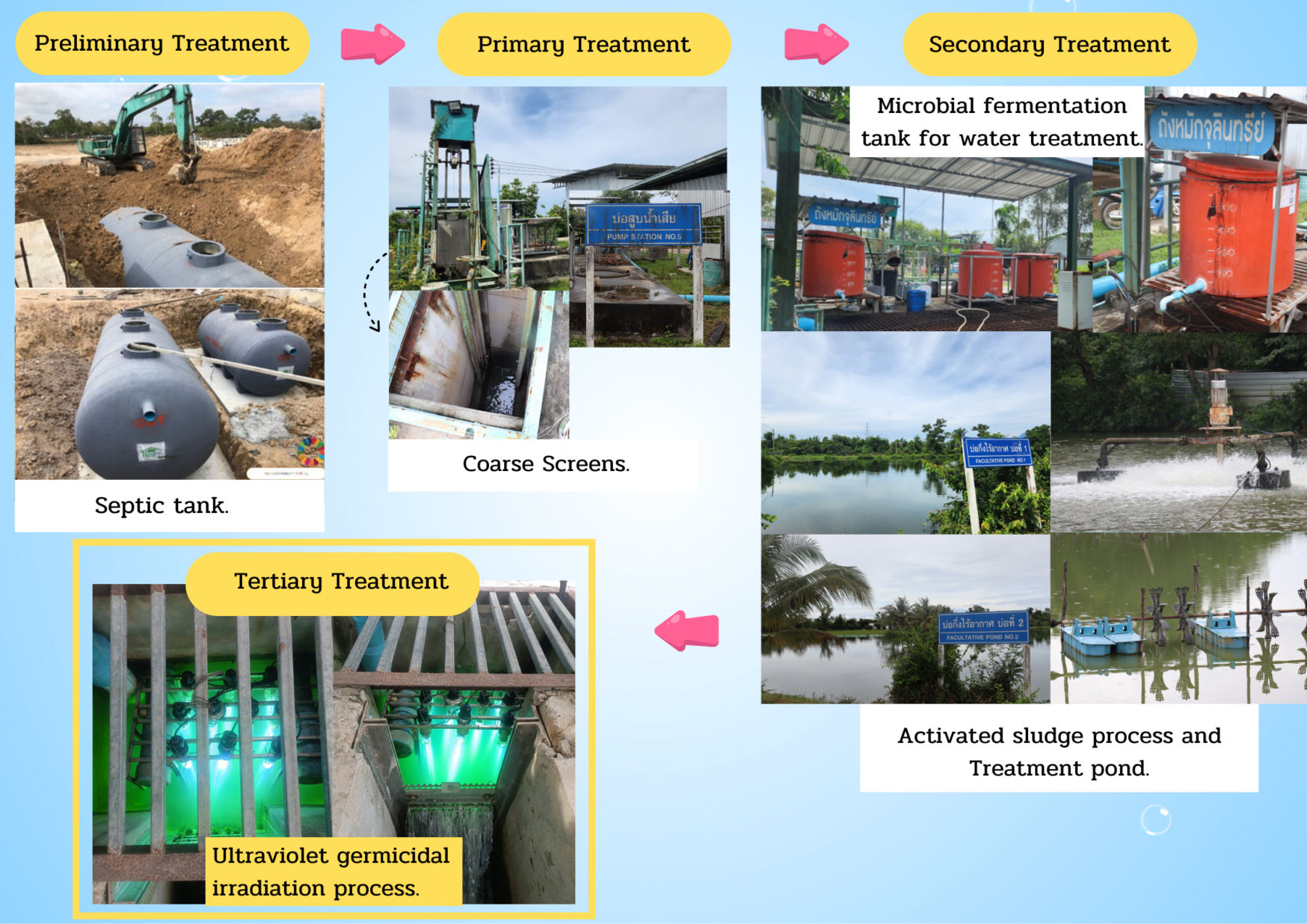
Sewage treatment is carried out using tertiary treatment, which includes disinfection through an ultraviolet (UV) disinfection system. This method effectively eliminates harmful pathogens, ensuring the treated water is safe and environmentally friendly.
Treatment Process Overview
The wastewater treatment system at Walailak University includes several critical stages to ensure effective sewage management:
- Mechanical Screening: A mechanically driven screening system removes large debris and waste from the wastewater, preventing blockages in subsequent stages.
- Wastewater Pumping Station: This station ensures the continuous flow of wastewater to the aeration process.
- Aerated Lagoon: The main treatment basin is an aerated lagoon, where air is pumped into the water to support aerobic bacterial activity, which helps break down organic materials.
- Facultative Ponds: Two additional facultative ponds act as secondary treatment basins, where both aerobic and anaerobic processes further treat the wastewater.
- UV Disinfection System: Before the treated water is discharged into the environment, it undergoes
disinfection using ultraviolet light to eliminate harmful pathogens and bacteria.
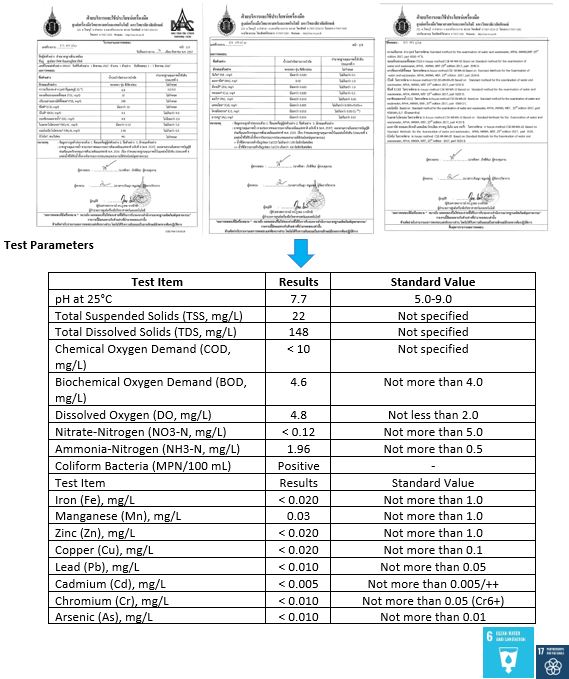
Water Quality Test Report. (Walailak University, Thailand)
Date of Report: August 11, 2024
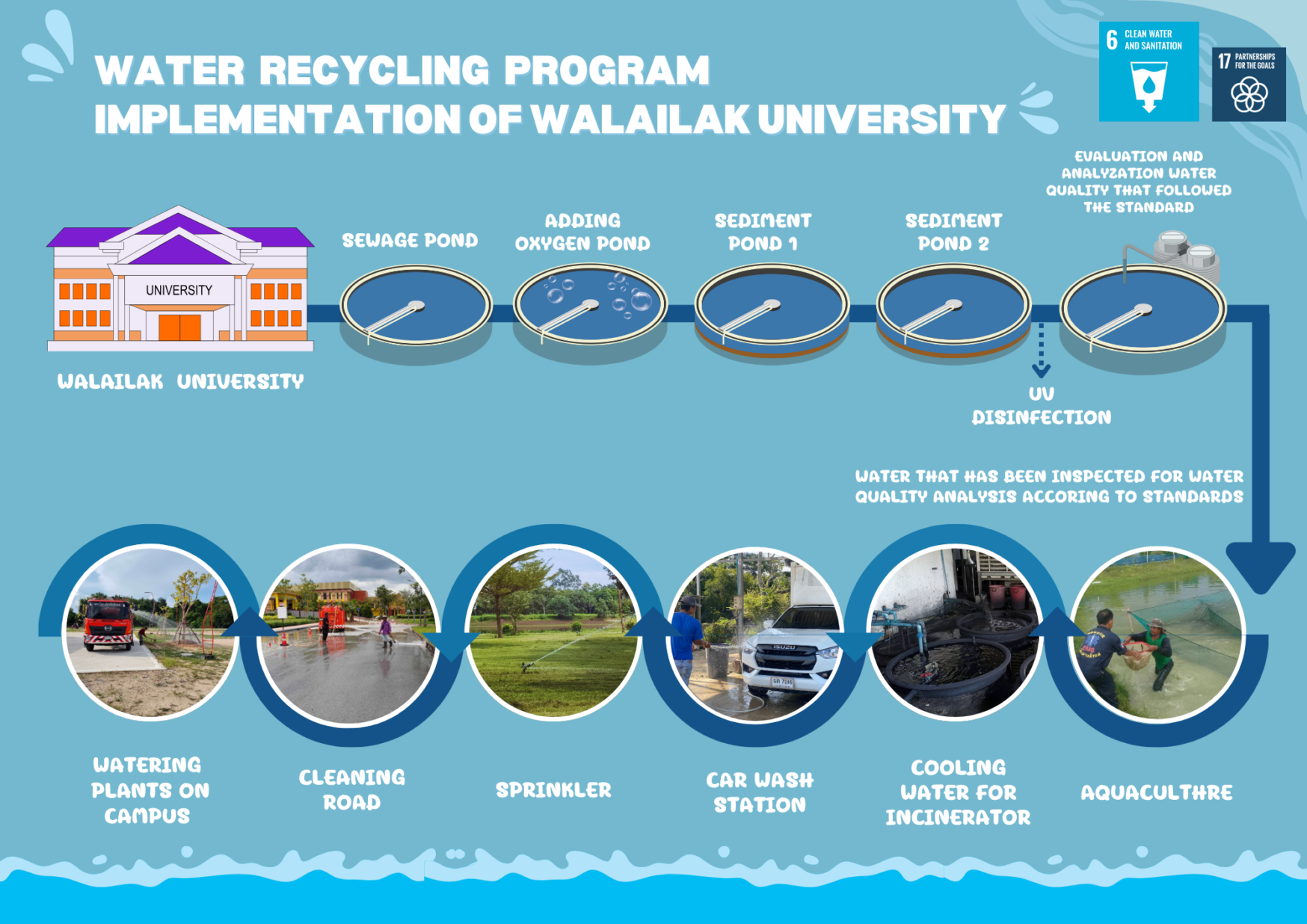
Water Recycling Program (Walailak University, Thailand)
Compliance with Environmental Standards
The treated wastewater at Walailak University is rigorously tested to ensure it meets the water quality standards outlined for Class 3 surface water, as specified in the National Environmental Board Announcement No. 8 (B.E. 2537) on surface water quality. The final effluent is safe for discharge into the environment, minimizing any negative environmental impact.
Efficient Water Usage and Wastewater Minimization
Walailak University actively promotes water conservation and efficient usage practices across campus. These efforts contribute to reduced wastewater generation, which in turn lessens the load on the wastewater treatment system.
Water Reuse Initiatives
Treated wastewater is not merely discharged but is also reused for various purposes within the university. These activities include:
– Irrigation of landscaped areas
– Vehicle washing
– Street cleaning These reuse initiatives further enhance the sustainability of the university’s water management system by reducing the need for freshwater resources.
Quality Monitoring and Continuous Evaluation
Regular sampling and analysis of wastewater are conducted to ensure that the treatment system operates within the required parameters. These checks ensure compliance with environmental regulations and help maintain the effectiveness of the treatment process.
Moreover, the wastewater management system undergoes continuous evaluations, with regular assessments being carried out to identify areas for improvement. This ongoing improvement ensures the system remains up-to-date with technological advancements and continues to meet both environmental and educational goals.
Educational Resources for Students and External Personnel
The wastewater treatment system also serves as an educational facility for both Walailak University students and external visitors. Students learn about wastewater treatment processes, environmental management, and sustainability practices firsthand, which contributes to the university’s role in promoting sustainable development.
Walailak University has implemented a comprehensive and environmentally responsible sewage disposal system. By integrating water conservation efforts, a modern treatment process, and educational initiatives, the university not only minimizes its environmental footprint but also serves as a model for sustainable wastewater management.