The Mangrove Reforestation Activity to Enhance Carbon Sequestration at Ban Laem Community

The Mangrove Reforestation Activity to Enhance Carbon Sequestration at Ban Laem Community

The target group consisted of 80 people, including:
1. Students: 50 people
2. Staff: 30 people
Total hours of the activity: 8 hours

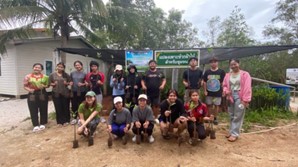
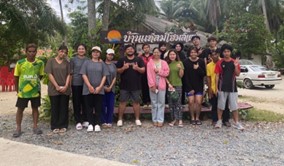
Walailak University, led by Assoc. Prof. Dr. Laksanara Khwanchum, Ms. Niramon Rawangngam (Lecturer) from the School of Management, and ACTING.SUB-LT. Worawit Pradittakarn (Lecturer) from the School of Education and Liberal Arts, along with students from the School of Management, the School of Nursing, and the Center for Academic Services, conducted a mangrove reforestation activity to enhance carbon sequestration at Ban Laem Homestay Tourism Community Enterprise, Tha Sala District, Nakhon Si Thammarat. This initiative was carried out under the Setting and Infrastructure (SI) Project, which connects UI GreenMetric and Sustainable Development Goal (SDG) 13: Climate Action.
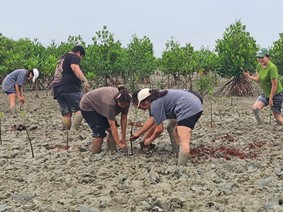
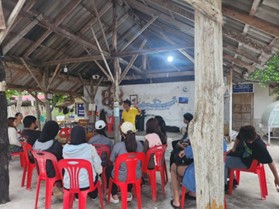
During this activity, faculty members and students planted Rhizophora mangrove trees to expand green areas and enhance carbon sequestration capacity. Mangrove forests are known to absorb more carbon than other types of forests of the same area. They can store carbon in the soil up to six times more than terrestrial forests. The carbon dioxide sequestration capacity of Rhizophora mangrove trees averages 2.75 tons per rai (1 rai = 1,600 sq.m) per year. Therefore, mangrove reforestation provides multiple benefits, including expanding forest coverage, enriching biodiversity, and supporting local livelihoods through sustainable economic activities in mangrove areas. This initiative aligns with SDG 13 and SDG 17. Furthermore, it supports the UI GreenMetric World University Ranking under the Setting and Infrastructure category.