International Collaboration for Data Gathering and Best Practice Development for Climate Smart Agriculture
The Center of Excellence for Ecoinformatics at Walailak University, led by Assoc. Prof. Dr. Krisanadej Jaroensutasinee is dedicated to advancing research, knowledge development, and the application of Ecoinformatics to support technological solutions for community and national development. For over five years, the center has been actively engaged in research projects and forming international partnerships to address various Sustainable Development Goals (SDGs). With a team of 19 experienced researchers, experts, and scientists, the center strives to be a leading institution in Thailand for human resource development, research excellence, and innovation in Ecoinformatics.
The Establishment of International Collaboration of Walailak University and TICA and International Partners
Walailak University and the Thailand International Cooperation Agency (TICA) have been fostering international cooperation with countries worldwide, particularly least-developed and developing nations, to advance the Sustainable Development Goals (SDGs). Their collaboration focuses on critical issues such as food security, climate change, and environmental sustainability. For over five years, they have worked together through the Annual International Training Courses (AITC), offering specialized programs designed to equip international participants with sustainable development strategies, promote best practices, and support collaborative research initiatives.
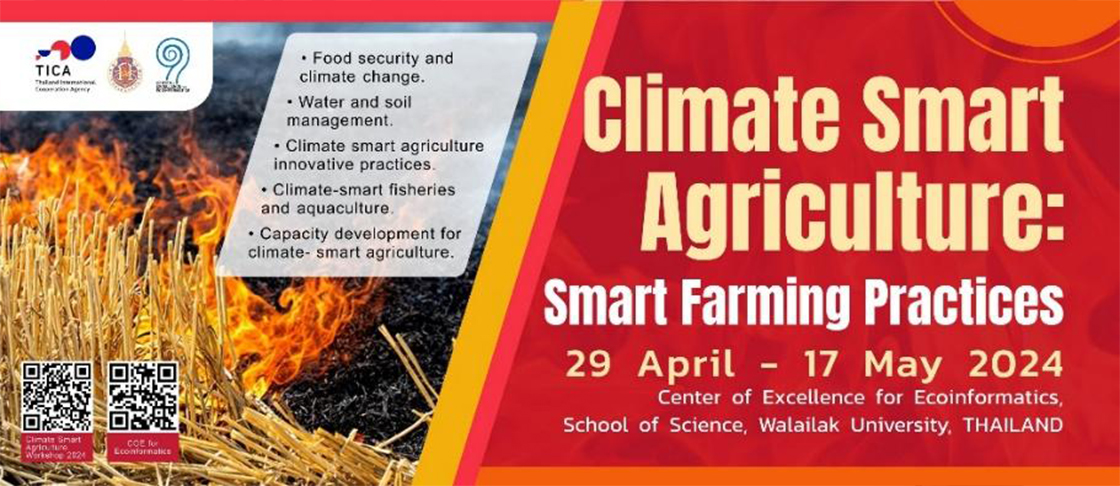
Climate Smart Agriculture: Smart Farming Practices Program
Climate change has significantly impacted crop production worldwide, exacerbating food insecurity, particularly in developing countries. These nations, including Thailand, are among the most vulnerable due to limited social, technological, and financial resources needed to adapt to changing conditions. The Food and Agriculture Organization (FAO) defines Climate-Smart Agriculture (CSA) as an approach that enhances agricultural productivity, strengthens the resilience of livelihoods and ecosystems, reduces greenhouse gas (GHG) emissions, and supports national food security and development goals. By integrating adaptation and mitigation strategies, CSA plays a crucial role in addressing climate change’s effects on agriculture.
In response to these challenges, Walailak University and the Thailand International Cooperation Agency (TICA) launched the Climate-Smart Agriculture: Smart Farming Practices Program as part of TICA’s Annual International Training Courses (AITC). This initiative fosters international collaboration among researchers, experts, and professionals from least-developed and developing countries. A diagnostic assessment of local farming conditions, climate risks, and soil–water characteristics is conducted to identify key vulnerabilities and guide the design of context-specific smart farming practices. Through data collection, knowledge exchange, and the development of best practices, participants work to create sustainable agricultural solutions that can be adapted and implemented across different regions. These best practices are then shared with relevant organizations in their home countries to support climate-resilient agricultural systems.
In response to these challenges, Walailak University and the Thailand International Cooperation Agency (TICA) launched the Climate-Smart Agriculture: Smart Farming Practices Program as part of TICA’s Annual International Training Courses (AITC). This initiative fosters international collaboration among researchers, experts, and professionals from least-developed and developing countries. Through data collection, knowledge exchange, and the development of best practices, participants work to create sustainable agricultural solutions that can be adapted and implemented across different regions. These best practices are then shared with relevant organizations in their home countries to support climate-resilient agricultural systems.
This program directly contributes to the United Nations Sustainable Development Goals (SDGs), particularly SDG 13: Climate Action, by promoting sustainable agricultural practices to combat the climate crisis, and SDG 2: Zero Hunger, by helping developing nations enhance food security through sustainable agricultural implementation.
The objectives of this international collaboration through the program are:
To enhance agricultural training programs, ensuring they effectively address climate change challenges and support sustainable development.
To develop a skilled workforce capable of promoting and implementing climate-smart agriculture adaptation and mitigation strategies.
To establish a platform for international communities to collect data and exchange best practices in addressing climate change impacts on agriculture.
To create a global network for agricultural innovation and research, fostering collaboration, knowledge-sharing, and the development of sustainable solutions to combat climate change.
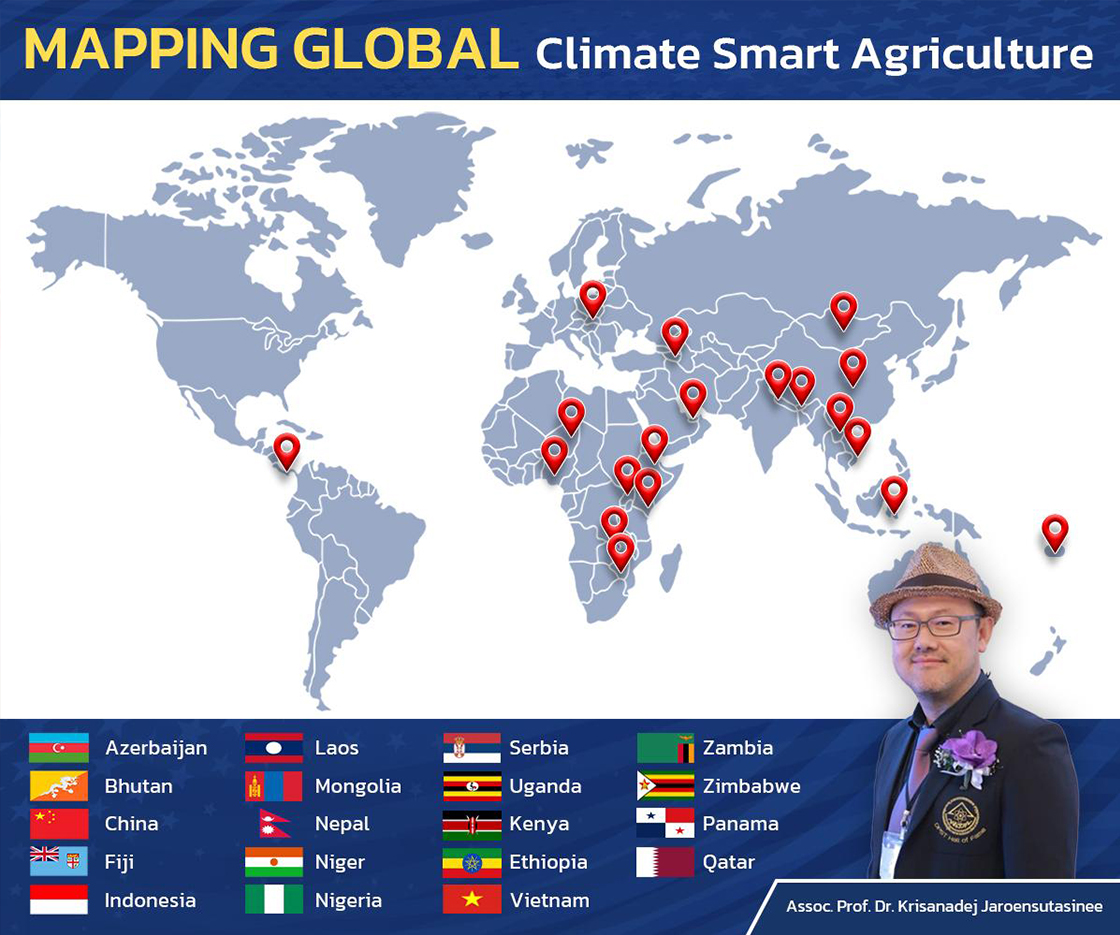
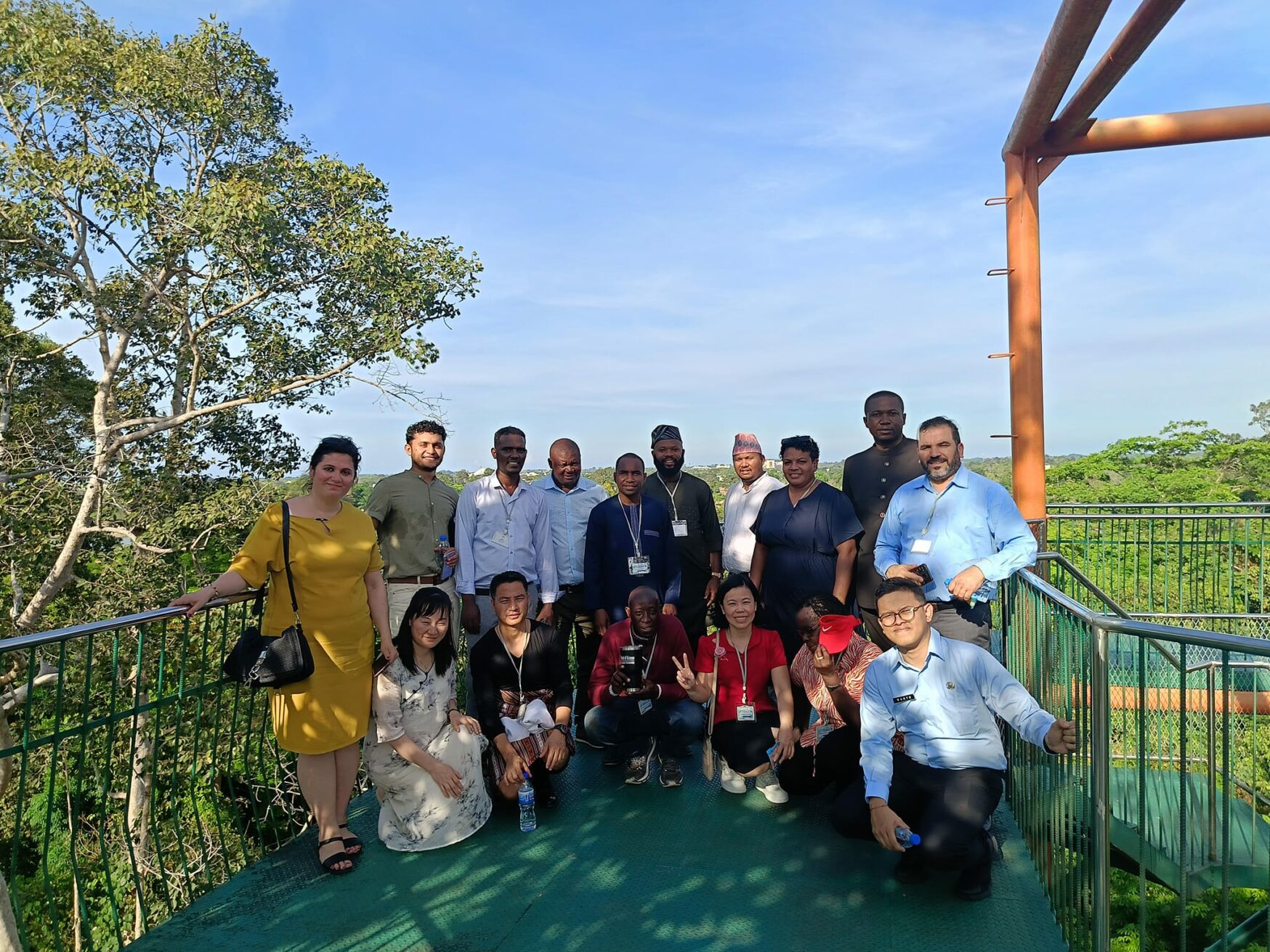
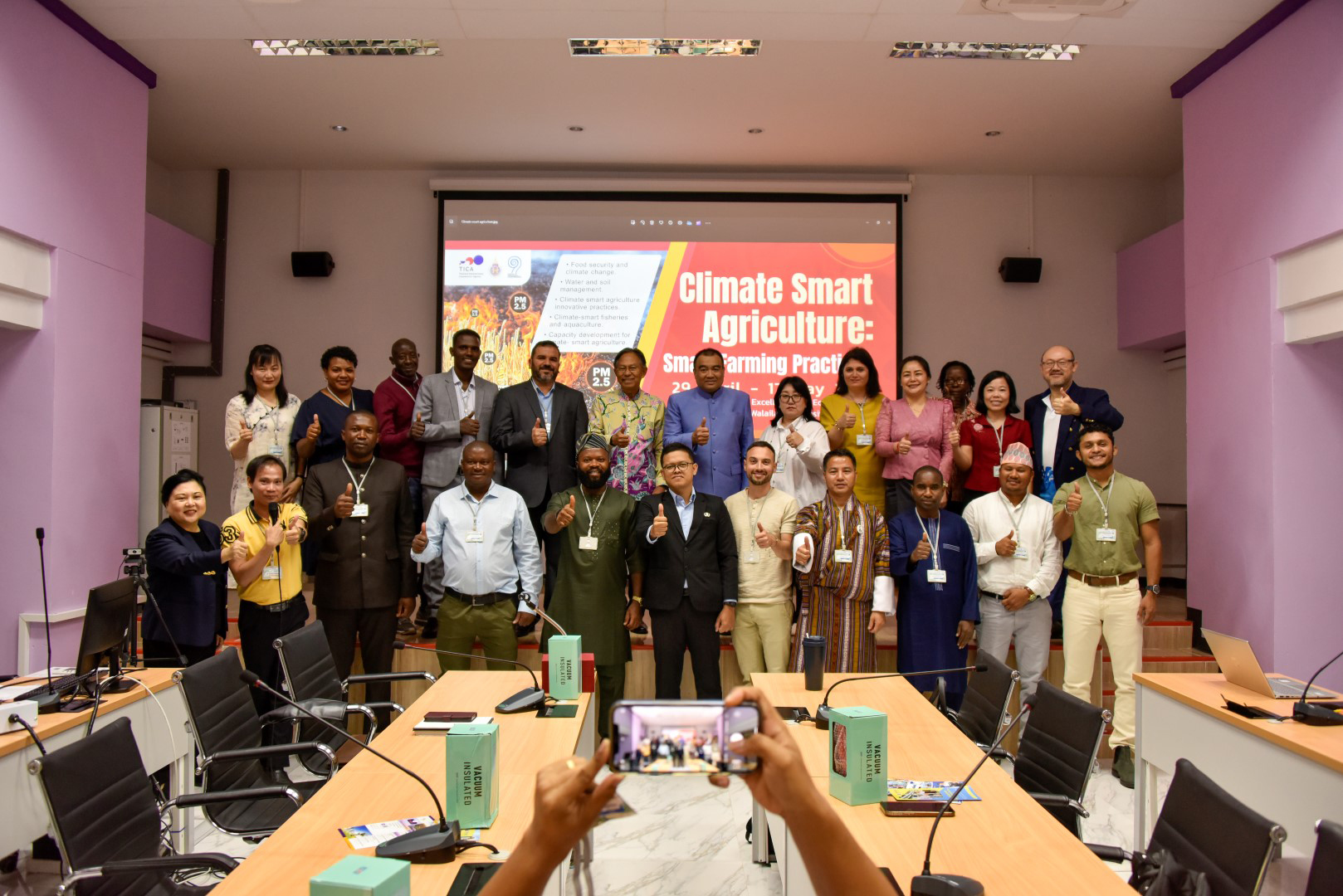
The program was designed to promote sustainable living through climate-smart agricultural practices by equipping participants with the essential skills needed to adapt to a changing climate. Climate-smart agriculture focuses on enhancing the well-being of people in developing countries by improving their quality of life, fostering economic growth, and advancing agricultural development. This approach emphasizes the adoption of climate-resilient farming techniques while integrating modern technologies such as sensors and IoT-based systems to optimize farm management and productivity. This international collaboration brought together 19 partners from various countries, including researchers and experts specializing in agriculture and related fields. Participants represented Azerbaijan, Bhutan, China, Fiji, Indonesia, Laos, Mongolia, Nepal, Niger, Nigeria, Serbia, Uganda, Kenya, Ethiopia, Vietnam, Zambia, Zimbabwe, Panama, and Qatar.
First-Phase Data Gathering Session: Understanding the Agricultural Backgrounds of Various Countries
Before the program commenced, all international partners were given the opportunity to gather data and develop a country report as part of a research project on agriculture. This session aimed to deepen participants’ understanding of the diverse agricultural contexts in their respective countries. Each country report was presented in a dedicated session, fostering an exchange of data, best practices, and innovative strategies that could inspire solutions applicable across different regions. The data gathering focused on the following key areas:
General Information of the Country
This section provided a comprehensive overview of each participating country, including its history, geography, climate, political structure, economy, and key agricultural sectors. Understanding these foundational aspects allowed participants to contextualize agricultural challenges and opportunities, ensuring that solutions developed through the program were relevant and adaptable to different national conditions.
Historical Background of Climate-Smart Agriculture
This section explored each country’s journey in addressing agricultural challenges related to climate change. It covered the evolution of climate-smart agricultural practices, major policies or initiatives undertaken, and lessons learned from past experiences. Given the diverse agricultural landscapes among participating nations, this exchange facilitated a broader understanding of how different regions have adapted to climate variability, soil degradation, water scarcity, and other climate-related threats to food production.
Existing Laws and Regulations on Climate-Smart Agriculture
Participants analyzed national policies, laws, and regulations that govern climate-smart agriculture, including incentives for sustainable farming, environmental conservation laws, and policies supporting climate-resilient crops and farming techniques. This analysis helped assess the strengths and limitations of current legal frameworks in supporting sustainable agriculture. Moreover, by comparing policies across different countries, participants could identify best practices and potential areas for policy improvement, contributing to more effective climate action in agriculture upon their return home.
Existing Challenges in Climate-Smart Agriculture
Each international partner identified the major obstacles their country faced in implementing climate-smart agriculture. These challenges could range from financial constraints, inadequate technological infrastructure, and lack of farmer awareness to policy enforcement gaps and climate-induced disasters like droughts, floods, and pest outbreaks. By presenting these issues, experts from Walailak University and other participating nations could collaboratively analyze, compare, and develop tailored solutions. This exchange of insights not only helped refine best practices but also strengthened international cooperation in tackling shared agricultural and environmental challenges.
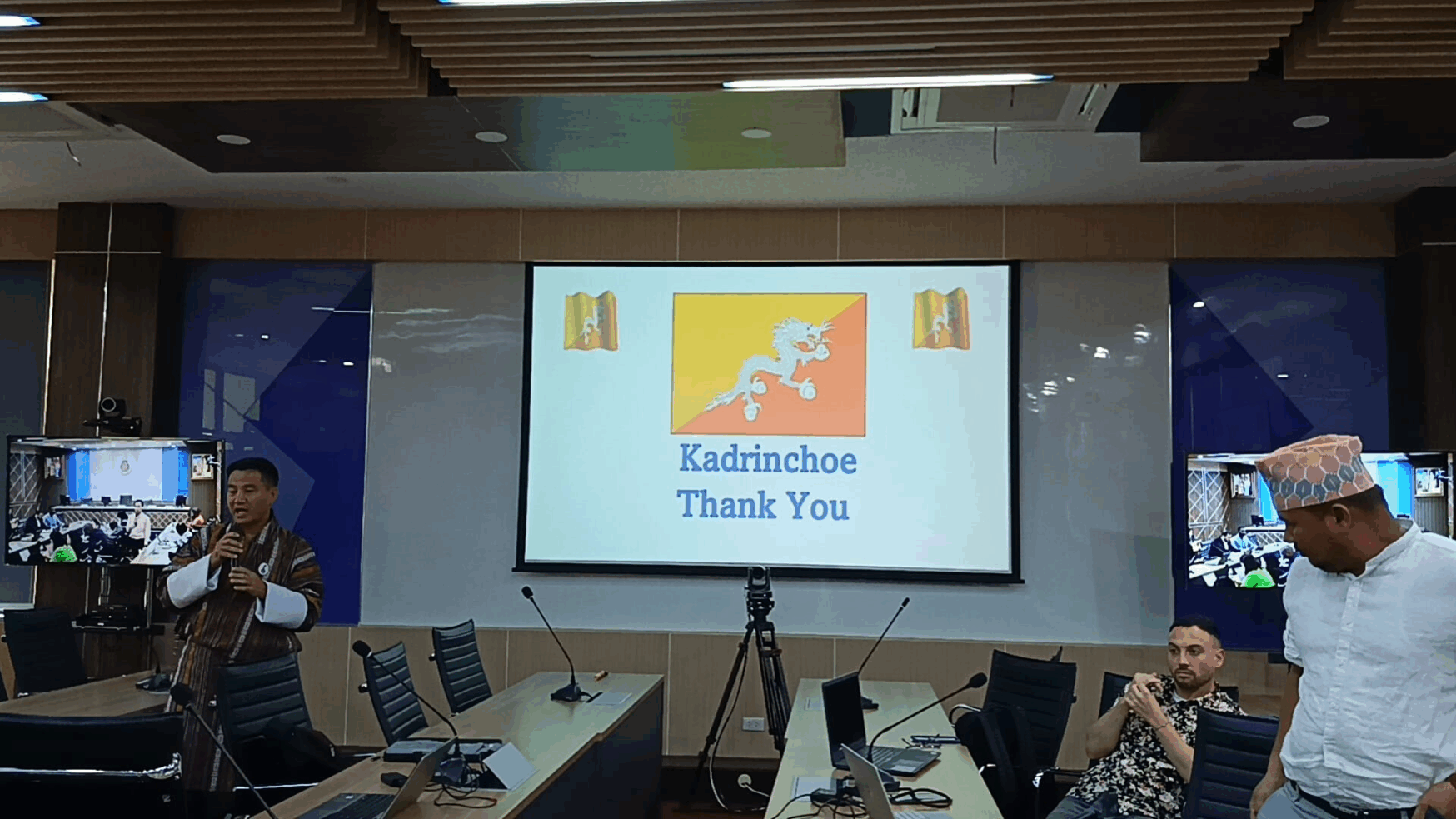
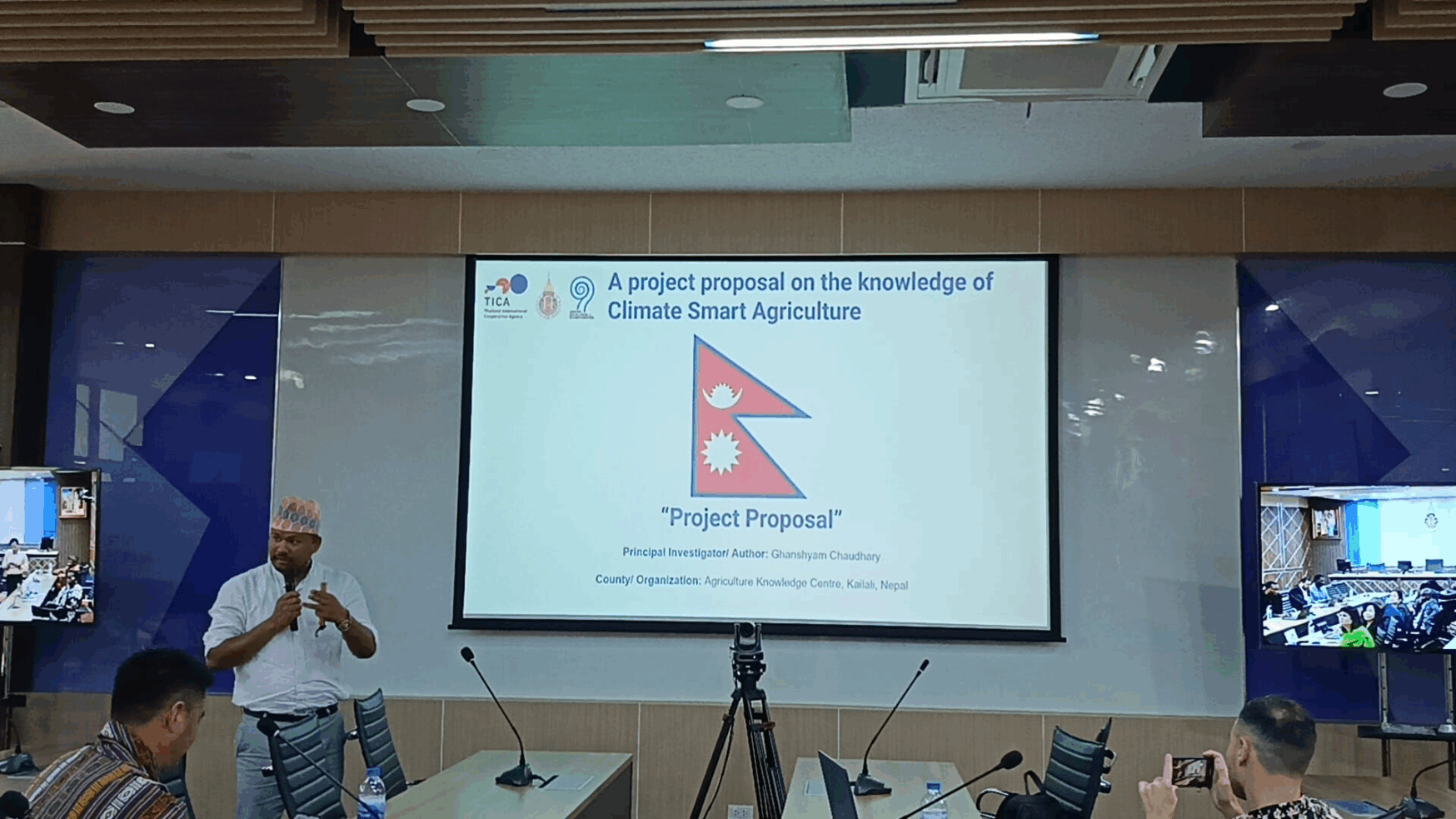
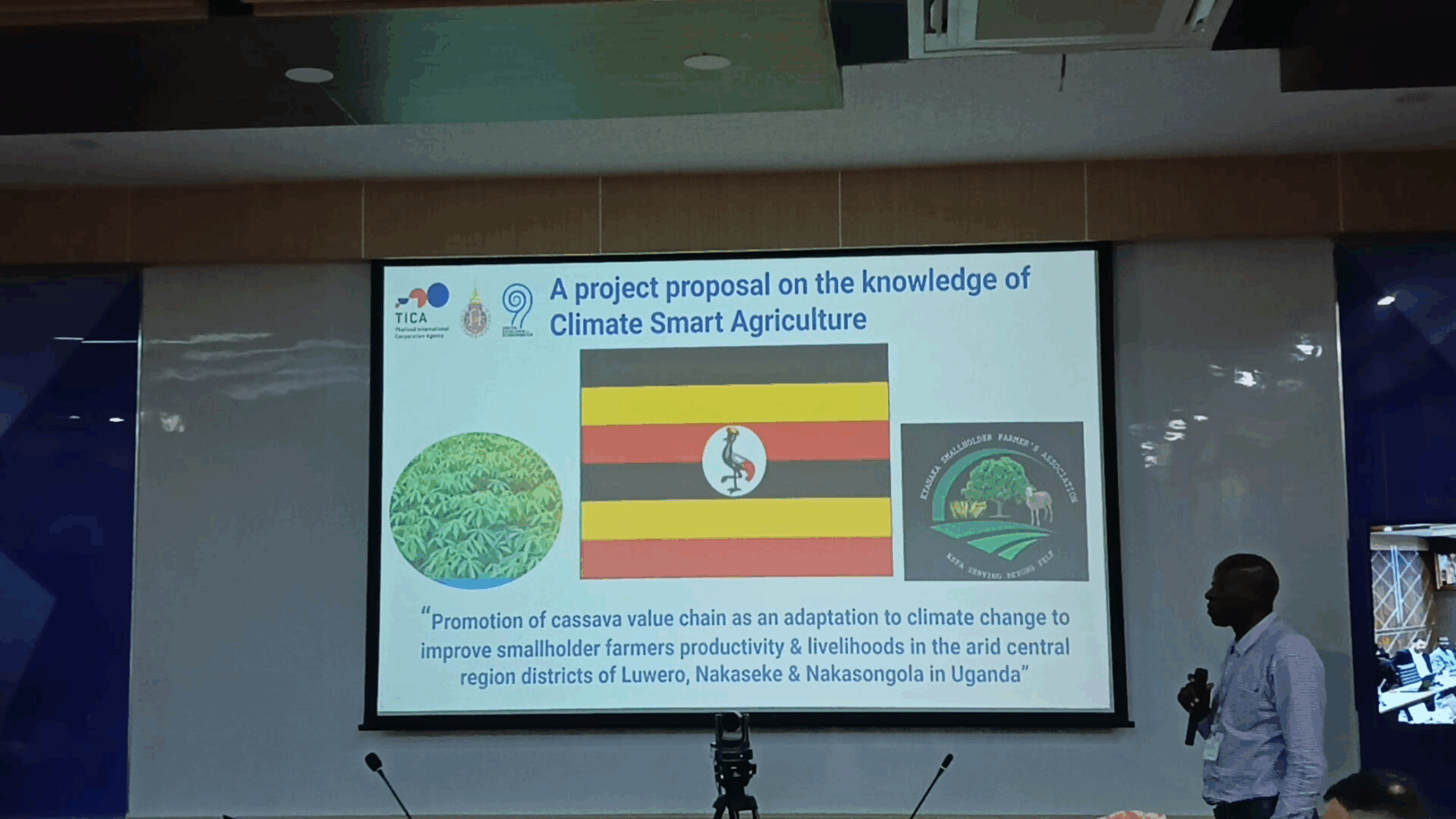
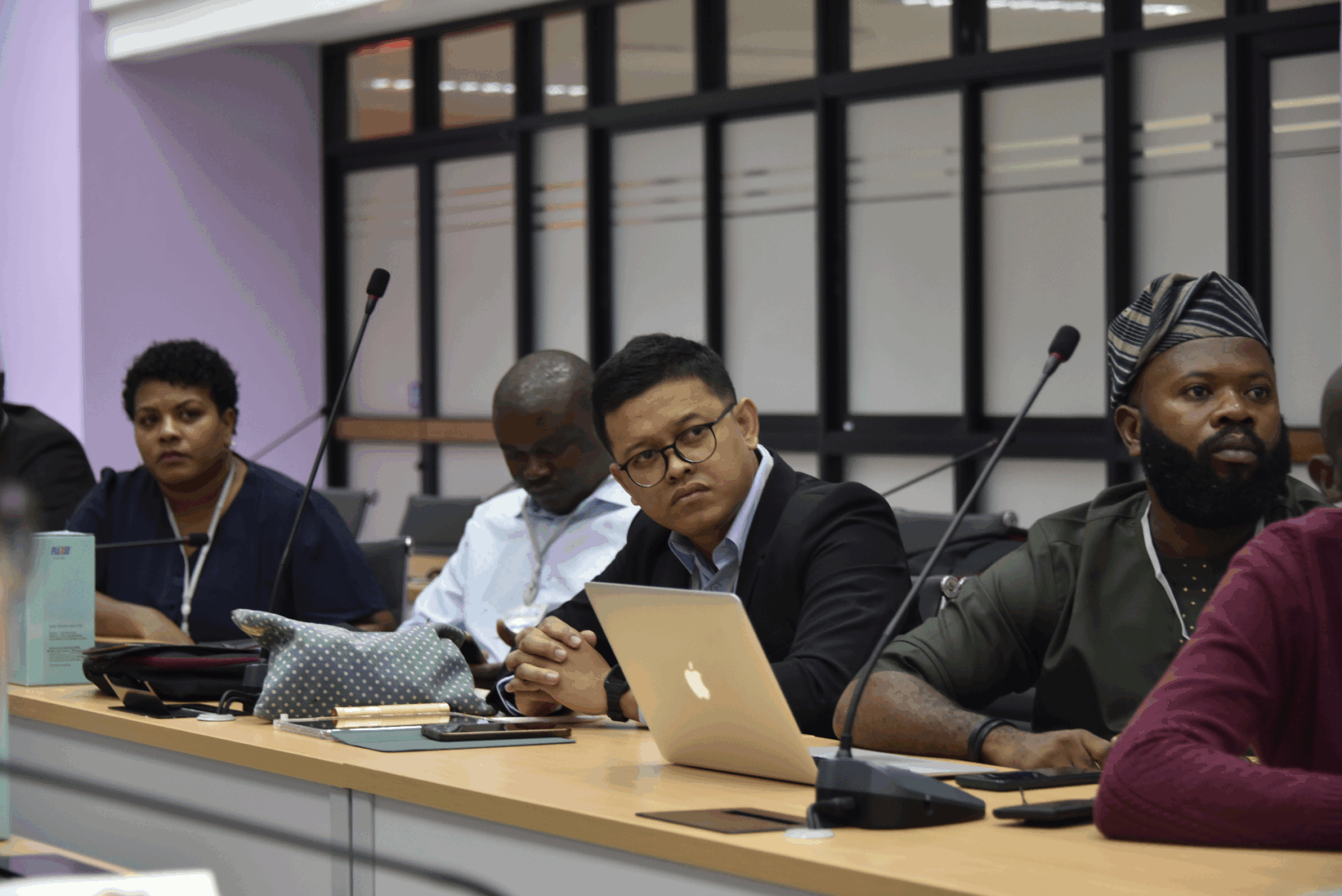
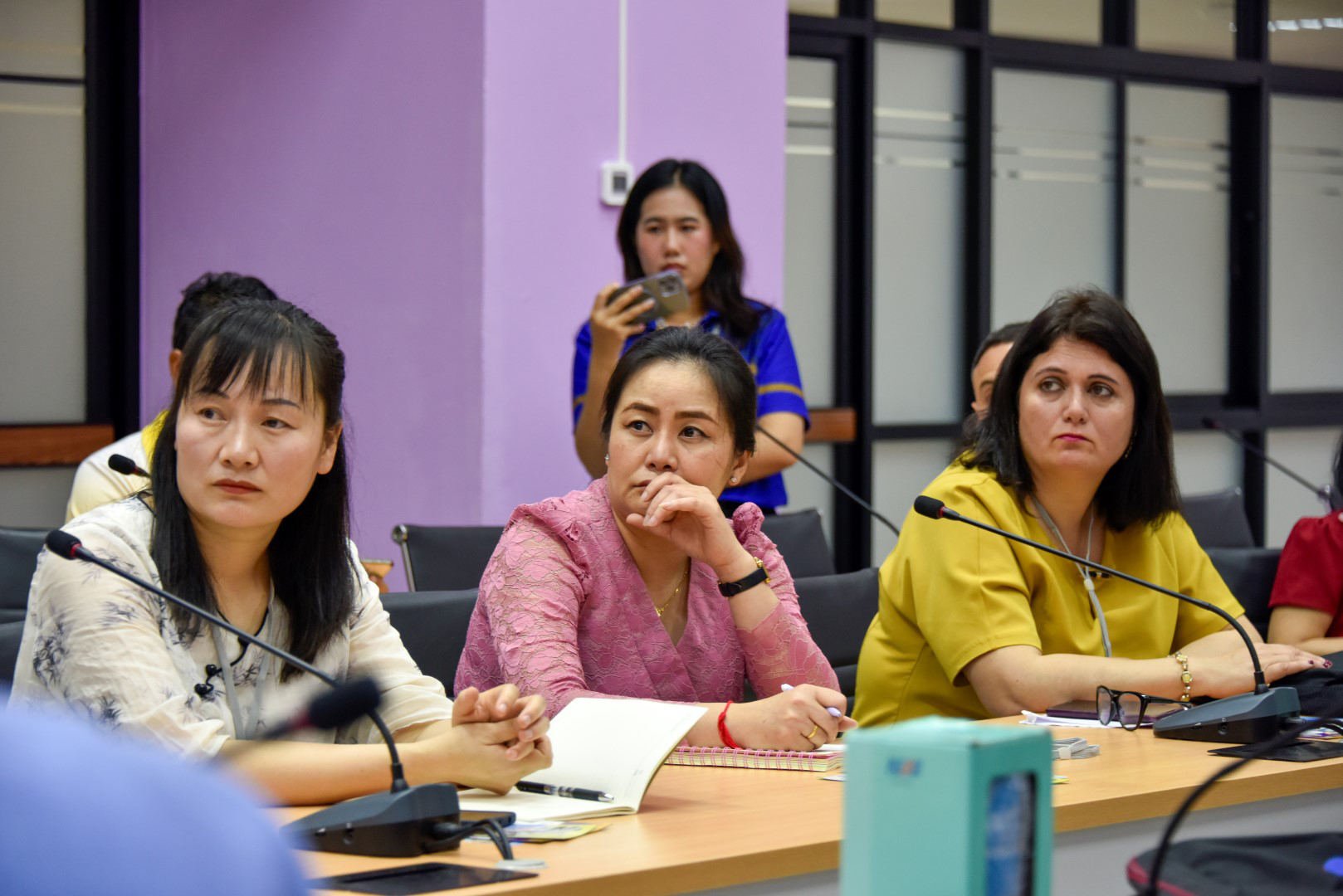
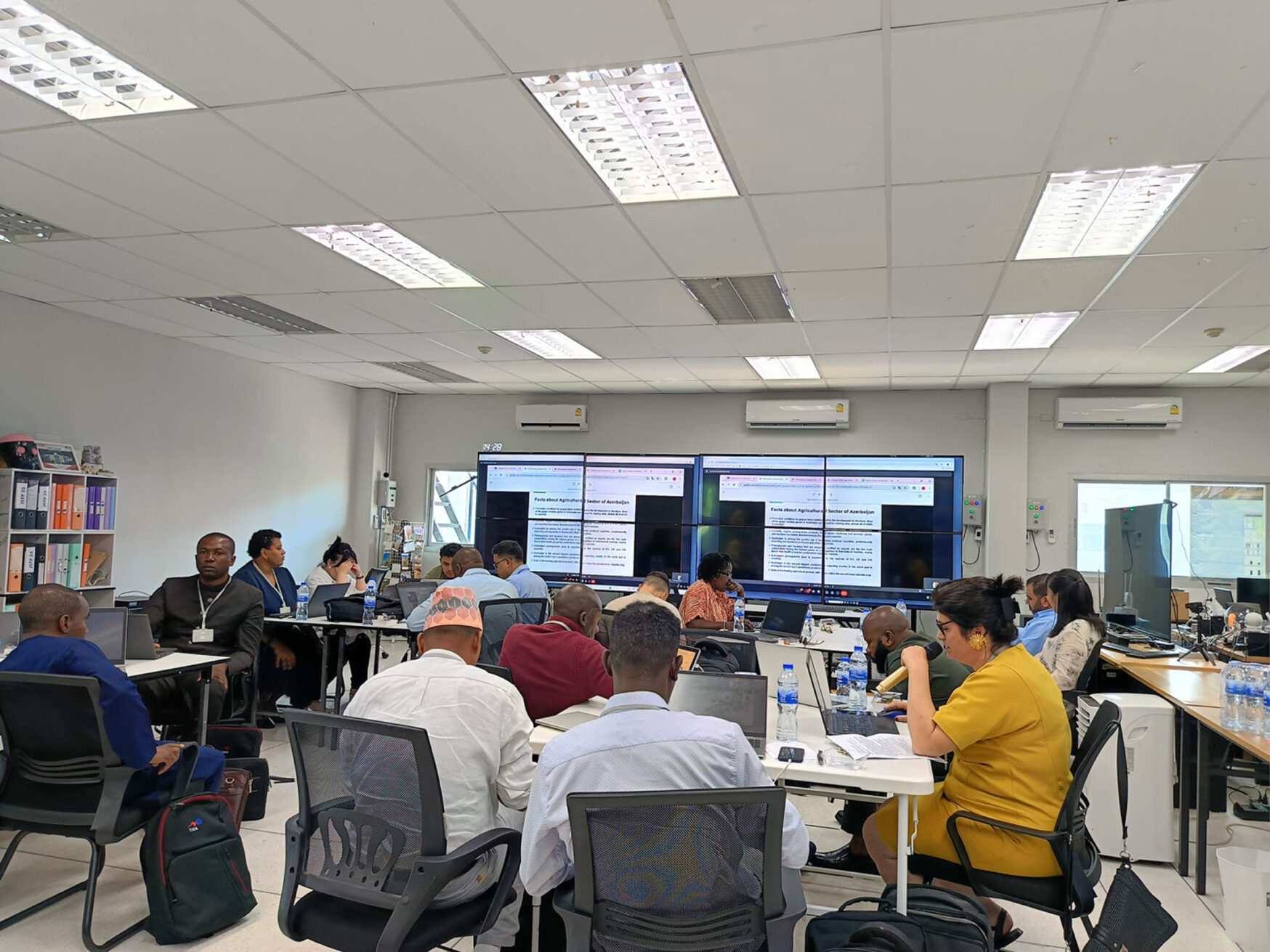
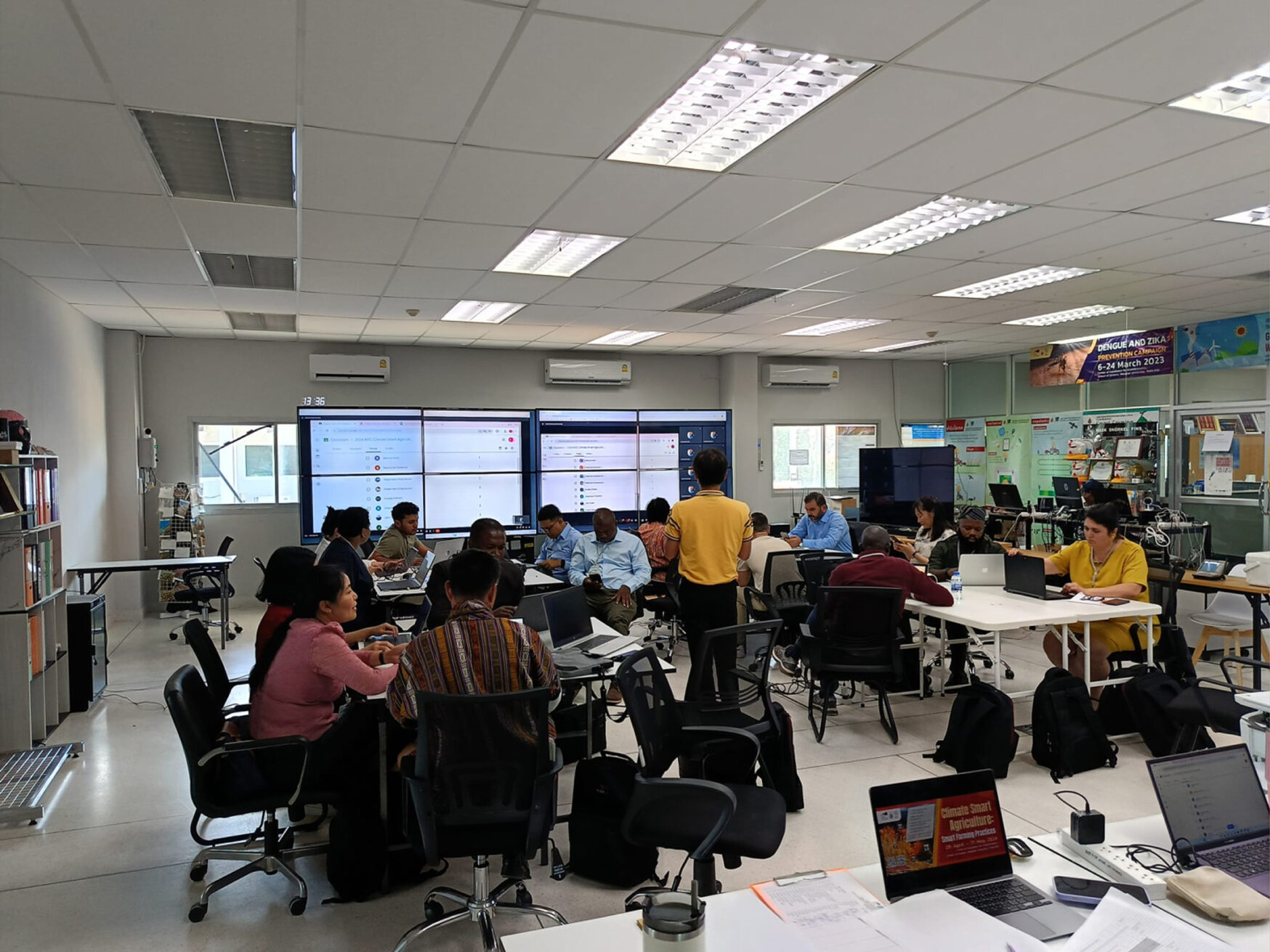
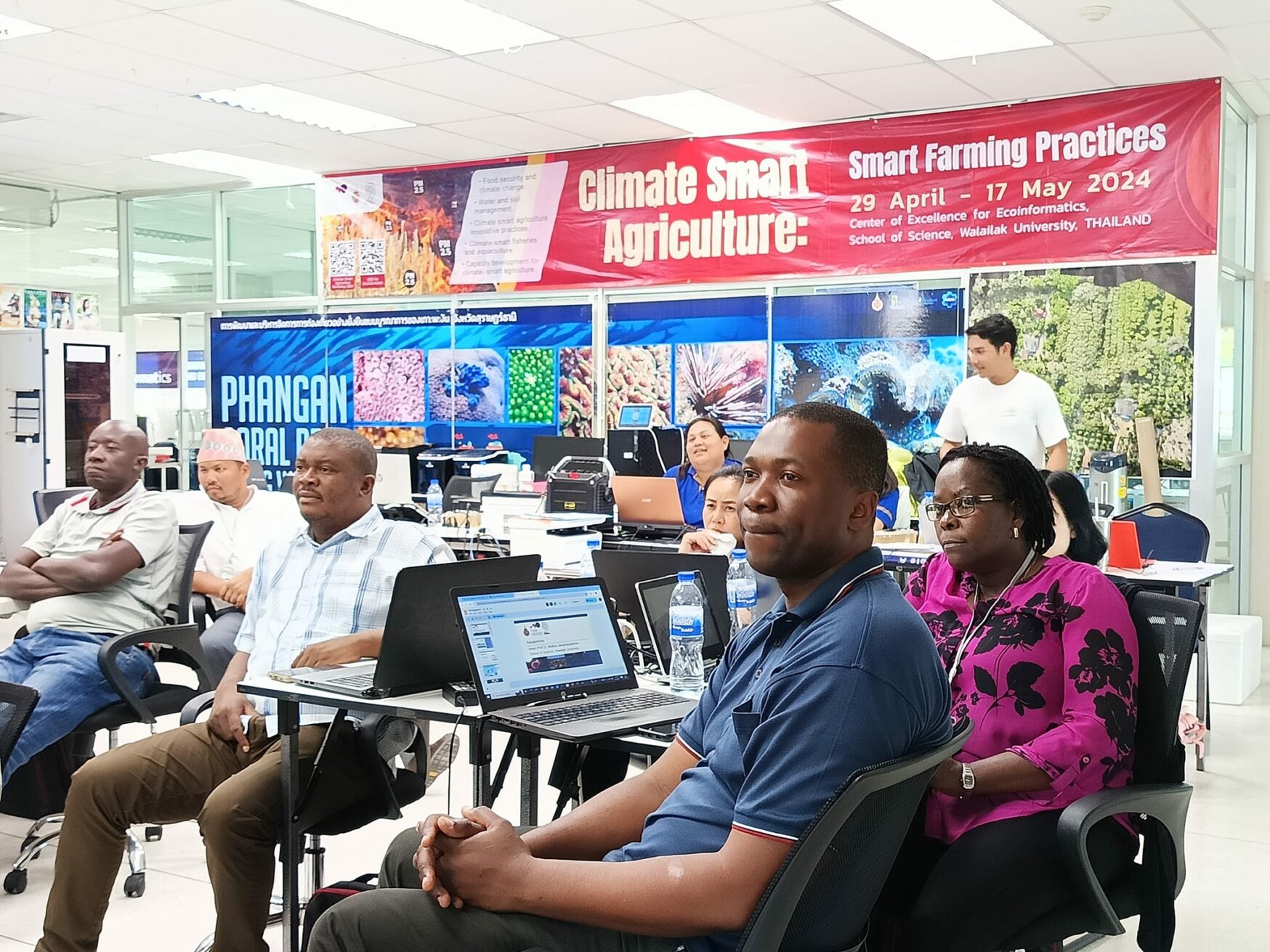
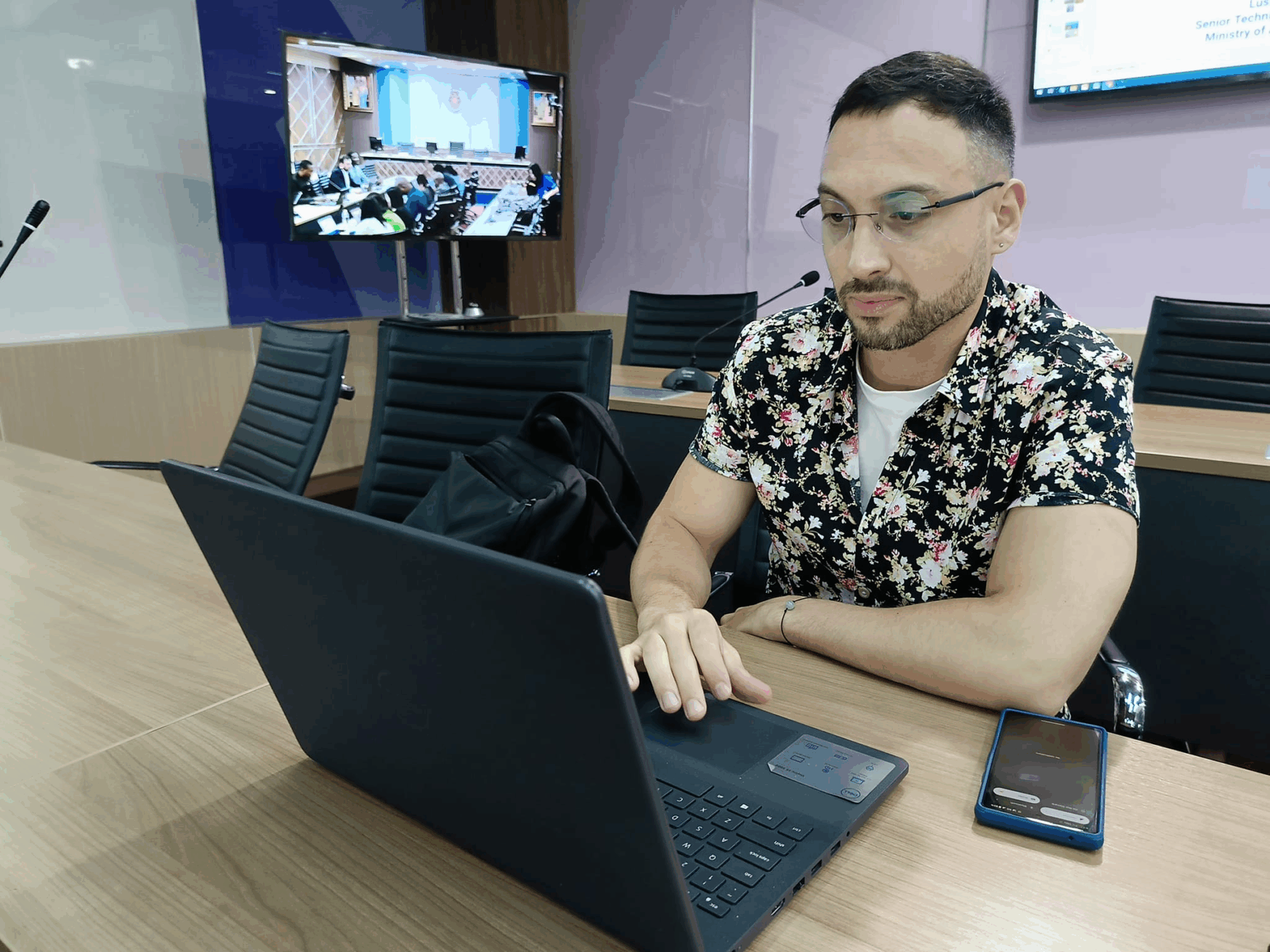
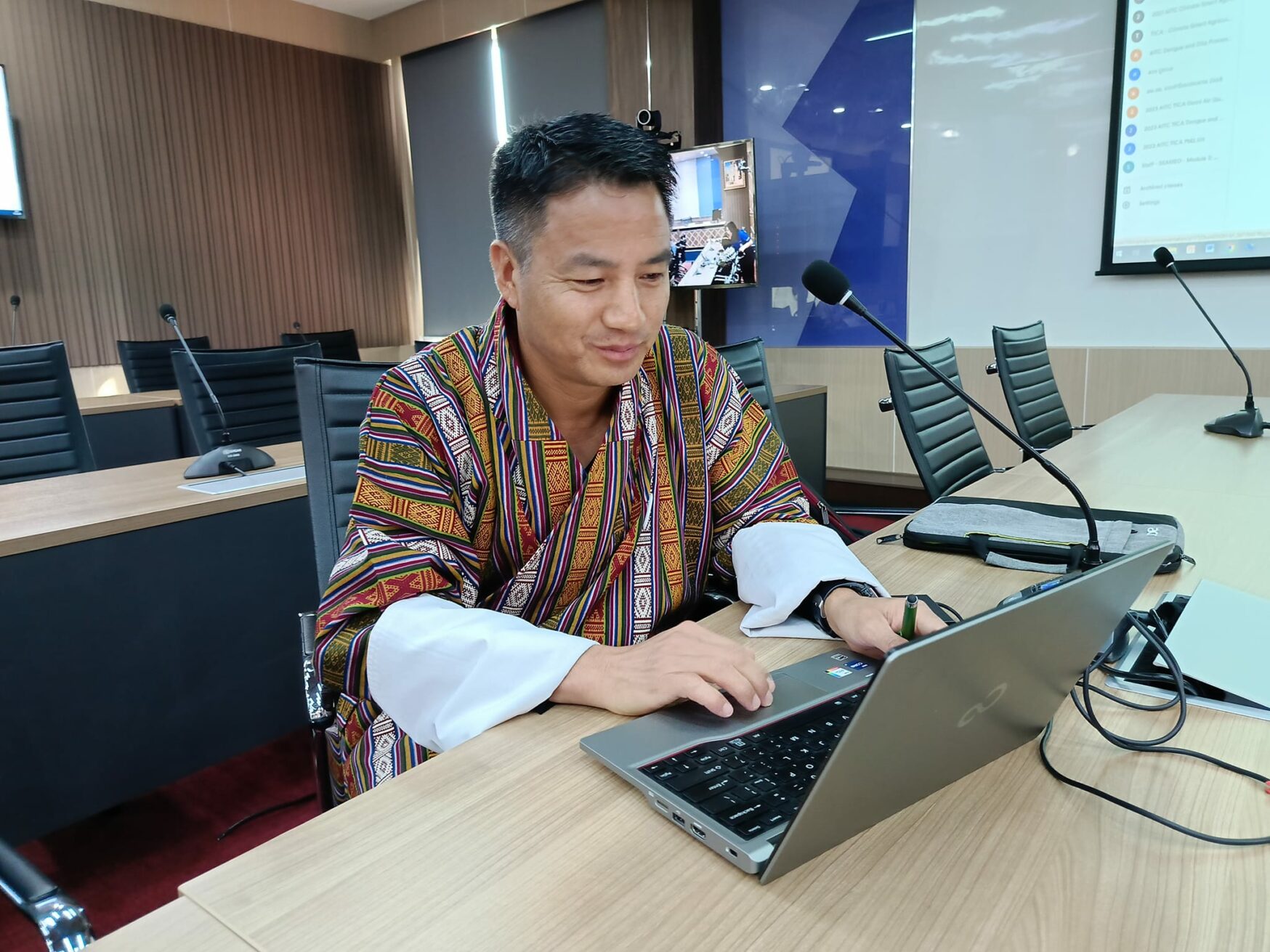
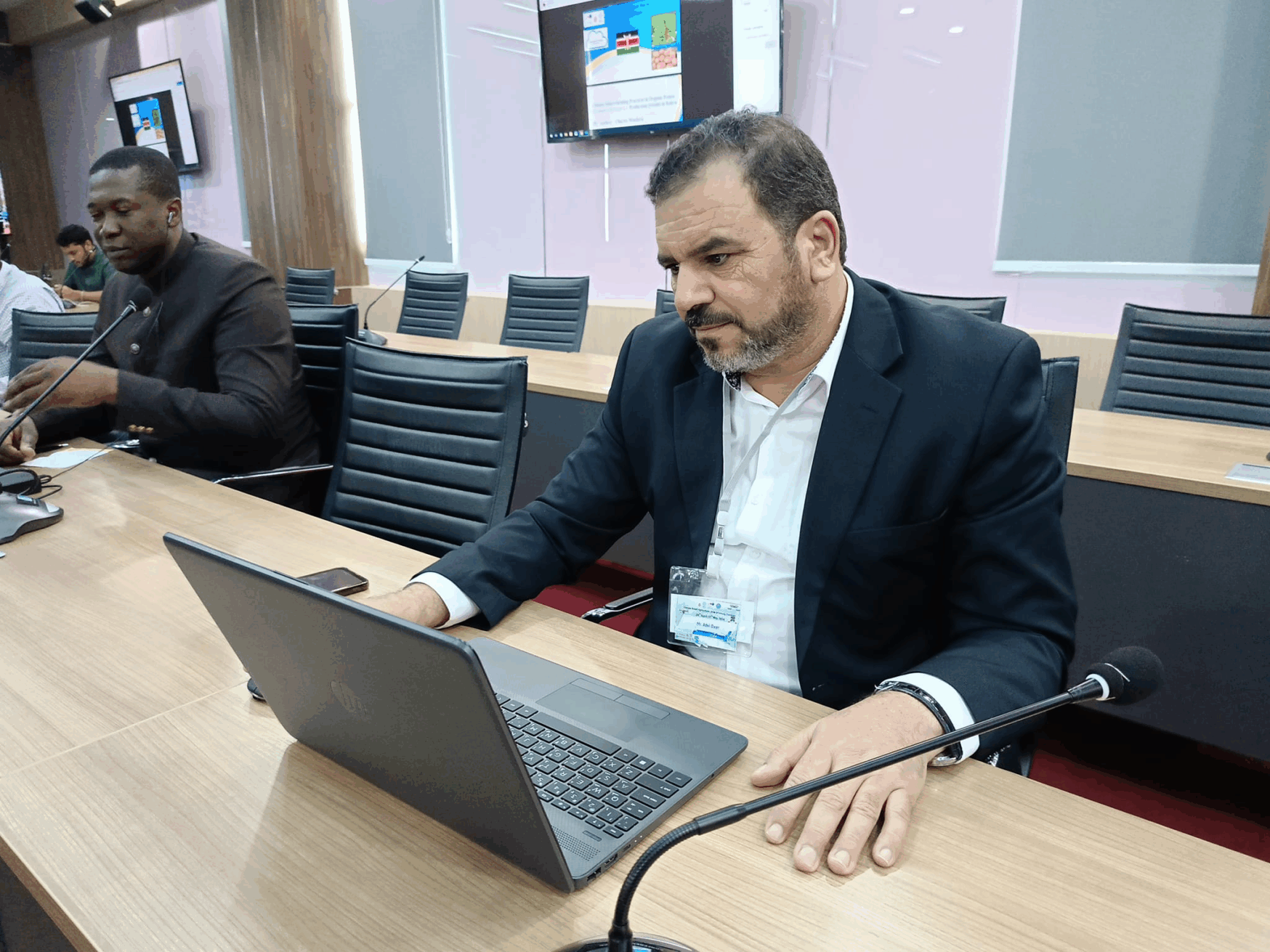
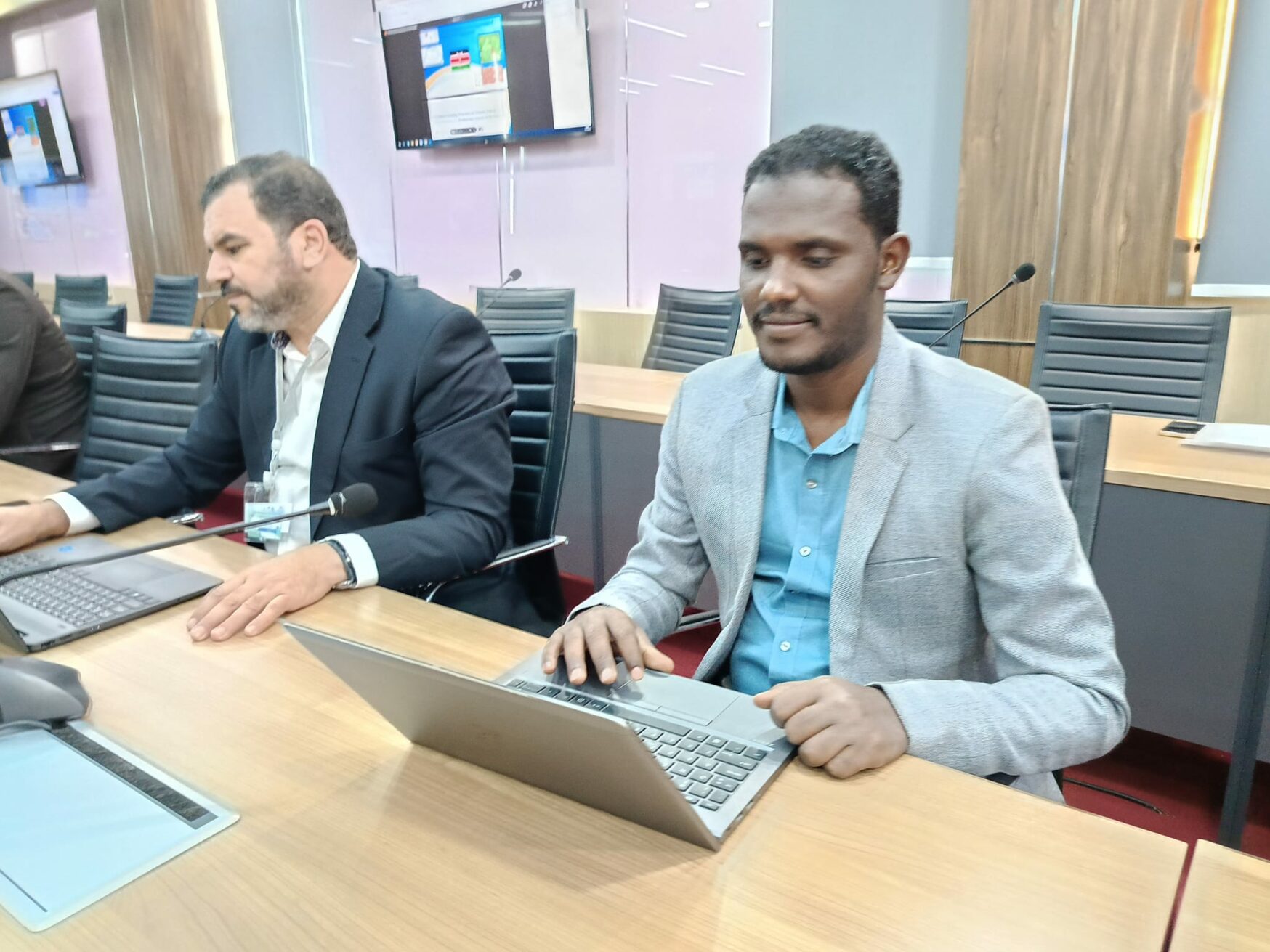
Figures: International participants during the self-introducing session and presenting basic information and other issues relating to their countries
The topics in this program for all international partners to collaboratively study and conduct research projects through multiple sessions which can be watched included:
Climate-smart Agriculture and Food Security and Climate Change
Climate-smart Agriculture with Proven Practice Techniques: Crop Rotation and Intercropping
Climate-smart Agriculture with Proven Practice Techniques: Agroforest, Mulching, Water Management, Agriculture and Greenhouse Gas.
The Overview of the Sufficiency Economy Philosophy and Its Successful Best Practices in Agriculture
Soil Conservation for Climate-smart Agriculture
Soil Water Management for Climate-smart Agriculture
Climate Smart Agriculture Innovative Practices on Weather Forecasting, Early Warning Systems and Climate-risk Insurance
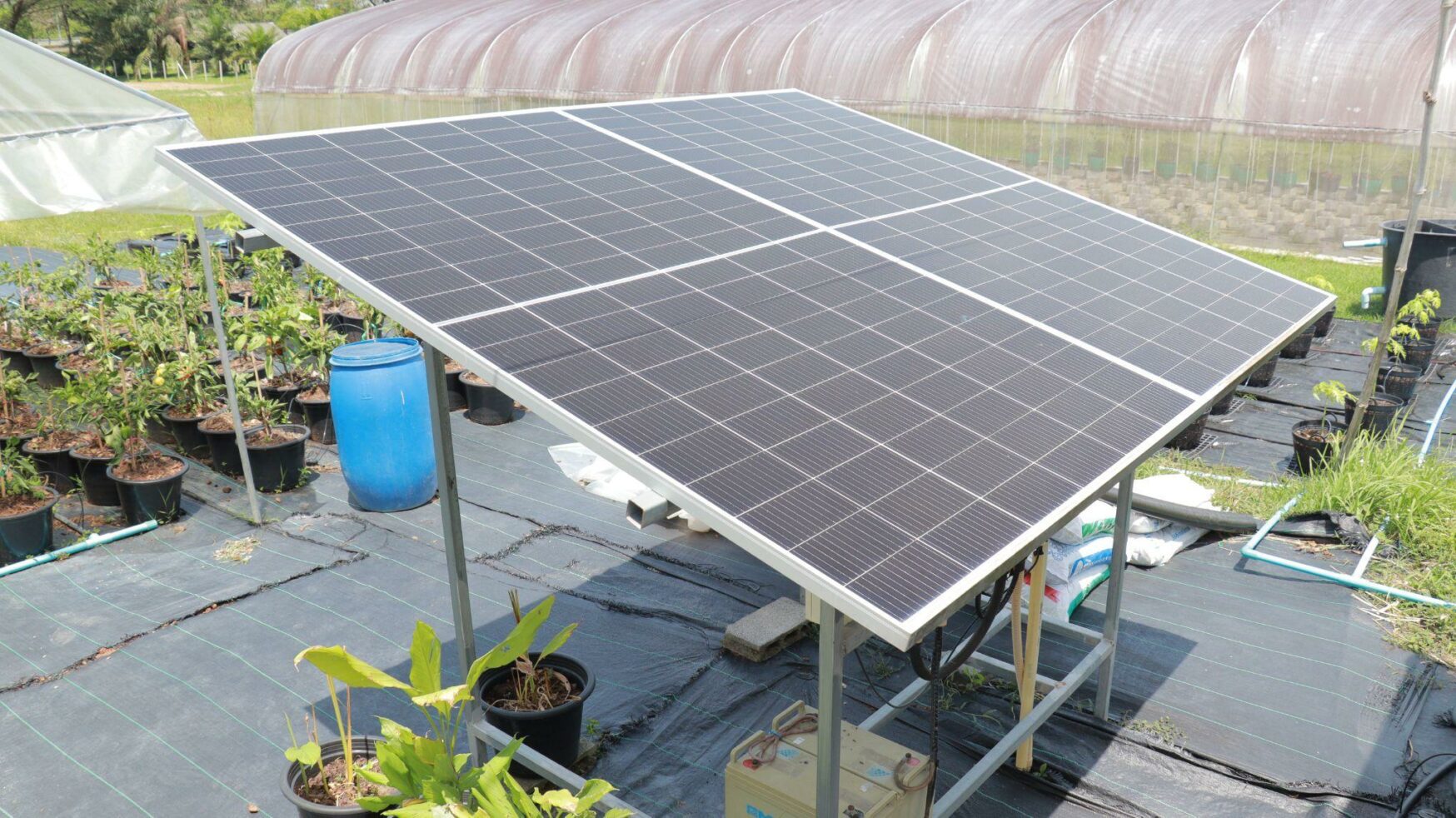
Climate Smart Agriculture Innovative Practices Using Sensor Technology and IoT
Field Trip to Siam Ruby Pomelo and Mangosteen Smart Farming
Field Trip to the Royal-initiated Pak Phanang River Basin Development Project and Royal Residential Hall of Pak Phanang
Climate-Smart Fisheries and Aquaculture
Capacity Development for Climate-smart Agriculture
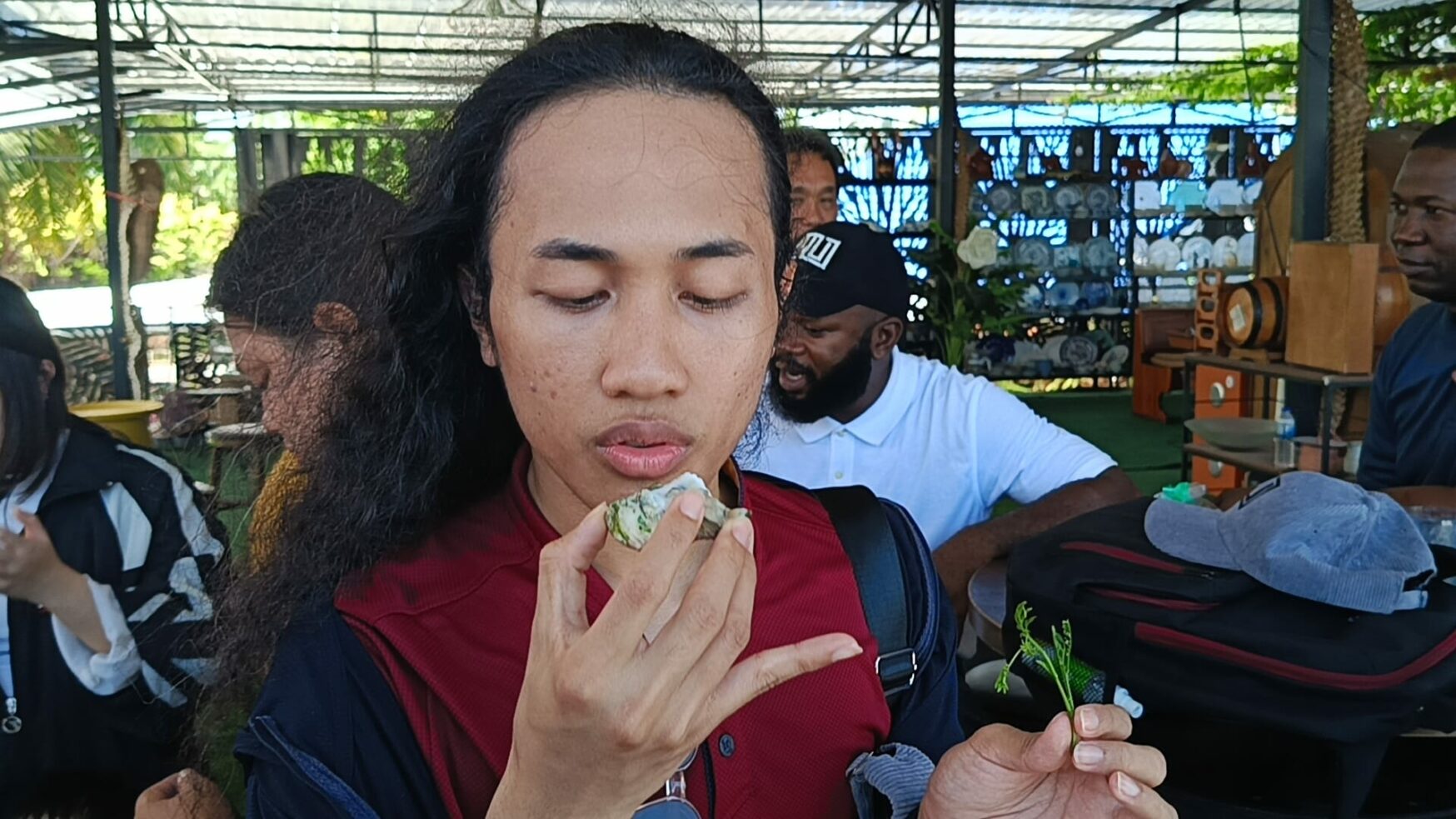
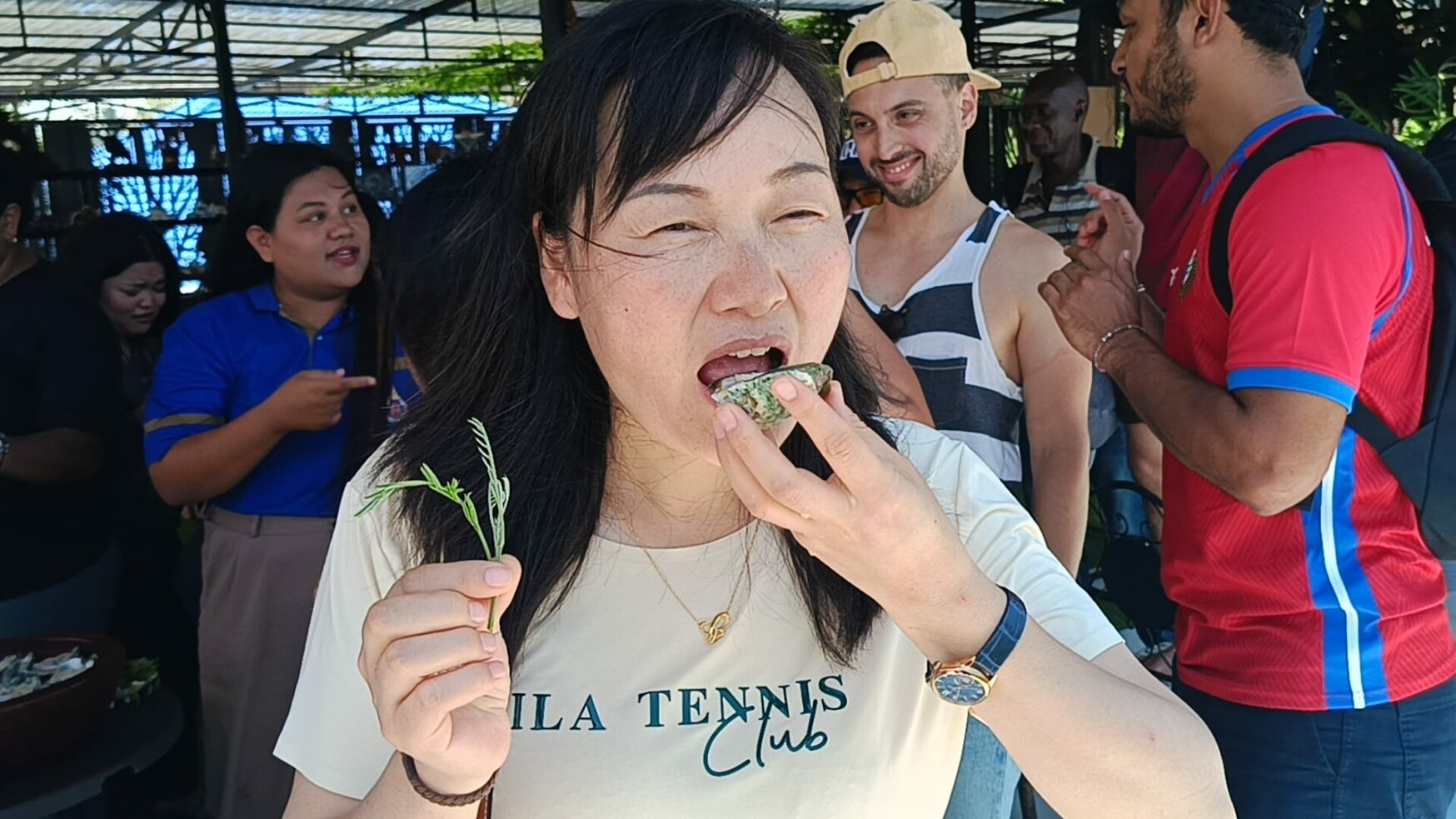
Field Trip to the Sinmana Oyster Farming Site: Listening to Best Practices and Smart Fisheries
Capacity Development for Climate-smart Agriculture
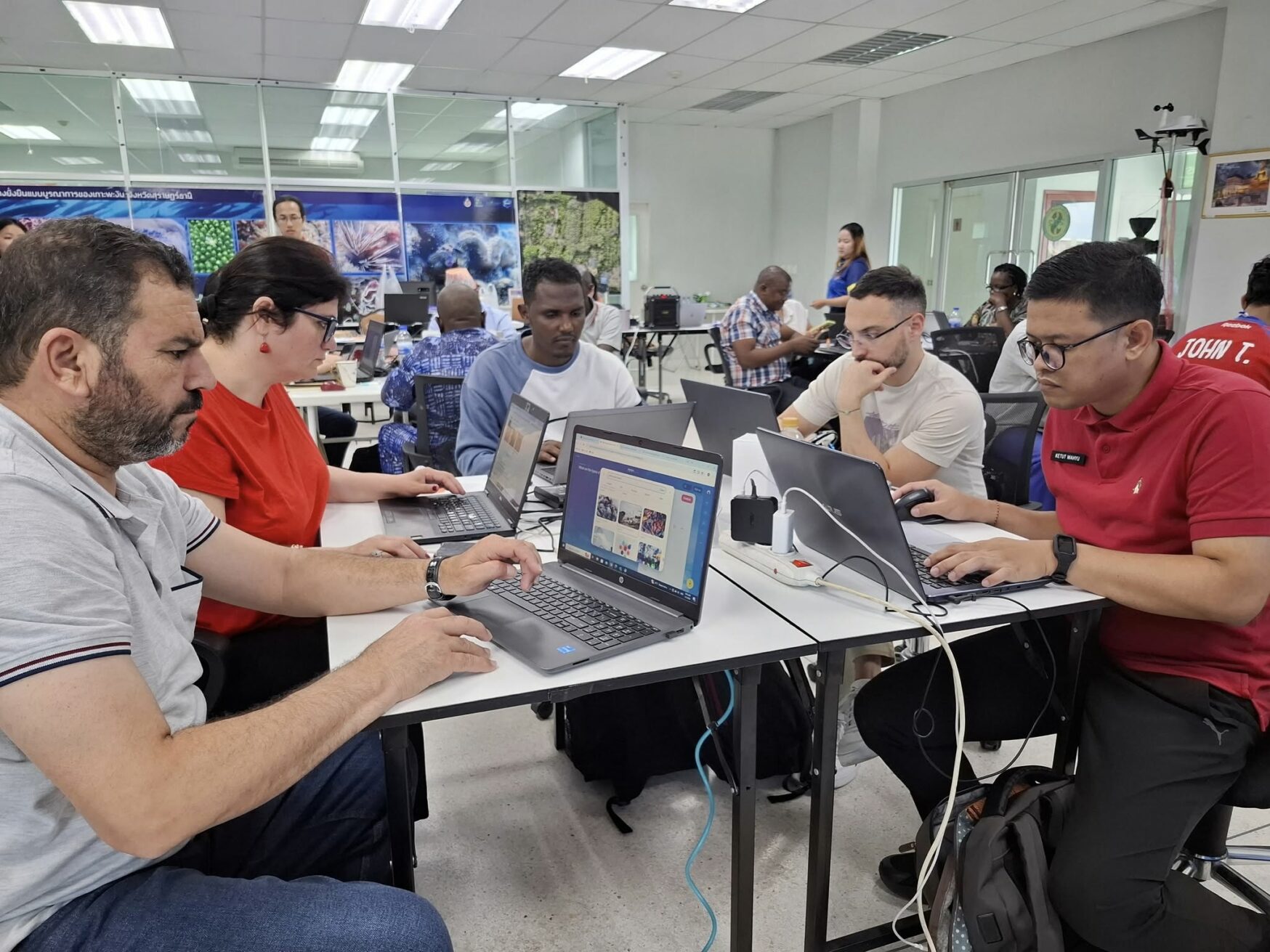
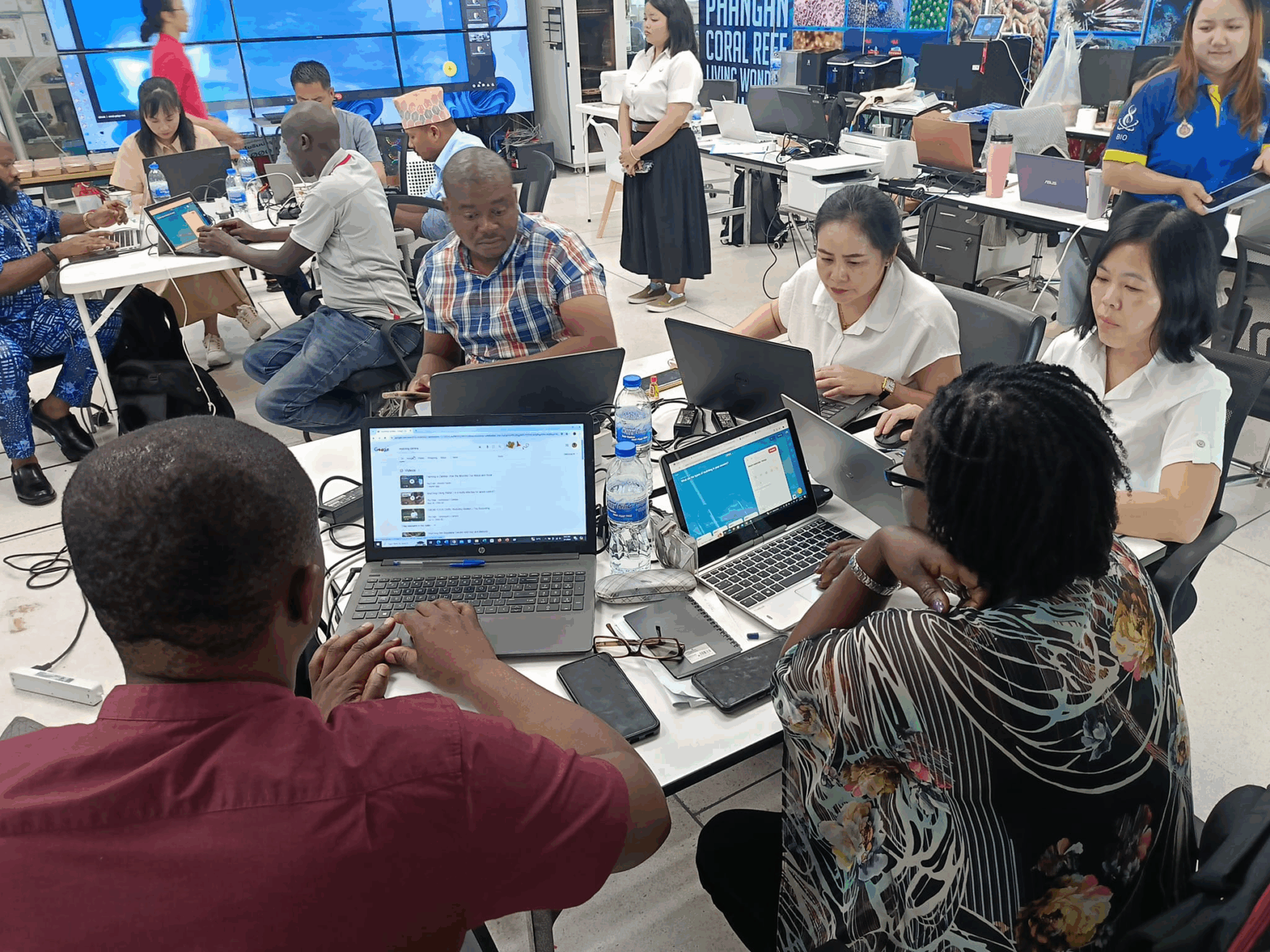
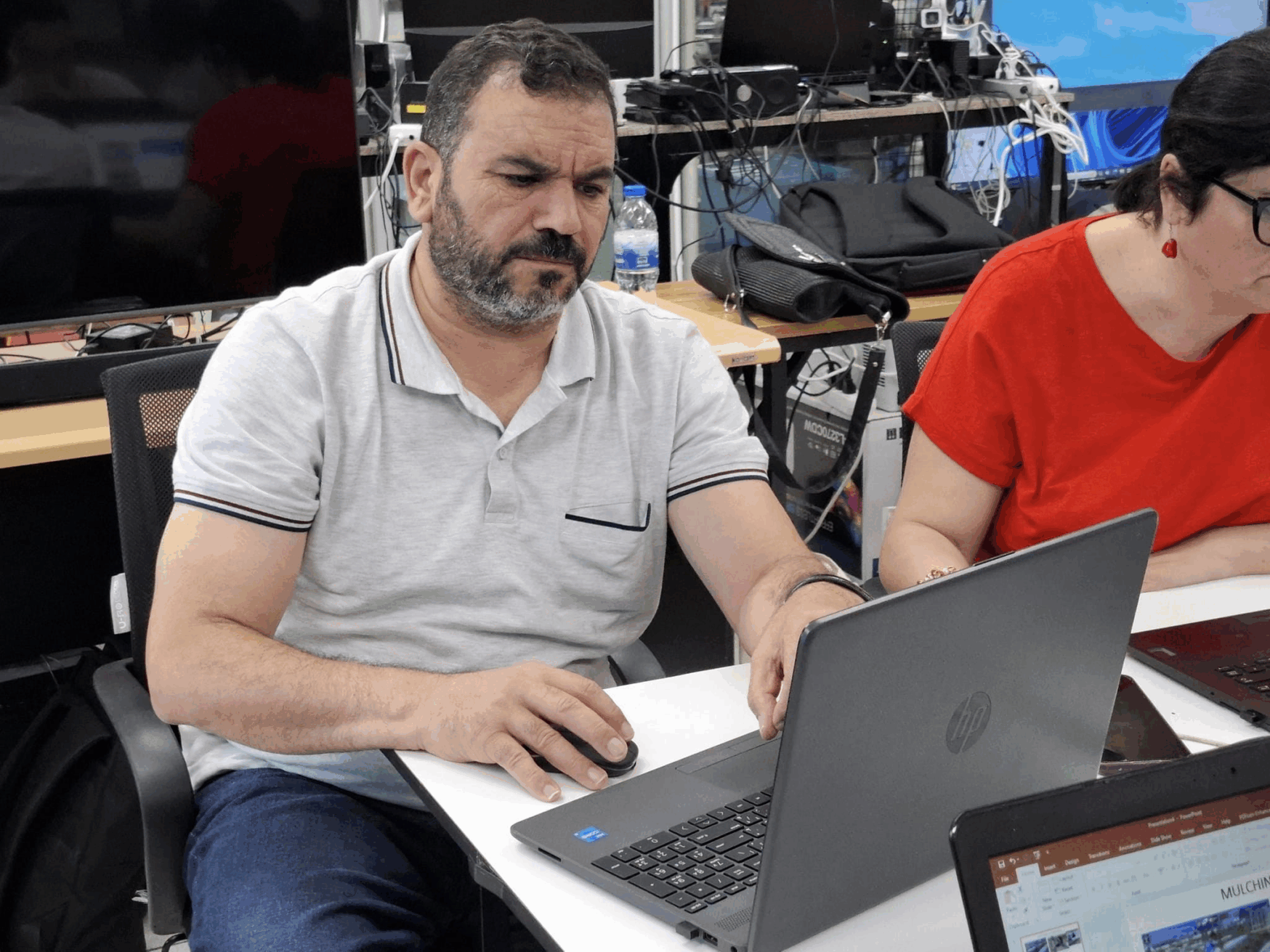
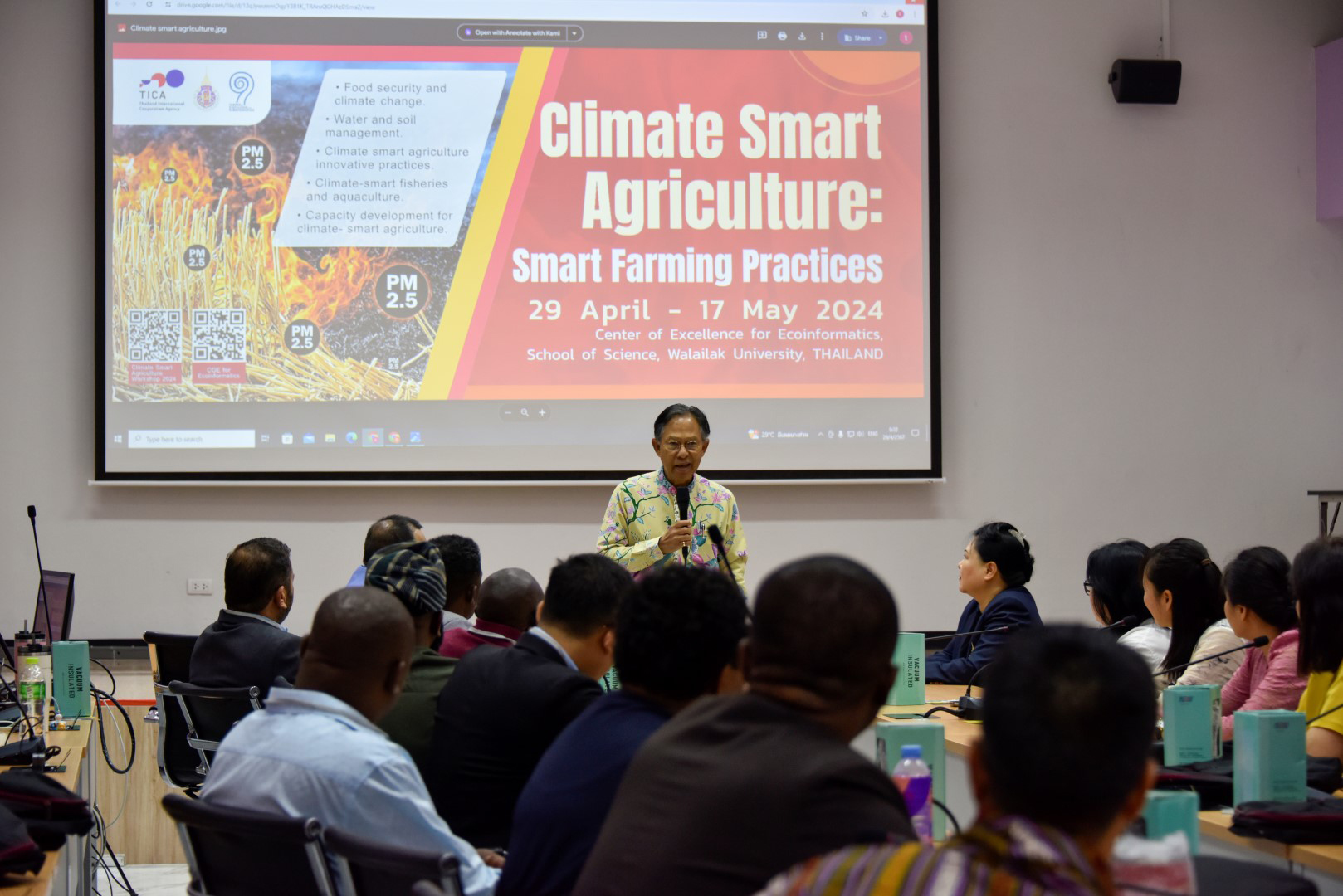
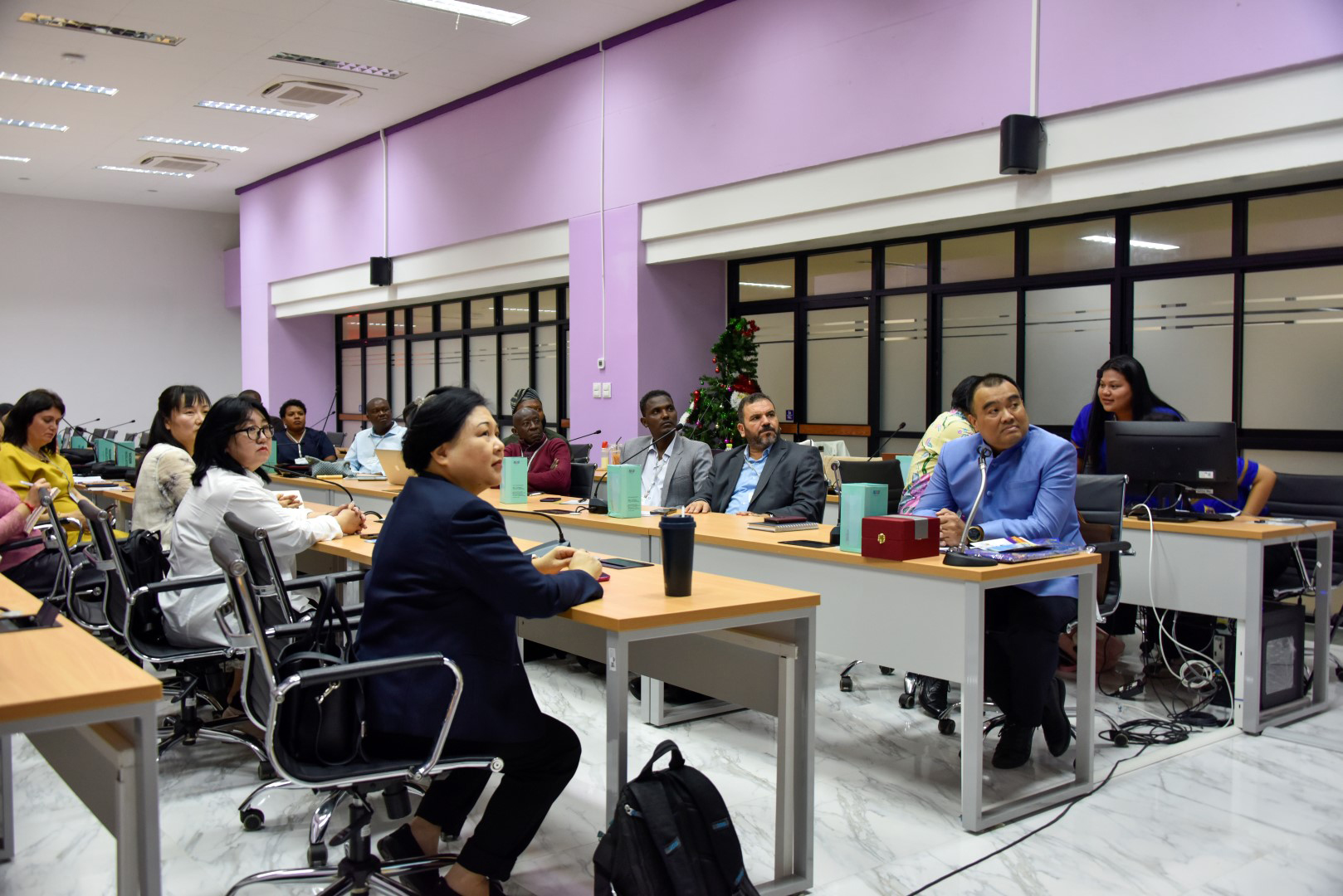
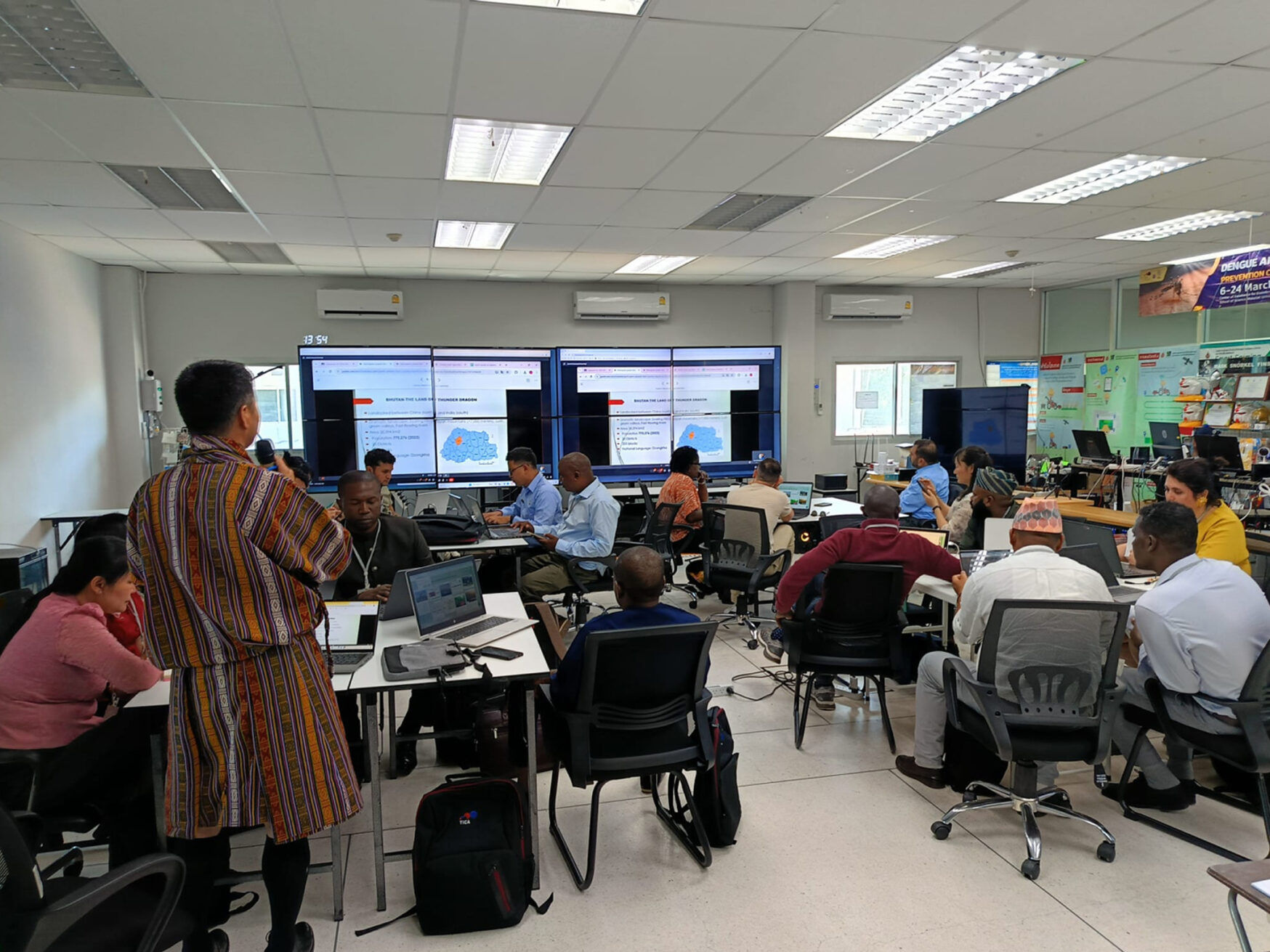
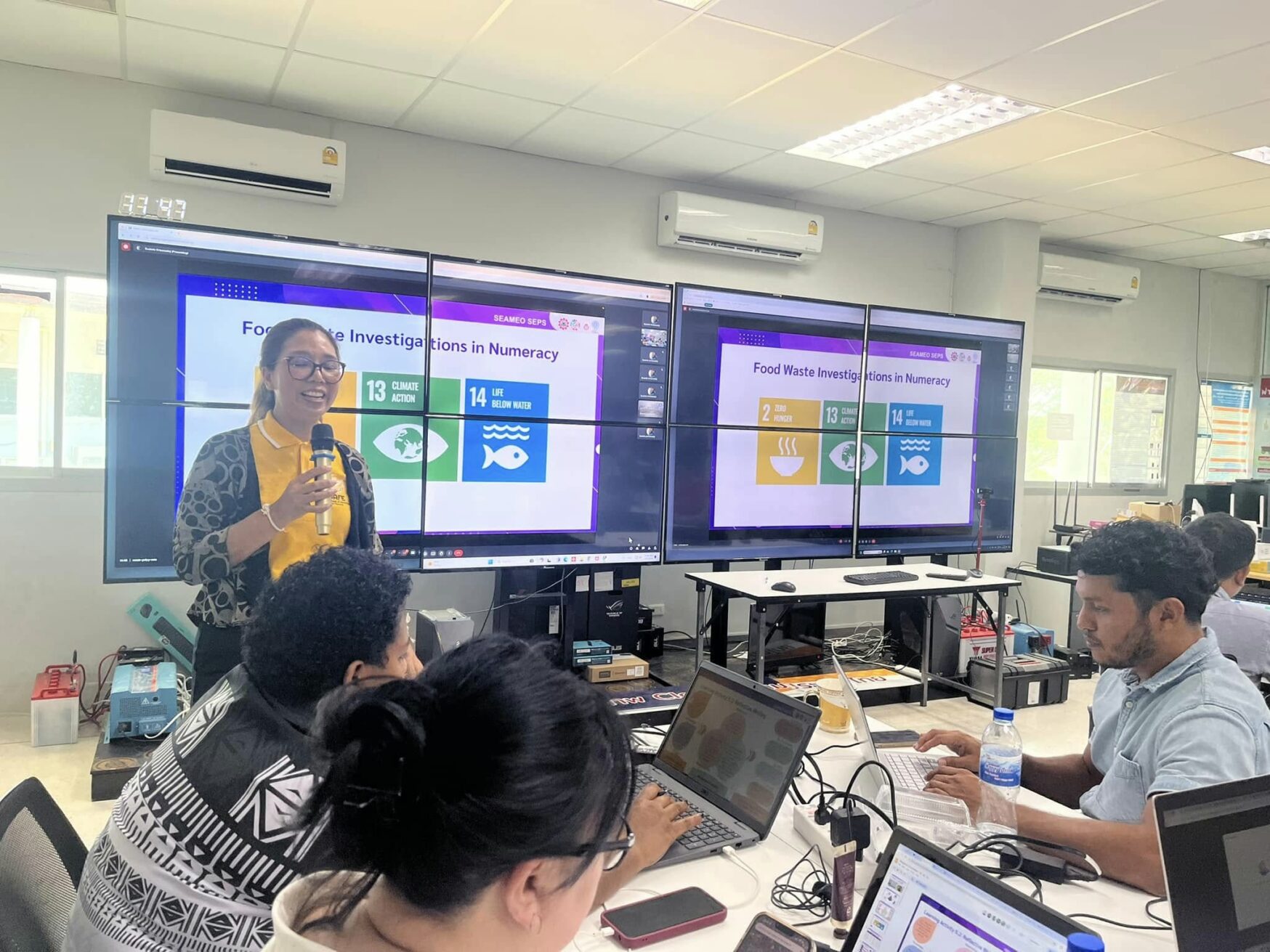
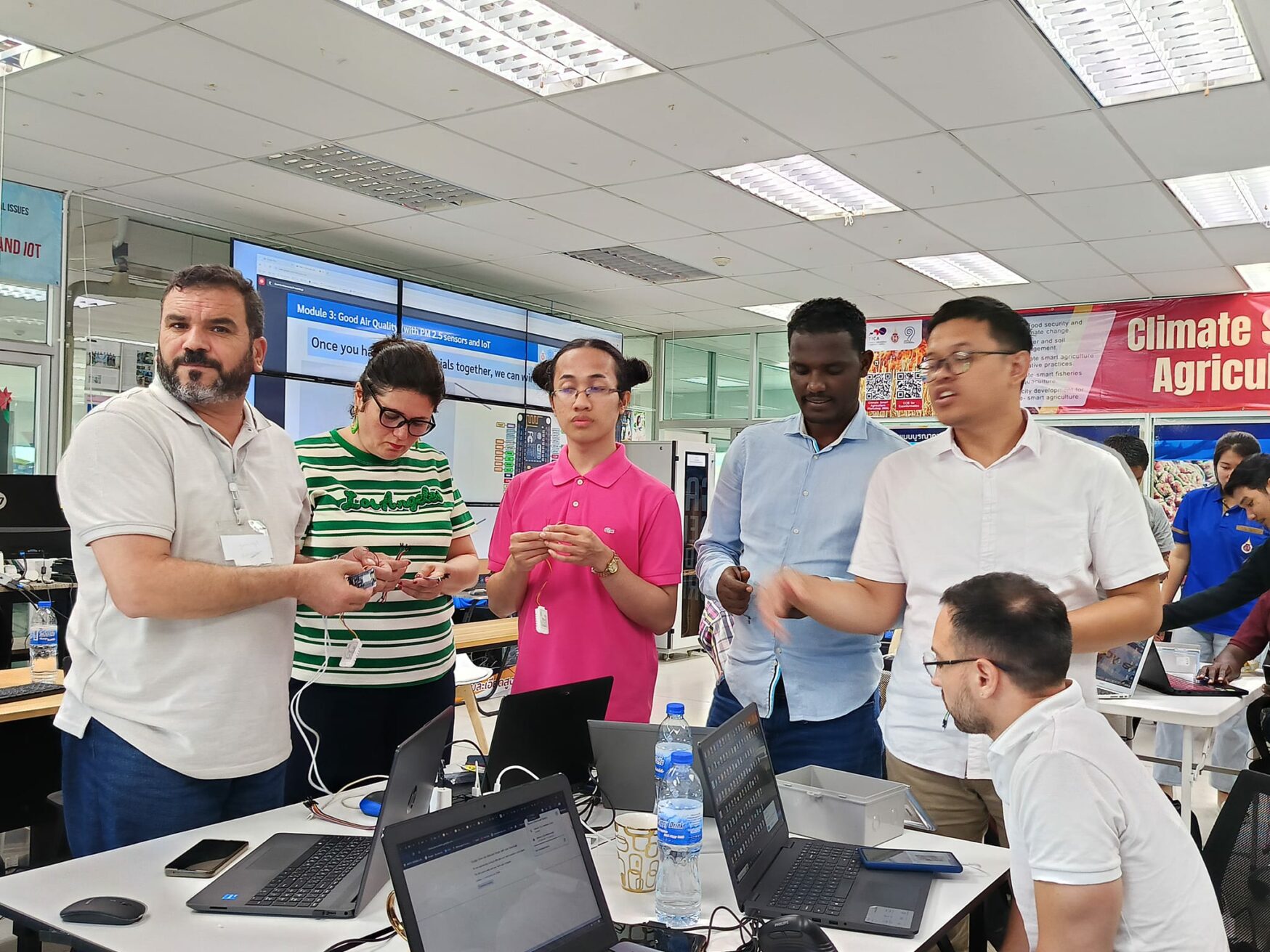
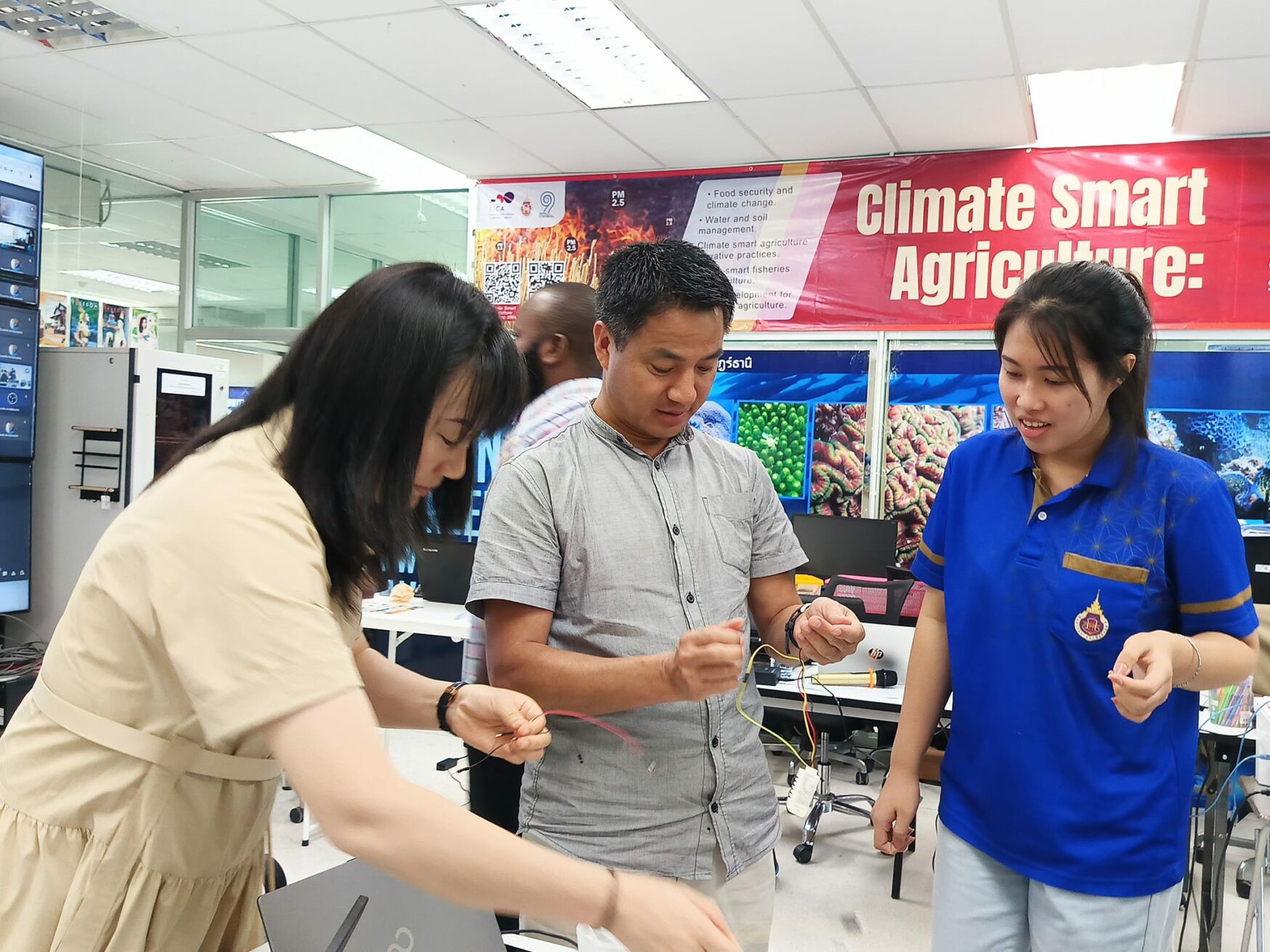
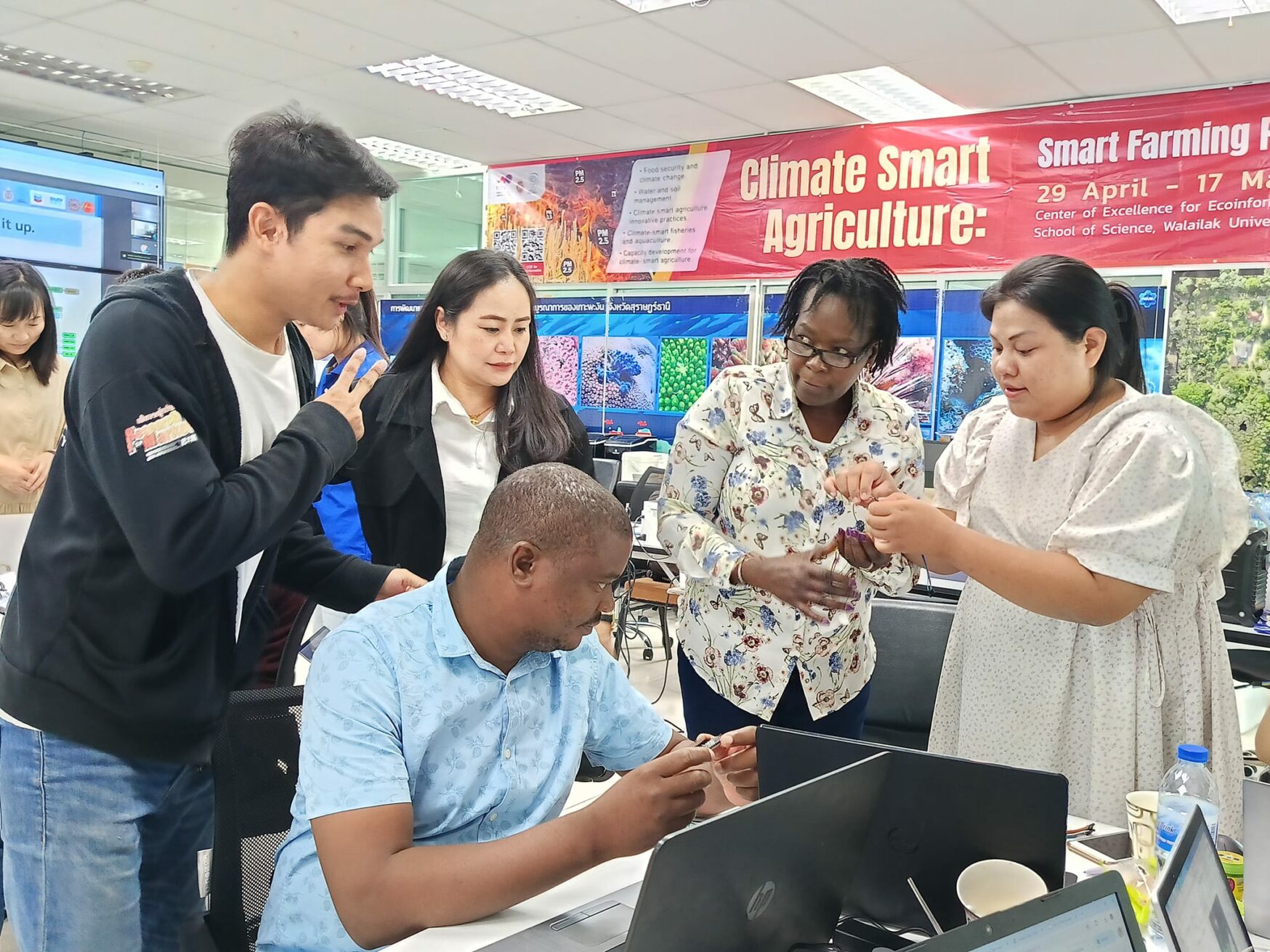
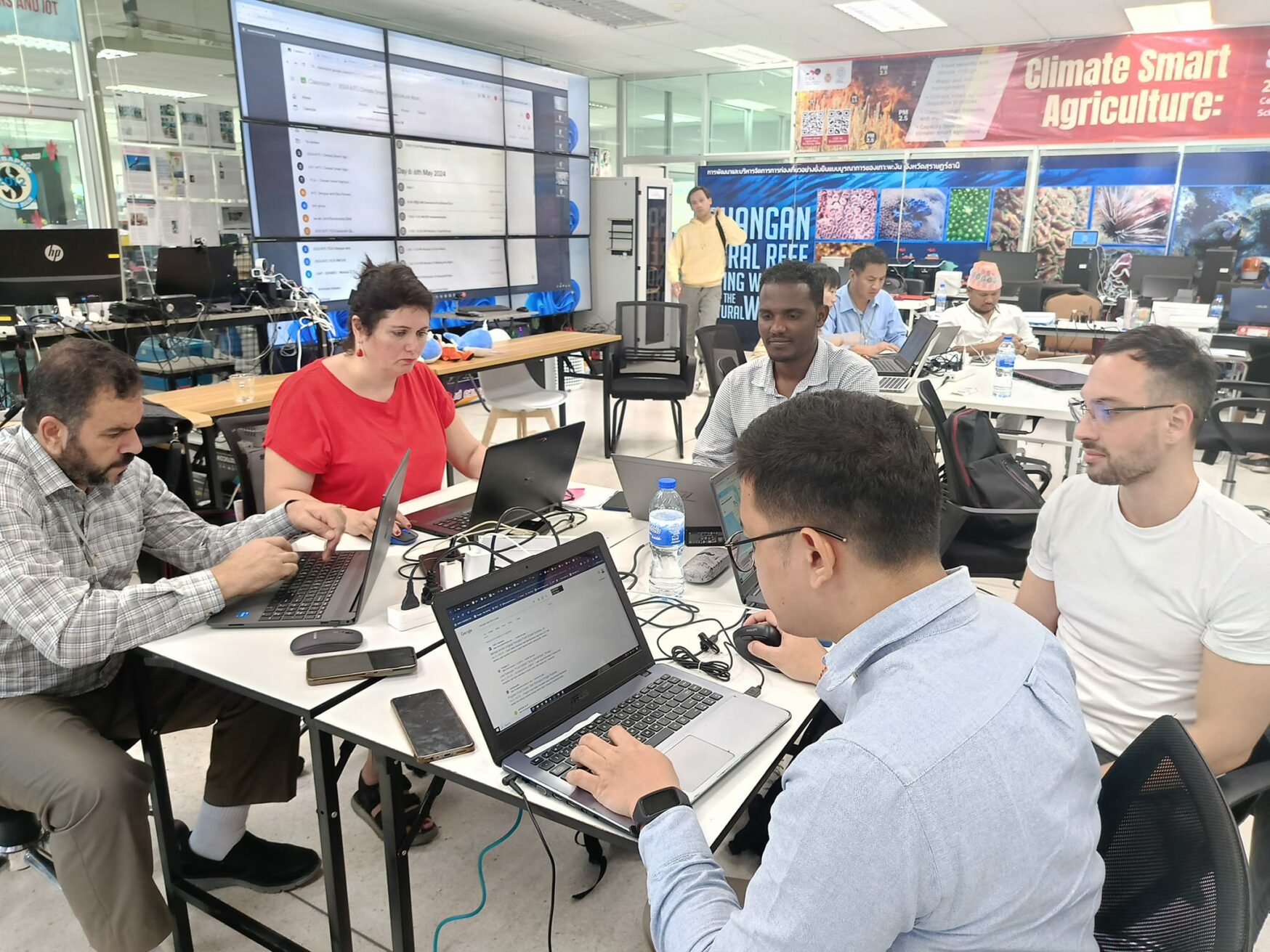
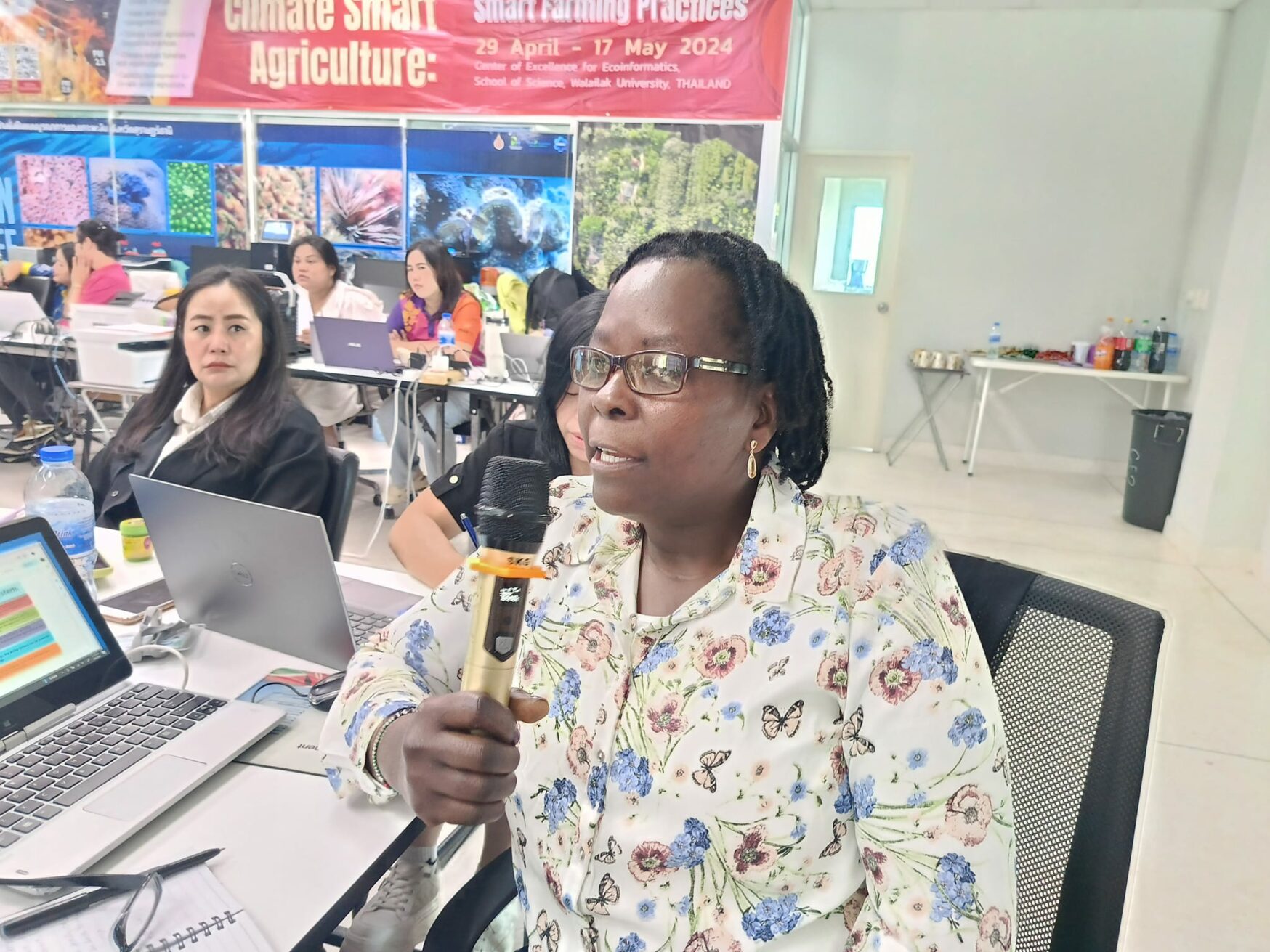
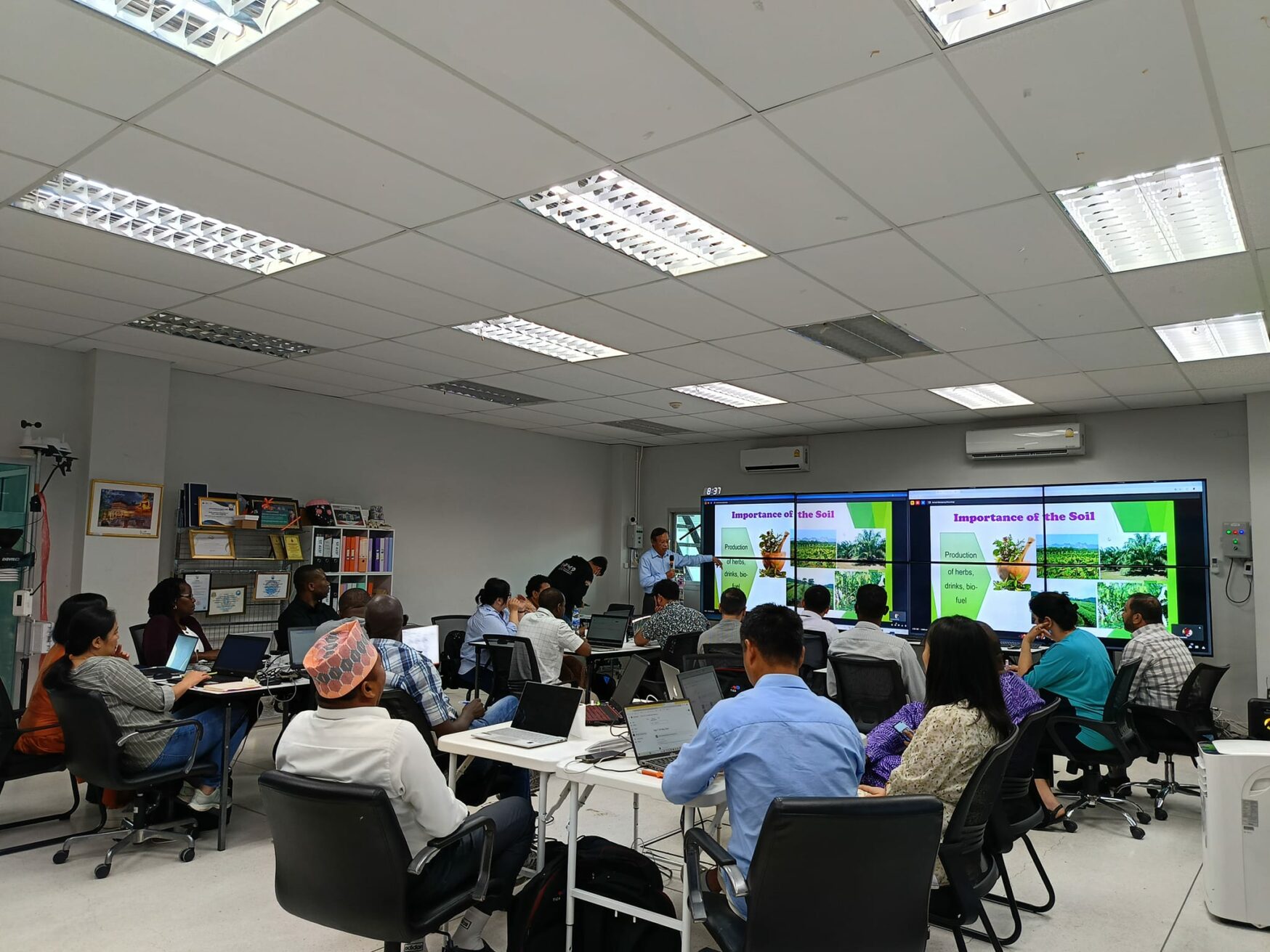
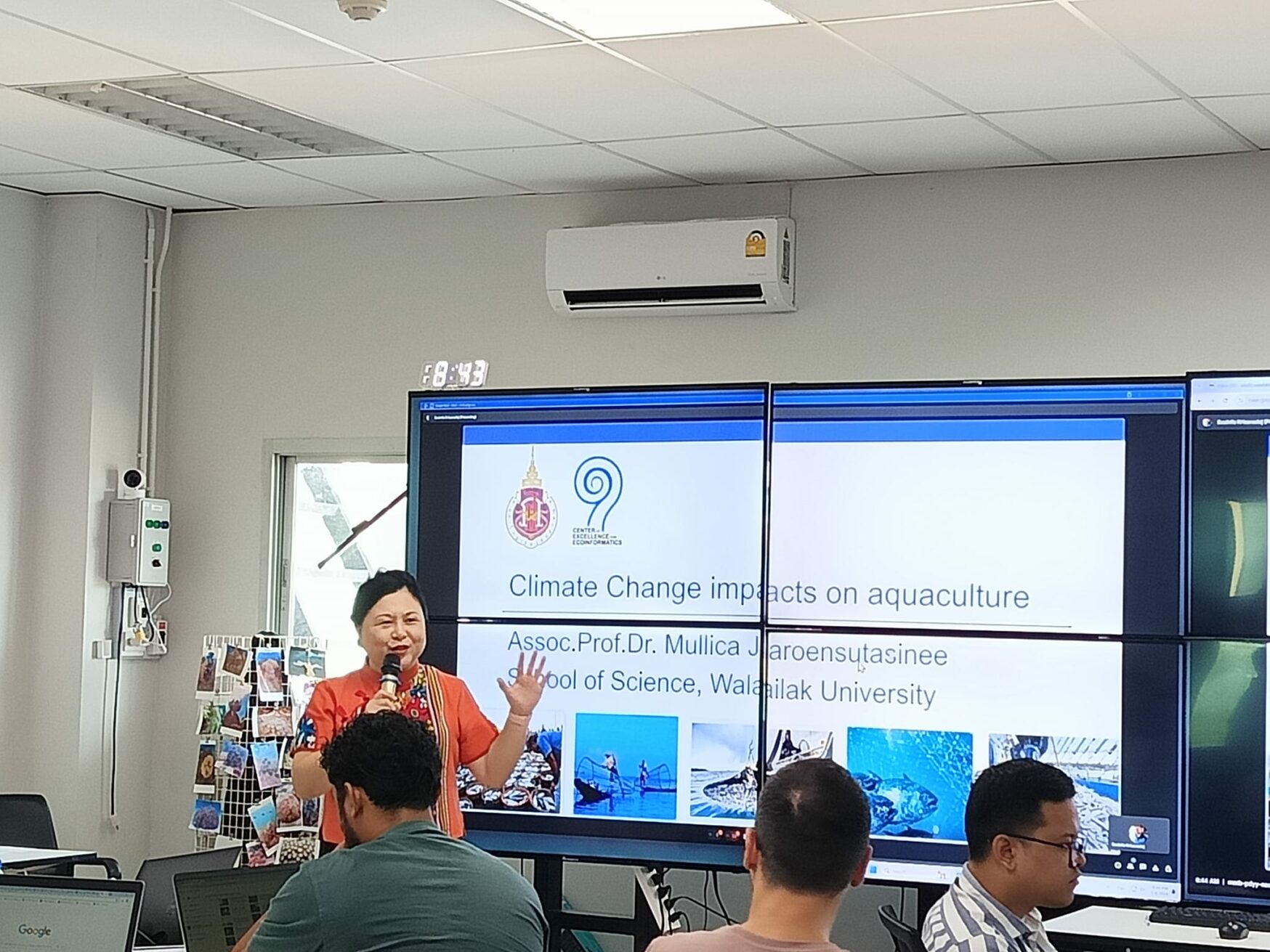
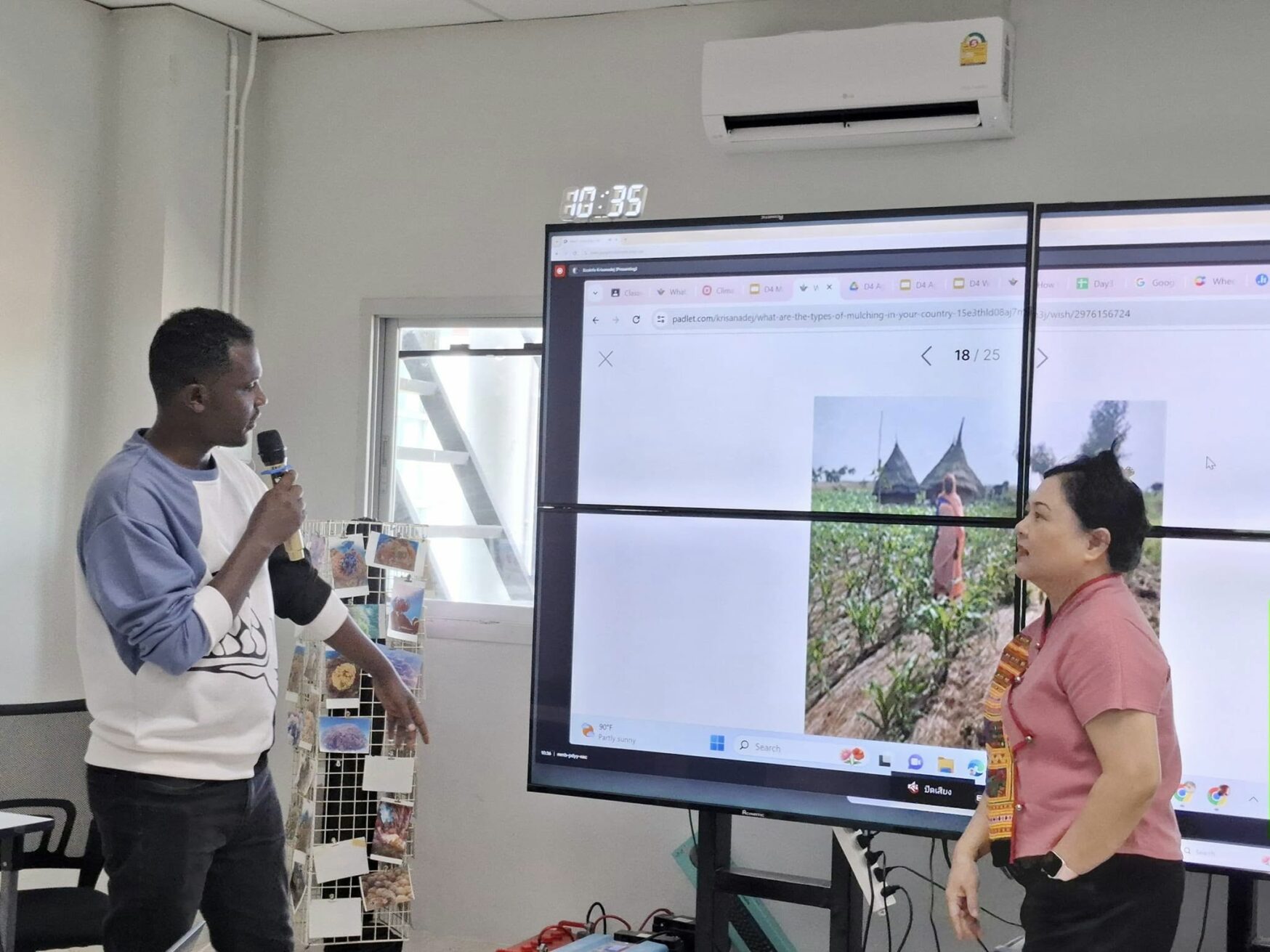
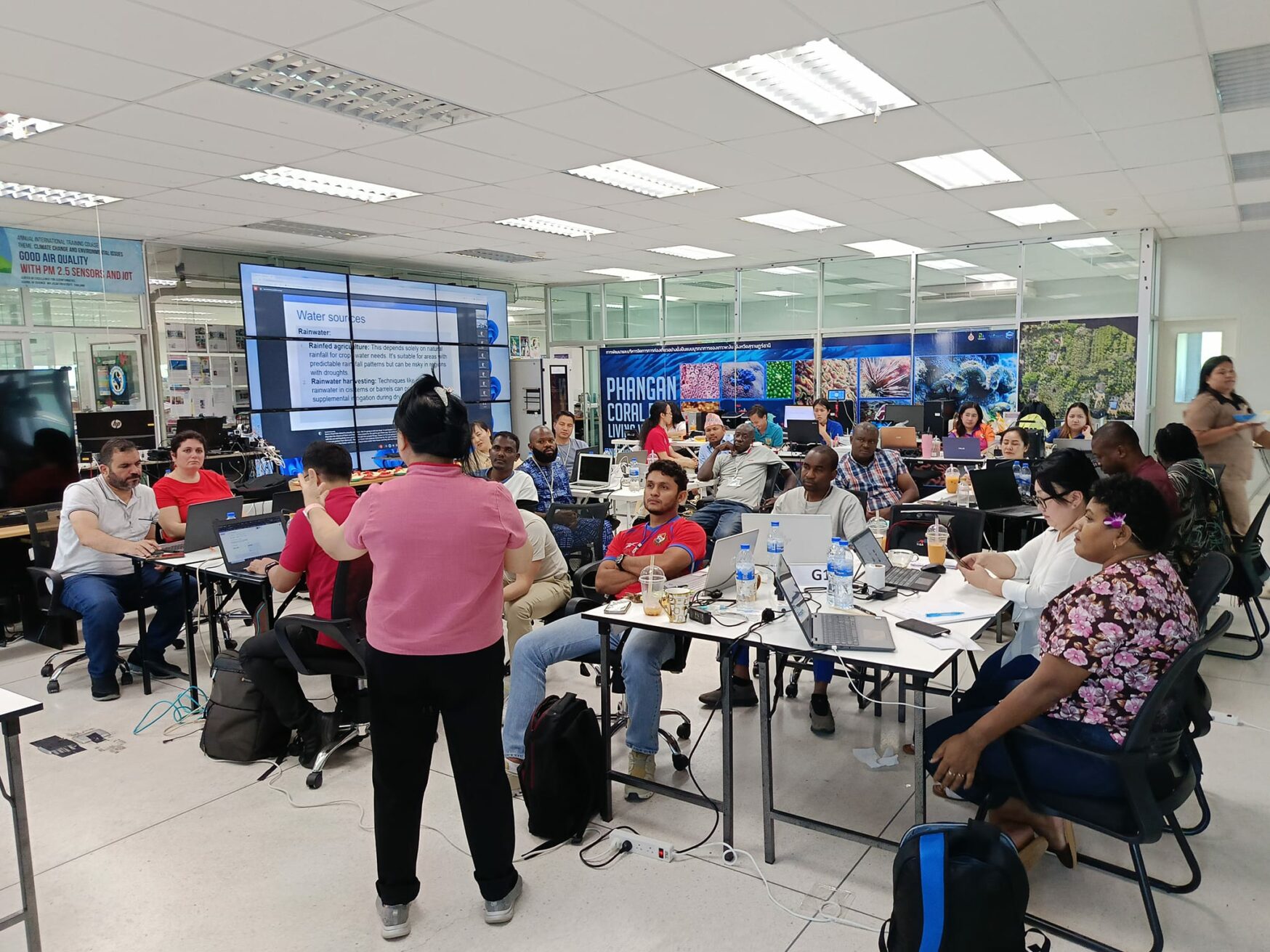
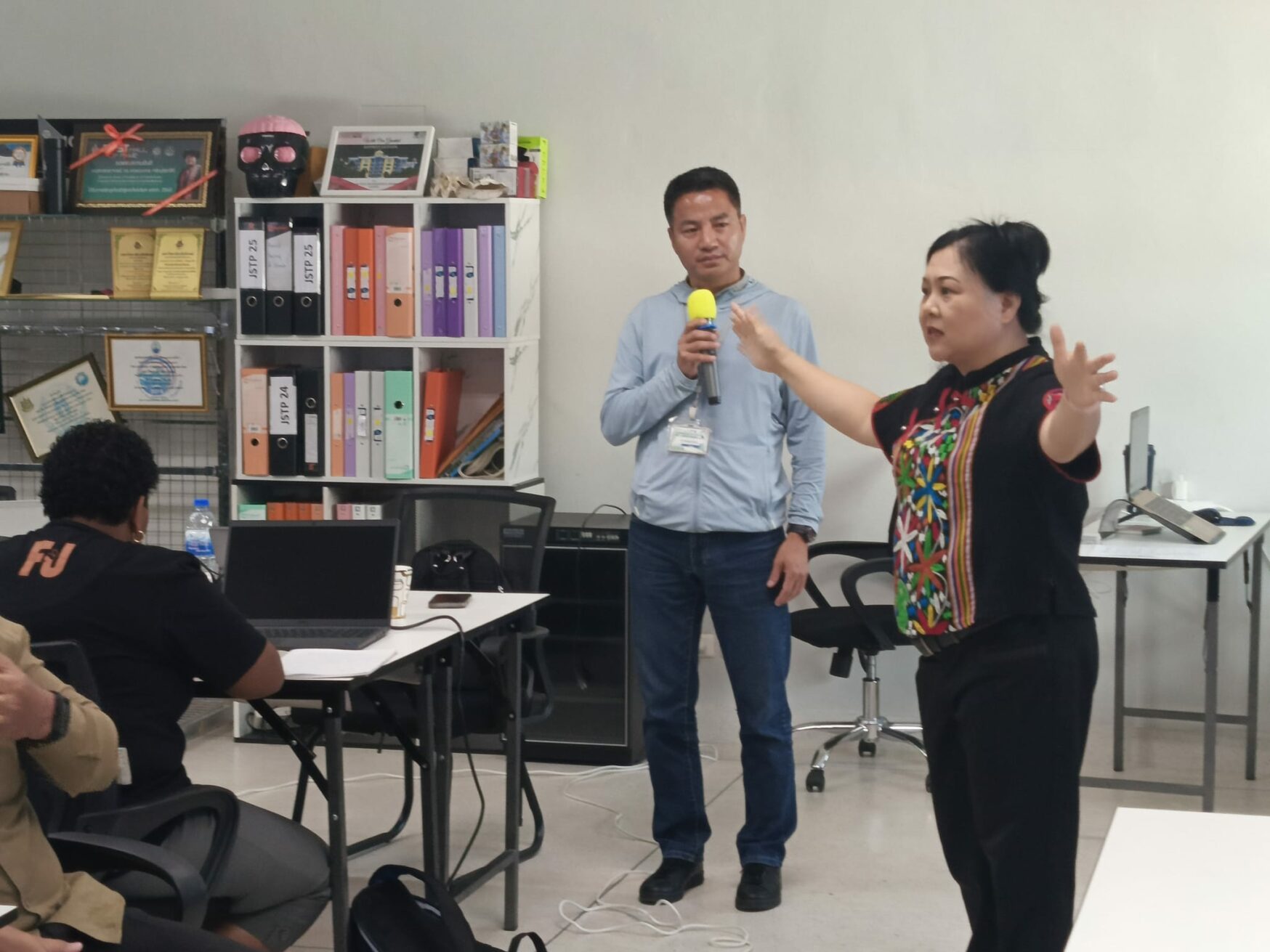
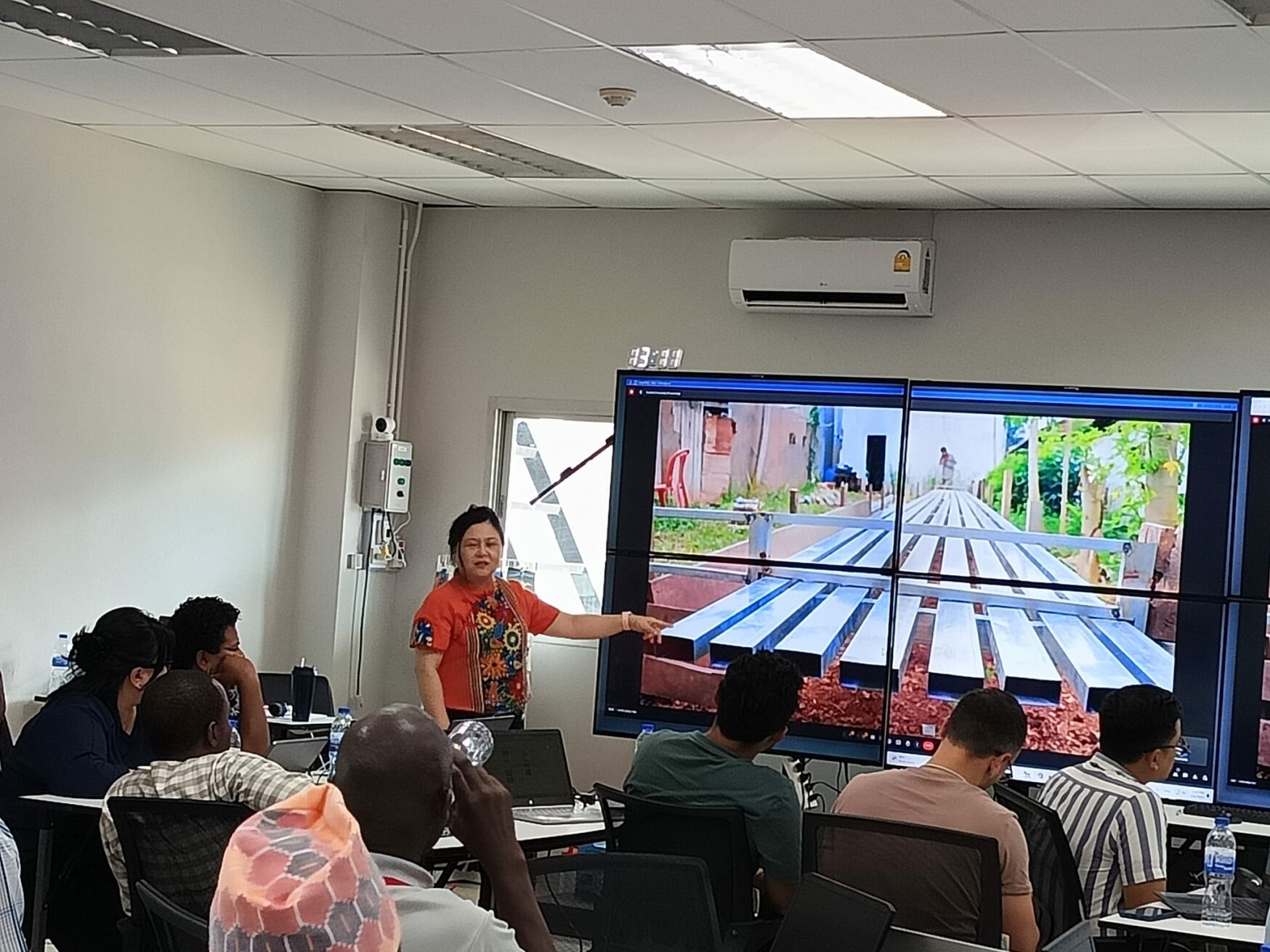
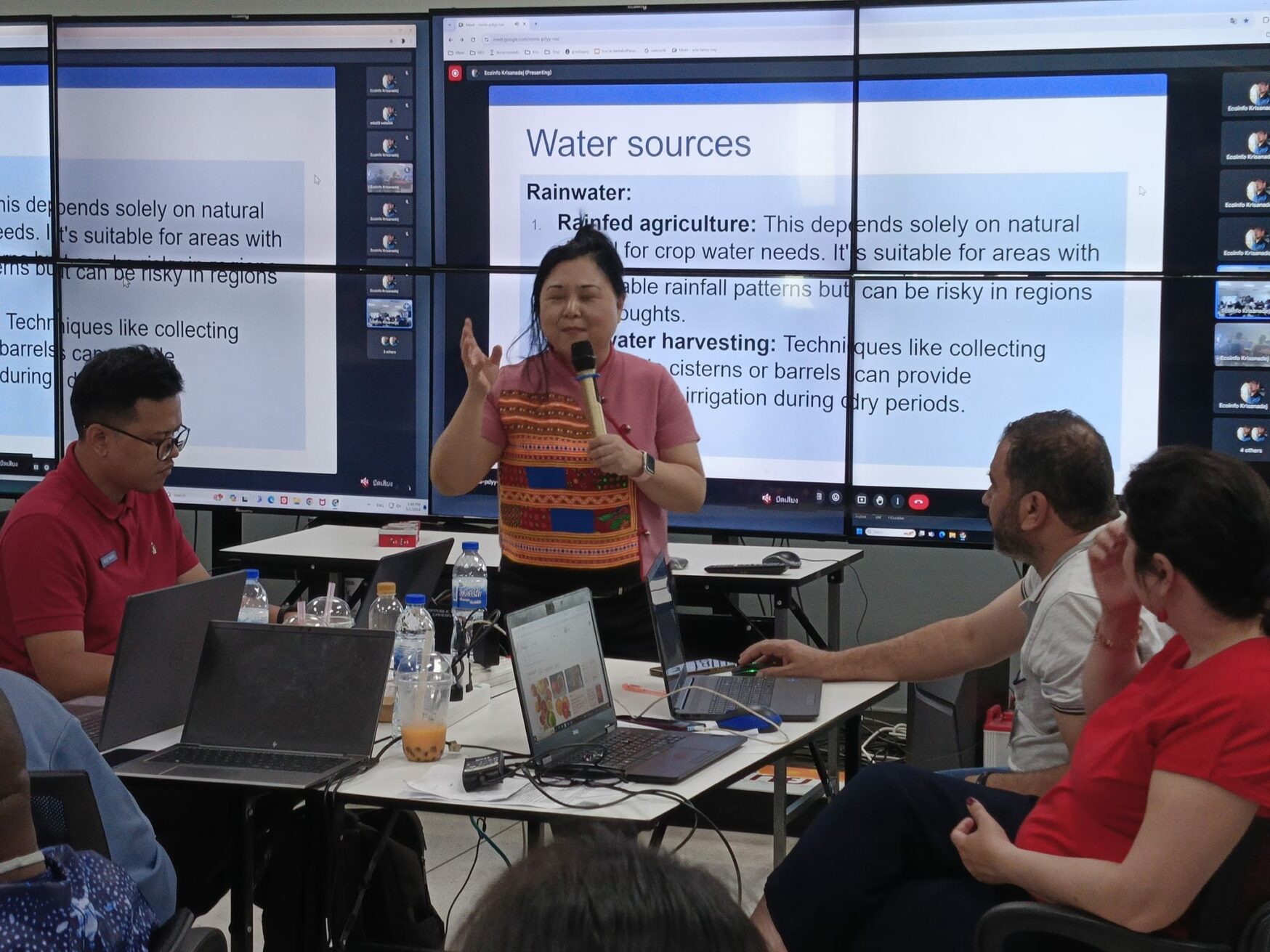
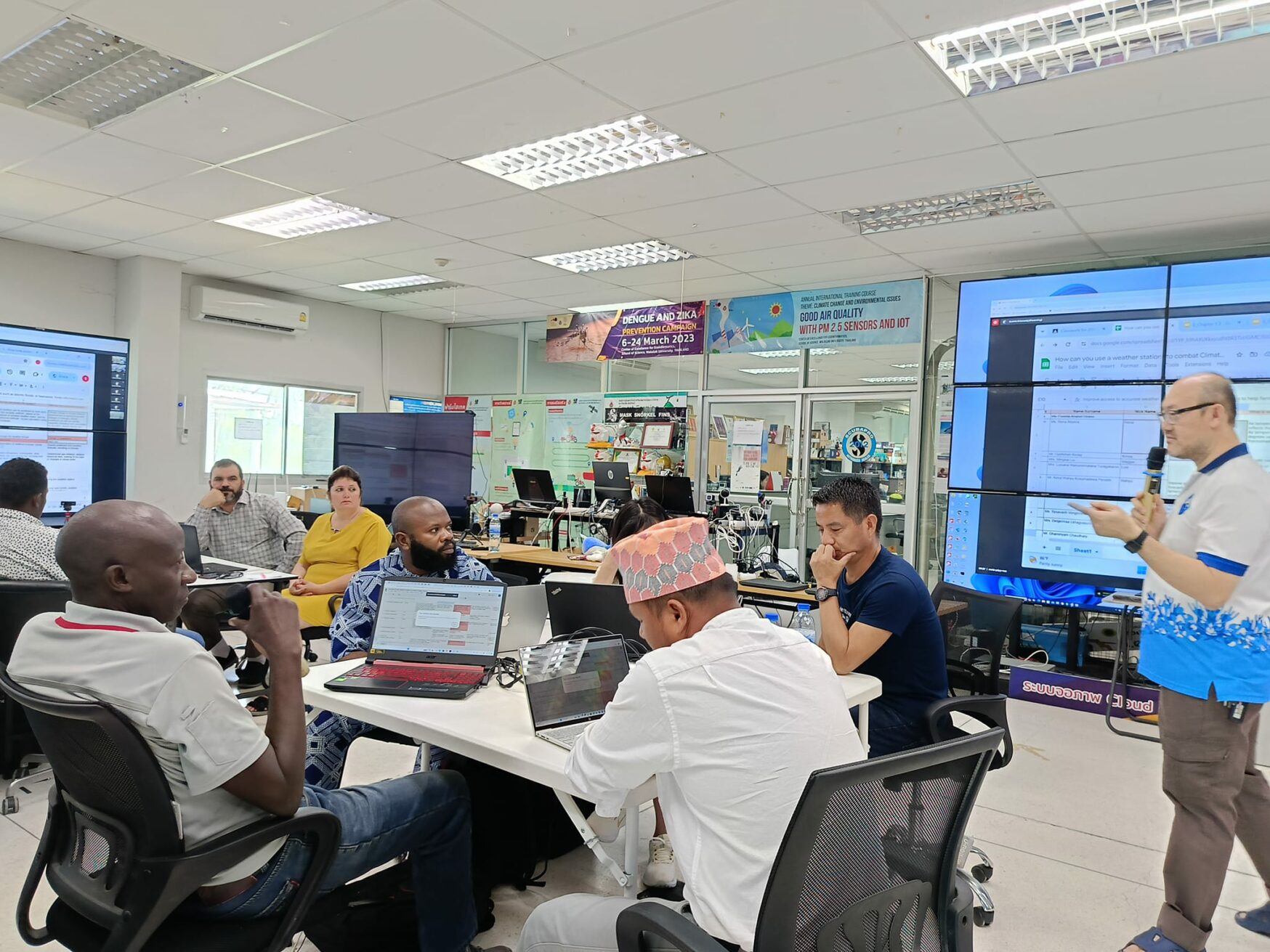
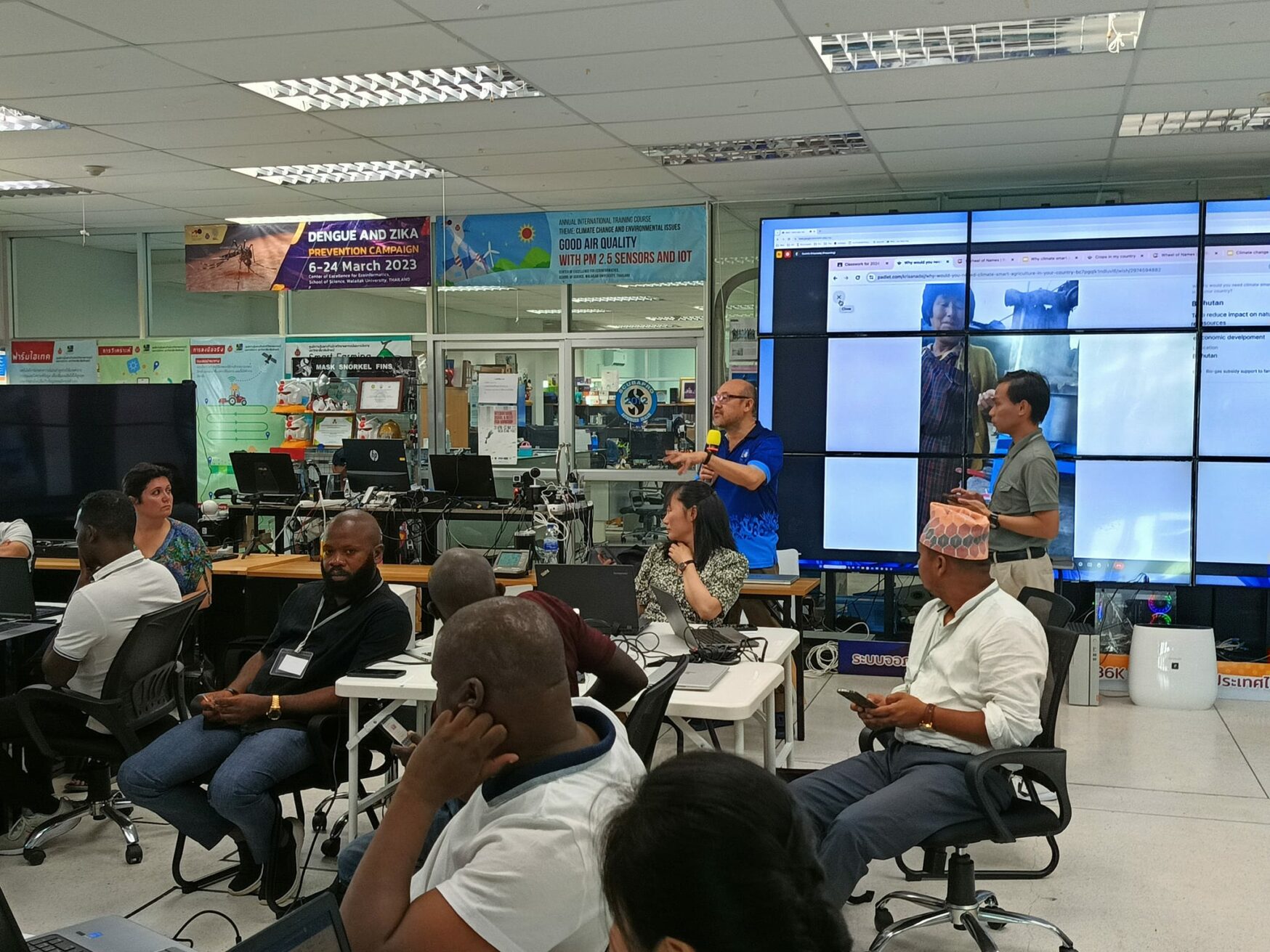
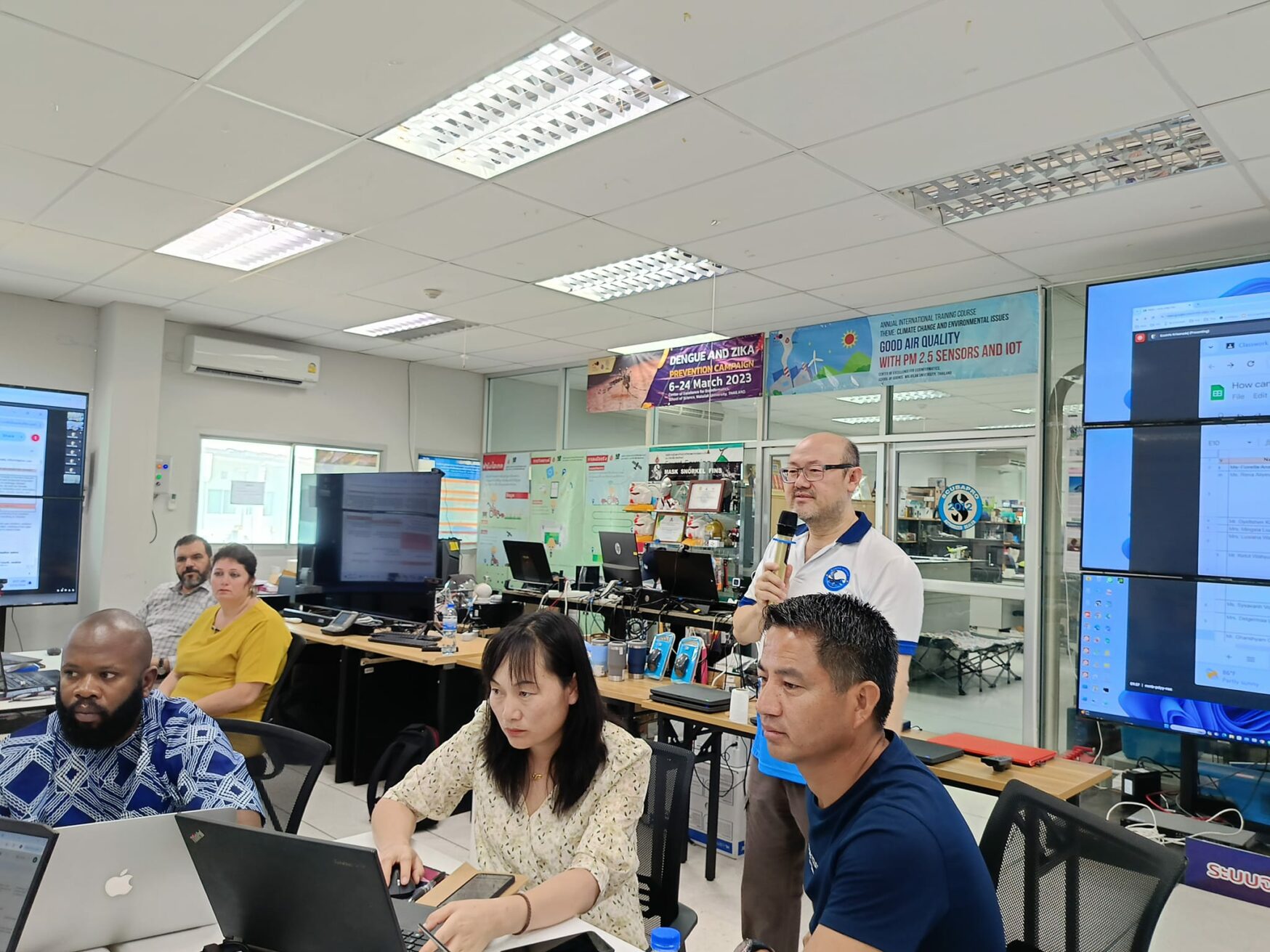
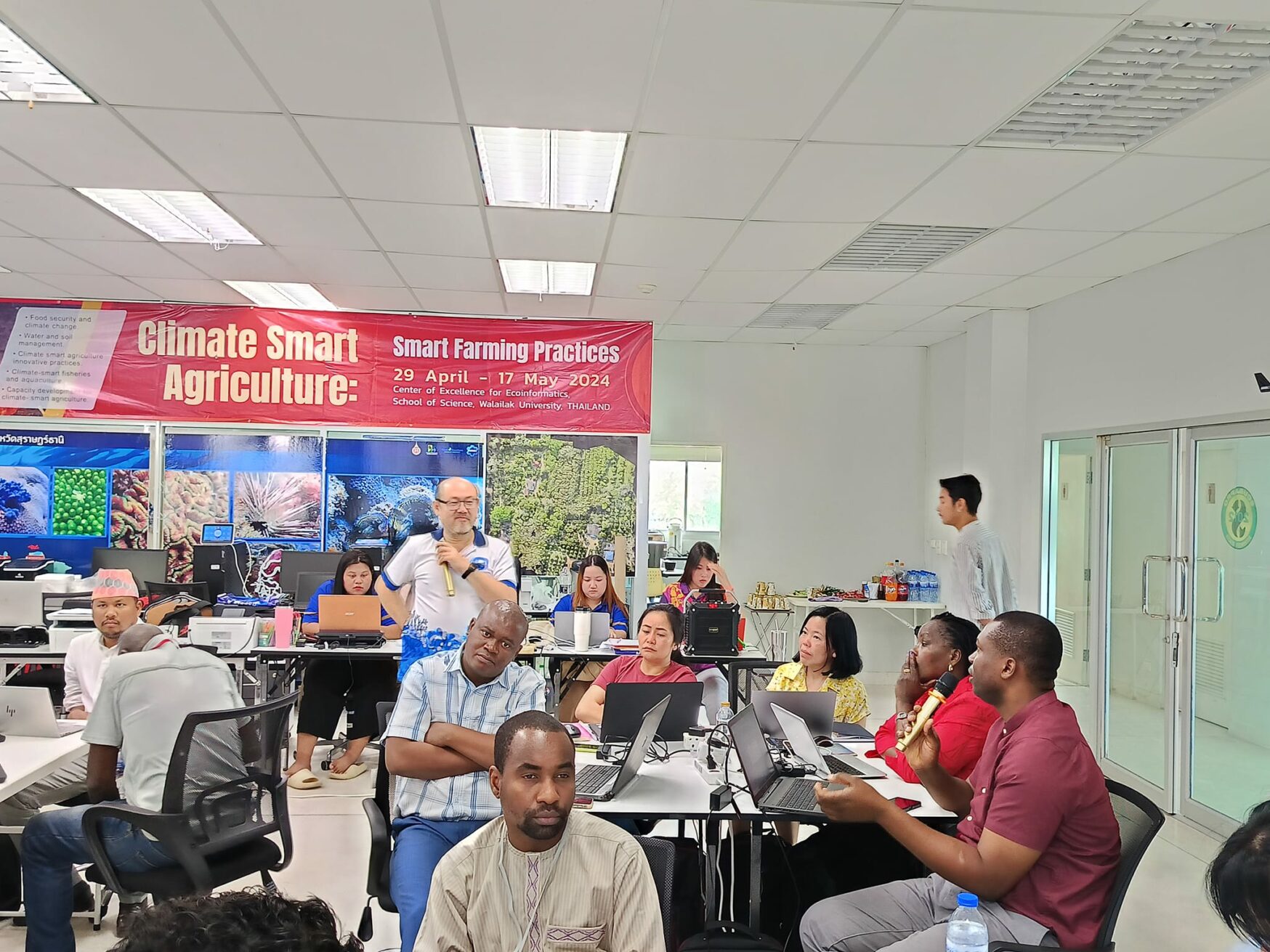
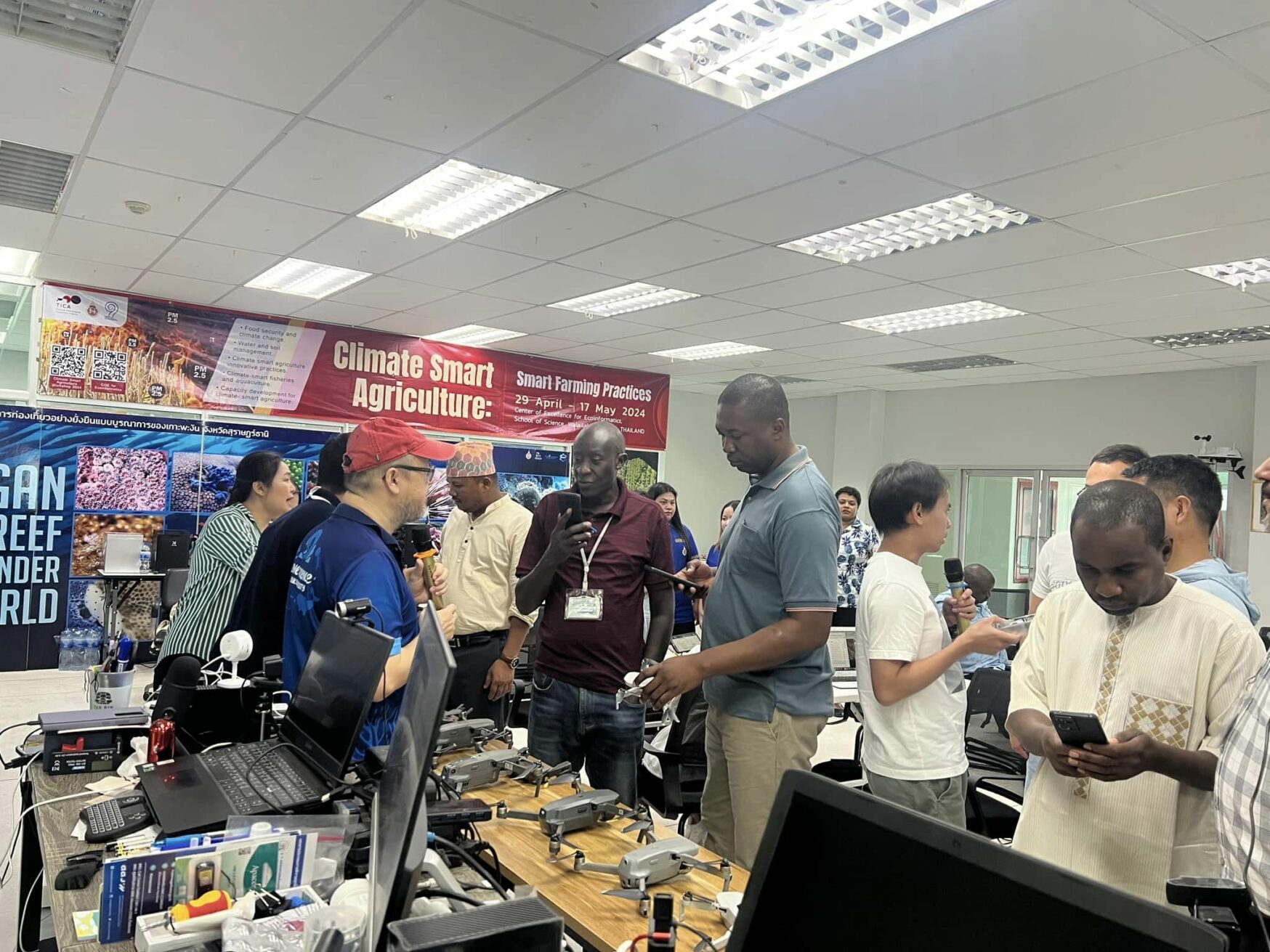
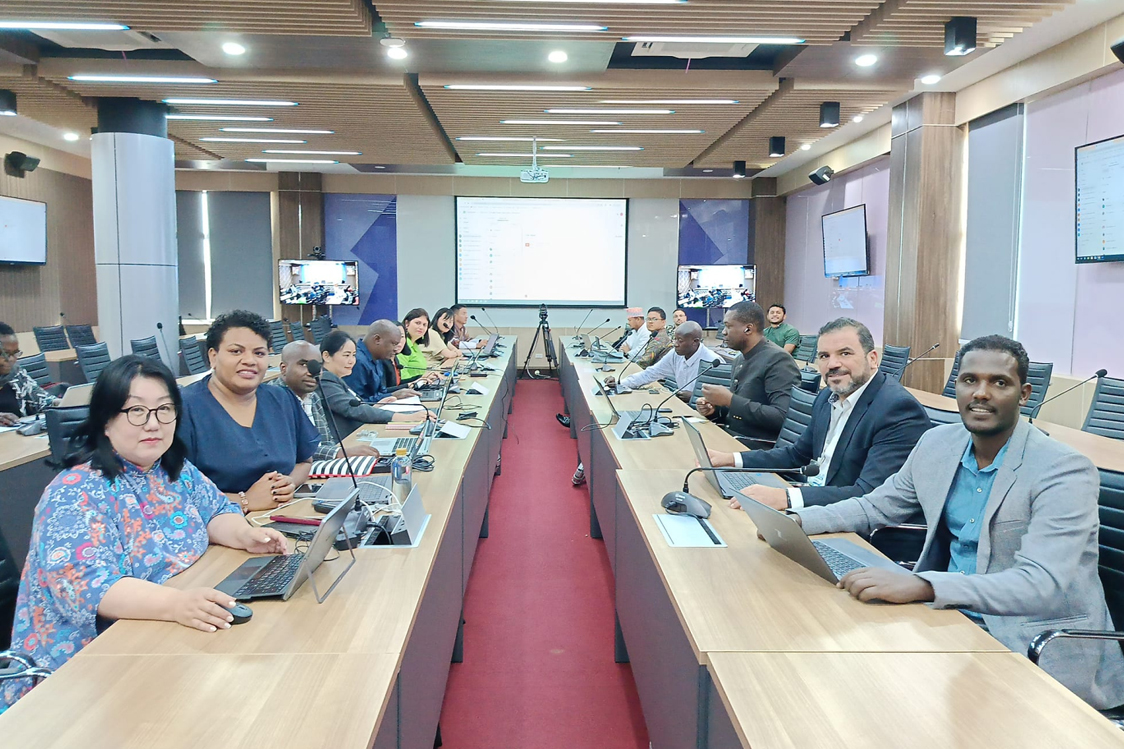
Figures: International participants during sessions and lectures provided by Assoc. Prof. Dr. Mullica Jaroensutasinee, Assoc. Prof. Dr. Krisanadej Jaroensutasinee and WU scientists and researchers at the center
During the lecture sessions, Assoc. Prof. Dr. Mullica Jaroensutasinee provided in-depth insights into key topics such as climate change, climate-smart agricultural practices, and water management for climate change mitigation. Her lectures emphasized sustainable farming techniques, including soil conservation, soil water management, and strategies to enhance agricultural resilience. She also introduced innovative approaches such as climate-risk insurance and early warning systems to help farmers mitigate climate-related risks. Additionally, she highlighted the Sufficiency Economy Philosophy, sharing best practices that have contributed to Thailand’s success in achieving agricultural sustainability.
Figures: Assoc. Prof. Dr. Mullica Jaroensutasinee giving lectures on issues to international participants during sessions
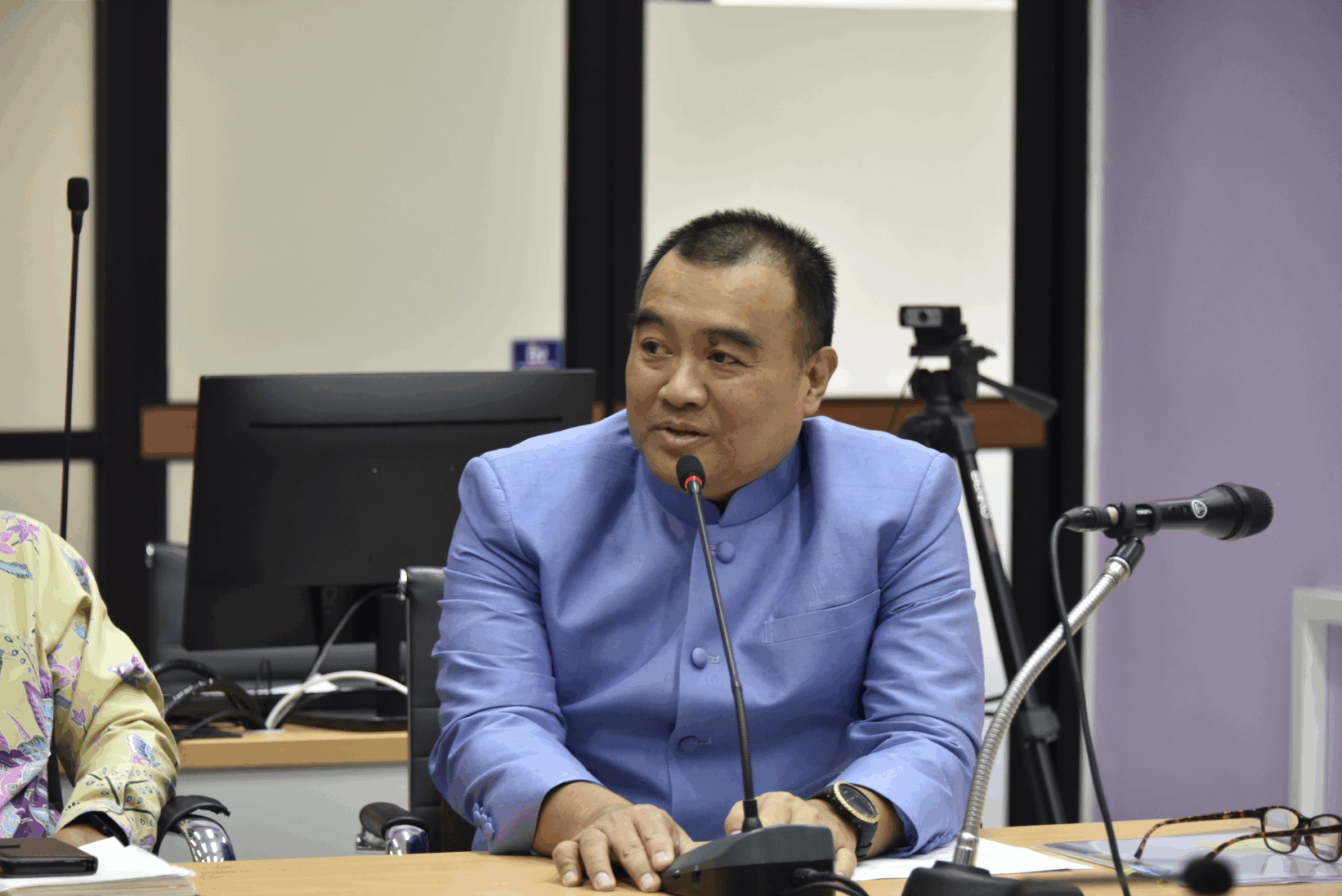
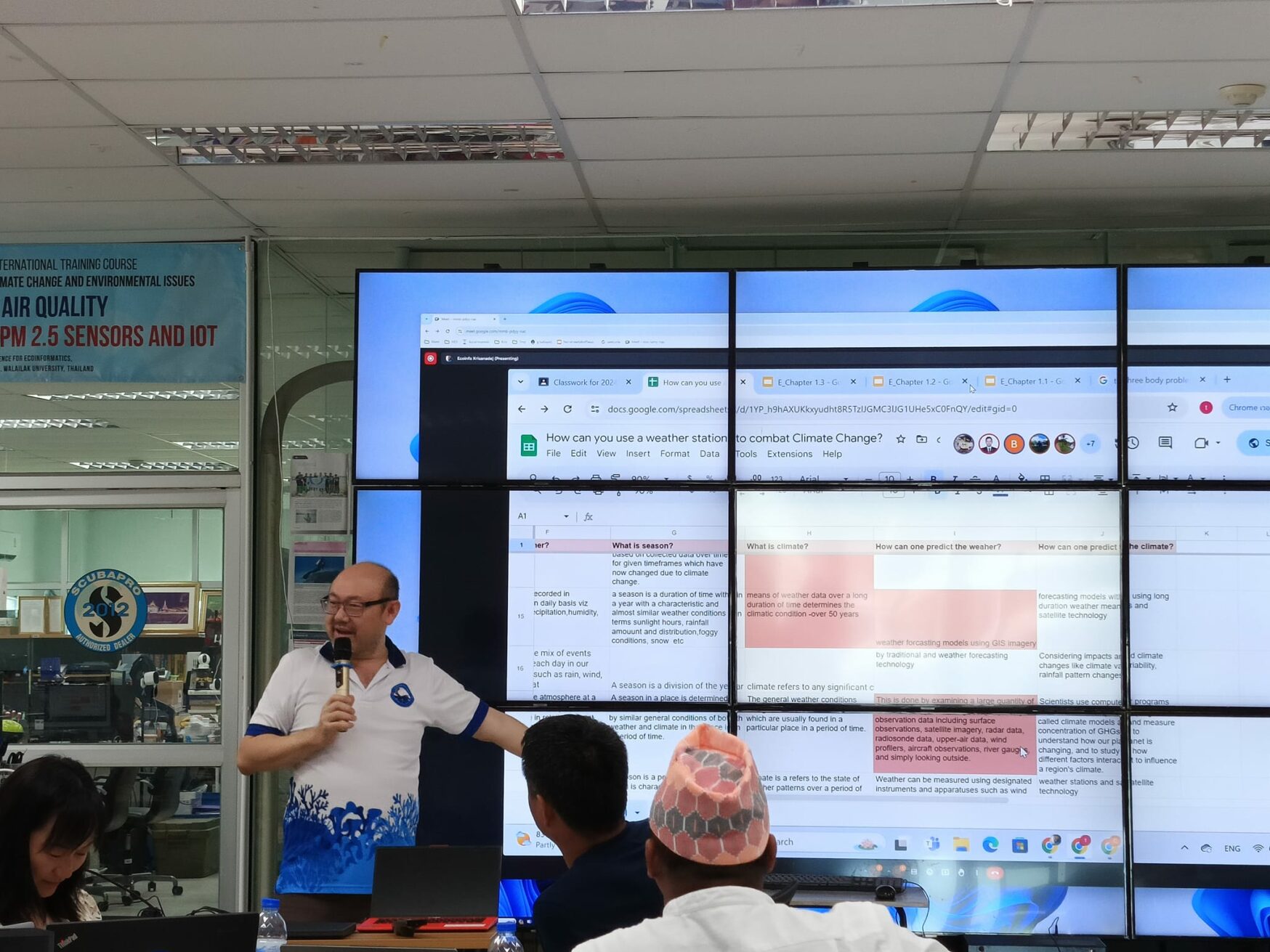
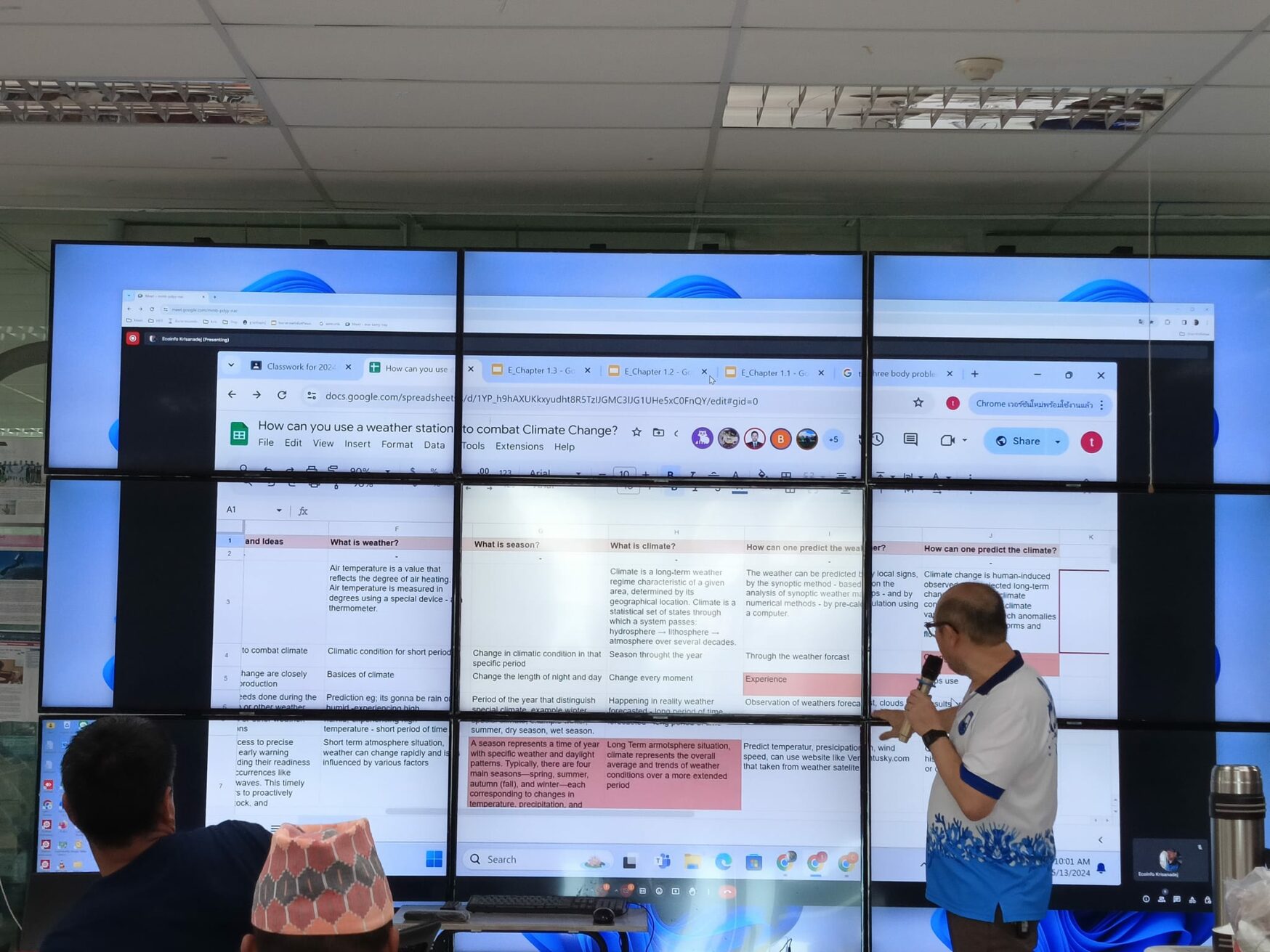
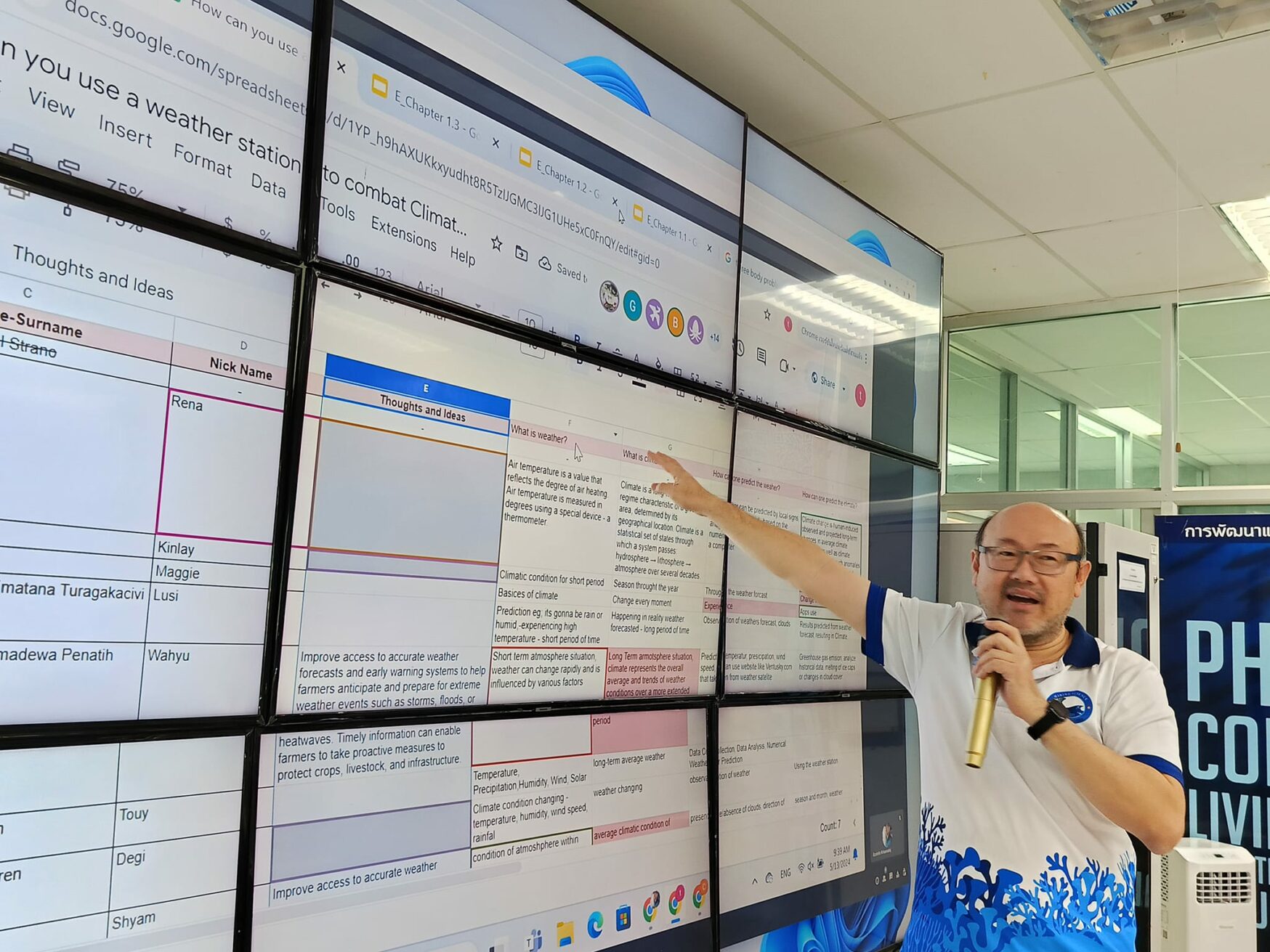
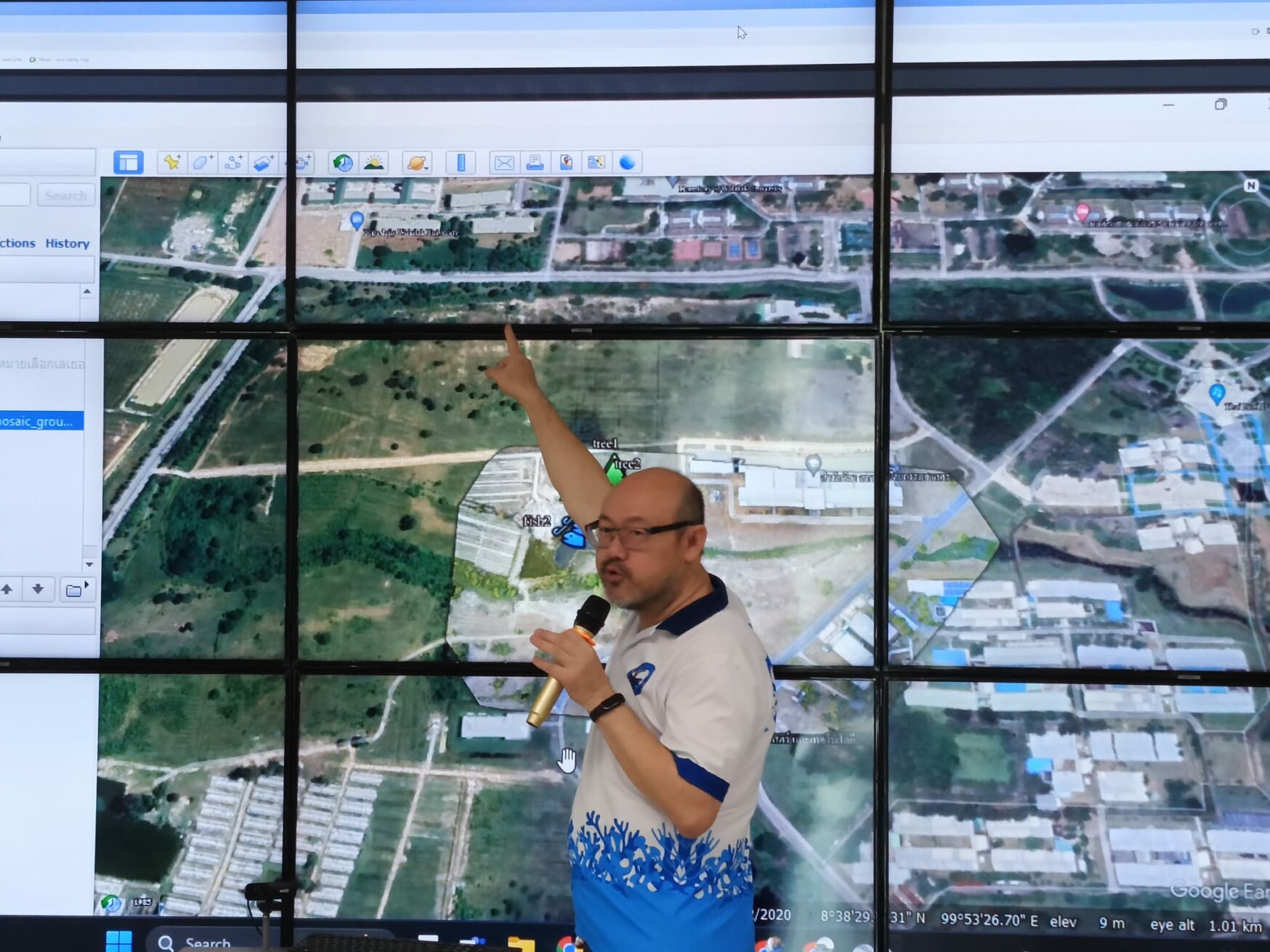
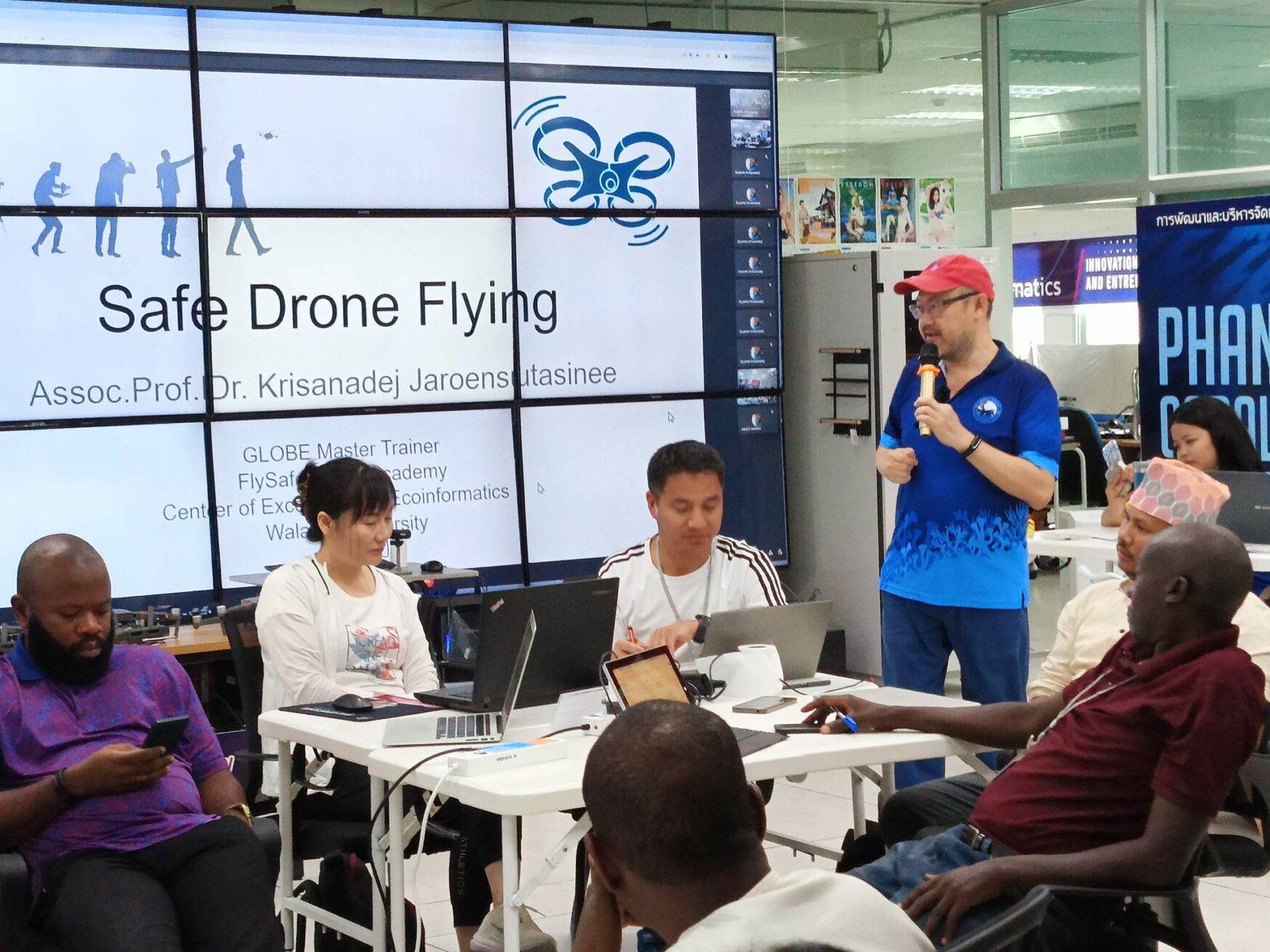
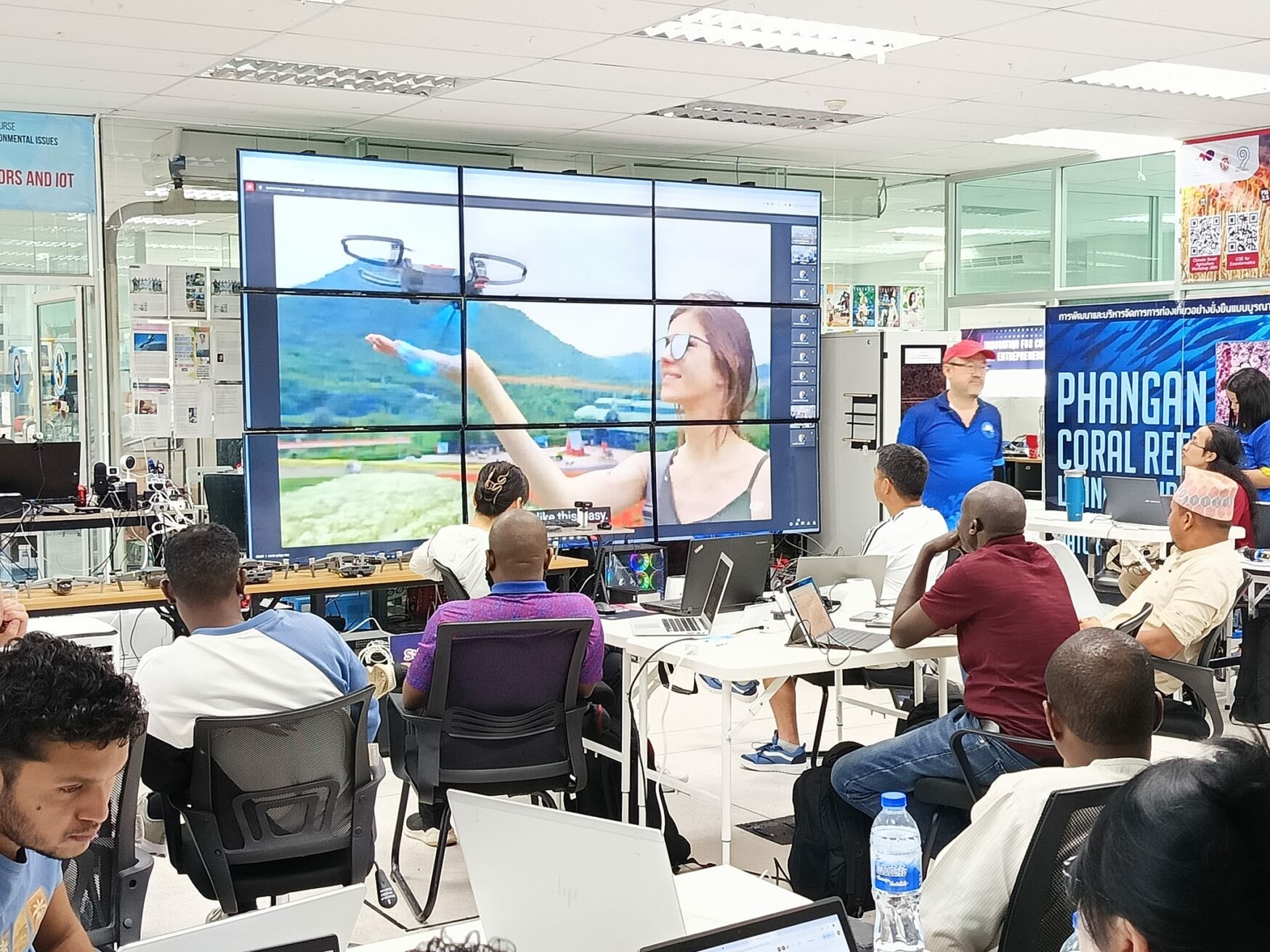
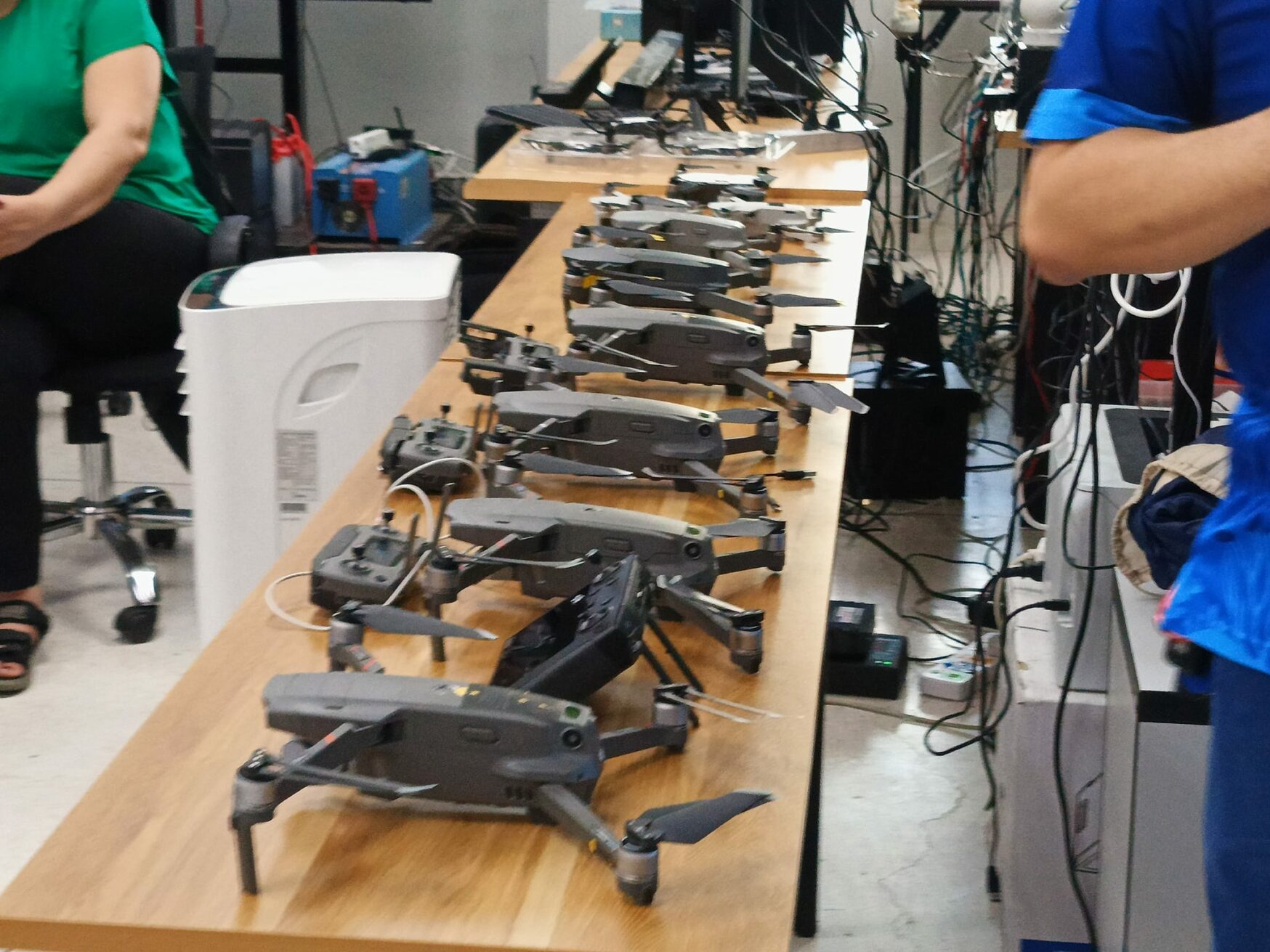
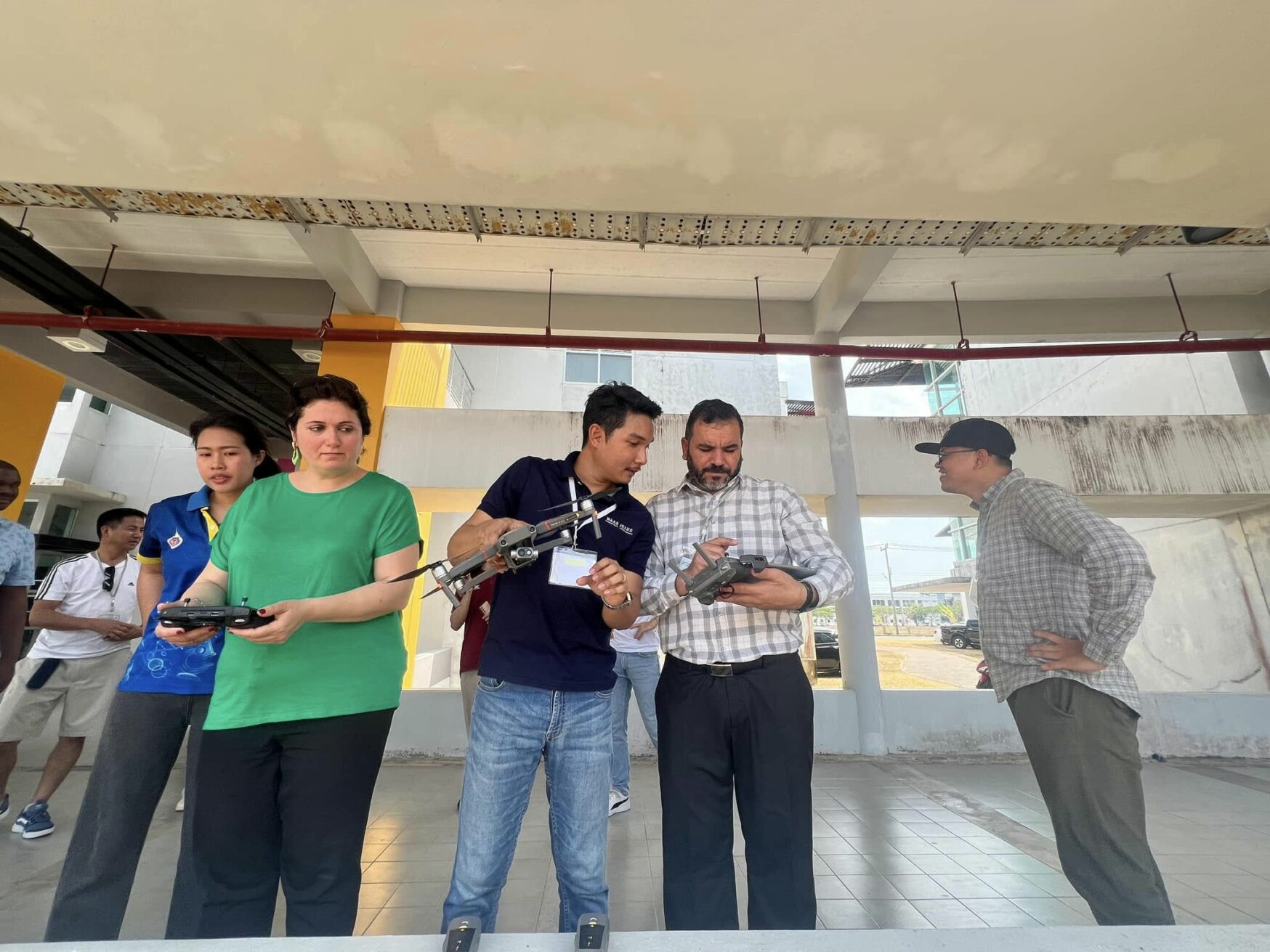
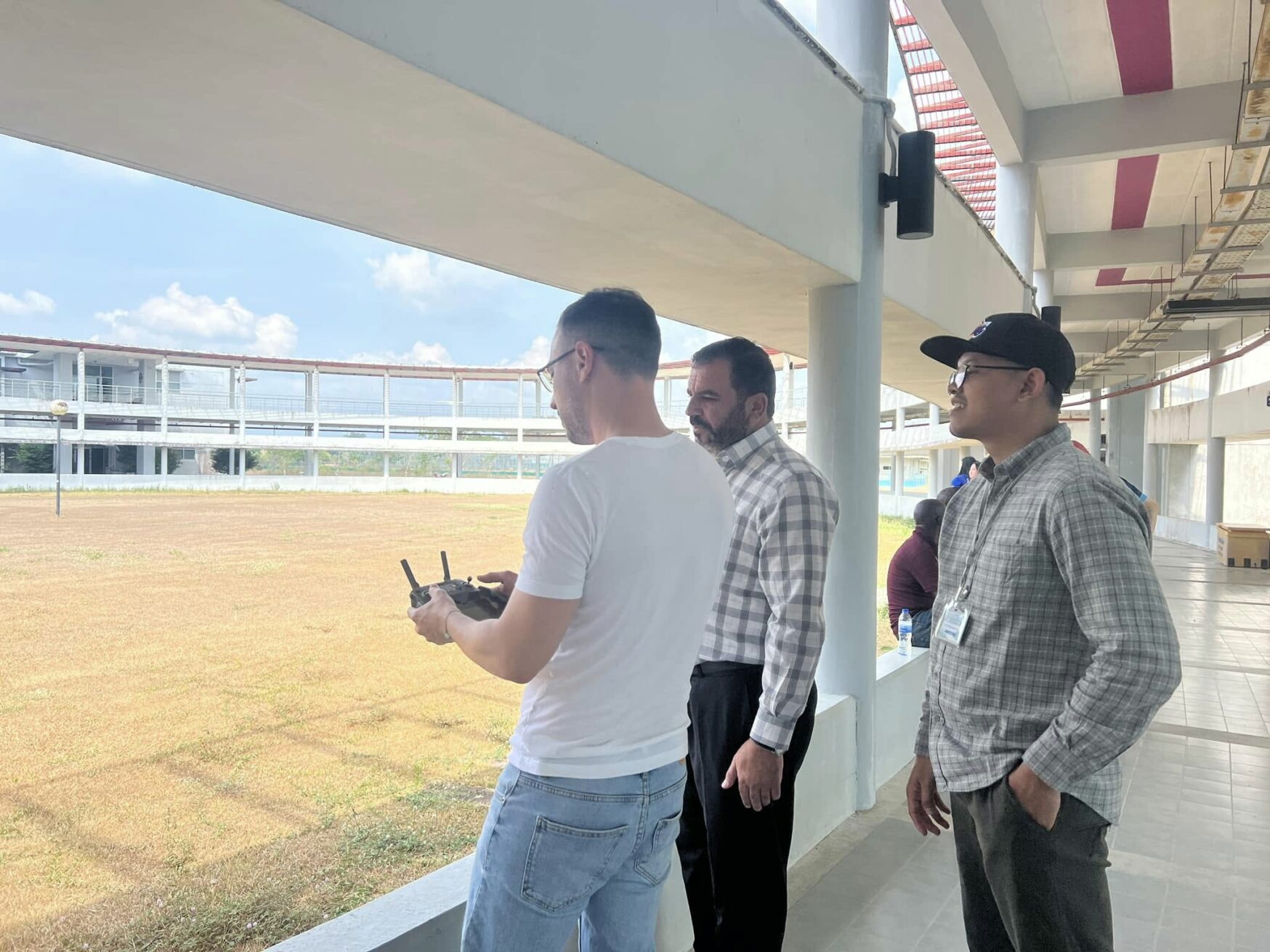
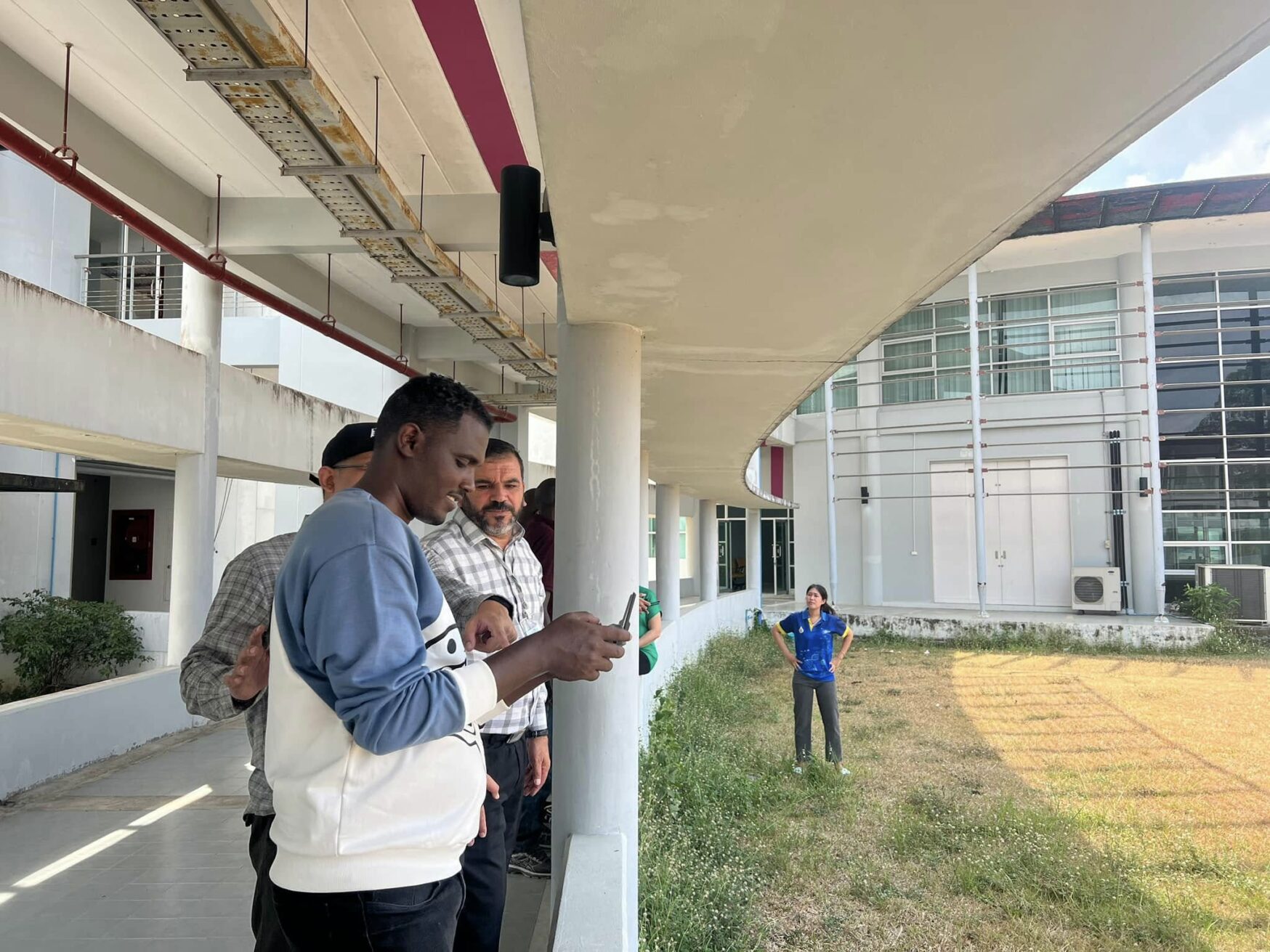
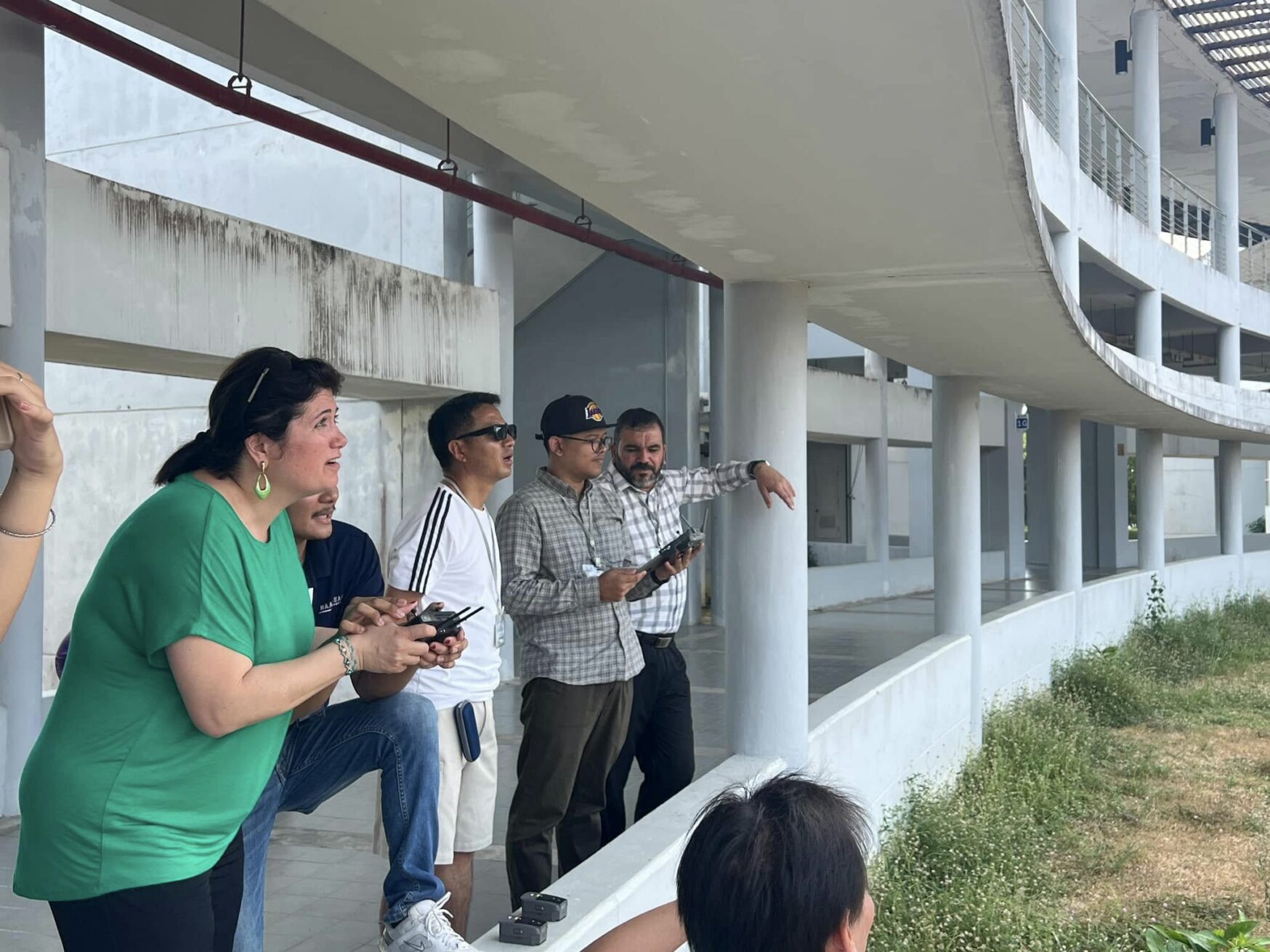
Assoc. Prof. Dr. Krisanadej Jaroensutasinee focused on cutting-edge drone mapping technology for monitoring crops and assessing soil fertility. His sessions explored the integration of sensor technology and IoT applications in climate-smart agriculture, enabling farmers to optimize farm management and adapt to environmental changes. He also discussed the role of weather forecasting and advanced monitoring systems in improving agricultural productivity and resilience against climate variability.
Figures: Assoc. Prof. Dr. Krisanadej Jaroensutasinee giving lectures on issues to international participants during sessions
Figures: Assoc. Prof. Dr. Krisanadej Jaroensutasinee giving lectures on using drones for sustainable agricultural practices
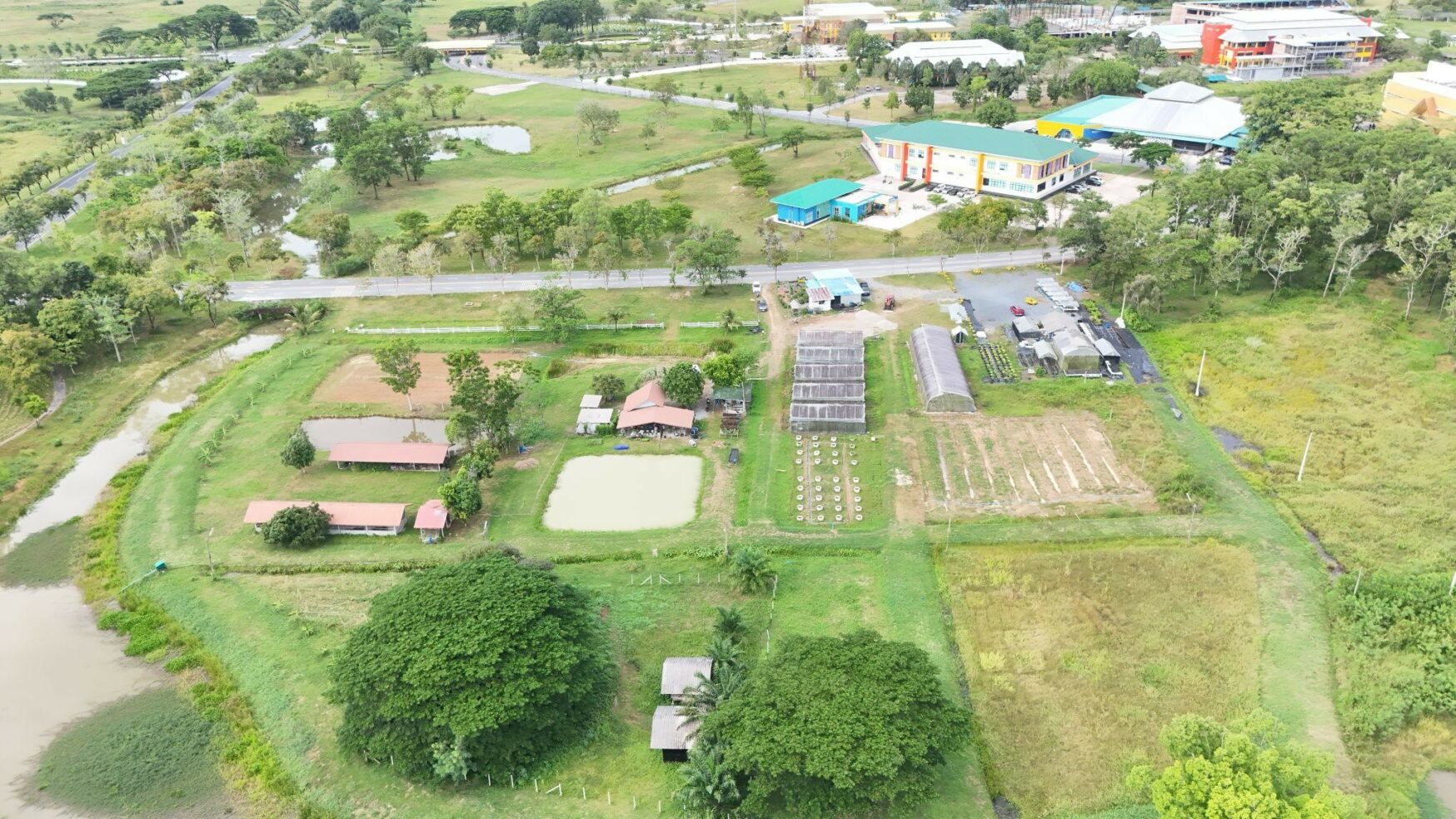
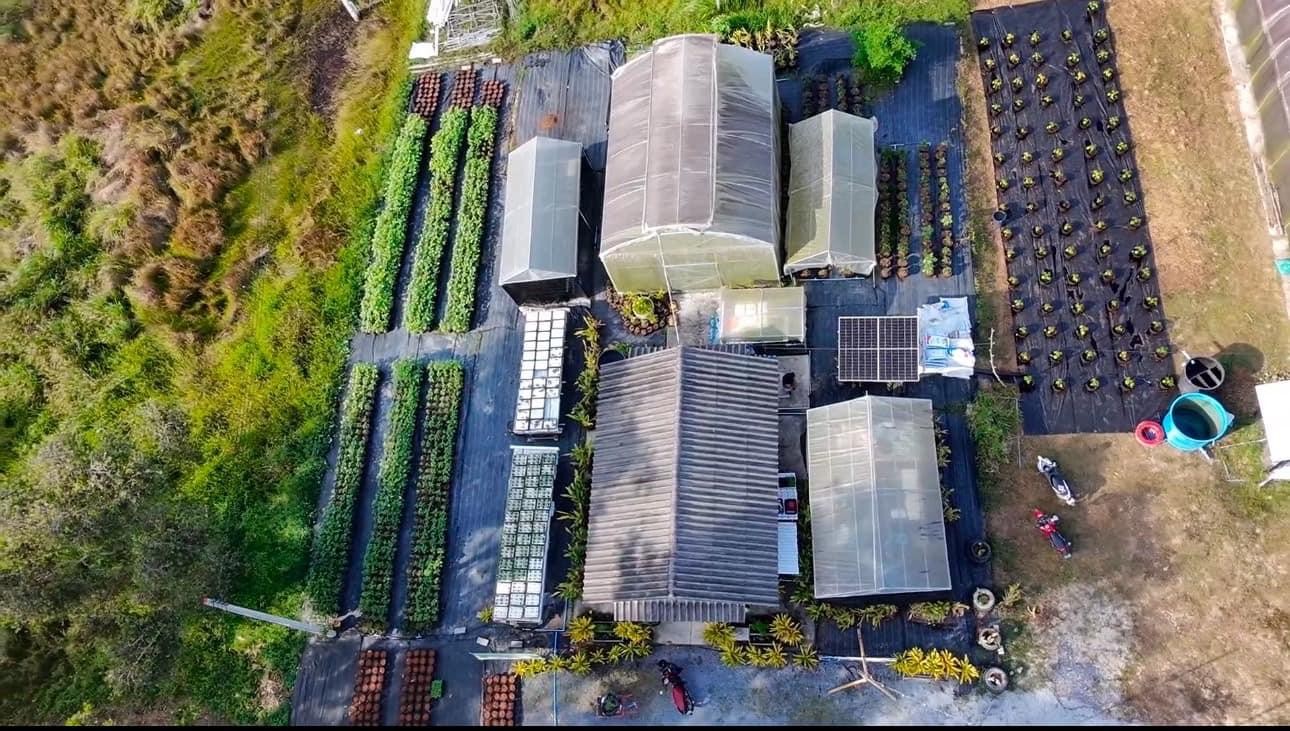
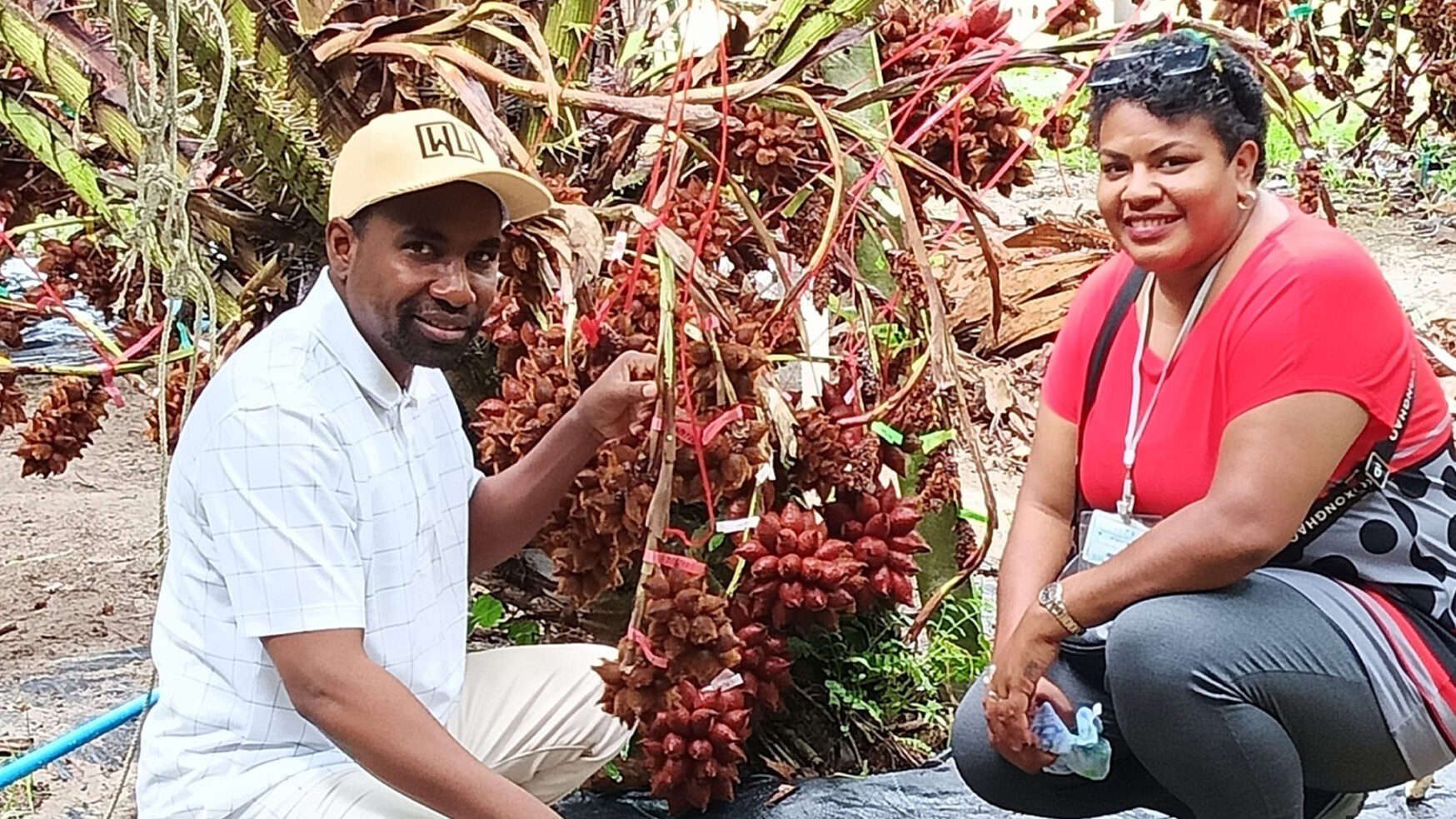
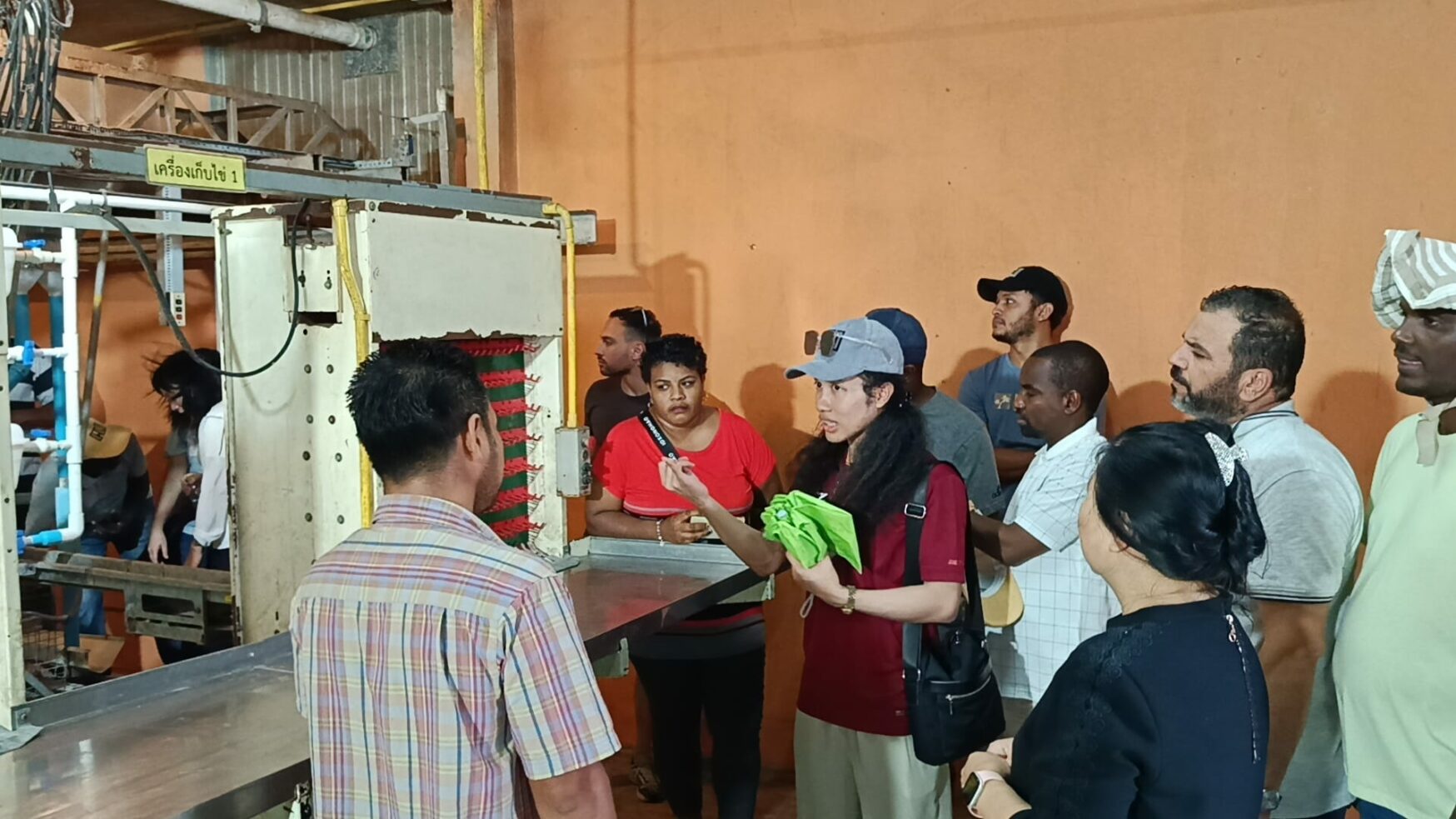
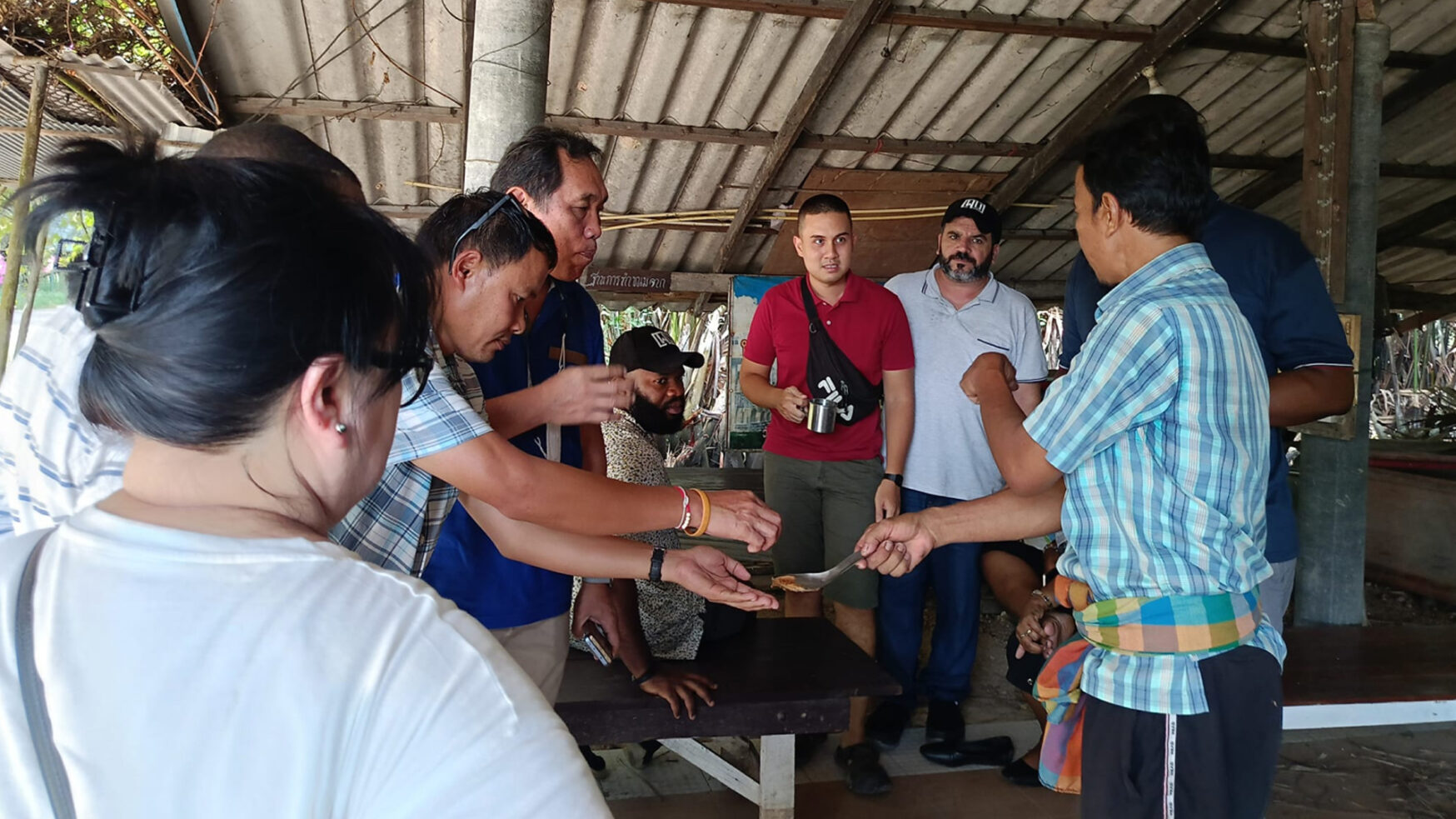
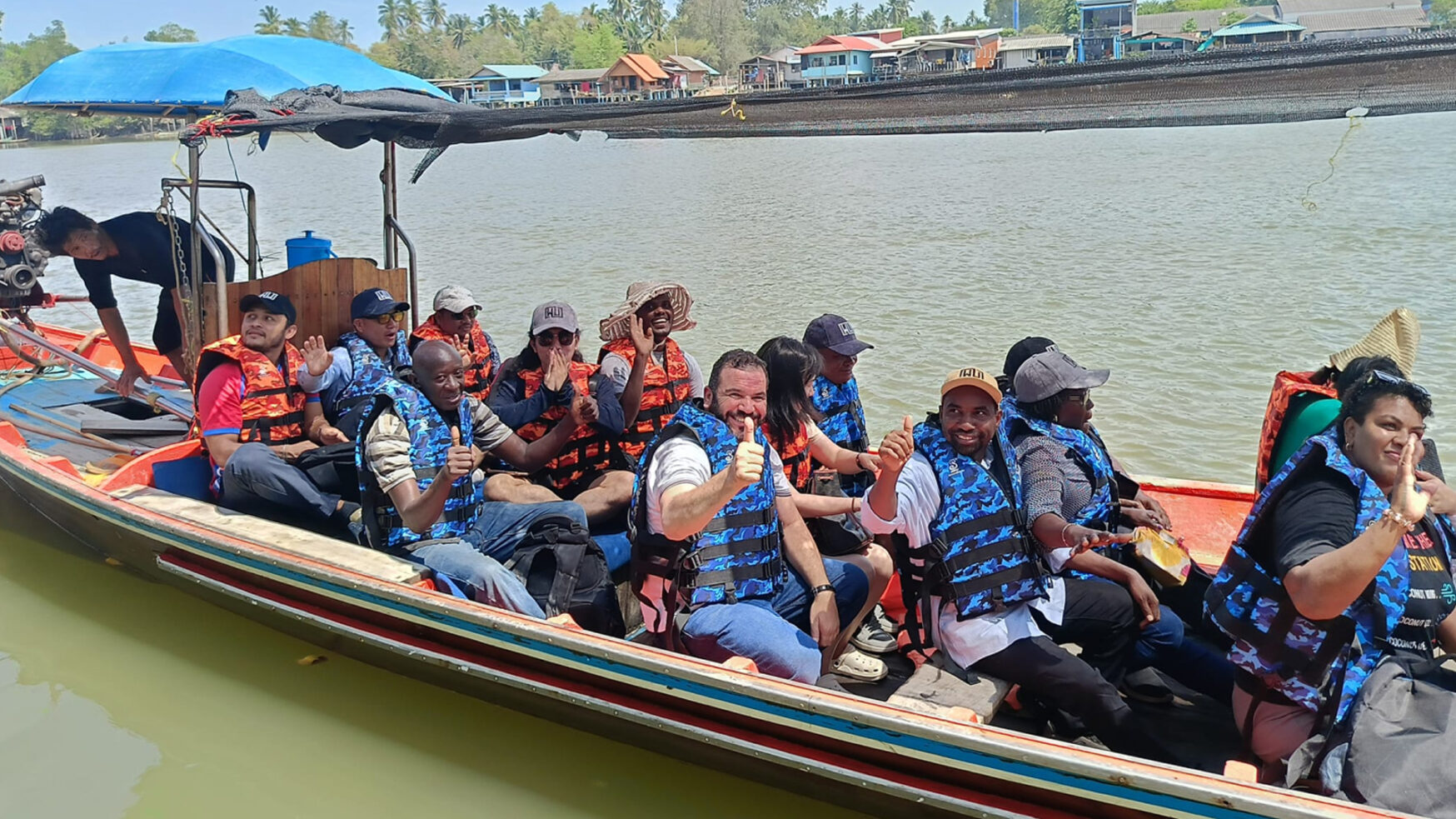
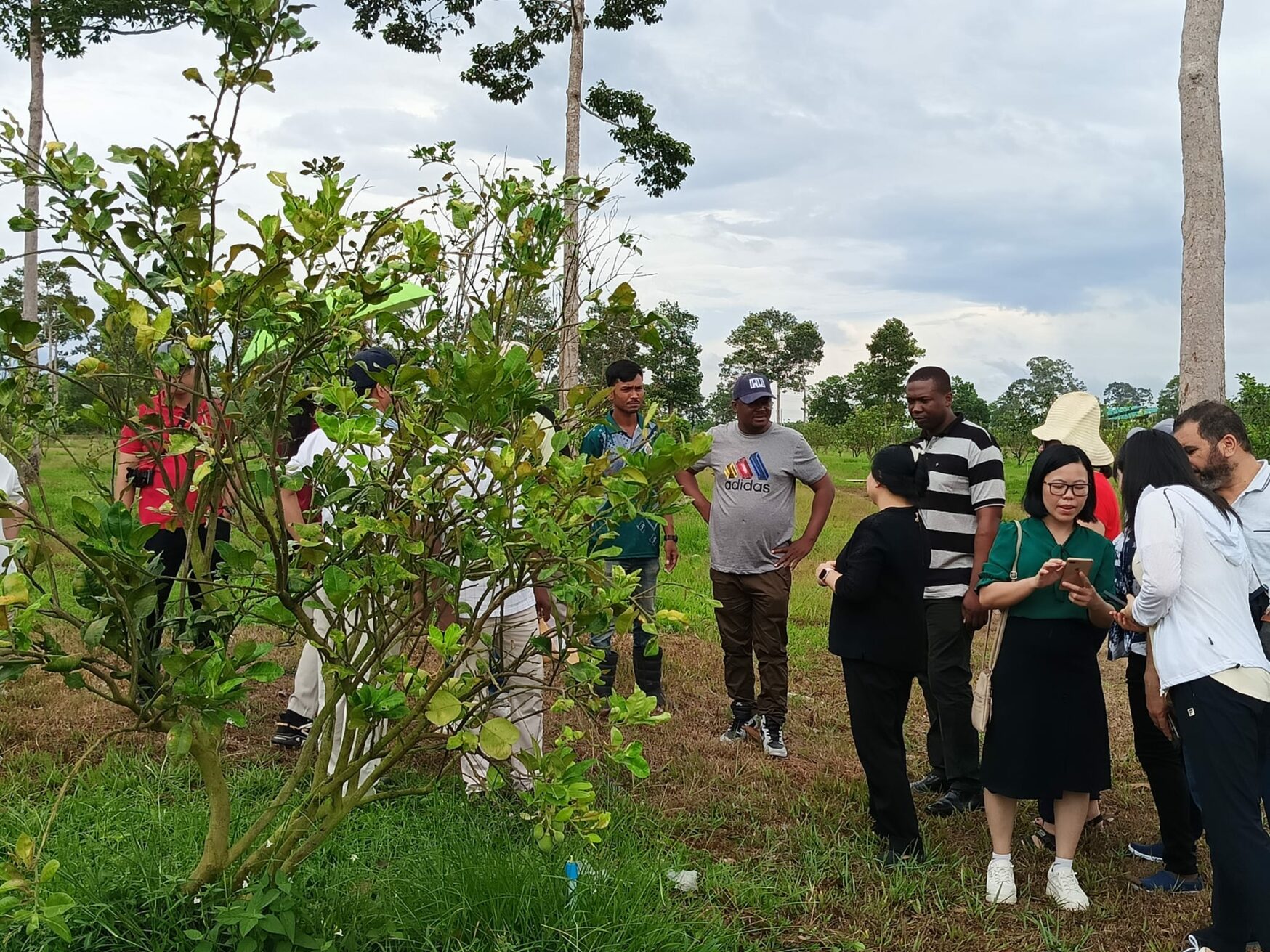
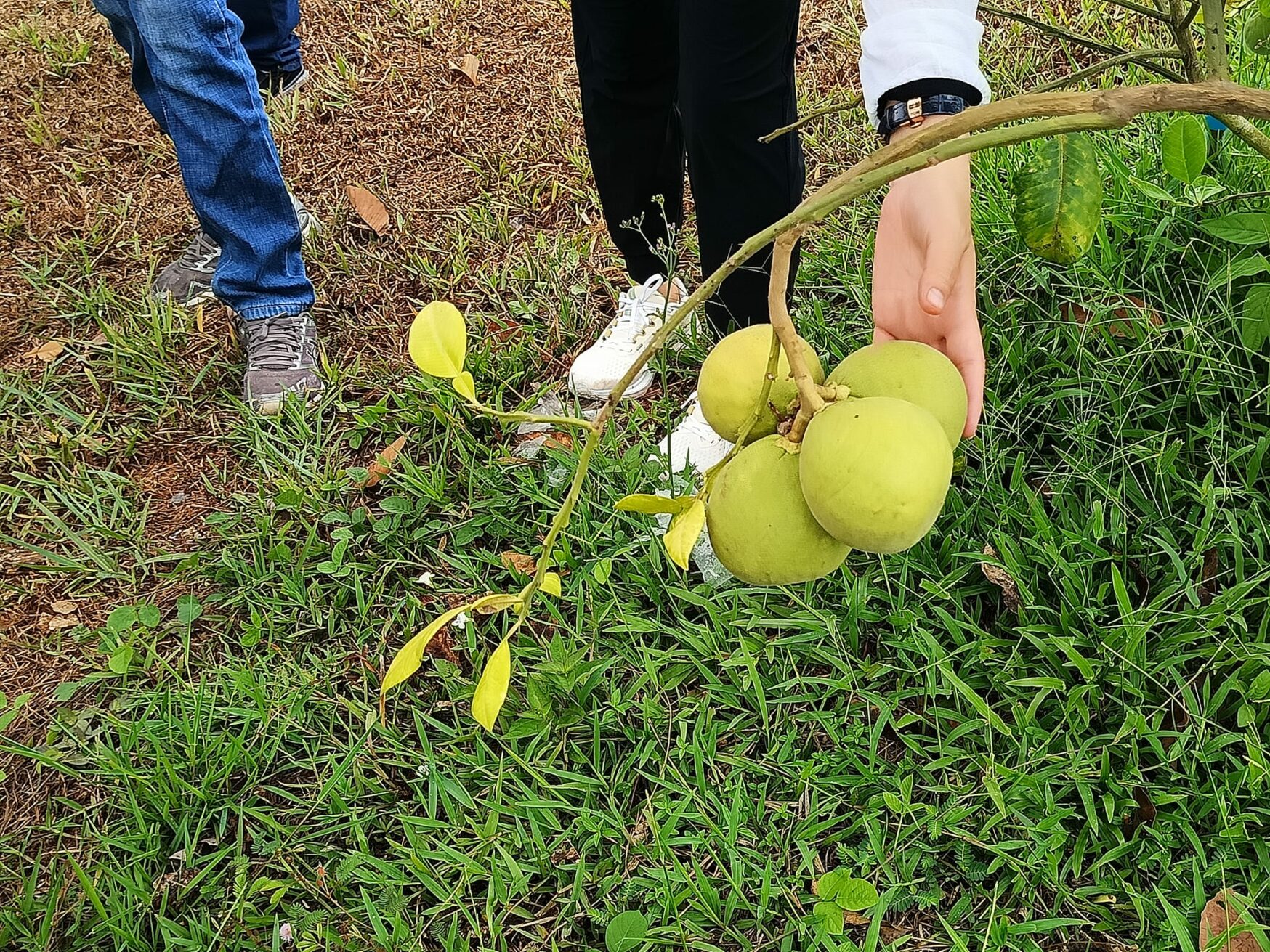
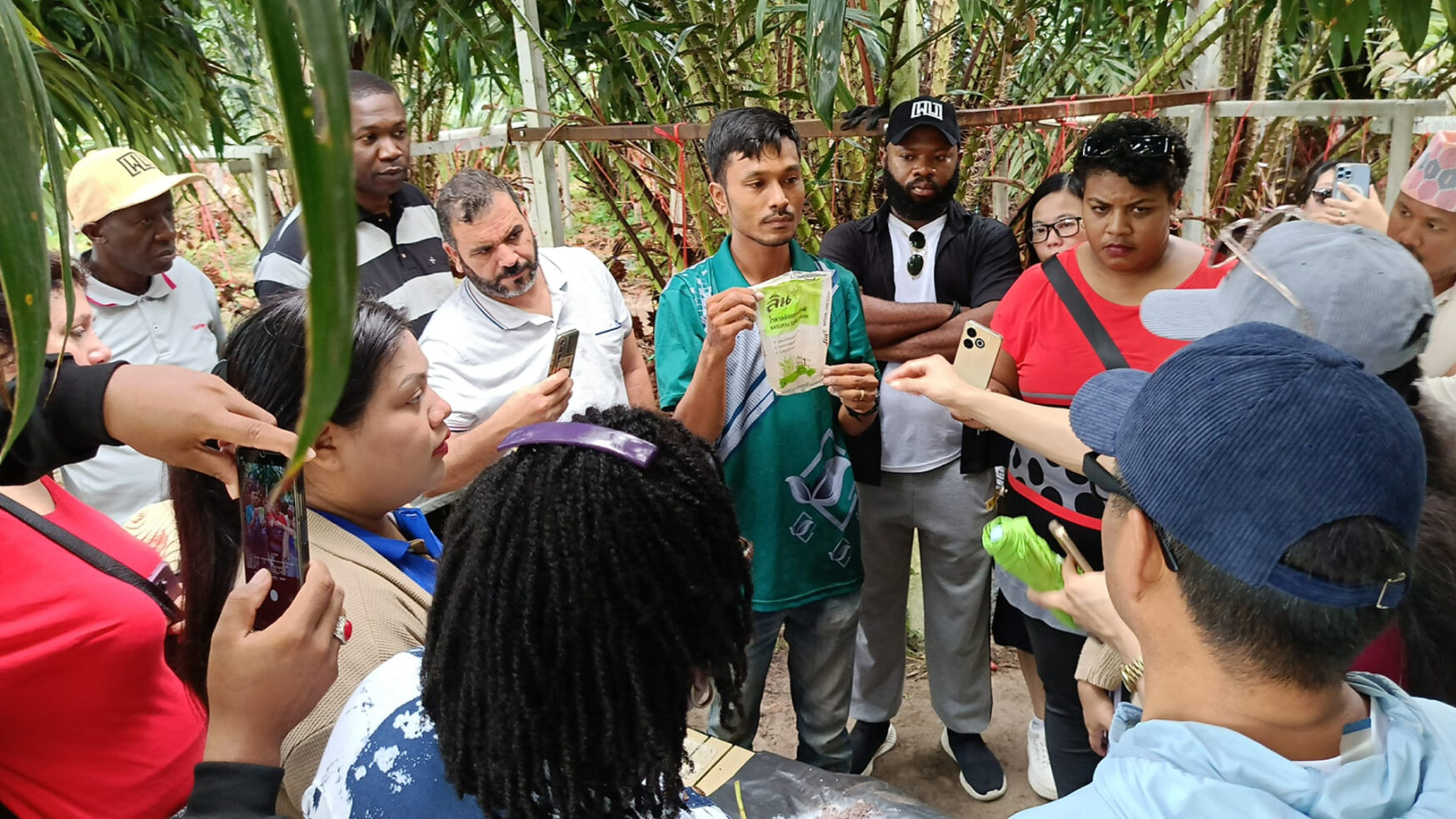
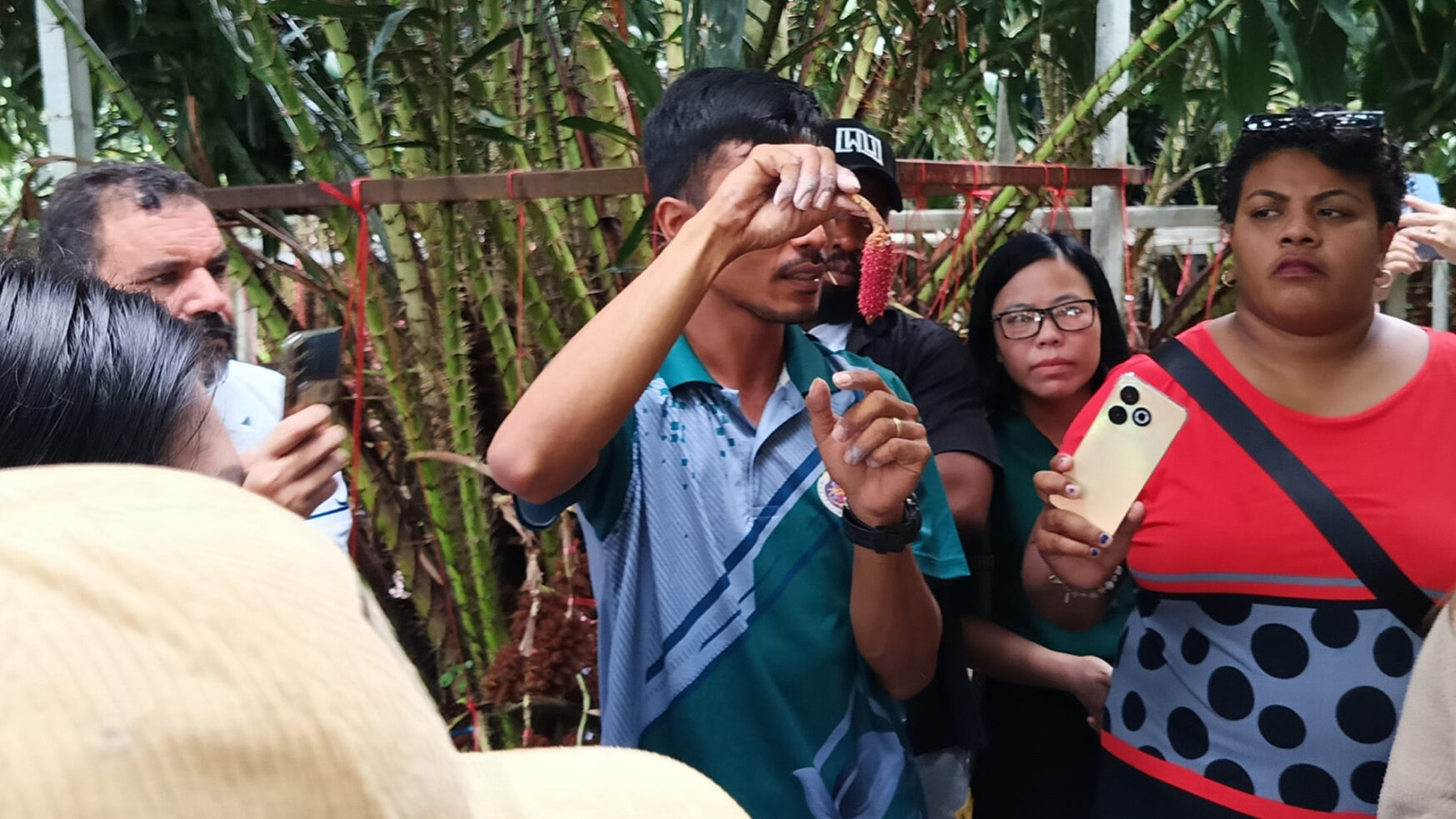
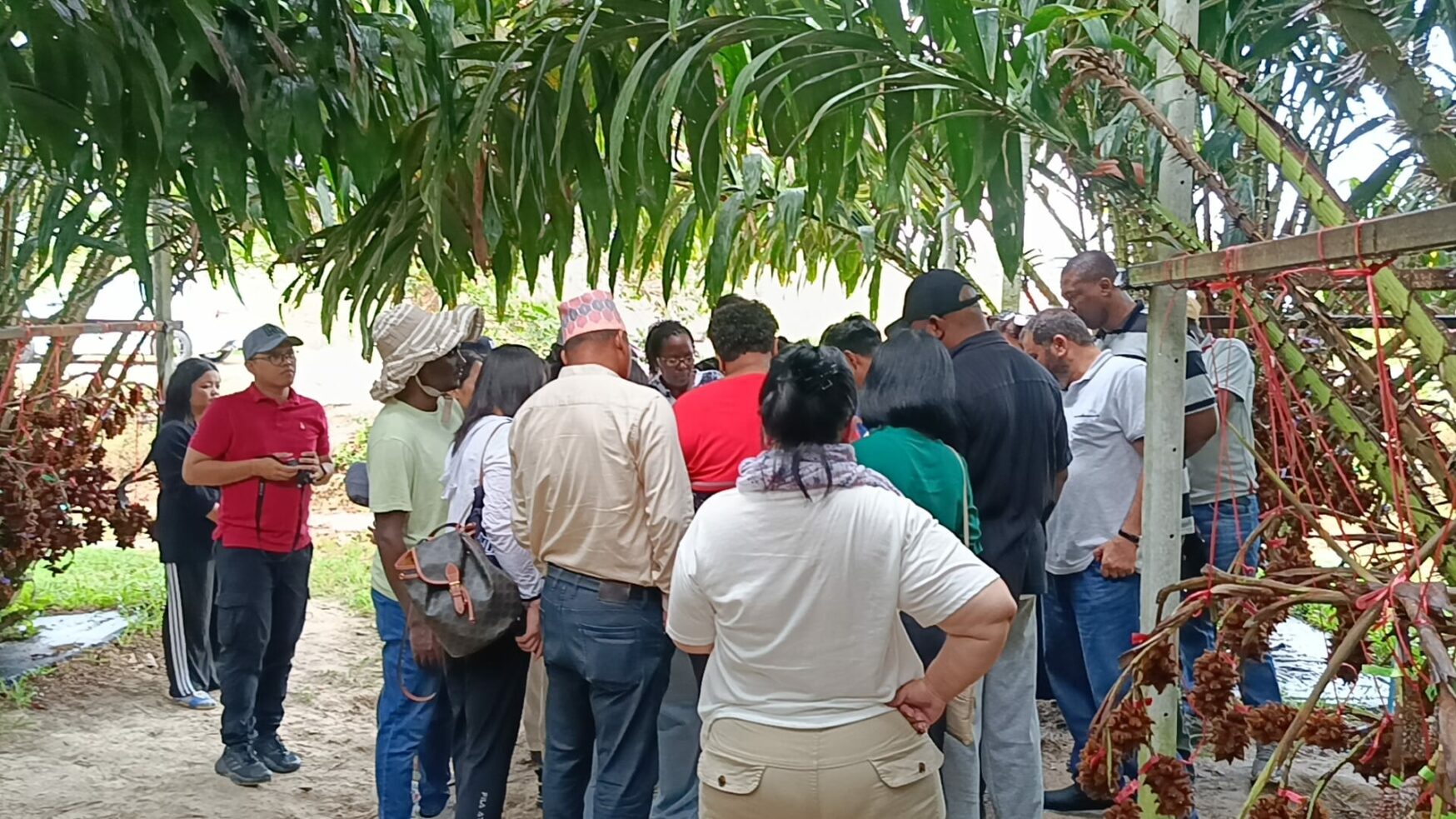
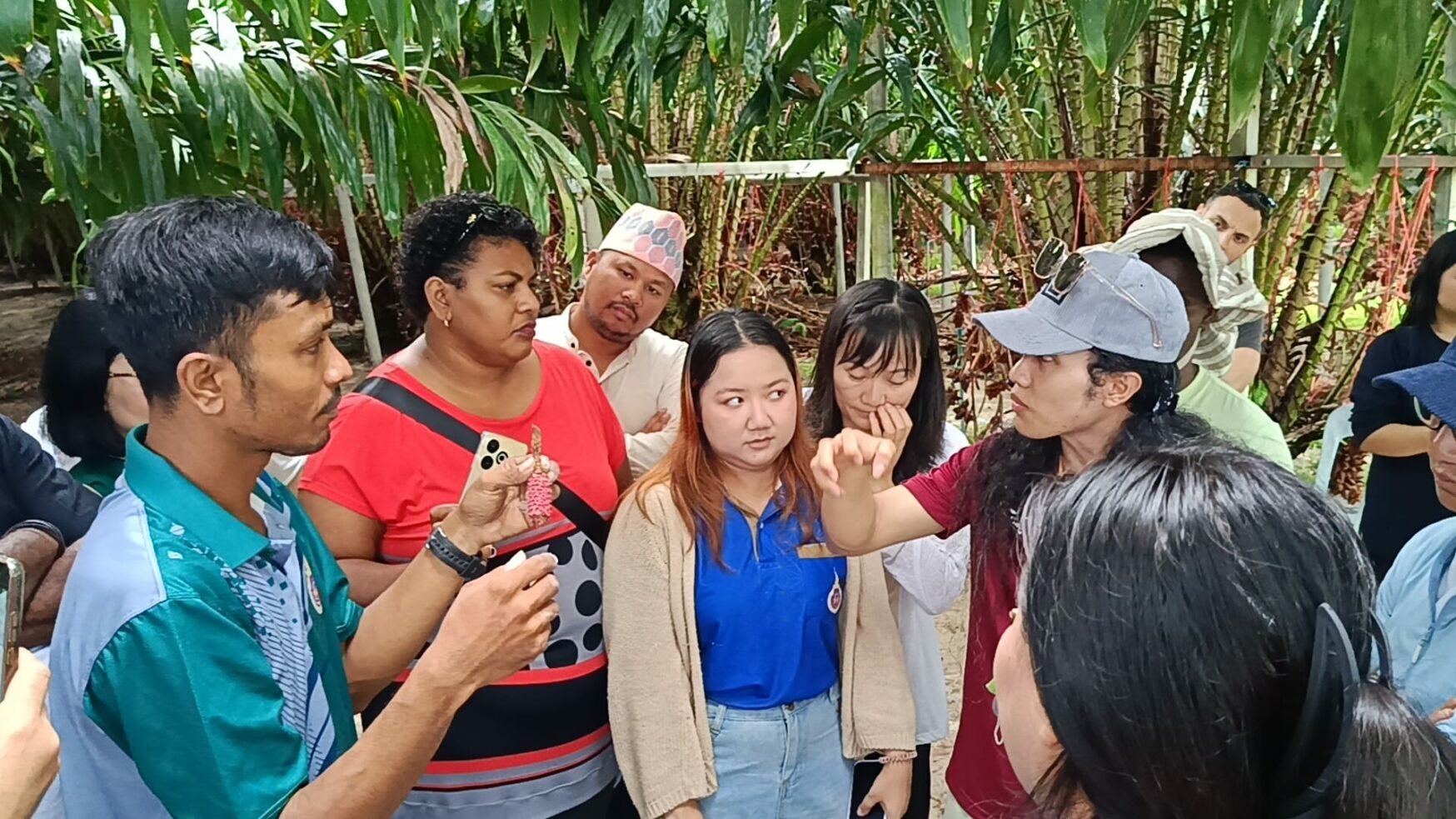
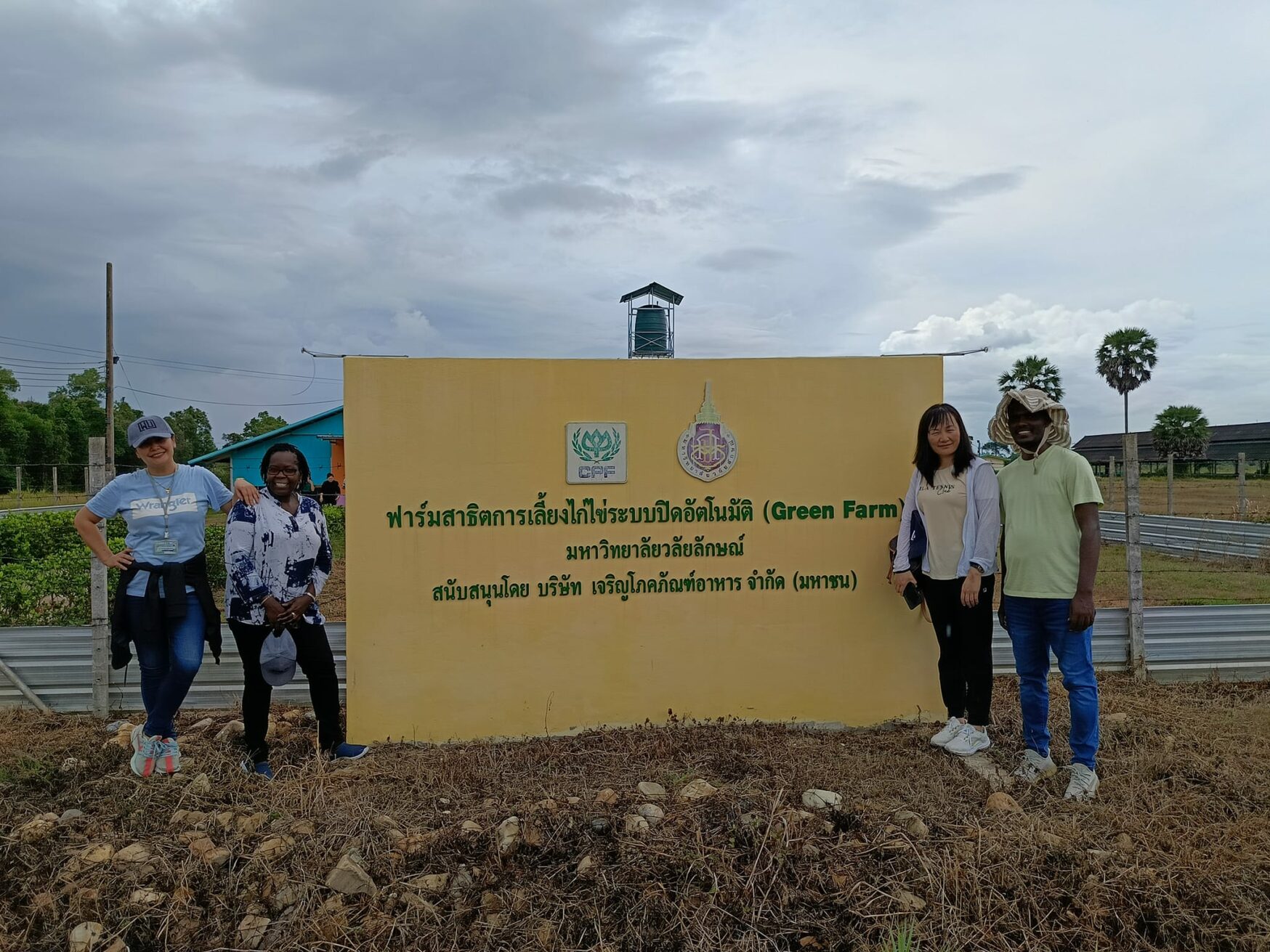
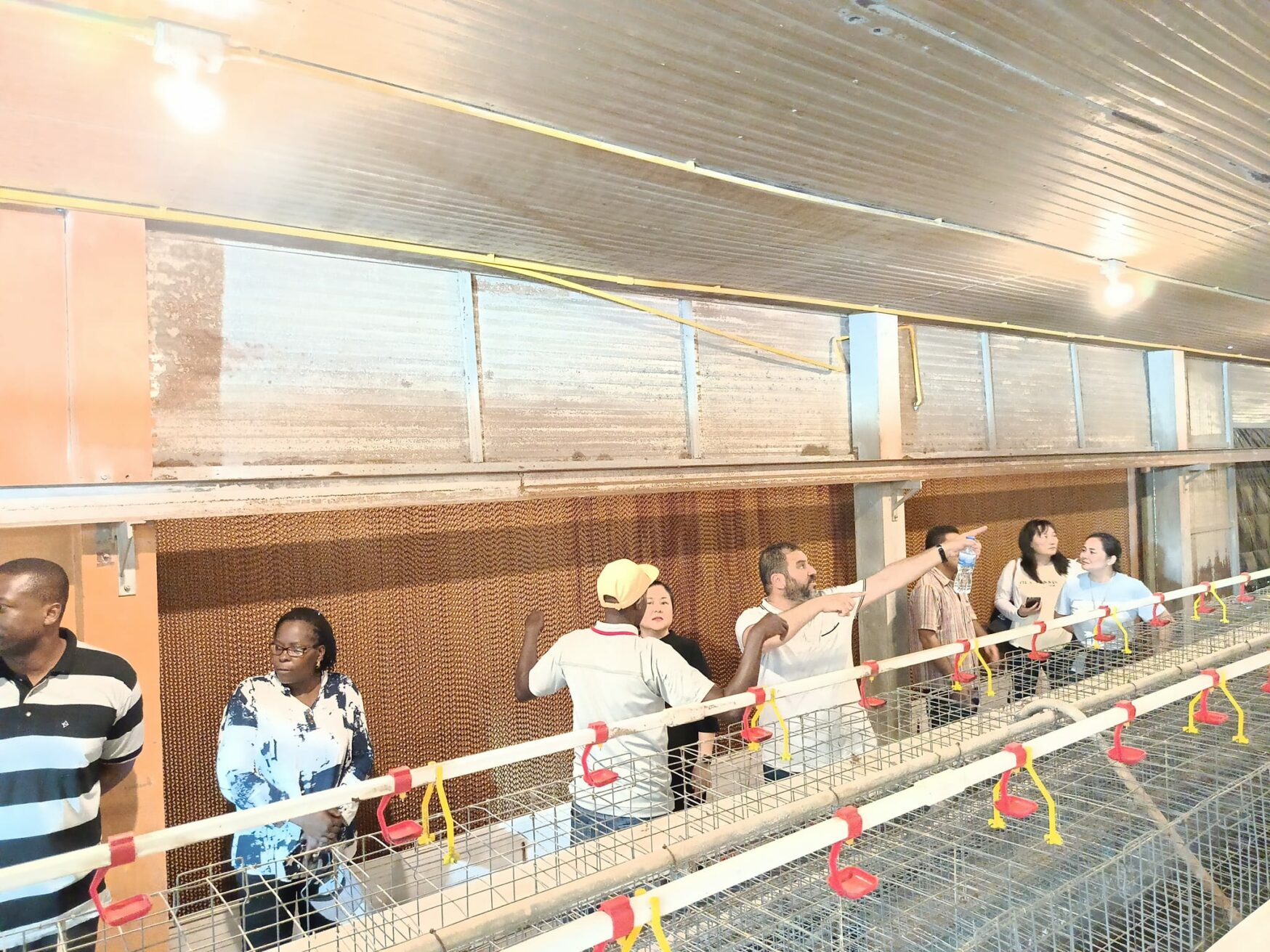
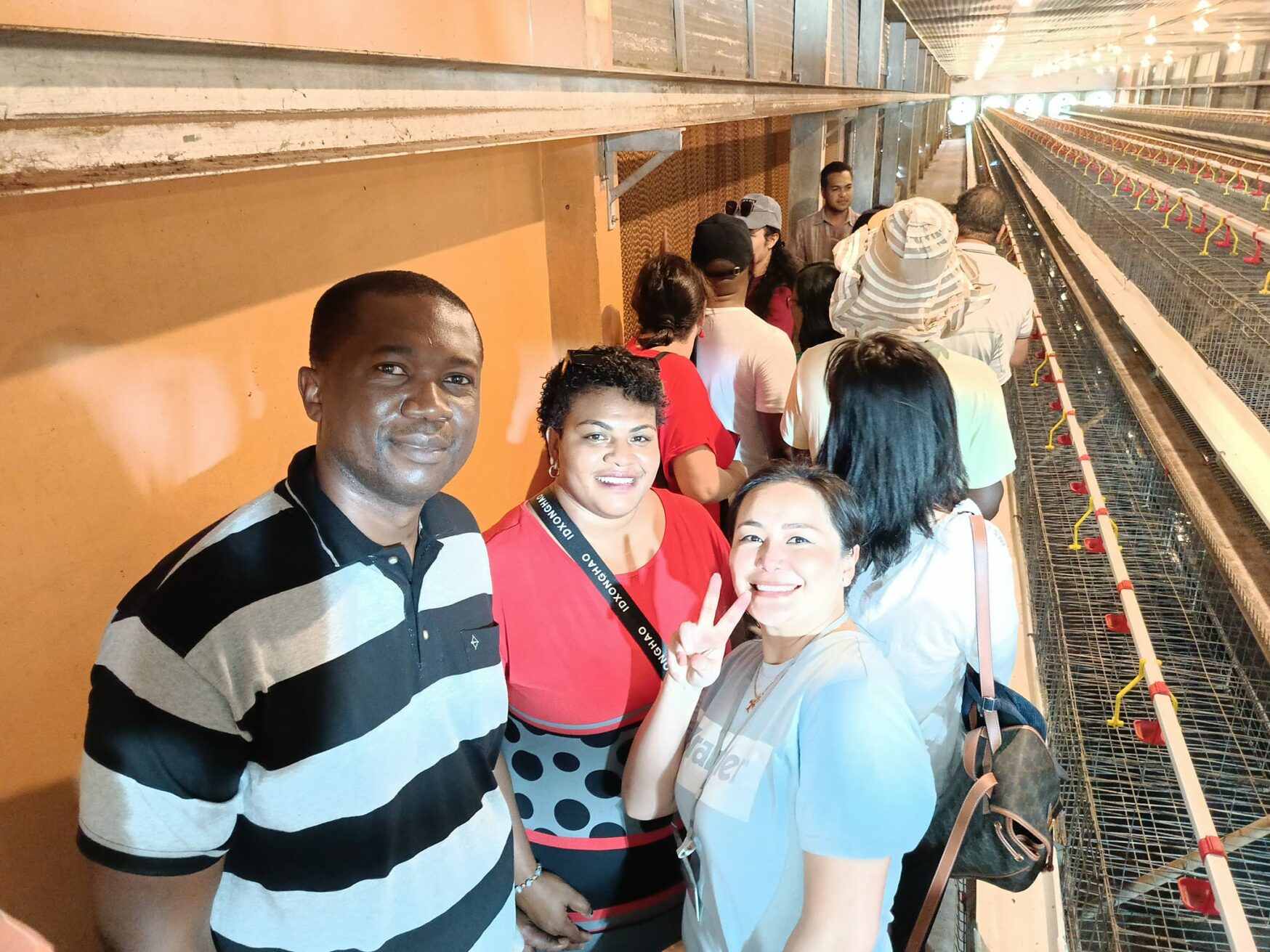
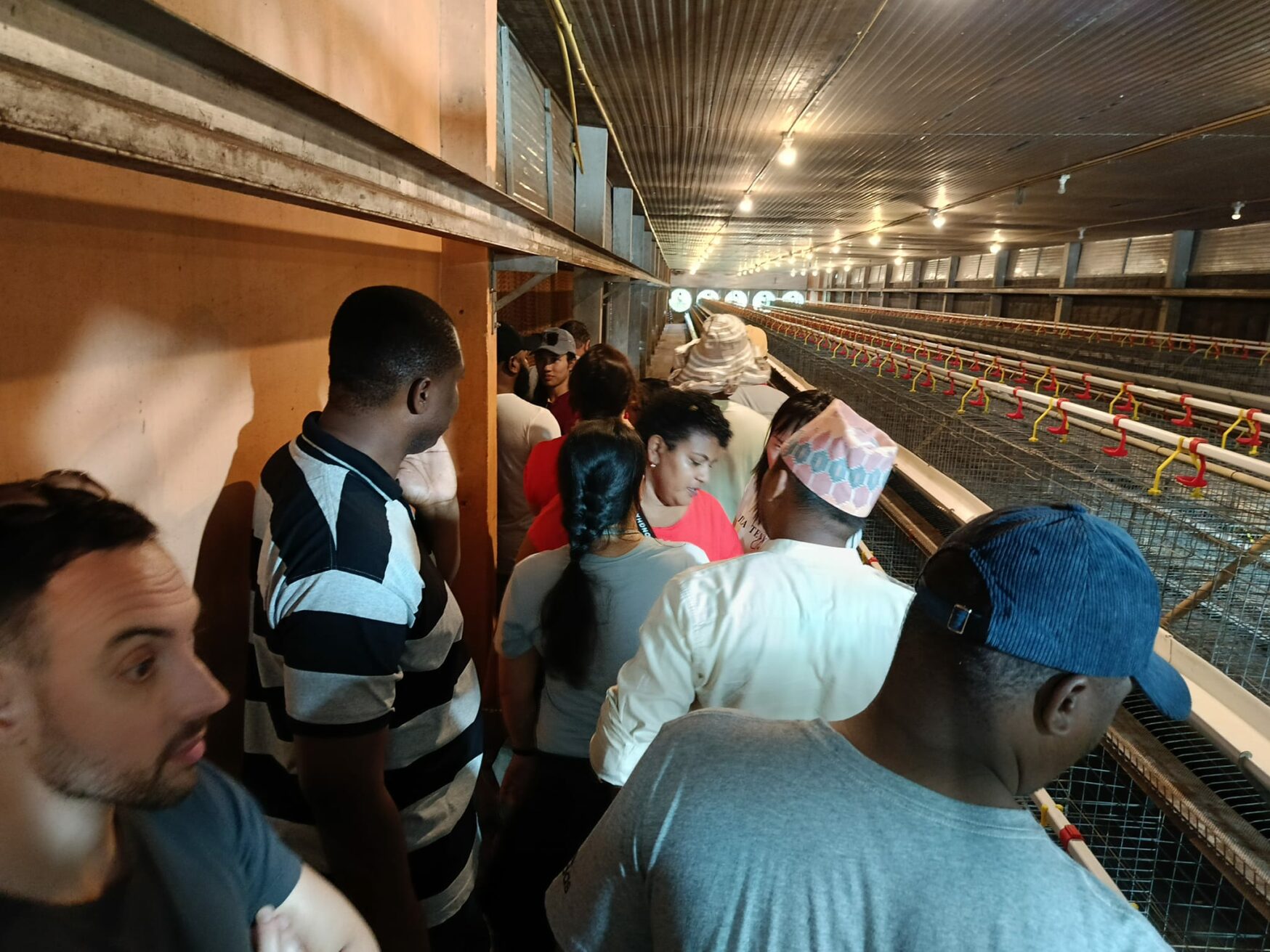
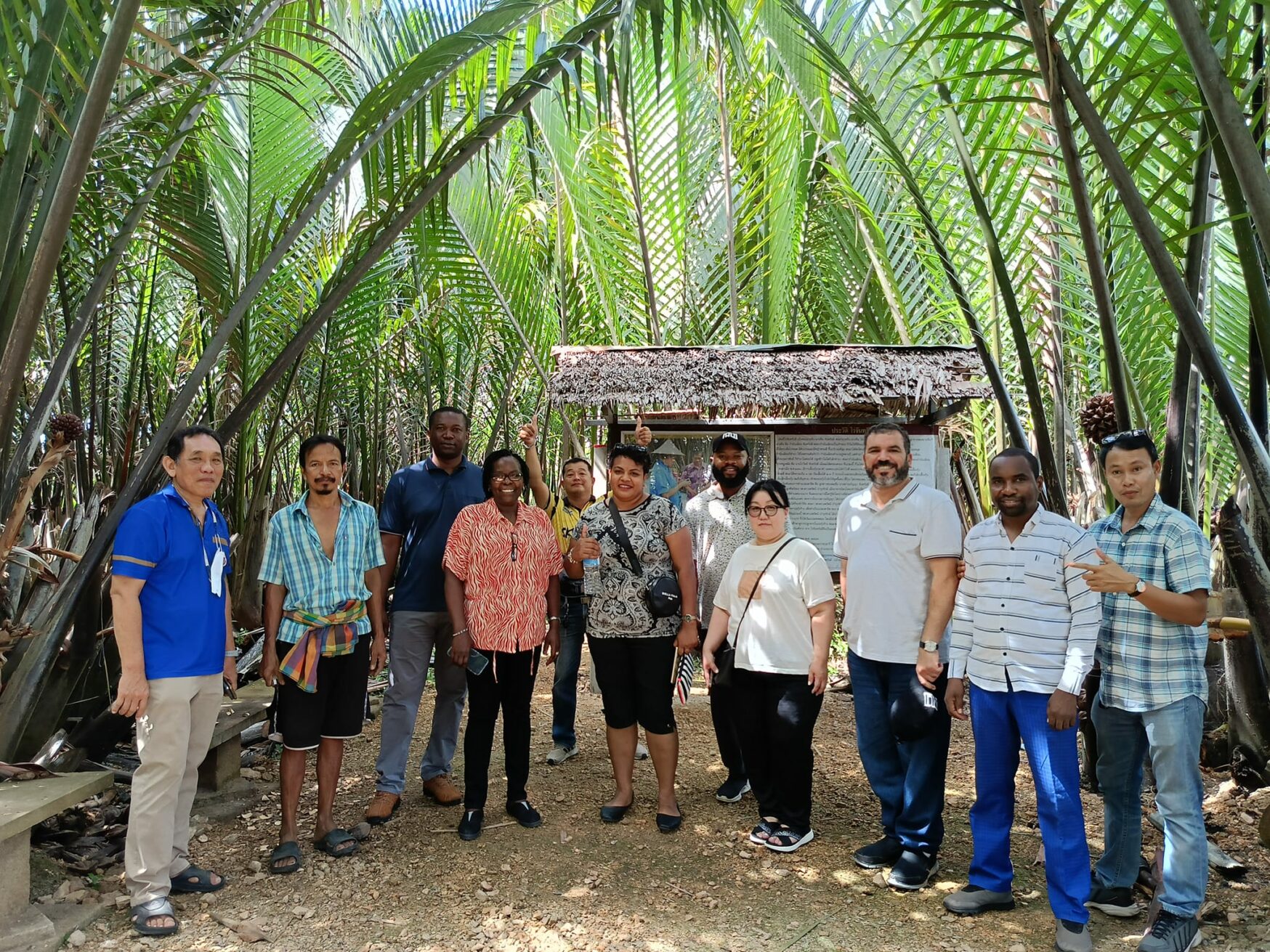
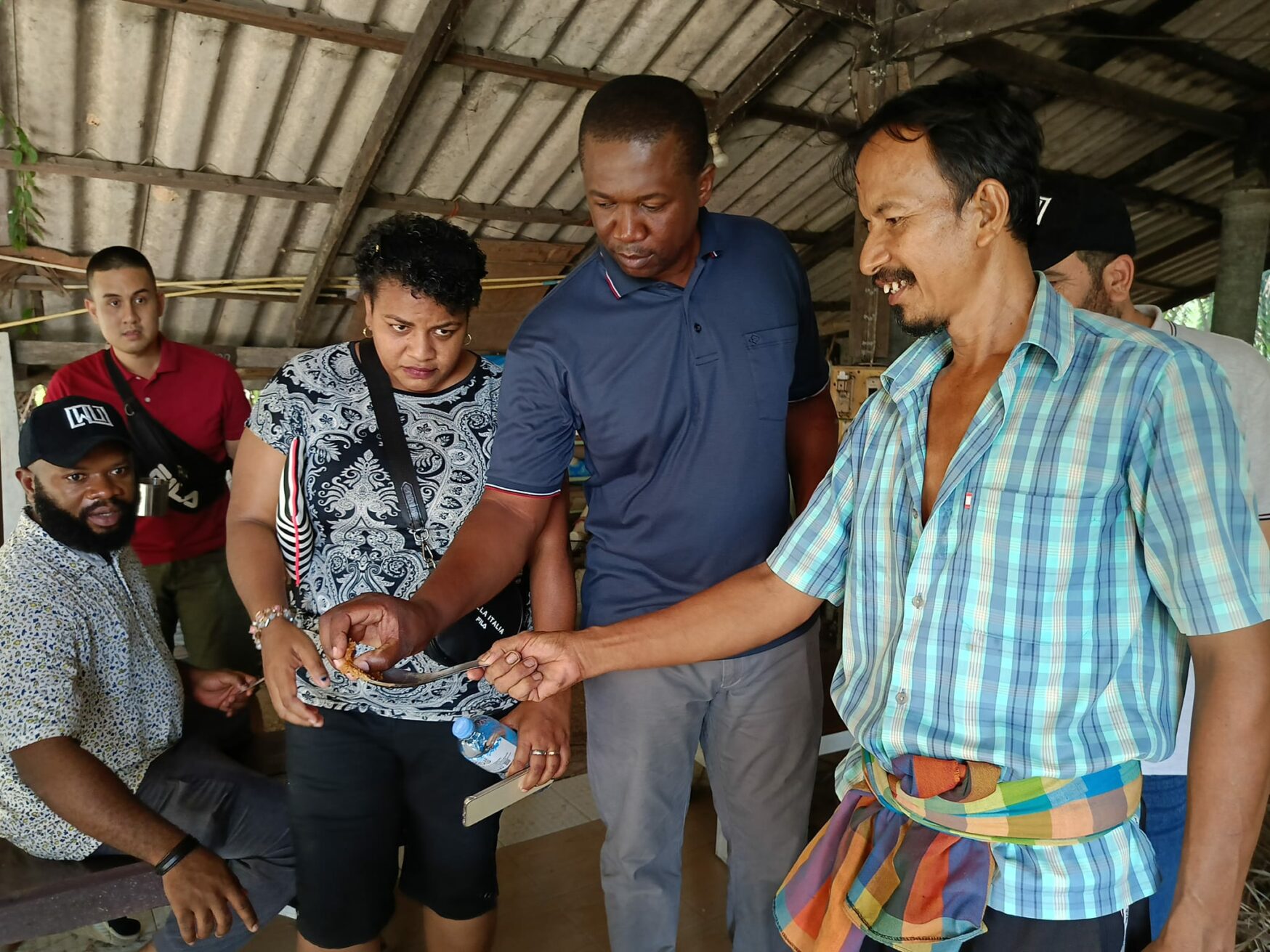
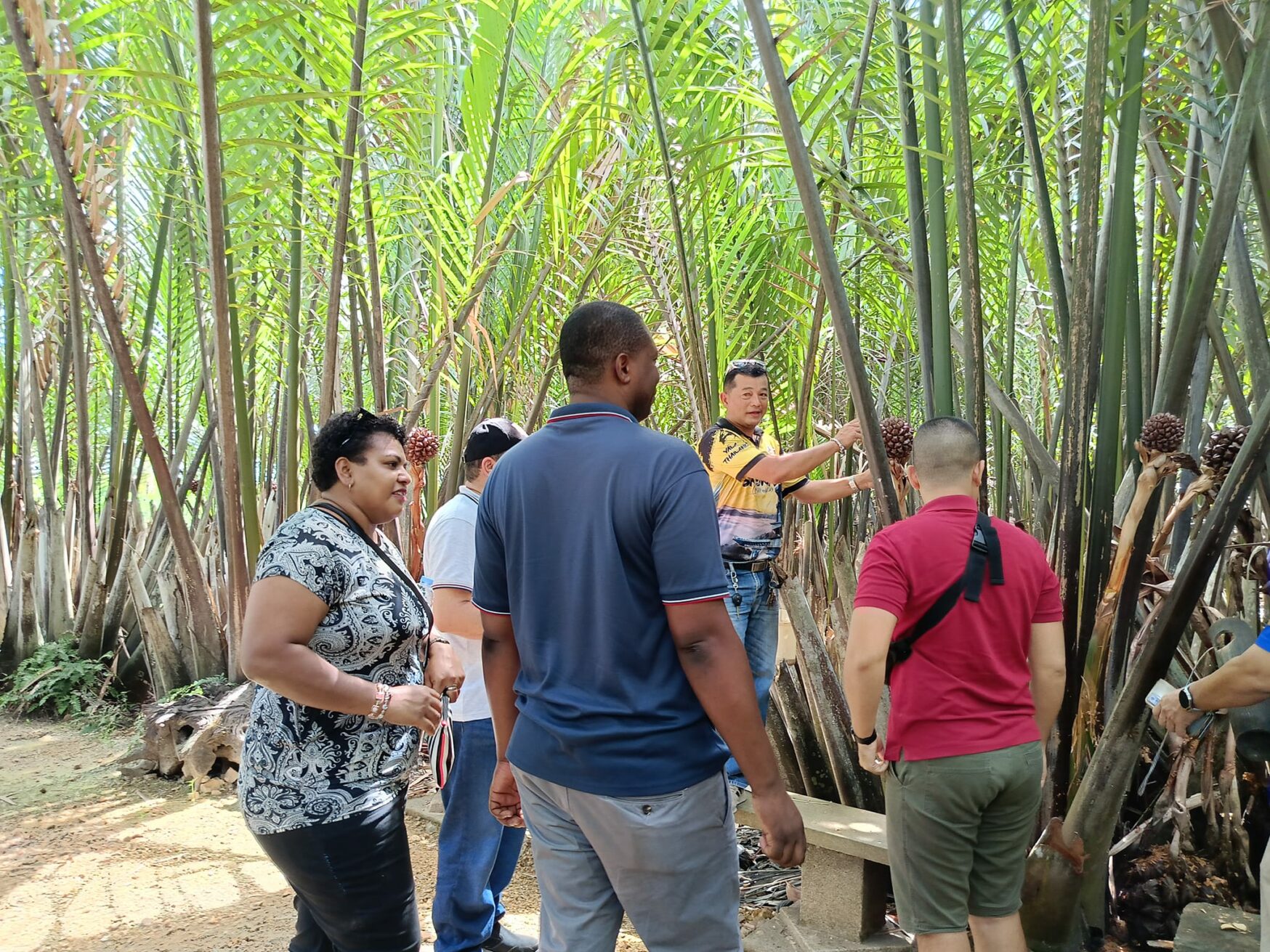
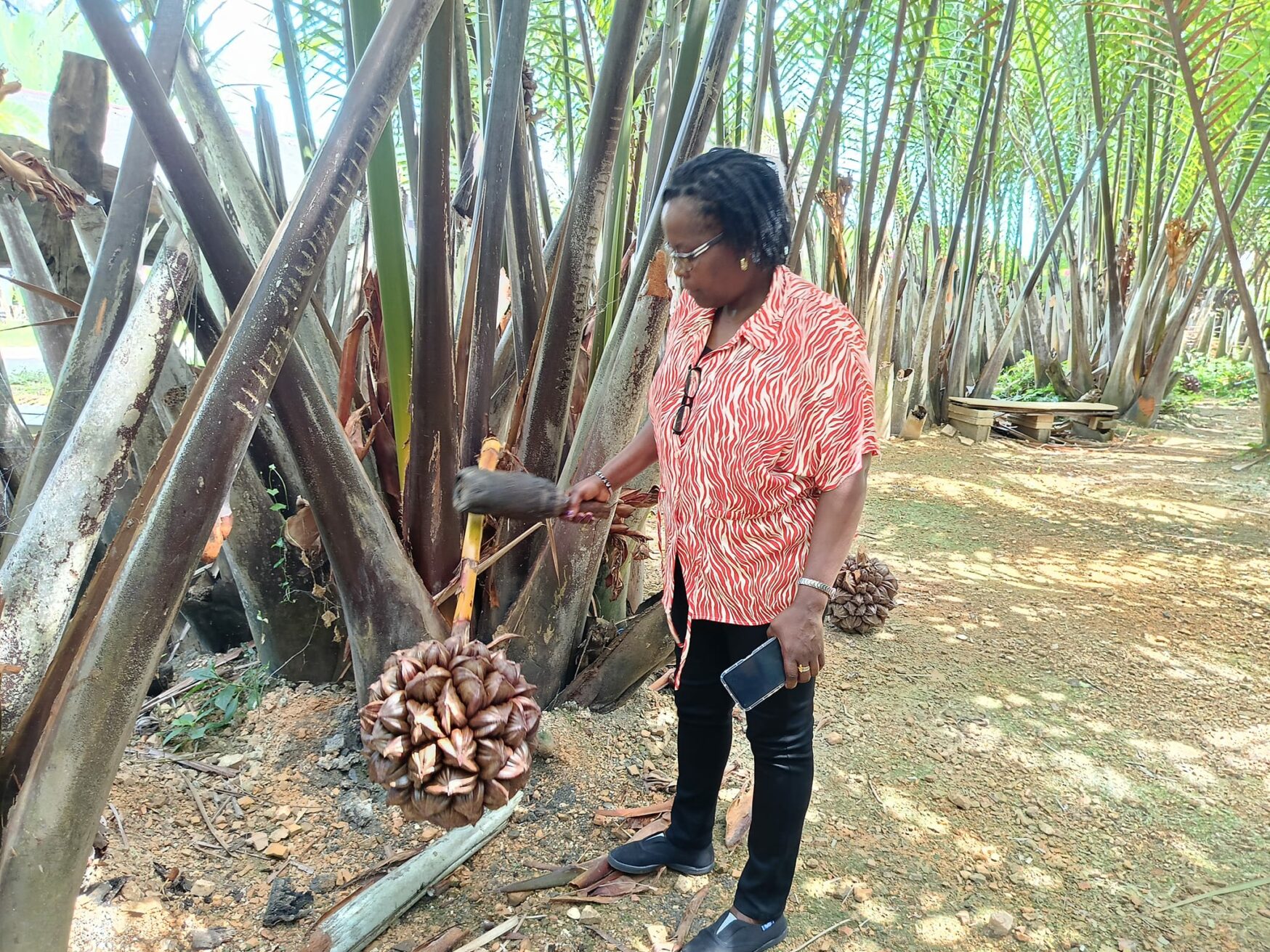
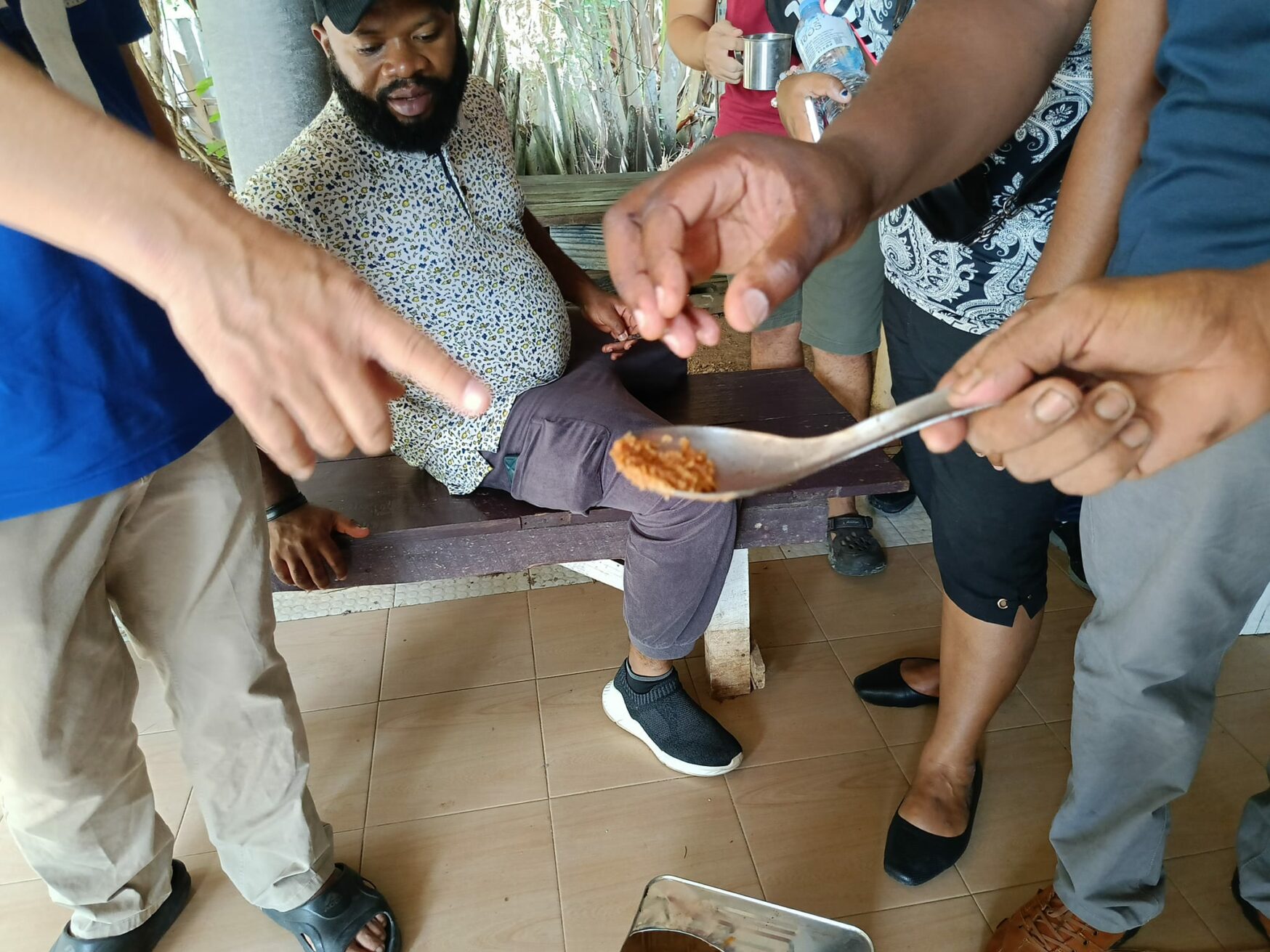
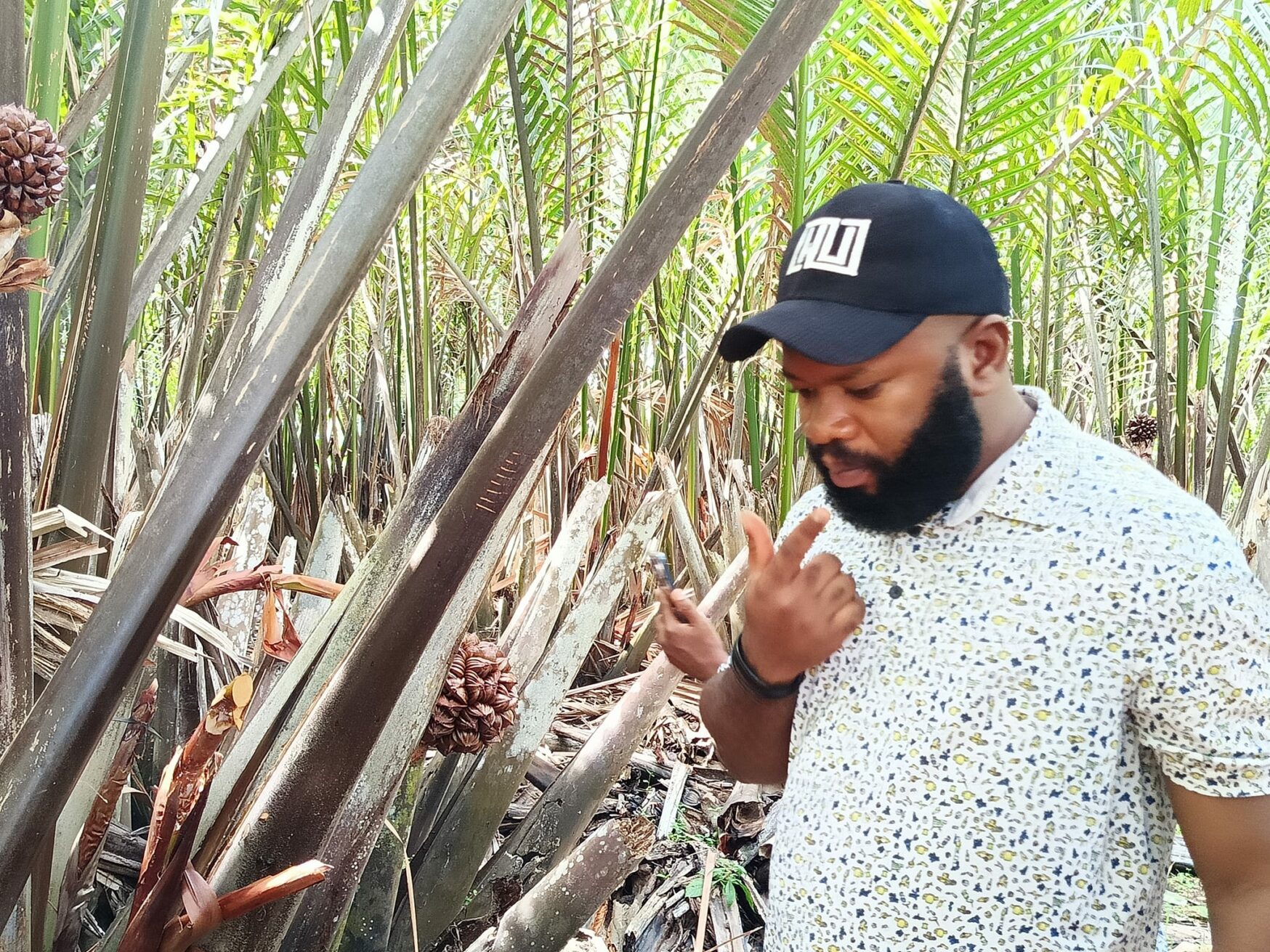
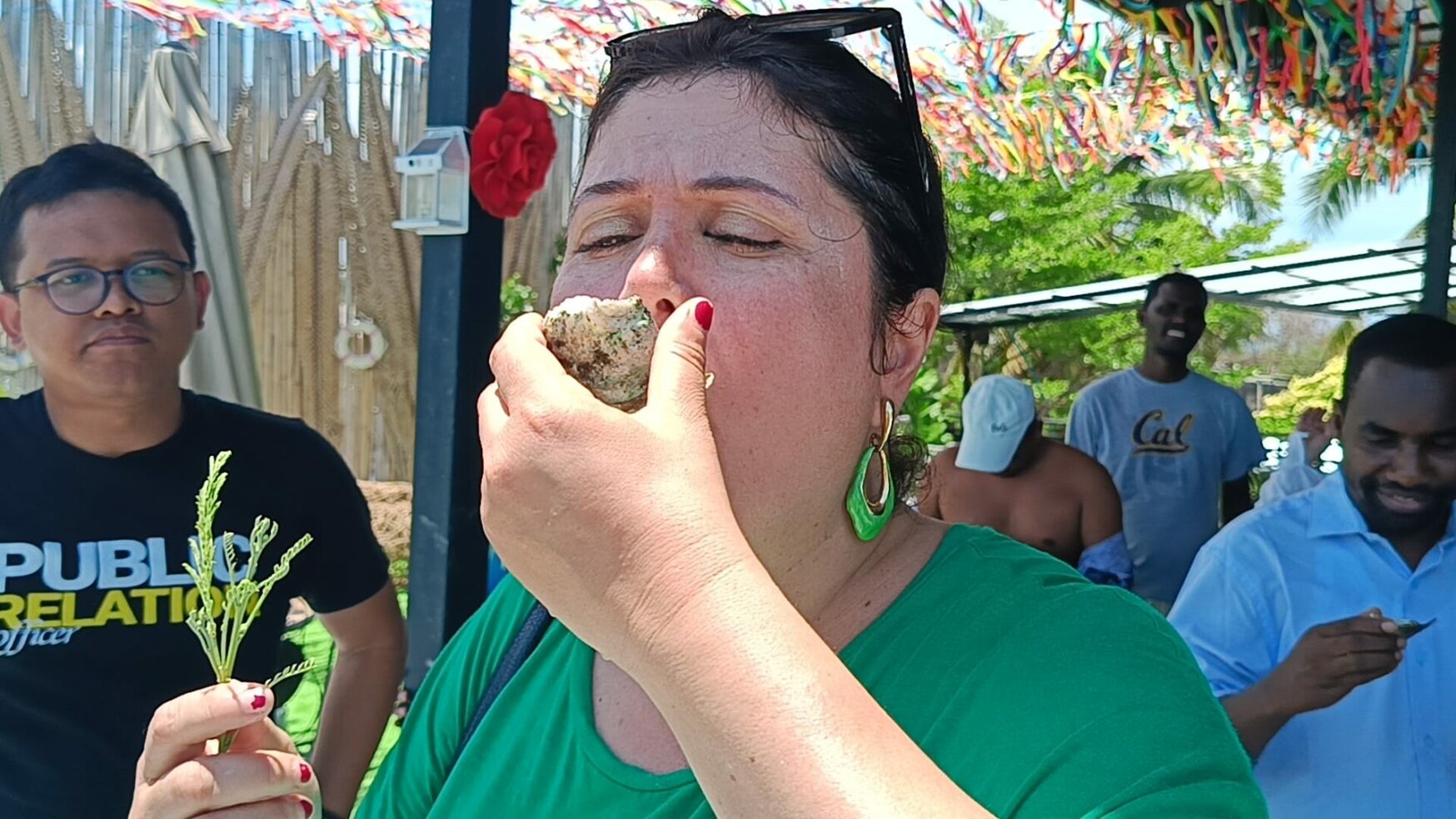
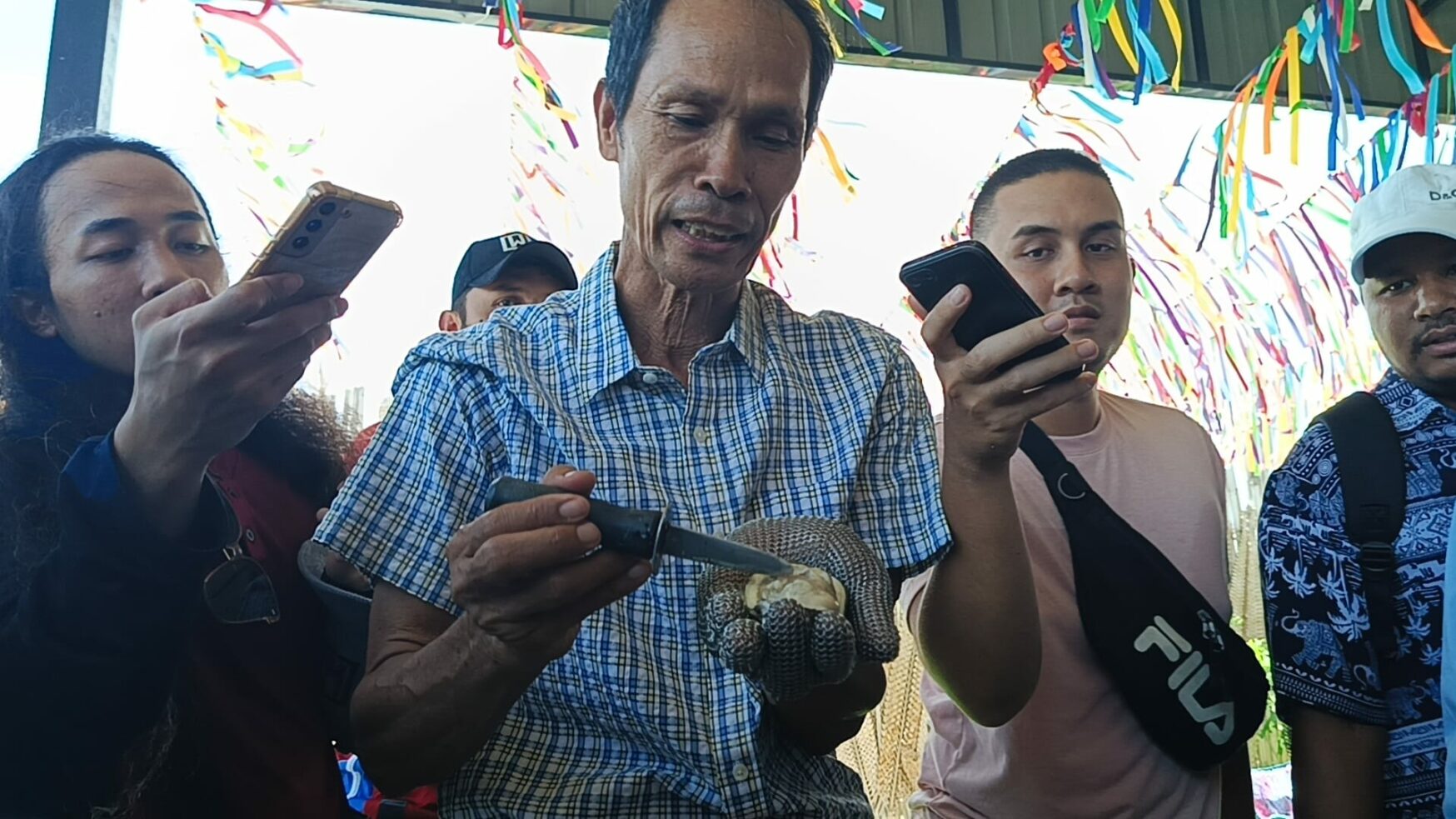
Beyond the lectures, the program included field visits to smart farming sites both on and off Walailak University’s campus. These visits allowed international participants to observe real-world applications of climate-smart agricultural techniques. The field trips included Siam Ruby Pomelo farming, mangosteen farming, the Royal-Initiated Pak Phanang River Basin Development Projects, layer Chicken farming, oyster farms, nipa palm farming, and salak farming sites.
These smart farming sites demonstrated best practices developed by Walailak University’s experts and researchers, showcasing advanced agricultural technologies. Among them was Trichoderma-based biocontrol, an eco-friendly method for managing plant diseases and pests while reducing chemical usage and production costs. Additionally, participants were introduced to Ligor Chicken, a hybrid native breed from Nakhon Si Thammarat Province, developed to enhance poultry farming efficiency and sustainability. These real-world applications reinforced the theoretical knowledge gained during the program, providing valuable insights for international participants to implement in their home countries.
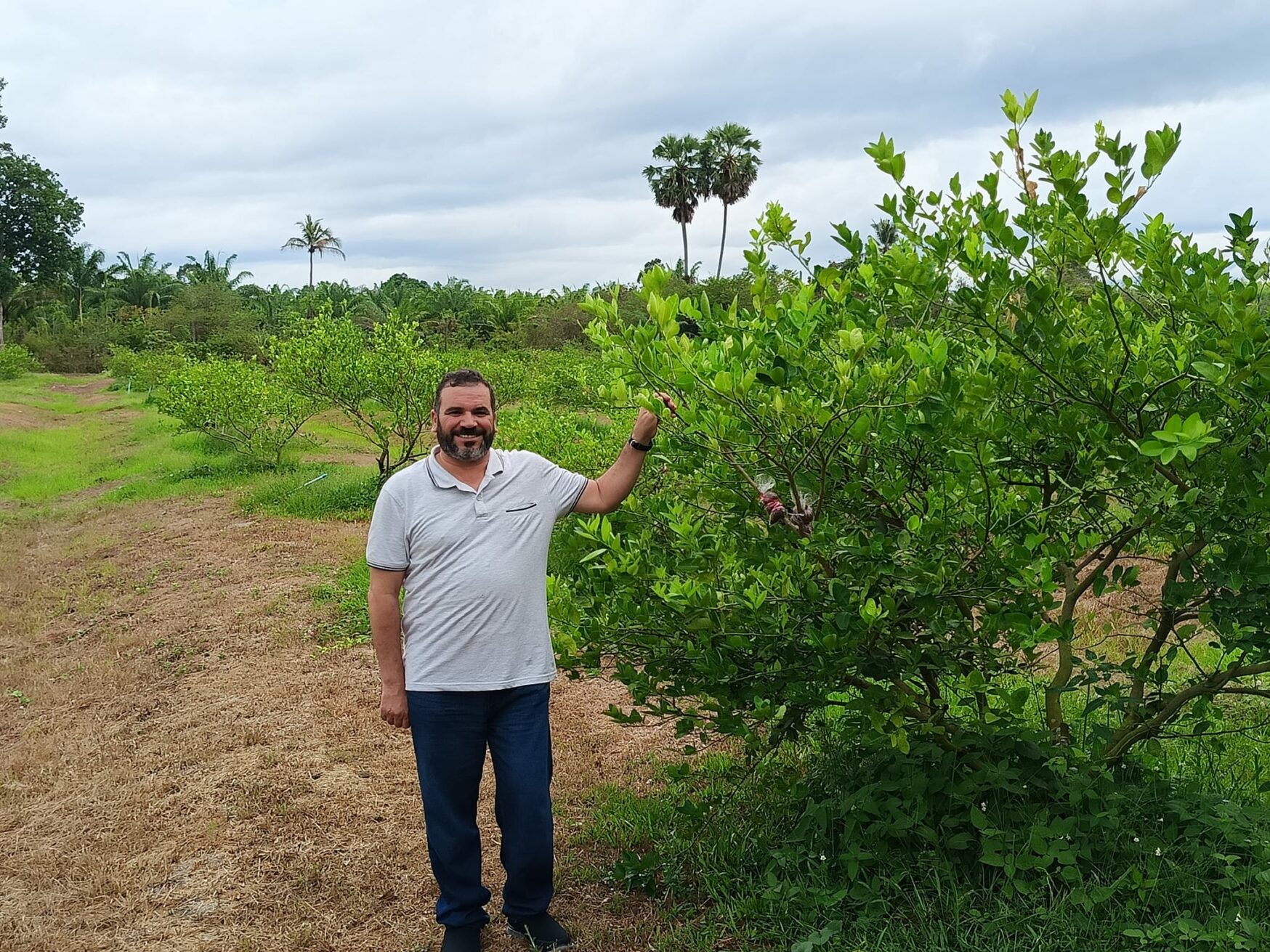
Figures: The international partners visiting the Siam Ruby Pomelo farming site at Walailak University
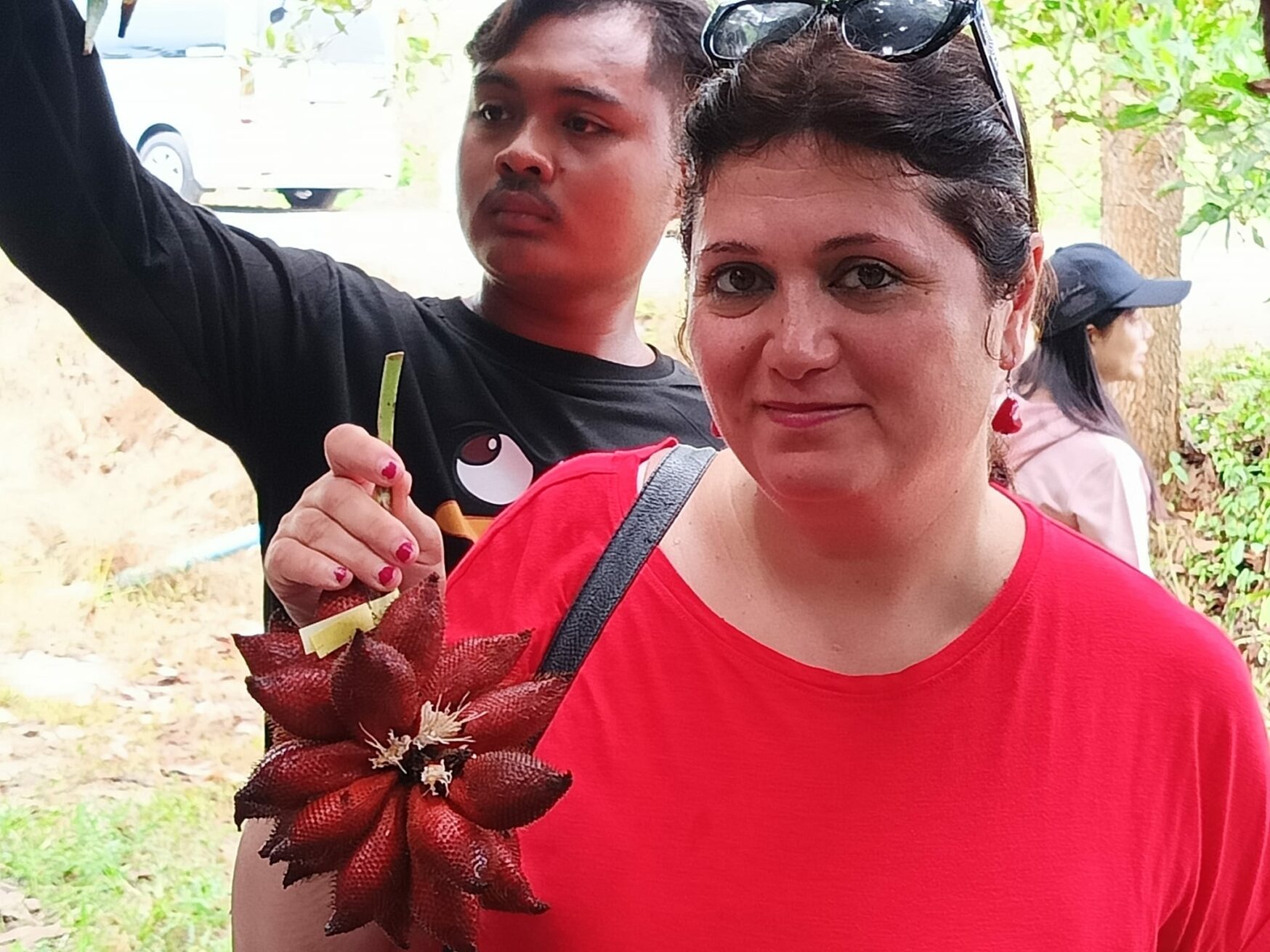
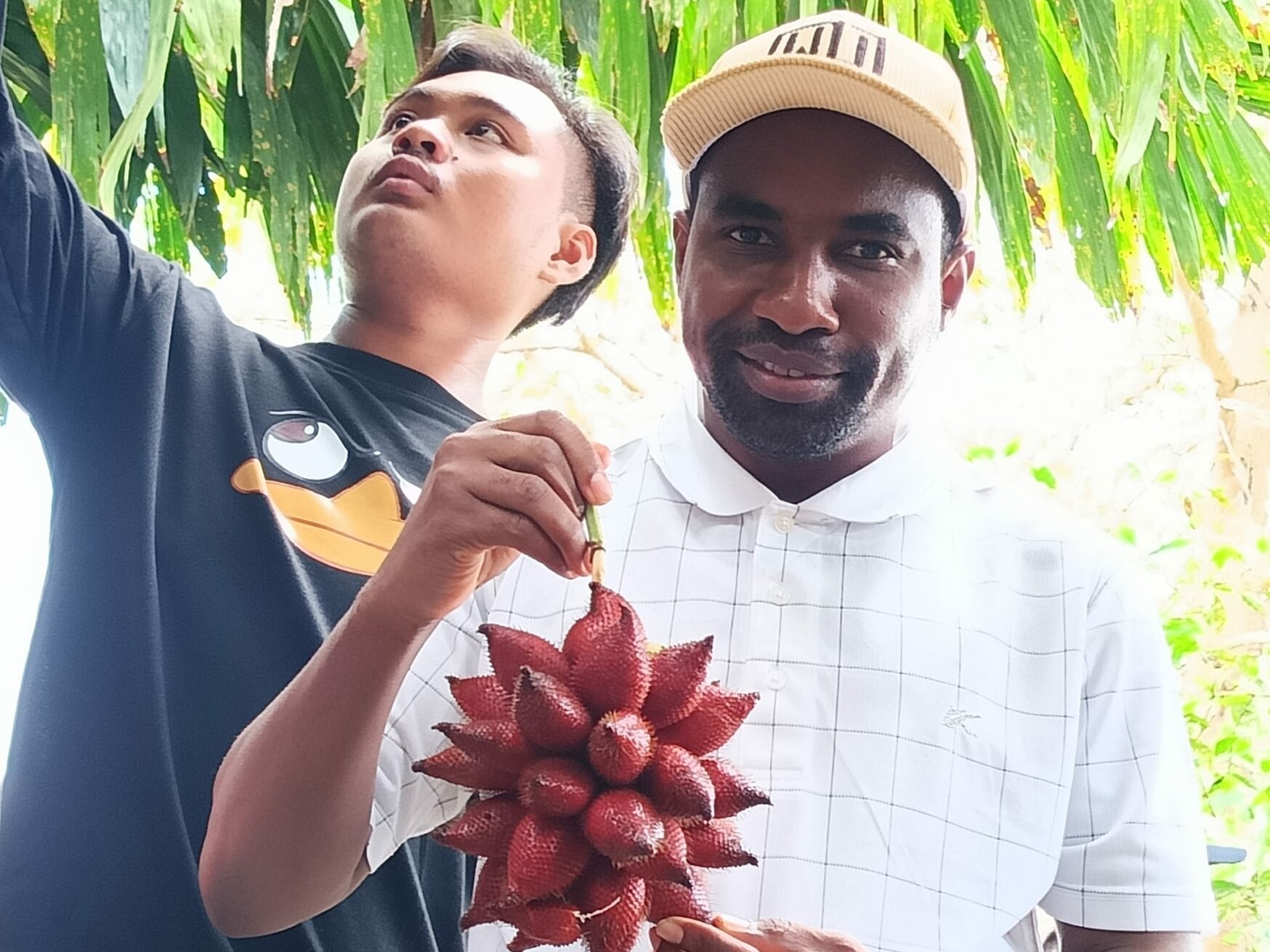
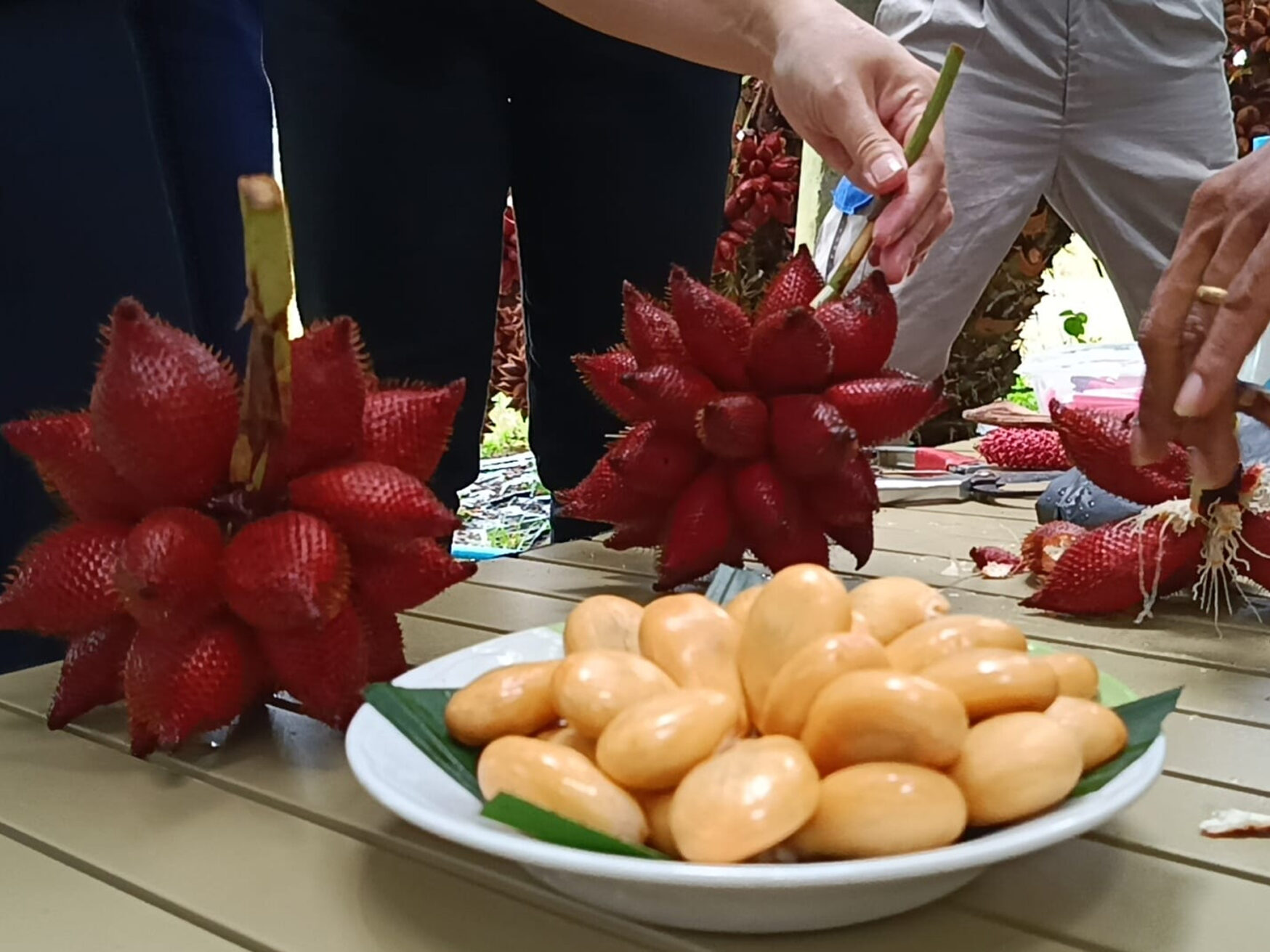
Figures: The international partners visiting the salak farming site at Walailak University
Figures: The international partners visiting the layer Chicken farming site at Walailak University
Figures: The international partners visiting a nipa palm farming site in Pak Phanang District, Nakhon Si Thammarat
Figures: The international partners visiting the Sinmana oyster farming site in Surat Thani
Follow-Up Data Gathering Session: Country Report Presentation and Discussion Session
Walailak University, represented by Assoc. Prof. Dr. Mullica Jaroensutasinee and Assoc. Prof. Dr. Krisanadej Jaroensutasinee, provided an in-depth analysis of agricultural challenges and solutions in Thailand based on data collected and measured by international partners before and during the program. Their presentation covered essential topics, including sustainable agricultural practices implemented in rural and agricultural regions, particularly in northeastern Thailand, the success of best practices developed under the Philosophy of Sufficiency Economy, and the legal framework governing agricultural practices. They also discussed the limitations and challenges faced by Thailand in implementing climate-smart agriculture, highlighting lessons learned and strategies that could be applied in other countries facing similar issues.
In addition to delivering lectures, Assoc. Prof. Dr. Mullica Jaroensutasinee, Assoc. Prof. Dr. Krisanadej Jaroensutasinee, and a team of agricultural experts and researchers from Walailak University collaborated with international partners to gather and measure comprehensive data on climate-smart agriculture. This collaborative effort extended to on-site visits to various smart farming locations, where participants had the opportunity to observe sustainable agricultural techniques firsthand. During these visits, they examined innovative farming methods, assessed their impact on productivity and environmental sustainability, and explored how such practices could be adapted to different national contexts. The data collected during these activities contributed to refining participants’ country reports into research projects, promoting the development of practical, science-based solutions to agricultural challenges.
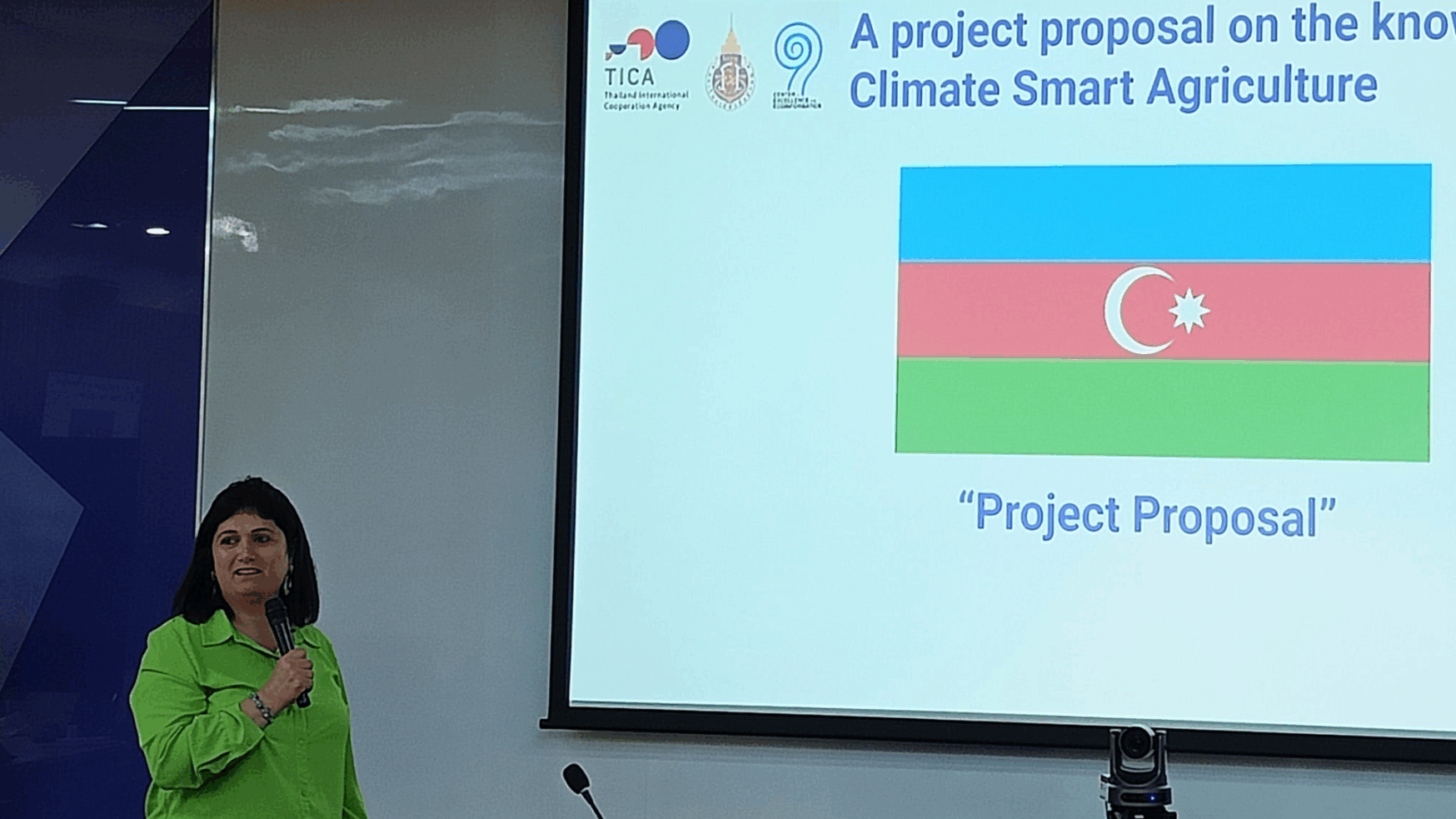
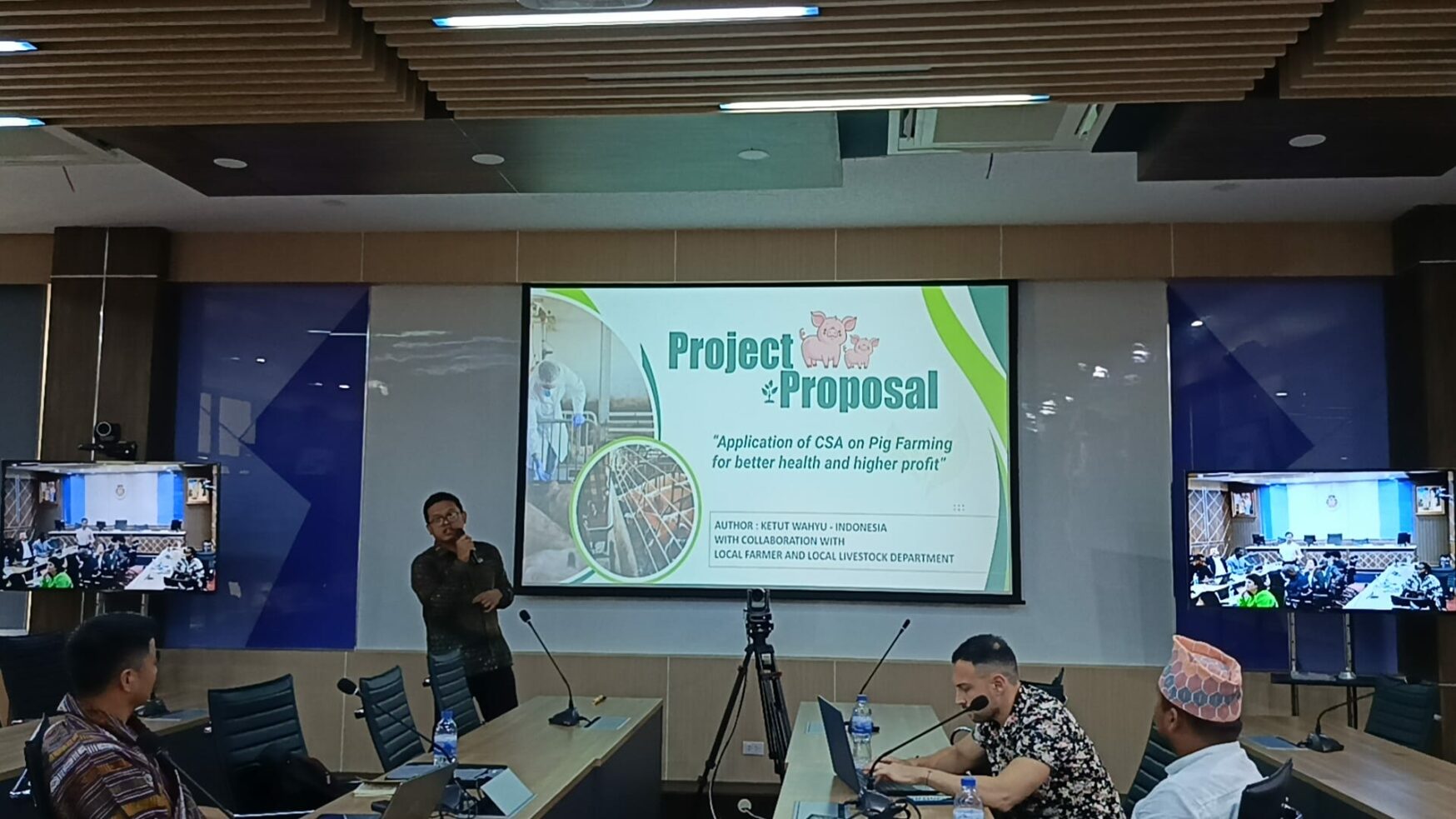
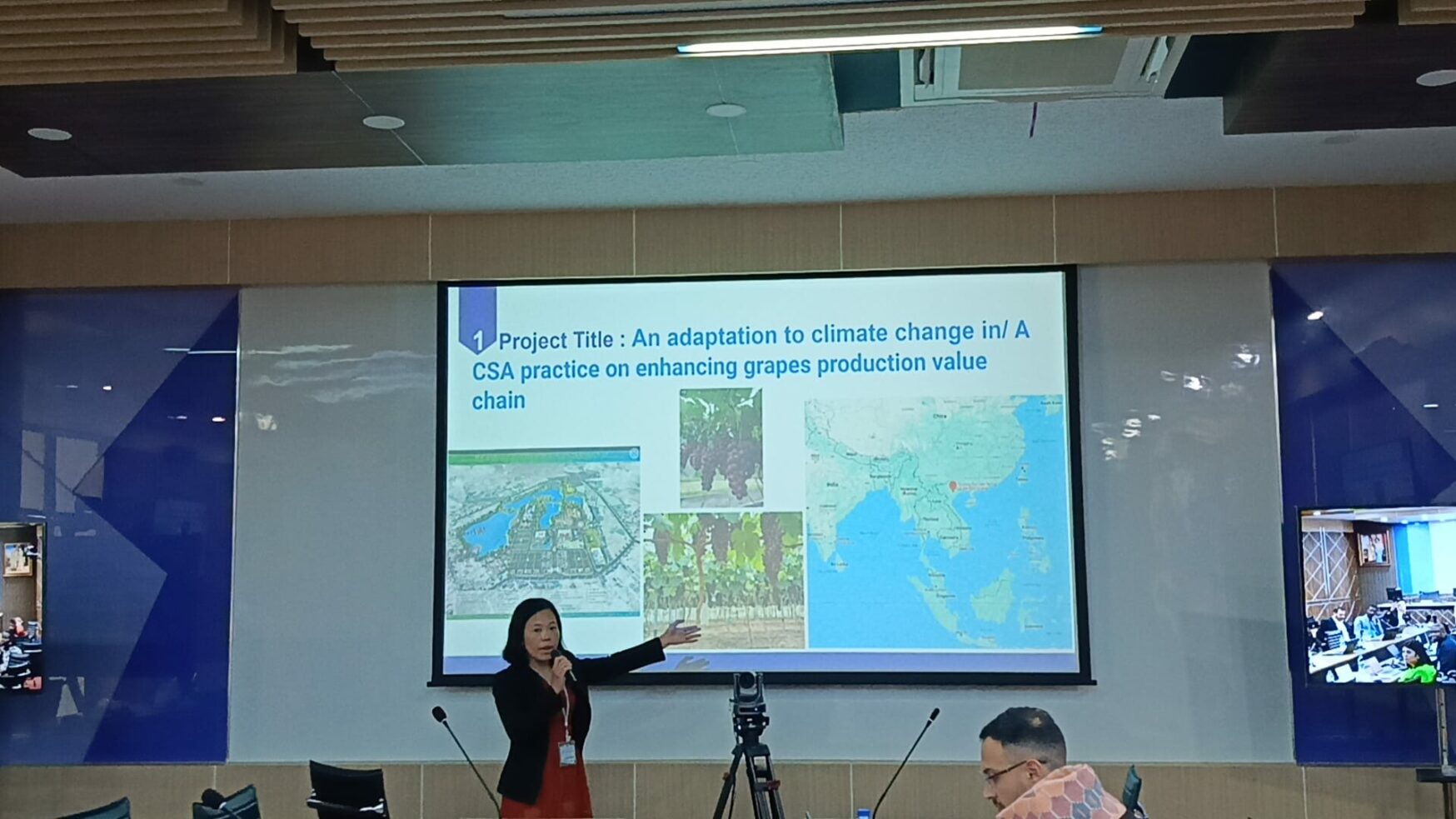
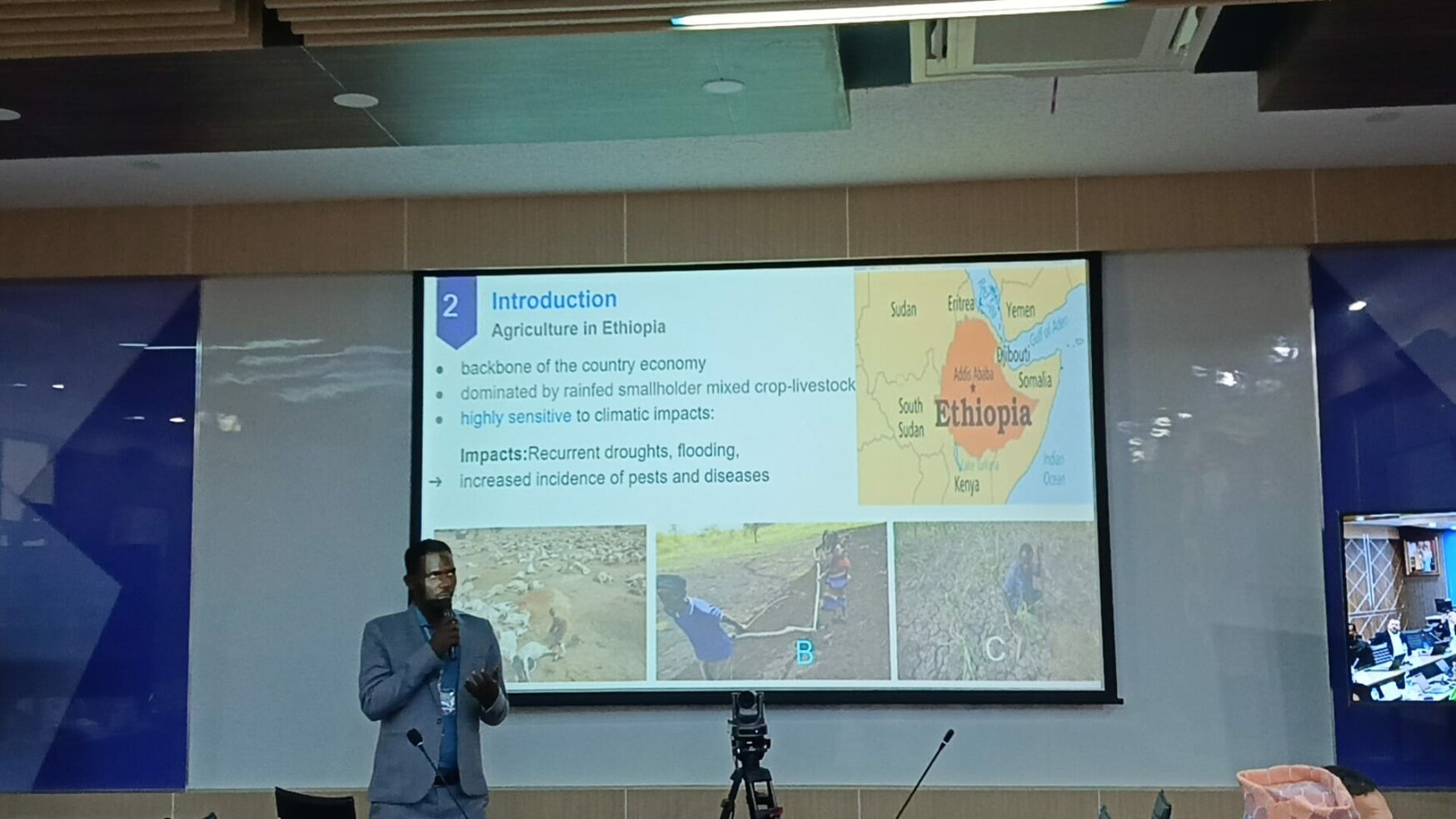
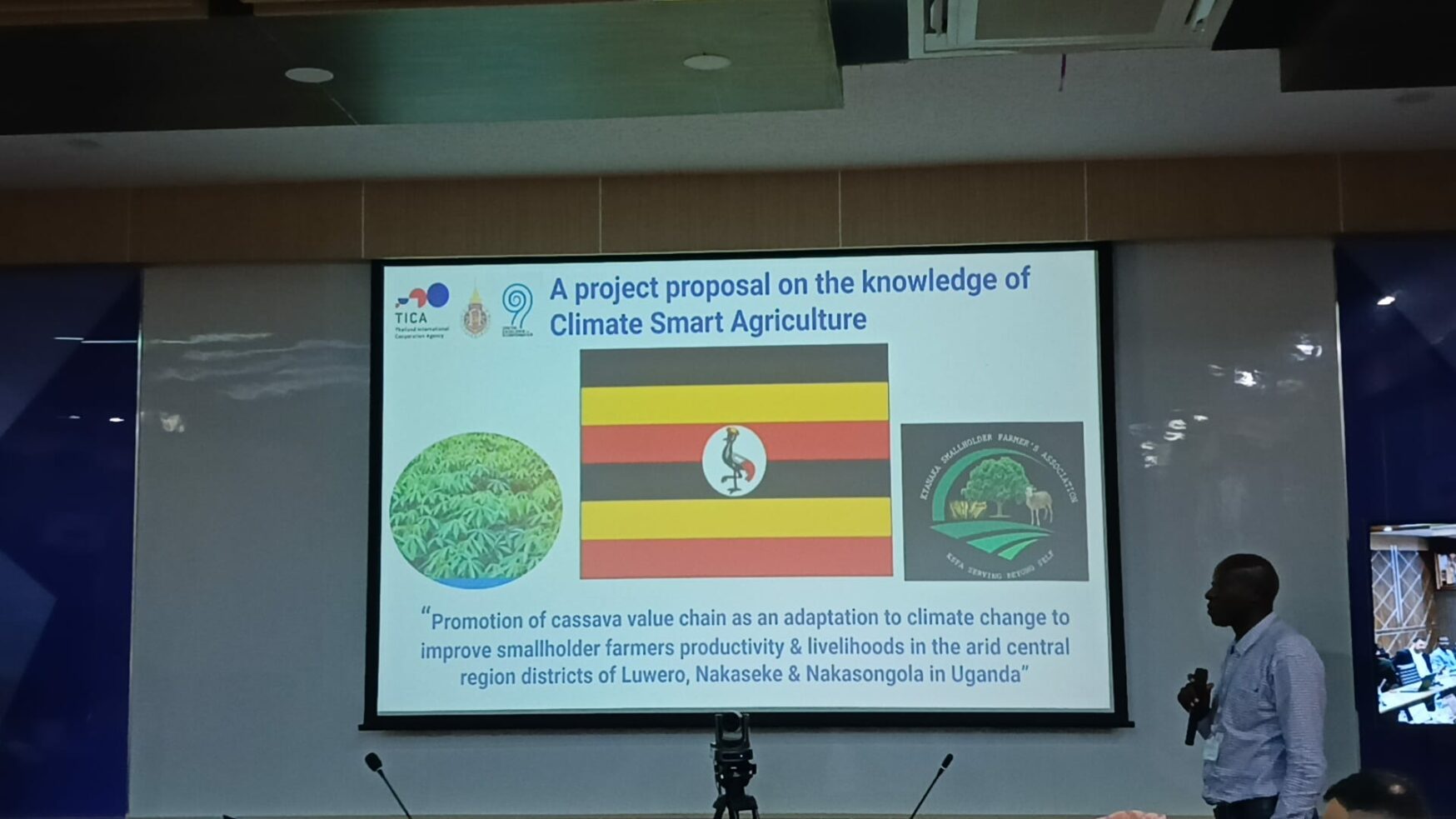
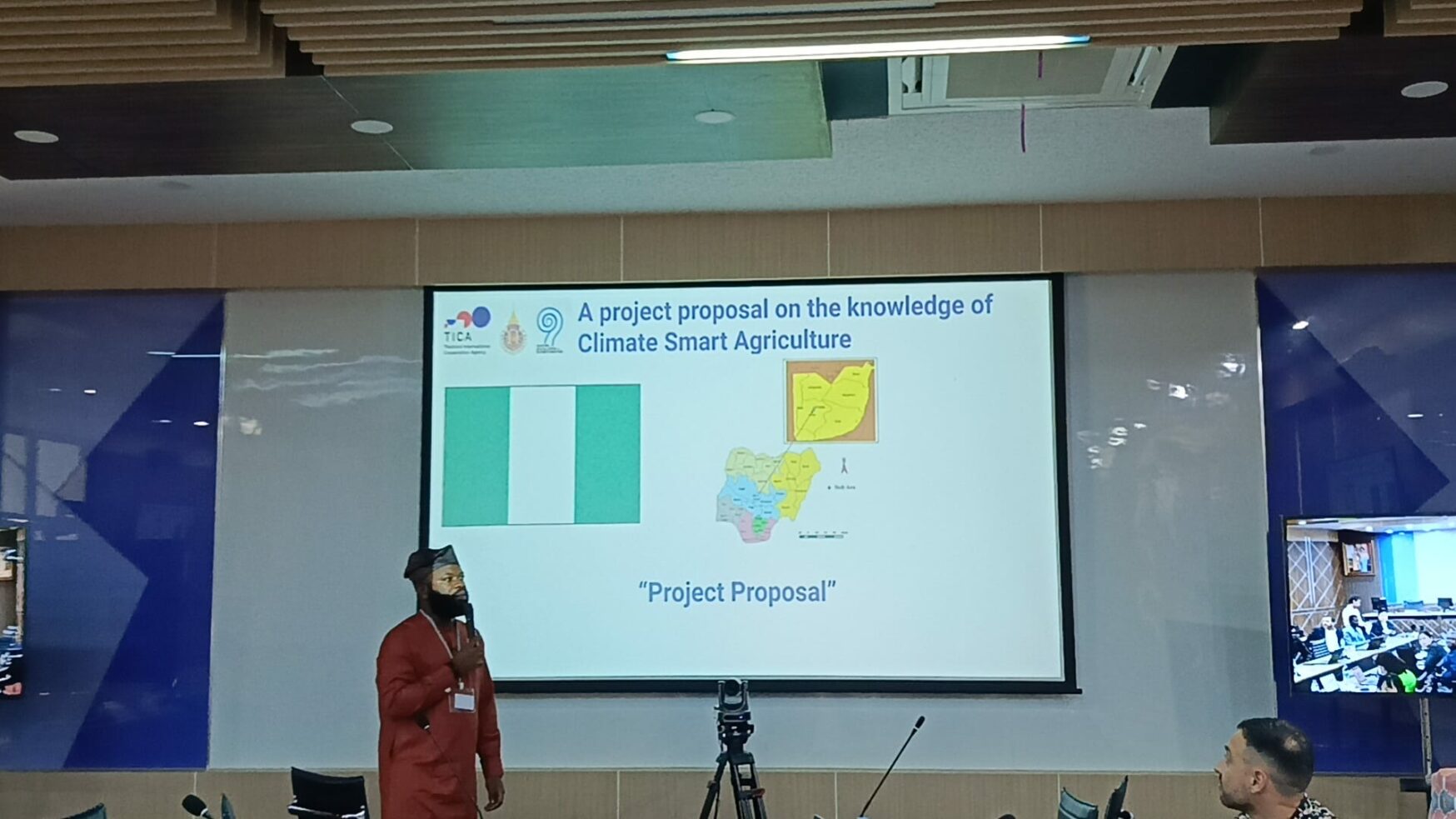
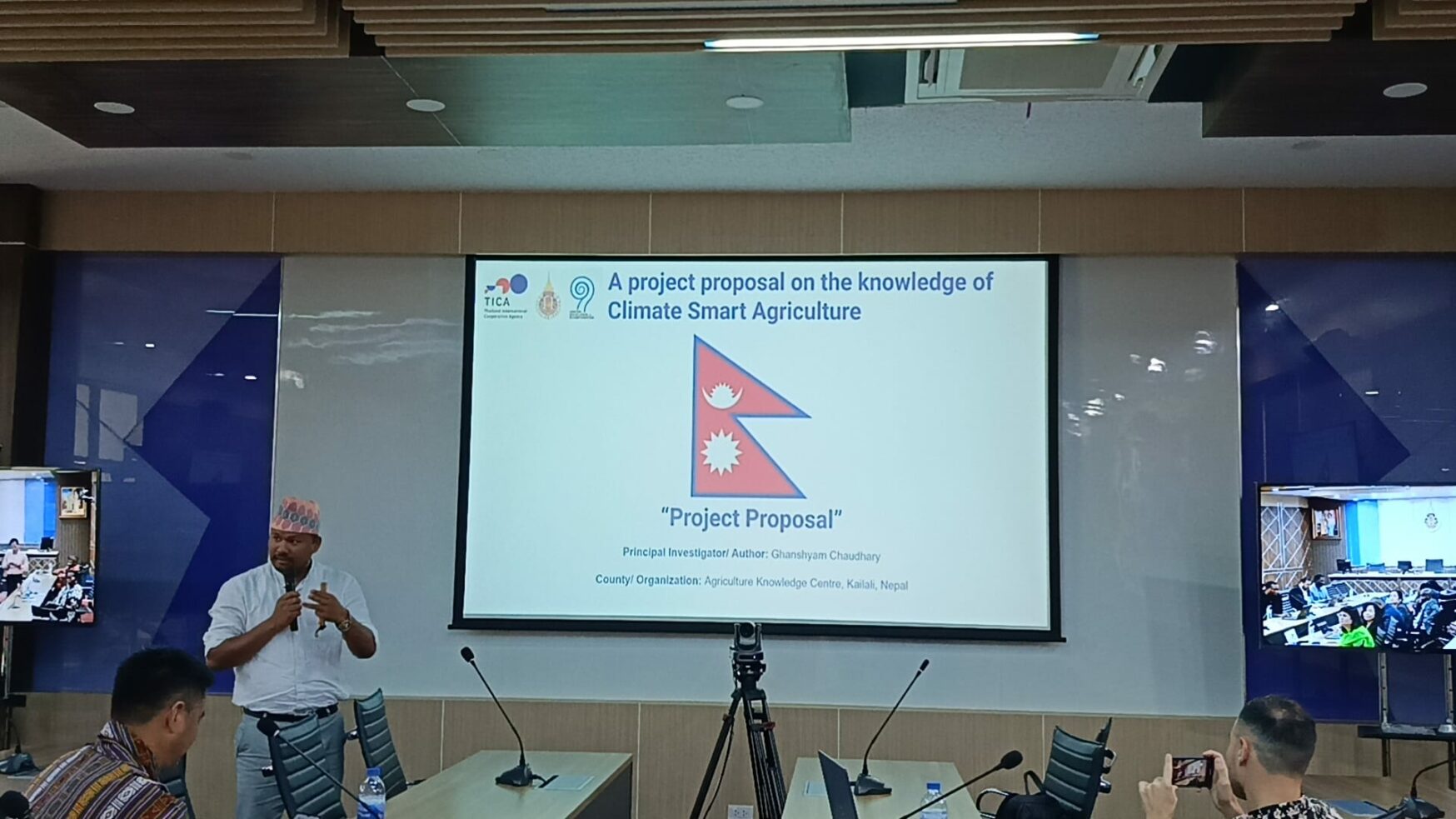
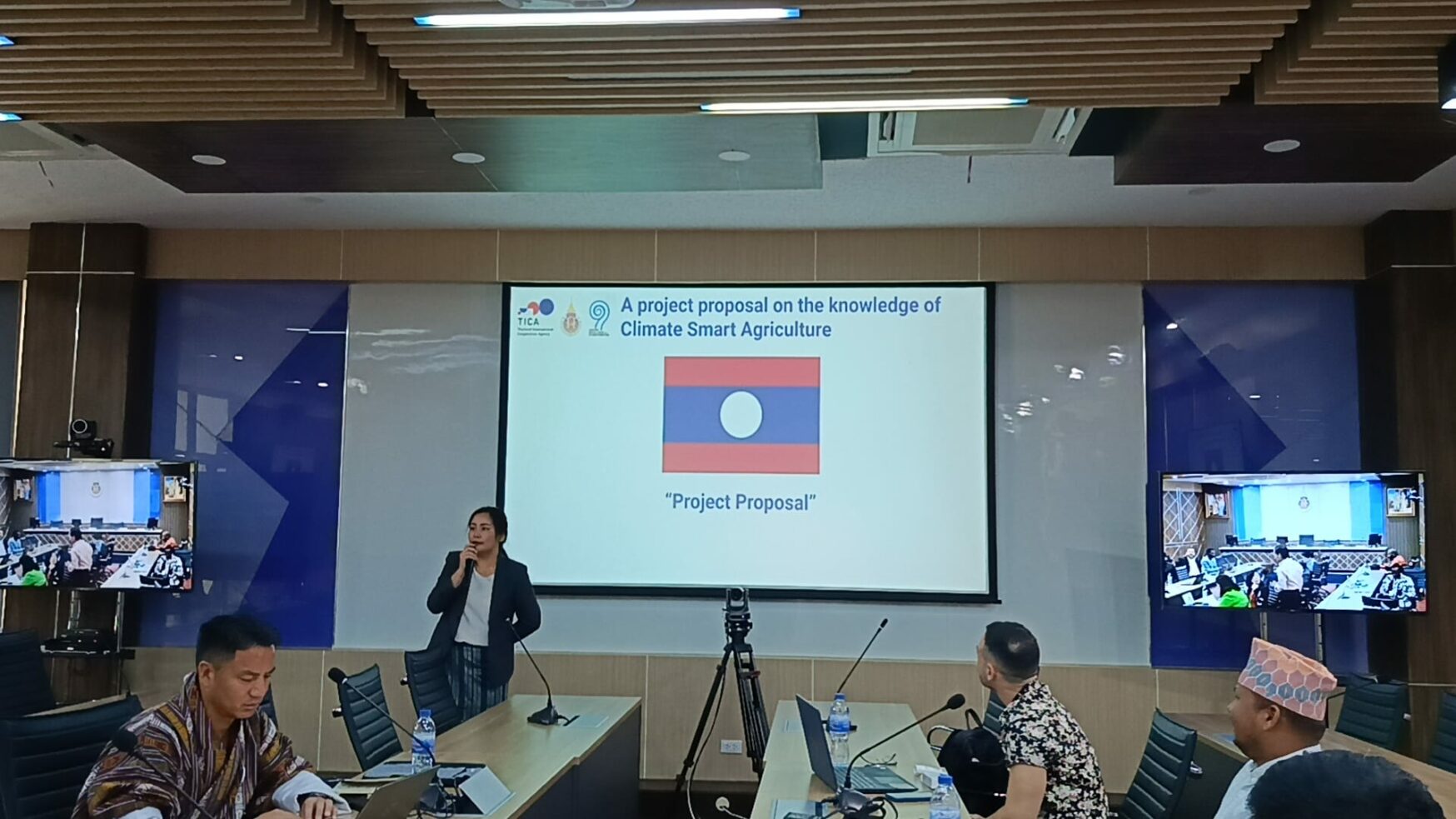
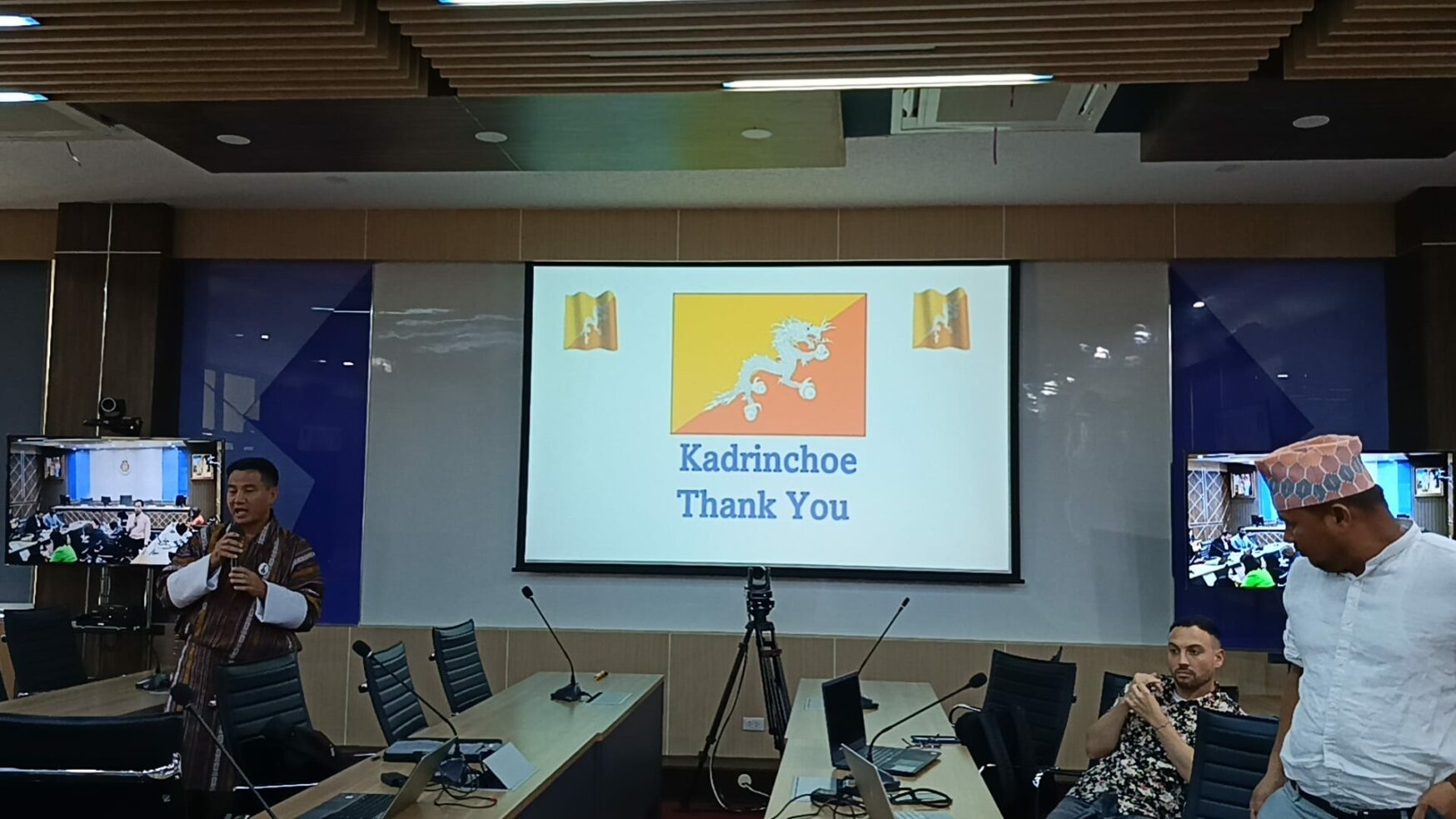
As part of the program, international partners were given the opportunity to present their project proposals and country reports, showcasing their findings on the current state of agricultural practices in their respective countries. These presentations included an evaluation of their nations’ existing climate-smart agricultural practices, the impact of climate change on farming communities, and newly developed best practices inspired by insights gained during the program. Participants also examined their countries’ agricultural policies, laws, and regulations, comparing them with those of Thailand and other participating nations. Based on this comparative analysis, they proposed potential policy improvements and regulatory measures that could enhance climate-smart agriculture in their home countries.
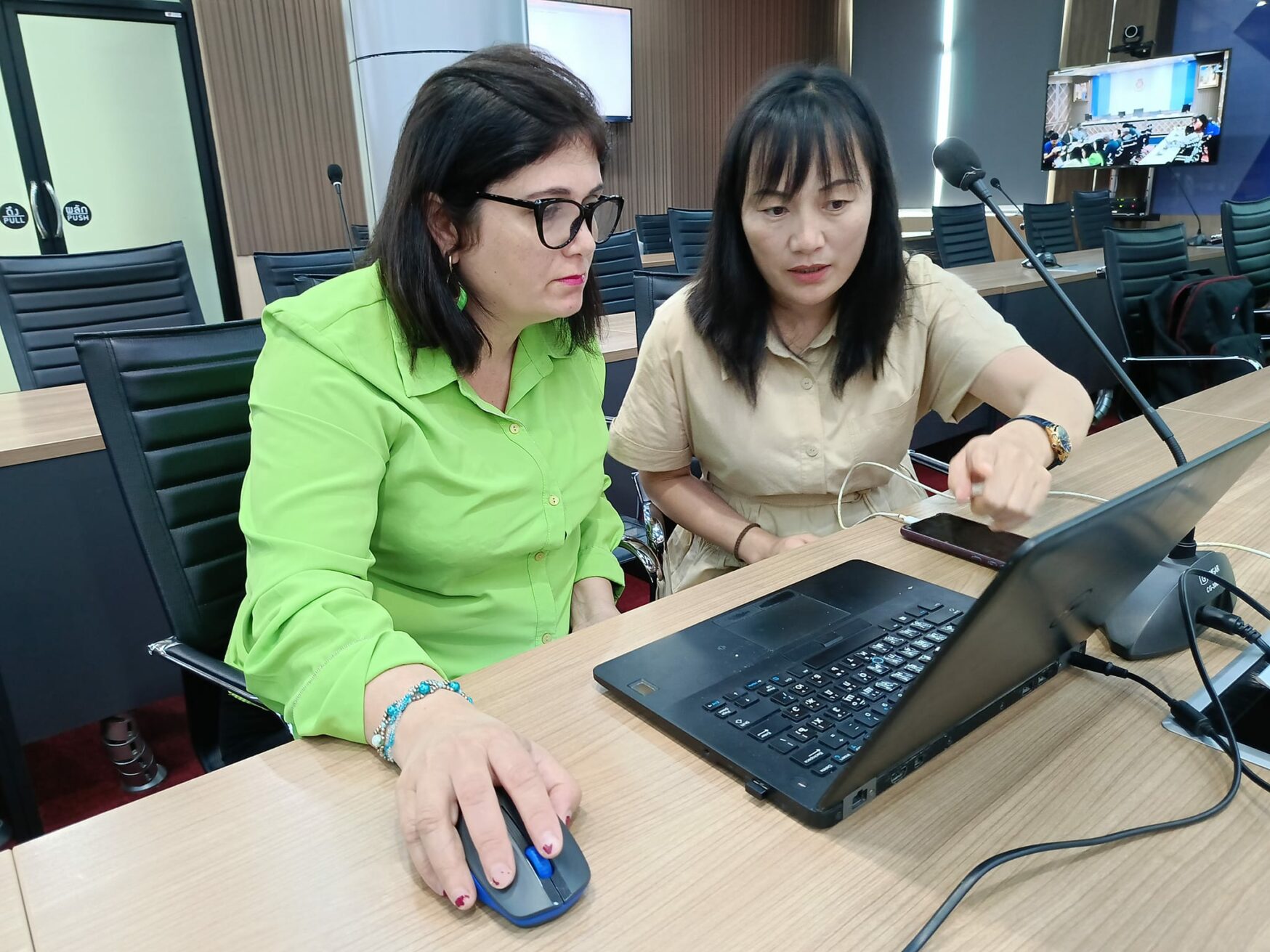
During the country report presentation sessions, participants engaged in interactive discussions on the challenges and opportunities in climate-smart agriculture. These discussions facilitated a knowledge-sharing platform where international partners exchanged best practices, innovative farming techniques, and policy recommendations. By comparing experiences and strategies, participants identified potential agricultural models that could be adapted and implemented in their respective countries to improve resilience, food security, and sustainability in the face of climate change. Through these collaborative efforts, the program fostered long-term international partnerships aimed at addressing global agricultural challenges through research, policy development, and capacity-building initiatives.
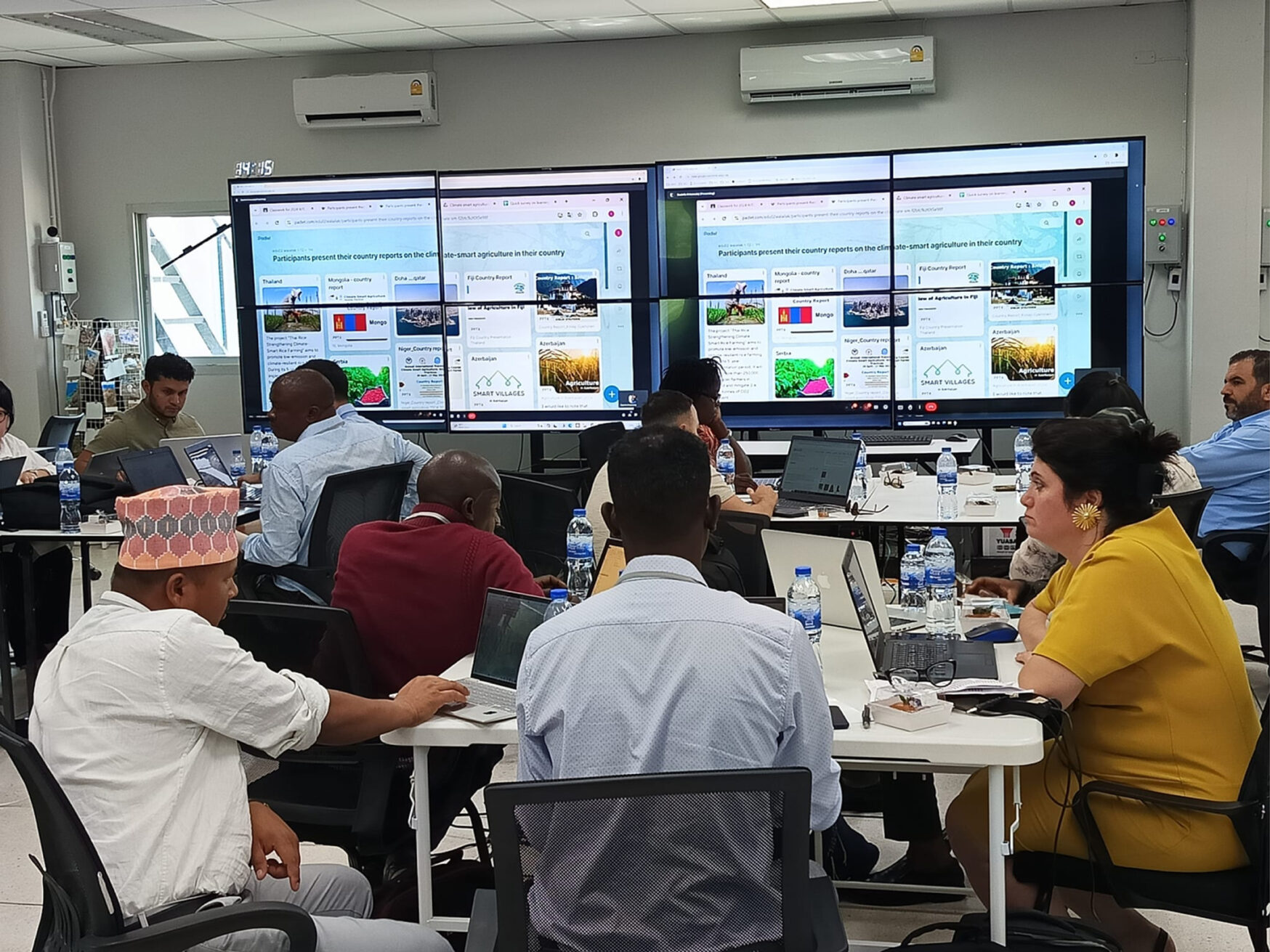
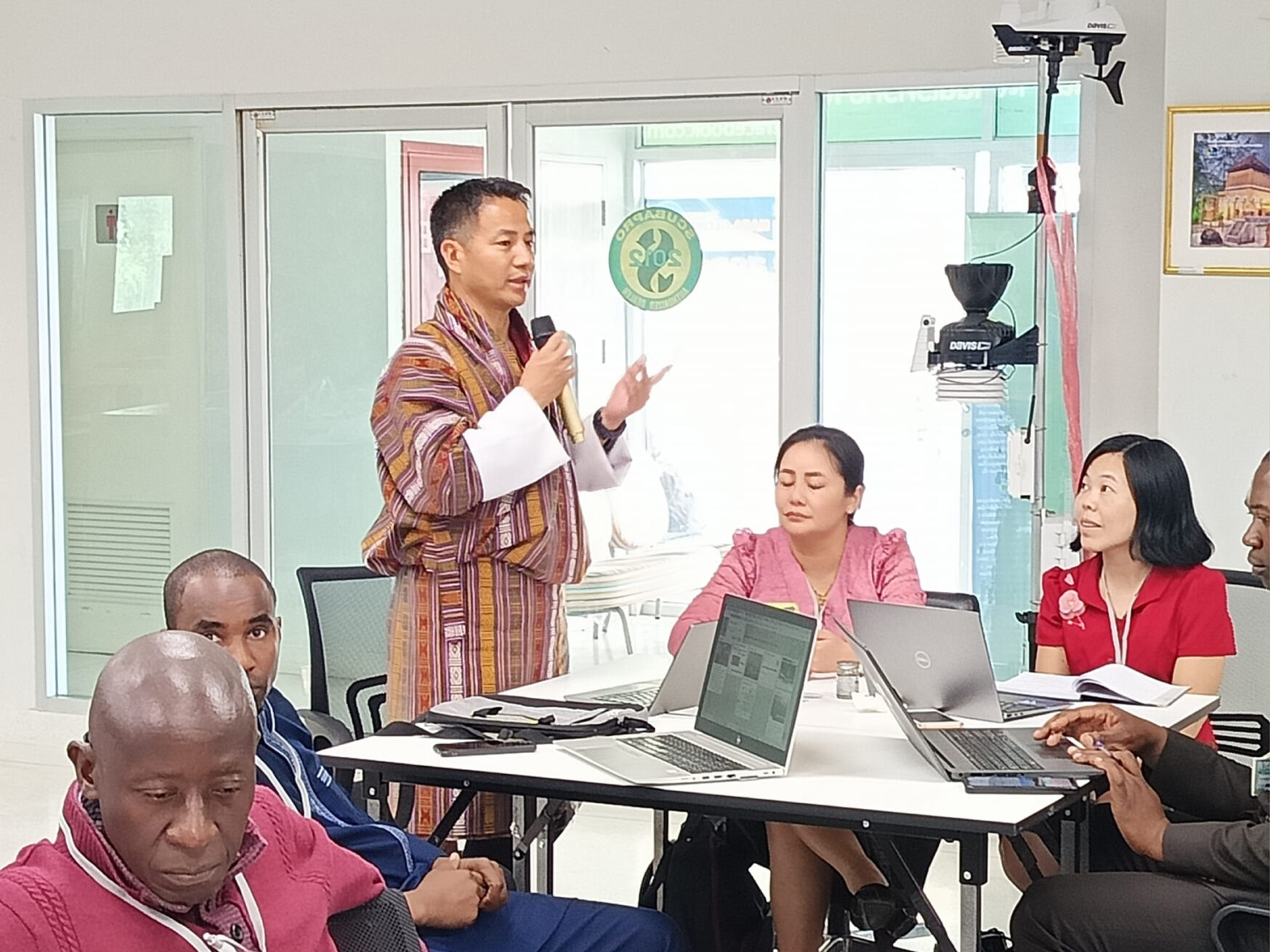
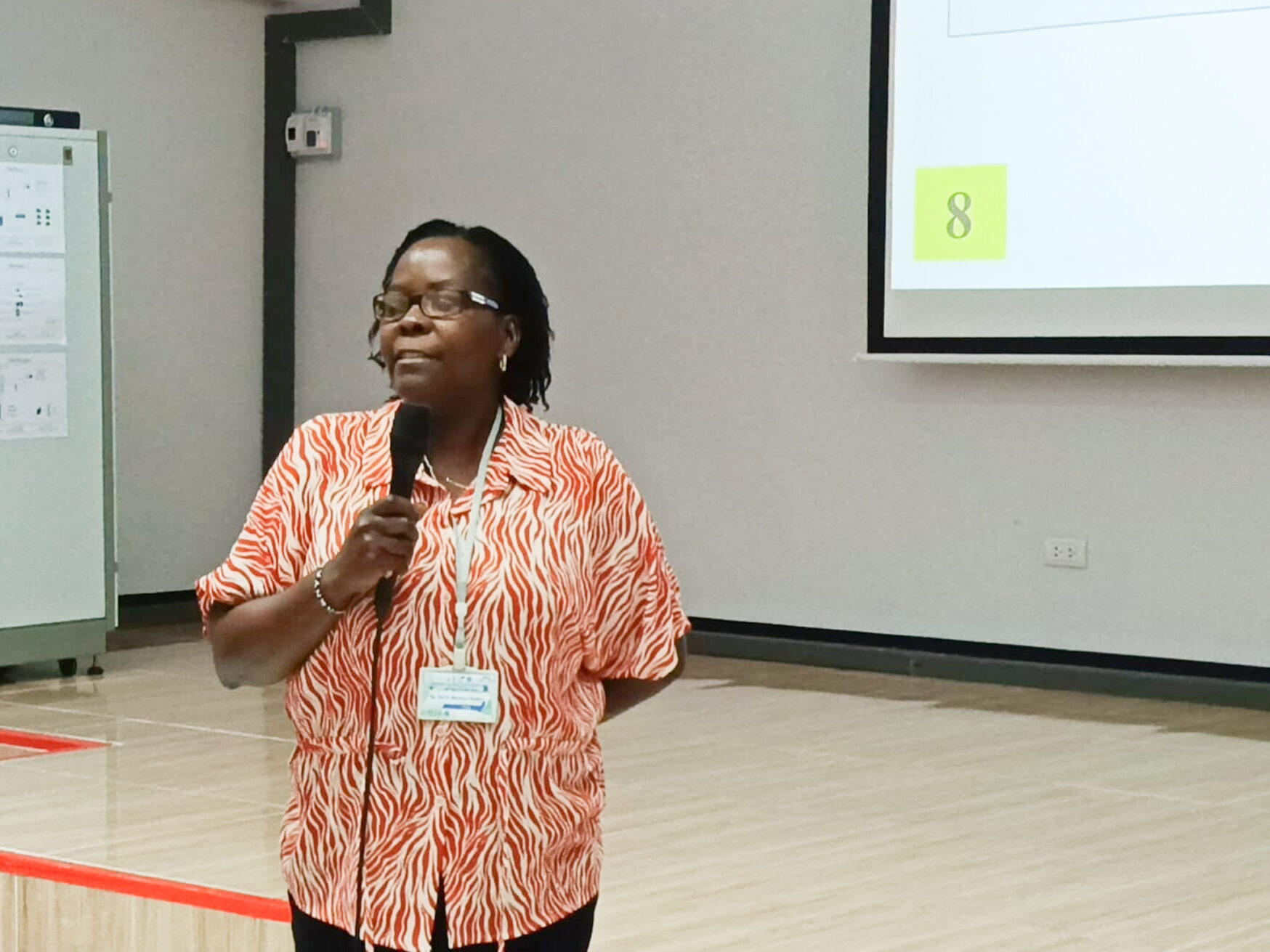
Figures: The international partners presenting their country reports, exchanging data and best practices, and discussing in developing new potential best practices and solutions
Measurement of Benefits and Outcomes of the Program
The Climate-Smart Agriculture: Smart Farming Practices Program has delivered significant benefits to participating individuals, institutions, and countries. The program has enhanced participants’ understanding of sustainable agricultural systems, equipping them with advanced techniques and technologies to improve productivity, resilience, and environmental sustainability in their home regions. Through interactive sessions, diagnostic data collection, and field-based learning, participants gained valuable insights into climate-smart practices that can be adapted to diverse agricultural contexts.
Moreover, the program strengthened international research collaboration and capacity-building among developing and least-developed countries. By bringing together researchers, policymakers, and agricultural professionals, it fostered a global network dedicated to promoting sustainable food systems and advancing climate-resilient agricultural innovations. Participants engaged in comparative policy analysis and shared best practices from their countries, leading to the development of new policy recommendations and strategies to support national food security and sustainable development goals.
The integration of science-based approaches, including IoT-based monitoring systems, drone mapping, and eco-friendly biocontrol methods such as Trichoderma applications, encouraged the adoption of environmentally responsible farming techniques. These innovations not only improve agricultural efficiency but also contribute to reducing greenhouse gas emissions and minimizing the use of chemical inputs. The program also reinforced Walailak University’s position as a leading regional hub for climate-smart agriculture and sustainable development, supporting Thailand’s commitment to achieving the United Nations Sustainable Development Goals.
Finally, the cross-cultural collaboration cultivated through this initiative has laid the foundation for long-term partnerships and future joint research projects. By promoting mutual learning and innovation, the program continues to play a vital role in building the global capacity needed to address food insecurity, climate change, and agricultural sustainability challenges across regions.