Energy Efficient Appliances Usage
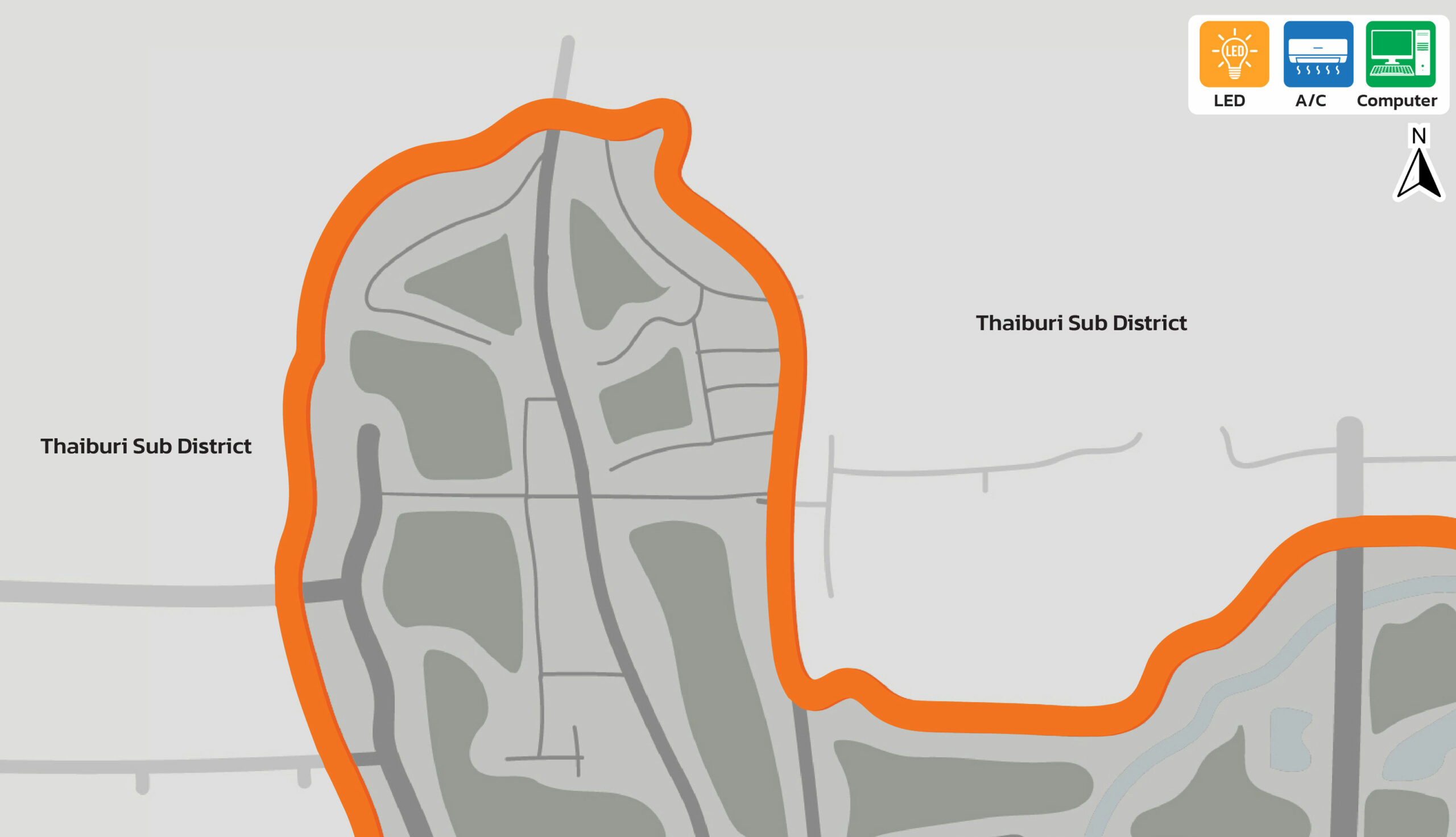
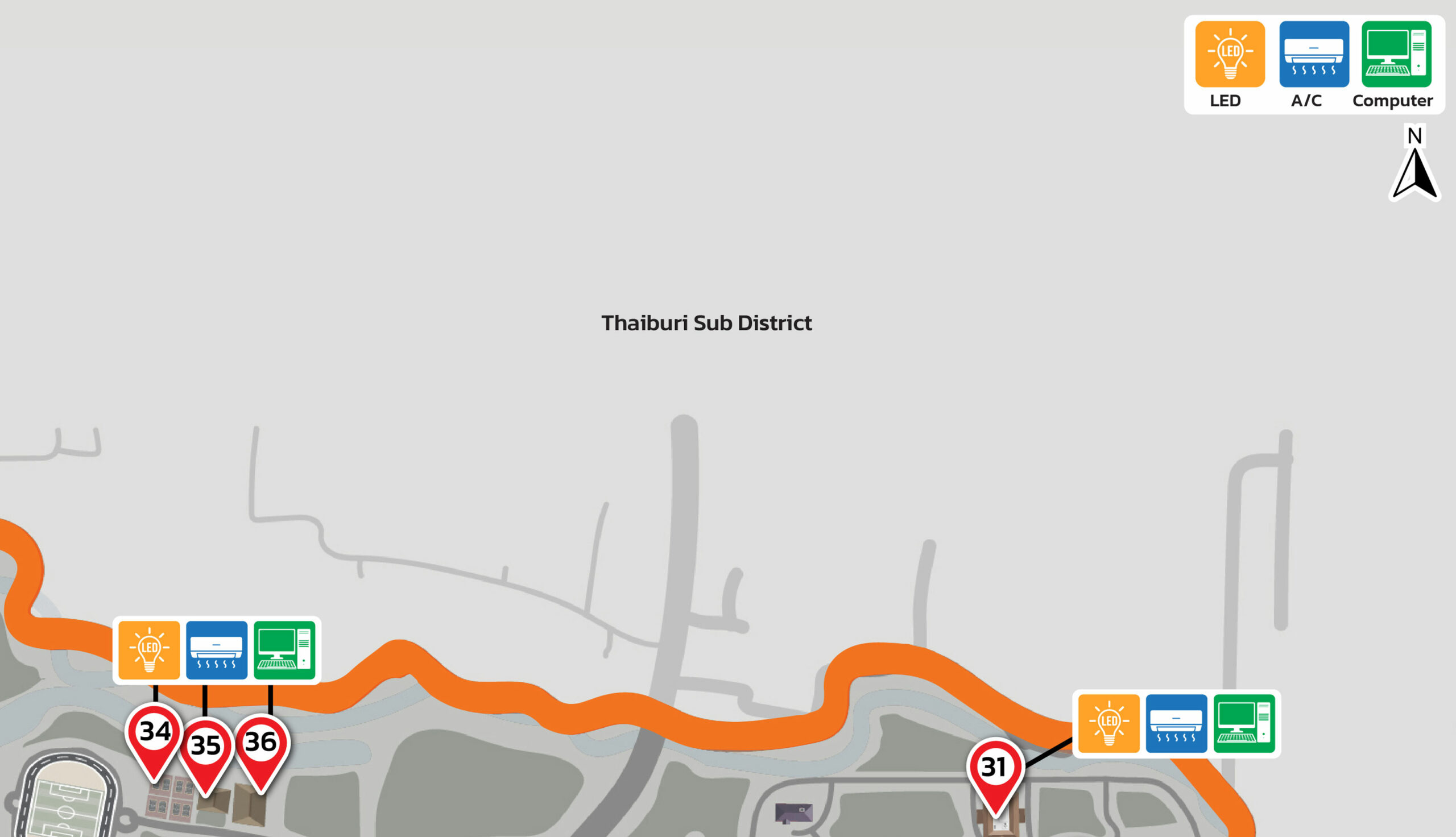
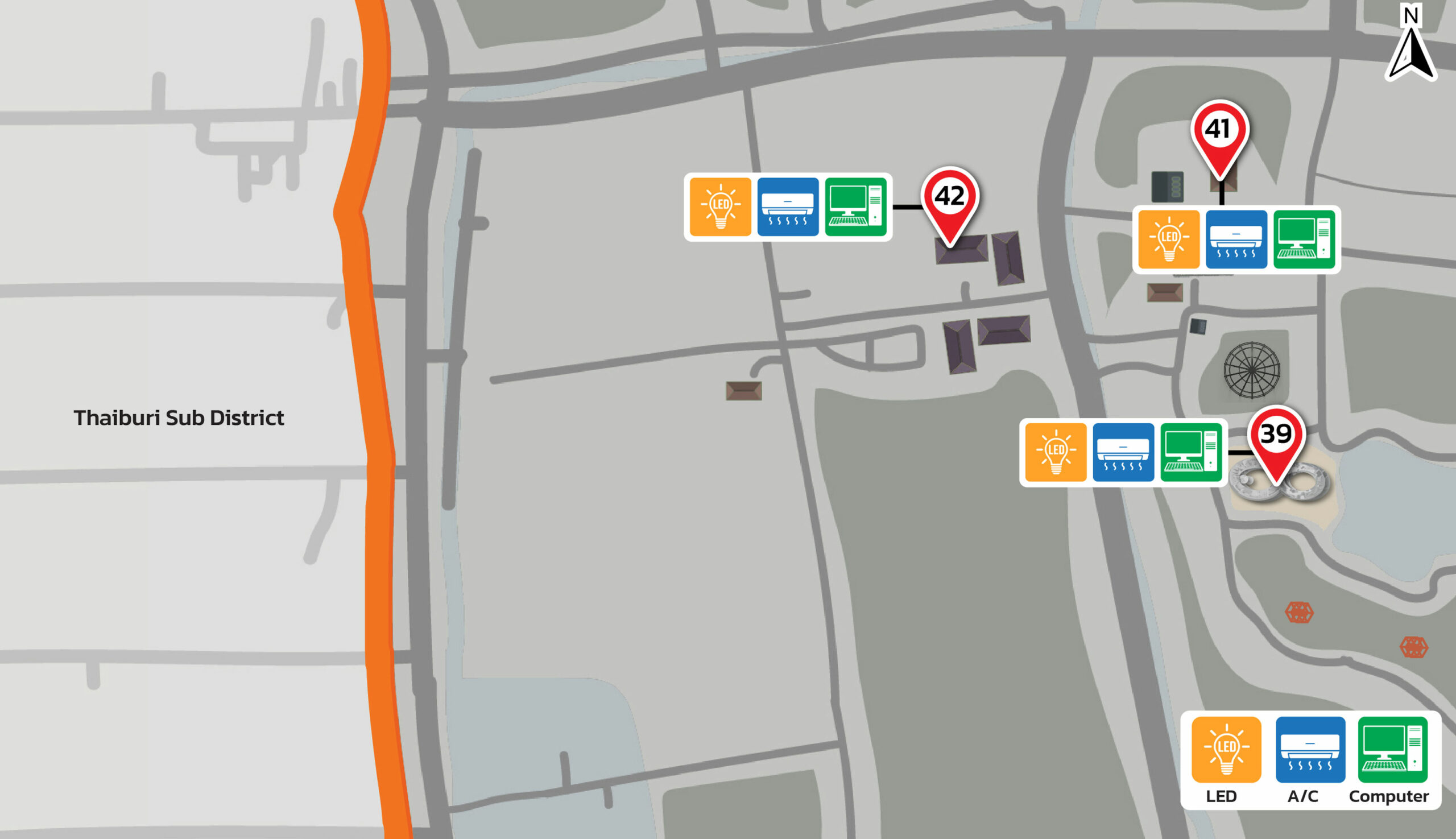
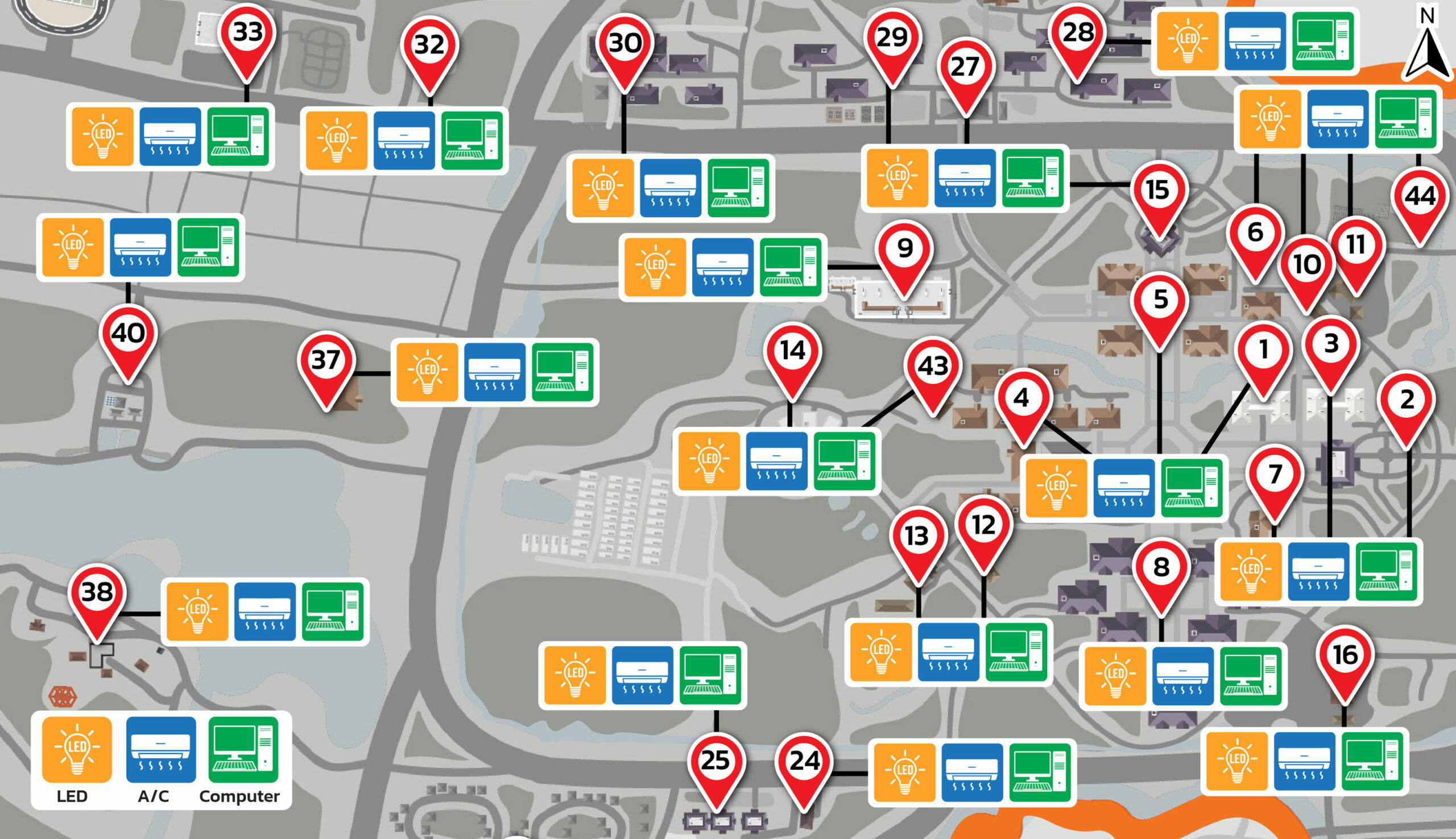
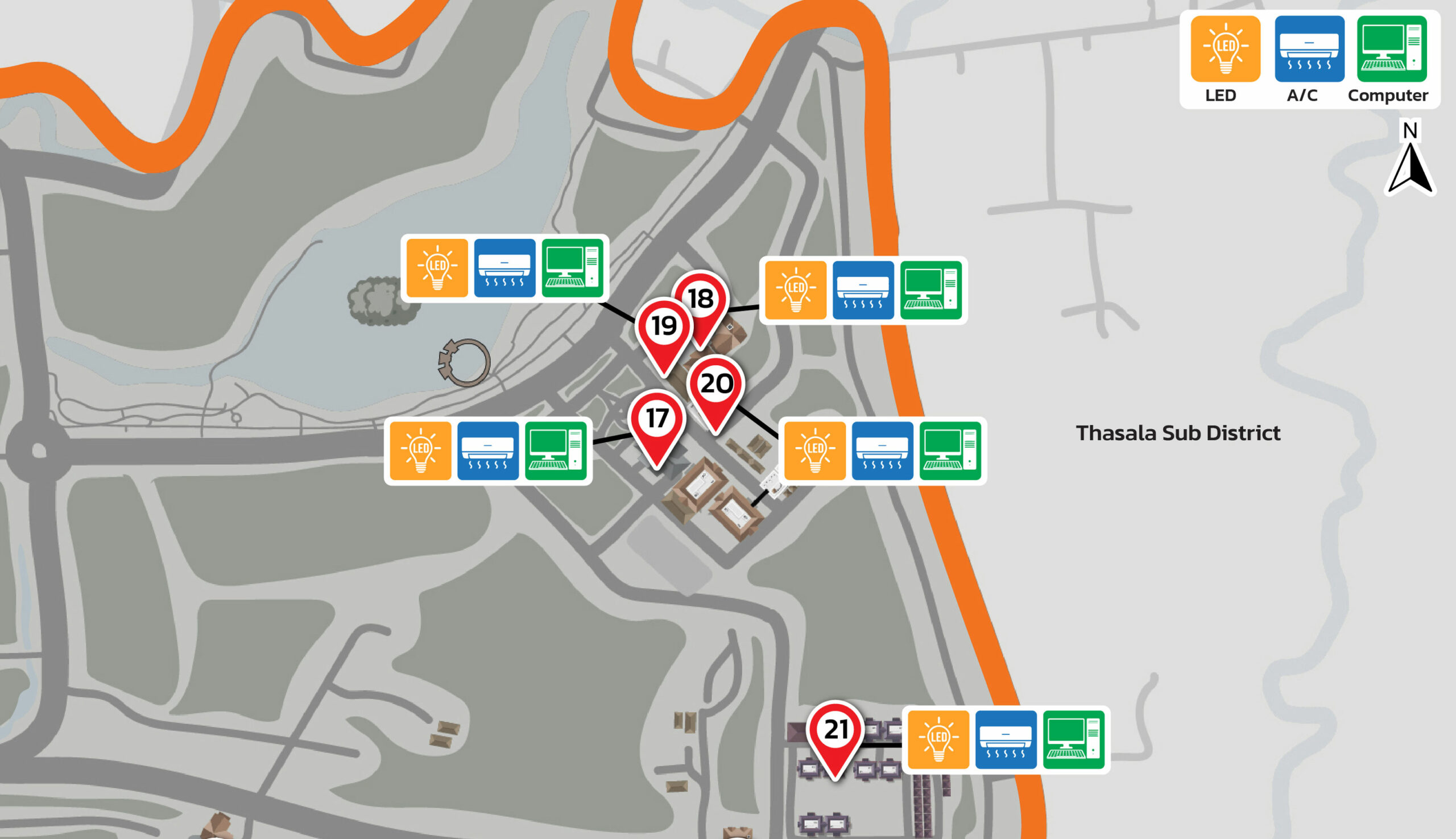
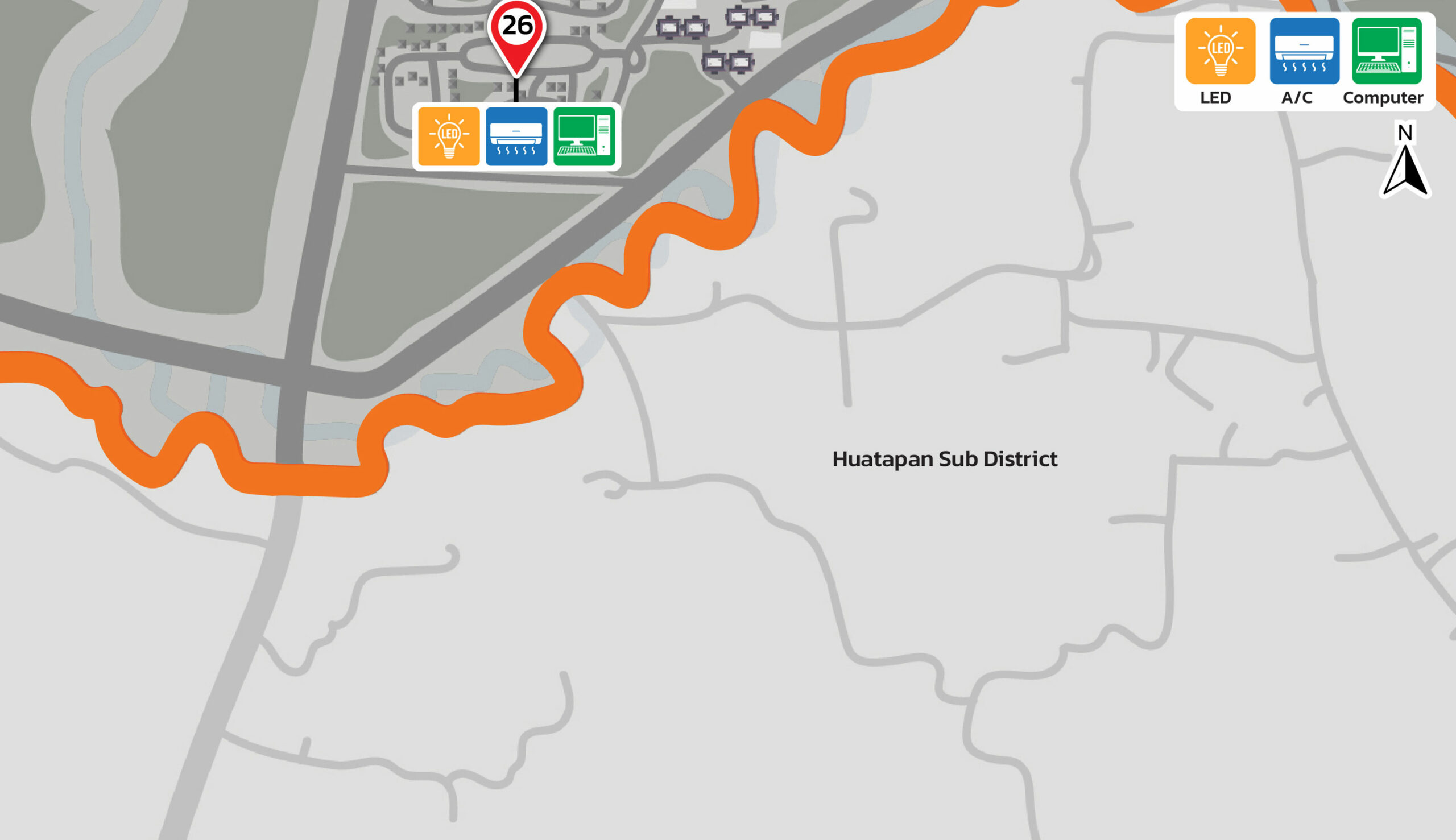
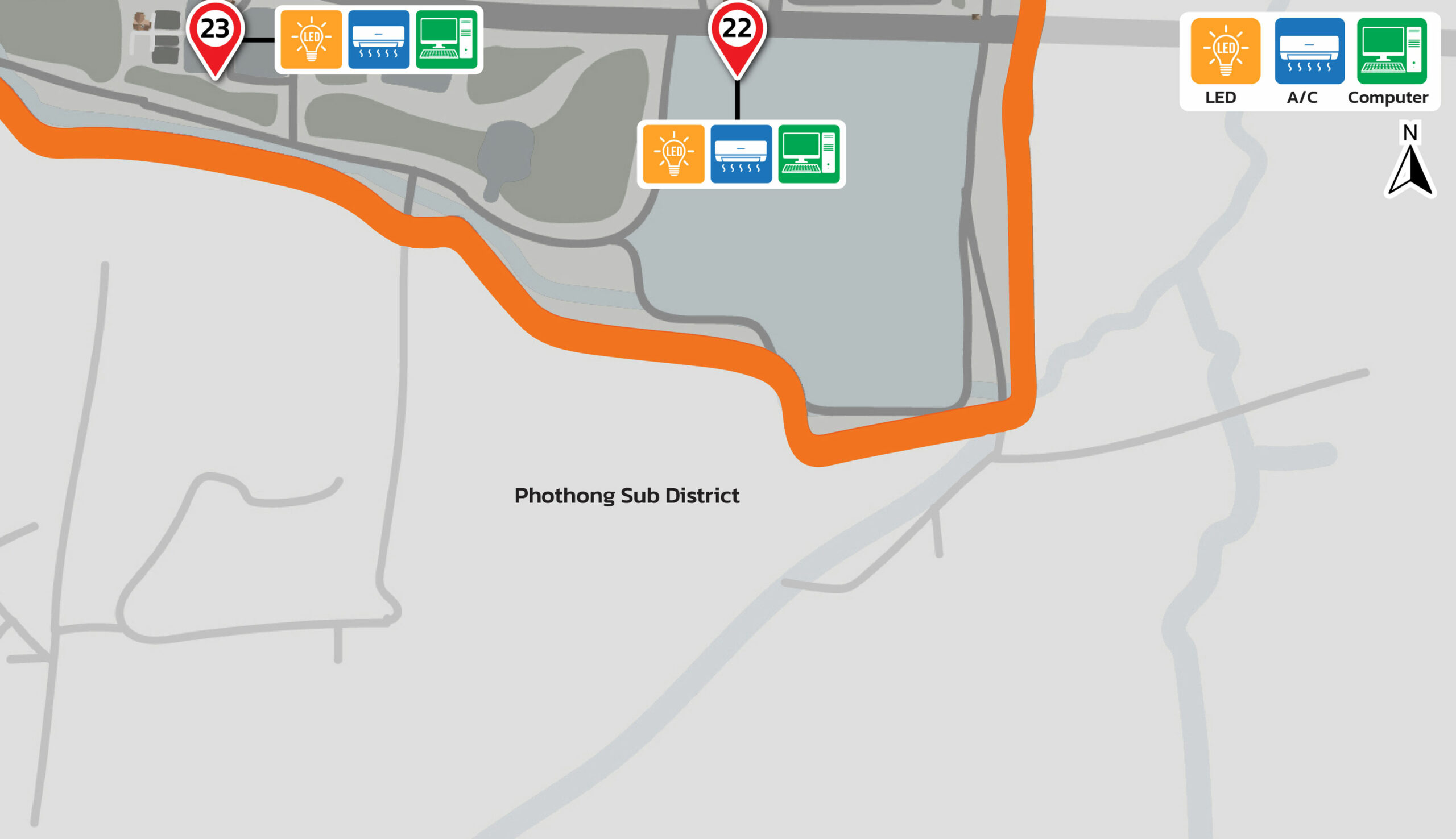
Figures: Distribution Map of Energy-Efficient Equipment 100% implemented across all buildings. (Walailak University, Thailand)
The Energy Efficiency Dashboard presents data on the replacement of conventional equipment with energy-saving appliances. (Walailak University, Thailand)
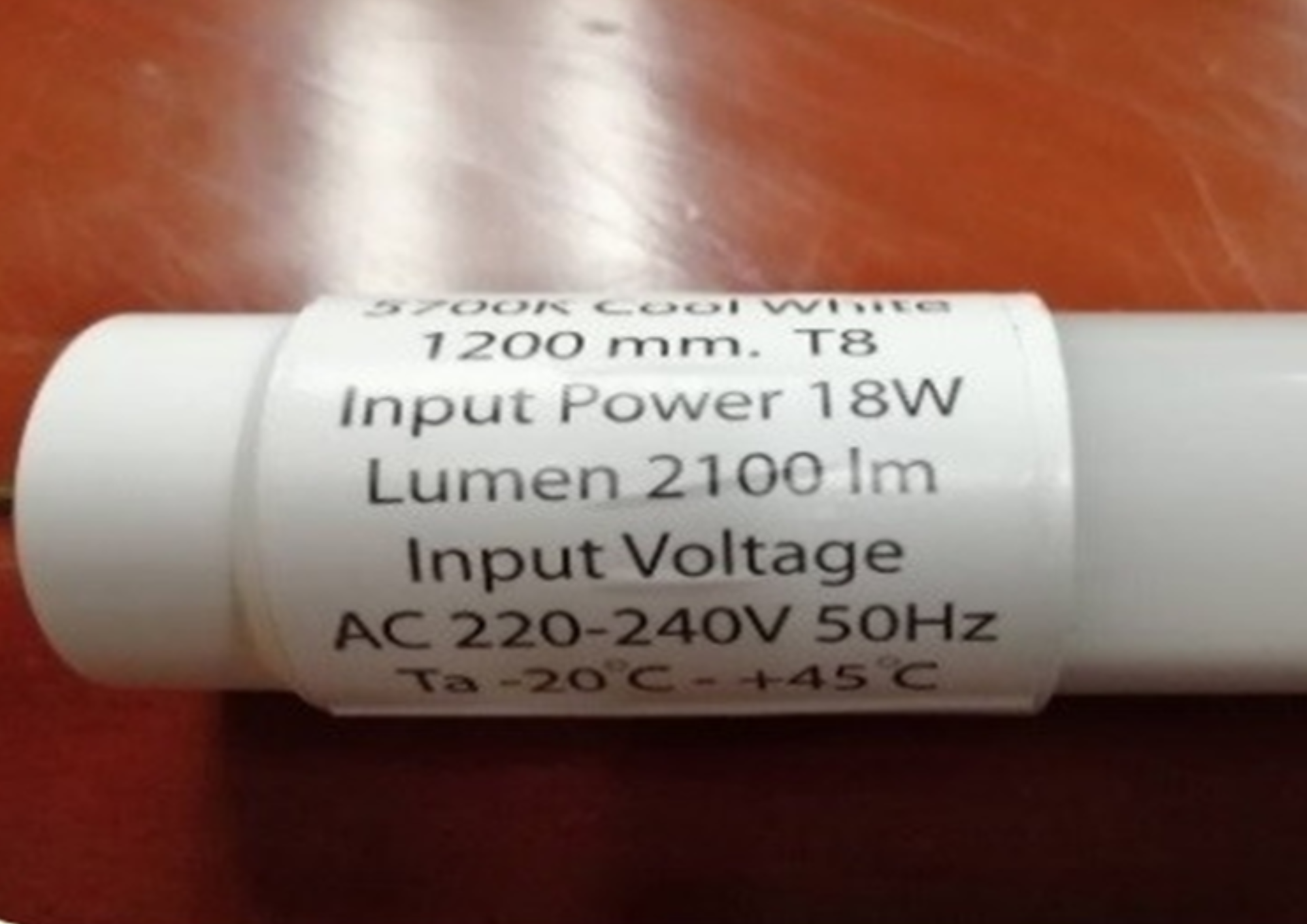
Energy Efficient Appliances Usage: Use of LED light detection
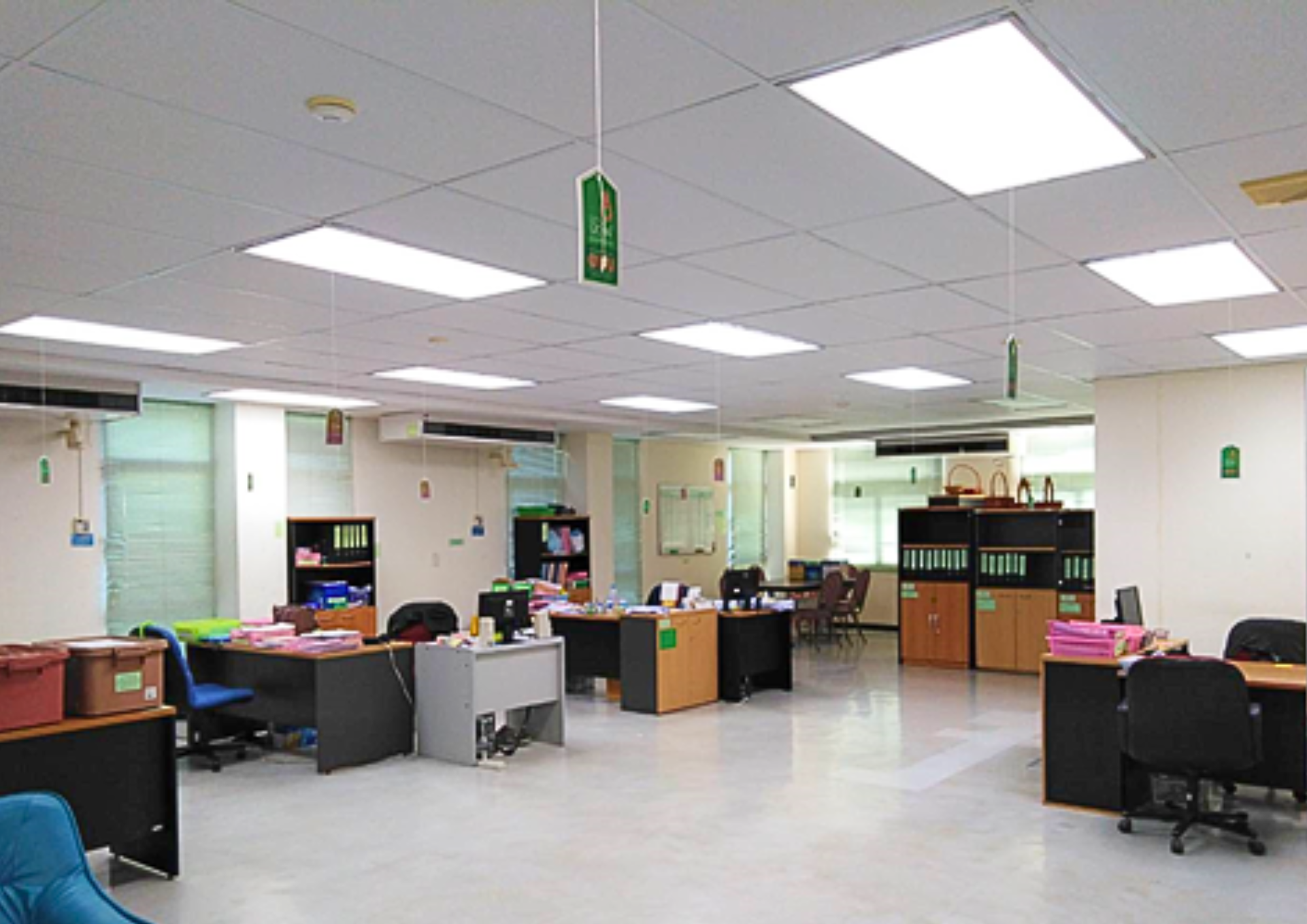
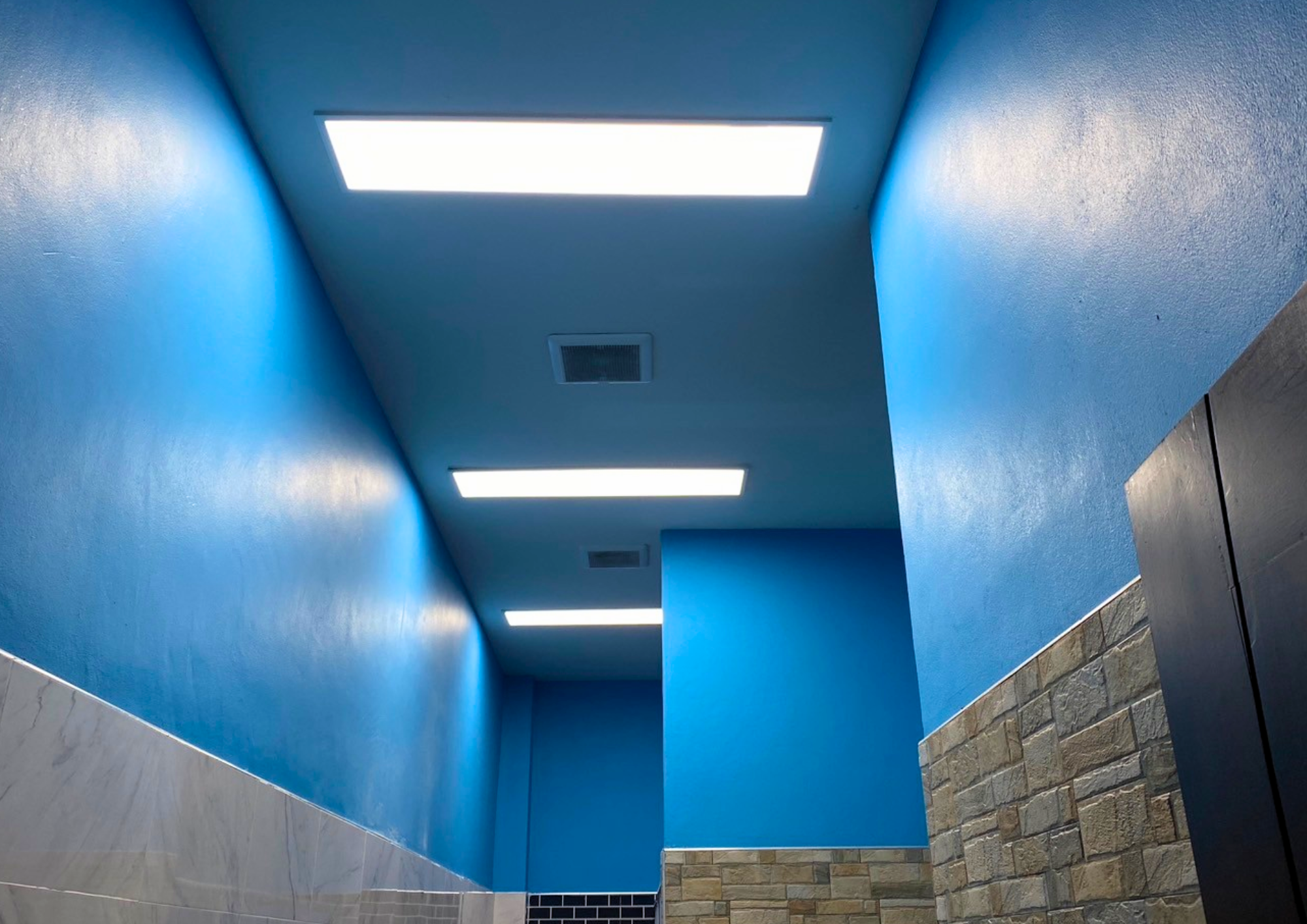
In 2024, Walailak University reached a significant milestone in its energy conservation strategy by completing the comprehensive replacement of all campus lighting systems with LED technology, encompassing a total of 57,351 bulbs. This initiative represented a full 100% transition, with no incandescent or fluorescent bulbs remaining in operation. Building upon this achievement, the university continued to emphasize energy efficiency in 2025 as a central aspect of its campus development. All newly constructed buildings were designed to be equipped exclusively with LED lighting systems. Consequently, by 2025, the total number of LED bulbs in use across the campus rose to 95,679 units, reaffirming the university’s sustained 100% transition rate and underscoring its unwavering commitment to energy conservation and long-term sustainability.
Source of data : Division of Service Central
Upgrading Air Conditioners to High-Efficiency Models
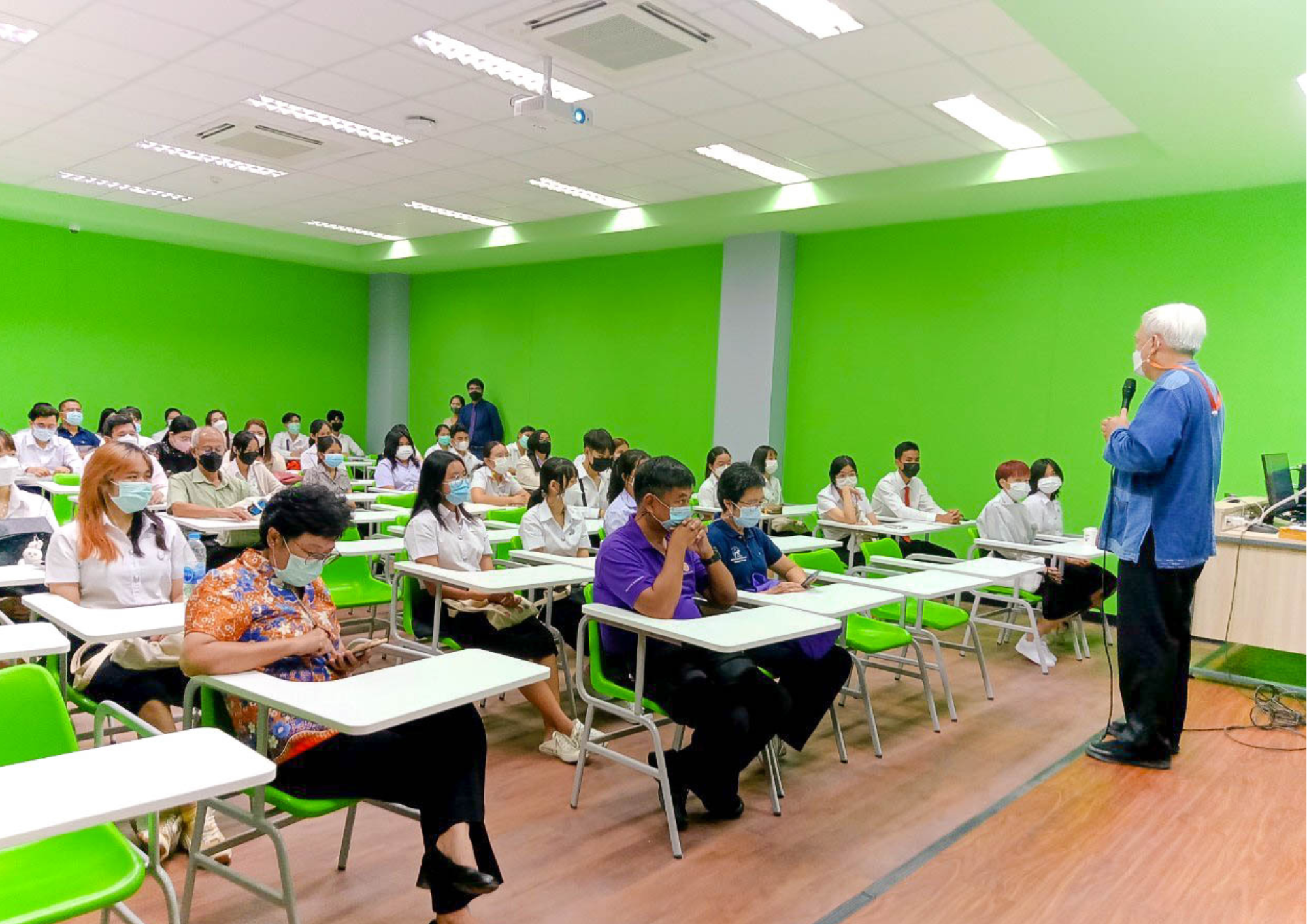
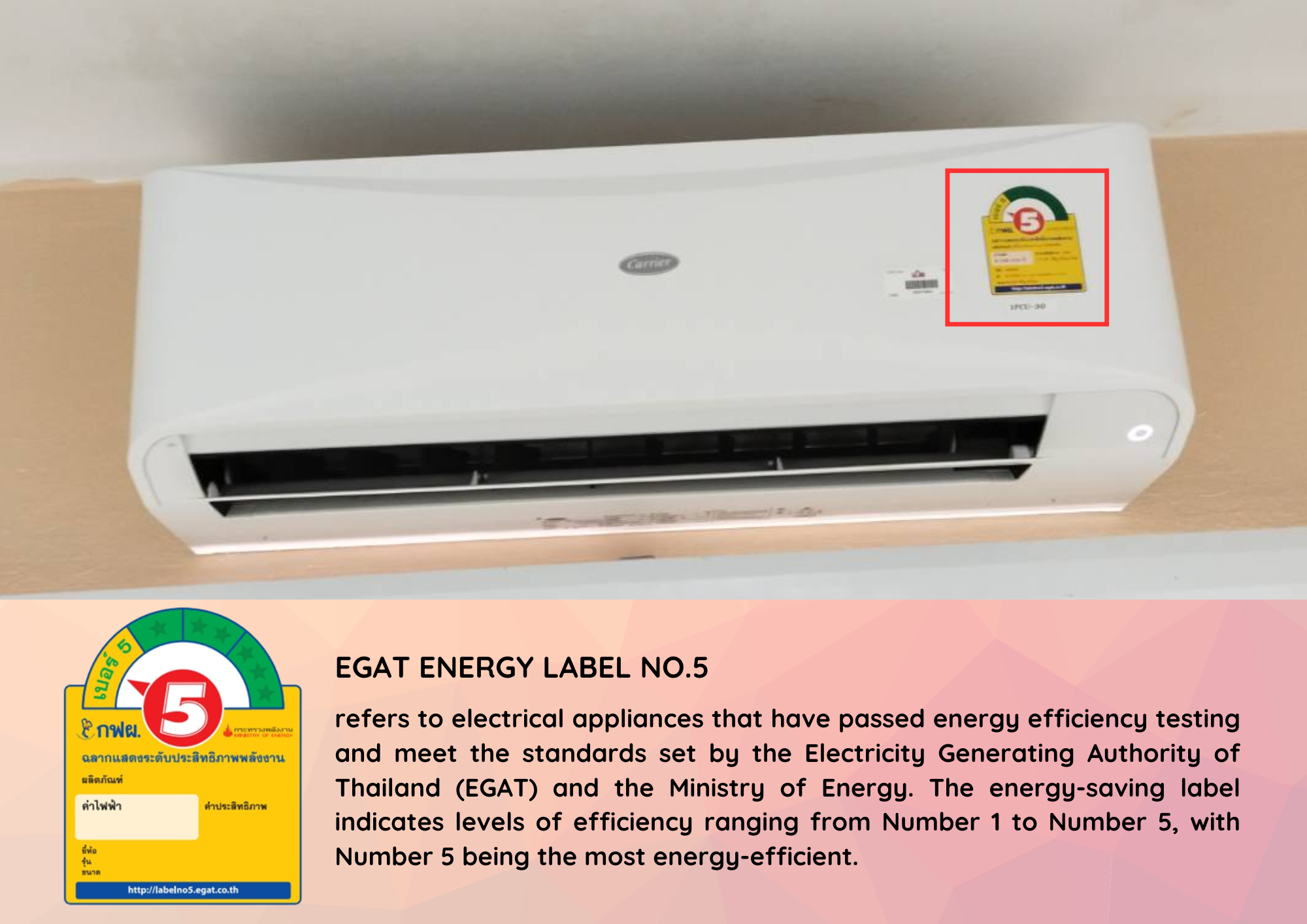
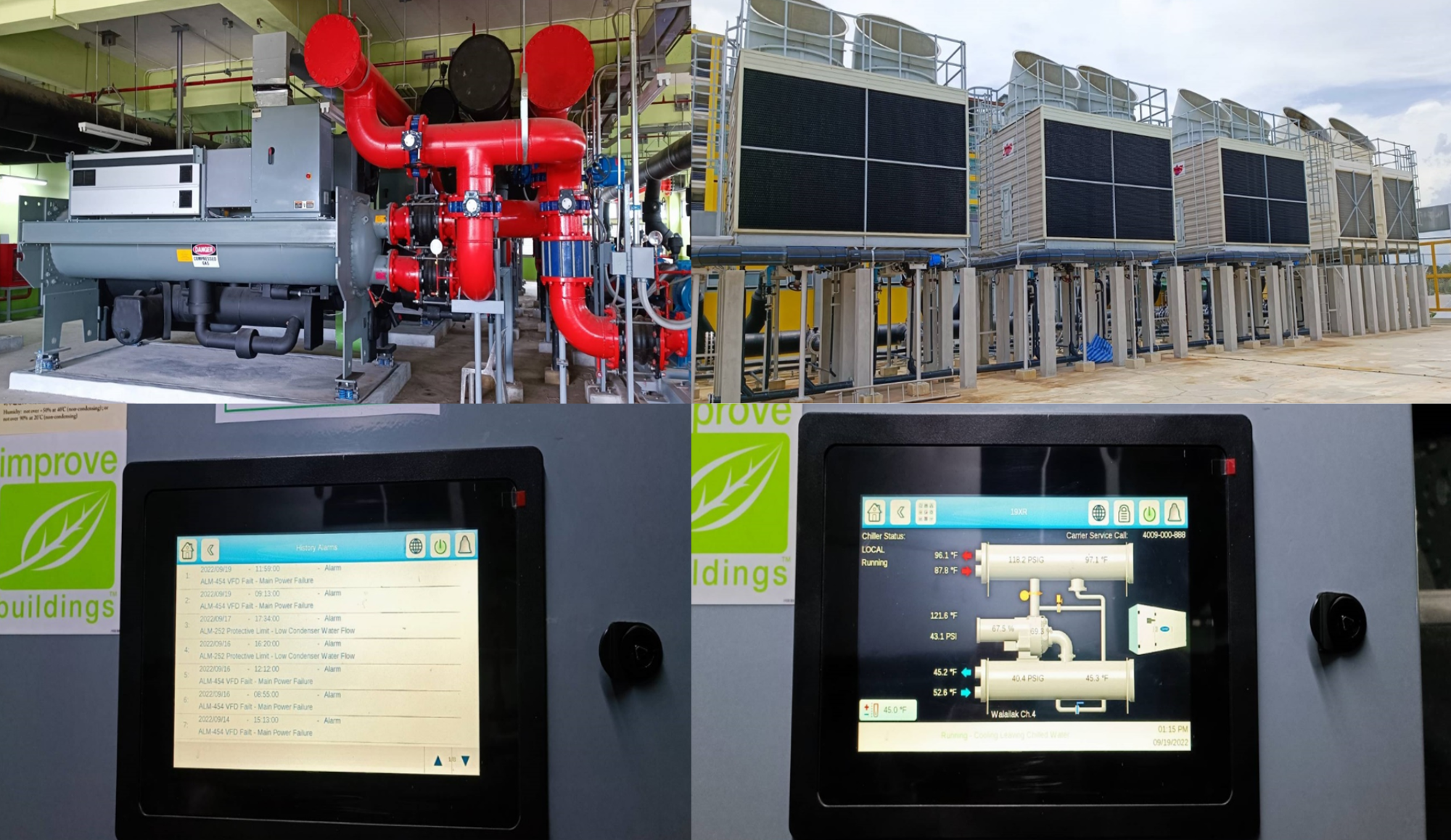
In 2025, Walailak University completed a comprehensive upgrade of all air conditioning systems across the campus, achieving full coverage of high–efficiency units in 100% of office and classroom buildings. Newly constructed and newly opened facilities in the same year were also equipped with these advanced systems from the outset, ensuring alignment with the university’s long–term energy efficiency strategy.
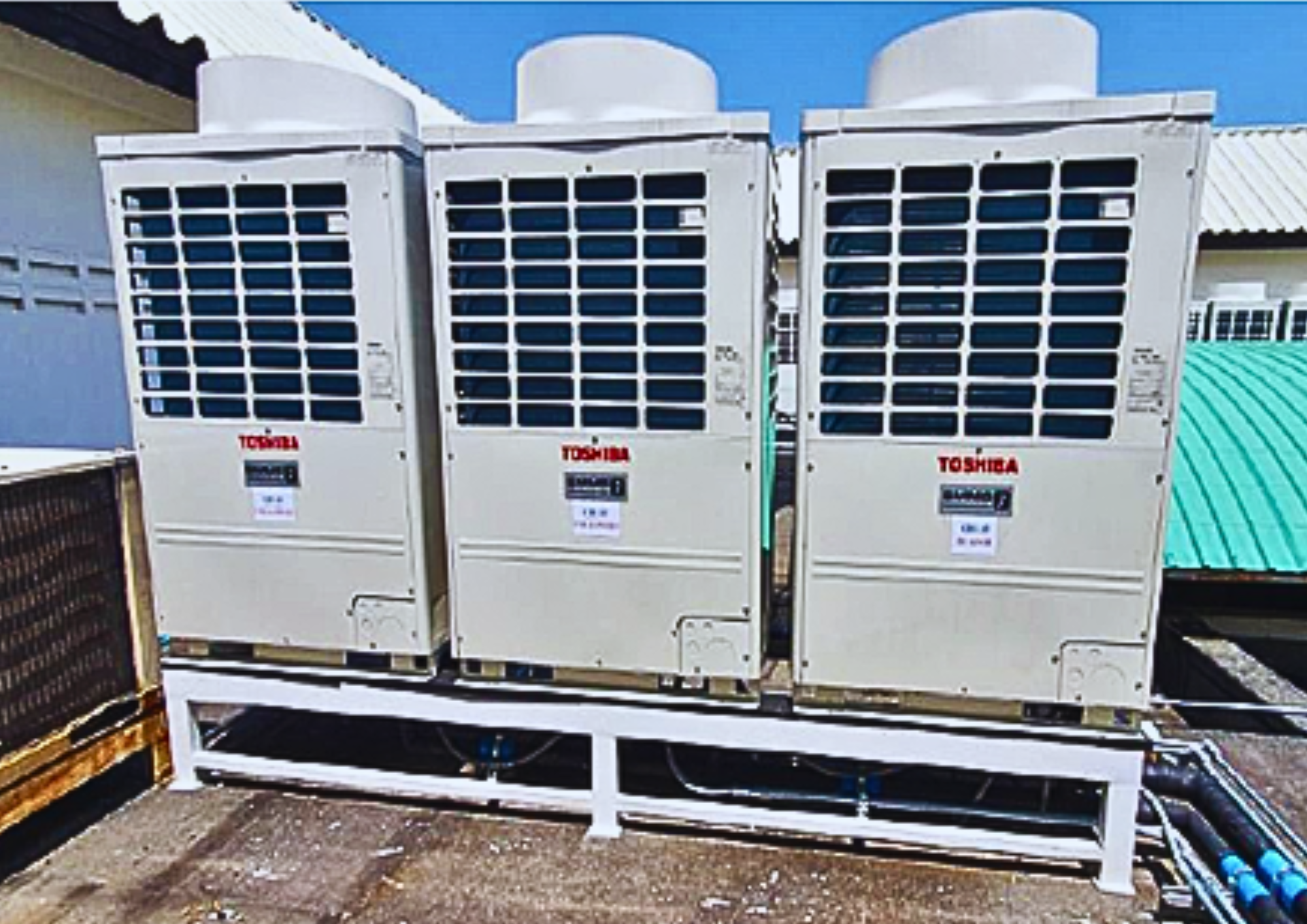
Office buildings were equipped with Inverter Mini-Split Systems, allowing for individual temperature control through a modular system, thereby optimizing both comfort and efficiency. These units were awarded the Energy Efficiency Label No. 5, the highest national standard for energy conservation, certified by the Electricity Generating Authority of Thailand (EGAT) and the Ministry of Energy. Furthermore, the deployment of Variable Refrigerant Volume (VRV) and Variable Refrigerant Flow (VRF) systems enabled precise temperature regulation, enhancing indoor thermal comfort while reducing electricity consumption by up to 40% compared to conventional systems.
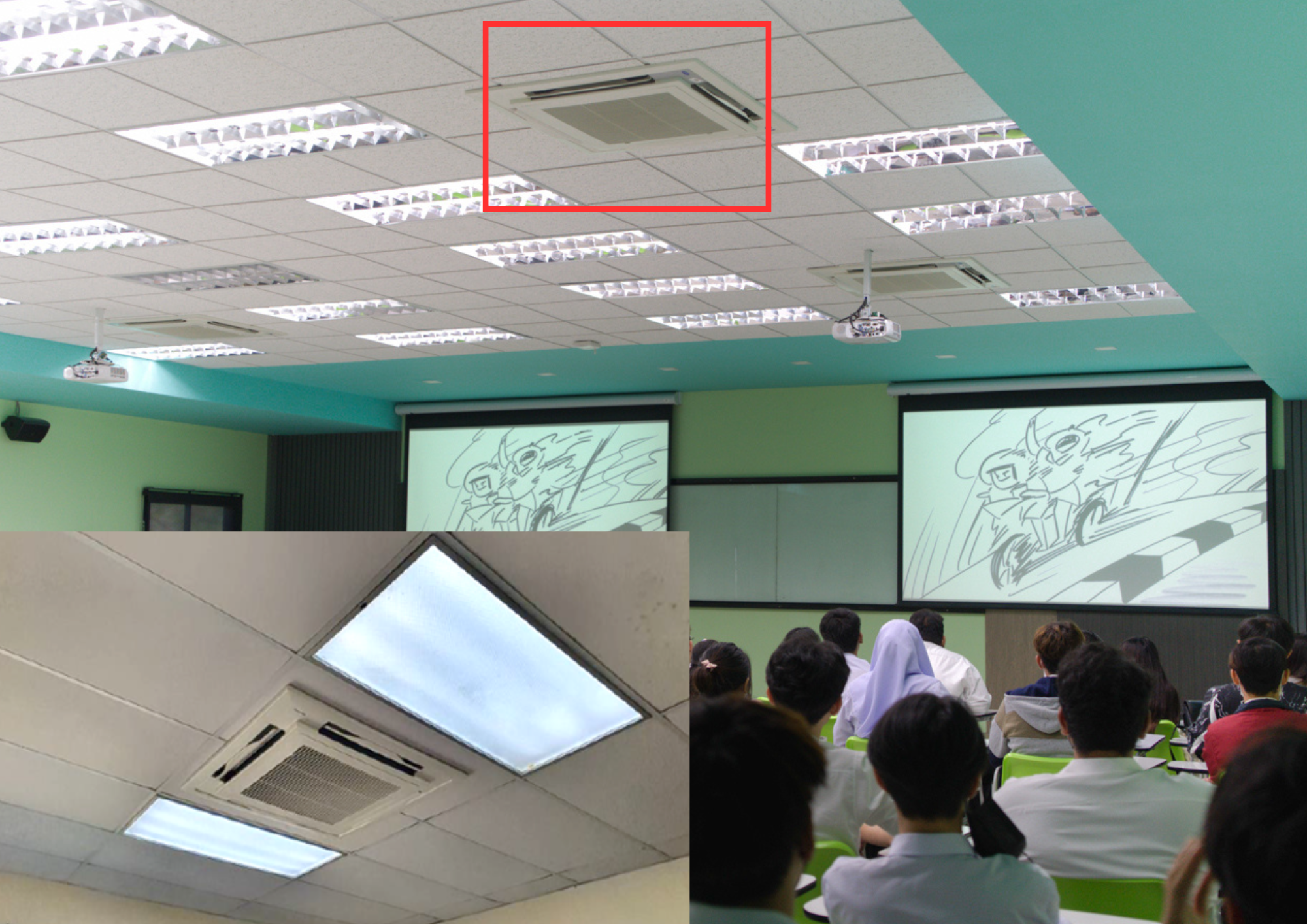
To further strengthen energy performance, the university introduced ceiling–mounted air conditioning diffusers integrated with inverter–driven systems, which optimize airflow distribution and support intelligent environmental control. Additionally, automated control systems synchronized with class schedules, together with real–time temperature monitoring, were implemented to ensure optimal and sustainable energy management.
By the end of 2024, Walailak University had upgraded 3,820 out of 4,381 air conditioners to high–efficiency models, representing 87.19% of total units. In 2025, the initiative was completed with the full replacement of 8,206 high–efficiency air conditioners, thereby reaching 100% coverage across the campus. This achievement stands as a tangible demonstration of the university’s commitment to advancing energy efficiency and represents a significant milestone in its pursuit of long–term sustainability.
Energy-Efficient Appliances at Walailak University
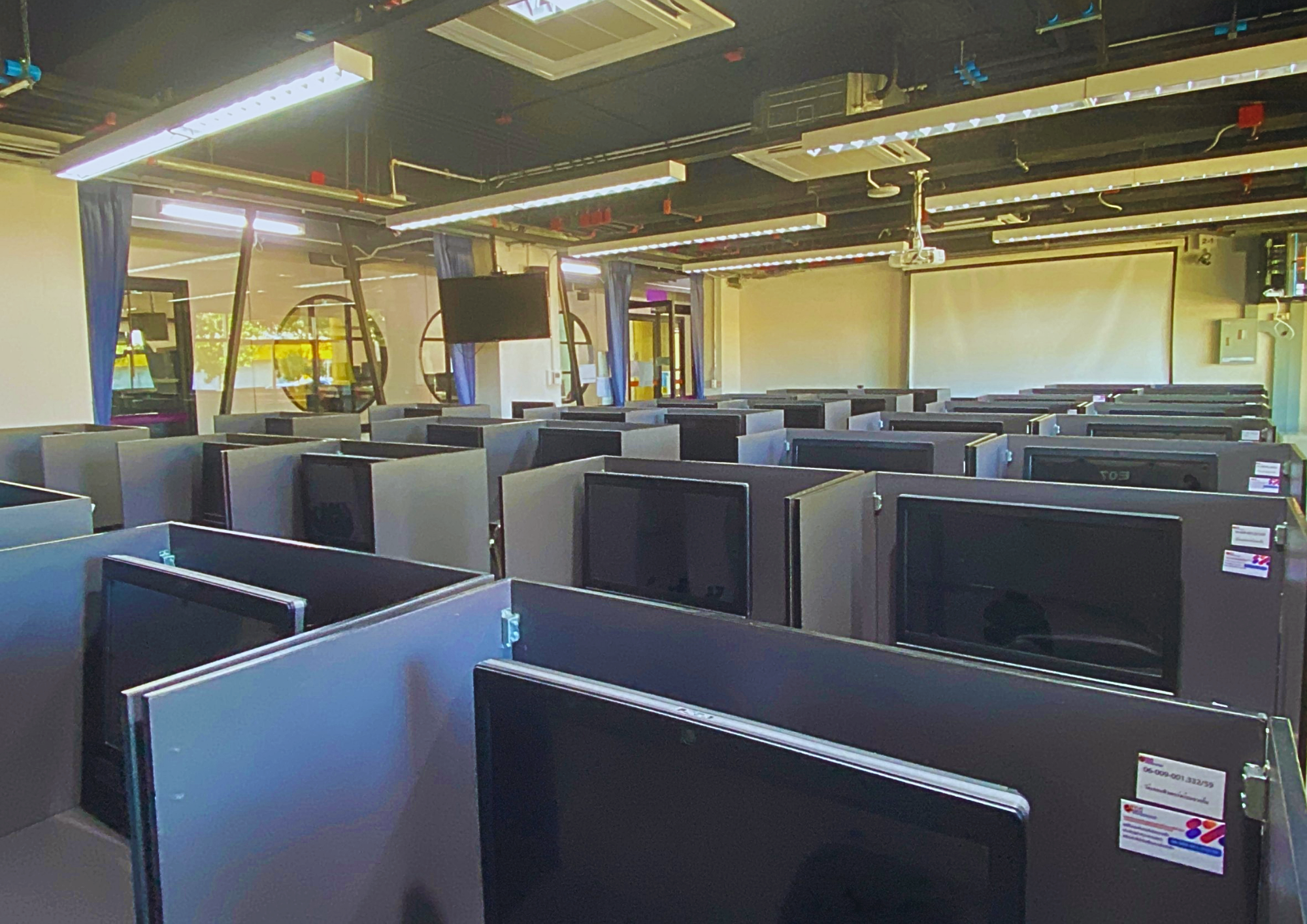
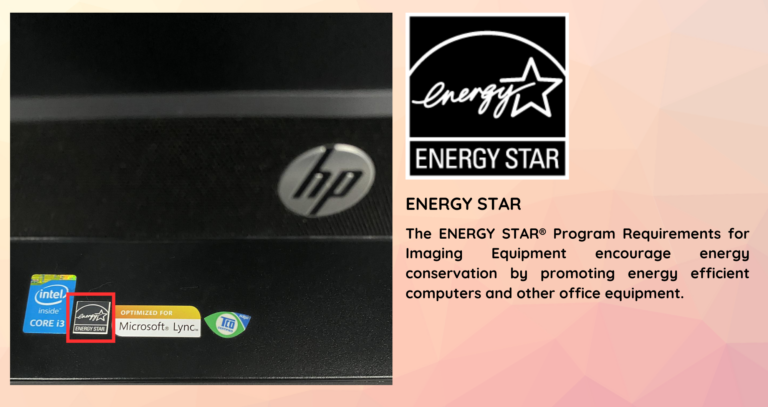
All computers at Walailak University are certified with the Energy Star label, reflecting compliance with international standards of energy efficiency and sustainability. This certification signifies energy savings of approximately 20–30% compared to conventional computers, thereby reducing both electricity consumption and associated greenhouse gas emissions.
In 2024, the university deployed 2,450 energy–efficient computers across its academic and administrative units. In 2025, an additional 312 Energy Star–certified computers were installed, further strengthening the university’s commitment to sustainable IT infrastructure. By the end of 2025, the total number of energy–efficient computers on campus reached 3,019 units, achieving 100% adoption of energy–efficient computing.
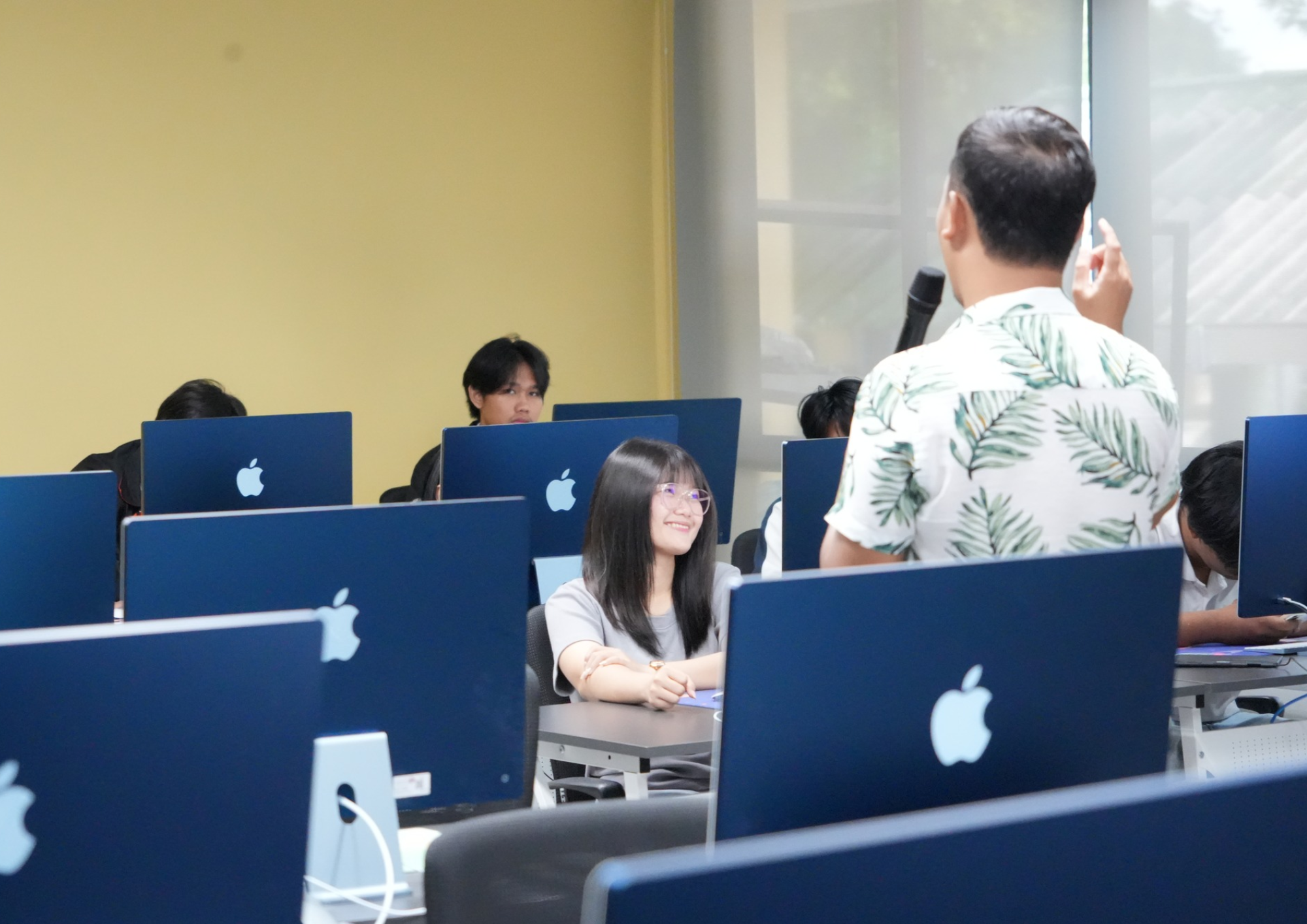
Furthermore, the transition extends beyond basic Energy Star compliance. Walailak University has embraced advanced computing technologies that incorporate international sustainability certifications, including the deployment of Apple PC displays with proven energy–saving performance. These efforts not only enhance operational efficiency but also reflect the university’s broader commitment to aligning with global best practices in green IT management and sustainable campus development.
Source of data : The center for Digital Technology
Summary: Energy-Efficient Appliances at Walailak University
By 2025, Walailak University will have achieved full energy efficiency across campus through three key initiatives:
- LED Lighting: All 95,679 bulbs were upgraded to LED, completing a 100% transition.
- Air Conditioning: All 8,206 units were replaced with high-efficiency Inverter, VRV, and VRF systems, equipped with smart controls, achieving 100% coverage.
- Computers: All 3,019 computers are Energy Star–certified, including advanced Apple PC displays, ensuring 100% energy-efficient IT infrastructure.
Through these initiatives, Walailak University has surpassed the >75% threshold of energy-efficient appliance usage. These efforts collectively demonstrate the university’s commitment to sustainability, energy conservation, and long-term operational efficiency.