Water recycling program implementation
Water recycling program implementation
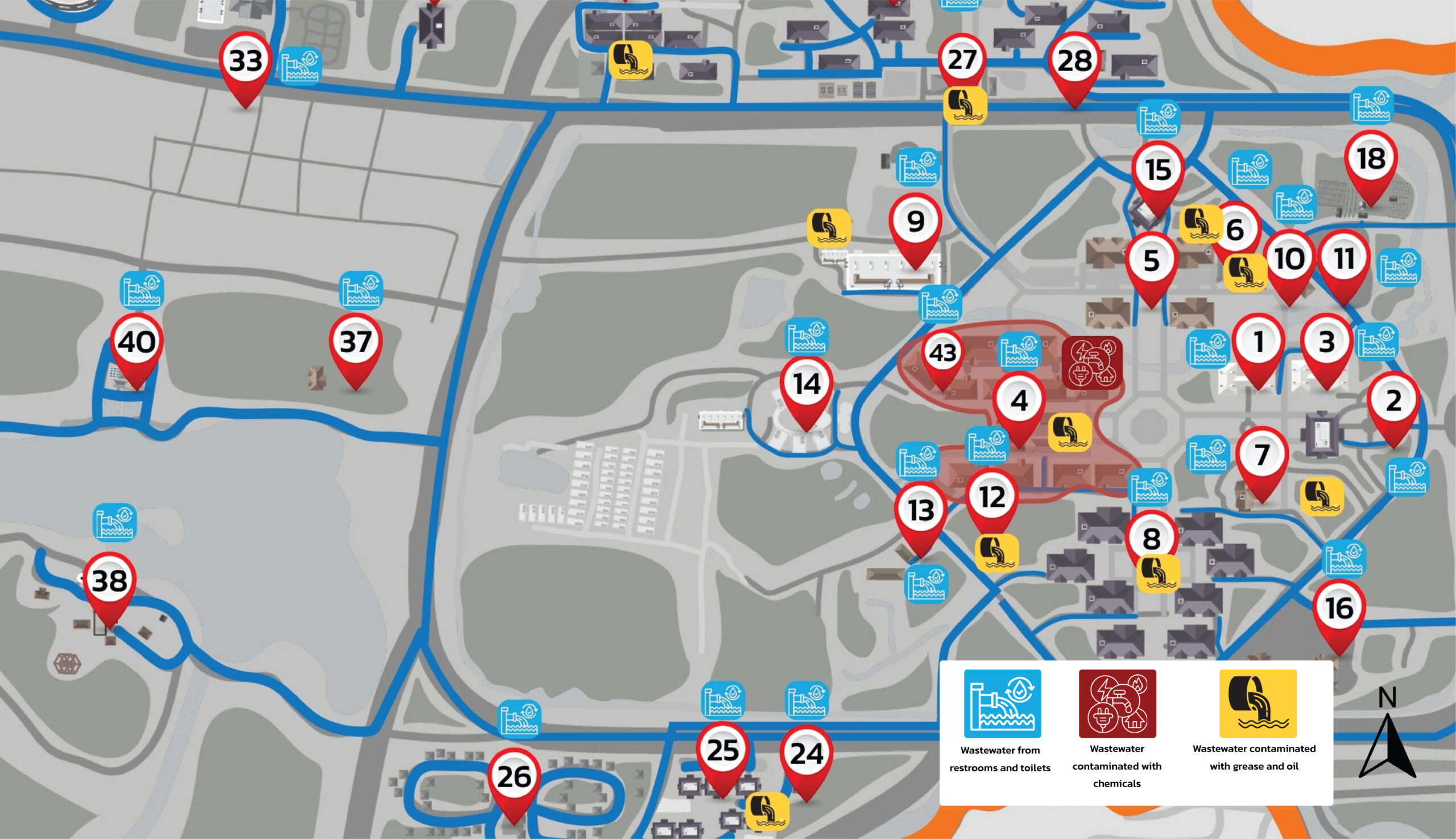
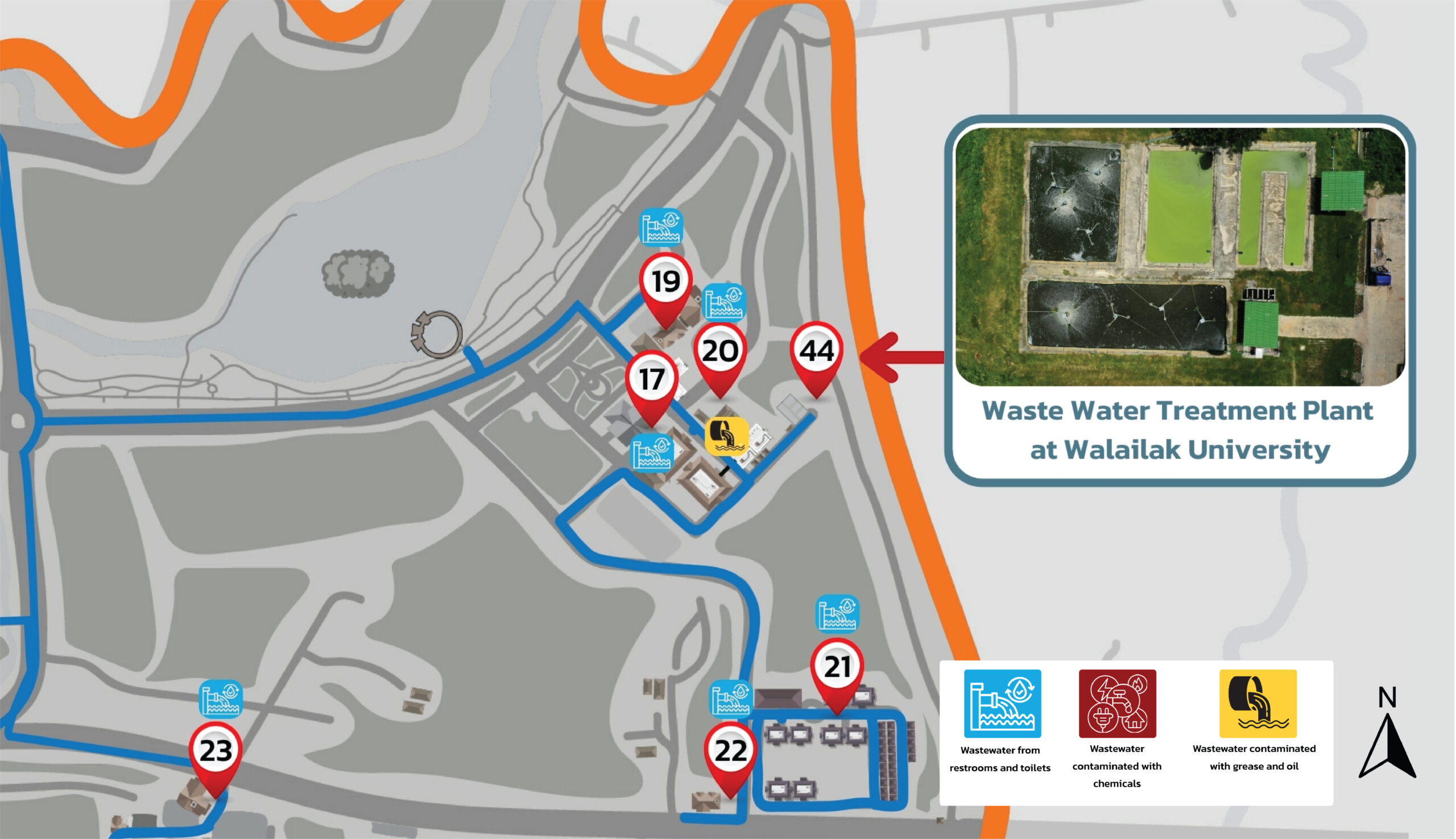
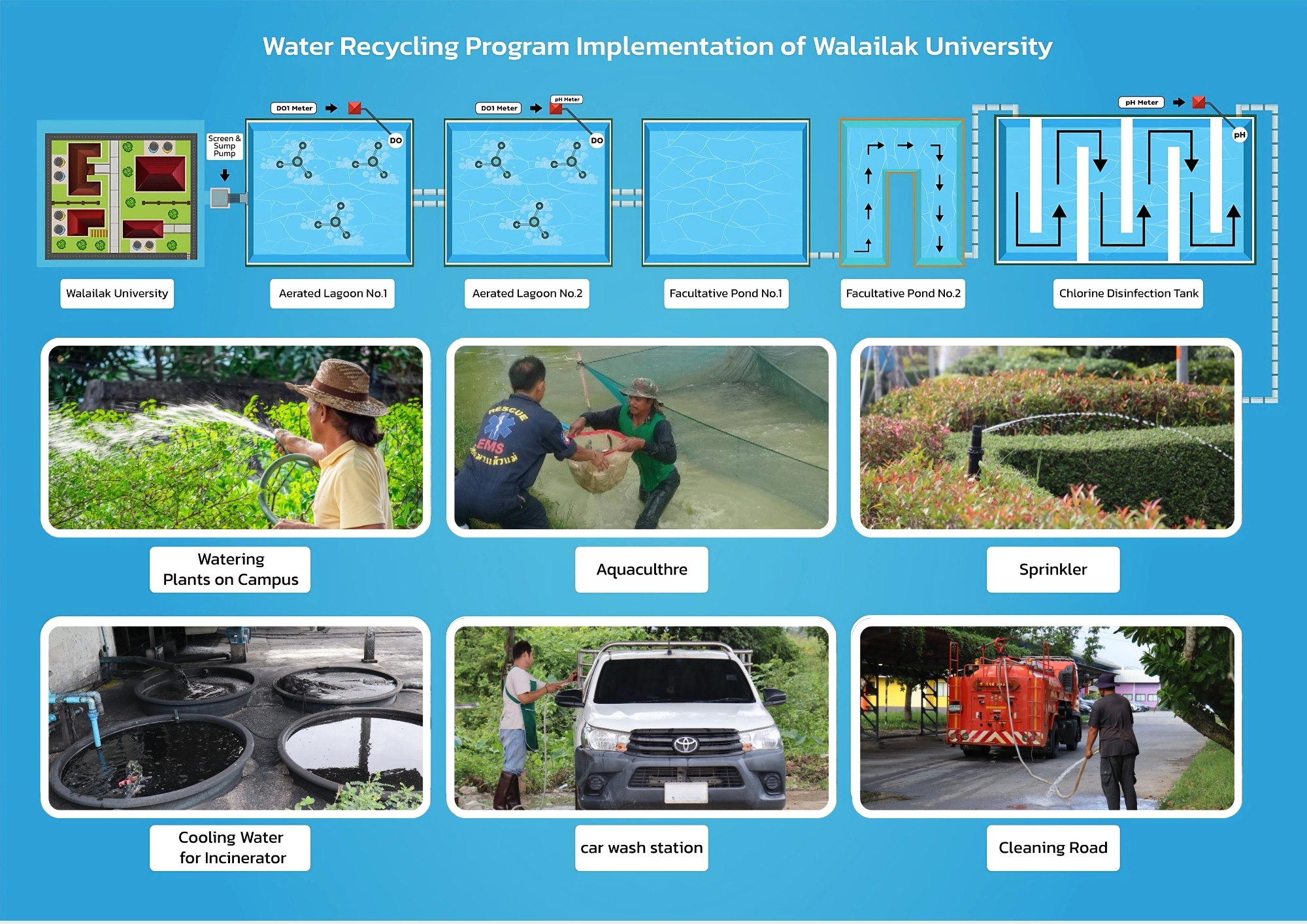
Walailak University has implemented a water recycling program to promote sustainable water use and achieve > 50% water recycled. In 2025, the university’s daily water consumption for domestic purposes was 960.37 cubic meters, of which 768.29 cubic meters per day (approximately 80% of total water use) entered the wastewater system. Approximately 729.88 cubic meters per day of treated water (reflecting a 5% loss during the treatment process) was reused in the following activities:
1. Watering Plants on Campus: Treated water is used for watering plants and ornamental trees throughout the campus to maintain greenery and reduce the use of new tap water. This activity helps promote a healthy campus ecosystem and supports a pleasant, shaded environment.
2. Aquaculture: Treated water, tested to meet quality standards, is used for aquaculture, such as Nile tilapia farming. The water quality is regularly monitored to ensure it is safe for aquatic life. This activity demonstrates efficient water resource utilization and supports sustainable food production.
3. Sprinkler Systems for Lawn Irrigation: Sprinkler systems are used to water lawns and open spaces around the university, utilizing treated water to reduce demand for tap water. The system operates efficiently and can adjust water levels according to weather conditions.
4. Cooling Water for the Incinerator: Treated water is used as cooling water in the waste incinerator system to help control temperature and enhance operational efficiency. This reduces the use of freshwater and supports a sustainable waste management system.
5. Car Wash Station: Car wash stations operated by university units use only treated water to conserve water and promote the reuse of recycled resources. This activity also fosters awareness among staff and students about responsible water use.
6. Cleaning Roads and Outdoor Facilities: Treated water is used for cleaning roads, walkways, and outdoor areas on campus, helping to maintain cleanliness and order without relying on new freshwater. This contributes to more sustainable and efficient water management within the university.