Inorganic Waste Treatment
Inorganic Waste Treatment
Inorganic waste Generation in University
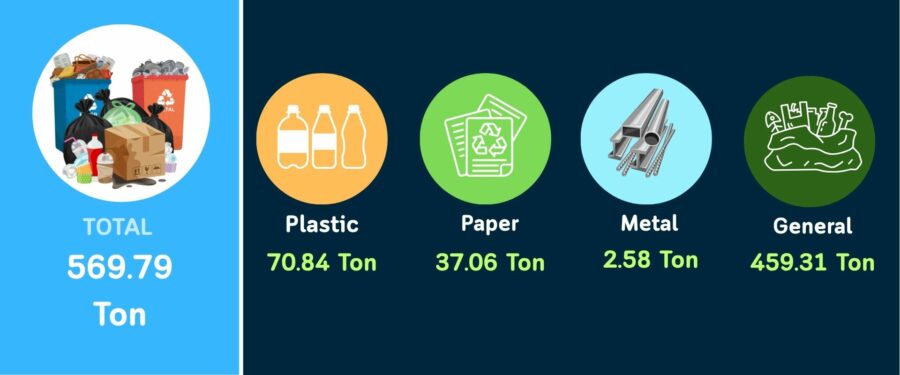
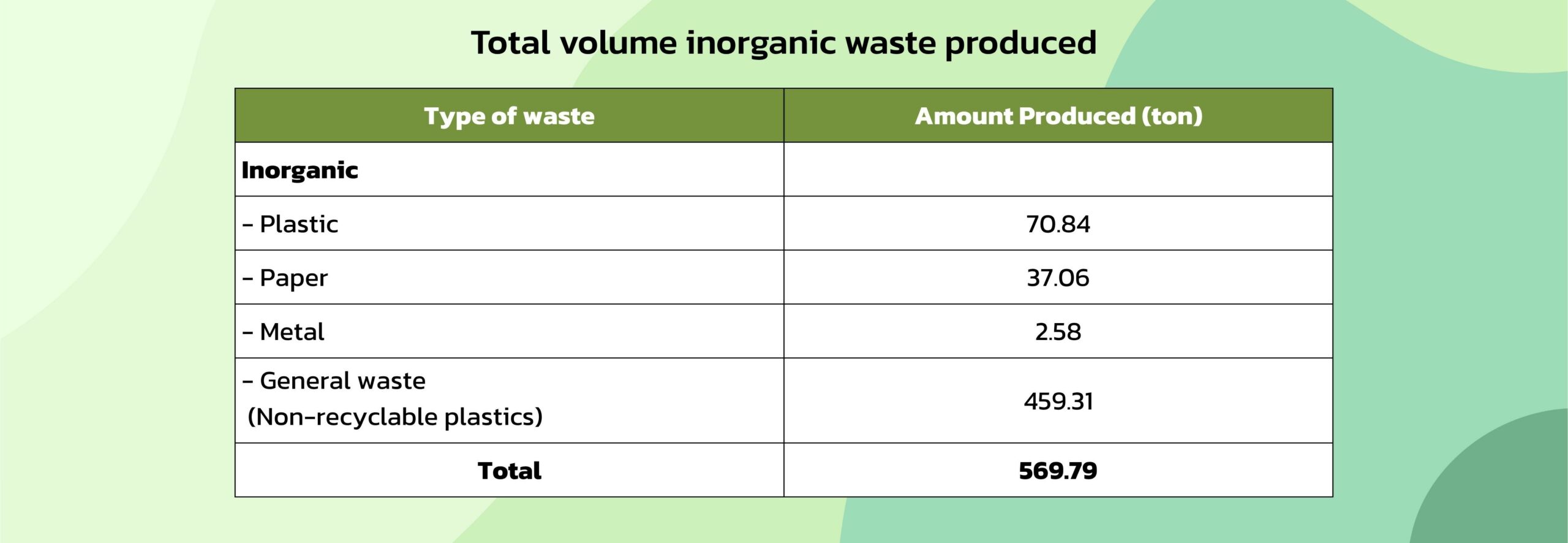
Figure 1 Total volume inorganic waste produced 569.79 ton per year
Walailak University places great emphasis on systematic inorganic waste management to align with the sustainability criteria of the UI GreenMetric World University Ranking. In the most recent year, the university generated a total of 584.35 tons of inorganic waste per year, which can be categorized into four main groups: paper, plastic, metal, and general waste. This classification highlights the diverse sources of inorganic waste across the campus.
- Paper waste (discarded paper), totaling 37.06 tons, includes office paper, packaging materials, and other paper products. The relatively small amount indicates the university’s success in implementing paper reduction measures, such as transitioning to digital platforms and promoting electronic documentation.
- Plastic waste amounts to 70.84 tons, consisting of bottles, food packaging, and single-use plastics. The university encourages effective waste segregation to maximize recycling potential.
- Metal waste, totaling 2.58 tons, primarily originates from maintenance activities, construction projects, and discarded equipment. This waste stream is recognized as a valuable resource and is systematically directed toward recycling.
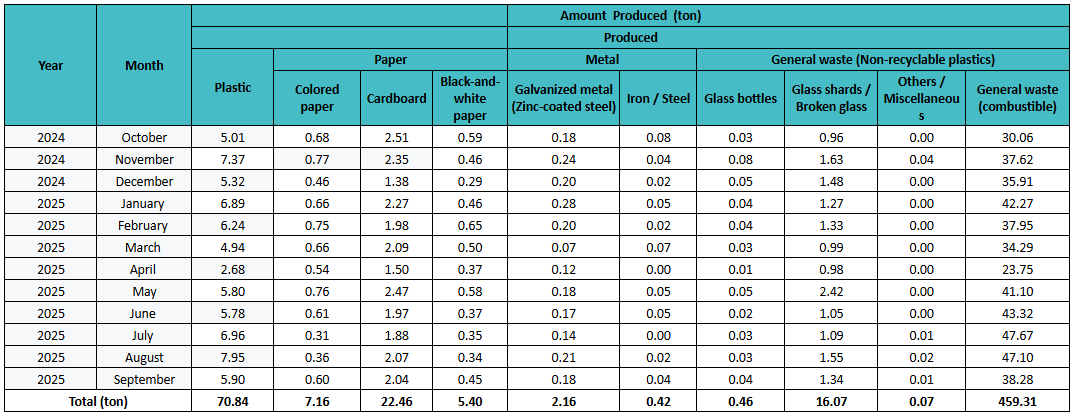
Figure 2 Monthly categorization of inorganic waste types.
- General waste(rubbish) represents the largest category, totaling 459.31 tons, and consists mainly of non-recyclable plastics and mixed waste. The university continues to develop strategies to minimize this category by reducing the use of non–recyclable materials and promoting environmentally friendly alternatives.
Figure 3 Percentage of inorganic waste generation, classified by sources of origin within the university
Figure 4 Yearly categorization of inorganic waste, classified by sources of origin within the university
Through systematic classification and management of inorganic waste, Walailak University not only mitigates environmental impacts but also reinforces its commitment to achieving sustainability goals under the UI GreenMetric framework, thereby advancing its role as a truly Green University.
The method of organic waste treatment in university
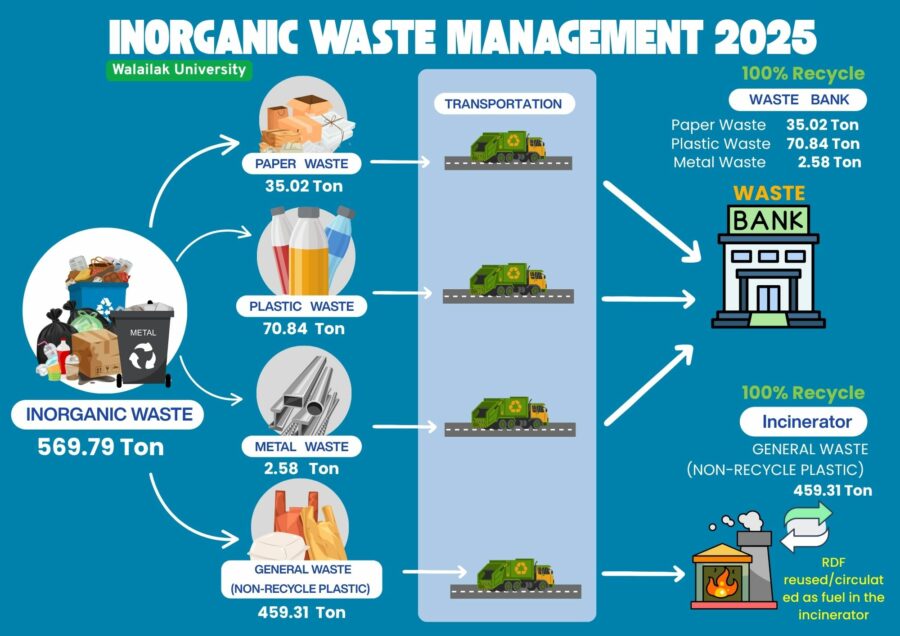
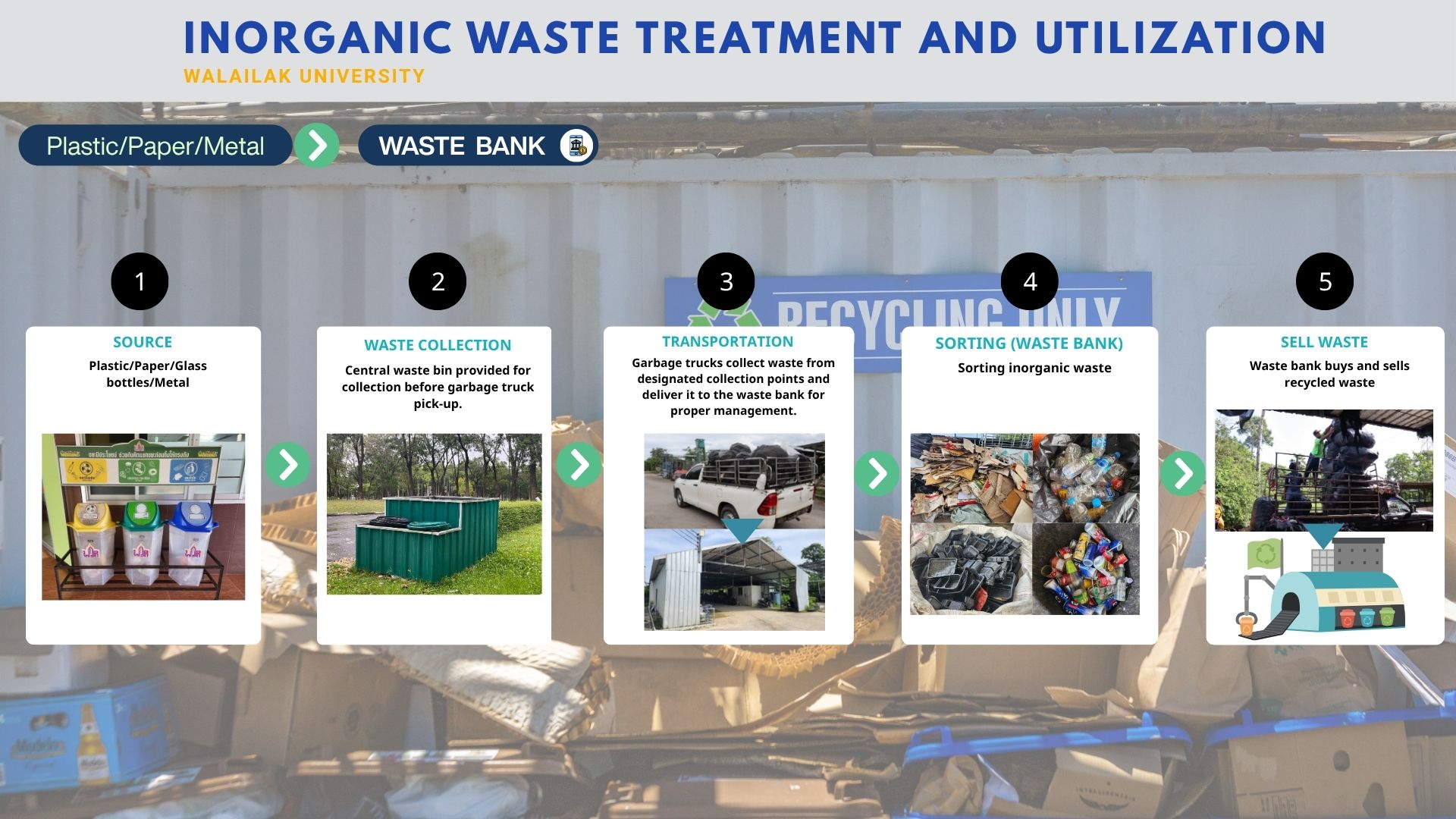
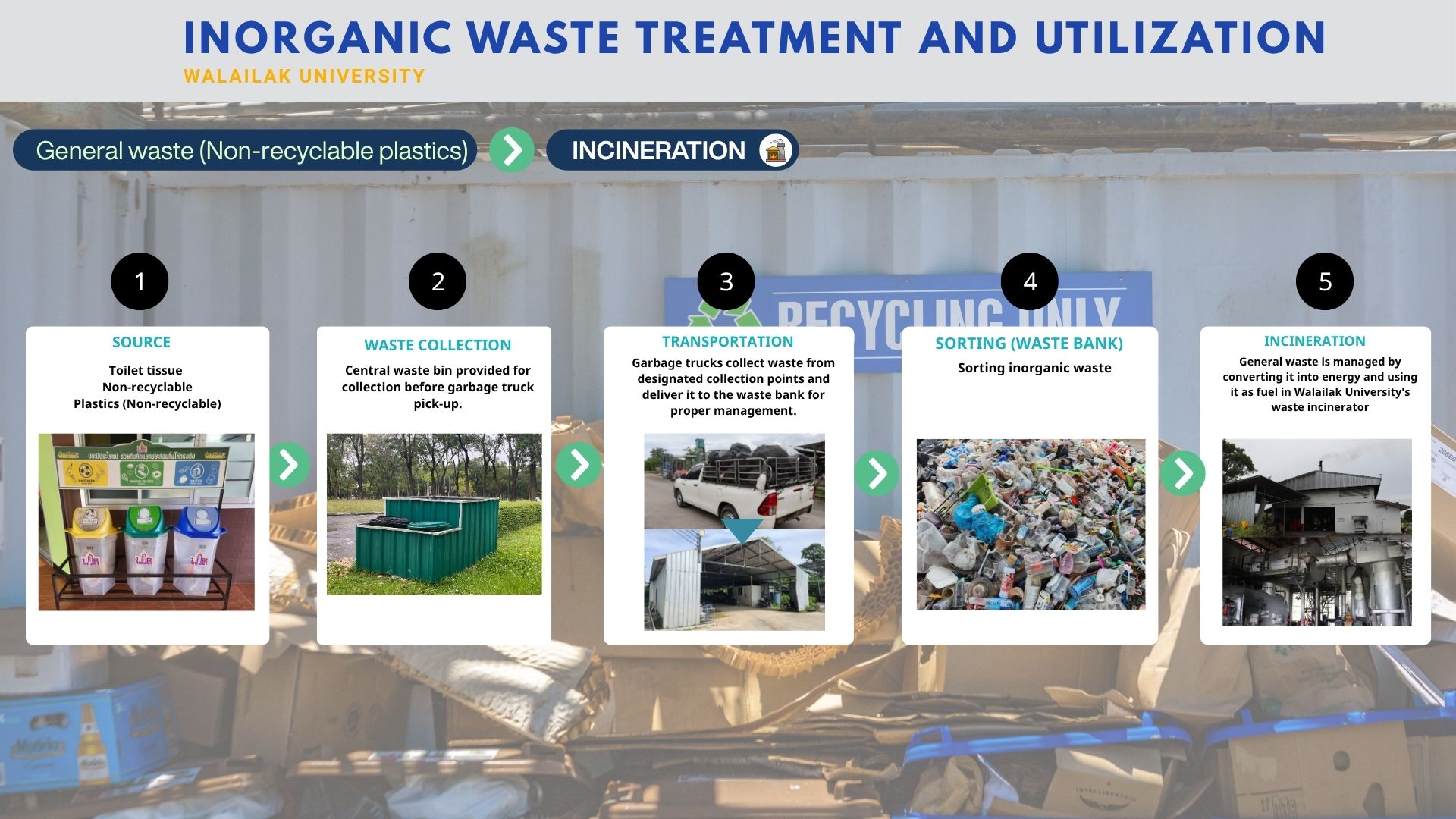
Figure 5 The university has established a comprehensive inorganic waste management process.
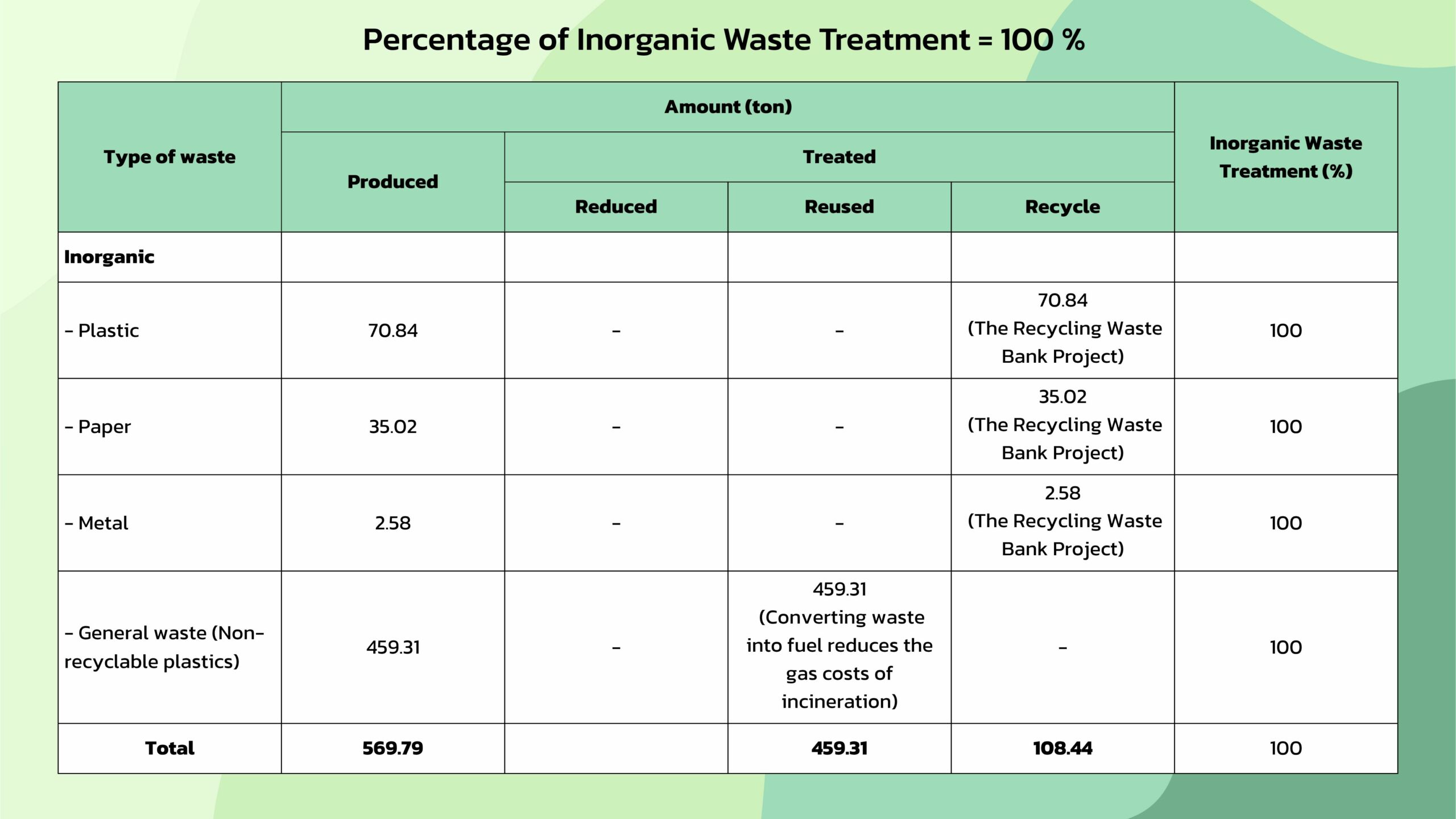
Figure 6 Percentage of Organic Waste Treatment = 100 %
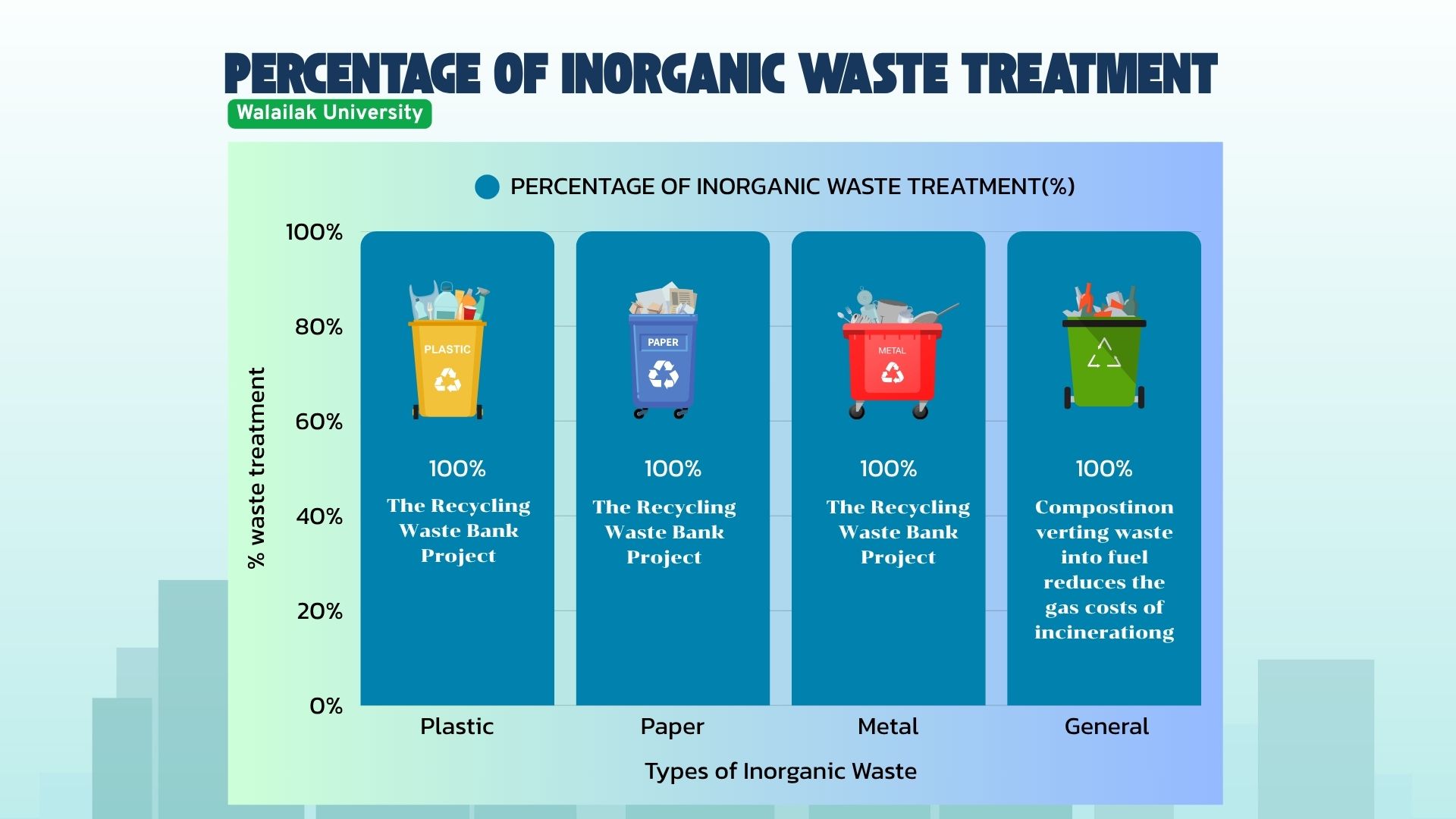
Figure 7 Percentage of Inorganic Waste Treatment = 100 %
On-Campus Inorganic Waste Separation
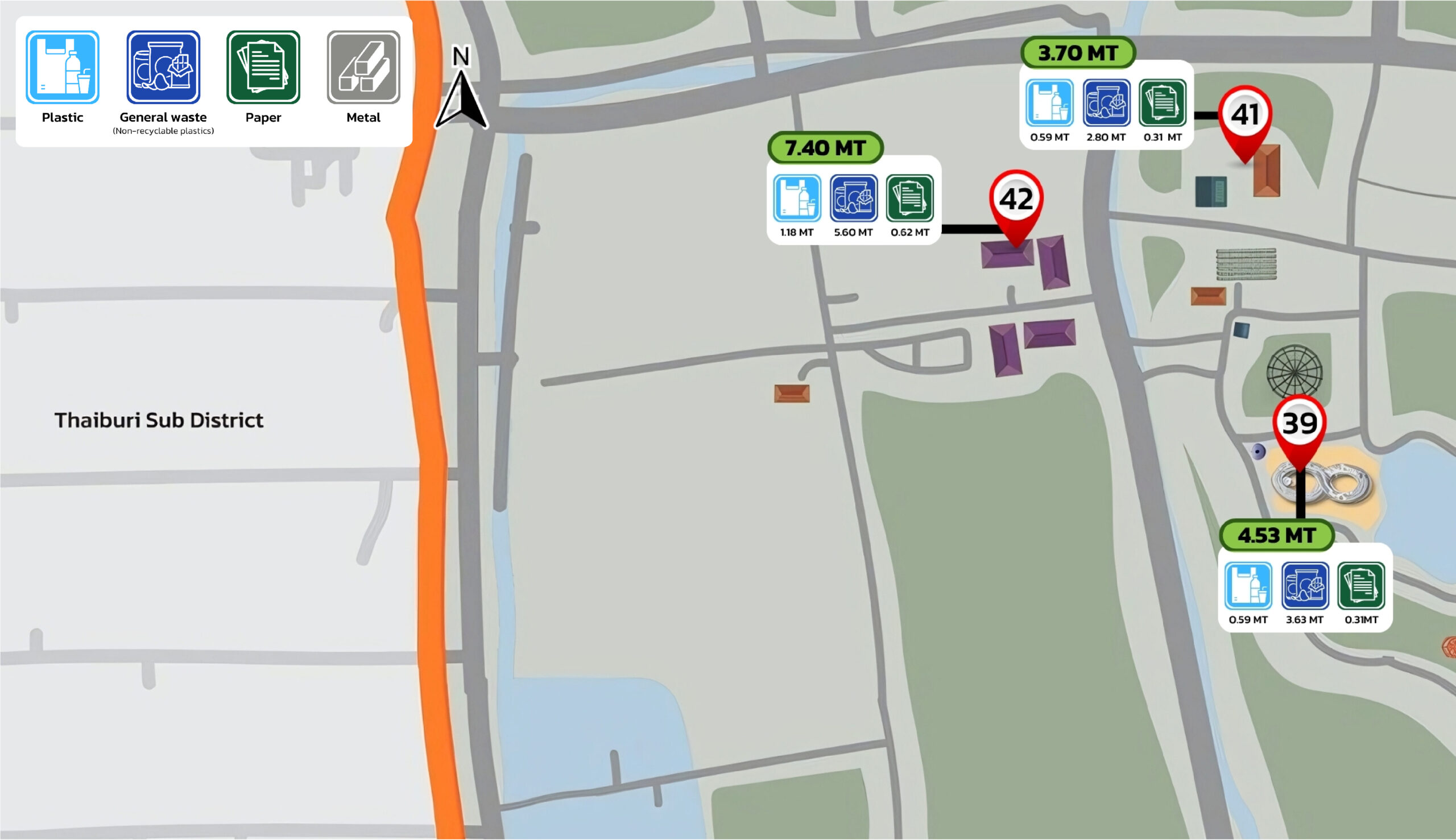
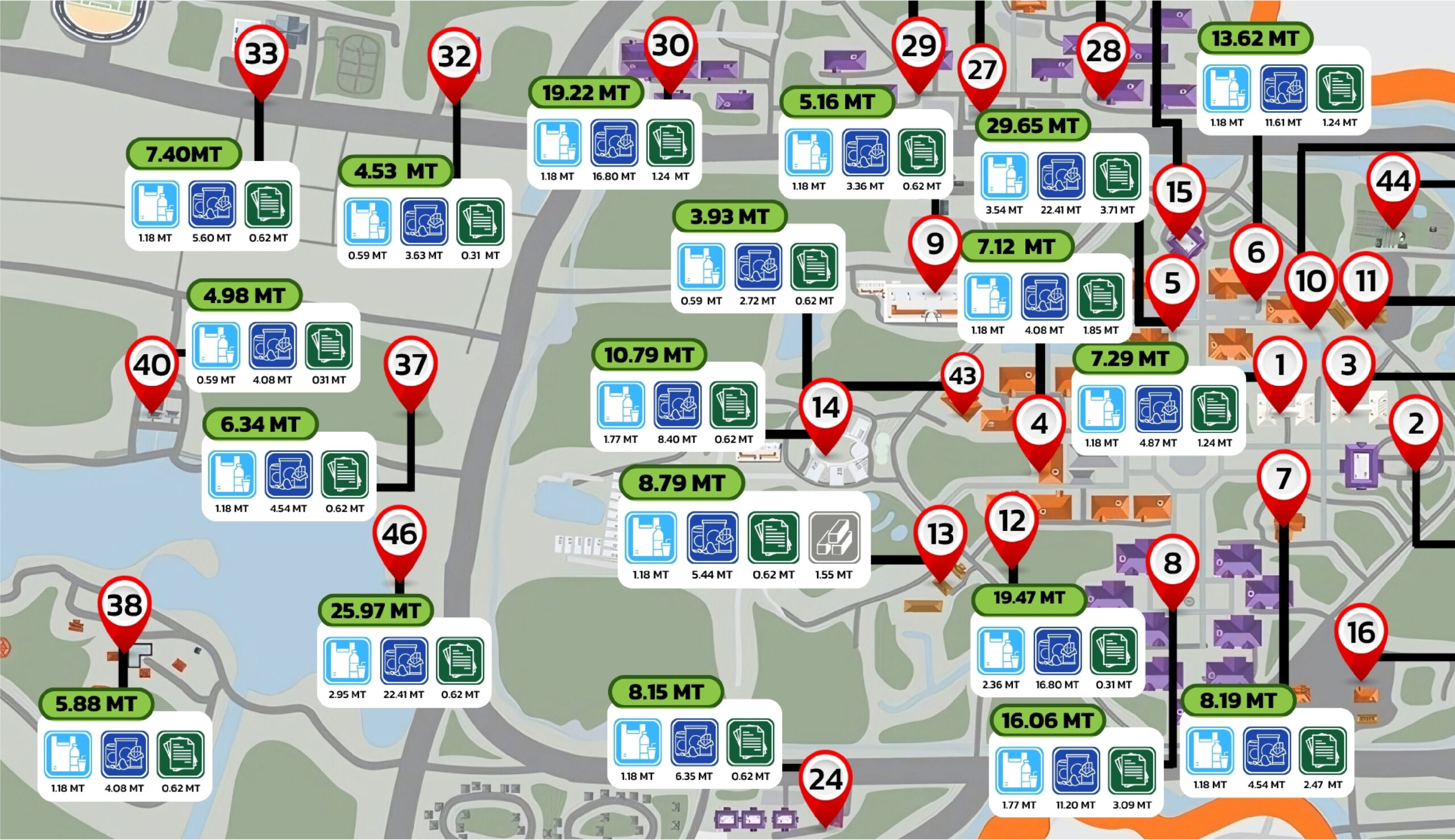
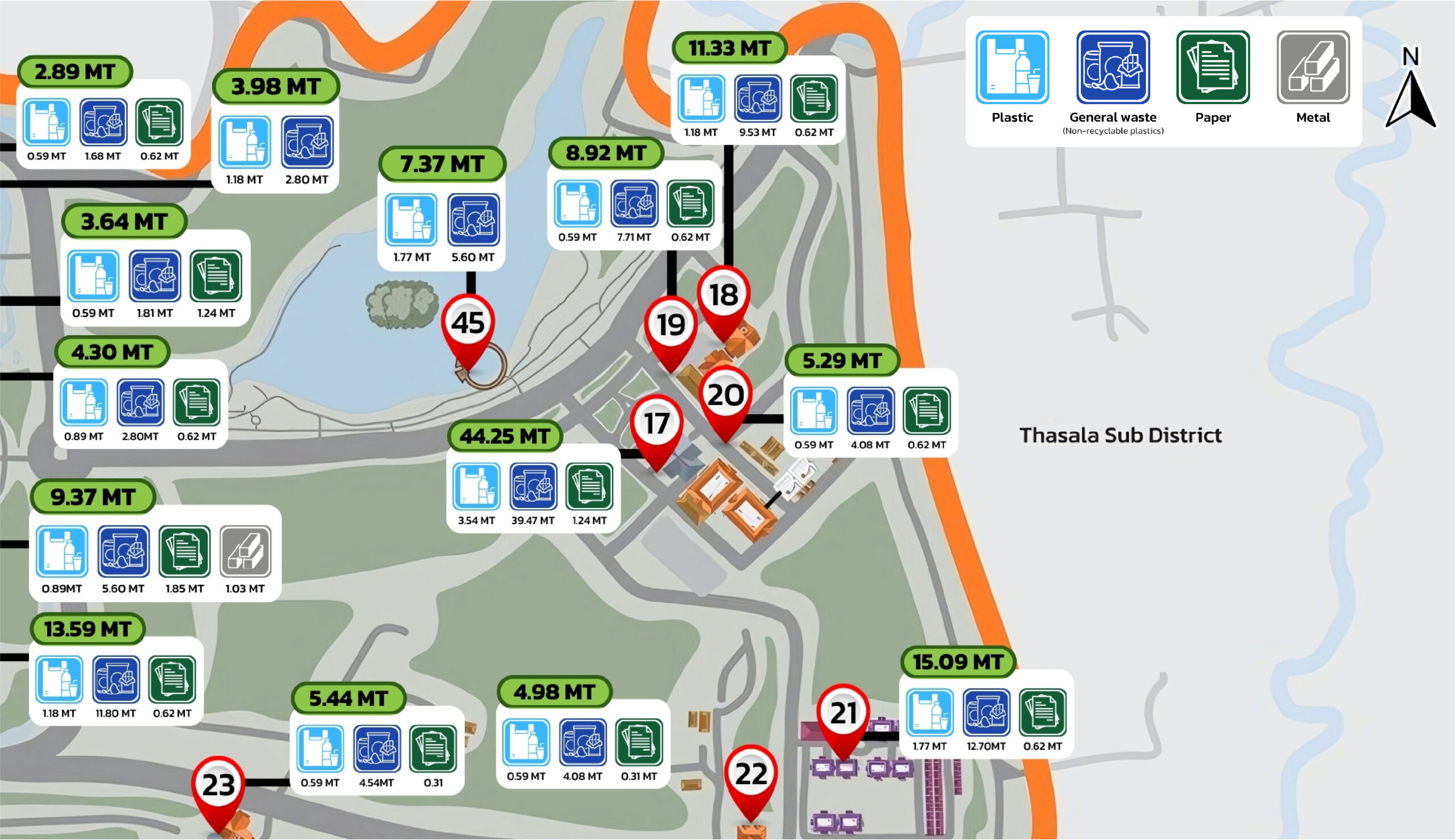
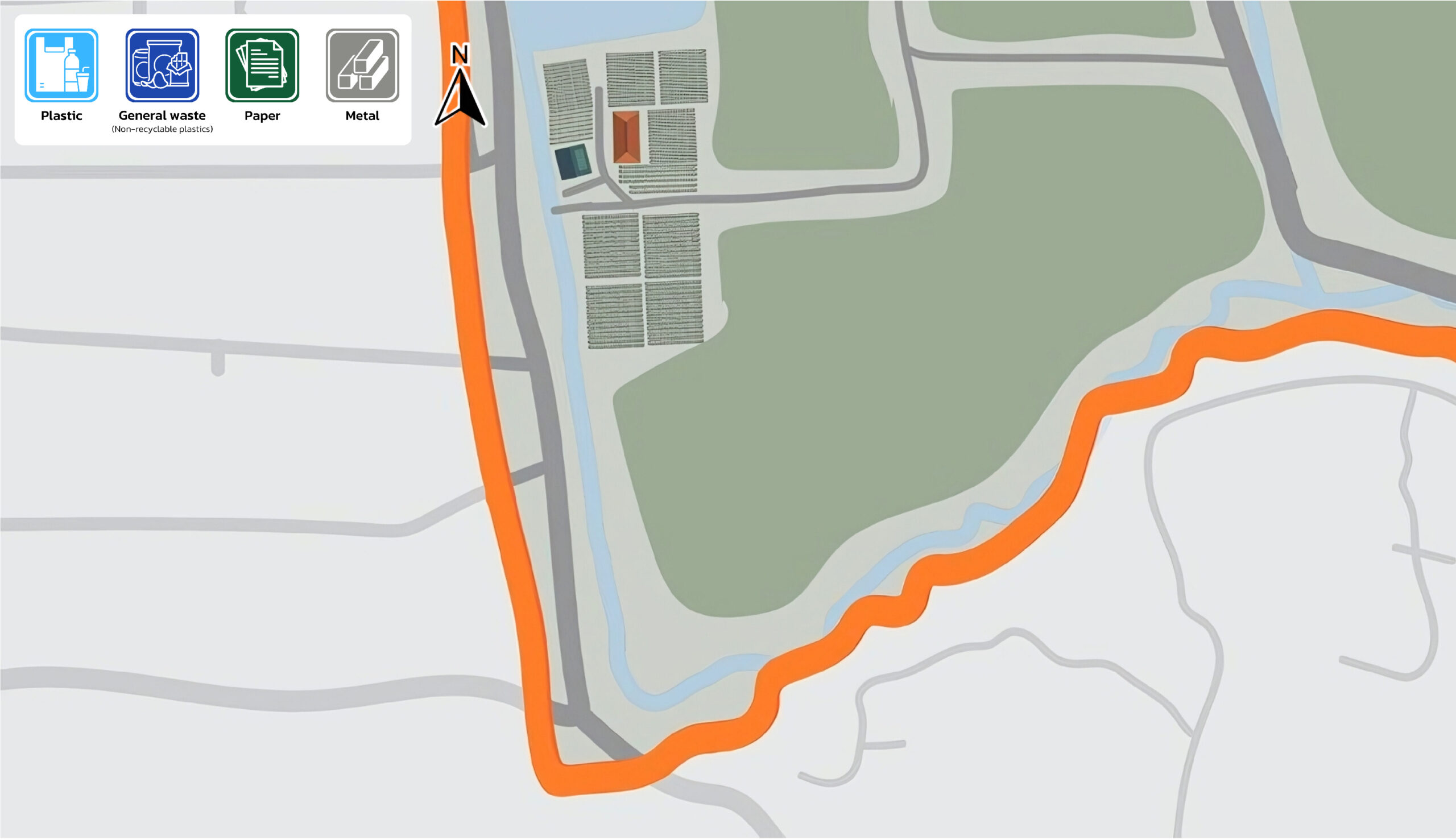
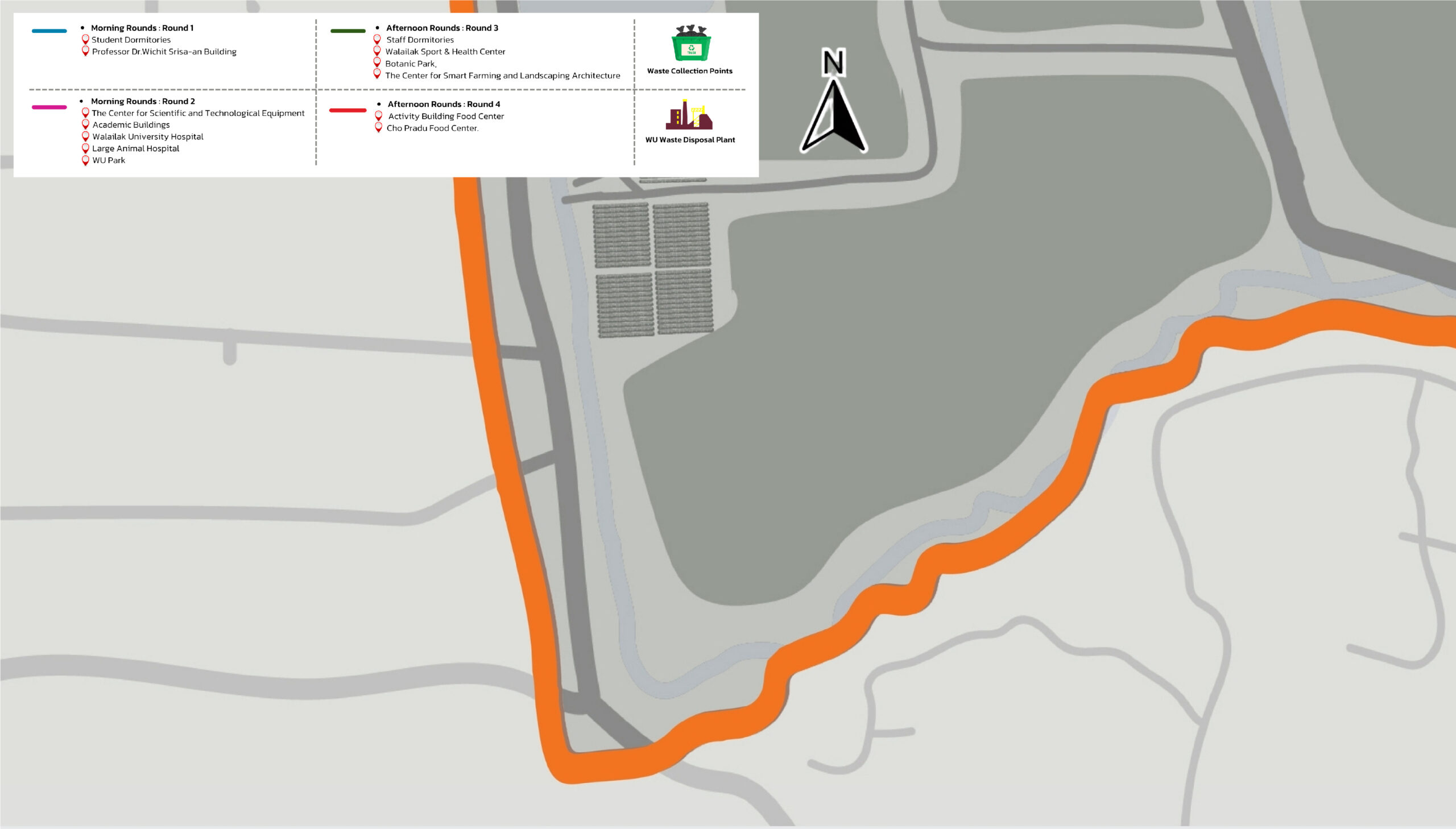
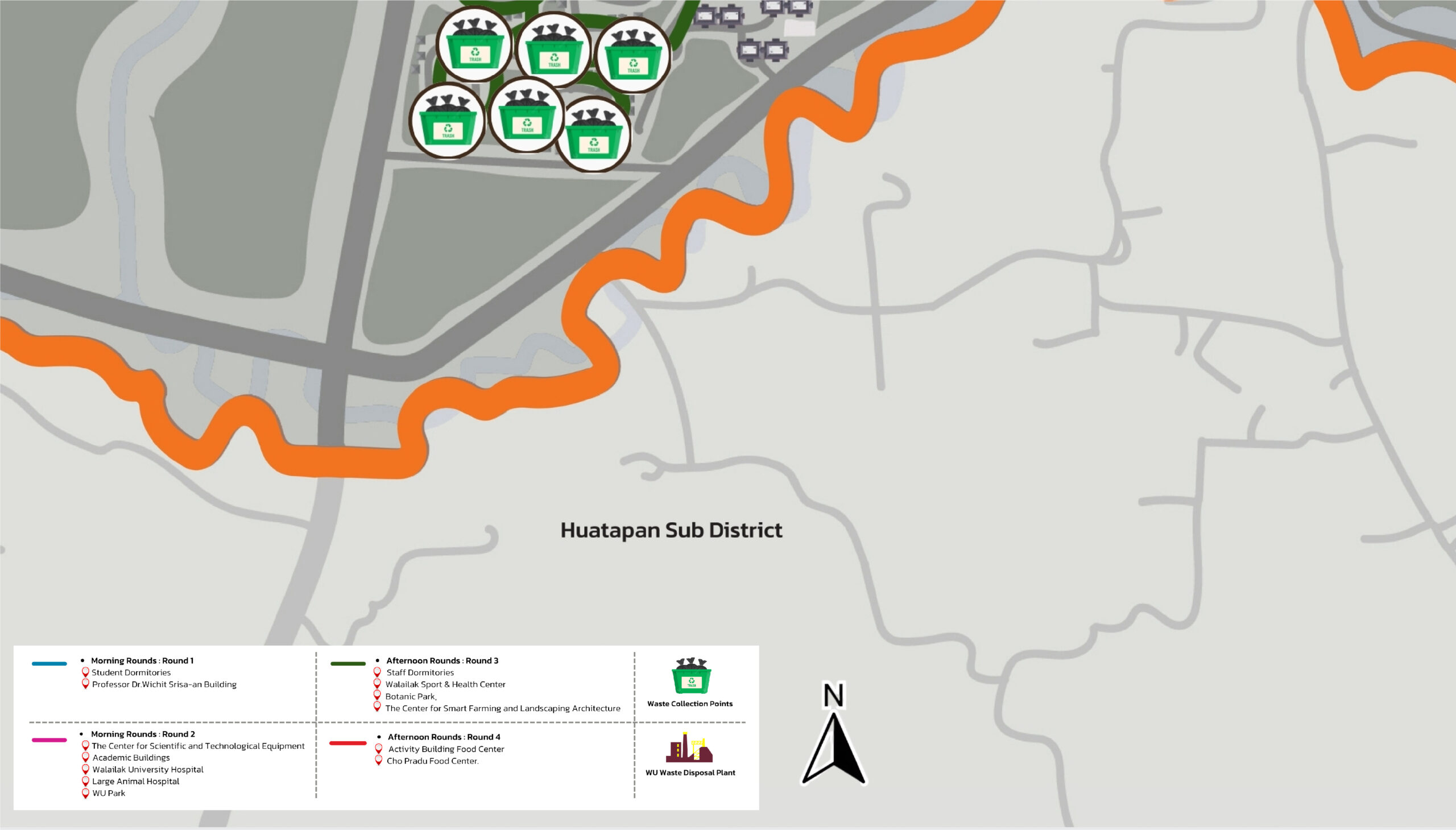
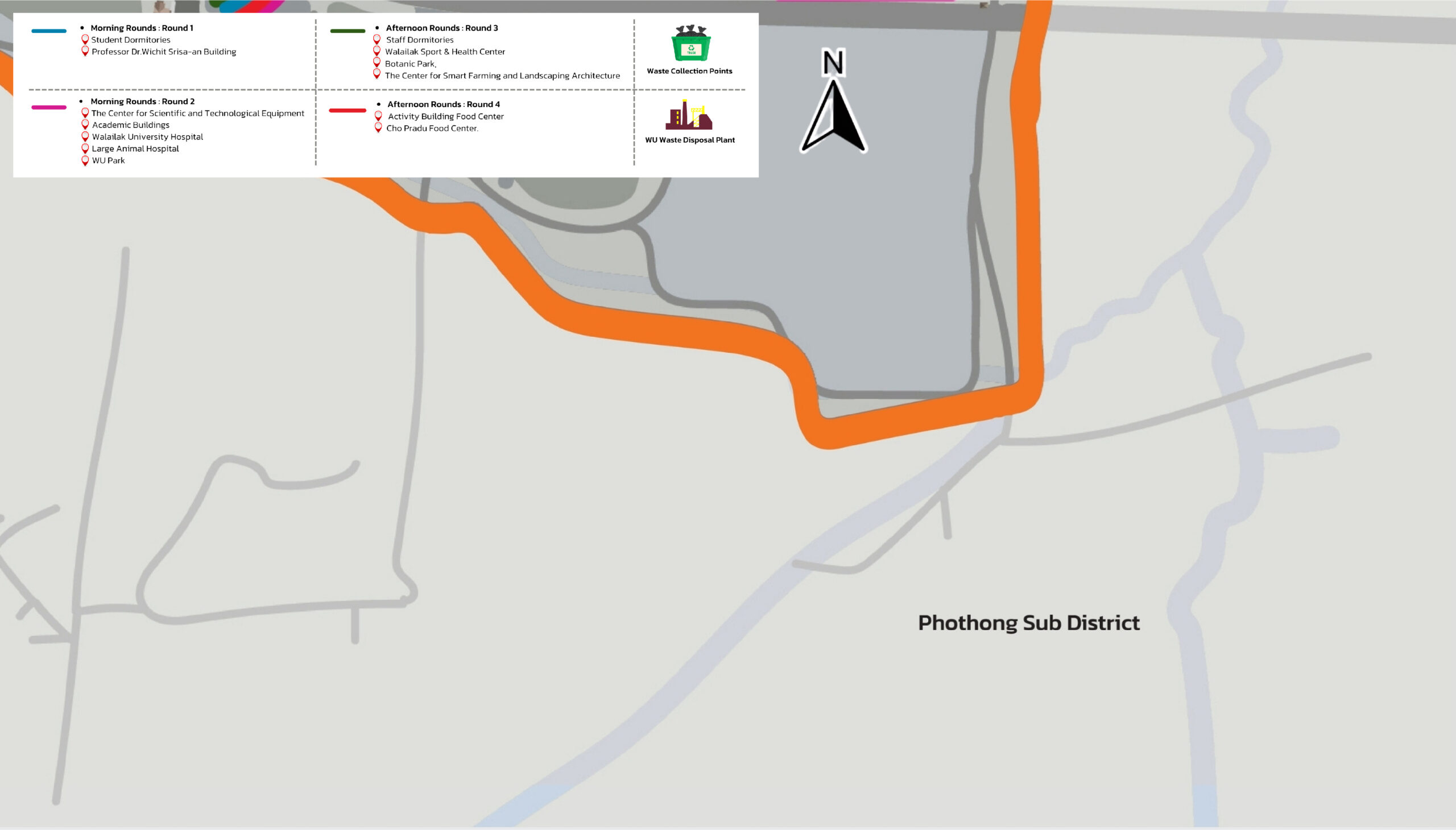
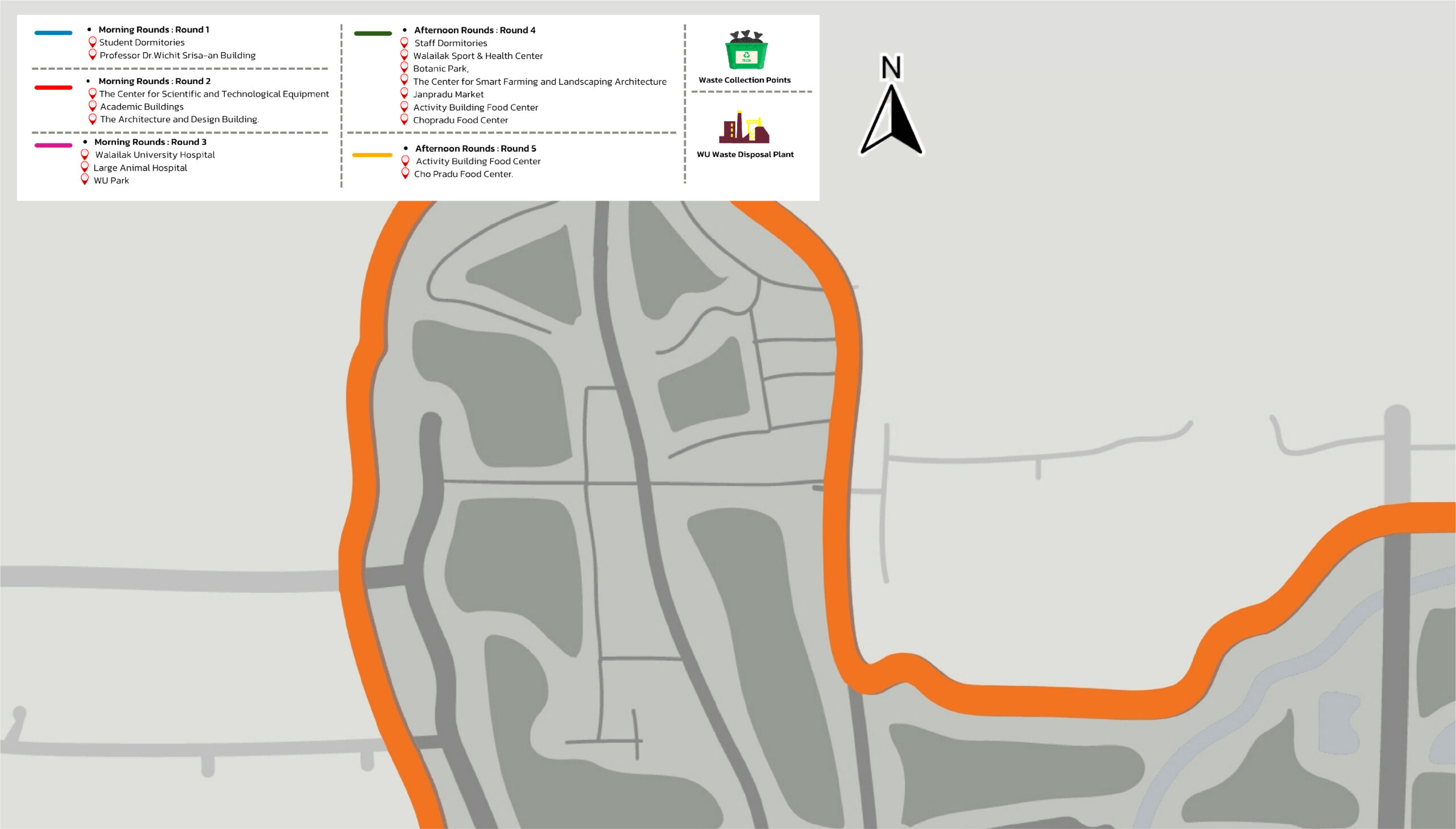
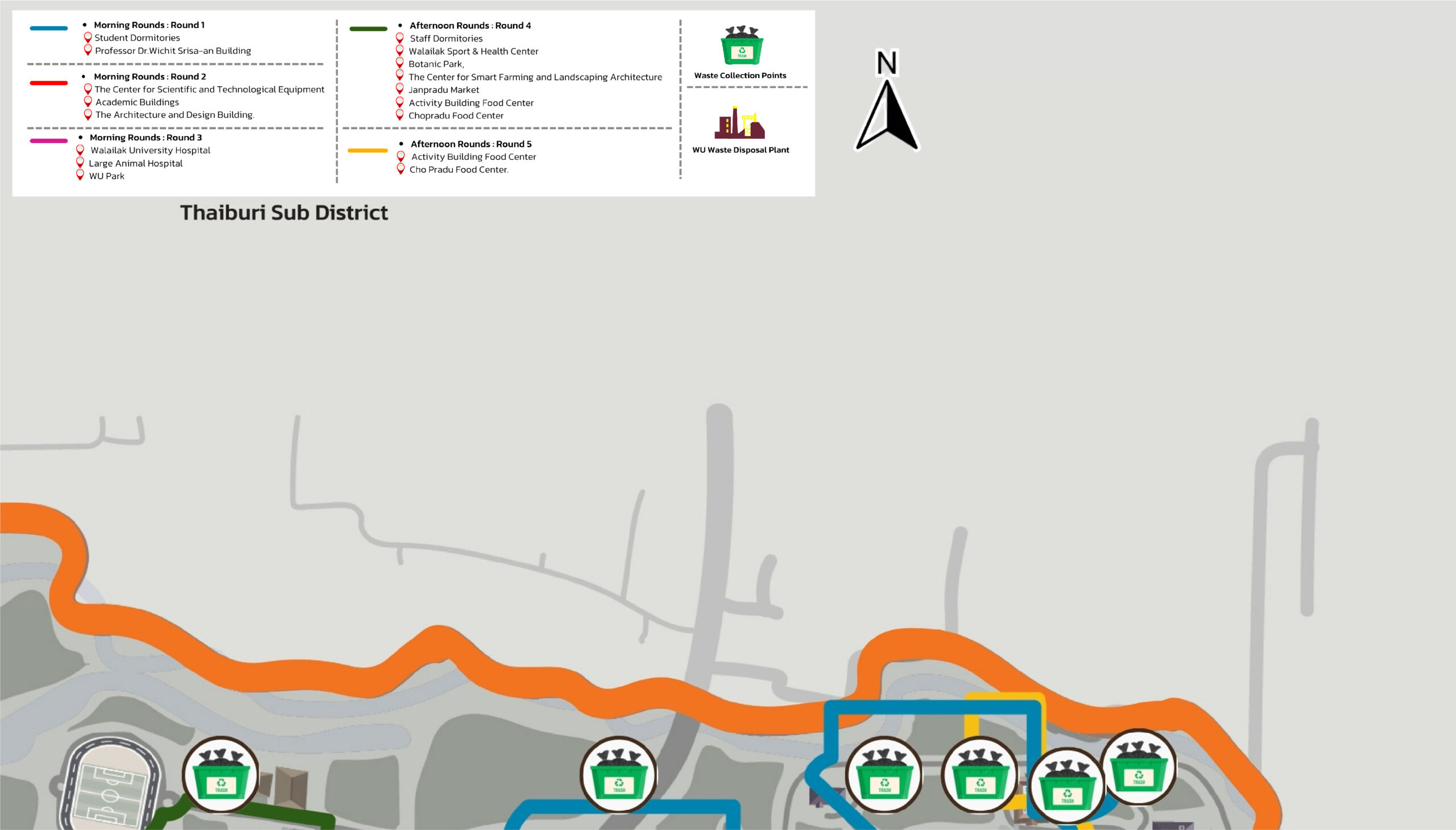
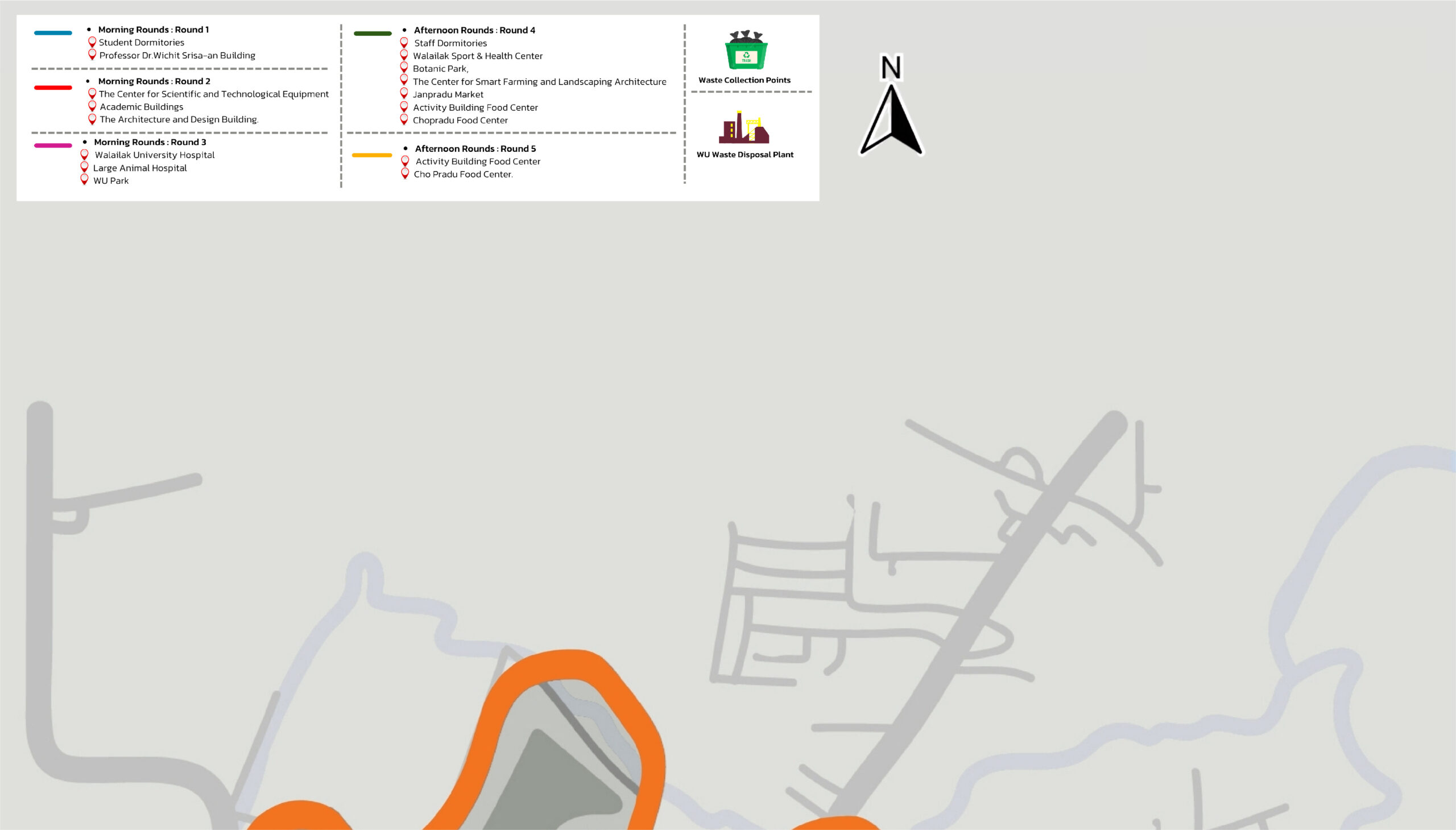
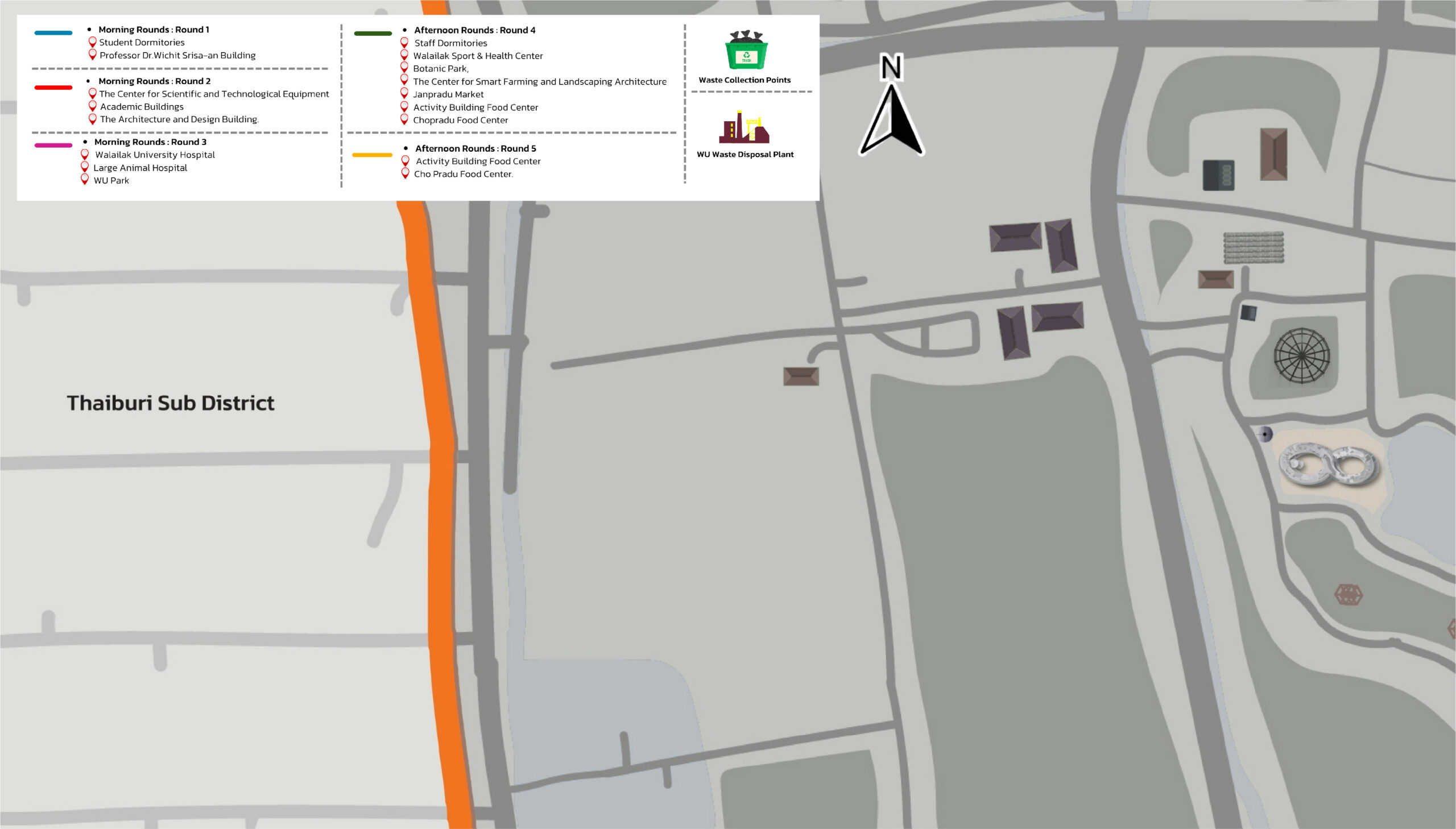
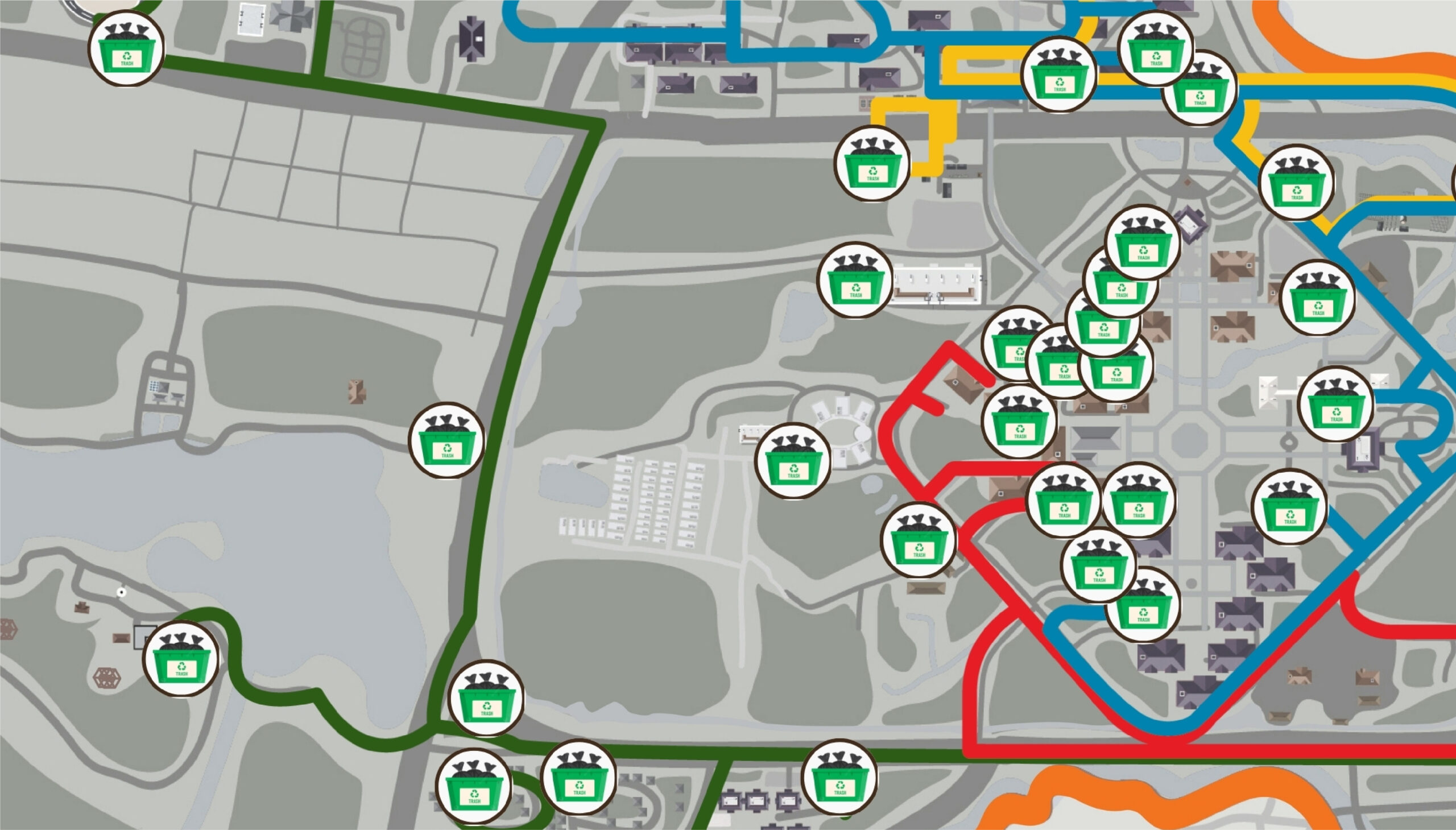
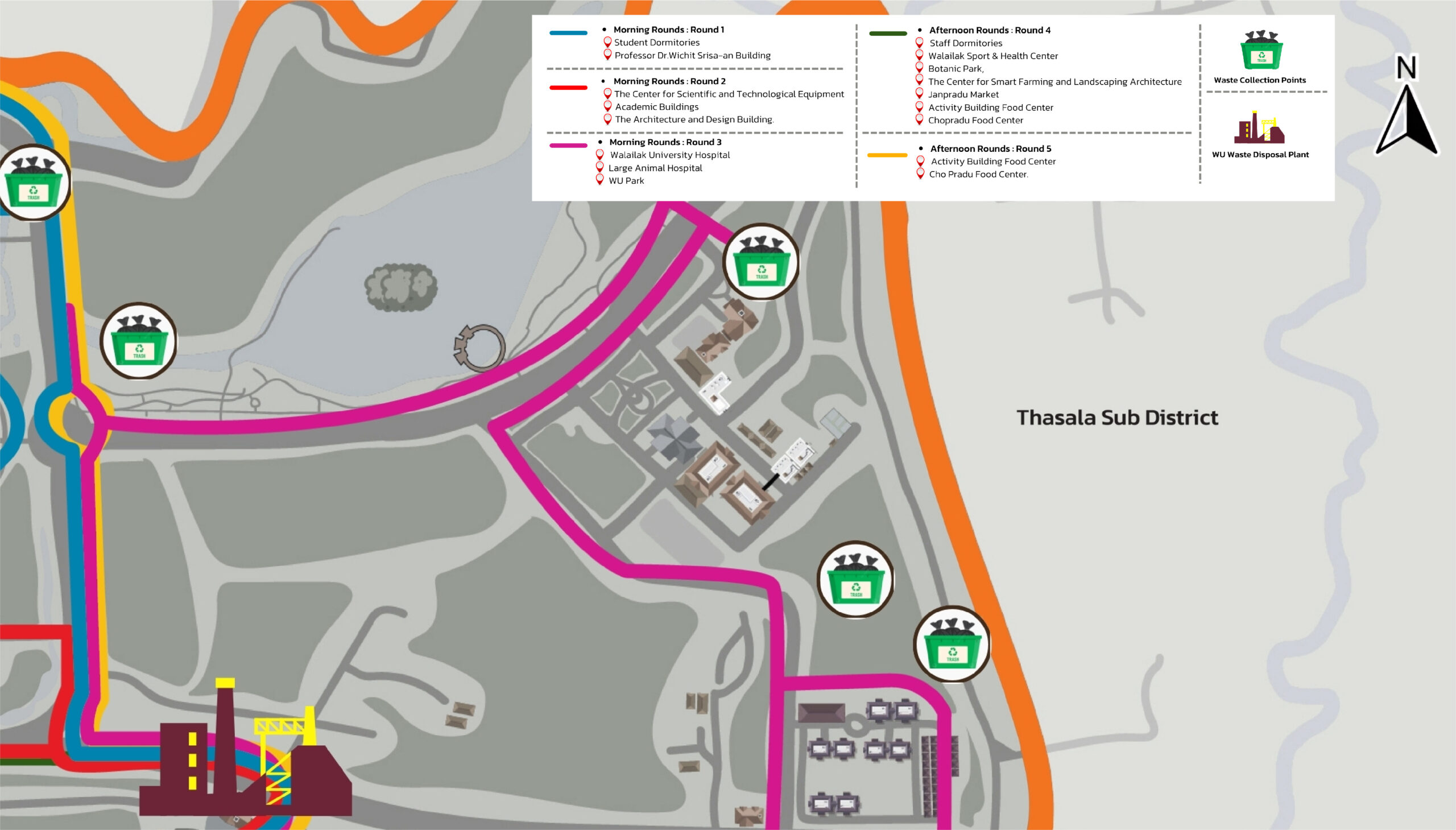
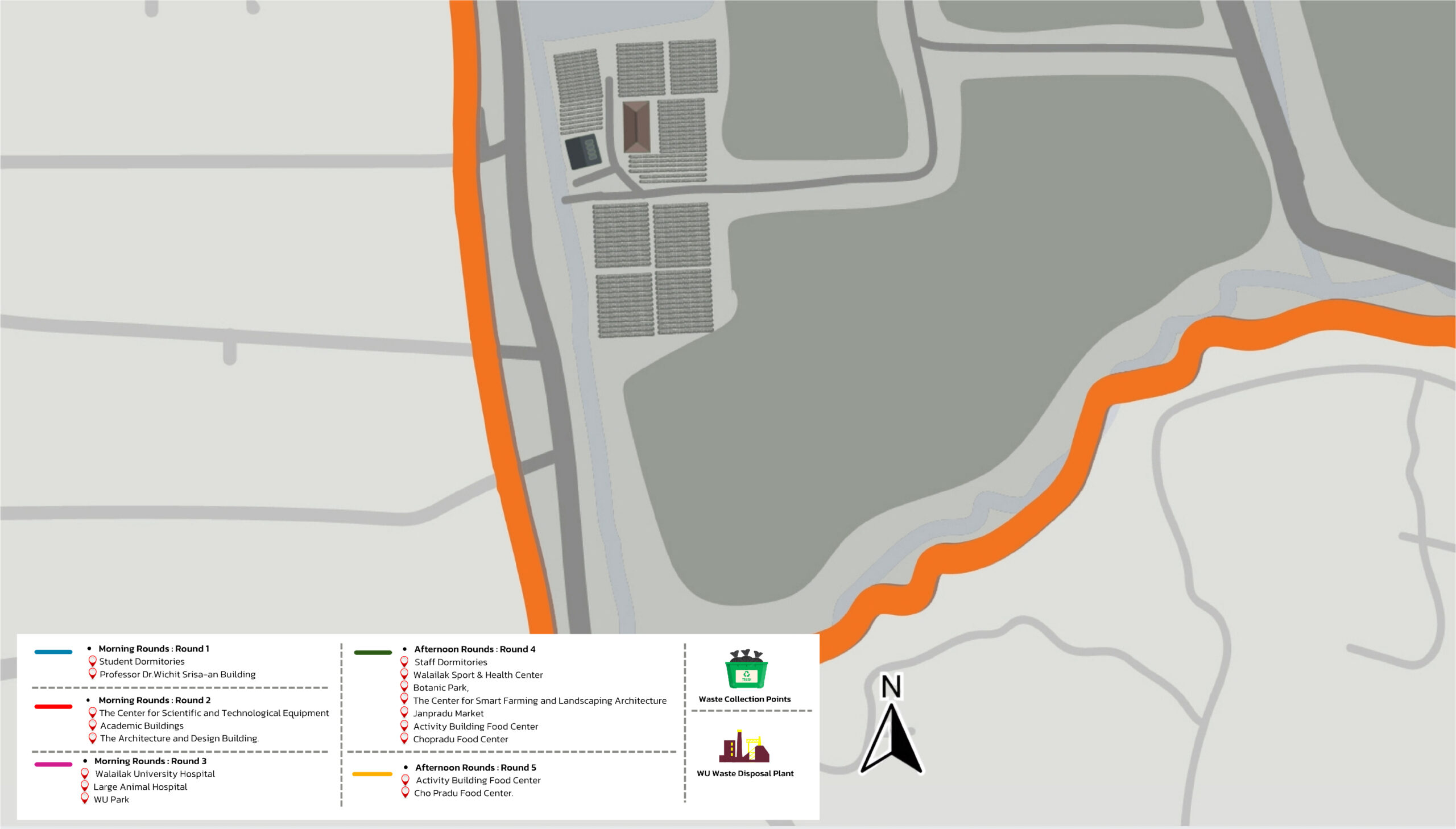
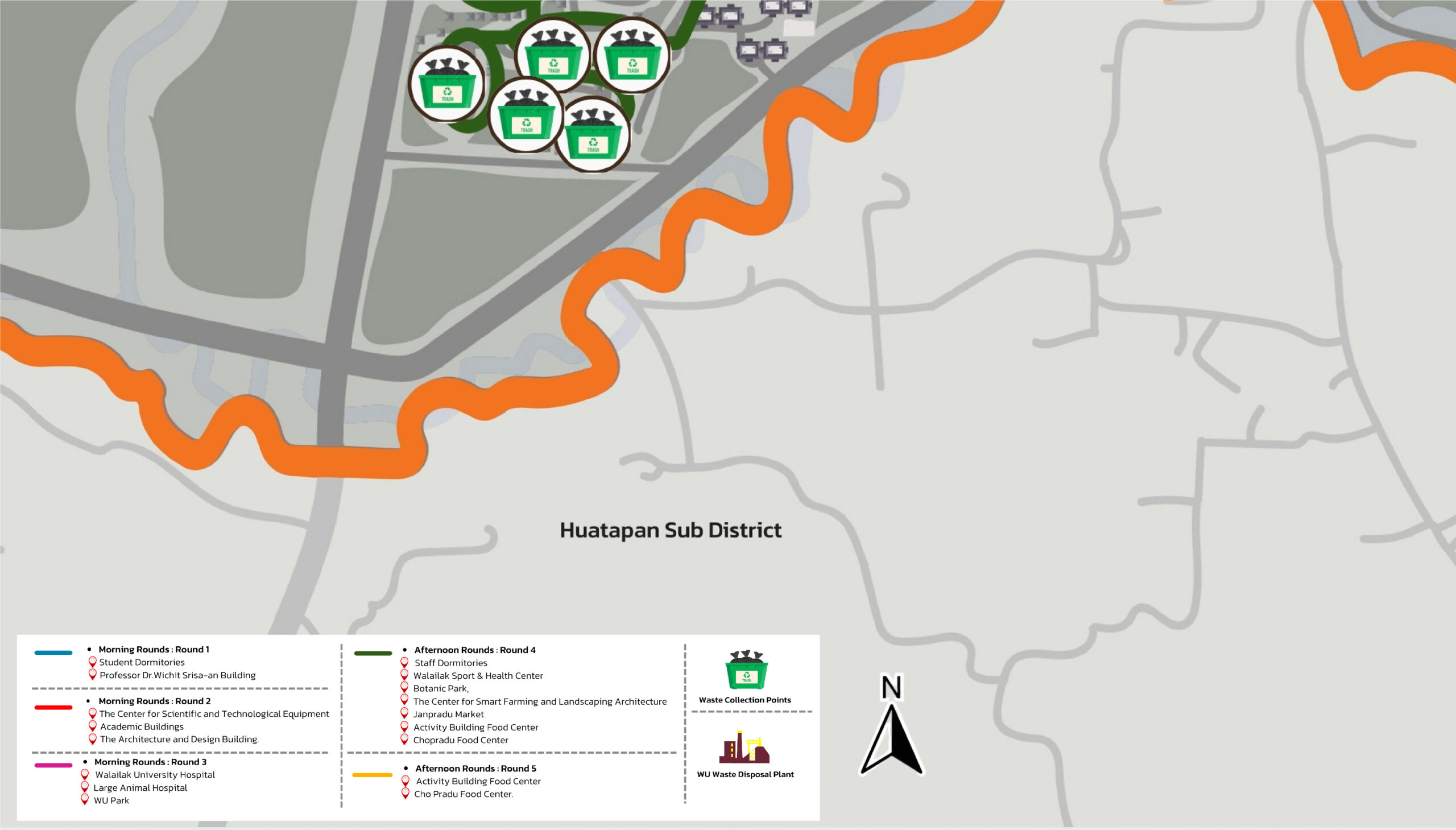
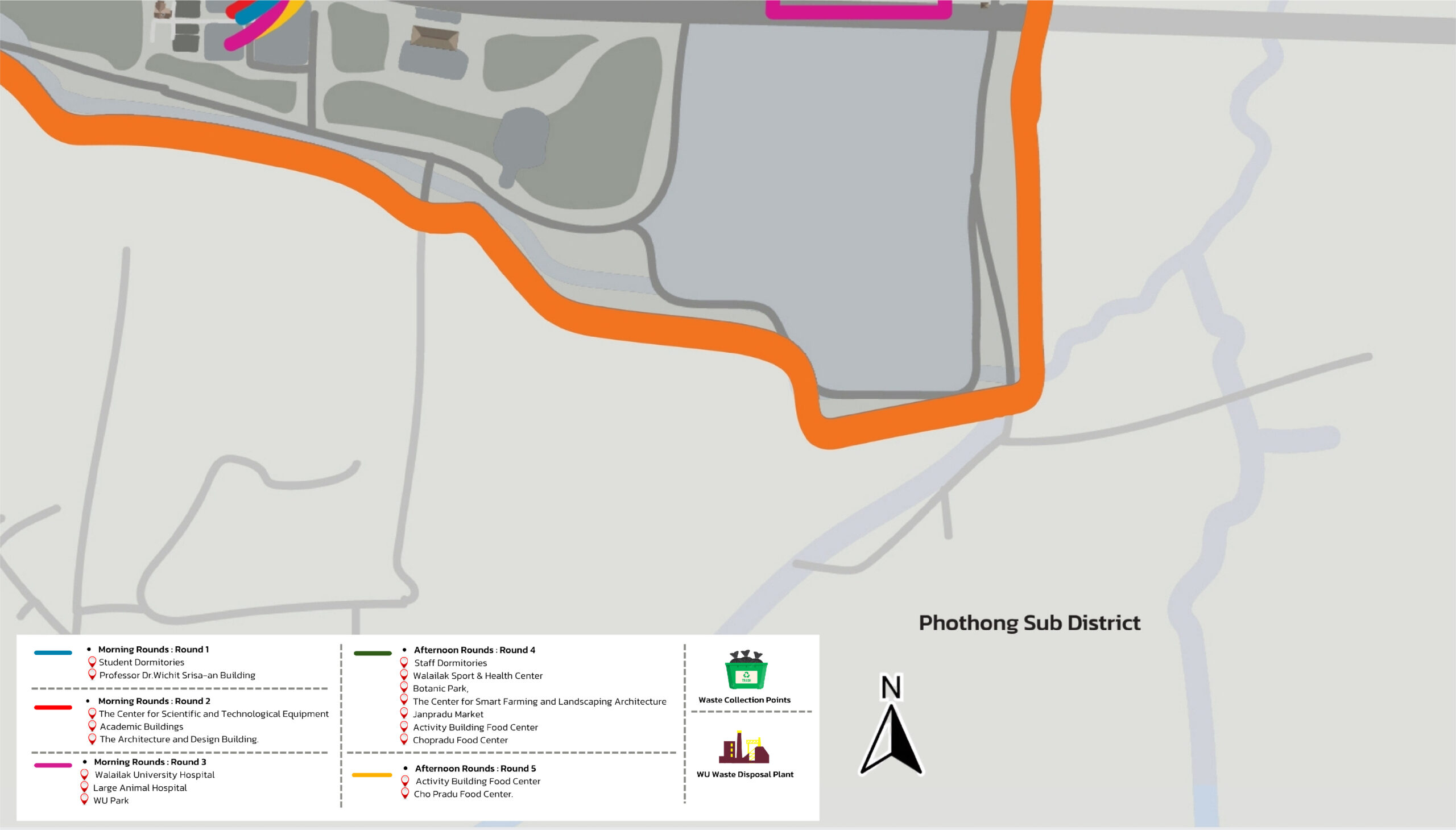
Walailak University has developed a concrete system for managing inorganic waste, guided by the principles of sustainable environmental management and the active participation of all stakeholders within the institution. In terms of management structure, the University has established a spatially detailed waste management map, clearly illustrating points of waste generation, collection, and treatment. Distribution waste bins have been strategically placed at waste generation points to facilitate source separation. In addition, a standardized collection and transportation system has been designed, with specific routes and schedules aligned with the waste volume in each area. This approach enhances transparency, traceability, and systematic evaluation, thereby improving the efficiency of inorganic waste management and supporting the University’s transition toward sustainability.
Moreover, the University regularly organizes environmental awareness campaigns and hands-on workshops to provide knowledge on recycling, waste reduction, and proper waste management practices. These activities aim to promote understanding and foster environmental consciousness among staff, students, and all relevant stakeholders.
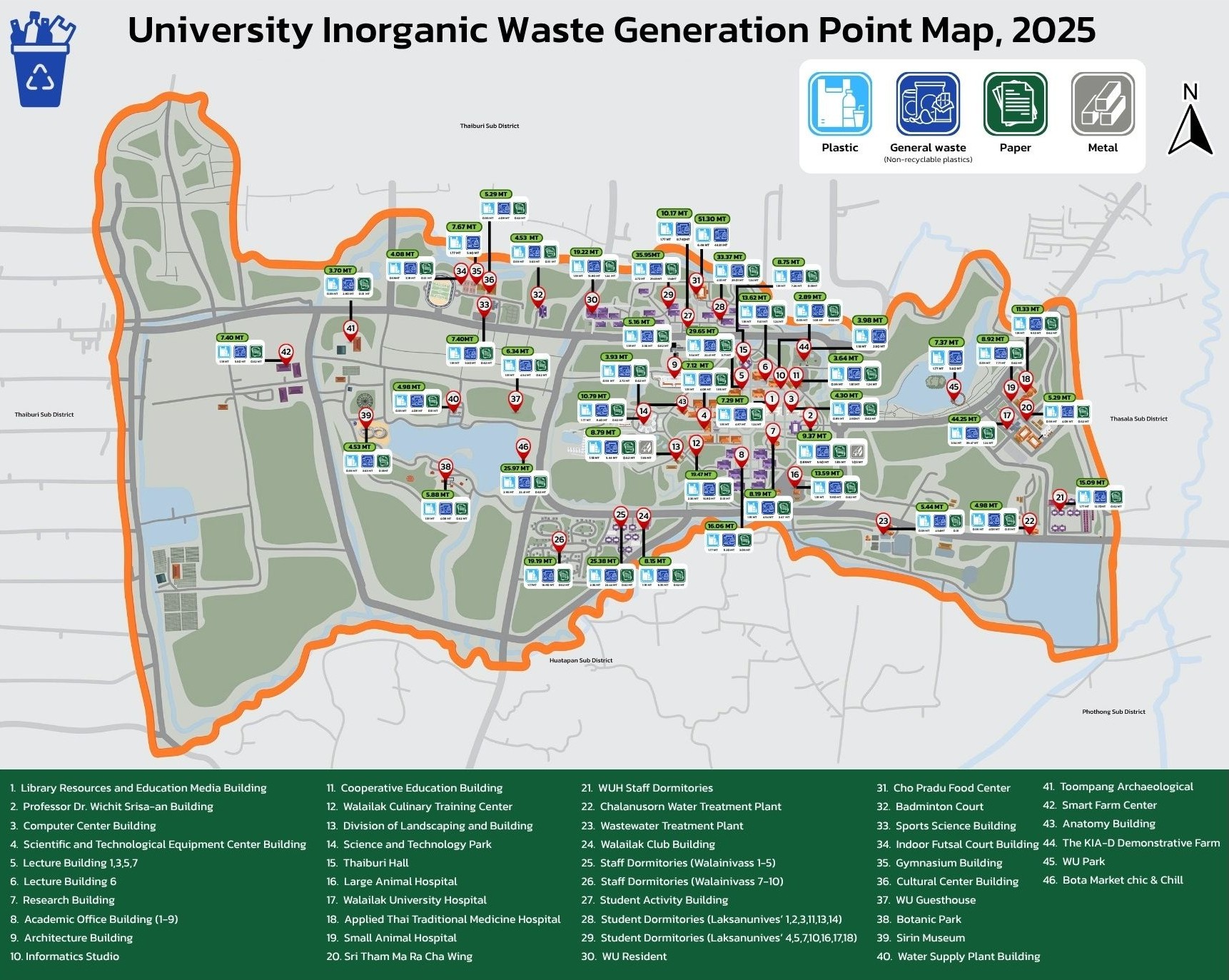
Figure 8.1 Map Depicting the Sources of Organic Waste within Walailak University
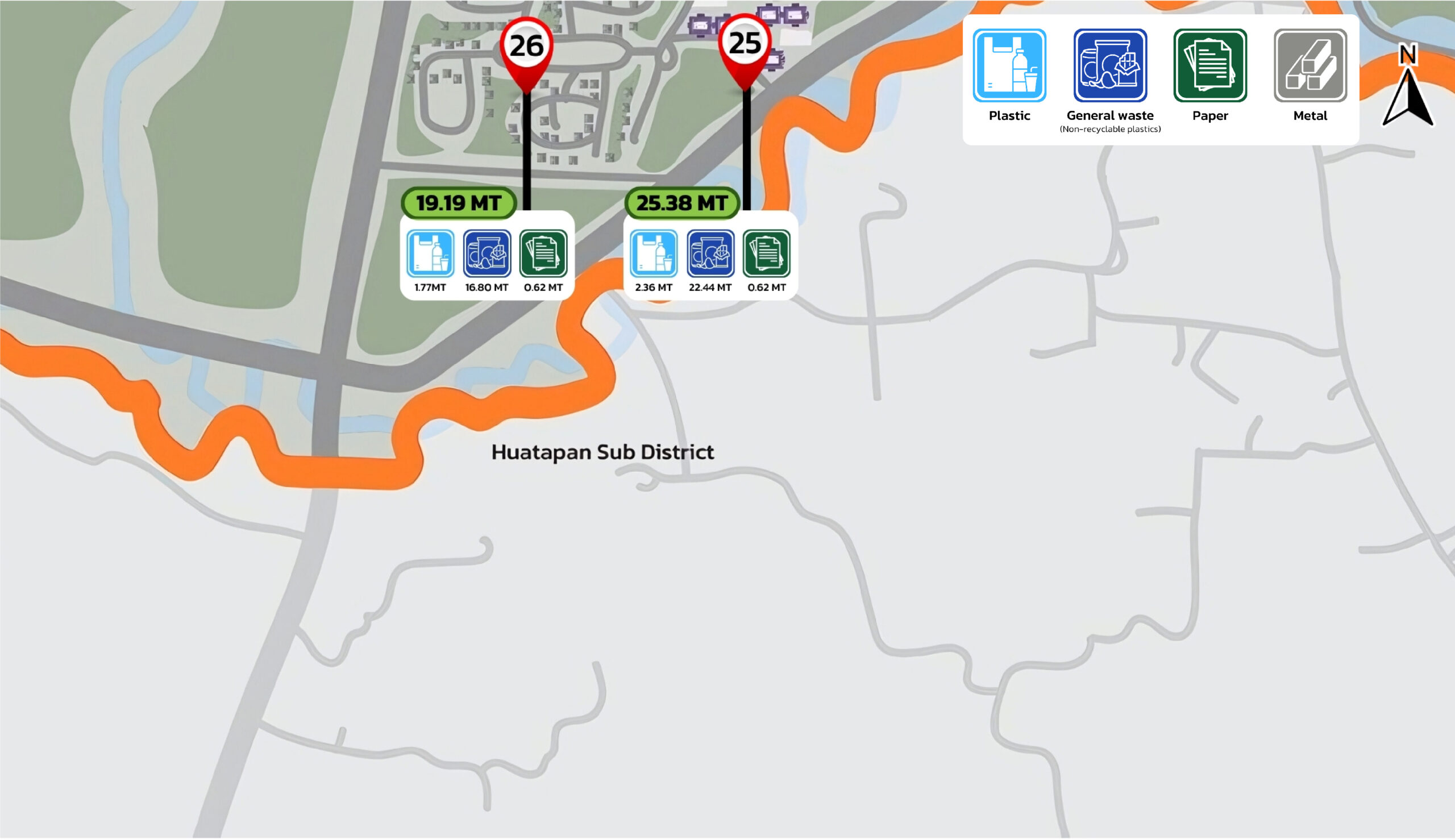
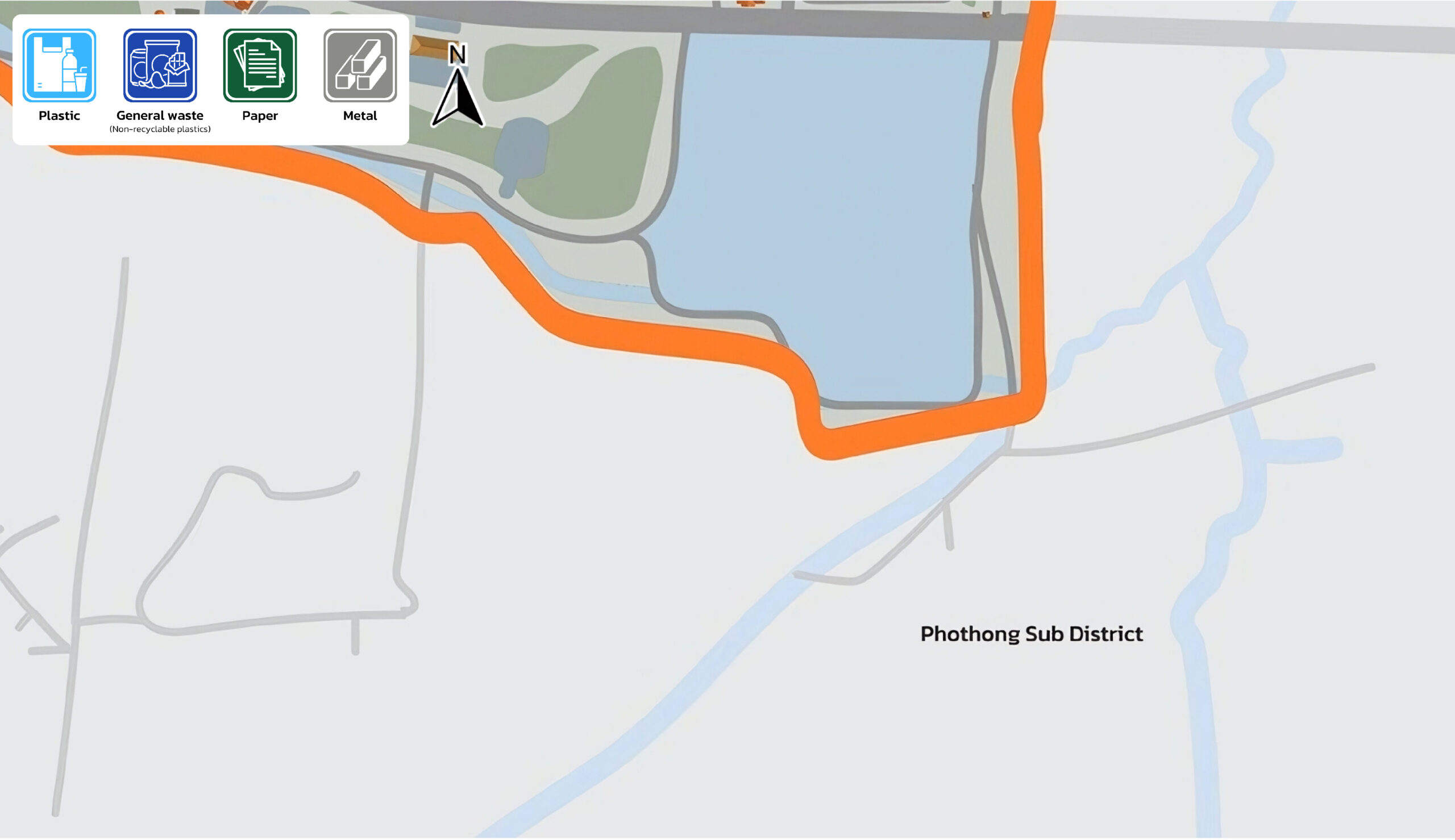
Figure 8.2 Map Depicting the Sources of Inorganic Waste within Walailak University
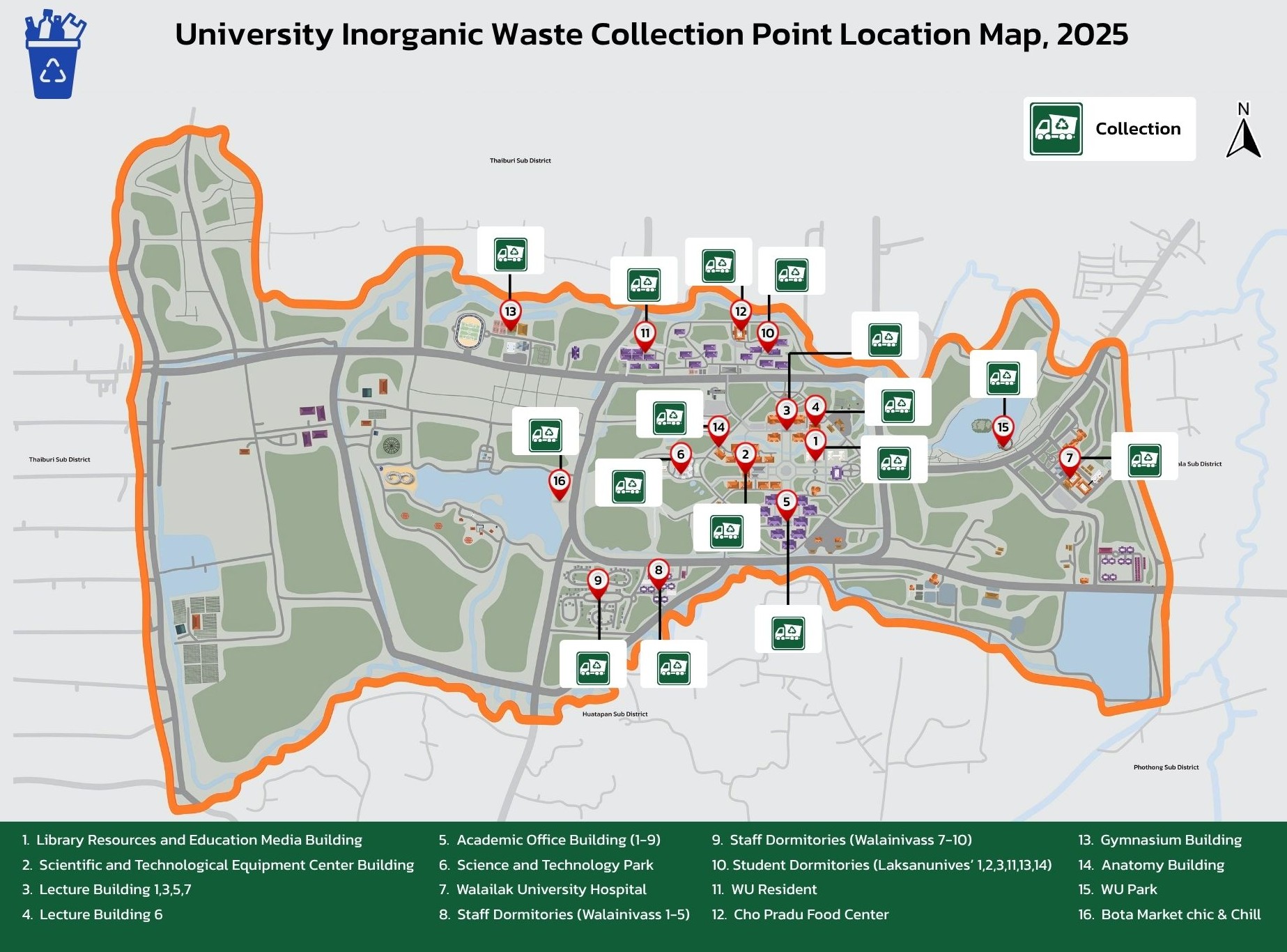
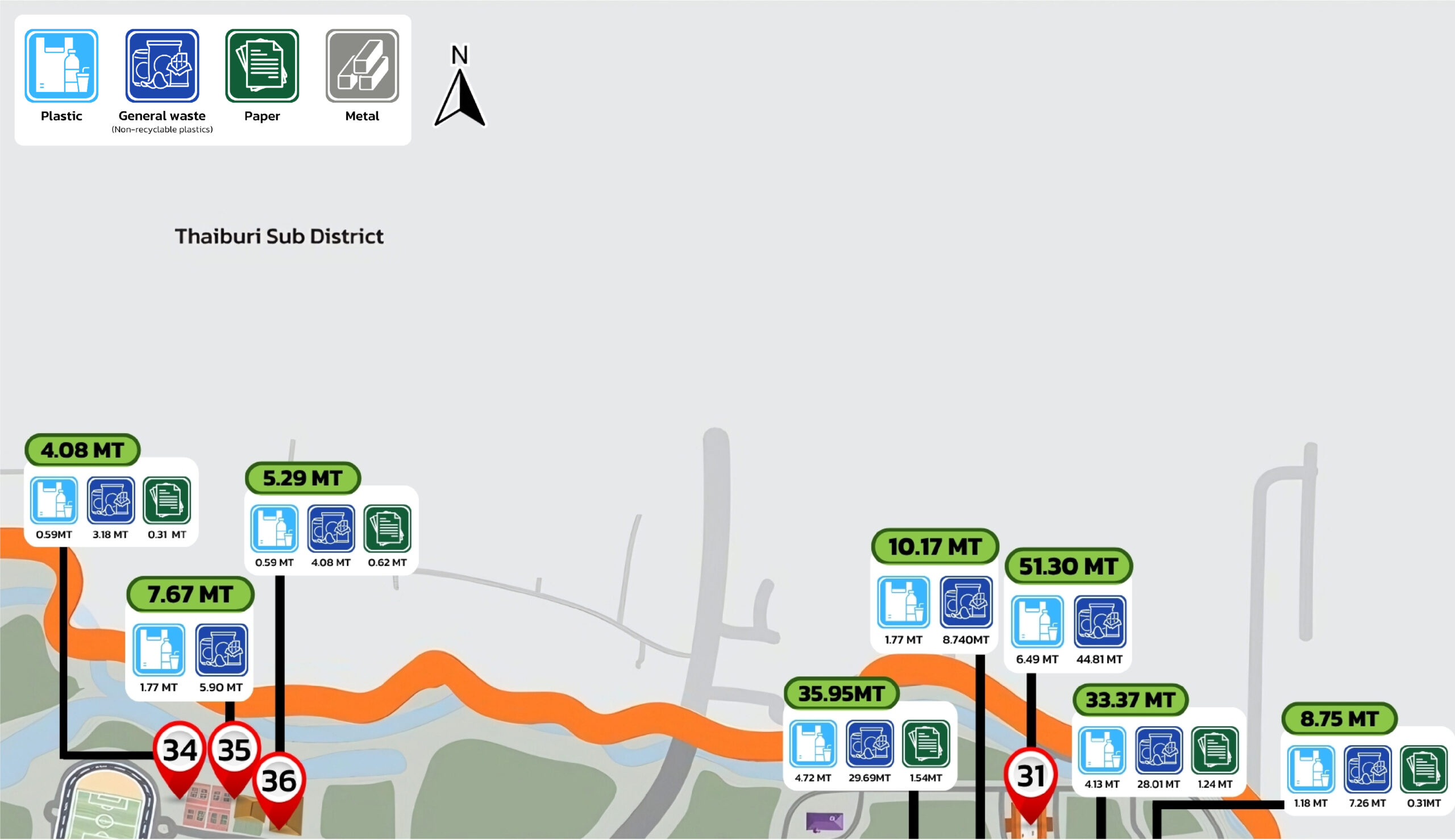
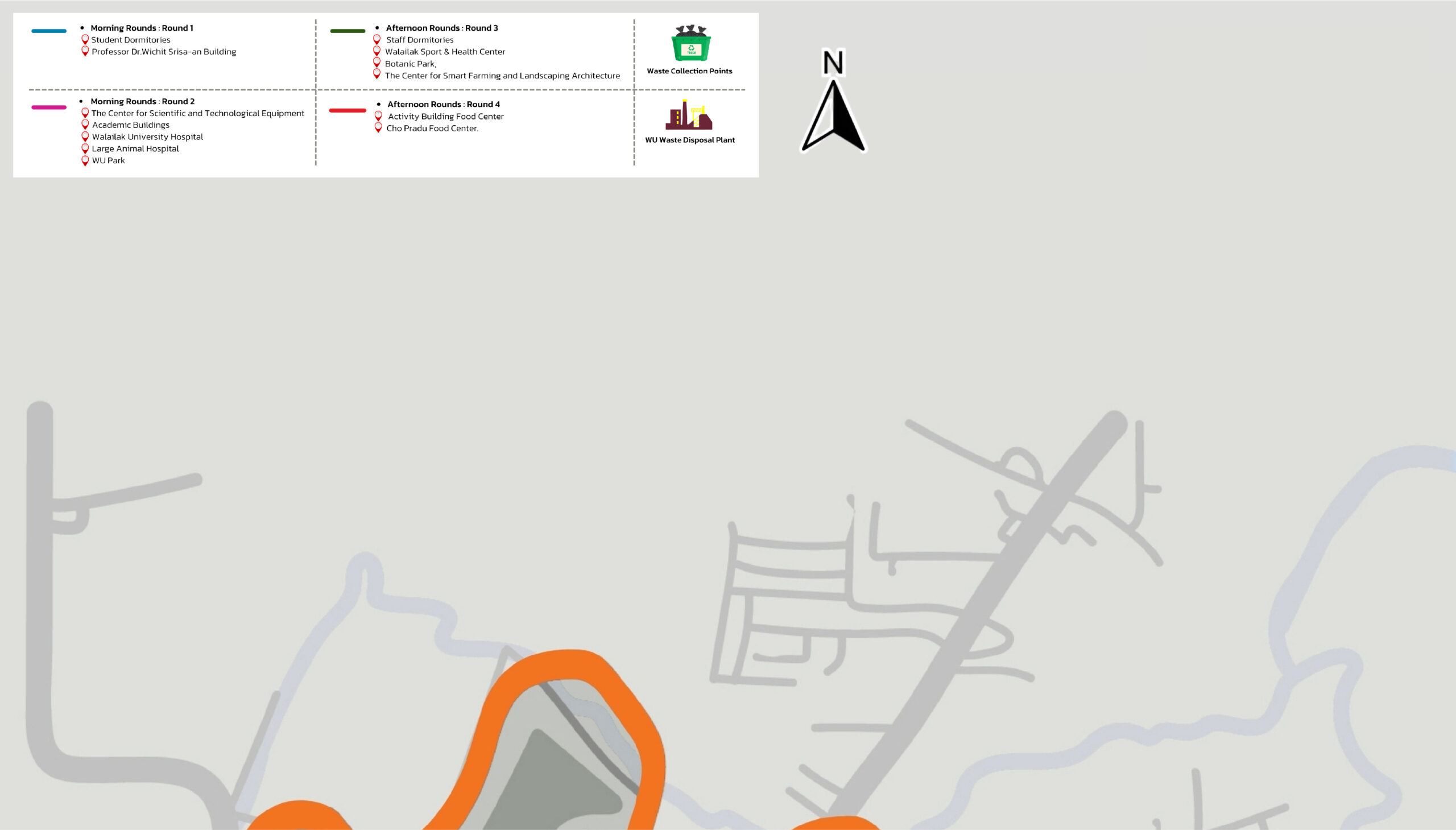
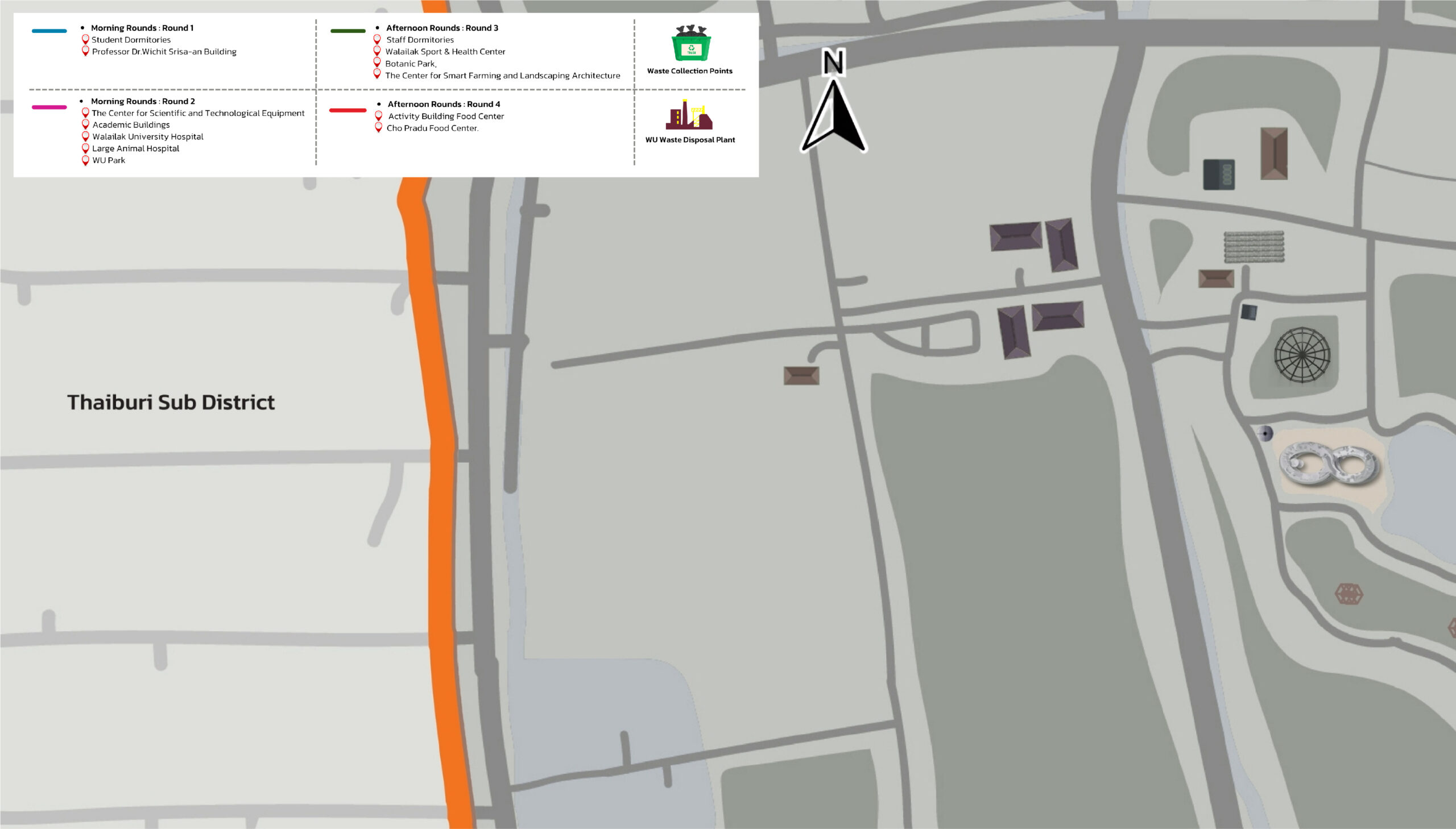
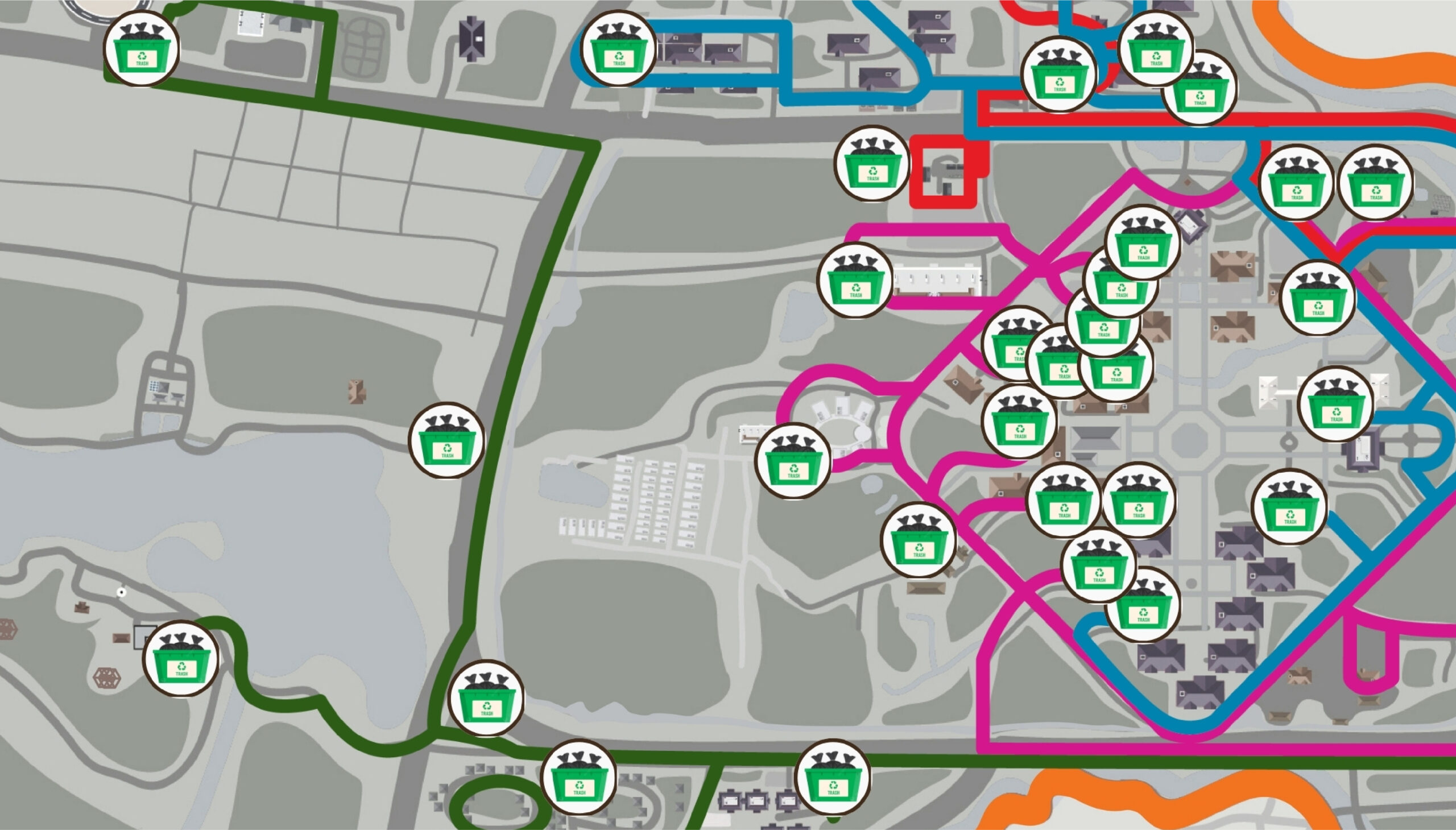
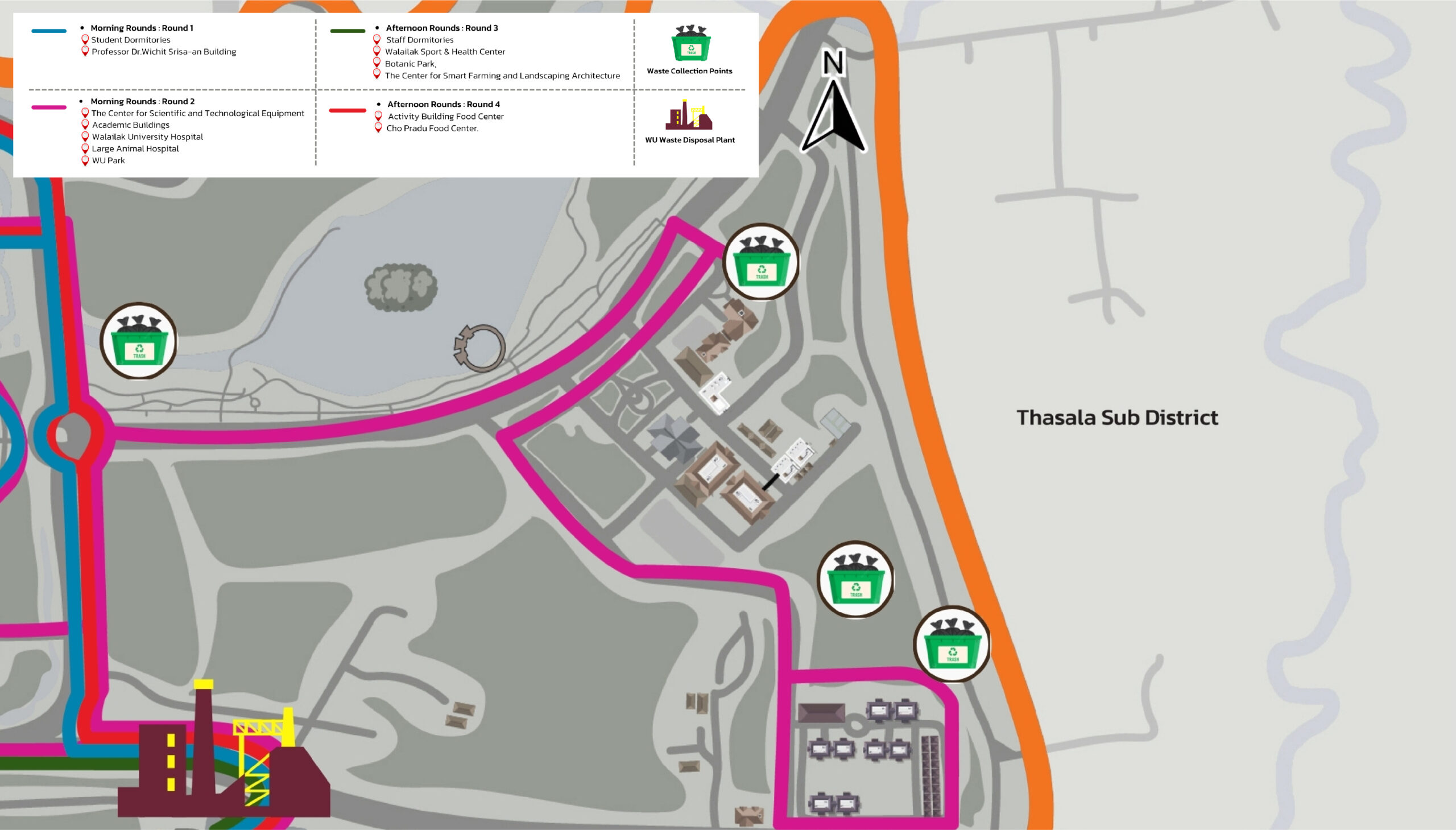
Figure 9 University Inorganic Waste Collection Point Location Map
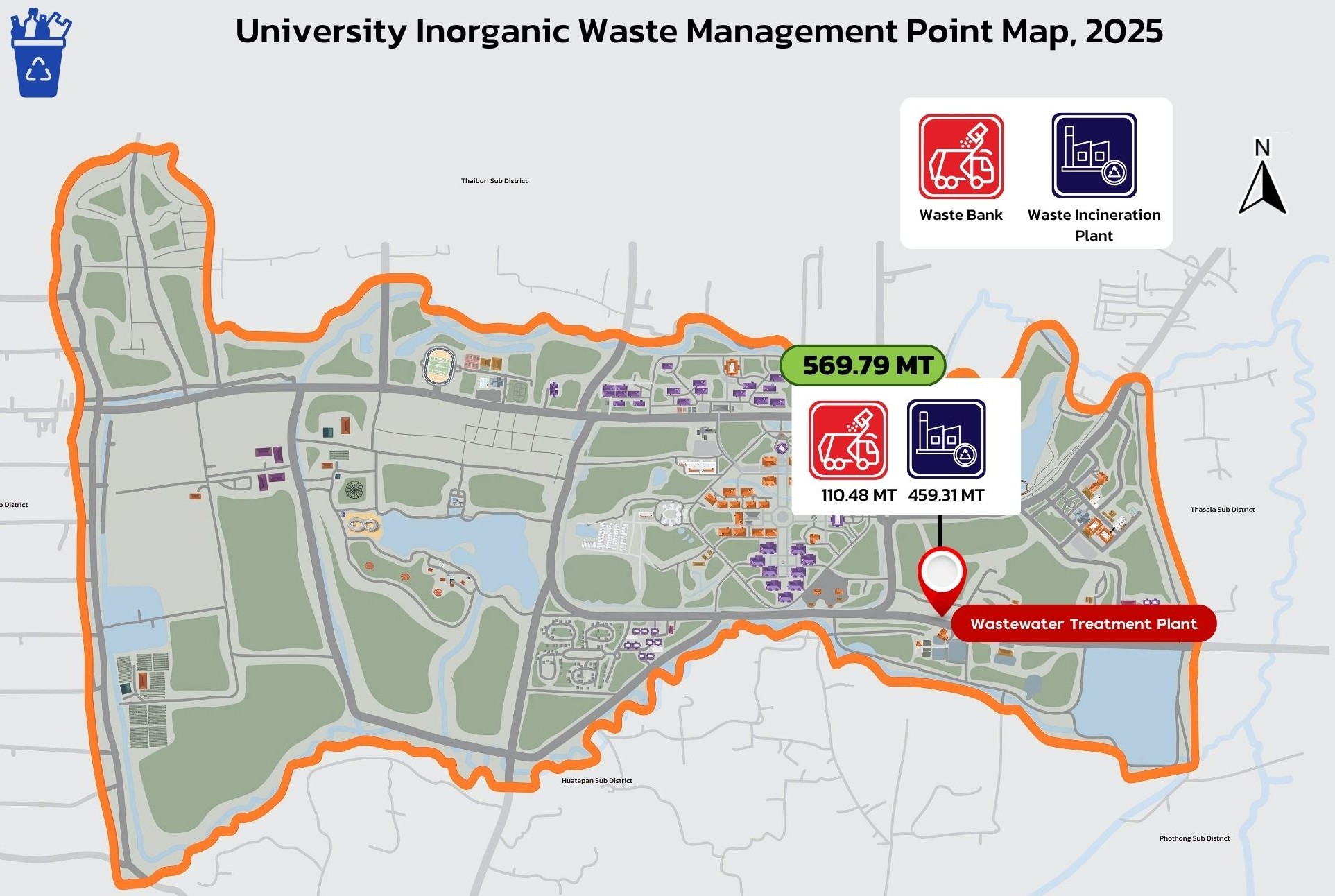
Figure 10 University Inorganic Waste Management Point Map
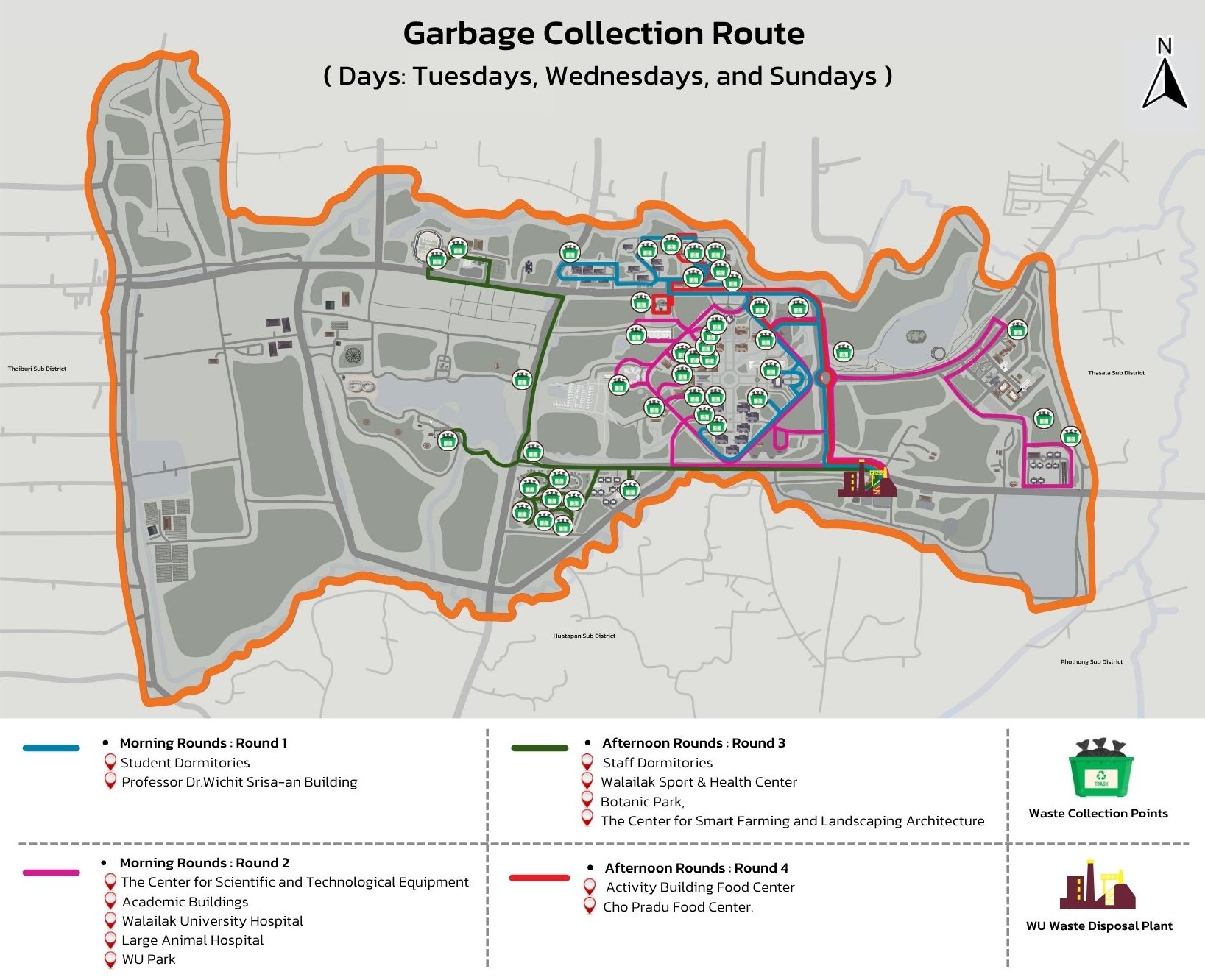
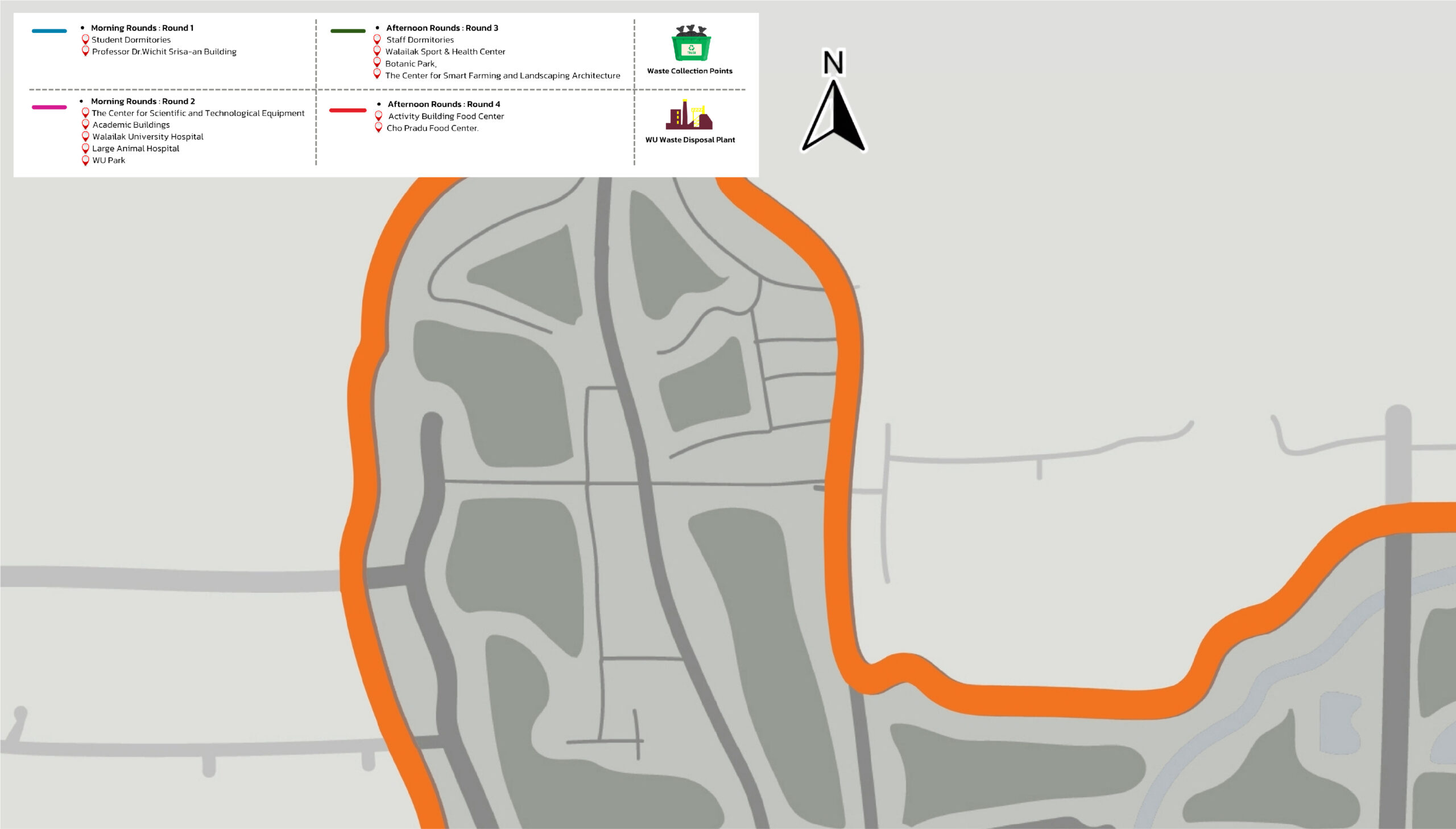
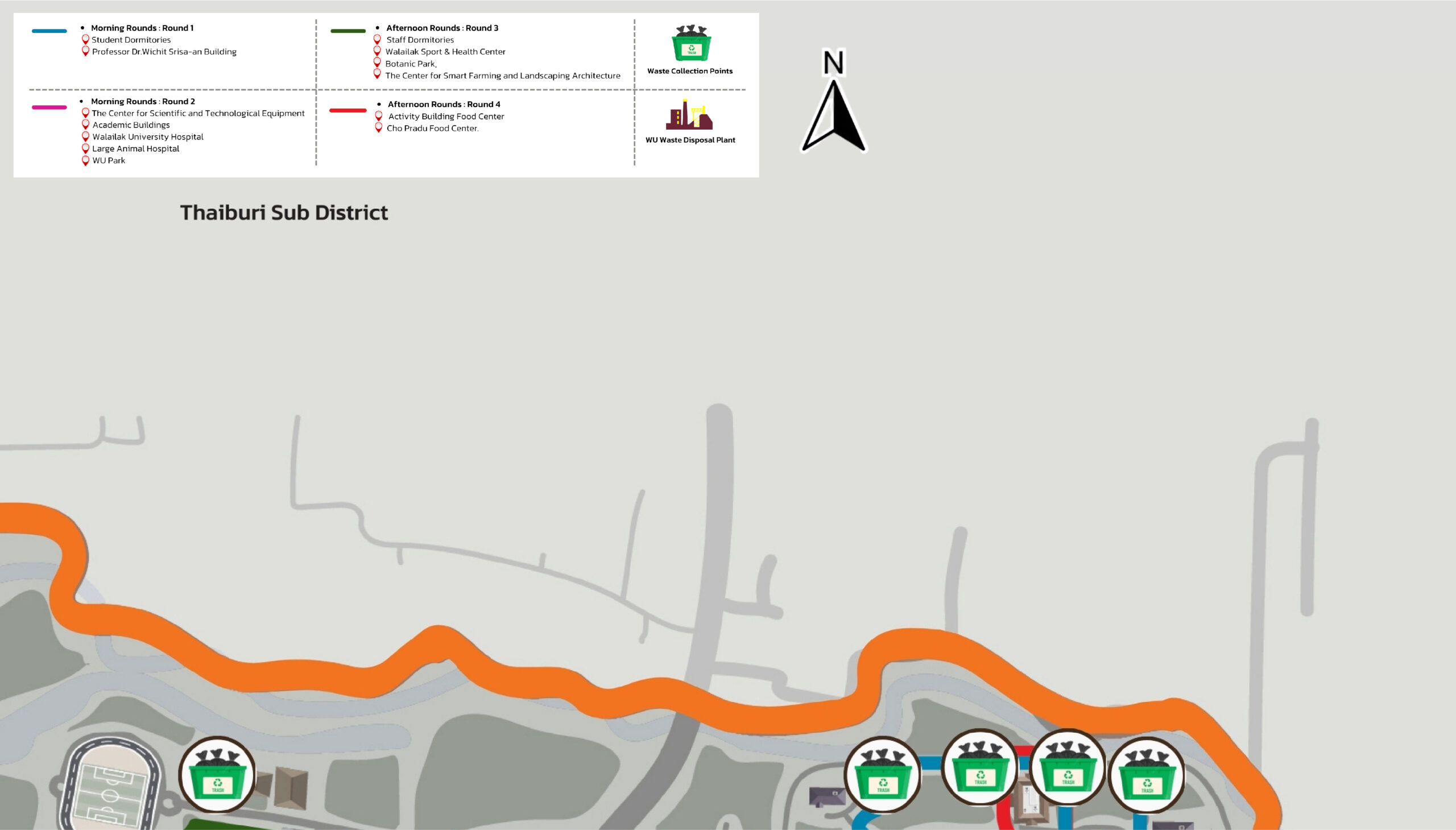
Figure 11 Garbage Collection Route ( Days: Tuesdays, Wednesdays, and Sundays ) |
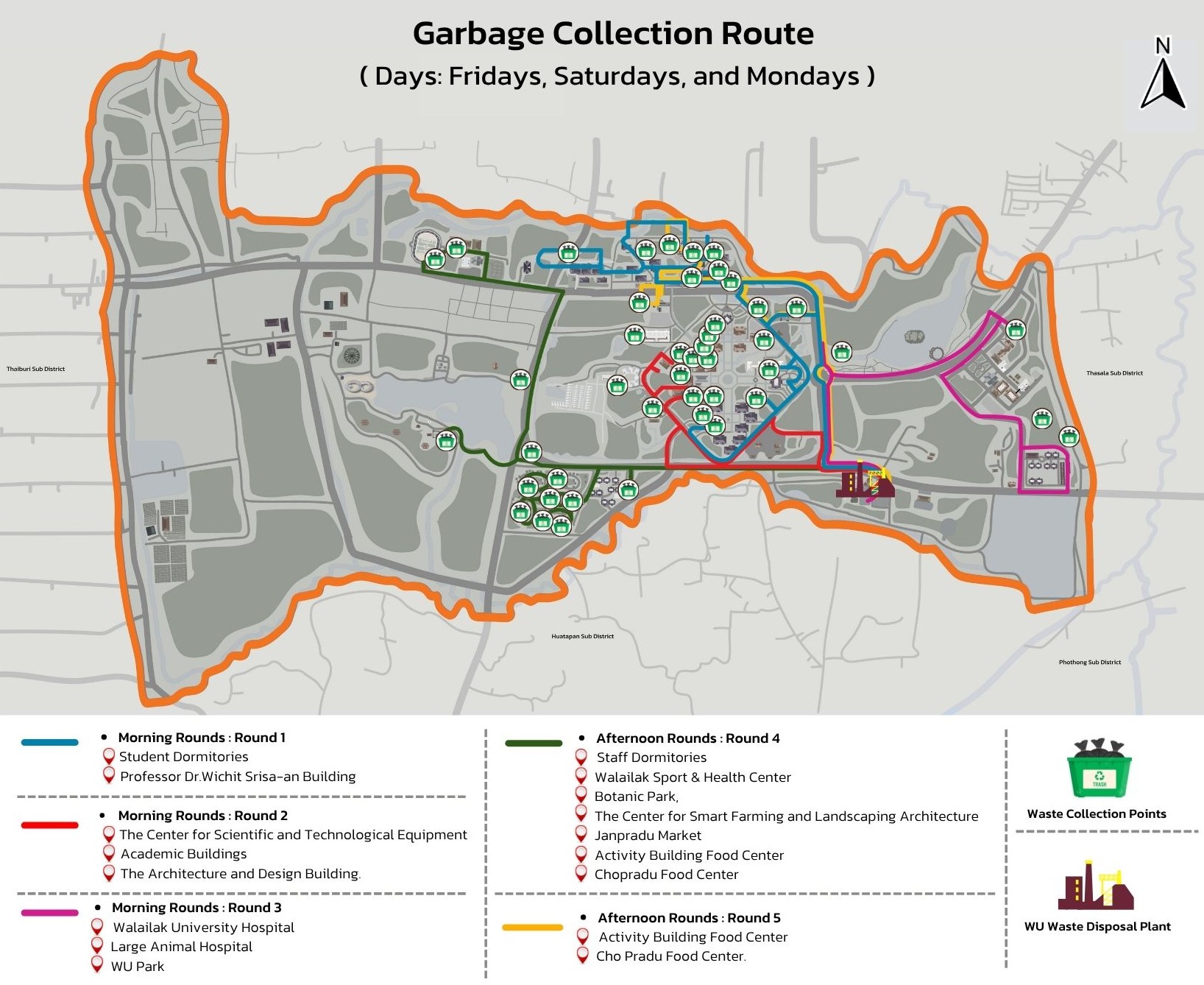
Figure 12 Garbage Collection Route (Day: Fridays, Saturday and Mondays)
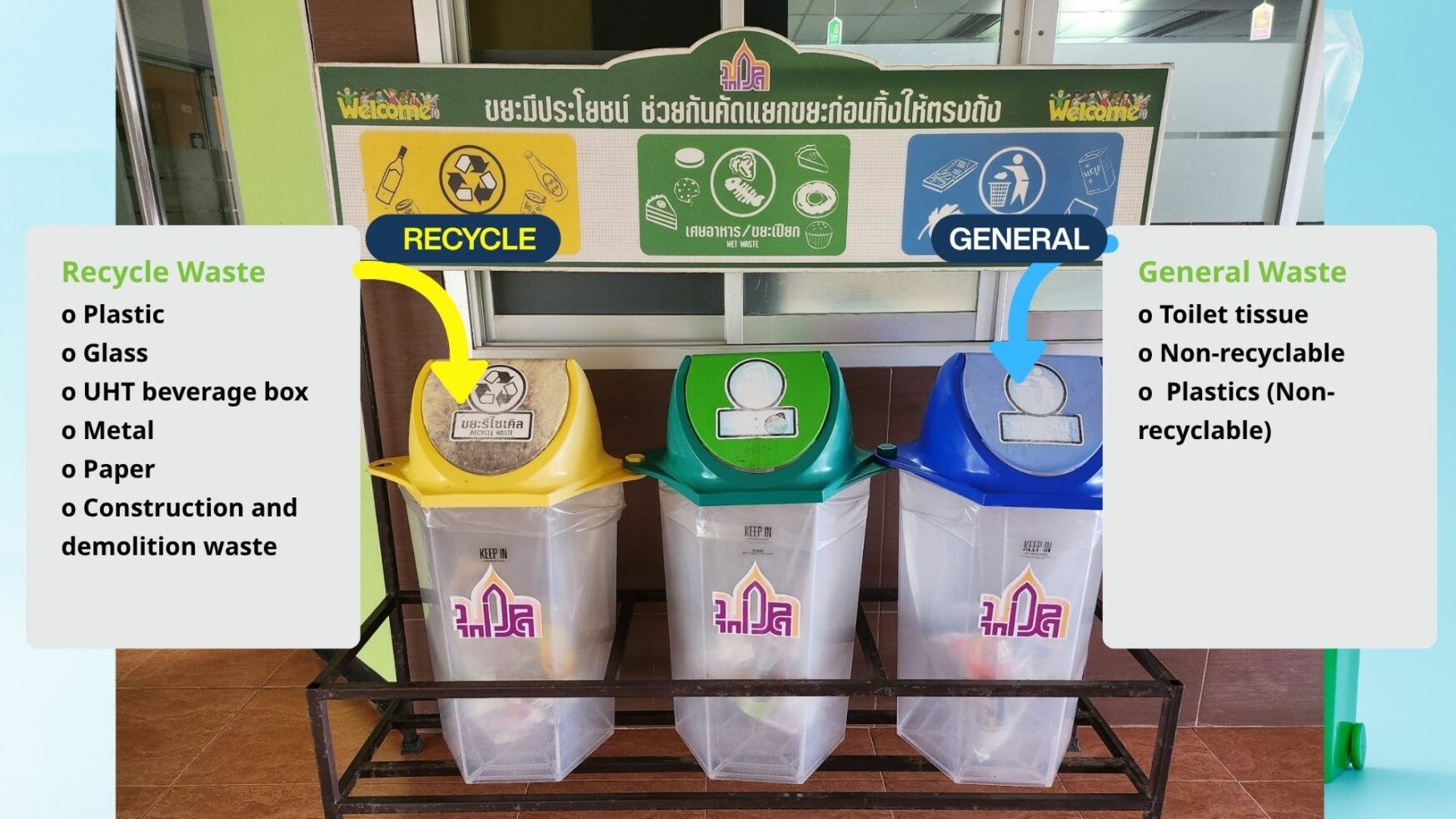
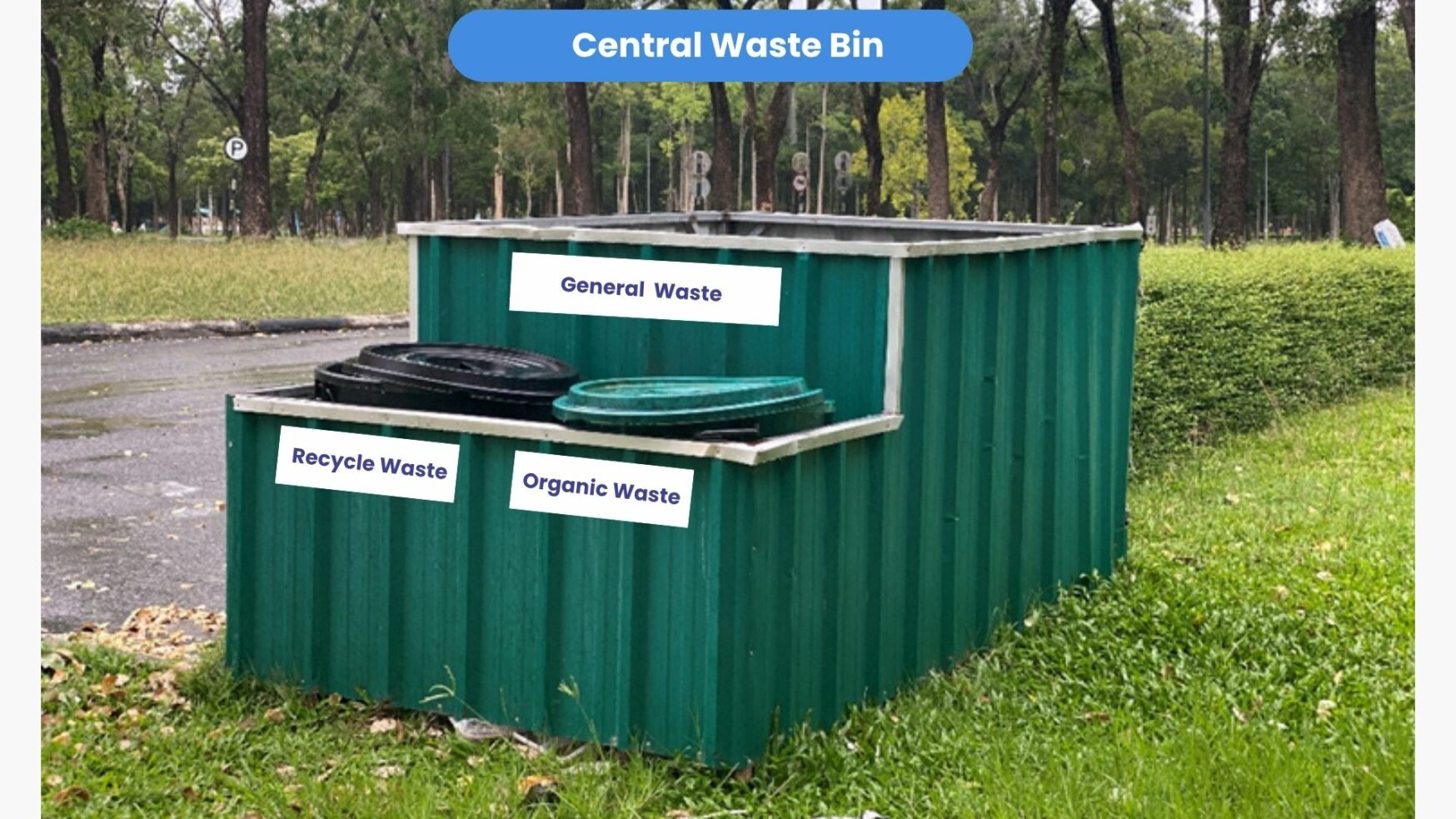
Figure 14 Separating Inorganic waste at the source.
Figure 15 A central waste bin is provided for the collection of waste prior to scheduled pick-up by garbage trucks.
The results of waste management can be summarized as follows:
- Recycling Waste Bank Project manages all recyclable inorganic waste, including paper, recyclable plastics, and metal, achieving a 100% impremented rate.
- Converting waste into Refuse-Derived Fuel (RDF) to reduce gas costs in incineration, managing all non-recyclable plastic waste with a 100% implementation rate.
University Waste Management Policy.
As an educational institution committed to sustainable development, the university recognizes the environmental challenges posed by waste, particularly non-organic waste. This type of waste is a significant contributor to pollution and has a detrimental impact on ecosystems. Therefore, the university is determined to reduce the amount of non-organic waste through the implementation of various policies and practices. To achieve this goal:
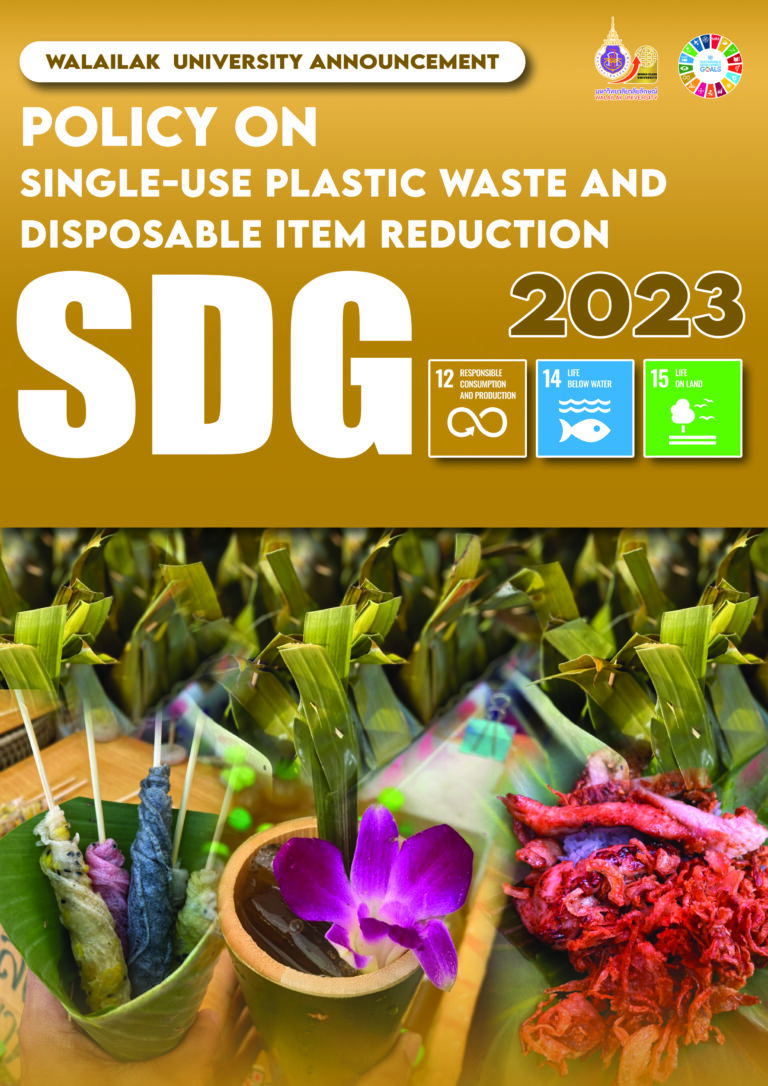
- Announcement of Walailak University Subject: Policy on Single–Use Plastic Waste and Disposable Item Reduction B.E. 2566 (2023)
Walailak University has implemented a policy to reduce single-use plastics and disposable items on campus, aiming to minimize waste and promote sustainable waste management. This policy covers all university departments, vendors, and service providers, focusing on:
- Eliminating plastic bag distribution, except for recycled or biodegradable options for ready-to-eat food.
- Banning the use of styrofoam containers.
- Switching to paper-coated or reusable cups instead of plastic ones.
- Providing utensils upon request, rather than automatically.
- Encouraging customers to bring their containers and offering discounts as an incentive.
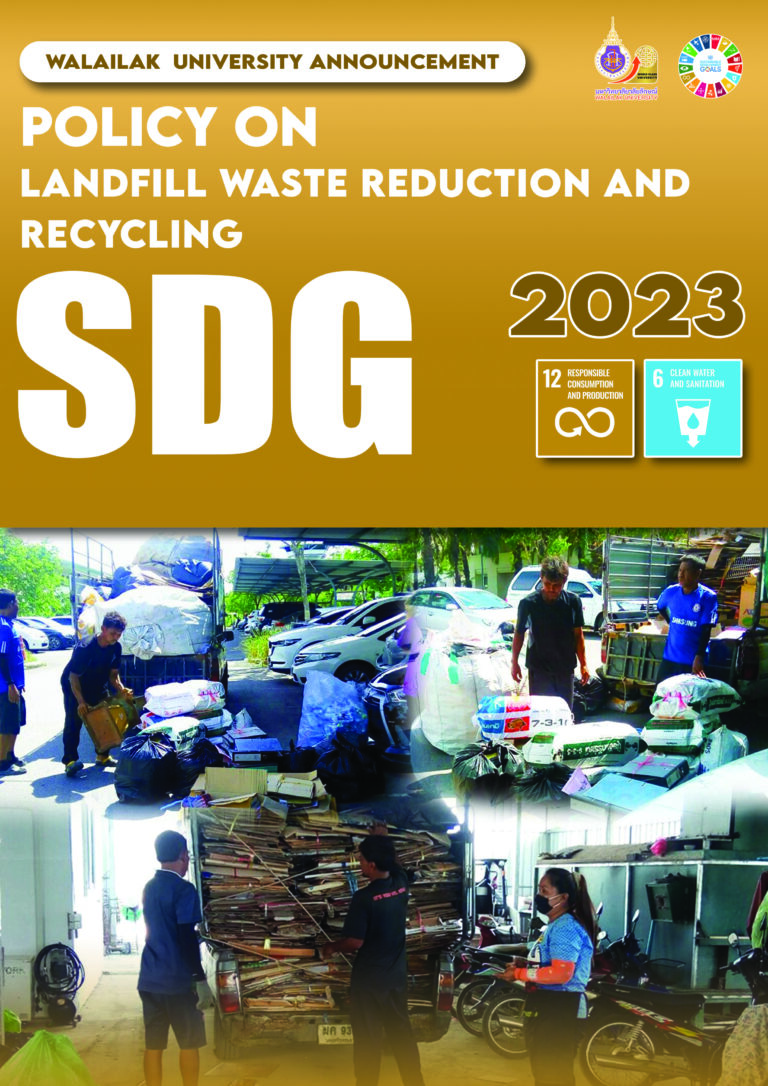
- Announcement of Walailak University Subject : Policy on Landfill Waste Reduction and Recycling B.E. 2566 (2023)
Walailak University is committed to reducing the amount of waste sent to landfills and promoting recycling. The ultimate goal is to create a sustainable university campus. Key aspects of this policy include:
- Scope: The policy encompasses all university activities and stakeholders, including students, staff, contractors, vendors, and visitors.
- Objectives: To minimize waste sent to landfills and maximize recycling rates.
- Strategies: Raising awareness: Educating the university community about the importance of waste reduction and recycling.
- Source reduction: Minimizing waste generation by avoiding unnecessary consumption.
- Recycling promotion: Encouraging recycling of recyclable materials.
- Knowledge transfer: Sharing knowledge and technology related to waste management with the external community.
- Capacity building: Providing training on waste management to students and staff.
Recyclable Waste Bank Project
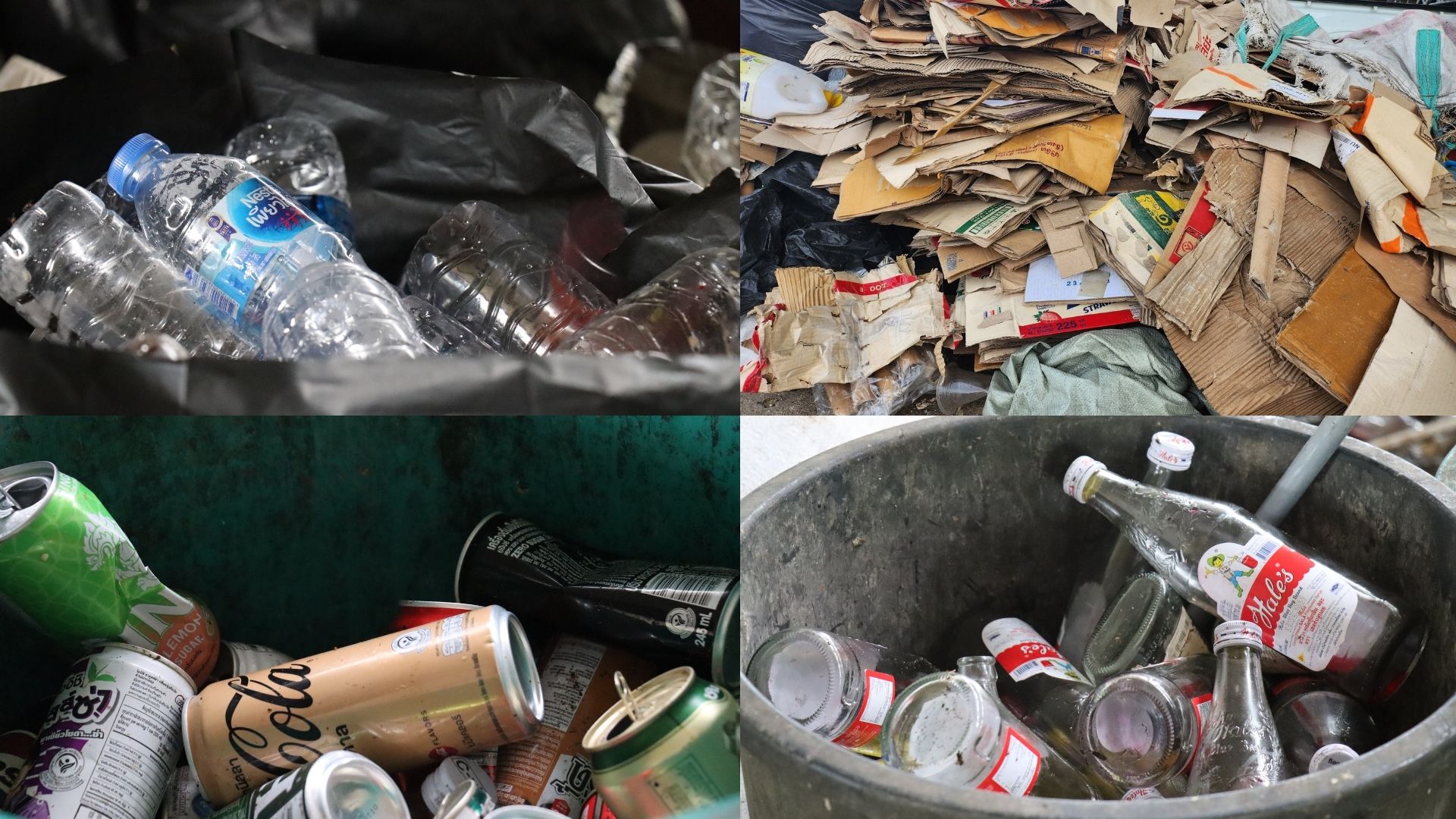
Walailak University has implemented the Recyclable Waste Bank Project in collaboration with an external recycling company, Wongpanit. The project aims to enhance efficiency in the management and segregation of all types of recyclable materials. Collected materials are sorted into categories such as metals, various types of plastics, glass bottles, cardboard, used paper, aluminum cans, zinc, and other reusable resources.
The segregated recyclable materials are then sold to Wongpanit, thereby generating economic value for the university while simultaneously reducing the volume of waste destined for landfill. This initiative aligns with the university’s mission to serve as a model for sustainable waste management.
In 2025, the project successfully reduced greenhouse gas emissions by 209.55 tonsCO₂eq This achievement demonstrates tangible environmental benefits and plays a significant role in supporting climate change mitigation through effective waste management practices.
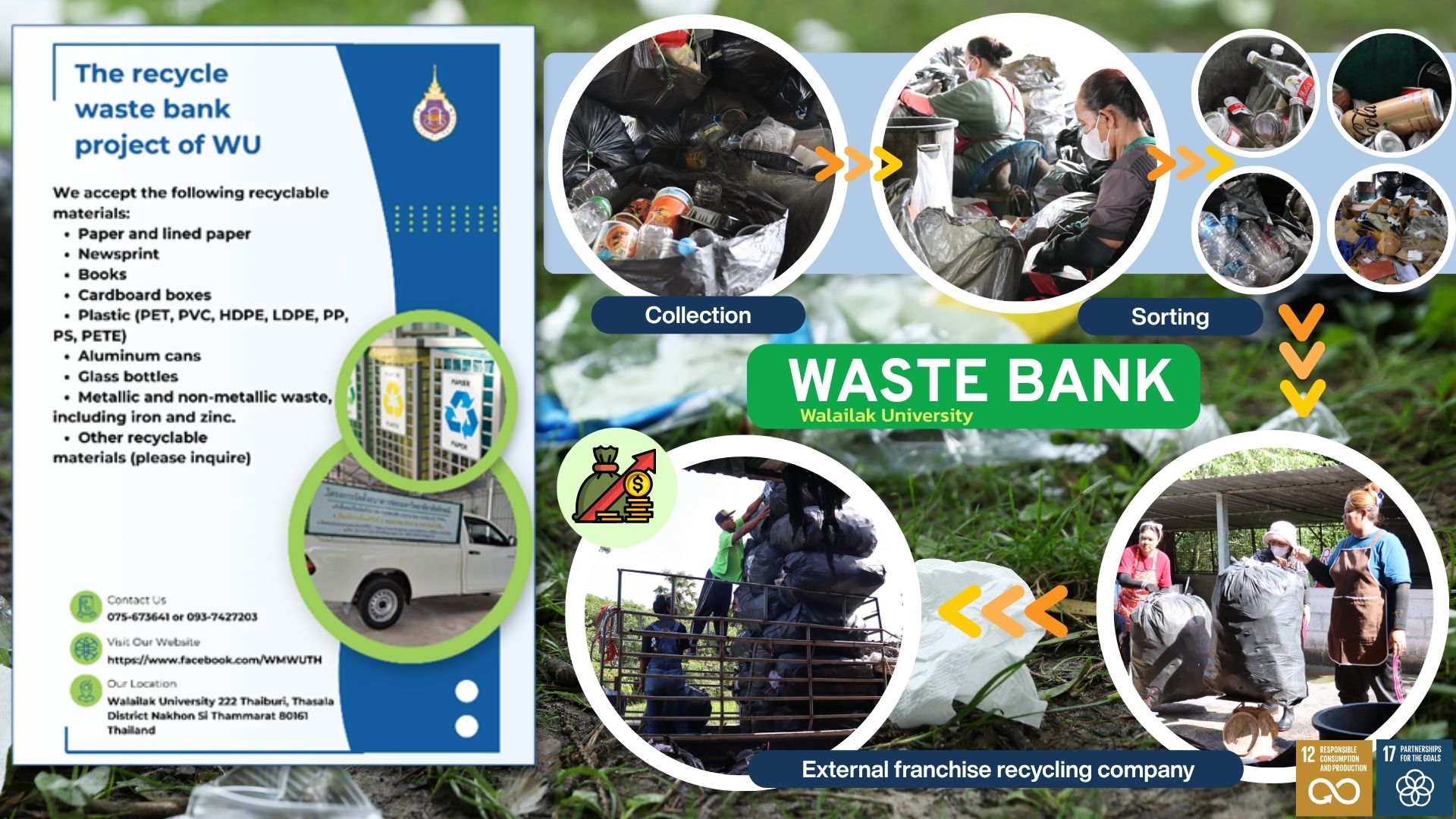
Figure 14 Recyclable inorganic waste is directed to the waste bank at the university for proper management
Figure 15 Recyclable inorganic waste is directed to the waste bank at the university for proper management
Waste Incineration Project
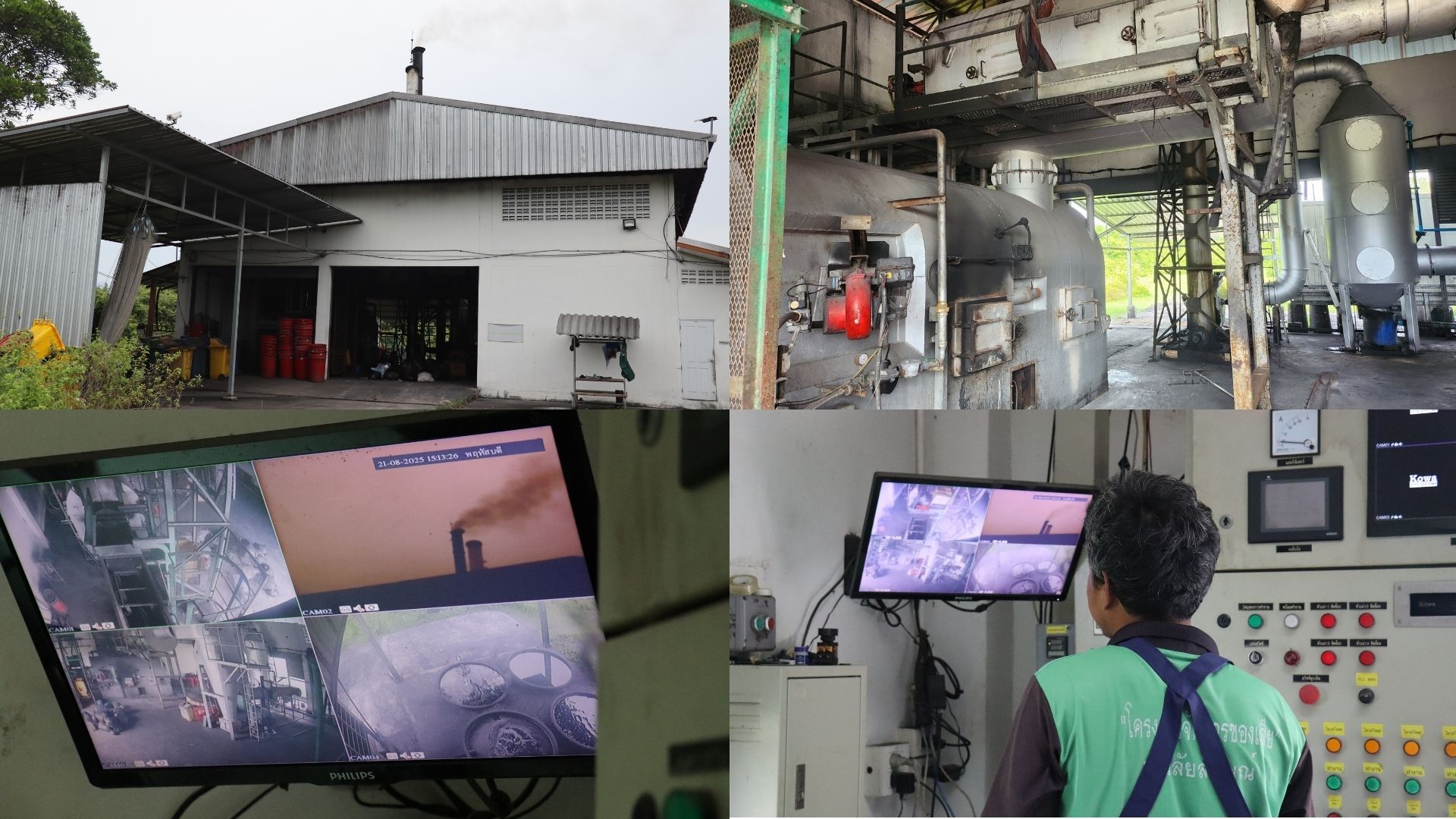
Walailak University manages general waste through a process of converting waste into energy using the university’s waste incineration system. The system is operated under strict adherence to scientific principles and environmental regulations. The incinerator officially began operations in 2016 and has the capacity to safely incinerate up to 100 kilograms of infectious waste per hour.
The incineration process utilizes a gas-fired system with pressure control and a dual-chamber structure. The first chamber is dedicated to the direct incineration of waste, while the second chamber further treats the resulting gases and pollutants to ensure complete combustion. This is followed by a process that captures particulates, smoke, and vapors, minimizing environmental impacts.
The project not only reduces the volume of waste destined for landfills but also supports the university’s mission to manage waste efficiently and sustainably. It aligns with the principles of UI GreenMetric by promoting resource efficiency and minimizing environmental impact.
Figure 16 General waste is converted into energy and used as fuel in Walailak University’s incinerator.
Just Say No (To Plastic Bags)” Project
Walailak University has implemented the “Just Say No (To Plastic Bags)” project to promote the reduction of single-use plastic bags and plastic materials. The initiative focuses on raising environmental awareness among participants and encouraging the use of environmentally friendly materials. As a result, the project has achieved tangible reductions in plastic pollution both within the university and in the surrounding community, aligning with the university’s goals for waste management and sustainable development.
Overall, Walailak University’s inorganic waste treatment initiatives exemplify a holistic approach to sustainability. They integrate education, resource efficiency, and innovative practices while fostering continuous improvement. By transforming organic waste into valuable resources, the university not only minimizes environmental impacts but also establishes a model of sustainable resource management that can be replicated within the academic community.
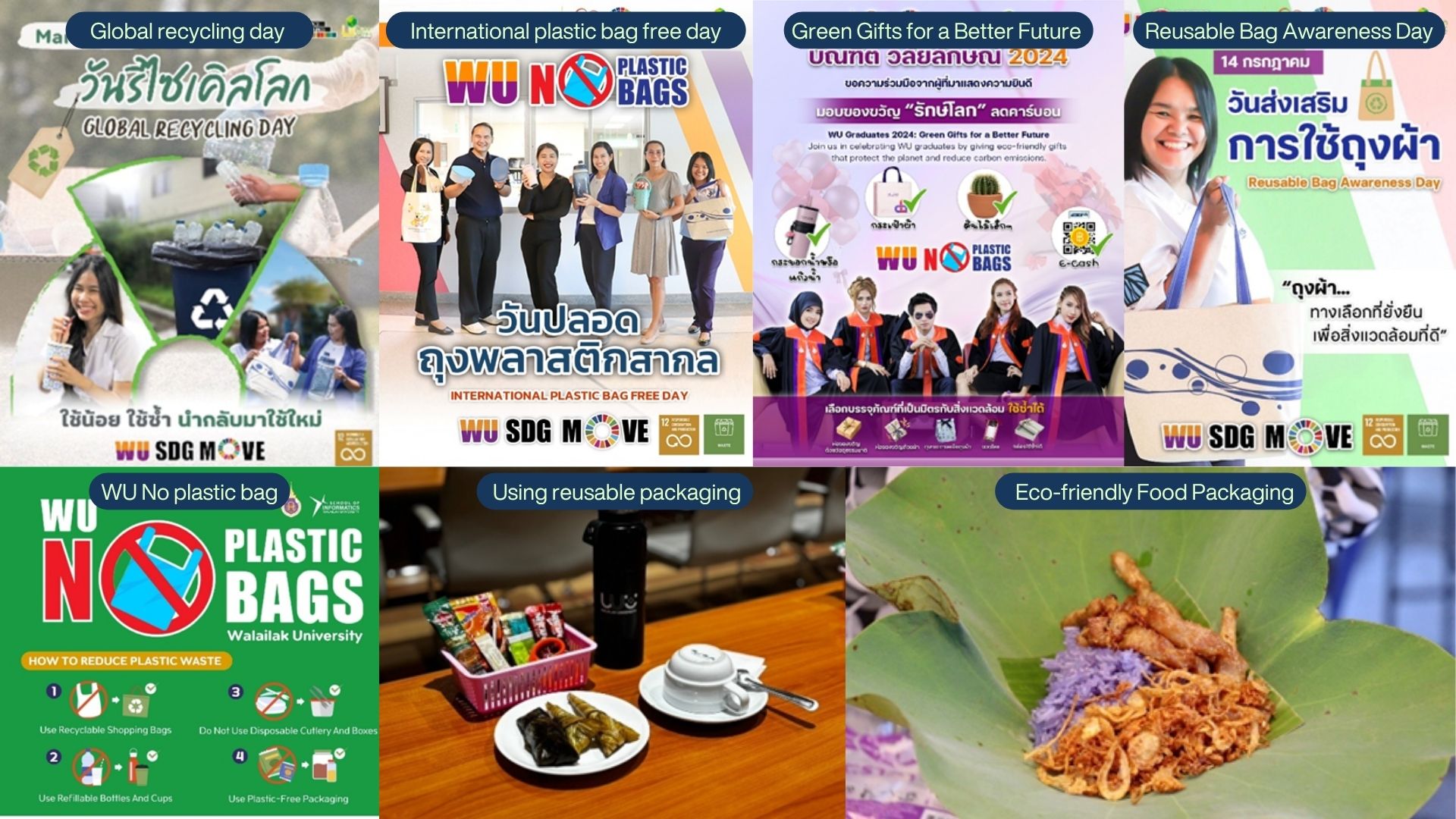
Figure 17 The ‘Just Say No (To Plastic Bags)’ project is making a tangible impact on reducing plastic pollution and fostering a cleaner environment.
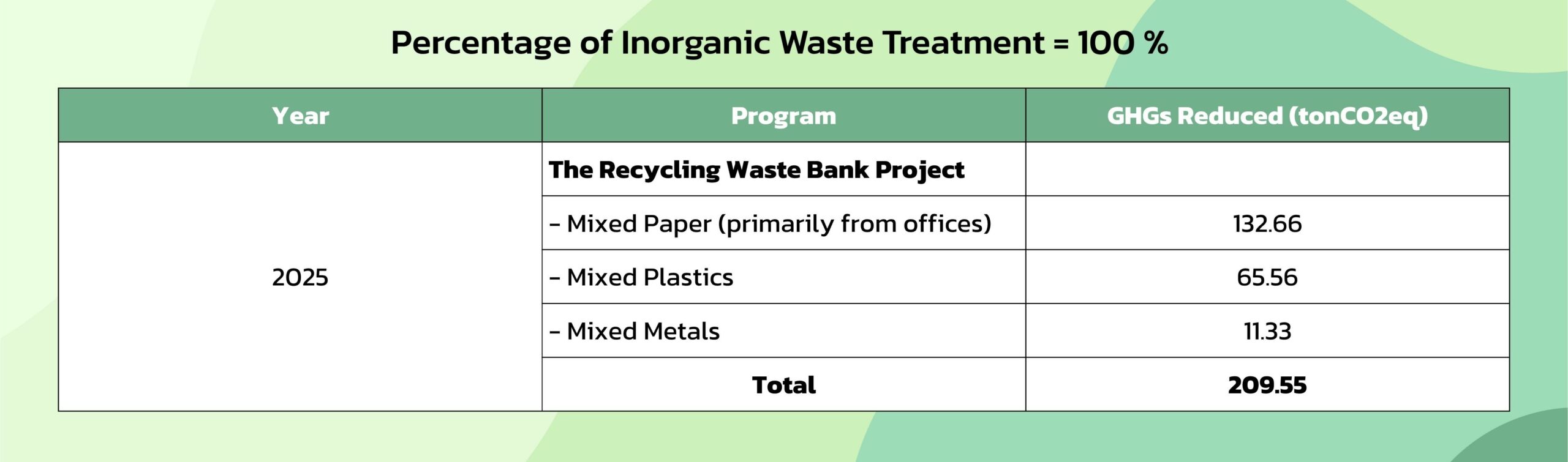
In 2025, the separation of recyclable waste such as paper, plastic, and metal through the Waste Bank project not only helped reduce the amount of waste entering the university’s waste management system but also generated income for staff and students involved in the project. Moreover, this recycling activity contributed to a reduction in greenhouse gas emissions equivalent to 209.55 tonCO2eq. (based on US EPA’s Waste Reduction Model Version 16 in December 2023 (paper, plastic, metal))
Conclusion
Walailak University treatment 100% of its inorganic waste; therefore, Extensive (> 85% treated).
Follow up through the dashboard
Figure 18 A quantitative data collection system has been established to enable real-time analysis and visualization through a dashboard.