
Conservation: Plant (Flora), Animal (Fauna), or wildlife, genetic resources for food and agriculture secured in either medium or long-term conservation facilities
Conservation: Walailak University Botanical Park
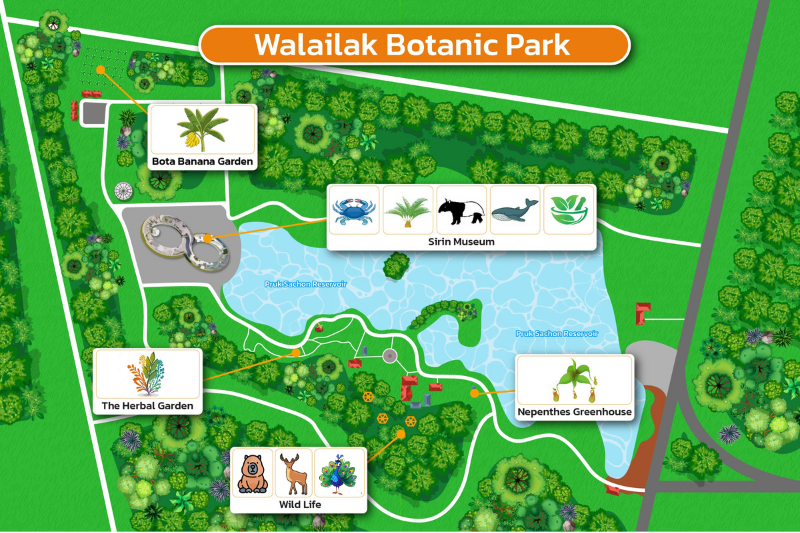
Walailak University Botanical Park is located within the university’s conservation area, covering approximately 2,160,000 square meters. It serves as a center for the conservation of plant species, animal species, wildlife, as well as genetic resources for food and agriculture. The park emphasizes the collection, propagation, and preservation of various plant families for the purposes of education, research, and conservation of native species in their original ecosystems.
Within the area, the Princess Maha Chakri Sirindhorn Natural History Museum is situated. The building is uniquely designed in the shape of the number “8” symbolizing infinity and sustainability in the conservation of natural resources, the environment, and cultural wisdom. Key exhibitions include a simulated Krung Ching Waterfall, representing the richness of the Khao Luang mountain range in Nakhon Si Thammarat Province, and a simulated marine and beach ecosystem, reflecting the abundance of the Gulf of Thailand’s resources. These exhibitions are presented under the concept “Following the footsteps of Her Royal Highness: From the Mountain Peaks to the Undersea World.” The museum provides knowledge of natural resources and southern local wisdom through exhibitions integrated with modern technology and interactive media, creating engaging and memorable experiences for visitors. The Botanical Park also plays a significant role in promoting tree planting to increase green spaces, supporting academic services, serving as a learning center for both formal and non-formal education, and continuously developing as a conservation-based eco-tourism destination in Nakhon Si Thammarat Province.
Moreover, the Botanical Garden also serves as the coordinating center for the Royal Initiative Plant Genetic Conservation Projects, supporting and coordinating various initiatives to achieve their objectives effectively. Over 75% of the conservation programs have already been implemented. The main conservation activities include:
Plant Conservation: Collecting, documenting, and conserving more than 1,000 plant species, including medicinal plants, economic crops, diverse banana cultivars, and rare native species.
Animal Conservation: Collecting and conserving over 158 bird species within the university, as well as wildlife such as spotted deer, hog deer, barking deer, capybara, and peafowl, to sustain biodiversity and ecosystem balance.
Animal conservation
Smart Farm Center
Walailak University places great importance on comprehensive agricultural development. The University conducts teaching and learning through the School of Agricultural Technology, while also engaging in research and providing academic services to the community. These efforts aim to serve as a knowledge hub for students and farmers in Nakhon Si Thammarat Province and neighboring areas.
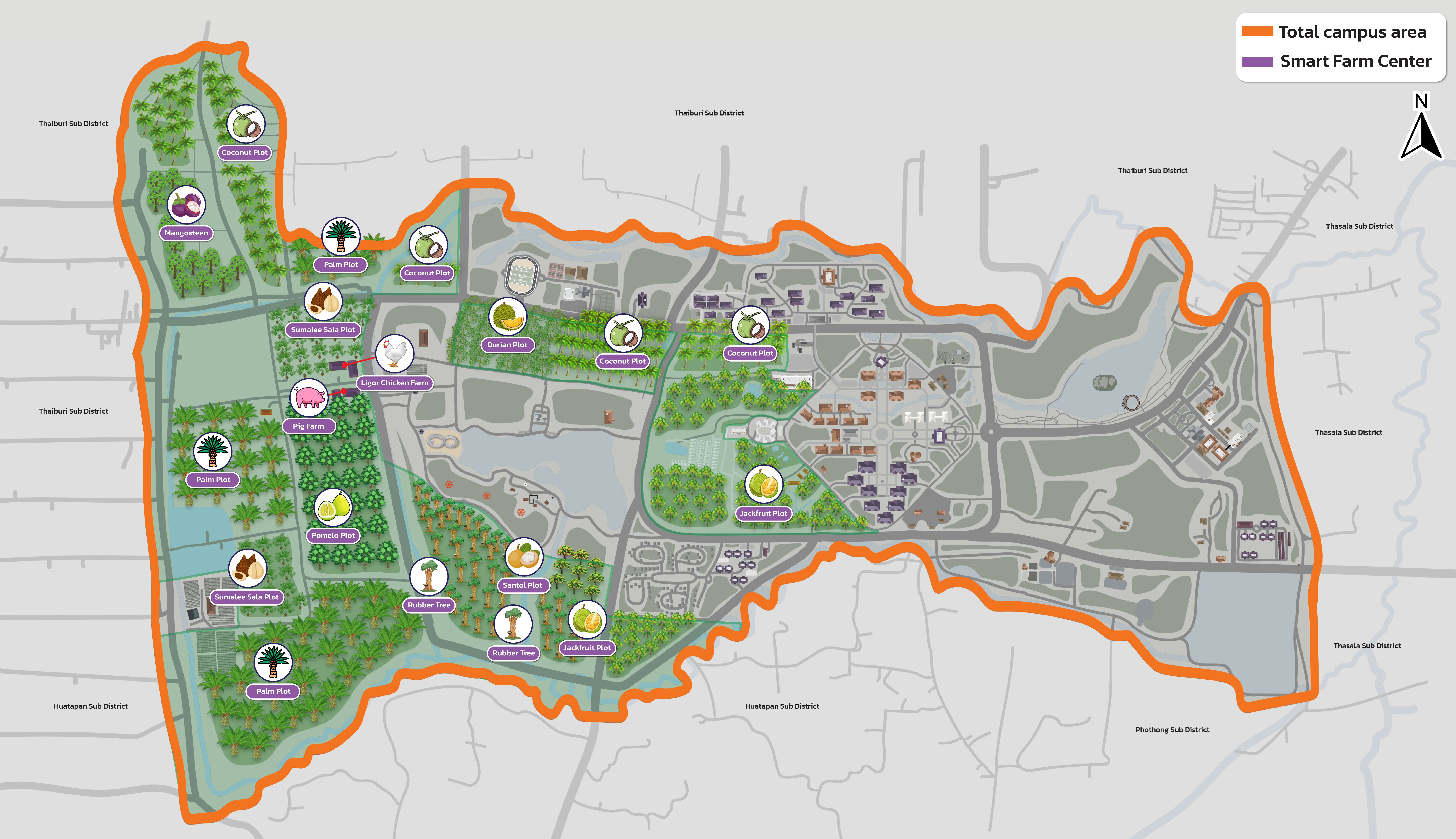
To enhance the management and efficiency of the University’s agricultural operations, the Smart Farm Center has been established, covering an area of 6,045,143.96 square meters. The Center was developed to transform existing farms into a modern management system by integrating advanced technologies into all aspects of production, including horticulture, field crops, livestock, and aquaculture.
The Smart Farm Center focuses on promoting and developing standardized, high-quality systems of livestock and agricultural production. It also serves as a learning and training center for students, farmers, and the general public.
In addition, the Center plays a crucial role in the conservation of plant and animal genetic resources through systematic breeding and management, with the goal of ensuring long-term food security and agricultural sustainability. The conservation projects have already achieved more than 75% completion.
Plant species: aromatic coconut, mangosteen, durian, salacca, santol, lime, and jackfruit.
Animal species: chicken and swine.
Food and Agriculture
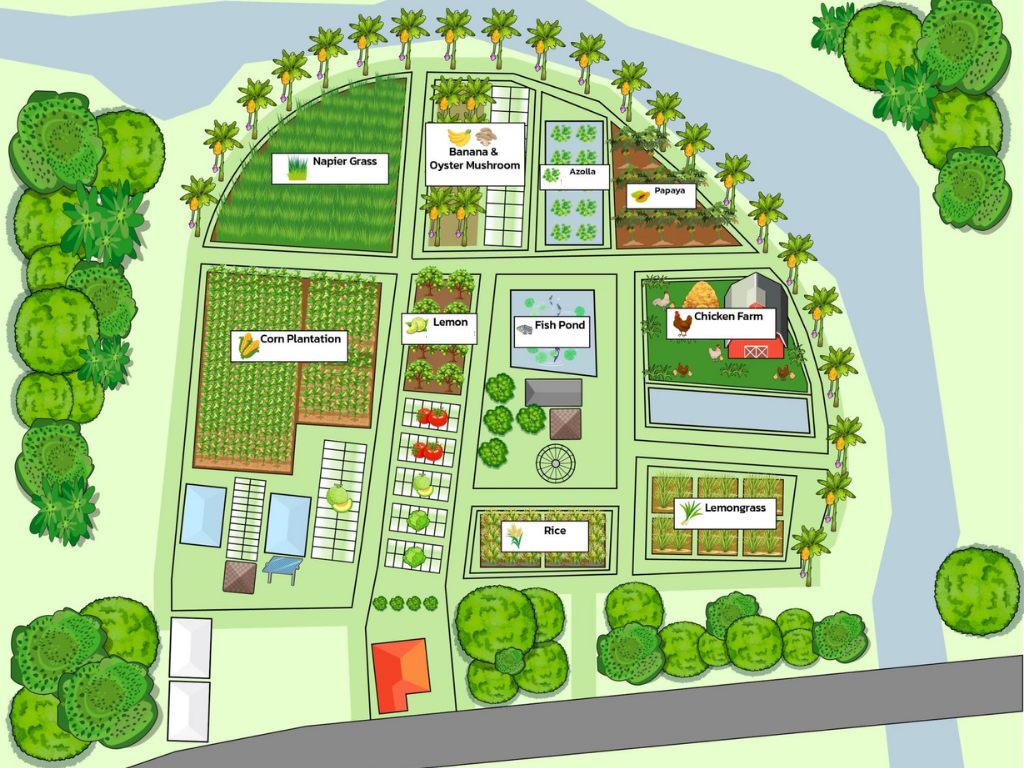

The School of Agricultural Technology and Food Industry has been assigned by Walailak University to operate the King Rama IX Agricultural Innovation Demonstration and Development Center. Covering an area of 26,696.40 square meters, the center aims to put the late King’s royal initiatives into practical application. It focuses on the integration of agricultural technology and innovation with organic farming practices, encompassing post-harvest management, product processing, and marketing to generate income efficiently and timely. The center also promotes collaboration among farmer networks. Serving as an important learning and study site for agricultural personnel, students, and the general public, the center provides participants with knowledge and experience in applying the “New Theory” agricultural practices inspired by the royal initiatives. It supports sustainable livelihoods and plant conservation. Currently, The center currently cultivates a variety of crops, including melons, tomatoes, Jasmine rice, and hydroponic vegetables such as green oak, red oak, butterhead, kale, and cos lettuce. Conservation program >75% implemented.