Transportation Initiatives: Shuttle Services and Programs to Limit Private Vehicle Use
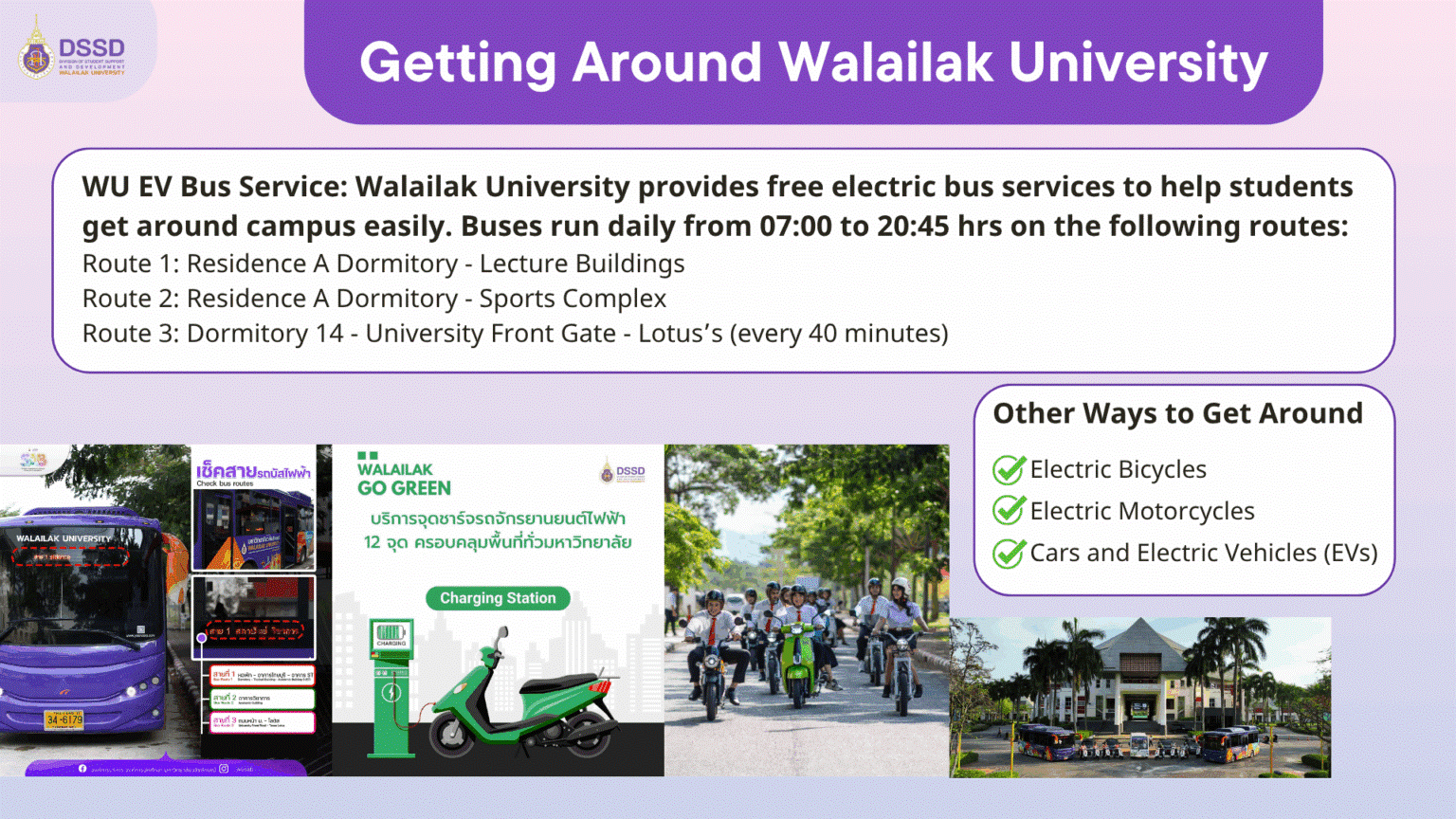
Getting around walailak university
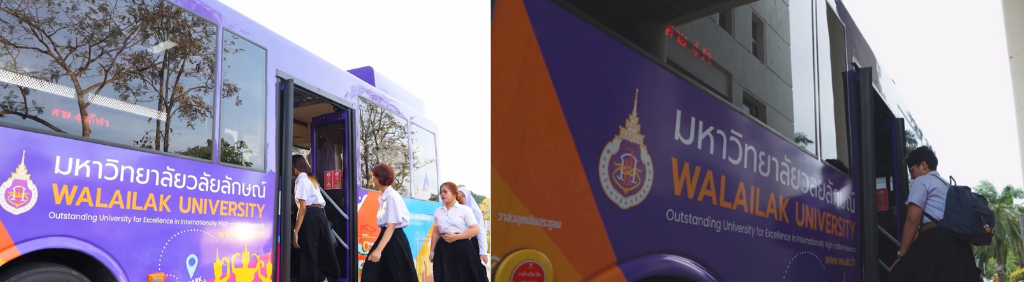
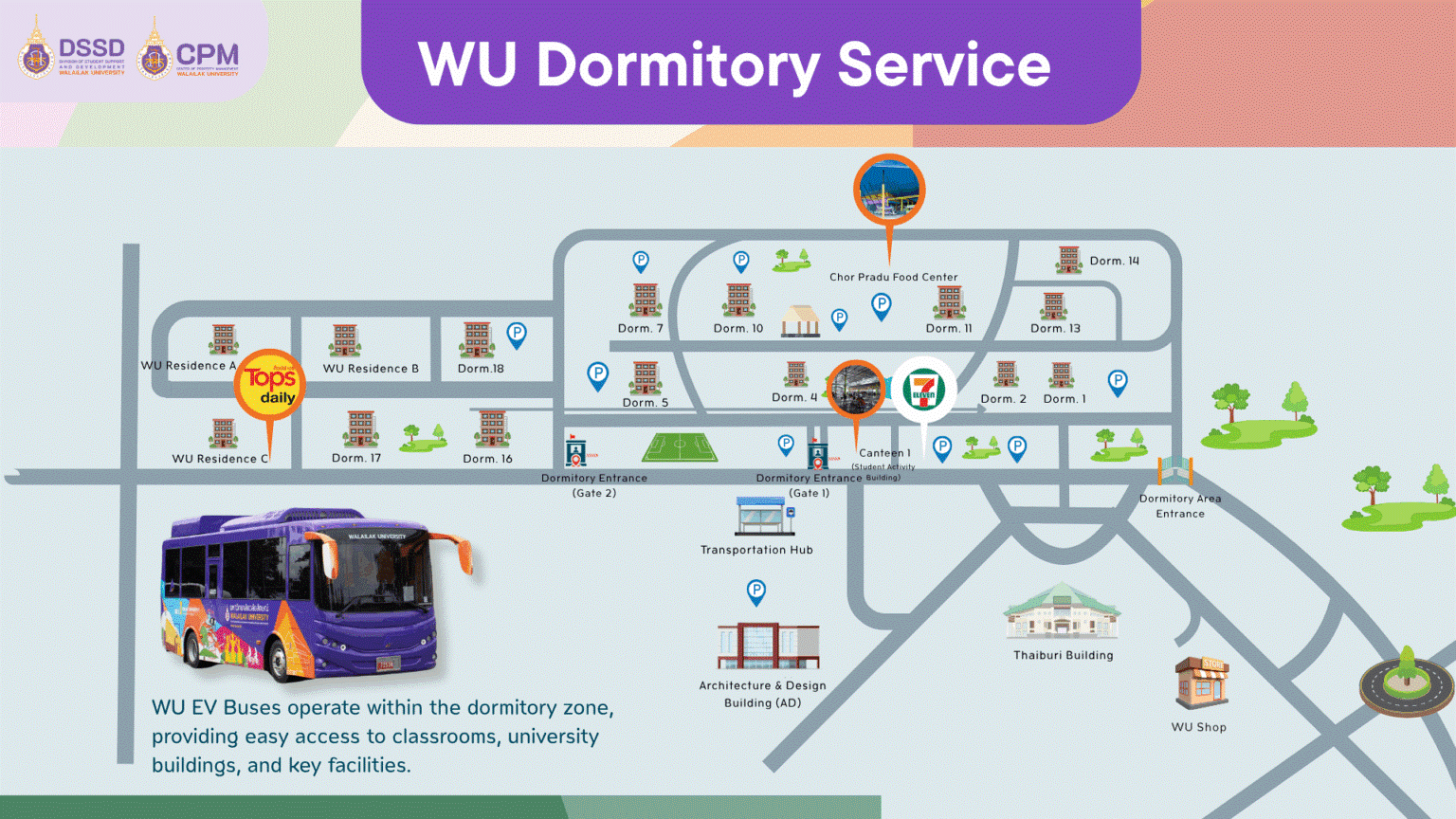
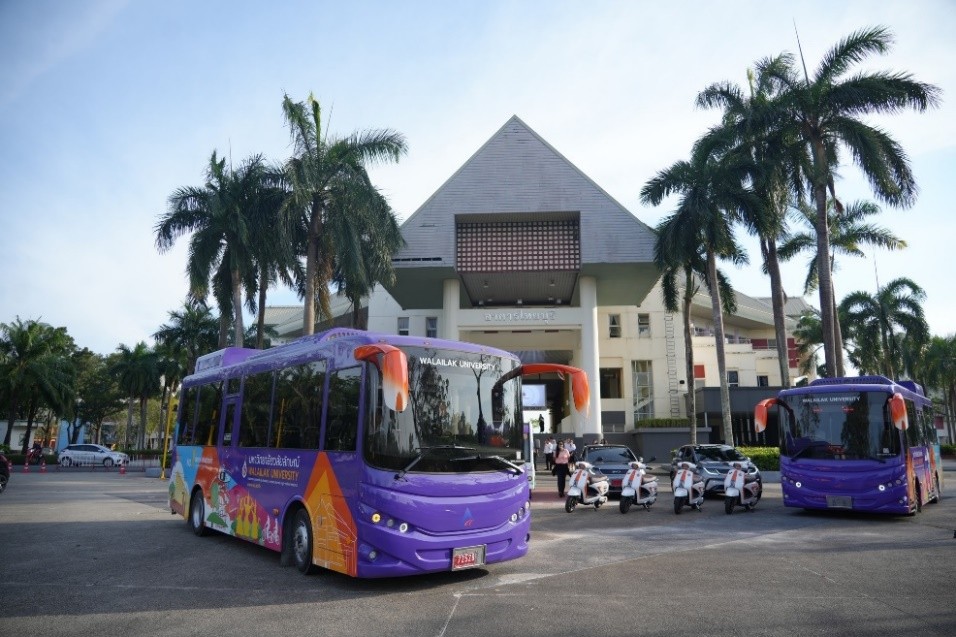
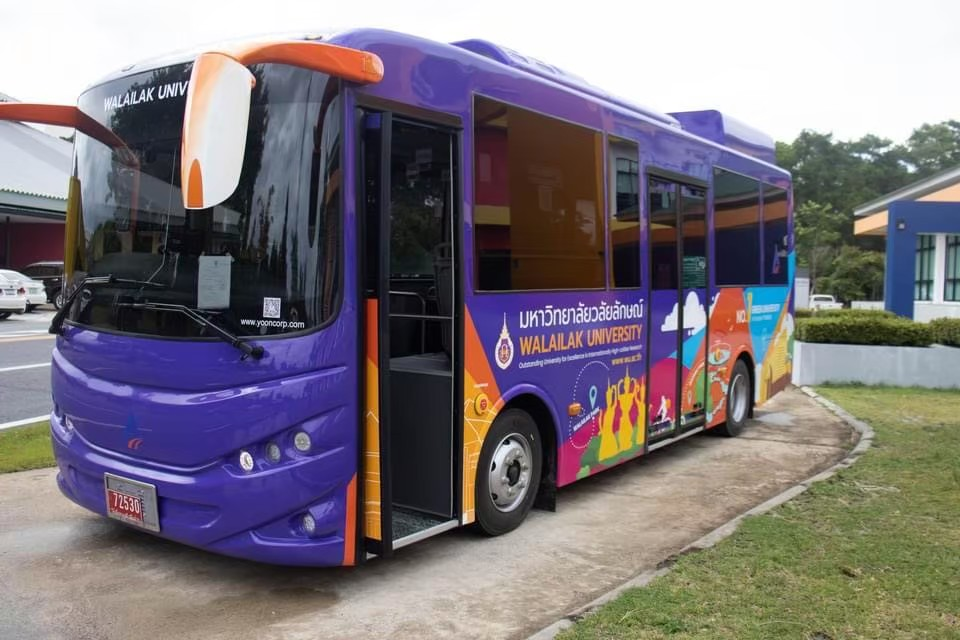
WU EV buses operate within the dormitory zone, providing easy access to classrooms, university buildings, and key facilities.
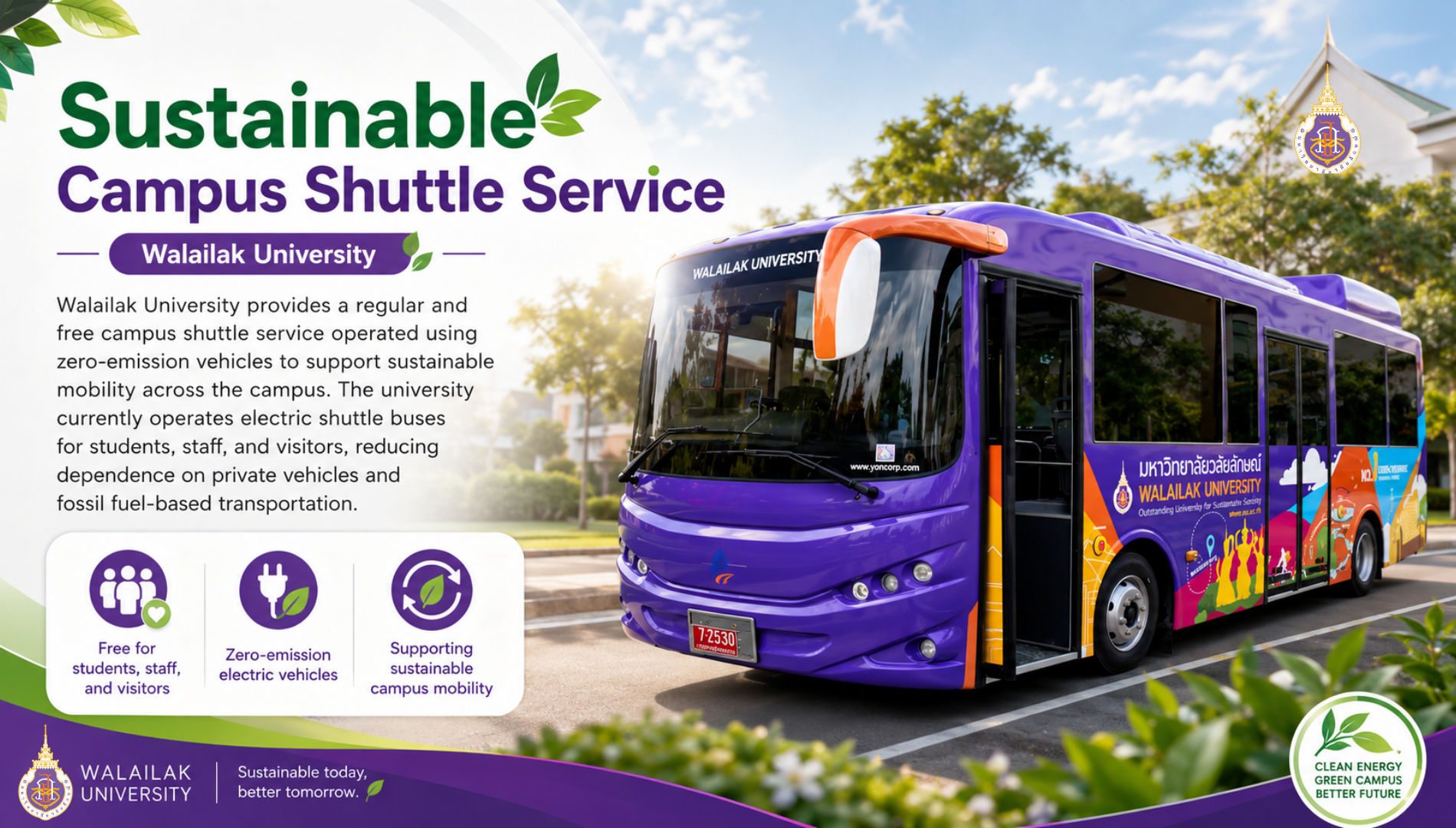
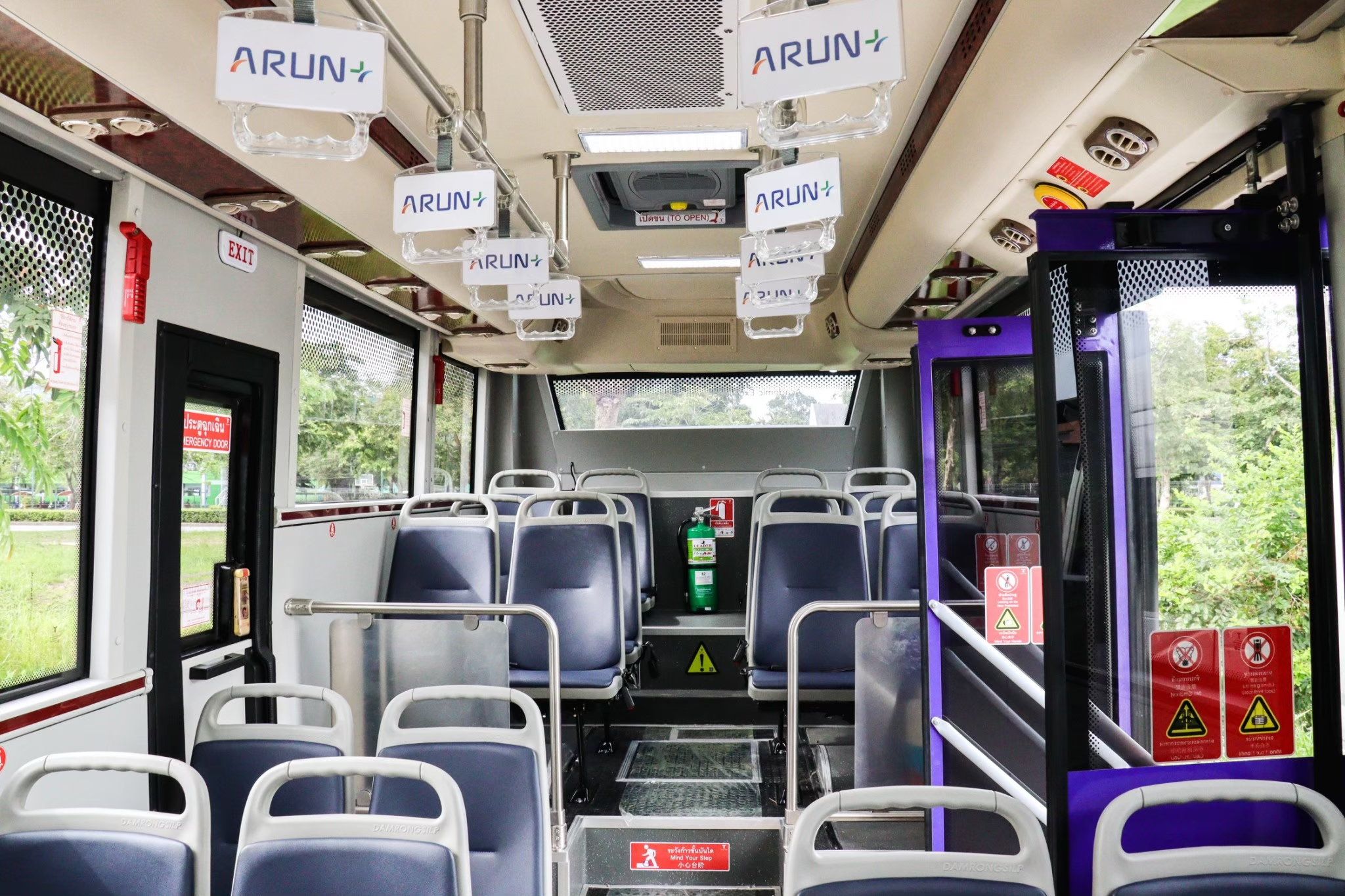
Walailak University provides a regular and free campus shuttle service operated using zero-emission vehicles to support sustainable mobility across the campus. The university currently operates electric shuttle buses for students, staff, and visitors, reducing dependence on private vehicles and fossil fuel-based transportation.
The university provides shuttle services for staff members to reduce the use of private vehicles, particularly for those commuting from outside the campus. This initiative encourages shared transportation among personnel traveling along the same routes, replacing individual car use with university-operated shuttle services.
Public Electric Vehicle Services within the Campus
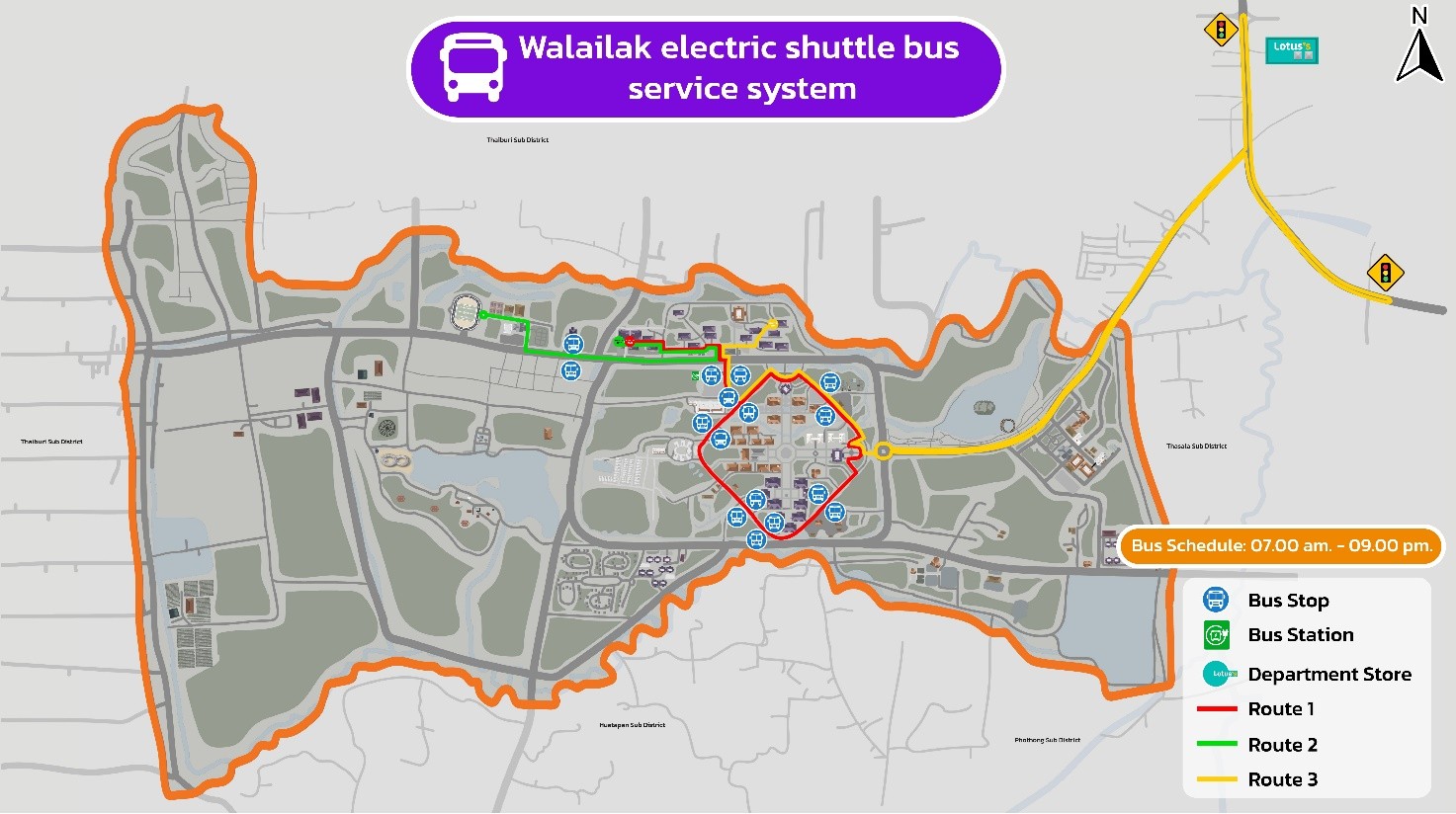
Electric Shuttle Bus Service: Walailak University operates a public electric shuttle bus service to minimize the use of private vehicles among staff. The service includes nine electric shuttle buses operating daily from 07:00 to 21:00, covering all major areas of the campus such as academic buildings, student and staff dormitories, the sports complex, and the Walailak University Medical Center Hospital.
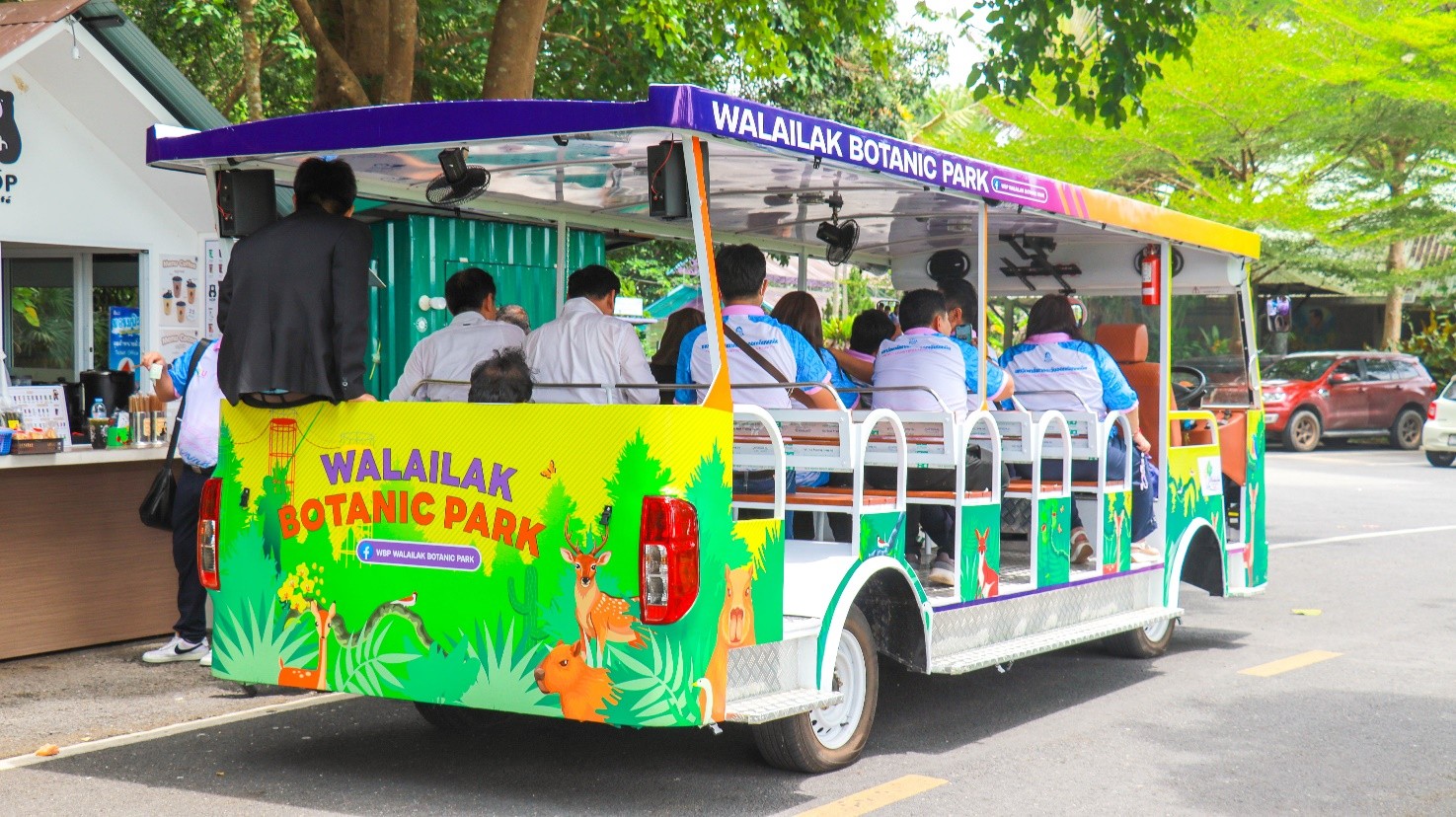
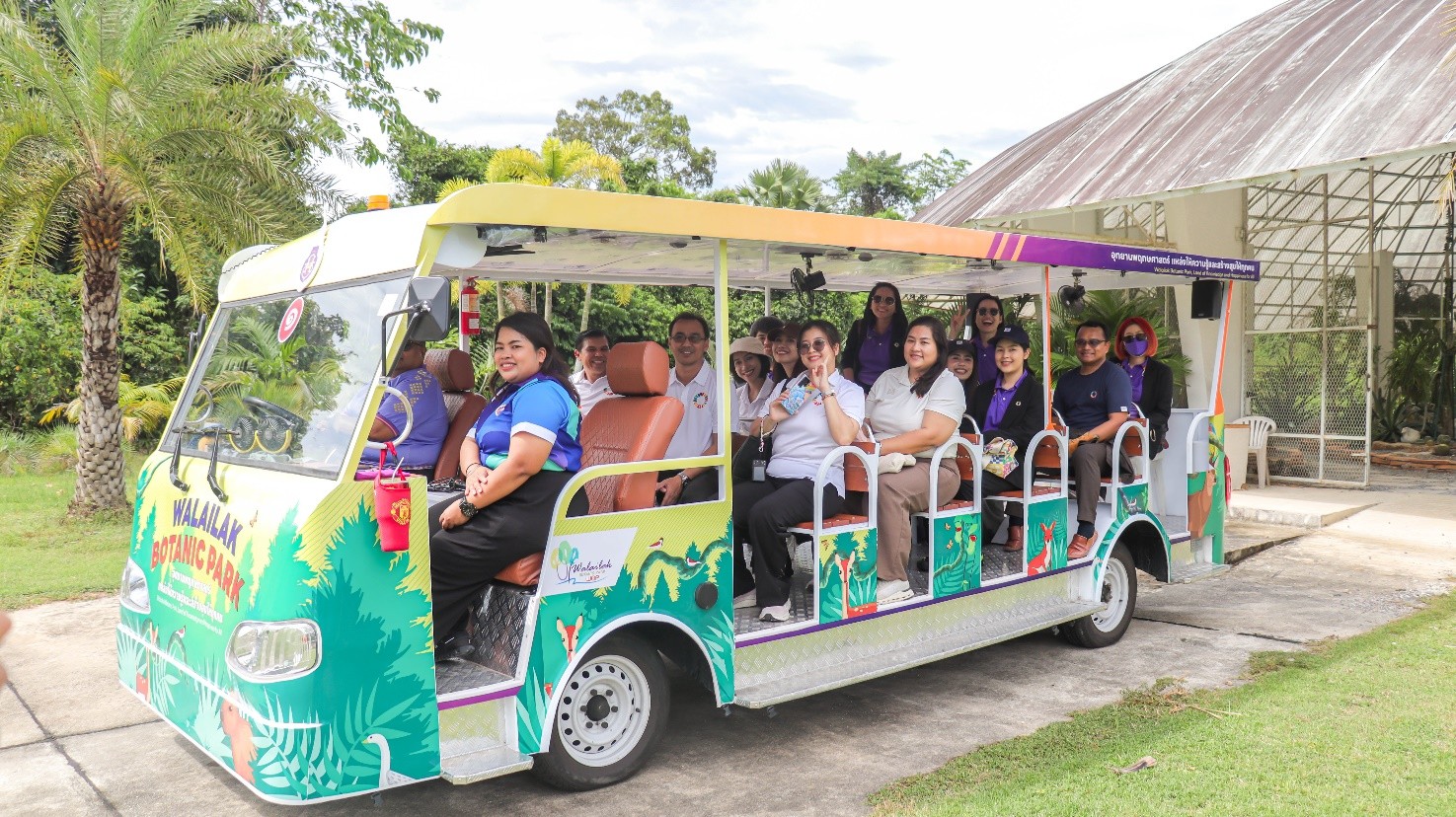
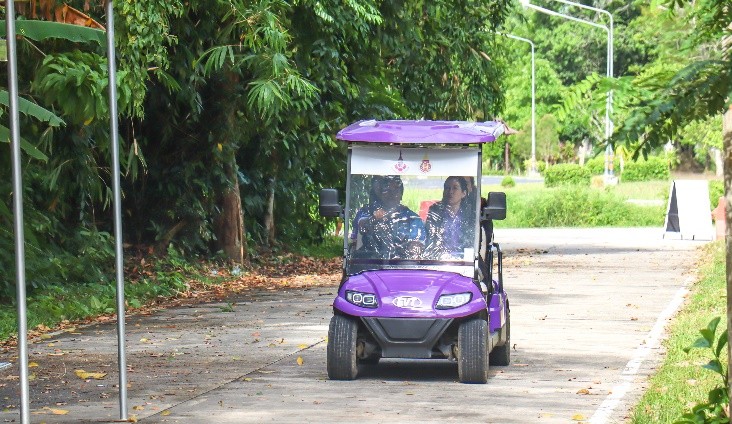
Electric Tram Service: The university operates electric trams for students, staff, and visitors within the Botanical Park to reduce private vehicle usage in the area.
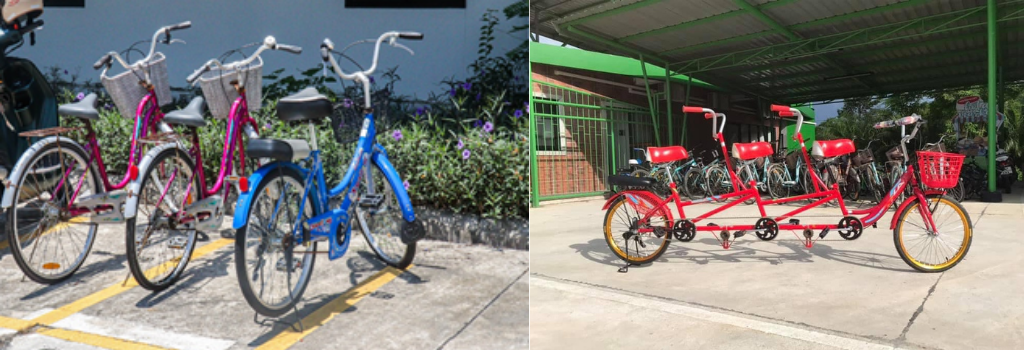
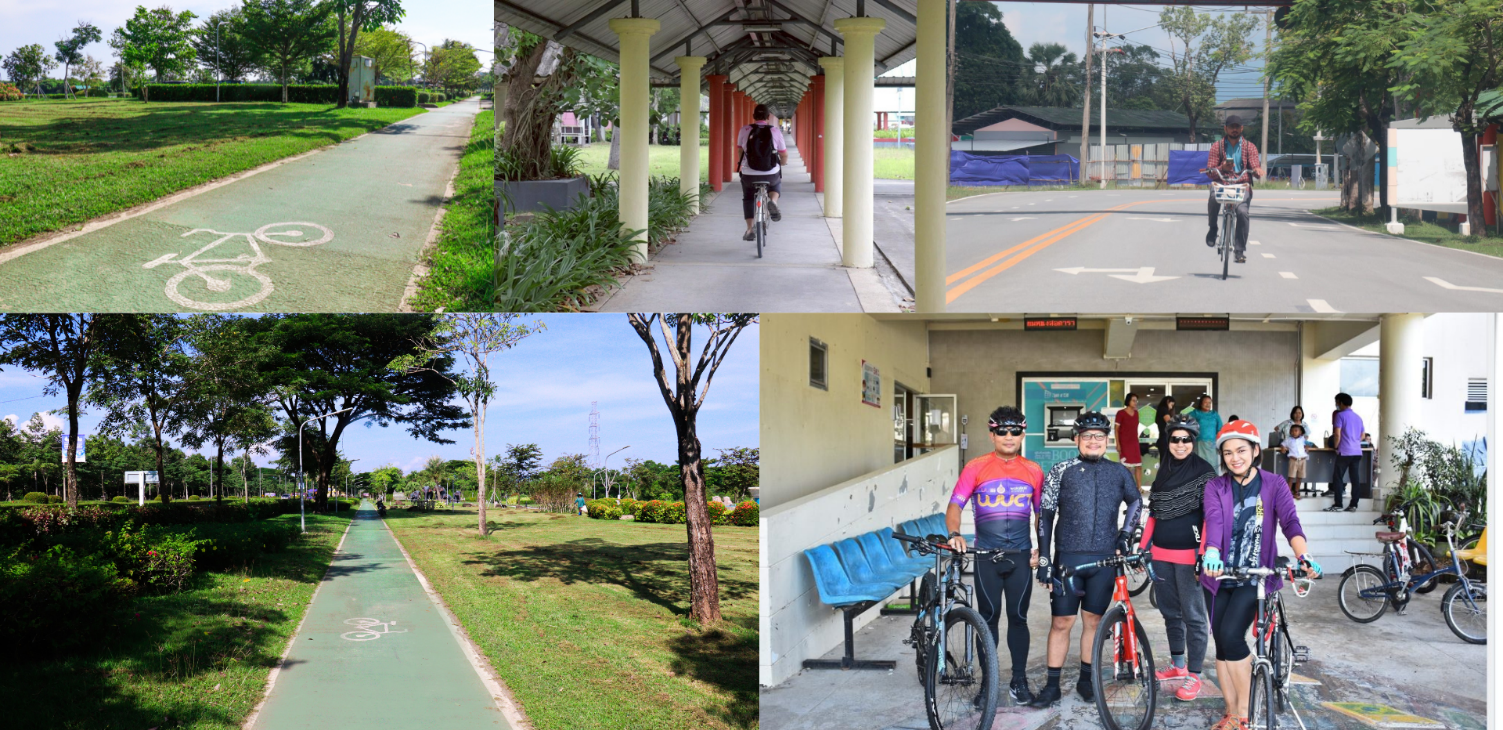
Public Bicycle Service: The university continuously promotes the use of bicycles for internal travel and provides a public bicycle rental service for convenient and sustainable mobility on campus.
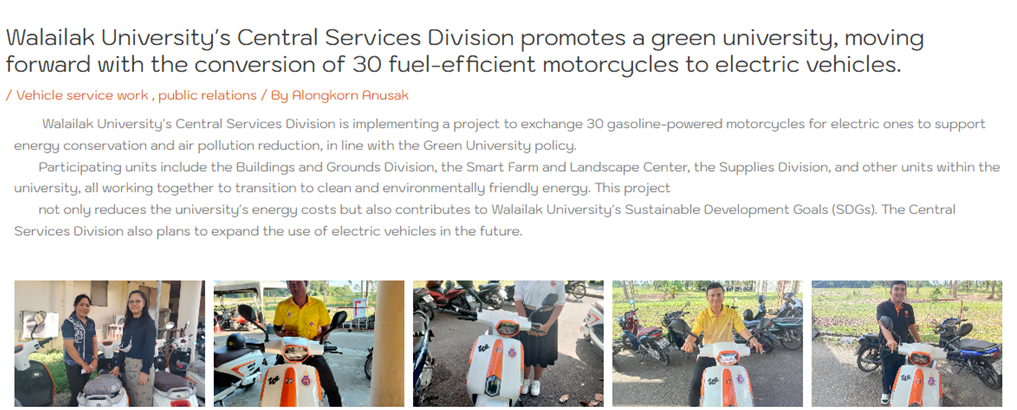
Public Electric Motorcycle Service: Electric motorcycles are available for students and staff to facilitate on-campus travel and reduce the use of combustion-engine motorcycles.
Electric Shuttle Bus Service
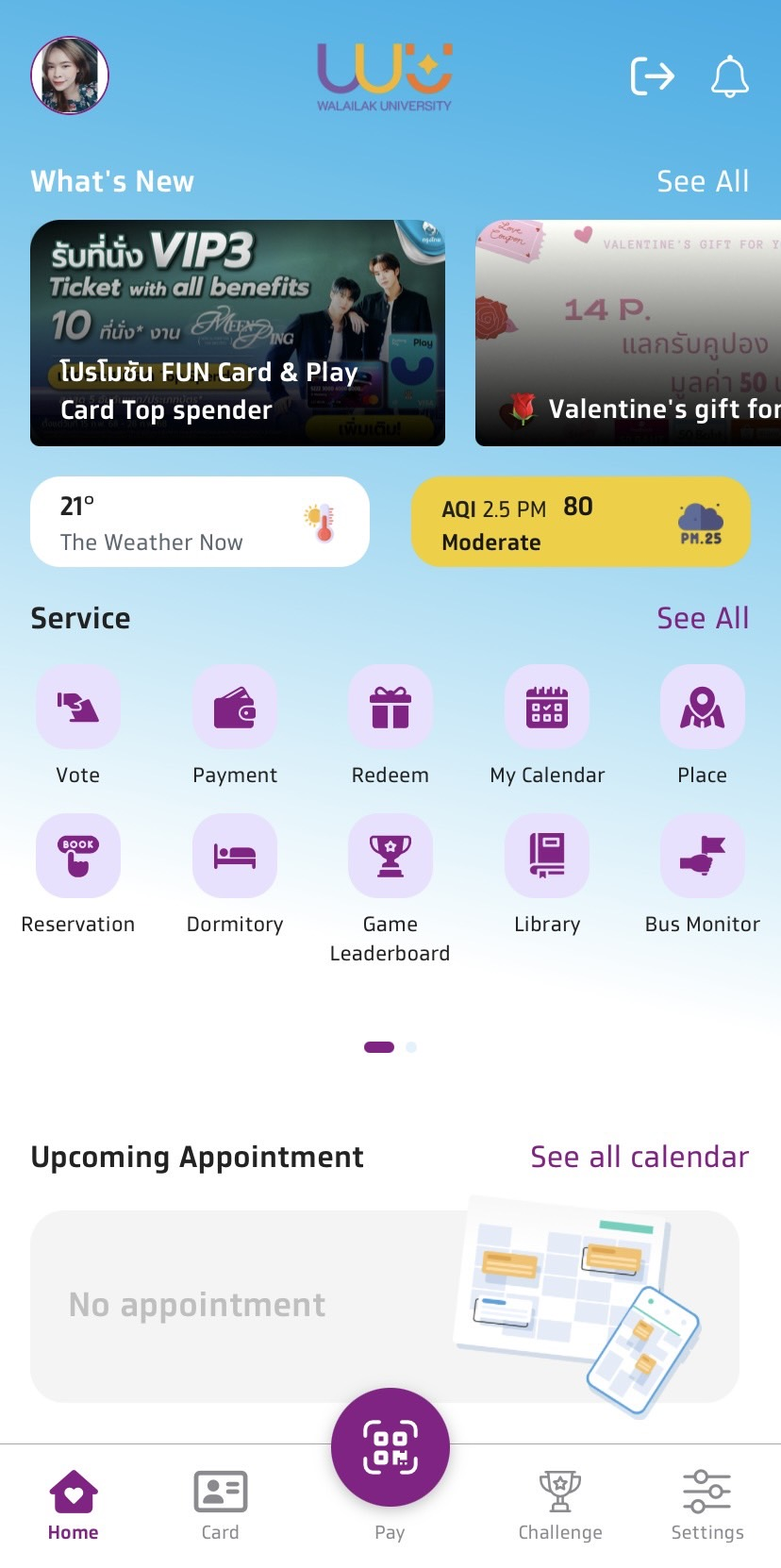
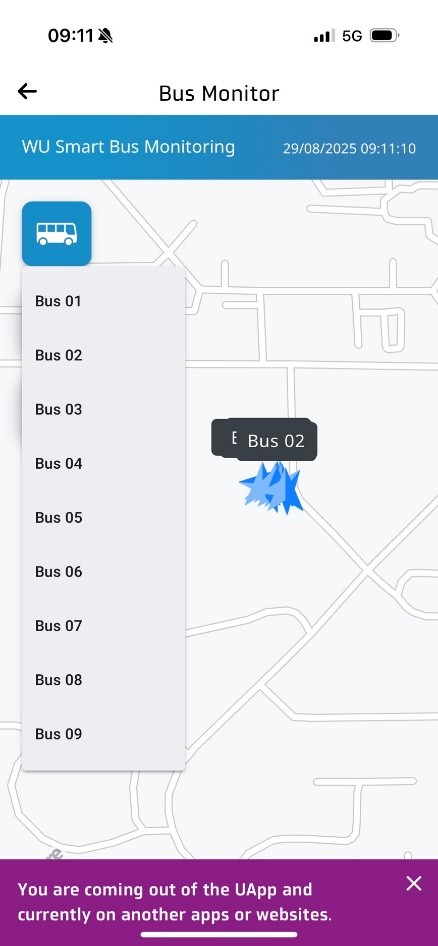
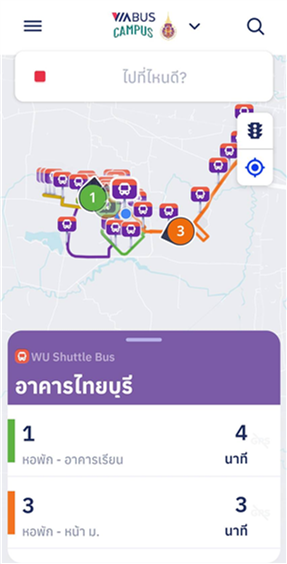
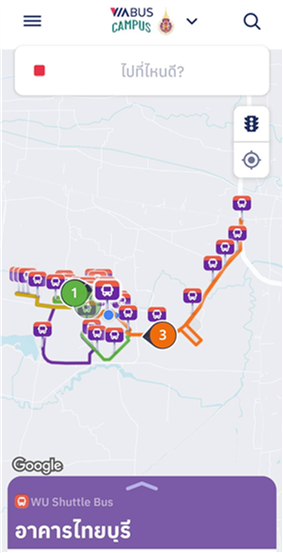
Tracking the electric shuttle bus service of the WU APP application
Via electric shuttle bus service tracking
Walailak electric shuttle bus servive system
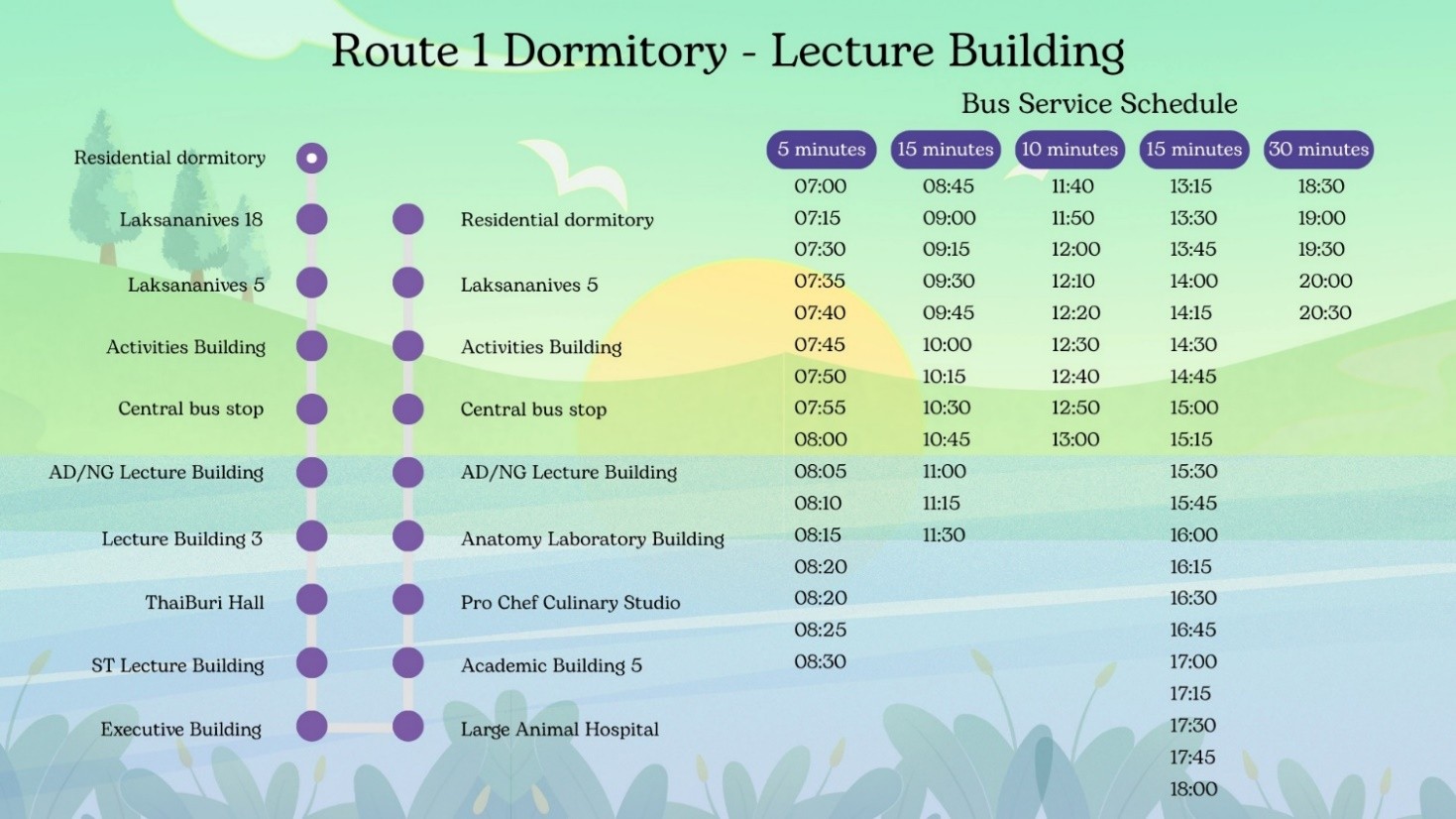
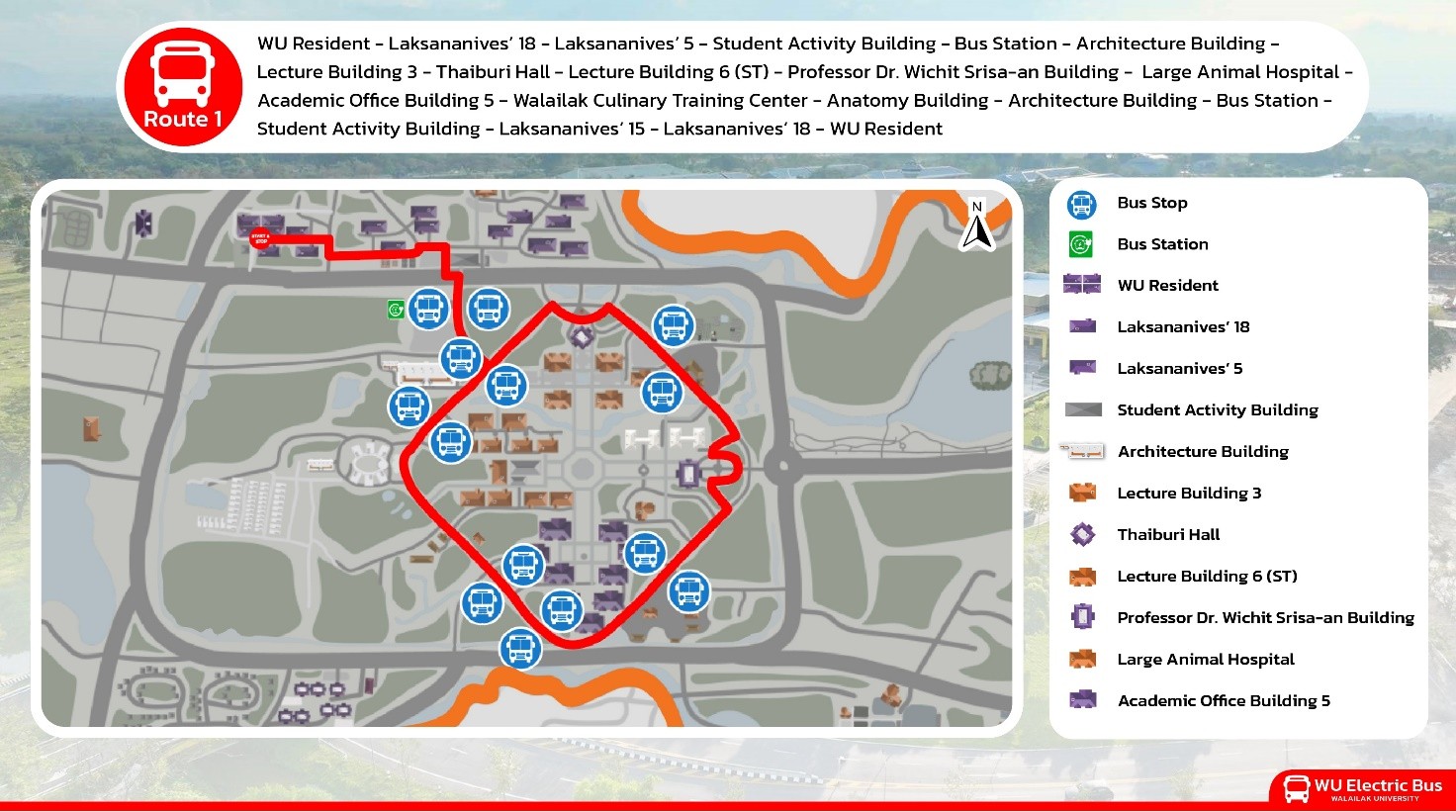
Electric Shuttle Bus Service Route 1
Electric Shuttle Bus Service Route 1
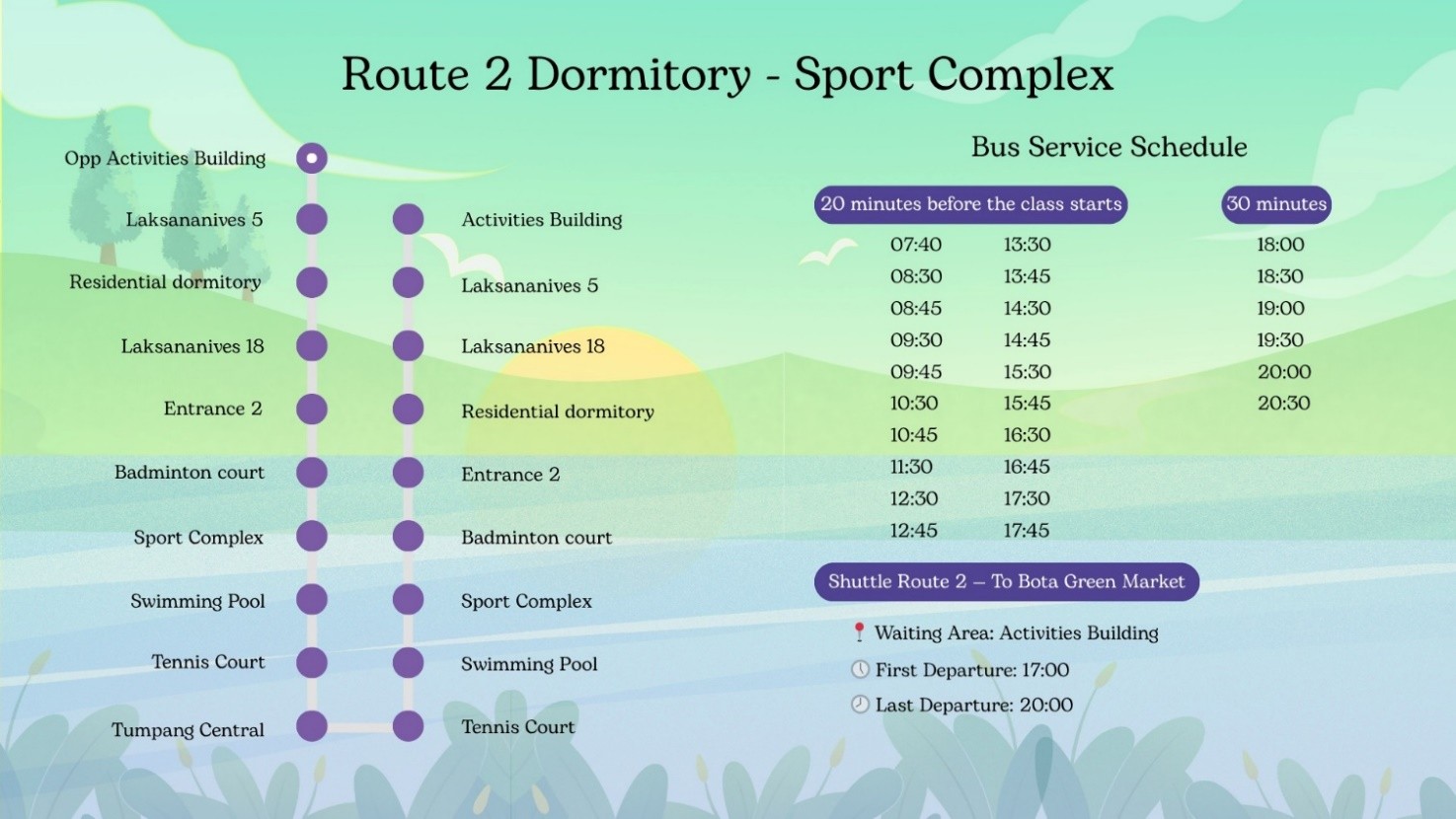
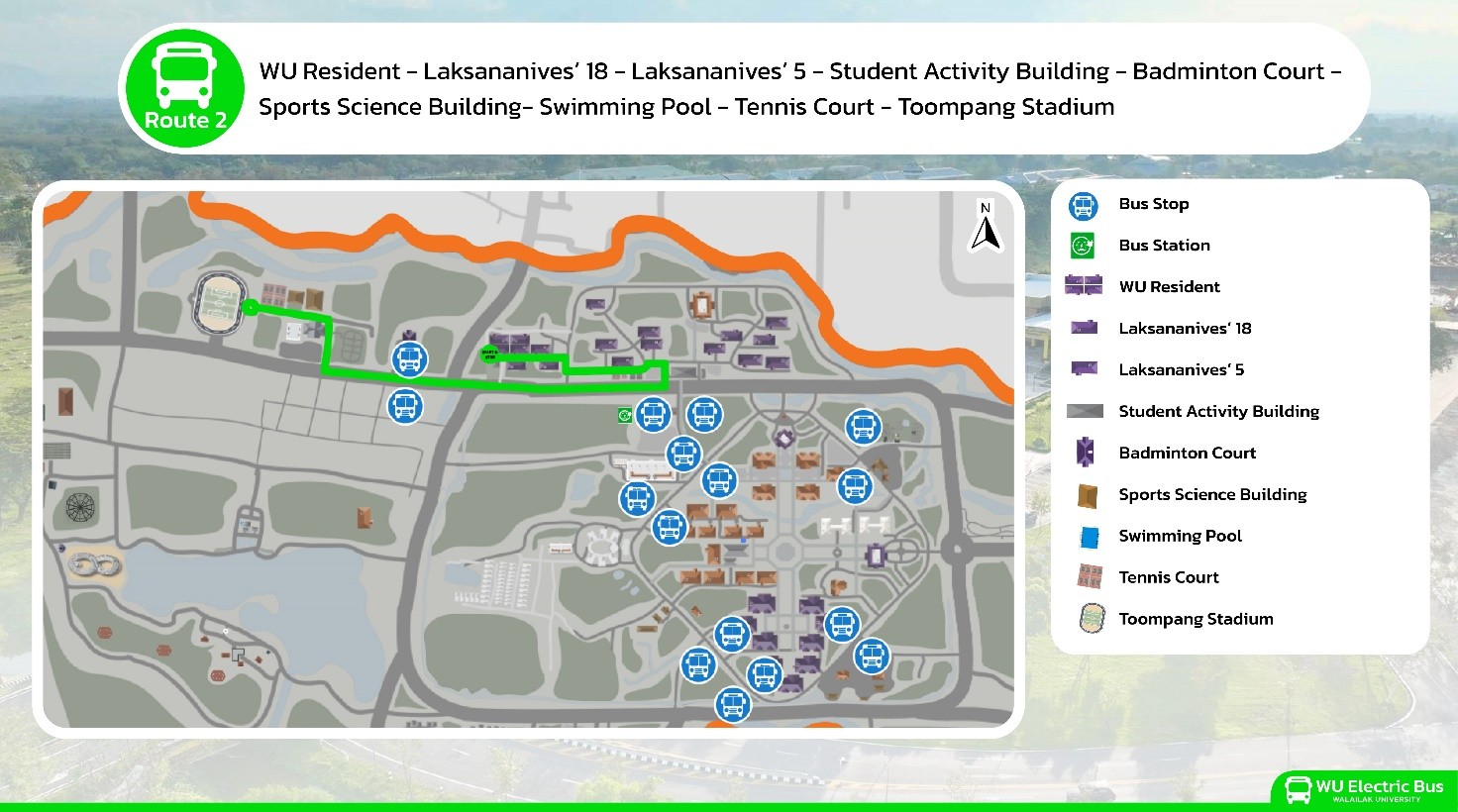
Electric Shuttle Bus Service Route 2
Electric Shuttle Bus Service Route 2
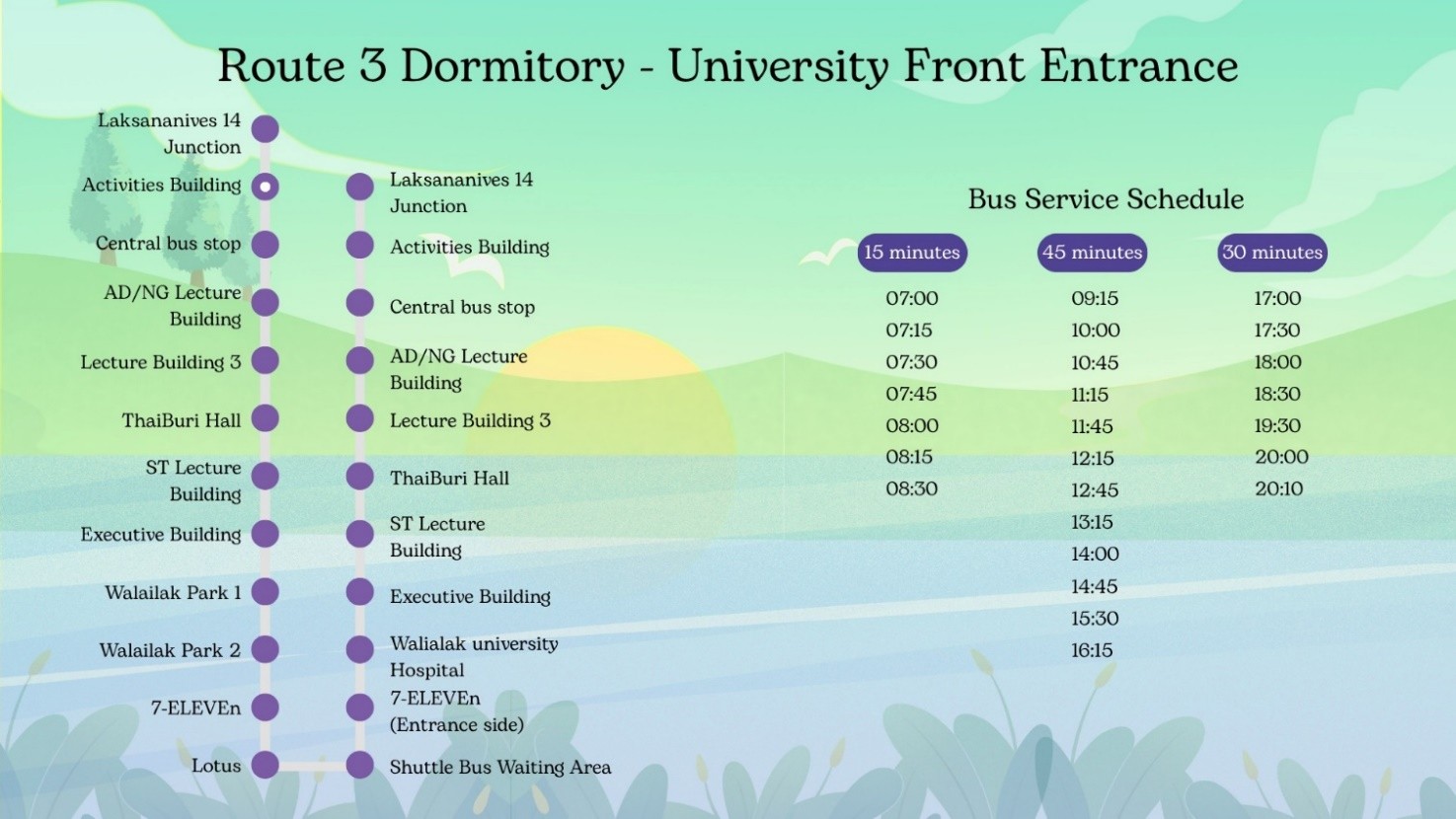
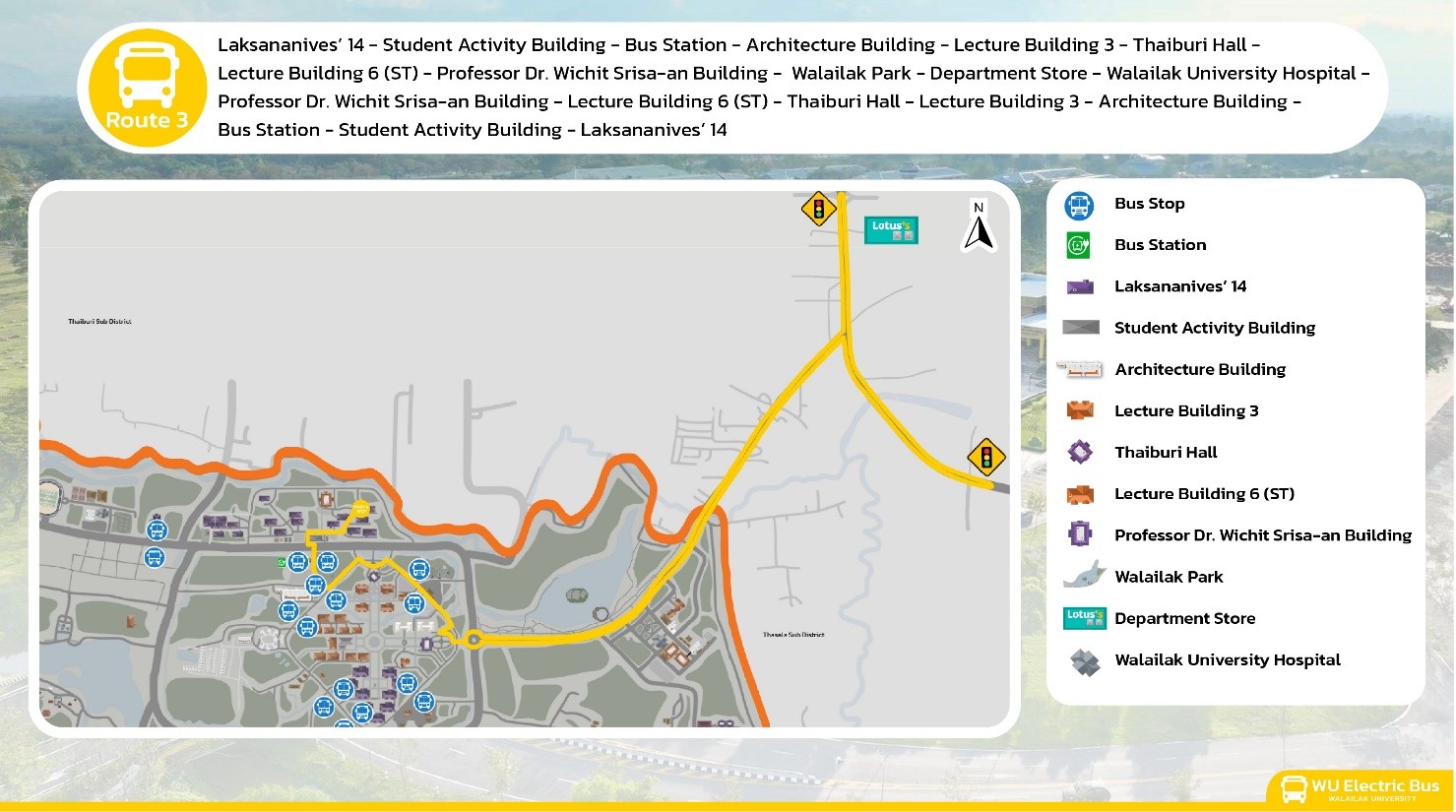
Electric Shuttle Bus Service Route 3
Electric Shuttle Bus Service Route 3
Electric tram service
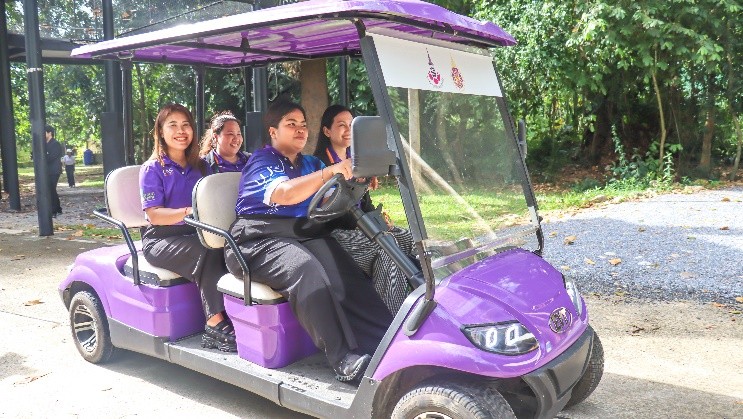
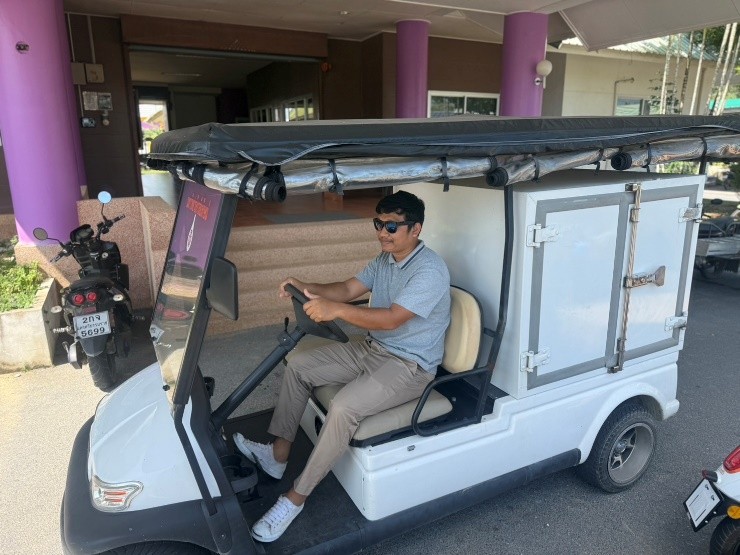
Electric golf cart service
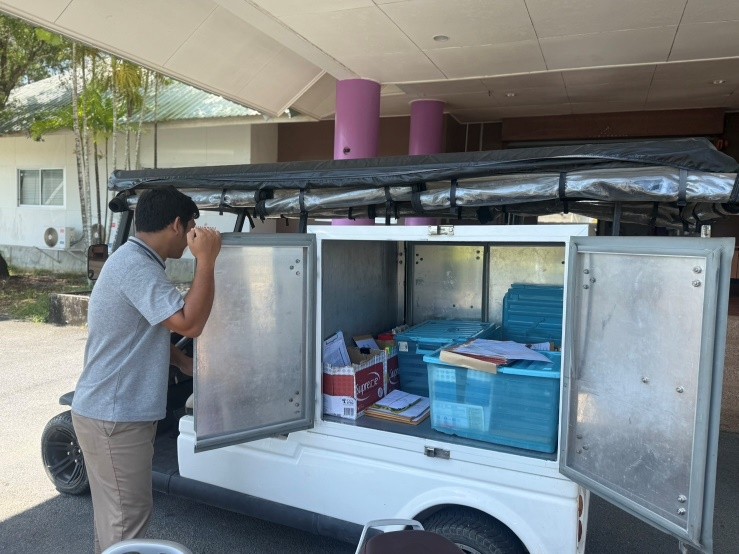
Document delivery service
Electric Motorcycle Service
Bike-sharing
Sustainable Mobility Initiatives
Walailak University promotes the use of public transportation and electric vehicles to reduce emissions. Charging stations for electric vehicles have been installed throughout the campus to support convenient use of electric mobility.
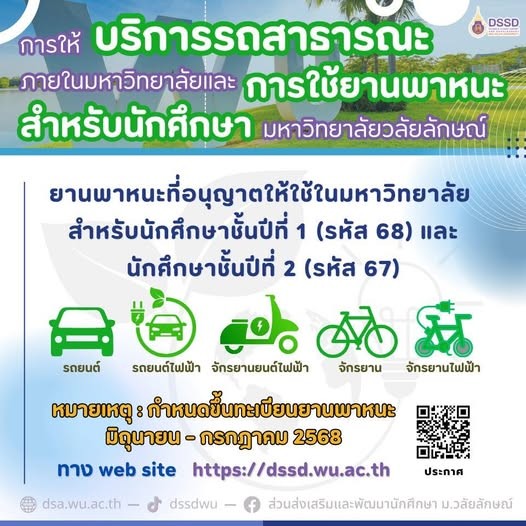
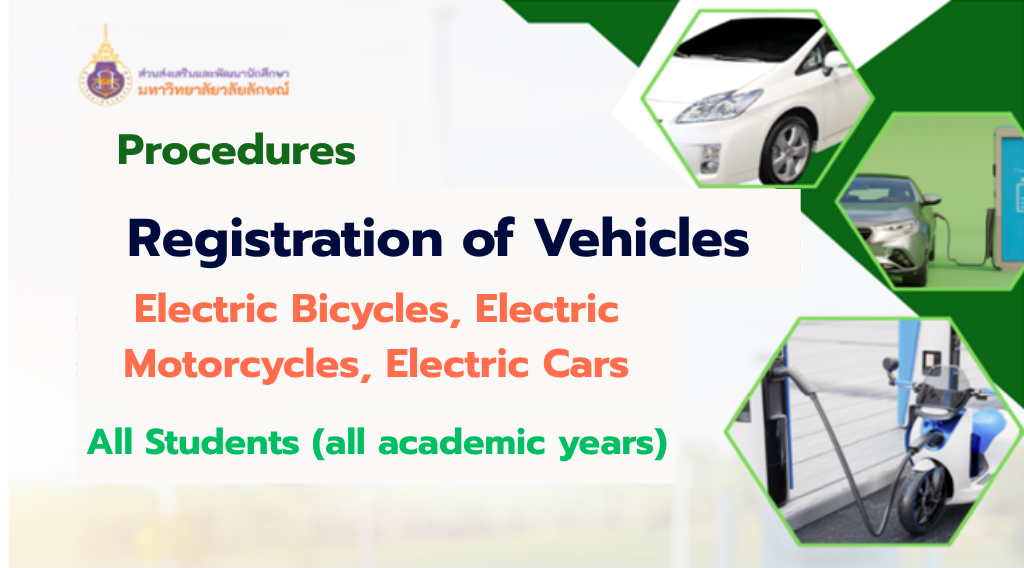
Limiting the use of student vehicles: The Student Support and Development Division has issued regulations regarding student vehicle usage, requiring students to register and obtain permission through the University Access Card system to enter and exit the campus. This measure aims to control and limit the number of vehicles used by students and staff within the university area.
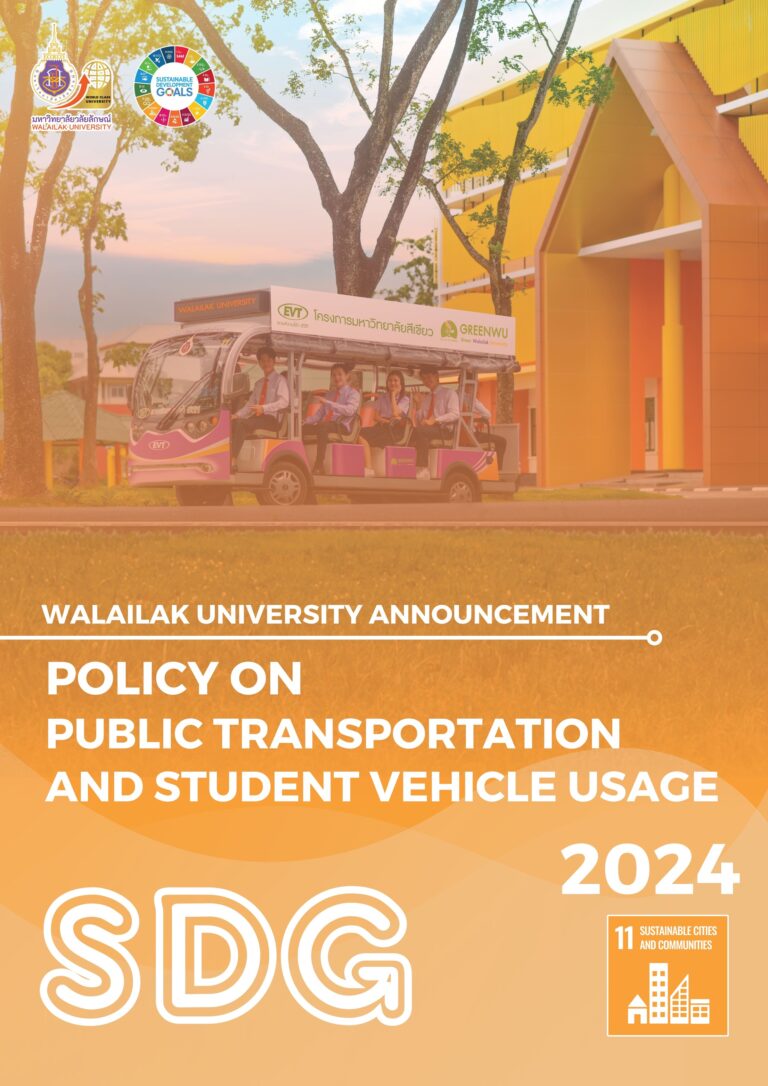
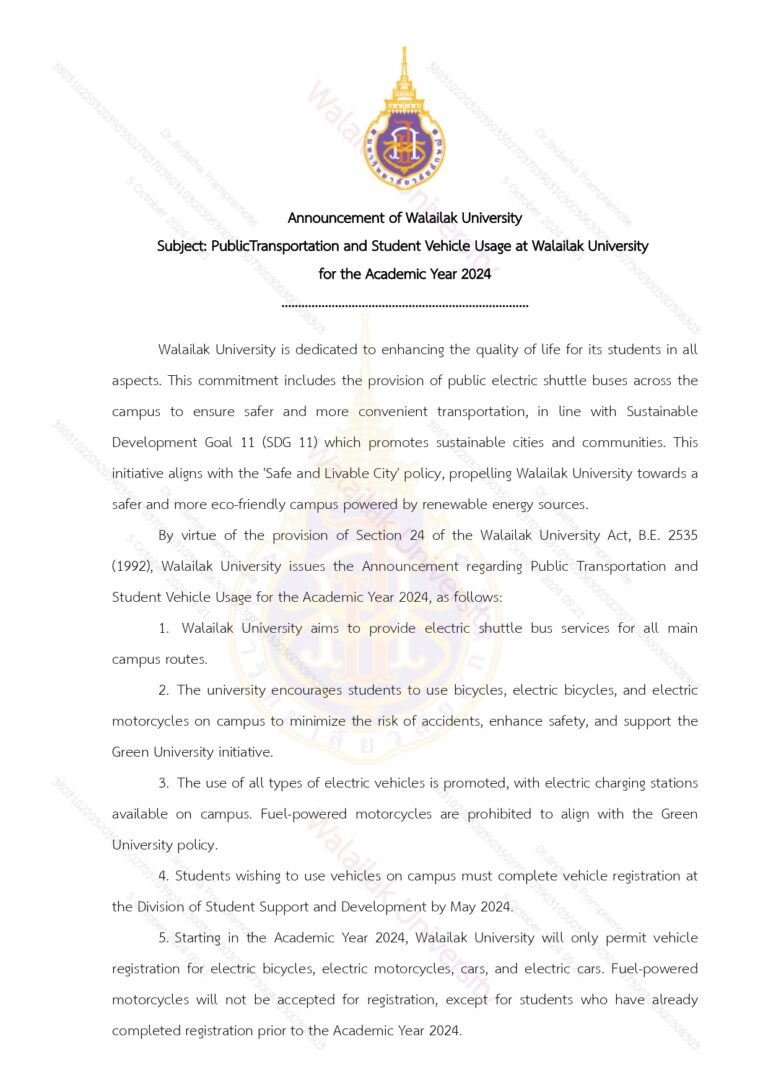
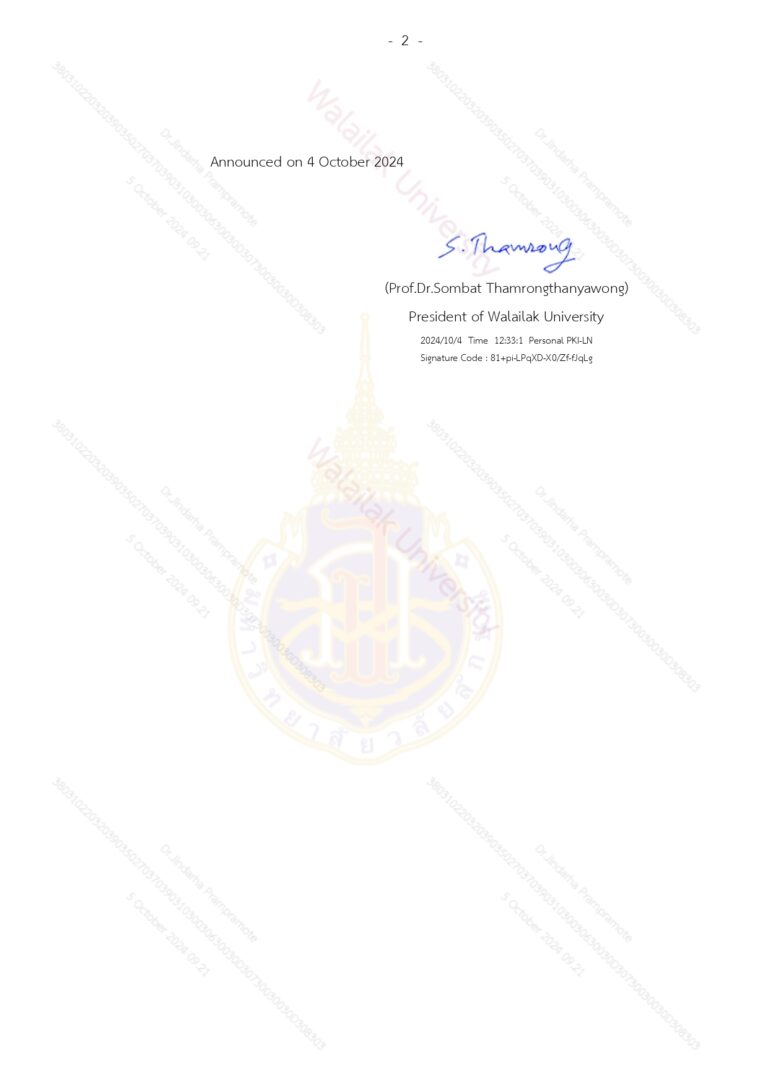
Announcement on the Provision of Public Transportation Services to Reduce the Use of Private Vehicles on Campus
Cycling and Pedestrian–Friendly Campus
Bicycle Lanes: Dedicated bicycle lanes have been designed to ensure the safety of cyclists and to reduce the use of motorcycles and combustion-engine cars within the university area.
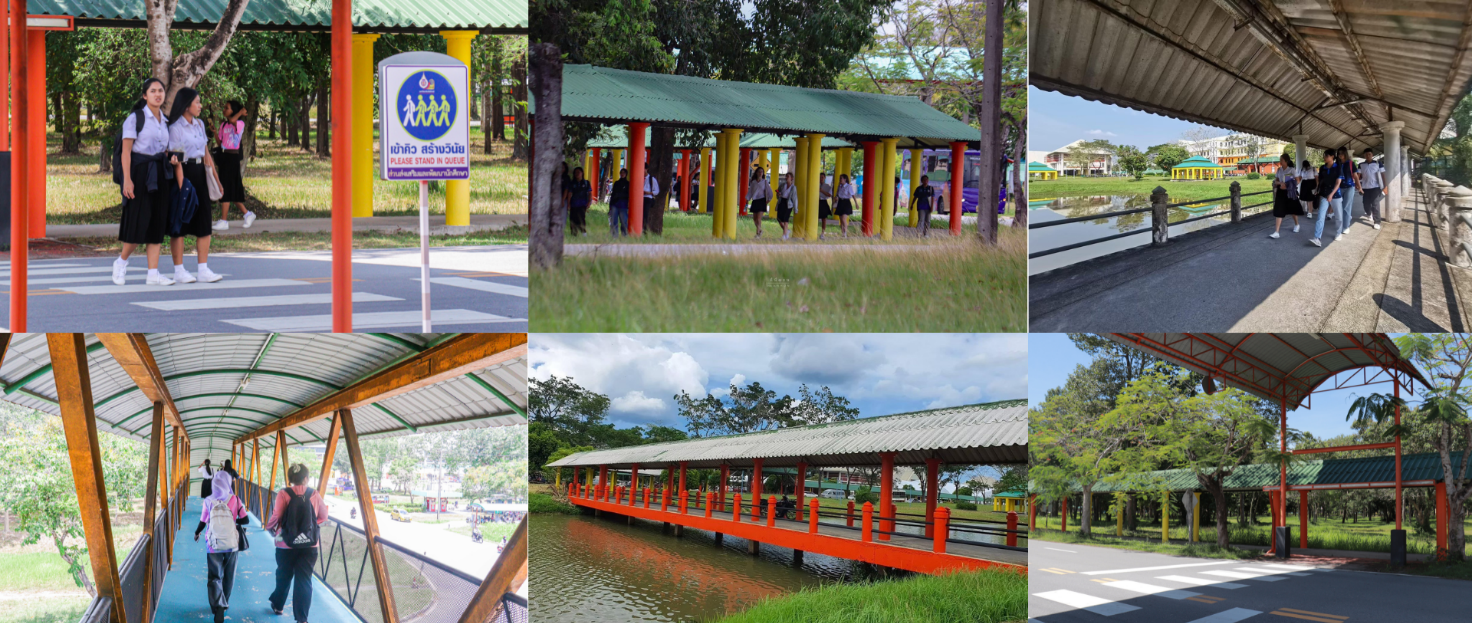
Pedestrian Walkways: Pedestrian paths have been upgraded with proper lighting, barriers, directional signs, ramps, and handrails to provide a safe and accessible walking environment for all users, including persons with disabilities or those requiring special assistance, connecting dormitories, academic buildings, and key areas across the campus.
Promotion of Bicycle Use within the University
Cover Walk Way Connecting The Buildings
Walailak University is strongly committed to reducing private vehicle usage by promoting public transportation, shared mobility, and the use of clean-energy vehicles. These efforts aim to reduce air pollution, enhance safety, and foster environmental consciousness among staff and students. Through the continuous development of sustainable public transport systems, bicycle infrastructure, and pedestrian facilities, the university aligns its initiatives with the Green University concept and the United Nations Sustainable Development Goals (SDGs).