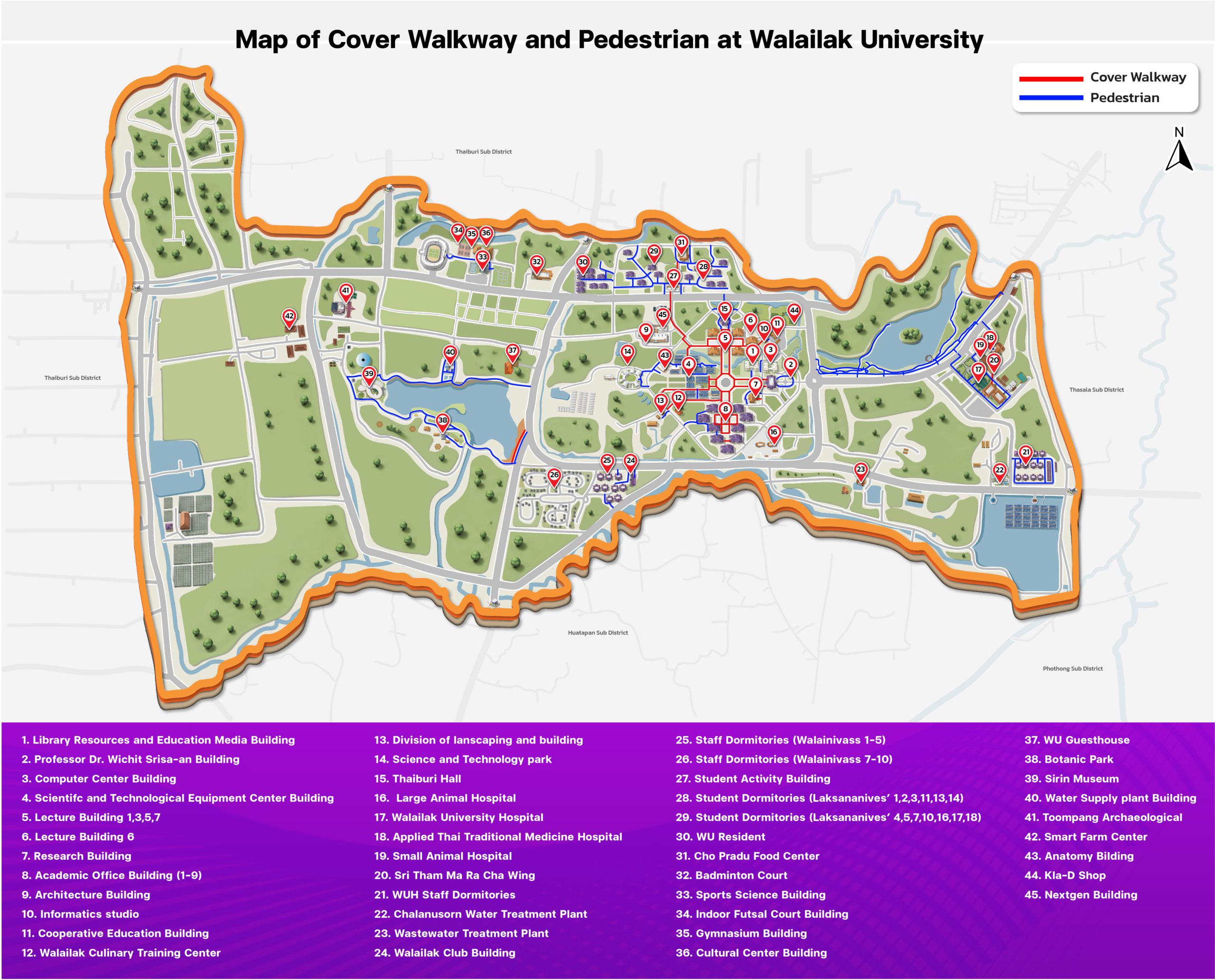
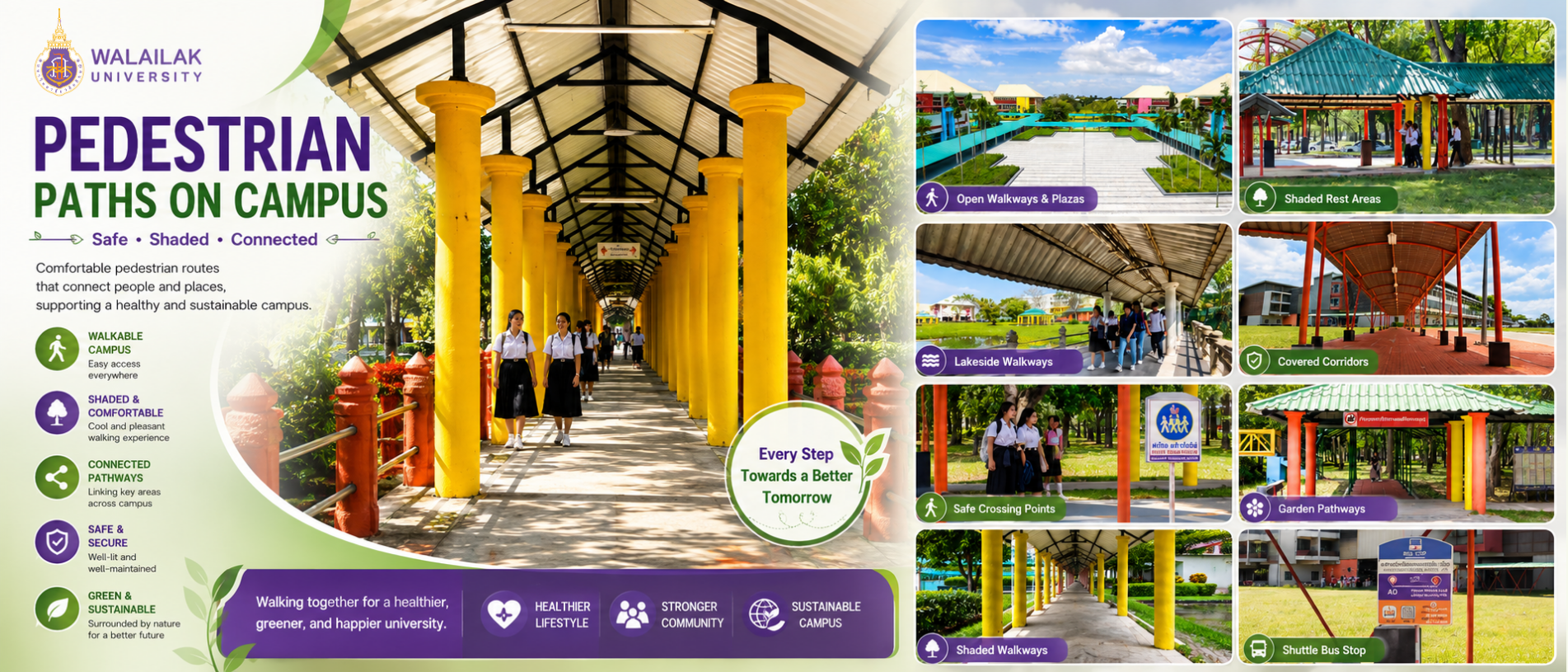
Walailak University has developed a comprehensive pedestrian pathway system that connects all major campus buildings. These walkways are equipped with adequate lighting and safety barriers that clearly separate pedestrian areas from vehicle traffic. Handrails are installed in certain areas to enhance safety, particularly where there are differences in elevation. All walkways are covered with roofs to protect users from unfavorable weather conditions, such as intense sunlight or heavy rain. In addition, the pathways are designed with gentle slopes to accommodate changes in elevation and ensure accessibility for all, including individuals with special mobility needs. The surfaces are constructed with durable and flexible materials to maximize comfort and usability, while clear signage and location information are provided along the routes to assist navigation.
This infrastructure reflects the University’s commitment to creating a safe, inclusive, and sustainable campus environment, while also promoting low-carbon mobility within the campus.
Pedestrian path on campus
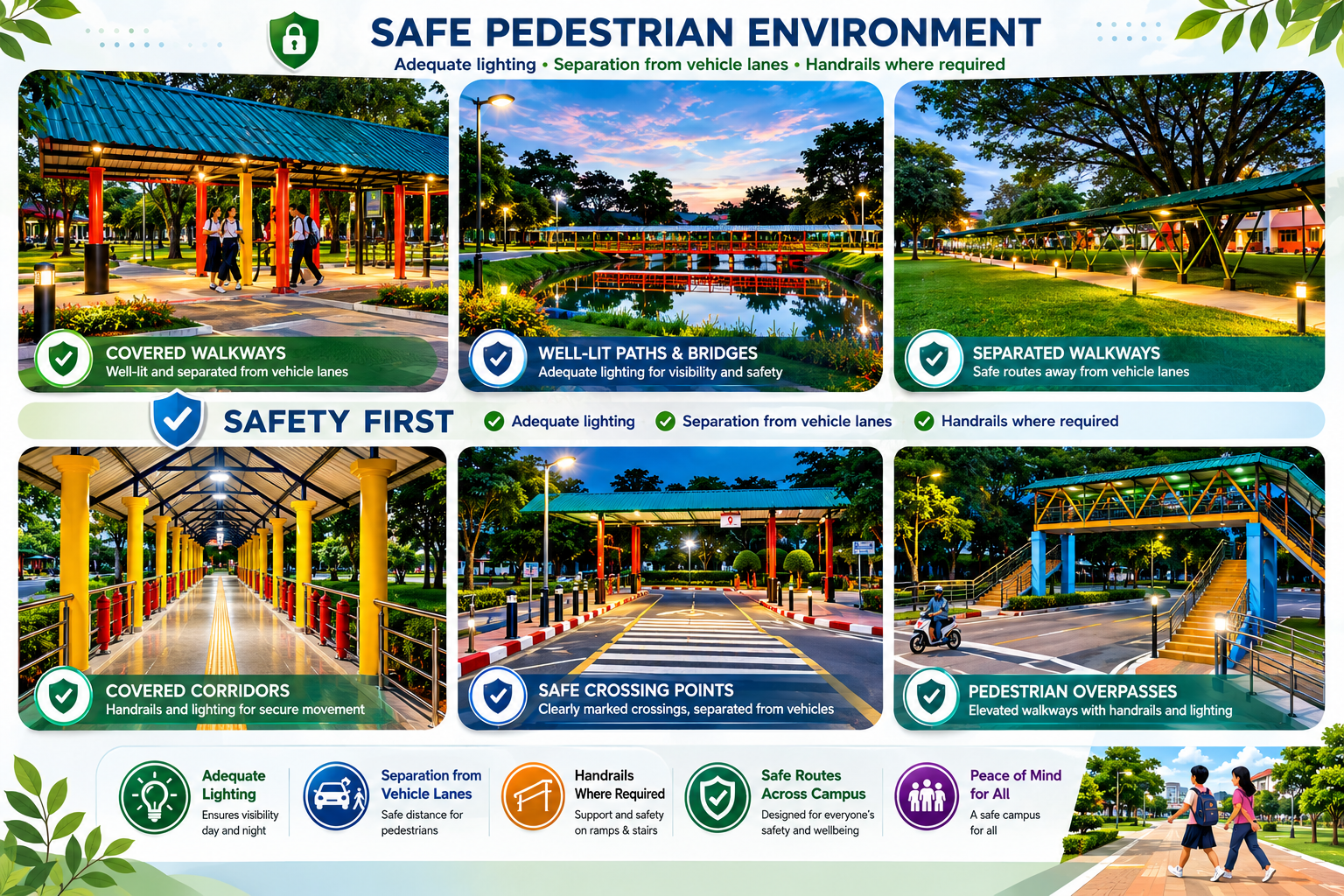
safety
The pedestrian paths are distinctly separated from vehicle traffic lanes to reduce the risk of accidents.
Adequate lighting is installed along all routes, ensuring safety during both day and night.
Handrails are provided in areas with significant elevation changes to prevent falls and support stability.
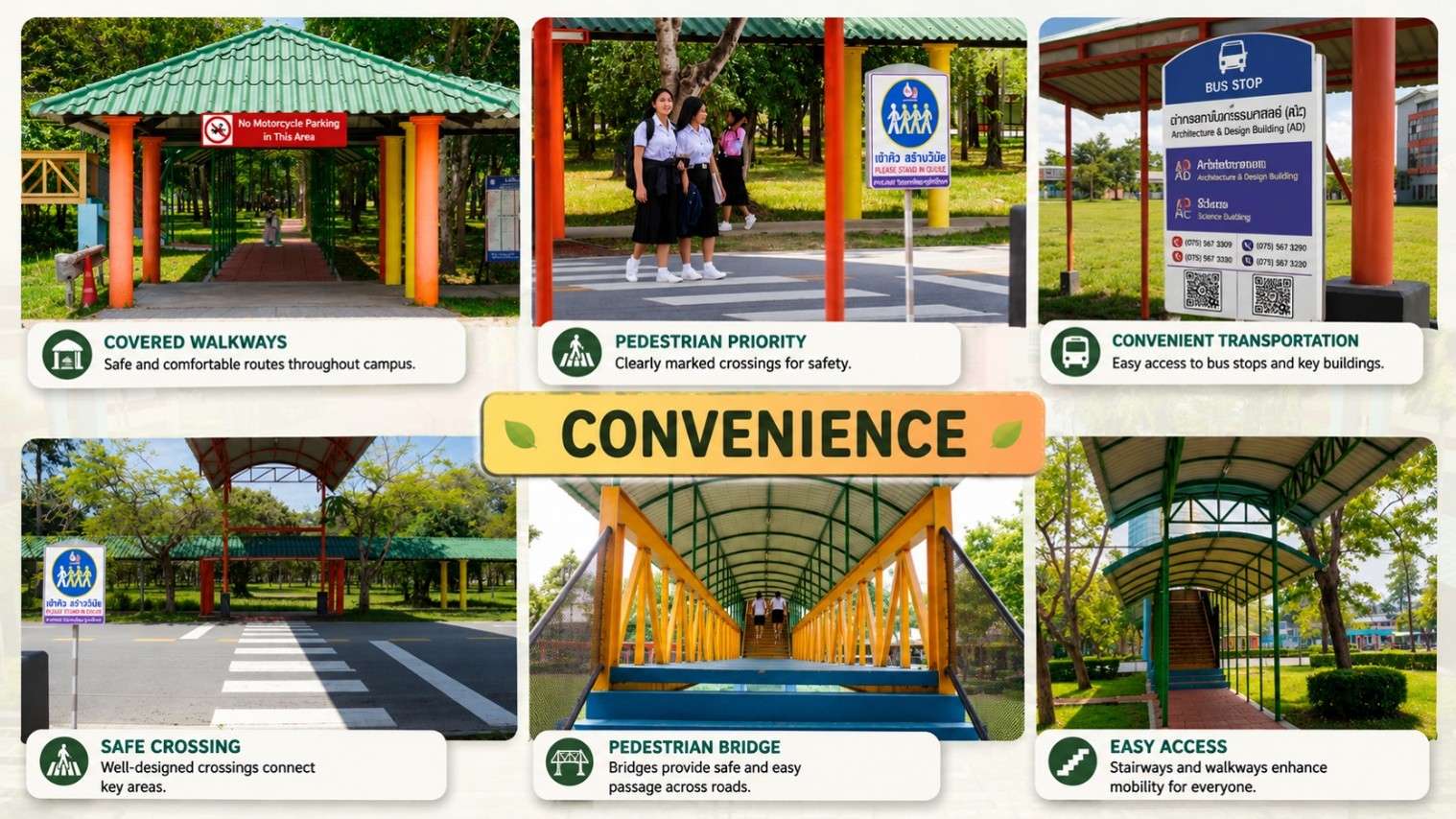
Convenience
The walkways connect all major campus buildings and are fully covered to provide protection from extreme weather conditions.
Pathway surfaces are built with suitable materials to enhance comfort and durability.
Slight slopes are incorporated for ease of walking, and clear signage is installed at key junctions to guide users effectively.
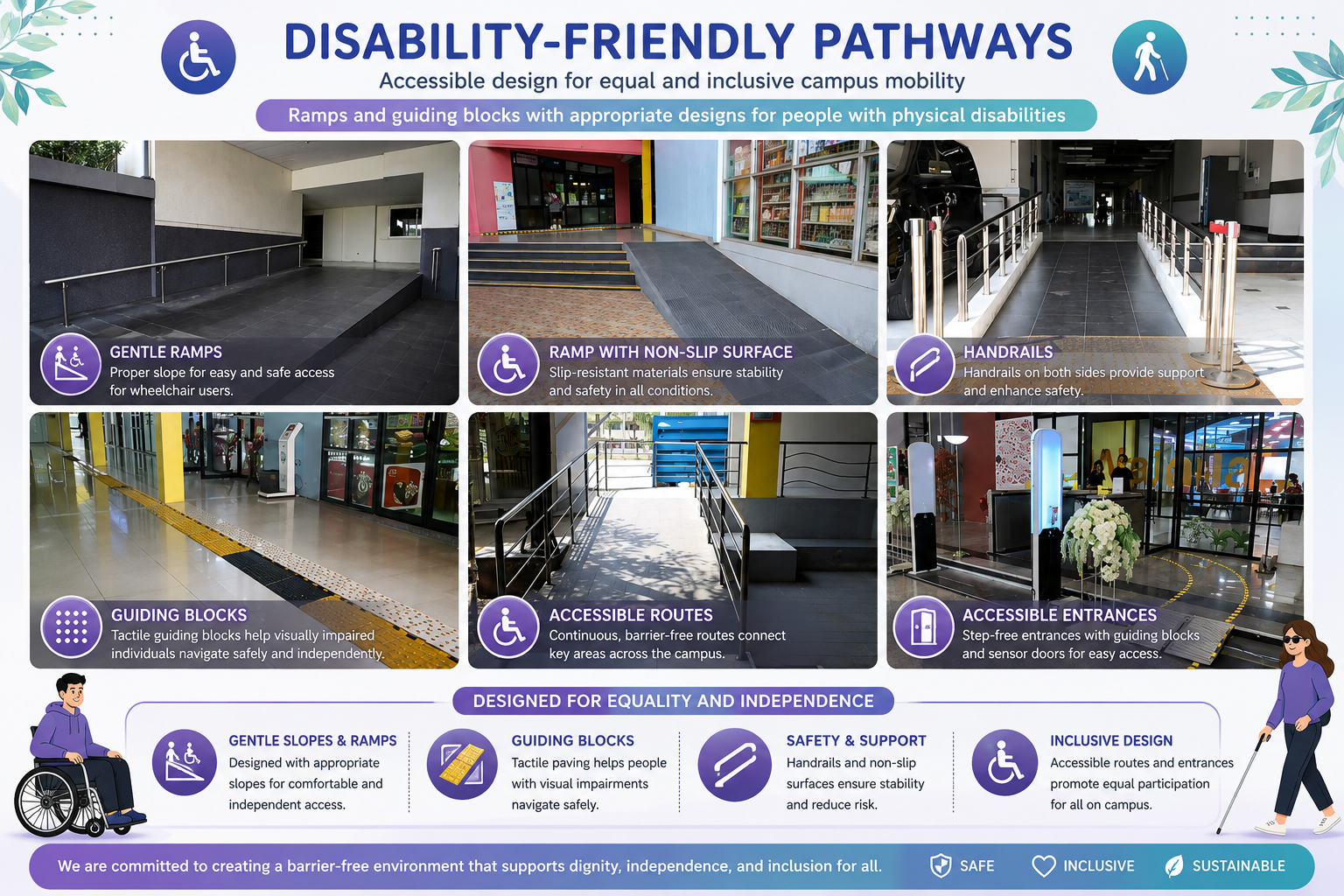
Provided with disabled-friendly features
Walkways are designed with ramps that accommodate individuals with disabilities and those with special mobility needs.
Tactile paving is installed where necessary to guide visually impaired users.
Dedicated service points are available to provide assistance and necessary information to those requiring special support.