Conservation of flora, fauna, wildlife, and genetic resources
Walailak University’s Implementation of Biodiversity Conservation Programs
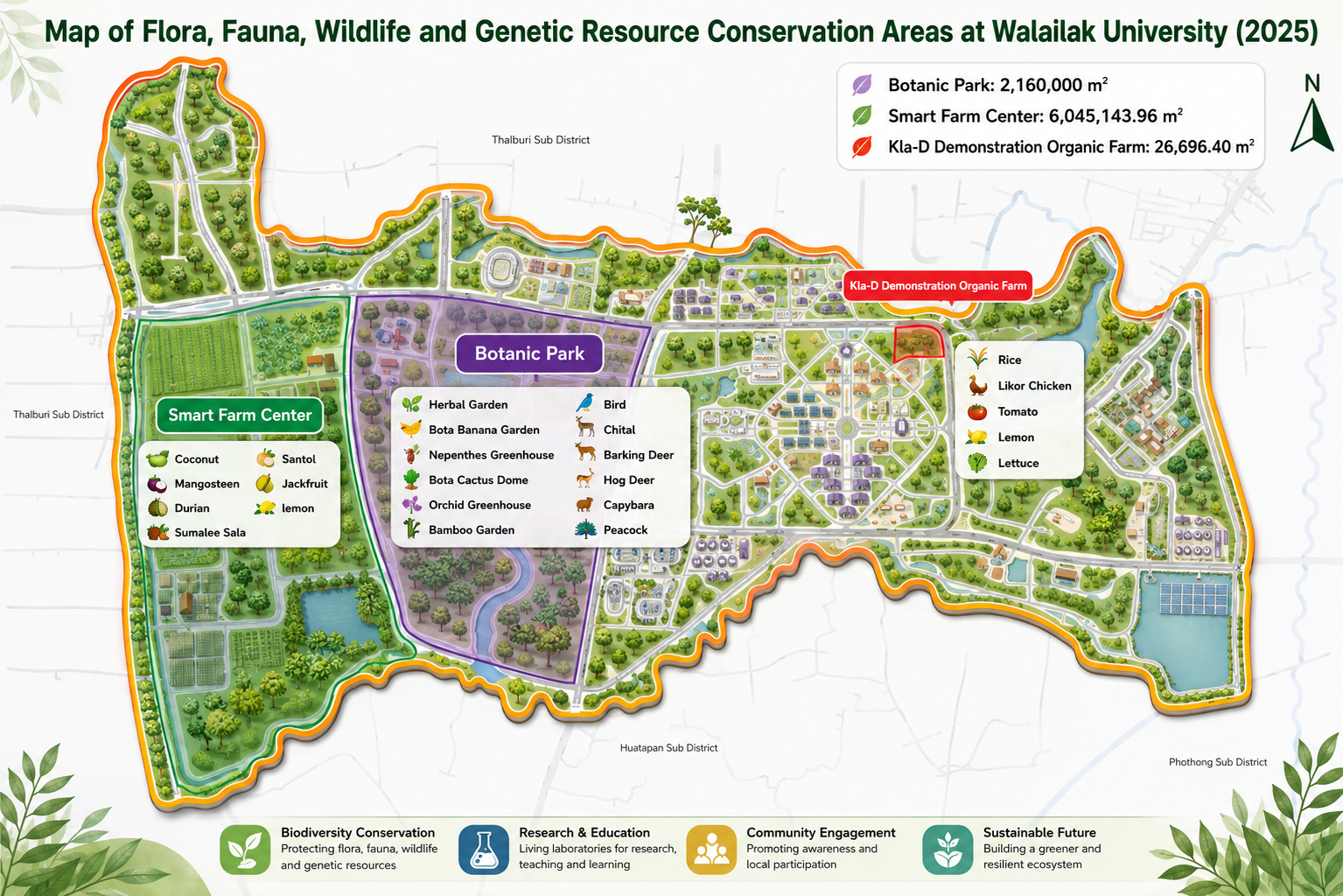
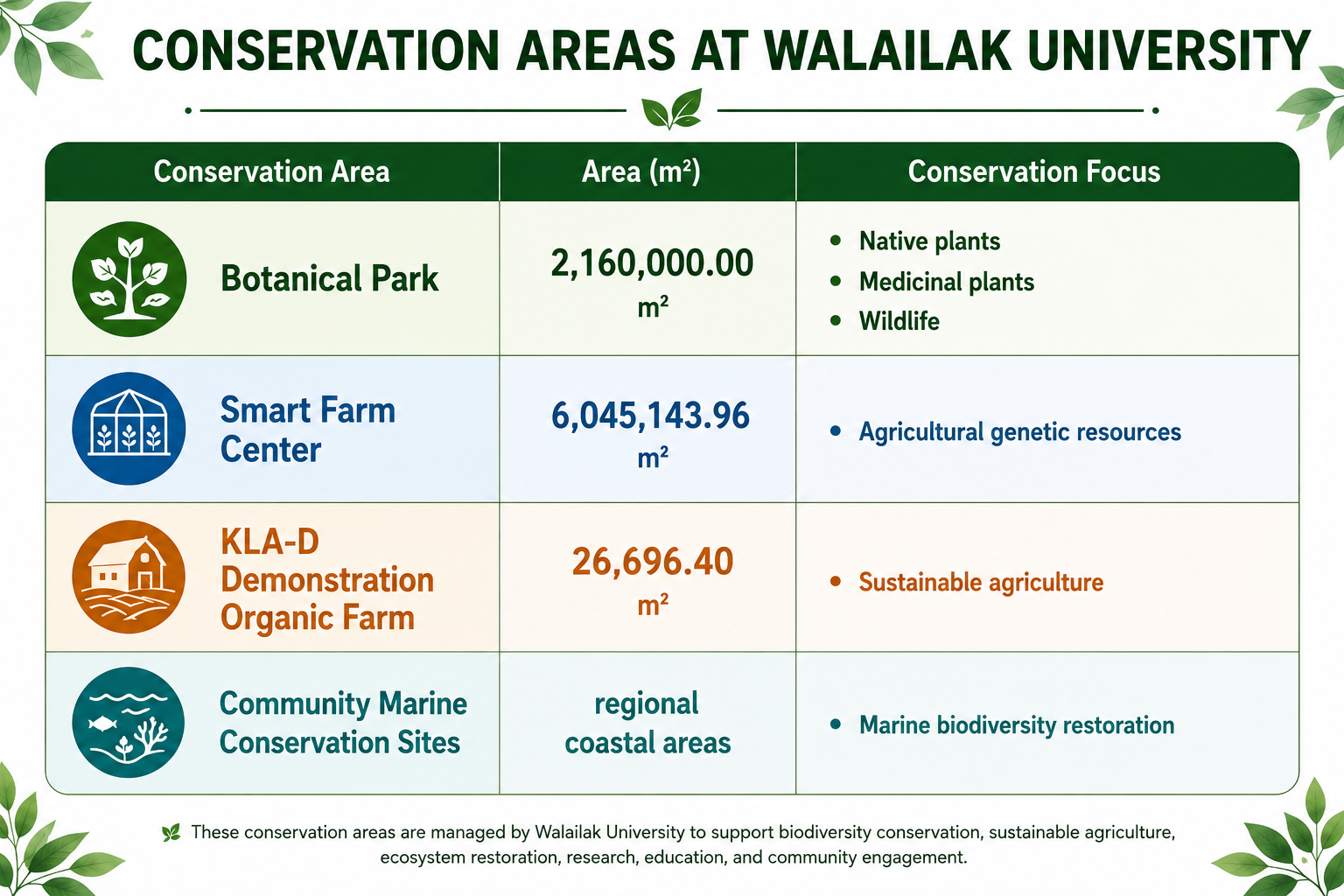
Walailak University systematically implements biodiversity conservation programs to protect flora, fauna, wildlife, and genetic resources for food and agriculture. These programs are conducted within university-managed conservation areas, including Walailak Botanical Park, the Smart Farm Center, and the KLA-D Agricultural Innovation Demonstration Center.
The conservation programs cover both in-situ conservation and ex-situ/managed conservation. In-situ conservation focuses on protecting natural forest areas, aquatic ecosystems, wildlife habitats, and native plant communities within the university’s conservation areas. Ex-situ and managed conservation include plant collection, propagation, demonstration plots, seed and genetic resource conservation, as well as the management of agricultural and livestock genetic resources.
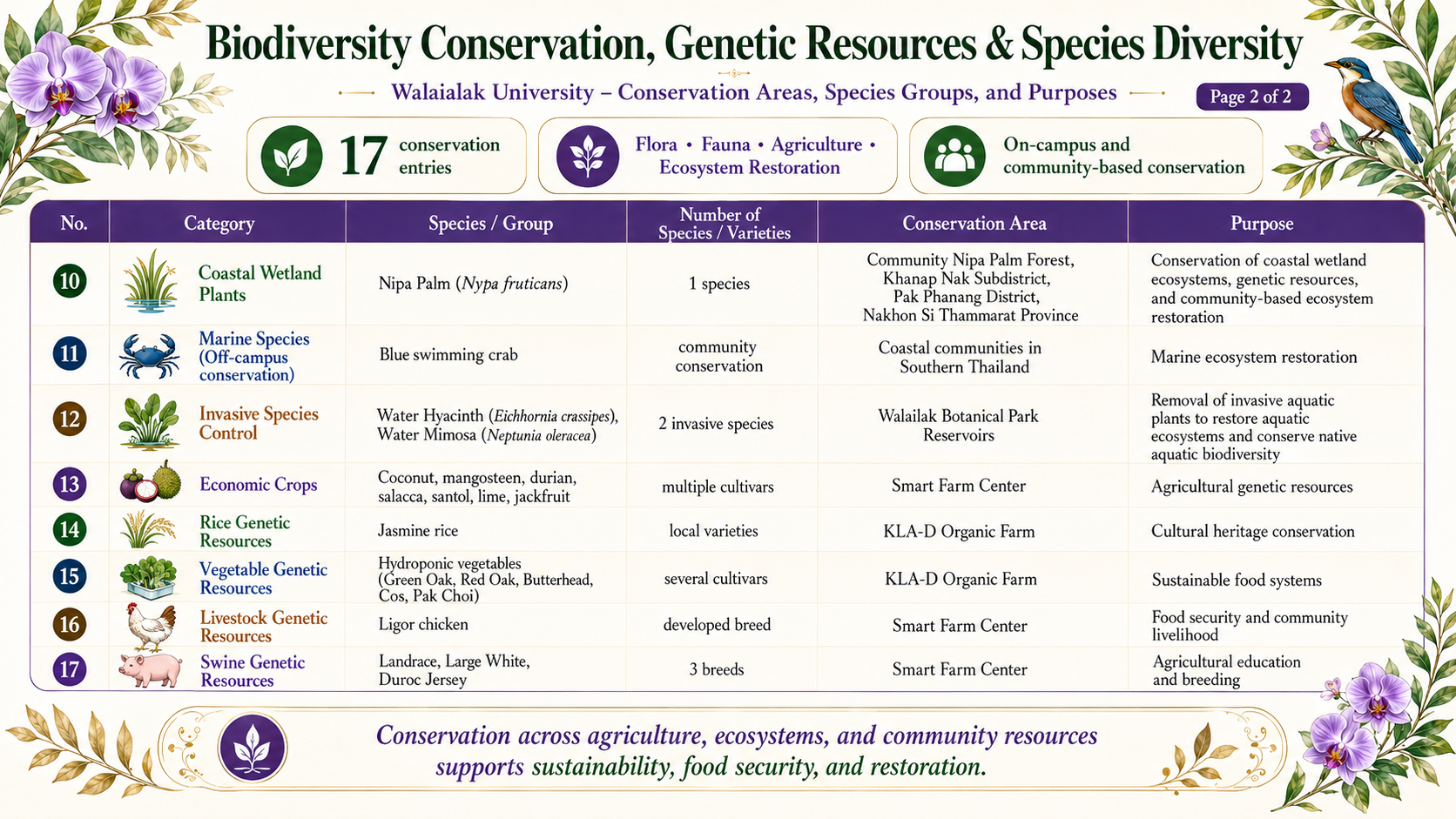
Walailak University has established baseline species inventories and conservation records covering native forest plants, medicinal plants, orchids, bamboo, carnivorous plants, banana varieties, economic crops, rice, vegetables, bird species, mammals, and livestock genetic resources. These data provide an important foundation for planning, monitoring, and evaluating the progress of conservation programs.
Key activities include species surveys, species documentation, habitat protection, forest and ecosystem restoration, invasive aquatic plant control, wildlife protection, plant propagation, agricultural genetic resource conservation, biodiversity research, and environmental education. The university’s conservation areas also function as living laboratories for teaching, research, student learning, academic services, and community engagement. Each program clearly defines its conservation area, target species or species groups, implementation activities, and annual monitoring processes.
Overall, more than 75% of the planned conservation programs have been implemented or are currently ongoing, reflecting Walailak University’s long-term commitment to biodiversity conservation and sustainable agriculture.
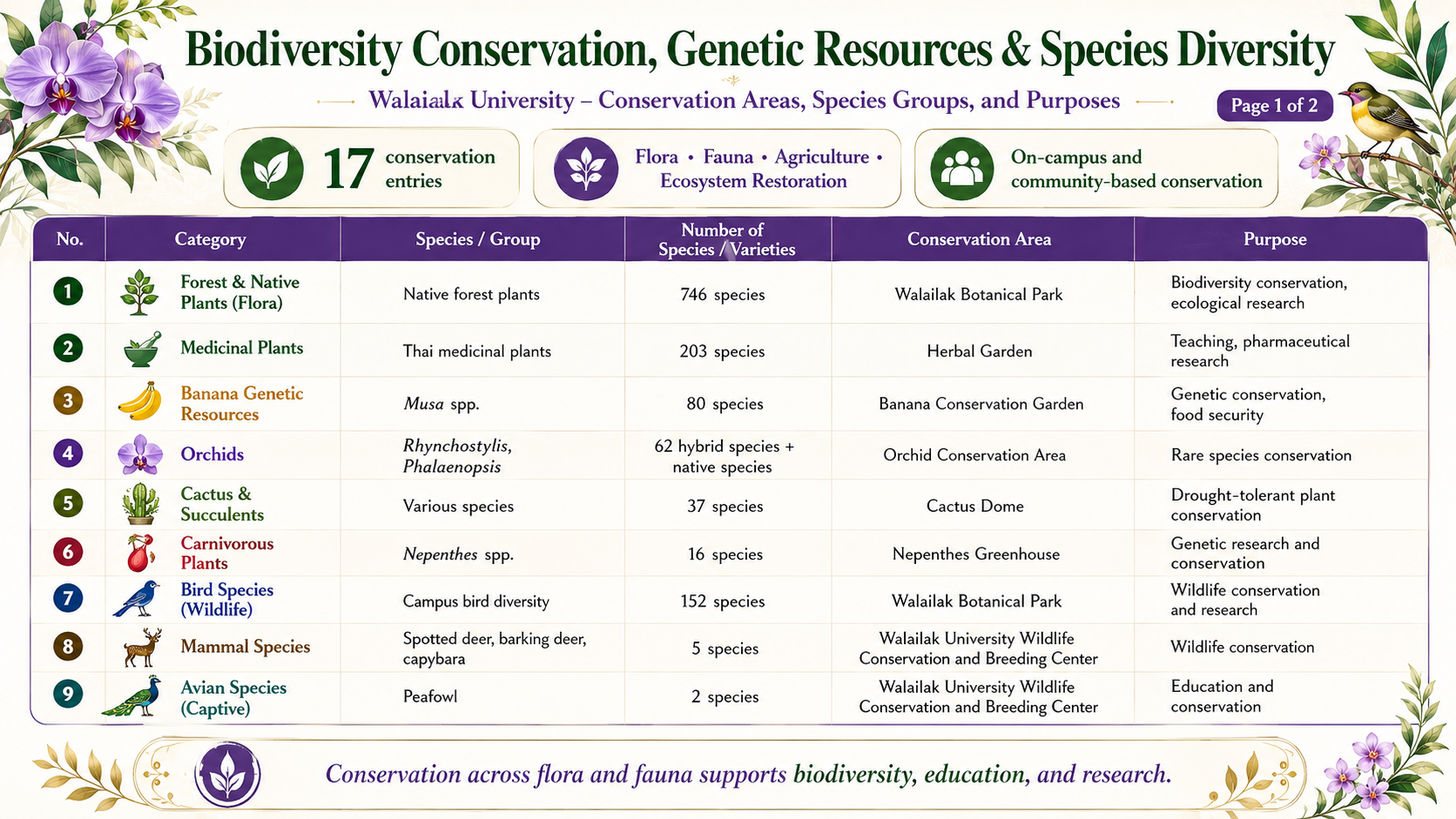
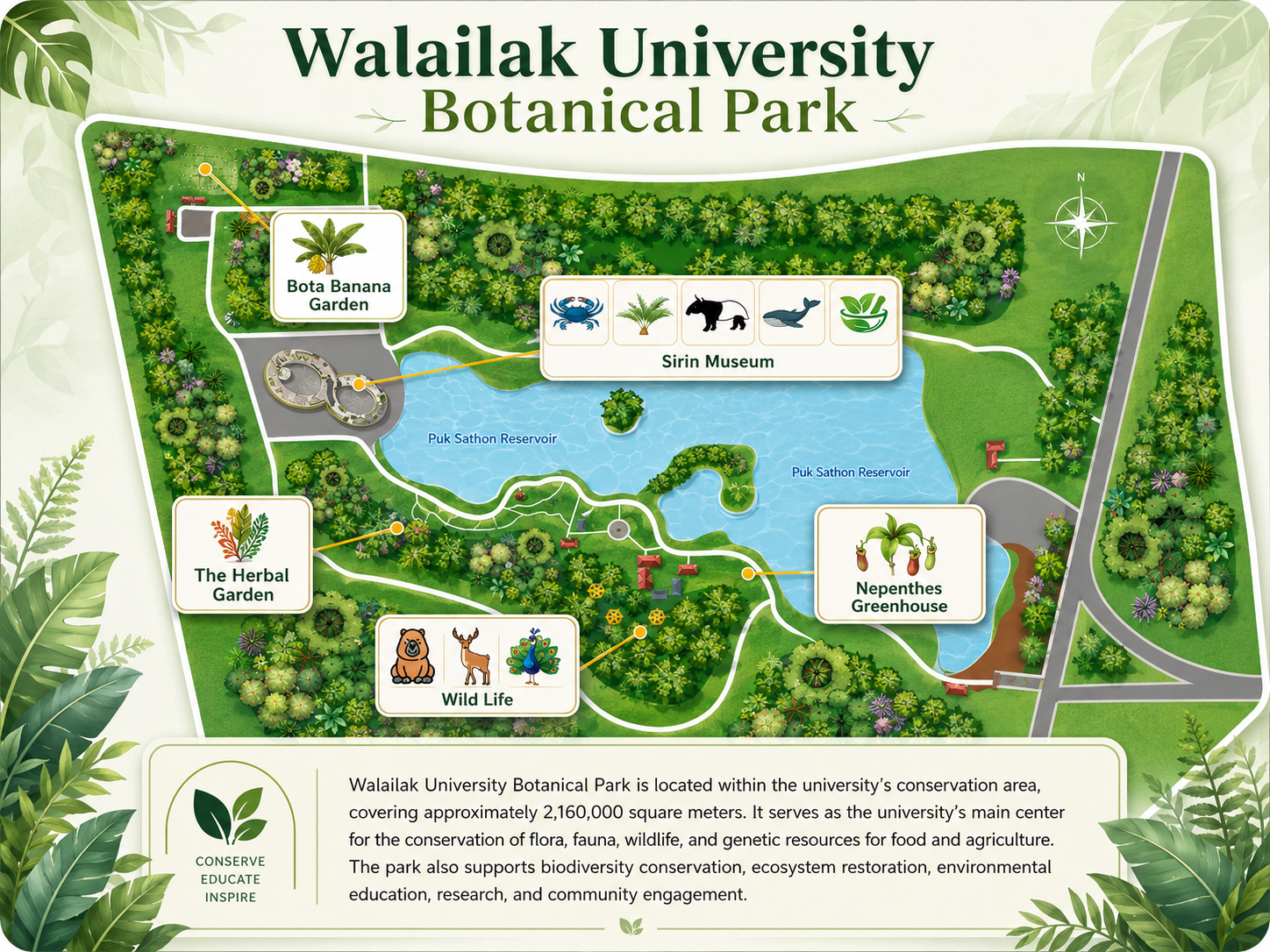
Walailak University Botanical Park
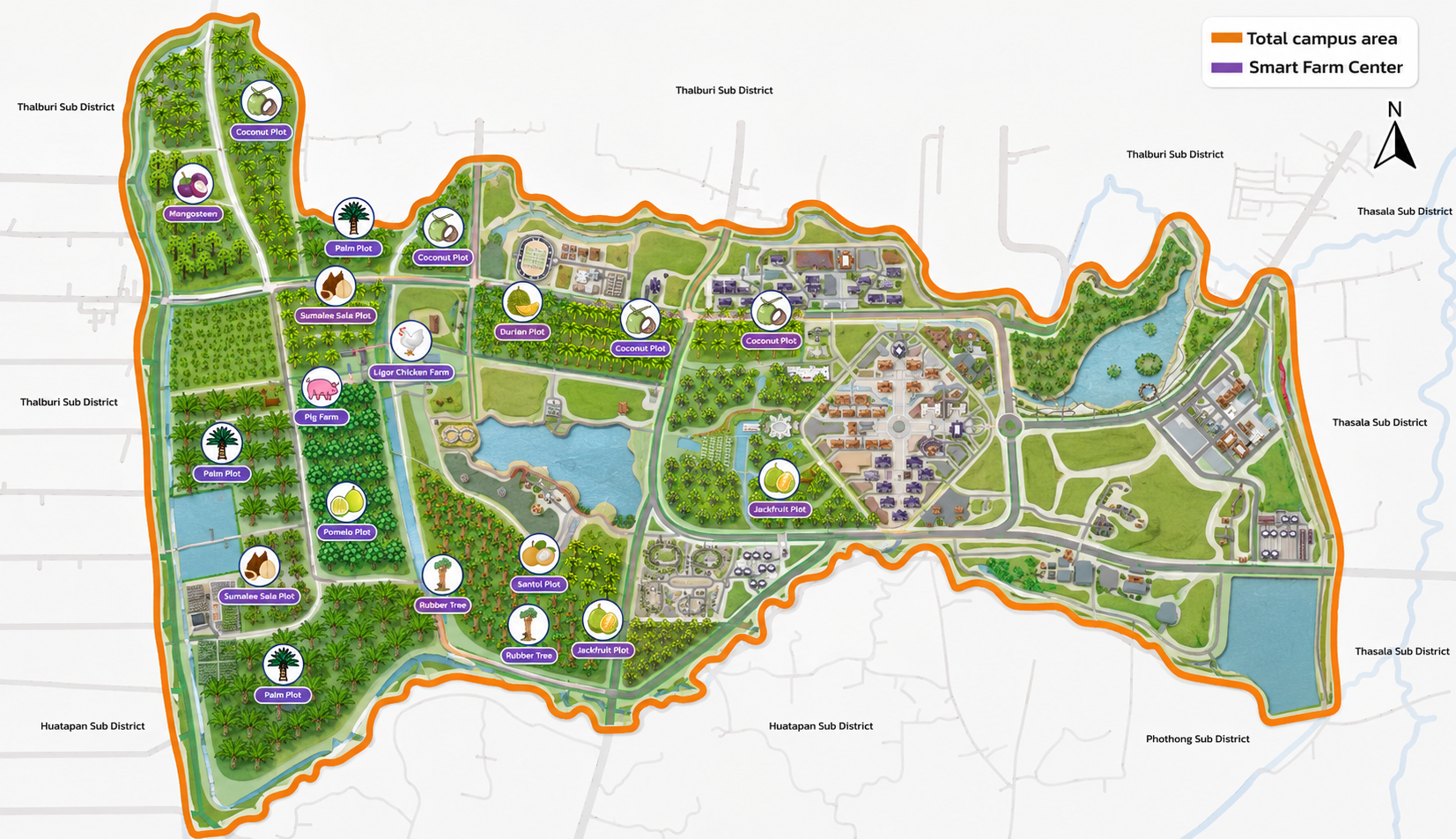
Smart Farm Center, Walailak University
Walailak University places great importance on comprehensive agricultural development. The University conducts teaching and learning through the School of Agricultural Technology, while also engaging in research and providing academic services to the community. These efforts aim to serve as a knowledge hub for students and farmers in Nakhon Si Thammarat Province and neighboring areas.
To enhance the management and efficiency of the University’s agricultural operations, the Smart Farm Center has been established, covering an area of 6,045,143.96 square meters. The Center was developed to transform existing farms into a modern management system by integrating advanced technologies into all aspects of production, including horticulture, field crops, livestock, and aquaculture.
The Smart Farm Center focuses on promoting and developing standardized, high-quality systems of livestock and agricultural production. It also serves as a learning and training center for students, farmers, and the general public.
In addition, the Center plays a crucial role in the conservation of plant and animal genetic resources through systematic breeding and management, with the goal of ensuring long-term food security and agricultural sustainability. The conservation projects have already achieved more than 75% completion.
Plant species: aromatic coconut, mangosteen, durian, salacca, santol, lime, and jackfruit.
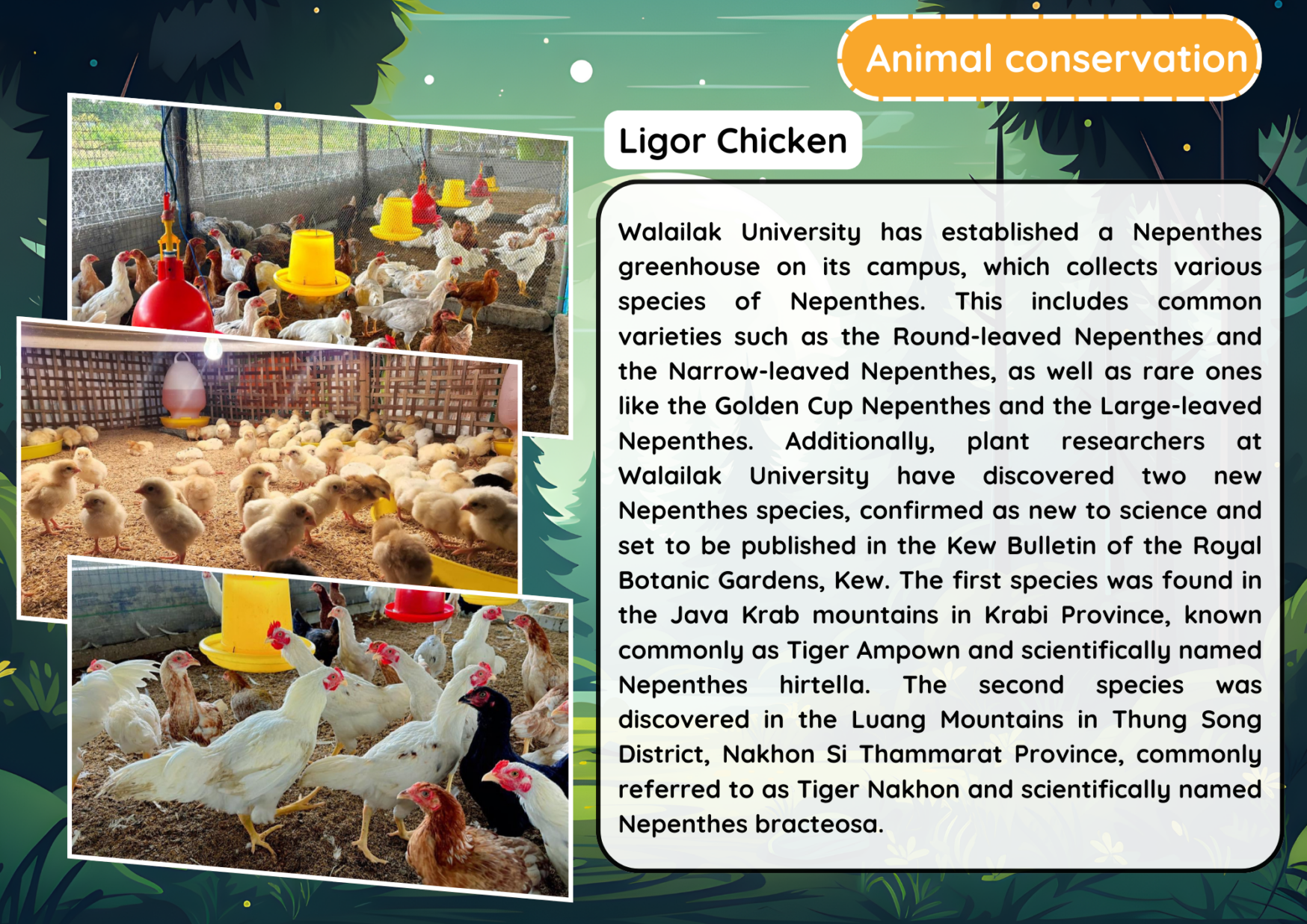
Animal species: chicken and swine.
KLA-D Demonstration organic farm
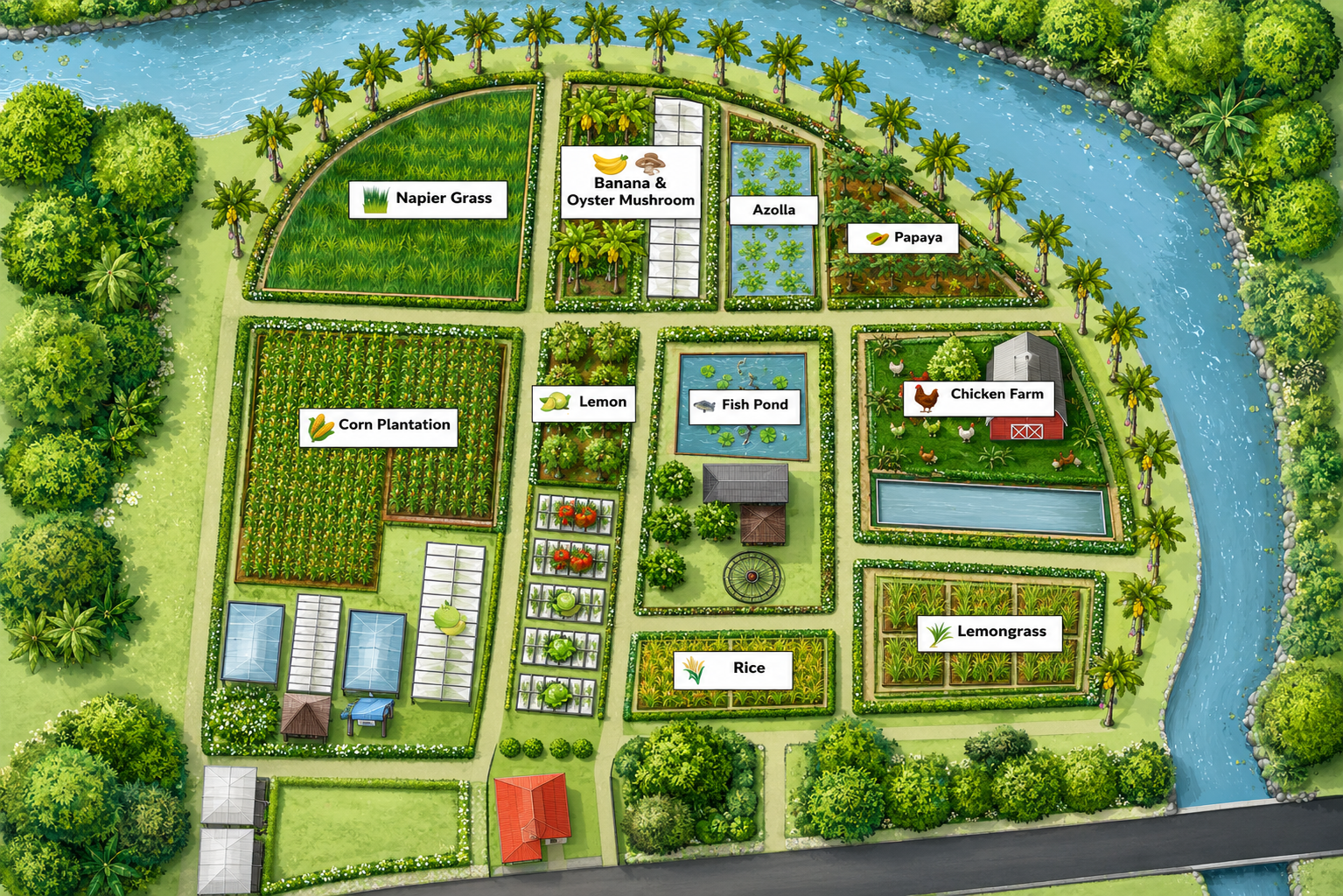
The KLA-D Demonstration Organic Farm, operated by the School of Agricultural Technology and Food Industry, covers approximately 26,696.40 square meters. It was established to apply King Rama IX’s royal initiatives through organic farming, agricultural innovation, and the “New Theory” agricultural practices.
The farm serves as a learning, research, and demonstration site for students, farmers, and the public. It supports sustainable agriculture, food security, and knowledge transfer to local communities.
The center conserves plant, animal, and genetic resources for food and agriculture, including melons, tomatoes, jasmine rice, hydroponic vegetables, and chickens. These resources are maintained through cultivation, organic farming practices, livestock management, and practical learning activities.
Overall, more than 75% of the planned conservation activities have been implemented, demonstrating the farm’s role in biodiversity conservation, sustainable agriculture
Animal conservation