Water Pollution Treatment in campus area
Water Pollution Treatment in campus area
Walailak University operates an advanced wastewater treatment system that is capable of handling all wastewater generated on campus. The system applies tertiary treatment, consisting of the following stages
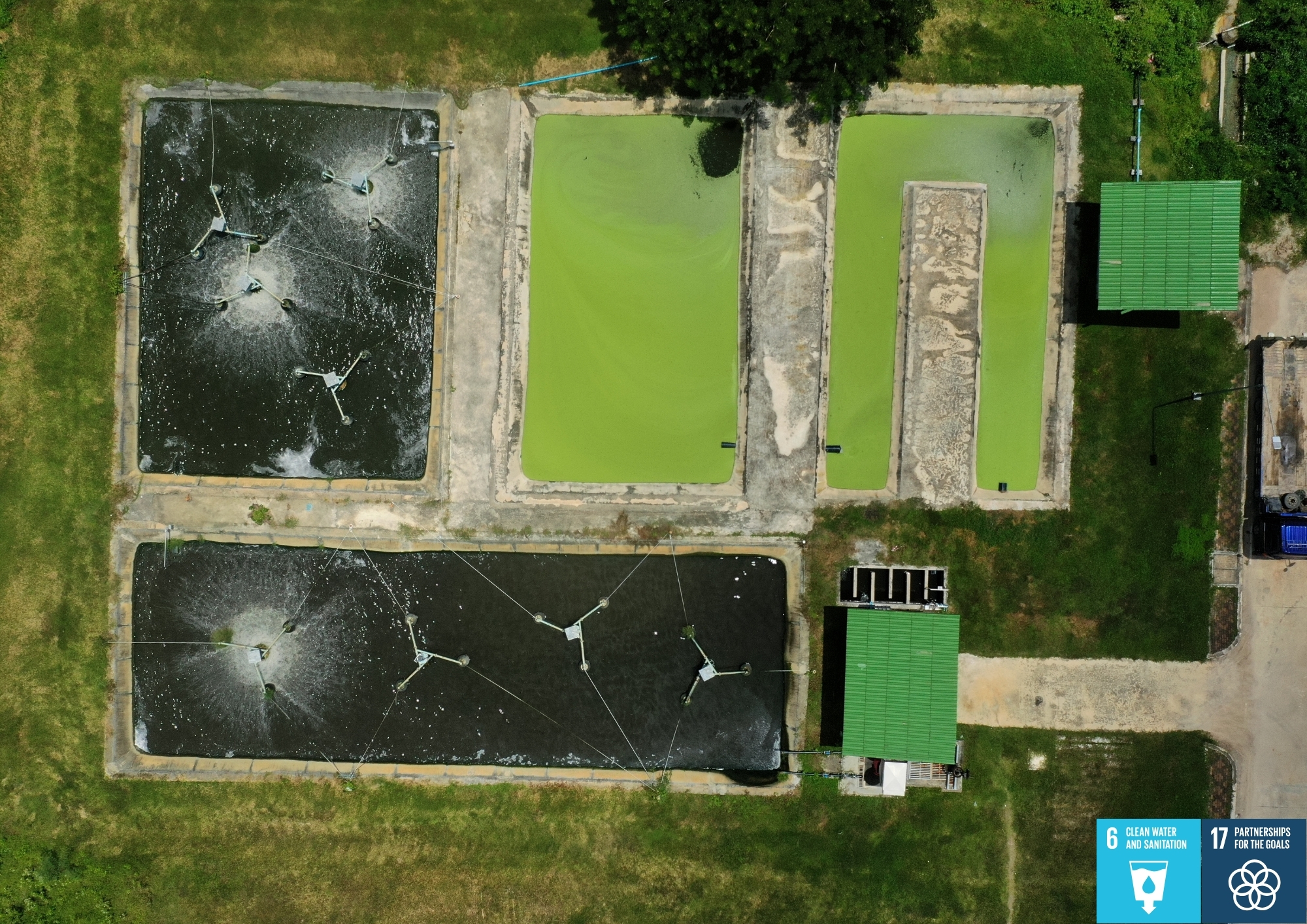
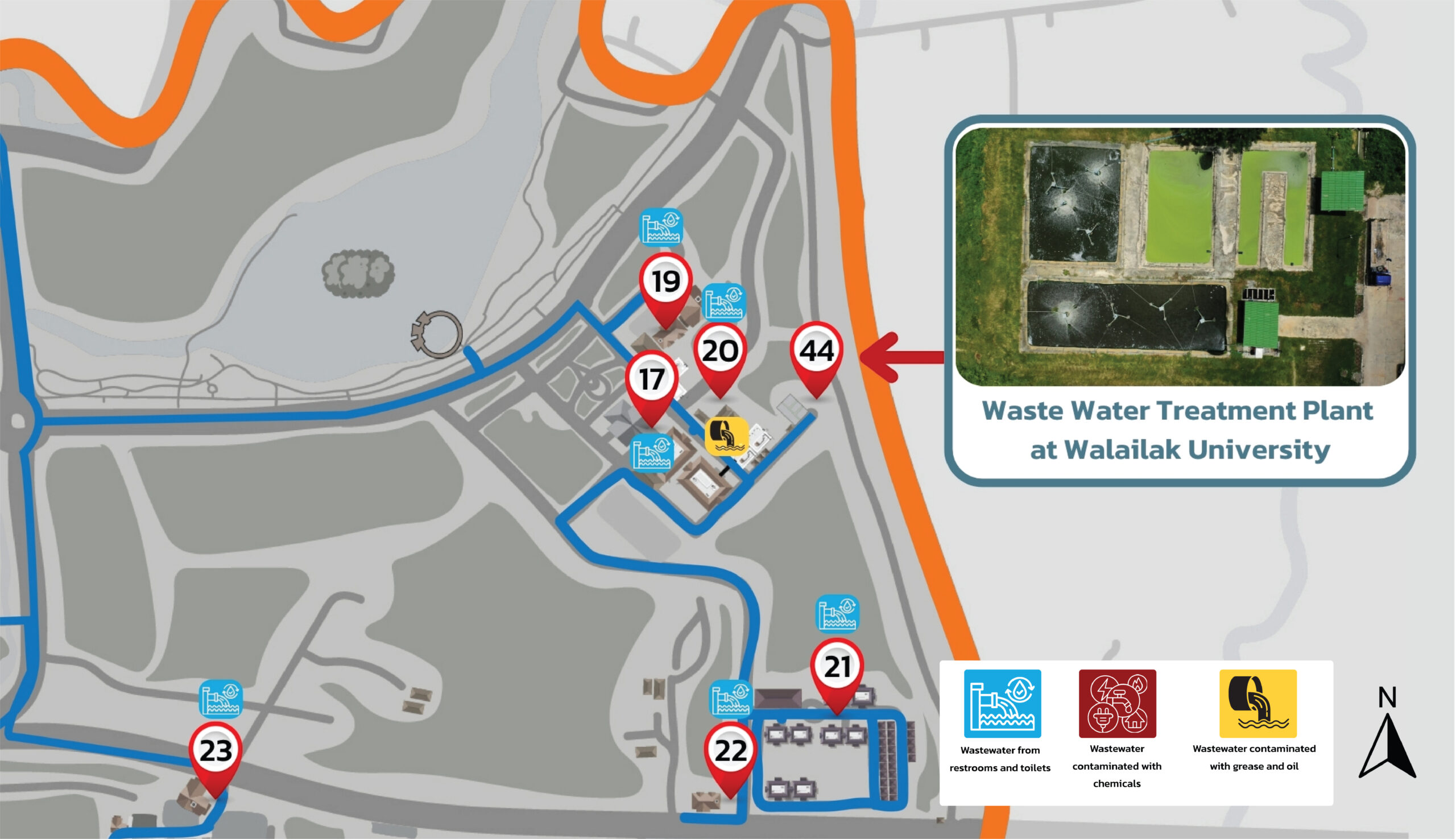
Figures: Wastewater Treatment Plant of Walailak University.
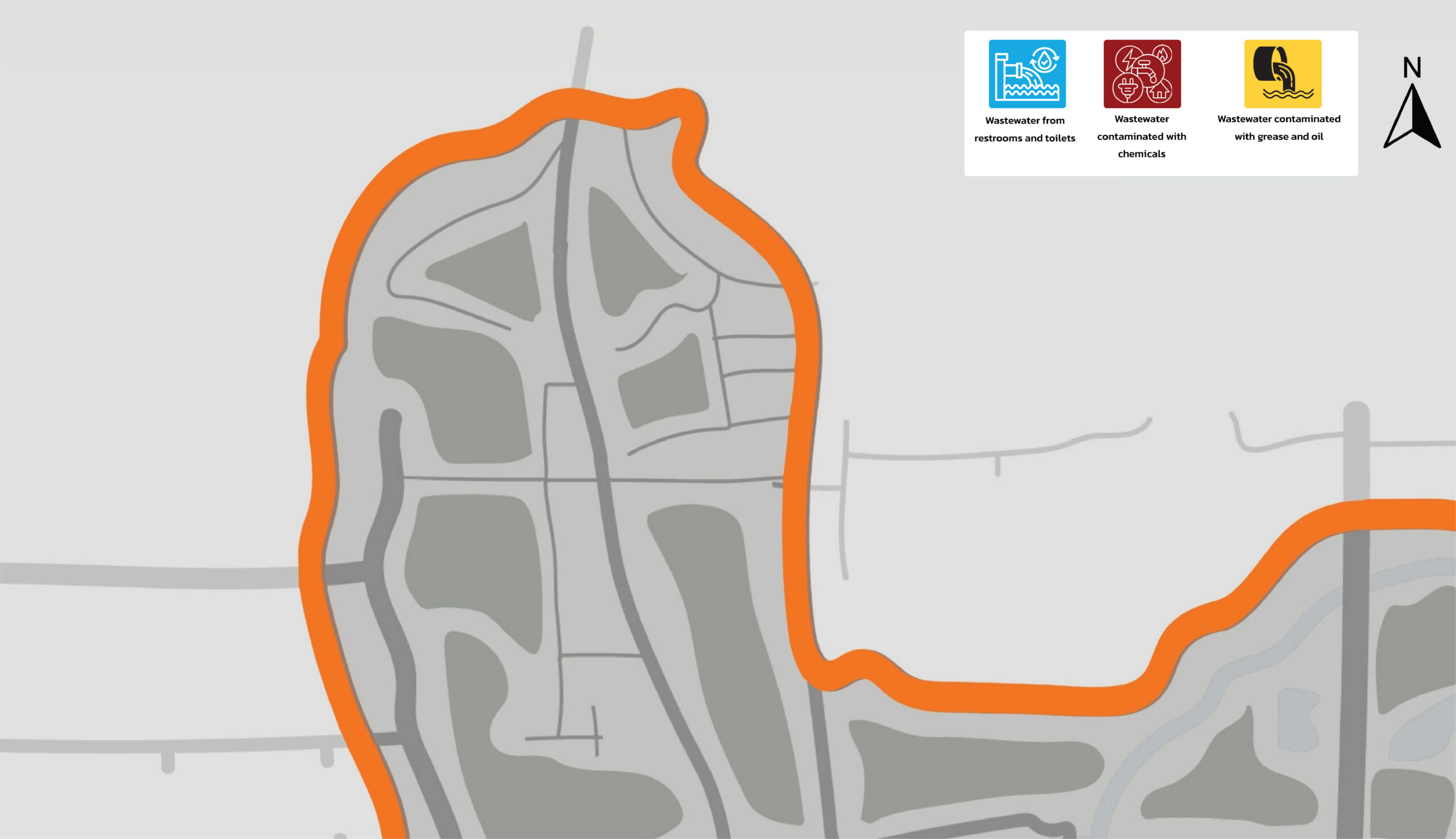
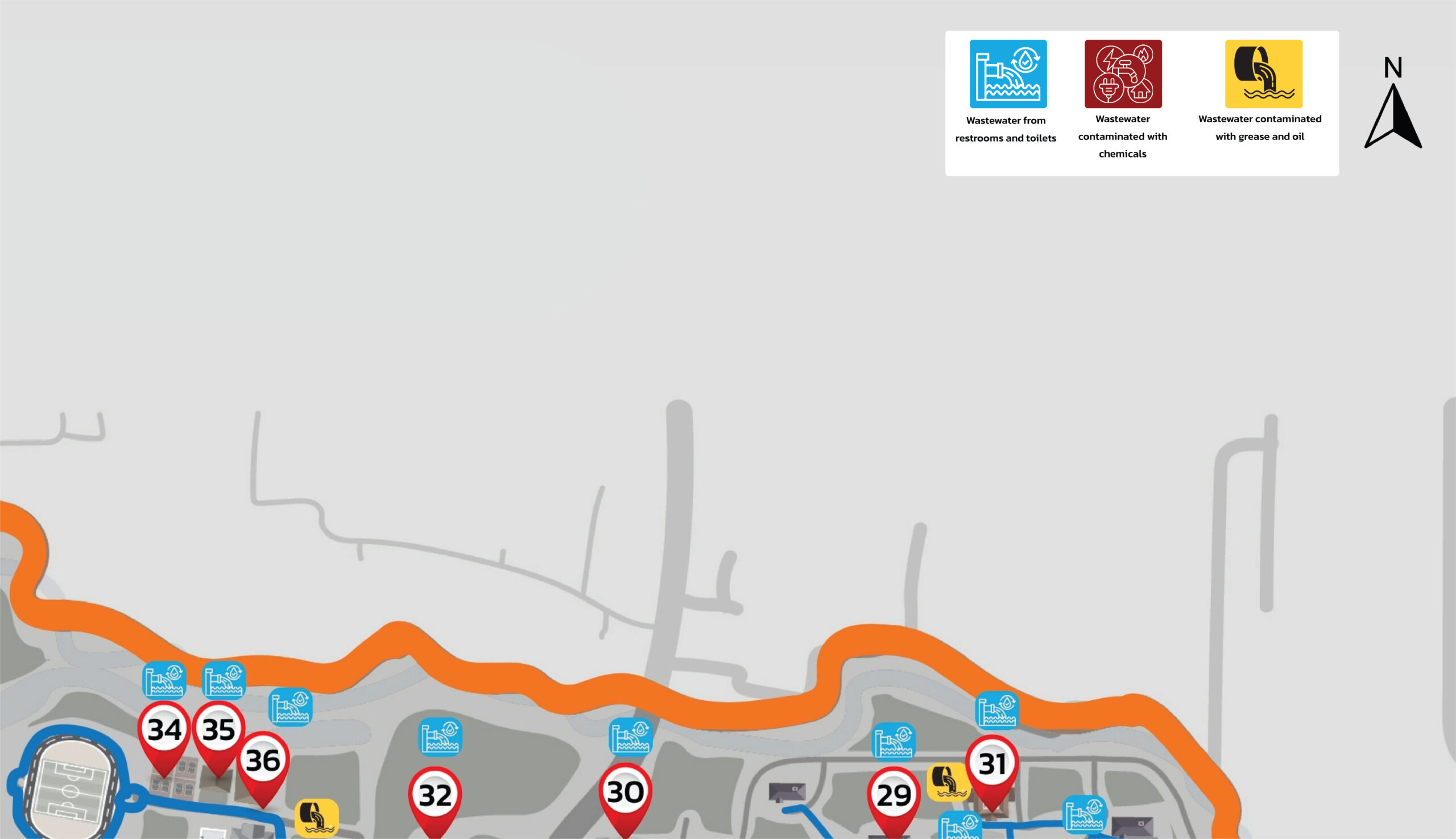
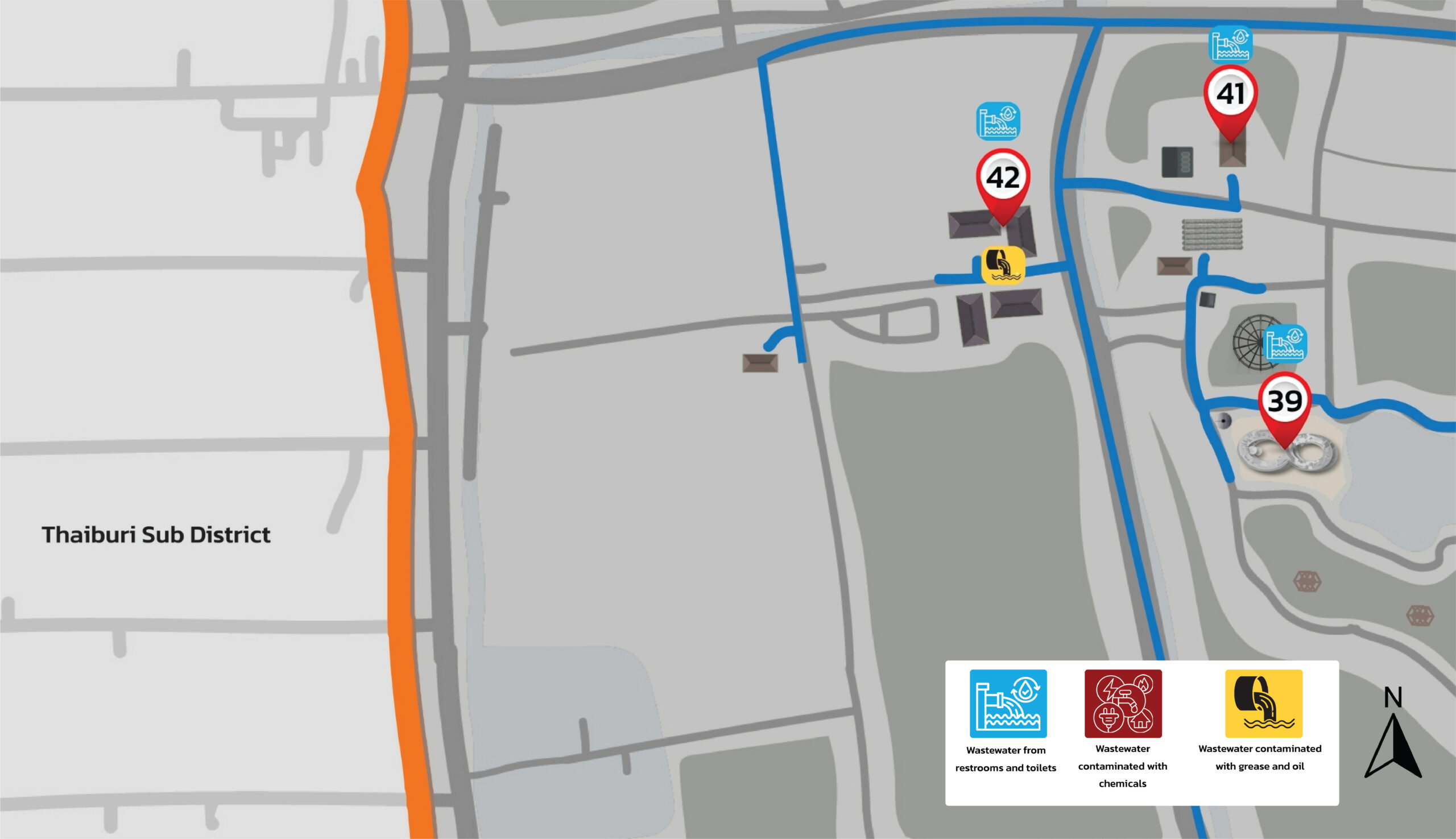
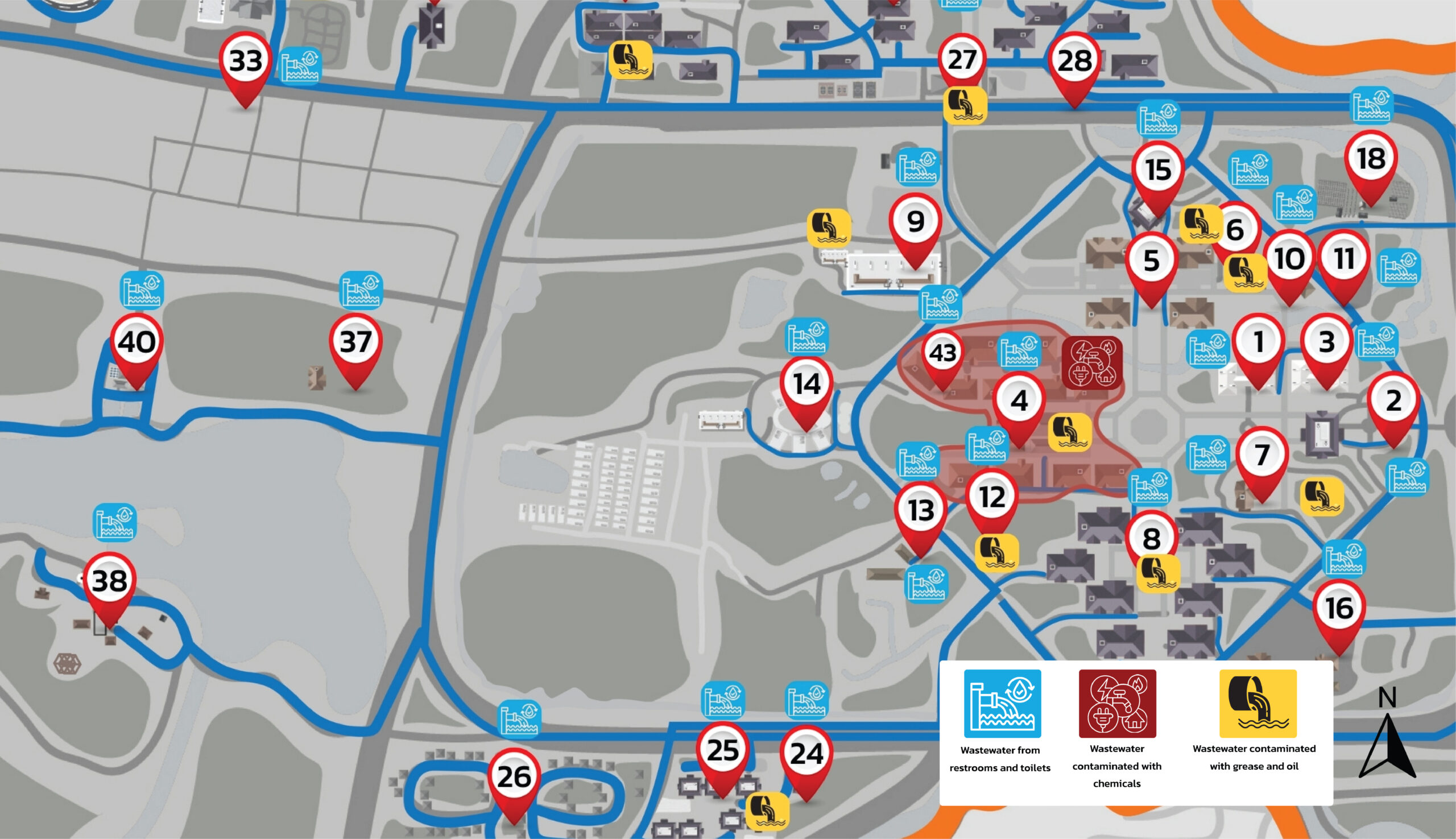
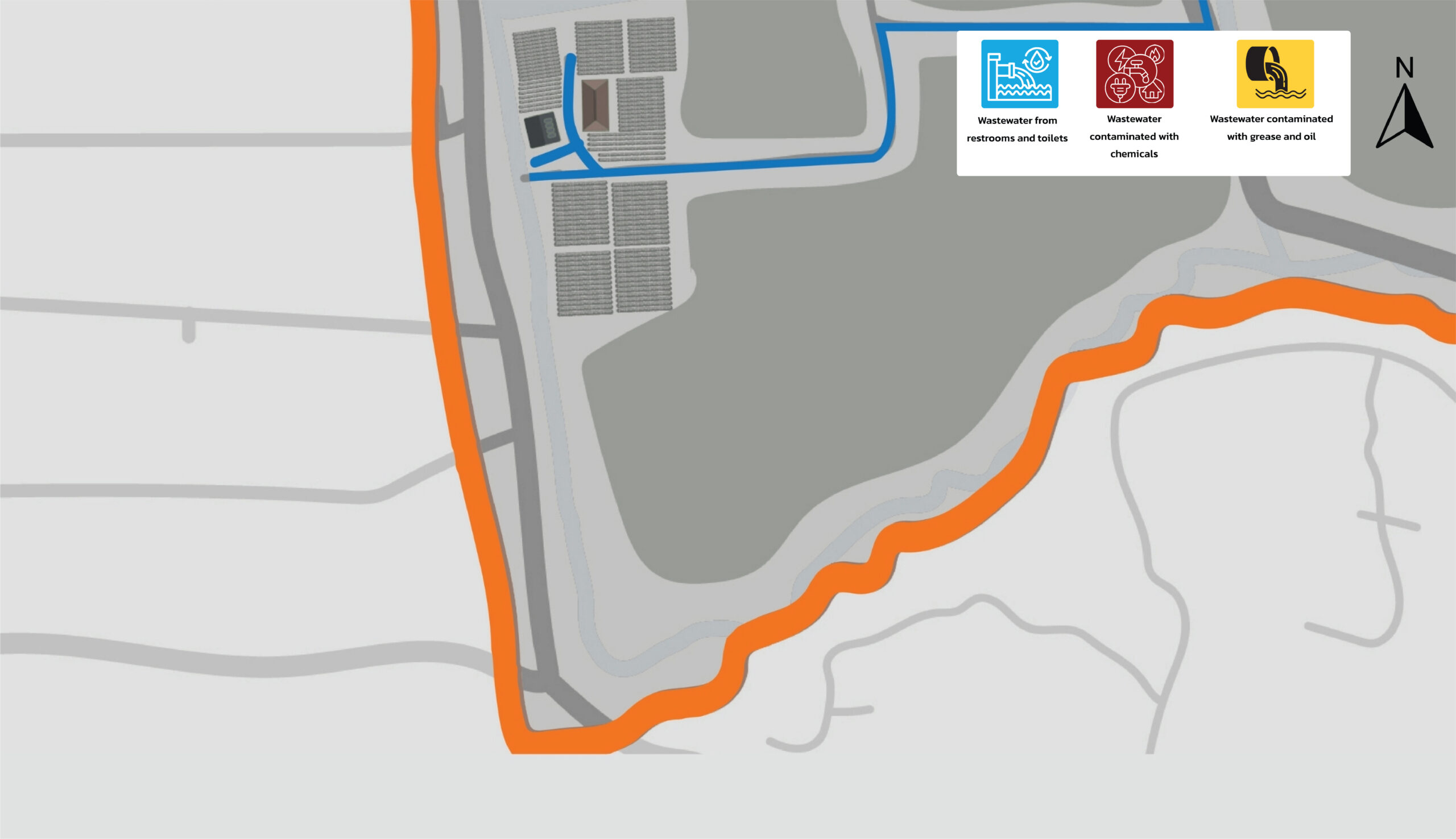
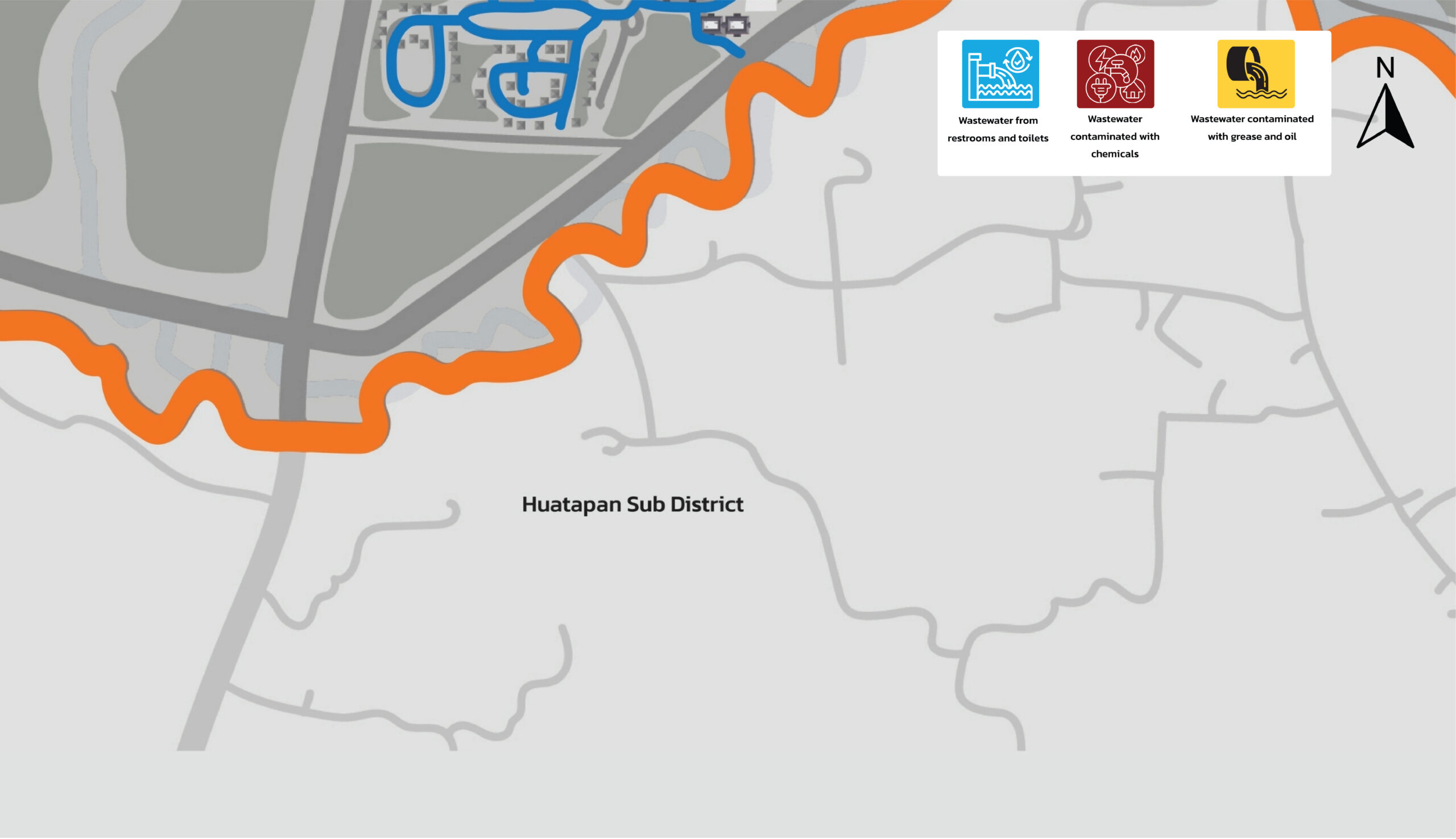
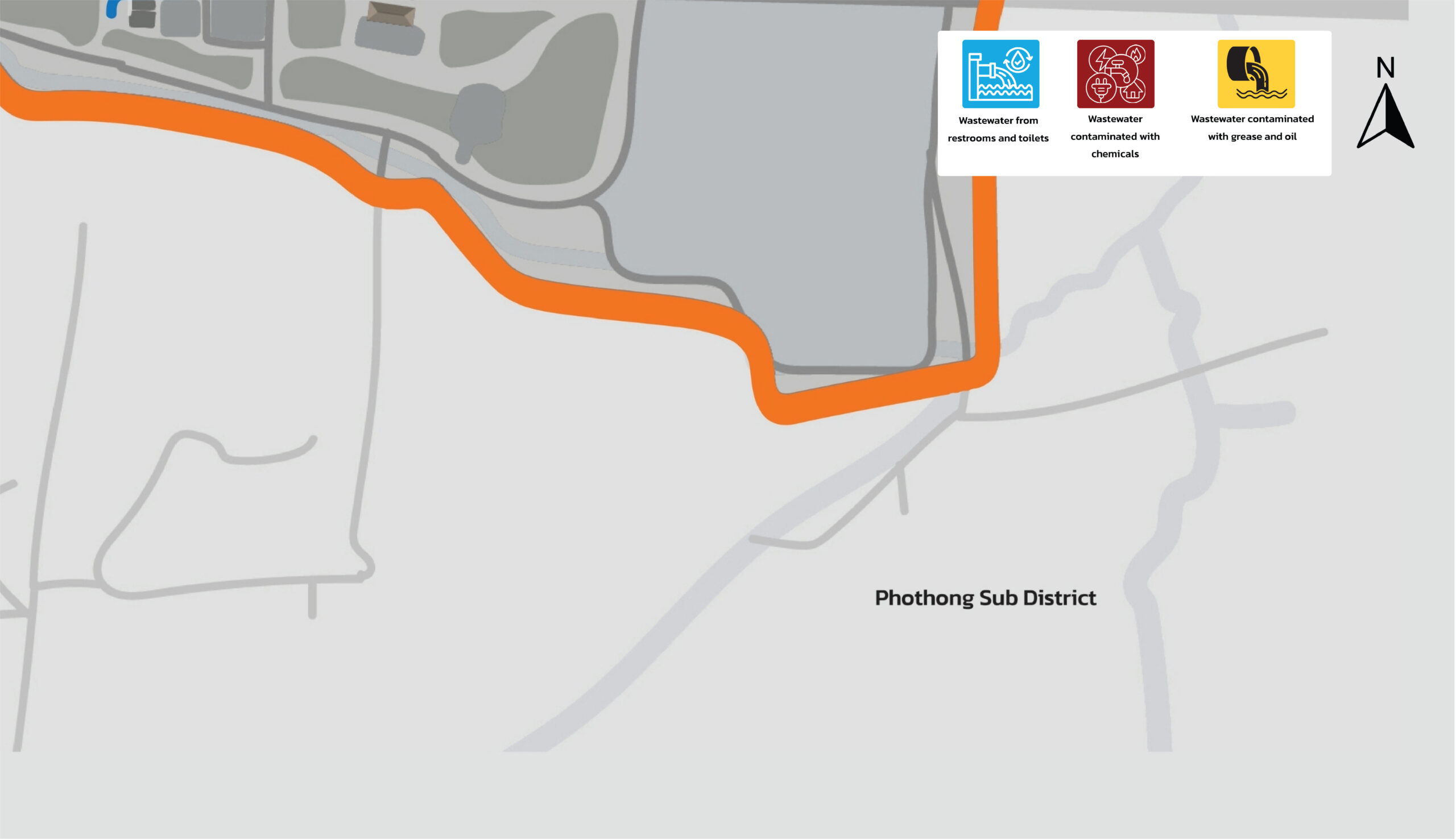
Figures: Map of Wastewater Sources within Walailak University (Walailak University, Thailand).
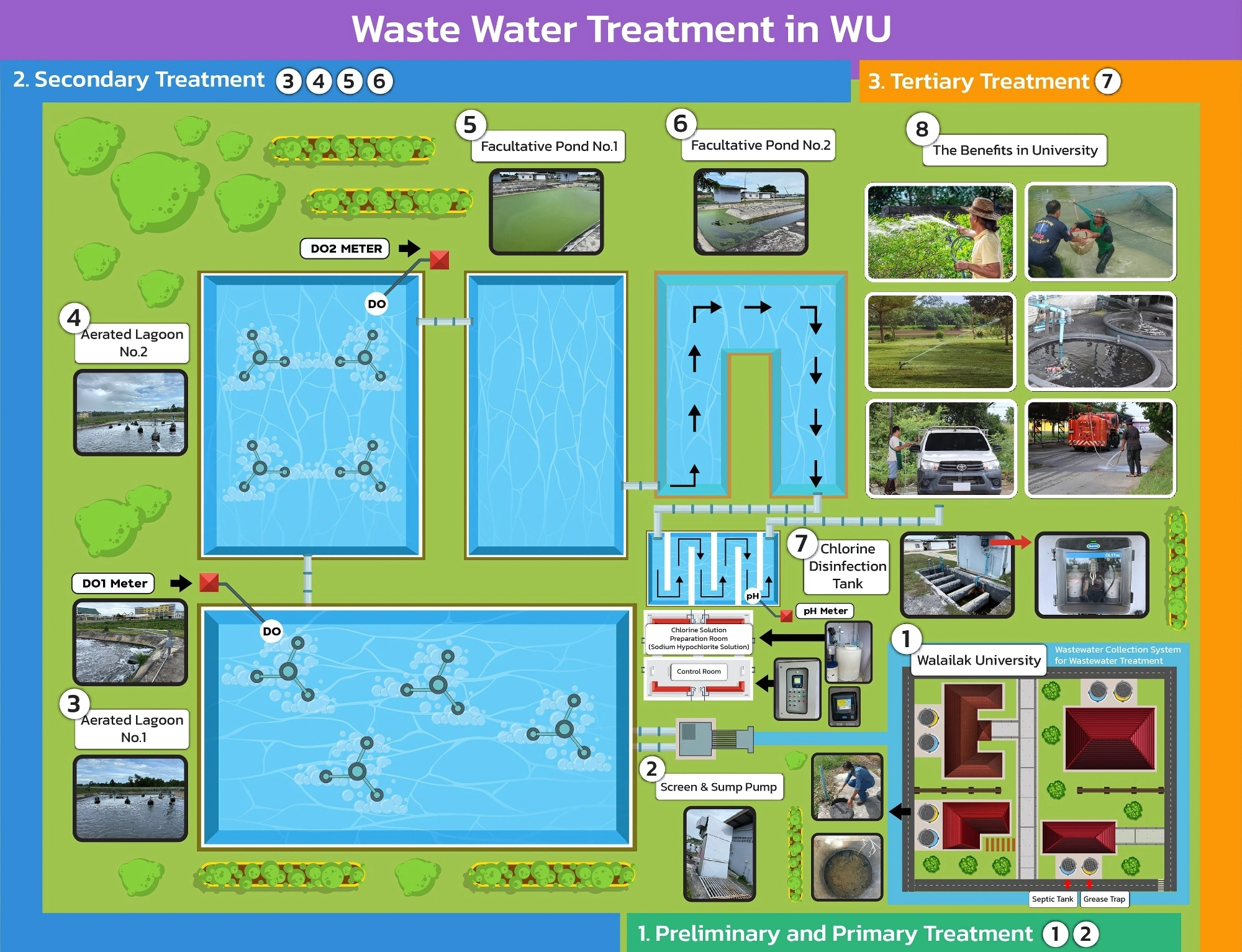
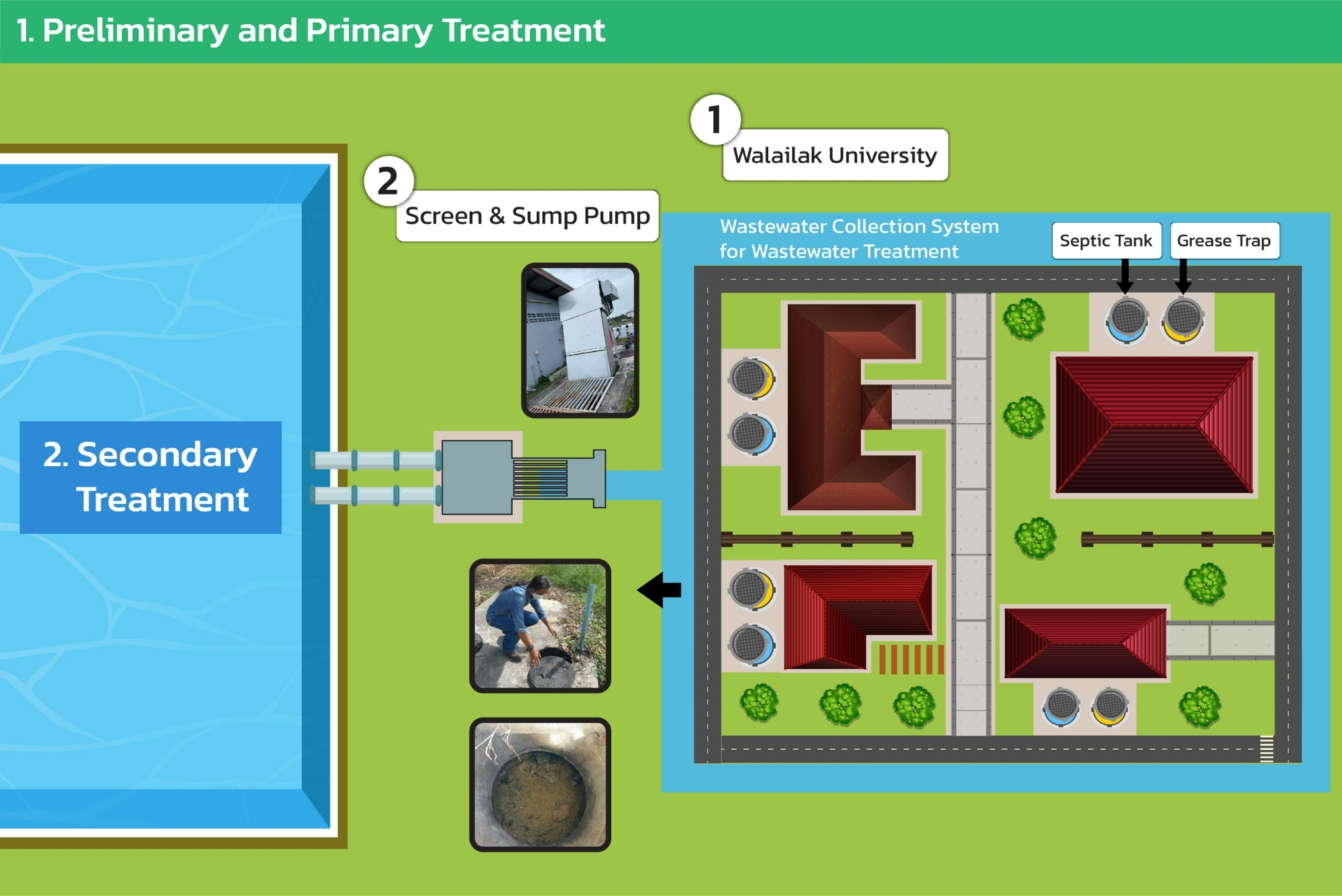
Figures: Wastewater Treatment System of Walailak University.
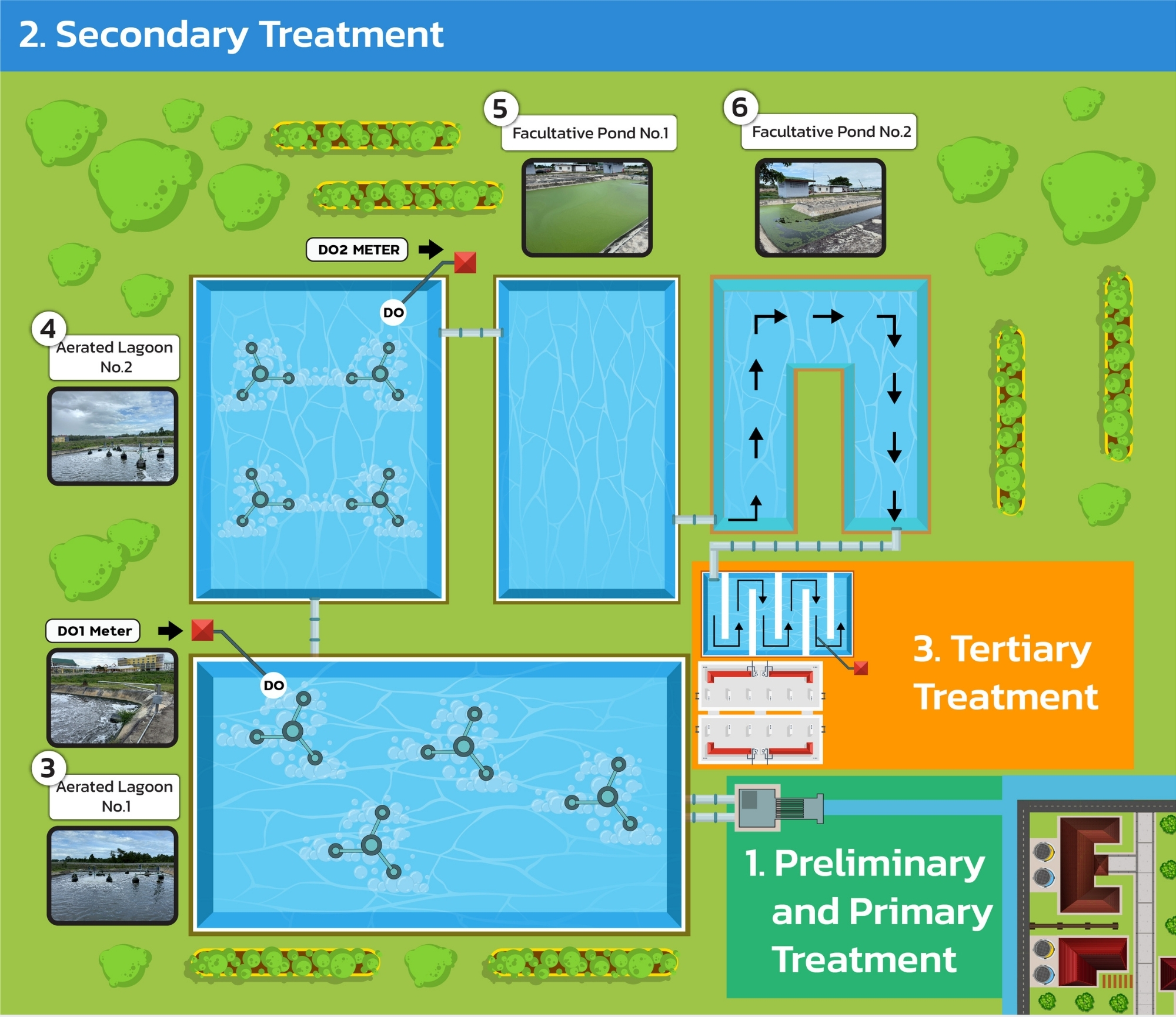
- Preliminary and Primary Treatment (Screen & Sump Pump): Fine screens with automated brushes remove solid waste, while sump pumps transfer wastewater to aeration ponds.
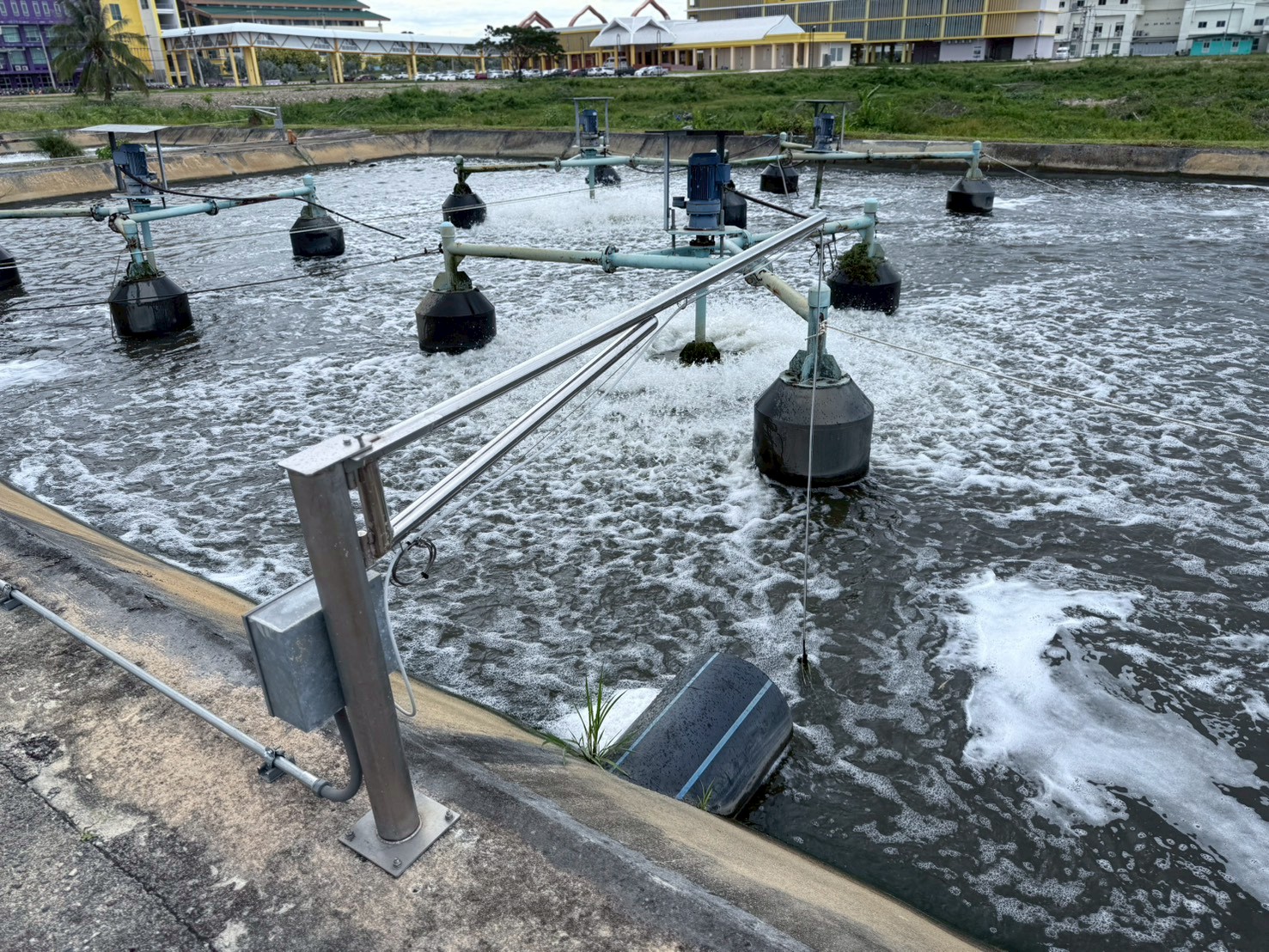
- Secondary Treatment (Aerated Lagoon): A 5-meter-deep aerated lagoon equipped with vertical surface aerators ensures thorough oxygenation, enabling bacteria to degrade organic matter effectively.
- Stabilization Ponds (Facultative Pond and Maturation Pond): Facultative ponds (approx.2 meters deep) allow aerobic processes and sunlight penetration, supporting further stabilization of organic matter. Maturation ponds provide pathogen removal and final polishing before discharge.
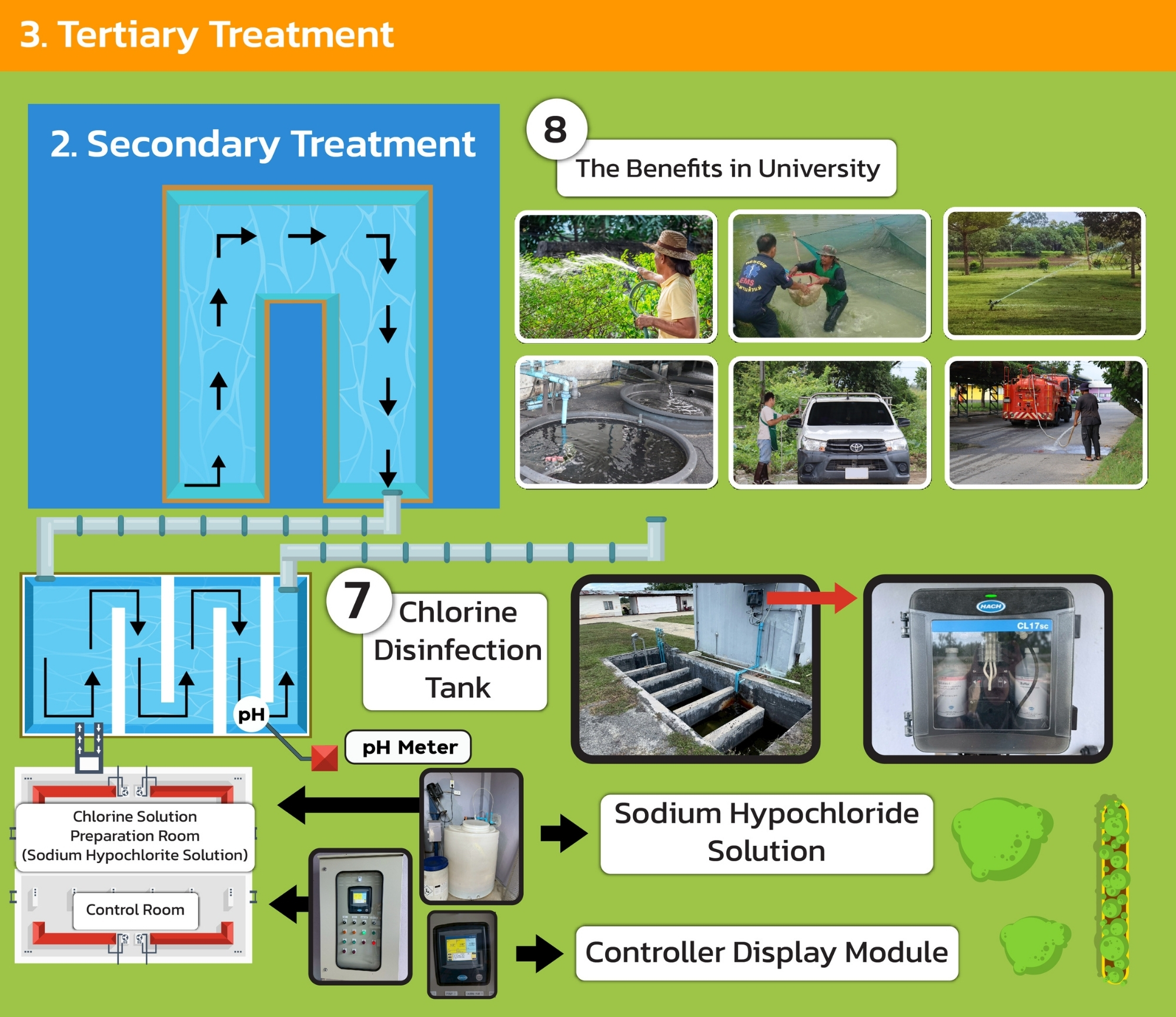
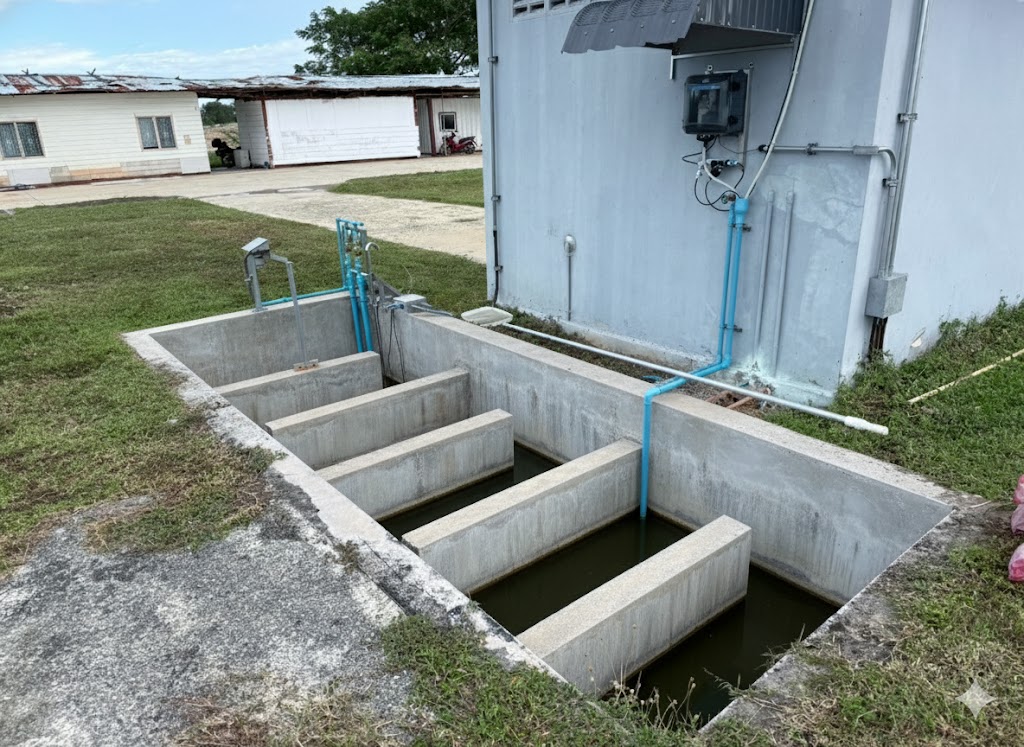
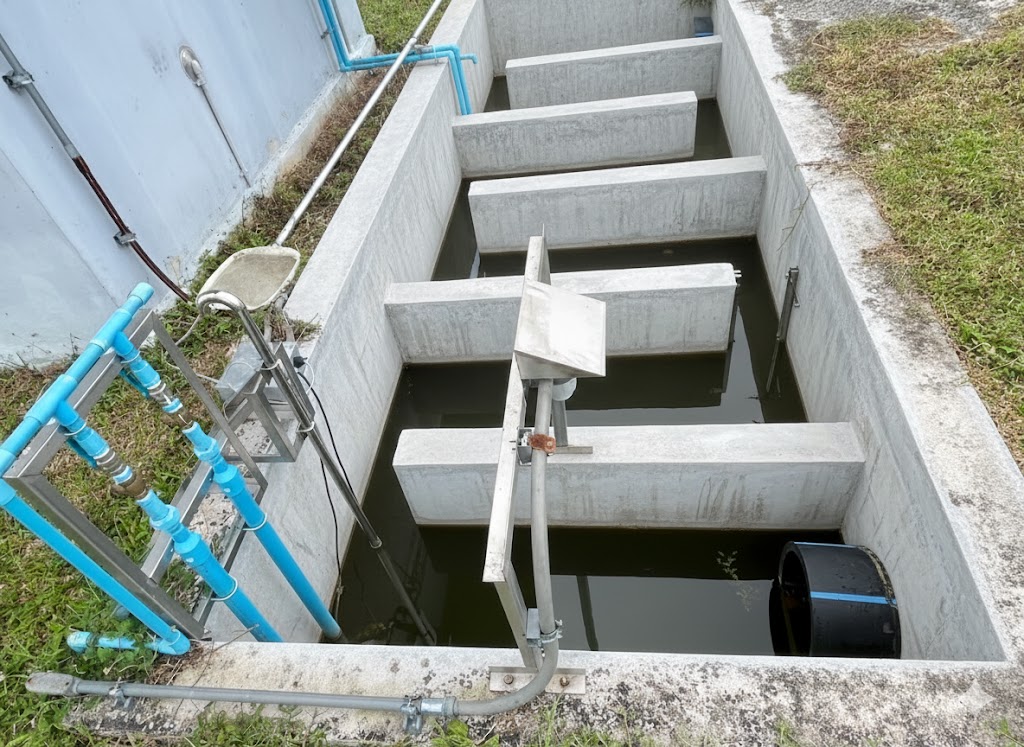
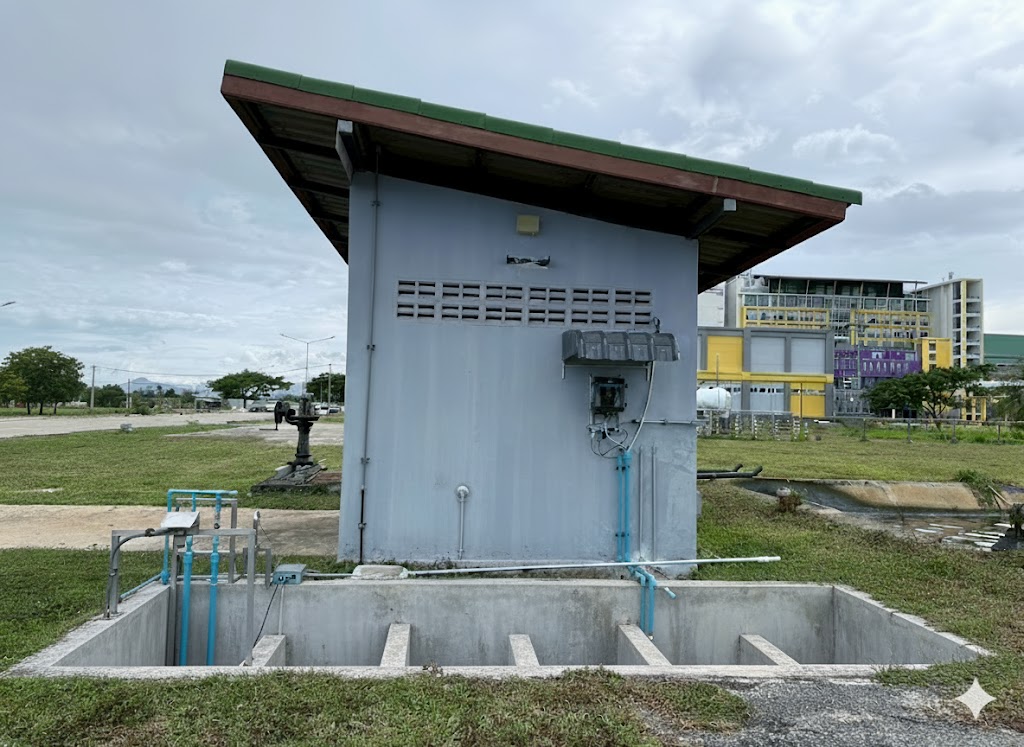
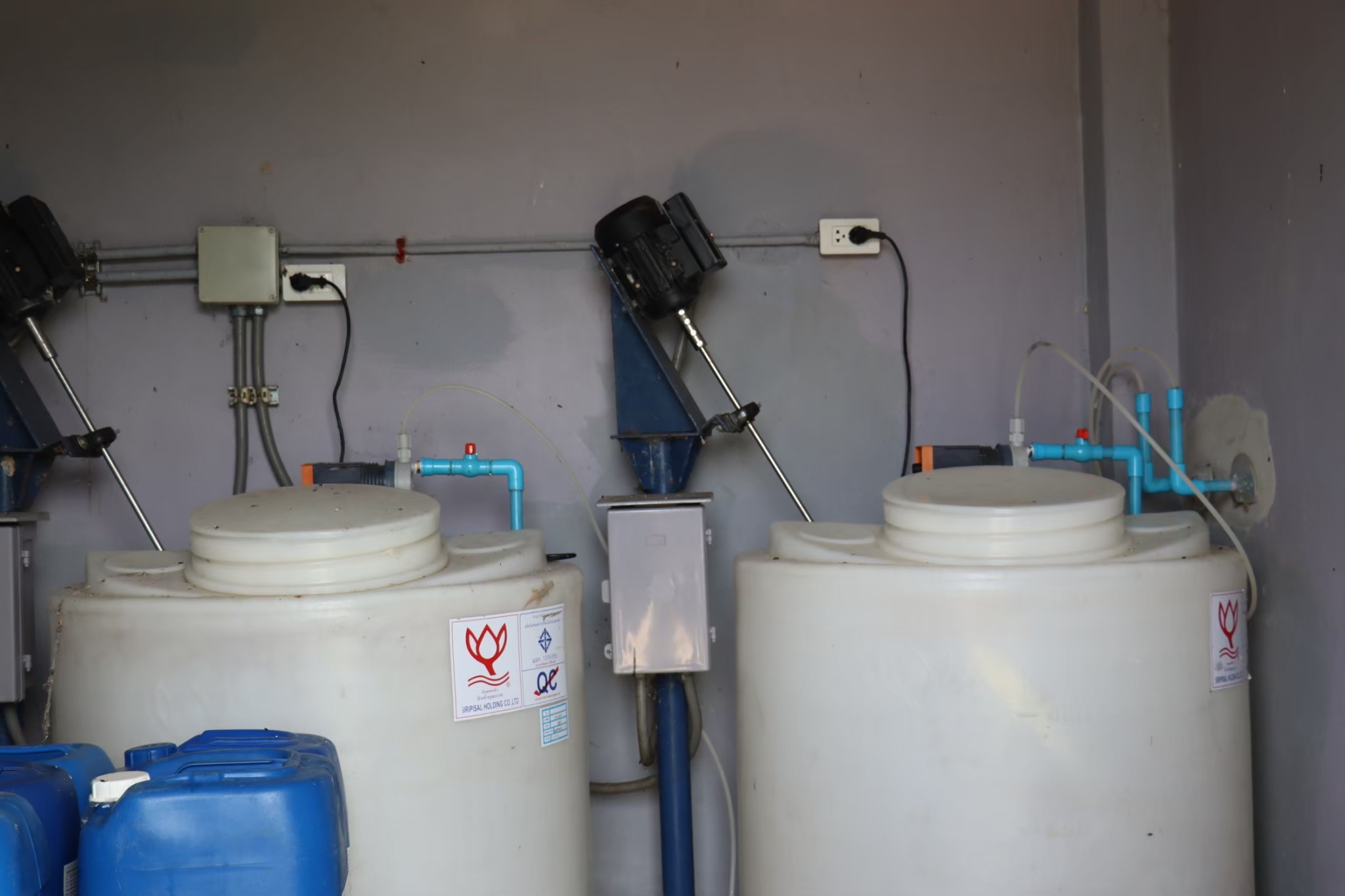
- Tertiary Treatment (Chlorine Contact Tank): A zig-zag chlorine contact tank ensures sufficient contact with 10% sodium hypochlorite solution, effectively disinfecting the treated water before reuse or discharge.
Figures: Tertiary Wastewater Treatment System covers preliminary, aerated lagoon, stabilization, and disinfection processes, complemented by real-time monitoring of DO, pH, and free chlorine.
The wastewater treatment plant is equipped with real-time monitoring systems, including:
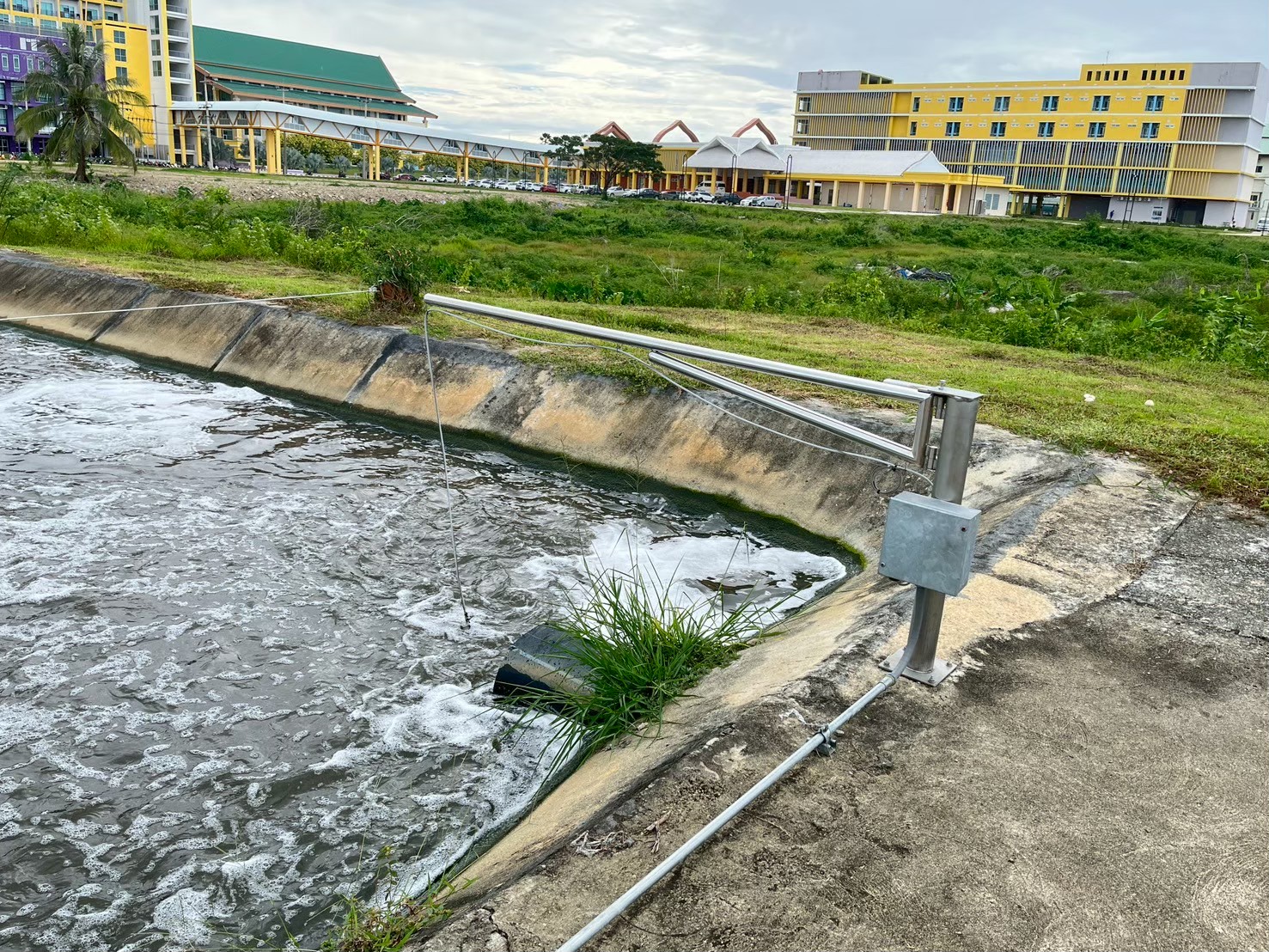
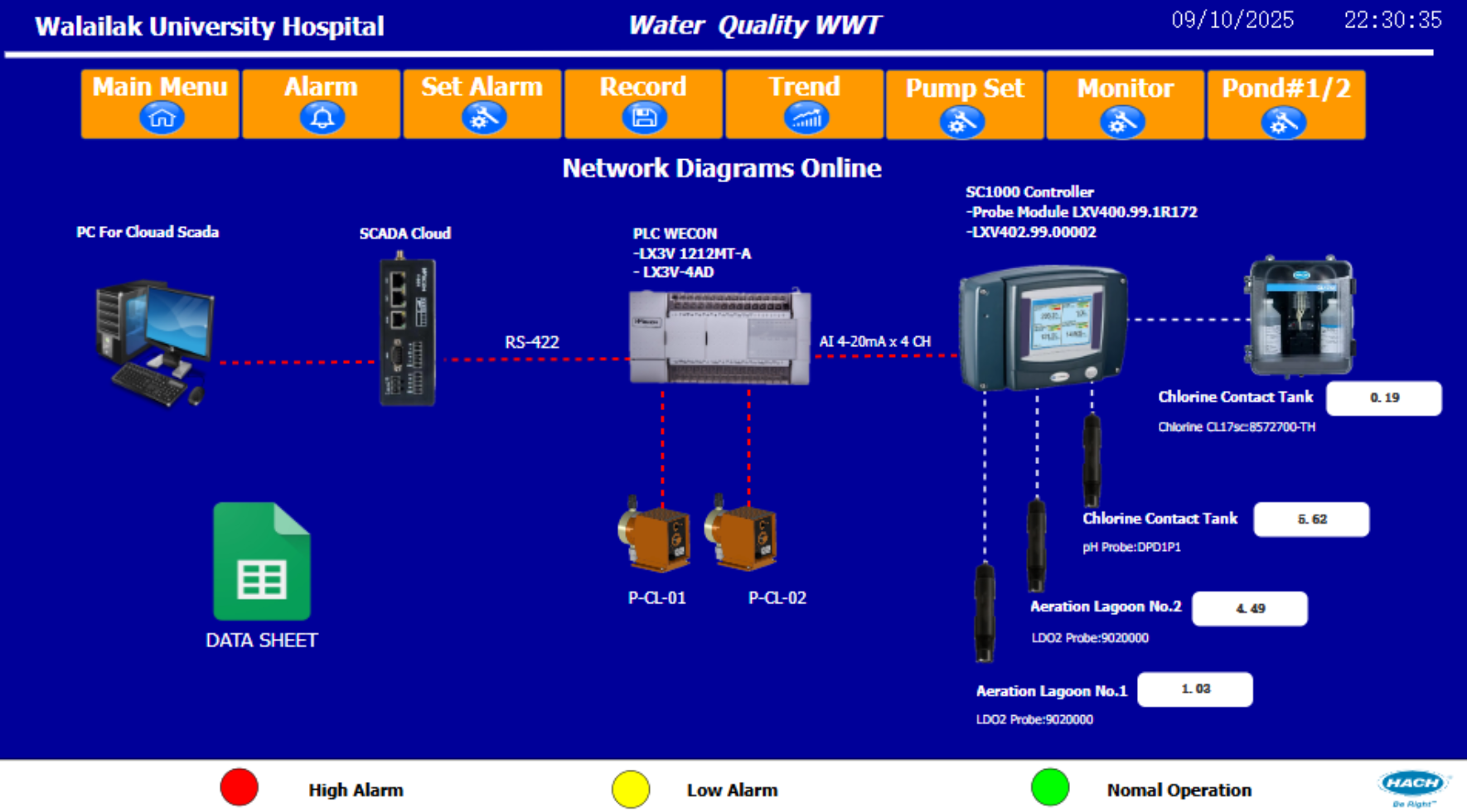
- Dissolved Oxygen (DO) sensors in aerated lagoons: continuously monitor oxygen levels in the wastewater. They are linked to the aerator control system to maintain optimal oxygen concentration for microbial activity and efficient organic matter degradation.
- pH sensors in chlorine contact tanks: continuously measure the acidity and alkalinity of treated water to ensure optimal disinfection efficiency and compliance with water quality standards.
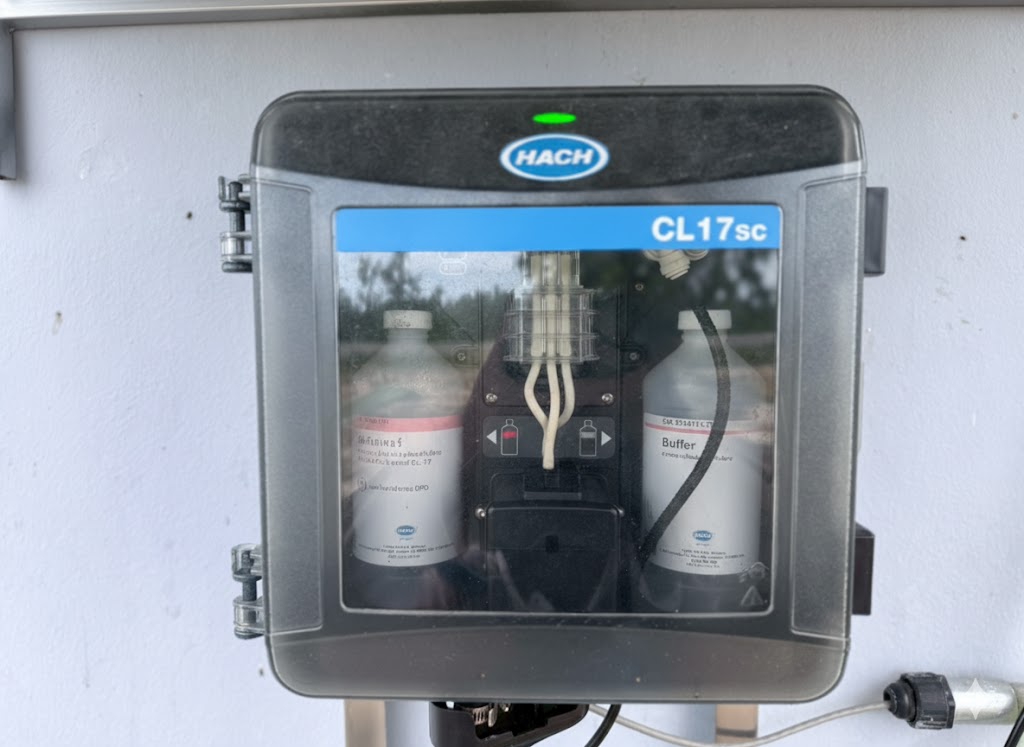
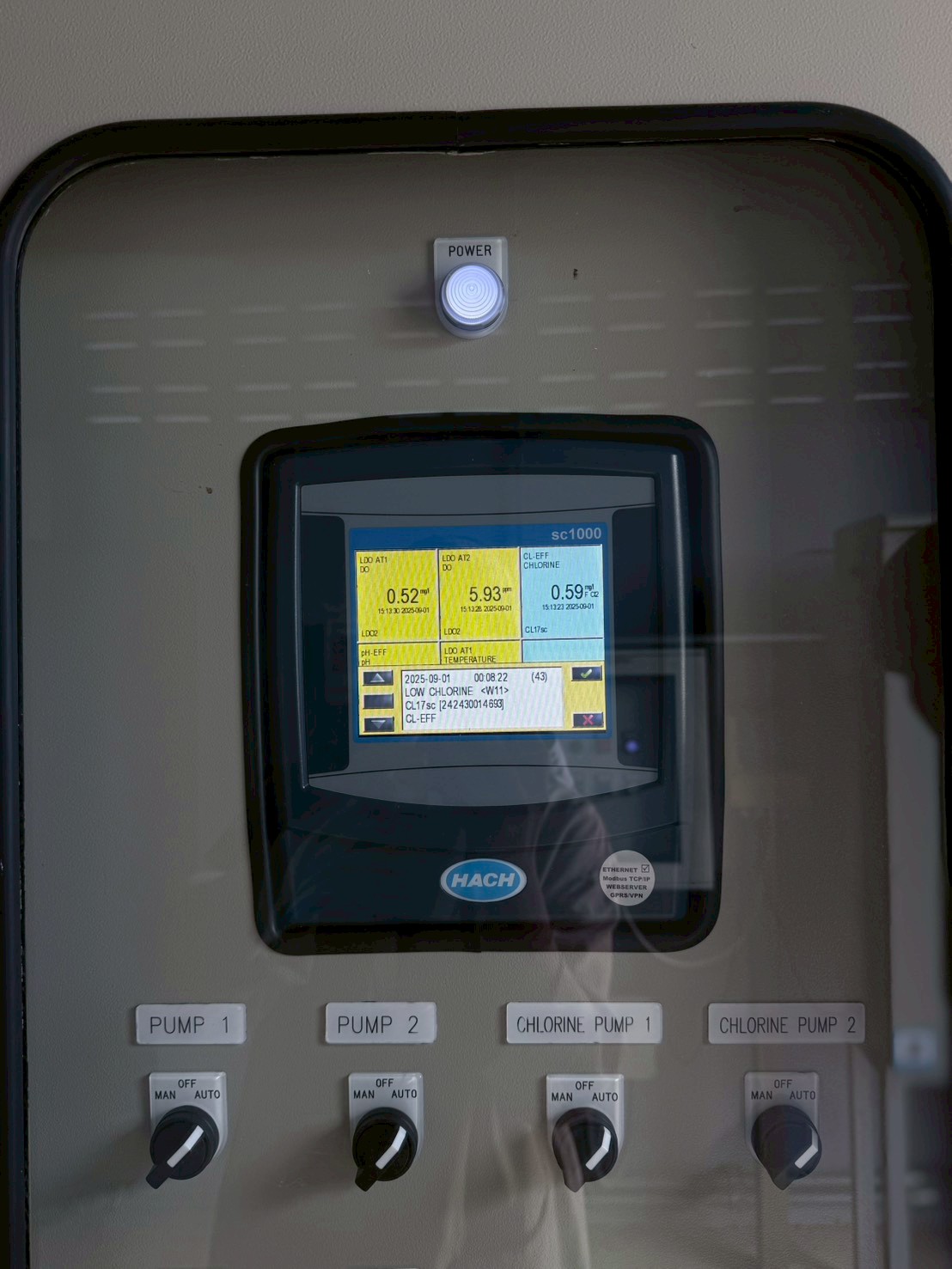
- Residual chlorine sensors with automated dosing control: monitor the remaining chlorine concentration in treated water and automatically adjust chlorine dosing rates to maintain proper disinfection levels while preventing excessive chemical use.
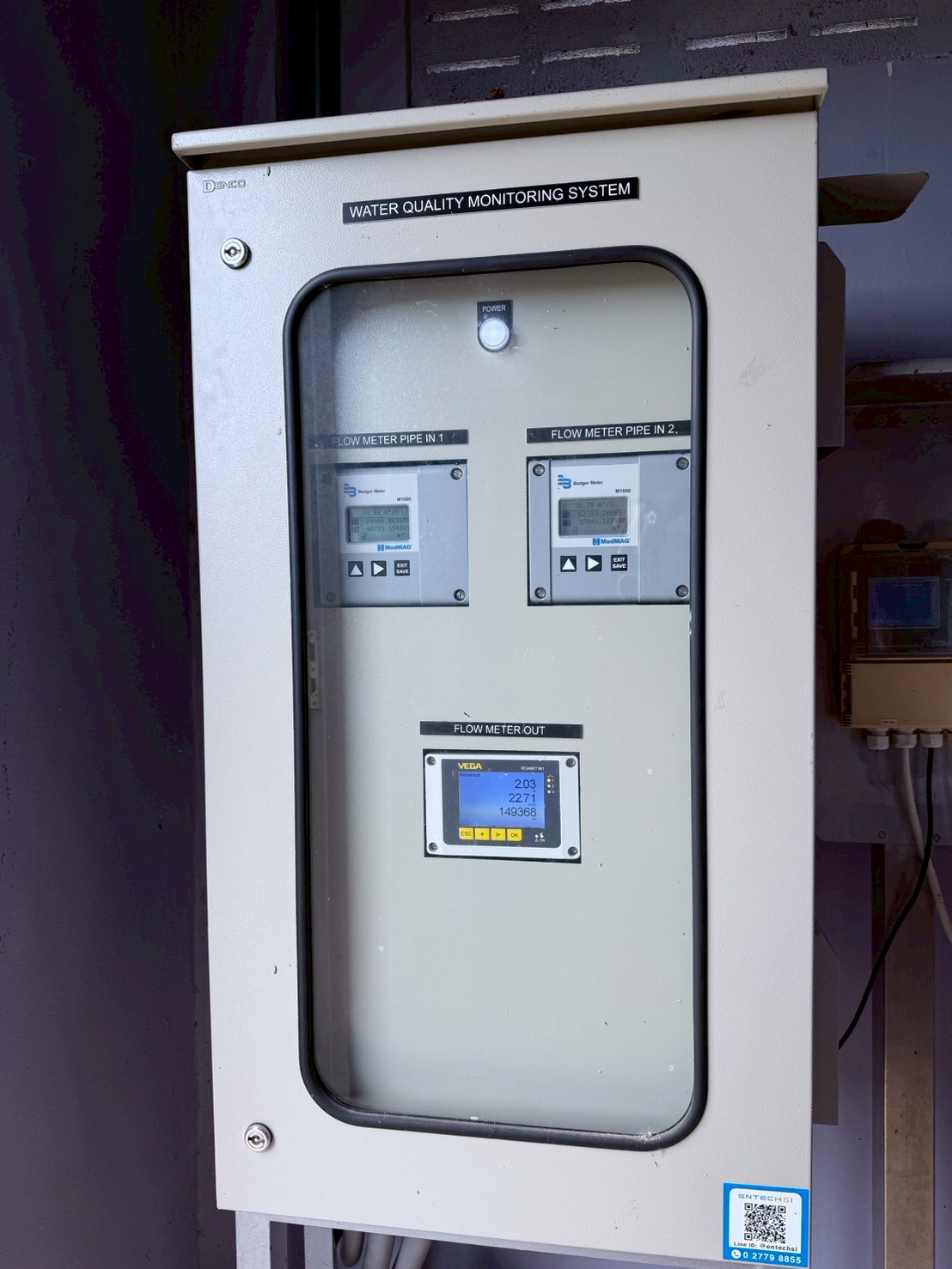
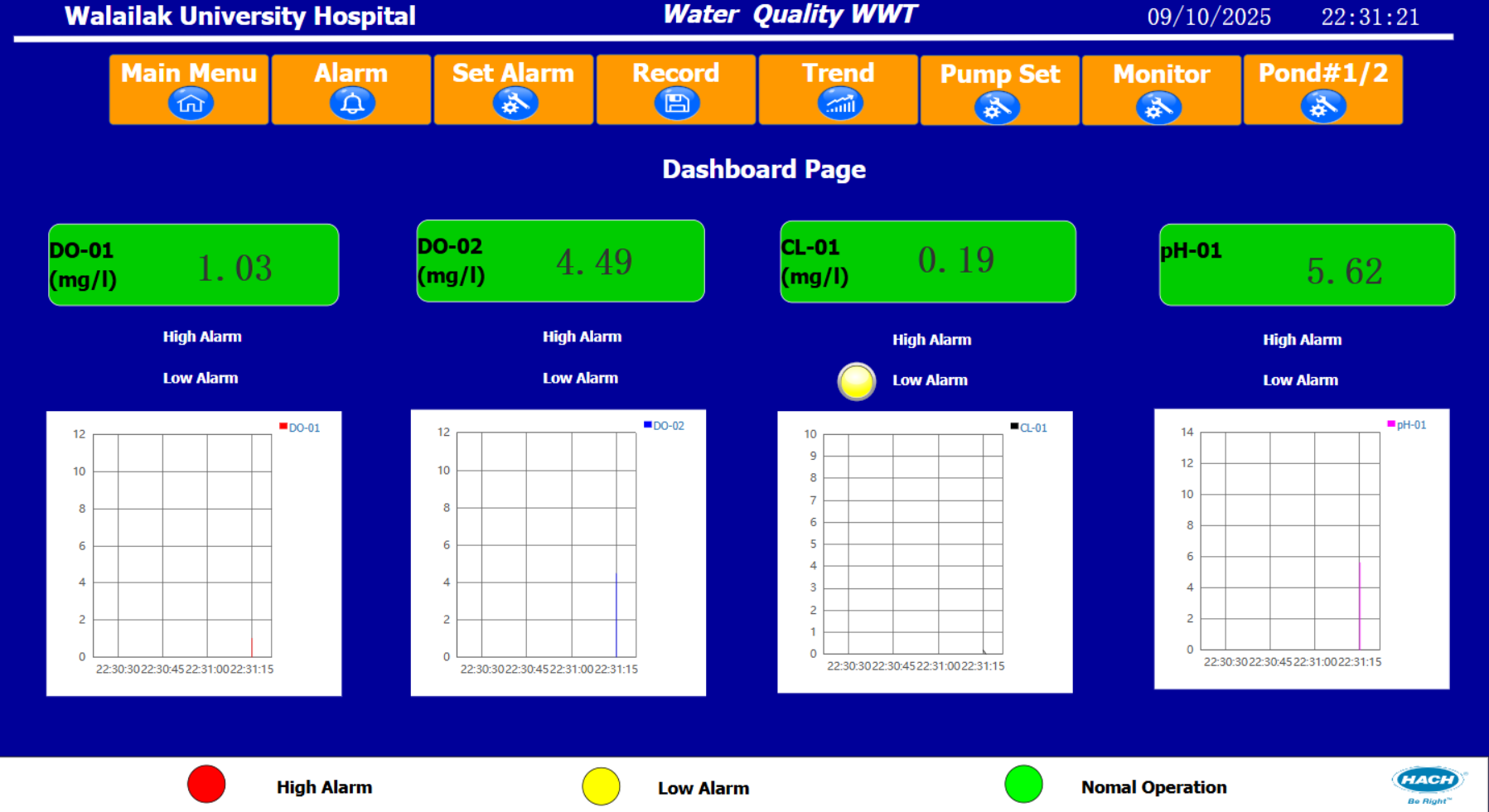
Walailak University wastewater treatment plant is equipped with a real-time monitoring and control system integrated through the Cloud SCADA network. The system connects multiple sensors and control devices to ensure efficient and sustainable wastewater management.
- Dissolved Oxygen (DO) probes are installed in Aeration Lagoons No.1 and No.2 to continuously monitor oxygen levels and automatically regulate aerator operation, maintaining optimal conditions for biological treatment.
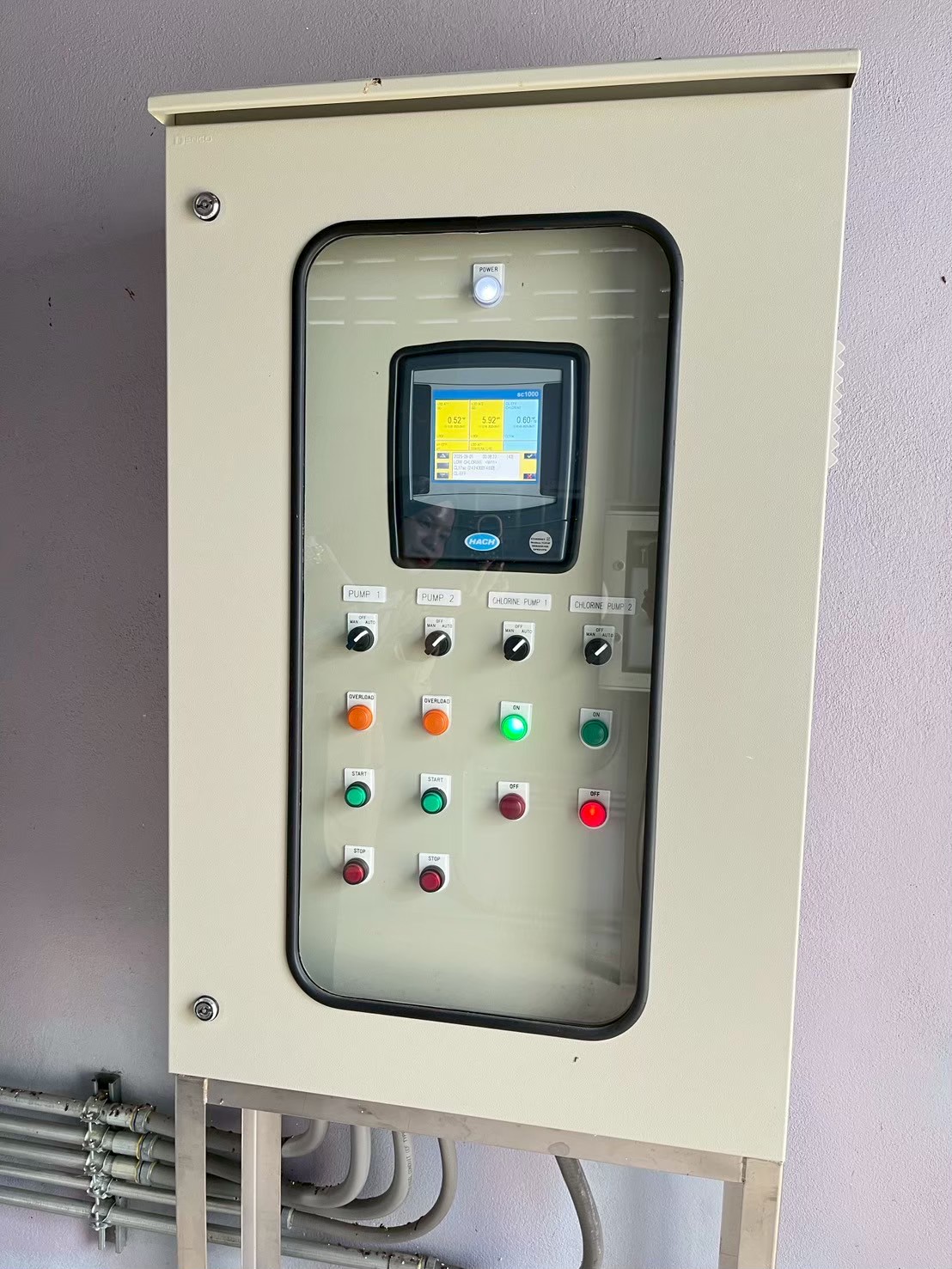
- The Chlorine Contact Tank is equipped with both pH probes and residual chlorine probes to monitor disinfection performance and water quality. Data from all sensors is transmitted to the PLC (WECON) and SC1000 Controller (HACH), which communicate with the central Cloud SCADA for data recording, trend analysis, and alarm notifications.
- The integrated system enhances process reliability, ensures compliance with environmental standards, and supports continuous improvement in water quality management within the university’s facilities.
Figures: Water Quality Wastewater Treatment with real-time monitoring systems.
Additionally, treated wastewater is sent quarterly to the Center for Scientific and Technological Equipment for analysis in compliance with the 2024 Ministry of Natural Resources and Environment standards. Results consistently meet all regulatory parameters.