
Living Wage Employment Practices
WU acknowledges the significance of providing a living wage to its staff as part of its commitment to social responsibility and employee well-being. A living wage at WU is defined based on the local financial poverty indicator for a family of four and the local living wage determined by the Thai government. Demonstrating strong leadership and vision, the university has consistently paid salaries above the government-defined living wage since 2014, making it one of the higher education institutions in Thailand that upholds this commitment. This initiative ensures that all staff and faculty members receive fair compensation that enhances their quality of life and financial stability.
In 2014, WU revised its policy on salary and living wages for all staff and faculty members, setting their compensation above the national living wage standard. The policy, which remains in effect today, guarantees that all employees, regardless of their position, receive a wage that aligns with economic conditions, enabling them to maintain a stable livelihood. This commitment is not only a financial strategy but also an ethical one, reinforcing the university’s dedication to fair employment practices. The official policy can be accessed at: https://drive.google.com/file/d/1ncwJK-Jm_a0OL4oydrArlYevtMb4nOU_/view.
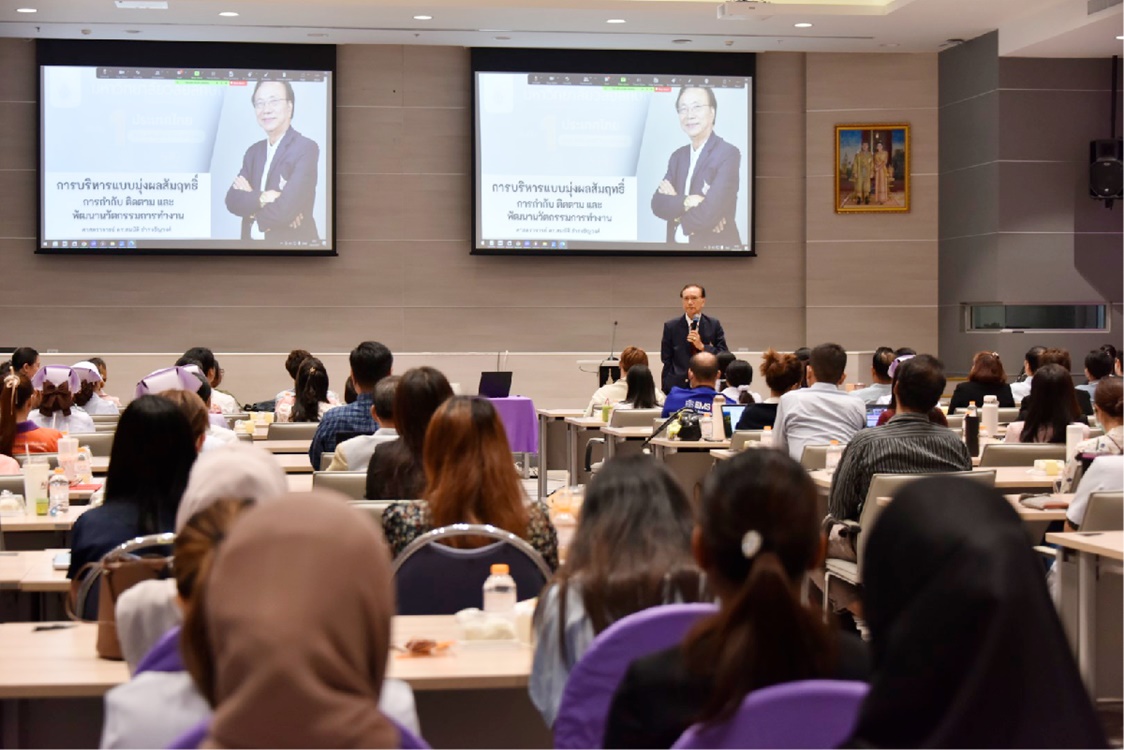
At WU, staff members are classified into three categories: academic staff, supporting staff, and academic administrative staff. Salaries and living wages are determined based on their educational qualifications, ensuring that each group is compensated fairly according to their level of expertise and contribution. The university provides wages above the government-defined living wage for various educational levels as follows:
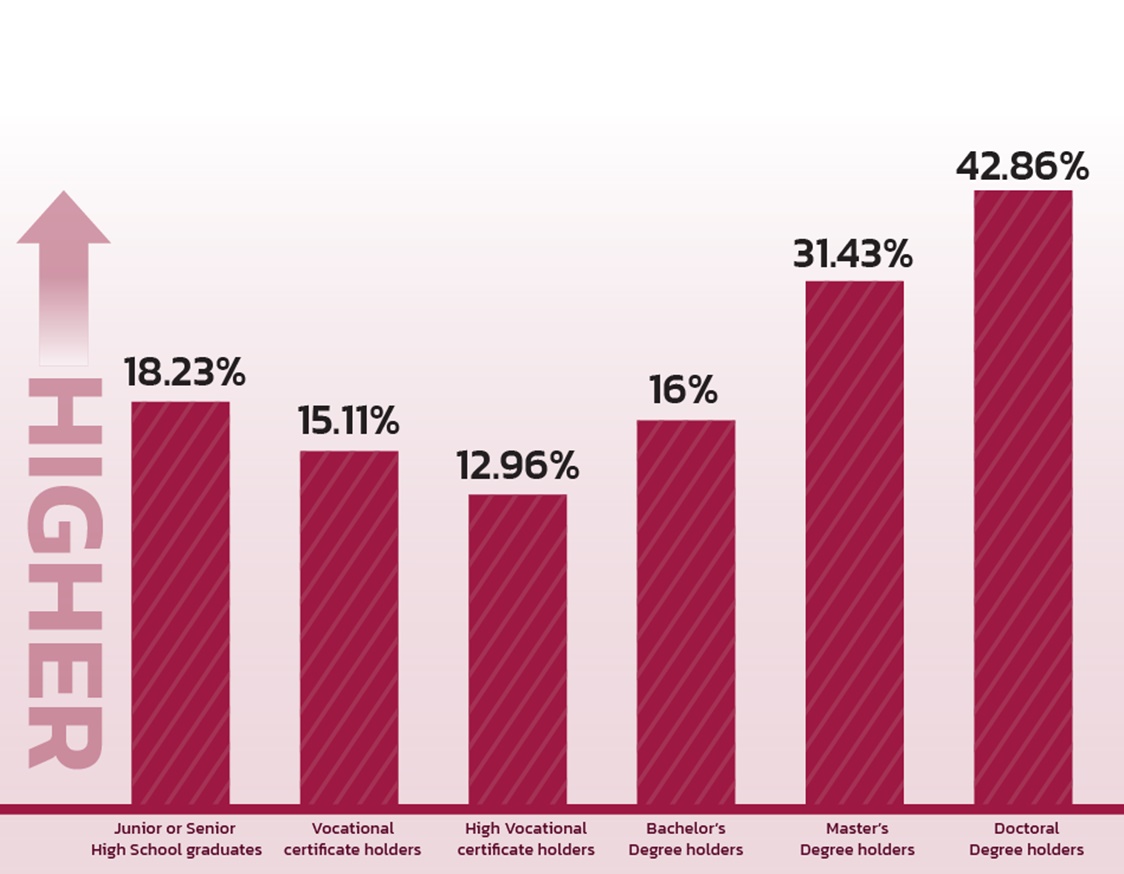
These figures reflect WU’s proactive approach in ensuring its staff members receive salaries that not only meet but also exceed the local living wage standards. By maintaining a competitive salary structure based on educational qualifications, the university fosters a work environment that values talent, encourages professional growth, and promotes long-term career development.
In addition to offering competitive salaries, WU invests in employee development programs, professional training, and career advancement opportunities implemented by the Division of Human Resources and Organization, the Center for Digital Technology, and others. Examples of the initiatives include:
– Generative AI for New Lecturers: Revolutionizing Teaching and Research with ChatGPT
– The Preparation of Work for the Determination of Professional Academic Rank for General Administrative Staff, Batch 1
– Data Visualization with Google Looker Studio
These initiatives complement the university’s fair wage policy by providing staff members with the resources they need to enhance their skills, advance in their careers, and contribute effectively to the institution’s success. Furthermore, by prioritizing fair wages and employee well-being, The university strengthens its ability to attract and retain top talent, thereby enhancing its academic and research capabilities.
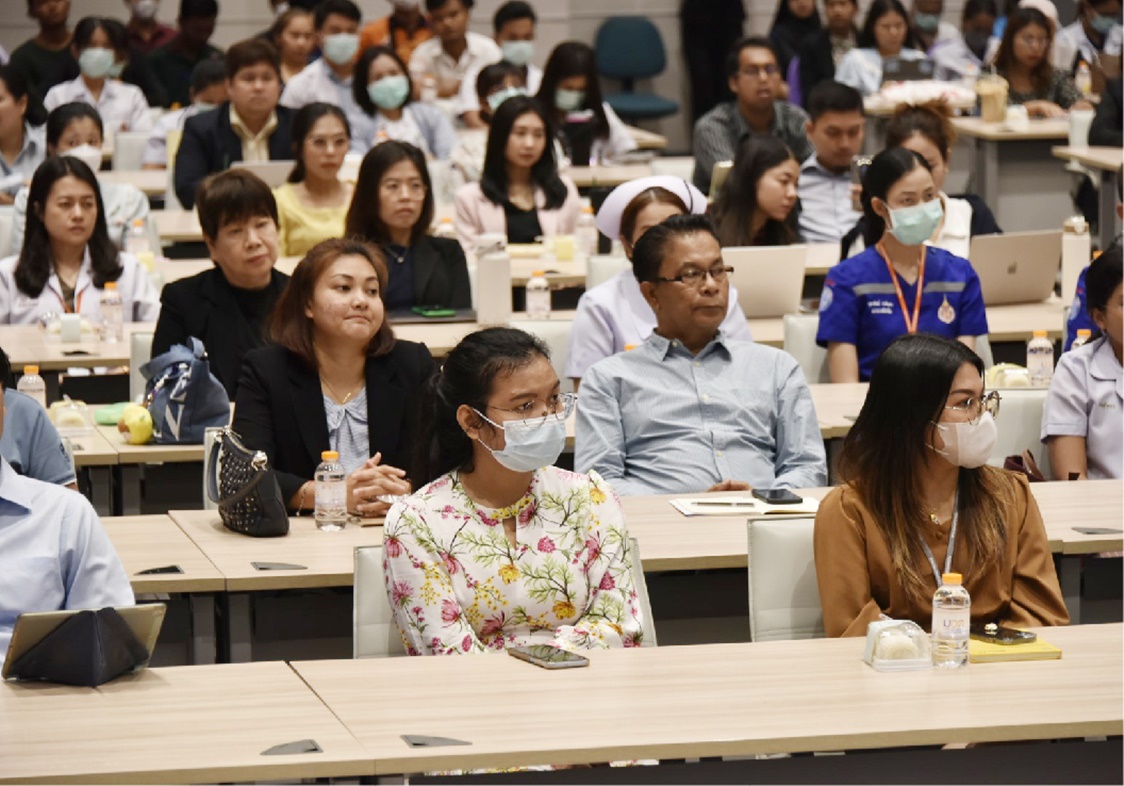
Through its steadfast commitment to equitable pay and comprehensive employee support, WU sets a high standard for higher education institutions in Thailand, demonstrating that fair compensation and institutional success go hand in hand.

Goal 8: Decent Work and Economic Growth