Integrated Waste Management: Advancing Towards Zero Waste
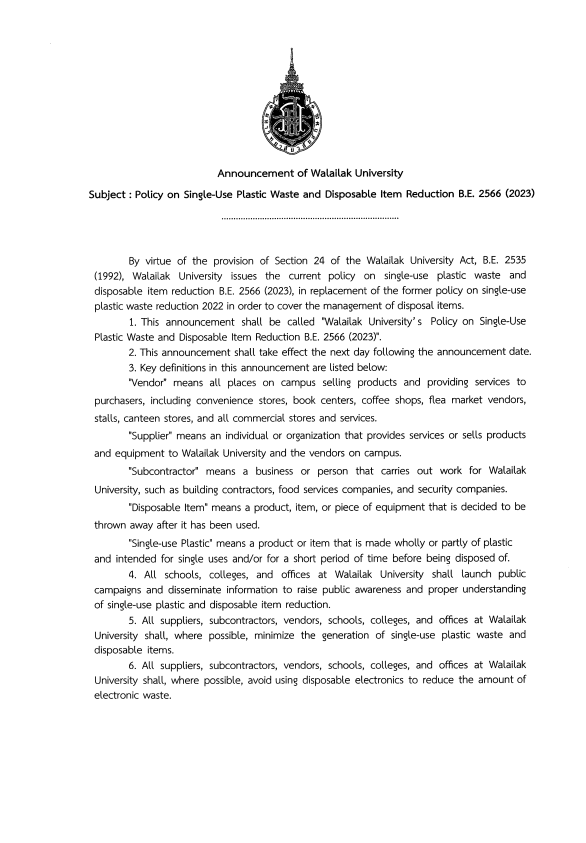
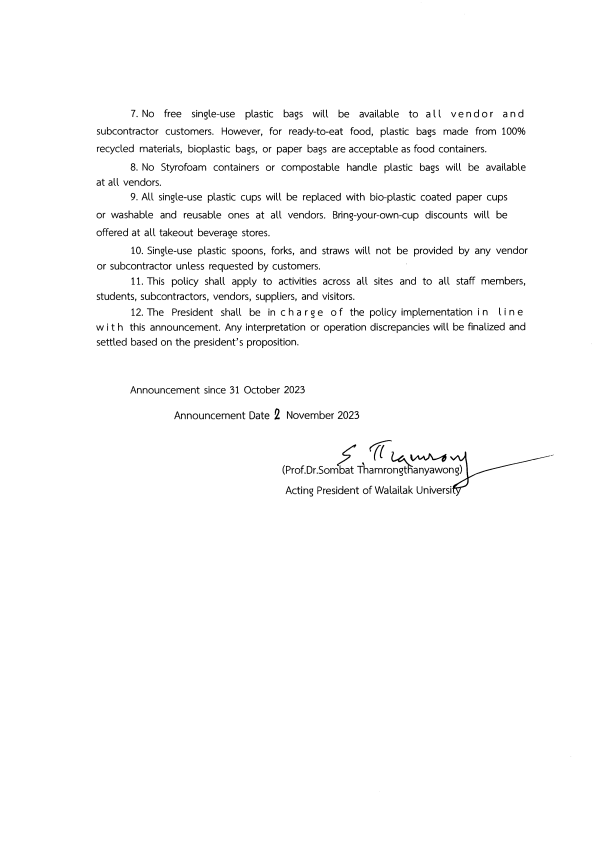
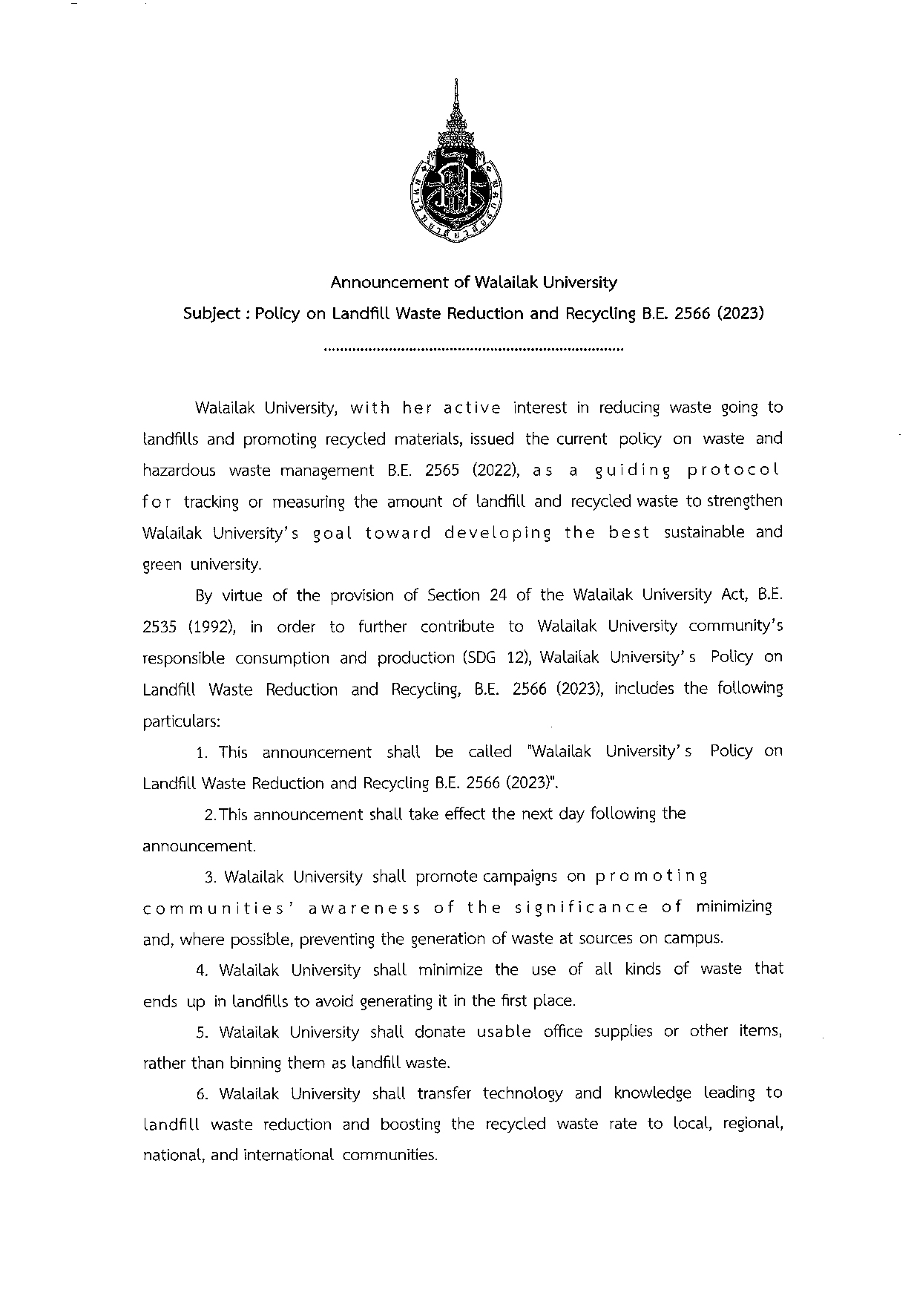
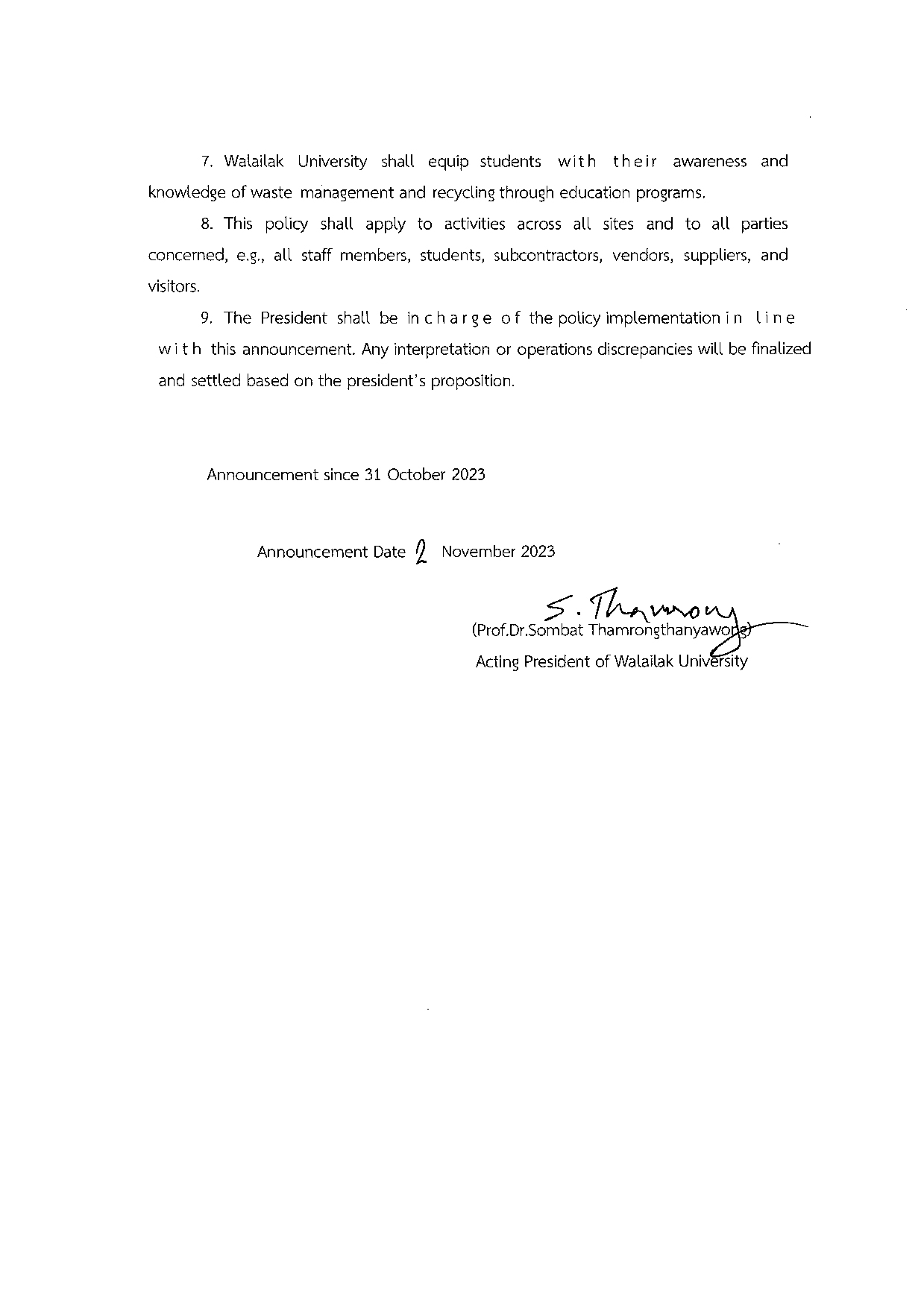
Walailak University (WU) has always applied an integrated waste management approach in support of its Green University Initiative which goal is to attain zero waste management with economic, social, and environmental sustainability considerations in mind. At present, WU has policies, guidelines, and activities to measure the amount of waste generated across the university. The processes of existence of measurement at the whole university throughout its different stages are as follows:
Waste Monitoring and Measurement at the Source
This stage focuses on educating WU students and staff about the significance of reducing waste and properly sorting it by implementing a system of four color-coded bins to help categorize waste: Green Bins for organic waste; Blue Bins for general waste; Yellow Bins for recyclable materials; Red Bins for hazardous waste.
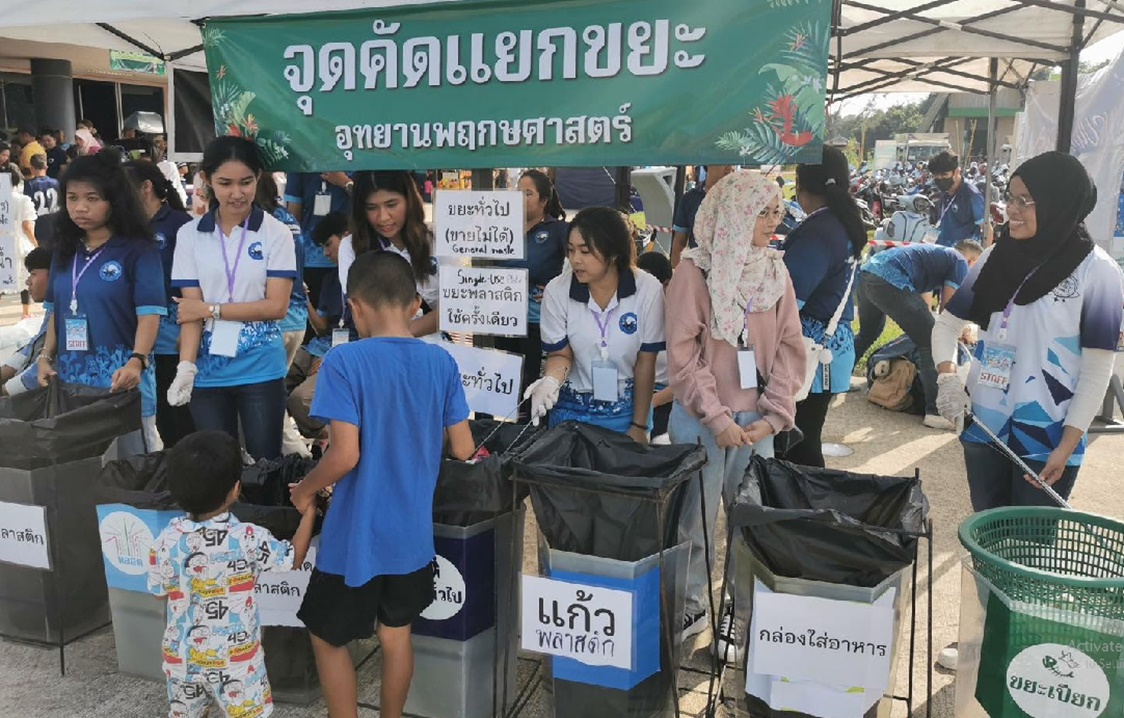
In 2024, the university introduced several activities to bolster this initiative, including “Let’s Sort Waste”; this activity aims to encourage waste segregation at the source to lessen the challenges of managing waste at the end of its lifecycle.
The next activity is “Waste Protection Sorting Station.” This activity invites students, staff, and external participants to sort their waste before disposal, highlighting the importance of cleanliness and resource reuse.
Waste Monitoring and Measurement at the Intermediate Stage
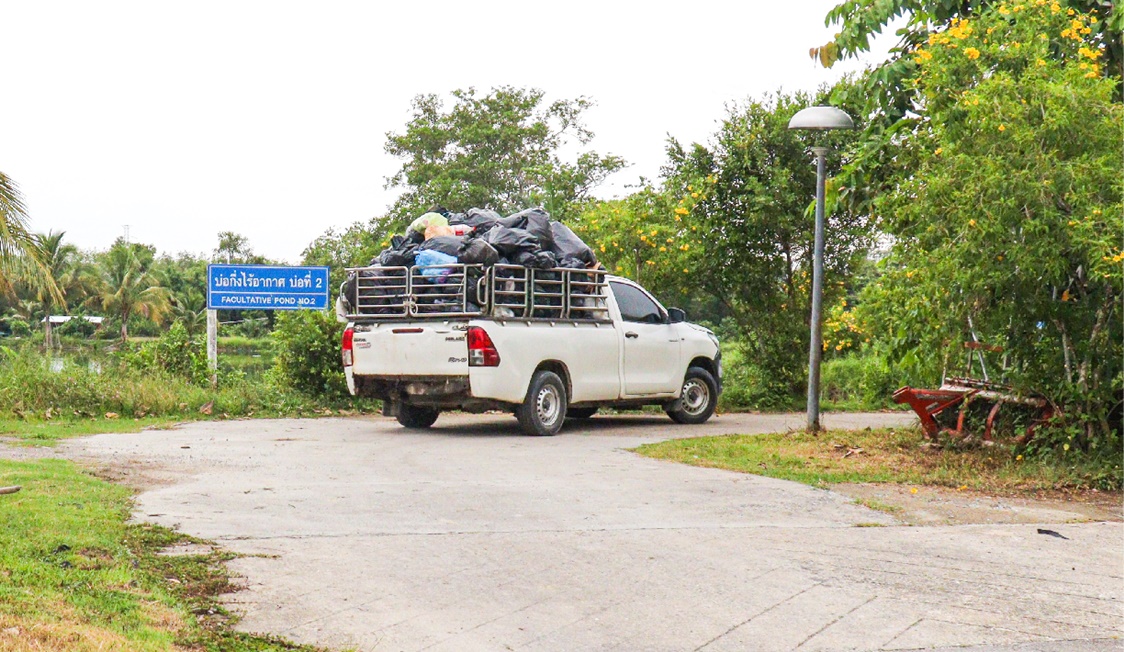
During this stage, various types of waste from whole university are gathered and organized in designated collection areas that have secure and efficient lids. Then, each type of waste is measured accurately when the Waste Collection Vehicles go to the areas at the specific schedules and routes, which helps ensure that waste is collected efficiently and that the weights are documented at each location.
Waste Monitoring and Measurement at the Final Stage
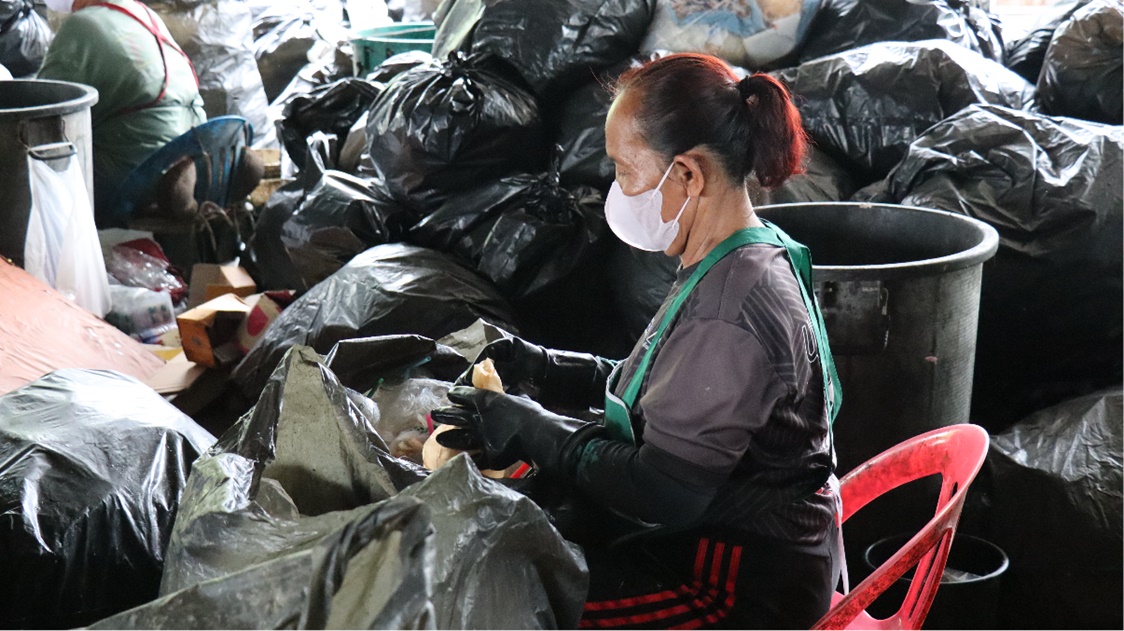
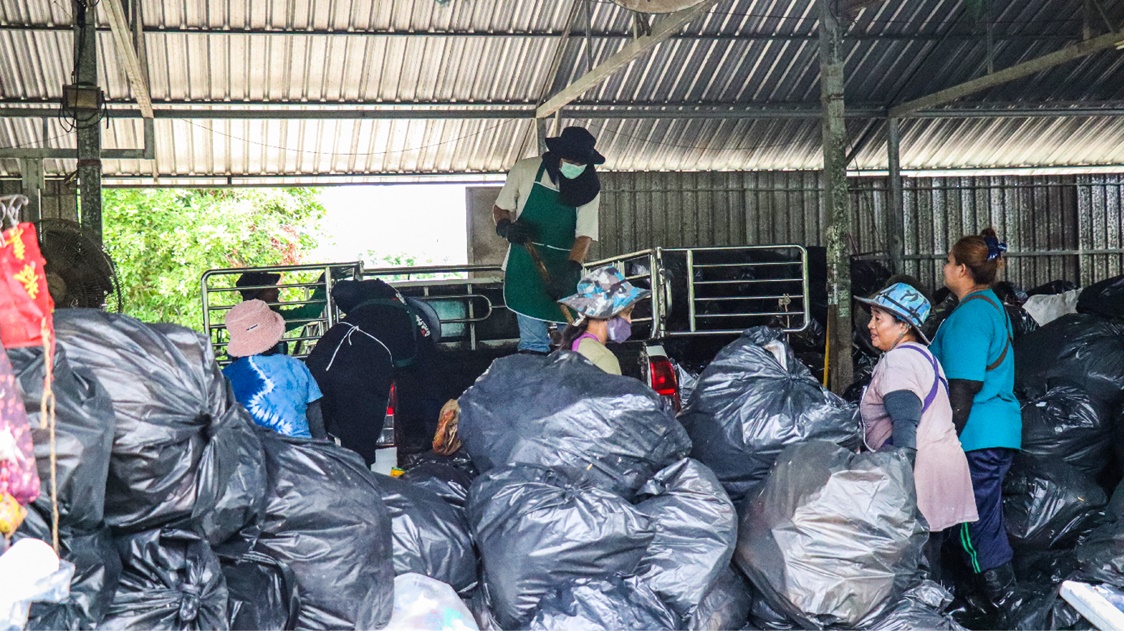
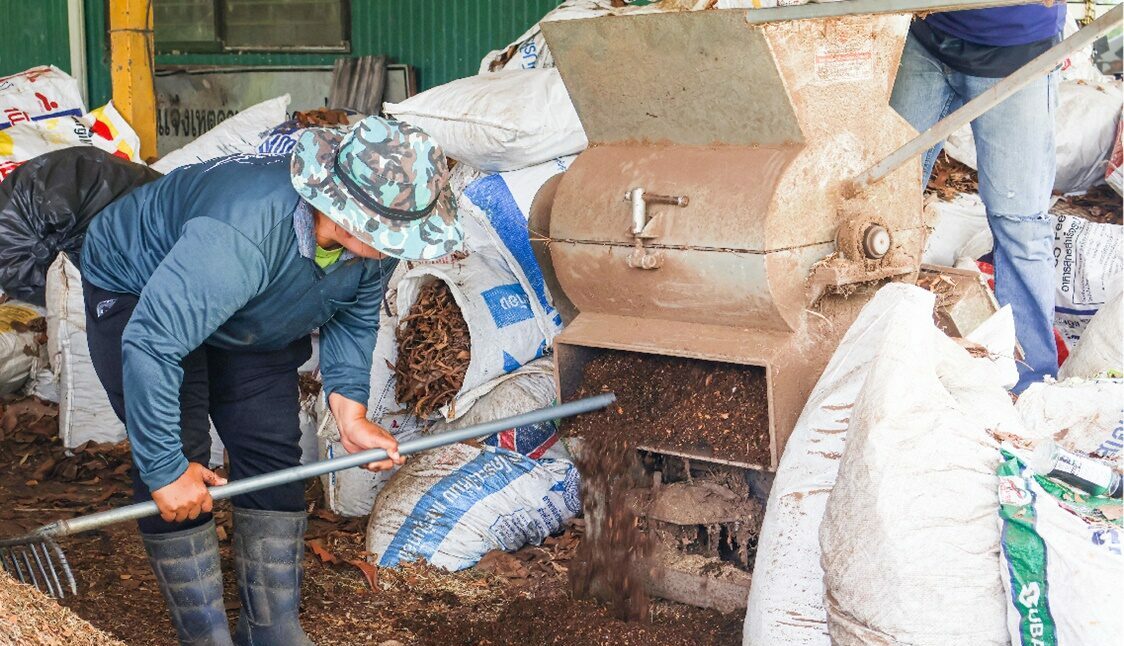
The university has a waste separation system at its waste plant, with methods to track the amount and assess the types of waste. In 2024, the university implemented a Solid Waste Treatment Plant consisting of recycling and sanitary landfill.
For recycling, it can be separated into two types of waste: inorganic waste: materials such as paper, glass, and plastic are sold to industrial factories for further recycling; and organic waste: items like vegetable scraps, food waste, leaves, and branches are repurposed as animal feed or compost. This organic waste is used to feed pigs and create compost for ornamental and fruit-bearing plants on campus. Any surplus compost is sold to generate additional revenue for the university.
Next is the sanitary landfill, including non-hazardous waste and items that cannot be recycled or reused are disposed of using sanitary landfill methods, ensuring environmental safety.
To sum up, these efforts highlight WU’s dedication to sustainable waste management by decreasing waste production, promoting the reuse and recycling of materials, and reducing the amount of waste that ends up in landfills.