Programme to Address Student Food Insecurity and Hunger
Free Meal Grant Programme
Food insecurity and hunger among students are urgent challenges faced by universities around the world, including Walailak University. Although the University is located in an area with abundant food resources, some students, particularly those facing financial constraints, may still experience difficulties in obtaining reliable access to a sufficient quantity of affordable and nutritious food. Food insecurity can affect not only students’ physical and mental well-being but also their ability to concentrate and perform effectively in their studies.
Recognising the importance of addressing student food insecurity and hunger, Walailak University has established a range of continuous, targeted and coordinated interventions to ensure that students experiencing food insecurity can access sufficient and nutritious food. One of the University’s longstanding programmes is the Free Meal Grant Programme, which has been implemented since 2004 to provide food assistance to disadvantaged students. The programme is coordinated by the Property Management Center in collaboration with food vendors on campus, with a screening and referral mechanism supported by the Student Development Center and academic advisors to ensure that assistance reaches students with identified needs.
In parallel, the University provides various forms of financial assistance and educational loans covering tuition fees and living expenses, including food and daily necessities. These interventions are supported by the University, government agencies, private-sector organisations, donors and other partners. Together, these programmes form a coordinated support system that contributes to students’ food security and reliable access to food over time, rather than providing only one-off assistance.
Free Meal Grant Programme
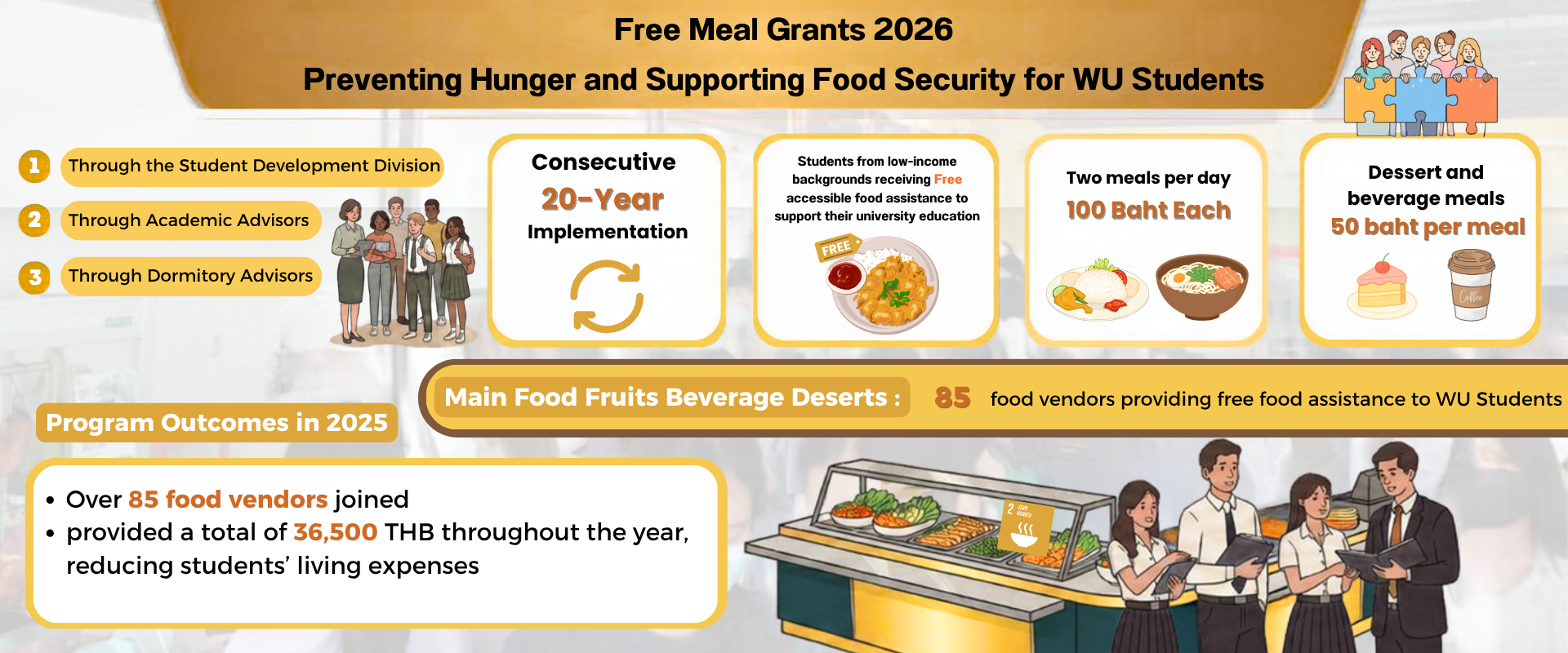
The Free Meal Grant Programme has been implemented continuously since 2004 to support students experiencing economic hardship and family-related financial constraints. The programme provides ongoing assistance from the beginning of students’ enrolment through graduation, including during semester breaks.
The Property Management Center serves as the main coordinating unit and works with food vendors at Cho Pradu Food Center and the Student Activity Building Food Court. The programme is supported by donors and partner networks and aims to address student food insecurity by providing students experiencing difficulties in accessing food with reliable access to meals, thereby helping them remain in education and complete their studies.
Programme Application, Screening, and Support Mechanisms
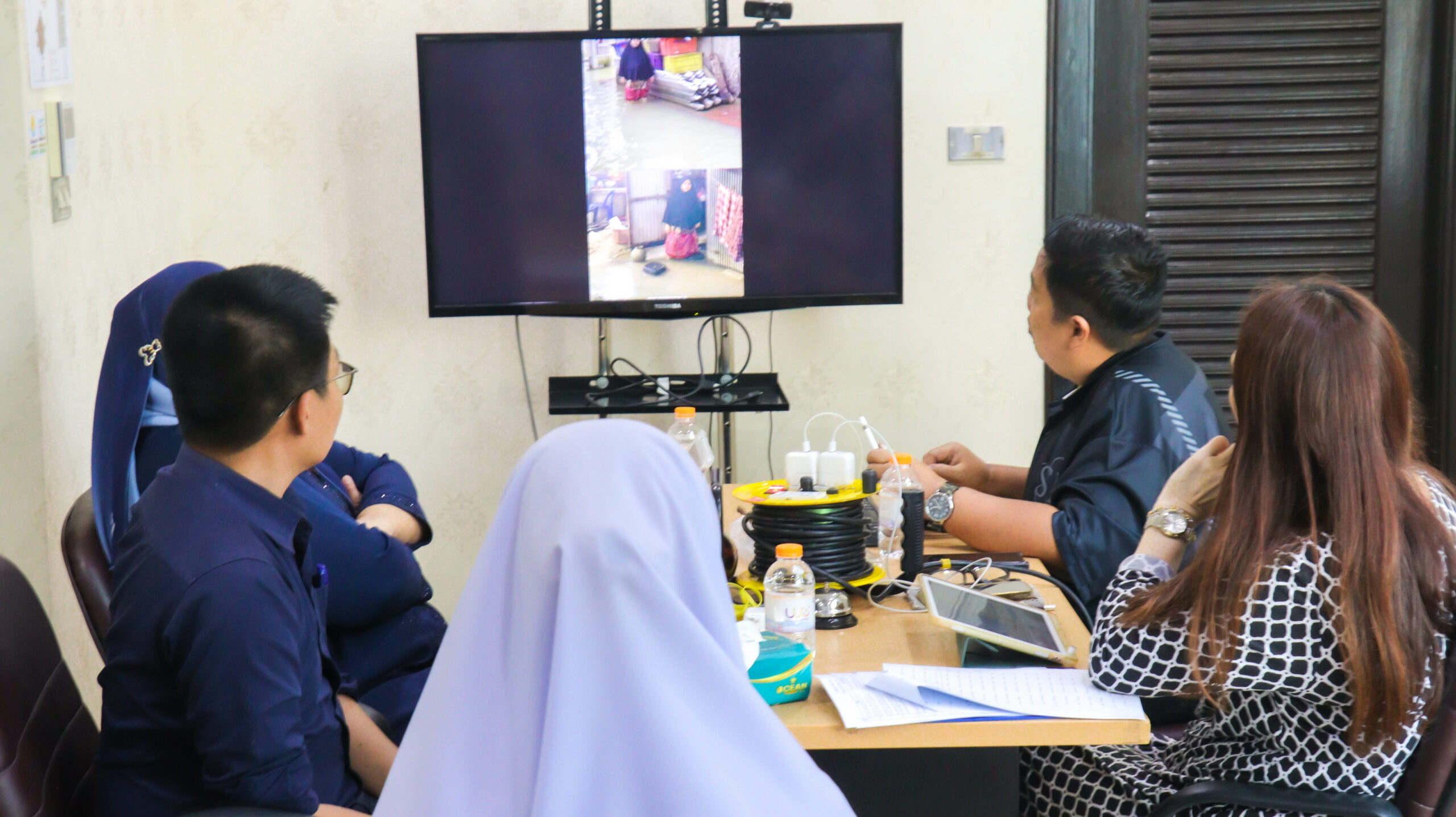
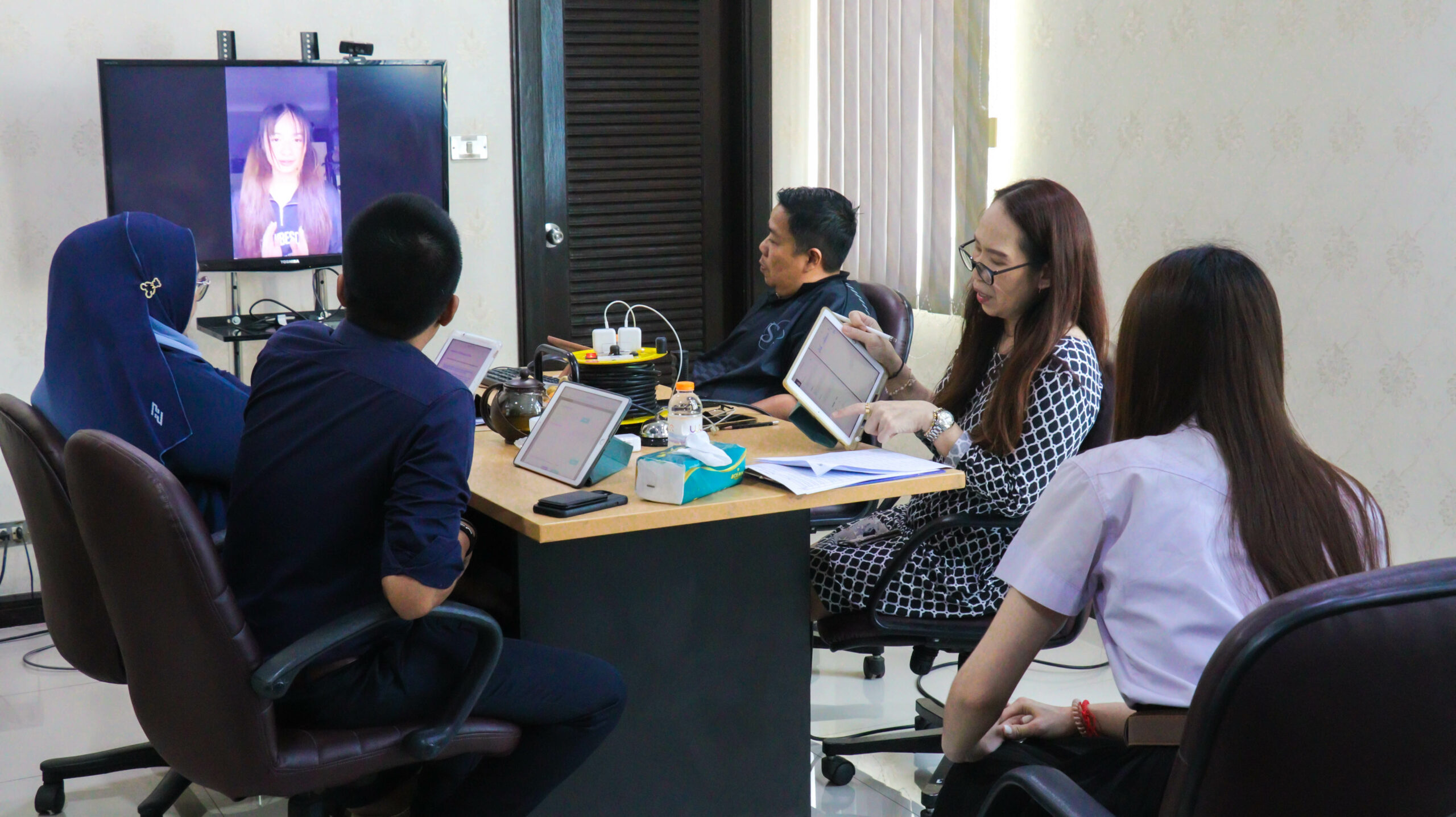
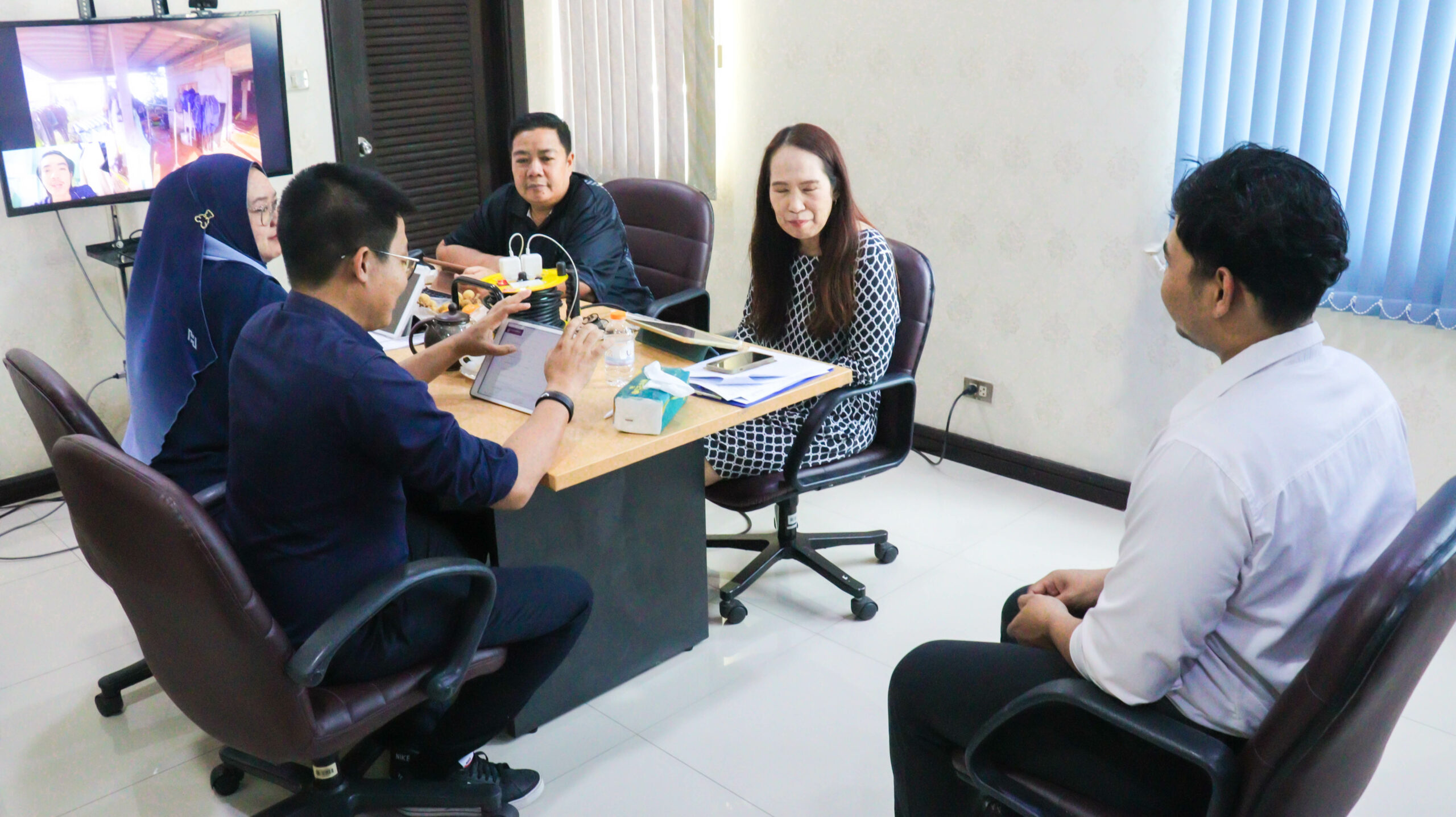
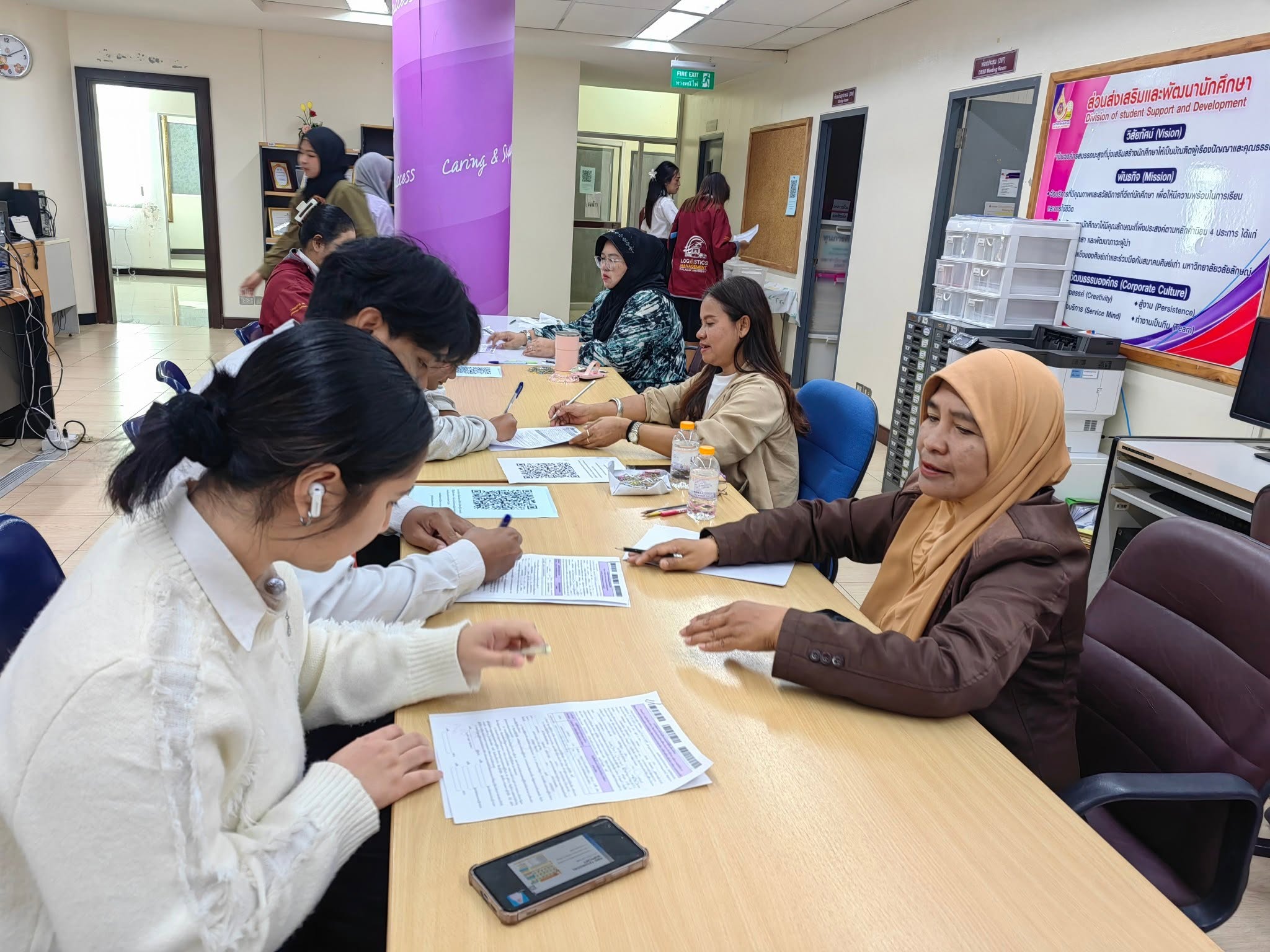
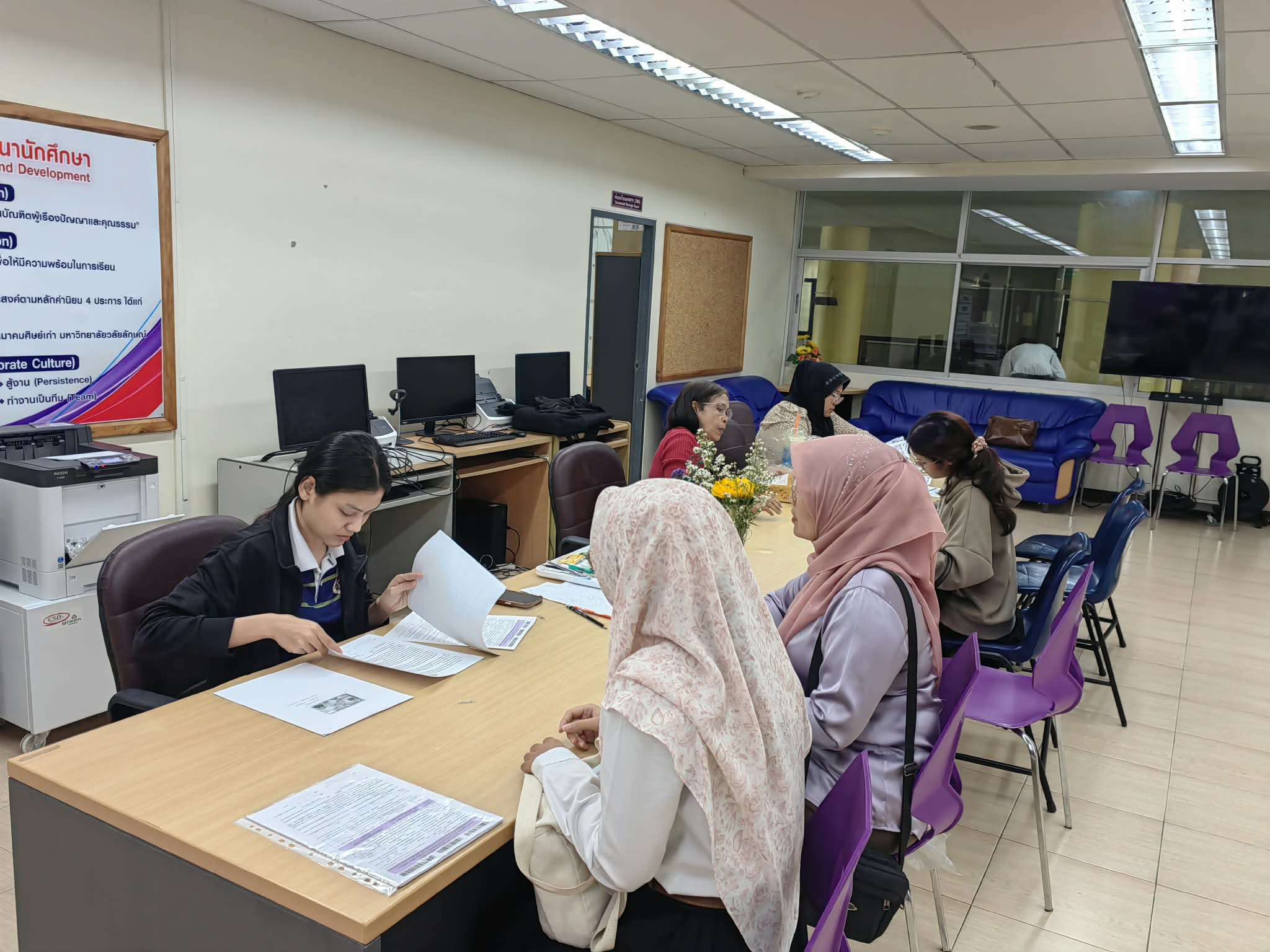
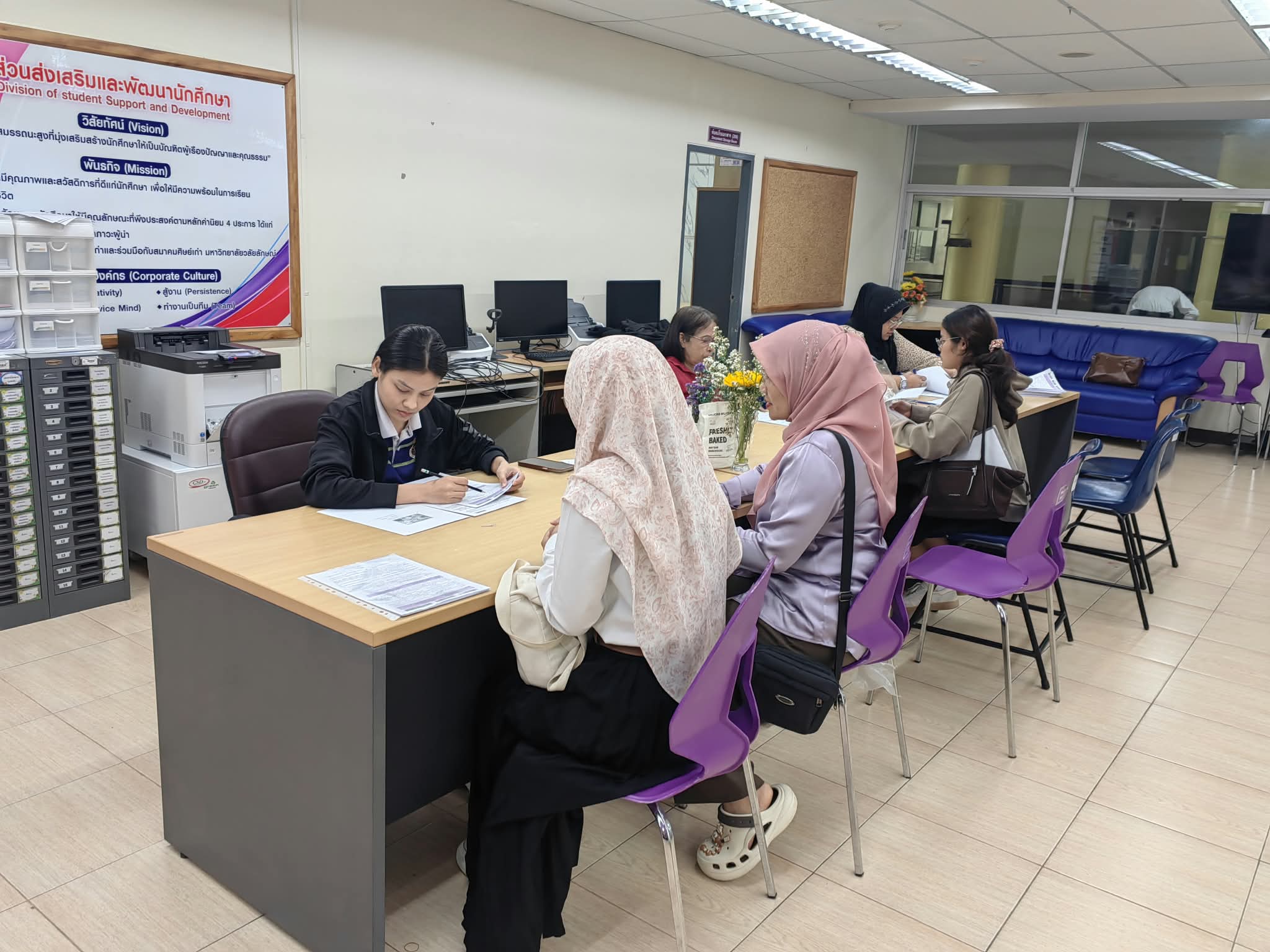
Walailak University is committed to creating an environment that supports the well-being, daily living, and learning of students and staff by ensuring access to sufficient, nutritious, hygienic, and affordable food. To address financial difficulties and food insecurity among members of the University, the Center for Property Management has continuously implemented the Free Meal Grant Programme since 2004, providing targeted food assistance through coordinated support mechanisms. The programme operates in collaboration with the Student Development Division’s Guidance and Scholarship Unit, academic schools, dormitory services, and participating campus food vendors to identify students experiencing food insecurity, assess individual needs, and provide appropriate food assistance. The University provides three main channels for accessing assistance, as follows:
The Three Main Channels for Accessing a Programme in Place on Student Food Insecurity
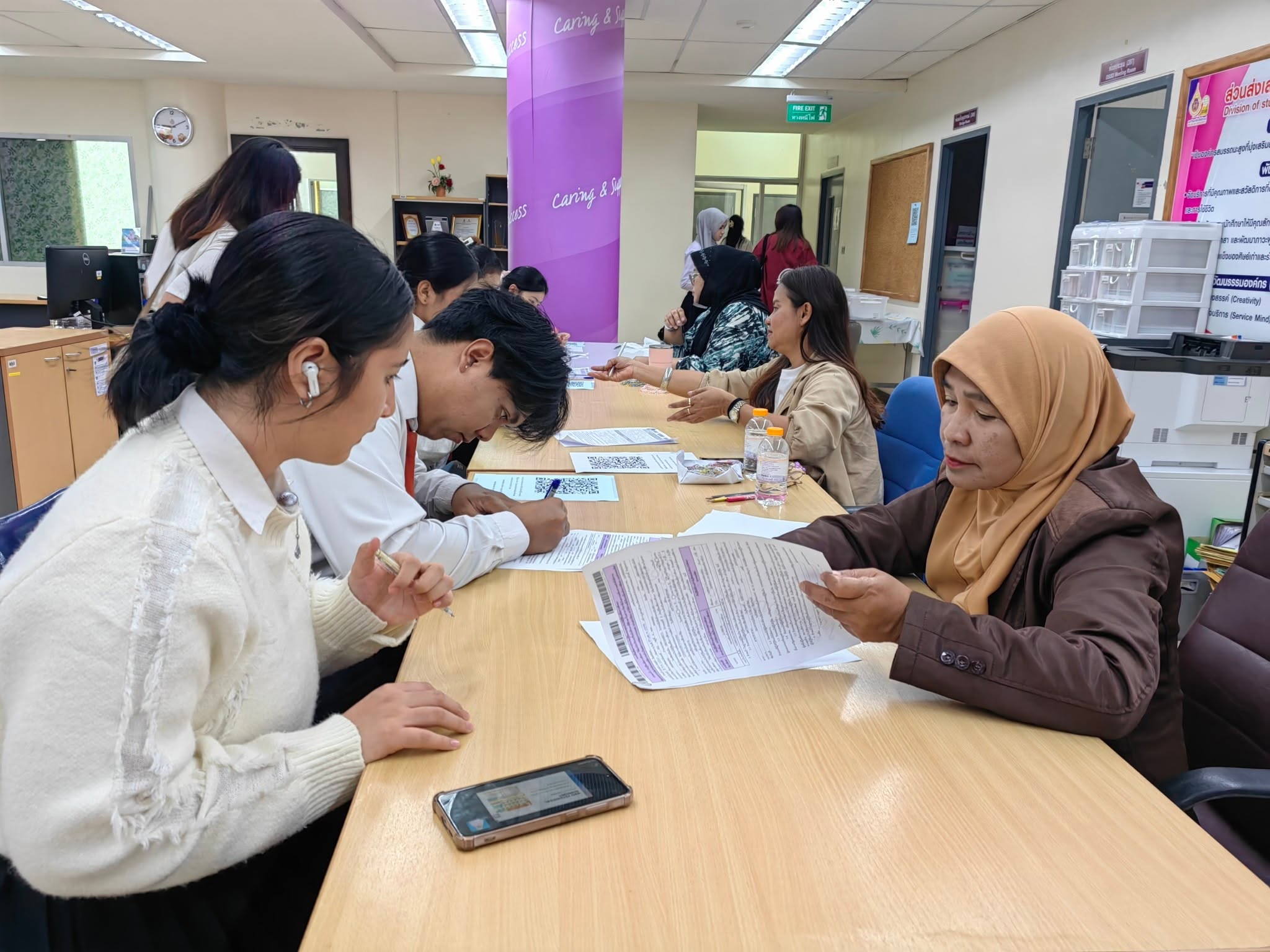
The first channel is the annual scholarship system. Students who are interviewed and identified as experiencing financial hardship, including those requiring support for food and beverages, may be referred by the Guidance and Scholarship Unit of the Student Development Division to the Center for Property Management for food assistance. This mechanism enables the university to identify students with financial constraints and connect them with appropriate food support.
The second channel is the academic advisor system. Academic advisors within the academic schools play an important role in identifying students who may be experiencing financial difficulties or food insecurity. When an advisor identifies a student requiring financial or food assistance, the case is referred to the Student Development Division for assessment and appropriate action. Where food assistance is required, the case is coordinated with the Property Management Center to ensure timely intervention.
The third channel is direct access through the Center for Property Management. This channel includes referrals from dormitory staff who identify students requiring food assistance, with information forwarded to staff responsible for the Free Meal Grants Programme to arrange appropriate support. Staff members experiencing difficulties in accessing sufficient food may also contact the programme coordinator directly, who coordinates with participating campus food vendors to provide assistance.
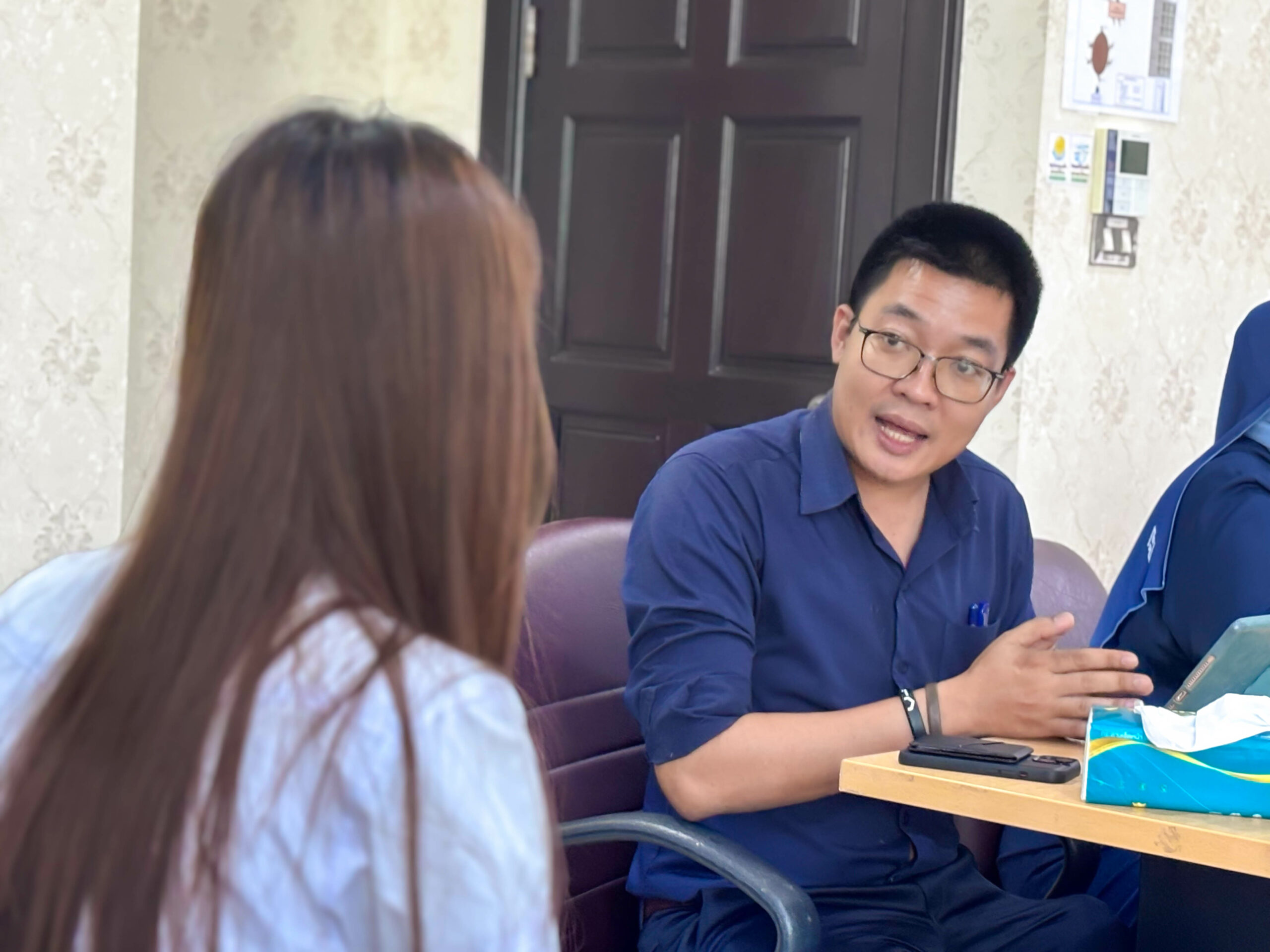
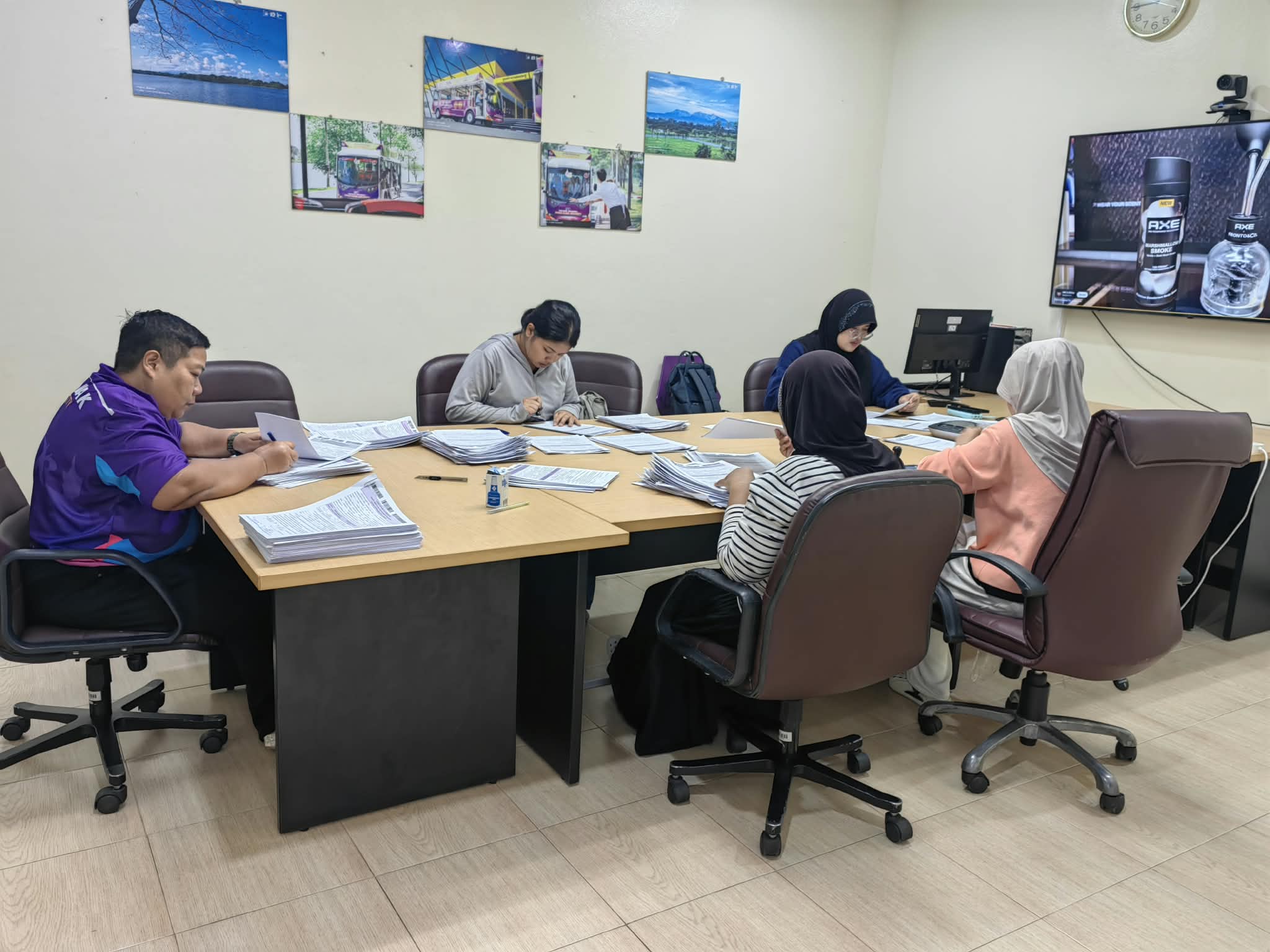
Following identification or referral, students undergo interviews and individual needs assessments covering family circumstances, household income, and economic constraints. The assessment results are used to determine the most appropriate form and level of assistance. Depending on individual needs, some students receive two free meals per day, while others receive three free meals per day. Assistance may also continue during semester breaks to ensure reliable and continuous access to food. Through these integrated screening, referral, and support mechanisms, Walailak University strengthens its capacity to identify food insecurity, deliver targeted interventions, and reduce hunger-related barriers to student well-being and academic participation.
Food Support through the Campus Food Vendor Network
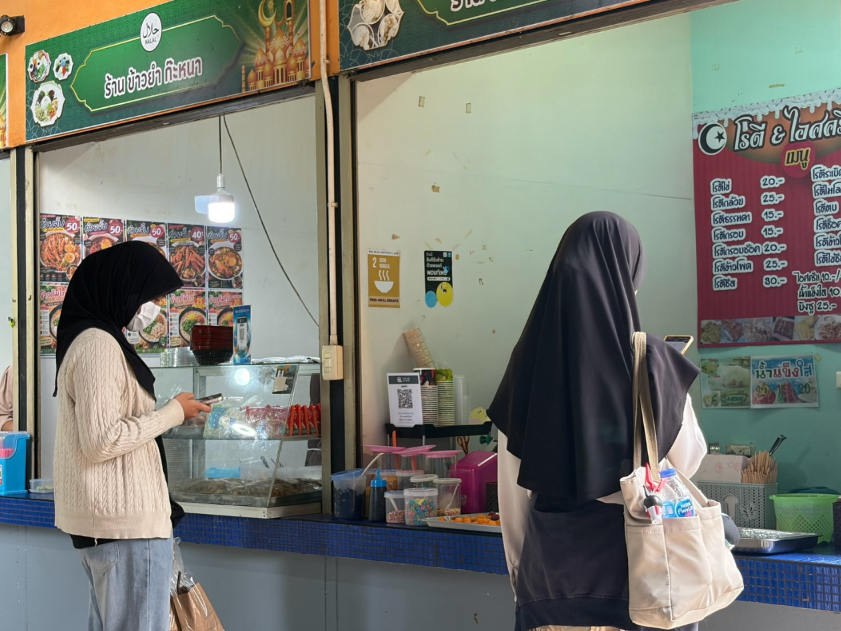
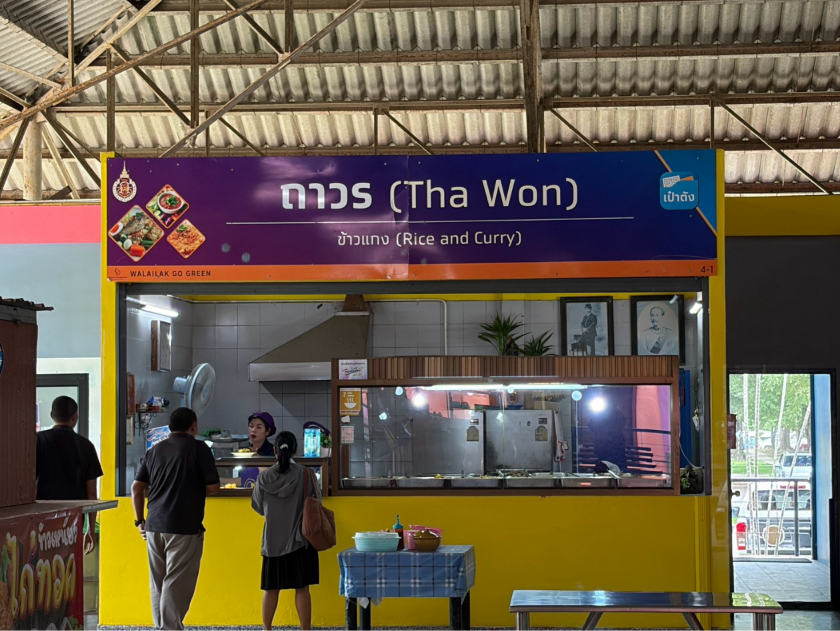
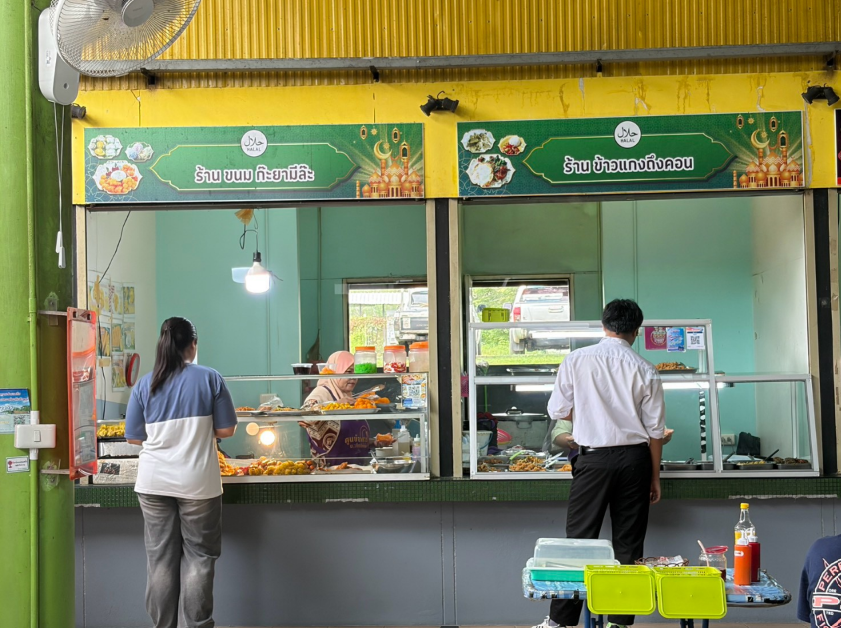
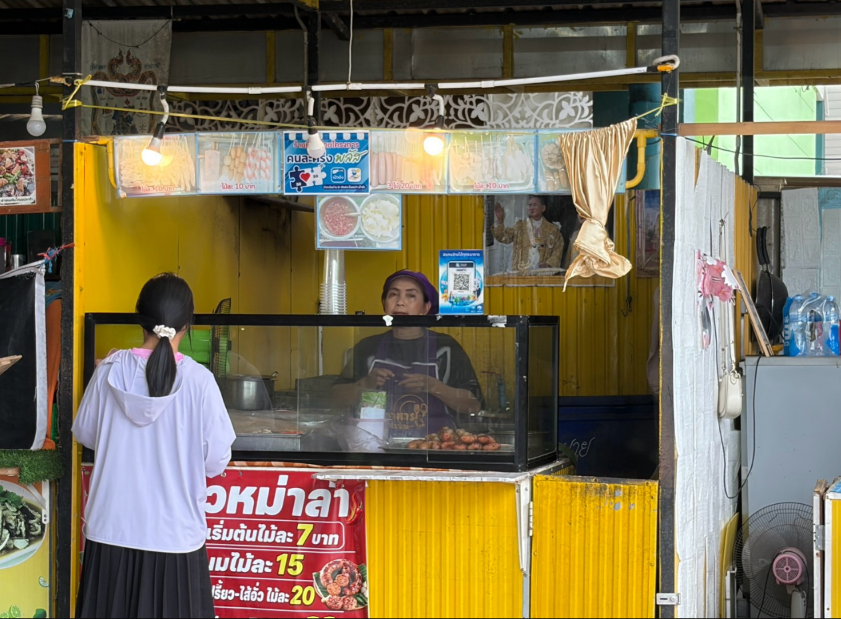
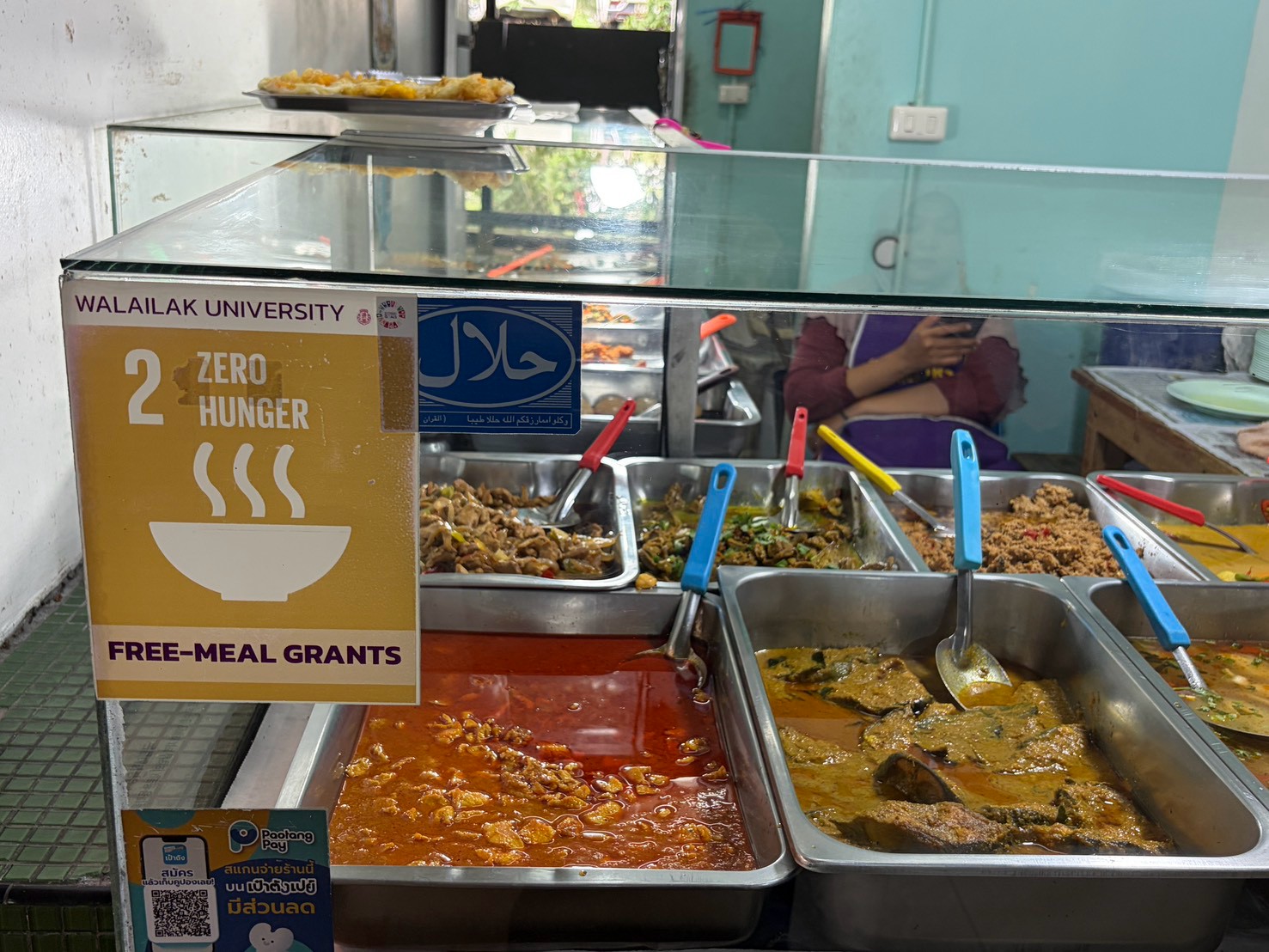
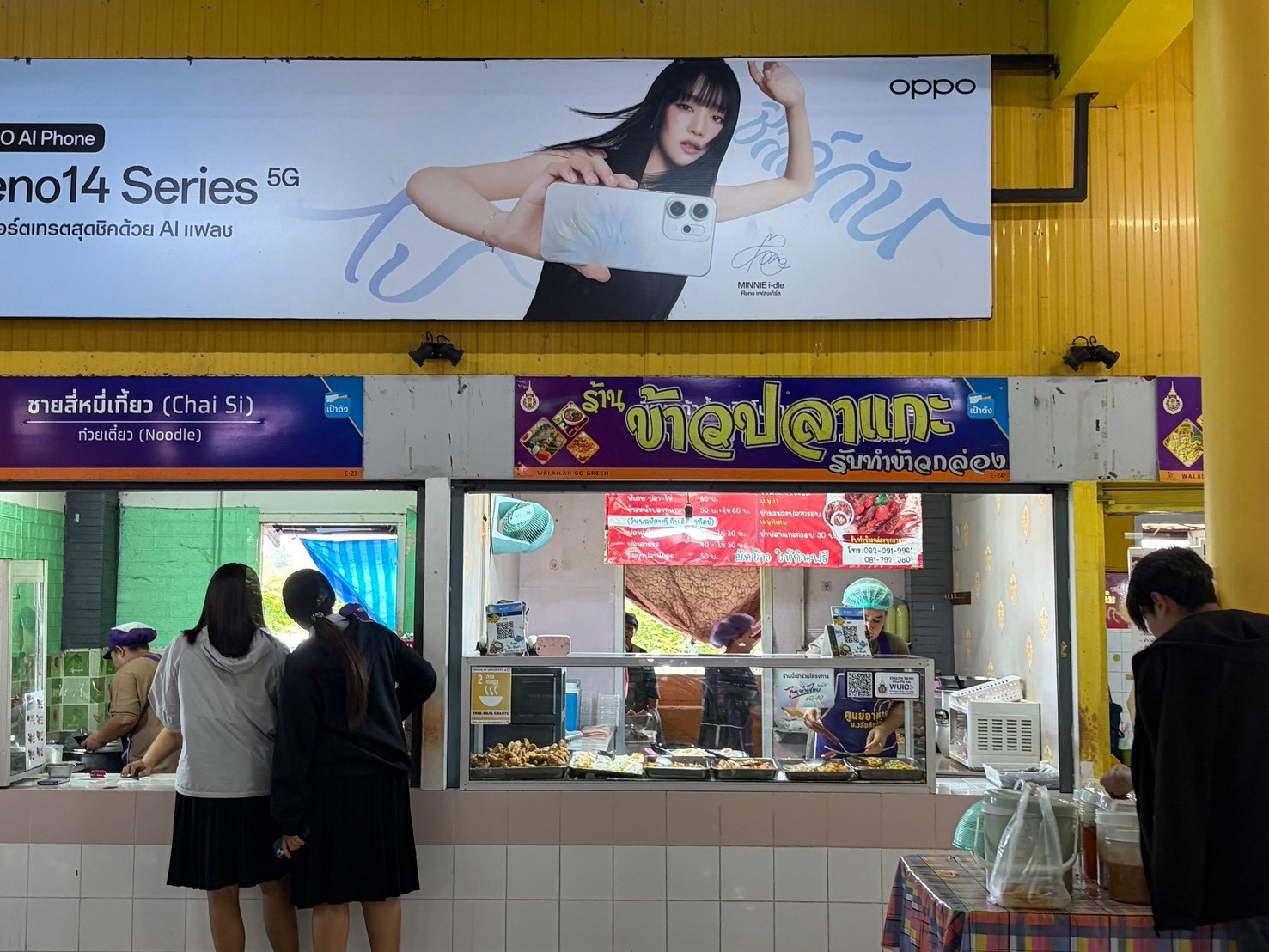
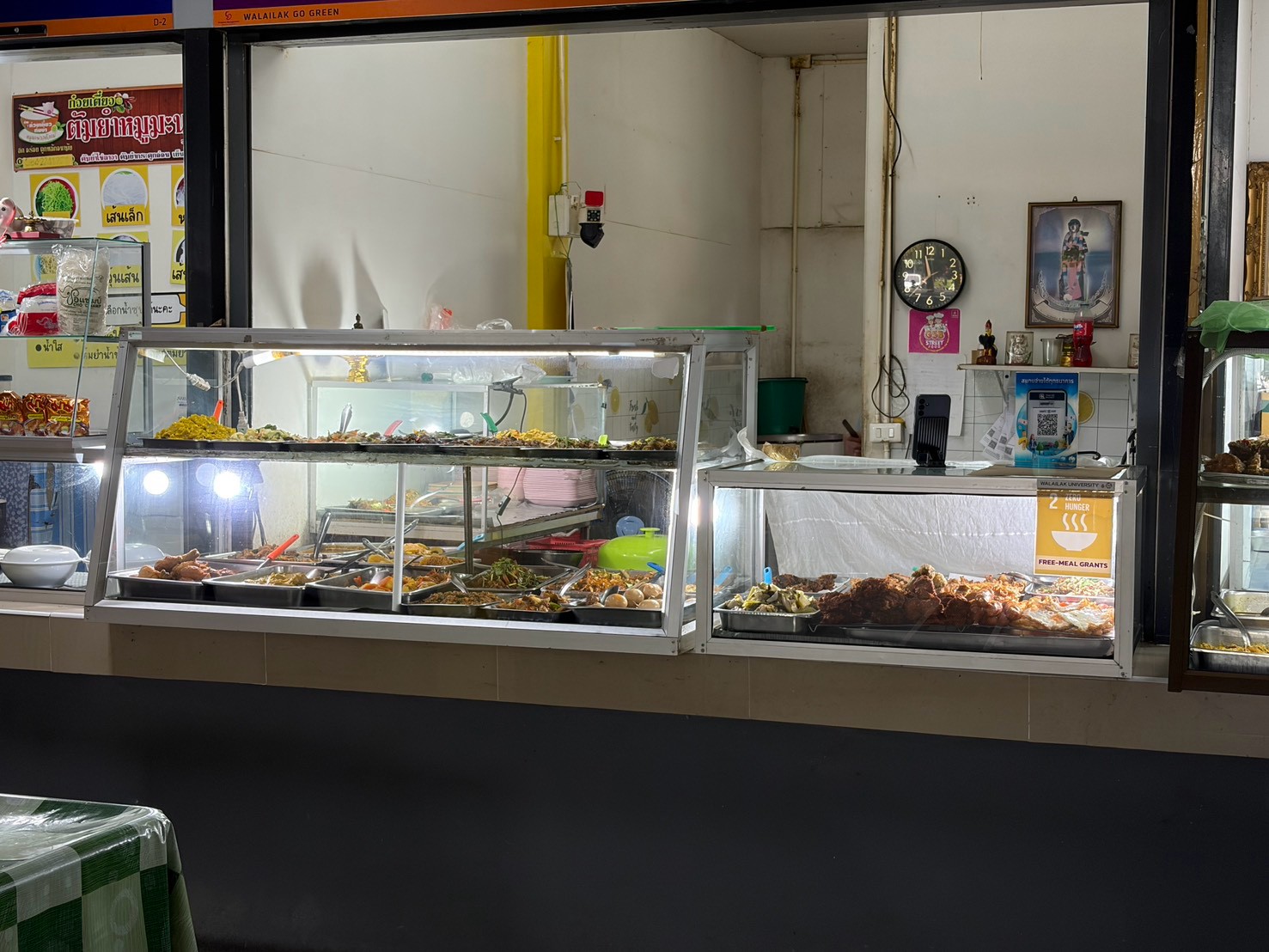
The programme relies on collaboration with food vendors operating on campus. Food vendors at the Cho Pradu Food Center and the Student Activity Building Food Center participate in sharing and providing meals to students enrolled in the programme. Participating vendors may support either scholarships or food assistance. The Center for Property Management coordinates monthly food welfare arrangements with participating vendors to ensure that students receive regular access to meals.
At present, approximately 85 food vendors participate in the programme. Participating vendors are rotated each semester to provide variety and respond to students’ needs. A total of 40 students currently receive food-related scholarships, comprising 70% female students and 30% male students. In addition, two food vendors provide food scholarships continuously until the supported students graduate, benefiting a total of four students. Other campus vendors provide approximately 15–20 scholarships per academic year, while the Property Management Center continues to seek additional partners to expand food-support resources.
The Food Vendors Participating the Free-Meal Grants Programmes
Students receiving assistance can access meals according to the number of meals allocated to them. The first meal is provided at the Student Activity Building Food Center, while lunch and dinner are provided at the Cho Pradu Food Center. Participating vendors also provide snacks, fruit and beverages.
The food assistance is provided without requiring payment from participating students. Some students voluntarily assist participating food vendors during their free time as a way of expressing appreciation, while the assistance itself remains available without a payment condition.
Monitoring, Evaluation and Continuous Improvement
The programme is implemented as a continuous intervention and includes regular monitoring and evaluation. The Center for Property Management monitors students’ use of food assistance as well as the quality of services provided by participating food vendors. The Center communicates with food vendors to determine whether students are regularly accessing the meals provided. At the same time, students are asked about service quality, the suitability of the food provided, and any problems or concerns encountered when accessing the service.
The information obtained through monitoring is used in the Check and Act stages of the continuous improvement process. This allows the university to review implementation against established objectives and indicators and use findings to improve the programme and plan subsequent interventions. For example, the university may adjust the types and formats of participating food outlets according to students’ needs and seek additional collaboration from partner networks to increase resources available for food assistance.
When students undertake internships, those who continue to require food assistance are encouraged to select internship establishments located within the University or nearby Tha Sala District, enabling them to maintain access to the programme’s food services.
Outcomes for Student Food Security
The implementation of the Free Meal Grant Programme contributes to improving food security among participating students by providing reliable access to sufficient, affordable and nutritious food that meets basic dietary needs. Continuous support also strengthens food stability, enabling beneficiaries to access food regularly and reducing their risk of experiencing food shortages. In addition to improving access to food and nutrition, the intervention reduces students’ and participating staff members’ daily living expenses. Based on an assessment of the economic value of food provided by participating food vendors, the programme helps reduce food-related expenses by approximately THB 360,000 per year.
The programme demonstrates a coordinated institutional mechanism linking student-support units, academic schools, the Center for Property Management, campus food vendors and external partners. Through this targeted and coordinated approach, the University provides students and staff experiencing resource constraints with reliable access to sufficient, nutritious and appropriate food.Therefore, the programme contributes to a university environment that supports student well-being, reduces the risk of hunger and strengthens student food security through continuous intervention rather than one-off assistance.
Scholarship Programme for Food Security
In addition to the Free Meal Grant Programme, which provides targeted and immediate food assistance, Walailak University operates a comprehensive scholarship system that contributes to students’ long-term food security. The scholarships include both grants and educational loans covering tuition fees, accommodation, learning materials, living expenses and food, which are essential components of students’ daily living costs.
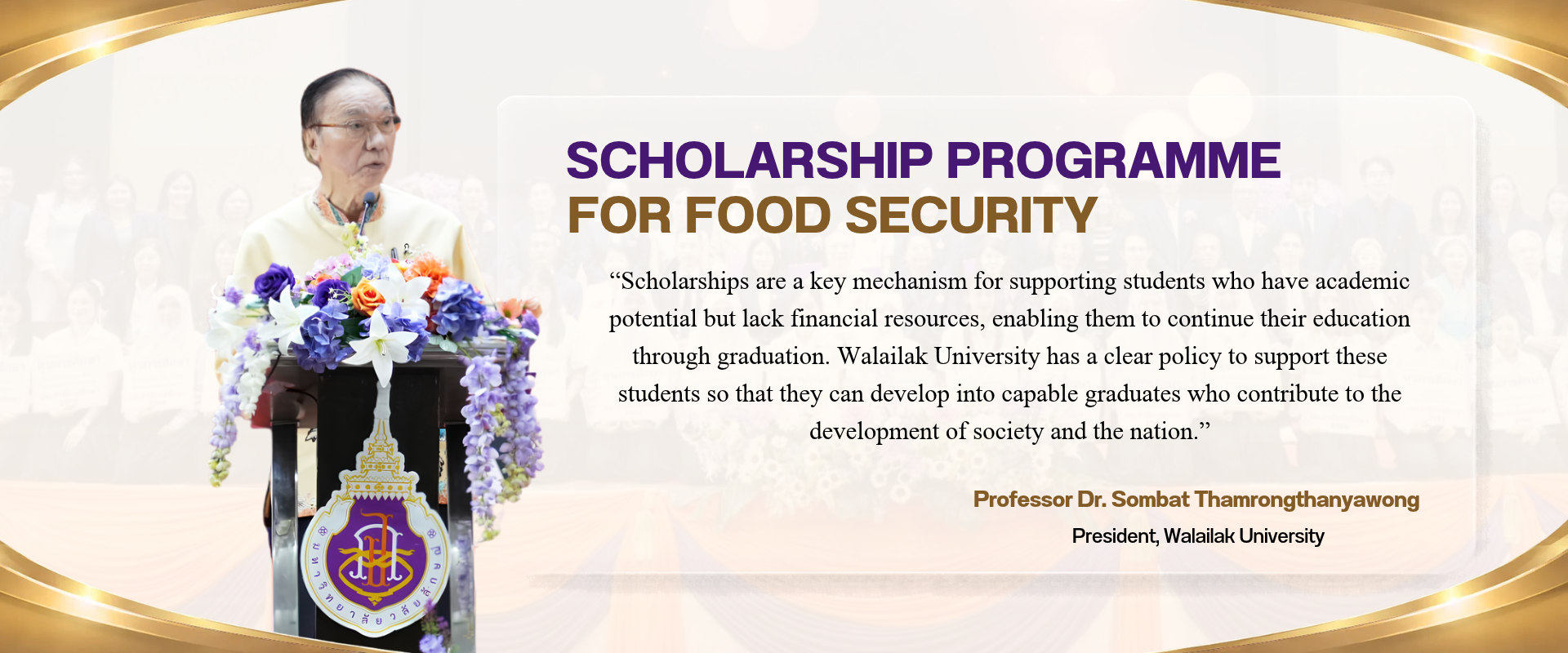
These financial interventions not only enable students to continue their education without excessive financial pressure but also reduce the burden on families, particularly low-income households. By supporting living expenses and food costs, the programmes help students maintain access to adequate food while continuing their education.
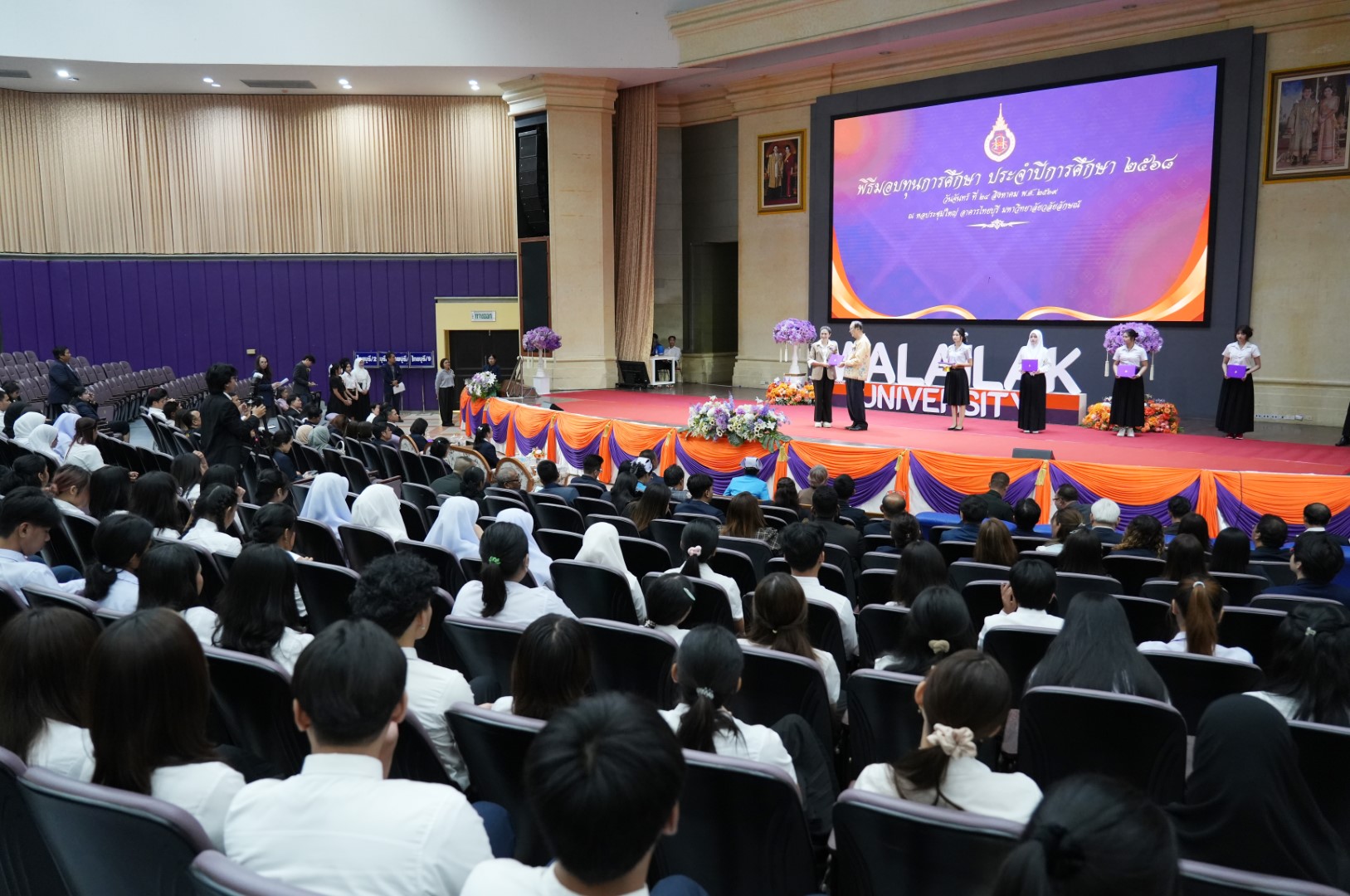
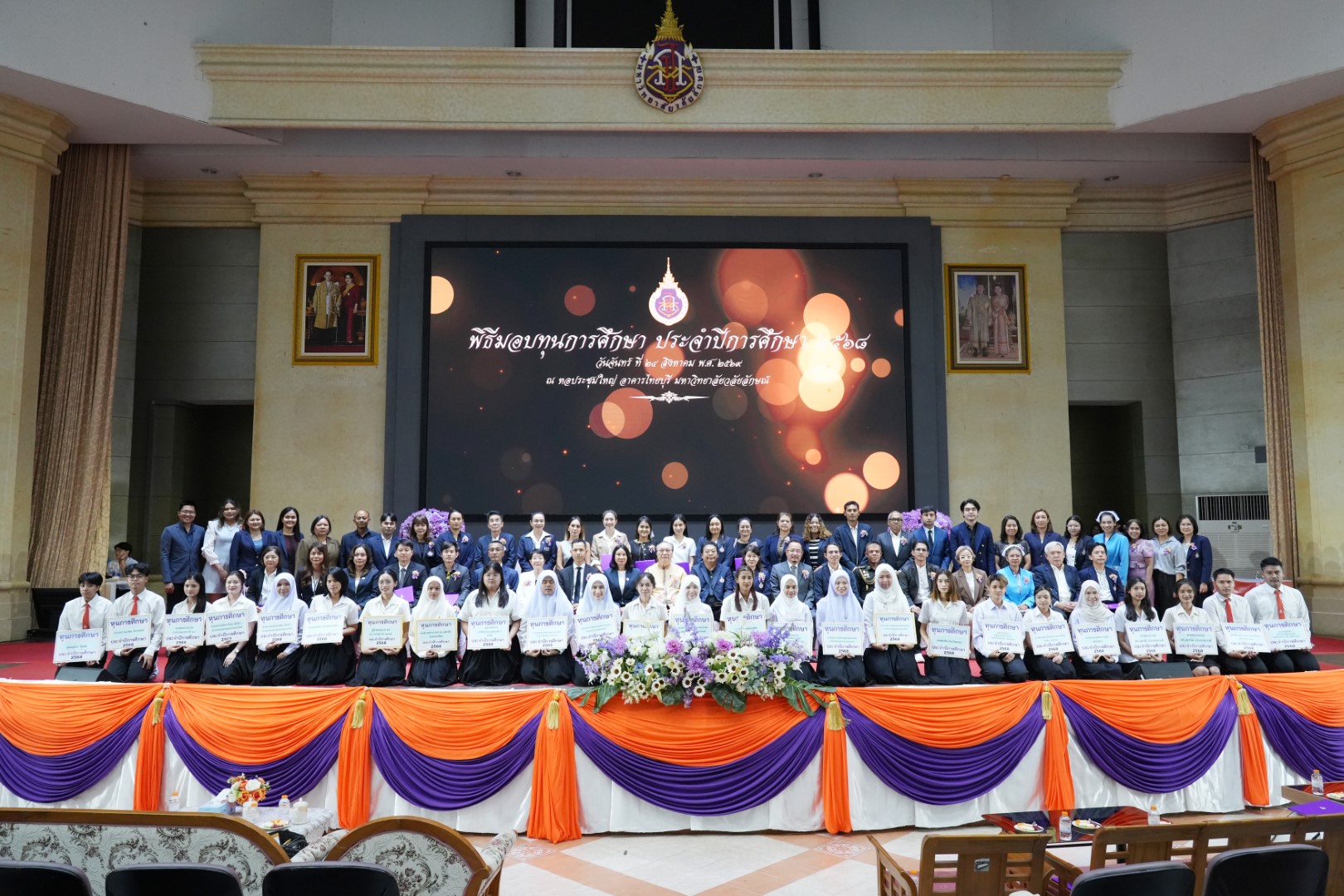
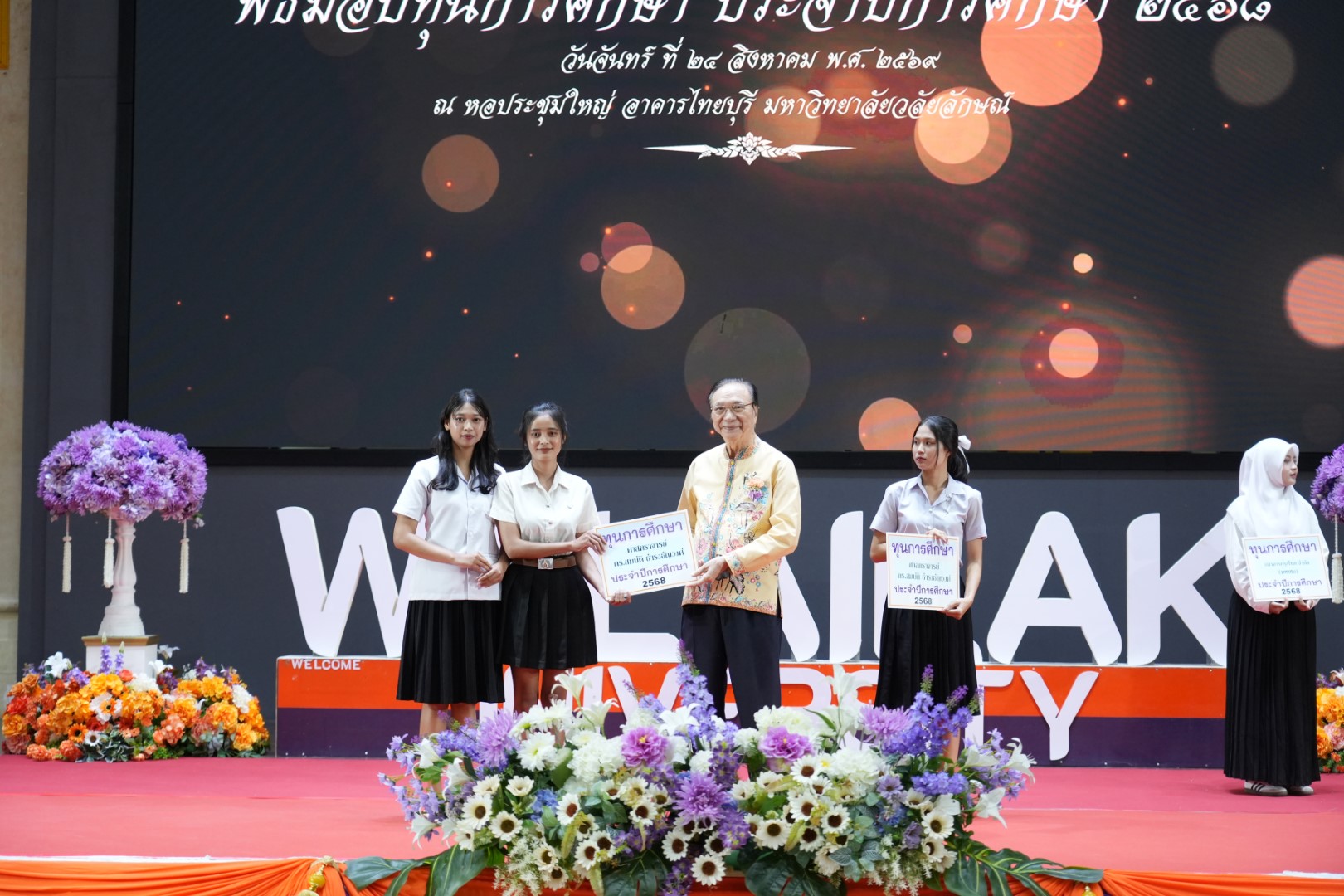
Each year, Walailak University allocates substantial resources to scholarship support and collaborates with external organisations, including government agencies, private-sector organisations and alumni donors. These partnerships enable a large number of students to receive financial assistance that supports both educational access and quality of life.
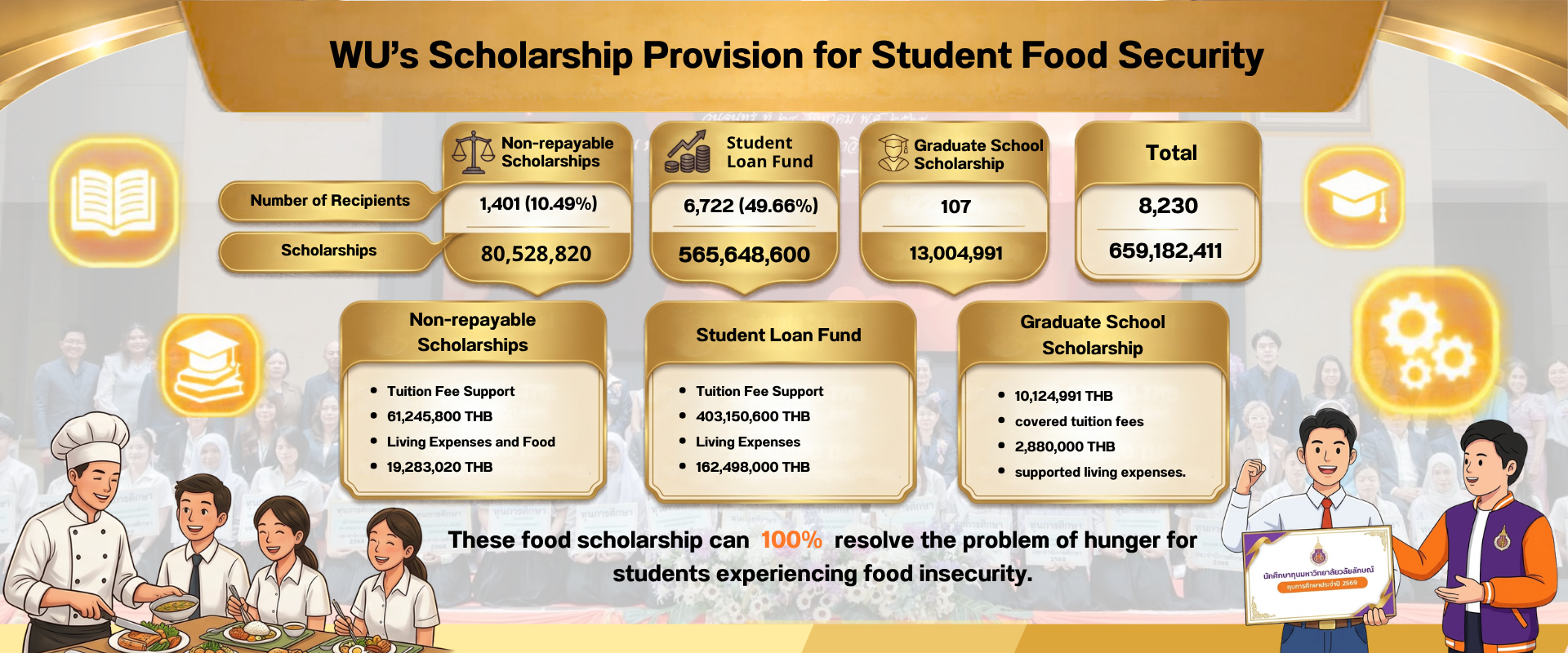
Non-Repayable Scholarships
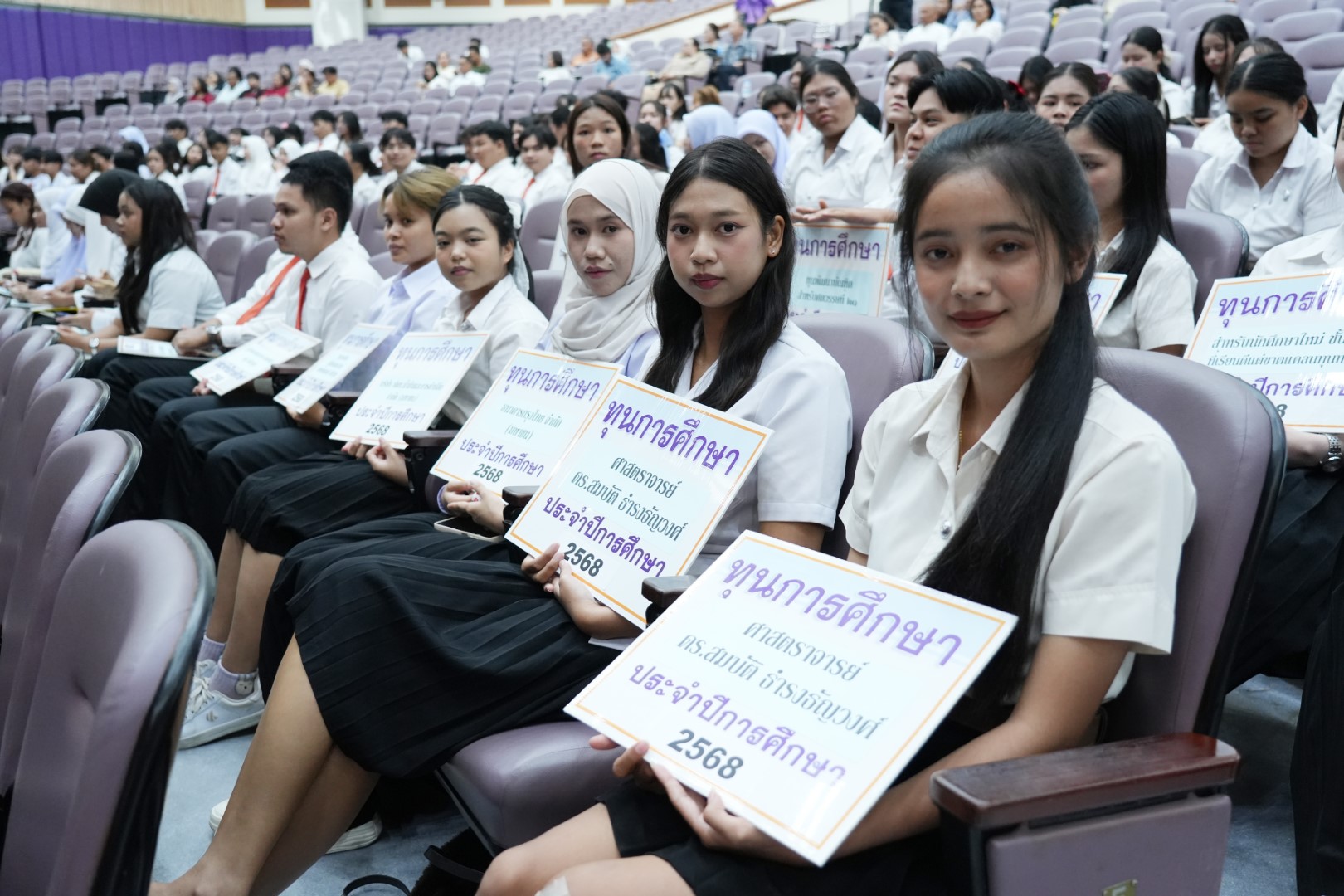
Walailak University provides non-repayable scholarships to students experiencing financial disadvantage, including both annual and continuing scholarships. These scholarships help students complete their studies without having to bear the full burden of tuition fees, food and living expenses.
In 2025, these scholarships were supported by Walailak University and 175 government and private-sector organisations, with a total value of THB 73,496,950, comprising:
Tuition fees: THB 48,301,000
Living expenses and food: THB 25,195,950
A total of 1,125 students received these scholarships. In addition to covering tuition fees, the scholarships provided direct support for living expenses and food, contributing to students’ nutritional security and reliable access to food.
Student Loan Fund
Walailak University also administers government-supported educational loans that enable students to borrow funds for both tuition fees and living expenses.
Students from families with an annual income below THB 360,000 are eligible to receive up to THB 3,000 per month for living expenses. In 2025, a total of 6,944 students received support through this system, with a total value of THB 646,025,100, comprising:
Tuition fees: THB 396,041,100
Living expenses: THB 249,984,000
By supporting living expenses, the loan system helps reduce financial constraints that may otherwise affect students’ ability to obtain sufficient food and maintain stable living conditions while studying.
Part-Time Student Work Scholarships
The University provides part-time work scholarships to help students reduce their financial burden and support their living expenses. The programme aims to provide students with an opportunity to earn income while studying, while also encouraging them to use their free time productively, gain practical work experience and develop skills needed for future employment and daily life.
Each student may work for a maximum of 100 hours per semester, receiving compensation at a rate of THB 30 per hour. In the 2025 academic year, the University allocated THB 350,385 in part-time work scholarships to support 146 students.
By providing students with an additional source of income, the intervention can help students meet essential living costs, including food expenses, while remaining engaged in education.
Emergency Loan Fund
The University provides an Emergency Loan Fund for students who experience unexpected financial difficulties or require immediate funds for essential expenses. The programme aims to provide short-term financial relief and enable students to manage urgent expenses without disrupting their education or daily living.
Students may borrow up to THB 2,000 per occasion, with repayment required one week before the final examinations. In the 2025 academic year, the University provided a total of THB 11,000 in emergency loans to 6 students.
Summary of Student Food Security Support in 2025
In 2025, Walailak University allocated a total of THB 719,883,435 in scholarships and financial support to 8,221 students, representing 58.45% of the total student population of 14,065.
Of this total, THB 275,541,335 was allocated directly to support food and living expenses, while THB 444,342,100 supported tuition fees and therefore contributed indirectly to reducing students’ overall financial burden.
The University’s approach to addressing student food insecurity and hunger is based on the identification of student needs and the implementation of continuous, targeted and coordinated interventions. Rather than relying on a single form of assistance, Walailak University has developed complementary programmes that address both immediate and longer-term barriers to reliable access to food.
The food assistance programme provides immediate and targeted access to meals for students experiencing food insecurity, while the scholarship and financial-support programmes help reduce longer-term financial constraints that may affect students’ ability to afford sufficient and nutritious food.
Together, these interventions contribute to reducing hunger, strengthening food security and food stability, and enabling students to focus on their education. Through systematic identification, targeted assistance, continuous monitoring and collaboration among University units, food vendors, government agencies, private-sector organisations, donors and other partners, Walailak University demonstrates an ongoing institutional commitment to addressing student food insecurity and hunger and ensuring that students have reliable access to a sufficient quantity of affordable and nutritious food.