
WU’s Policies to Prevent and Reduce Marine Pollution from Land-Based Activities
WU’s Policies to Prevent and Reduce Marine Pollution from Land-Based Activities
Marine pollution poses a serious threat to marine ecosystems, biodiversity, human health, and the livelihoods of coastal communities. Pollution from land-based activities, including improper waste disposal, plastic pollution, untreated wastewater, and the release of harmful chemicals, can be transported through rivers, drainage systems, and coastal waterways into the sea. These pollutants can damage marine habitats, threaten aquatic species, contaminate seafood, and undermine the sustainability of fisheries and coastal tourism. Diagnostic assessments of pollution sources and pathways are therefore important for identifying environmental risks, understanding the causes of marine pollution, and determining appropriate preventive measures. Preventing and reducing marine pollution requires effective environmental policies, responsible resource management, and coordinated action to address pollution at its sources.
As an institution committed to environmental sustainability and community engagement, Walailak University recognizes the importance of implementing policies and practices that minimize pollution, promote responsible waste and wastewater management, and protect marine and coastal environments. Through diagnostic monitoring, environmental assessments, and the identification of pollution-related challenges, the University seeks to support evidence-based decision-making and improve the effectiveness of pollution prevention measures. These efforts contribute to healthier marine ecosystems, sustainable coastal livelihoods, and the long-term conservation of marine resources for present and future generations.
Walailak University Issues a Policy on Marine Pollution Reduction to Protect Marine and Coastal Ecosystems
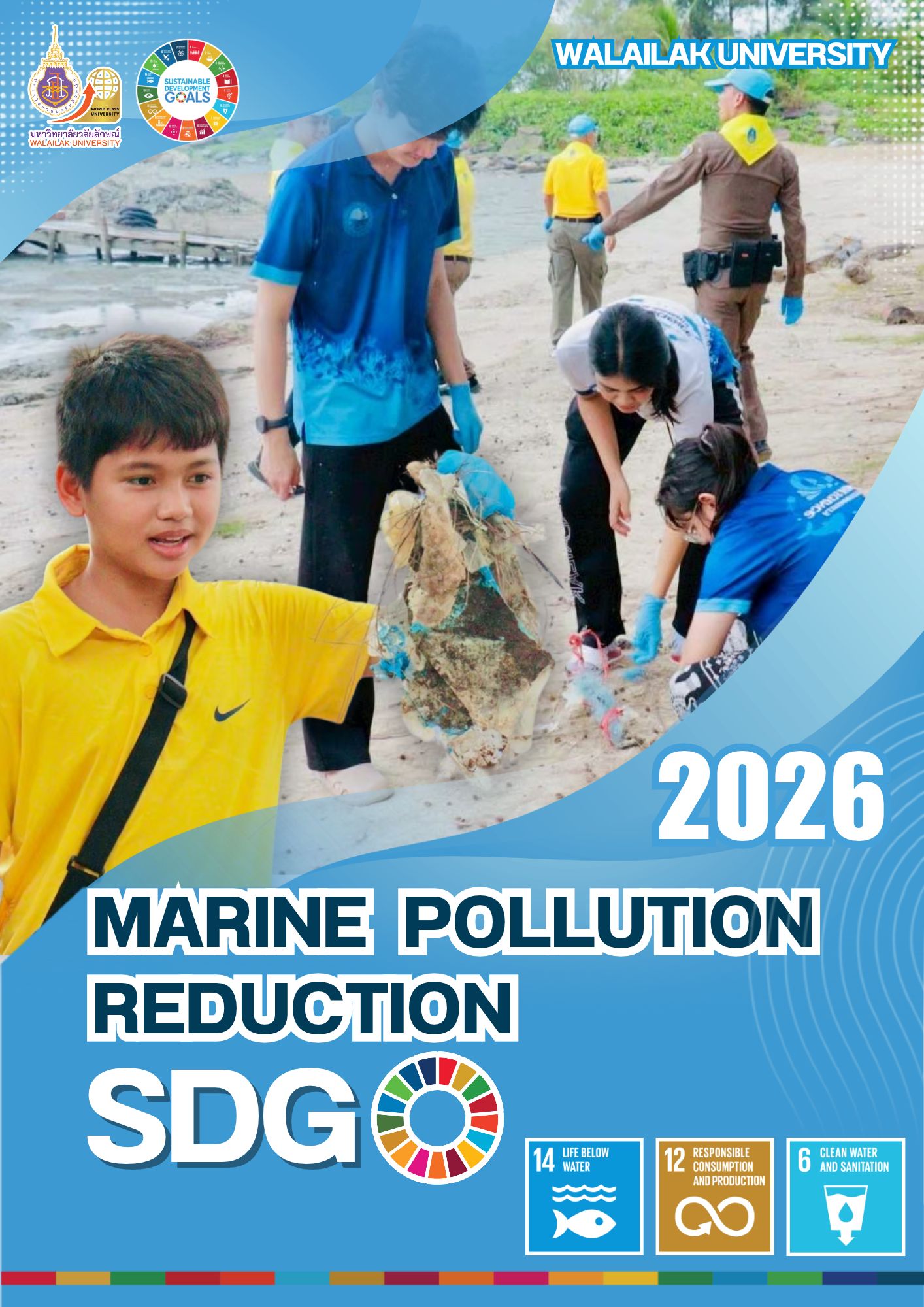
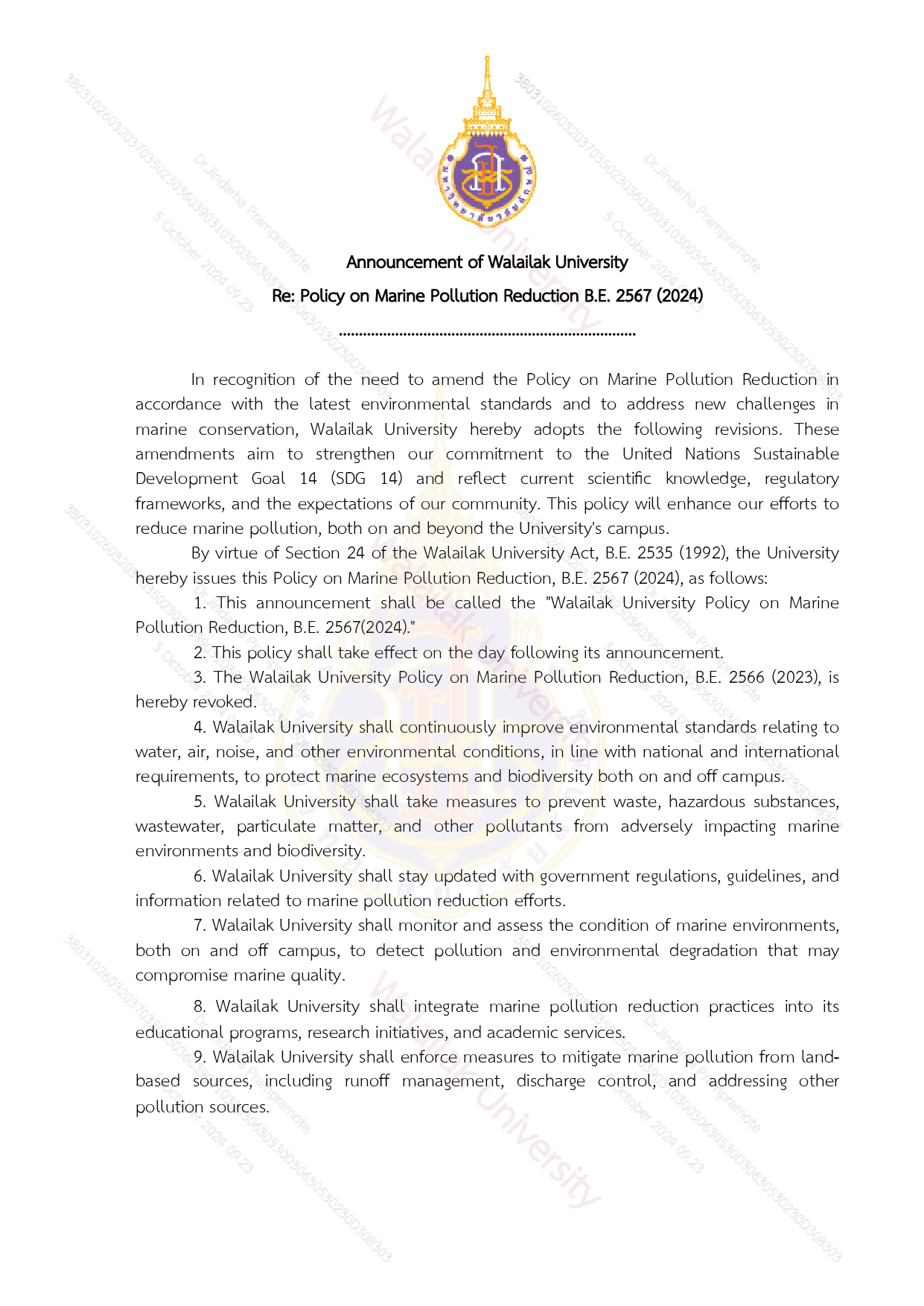
Walailak University (WU) issued its Policy on Marine Pollution Reduction, B.E. 2569 (2026), establishing a comprehensive framework to prevent and reduce marine pollution, particularly pollution originating from land-based and institutional activities. The policy recognizes that improper waste management, wastewater discharge, plastic pollution, hazardous substances, and unsustainable resource use can contaminate waterways and coastal environments, threatening marine biodiversity, public health, and the livelihoods of coastal communities.
The policy establishes the University’s commitment to complying with applicable environmental laws and regulations, including the Enhancement and Conservation of National Environmental Quality Act, B.E. 2535 (1992), and the Water Resources Act, B.E. 2561 (2018). It emphasizes preventive, systematic, and evidence-based environmental management, integrating education, research, and community engagement to address pollution at its sources and strengthen the long-term protection of marine and coastal ecosystems.
Under the policy, WU commits to reducing single-use plastics across campus operations, promoting reusable and environmentally friendly alternatives, and strengthening solid waste management through proper segregation, collection, recycling, and disposal. The University also emphasizes the effective operation and maintenance of wastewater treatment systems, regular water quality monitoring, and compliance with applicable discharge standards. In addition, hazardous substances, chemicals, and laboratory waste must be properly handled, stored, treated, and disposed of to minimize the risk of environmental contamination.
The policy further promotes participation among students, staff, and surrounding communities through waste reduction campaigns, training, and environmental protection initiatives. Recognizing that pollution prevention extends beyond campus boundaries, WU also commits to supporting coastal and marine conservation activities, including clean-up programs, restoration initiatives, and collaboration with external stakeholders. Furthermore, the University will manage stormwater through on-campus reservoirs and related infrastructure to collect, store, and control runoff, helping reduce the movement of pollutants into natural waterways and the marine environment.
Through this policy, WU establishes a foundation for integrating pollution prevention into campus operations, environmental governance, and community engagement. These measures are expected to help reduce plastic leakage and wastewater-related contamination, improve waste and chemical management, and protect water quality and marine habitats. In the longer term, the policy supports healthier coastal ecosystems, the sustainable use of marine resources, and greater environmental awareness among the university community and surrounding populations.
Implementing a Plastic Waste Reduction Action Plan to Prevent Marine Pollution
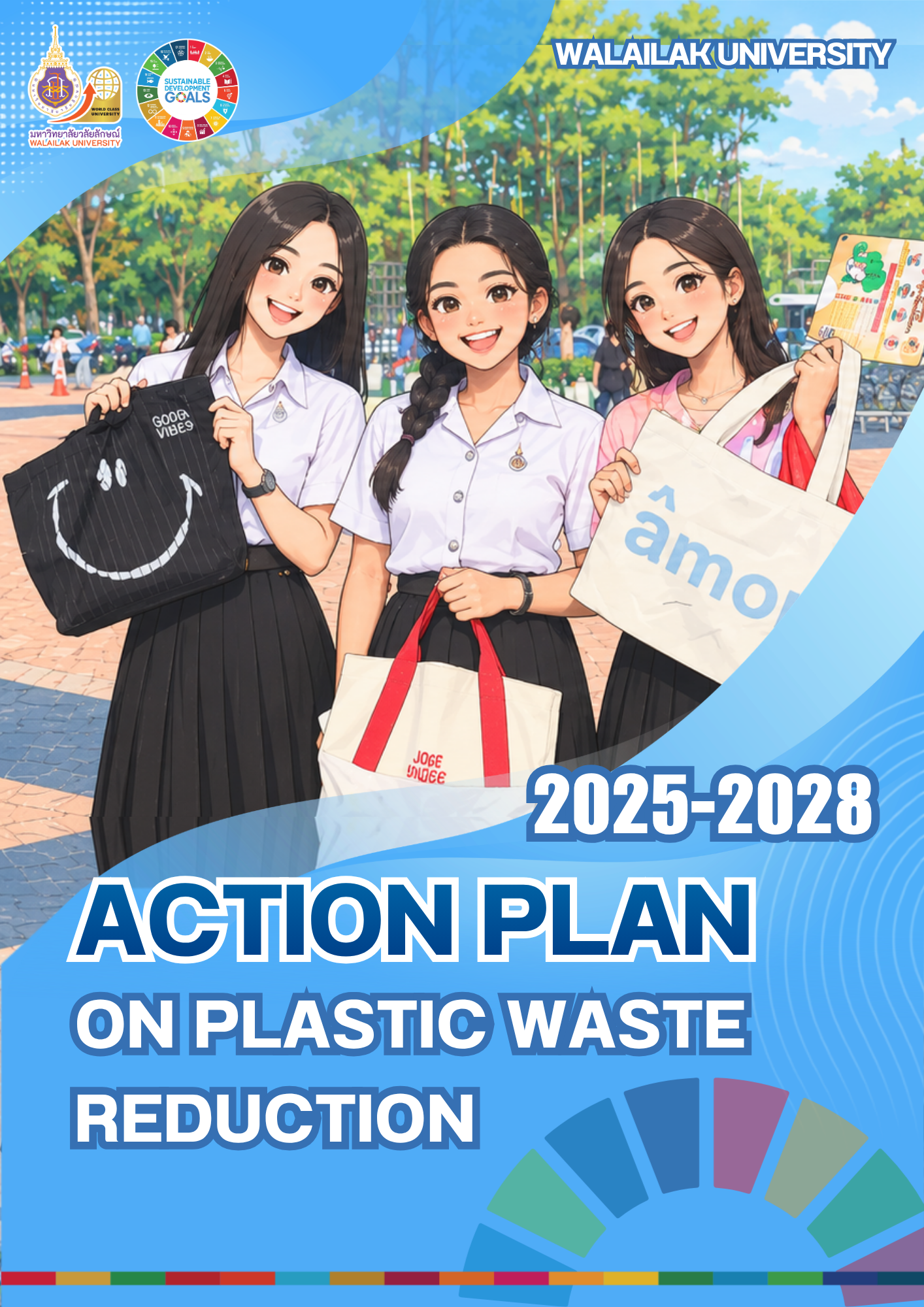
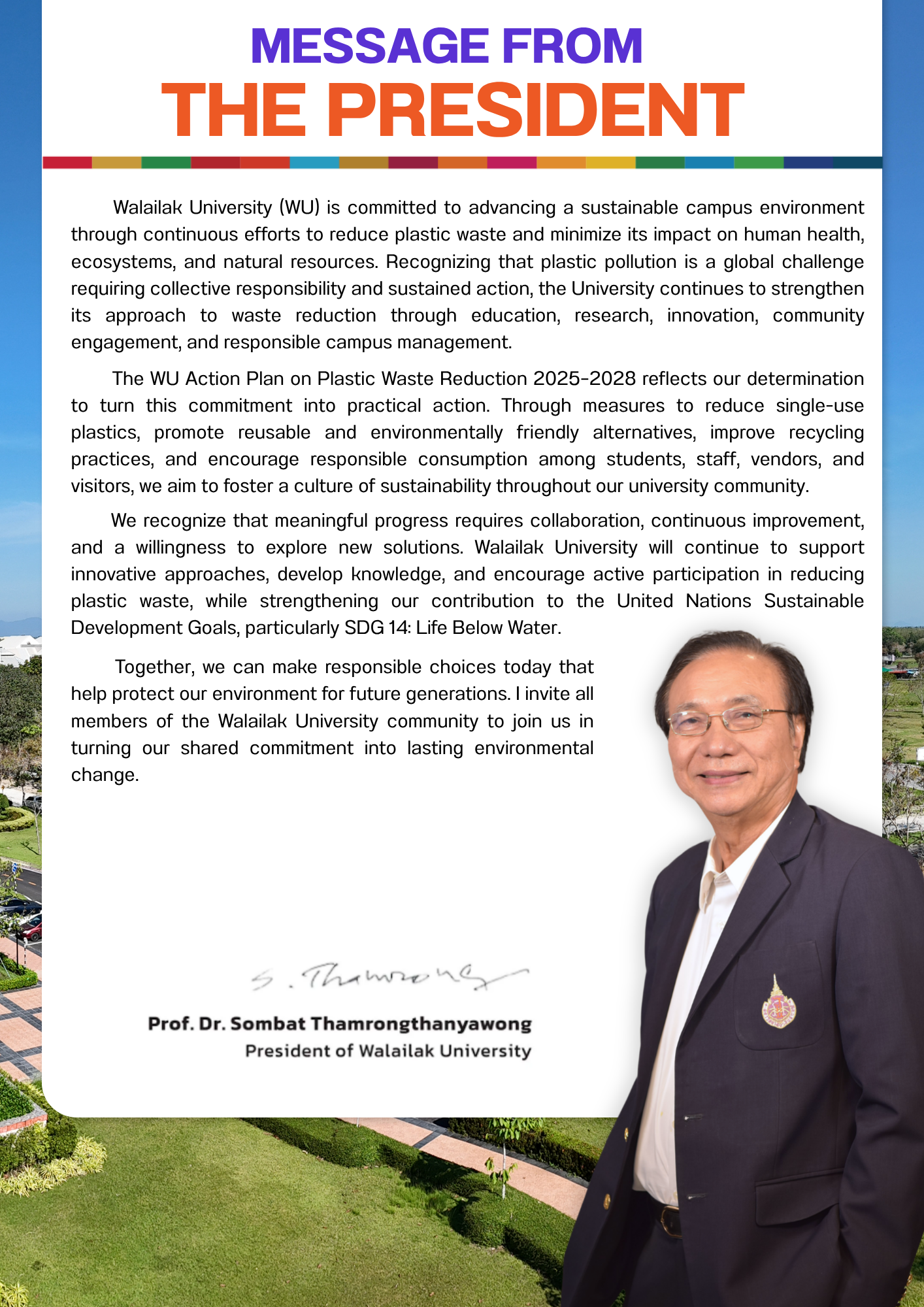
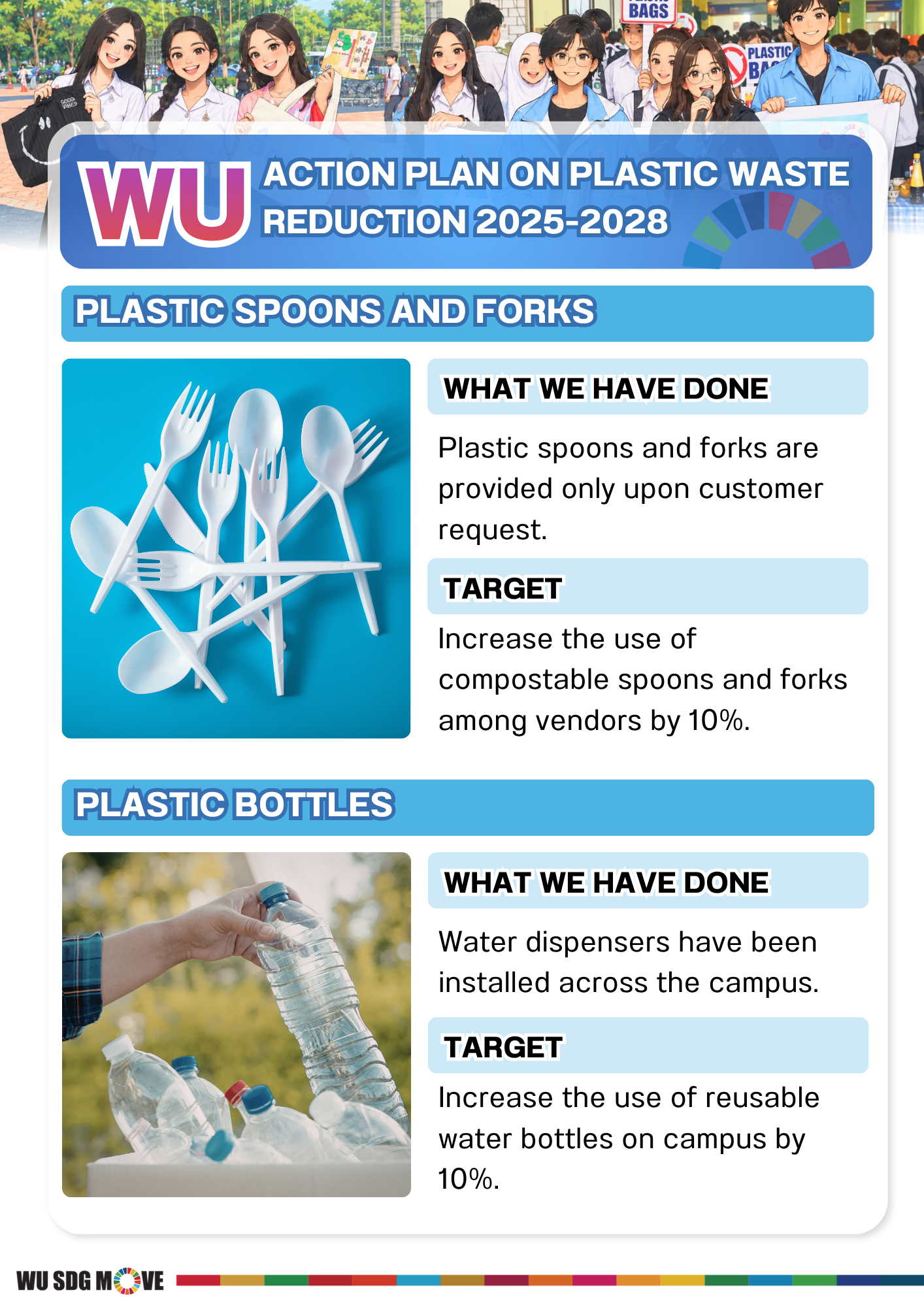
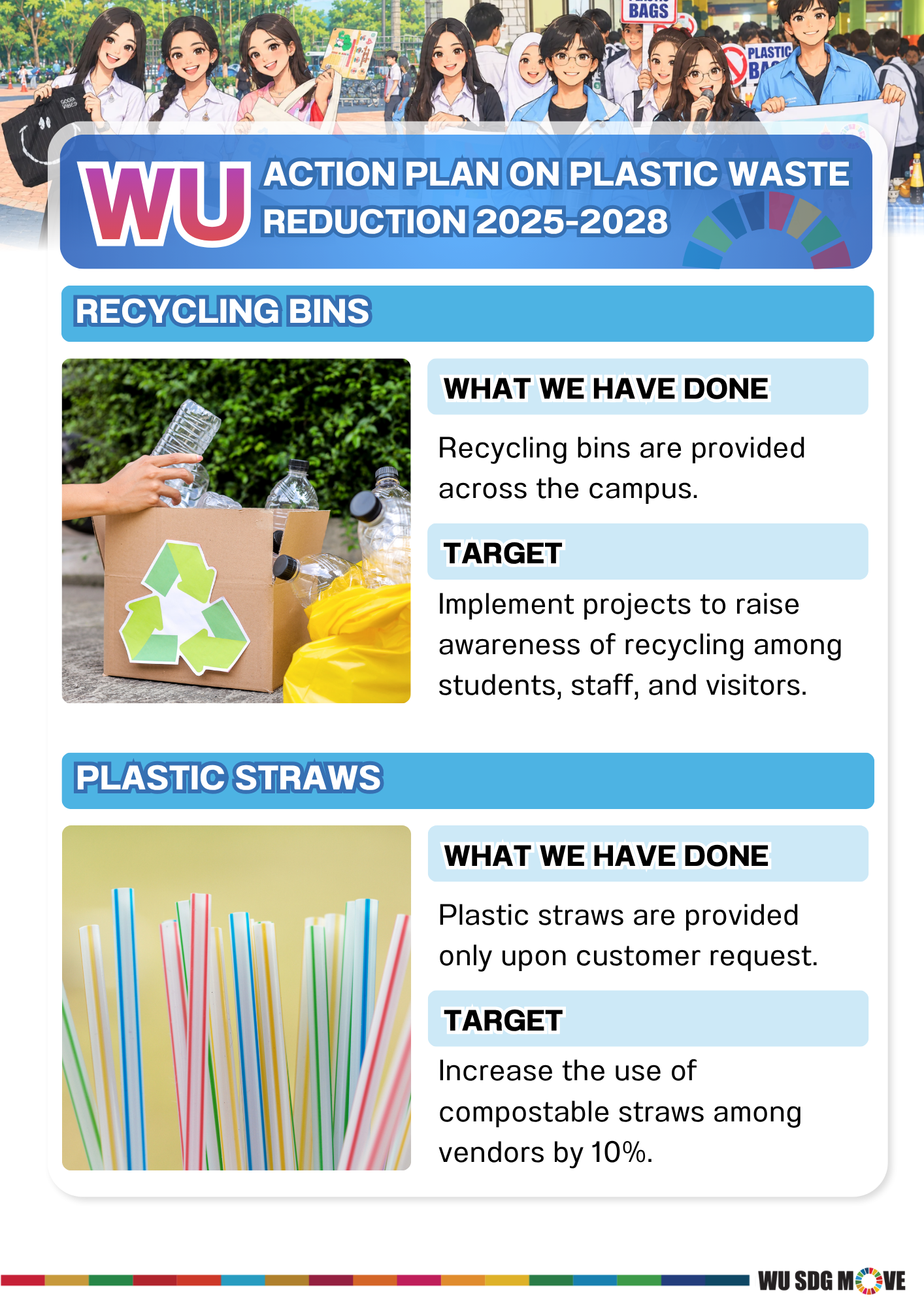
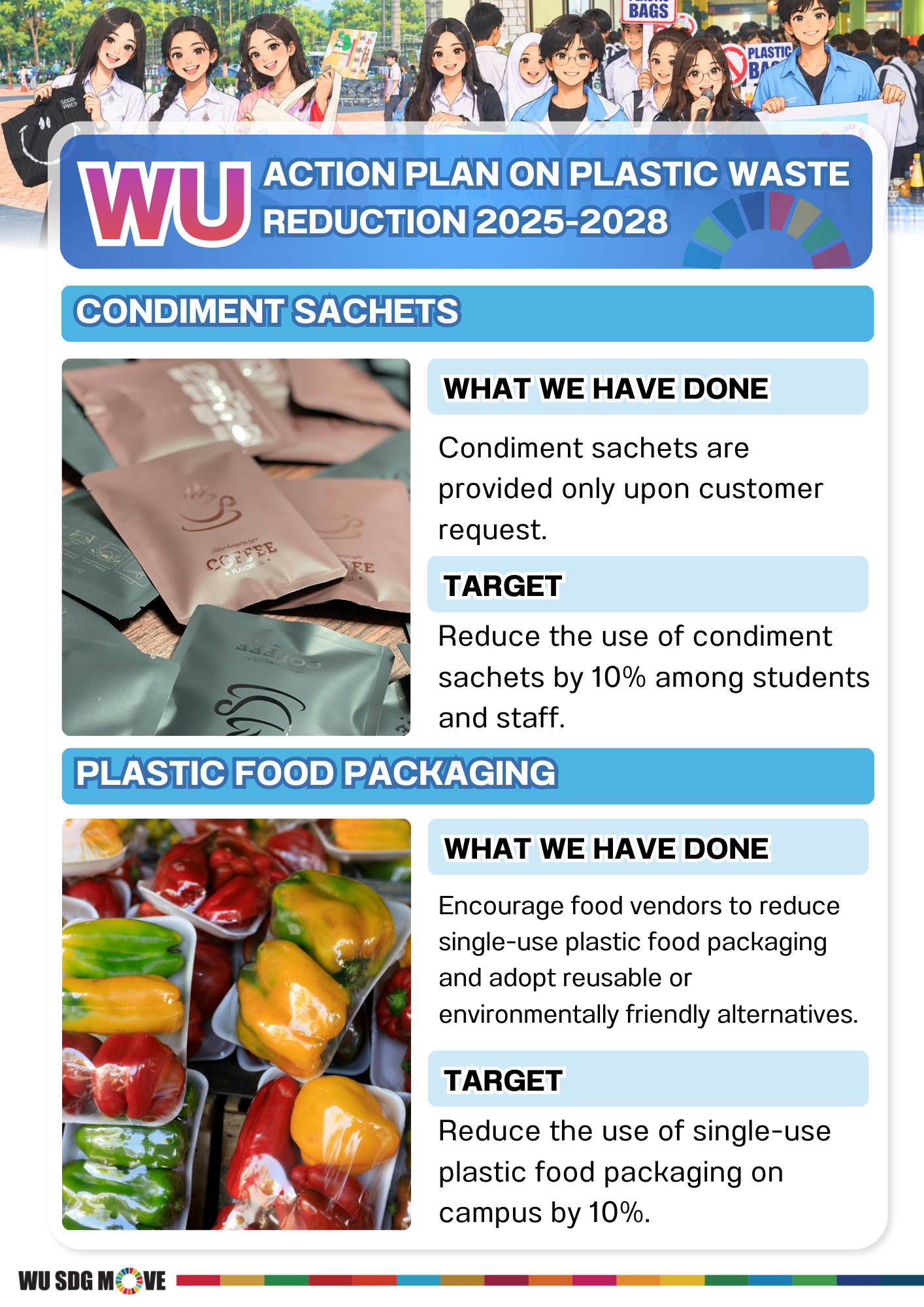
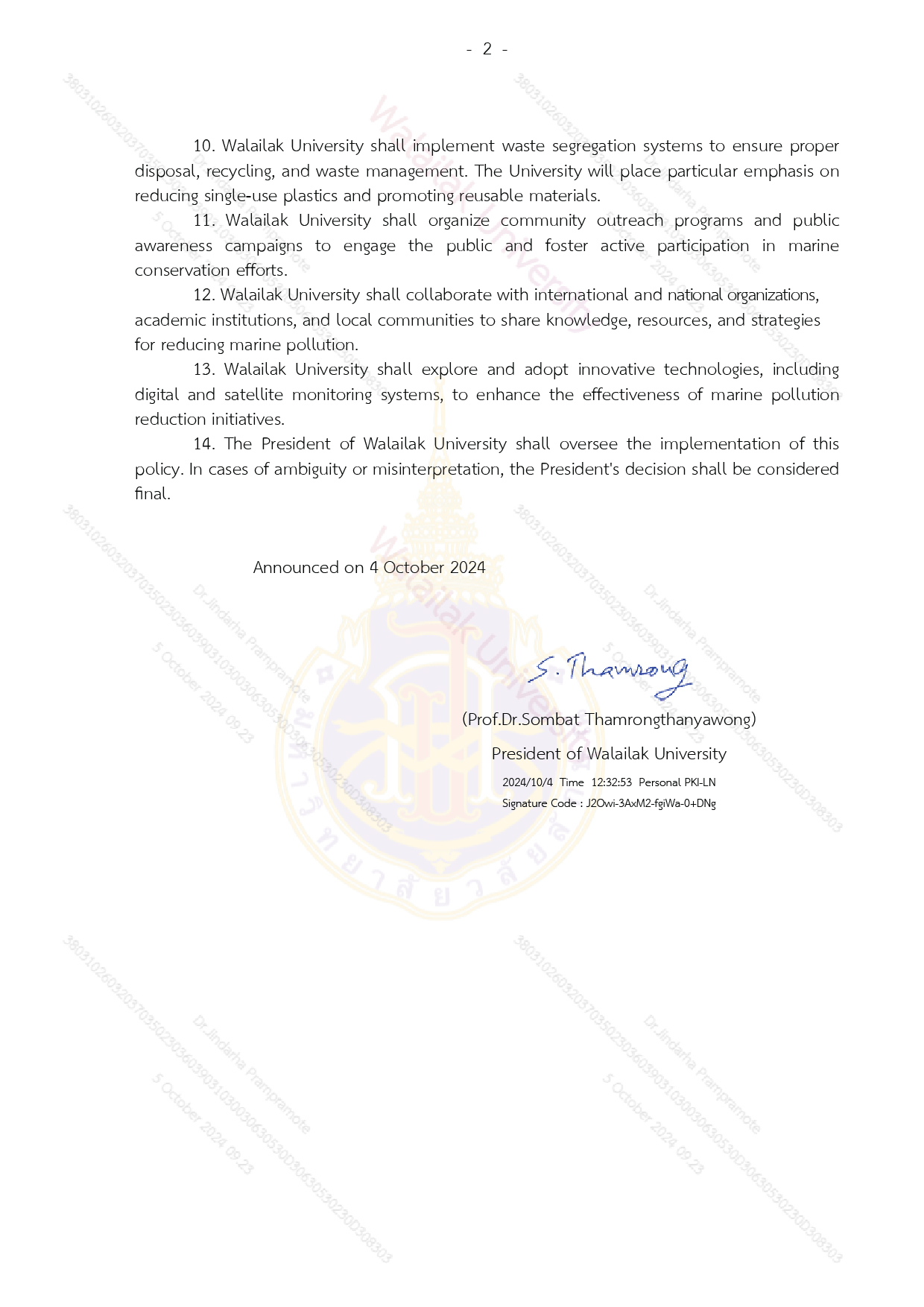
As part of its efforts to prevent and reduce marine pollution from land-based activities, Walailak University (WU) has established the Plastic Waste Reduction Action Plan 2025–2028 to minimize plastic waste generation and prevent plastic pollutants from entering drainage systems, waterways, and coastal environments. The action plan adopts a preventive approach by reducing the use of single-use plastics at their sources, encouraging environmentally friendly alternatives, and promoting responsible consumption and waste management across campus operations. These measures are particularly important because plastic waste generated on land can be transported by stormwater runoff into natural waterways and eventually reach the sea, where it can threaten marine wildlife, degrade habitats, and contribute to long-term environmental contamination.
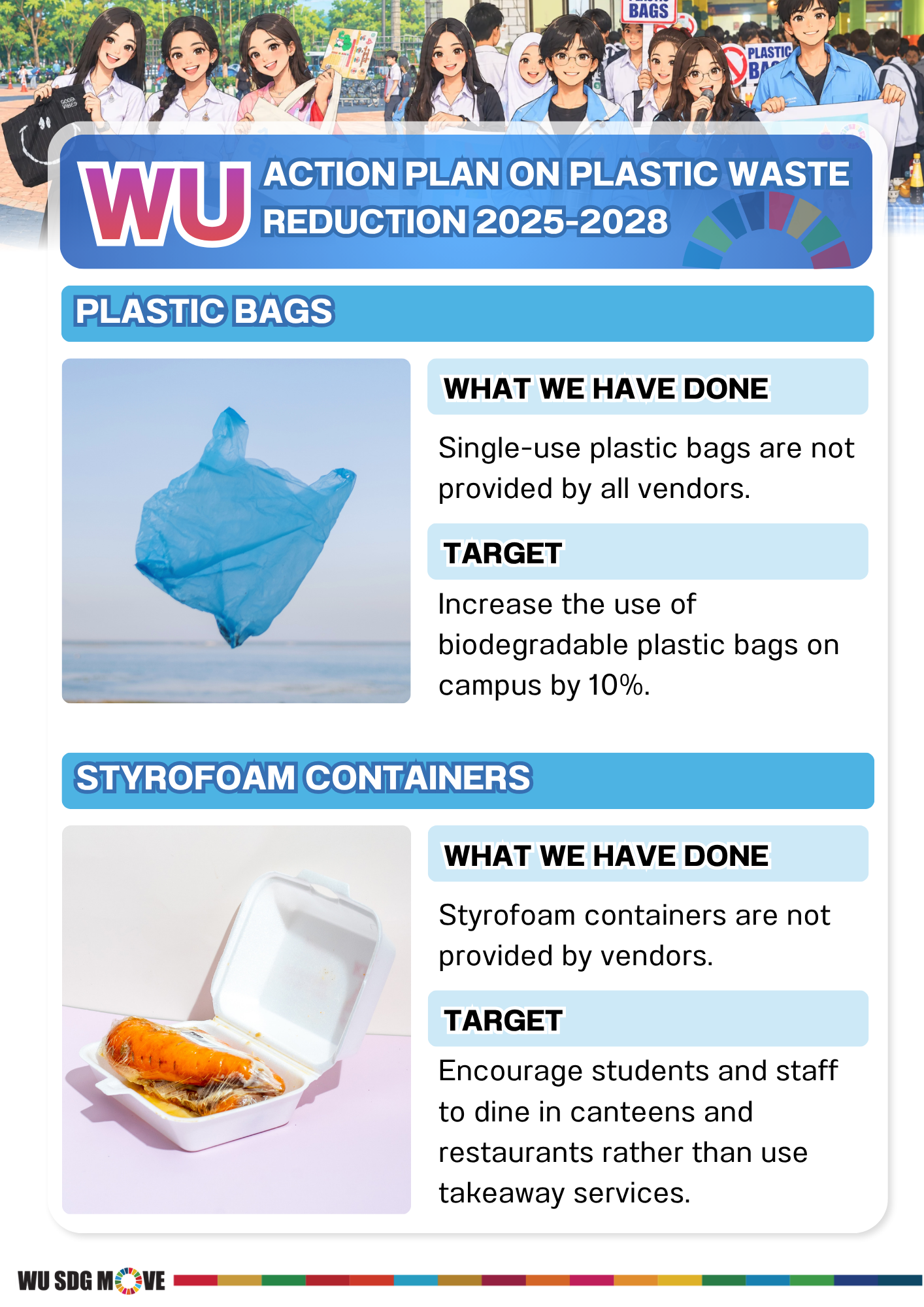
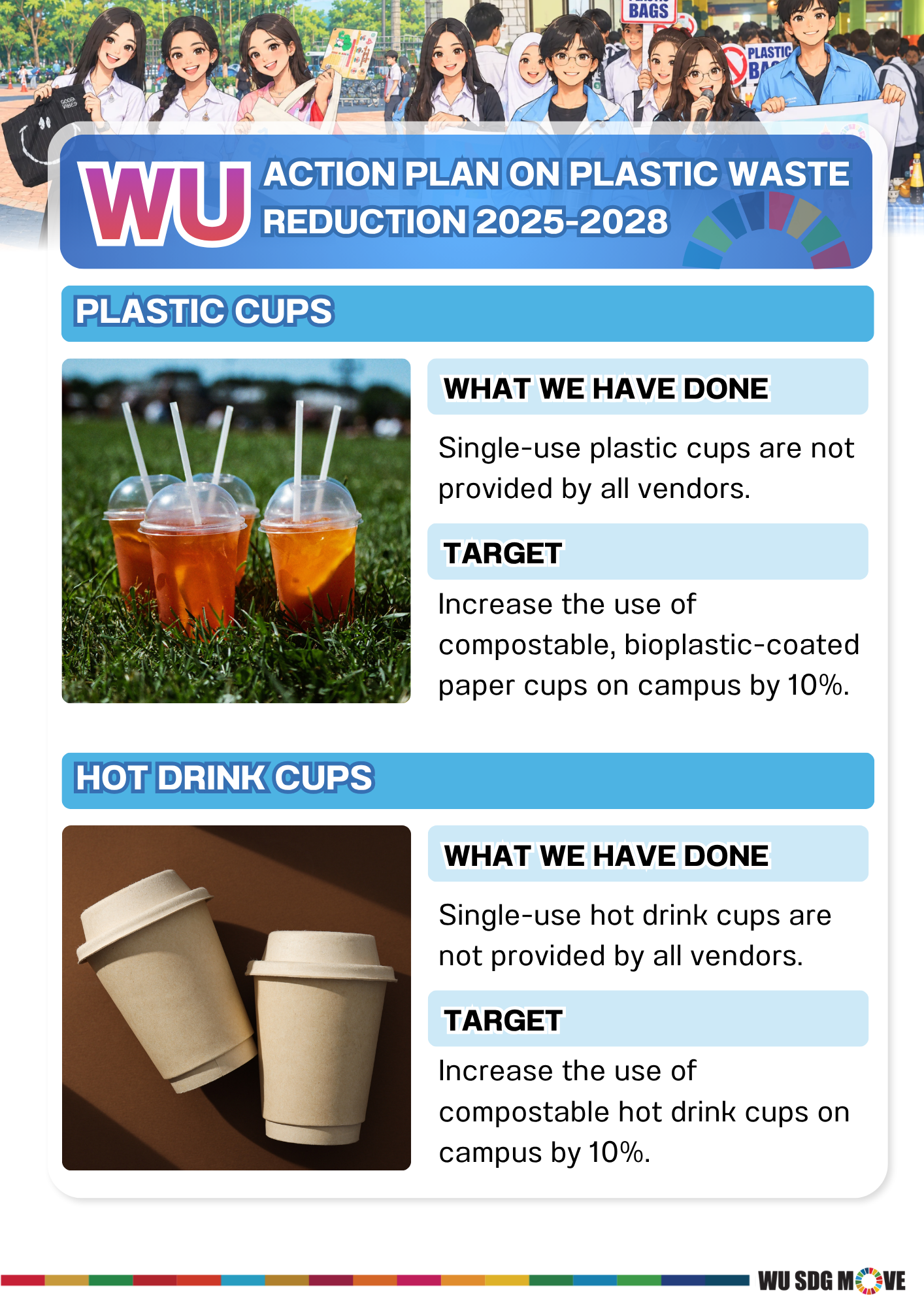
The action plan addresses several major sources of plastic waste associated with food and beverage consumption on campus. WU has established measures to ensure that vendors do not provide single-use plastic bags, plastic cups, single-use hot drink cups, or Styrofoam food containers. Plastic spoons and forks, drinking straws, and condiment sachets are provided only upon customer request, helping discourage unnecessary consumption and reducing the generation of disposable waste. The University also encourages food vendors to reduce single-use plastic food packaging and adopt reusable or environmentally friendly alternatives. In addition, students and staff are encouraged to dine in campus canteens and restaurants rather than rely on takeaway services, helping reduce the demand for disposable food containers and packaging.
To support the transition towards more sustainable consumption, WU has established targets for 2025–2028, including increasing the use of biodegradable plastic bags, compostable paper cups, compostable hot drink cups, compostable spoons and forks, reusable water bottles, and compostable straws by 10%. The action plan also targets a 10% reduction in condiment sachet use among students and staff and a 10% reduction in single-use plastic food packaging on campus. These targets provide a framework for encouraging vendors and campus users to adopt more sustainable alternatives while progressively reducing the University’s dependence on disposable plastics.
Beyond reducing plastic consumption, WU supports waste prevention through the installation of water dispensers and the provision of recycling bins across campus. Water dispensers encourage students, staff, and visitors to refill reusable bottles rather than purchase bottled water, while recycling facilities provide opportunities to separate recyclable materials from general waste. The University also plans to implement awareness-raising projects to strengthen understanding of recycling and responsible waste disposal among students, staff, and visitors. Together, these measures help integrate waste reduction, reuse, and recycling into everyday campus practices.
The action plan complements WU’s broader Policy on Marine Pollution Reduction, B.E. 2569 (2026), by addressing plastic pollution at its source and encouraging behavioral changes that can reduce the amount of waste entering the natural environment. When implemented alongside proper waste collection, wastewater management, and stormwater control, these measures can help prevent plastic litter from being carried through drainage systems into rivers and coastal waters. They are also expected to reduce demand for disposable materials, encourage more sustainable purchasing and consumption habits, and strengthen environmental responsibility throughout the university community.
Through the Plastic Waste Reduction Action Plan 2025–2028, Walailak University demonstrates how institutional policies and practical campus measures can contribute to preventing marine pollution before it occurs. By working with food vendors, students, staff, and visitors, the University seeks to reduce plastic waste generation, promote sustainable alternatives, and improve resource efficiency. In the longer term, these efforts can help protect aquatic and marine biodiversity, support cleaner waterways and coastal environments, and foster a culture of environmental stewardship that extends beyond the campus into surrounding communities.


Promoting Zero-Waste Practices and Reducing Plastic Use
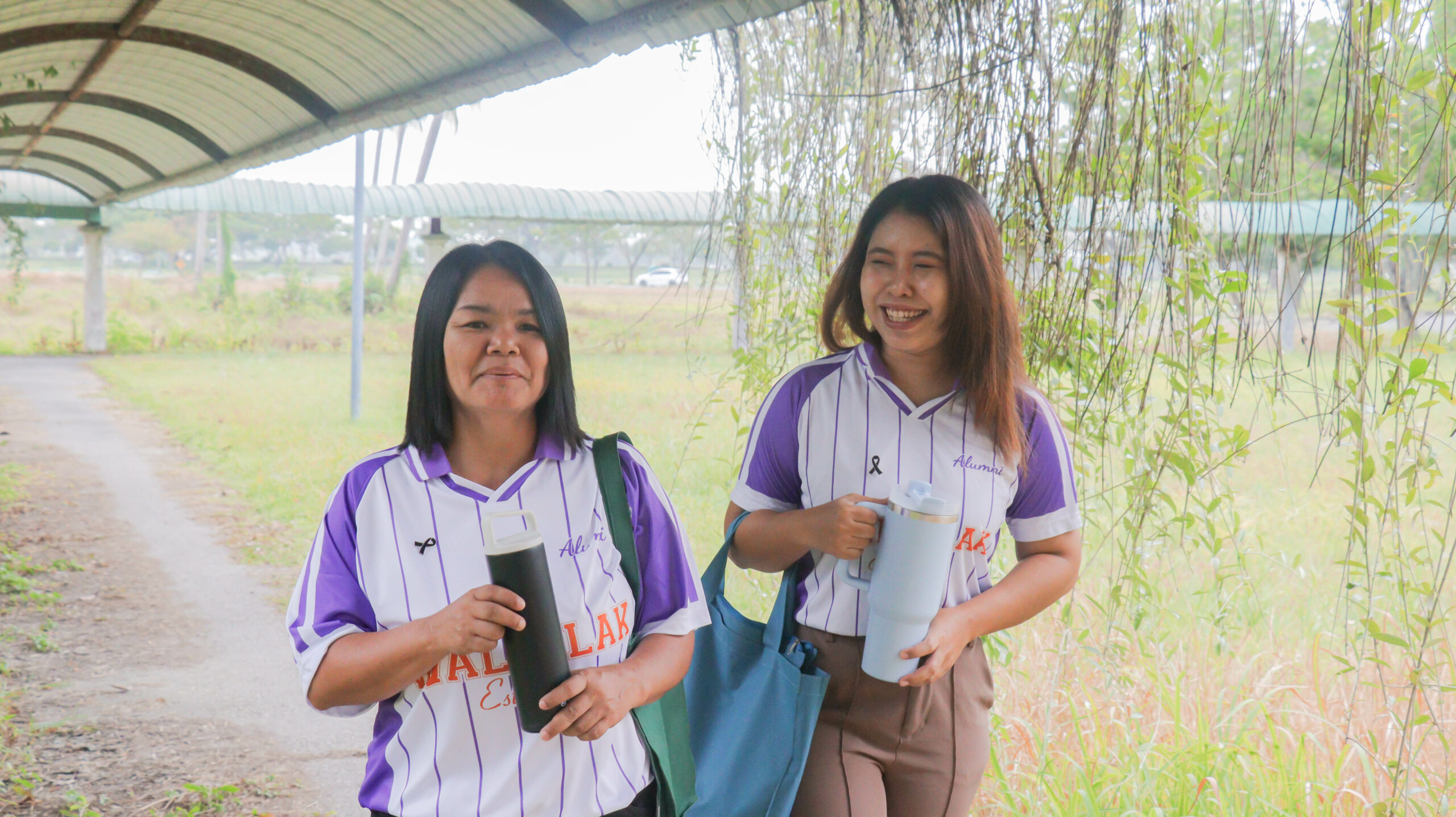
Walailak University (WU) promotes a zero-waste culture across its campus by encouraging students, staff, vendors, and visitors to reduce waste generation and avoid unnecessary single-use plastics. The University advocates refusing disposable plastic bags and choosing reusable alternatives, such as cloth bags and refillable containers, to minimize plastic consumption at its source. These practices help reduce the risk of plastic waste entering drainage systems and natural waterways, where it could eventually reach coastal and marine environments and threaten aquatic ecosystems.
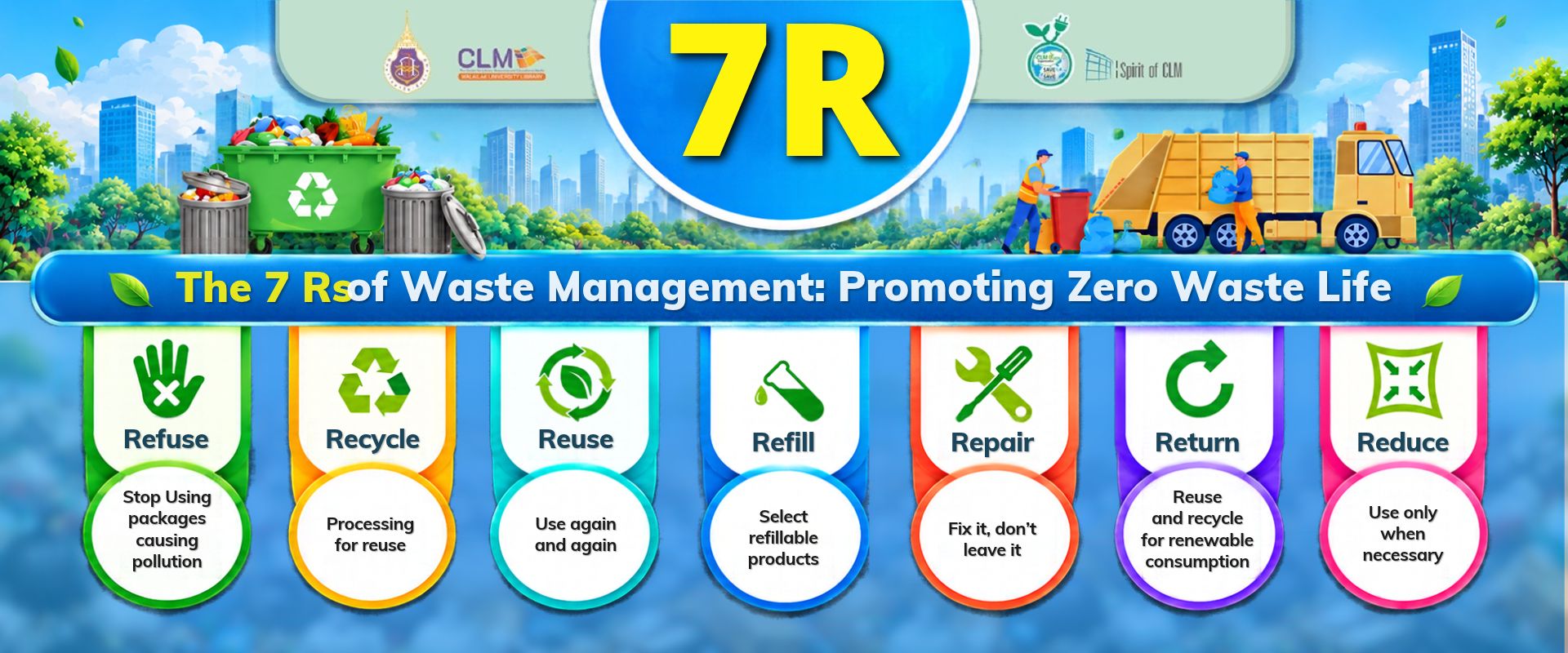
In 2025, WU further promoted sustainable waste management by integrating the 7R principles—Refuse, Recycle, Reuse, Refill, Repair, Return, and Reduce—into everyday campus practices through incentives, projects, and environmental initiatives. These principles encourage the university community to make responsible consumption choices, extend the useful life of products, reduce unnecessary packaging, and improve the recovery and recycling of materials. By combining waste prevention with reuse, refill, and recycling practices, the University seeks to reduce the volume of waste requiring disposal and minimize the potential for environmental contamination.
Through these initiatives, WU encourages collective responsibility for waste reduction and strengthens environmental awareness throughout the campus community. Preventing plastic waste before it is generated, alongside proper waste segregation and disposal, can help reduce plastic leakage into waterways and coastal areas. These efforts complement the University’s broader commitment to preventing and reducing marine pollution from land-based activities, supporting cleaner surroundings, protecting marine biodiversity
In observance of Thai Environment Day, the Center for Library Resources and Educational Media (CLM) at Walailak University (WU) organized environmental awareness activities to encourage sustainable practices and strengthen environmental responsibility among library users and the wider university community. As a member of the Green Library Network and a university support unit contributing to WU’s vision of becoming a green university, CLM arranged a series of educational activities throughout December to promote waste reduction, resource efficiency, and environmentally responsible behavior.
The activities included a CLM’s Green knowledge corner, a demonstration model illustrating how to segregate different types of waste, and educational displays presenting practical approaches to waste reduction, reuse, and recycling. The initiative also featured the Sufficiency Medicine Sachet Bags for Sharing Happiness activity, which promoted the reuse of materials by transforming medicine sachets into useful bags. These activities provided participants with practical examples of how everyday materials can be reused and how proper waste segregation can support more effective recycling and waste management.
Under the campaign message, “Reduce Consumption Together for a Brighter Planet,” CLM invited library users to participate in the activities at the temporary library located in the Architectural and Design Operations Building. By providing accessible learning opportunities and practical demonstrations, the initiative aimed to encourage students, staff, and visitors to adopt waste-conscious habits and incorporate the principles of refuse, reduce, reuse, and recycle into their daily lives.
Reducing waste at its source is an important step in preventing land-based pollution from reaching marine environments. Improperly discarded plastics and other waste materials can be carried by rainfall and stormwater runoff into drainage systems, waterways, and eventually the sea, where they can harm marine wildlife and degrade coastal habitats. By promoting waste segregation, material reuse, recycling, and responsible consumption, CLM’s activities contribute to reducing the amount of waste requiring disposal and lowering the risk of waste leakage into the natural environment.
Through this initiative, Walailak University reinforces its commitment to fostering a zero-waste culture through education and community participation. The activities demonstrate how university support units can help translate environmental awareness into practical action, encouraging individuals to take responsibility for their waste and make more sustainable choices. In the long term, these efforts can strengthen environmental literacy, reduce waste generation, and support the prevention of land-based pollution.
Promoting a Zero-Waste Culture through Environmental Awareness Activities
in observance of Thai Environment Day, the Center for Library Resources and Educational Media (CLM) at Walailak University (WU) organized environmental awareness activities to encourage sustainable practices and strengthen environmental responsibility among library users and the wider university community. As a member of the Green Library Network and a university support unit contributing to WU’s vision of becoming a green university, CLM arranged a series of educational activities throughout December to promote waste reduction, resource efficiency, and environmentally responsible behavior.
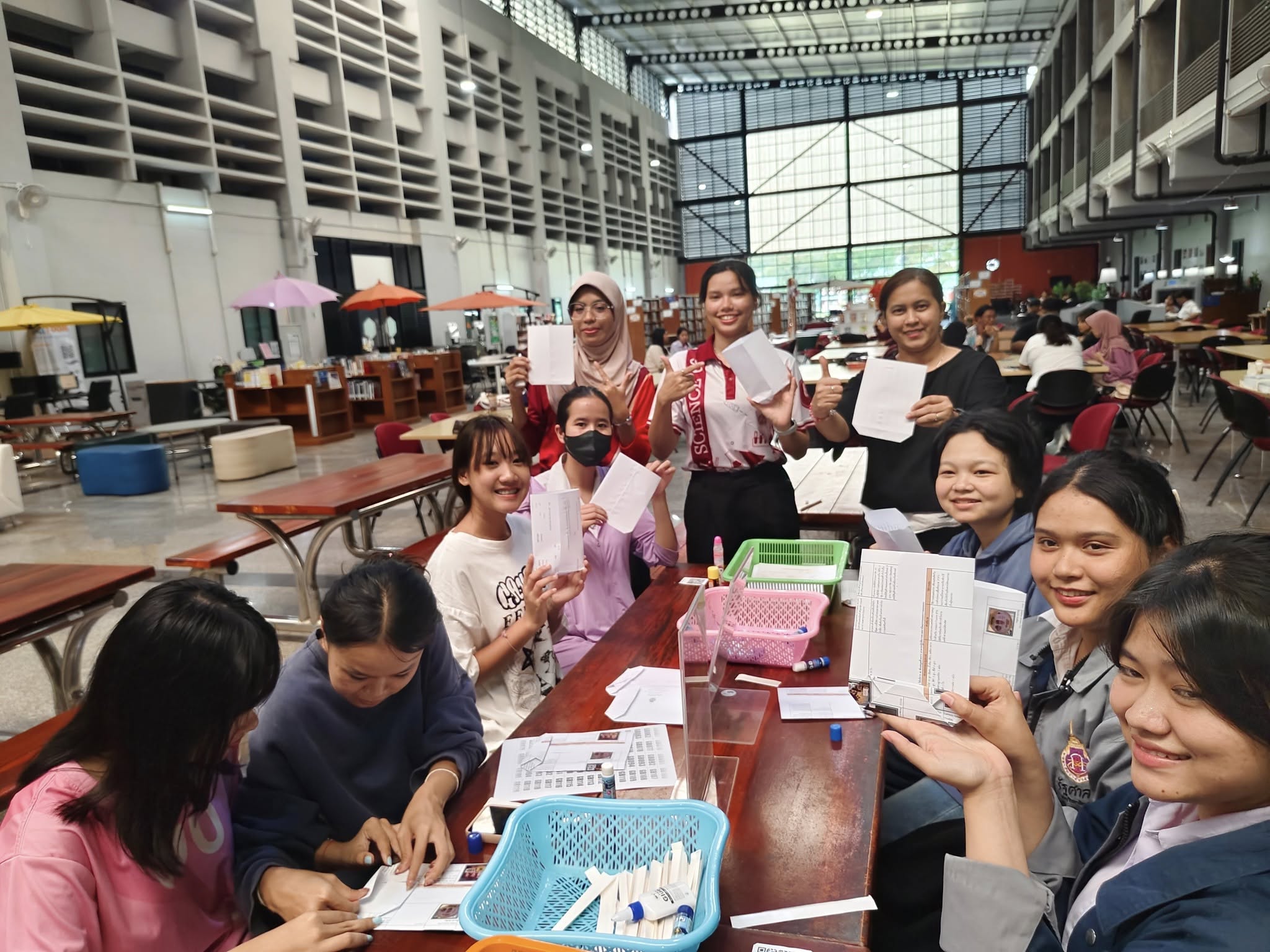
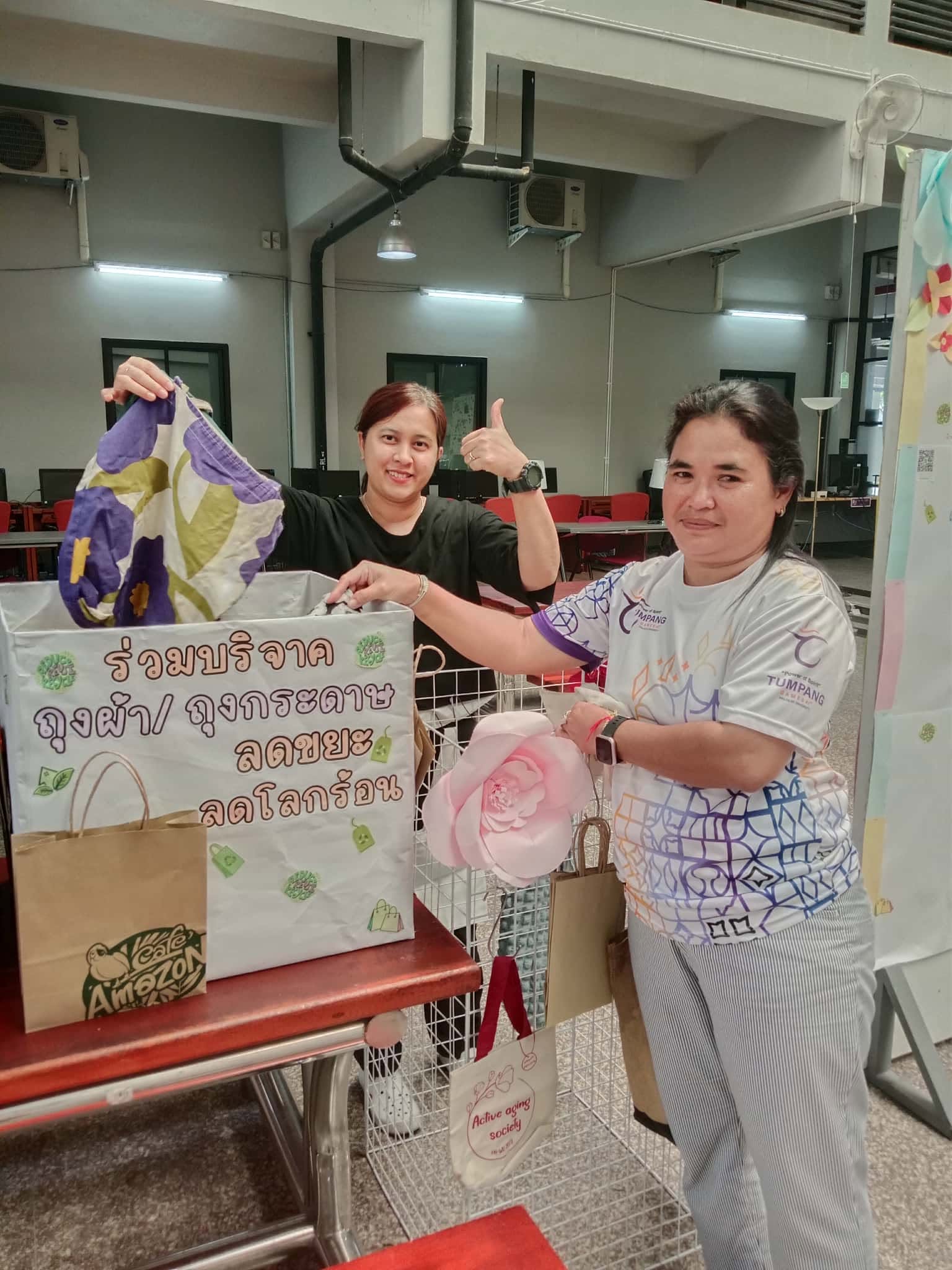
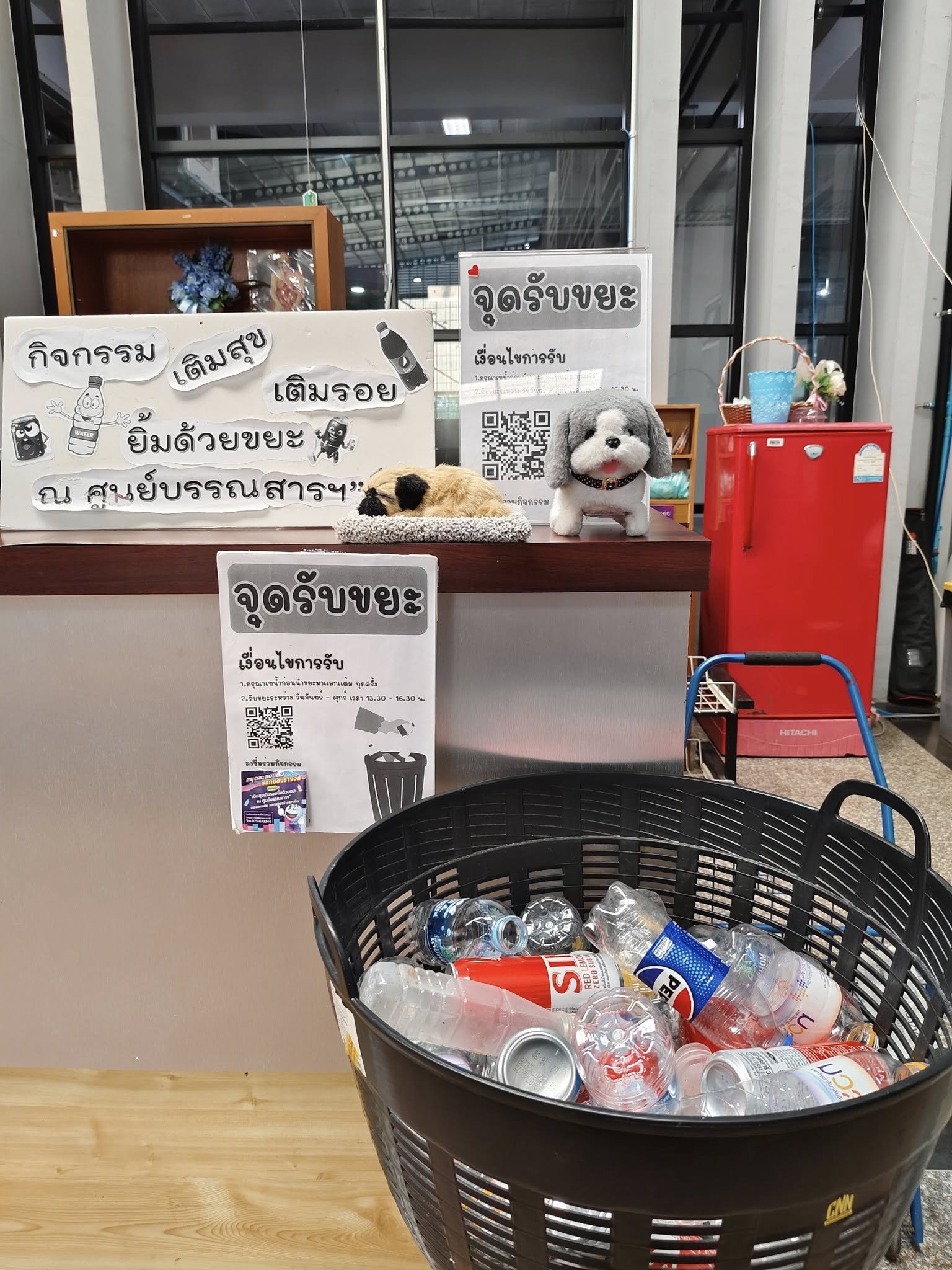
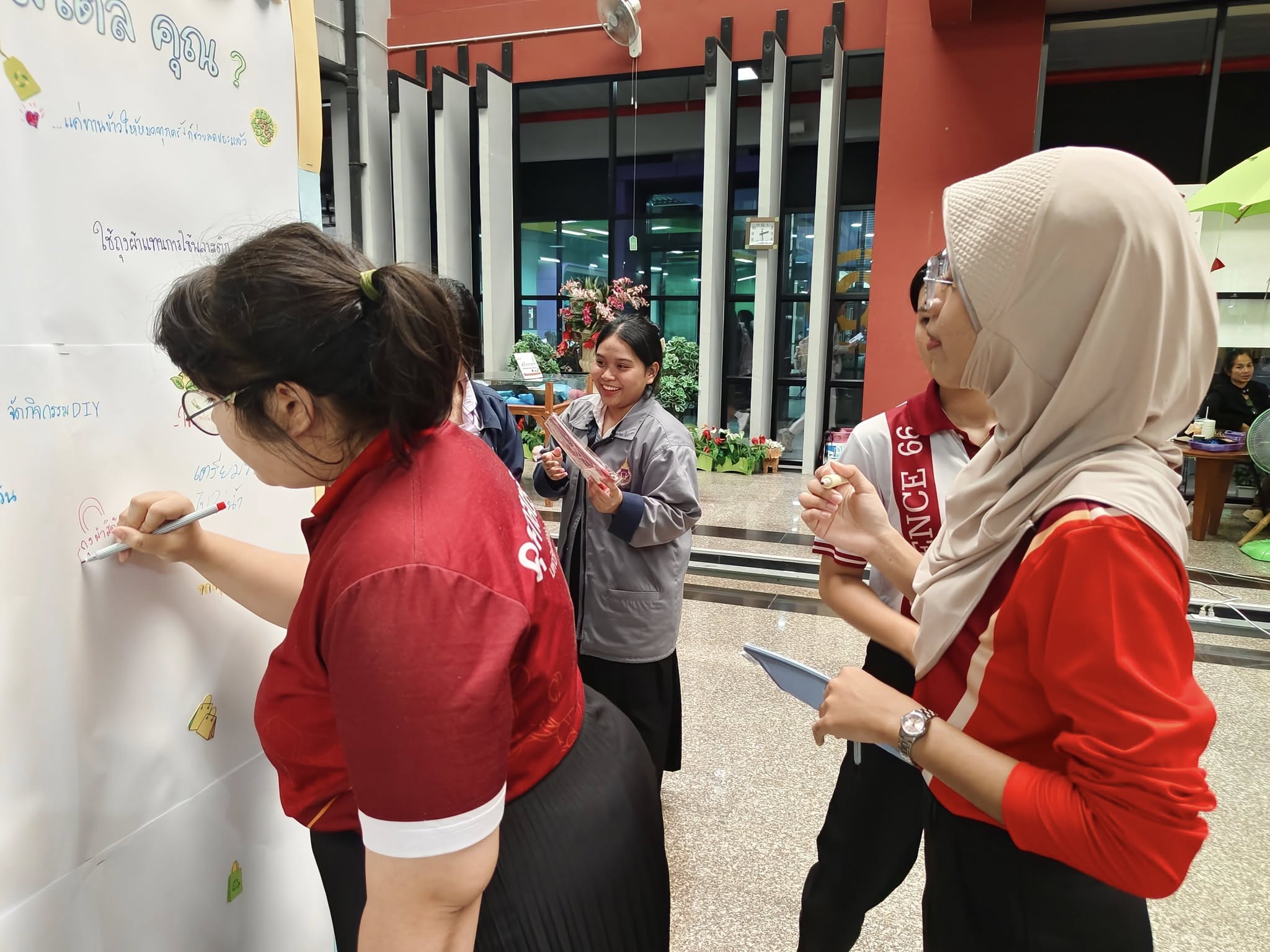
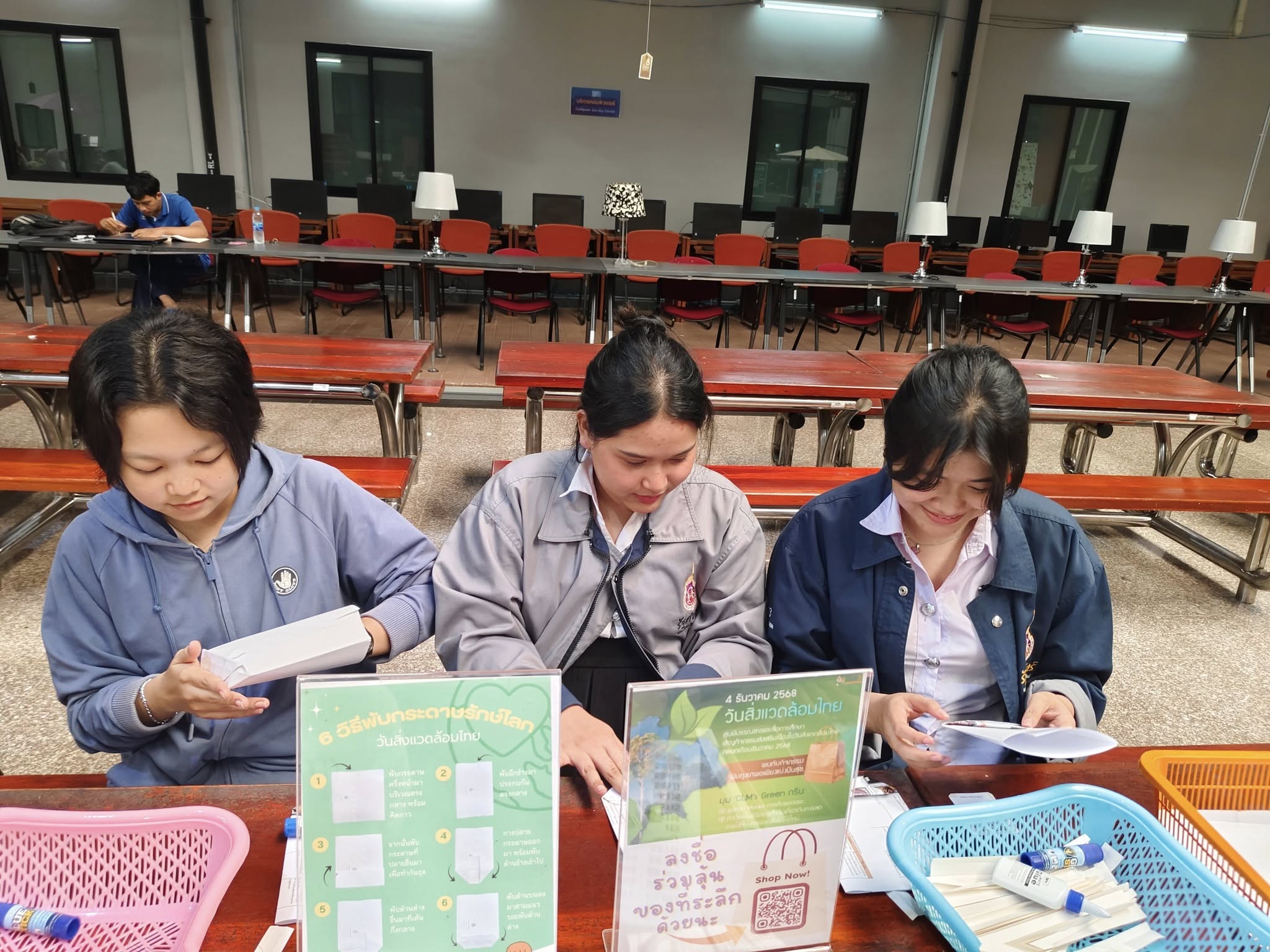
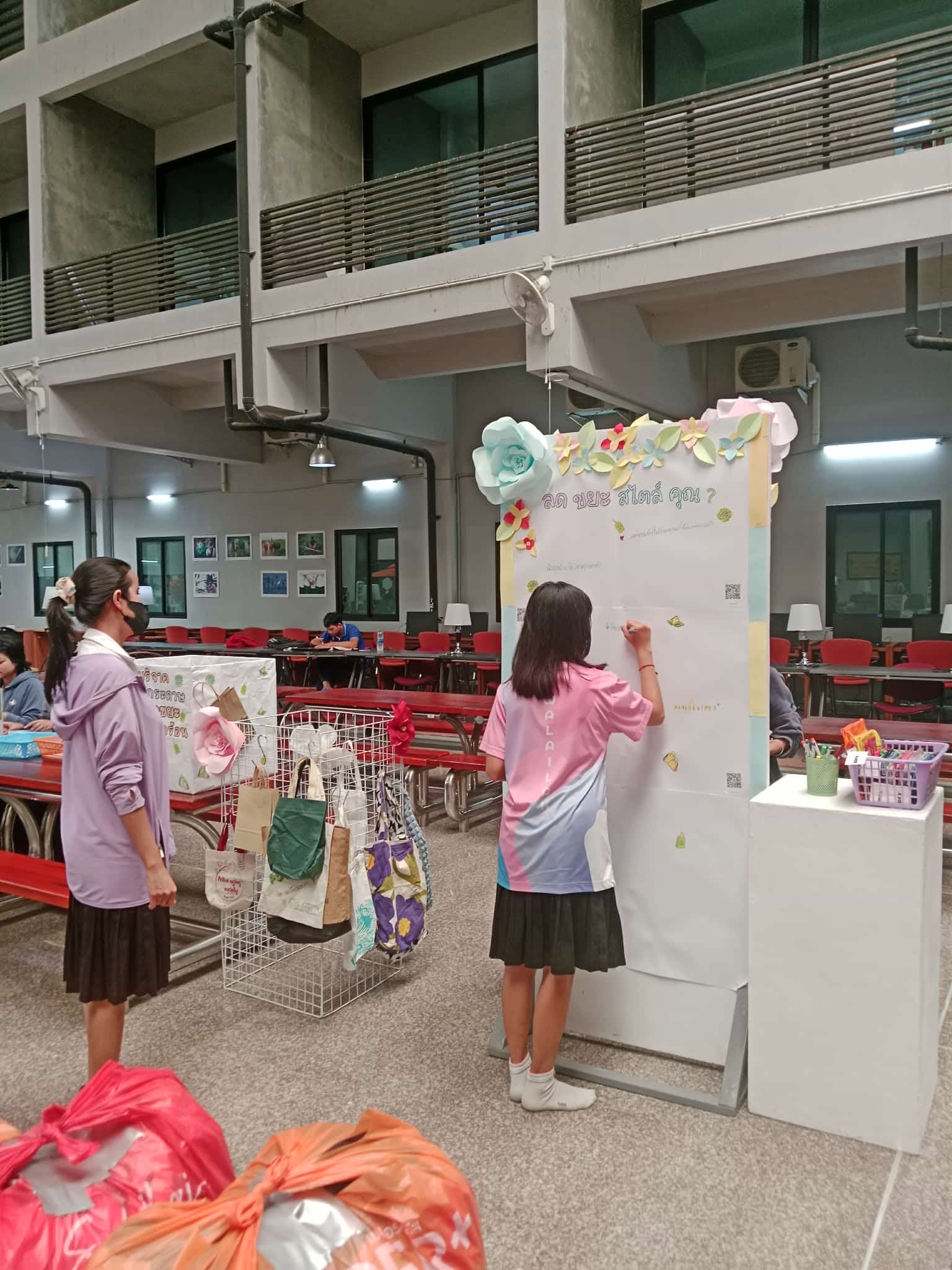
The activities included a CLM’s Green knowledge corner, a demonstration model illustrating how to segregate different types of waste, and educational displays presenting practical approaches to waste reduction, reuse, and recycling. The initiative also featured the Sufficiency Medicine Sachet Bags for Sharing Happiness activity, which promoted the reuse of materials by transforming medicine sachets into useful bags. These activities provided participants with practical examples of how everyday materials can be reused and how proper waste segregation can support more effective recycling and waste management.
Under the campaign message, “Reduce Consumption Together for a Brighter Planet,” CLM invited library users to participate in the activities at the temporary library located in the Architectural and Design Operations Building. By providing accessible learning opportunities and practical demonstrations, the initiative aimed to encourage students, staff, and visitors to adopt waste-conscious habits and incorporate the principles of refuse, reduce, reuse, and recycle into their daily lives.
Reducing waste at its source is an important step in preventing land-based pollution from reaching marine environments. Improperly discarded plastics and other waste materials can be carried by rainfall and stormwater runoff into drainage systems, waterways, and eventually the sea, where they can harm marine wildlife and degrade coastal habitats. By promoting waste segregation, material reuse, recycling, and responsible consumption, CLM’s activities contribute to reducing the amount of waste requiring disposal and lowering the risk of waste leakage into the natural environment.
Through this initiative, Walailak University reinforces its commitment to fostering a zero-waste culture through education and community participation. The activities demonstrate how university support units can help translate environmental awareness into practical action, encouraging individuals to take responsibility for their waste and make more sustainable choices. In the long term, these efforts can strengthen environmental literacy, reduce waste generation, and support the prevention of land-based pollution.
Student-Led Initiatives to Prevent Marine Pollution in Local Communities
The Walailak University Marine Conservation Club is a student-led volunteer organization established by students from the Marine Science Program, School of Science, to promote marine conservation and environmental responsibility. The club actively implements initiatives to prevent and reduce marine pollution, particularly plastic waste, through practical conservation activities, educational outreach, and cleanup campaigns both on and off campus. Its efforts reflect the understanding that protecting marine ecosystems requires not only responsible environmental management within the university but also active participation from surrounding communities.
Located near the Gulf of Thailand and surrounded by coastal communities whose livelihoods are closely connected to fishing and marine resources, Walailak University (WU) recognizes the importance of addressing marine pollution at its sources. Plastic waste and other pollutants generated by land-based activities can enter drainage systems, waterways, and coastal waters, threatening marine biodiversity, degrading coastal habitats, and potentially affecting fisheries and the well-being of local fishing communities. Accordingly, the club’s activities are designed to benefit both the university community and local residents by promoting responsible waste management, preventing waste from reaching the sea, and strengthening public awareness of marine environmental protection.
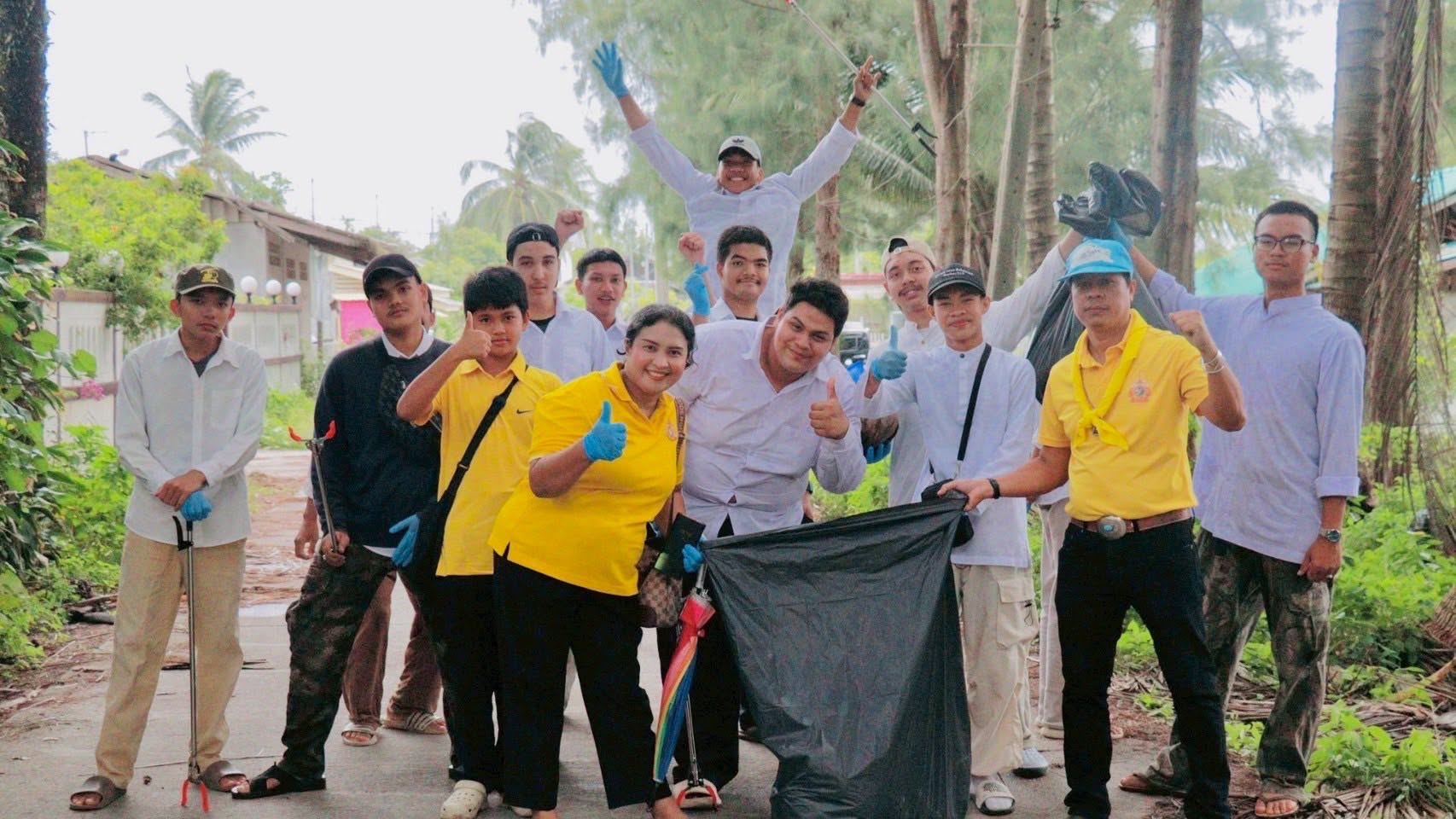
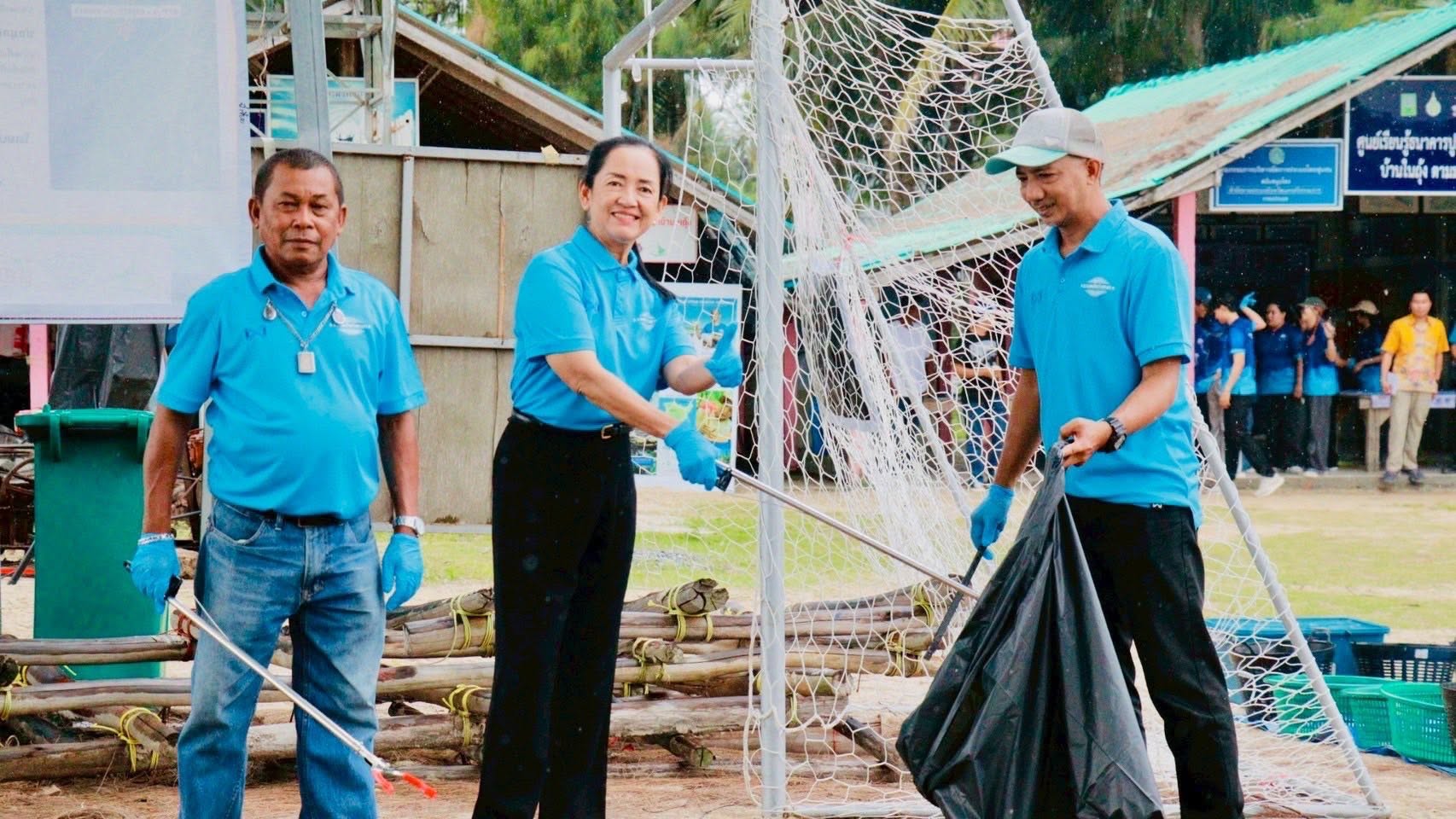
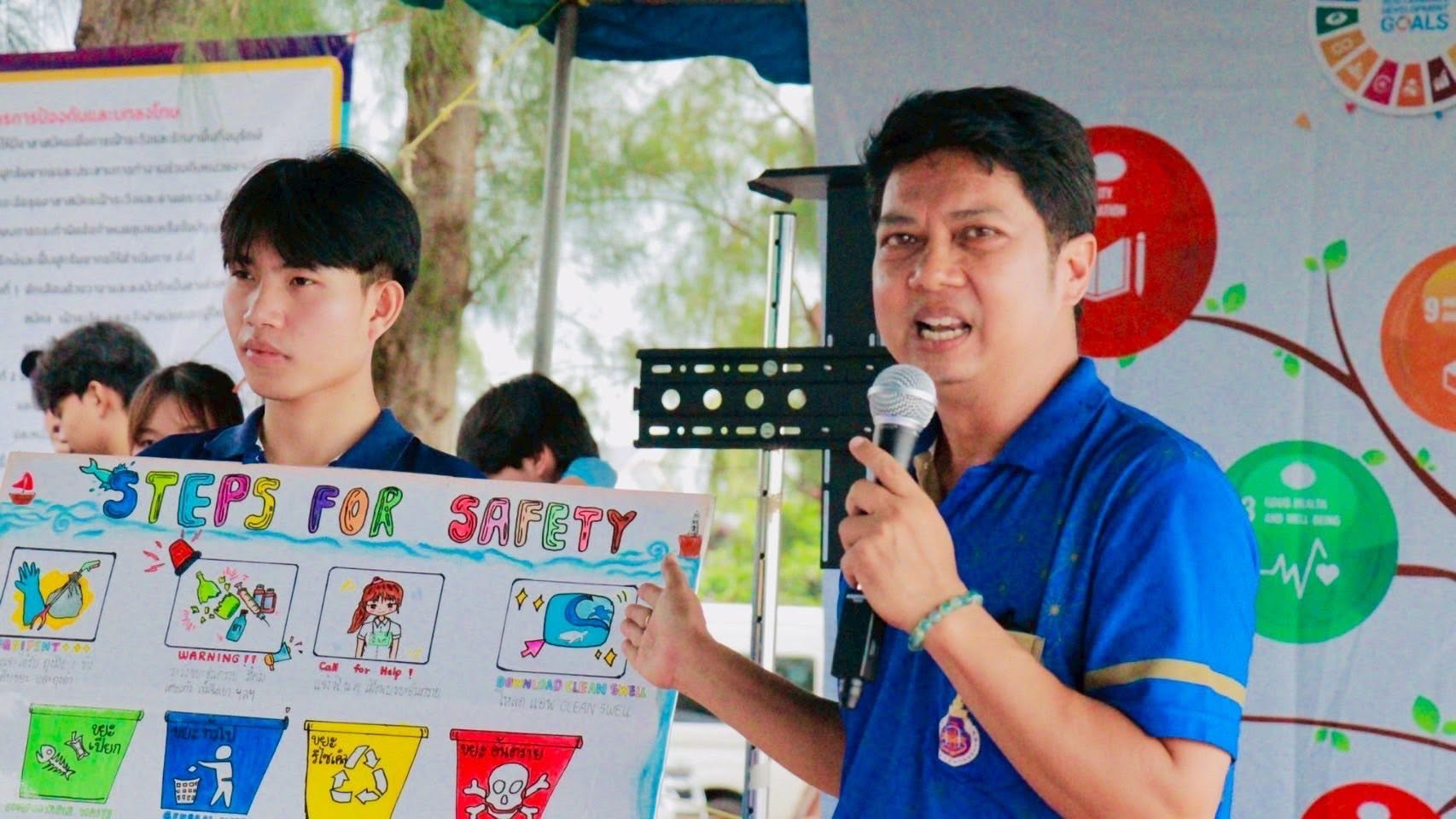
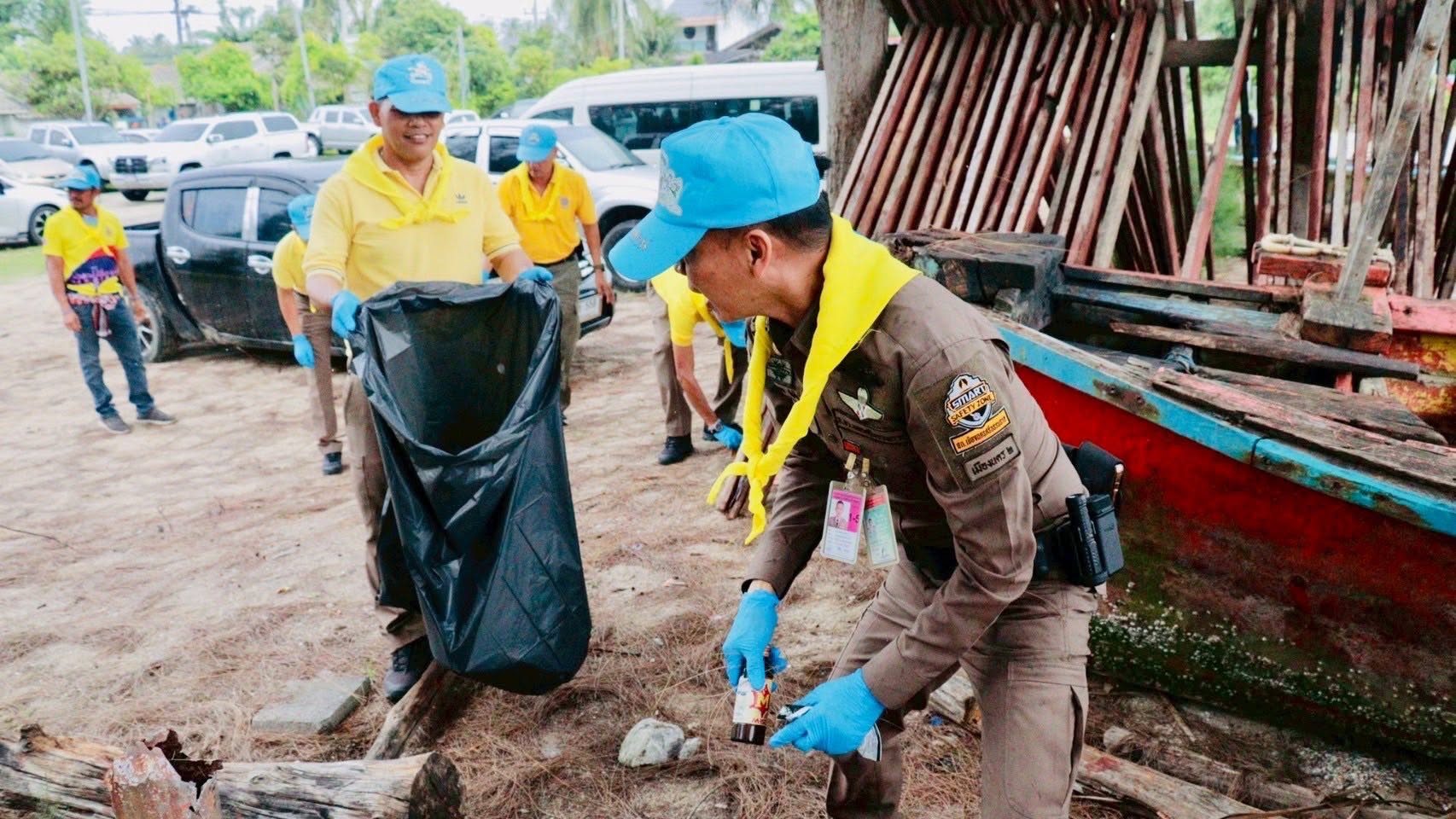
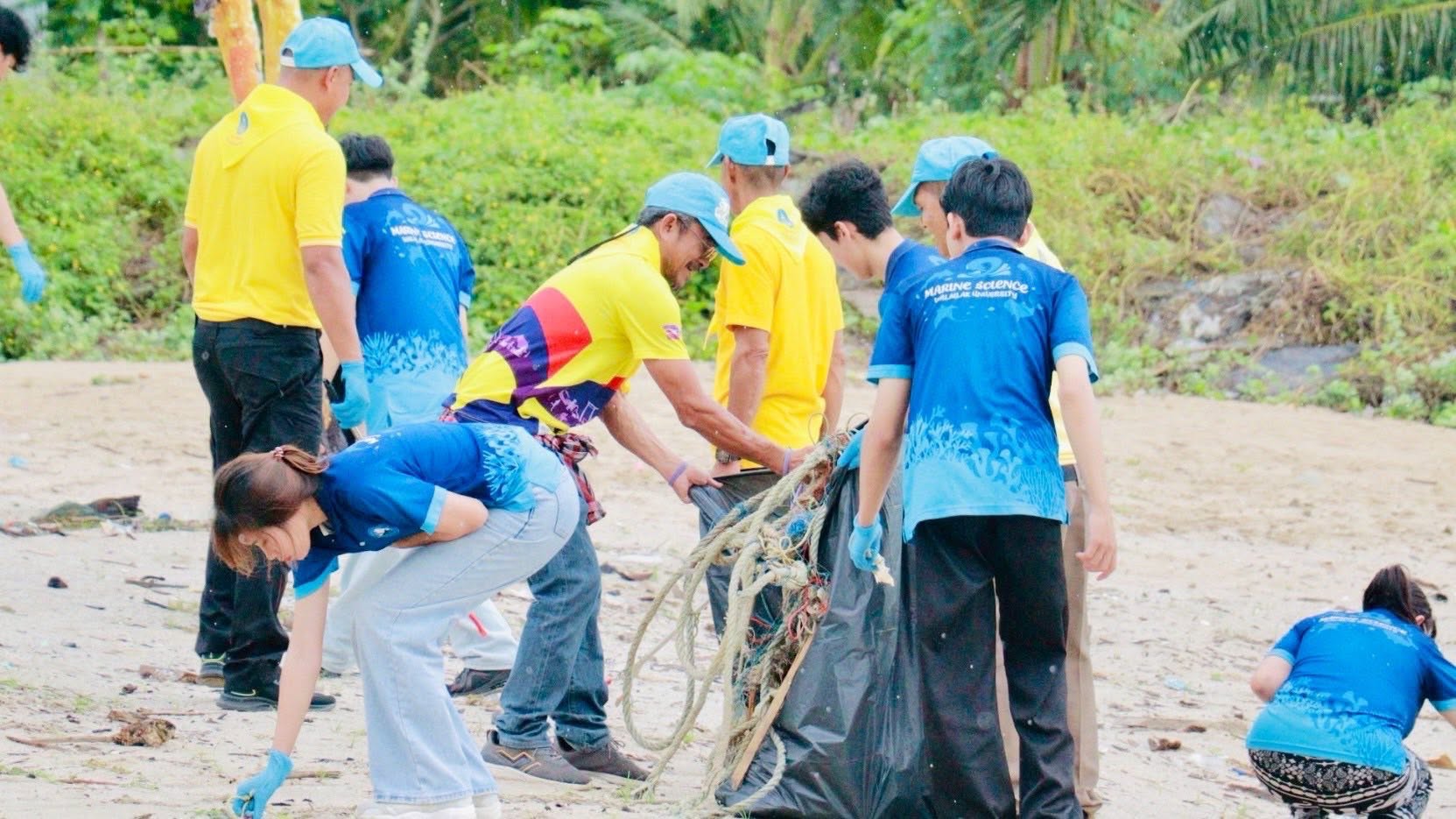
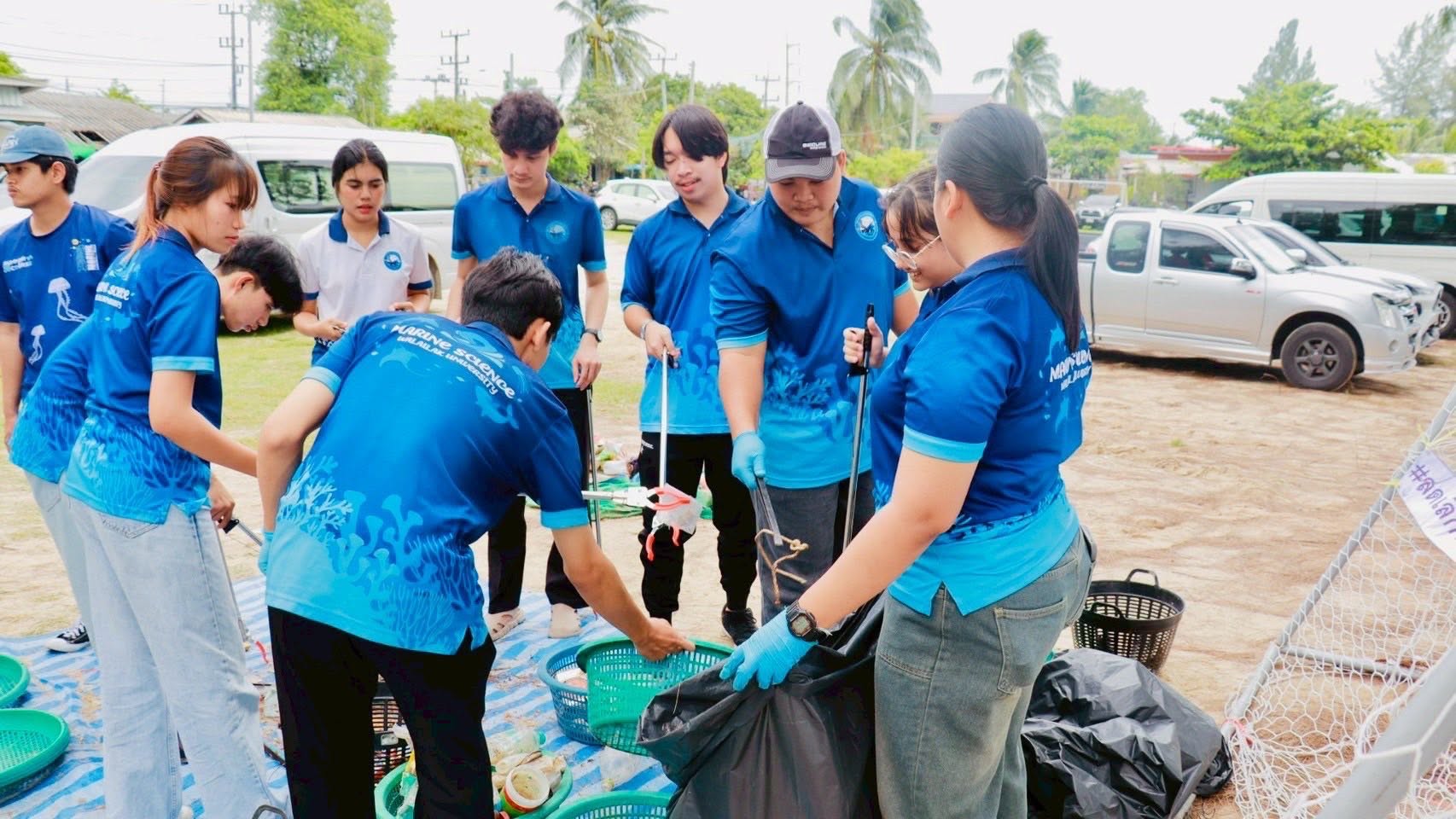
Throughout 2025, the club continued to conduct educational outreach programs for local communities, both on and off campus, to raise awareness of plastic waste management, responsible consumption, and the environmental consequences of marine pollution. These activities encouraged community members to adopt appropriate waste disposal practices, reduce single-use plastics, and recognize their role in protecting local waterways and coastal ecosystems. By engaging residents alongside students, the club helps extend environmental awareness beyond the university and encourages collective action to address pollution in areas connected to the Gulf of Thailand.
The club also continued its off-campus initiatives to reduce plastic pollution in water sources and surrounding coastal areas. One notable ongoing effort is the Local Waste Collection Initiative, conducted in collaboration with Trash Hero, local communities, and government agencies. Sustained over several years, this collaborative initiative supports the collection and proper management of discarded waste, helping prevent litter from accumulating in public spaces and entering nearby waterways and the marine environment. Partnerships among students, community members, nongovernmental organizations, and public agencies also strengthen local participation and demonstrate the value of coordinated action in tackling environmental challenges.
Through these student-led initiatives, the Walailak University Marine Conservation Club contributes to preventing marine pollution from land-based sources while promoting environmental stewardship among students and residents. Its community-oriented approach is particularly important in a coastal region where healthy marine ecosystems underpin local fisheries, food resources, and livelihoods. By combining education, waste collection, community engagement, and sustained collaboration, the club helps foster a shared sense of responsibility for protecting the Gulf of Thailand and surrounding coastal environments.
Through its Policy on Marine Pollution Reduction, B.E. 2569 (2026), the Plastic Waste Reduction Action Plan 2025–2028, zero-waste promotion activities, environmental awareness initiatives, and student-led marine conservation projects, Walailak University (WU) demonstrates a comprehensive commitment to preventing and reducing marine pollution, particularly from land-based activities. These measures address pollution at multiple levels, from institutional policy and campus operations to individual behavior and community participation. By reducing single-use plastics, promoting reusable and environmentally friendly alternatives, improving waste segregation and recycling, strengthening wastewater management, and controlling stormwater runoff, the University seeks to minimize the release of pollutants into drainage systems, waterways, and coastal environments. Establishing measurable targets and appropriate performance measures can further support the evaluation of progress towards these objectives.
An important benefit of this integrated approach is that it emphasizes pollution prevention at its source rather than relying solely on cleanup activities after waste has entered the natural environment. Reducing disposable plastic consumption and improving waste management can help limit plastic leakage, while appropriate wastewater treatment and hazardous waste management help reduce the risk of harmful substances contaminating water resources. Meanwhile, environmental education and the promotion of zero-waste practices encourage students, staff, vendors, and visitors to adopt more responsible consumption and disposal habits. Measures such as tracking single-use plastic consumption, monitoring waste segregation and recycling rates, and measuring participation in environmental activities can help assess the effectiveness of these initiatives. These behavioral changes can extend beyond the campus, multiplying the benefits of the University’s environmental initiatives in households and surrounding communities.
WU’s community engagement activities are particularly significant because the University is located near the Gulf of Thailand and is surrounded by coastal communities whose livelihoods depend on marine resources. Through collaboration with local residents, fishing communities, Trash Hero, government agencies, and other partners, the University helps strengthen collective responsibility for reducing pollution in local waterways and coastal areas. Student-led conservation activities also provide valuable opportunities for students to apply their knowledge, develop leadership skills, and contribute directly to environmental protection. Measuring participation in these activities, recording the quantities of waste collected, and monitoring changes in local waste management practices can help evaluate community engagement and identify opportunities for improvement. Such partnerships can support cleaner coastal environments, improve public awareness, and help safeguard the marine ecosystems upon which local fisheries, food security, and community livelihoods depend.
Collectively, these initiatives establish a practical framework for integrating environmental governance, waste prevention, education, research, and community participation into the University’s sustainability efforts. They also create opportunities for continuous improvement through the implementation of policy measures, progress toward plastic reduction targets, environmental monitoring, and collaboration with external stakeholders. Regular measurement of waste generation, recycling performance, wastewater quality, and other relevant environmental indicators can provide evidence of progress, identify persistent pollution risks, and inform future management decisions. Over time, these efforts are expected to contribute to reduced waste generation, improved resource efficiency, lower risks of water contamination, and stronger environmental stewardship throughout the university community and surrounding areas.
By combining formal policy commitments with measurable waste reduction targets and practical actions on campus and in local communities, Walailak University reinforces its role as an institution that contributes to environmental sustainability beyond its own boundaries. Continued measurement and evaluation of environmental outcomes can help demonstrate the effectiveness of its pollution prevention measures, strengthen accountability, and guide future initiatives. Its approach supports the protection of marine biodiversity, the conservation of coastal habitats, and the sustainable use of marine resources for present and future generations.
Related Links
https://www.facebook.com/walailakclm/posts/pfbid0saMwffJDwBy2i5bezcJfC7WVNfRVDRRp8rvwyCAThk2ZpvUjrFVseg2GgTLhRVRJl