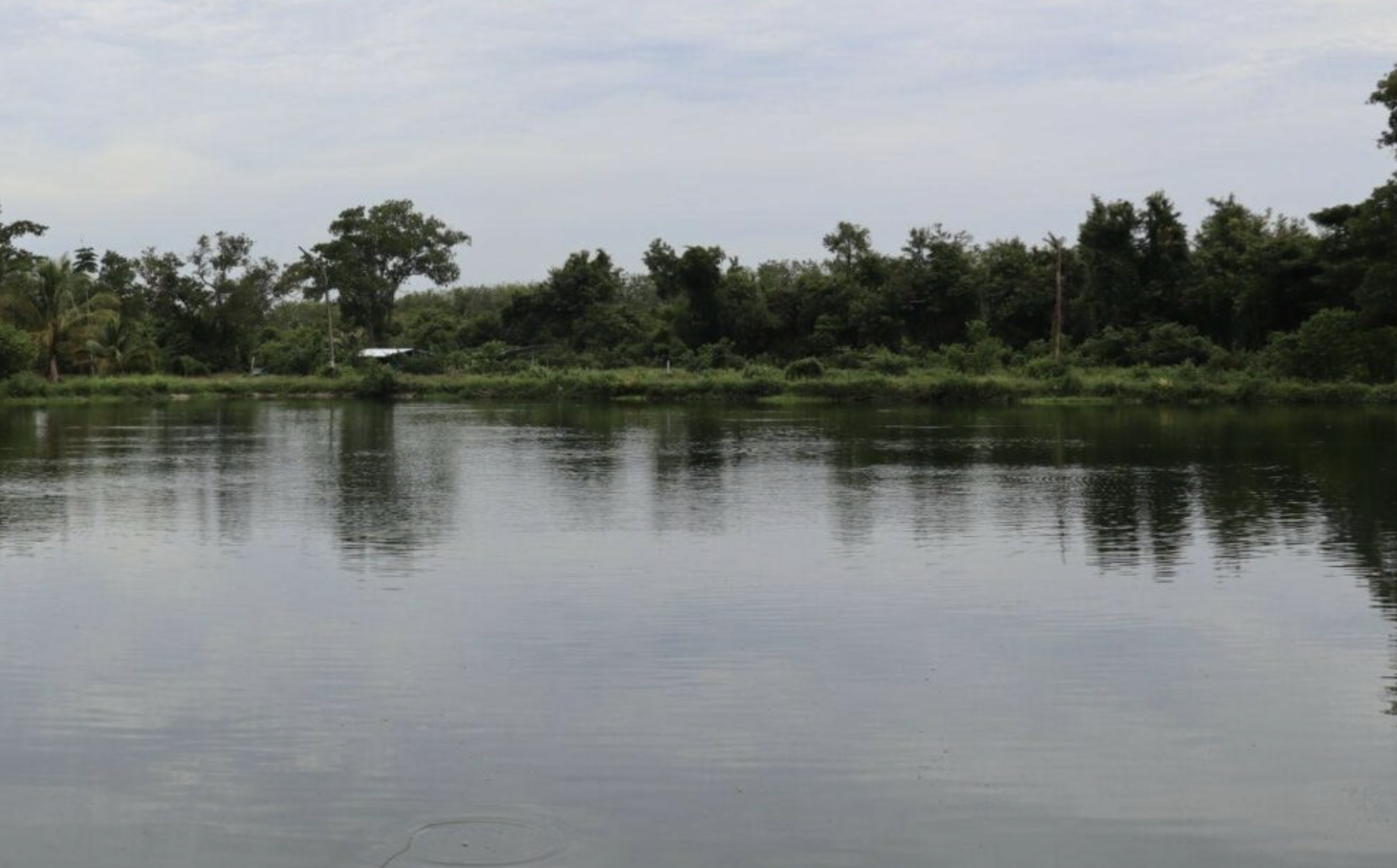
Wastewater Treatment Process for Environmental Sustainability at Walailak University in 2025
Wastewater Treatment Process for Environmental Sustainability at Walailak University in 2025
Walailak University (WU) has established and maintained a wastewater treatment process in place to manage wastewater generated from the daily activities of students and staff, including bathing, laundry, dishwashing, and toilet use. Since 2002, the university has implemented The Wastewater Management System Development Project to ensure that wastewater generated on campus is systematically collected and treated before reuse or discharge into natural water bodies. The university operates a wastewater treatment system with a capacity of 4,000 cubic metres per day, integrating biological treatment, disinfection, and water quality monitoring to reduce pollutants and maintain treated water quality.
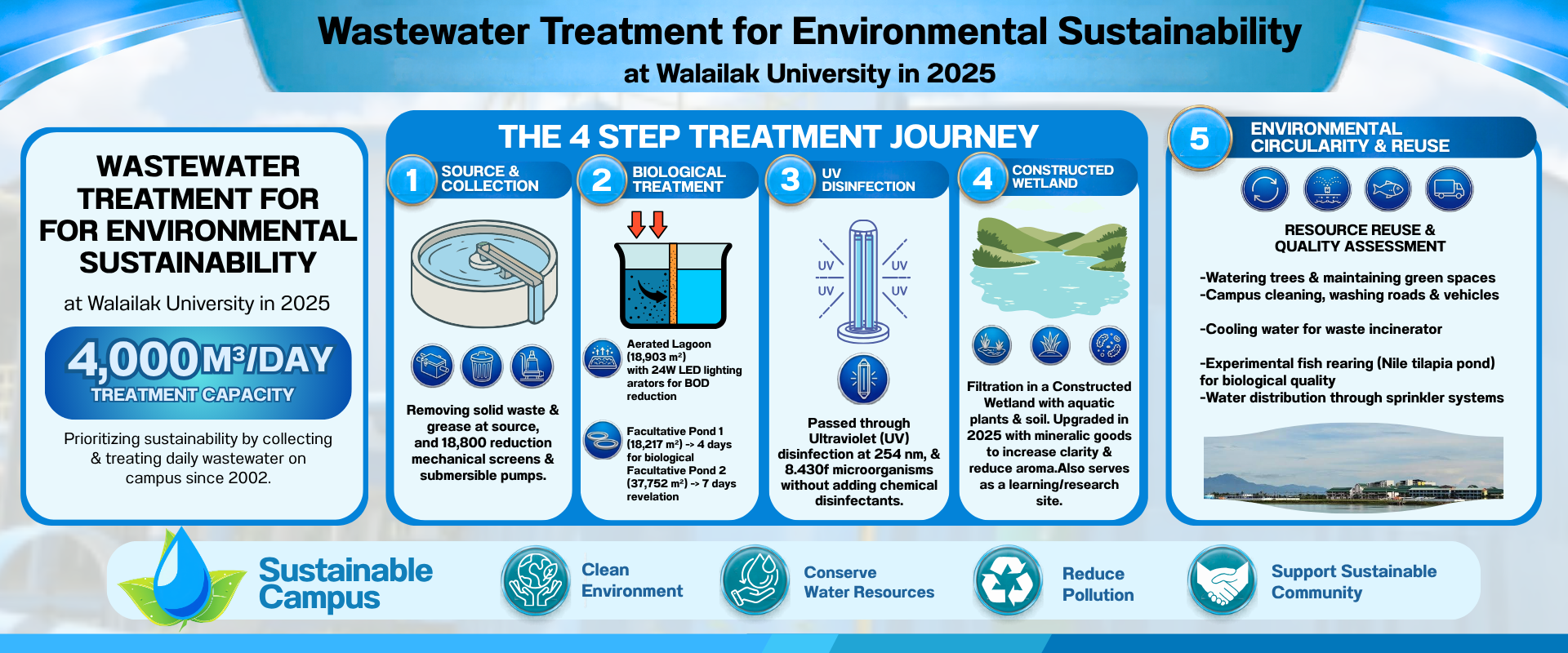
In 2025, the university continued the implementation of its established wastewater treatment process, covering pollution reduction at source, wastewater collection, treatment system operation and control, and water quality monitoring before reuse or discharge. To further enhance treatment efficiency, WU introduced microbial powder into the constructed wetland as an additional treatment measure aimed at improving water clarity and reducing ammonia concentrations during the final stage of the wastewater treatment process. These ongoing operations demonstrate the existence of an operational process to treat wastewater, supporting effective wastewater management, water pollution prevention, and sustainable water resource use across the university.
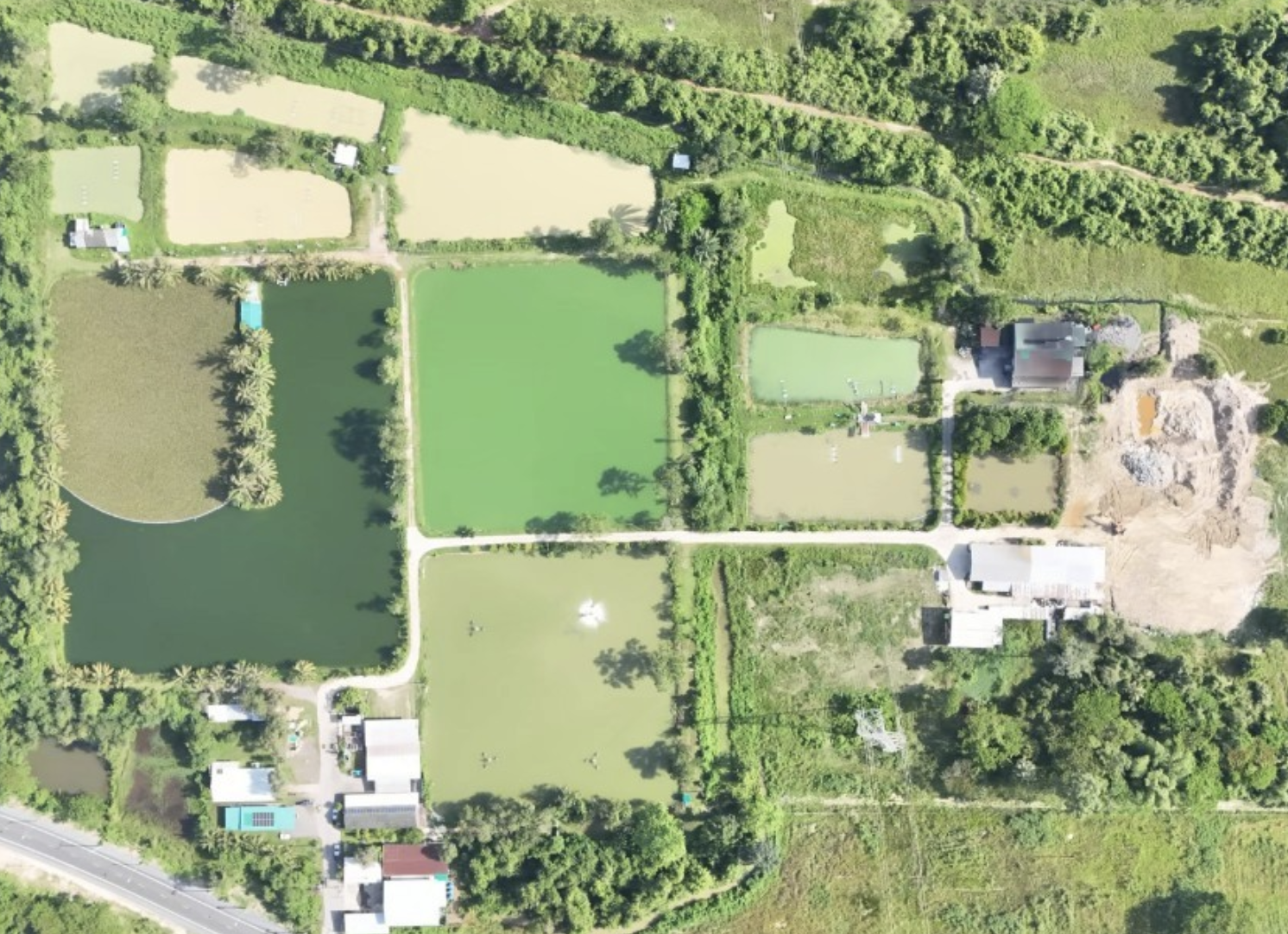
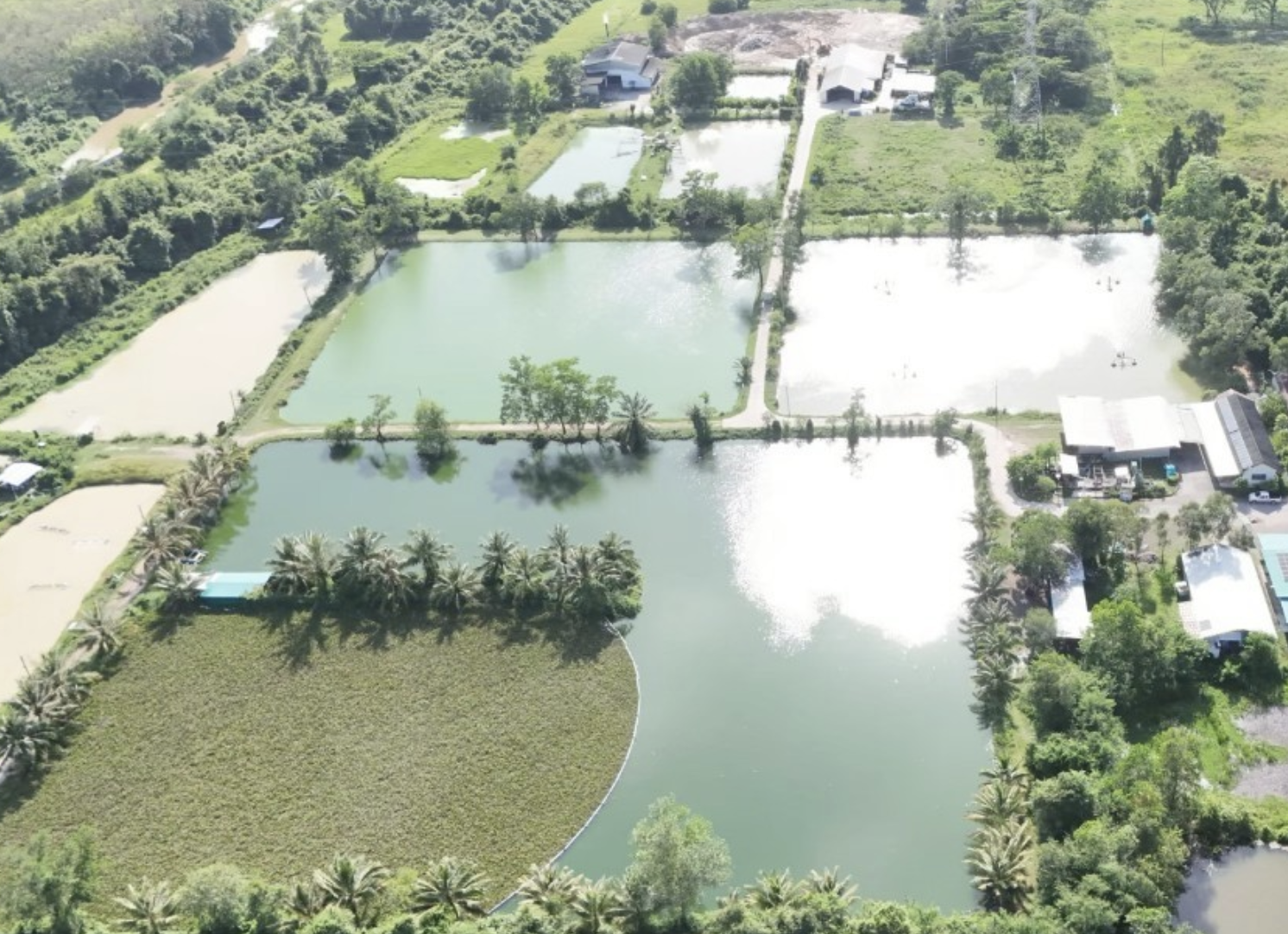
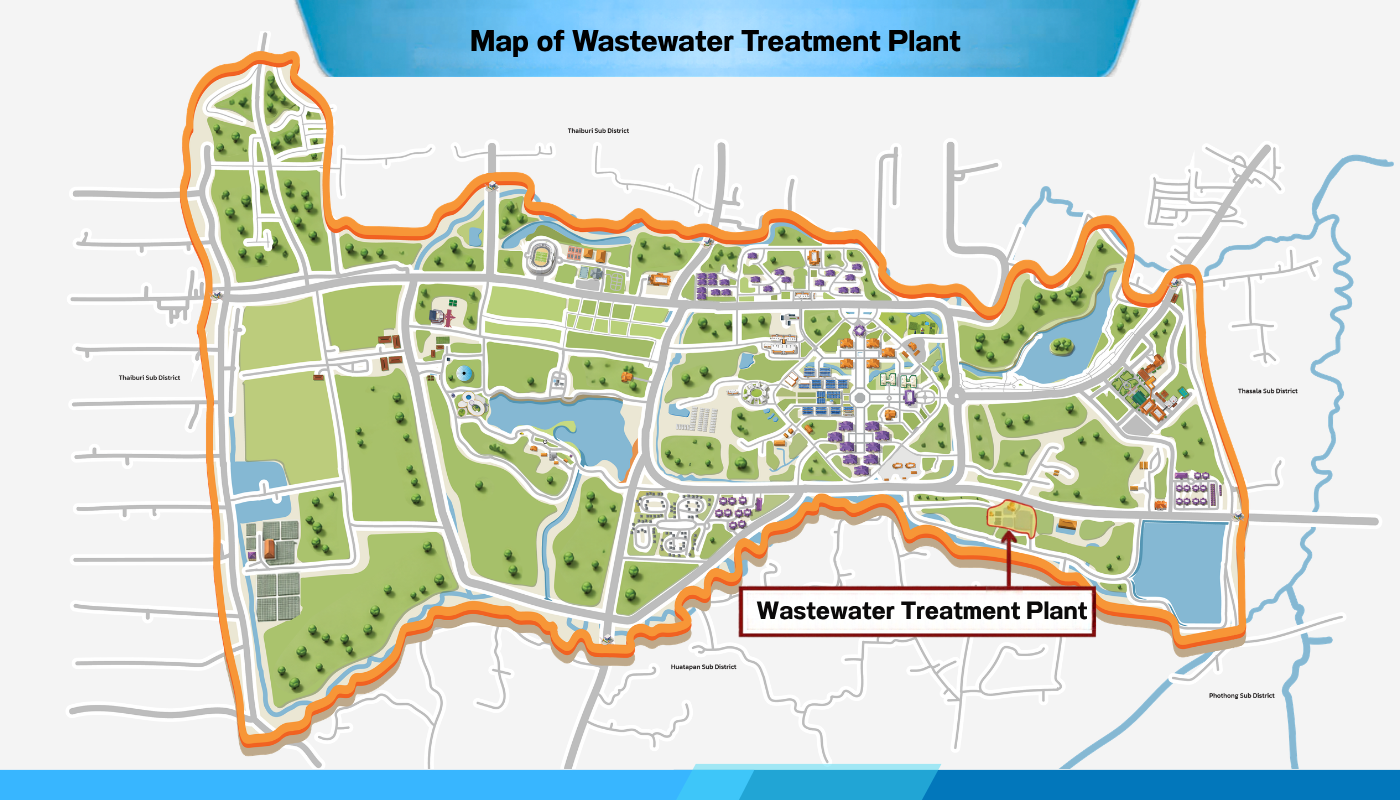
The Top View of WU Wastewater Treatment Plant
Wastewater Management at Source and Wastewater Collection
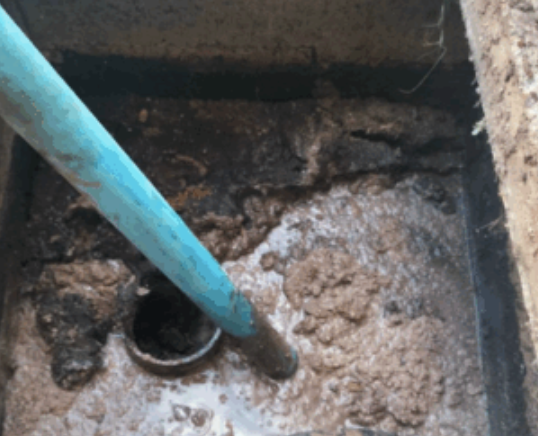
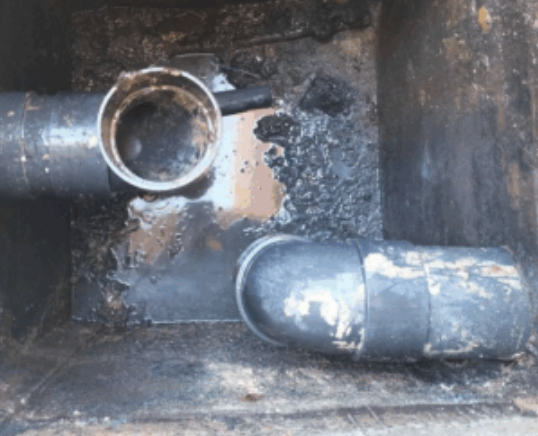
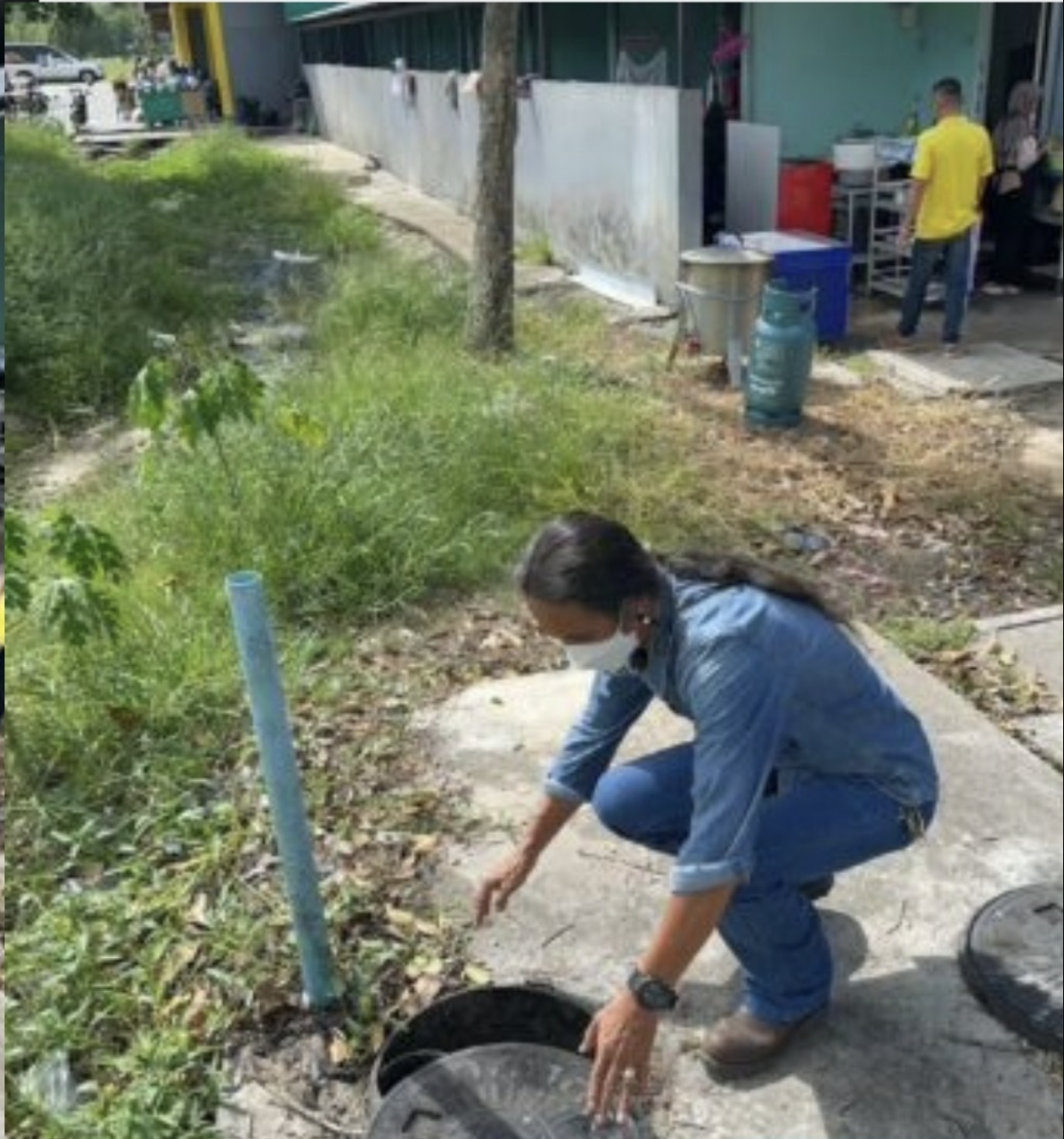
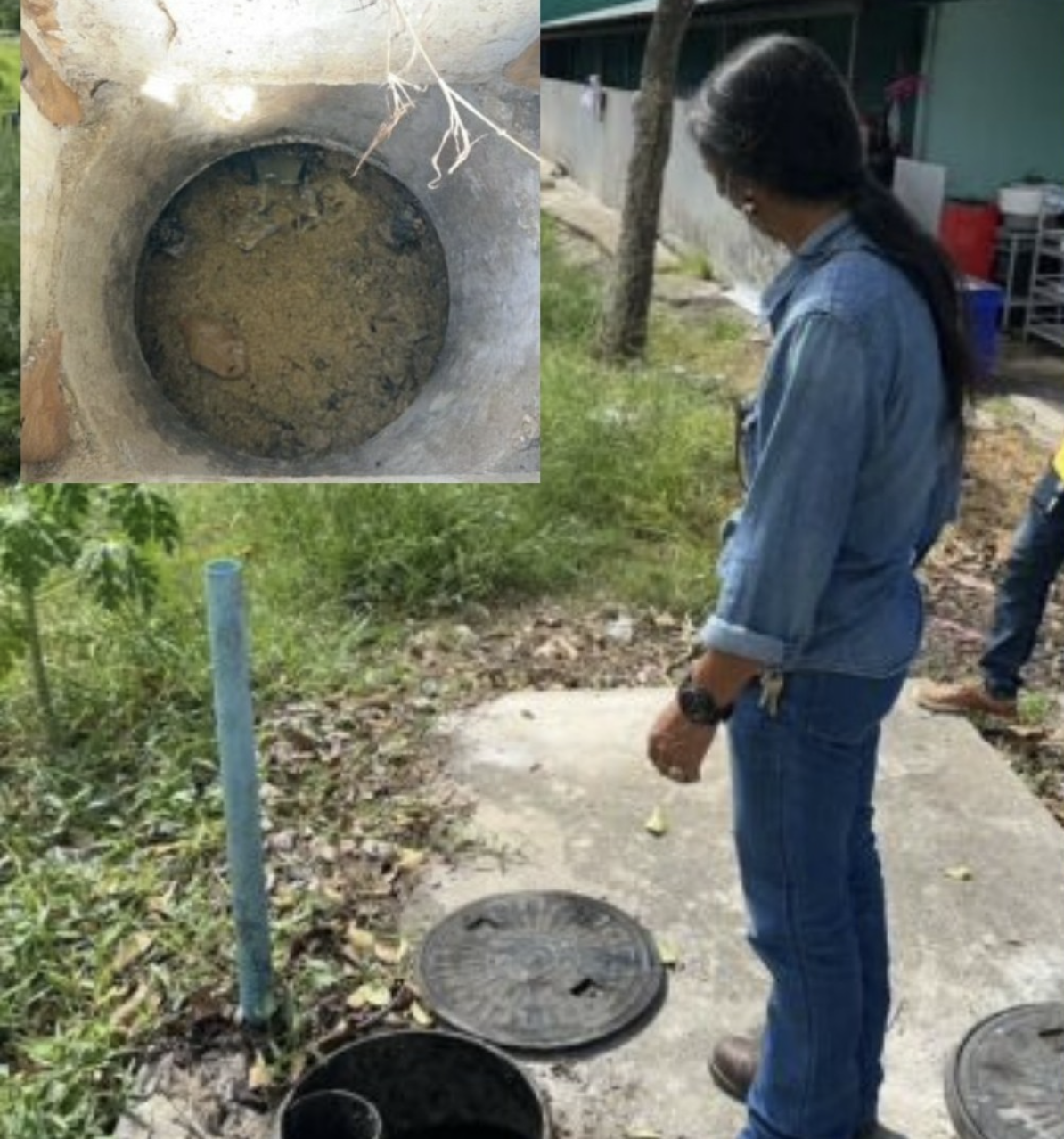
The university begins its wastewater management process by removing solid waste and grease before wastewater enters the treatment system. Grease traps are installed at university canteens, and accumulated grease is systematically removed to reduce contaminants and prevent blockages that could affect wastewater collection and treatment.
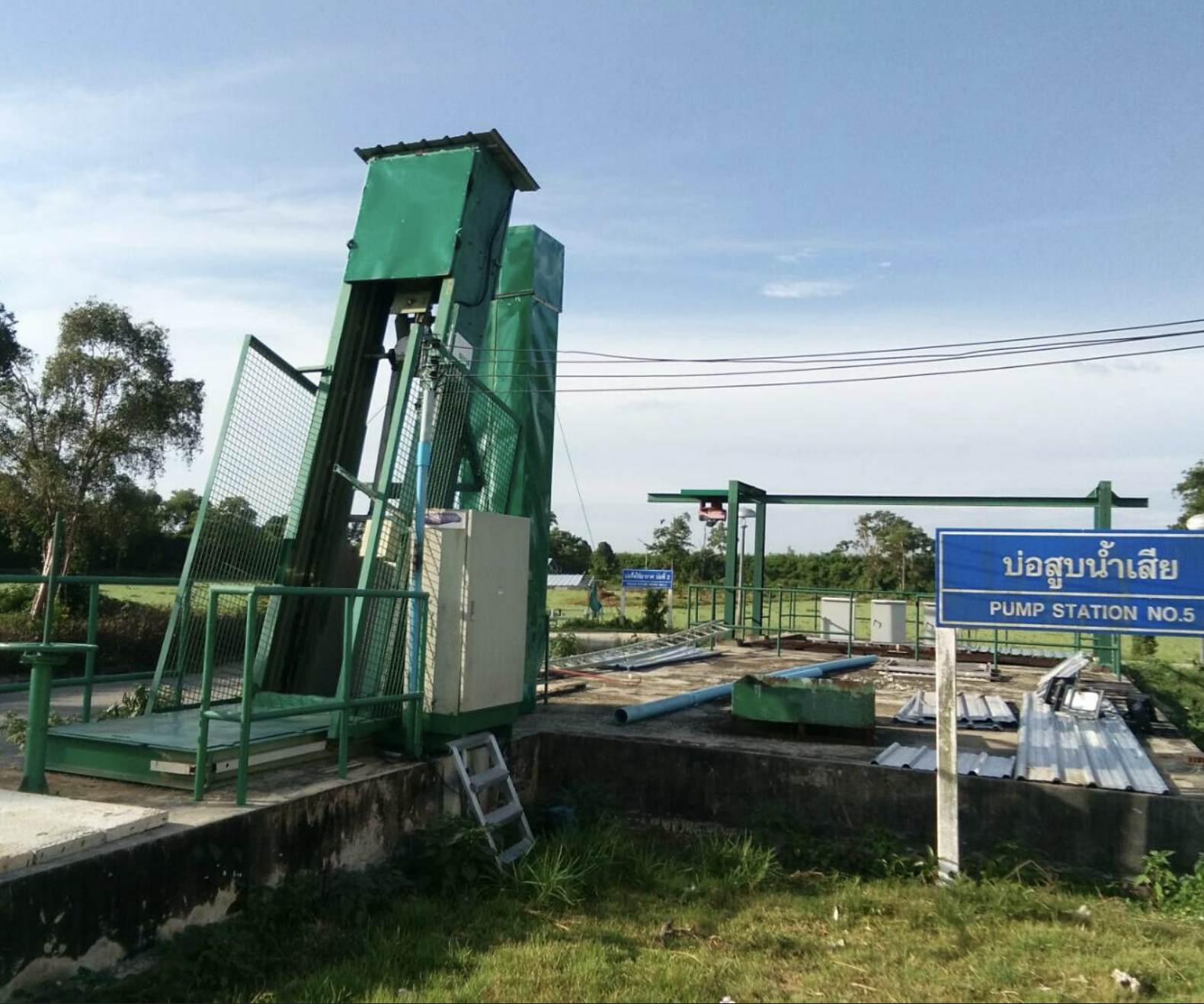
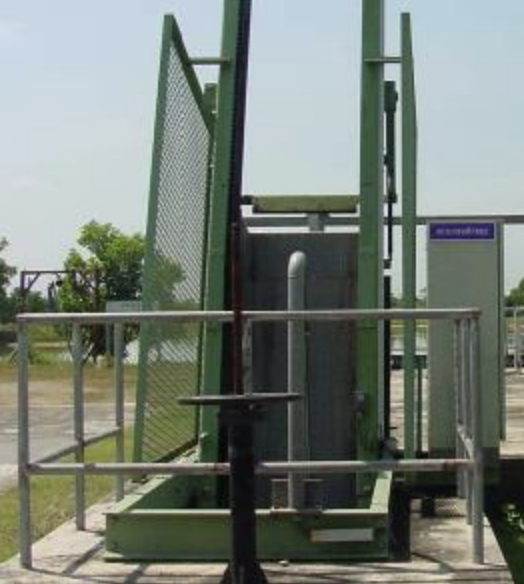
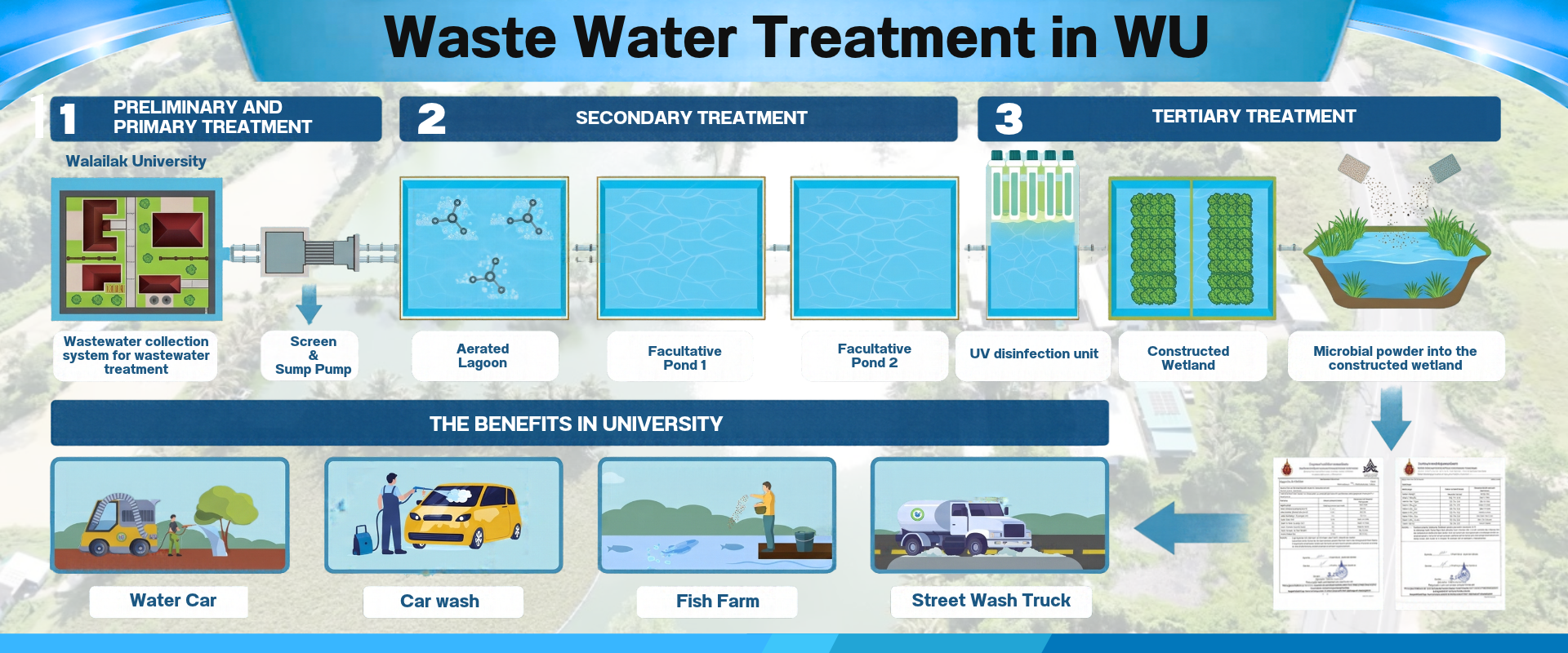
Wastewater from university buildings is collected and pumped to the wastewater treatment plant, where it passes through a motor-driven fine mechanical screen equipped with an automatic cleaning brush. This process removes remaining solid waste and prevents blockages in the submersible pumps before wastewater enters the biological treatment process.
Biological Wastewater Treatment Process
The biological treatment process consists of an aerated lagoon followed by two facultative ponds. These units operate in sequence to break down organic matter, reduce pollutant loads, and progressively improve water quality.
Aerated Lagoon
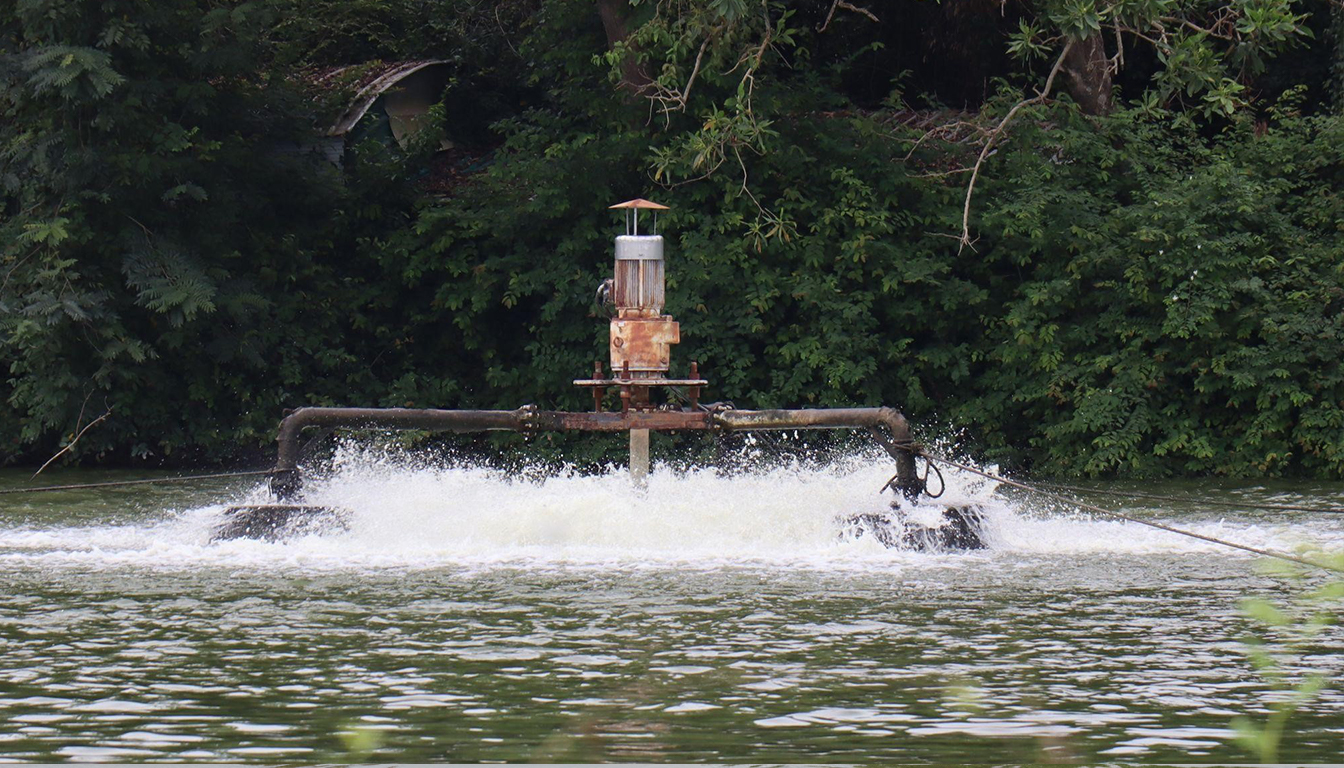
Wastewater is pumped into an aerated lagoon approximately 5 metres deep, with a capacity of 18,903 cubic metres. The lagoon is equipped with four low-speed floating surface aerators, each rated at 15 kilowatts, to supply oxygen and mix and circulate the wastewater. These conditions support aerobic microorganisms in breaking down organic matter and reducing biochemical oxygen demand (BOD). The university monitors dissolved oxygen (DO) using a sensor installed in the aerated lagoon. Monitoring data inform the operation of the aerators to maintain suitable conditions for wastewater treatment.
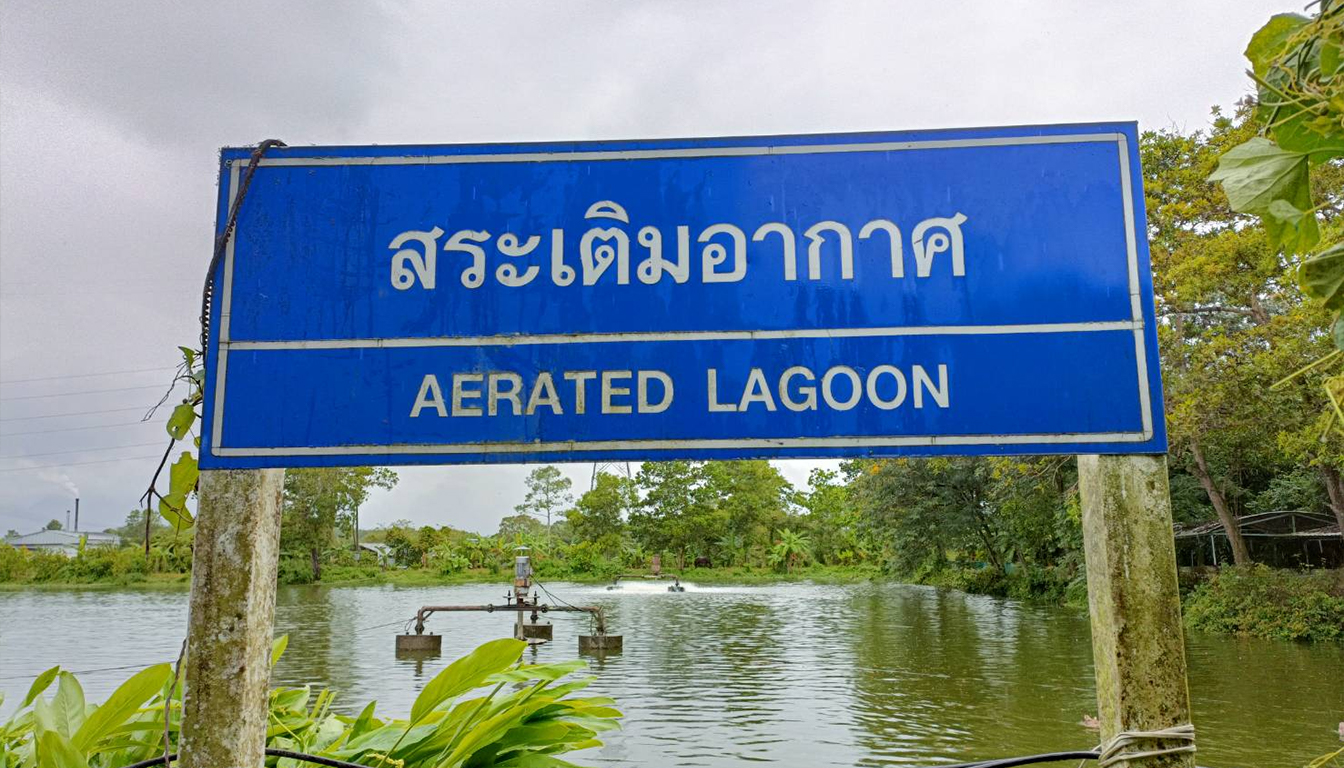
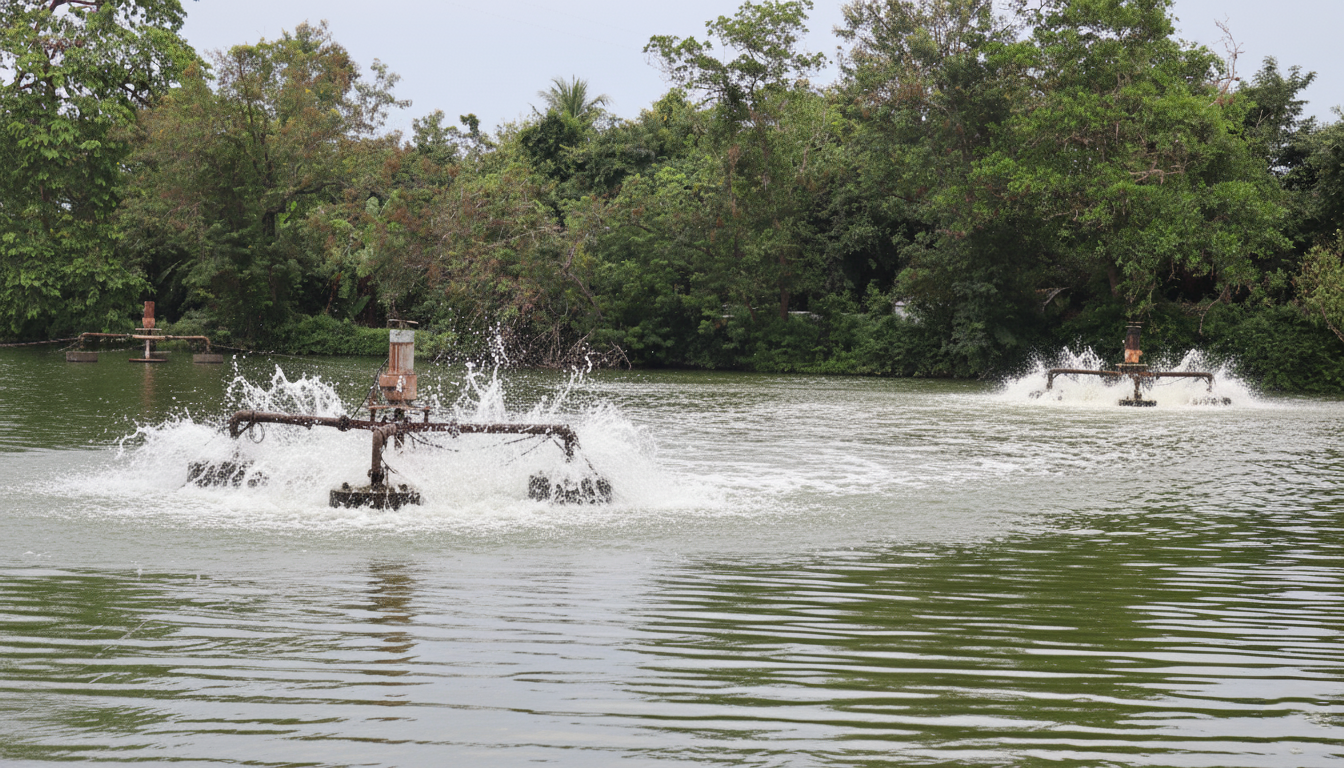
Facultative Pond 1
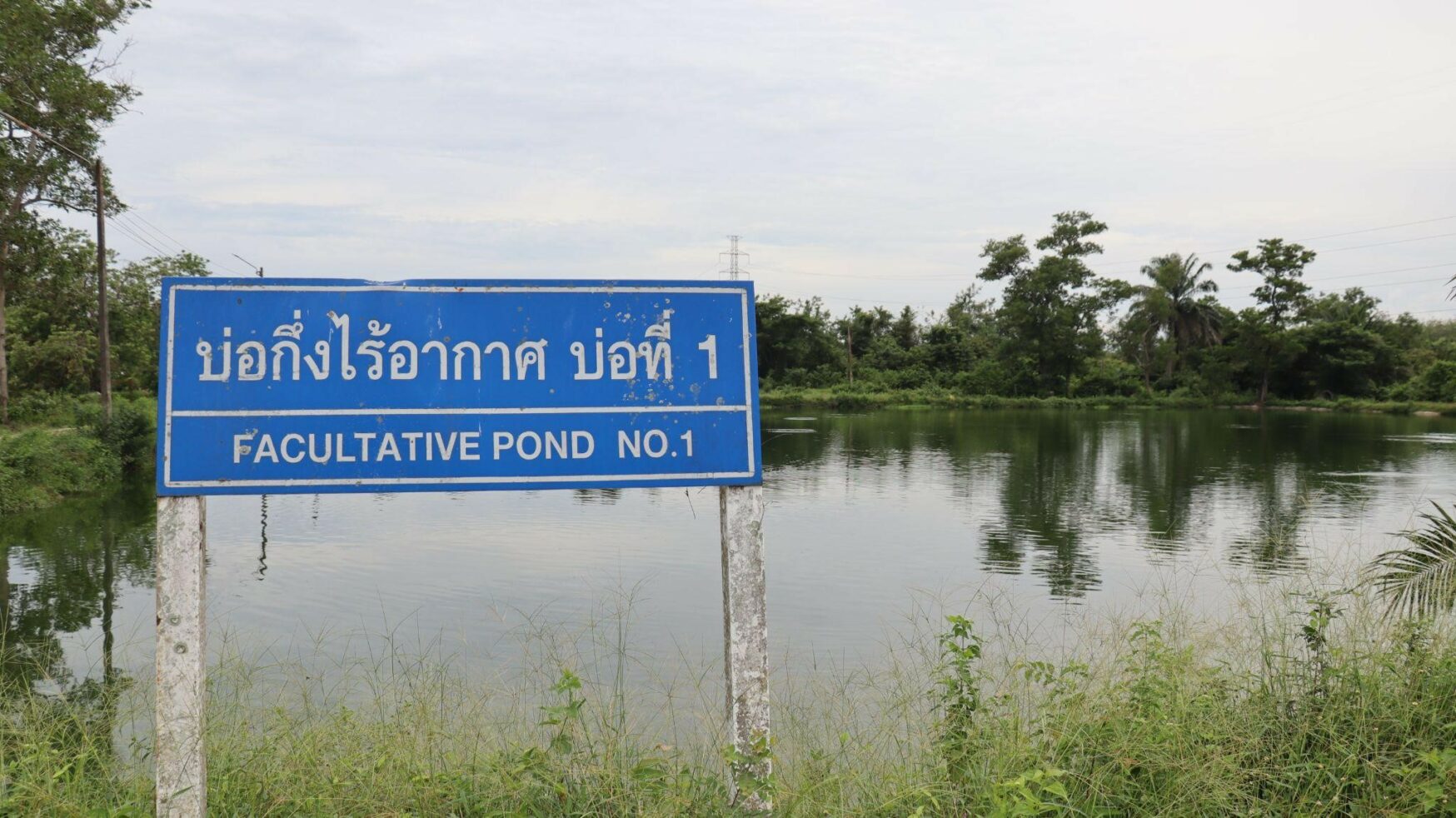
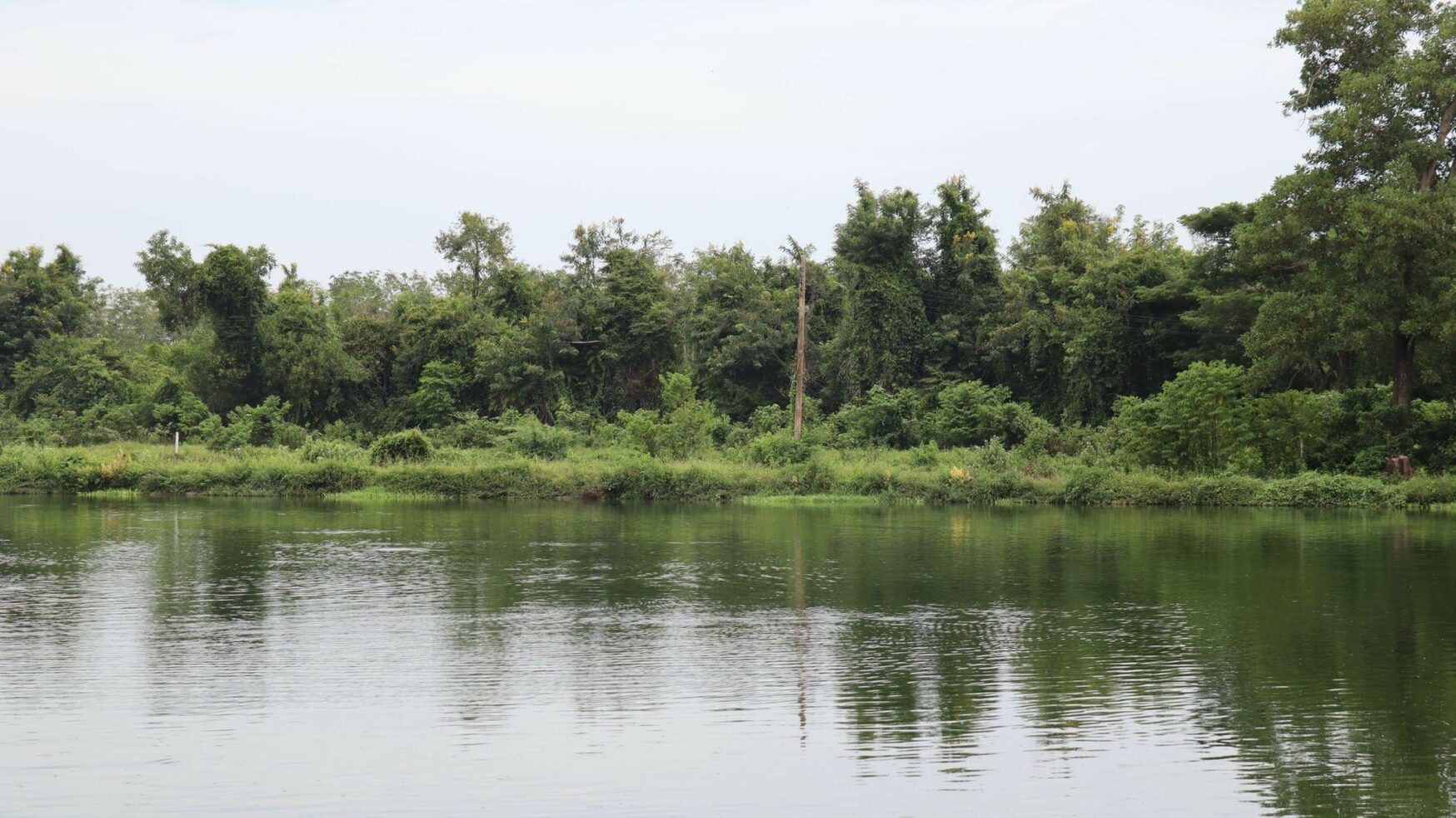
Water from the aerated lagoon flows into Facultative Pond 1, which is approximately 2 metres deep and has a capacity of 18,217 cubic metres. A retention time of more than four days allows sedimentation and continued decomposition of organic matter. Microorganisms in both oxygenated and low-oxygen zones contribute to reducing the organic matter remaining in the water.
Facultative Pond 2
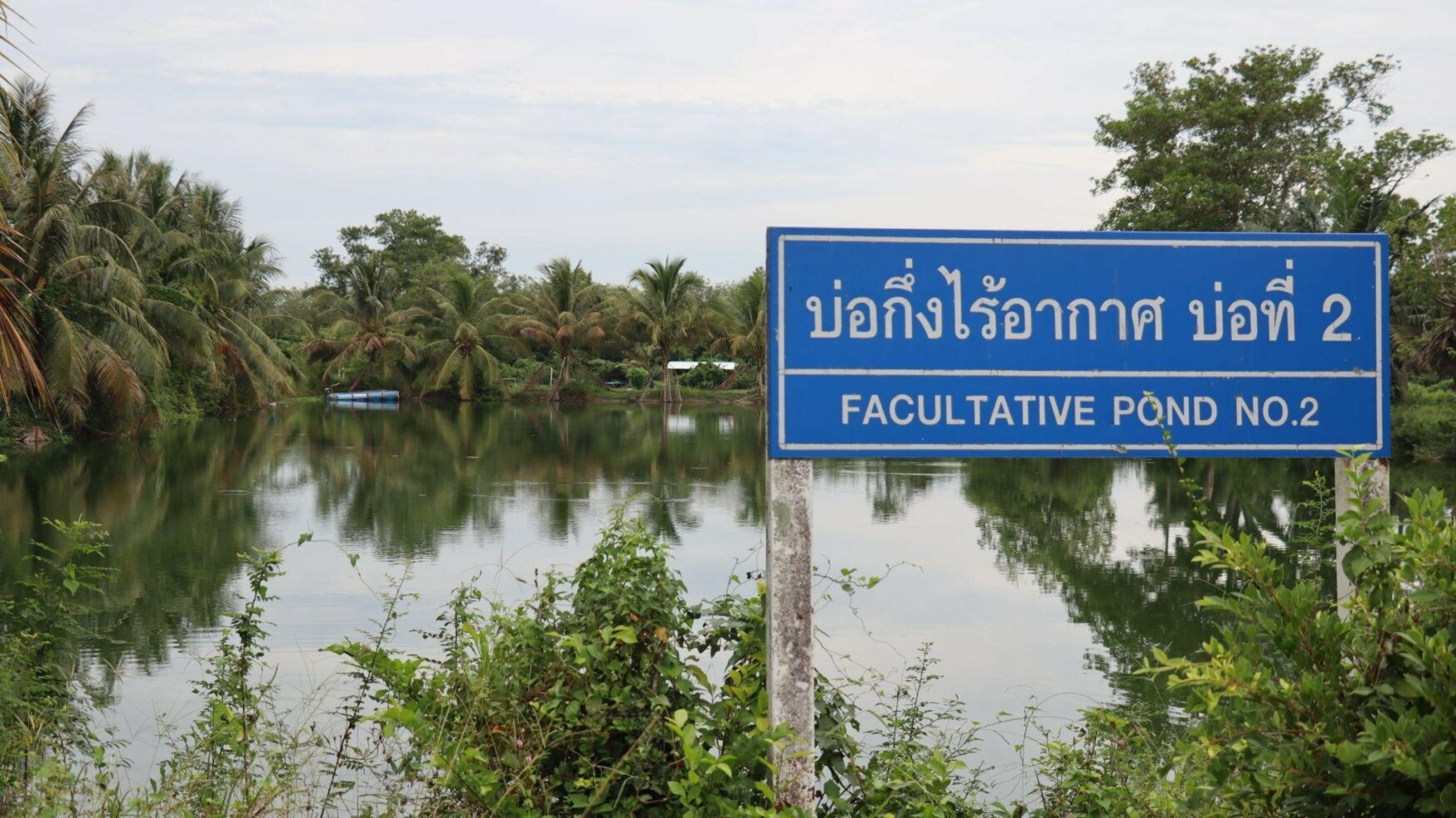
Water then flows into Facultative Pond 2, which is approximately 2 metres deep and has a capacity of 37,752 cubic metres. A retention time of more than seven days allows further sedimentation and decomposition of organic matter before the water proceeds to disinfection and final water quality improvement.
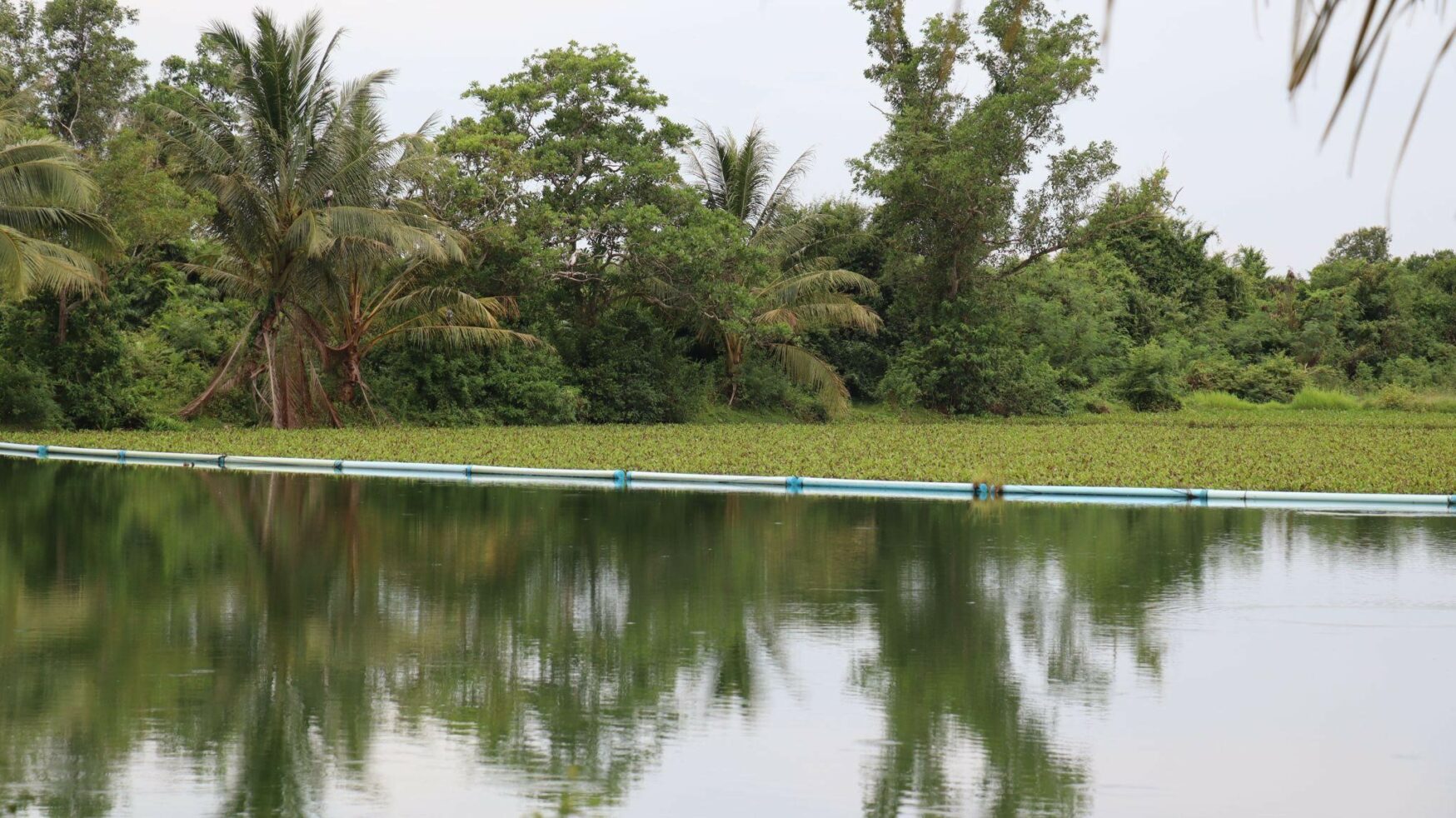
Disinfection and Water Quality Improvement in the Constructed Wetland
Ultraviolet Disinfection
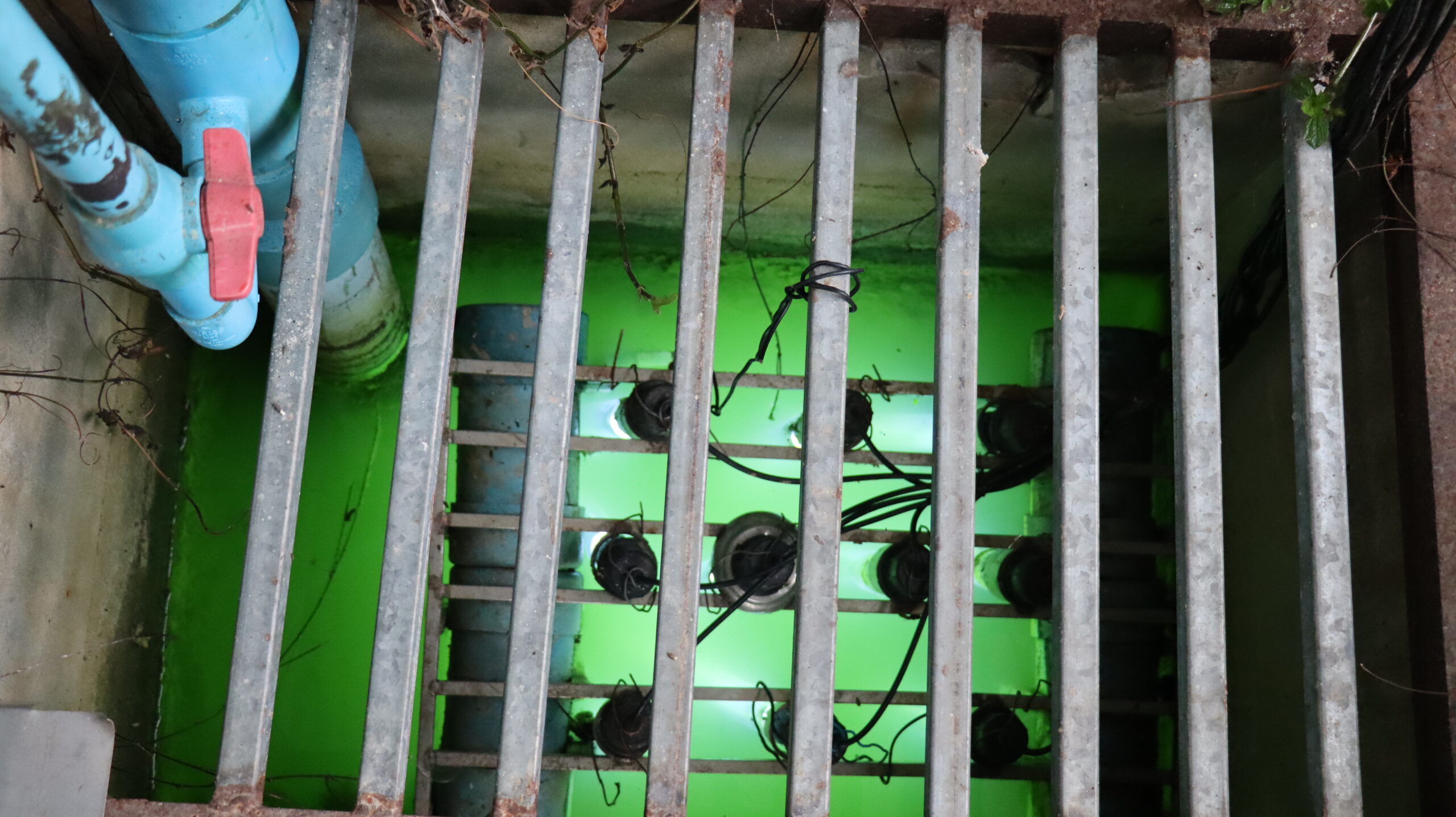
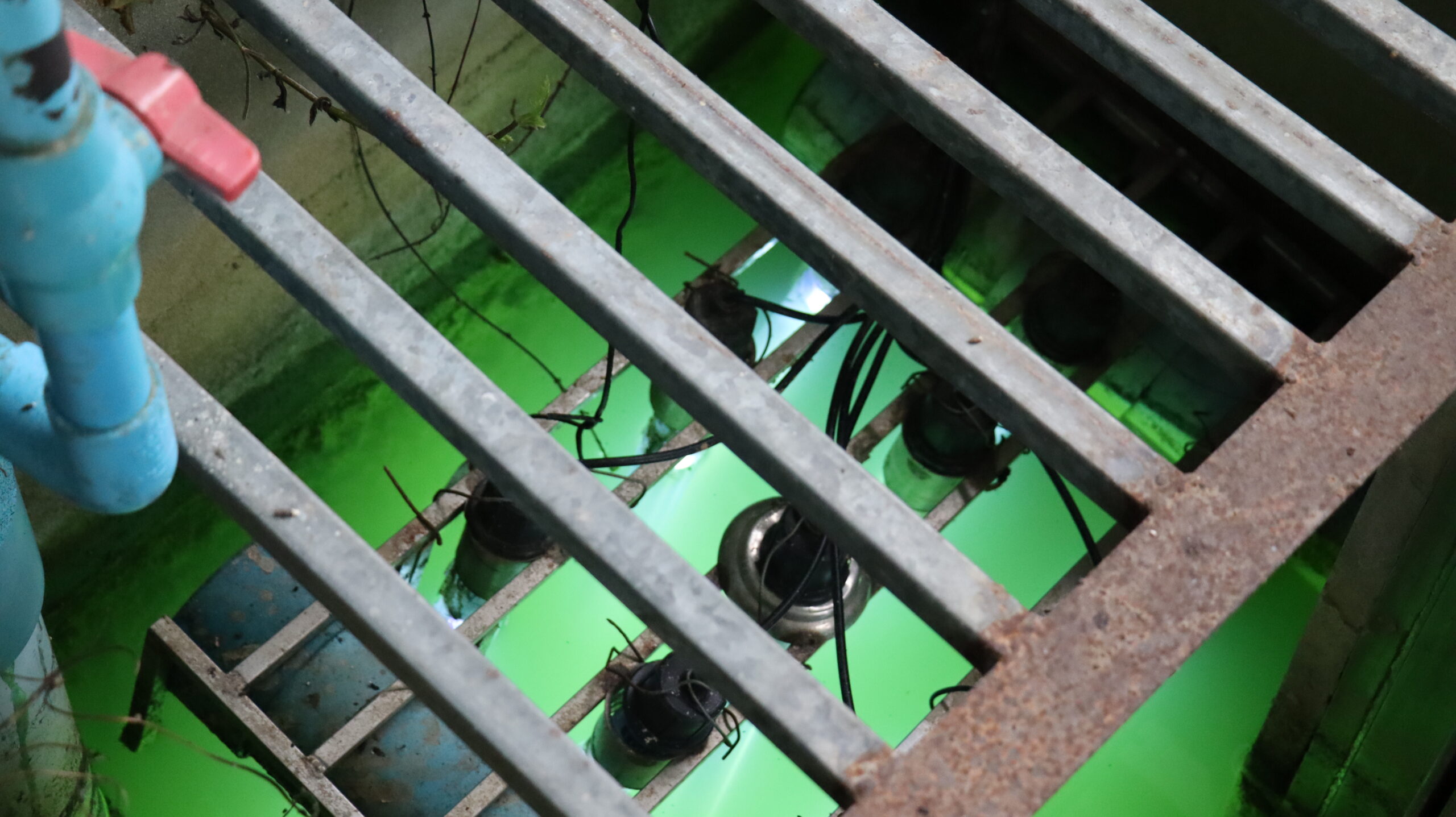
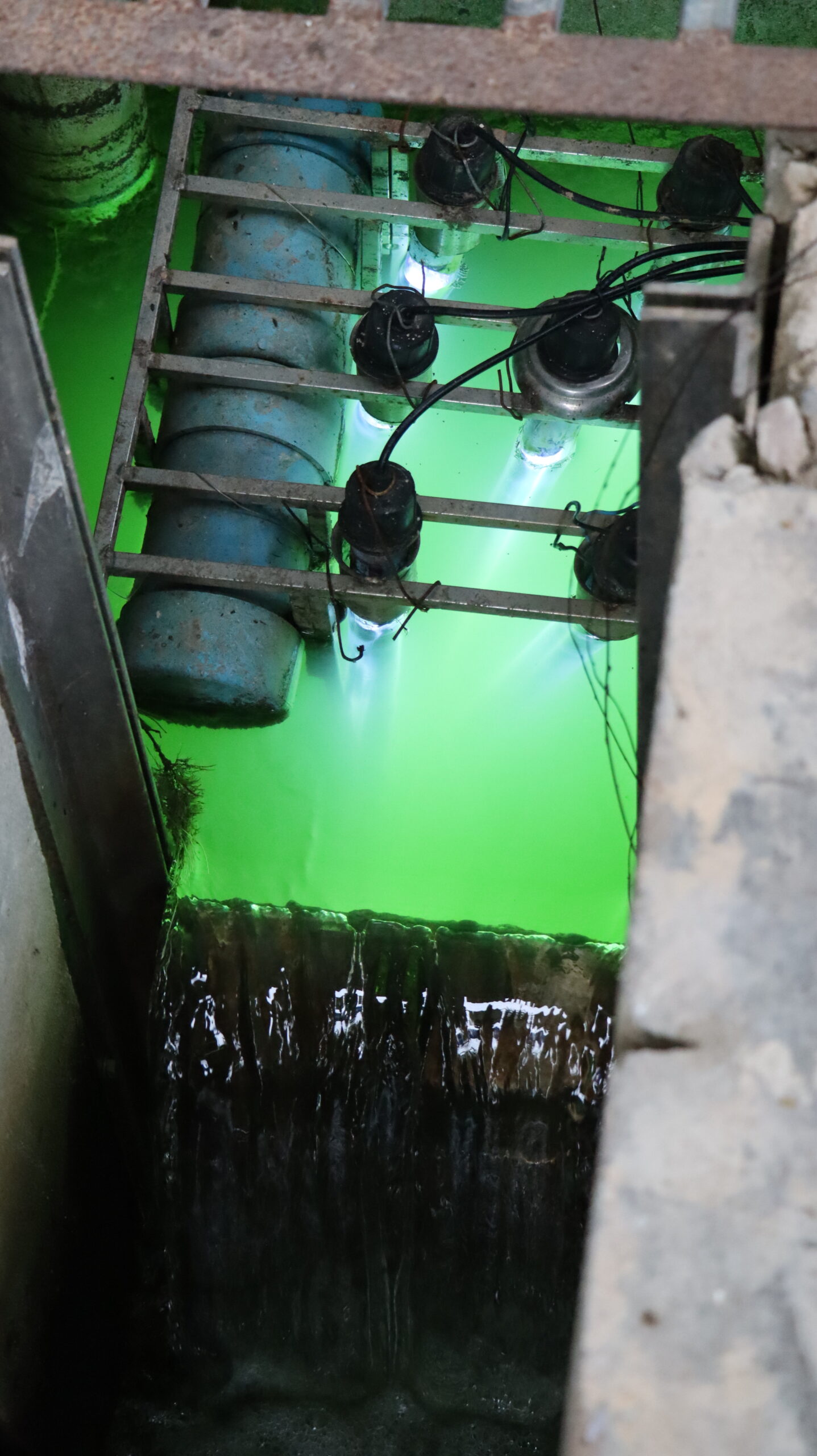
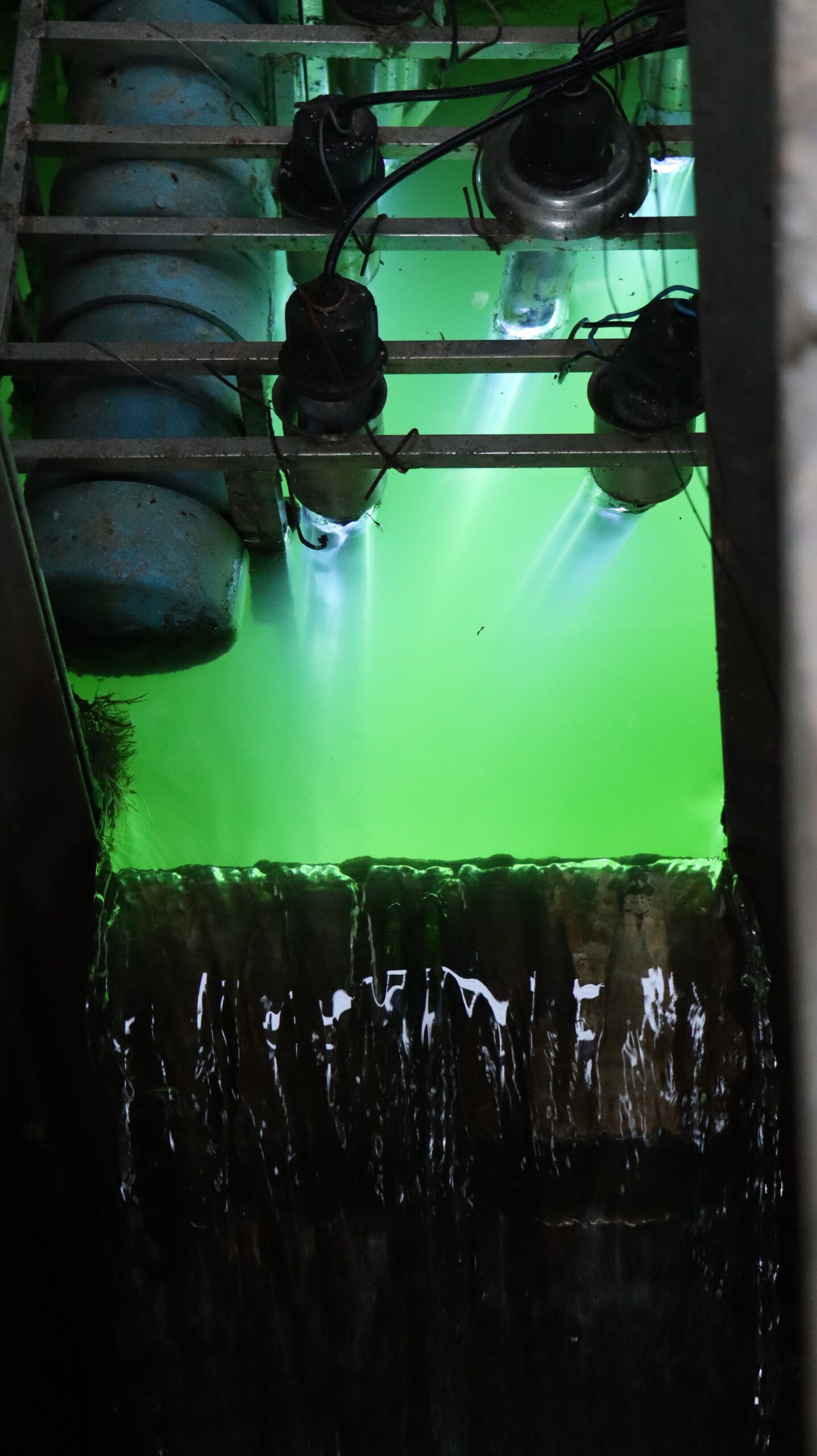
Following biological treatment, the water passes through an ultraviolet (UV) disinfection system operating at a wavelength of approximately 254 nanometres. UV radiation inactivates remaining pathogenic microorganisms, preventing them from multiplying. This process reduces microbial contamination without adding chemical disinfectants to the water. The university regularly maintains the system and replaces UV lamps to sustain its operating efficiency.
Water Quality Improvement in the Constructed Wetland
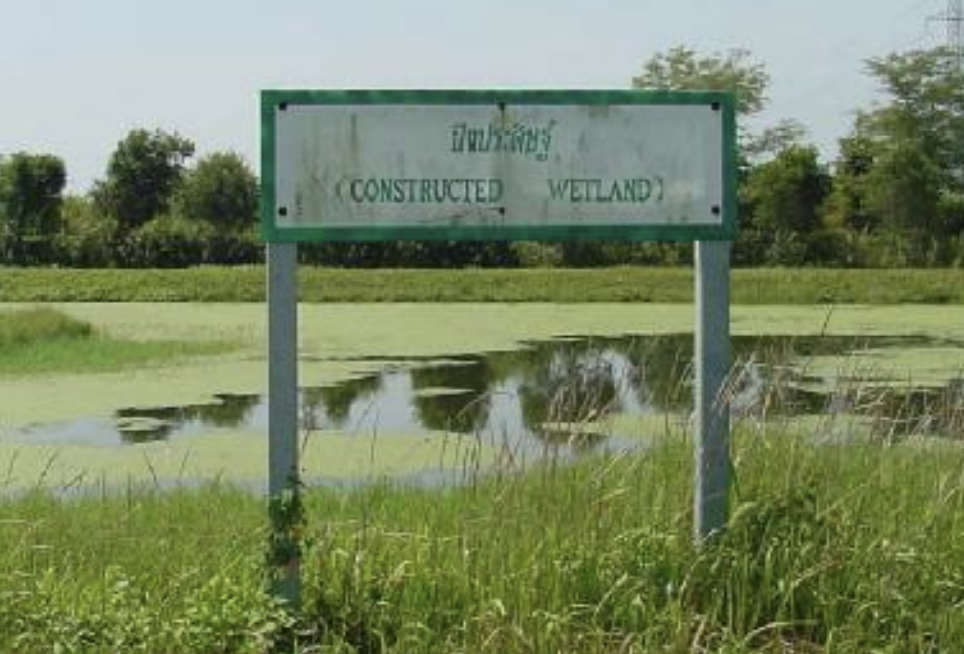
After disinfection, the water flows into a constructed wetland, which provides water storage and further improves water quality through biological processes involving aquatic plants, soil, and microorganisms. The wetland also serves as a learning site for students and researchers studying wastewater treatment and ecosystems. In 2025, the university introduced microbial powder into the constructed wetland to improve water clarity and reduce ammonia. This provides an additional water quality management measure before treated wastewater is reused or discharged into natural water bodies. The initiative forms part of the university’s ongoing efforts to adapt and improve its wastewater treatment process according to water conditions within the system.
Water Quality Monitoring and Control
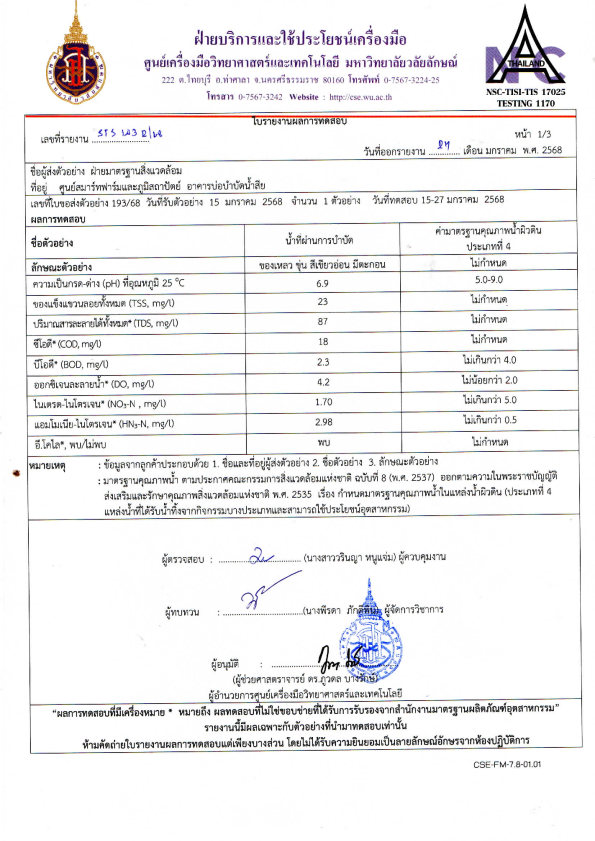
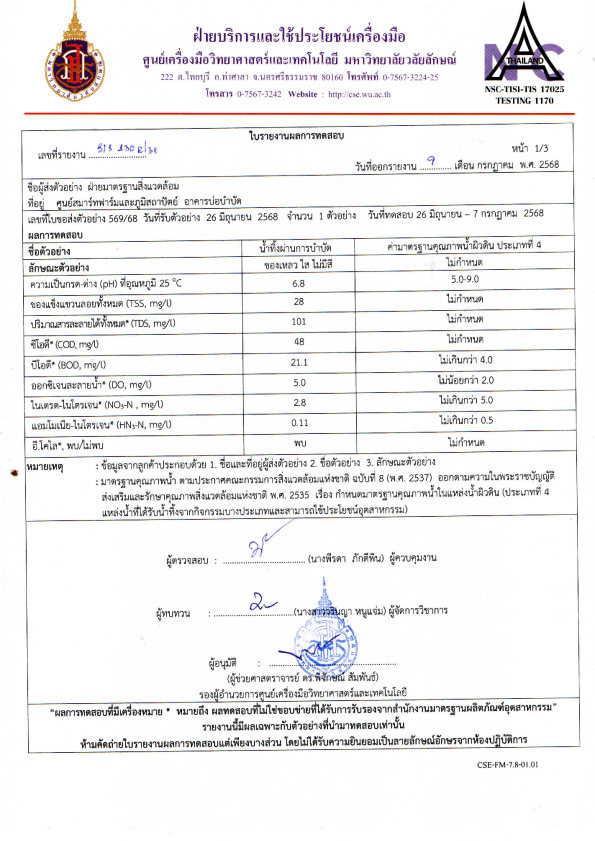
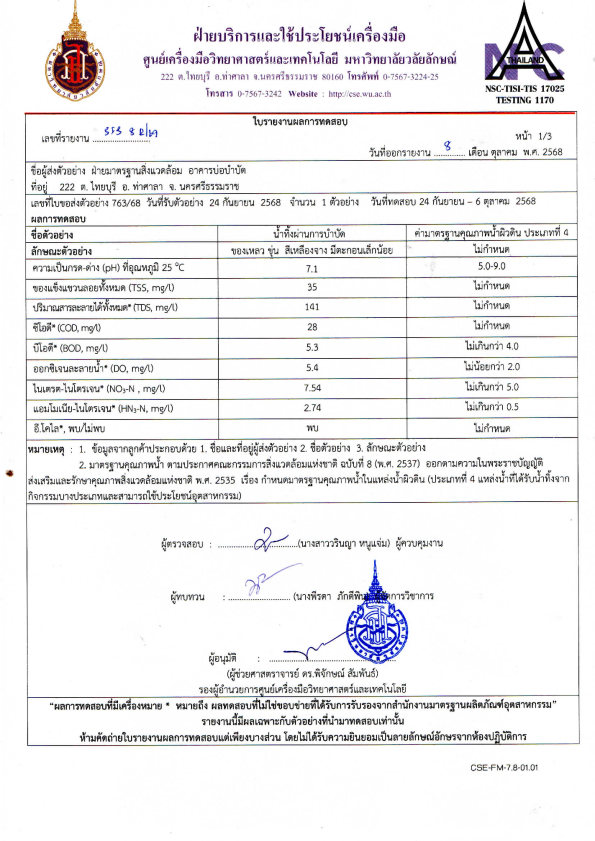
The results of the 2025 analysis of treated wastewater quality at Walailak University demonstrate positive outcomes in wastewater quality management. The findings indicate that both the pH and dissolved oxygen (DO) levels consistently met the Class 4 Surface Water Quality Standards in every sampling round. Furthermore, all eight parameters of heavy metals were found to be within the prescribed standard limits. In addition, the September monitoring results showed that BOD and COD levels decreased by 74.9% and 41.7%, respectively, compared with the results recorded in June. These findings indicate an improving trend in water quality with respect to organic pollutants during this period and provide important data for the continuous monitoring and enhancement of the university’s wastewater treatment system.
Treated Wastewater Reuse and Biological Water Quality Assessment
Walailak University reuses treated wastewater for various non-potable purposes to reduce tap water consumption and promote efficient water resource management. These activities include watering trees, maintaining green spaces and lawns through sprinkler systems, washing roads, campus areas, cars and other vehicles, and providing cooling water for the waste incinerator. In addition, the university conducts biological water quality assessments using an experimental Nile tilapia pond to observe fish survival and condition. These observations are considered alongside laboratory water quality analyses to assess the suitability of treated wastewater for its intended uses and provide supporting evidence of its potential impact on aquatic organisms.
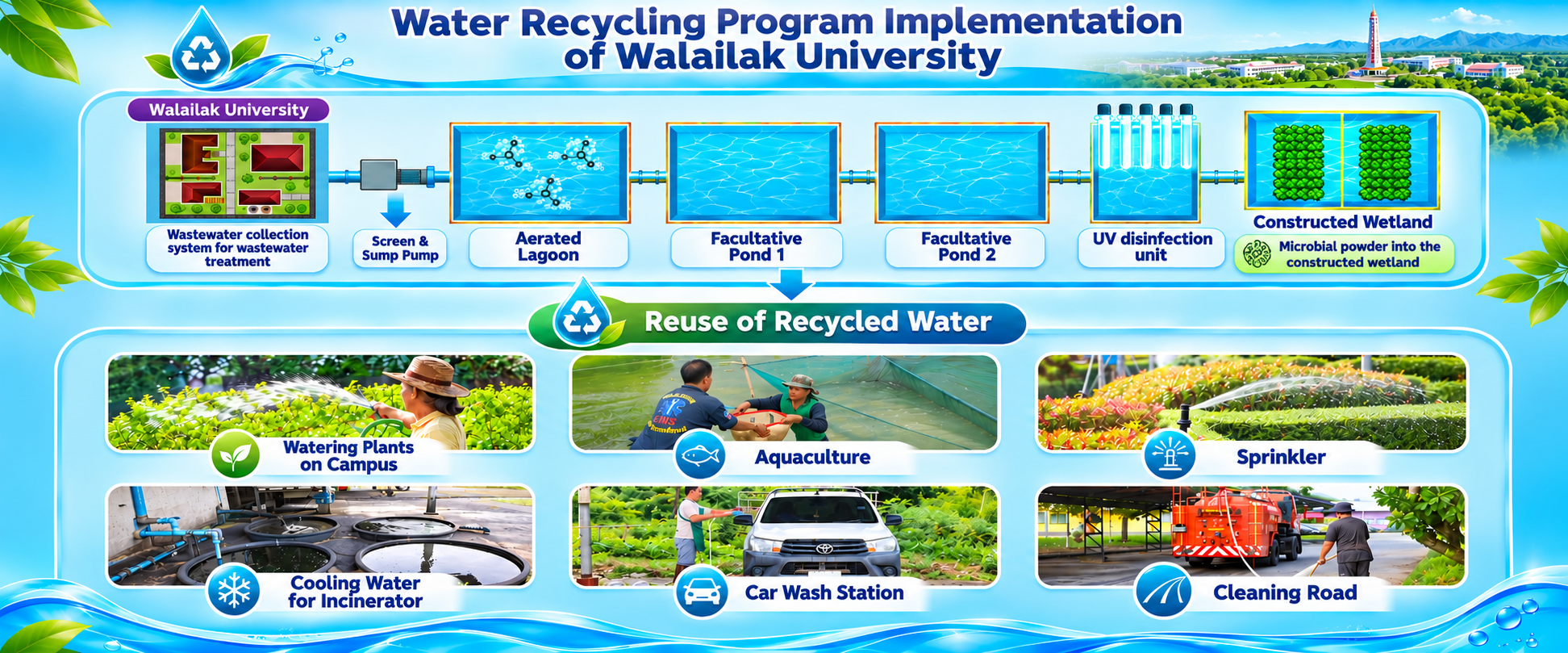
Walailak University’s wastewater treatment process in 2025 therefore covered management at source, biological treatment, disinfection, water quality improvement in the constructed wetland, and water quality monitoring before reuse or discharge. The university also encouraged students and staff to separate waste, reduce grease entering drains, and use water efficiently, supporting the operation of the wastewater treatment system and the continued reduction of environmental impacts.
Related Links
https://csfl.wu.ac.th/wp-content/uploads/2022/11/%E0%B8%84%E0%B8%B9%E0%B8%A1%E0%B8%B7%E0%B8%AD%E0%B8%81%E0%B8%B2%E0%B8%A3%E0%B8%9A%E0%B8%B3%E0%B8%9A%E0%B8%B1%E0%B8%94%E0%B8%99%E0%B9%89%E0%B8%B3%E0%B9%80%E0%B8%AA%E0%B8%B5%E0%B8%A2-%E0%B8%87%E0%B8%B2%E0%B8%99%E0%B8%88%E0%B8%B1%E0%B8%94%E0%B8%81%E0%B8%B2%E0%B8%A3%E0%B8%82%E0%B8%AD%E0%B8%87%E0%B9%80%E0%B8%AA%E0%B8%B5%E0%B8%A2.pdf