Preventing Water System Pollution at Walailak University in 2025
Preventing Water System Pollution at Walailak University in 2025
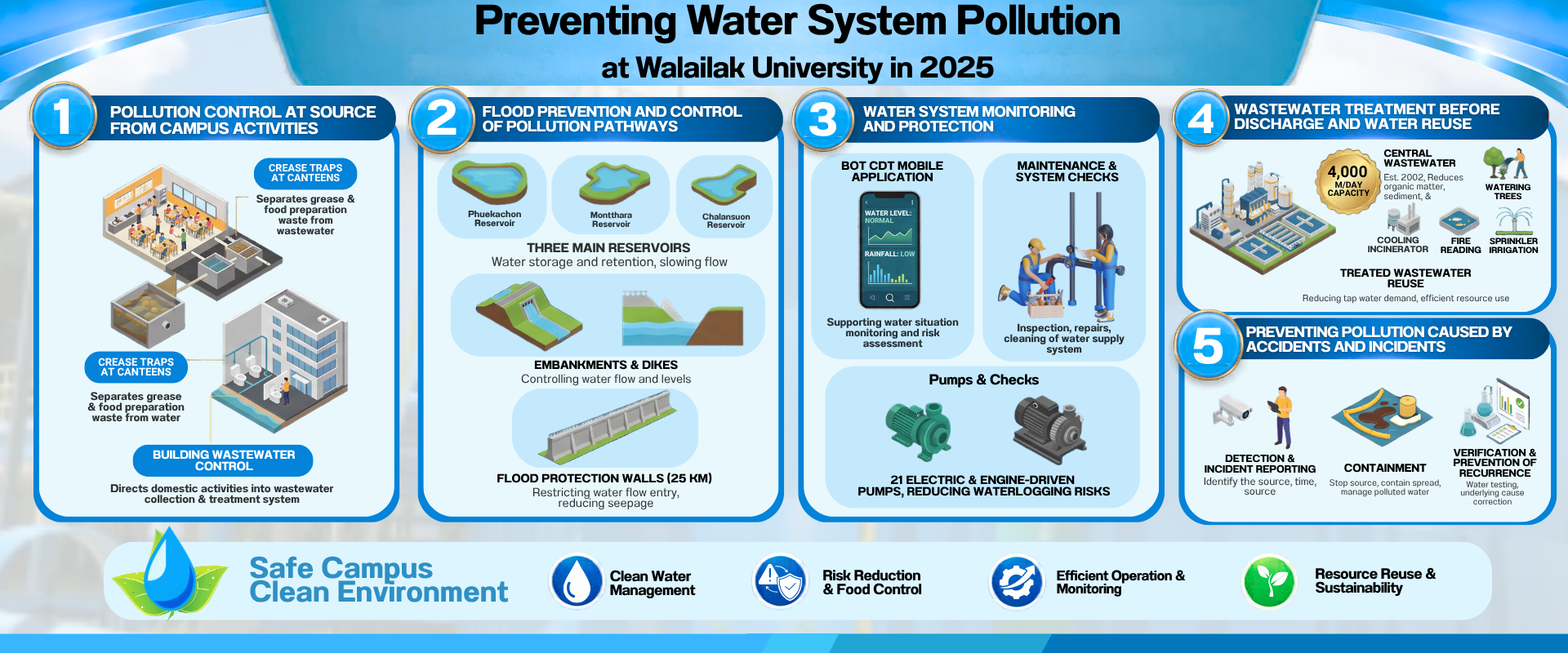
Walailak University (WU) has established and implemented processes to prevent polluted water from entering the university’s water system, including pollution arising from routine campus activities, accidents and incidents occurring at the university, and contaminated floodwater entering from surrounding areas. These preventive processes integrate pollution control at source, water flow management, infrastructure maintenance, water quality monitoring, and wastewater treatment before discharge or reuse. Together, these measures aim to prevent contamination of raw water sources, the university’s water supply system, canals, and surrounding natural water bodies.
Located in southern Thailand, Walailak University is exposed to heavy rainfall and seasonal monsoon conditions, which increase the risk of floodwater carrying waste, sediment, and other pollutants into the water system. To address these risks, the university maintains water pollution prevention and control processes covering floodwater management, wastewater overflow prevention, infrastructure protection, and responses to accidental pollution incidents, including equipment failures that may lead to water contamination. These established processes, in place by 2025, support the prevention of polluted water entering the water system under both normal operating conditions and unexpected incidents. The university’s water system pollution prevention processes are organised into the following areas:
Pollution Control at Source from Campus Activities
Grease Traps at Canteens
The university installs grease traps at canteens to separate grease and food preparation waste from wastewater before it enters the wastewater collection and treatment system. This process reduces grease entering pipes and prevents accumulation and blockages, which can cause wastewater to overflow into stormwater drainage systems or canals.
Controlling grease at source also reduces the load on the central wastewater treatment system, supporting the appropriate treatment of wastewater generated by campus activities. Separated grease and waste must be managed to prevent them from re-entering waterways.
Preventing Water System Pollution through Septic Tank Pretreatment
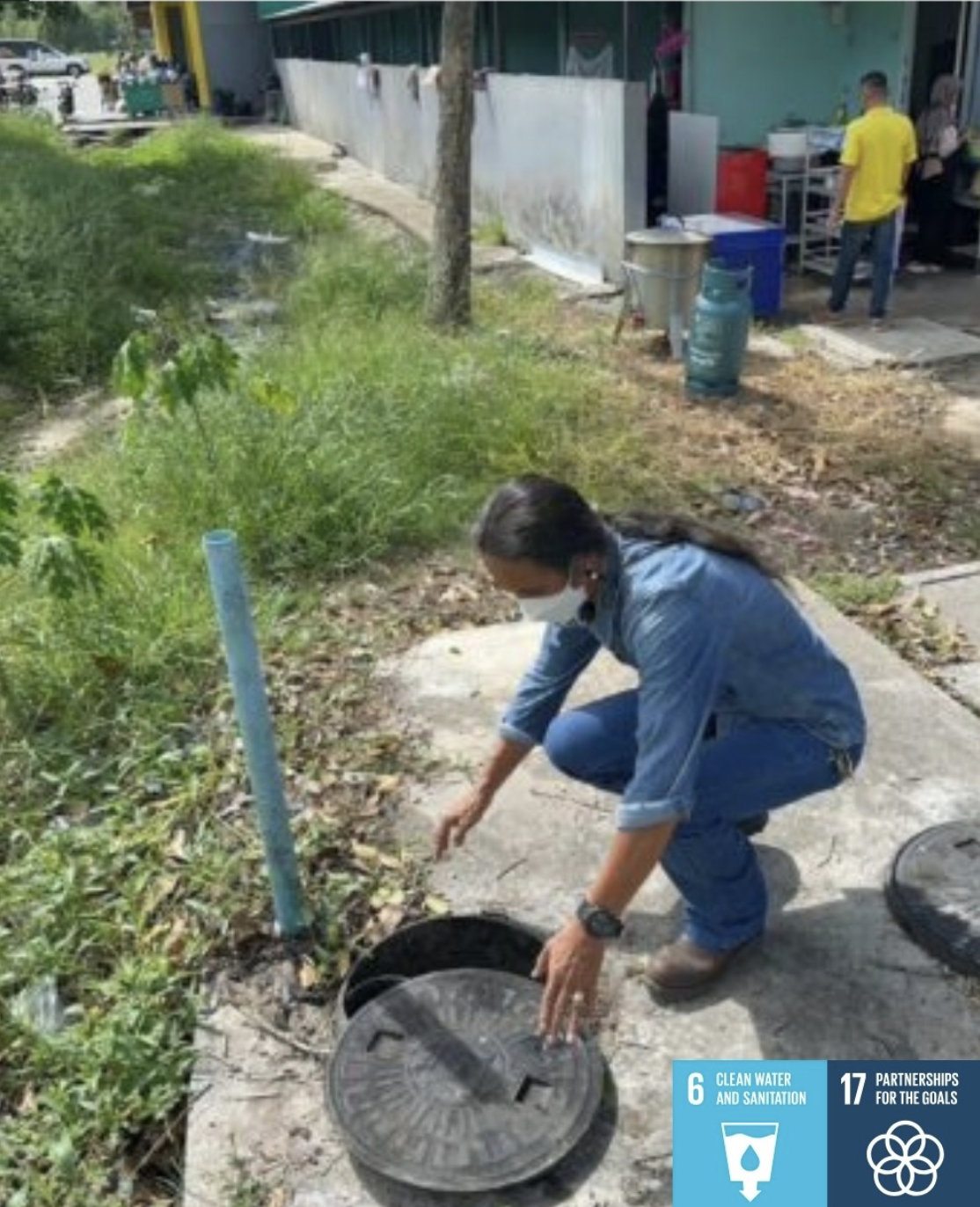
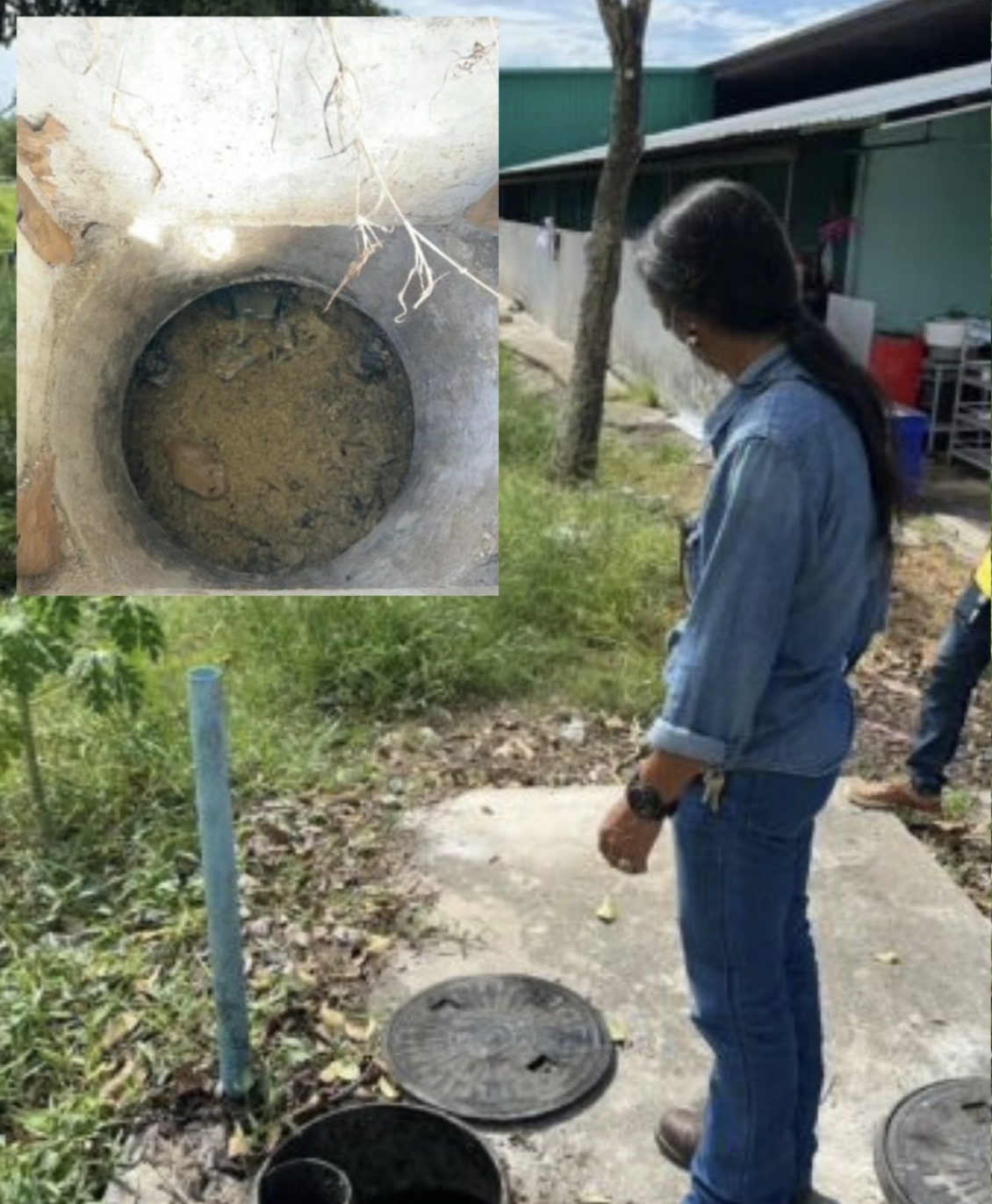
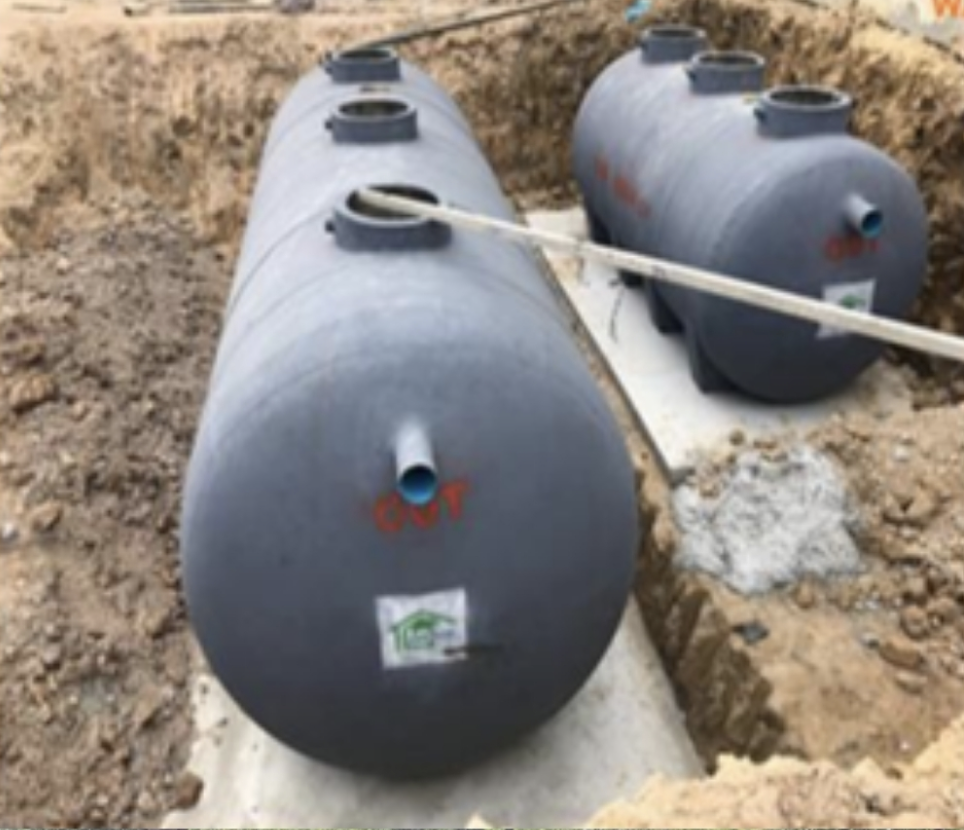
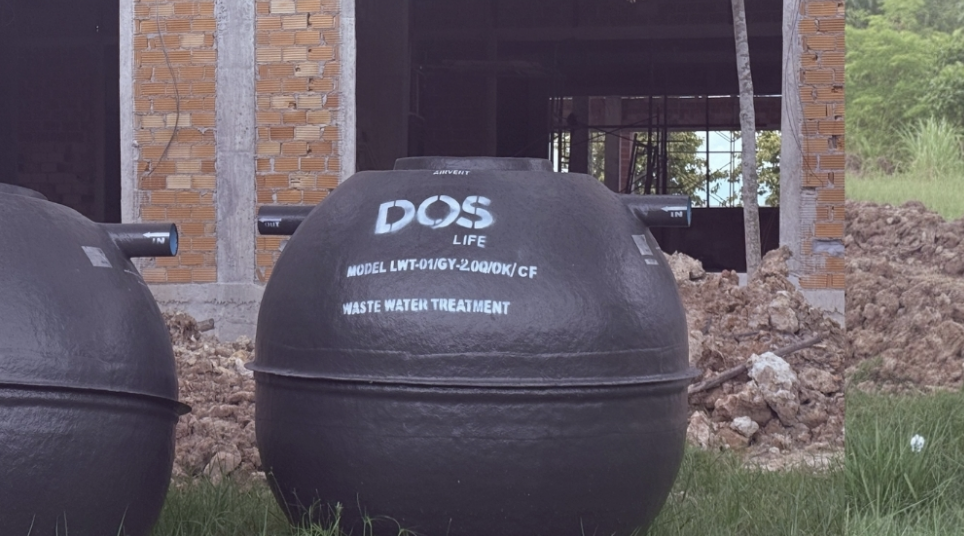
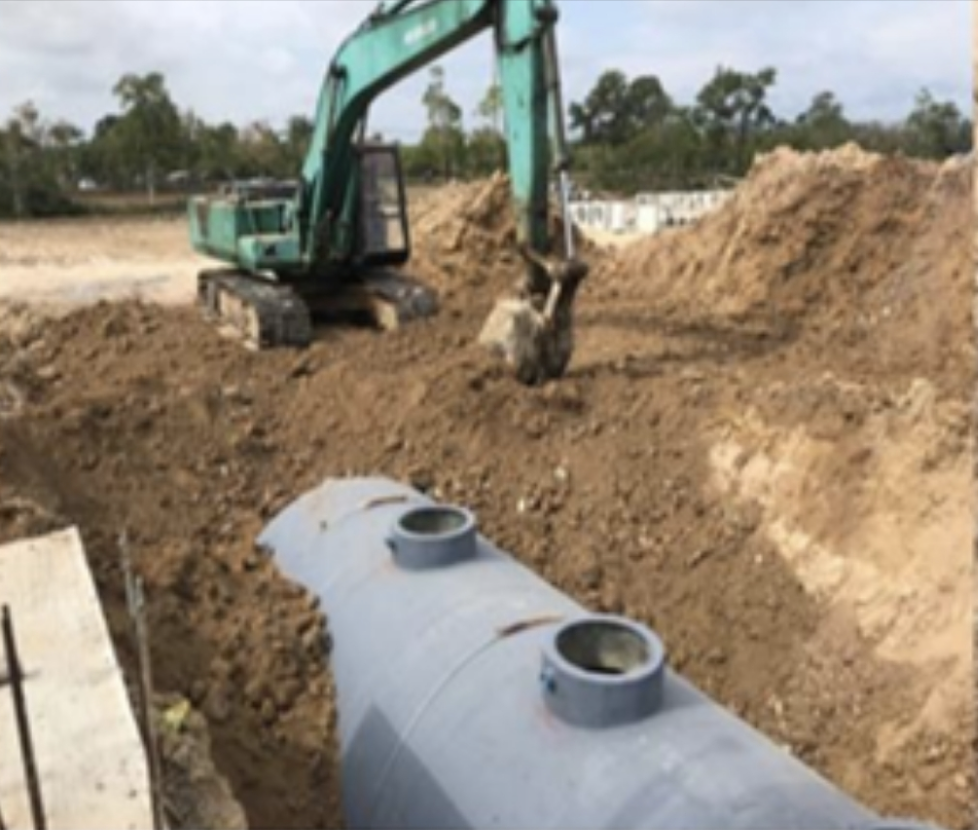
Walailak University has installed septic tanks in all buildings as a wastewater pretreatment process to prevent water system pollution. Wastewater from restrooms and sanitation systems undergoes solids settling and preliminary biological decomposition before being conveyed to the central wastewater treatment system. This process reduces the pollutant load on central treatment facilities and helps prevent untreated wastewater from contaminating surrounding water systems.
Flood Prevention and Control of Pollution Pathways
Floodwater Retention and Reservoirs
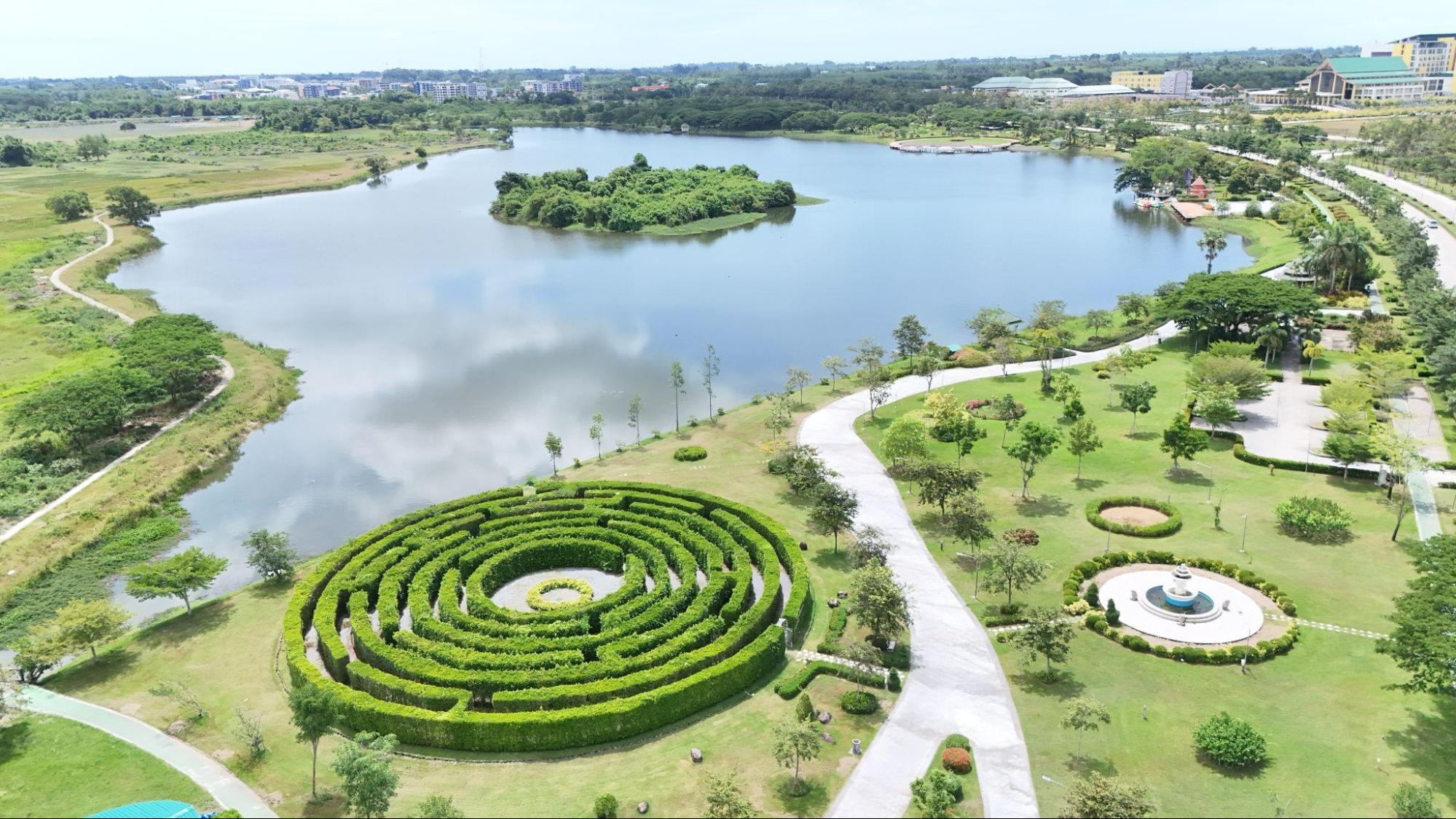
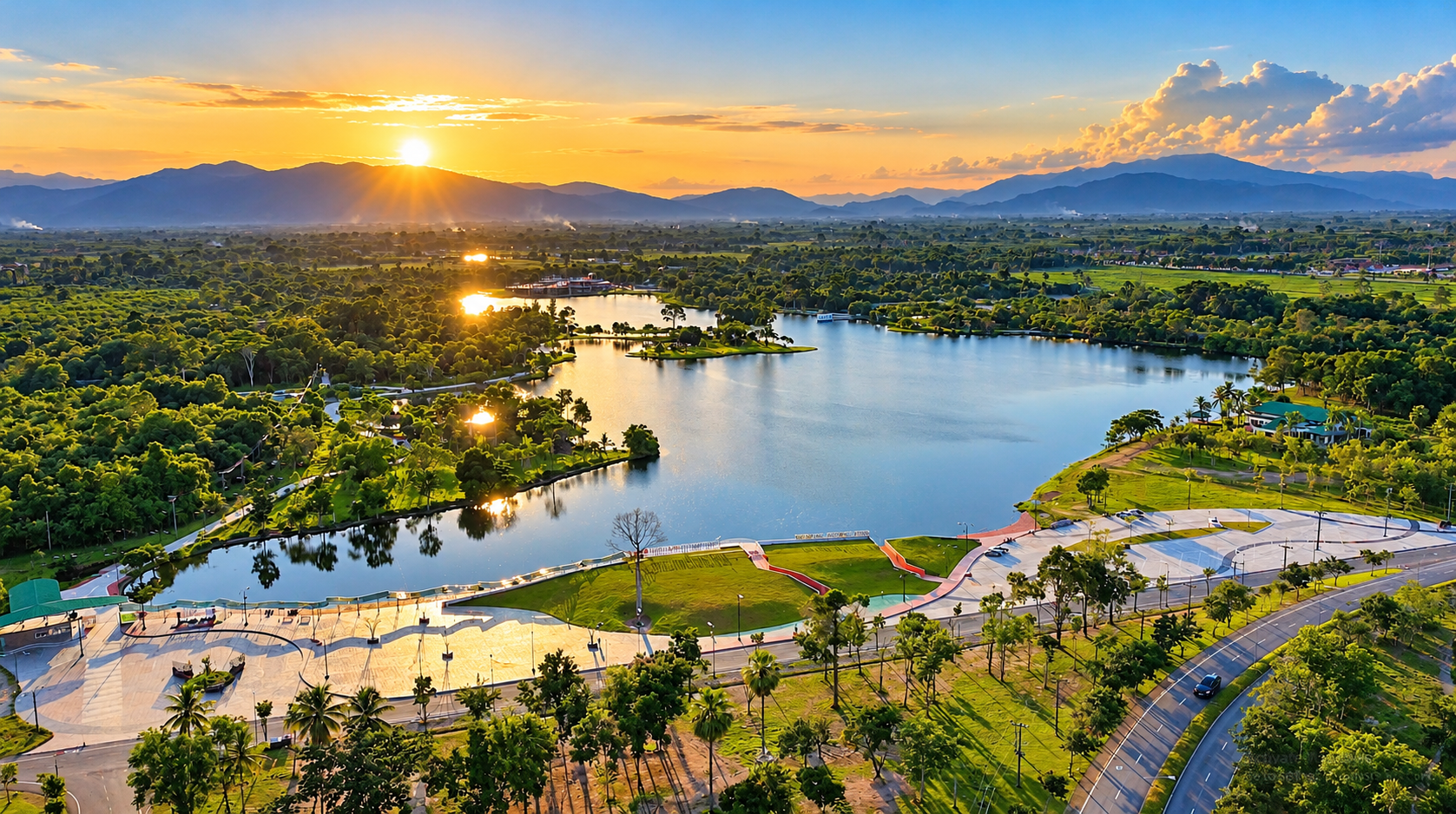
The university has three main reservoirs: Phueksachon Reservoir, Montthara Reservoir, and Chalanusorn Reservoir. These are key components of water storage and retention on campus. Retaining excess water during heavy rainfall slows water flow, reduces the severity of flooding, and lowers the risk of water carrying waste, sediment, or other contaminants from campus activity areas into water bodies.
Water retention also reduces the risk of flooding causing wastewater collection systems to overflow or wastewater to mix with water in surrounding areas. However, reservoirs, particularly those supplying raw water for tap water production, must be protected from untreated wastewater entering their storage areas.
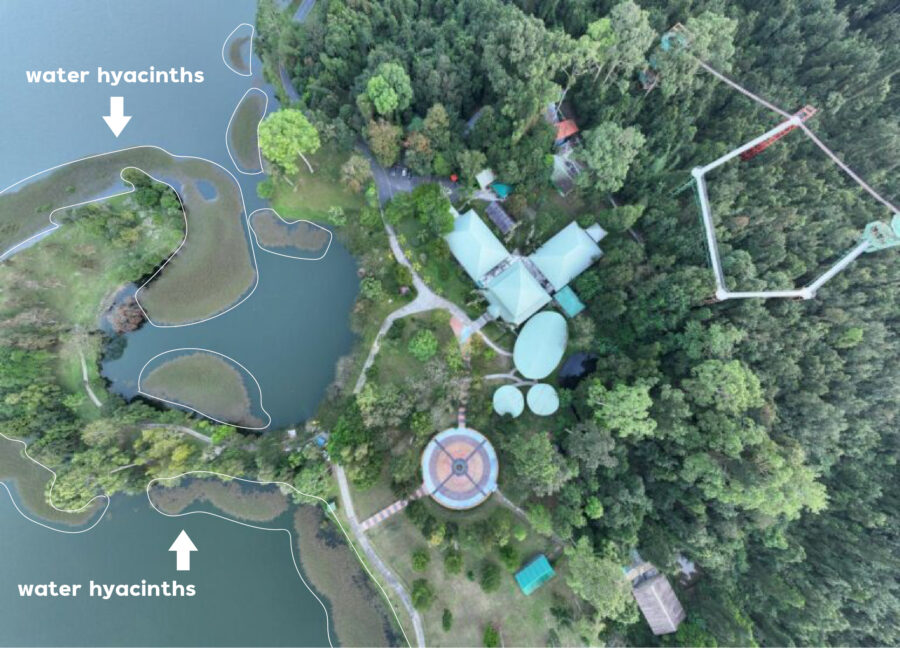
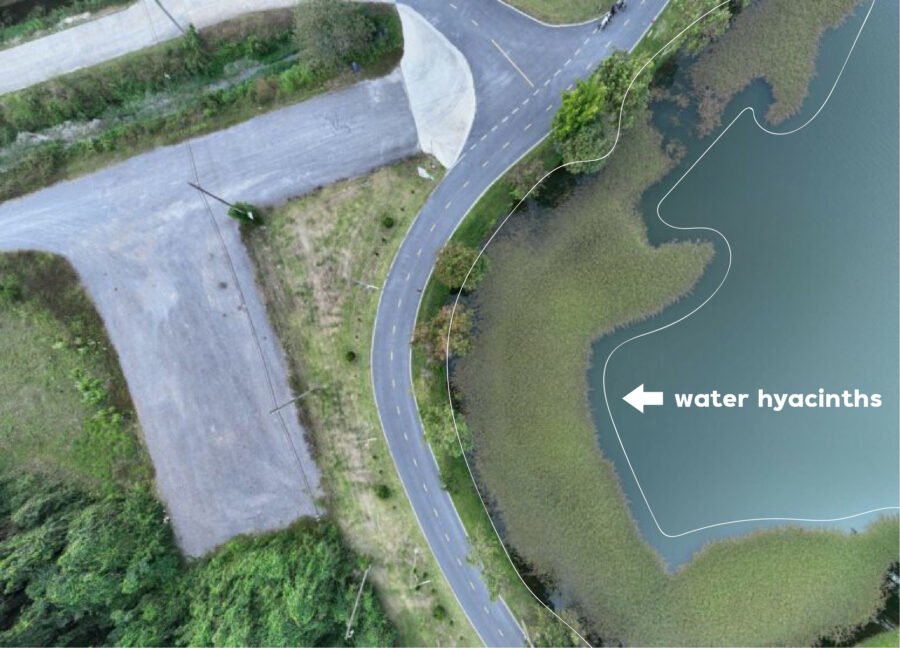
Wetlands and aquatic plants provide additional measures to slow water flow, trap sediment, and reduce some excess nutrients before water moves into downstream receiving areas. These measures must operate alongside pollution control at source and water quality monitoring, as natural processes cannot guarantee the removal of every type of contaminant.
Cofferdam (Dike) Construction
Located near natural water sources, Walailak University has constructed a permanent perimeter dike to support environmental protection and prevent polluted water from entering surrounding aquatic ecosystems. This infrastructure provides a physical barrier that helps control water movement and reduce the risk of contaminants spreading into nearby water bodies.
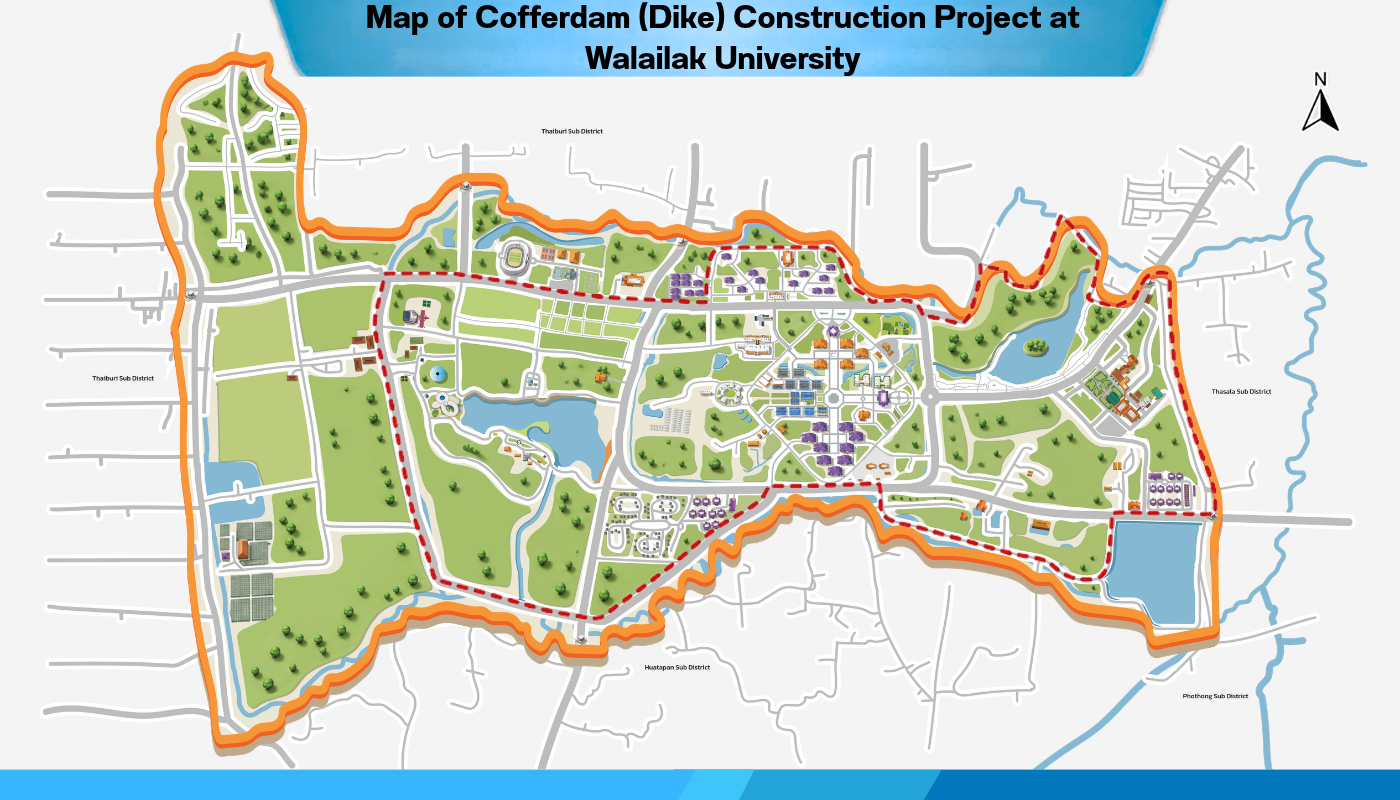
The dike supports a proactive approach to water pollution prevention by helping limit the movement of water carrying suspended solids and other pollutants. Although its construction requires substantial time, resources, and investment, the project is intended to provide long-term protection for water resources and ecosystems.
Beyond its role as protective infrastructure, the project forms part of the university’s approach to sustainable water management. Through appropriate operation and maintenance, the dike helps safeguard surrounding water bodies while supporting environmental responsibility and the coexistence of the university and its natural surroundings
Flood Protection Walls
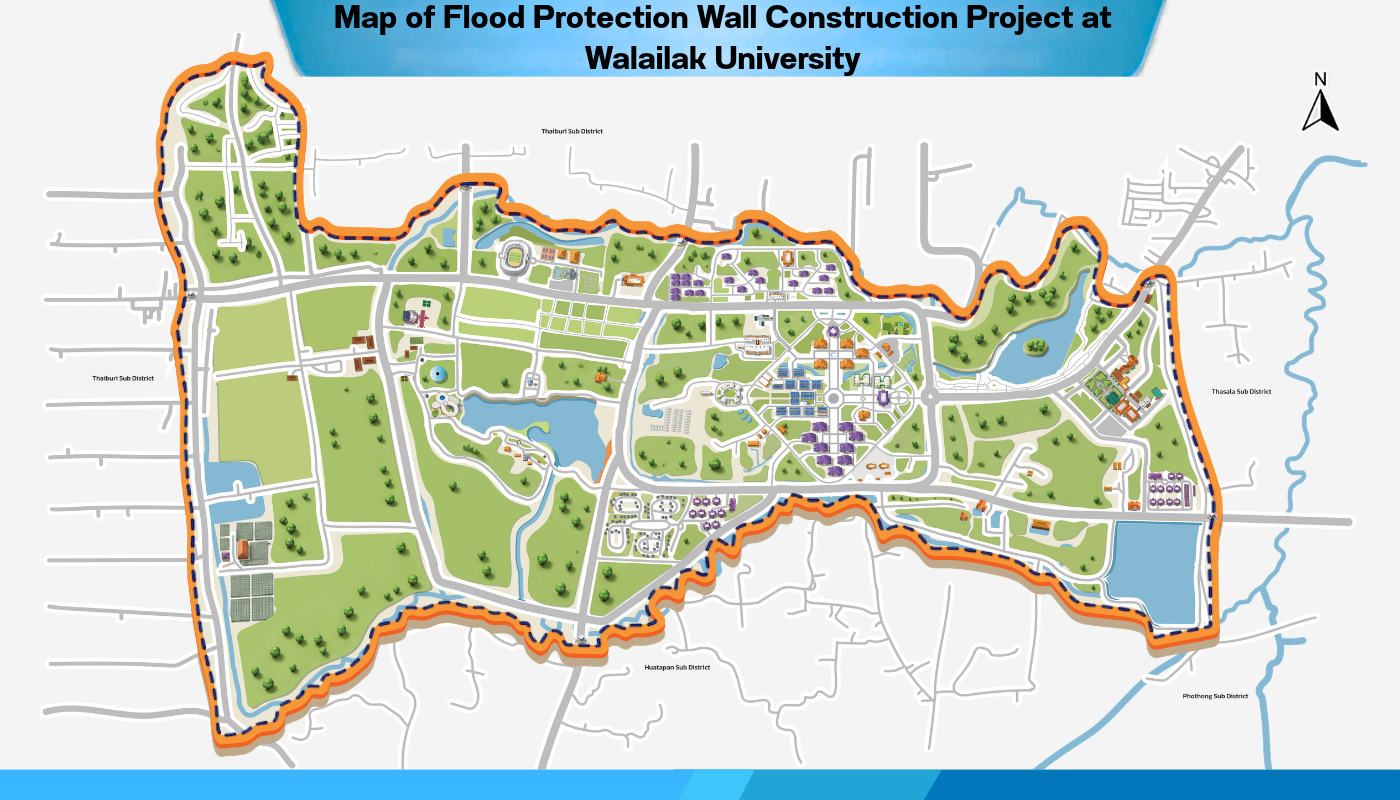
The university has reinforced concrete retaining and flood protection walls along its boundary. Previous records indicate a total length of 25 kilometres. These structures restrict floodwater entry and reduce seepage into protected areas, lowering the risk of external water introducing contaminants into campus water sources and the water system.
Inspection and maintenance help identify cracks, seepage, and subsidence that could create pathways for polluted water to enter the university. Maintaining structural integrity therefore forms part of pollution prevention before water intrusion or structural failure occurs.
Pumping Stations
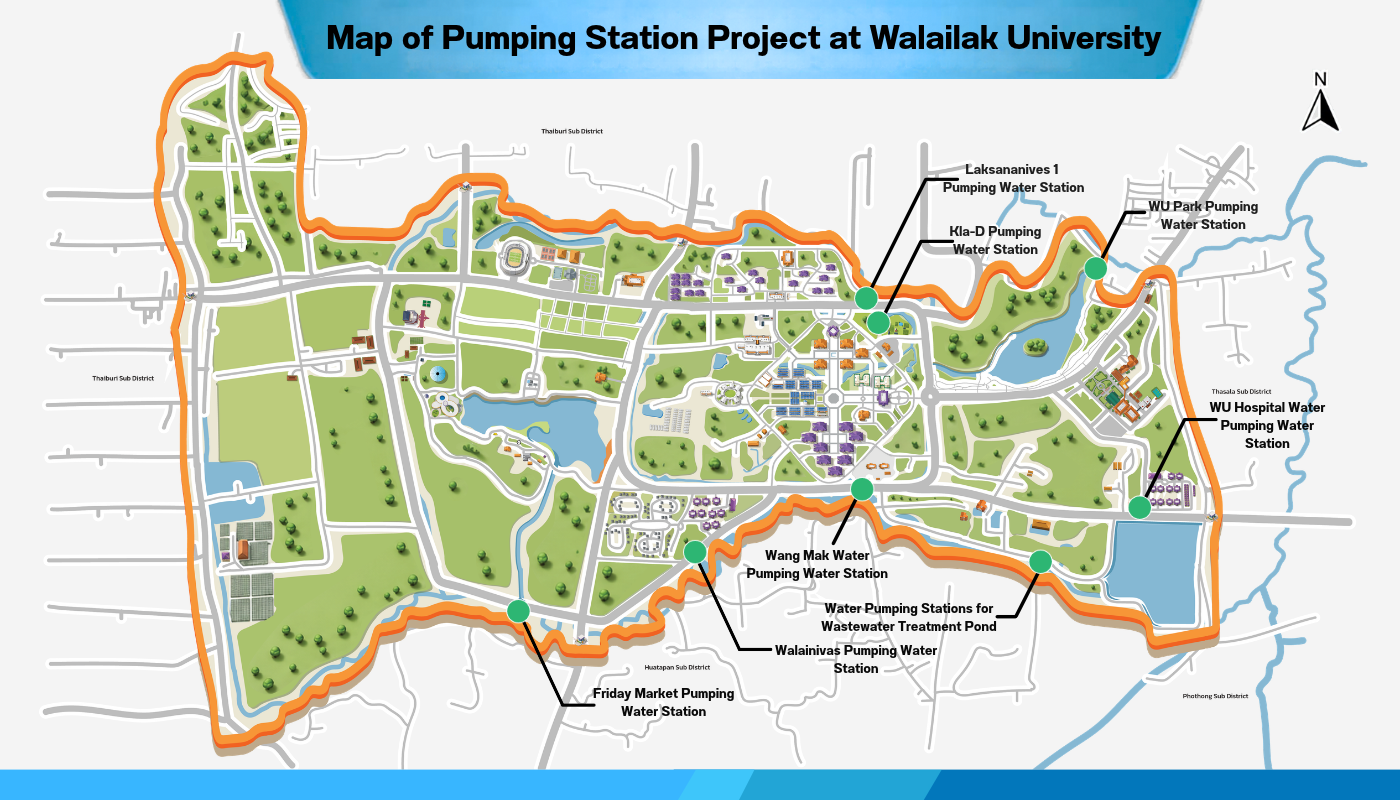
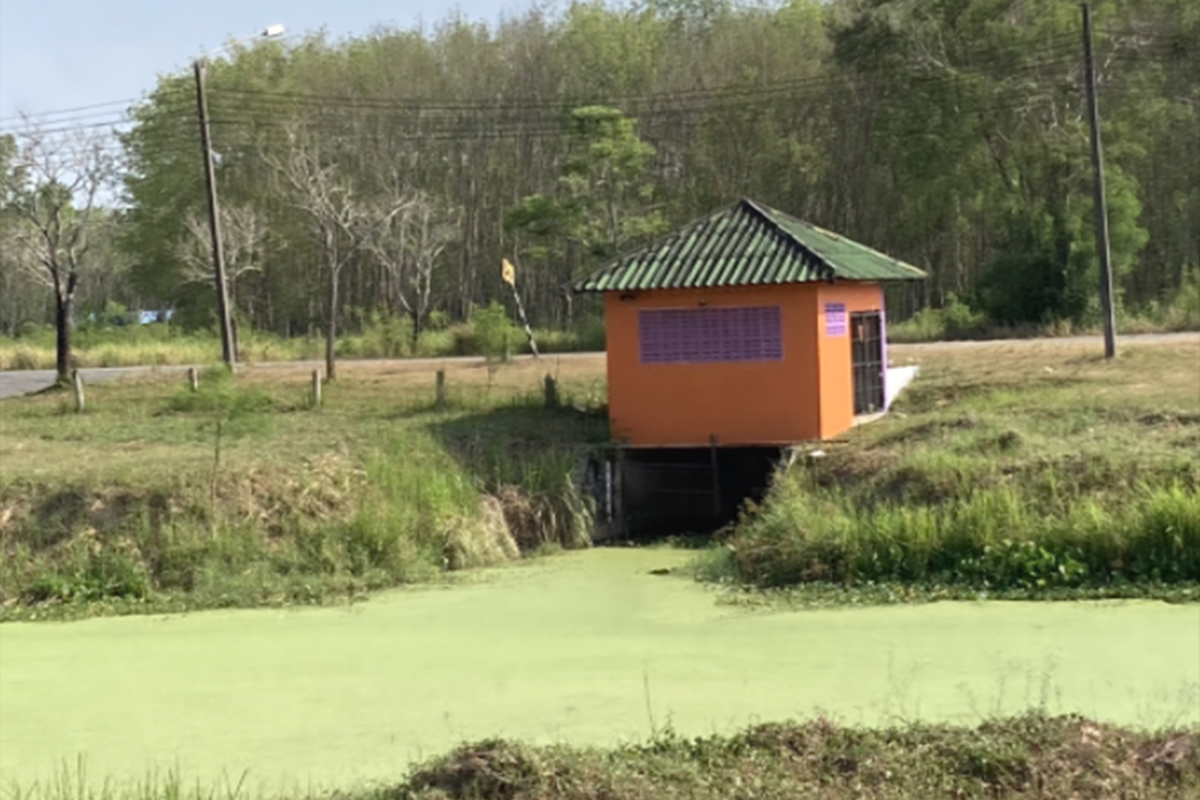
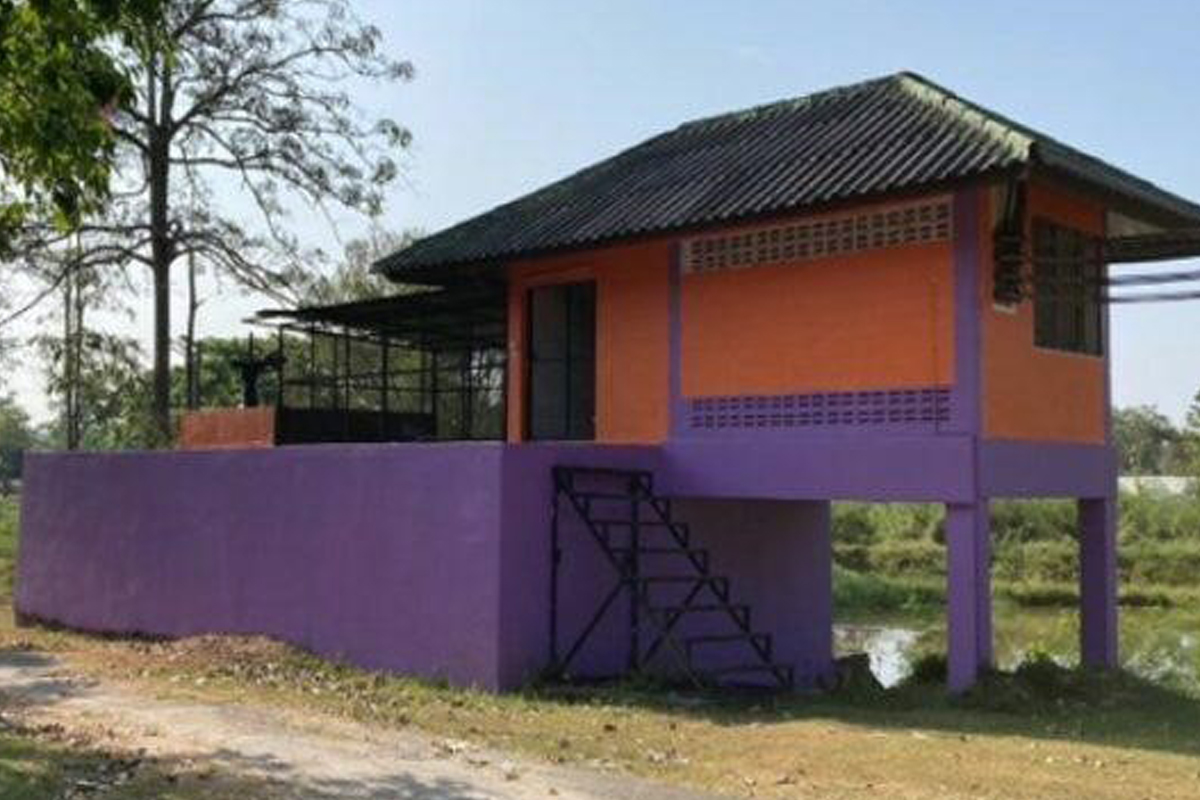
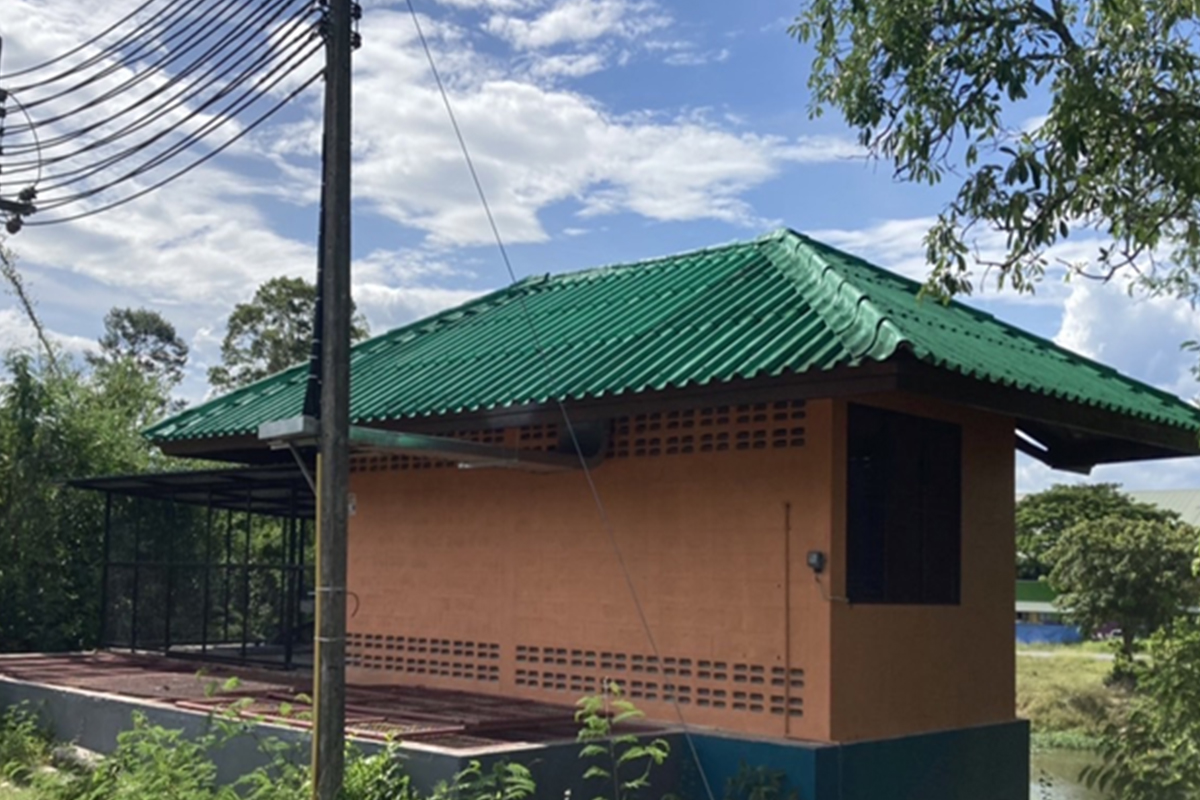
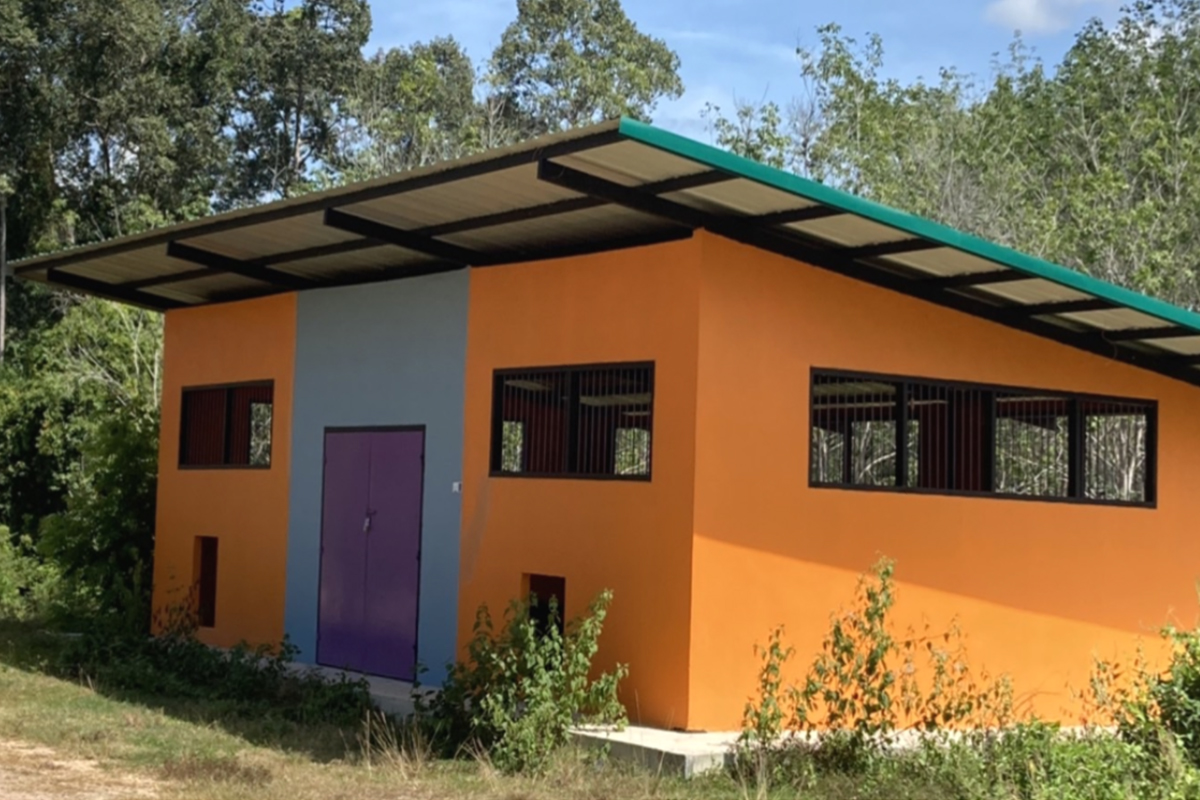
The university has eight pumping stations: Suan Walai, Wang Mak, Kla Dee, Walai Niwas, Laksana Niwet 1, the wastewater treatment pond, Friday Market, and the Medical Centre. These stations control water levels and convey water according to the function of each system.
Water level control reduces waterlogging and the likelihood of water coming into contact with waste or carrying it into water bodies. Stations associated with wastewater convey it to the treatment process. However, pumping alone does not purify water. Pollution prevention must therefore control both water flow routes and destinations to prevent untreated wastewater from being discharged into natural water bodies.
Flood Control Pumping System
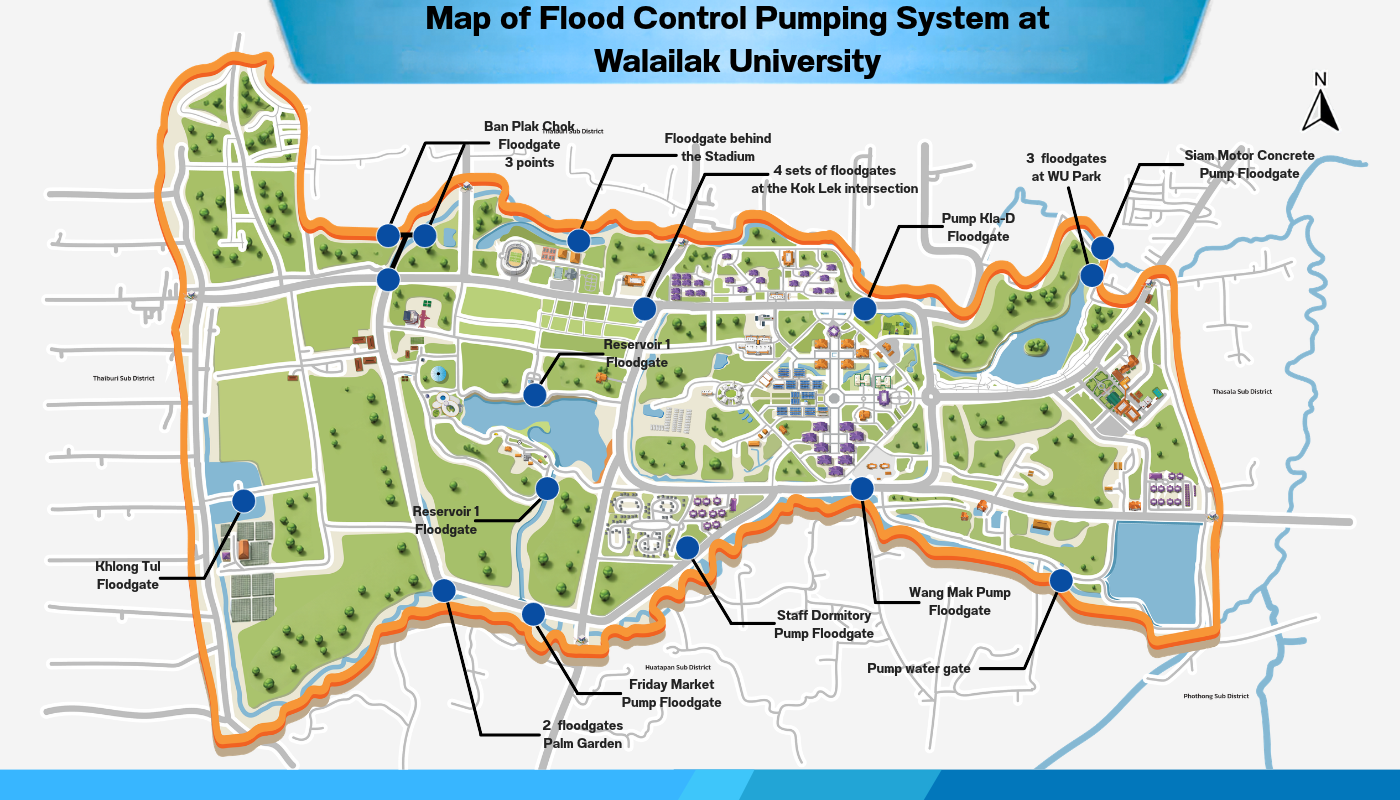
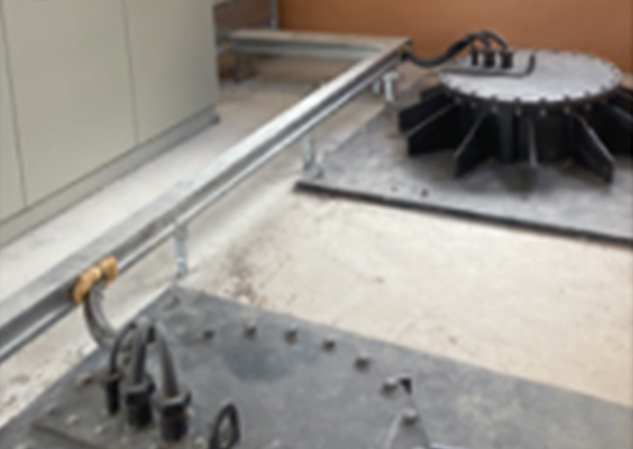
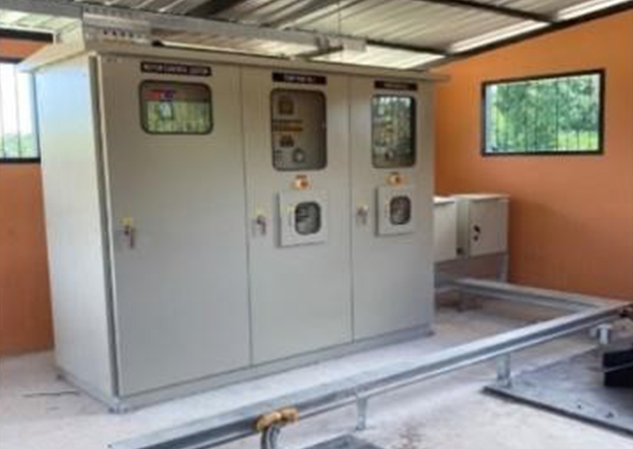
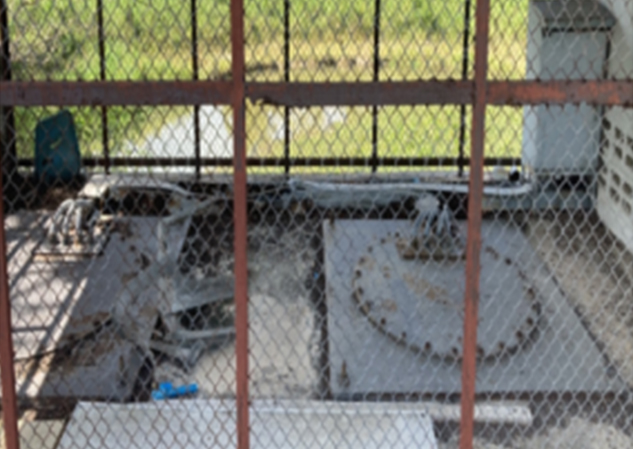
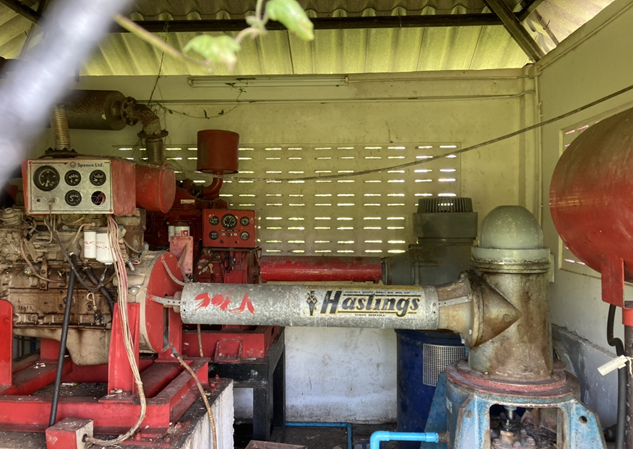
Walailak University has installed flood control pumps to manage floodwater and convey excess water to designated retention ponds. This system helps prevent external polluted water from entering the university’s internal water network. Across eight pumping stations in flood-prone campus areas, the university operates 21 electric and engine-driven pumps, with individual capacities ranging from 0.25 to 2 cubic metres per second:
- Walailak Park Pumping Station: Two electric pumps rated at 2 m³/s, two electric pumps at 1 m³/s, and two engine-driven pumps at 1 m³/s.
- Wang Mak Pumping Station: Two electric pumps rated at 2 m³/s and one engine-driven pump at 1 m³/s.
- Kla-Dee Pumping Station: Two electric pumps rated at 2 m³/s and one engine-driven pump at 1 m³/s.
- Walai Niwas Pumping Station: Two electric pumps rated at 1 m³/s.
- Laksanivet 1 Pumping Station: Two engine-driven pumps rated at 1 m³/s.
- Wastewater Treatment Pond Pumping Station: One engine-driven pump rated at 1 m³/s.
- Friday Market Pumping Station: Two engine-driven pumps rated at 1 m³/s.
- Walailak University Hospital Pumping Station: Two engine-driven pumps rated at 0.25 m³/s.
The university checks water levels and fuel supplies quarterly to maintain operational readiness. Installed at key drainage locations, the pumps enable timely removal of stormwater and mixed flows before the drainage system reaches capacity. This helps reduce overflows and the risk of untreated wastewater and pollutants entering natural canals and surrounding ecosystems.
Floodgates
Floodgates, also known as sluice gates, regulate water flow in canals, drainage channels, and public waterways. They support water level management, flood prevention, and water storage while helping prevent the spread of pollution into natural water sources.
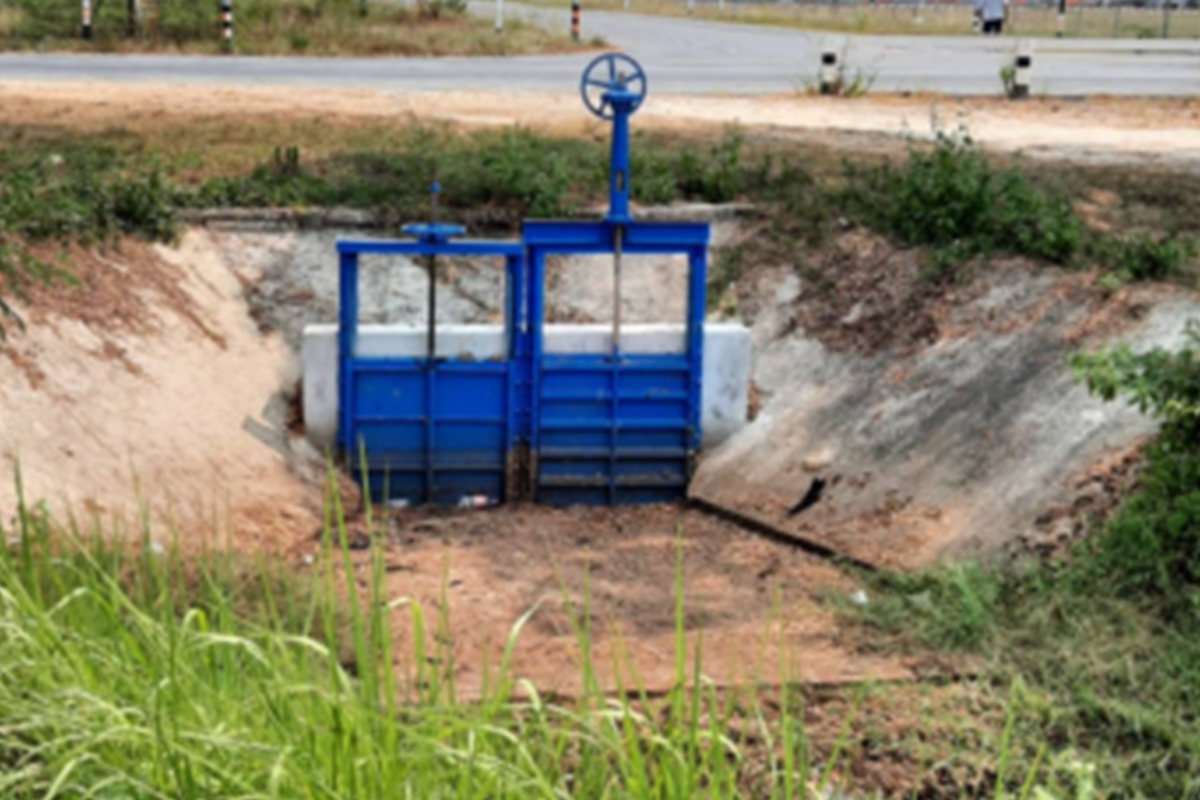
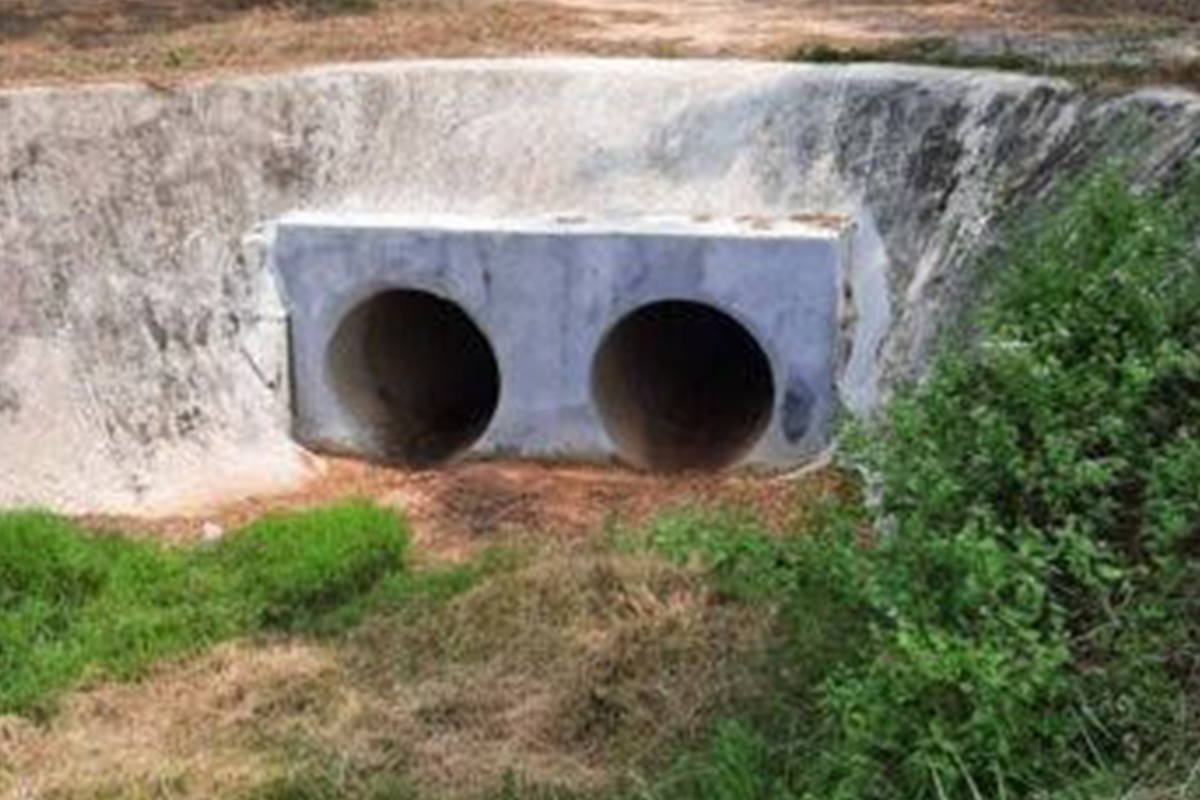
During high tides or river flooding, backflow can carry polluted water from downstream canals into the university’s drainage network and raw water sources. Walailak University’s floodgates incorporate backflow prevention systems to prevent polluted water from entering the university’s water system, helping protect upstream sources and water supply production areas. The university inspects the floodgates monthly to maintain reliable operation and effective water flow control.
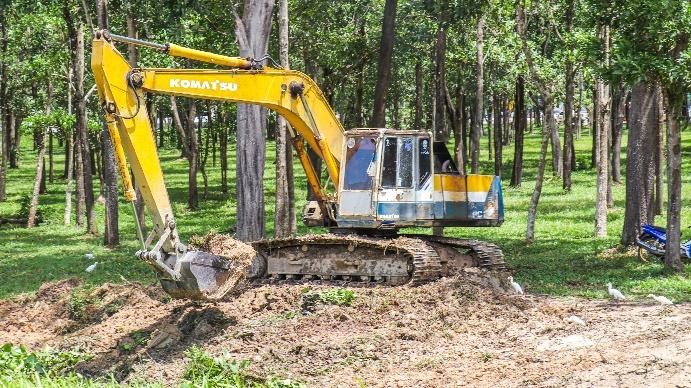
Canal Dredging
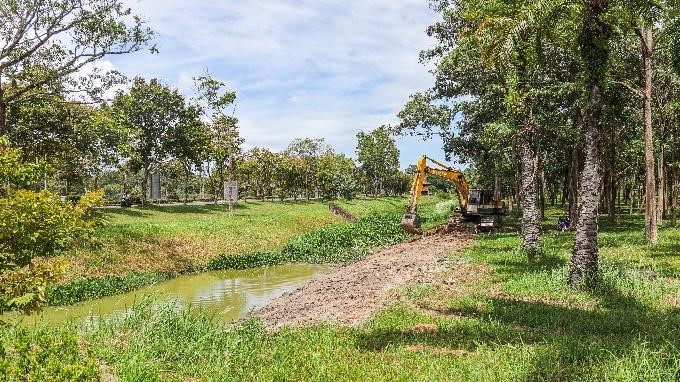
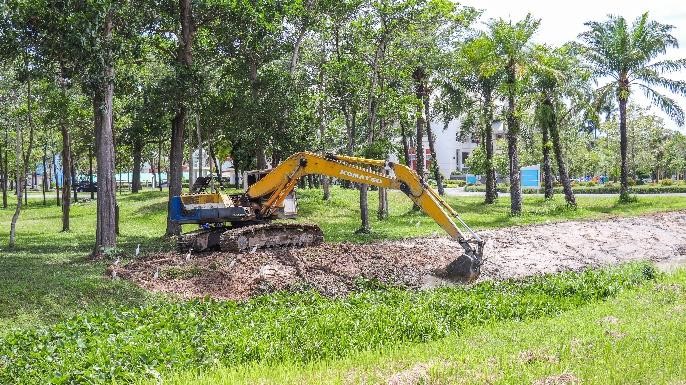
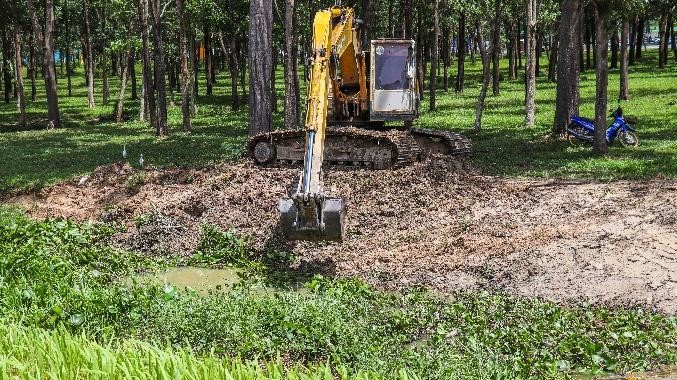
The university regularly dredges canals to remove accumulated sediment, waste, and obstructions. This process maintains drainage capacity, reduces waterlogging, and lowers the likelihood of wastewater overflowing into other areas.
Removing accumulated waste and sediment also reduces sources of organic matter that could degrade water quality and allows canal banks to be inspected for damage, including seepage and subsidence. Appropriate management of dredged sediment and waste is essential to prevent rainfall from washing these materials back into waterways.
Water System Monitoring and Protection
Monitoring through the Bot CDT Mobile Application
The university uses the Bot CDT Mobile Application to support water situation monitoring. Information on water levels, rainfall, temperature, and weather conditions in monitored areas helps operators assess risks and prepare water control measures more quickly.
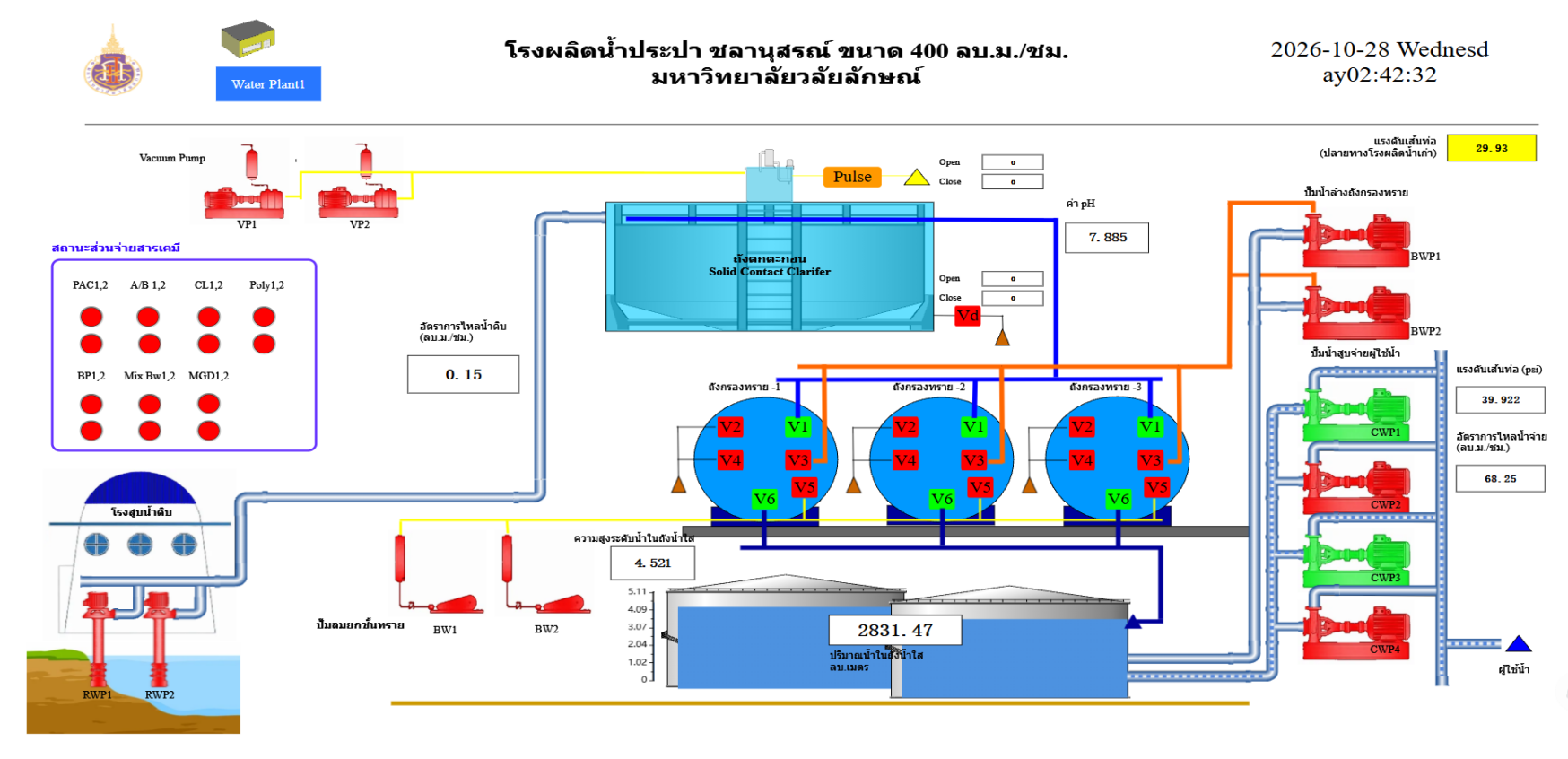
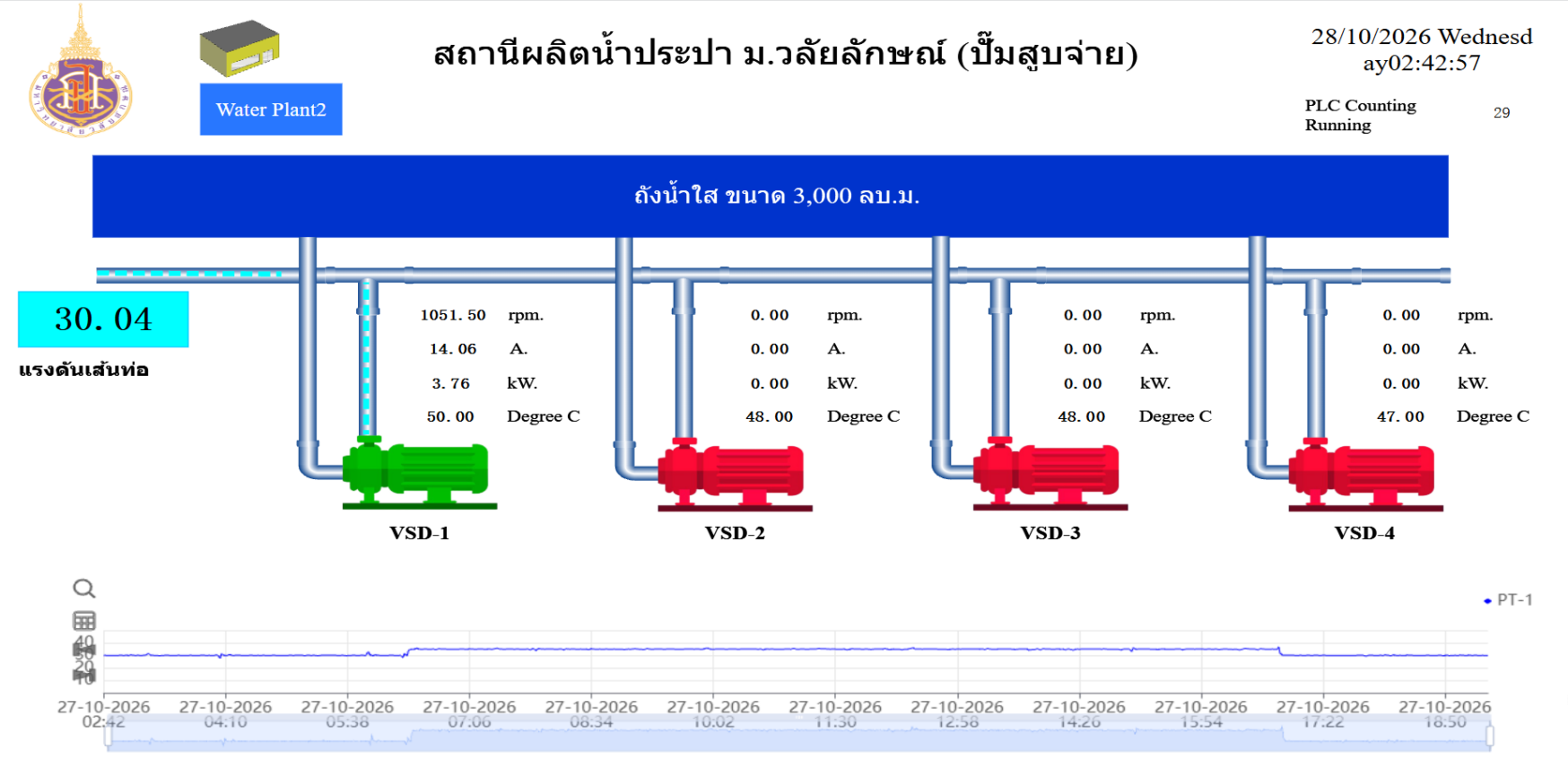
Monitoring enables pumps to be prepared and floodgate operations to be adjusted before overflows or backflow occur, reducing the likelihood of floodwater introducing pollution into water sources. However, water level and weather information support water flow management and must be used together with water quality test results when assessing chemical or microbiological contamination.
Water Supply System Maintenance
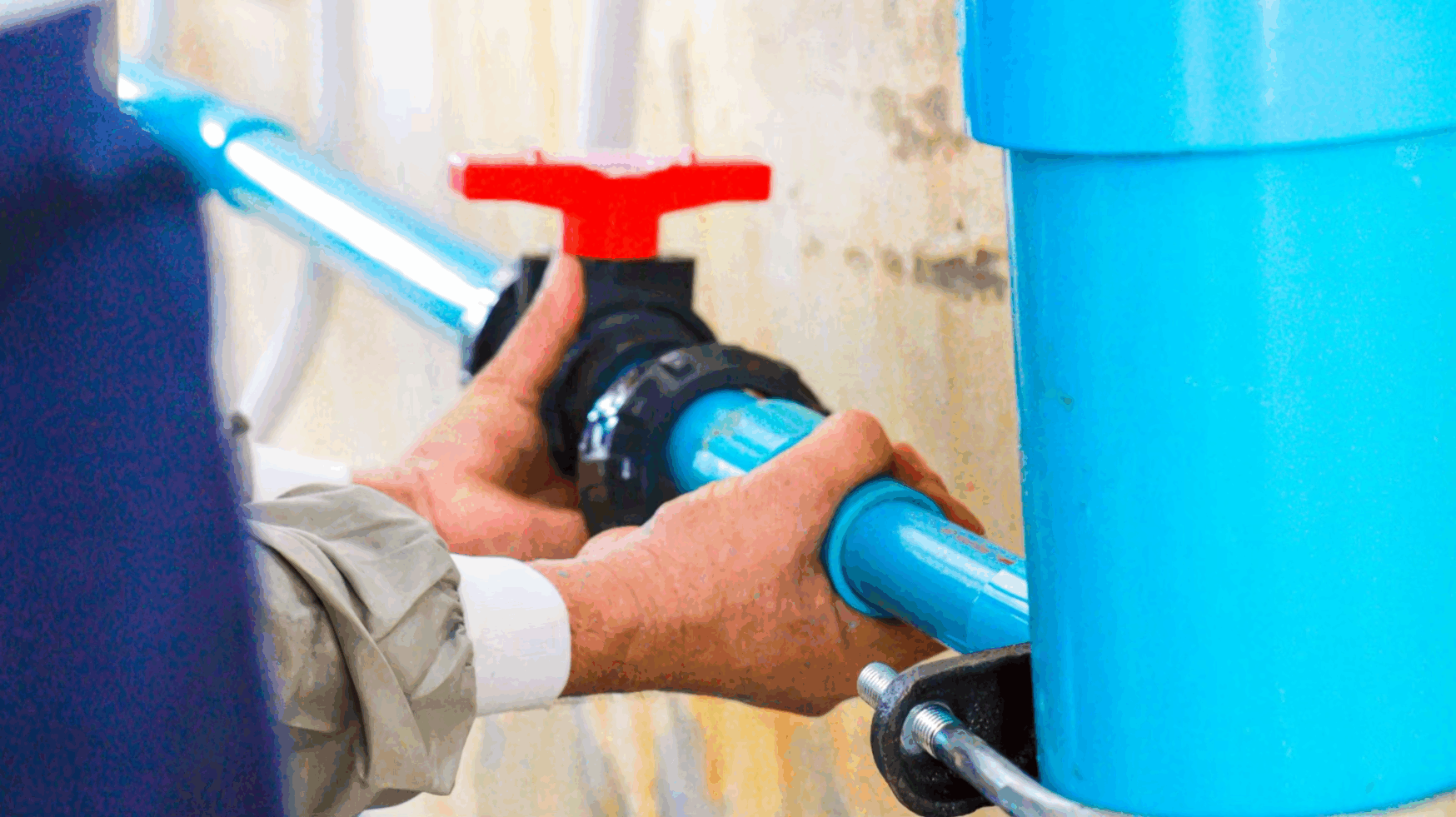
The university maintains its water supply system from the water treatment plant, distribution pipes, and storage tanks to equipment at points of use. Removing sediment from storage tanks, detecting leaks, controlling water treatment chemicals, maintaining machinery, and regulating pressure help protect water quality during production and distribution.
Pipe inspection and repair reduce the likelihood of external water or contaminants entering through damaged sections, particularly when water pressure drops. Maintaining storage tanks and equipment also reduces the accumulation of sediment and contaminants that could reach water users.
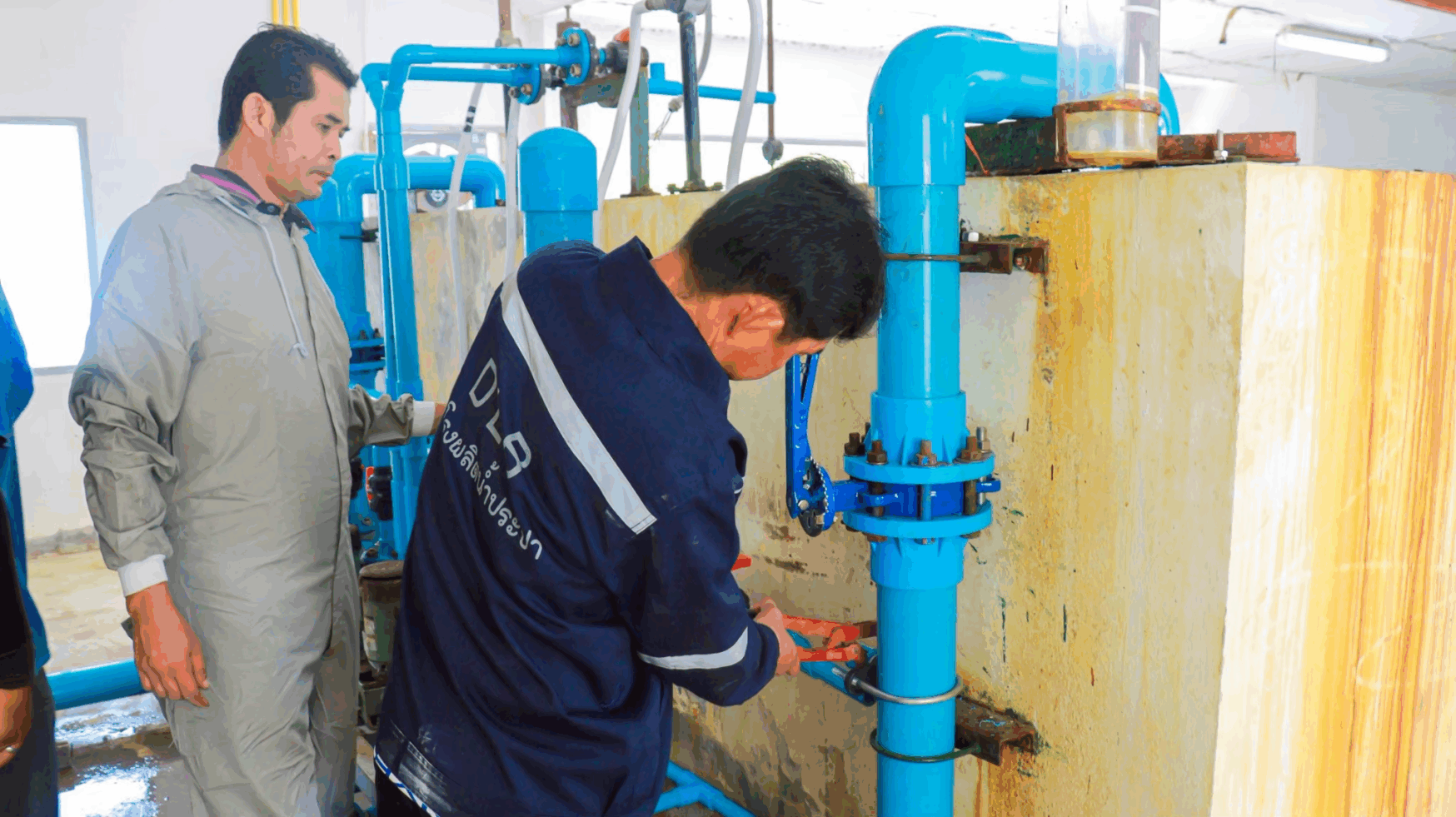
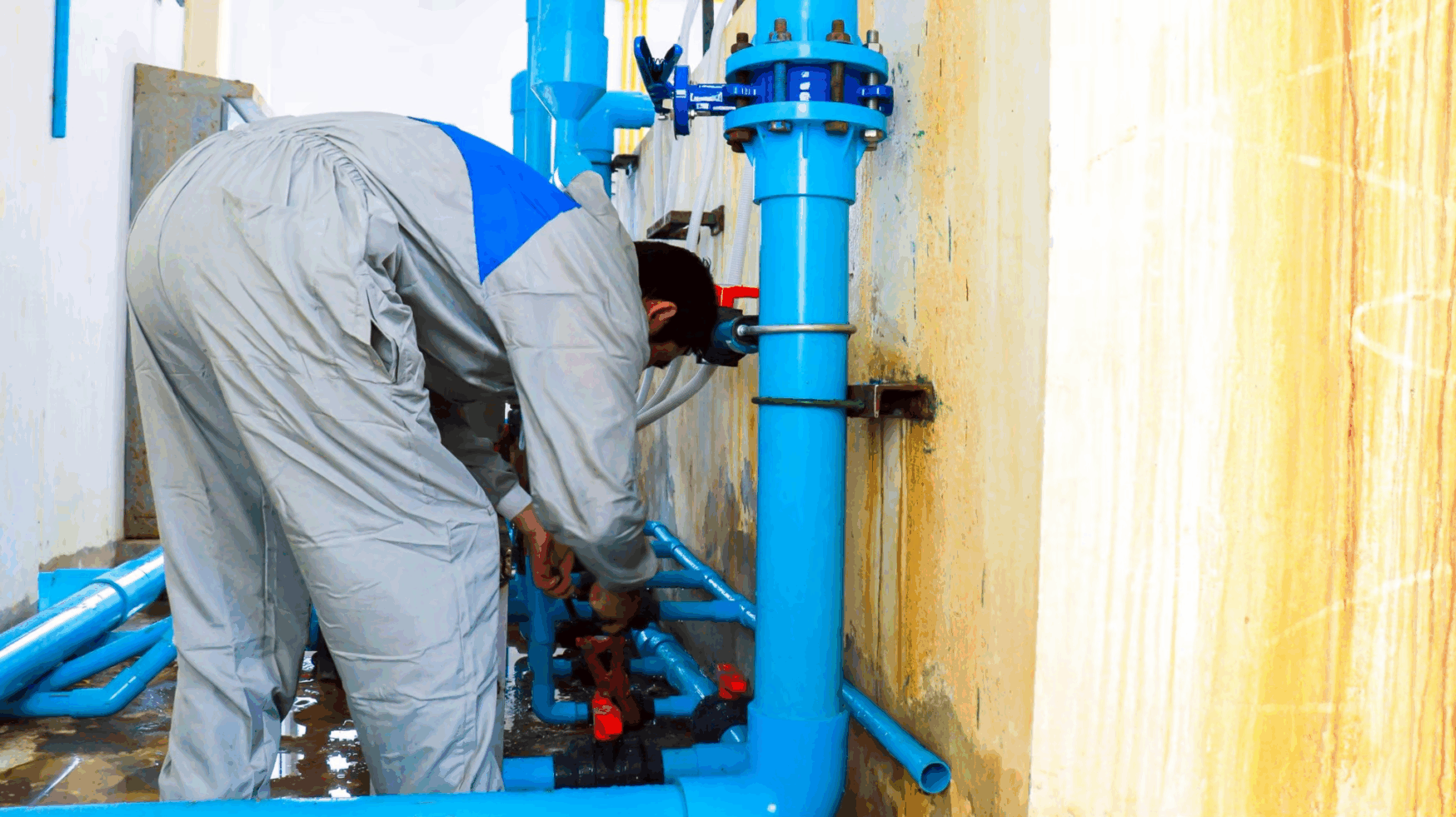
Pipe network information provided through GIS, sensors, leak detection systems, and alerts can support the identification of abnormalities and accurate repair locations, alongside staff training and monitoring by campus users. Descriptions of the technologies used must correspond to the systems actually installed.
Water Quality Testing for Domestic Use and Consumption
The university prioritises water quality testing at raw water sources, during production, and at distribution points to identify abnormalities that may indicate contamination. Assessment covers physical, chemical, and biological characteristics, with parameters selected according to the type of water, including colour, odour, turbidity, pH, electrical conductivity, heavy metals, and microorganisms.
For free drinking water dispensers, the previously established procedures specify filter replacement every six months and monthly water quality testing, including coliform and Escherichia coli testing using reference methods from APHA, AWWA, and WEF. Filter maintenance reduces contaminants reaching users, while test results help identify contamination within the system or at dispensing points.
Water quality testing is a monitoring mechanism and does not remove pollution by itself. Results must therefore be linked to investigations into causes, maintenance, and corrective action at points of risk to prevent polluted water from reaching users.
Wastewater Treatment before Discharge and Water Reuse
Central Wastewater Treatment System
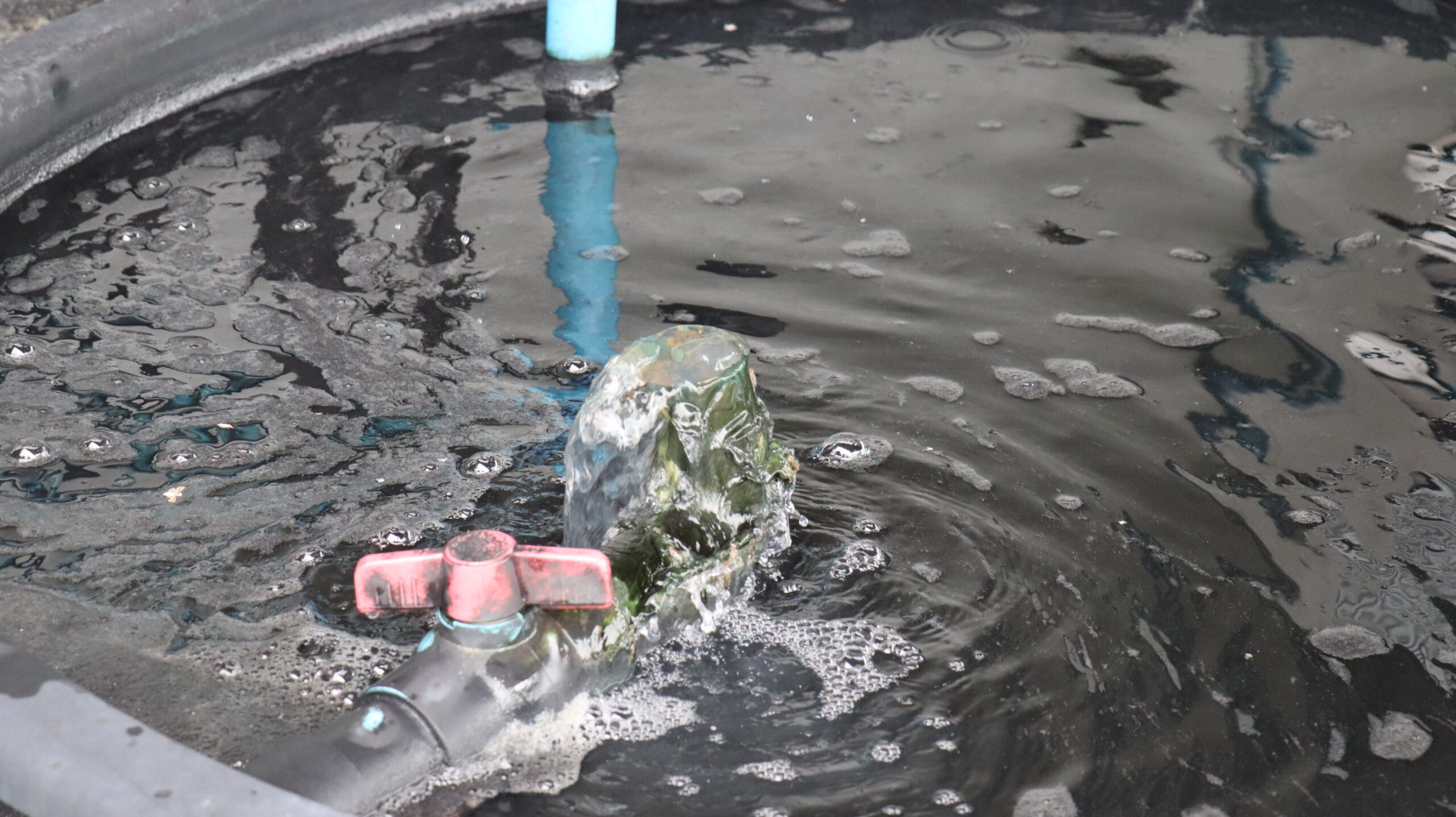
The university has developed its wastewater management system since 2002. According to previous records, the system has a capacity of 4,000 cubic metres per day and comprises an aerated lagoon, facultative ponds, ultraviolet disinfection, and a constructed treatment wetland.
The treatment process reduces organic matter, separates sediment, reduces microorganisms, and improves water quality before discharge or reuse. It therefore provides a control barrier to prevent wastewater generated by campus activities from entering natural water bodies directly. The treatment wetland provides additional water quality improvement through physical and biological processes before water is conveyed for use or into receiving areas.
Previous records specify a biochemical oxygen demand (BOD) control limit of 20 milligrams per litre. Performance assessment must consider actual test results and the criteria applicable to the system. Neither the system’s treatment capacity nor its specified control limit should be treated as evidence that every water sample meets the criteria. Hazardous chemicals and heavy metals must also be controlled according to their characteristics, rather than relying solely on a conventional wastewater treatment system.
Treated Wastewater Reuse
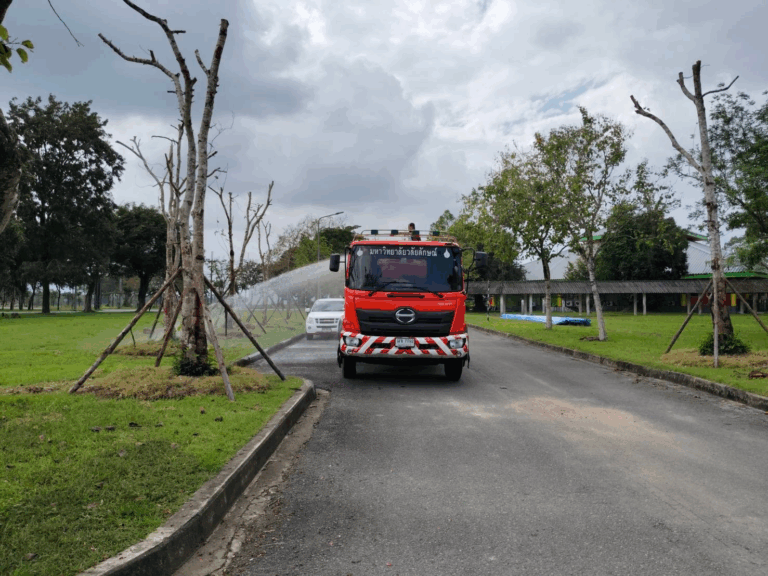
The university reuses treated wastewater for suitable activities, including watering trees, washing roads, and cooling machinery. Pollution prevention depends on treatment and water quality testing before use, together with control of subsequent activities to prevent additional contamination from entering water bodies.
Watering trees and agricultural use allow water to be reused productively. Water quality and application volumes must be appropriate to reduce runoff and the accumulation of substances in soil. Road washing requires consideration of dust, sediment, and oil residues that may contaminate the water after use. Cooling systems must similarly consider contaminants arising from equipment and operational processes before discharge.
Water reuse therefore reduces both demand for additional water and the volume requiring discharge. It must be accompanied by water quality control and management of water pathways after use to prevent reuse activities from becoming new sources of pollution.
Preventing Pollution Caused by Accidents and Incidents at the University
Detection and Incident Reporting
Response procedures should cover incidents that could allow polluted water to enter the water system, including wastewater overflows, treatment system or pump failures, burst water supply pipes, floodwater backflow, and oil or chemical spills. Reporting channels and responsible personnel should be clearly defined.
When an incident is detected, its location, time, source, and flow direction must be identified to assess possible pollution pathways into canals, raw water reservoirs, or the water distribution system. Prompt detection and reporting allow water pathways to be controlled before contamination spreads.
Stopping the Source and Containing the Spread
When it is assessed to be safe, responsible personnel should stop the leak or wastewater discharge and control flow pathways using valves, floodgates, or appropriate containment equipment. For oil or chemical spills, substances must be prevented from entering drains, and containment or absorbent materials appropriate to the substance must be used.
This process interrupts the movement of pollutants from the incident location into the water system. Contaminants should not be washed into drains, as this could spread pollution from a contained area into drainage systems and surrounding water bodies.
Collection and Management of Polluted Water
Polluted water and materials used for containment or absorption should be collected separately from stormwater and clean water. Appropriate treatment or disposal methods should then be assessed according to the type of pollution. Water containing hazardous chemicals should not automatically be directed into the conventional wastewater treatment system.
Separate management helps prevent contaminants from damaging the treatment process or passing through into the effluent. It also supports the selection of appropriate management methods before these substances enter water bodies.
Verification and Prevention of Recurrence
After an incident has been contained, water quality should be tested at the incident location and in potentially affected areas, using parameters selected according to the pollution source. Equipment should also be inspected and the underlying cause corrected. Before water supply, discharge, or reuse resumes, suitability must be assessed against test results and the relevant criteria.
Records of incidents, containment measures, test results, and corrective actions help track residual pollution and prevent recurrence. This process provides a response extending from stopping pollution before it enters the water system to verifying water safety after an incident.
Preventing water system pollution at Walailak University therefore relies on interconnected processes covering waste control at source, flood and backflow prevention, infrastructure maintenance, water quality monitoring, and wastewater treatment before discharge or reuse. Together with confirmed accident and incident response procedures, these measures would address both routine activities and abnormal events in line with the indicator’s requirement for processes to prevent polluted water entering the water system, including pollution caused by accidents and incidents at the university.