Innovative Wastewater Treatment: How Walailak University Achieves Environmental Sustainability
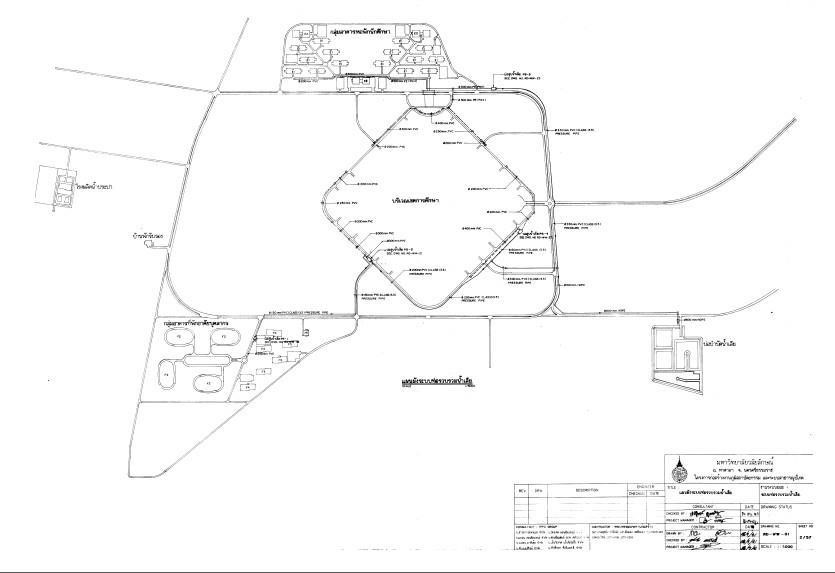
Figures : Development Project of Wastewater Management System at WU
1. Preliminary and Primary Treatment:
1.1 Each building on campus is equipped with a physical wastewater treatment system that ensures compliance with standard regulations before the wastewater is discharged. This includes screens that filter out non-dissolvable solid waste and grease traps that separate fats and oils from the wastewater. These systems help maintain the initial quality of the water before it proceeds to the next treatment processes.
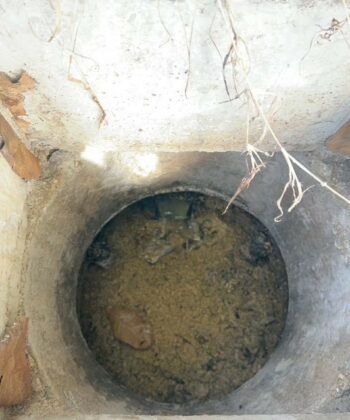
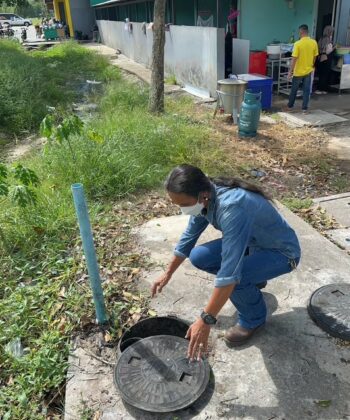
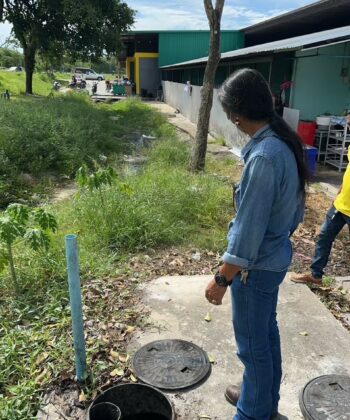
1.2 Wastewater from all buildings is collected for treatment through the Wastewater Management System Development Project of Walailak University.
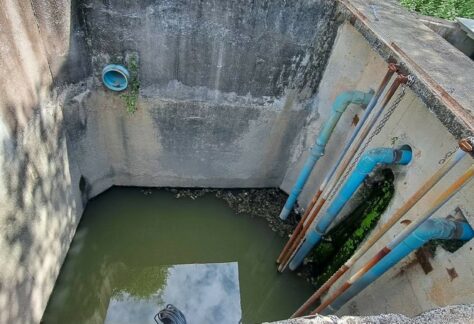
1.3 The collection system uses trash trap to remove solid waste from the water before it enters the treatment facility, preventing blockages and damage to pumps.
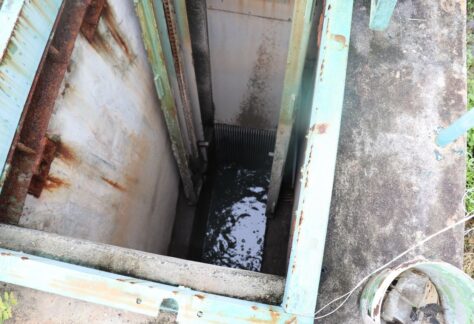
1.4 After solid waste removal, 500 liters of microbial inoculants are added to the collected wastewater at wastewater pumping station before it is pumped into the Aerated Lagoon (AL) for further treatment.
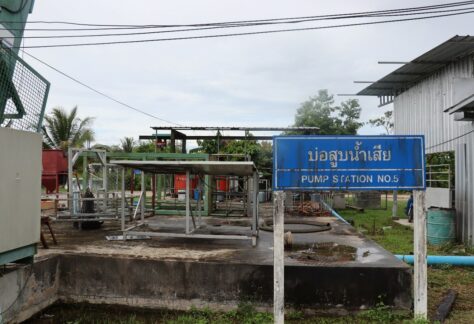
2. Secondary Treatment:
2.1 Wastewater is pumped through pipelines into the Aerated Lagoon, where aerobic bacteria decompose organic substances.
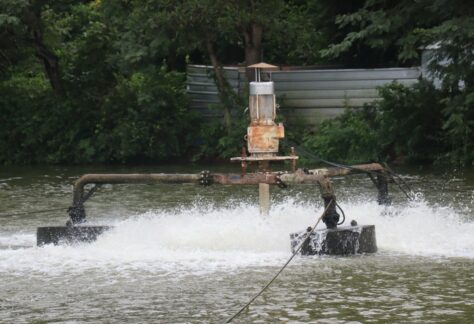
2.2 The wastewater is then transferred to Facultative Pond 1, where it is retained for at least four days. Aerobic microorganisms reduce the BOD by 60%.
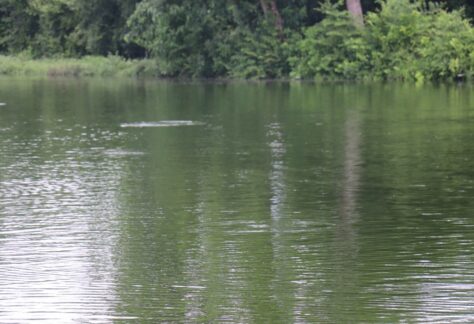
2.3 Subsequently, the wastewater is moved to Facultative Pond 2, where it is retained for at least seven days. This biological treatment stage removes impurities, particularly organic carbon, nitrogen, and phosphorus, reducing BOD by approximately 50%.
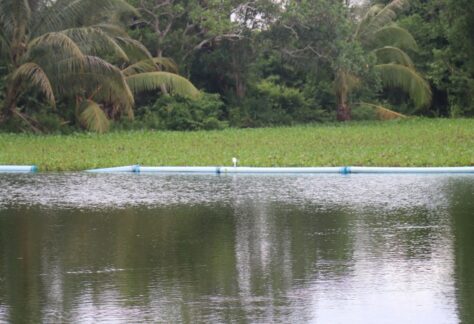
3. Tertiary Treatment:
3.1 After secondary treatment, some pathogens may still be present in the treated water. Therefore, before discharging the treated wastewater into natural water source or reusing it, the water is disinfected using ultraviolet (UV) light to eliminate harmful microorganisms. The university maintains and replaces the UV lamps annually.
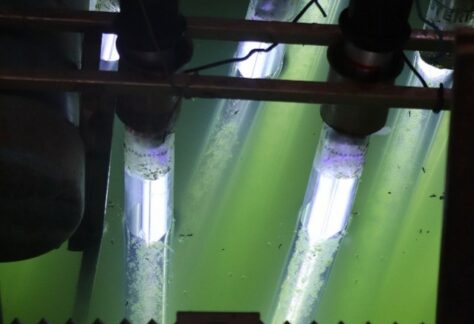
3.2 The treated water is stored in a constructed wetland (WETLAND) for further assessment and reuse. This wetland also serves as an ecological study area for the university.
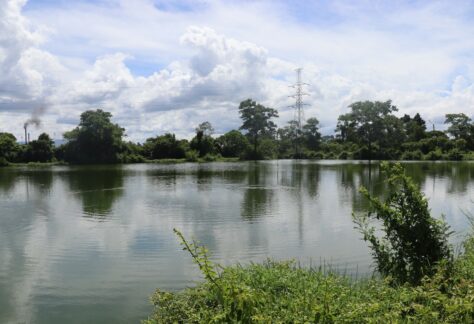
3.3 The quality of treated water is assessed through scientific analysis and fish pond tests before being reused or released. The treated water meets the effluent standards set by Thailand’s Pollution Control Department in 1992.
Recycle quality test report