Each building’s wastewater treatment system within the university undergoes physical treatment before being discharged from the building, ensuring compliance with standard values. For example, all buildings must be equipped with drainage grates for garbage and grease traps for intercepting most greases and solids before they enter a wastewater disposal system.
The wastewater is collected from all buildings and passed through the process of wastewater treatment.
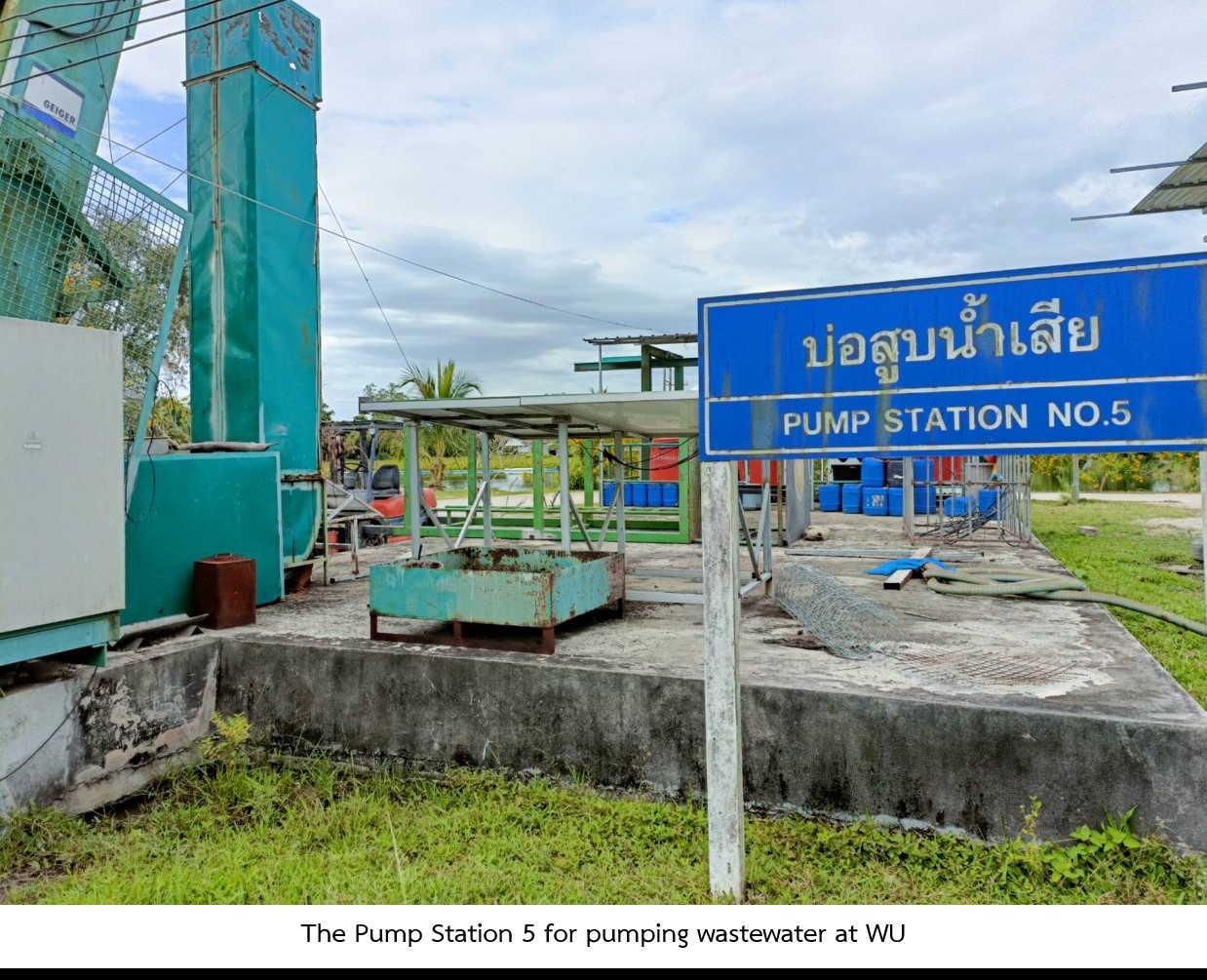
Using garbage traps powered by electric motors. The waste in wastewater from all sources will be removed and then released to the pumping station equipped with submersible pumps.
The wastewater released from the garbage traps will be released to the pumping station to be pumped to aerated lagoons. The pumping station is equipped with wastewater pumps with a capacity of 340 cubic meters. The pumps will automatically take turns in each round with four float switches, and the process of adding 500 liters of microbial fermented solution was carried out.
Secondary Treatment:
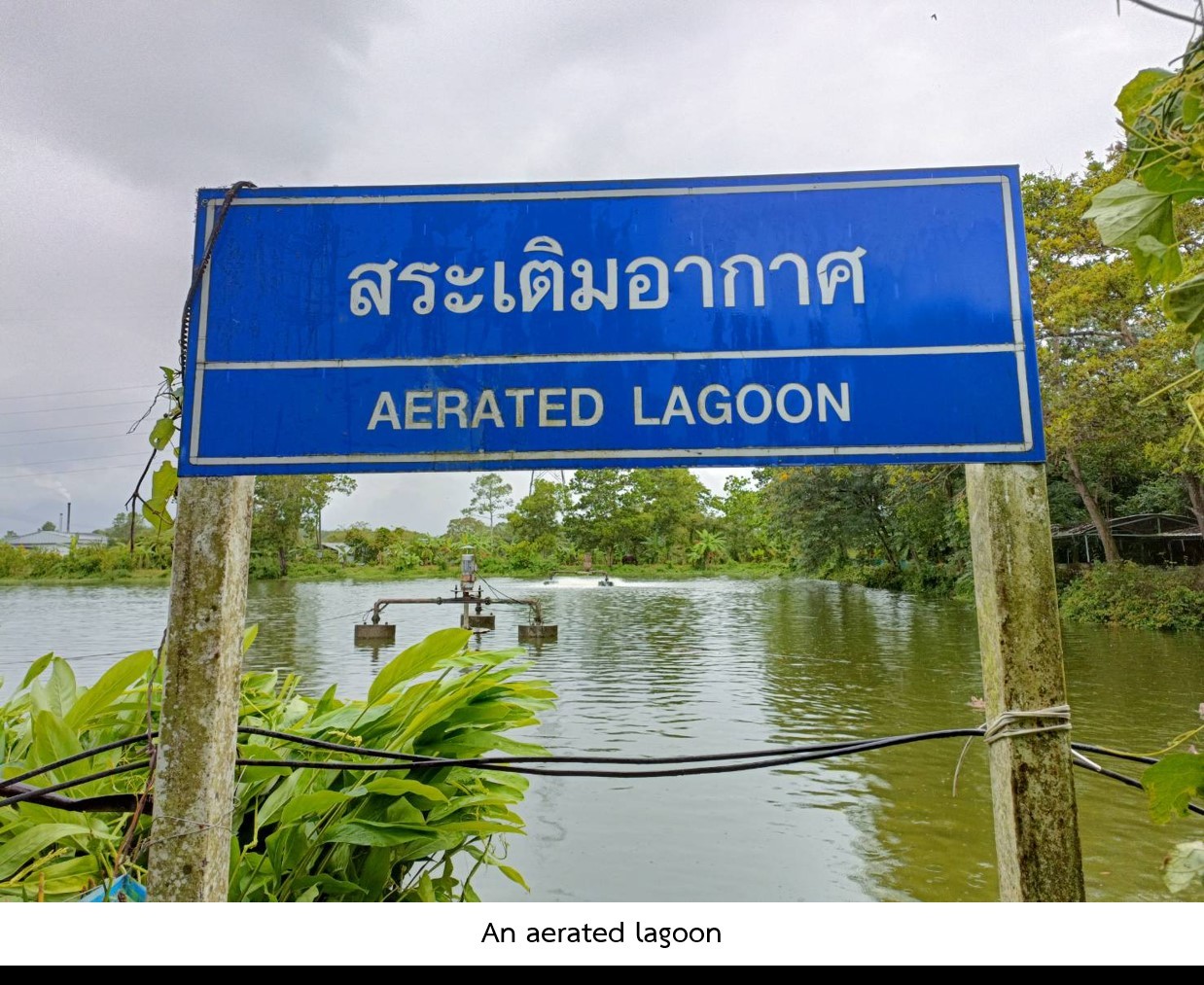
The wastewater pumped from the pumping station will be released into the aerated lagoons, which are 68 meters wide, 73 meters long, and 2 meters deep, with a capacity of 18,903 cubic meters. The aerated lagoons are equipped with 15kW low-speed floating and fixed-type surface aerators that decompose organic matter using aerobic bacteria. The aerated lagoons can reduce the biological oxygen demand values by 70%
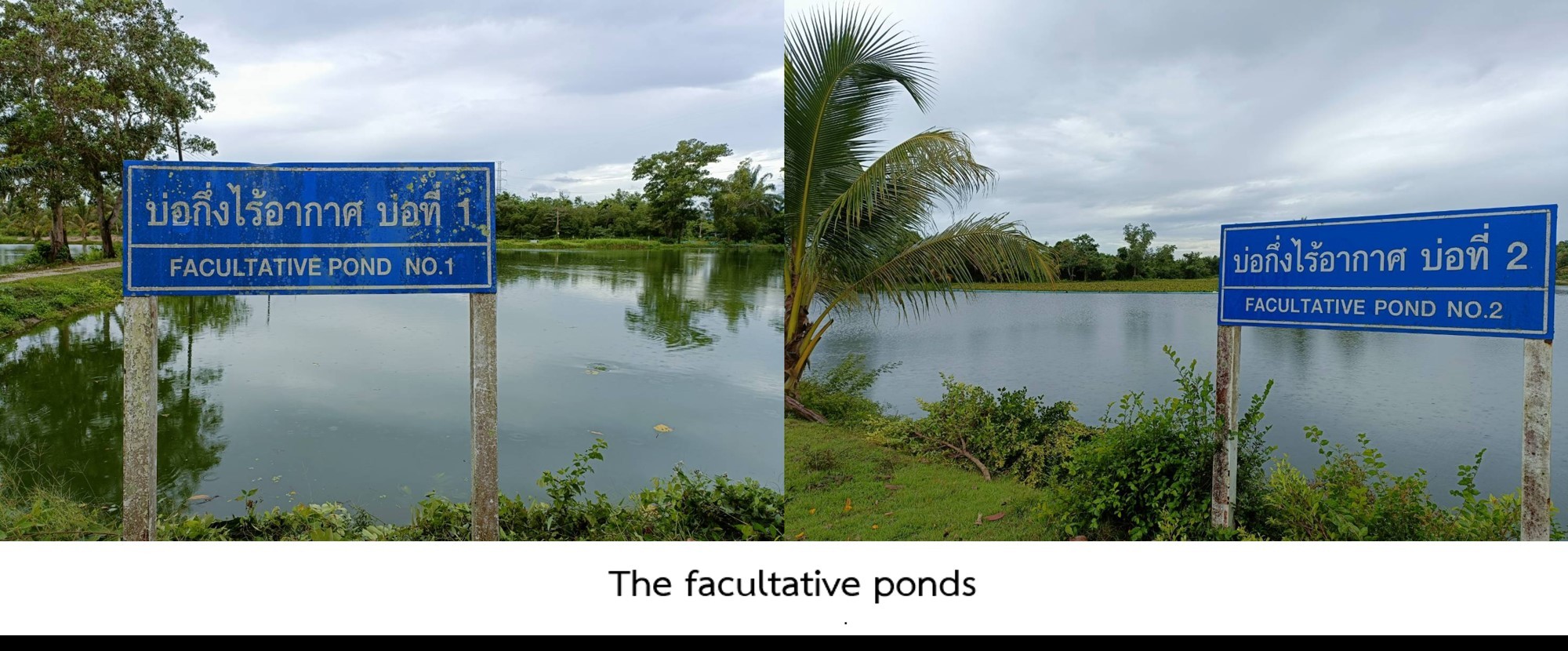
The Facultative Pond 1, with a capacity of 18,217 cubic meters, can store water for 4 days using the microorganisms in oxygen conditions, reducing the biological oxygen demand values by 60%.
The Facultative Pond 2, with a capacity of 37,752 cubic meters, can store water for 7 days using microorganisms in oxygenated conditions. This is a biological treatment process that removes impurities in wastewater, particularly organic carbon, nitrogen, and phosphorus, reducing the biological oxygen demand values by 50%.
Tertiary Treatment:
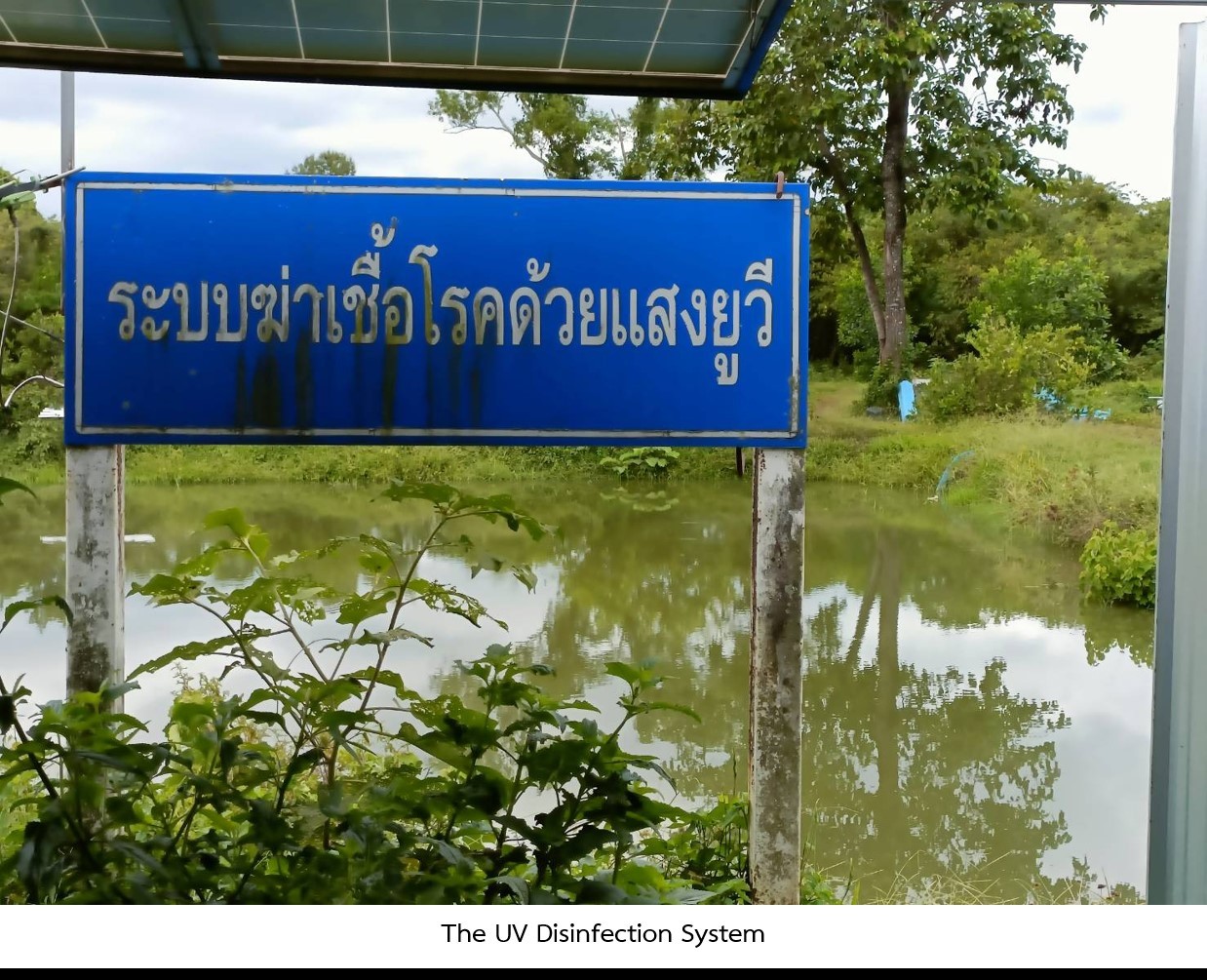
The treated wastewater from Facultative Pond 2 will still contain some bacteria. Therefore, the wastewater must be sterilized using the UV Disinfection System, which can reduce the number of coliform bacteria and fecal coliform bacteria to less than 1,000 MPN/100 mL and 200 MPN/100 mL, respectively. The university maintains and replaces the UV lamps used in this system every year.
The wetland pond, with a capacity of 4,900 cubic meters, can store the wastewater for one and a half days. The pond is used for collecting the wastewater before releasing it to the next pond
The treated water will undergo quality assessment through scientific analysis and testing by raising tilapia in four ponds before being reused. The treated wastewater will meet the effluent standards as specified by the Pollution Control Department.