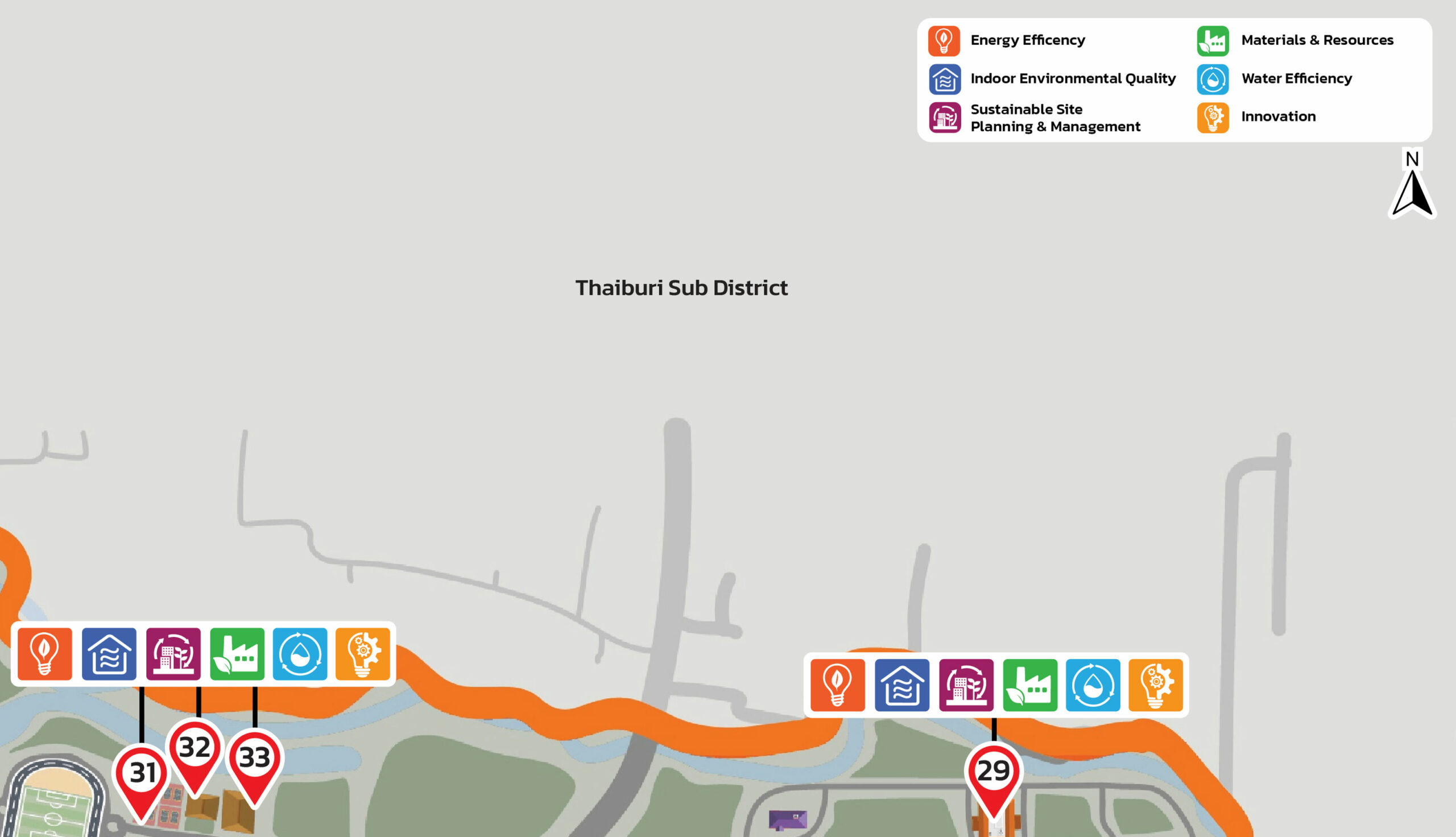
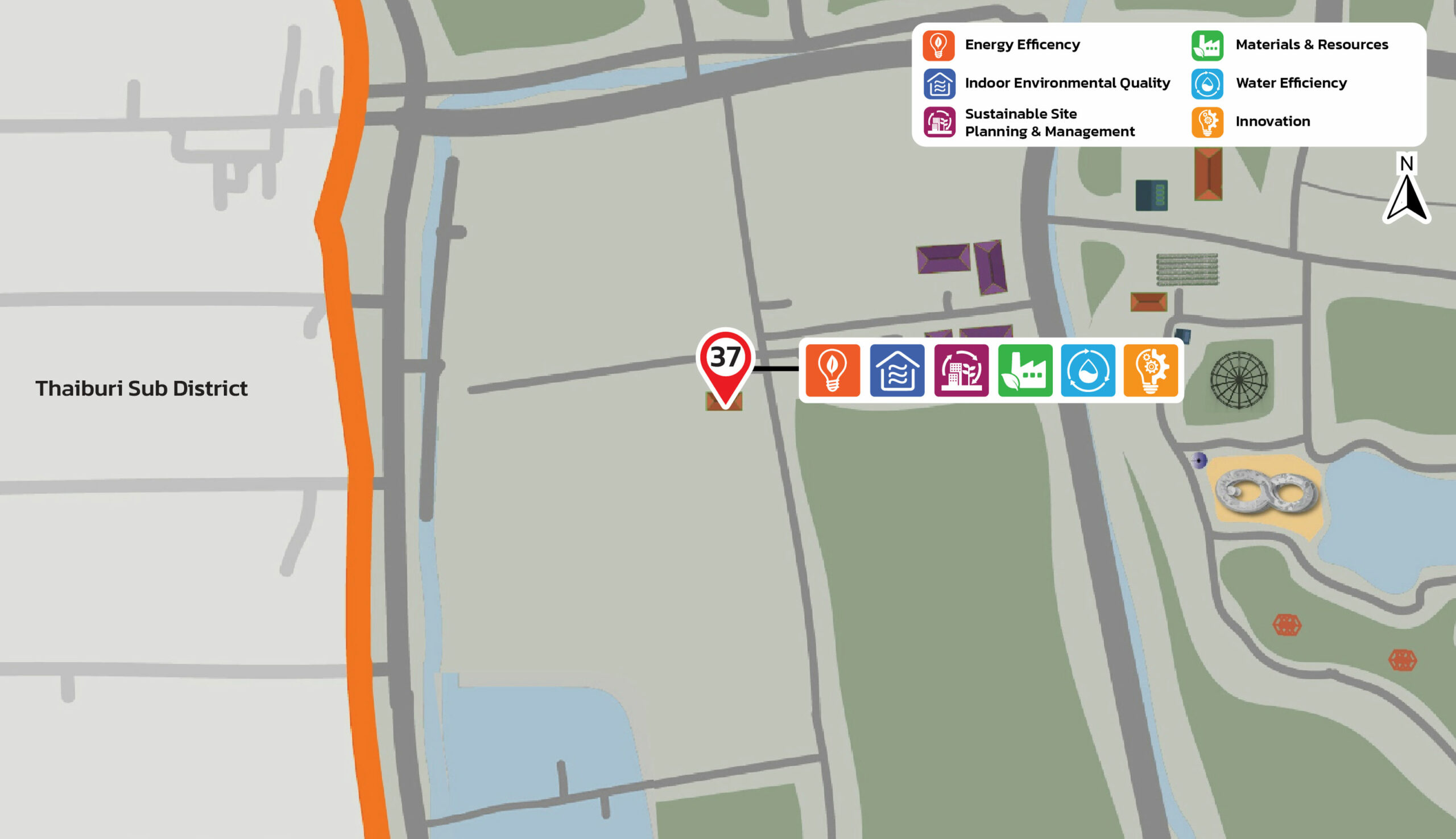
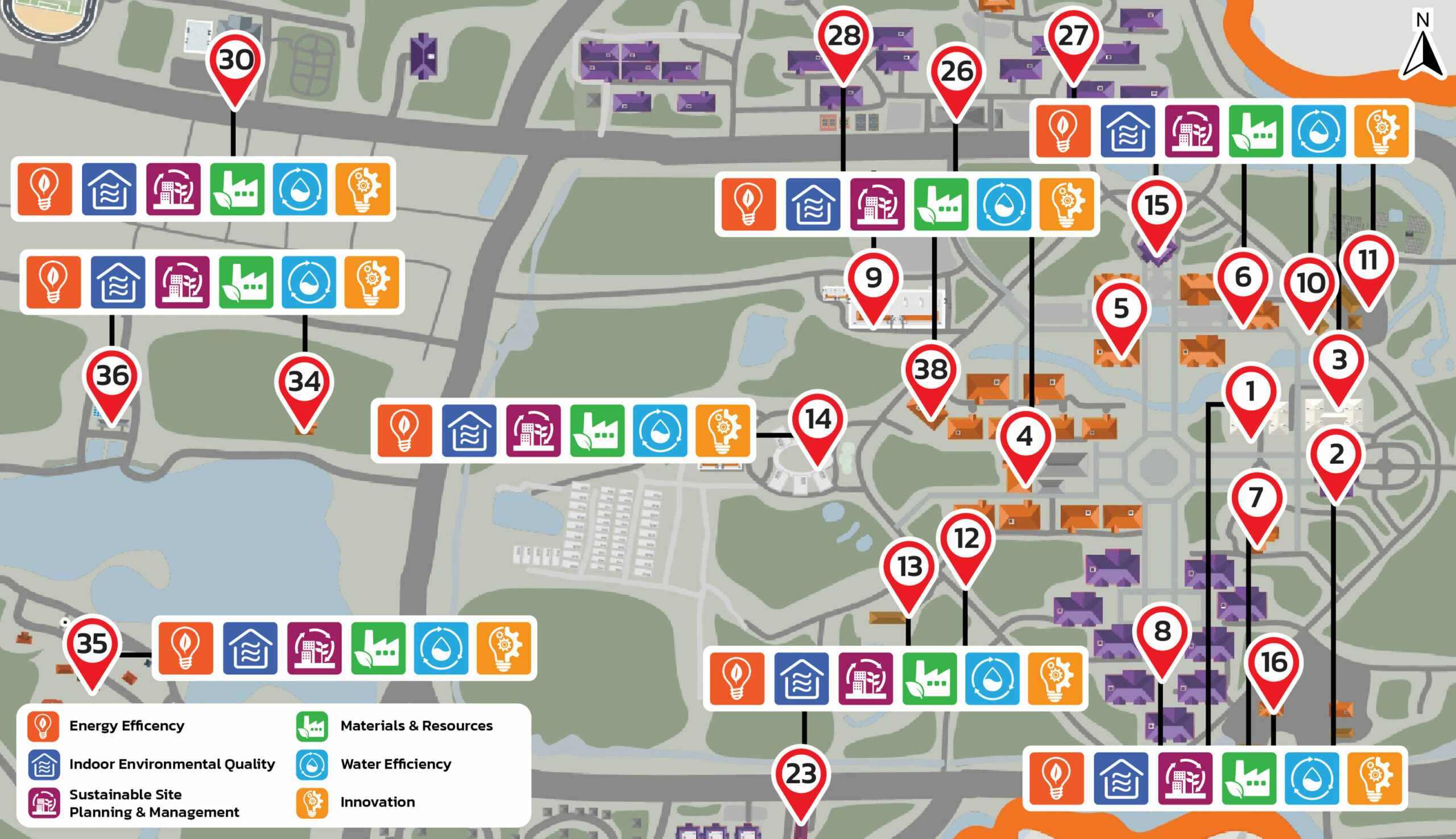
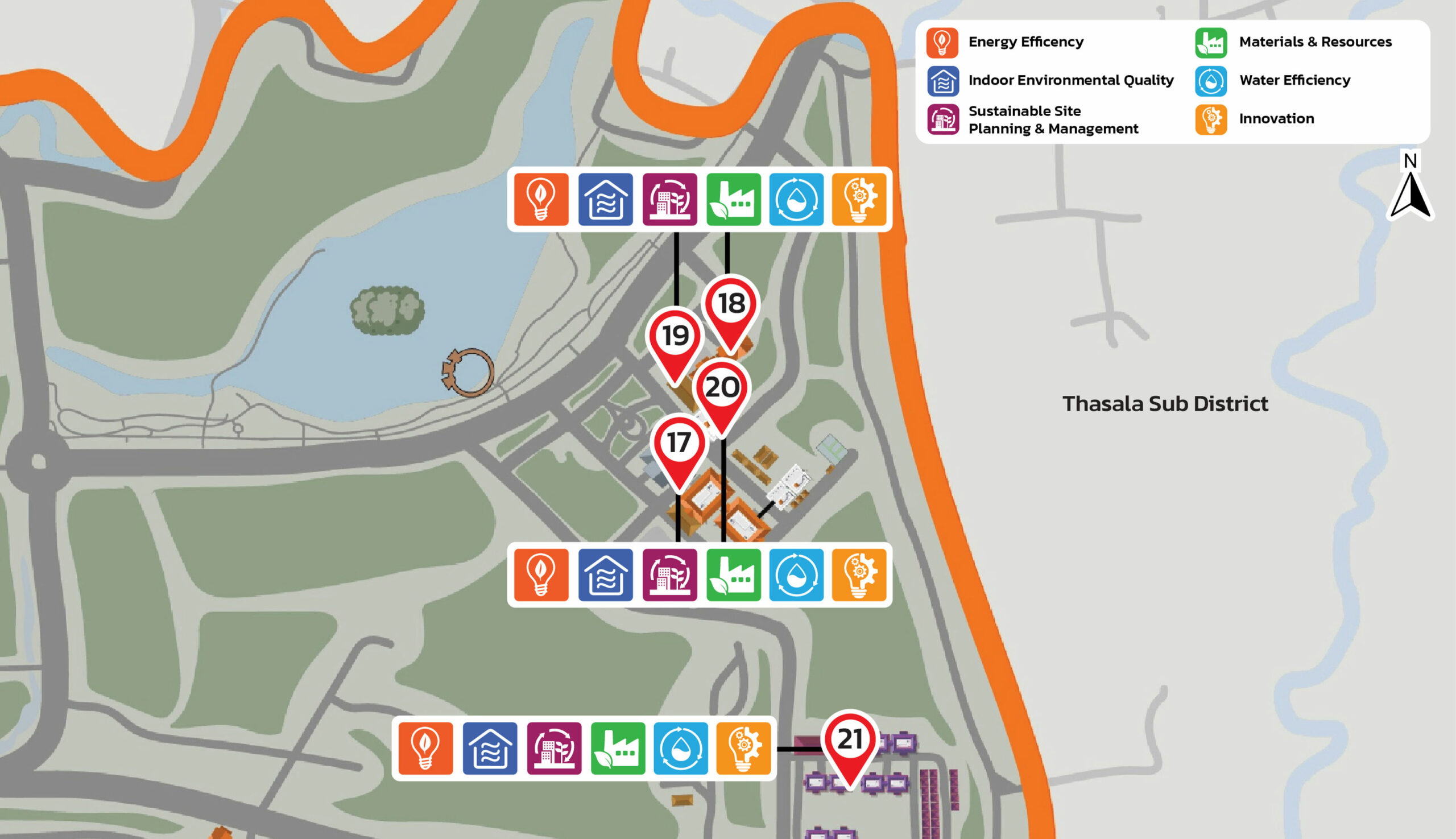
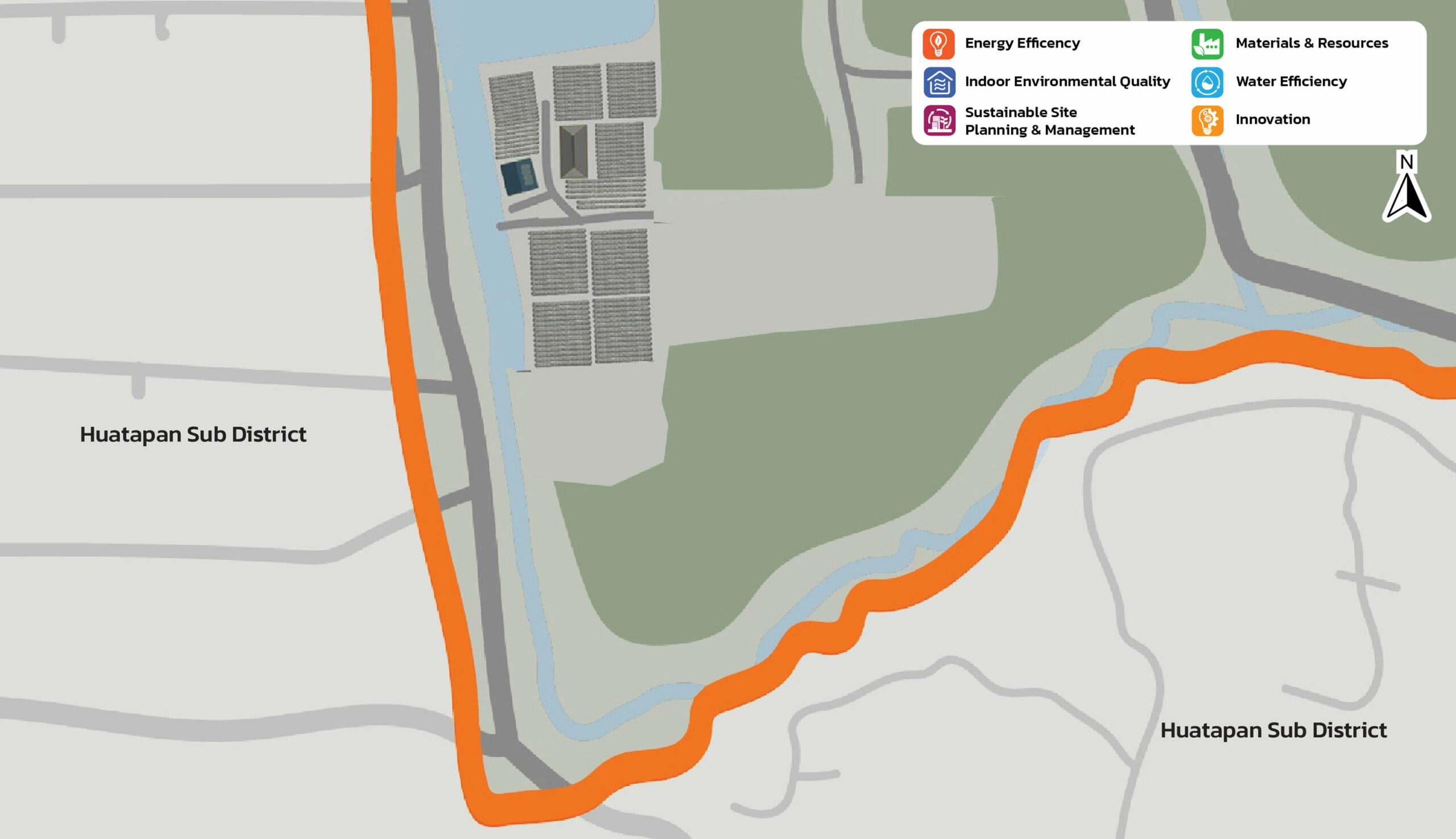
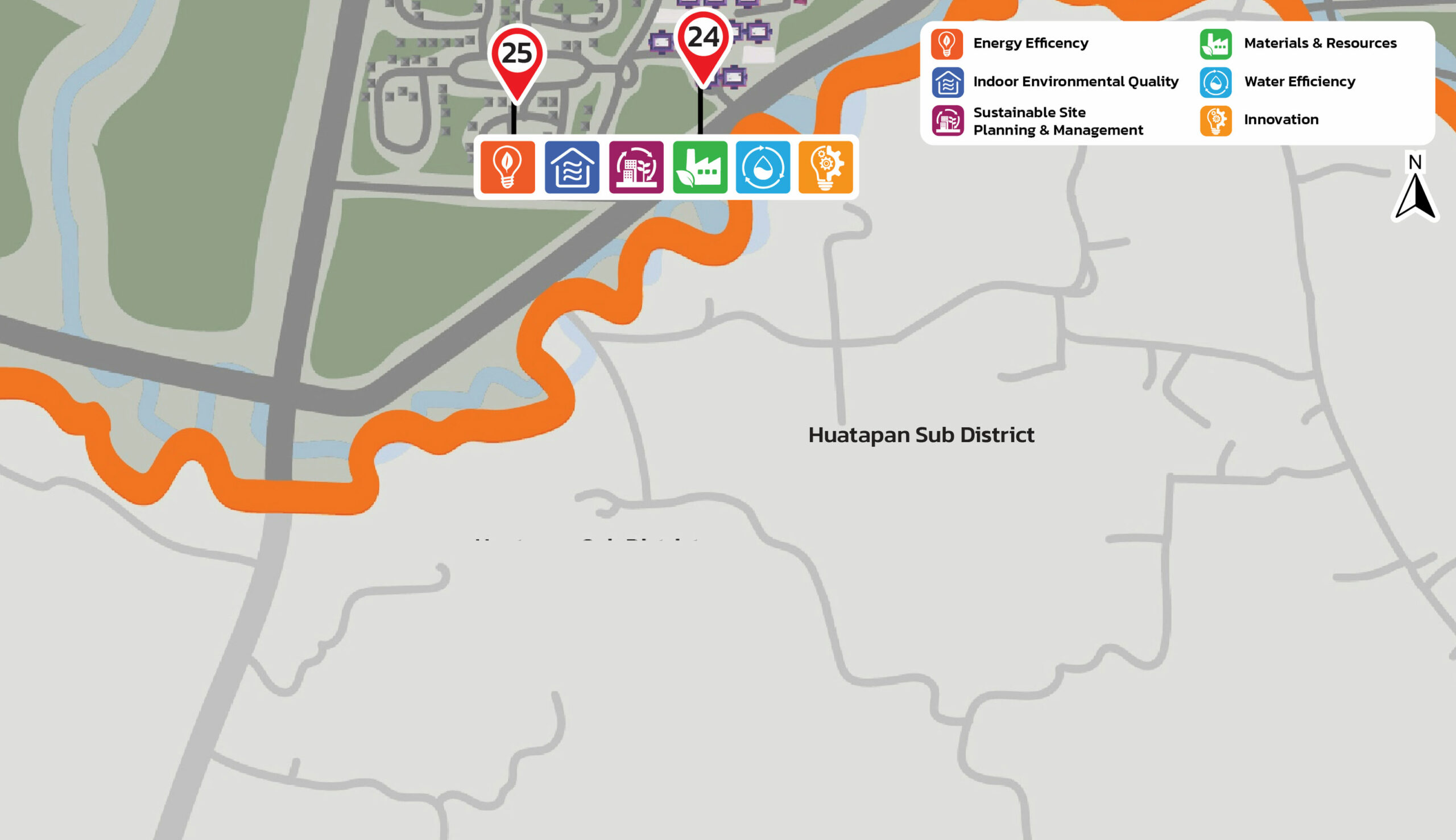
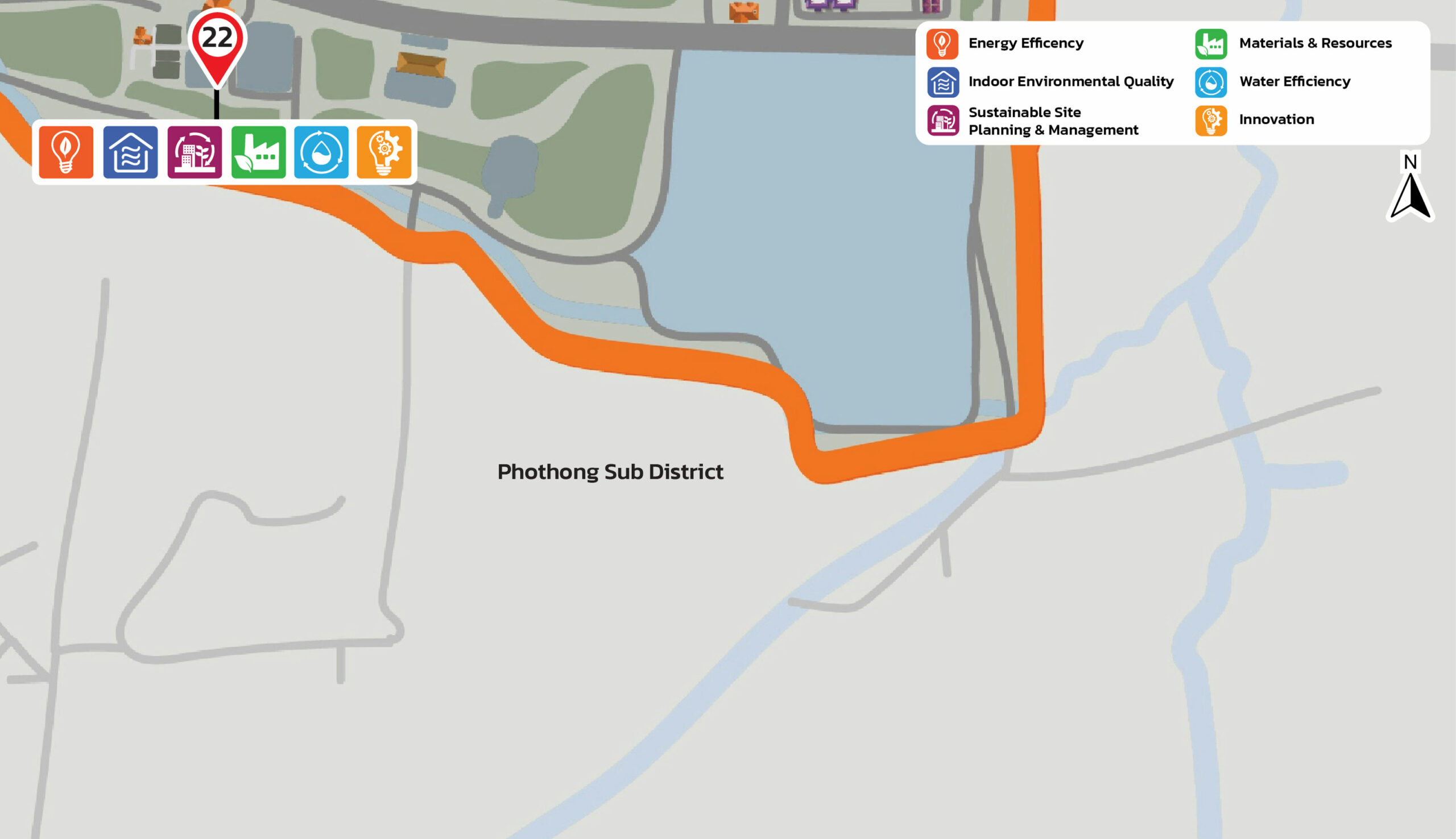
Walailak University demonstrates a comprehensive approach to green building implementation, with > 3 elements reflected across all buildings, emphasizing sustainability, energy efficiency, and resource conservation.
Green Building Elements 1: Energy Efficiency
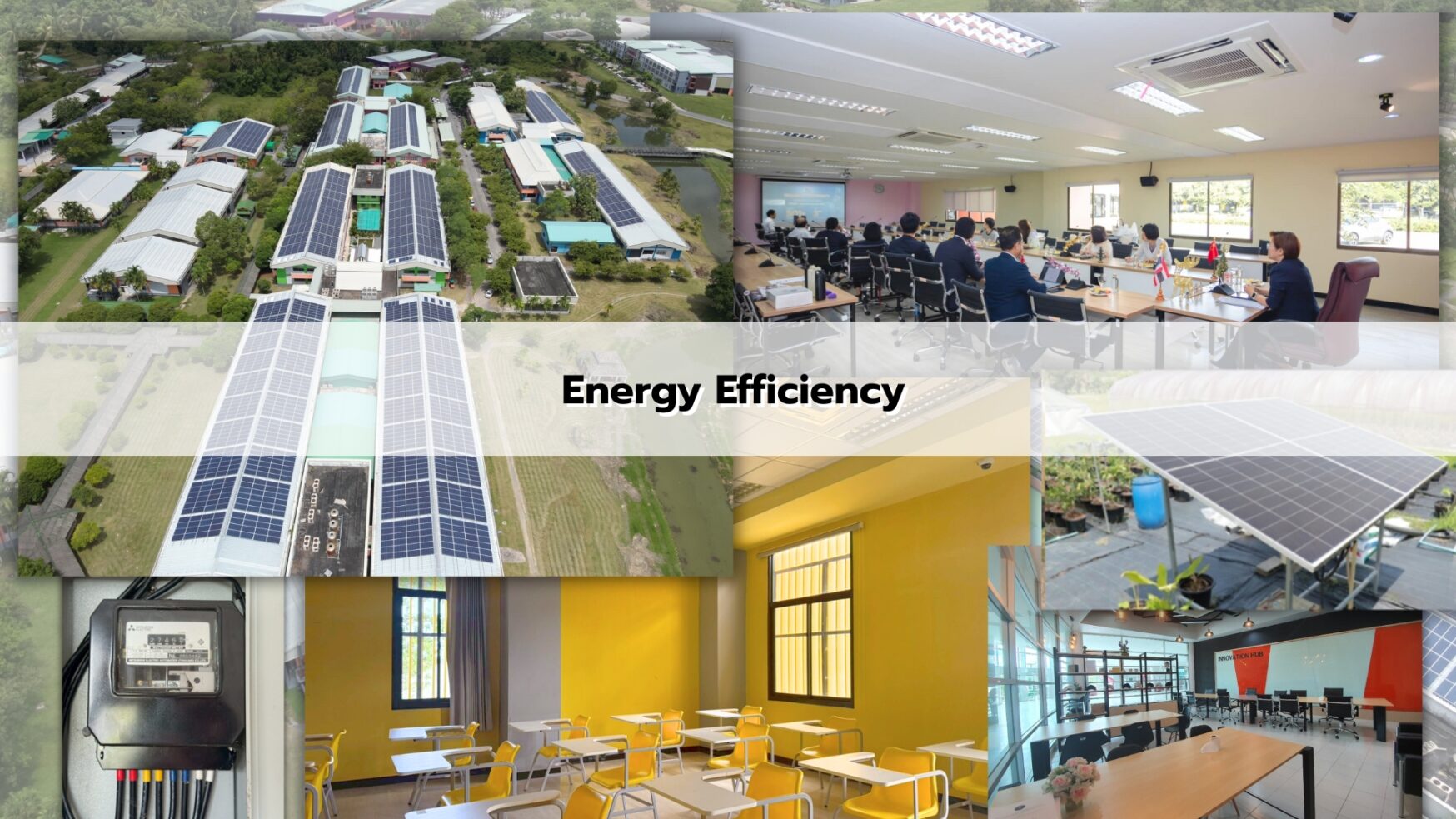
- Lighting Zoning: Walailak University applies lighting zoning strategies to optimize energy use, integrate natural daylight, and improve occupant well-being.
- Electrical Sub-metering: Sub-metering systems monitor electricity consumption in real-time for specific zones and equipment, supporting efficient energy management.
- Renewable Energy (Solar Rooftop): A 2.54 MW solar rooftop at the Center for Scientific and Technological Equipment provides renewable electricity for campus buildings, reducing reliance on the grid and lowering greenhouse gas emissions.
Green Building Elements 2: Environmental Quality
- Environmental Tobacco Smoke (ETS) Control: The campus is smoke-free, maintaining high indoor and outdoor environmental quality.
- Indoor Air Pollutants Monitoring: AI-powered systems track ultrafine particles to raise awareness of air quality and health impacts.
- Thermal Comfort:
– Air conditioning is scheduled according to class timetables for energy efficiency.
– Students and staff can adjust temperature settings.
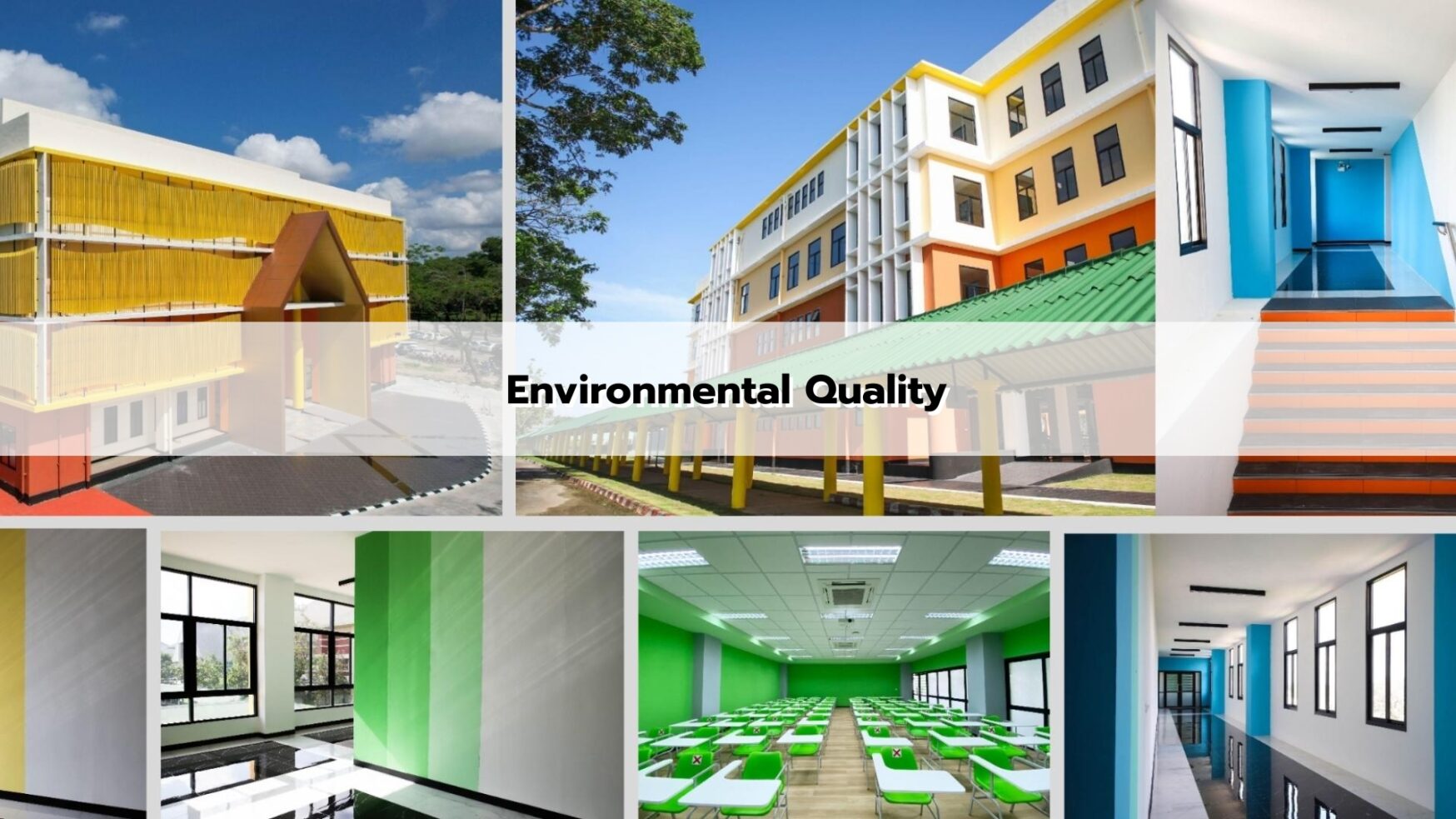
– Heat-reflective, eco-friendly paints reduce indoor temperatures and reliance on AC.
- Air Change Effectiveness: Natural ventilation is integrated into building design to improve indoor air quality and reduce mechanical cooling needs.
- Daylighting: Polycarbonate panels allow natural daylight to brighten indoor spaces while reducing electricity use.
- External Views: Trees provide natural shading to reduce heat gain and energy use, enhancing campus aesthetics.
- Internal Noise Levels: Low noise levels support acoustic comfort; students practice annual monitoring of indoor sound quality.
Green Building Elements 3: Sustainable Site Planning & Management
- Brownfield Redevelopment: Previously used or contaminated sites have been transformed into sustainable learning and working environments
- Transportation:
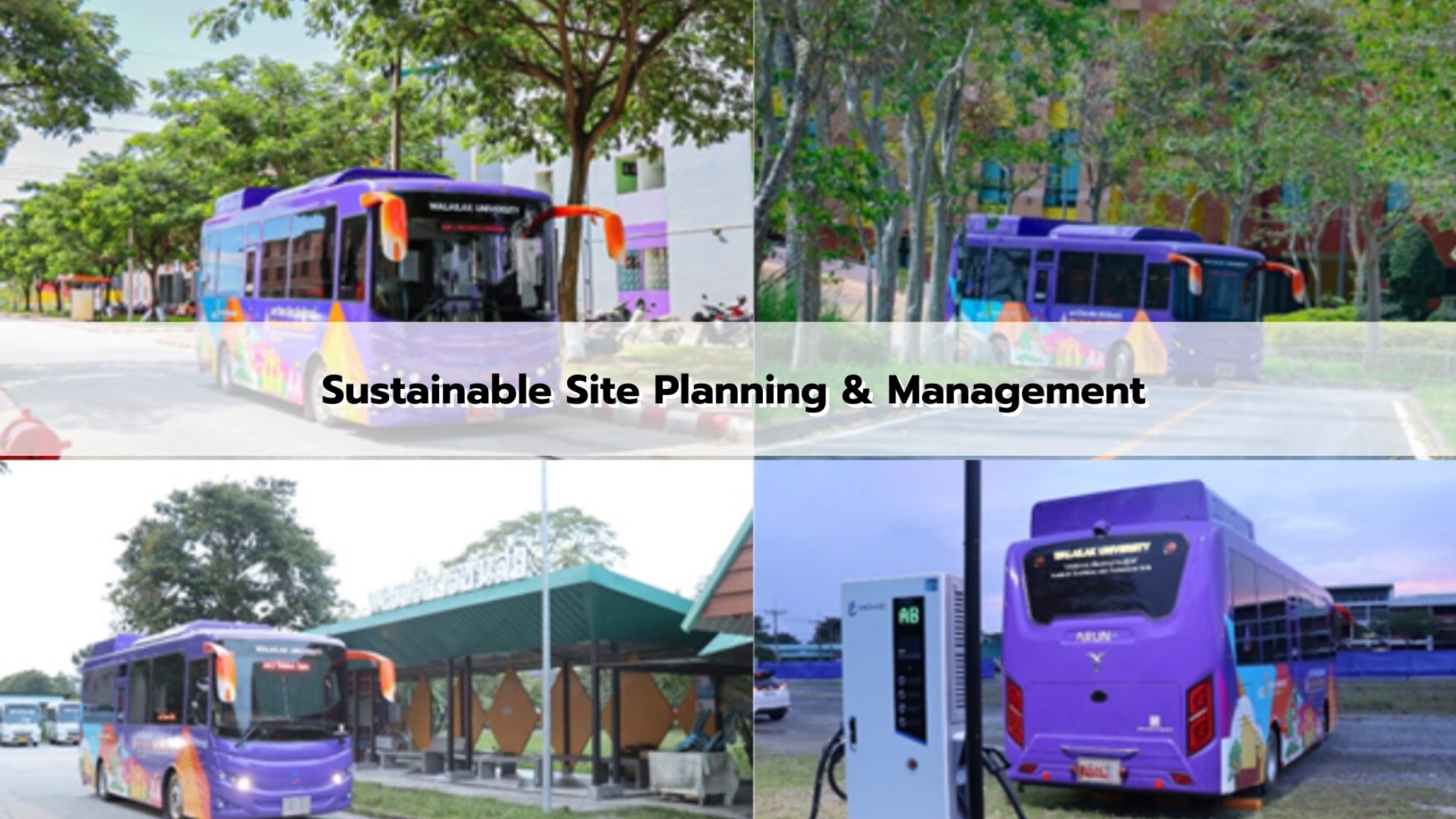
– Promotion of Green Vehicles (low-emitting, fuel-efficient, EVs, hybrids) with EV charging stations
– Improved Public Transportation Access via campus shuttle buses
– Reduced reliance on private vehicles, supporting sustainable mobility and low-carbon campus goals
Green Building Elements 4: Materials & Resources
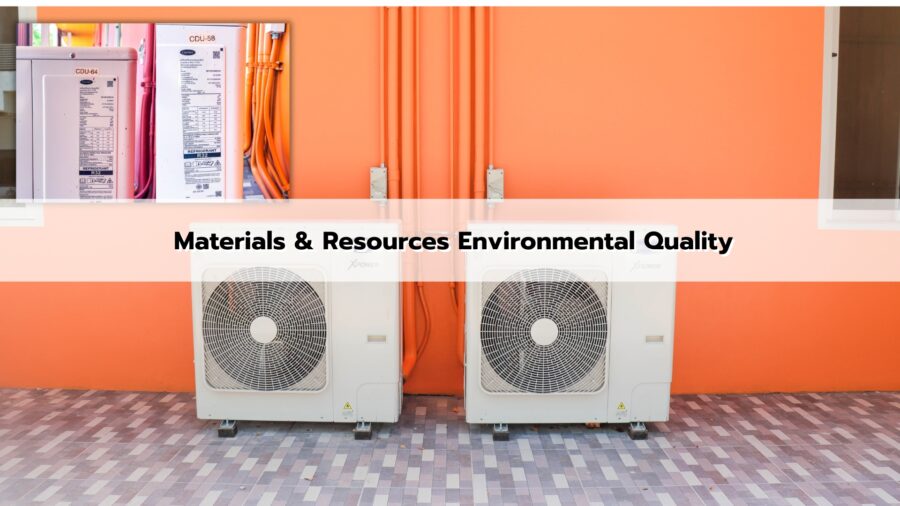
- Green Products: Use of R-32 refrigerant instead of R-22 or R-410A reduces ozone depletion and global warming potential while maintaining energy efficiency.
Green Building Elements 5: Water Efficiency
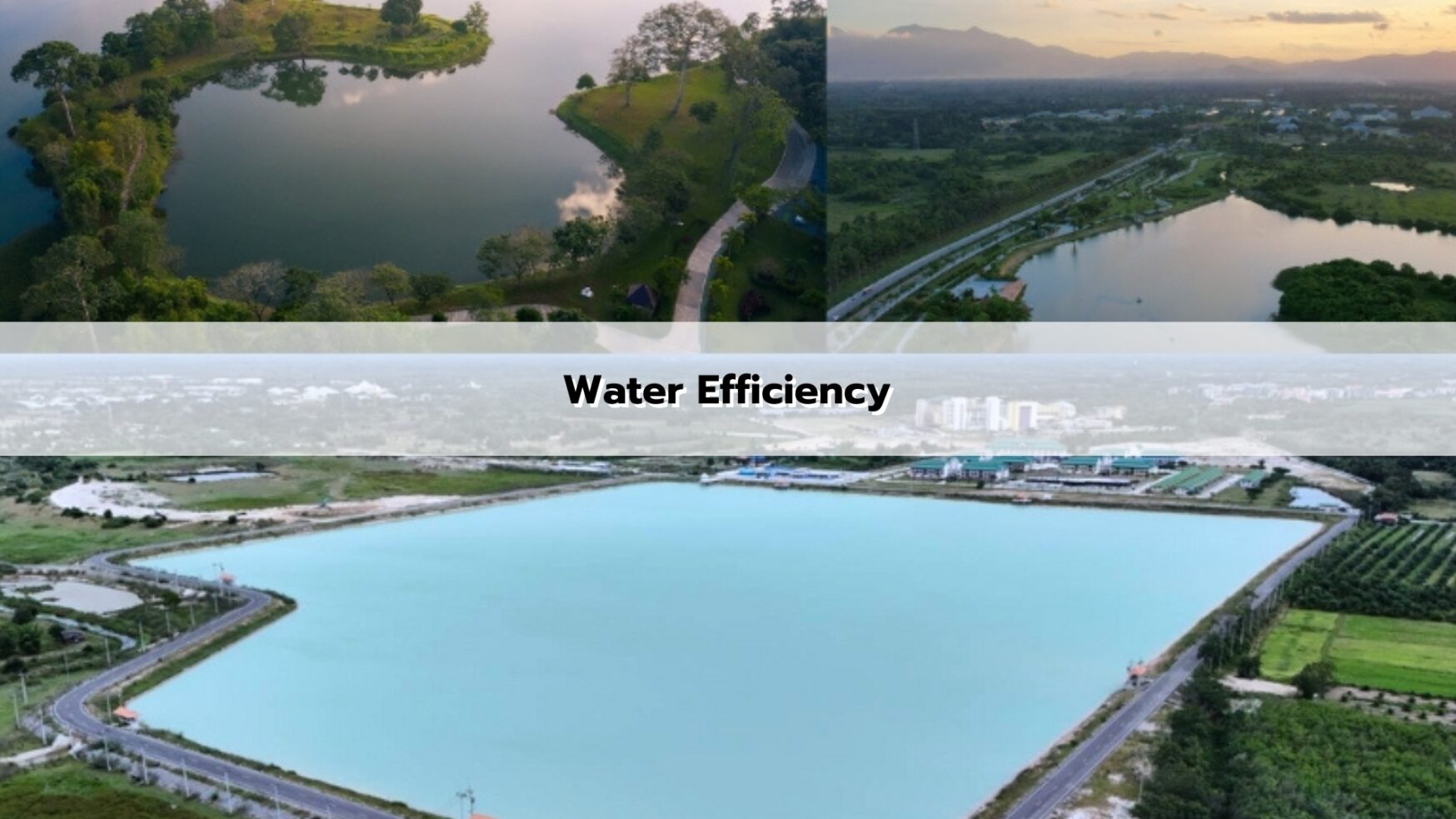
- Water Harvesting & Recycling: Rainwater Harvesting and Water Recycling systems reduce freshwater consumption and support sustainable campus water management.
- Increased Efficiency: Water-efficient fittings (low-flow faucets, urinals, toilets) minimize water use and promote sustainability.
This summary reflects Walailak University’s comprehensive implementation of green building practices, integrating energy efficiency, environmental quality, sustainable site management, resource conservation, and water efficiency across all campus buildings to create a low-carbon, environmentally friendly campus.