The Provision of Free Drinking Water to Enhance Quality of Life and Public Utilities at Walailak University
Drinking water is a fundamental resource essential for human survival, and water security is therefore at the heart of sustainable development at every level. However, in today’s society, many people still lack access to clean and safe drinking water. Walailak University, located in southern Thailand, covers an area of more than 21,000,000 square meters and is recognized as the largest university in the country. In 2024, the university is striving to develop into a “Residential University” with comprehensive infrastructure and public utilities, along with full facilities for education, daily living, and work. The aim is to ensure that the university community—including students, staff, and visitors—can live in an environment that is green, safe, enjoyable, and conducive to both formal and informal learning.
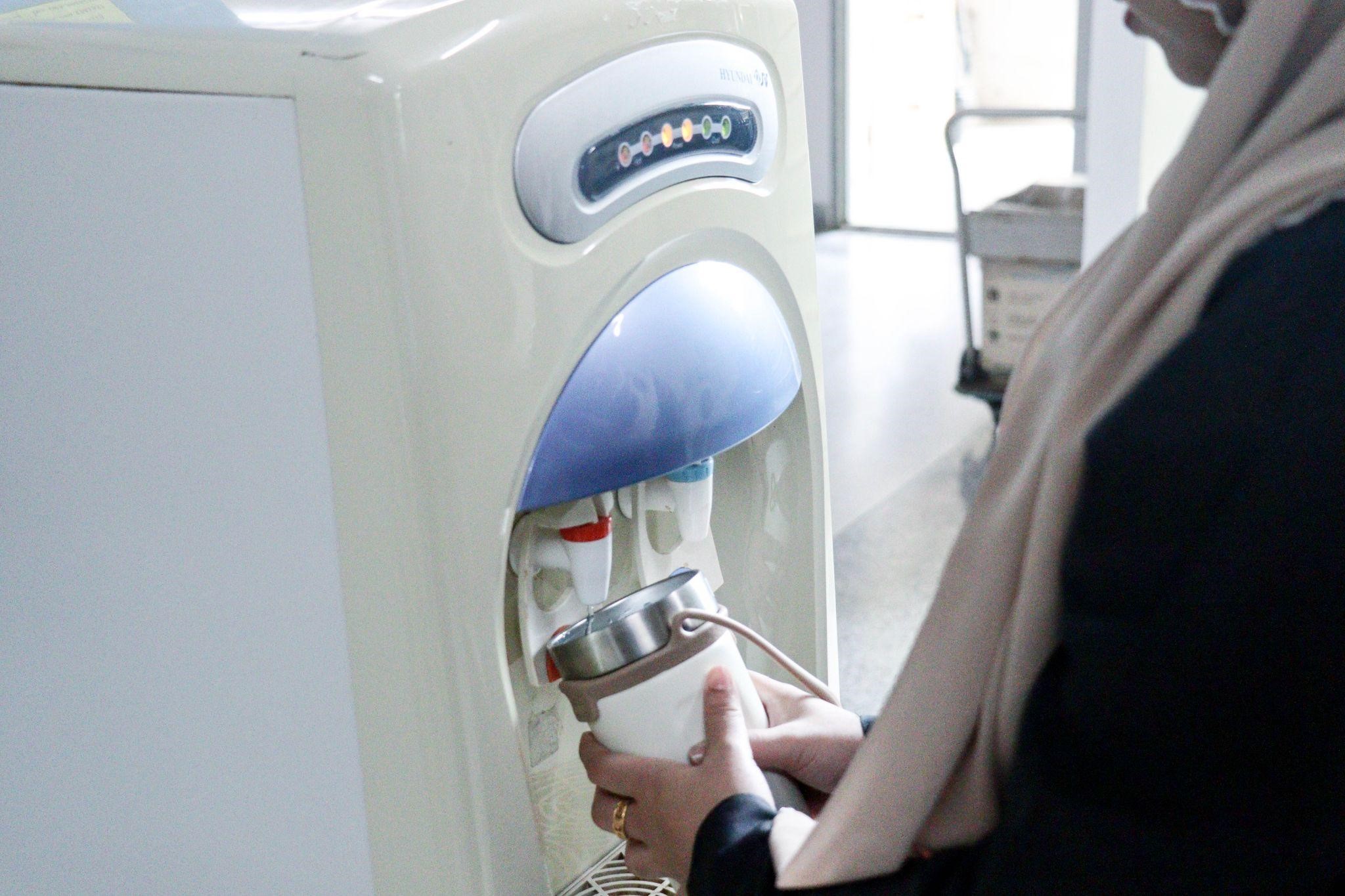
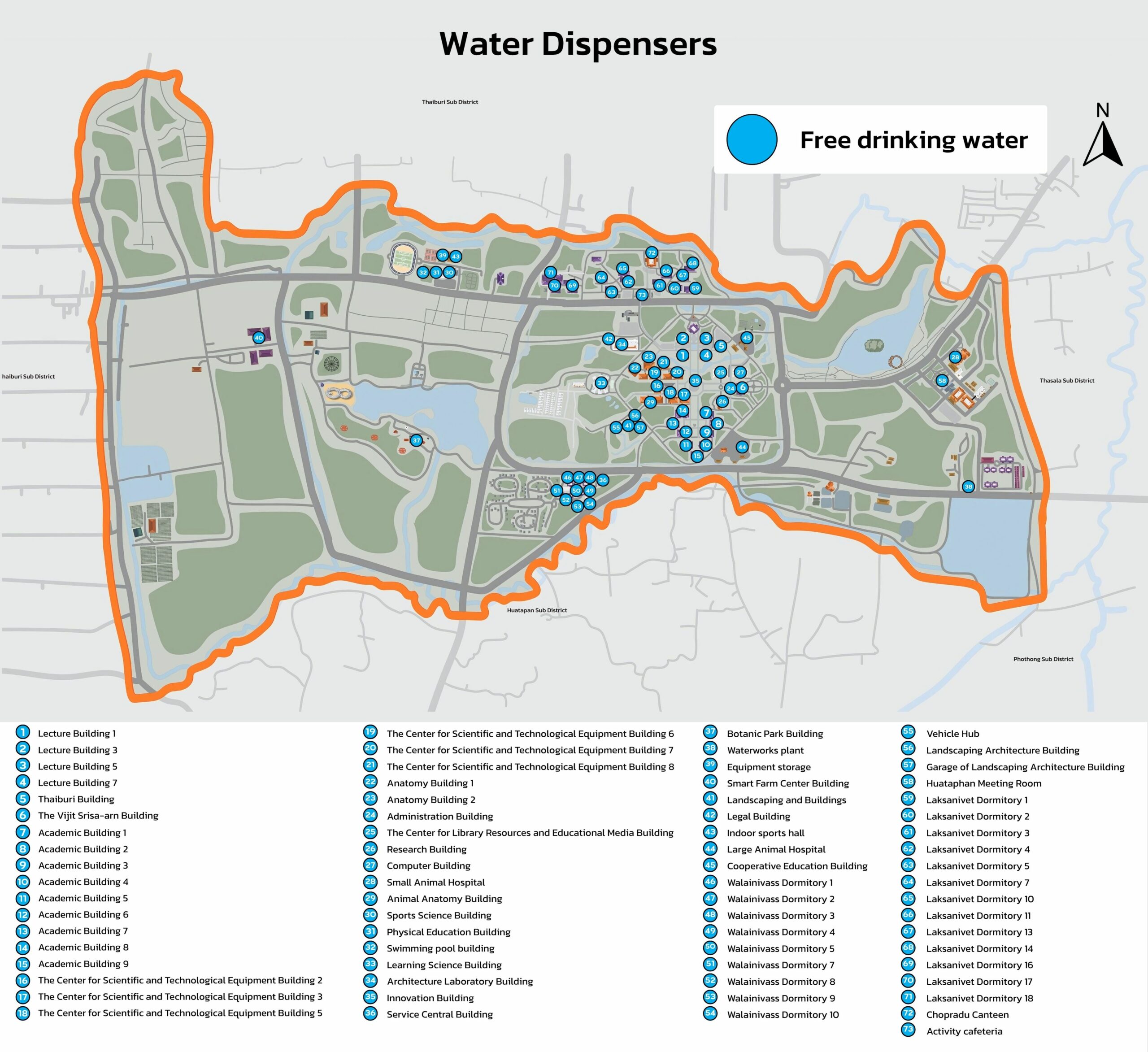
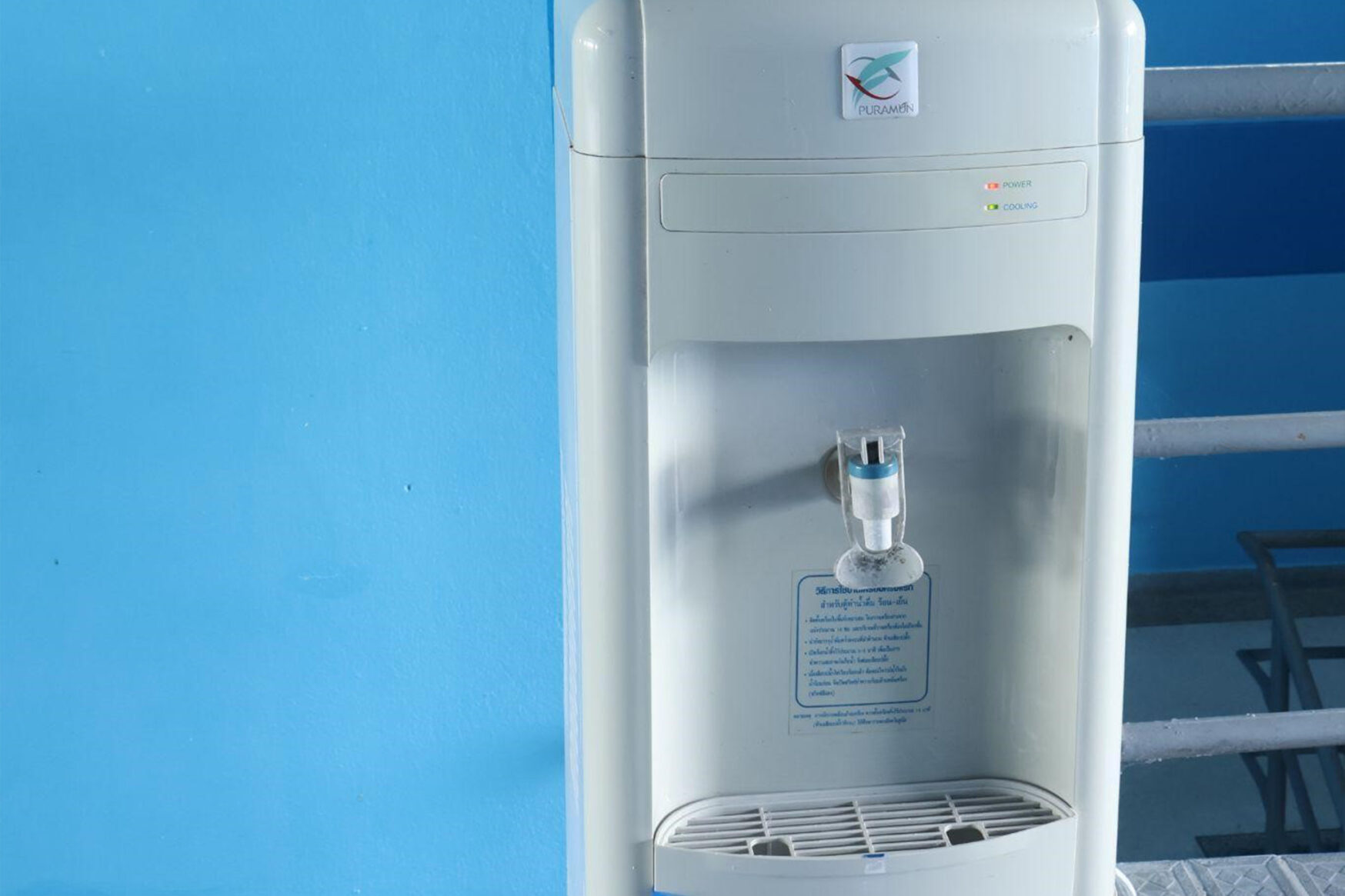
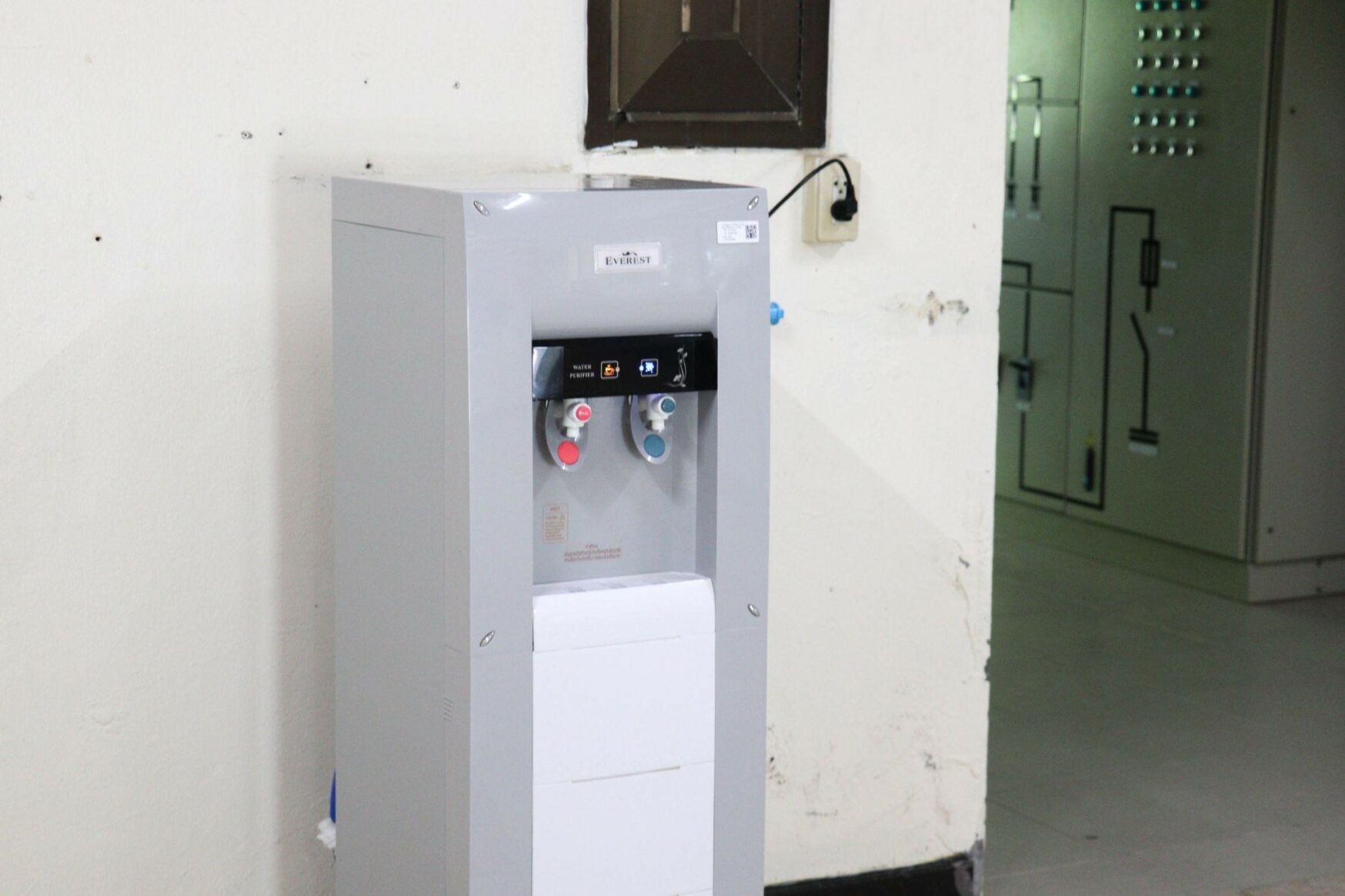
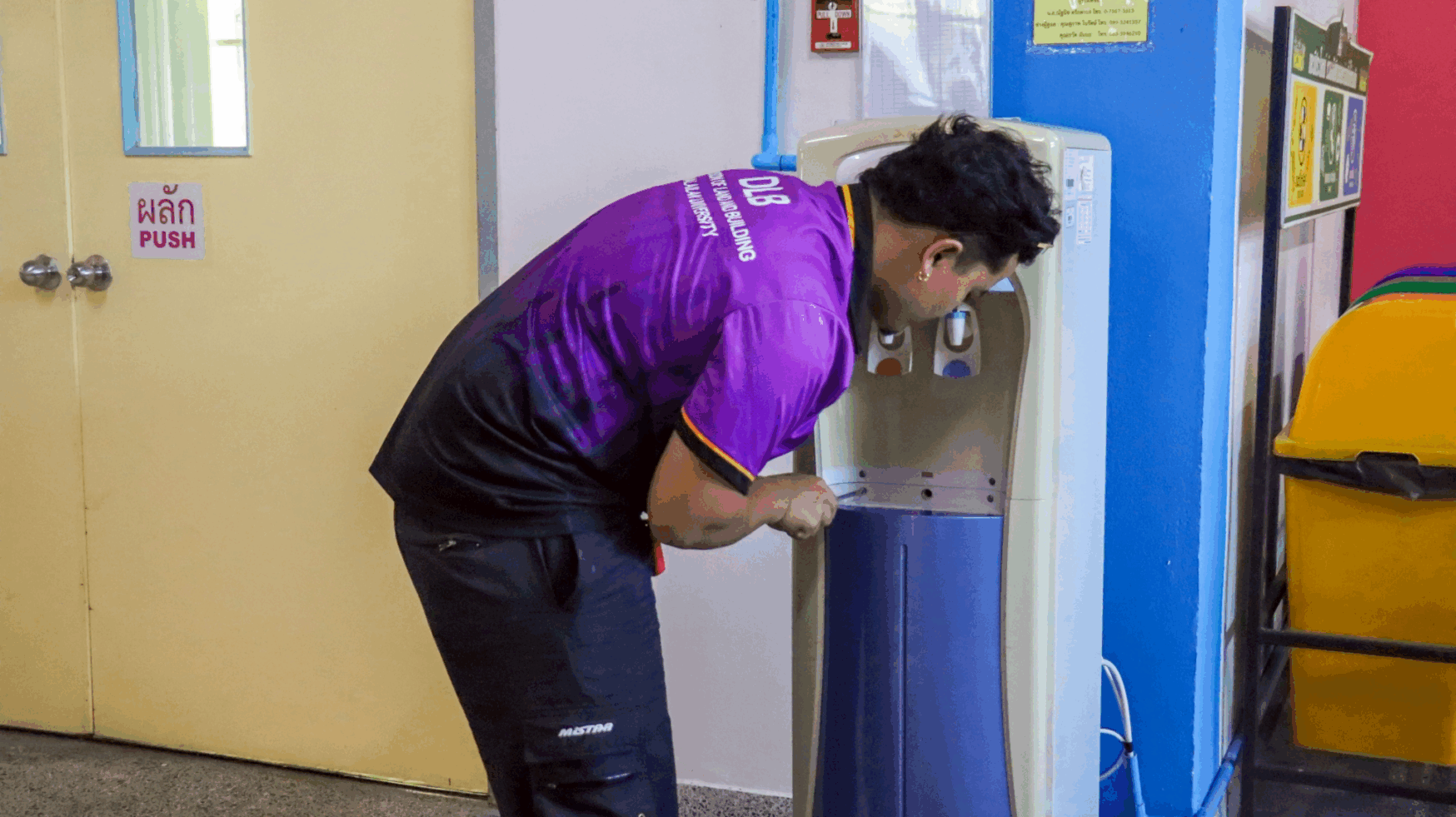
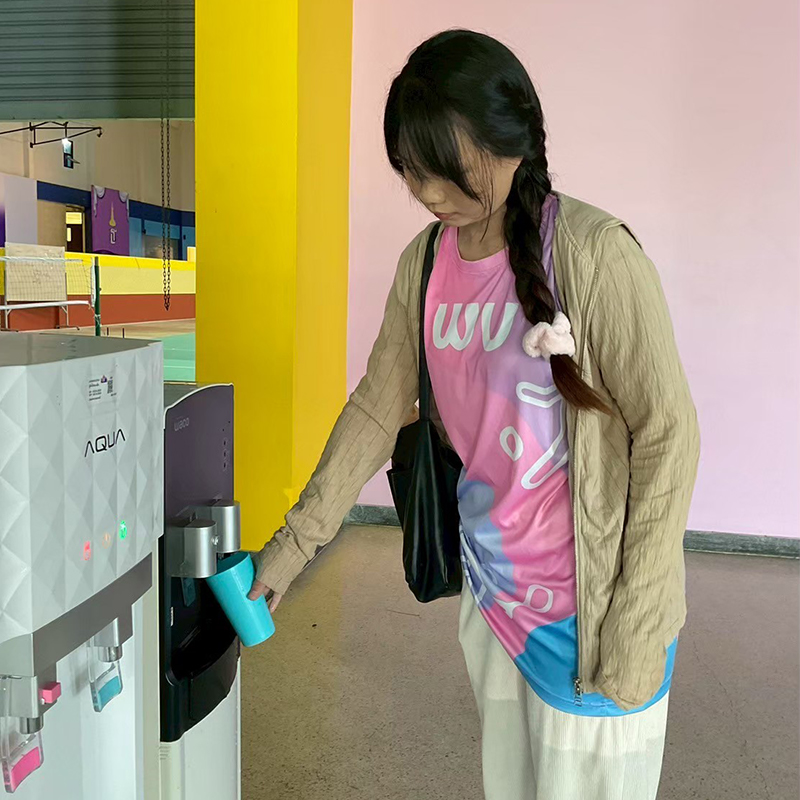
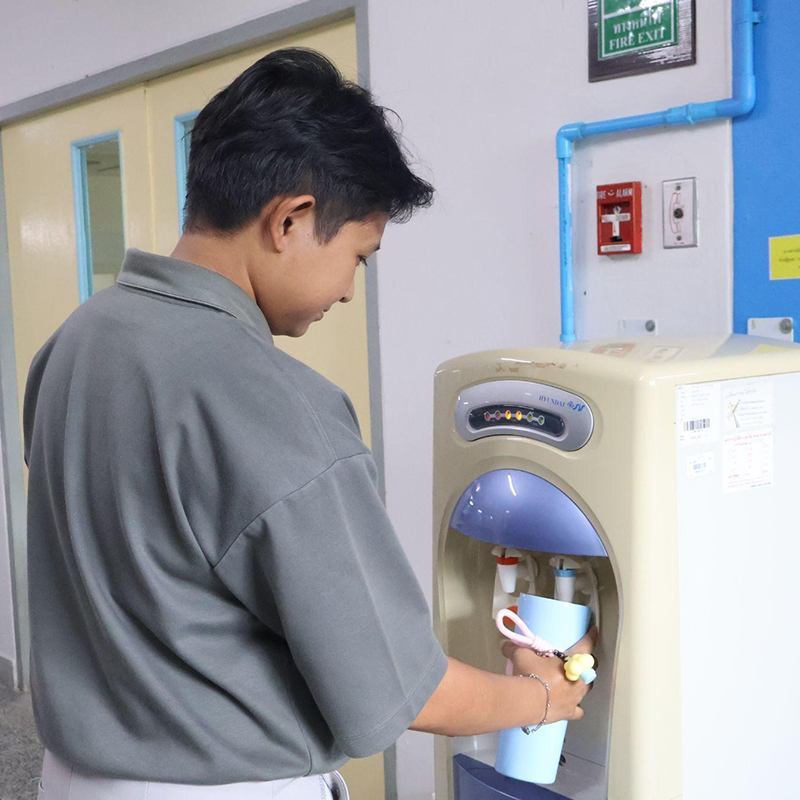
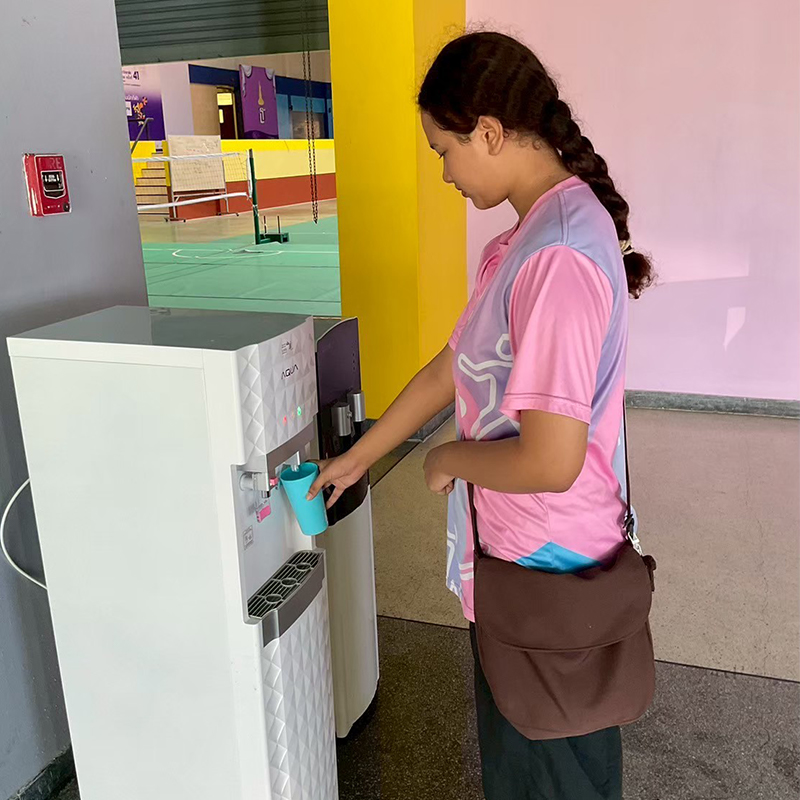
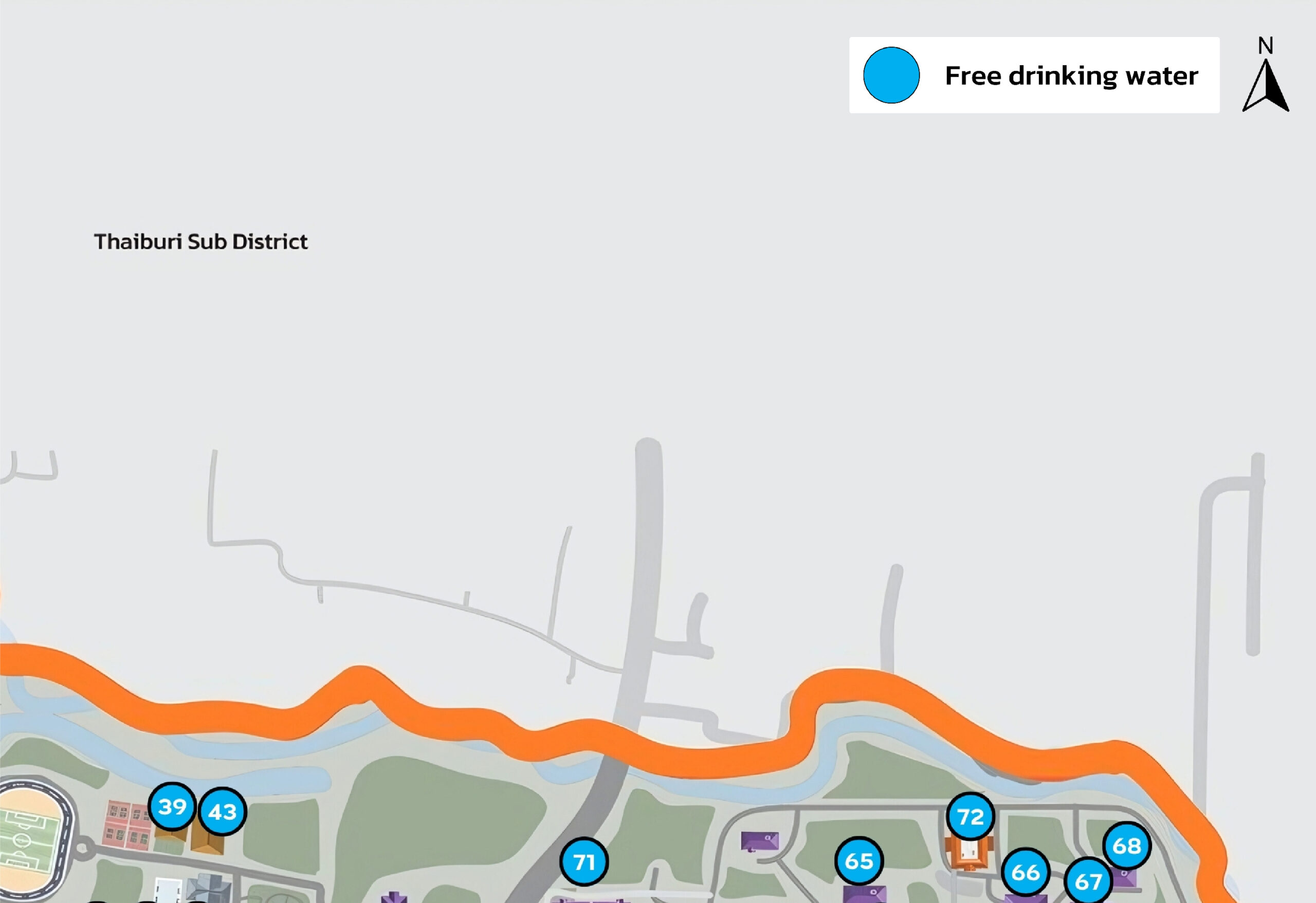
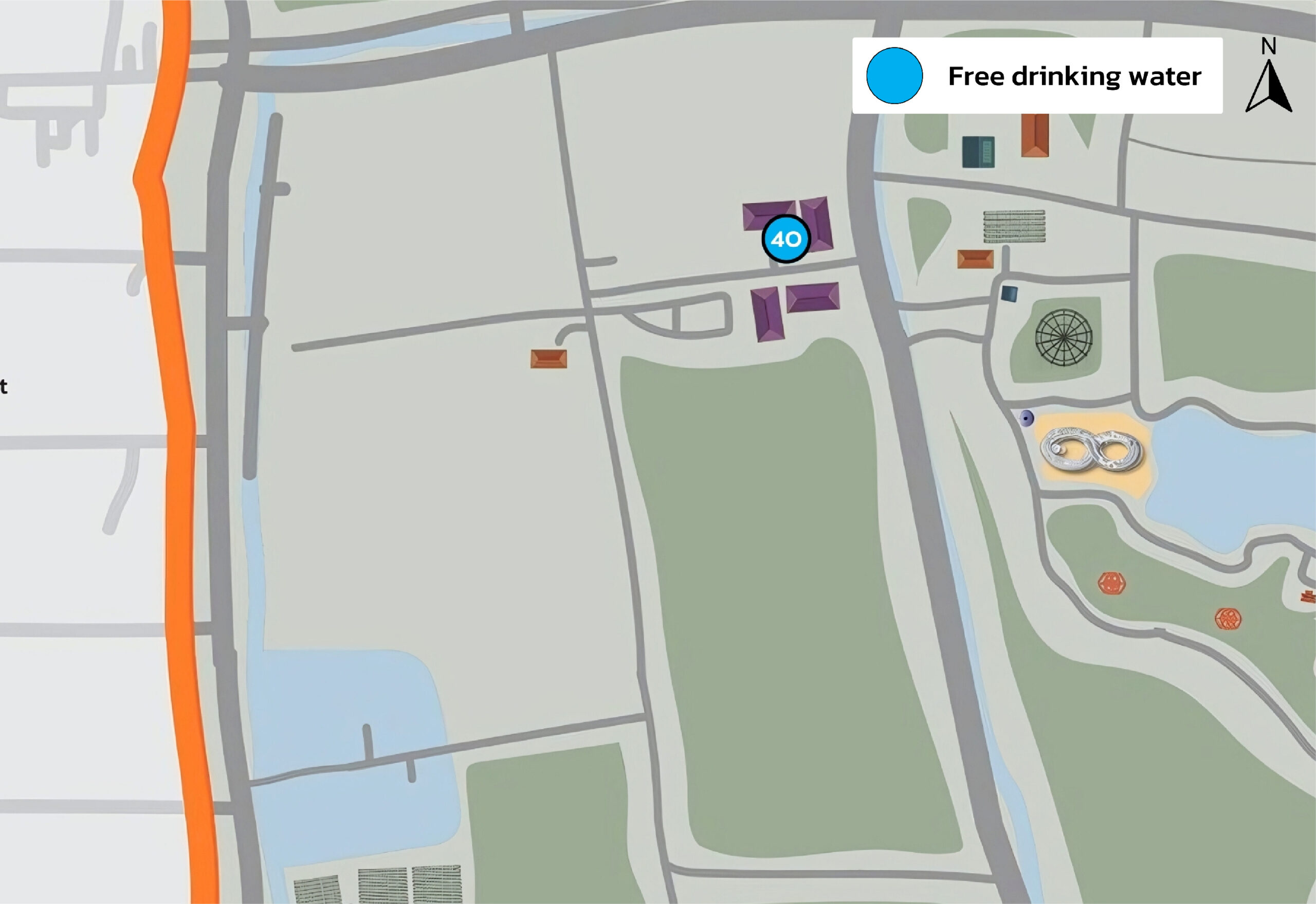
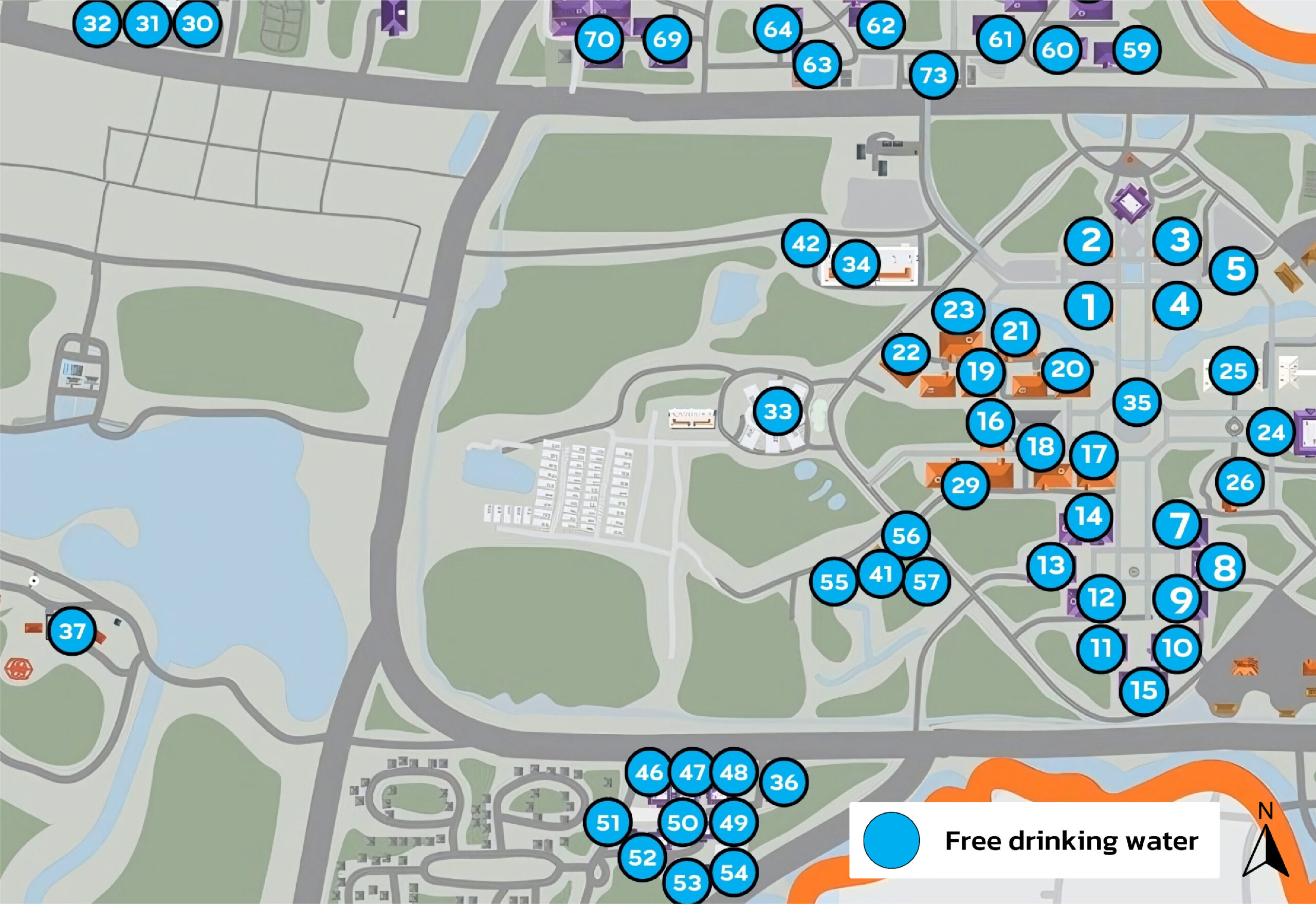
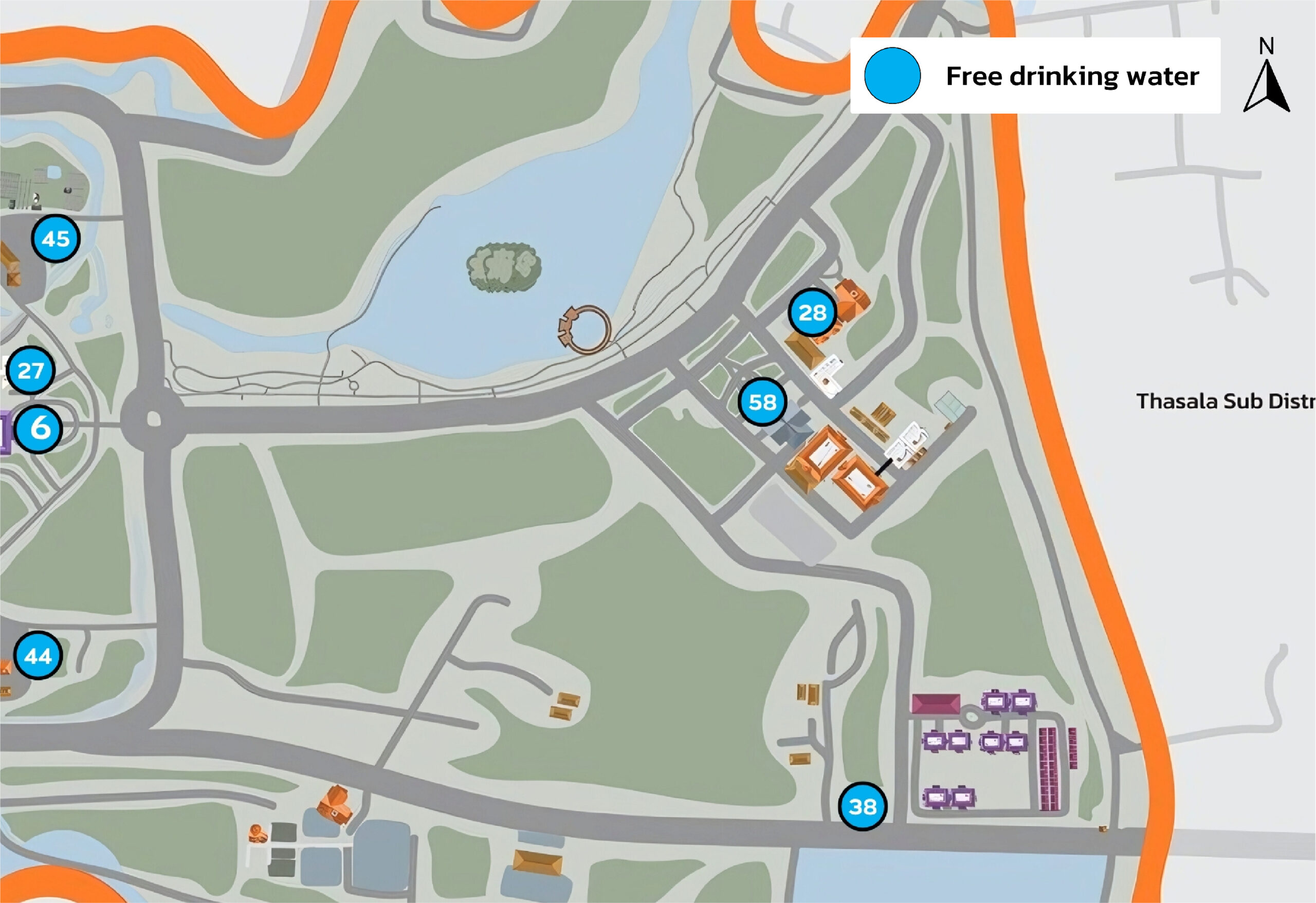
Figure : Provision of Free Drinking Water Dispensers in Every Building at Walailak University for Students, Staff, and Visitors
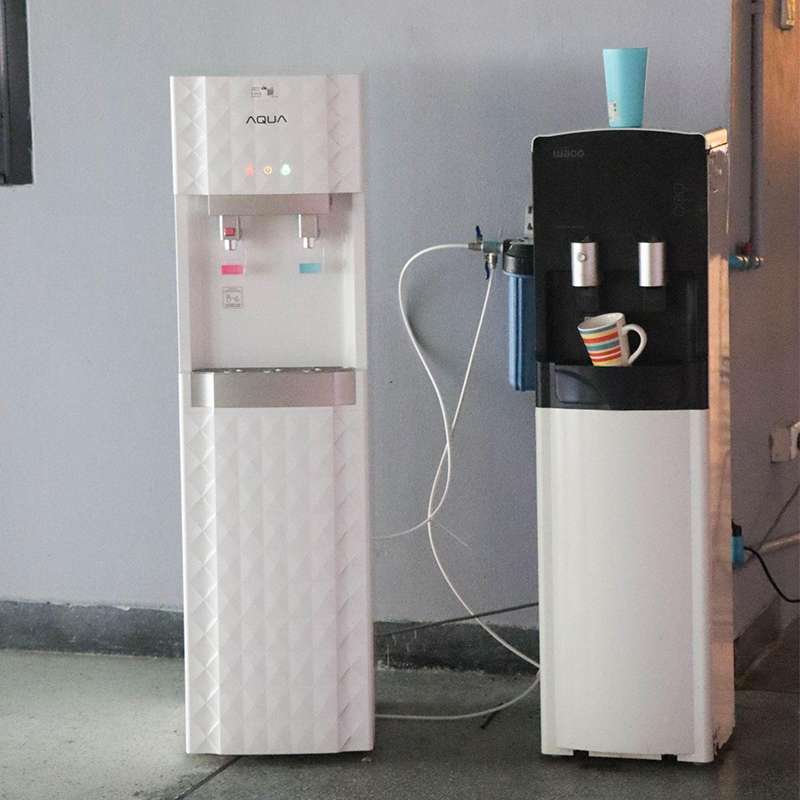
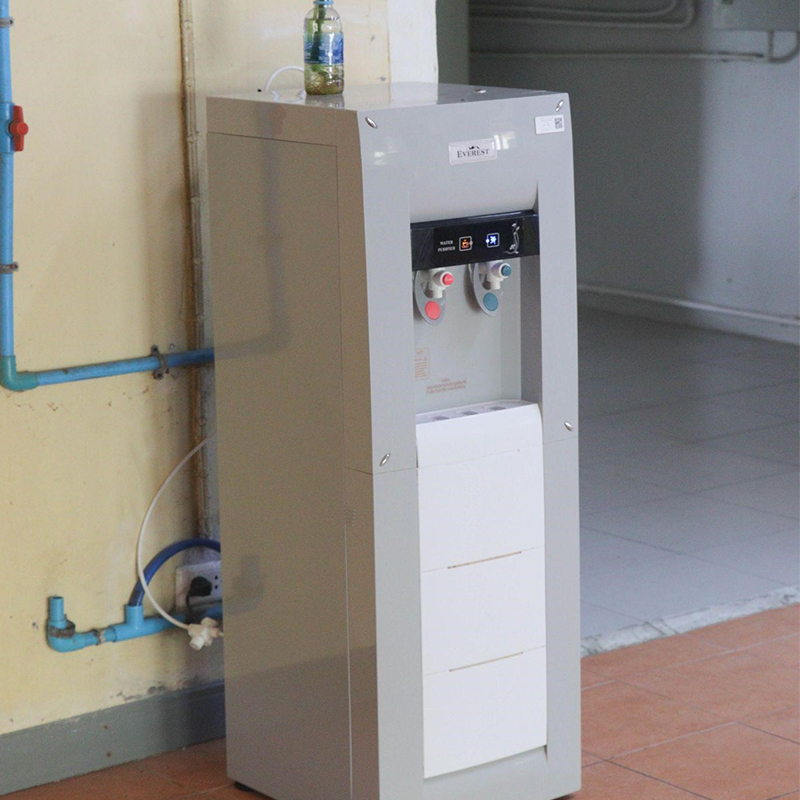
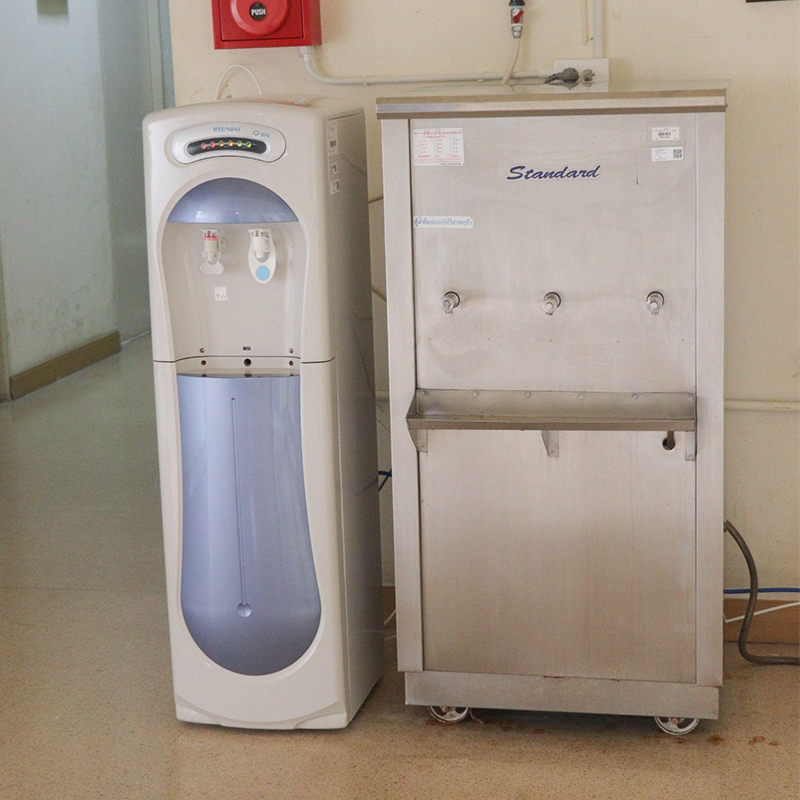
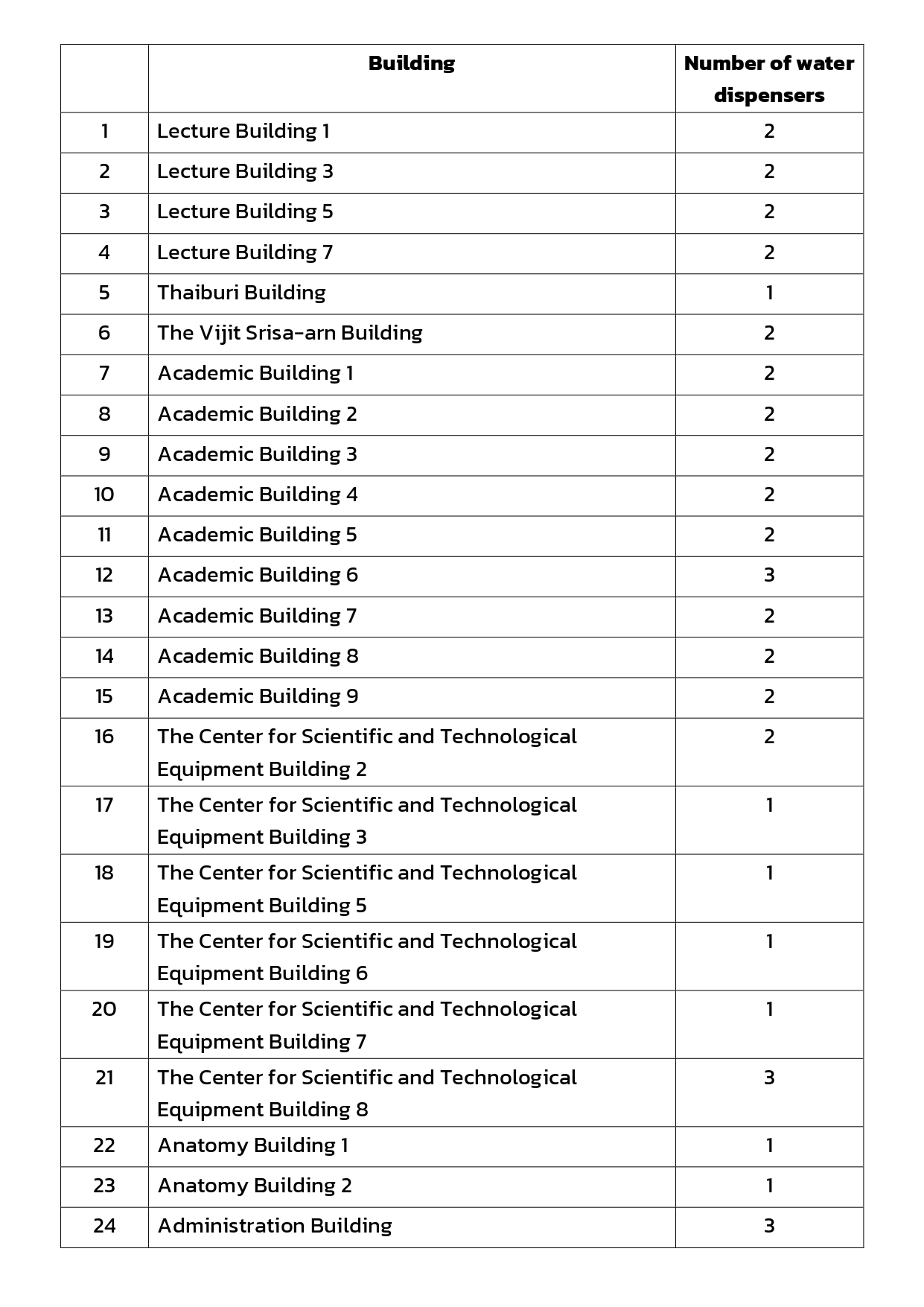
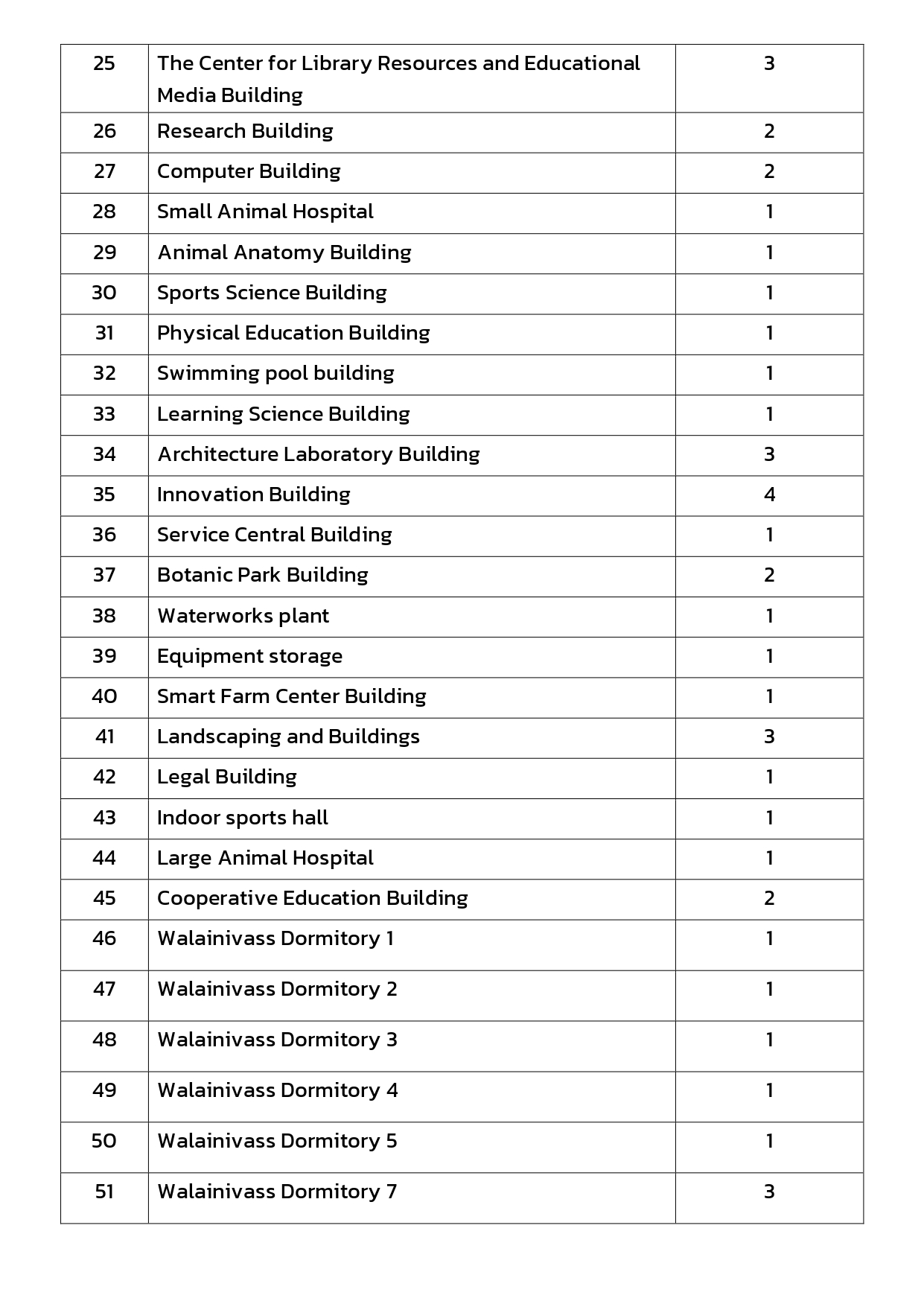
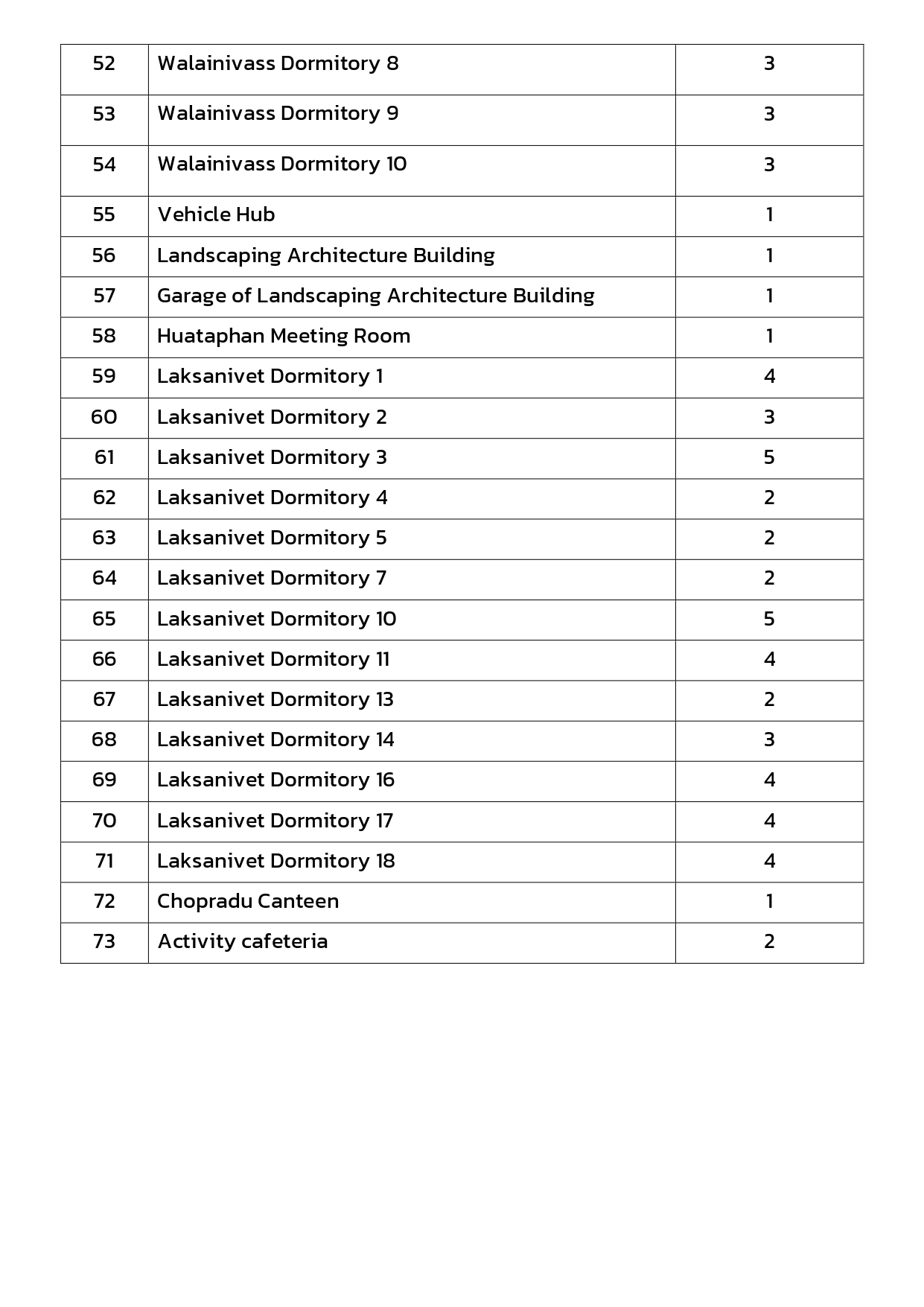
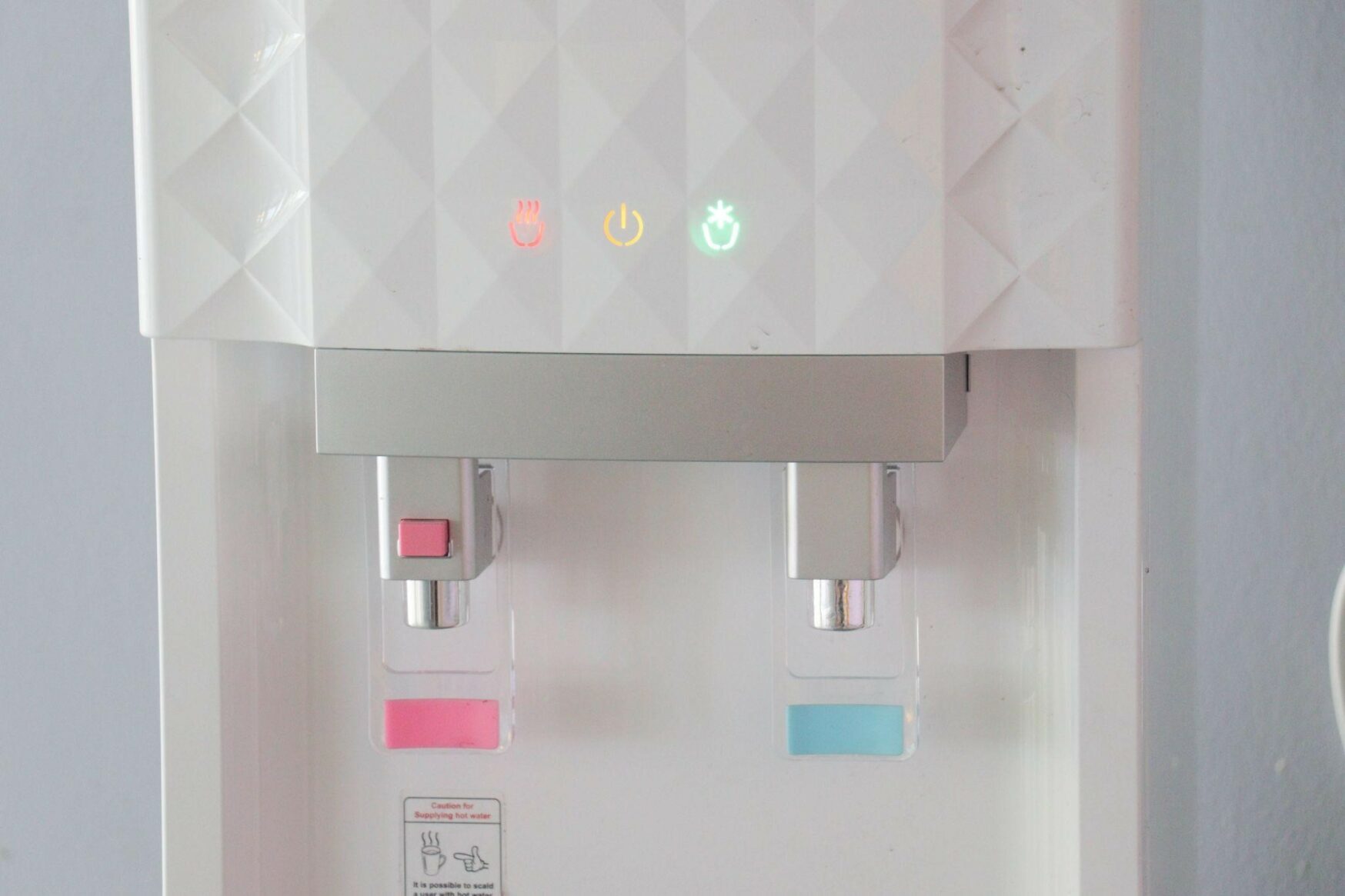
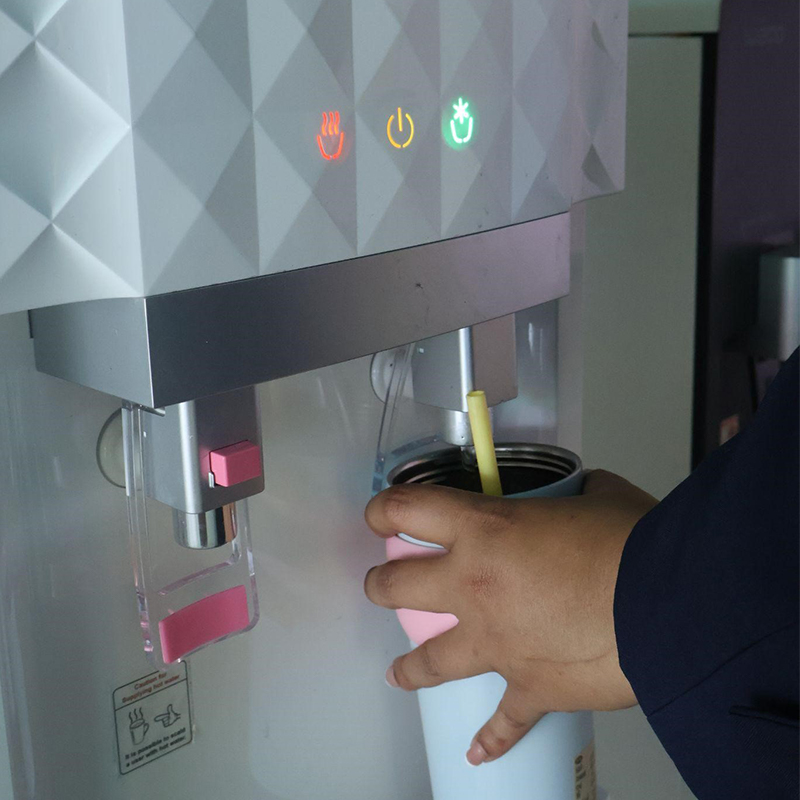
Providing free drinking water has increasingly become a social policy of interest, as it not only helps reduce the financial burden on the public but also plays an important role in promoting resource equity and supporting the Sustainable Development Goals (SDGs). At present, the university has enhanced quality of life by providing additional free drinking water fountains and dispensers for students, staff, and visitors—expanding from the original 2 dispensers located at the Vijit Srisa-arn Building. In total, the university now provides more than 140 free drinking water fountains and dispensers across the campus, including in academic buildings, dormitories, service centers, the veterinary hospital, and other buildings. These dispensers include both RO (Reverse Osmosis) filtration systems and stainless steel dispensers offering two temperatures (hot and cold), ensuring wide accessibility.
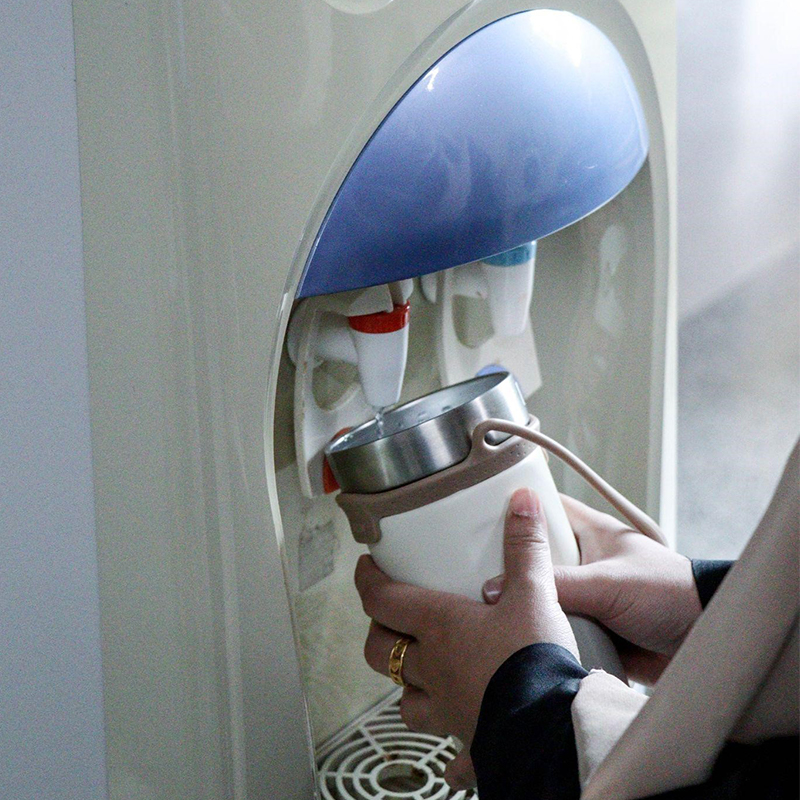
Figure : Free Drinking Water Dispensers at Walailak University
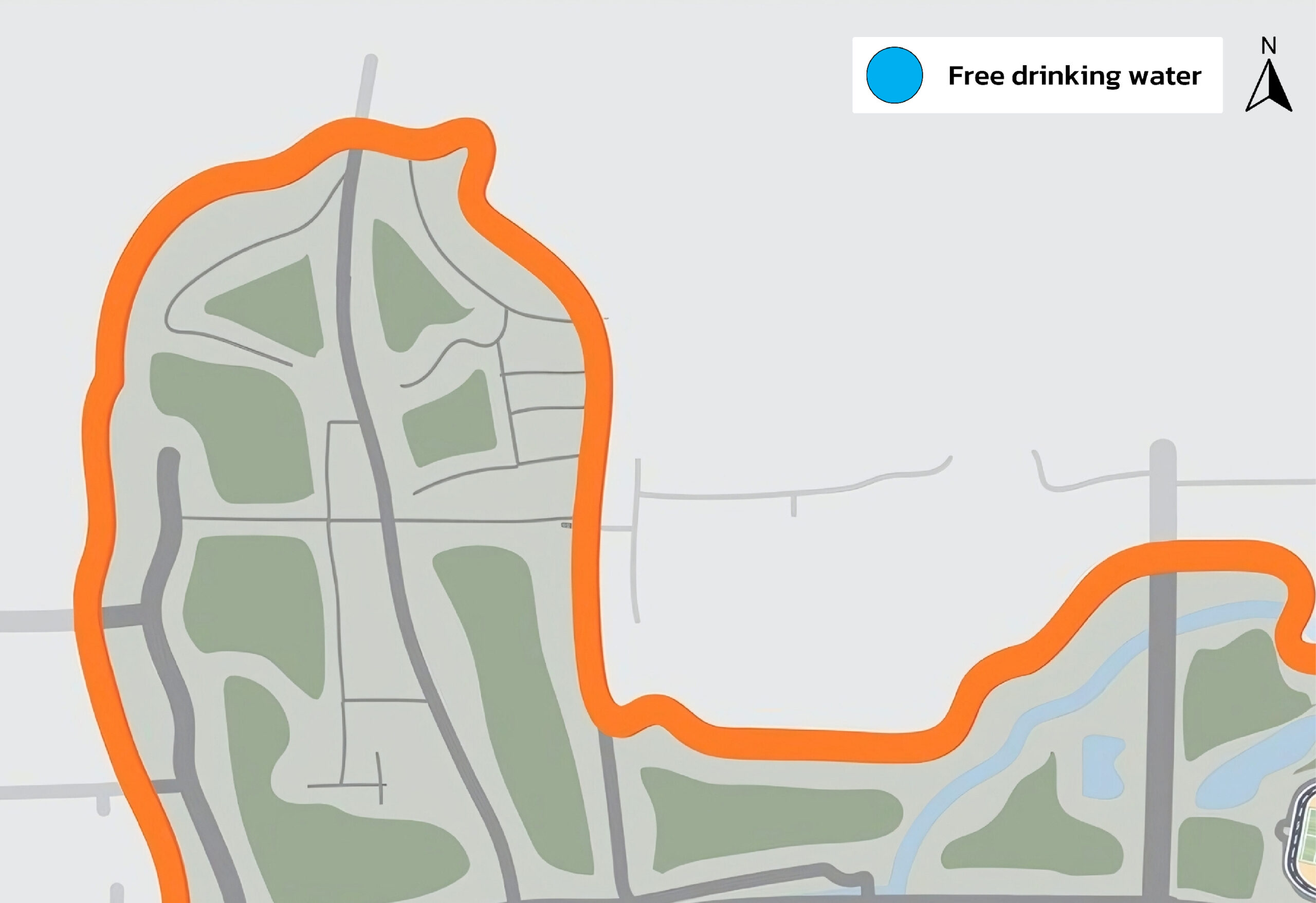
Furthermore, in 2025, the university plans to expand drinking water service points more effectively across campus, with 16 additional dispensers to be installed in buildings currently under construction.
Click on the map for a clearer view with more details.
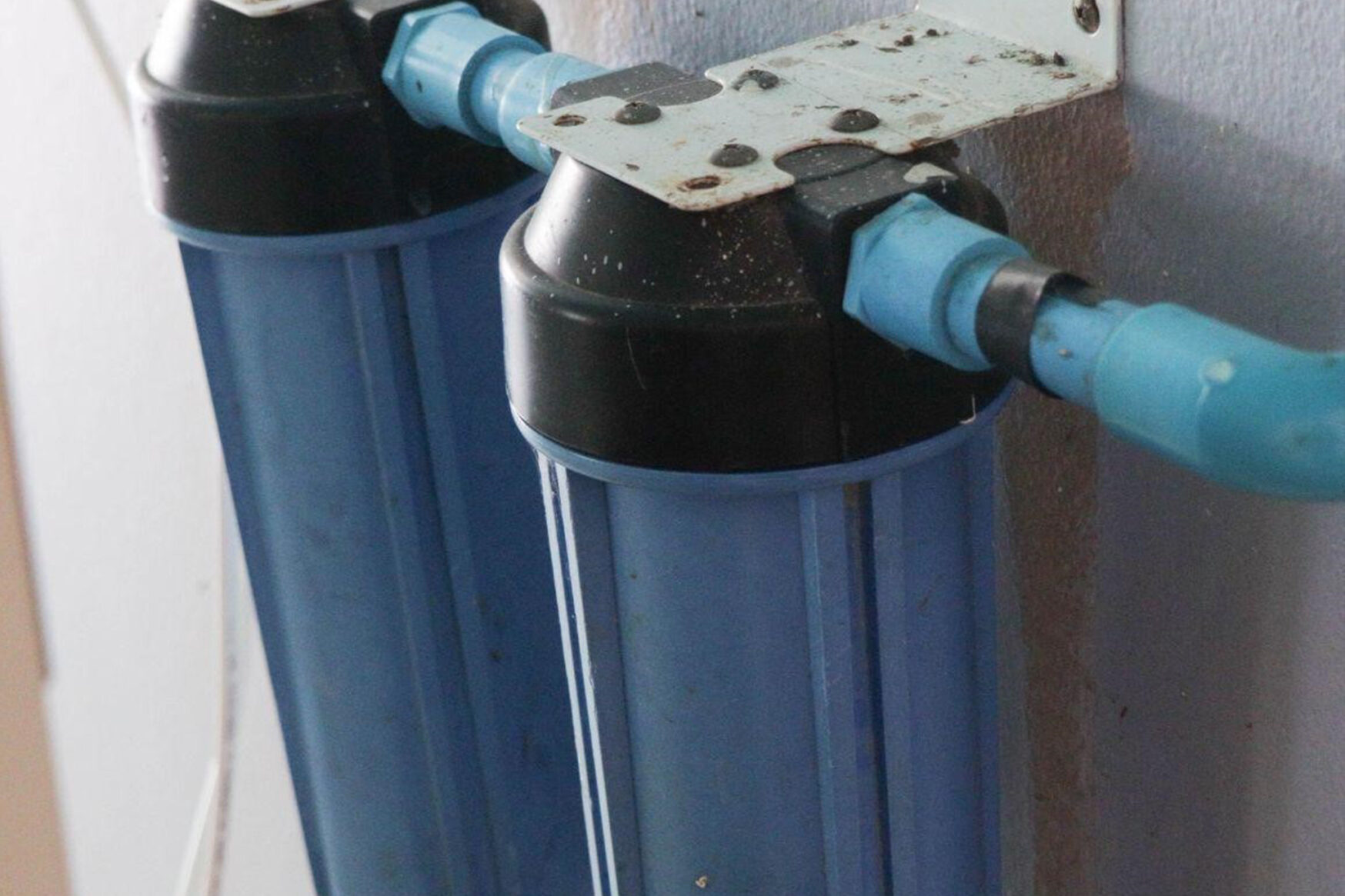
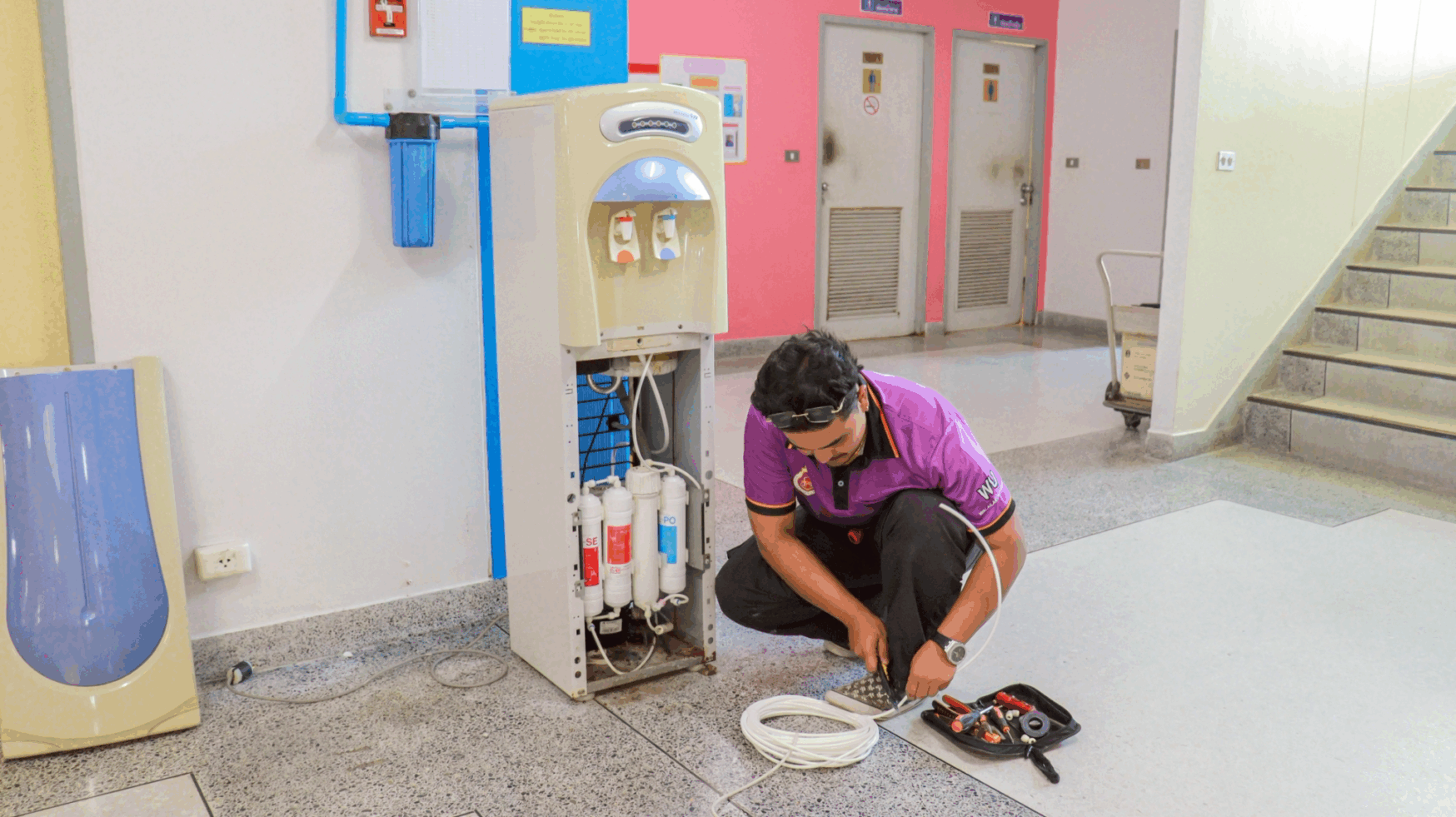
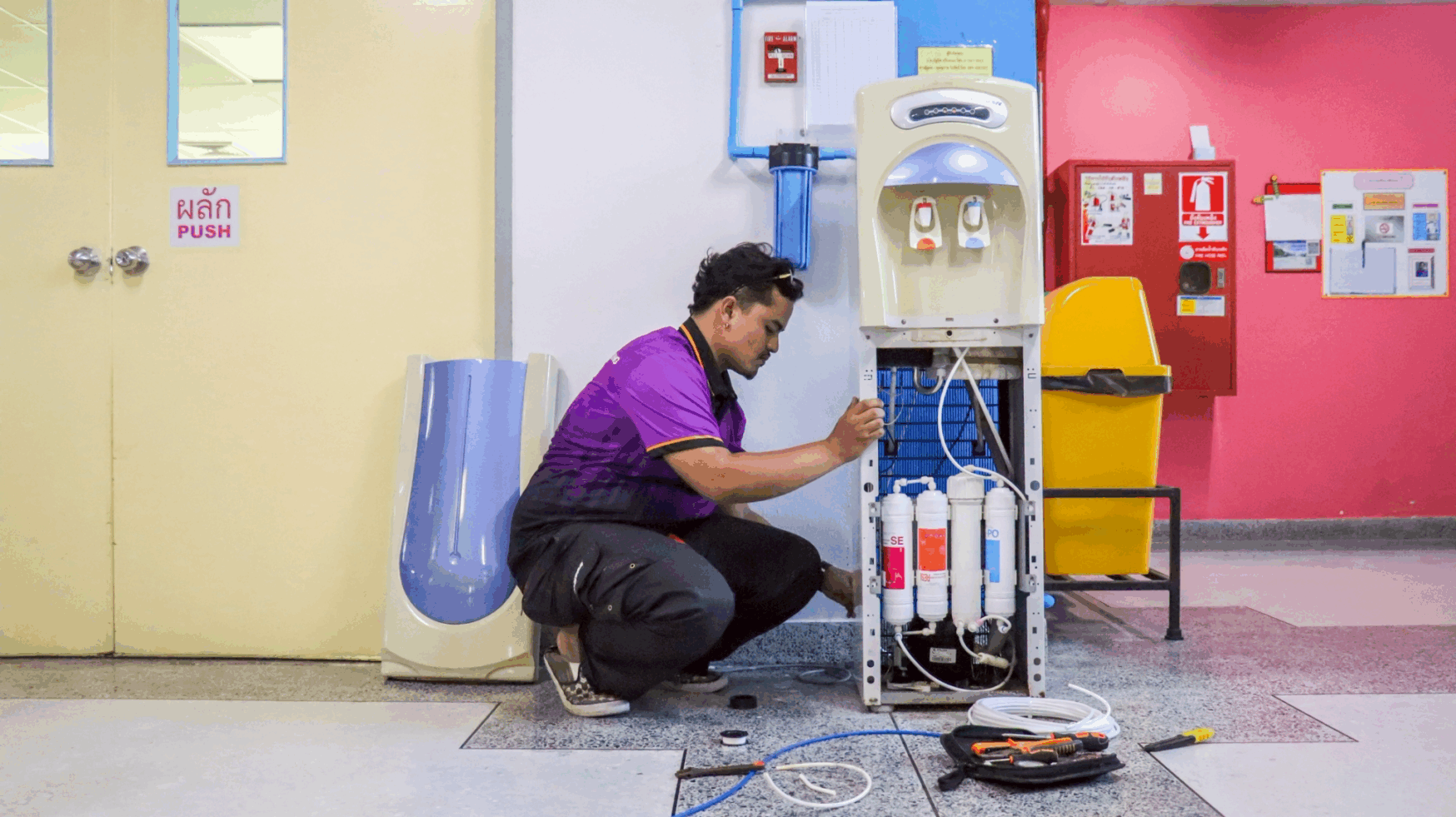
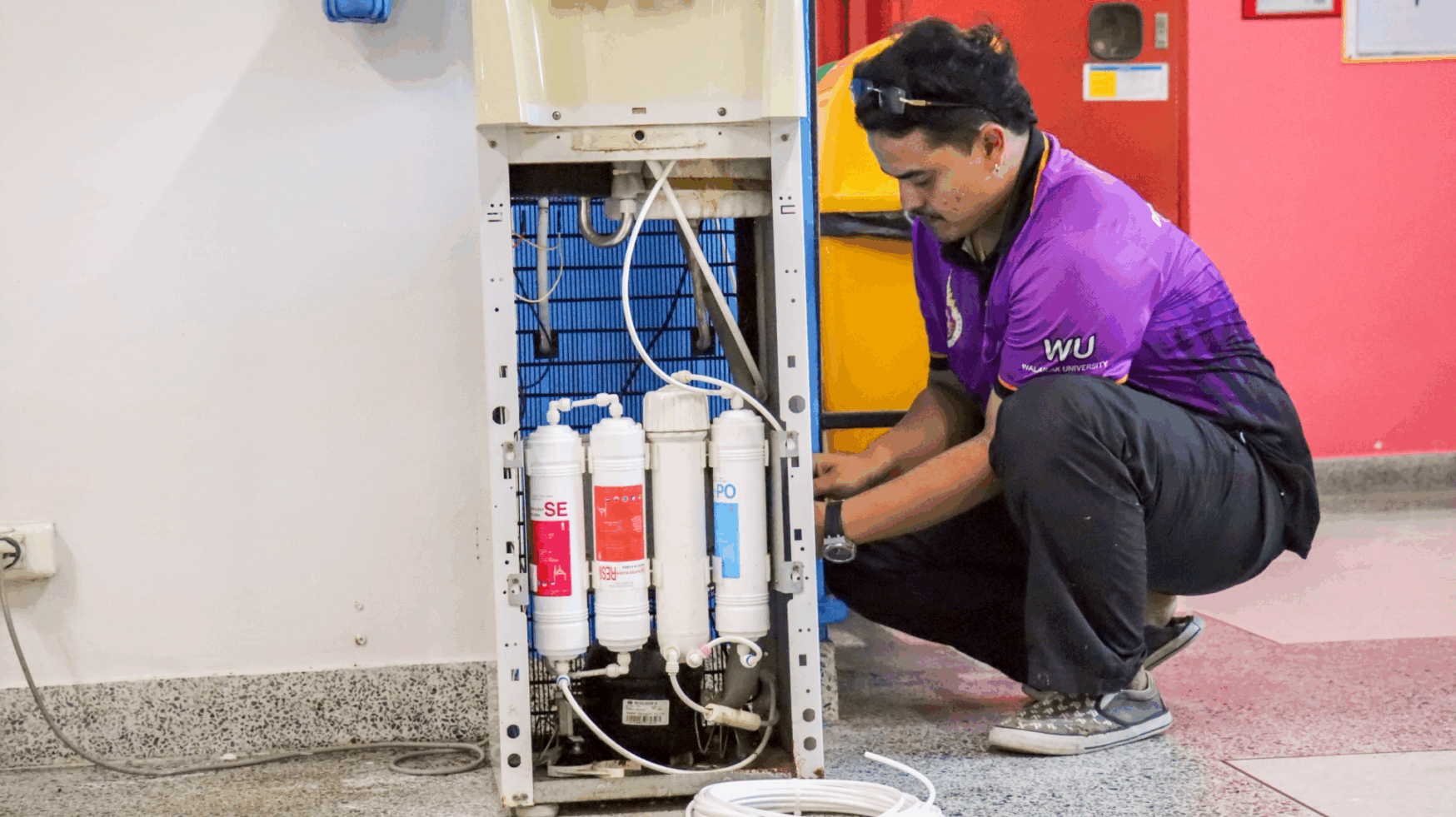
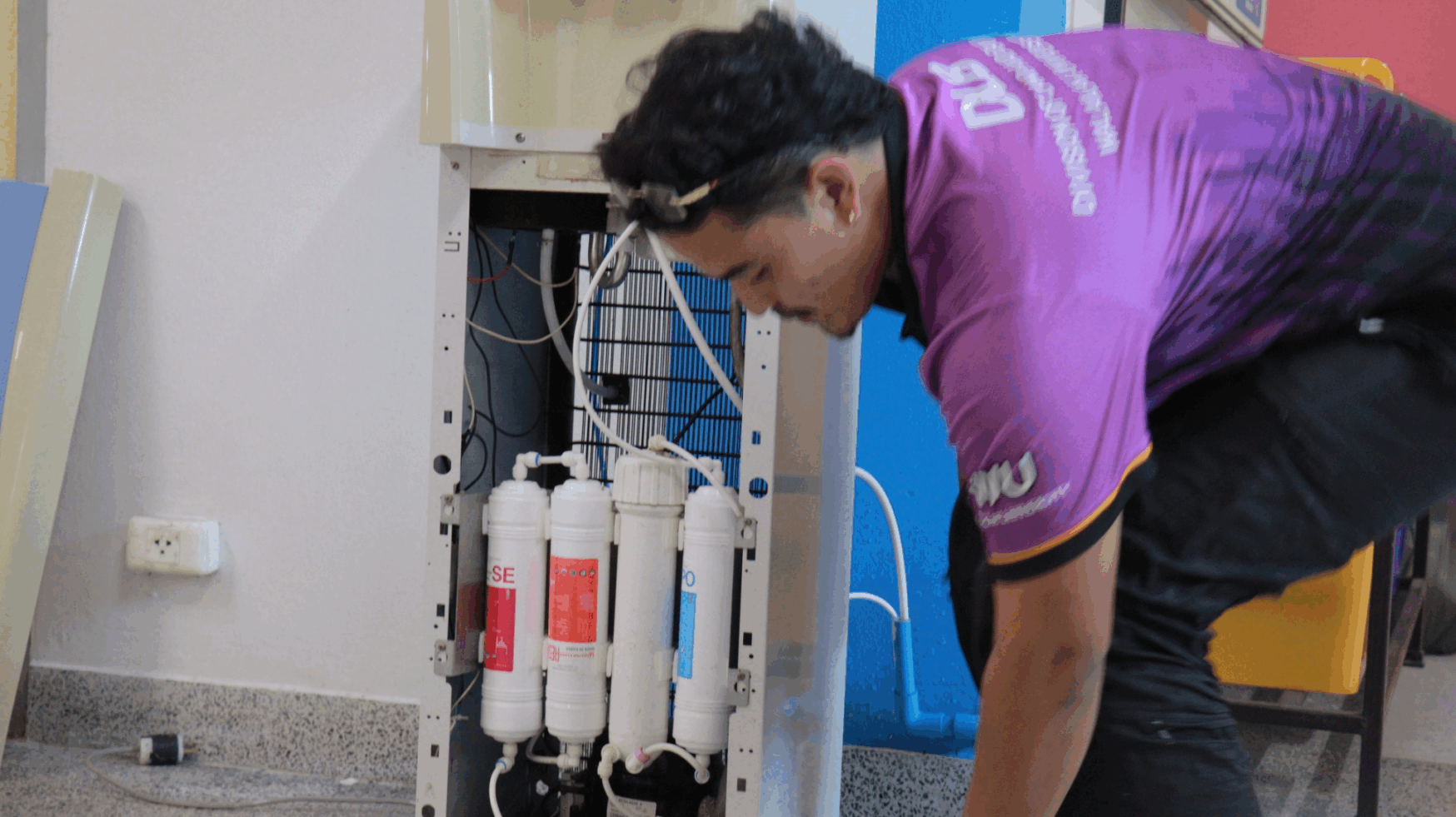
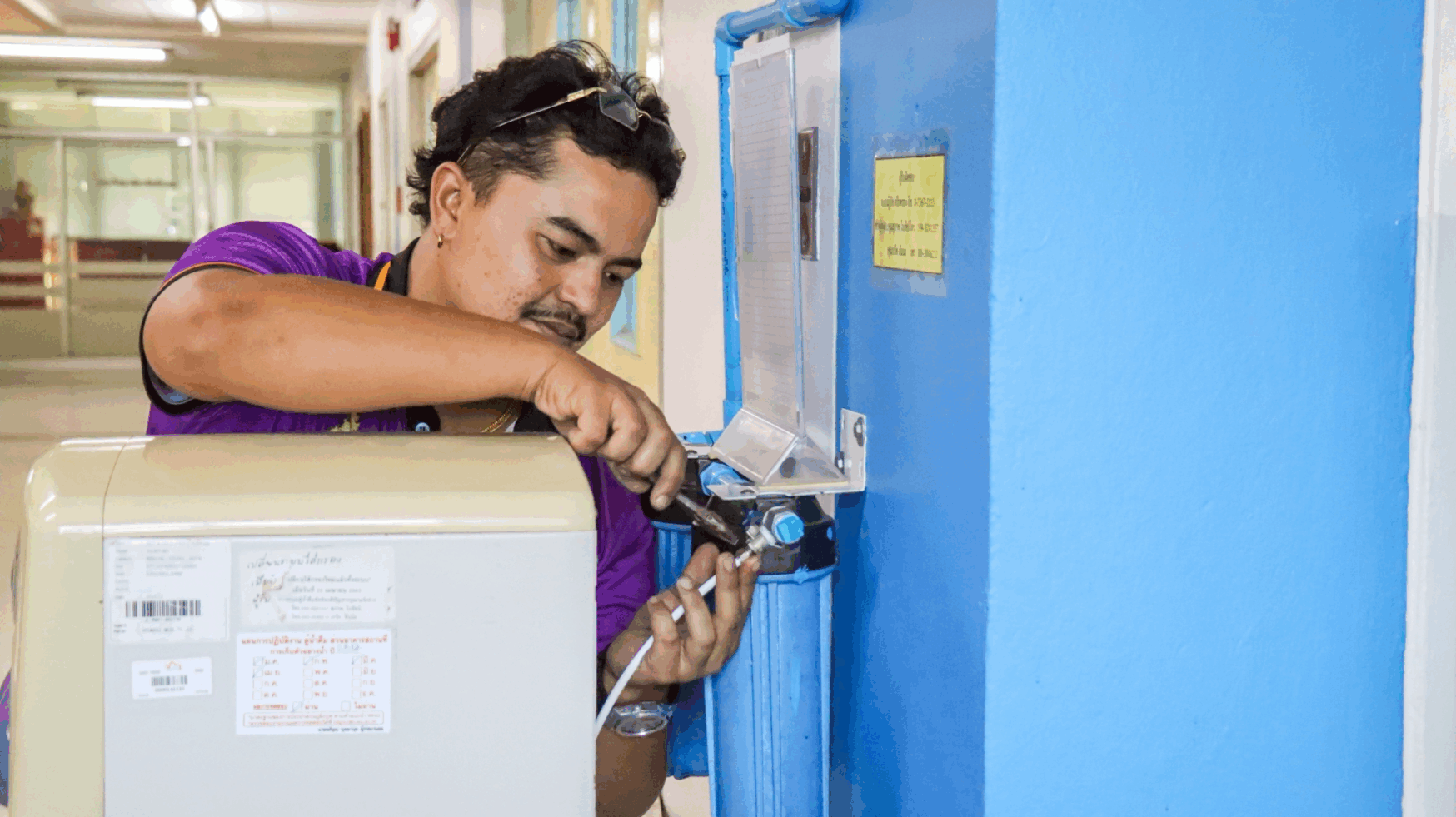
The university implements its free drinking water project sustainably across multiple dimensions, such as regular maintenance of water filtration systems and consistent monitoring of water quality. The RO (Reverse Osmosis) water filters installed on campus are designed to be highly efficient and safe for consumption, featuring a 4-stage filtration system with a precision of up to 0.0001 microns. This ensures effective removal of impurities, sediments, heavy metals, bacteria, and viruses. The dispensers provide cold water at 4–12°C with a capacity of 5 liters, and hot water at 70–85°C with a capacity of 4 liters, with a production capacity of 190 liters per day. Power consumption is 100W for cold water and 600W for hot water.
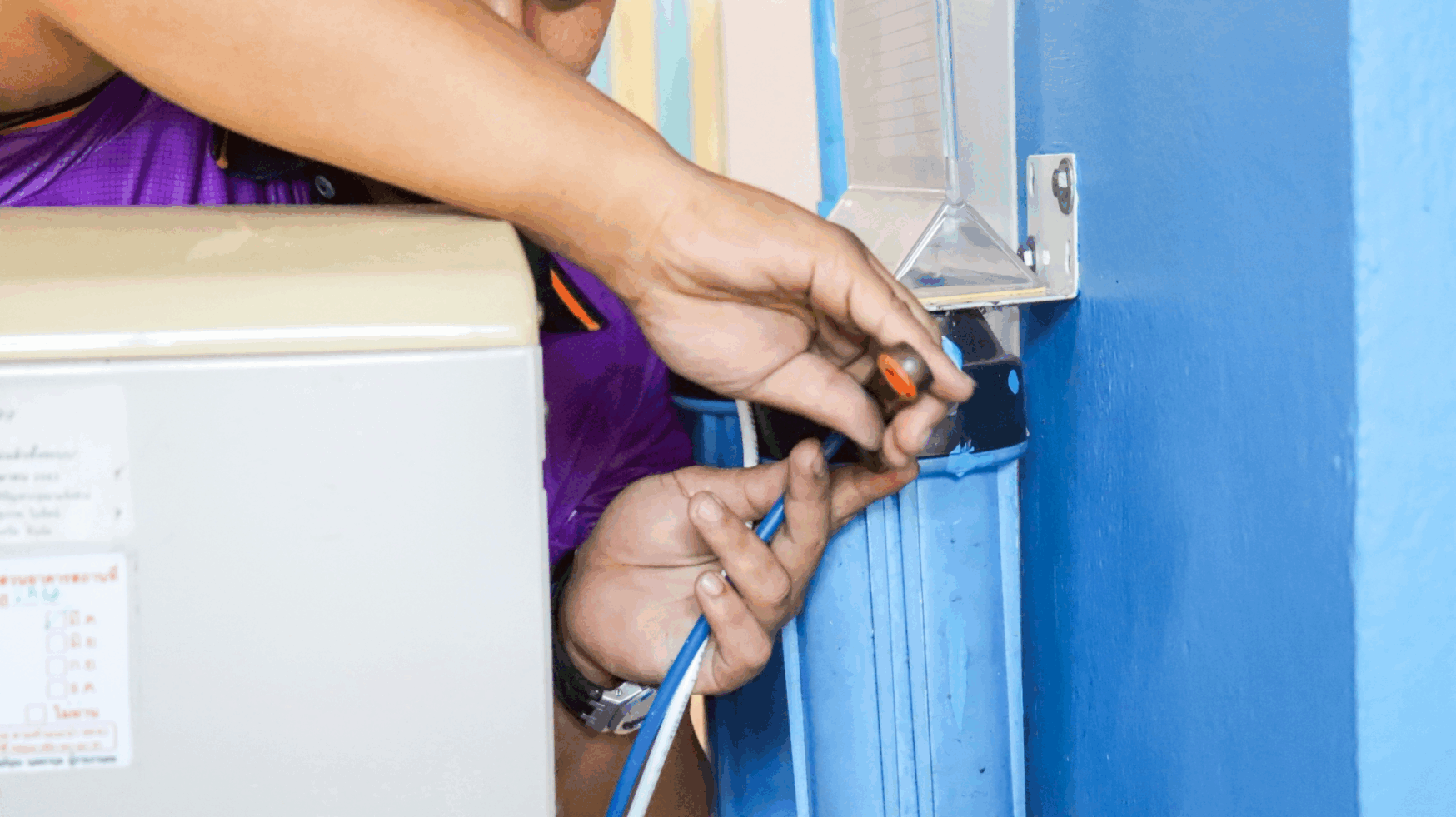
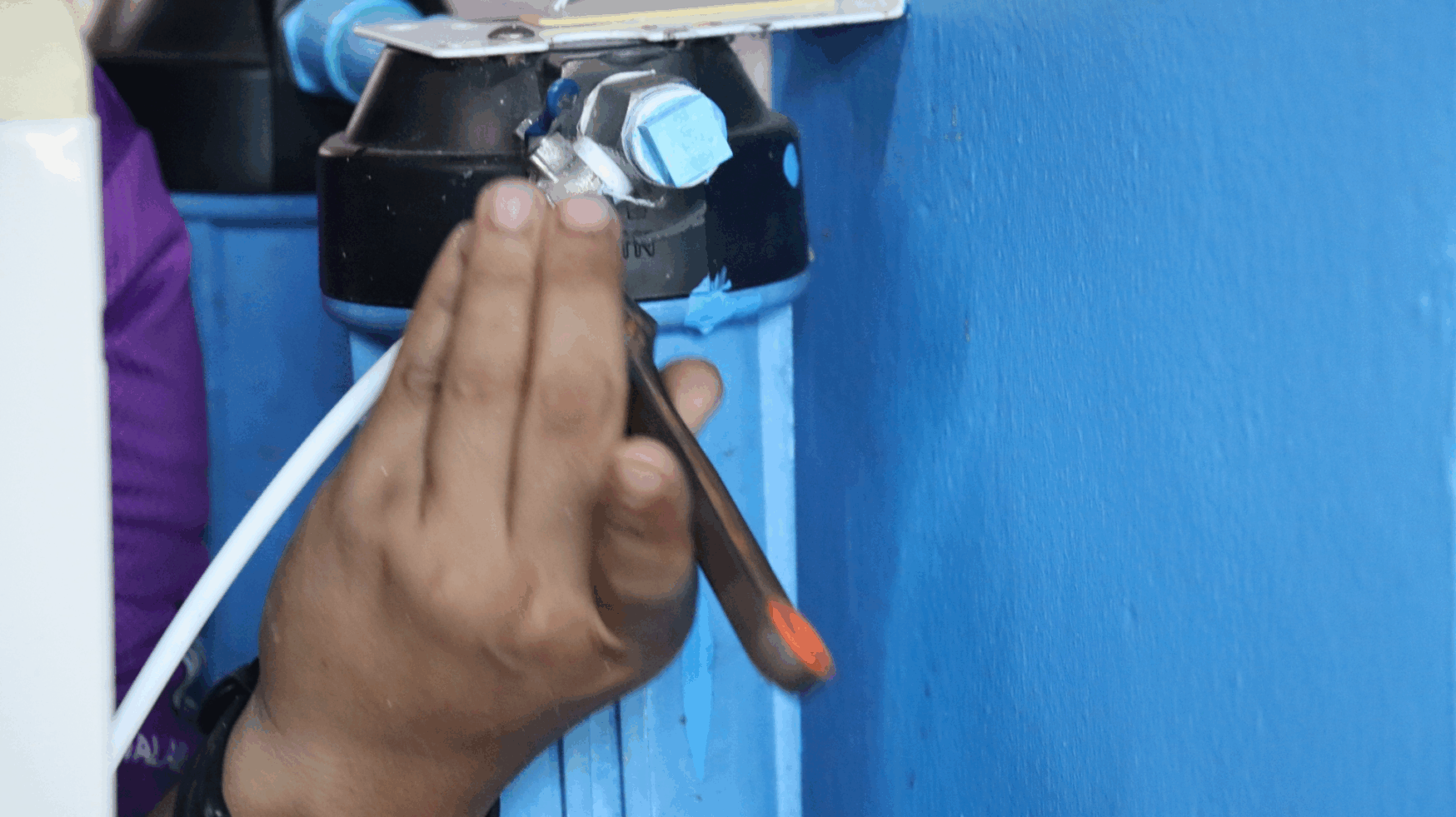
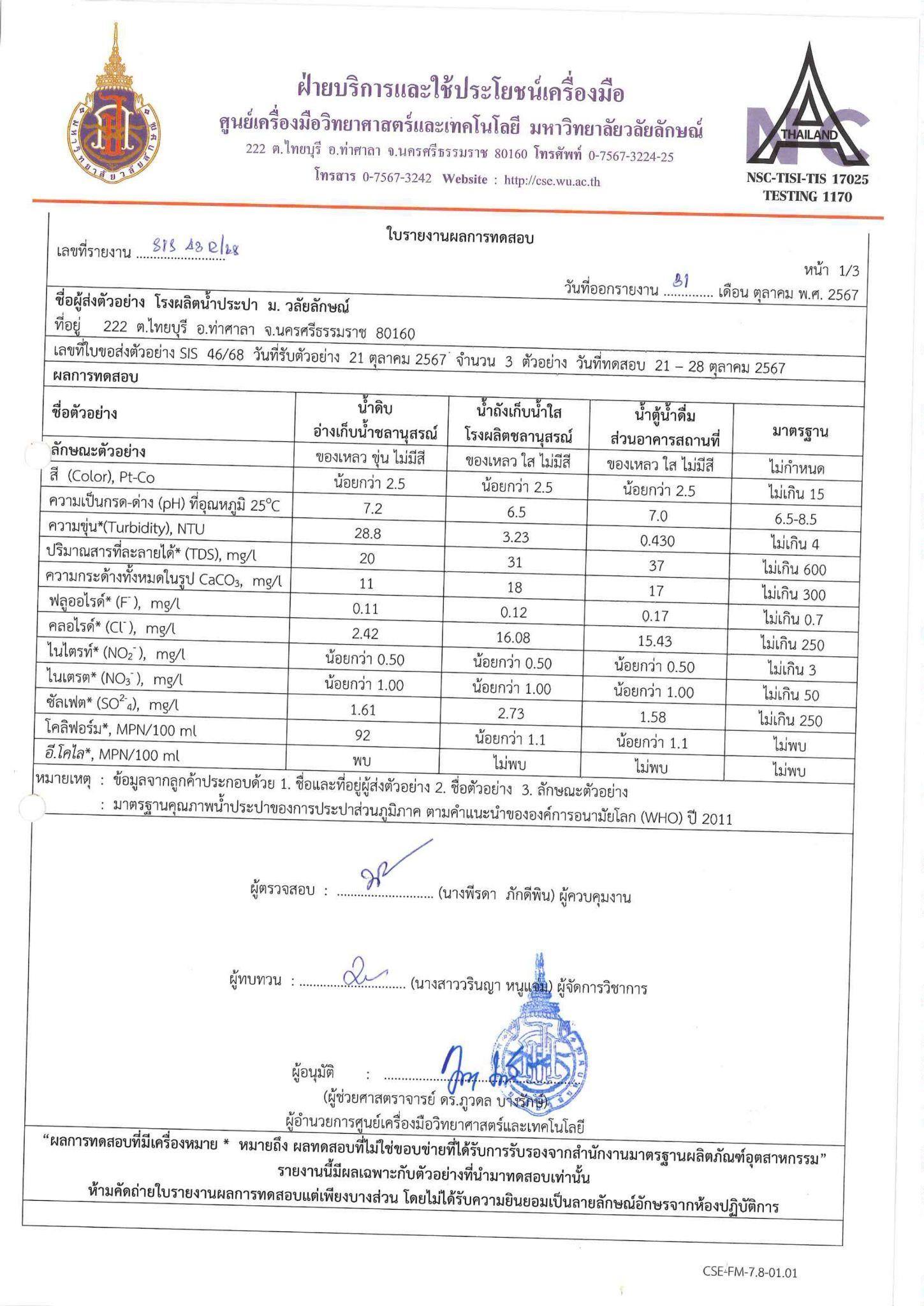
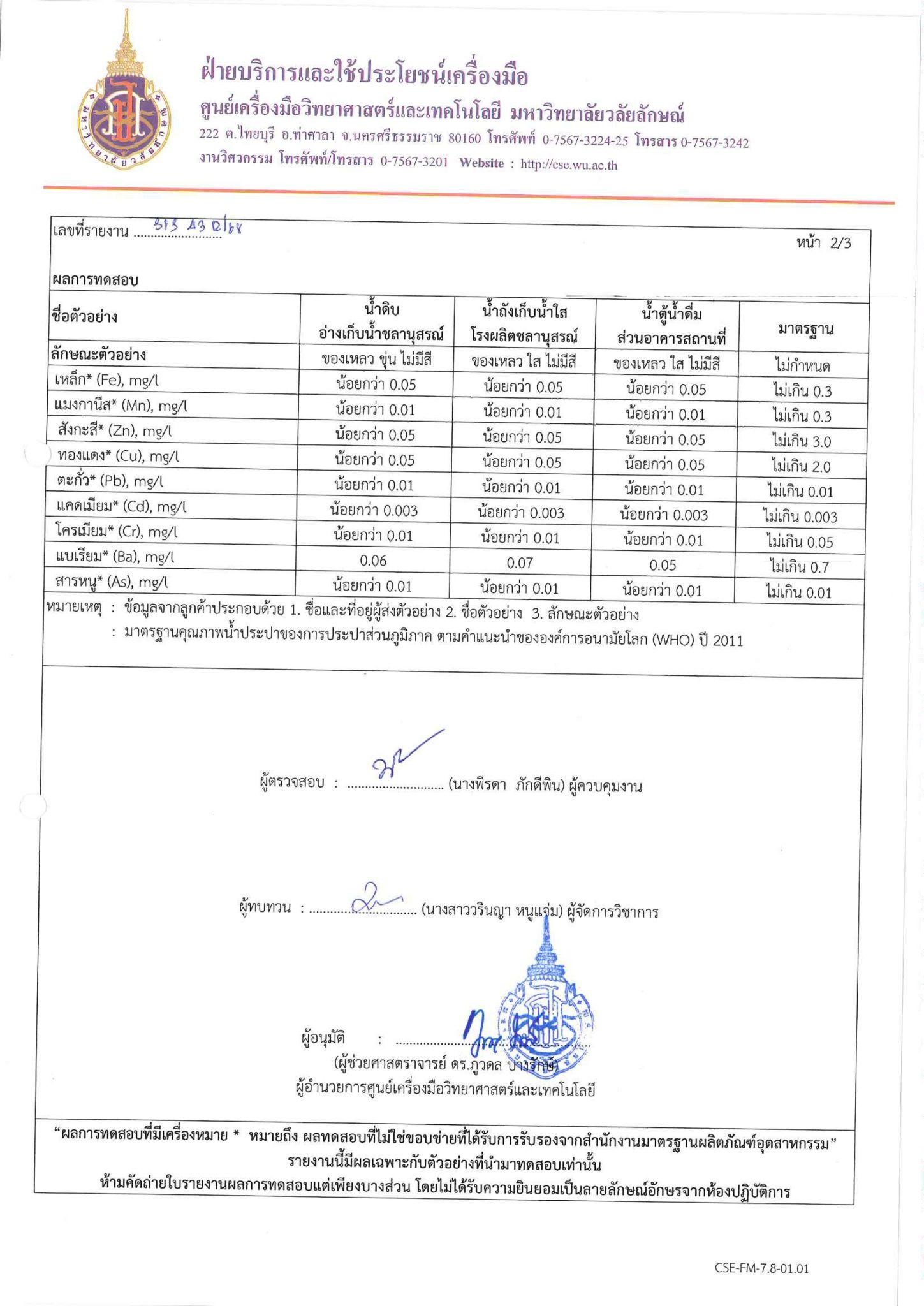
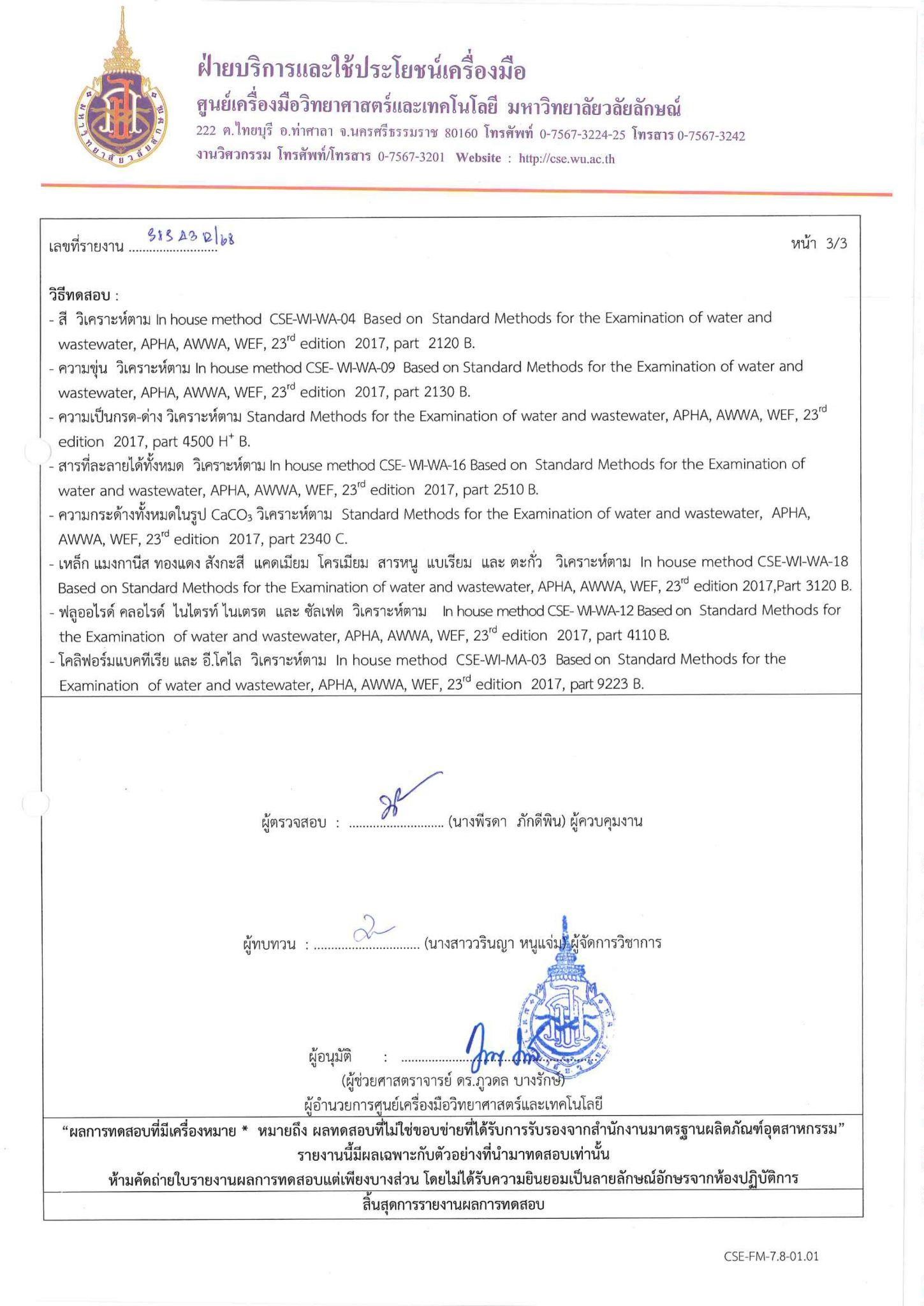
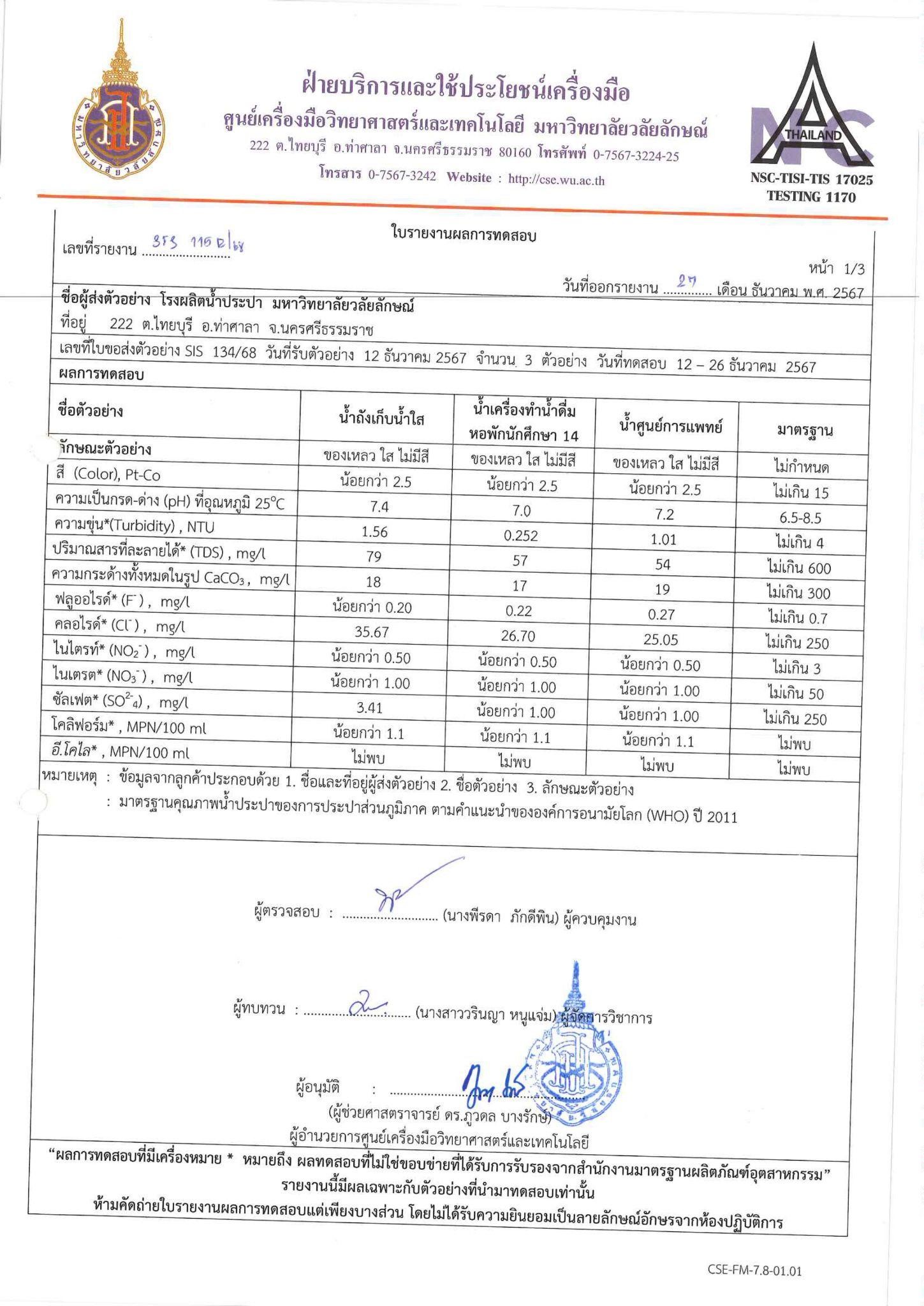
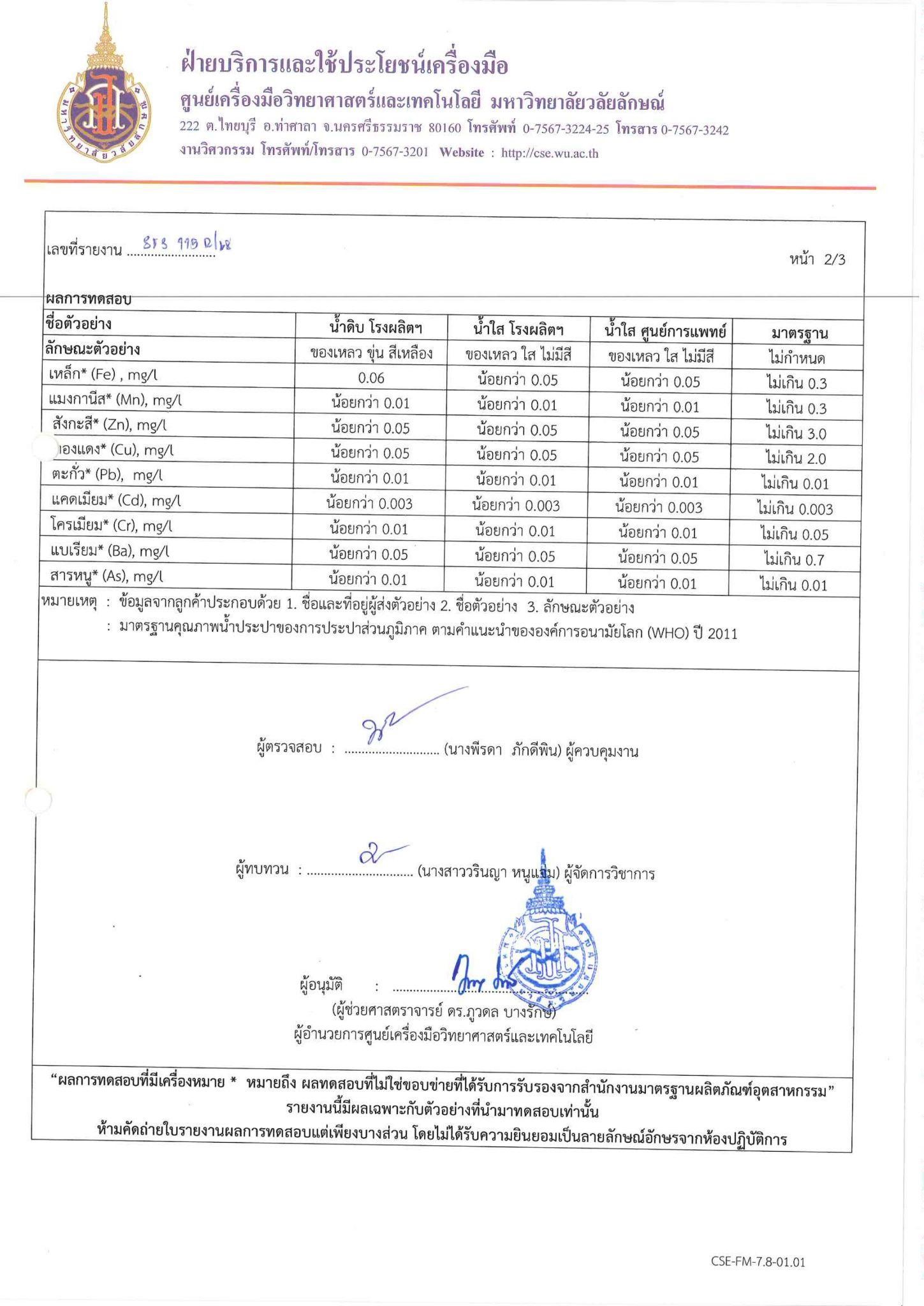
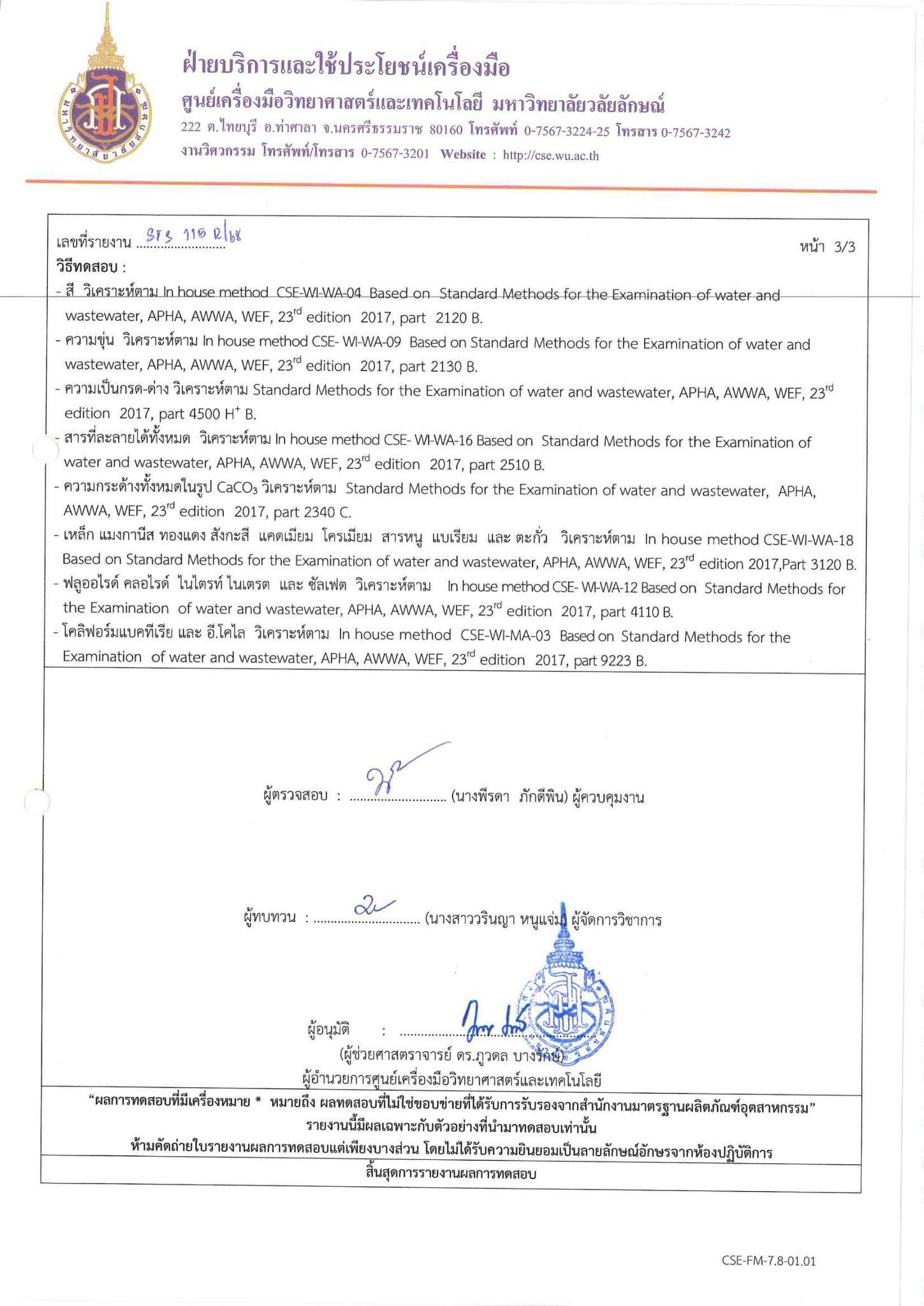
The university enforces strict drinking water quality control measures, including replacing filter cartridges every six months, inspecting and cleaning water dispensers monthly (such as exterior surfaces, nozzles, and drip trays), and testing water quality in accordance with TISI standards for potable water, Type 2. Microbiological testing is conducted using method CSE-WI-MA-03, based on The Examination of Water and Wastewater (APHA, AWWA, WEF, 2017, Part 9223 B). Heavy metal analysis is also performed for iron (Fe), manganese (Mn), copper (Cu), zinc (Zn), lead (Pb), cadmium (Cd), chromium (Cr), barium (Ba), as well as arsenic (As), fluoride, chloride, nitrite, nitrate, and sulfate.
The 2024 inspection results of both new RO systems and stainless steel dispensers showed no contamination of coliforms, E. coli, or heavy metals. All systems remain in good working condition, ensuring that users can safely drink water from every service point.
Figures: Drinking water Quality Measurement Results
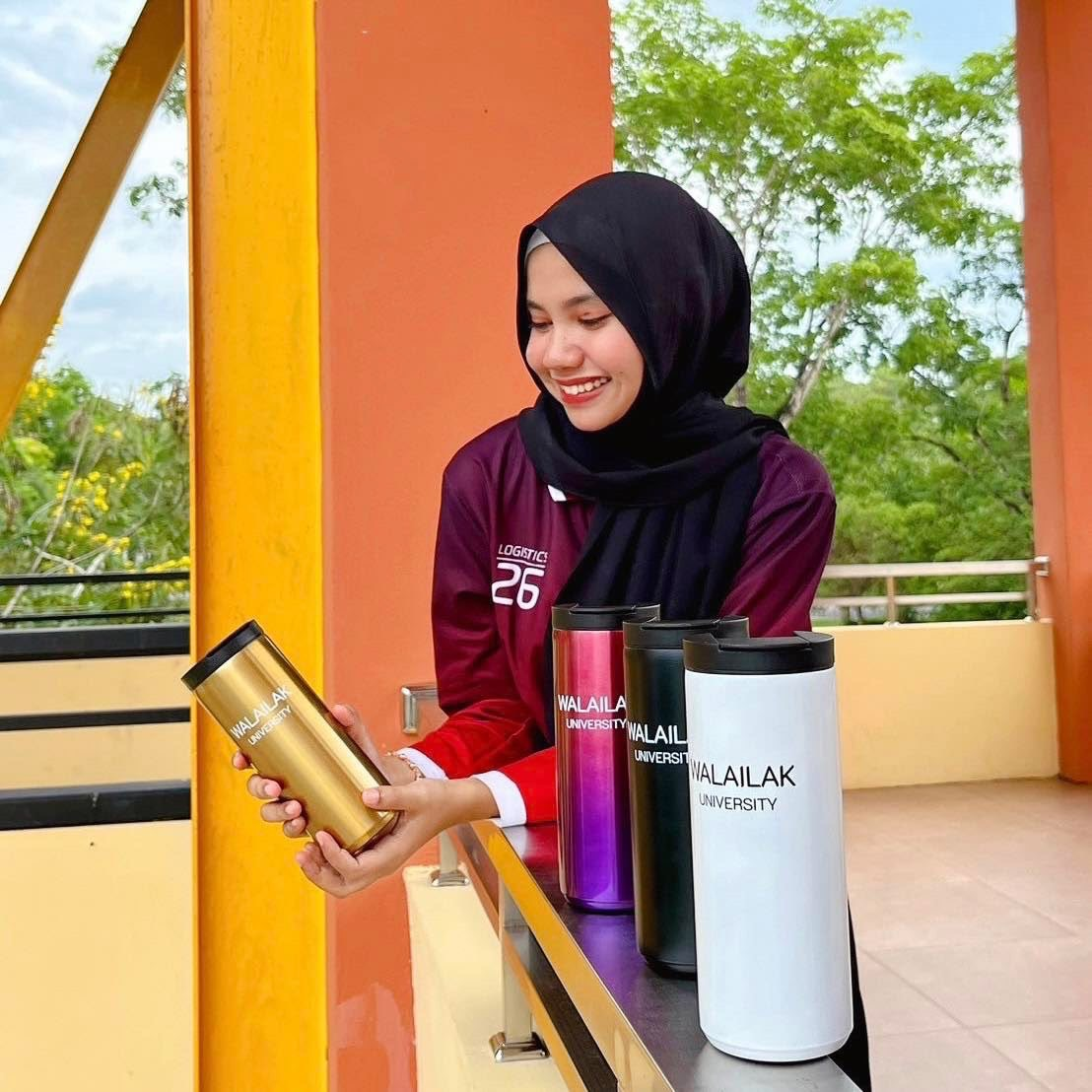
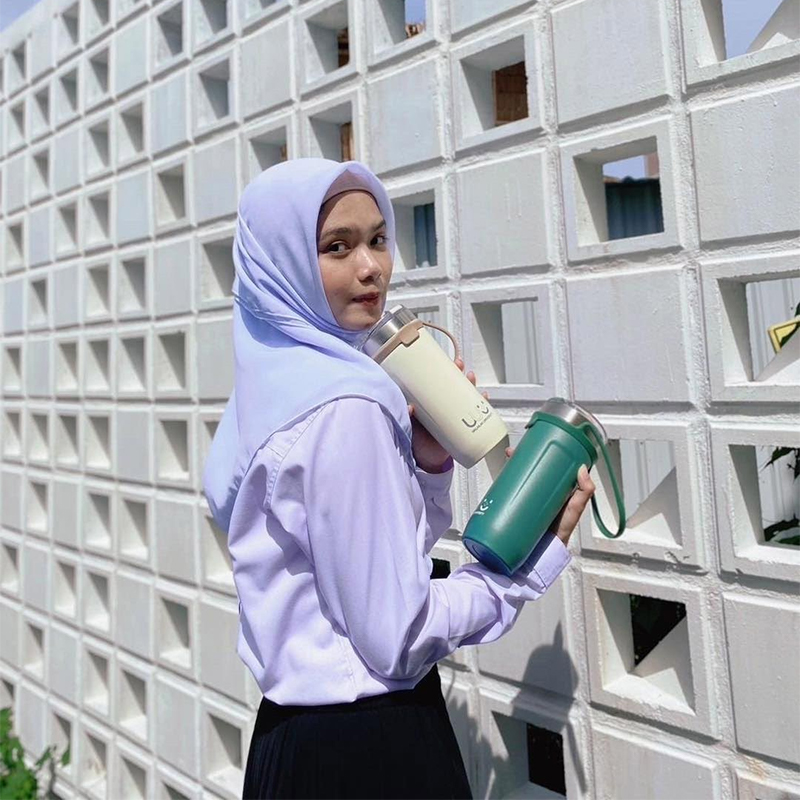
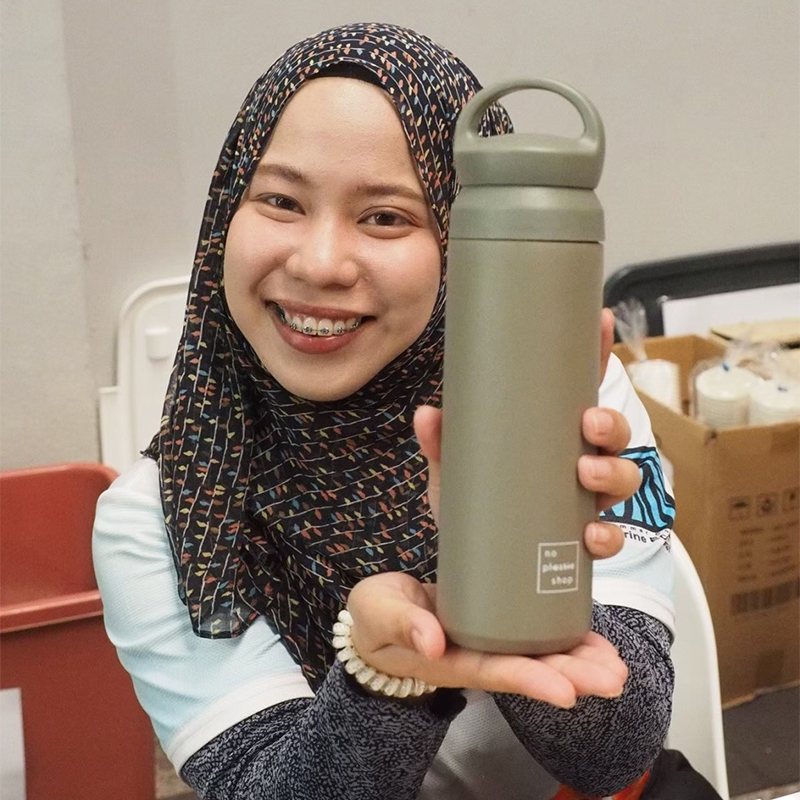
In addition, the existence of free drinking water provision reflects the university’s commitment to improving quality of life. The university also promotes the use of personal containers and the reduction of plastic waste by encouraging students, staff, and visitors to bring their own water bottles or flasks for use with the free dispensers. This has created positive impacts, including reducing the use of single-use plastic packaging, decreasing plastic waste—which is a major source of environmental pollution—encouraging responsible consumption behaviors at the individual level, and helping users save on daily expenses.
Walailak University can thus be regarded as a model of a sustainable university that prioritizes quality of life, safety, and environmental sustainability. In particular, its free clean drinking water services across the campus—through infrastructure, water quality monitoring, and the promotion of sustainable resource use—serve as an exemplary approach to developing a residential university that is livable, clean, and safe in every dimension.
Walailak University promotes sustainable development through the provision of free and safe drinking water across campus. Regular diagnostic checks and water quality measurement ensure that every dispenser meets safety standards, while active community engagement encourages responsible water use and waste reduction. This integrated approach enhances quality of life and reflects the university’s commitment to health, sustainability, and environmental stewardship.